LINGUISTICS: lesson 3
 Call Kai
 Learn
Learn Practice Test
 Spaced Repetition
 Match
Match Flashcards
 Knowt Play
1/32

There's no tags or description
Looks like no tags are added yet.
Name | Mastery | Learn | Test | Matching | Spaced | Call with Kai |
|---|
No analytics yet
Send a link to your students to track their progress
33 Terms
What is a language family?
a group of languages with a common origin
currently: 7000 spoken languages, from 90 language families
def: proto-language
ancestor language (which is not spoken anymore)
e.g. Classical Chinese
def: geneti relationship
relationship between languages, which is not biologically transmitted but defined by cultural transmittion from generation to generation
def: cognates
word (pairs) with a common etymological origin
daf: false cognates/ false friends
words which appear to have a common origin but DO NOT
e.g.: much (eng) and mucho (spanish)
e.g.: pao (portugese) and bao (chinese)
def: comparative method
feature-by-feature comparing of two (or more) languages to reconstruct the proto-language
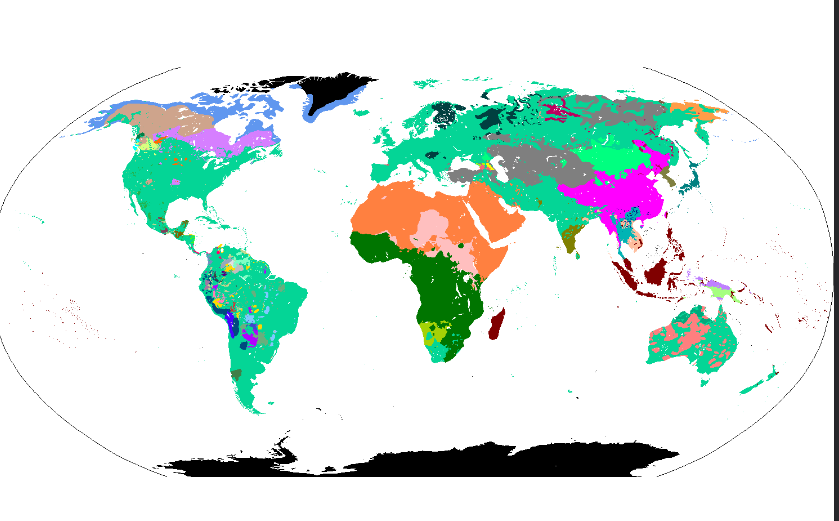
Language families of the world
.
.
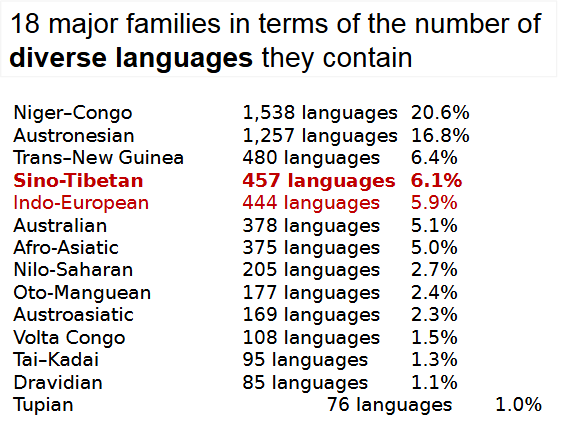
What are the most common hypotheses on family relations between languages?
…
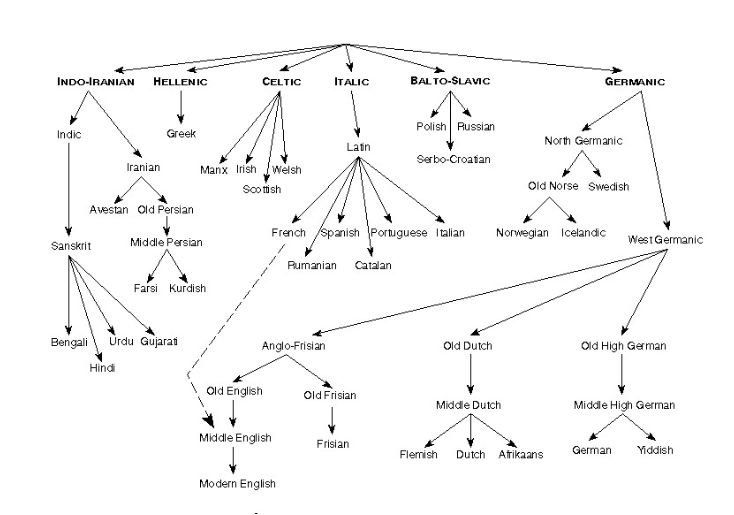
What us this
a tree diagram of the Indo-European language family
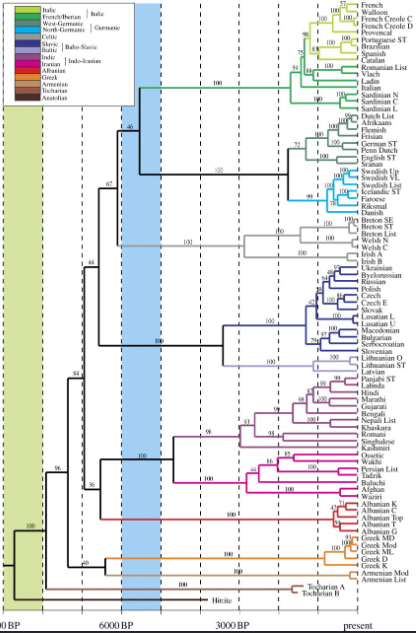
What is this?
a dated phylogenic tree
tree diagram of the Indo-European language family
incorporating the temporal dimension
methodology adopted from biology
What are the main hypothesis on the origin of Indo-European?
Anatolian hypothesis
Kurgan hypothesis
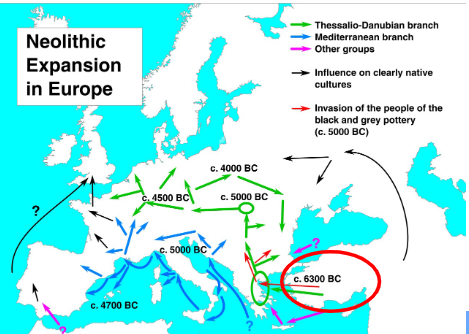
What is the Anatolian hypothesis?
Anatolia (Turkey) as the center of expansion
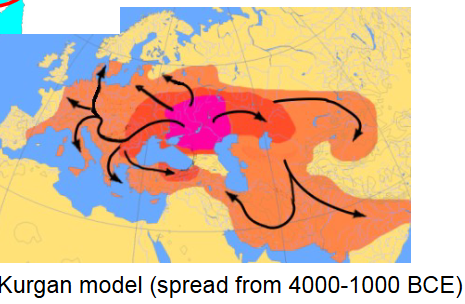
What is the Kurgan hypothesis?
Ukraine as the center of expansion
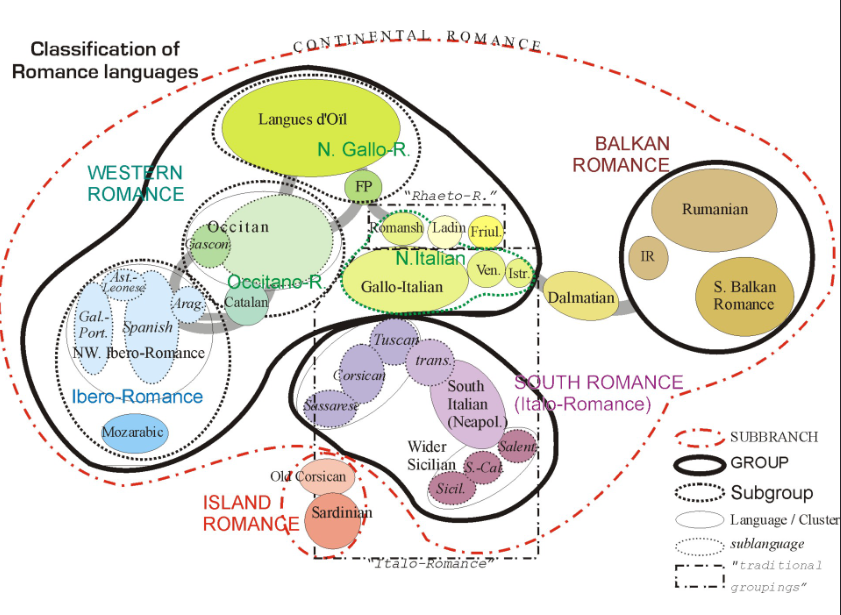
What is the Wave model?
an alternative of modern research to the tree model
esp in dialectology
What are the main hypothesis on the origin of languages?
monogenesis
polygenisis
What is monogenesis?
The idea that all languages come from a common proto-language (less probable)
What is polygenesis?
The idea that all languages come from multiple proto-languages (most likely)
What does the comparative method do?
comparison of cognates
finding shared retentions (features that are kept between desc and parent)
shared linguisic innovations
How does the comparative method actually work?
collecting cognates (phonetic structure/ sematics, important to use basic vocabulary)
establishing sound correspondences (e.g. english /f/ always correspondents with the Latin /p/)
determine complementary distribution (why sounds differ)
e.g. Language A had -t- between vowels and language B has -d- between vowels —> which language changed? and which preserved the original?
reconstruction of proto-phonemes: assertation of *-t- as the original
systematization in terms of typology: check if this hypothesis works in the general universal patterns
What are the basic problems of ‘sound change’?
what changes are possible
how is the change embedded in the linguistic system?
why does one language change, and another one not?
==> the cause is not a problem because it cannot be known!
What are some patterns of sound change?
assimilation
dissimilation
metathesis
tonogenesis
sandhi
haplology
loss of sounds
prothesis
nasalization
vowel fronting
What is assimilation (sound change)?
e.g.: cupboard → cuboard
e.g.: octo → otto
What is dissimilation (sound change)?
e.g.: peregrinus → pelegrin → pellegrino → peligrino
What is metathesis (sound change)?
when two sounds change place
e.g.: periculum → peligro
What is tonogenesis (sound change)?
When a language gains tones
What is sandhi (sound change)?
e.g.: n + p feels awkward → m + p
e.g.: tone sandhi: tone 3 + 3 is awkward → tone 2 + 3
What is haplology (sound change)?
e.g.: Englaland → England
What is loss of sounds (sound change)?
e.g.: castle loss of the /t/ sound
What is prothesis (sound change)?
Addition of a sound in the beginning
e.g.: status → estado
What is nasalization (sound change)?
vowels followed by consonants are nasalized
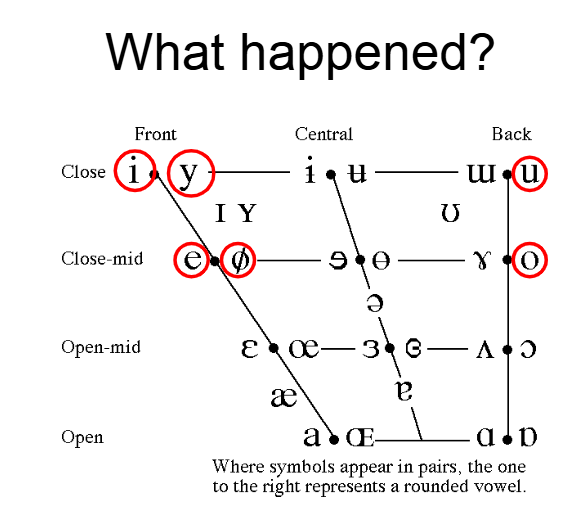
What is vowel fronting (sound change)?
When a vowel is pronounced more to the front of the mouth
e.g. backvowel fronted to the umlaut under the influence of the /i/ or /j/ in German
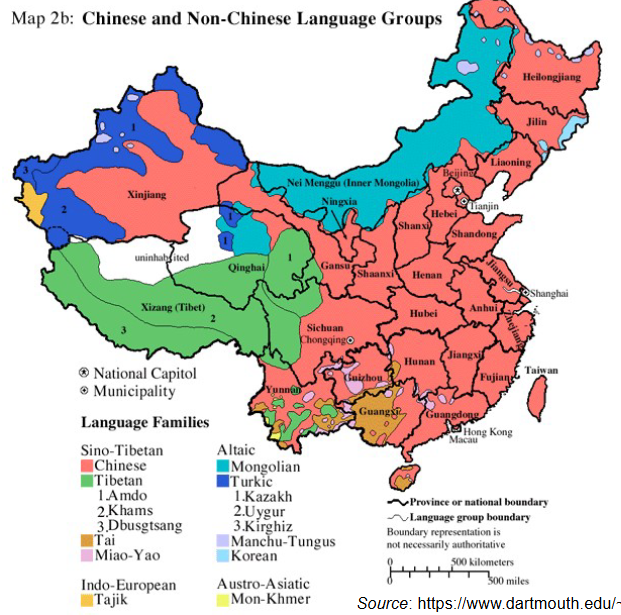
How many language families in China?
Sino-Tibetan
Austro-Thai (Thai-KAdai and Austronisian)
Miao-Yao
Mon-Khmer
Turkic (Altaic)
Mongolic (Altaic)
Manchu-Tungus (Altaic)
Korean
Indo-European