U6 acids and bases
 Call Kai
 Learn
Learn Practice Test
 Spaced Repetition
 Match
Match Flashcards
 Knowt Play
1/36

There's no tags or description
Looks like no tags are added yet.
Name | Mastery | Learn | Test | Matching | Spaced | Call with Kai |
|---|
No analytics yet
Send a link to your students to track their progress
37 Terms
Arrhenius theory is based on…
Based on release of H+ or OH- ions in solution, as it doesn't explain all acid and bases (not IB)
acids: increase hydrogen ion (H⁺) concentration in water
bases: hydroxide ion (OH⁻) concentration in water
Bronsted lowry theory is based on…
Based on the transfer of protons, H+ ions between reactants
Lewis theory is based on…
Based on the transfer of electron pairs between reactants
Bronsted lowry acids →
donate proton to another reactant
Bronsted lowry bases →
accept proton to another reactant
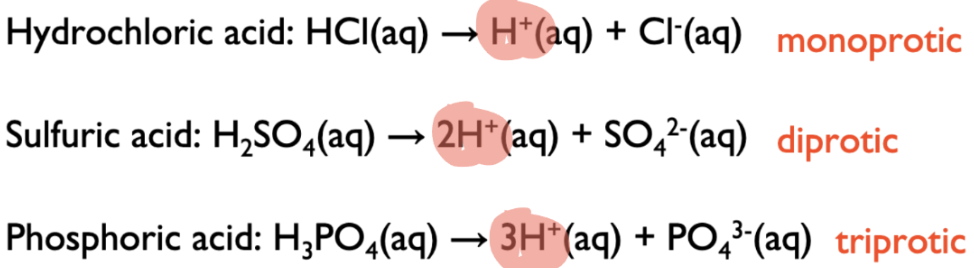
meaning of Monoprotic, diprotic, tripotic
number of protons they can donate in an acid-base rxn
Amphiprotic means..
they’re species that can donate and accept a proton
e.g. H2O, HCO3-, NH3
relationship of acidity and H+ conc to pH
As pH increase
the solution is less acidic, more basic
The solution has higher conc of H+ than OH-
As pH decrease
the solution is more acidic, less basic
The solution has lower conc of H+ than OH-
when is pH neutral
at 25C
pH = 7
what is pH
Measurement of the acidity of a solution
measurement of H+ (or H3O+) conc in a solution
why is pH a log scale
pH is a log scale, which is more useful in representing very large or very small numbers a simpler numbers
A ___ unit change in pH is a ______ change in [H+]
A ONE unit change in pH is a TEN fold change in [H+]
e.g. pH change from 3 to 5, [H+] is 100 more basic
state 3 Experimental methods of measuring pH
pH sensor gives a precise value
pH indicator paper gives an estimated value
Universal indicator gives an estimated value
what does Dissociation constant for water, Kw represent
Aka water equilibrium expression
The ratio of H+ and OH- in an aq solution
At 25C, Kw is 1x10^-14
Strength acids and bases is determined by
the extent of dissociation (or ionization)
compare and contrast strong acid/base VS weak acid/base
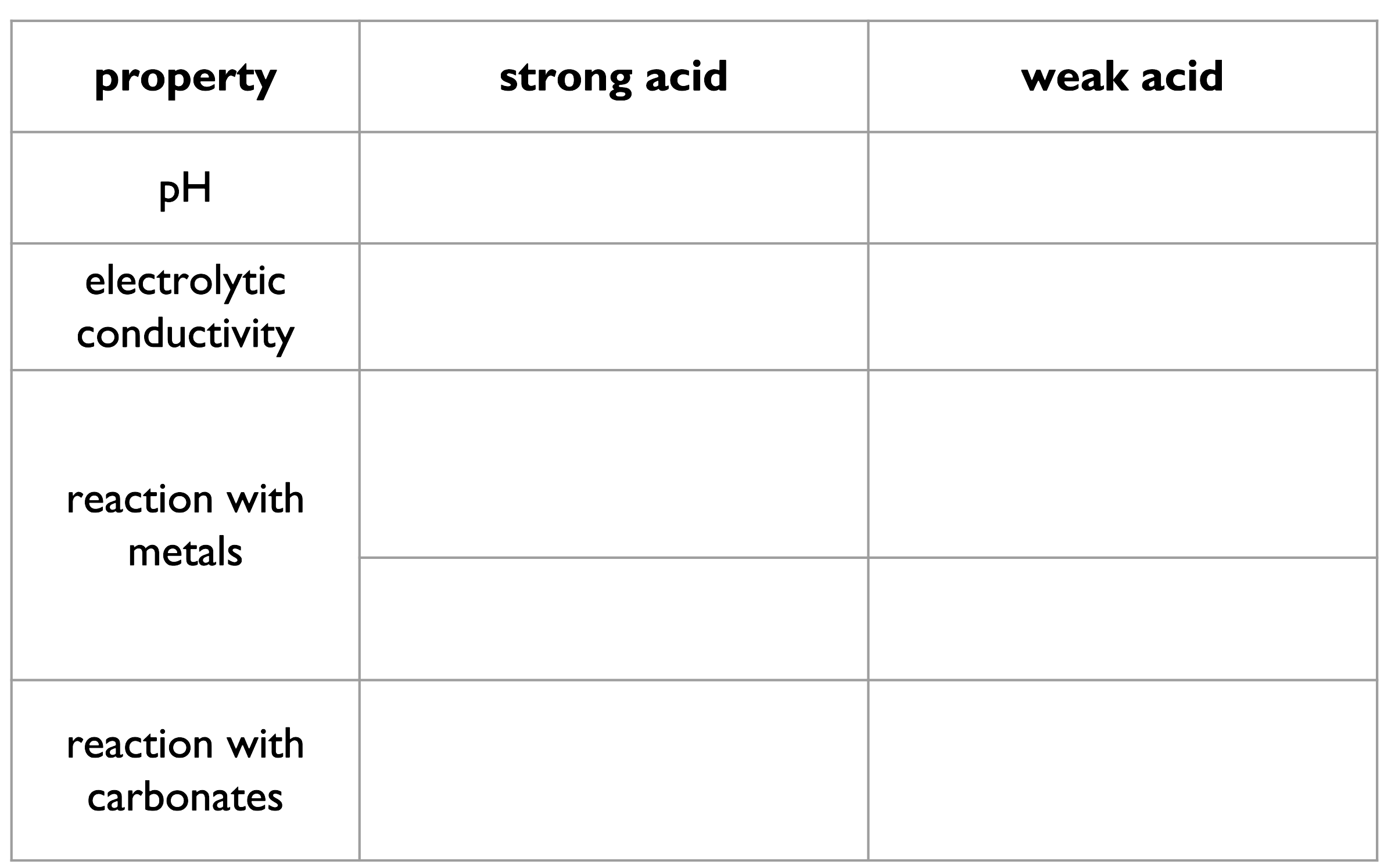
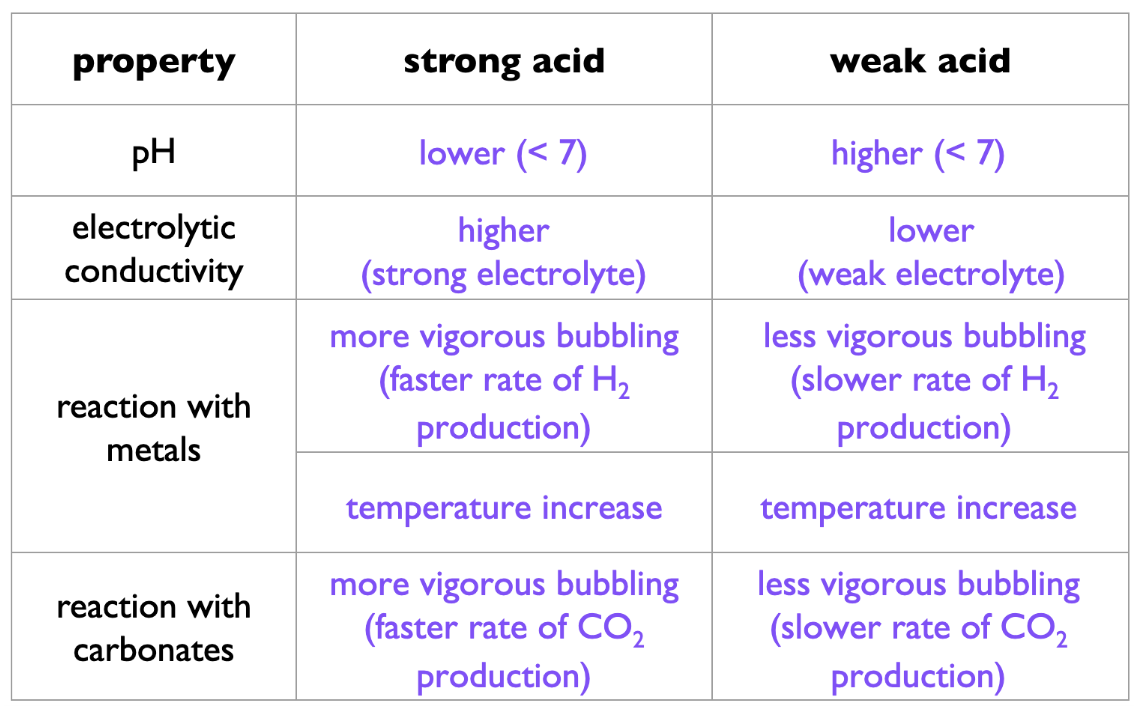
strong dissociates completely, weak dissociates partially
strong is irreversible, weak is an equilibrium (back and fourth rxn)
strong has high H+ conc, weak has low H+ conc
all are electricity conductors
state the 5 strong acids
HCL - hydrochloric acid
HBR - hydrobromic acid
HI - hydroiodic acid
H2SO4 - sulfuric acid
HNO3 - nitric acid
state the 3 strong bases
LiOH - lithium hydroxide
NaOH - sodium hydroxide
KOH - potassium hydroxide
what are the weak acids?
Carboxylic acids
H2CO3, HsPO4, H2SO3, HCN, HNO2, and more
Other complex ions (e.g. [Al(H2O)6]3+)
what are the weak bases?
Amines,
NH3,
N2H4
general periodic pt trends of acids to bases
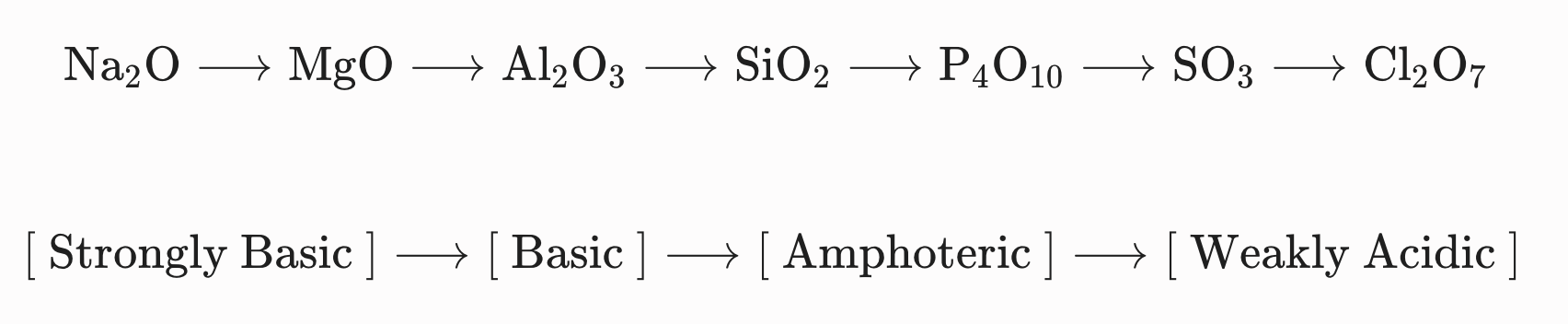
left (strong bases) → right (strong acids)
gen eq of metal oxide + water
e.g. MgO + H2O
→ metal hydroxide
→ Mg (OH)2
gen eq of non metal oxide + water
e.g. CO2 + H2O
→ oxyacid (comme sulfuric acid and nitric acid)
→ H2CO3
neutral rain VS acid rain pH
neutral: 5.6
acid: 4-5
Outline acid deposition using SOx and NOx
outline ocean acidification using CO2
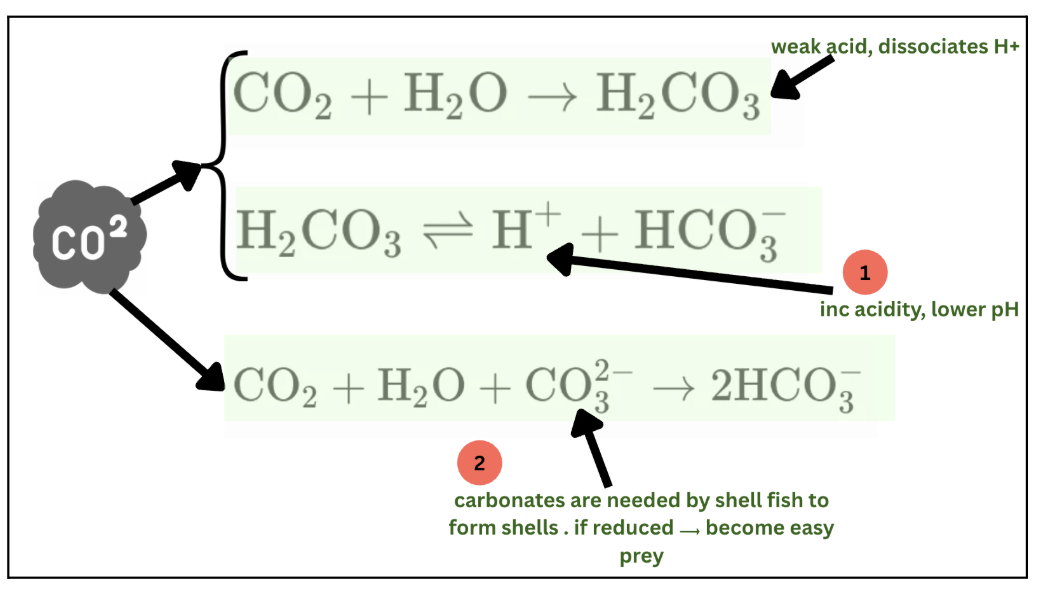
pH of ocean changes
1950: 8.15
2020: 8.05
reative metal + water
→ metal hydroxide + H2
metal oxide + water
→ metal hydroxide
non metal oxide + water
→ oxyacid
metal + acid
→ salt + H2
metal oxide + acid
→ salt + water (neutralisation)
metal hydroxide + acid
→ salt + water (neutralisation)
metal carbonate + acid
→ salt + water + CO2 (neutralisation)
acid + amine
→ salt
what are neutralisation reactions?
When acid and base form salt and water
Usually exothermic
The proton of the acid reacts with the hydroxide of the base to form water:
The spectator ions which are not involved in the formation of water, form the salt