1.3b Psychology: Substance Use Disorders and Psychoactive Drugs Effects
 Call Kai
 Learn
Learn Practice Test
 Spaced Repetition
 Match
Match Flashcards
 Knowt Play
1/35

There's no tags or description
Looks like no tags are added yet.
Name | Mastery | Learn | Test | Matching | Spaced | Call with Kai |
|---|
No analytics yet
Send a link to your students to track their progress
36 Terms
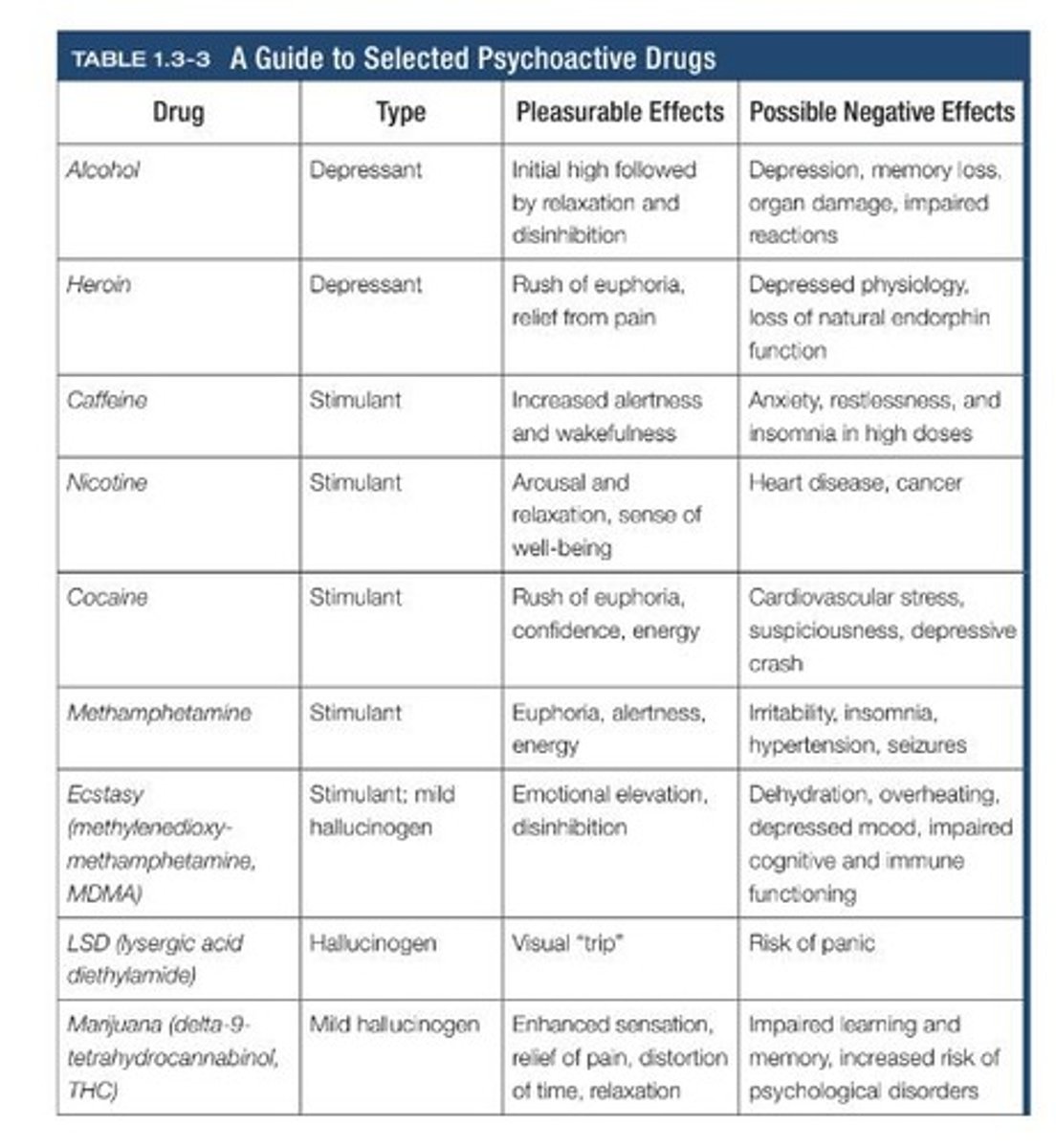
What is a psychoactive drug?
A chemical substance that alters the brain, causing changes in perceptions and moods.
Define substance use disorder.
A disorder characterized by continued substance use despite life disruption.
What are some common psychoactive substances used daily?
Caffeine, alcohol, and nicotine.
What are examples of more serious psychoactive drugs?
Heroin, cocaine, and LSD.
What symptoms indicate a substance use disorder?
Tolerance, withdrawal, diminished control, social functioning issues, and hazardous use.
What is tolerance in the context of substance use?
The diminishing effect with regular use of the same dose of a drug, requiring larger doses to achieve the same effect.
What is withdrawal?
The discomfort and distress that follow discontinuing an addictive drug or behavior.
What are depressants?
Drugs that reduce neural activity and slow body functions.
Name three types of depressants.
Alcohol, barbiturates, and opioids.
What are the effects of alcohol as a depressant?
Slowed reaction times, slurred speech, lowered inhibition, memory disruptions, and less REM sleep.
What can happen with extreme use of alcohol?
Development of alcohol use disorder, liver damage, shrinking of brain tissue, and premature death.
What are barbiturates?
Drugs that depress central nervous system activity, reducing anxiety but impairing memory and judgment.
What are opioids and their effects?
Opioids like heroin and morphine depress neural activity, creating euphoria and lethargy.
What are the risks associated with long-term opioid use?
Increased cravings, tolerance issues, decreased natural endorphin production, and overdose risk.
What are stimulants?
Drugs that excite neural activity and speed up body functions.
What is the relationship between expectancy and alcohol effects?
Expectancy can influence how one feels while using alcohol; subjects may feel effects from placebos if they believe they are drinking.
What is the significance of the opioid overdose statistic from 2019?
In 2019, a person was more likely to die from an accidental opioid overdose than a car crash.
What is a commonly used stimulant that can arouse the body and brain?
Caffeine
What is the leading cause of preventable death each year in the U.S.?
Cigarette smoking
How many deaths are attributed to tobacco products worldwide?
Nearly 7 million deaths
What neurotransmitters does nicotine affect?
Epinephrine, norepinephrine, and dopamine
What are some withdrawal symptoms associated with nicotine addiction?
Tolerance and withdrawal issues similar to those of cocaine and heroin.
What is the fastest drug use increase on record?
Vaping
What are the effects of cocaine on neurotransmitters?
Depletes dopamine, serotonin, and norepinephrine.
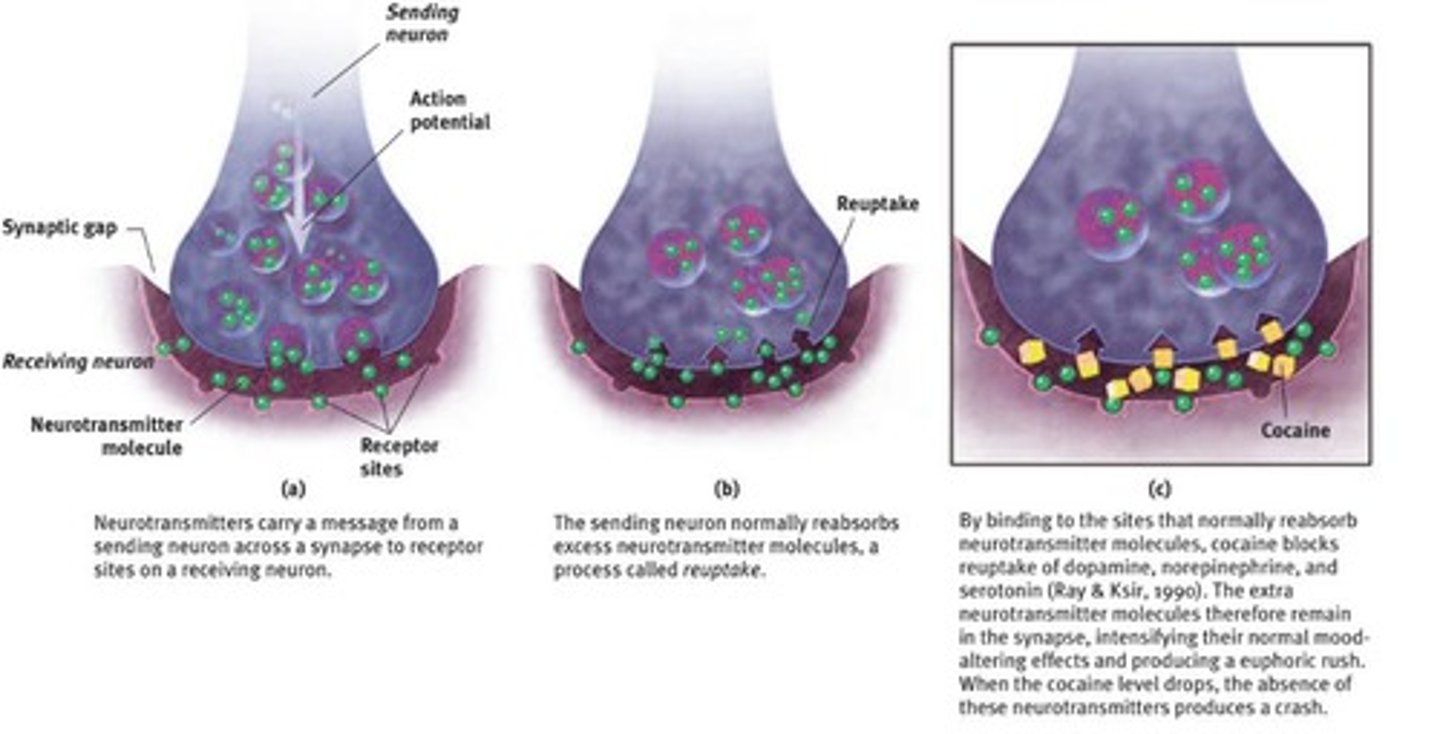
What can occur as a result of cocaine use?
Increased aggression, inflated confidence, emotional disturbances, and cardiac arrest.
What are the effects of amphetamines and methamphetamine?
Trigger strong releases of dopamine, enhancing energy and mood.
What are some negative consequences of ecstasy (MDMA) use?
Dehydration, overheating, and potential death.
What are hallucinogens?
Psychedelic drugs that distort perceptions and evoke sensory images in the absence of sensory input.
What is a near-death experience?
An altered state of consciousness reported after a close brush with death, often similar to drug-induced hallucinations.
What are some examples of hallucinogens?
LSD, MDMA, psilocybin, and ayahuasca.
What can LSD experiences range from?
Euphoria, detachment, to panic.
What is the active compound in marijuana?
THC (tetrahydrocannabinol)
What effects can marijuana induce?
Hallucinations, delusions, anxiety, relaxation, euphoria, and sleepiness.
What are some long-term risks associated with marijuana use?
Tolerance issues, depression, psychosis, and suicidal behavior.
How can marijuana be used medicinally?
To assist with nausea from cancer treatments, chronic pain, and muscle soreness.
What common feature do psychoactive drugs share?
They trigger changes to the brain and body that grow stronger with repetition.