MODULE 6 Protistan Diversity
 Call Kai
 Learn
Learn Practice Test
 Spaced Repetition
 Match
Match Flashcards
 Knowt Play
1/54

There's no tags or description
Looks like no tags are added yet.
Name | Mastery | Learn | Test | Matching | Spaced | Call with Kai |
|---|
No analytics yet
Send a link to your students to track their progress
55 Terms
The Old Five-Kingdom Model
Whittaker (1969)
In this model Protista = all single-celled eukaryotes
DNA Sequencing: The Molecular Evidence
Evidence That Broke Protista
Green algae share more DNA with land plants than with amoebas.
DNA Sequencing: The Molecular Evidence
Evidence That Broke Protista
Choanoflagellates share more DNA with animals than with diatoms.
DNA Sequencing: The Molecular Evidence
Evidence That Broke Protista
Slime molds share more DNA with Amoebozoa than with fungi.
DNA Sequencing: The Molecular Evidence
Evidence That Broke Protista
Many protists are more closely related to plants, animals, or fungi than they are to one another
DNA made it clear: Protista was not a natural evolutionary group.
Ultrastructure
Evidence That Broke Protista
Stramenopiles have a hairy flagellum.
Alveolates have cortical alveoli beneath the membrane.
Amoebozoa have lobose pseudopodia
Rhizaria have filose pseudopodia and mineralized tests
Plastids differ in the number of membranes, Ultrastructure revealing distinct endosymbiotic origins.
Stramenopiles
Alveolates
Evidence That Broke Protista - Ultrastructure
______________ have a hairy flagellum.
______________ have cortical alveoli beneath the membrane.
Amoebozoa
Rhizaria
Evidence That Broke Protista - Ultrastructure
______________ have lobose pseudopodia
______________ have filose pseudopodia and mineralized tests
Ultrastructure
Evidence That Broke Protista
This meant that protists were not “simple” or “primitive”—they were structurally diverse in ways that reflected deep evolutionary splits.
Evolutionary Relationships
Evidence That Broke Protista
Green algae closer to plants
Choanoflagellates closer to animals
Slime molds ≠ fungi
nucleus; ER; Golgi
Cytoskeleton
The First Eukaryotes
1.8–2.1 billion years ago
Internal membranes, _________, ___, ______
____________ for phagocytosis and movement
mitochondria
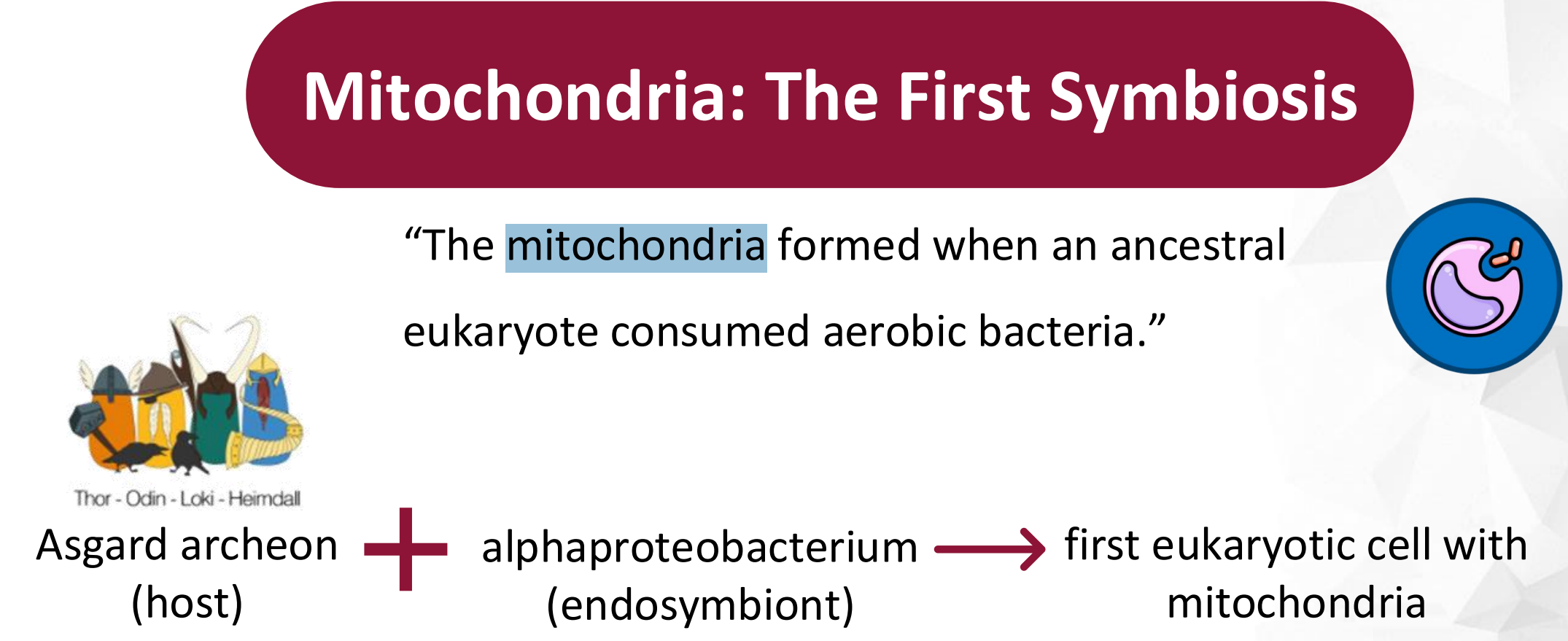
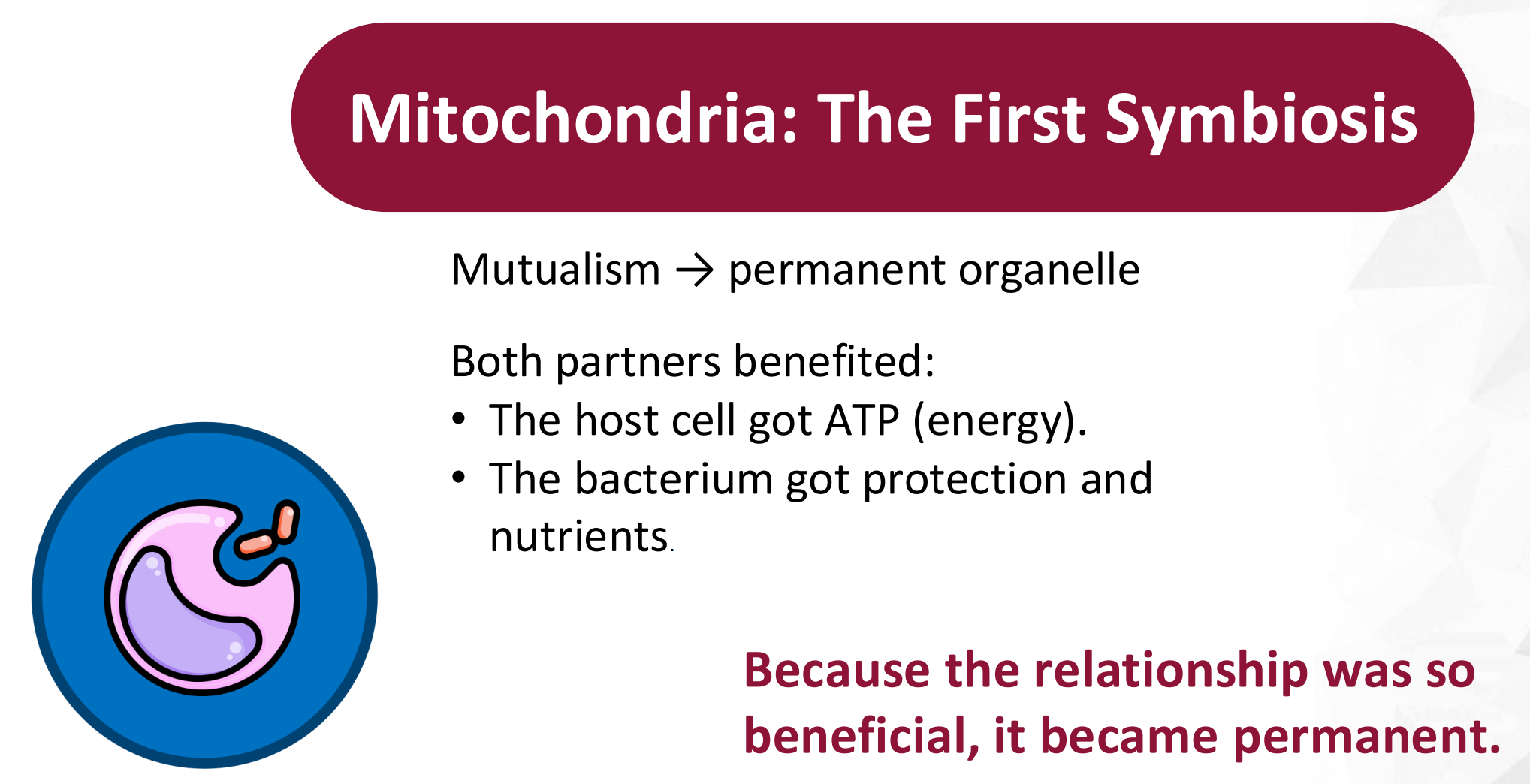
The _____________ formed when an ancestral eukaryote consumed aerobic bacteria.
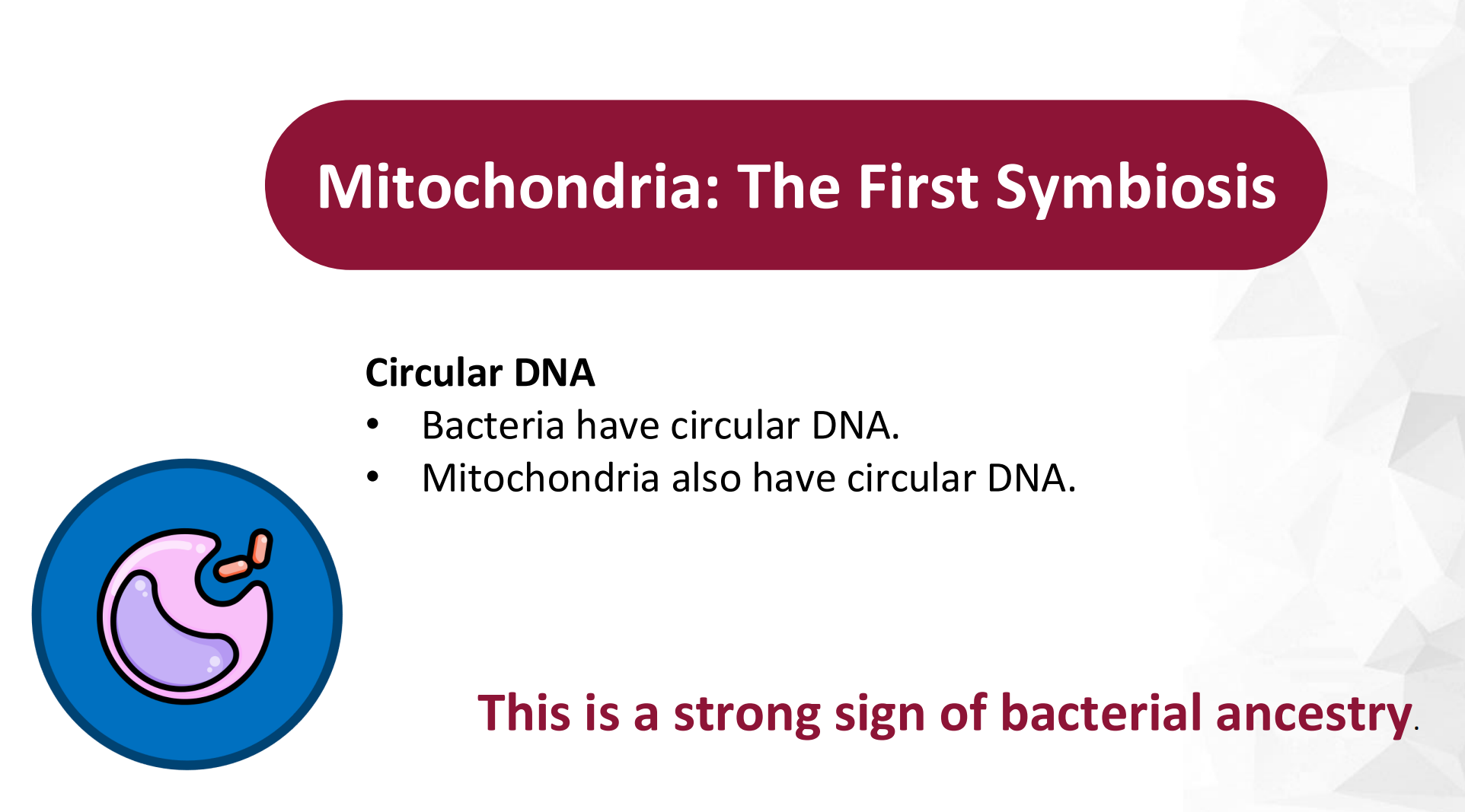
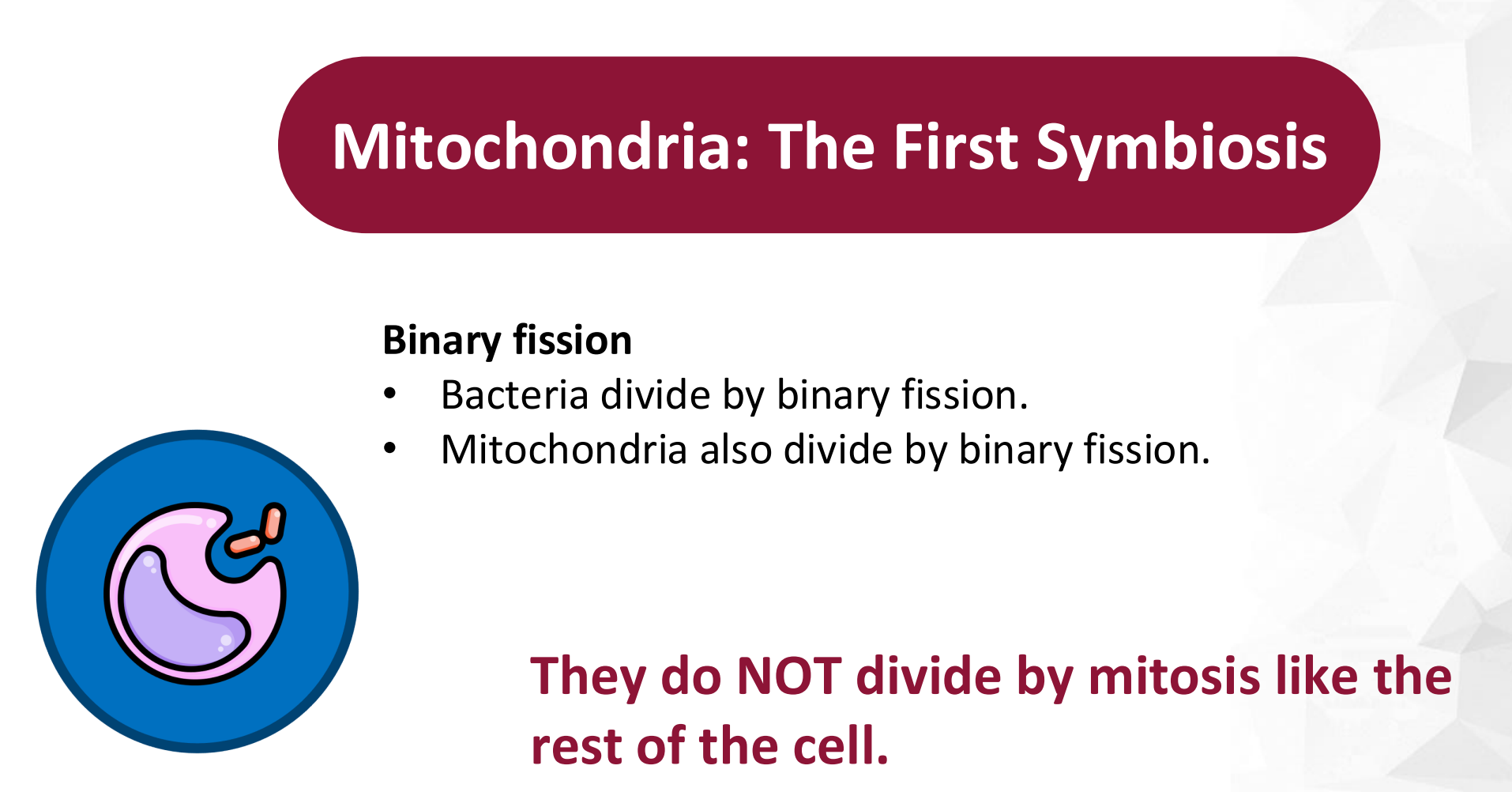
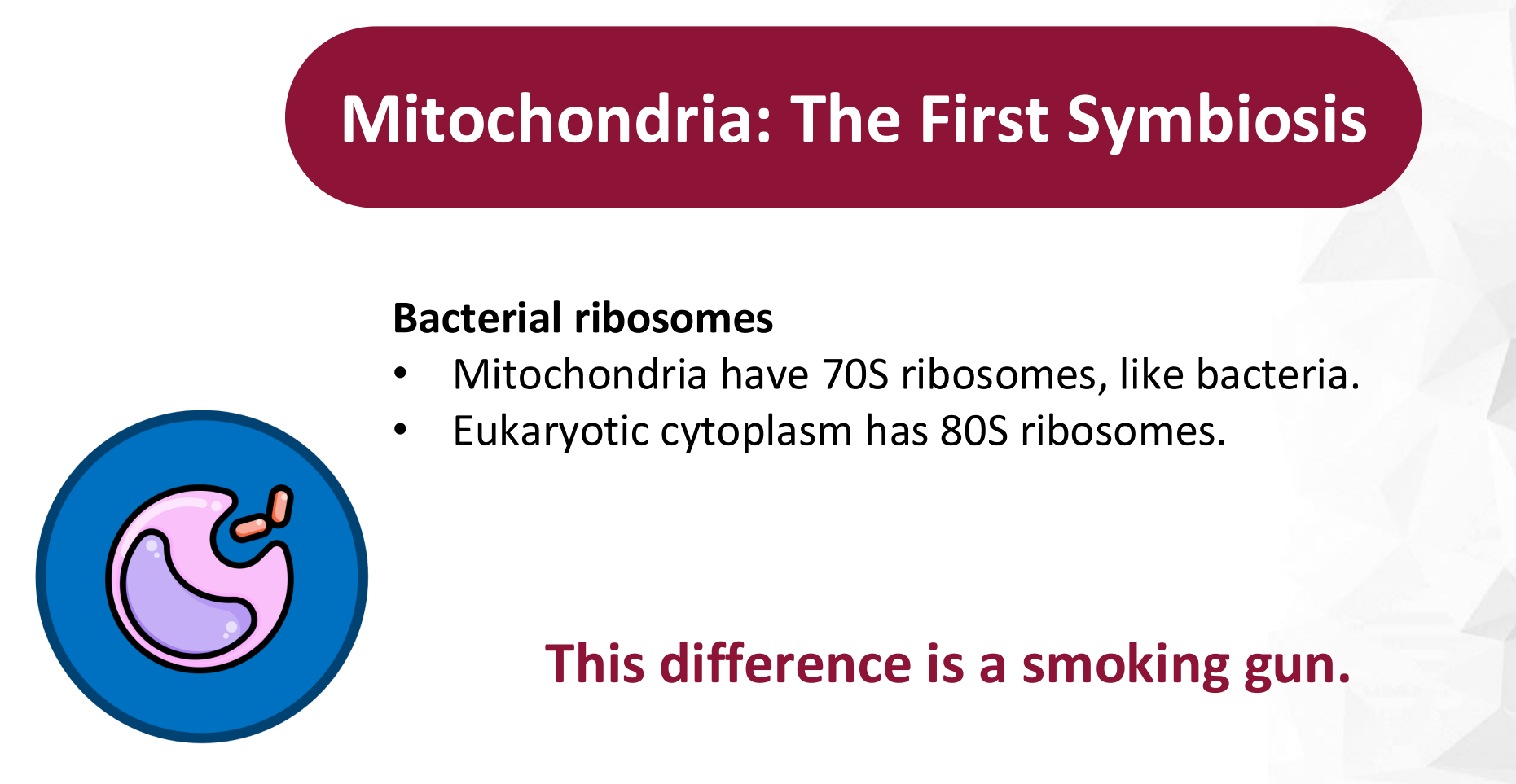
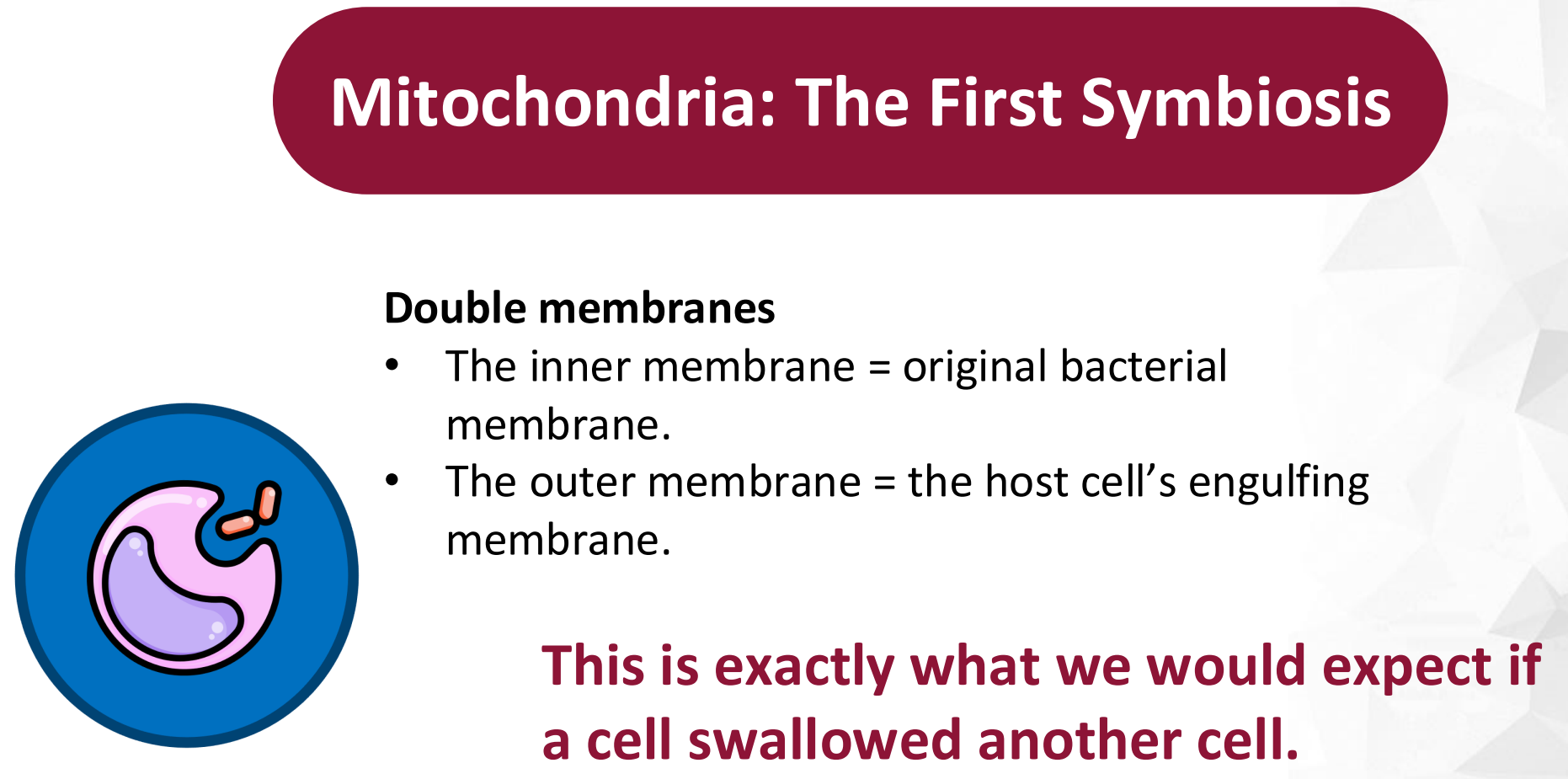
Evidence for “Mitochondria: The First Symbiosis”
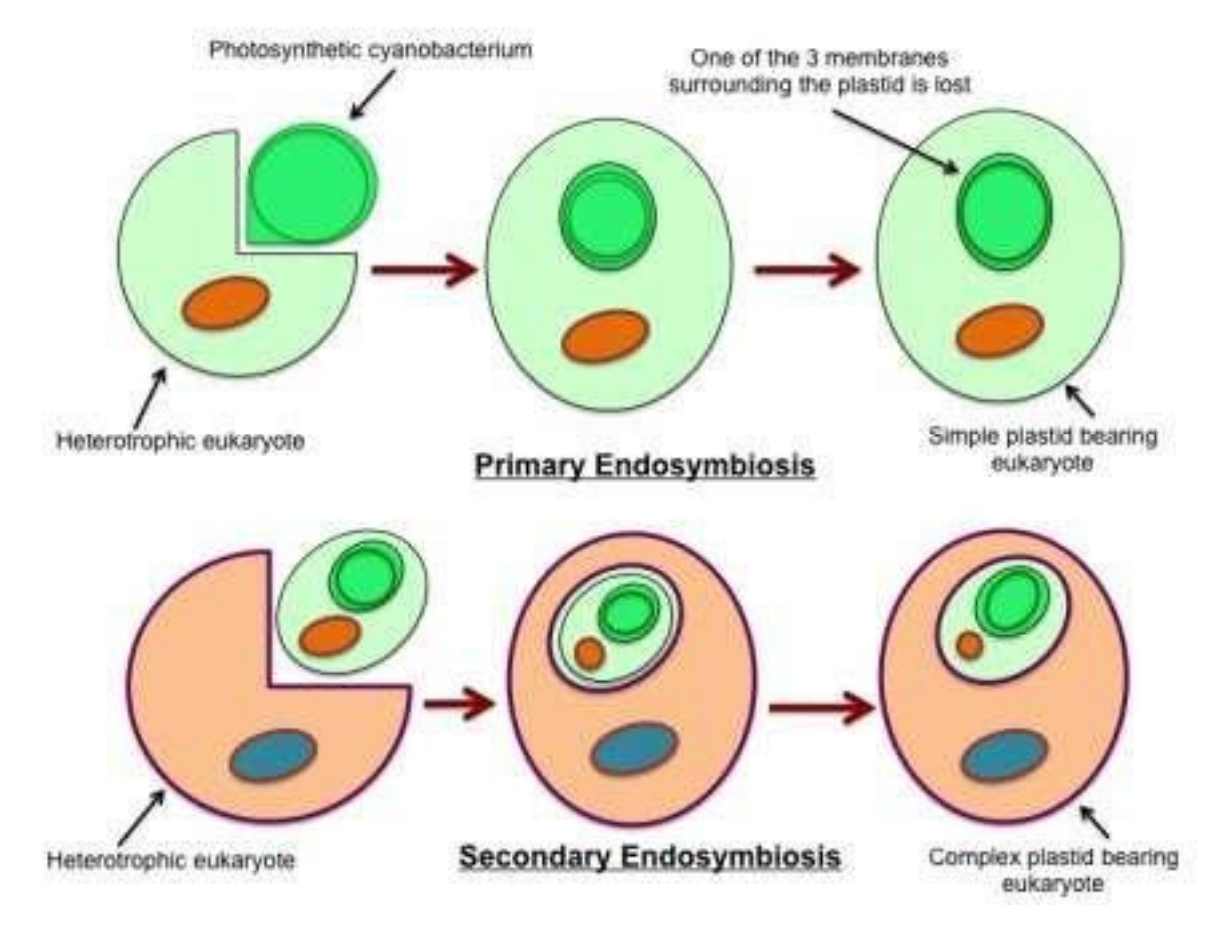
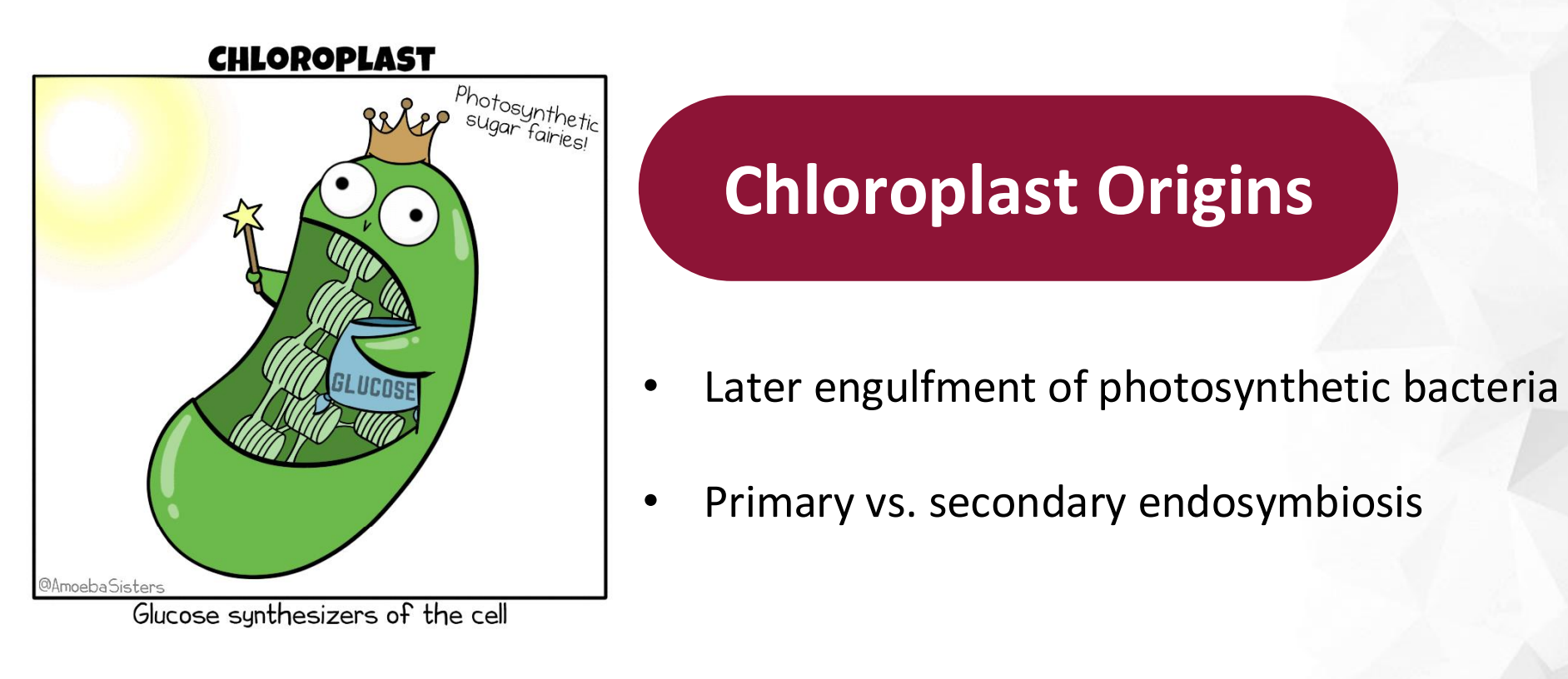
Primary Endosymbiosis
State whether this description is for primary or secondary endosymbiosis.
Cells involved - Eukaryotic cell engulfs another living prokaryote
Secondary Endosymbiosis
State whether this description is for primary or secondary endosymbiosis.
Cells involved - Eukaryotic cell engulfs another eukaryotic cell that has undergone primary endosymbiosis
Primary Endosymbiosis
State whether this description is for primary or secondary endosymbiosis.
Occurrence - first
Dependence - Cells are independent of one another
Secondary Endosymbiosis
State whether this description is for primary or secondary endosymbiosis.
Occurrence - later
Dependence - Smaller cell depends on the larger cell
Primary Endosymbiosis
State whether this description is for primary or secondary endosymbiosis.
Result - Formation of the first membrane, which belongs to the smaller cell
Secondary Endosymbiosis
State whether this description is for primary or secondary endosymbiosis.
Result - Formation of the three plasma membranes, where the second membrane belongs to the first eukaryotic cell, and the third membrane belongs to the second eukaryote
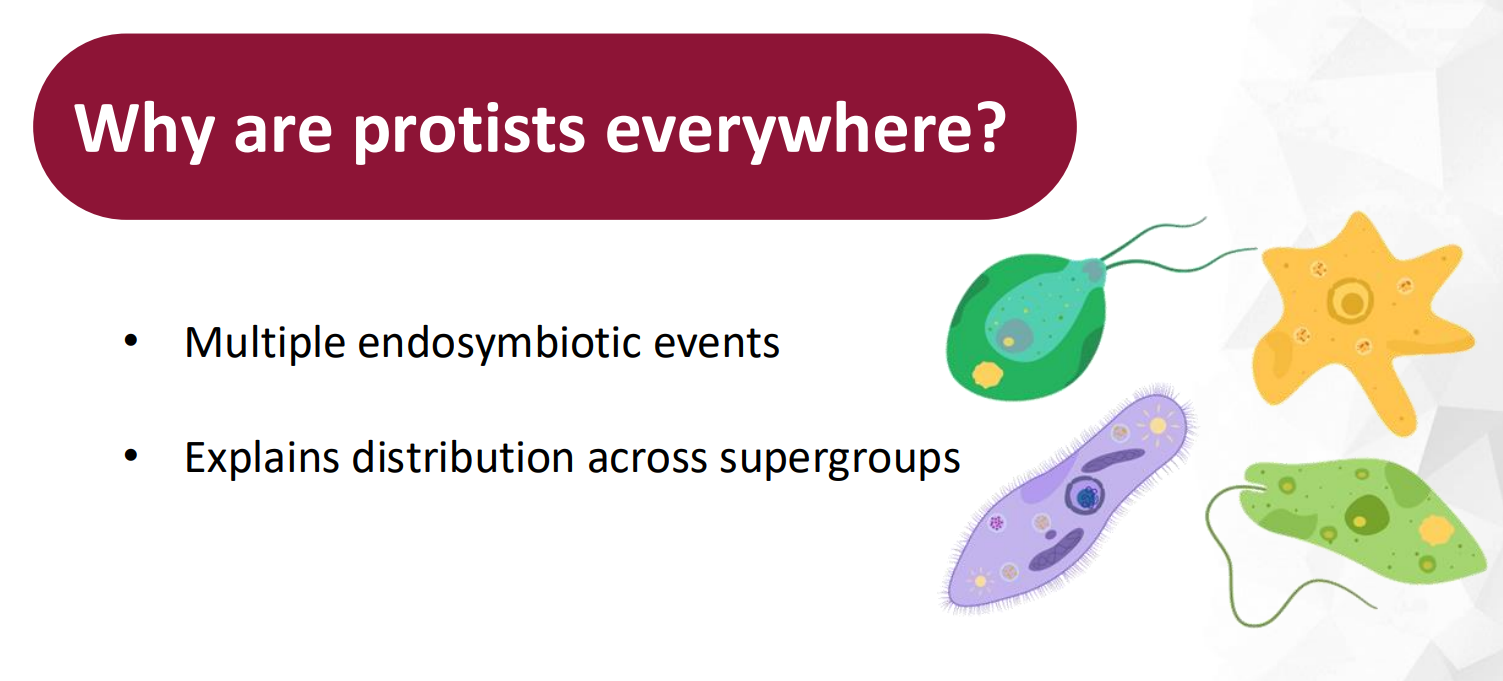
Protists are found almost everywhere—ranging from freshwater, marine environments, and damp soil to extreme habitats like snow, hot springs, and the digestive tracts of animals—due to their incredible metabolic, morphological, and ecological adaptability. Their pervasive distribution across diverse habitats is largely explained by multiple endosymbiotic events, which allowed them to acquire new functionalities (such as photosynthesis) and diversify, and their high adaptability, allowing them to fit into various ecological niches.
unicellular
multicellular; colonial
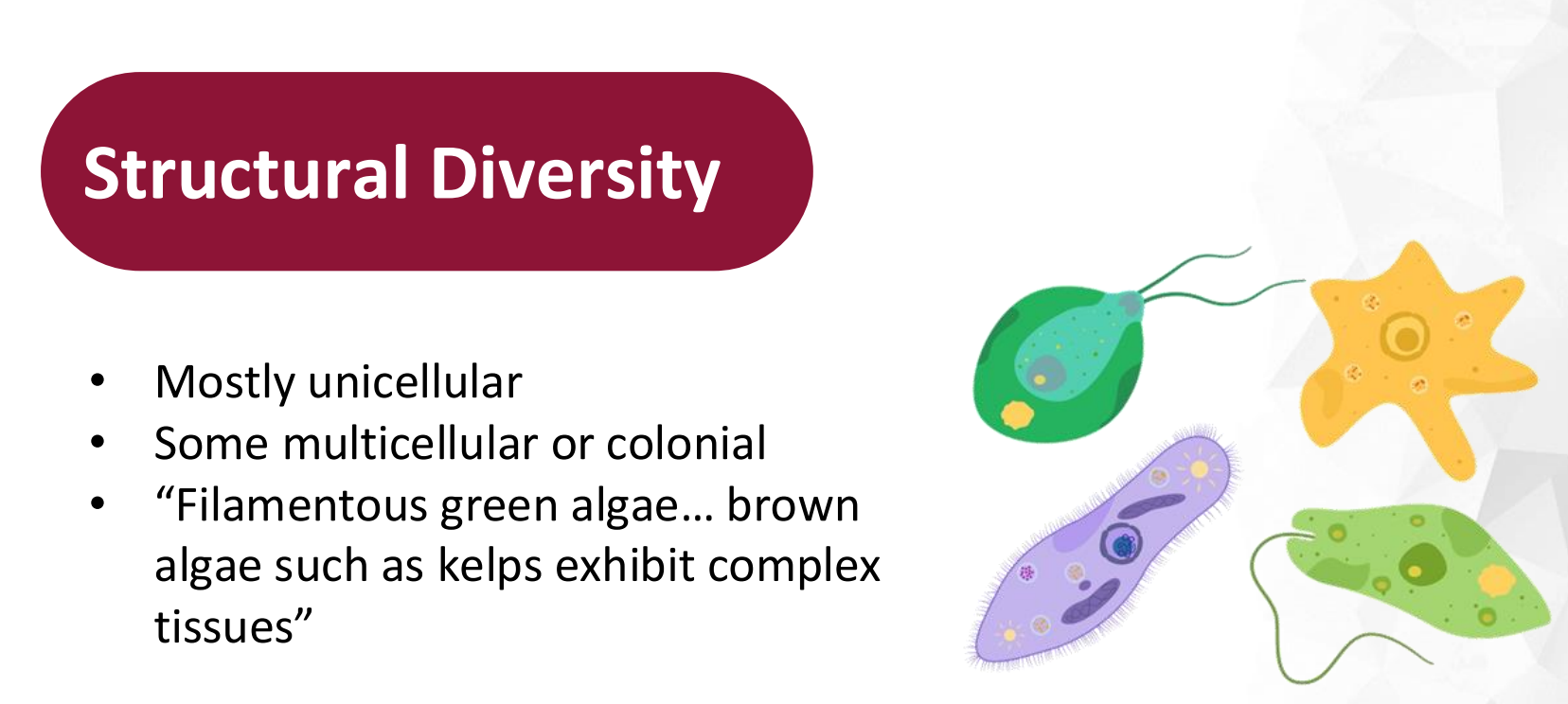
Protists are Mostly ____________
Some ____________ or _____________
Modes of Movement
Flagella
Cilia
Pseudopodia
Modes of Movement
________________
________________
________________
Life Cycles
Asexual (binary/multiple fission)
Sexual reproduction under stress
Alternation of generations in some groups
Life Cycles
Asexual (______________)
Sexual reproduction under stress
Alternation of generations in some groups
How were the protist supergroups determined?
Molecular phylogenetics
Ultrastructure
Endosymbiosis
Life cycles
Ecology
How were the protist supergroups determined?
_________________
_________________
_________________
_________________
_________________
Archaeplastida
Which protist supergroup does this describe?
Primary plastids
Cellulose walls
Archaeplastida
Which protist supergroup does this describe?
Starch storage
Glaucophytes retain peptidoglycan layer
Archaeplastida
Which protist supergroup does this describe?
Ecological Roles
Oxygen production
Red algae in reef building
Amoebozoa
Which protist supergroup does this describe?
Lobose pseudopodia
Phagocytosis
Amoebozoa
Which protist supergroup does this describe?
Soil predators, decomposers
Amoebozoa
Which protist supergroup does this describe?
Slime molds
Unicellular multicellular transitions
Aggregative behavior
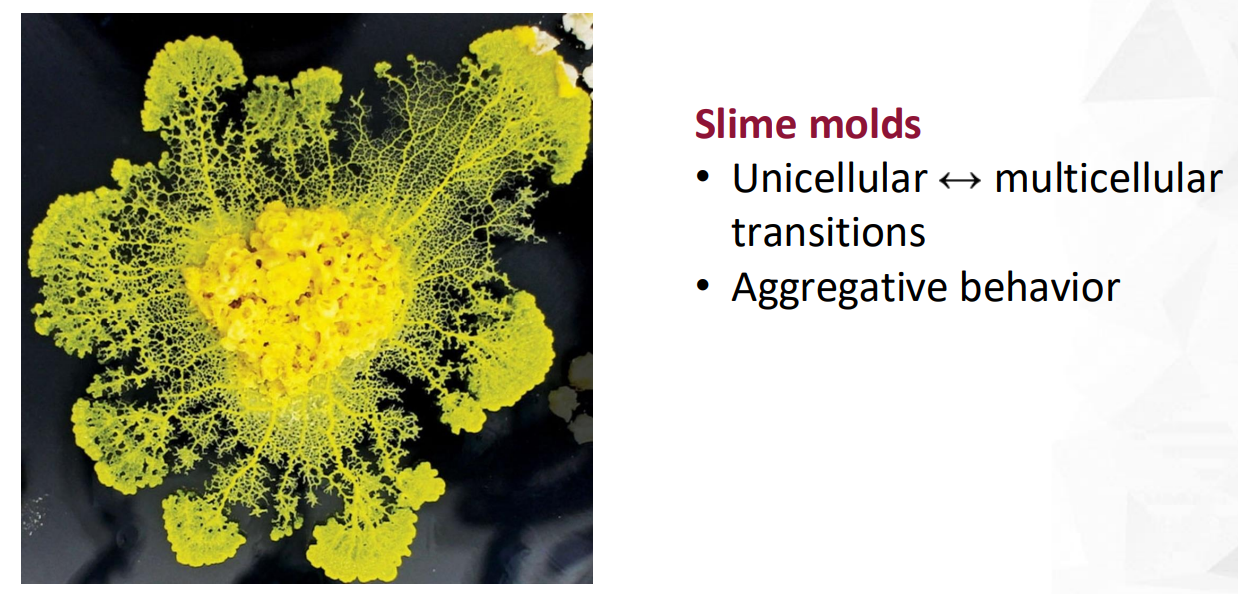
Amoebozoa
Which protist supergroup does this describe?
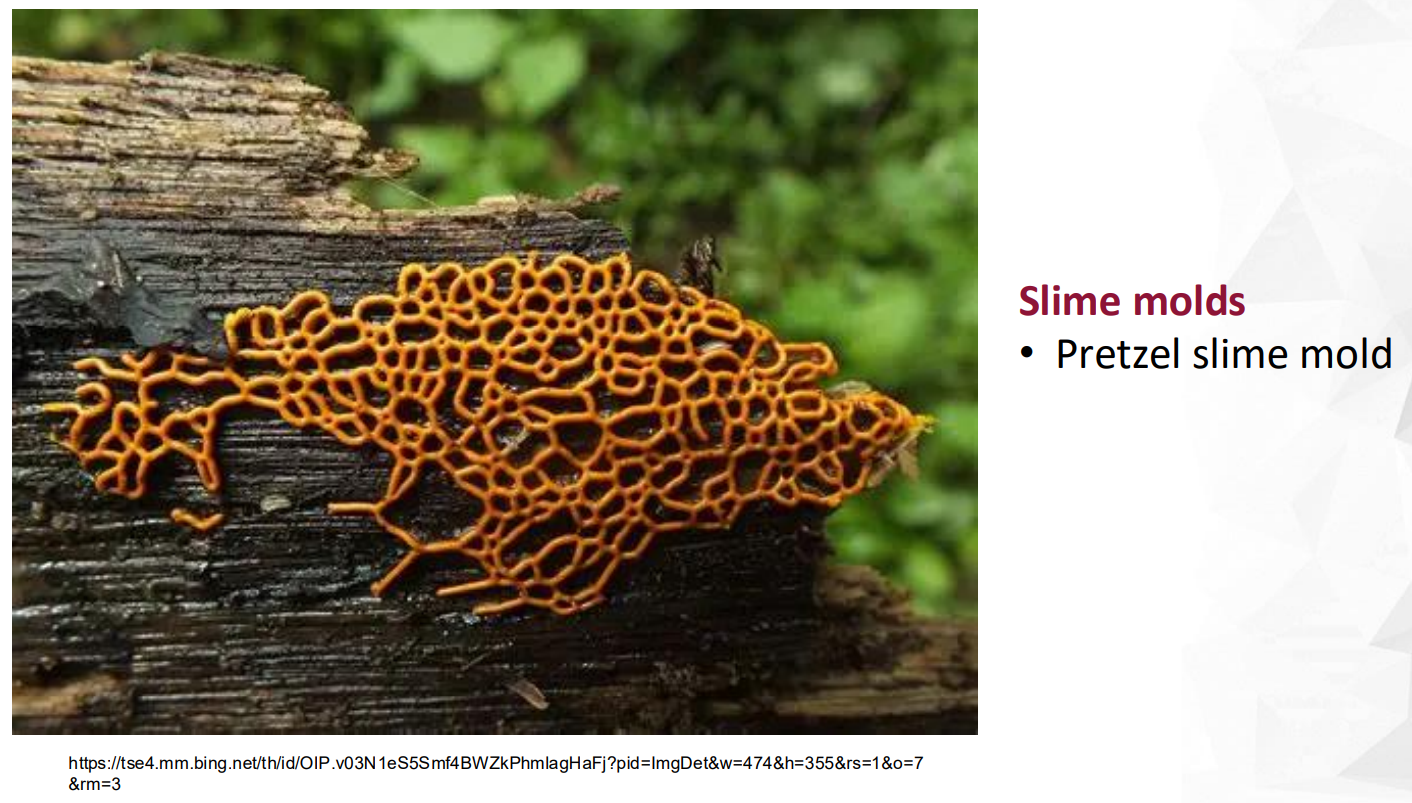
Opisthokonta
Which protist supergroup does this describe?
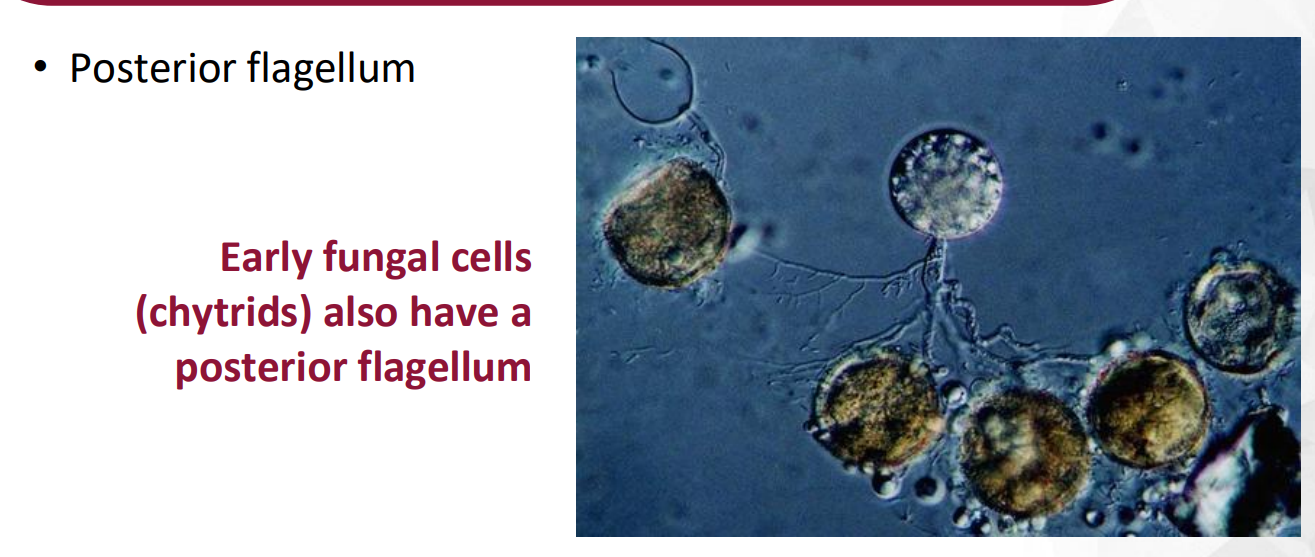
Animals + fungi + protist relatives
Posterior flagellum
Opisthokonta
Which protist supergroup does this describe?
Choanoflagellates resemble sponge collar cells
Opisthokonta
Which protist supergroup does this describe?
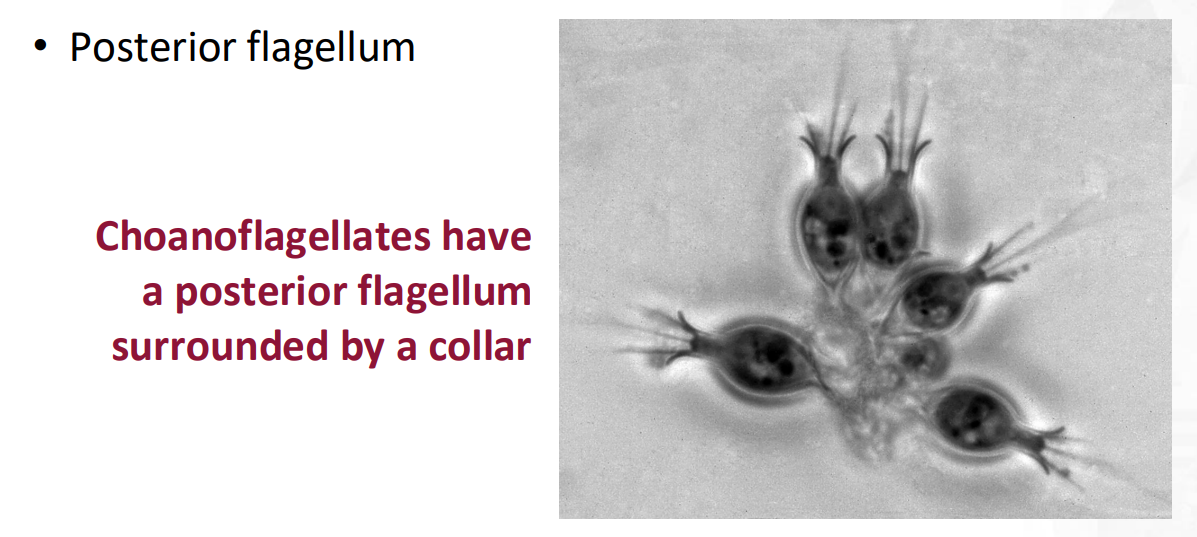
Opisthokonta
Which protist supergroup does this describe?
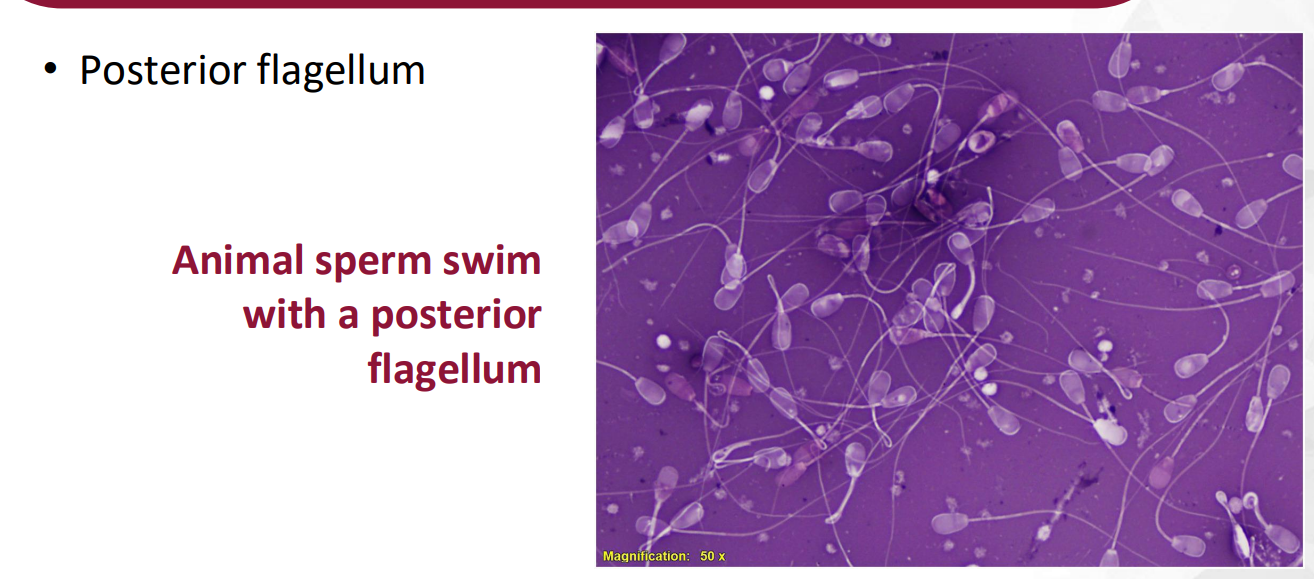
Opisthokonta
Which protist supergroup does this describe?
SAR
Which protist supergroup does this describe?
Stramenopila, Alveolata, and Rhizaria
Strong molecular support
Extremely diverse
SAR - Stramenopila
Which protist supergroup does this describe?
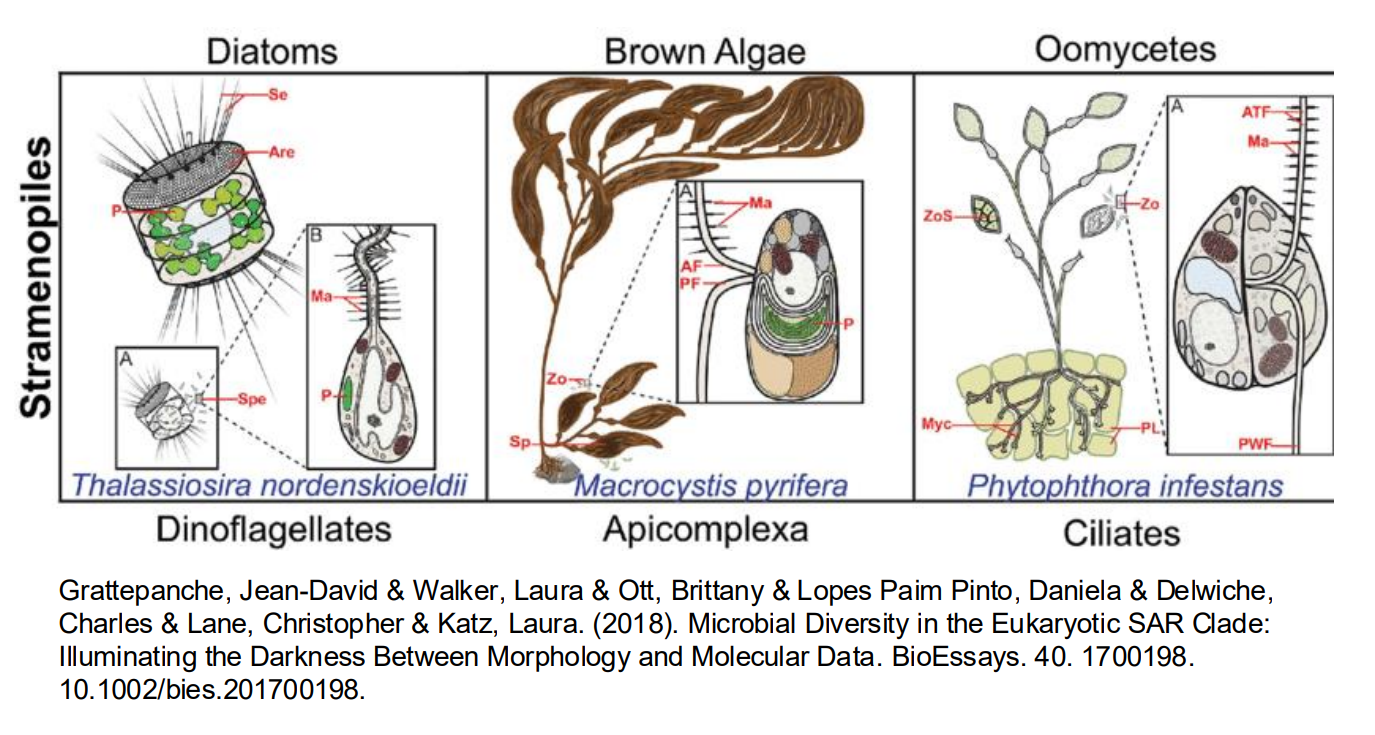
Hairy flagellum
SAR - Stramenopila
Which protist supergroup does this describe?
Diatoms (silica frustules)
Brown algae (kelp forests)
Oomycetes (decomposers/parasites)
SAR - Alveolata
Which protist supergroup does this describe?
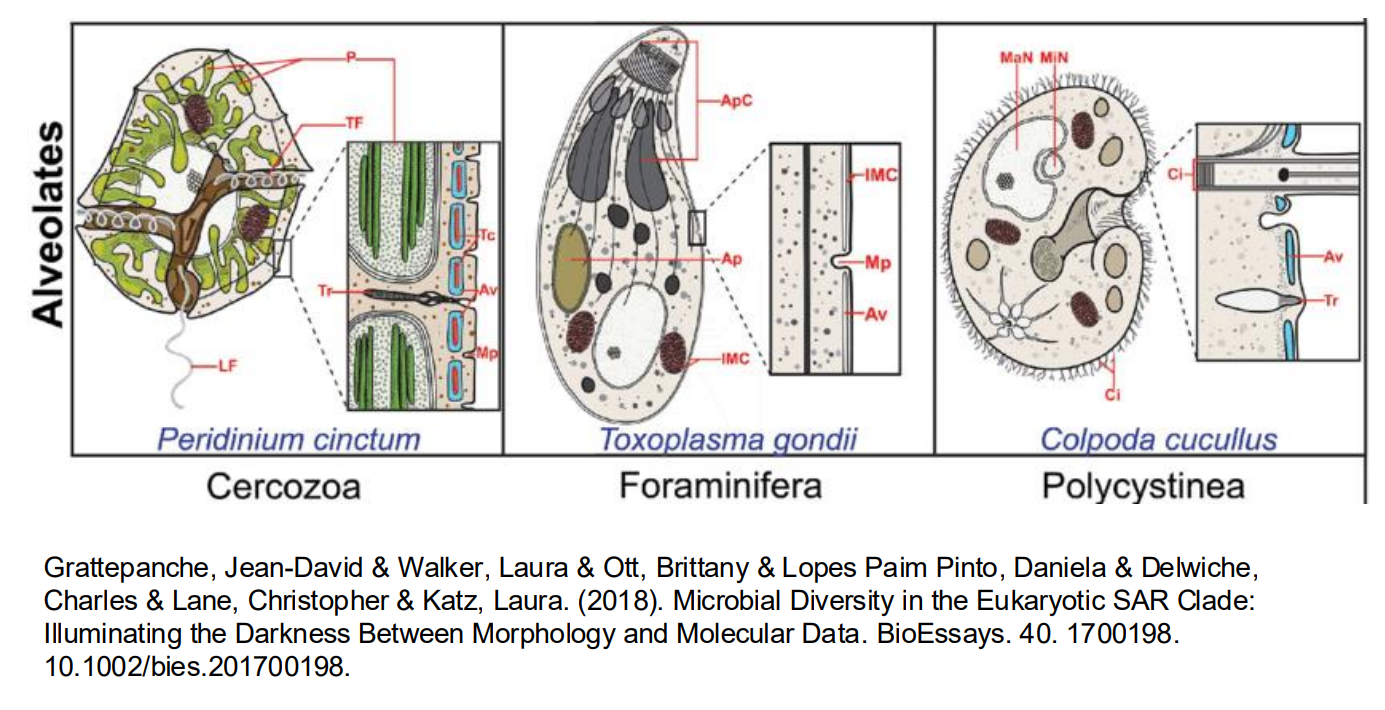
Cortical alveoli
SAR - Alveolata
Which protist supergroup does this describe?
Dinoflagellates (red tides, bioluminescence)
Apicomplexans (Plasmodium)
Ciliates (dual nuclei)
SAR - Rhizaria
Which protist supergroup does this describe?
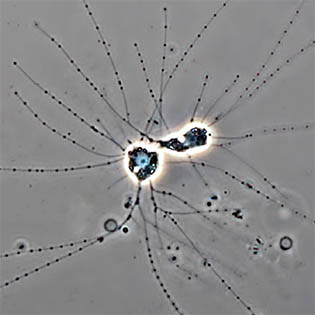
Filamentous pseudopodia
SAR - Rhizaria
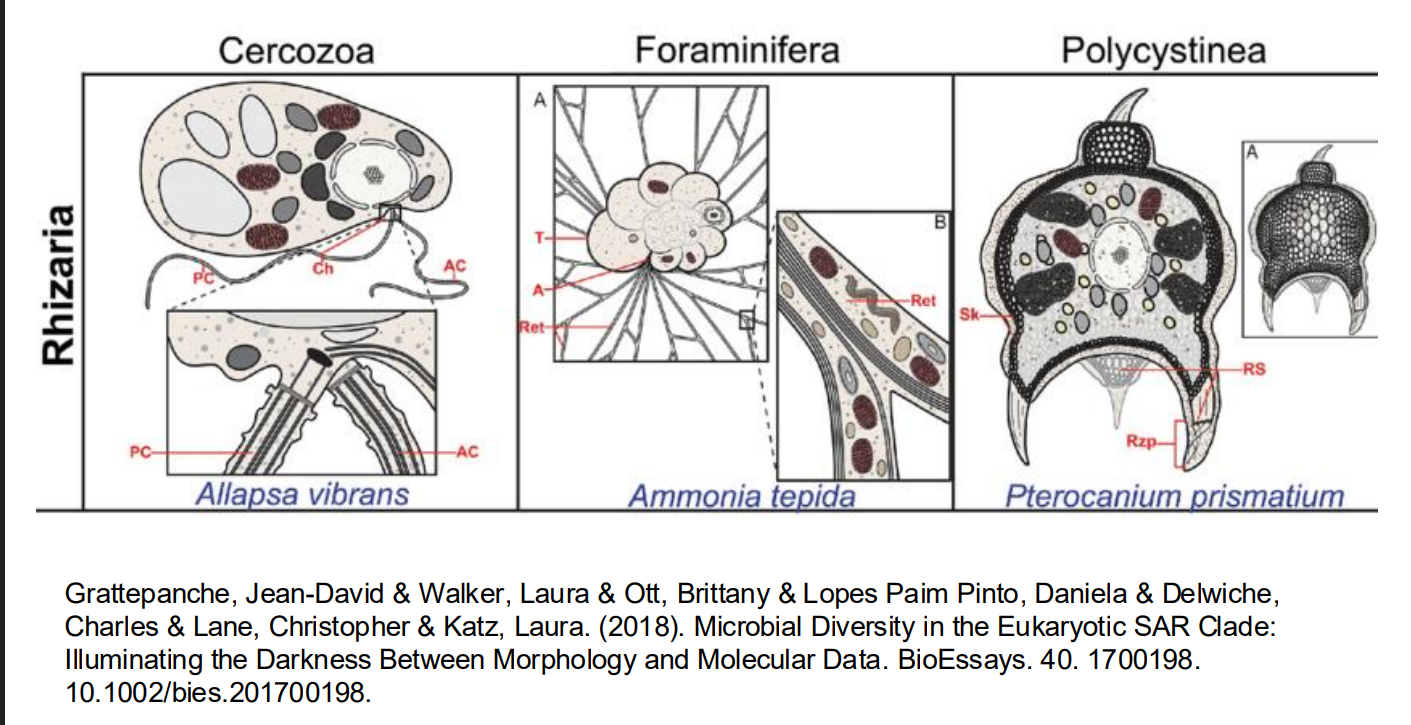
Which protist supergroup does this describe?
Forams (CaCO₃ tests)
Radiolarians (silica skeletons)
Excavata
Which protist supergroup does this describe?
Feeding groove
Excavata
Which protist supergroup does this describe?
Modified mitochondria (mitosomes, hydrogenosomes)
Excavata
Which protist supergroup does this describe?
Flexible pellicle
Excavata
Which protist supergroup does this describe?
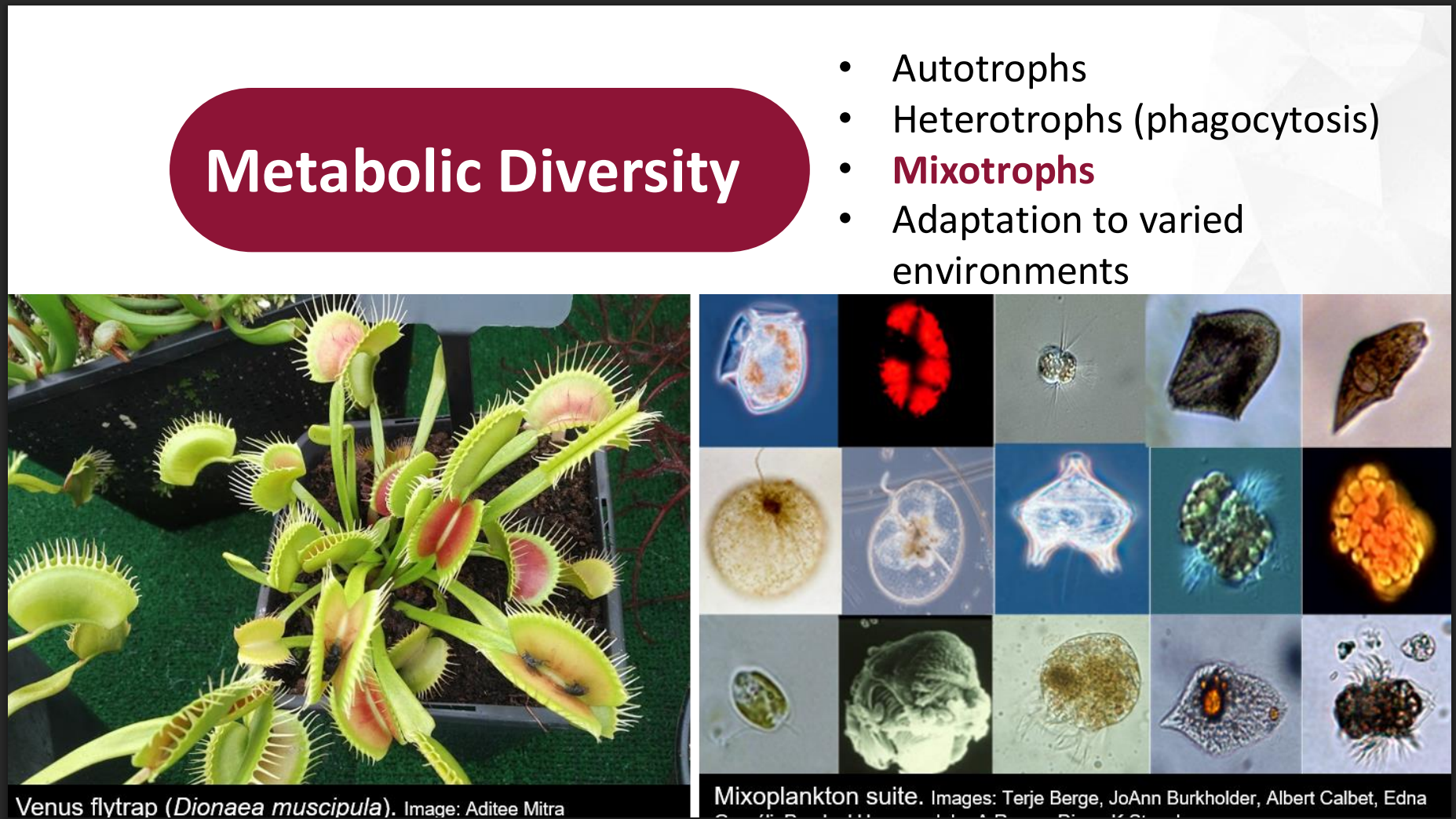
Mixotrophs (Euglena)
Parasites (Giardia, Trypanosoma)
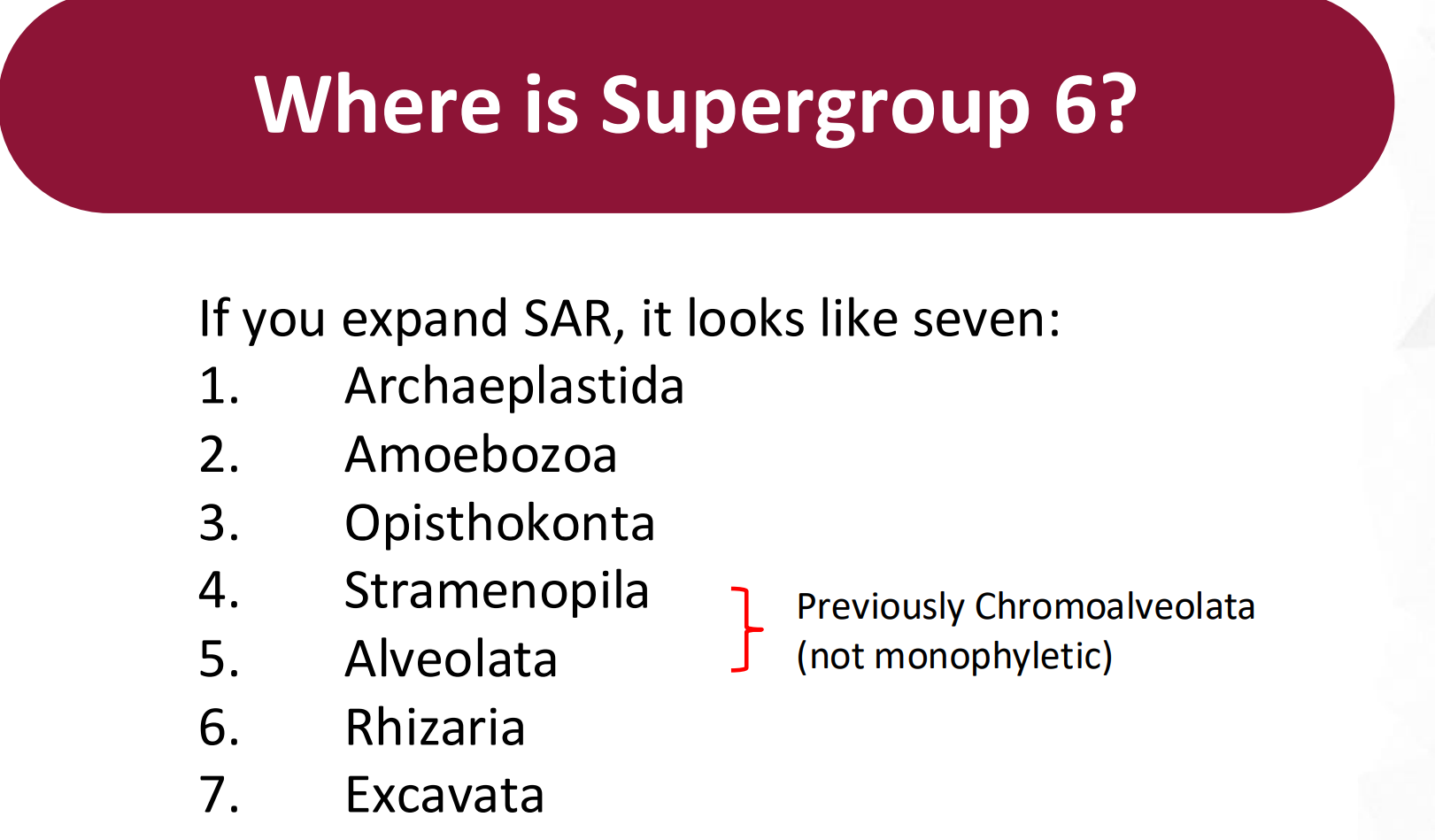
Stramenopila
Alveolata
What are the two groups previously known as Chromoalveolata?
Protists as Primary Producers
Which Ecological & Human Impact?
Diatoms + dinoflagellates = ~50% of global photosynthesis
Base of aquatic food webs
Symbiosis: Coral & Zooxanthellae
Which Ecological & Human Impact?
Nutrient exchange
Coral bleaching when symbiosis breaks down
Protists as Decomposers
Which Ecological & Human Impact?
Oomycetes
Slime molds
Nutrient recycling
Protists as Pathogens
Which Ecological & Human Impact?
Plasmodium → malaria
Trypanosoma brucei → sleeping sickness
Naegleria fowleri → encephalitis
Entamoeba histolytica → amoebiasis