Physiology Exam 3 (Modules 11-15)
 Call Kai
 Learn
Learn Practice Test
 Spaced Repetition
 Match
Match Flashcards
 Knowt Play
1/43

Earn XP
Description and Tags
Endocrine, Immune, Excretory, Digestive, Reproductive system, and deriving energy
Name | Mastery | Learn | Test | Matching | Spaced | Call with Kai |
|---|
No analytics yet
Send a link to your students to track their progress
44 Terms
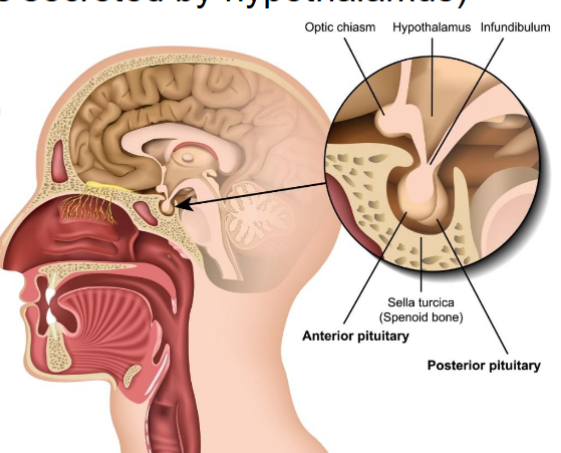
Anatomy of the Pituitary Gland
Anterior Lobe:
Produces and secretes the hormones of pituitary
Regulated by hypothalamus through hypophyseal portal system (via hormones secreted by hypothalamus)
Posterior lobe:
Stores and secretes hormones
Hypothalamic nerves regulate it
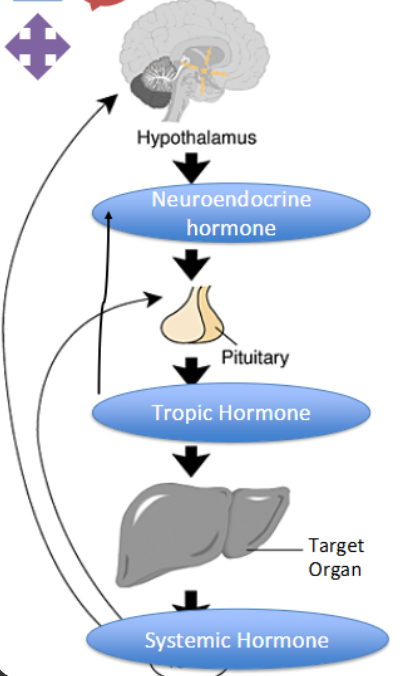
Generic Hormone Axis
Hypothalamus → Neuroendocrine hormones (receive signals from the nervous system and respond by secreting hormones into the blood stream) → Pituitary Glands → Tropic Hormone (regulate the activity of other endocrine glands) → Target Organ → Systemic Hormone
Negative feedback loop
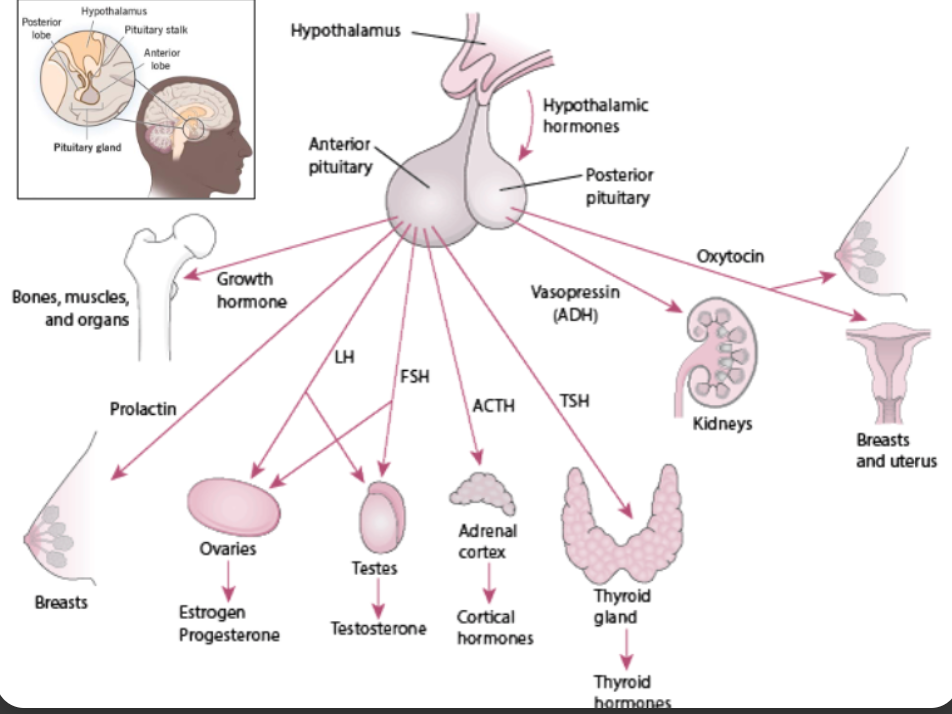
Anterior vs Posterior Hormones
Anterior:
Growth Hormones (Bones, muscles, and organs)
Prolactin (milk production)
Ovaries (Estrogen and Progesterone)
Testes (Testosterone)
Adrenal Cortex (Cortical hormones)
Thyroid Gland ( Thyroid hormones)
Posterior
Oxytocin (releasing milk)
Uterus
Kidneys
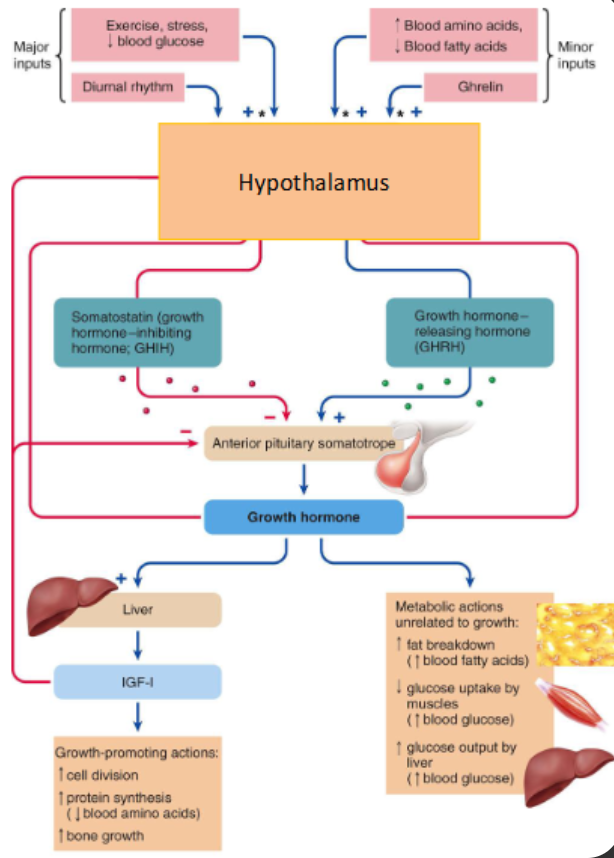
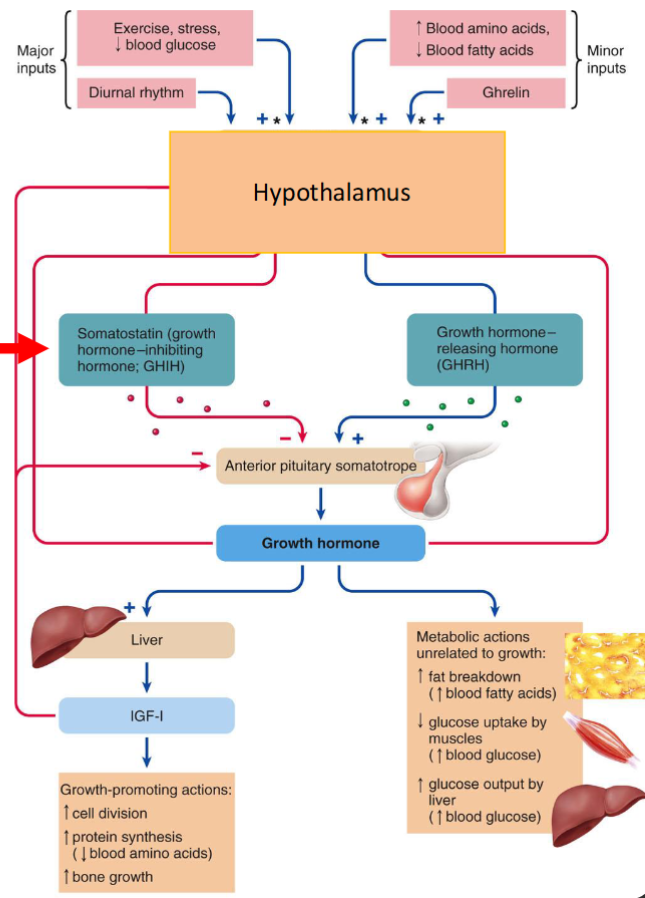
Hypothalamic- Pituitary Growth Axis (HPS)
Non-uniform regulation (growth spurts)
GHRH (Growth hormone- releasing hormone) regulates growth hormones
Somatostatin (Growth Hormone- Inhibiting Hormone (GHIH))
Ghrelin (hunger hormone)
Diurnal Rhythm (process that cycles every 24 hours) (external factors like light drive it)
Growth Axis
Hypothalamus → Anterior Pituitary → GH
Factors such as:
Genetics
Environmental/ internal influences:
-Exercise (+)
-Stress (-)
-Nutritive Status (Amino acids +) (Fatty acids -)
-Sleep (+)
GH activity
Bind directly to receptors (liver, fat, muscles)
fatty acid in blood, decrease glucose uptake
- Muscles run on fat
-More glucose for the brain
INDIRECTLY stimulates amino acid uptake and protein synthesis vis Insulin-like growth factors (IGFs)
Insulin like Growth Factors (IGF)
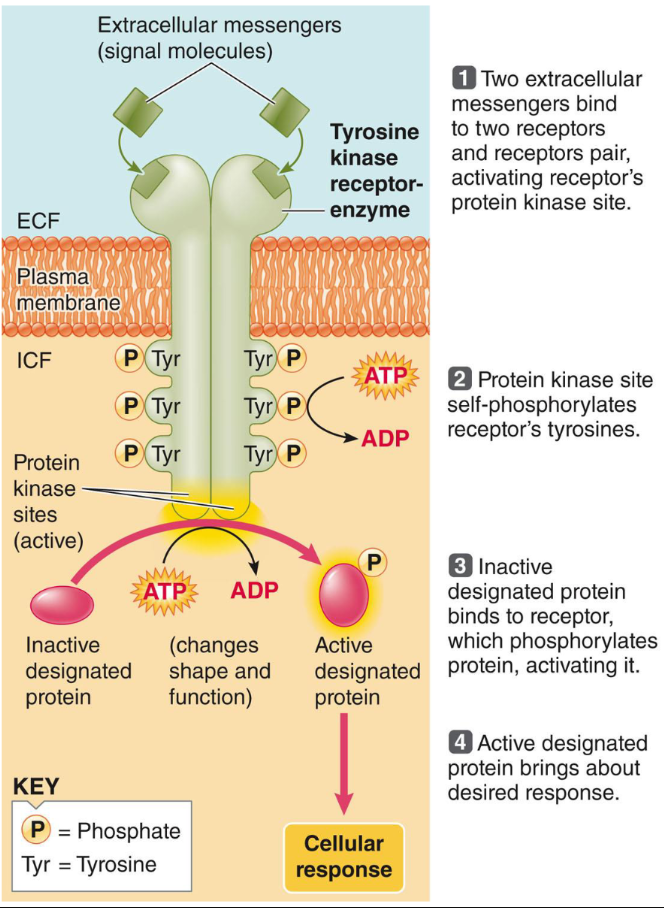
1.) 2 extracellular messengers bind to 2 receptors, which activates receptor’s protein kinase site
2.) Protein Kinase site self- phosphorylates receptor’s tyrosines
3.) Inactive designated protein binds to receptor, which phosphorylates the protein, activating it
IGFs causes
hyperplasia (cell division)
hypertrophy (cell enlargement)
Prolongs cell life span
Increases synthesis of DNA, RNA, and proteins
IGF-I
Released by the liver in response to GH
IGF-II
Doesn’t respond to GH
Involved in fetal growth
GH-Negative Feedback
IGF-I affects Somatostatin and GHRH via the hypothalamus and GH secretion
Negative for GH and positive for Somatostatin
Pituitary Dwarfism
Short stature with normal proportions @ birth and can develop
Gigantism
Excessive growth in children (before puberty)
Acromegaly
Excessive GH after puberty
Hypothalamic- Pituitary Thyroid Axis
Thyrotropin-releasing hormone
Thyroid stimulating hormone
Production of Thyroxine (T4) and tri-iodothyronine (T3)
T4+ T3 = Thyroid hormone
Bind to plasma proteins
Consistent secretion
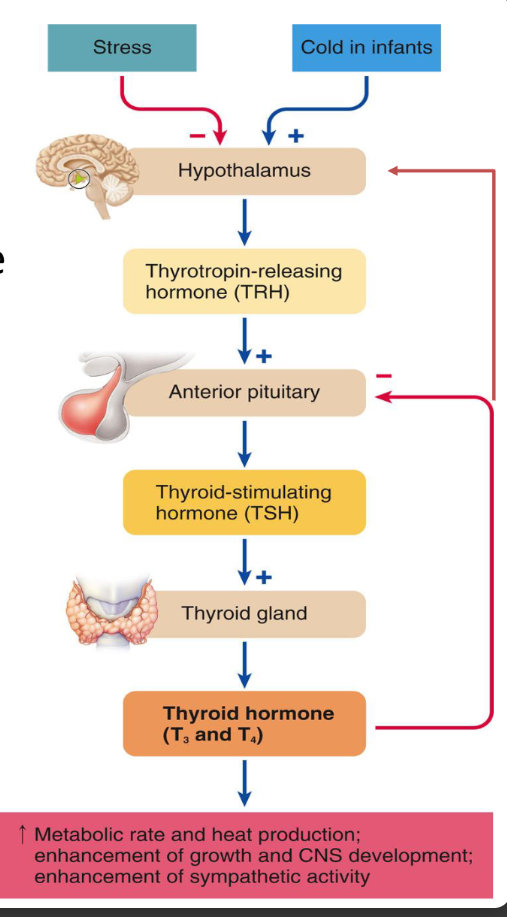
Thyroid Hormone Activity
-Initiates transcription of specific mRNAs
-Increases overall metabolic rate by influencing mitochondrial activity and Na+/K+ pumps
-Low Levels → fuel storage
-High Levels → fuel catabolism (break down of molecules)
Developmental effects
-Vertebrate CNS
-Life history s