Computer Science EOPA
 Call Kai
 Learn
Learn Practice Test
 Spaced Repetition
 Match
Match Flashcards
 Knowt Play
1/185

There's no tags or description
Looks like no tags are added yet.
Name | Mastery | Learn | Test | Matching | Spaced | Call with Kai |
|---|
No analytics yet
Send a link to your students to track their progress
186 Terms
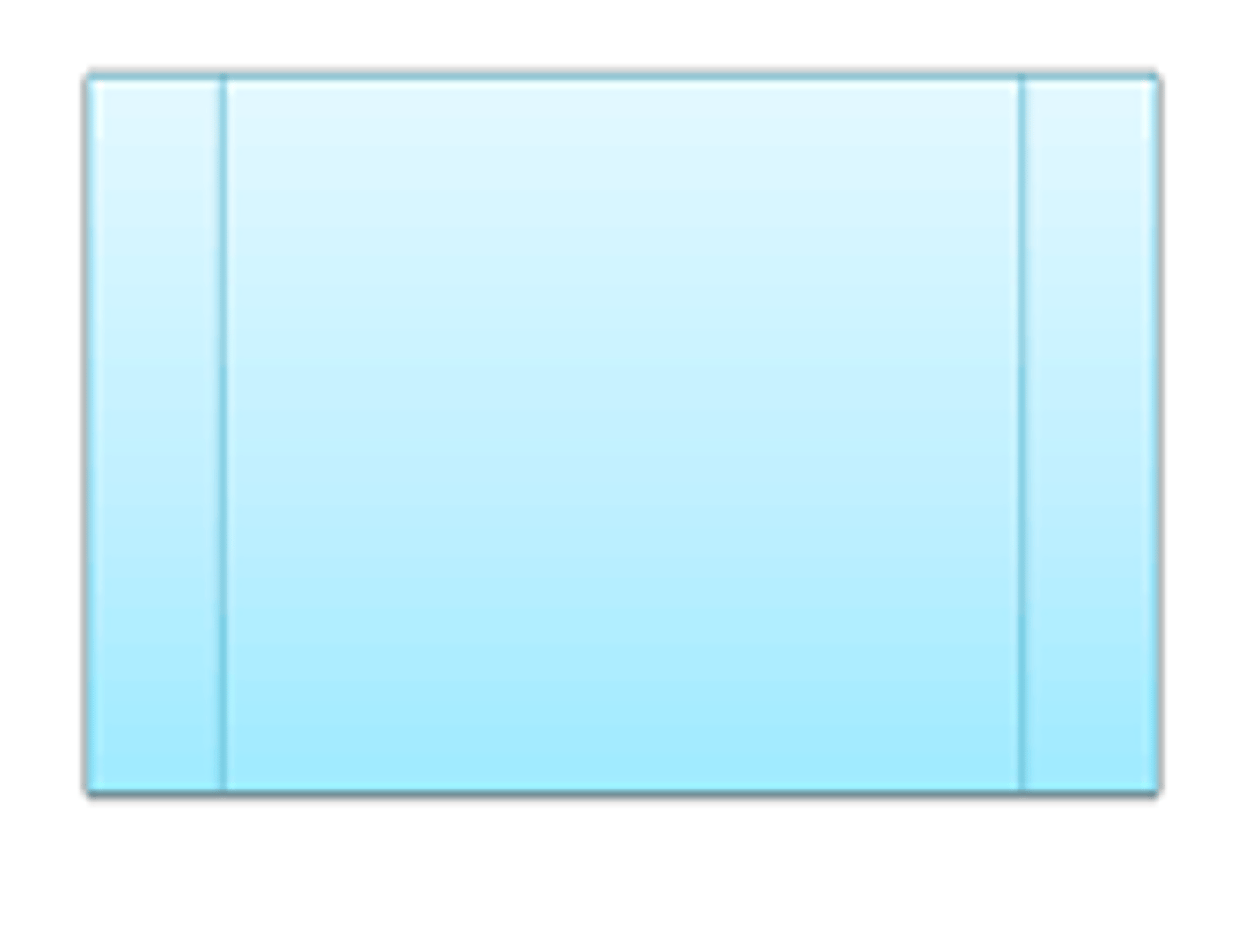
This symbol is used to show a Subroutine in flowcharts
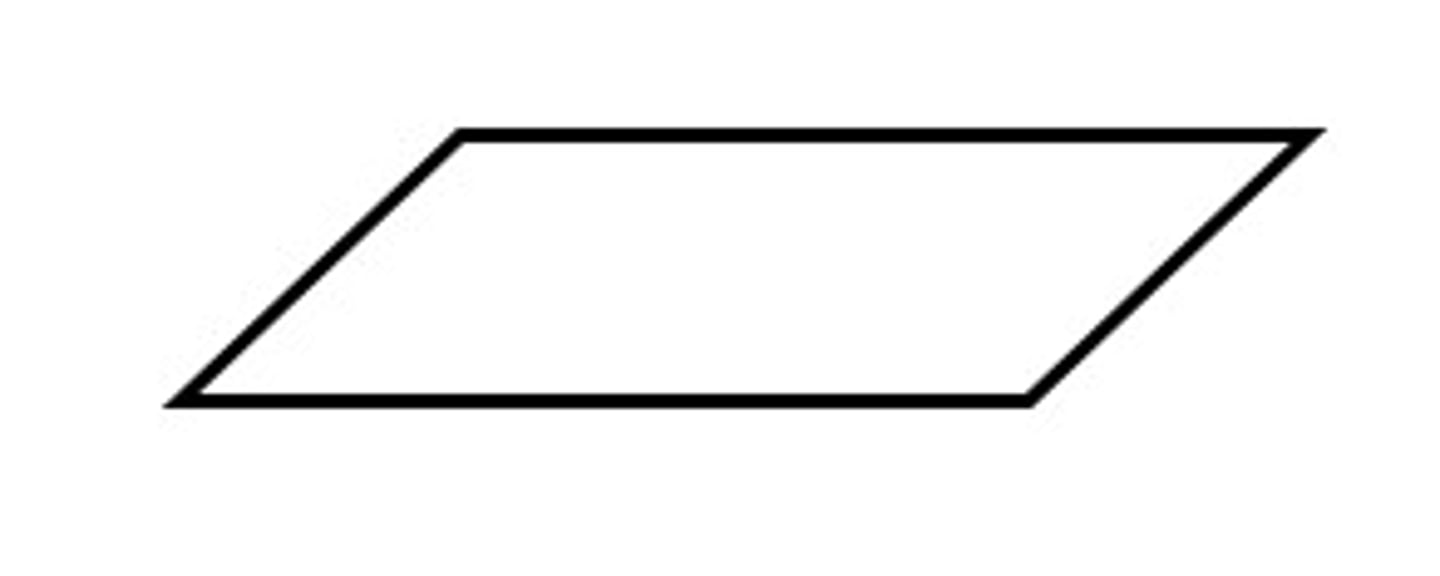
Input / Output a value with this symbol
Make a decision in your flowchart with this symbol

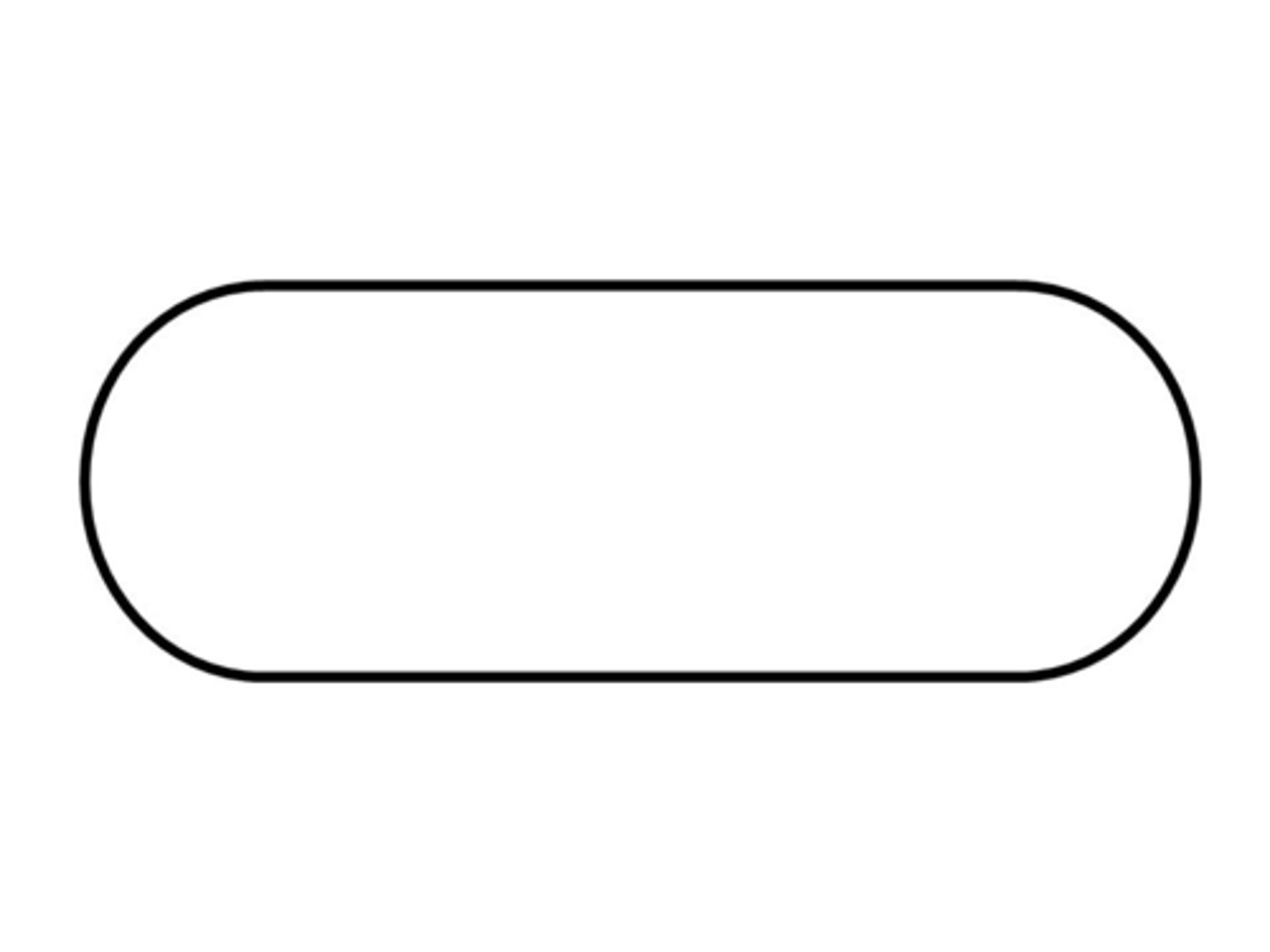
Start or end of a flowchart with this symbol
For...Next statement
is an iterative, incremental loop statement used to repeat a sequence of statements for a specific number of occurrences.
Concatenation
The process of joining two or more strings into one string.
Keyword
Identifier reserved by a programming a language
!
Not, will make a true expression false, and a false expression true.
<
Less than, will be true if the expression on the left is less than the expression on the right.
>=
Greater than or equal to, will be true if the expression on the left is greater than or equal to the expression on the right.
<=
Less than or equal to, will be true if the expression on the left is less than or equal to the expression on the right.
==
Equal to (loose equality), will be true if the expressions on both sizes are equal, but not necessarily the same data type.
&&
And, will be true if the expressions on both side are true.
>
Greater than, will be true if the expression on the left is greater than the expression on the right.
!==
Not equal to (strict equality), will be true if the expressions on both sizes are not equal, or not same data type.
||
Or, will be true if the at lease one of the expressions is true.
===
Equal to (strict equality), will be true if the expressions on both sizes are equal, and the same data type.
!=
Not equal to (loose equality), will be true if the expressions on both sizes are not equal, data type does not matter.
Select...Case Is
is an alternative way to write If/ElseIf statements
FORTRAN
A high-level (compiled) computer programming language that is used for mathematical and scientific computation.
JavaScript
A high level, interpreted language that is one of the 3 core Web technologies along with CSS and HTML.
High-level language
A programming language such as C, FORTRAN, or Pascal that enables a programmer to write programs that are more or less independent of a particular type of computer. These languages are closer to human languages and further from machine languages.
Scripting (interpreted) languages
Perl, AJAX, JavaScript, PHP, Python, and Ruby are examples of __________ languages used for web development.
Low-level language
A programming language that provides little or no abstraction from a computer's instruction set architecture—commands or functions in the language map closely to processor instructions (i.e. assembly).
PHP
A programming language that is especially suited for web development and can be embedded into HTML.
Perl
A scripting (interpreted) language that is similar to C and can optionally be compiled into C code. Used for many different web programs.
Pascal
A procedural language that is small and efficient to encourage good programming practices.
AJAX
Stands for Asynchronous JavaScript and XML. Sends server-side scripts by HttpRequests
SQL (Structured Query Language)
A language used for managing data held in a relational database management system and enables the use of "plain English" queries.
C++
A programming (compiled) language that is statically typed, free-form, and general purpose. It is a middle level language because it holds a combo of high and low level features.
Beta
A pure object oriented language (compiled) originating within the Scandinavian school.
Compiled languages
C++, Fortran, Java, C#, and Beta are ____________ languages that transform source code written in a programming language into a binary computer language.
Ruby
Dynamic, object oriented (interpreted) language that has an elegant syntax and is natural and easy to read.
design
A plan or drawing produced to show the look and function or workings of something before it is built or made or a decorative pattern.
Testing
A programmer is checking to see if the program is fit for purpose. Using the Testing table from the design phase
project definition
identify project objectives and deliverables, and list the specific activities required to complete the project and sequence in which they must be performed; develop time estimates for each activity.
Implementation/coding
The writing of the software to meet the users' needs
analysis
phase of the systems development life cycle explores the problem in depth and develops program specifications
Feasibility study
determine whether project is worth undertaking and whether project will be profitable to the organization.
Installation
Deliver and install the software. Inc training and manuals
Maintenance and evaluation
The final phase of the systems development life cycle that helps to ensure that adequate technical support staff and resources are available to maintain or support the new system
Function
A procedure that performs a task and then returns a value.
const
Statement used to declare a constant
Syntax error
An error caused by a statement that violates the rules of Visual Basic.
Prompt
Label placed next to a TextBox to give the user information about the expected input.
Integer
A data type representing positive or negative whole numbers.
Char
A data type representing one character
String
A data type representing a String
TextBox
An object that allows the user to enter a value.
Counter
A variable used to store a value that is updated by a constant value.
Boolean expression
expression that evaluates to True or False.
Declaration statement
A statement used to create a variable or constant.
Dim
Keyword used in a statement to declare a variable.
Variable
A named memory location that stores a value.
Integer division
Division performed with the \ operator to return only the whole portion of the quotient.
Constant
A name for a memory location that stores a value that cannot be changed from its initial assignment.
Visible
Control class property used to hide or display an object.
&
operator used to concatenate two or more strings.
Return
Statement used in a function procedure to send a value back to the calling statement.
Do...Loop
Statement that repeatedly executes a loop as long as a condition is True.
Algorithm
A set of steps that outline how to solve a problem.
Val()
A function that takes a string and returns a number corresponding to the numeric characters.
Sender
Parameter in an event procedure that is the object that raised the corresponding event.
Trim
Used to take off all spaces at the beginning and end of a String (but NOT within the String)
TabIndex
Control class property used to set the tab order for an application interface.
ToLower/ToUpper
String methods are used to change the case of a String to uppercase or lowercase
Tag
Control class property that can be set to a string expression for identifying objects.
Documentation
comments that describe how a variable is being used, what the code is expected to do, etc.
AscW()
Function that returns the integer Unicode value that corresponds to a character argument.
InputBox()
Function used to generate a predefined dialog box that has a prompt, a text box, and OK and Cancel buttons.
Step
can be used to change the way a counter is incremented in a For..Next statement
Flag
A condition used to signify that a loop should stop executing.
Decision structure
A statement that uses a condition to determine which set of statements to execute.
ChrW()
Function that returns the character corresponding to an integer representing a Unicode value.
vbCrLf
represents a carriage-return-line-feed (go to the beginning of the next line)
Method
A procedure in a class.
Handles
Keyword that determines which events cause an event procedure to execute.
Disabled
An object that cannot be selected by the user.
Message box
A predefined dialog box that displays a message for the user.
Logical operators
Operators (And, Or, and Not) that may be used to form a Boolean expression.
And
Logical operator used to form a Boolean expression. An expression formed using And is True only when the expressions it joins are all True.
If...Then
Statement that executes code when a condition is True.
<>
(not equal to) Relational operator used to determine if one value is not equal to another.
Iteration
One pass through a loop body.
Randomize()
Statement used to initialize the Rnd() function so that different random numbers are generated from run to run.
Or
Logical operator used to form a Boolean expression. An expression formed using Or is True when any of the expressions it joins are True.
Rnd()
A function used to generate a random number greater than or equal to 0 and less than 1.
Relational operators
Operators (=, <, <=, >, >=, and <>) that can be used to form a Boolean expression.
Infinite loop
A loop that continues forever.
Int()
A function that returns the integer portion of a number without rounding.
Loop
A set of statements that repeatedly perform a task based on a condition.
Pseudocode
An algorithm written in both English and program code.
Accumulator
A variable used to store a number that is incremented by a changing amount.
Input box
A predefined dialog box that accepts input from the user.
ImageList
Object used to store images with an indexed order, that can be accessed during program runtime
method names
__________________ often sound like verbs [i.e., getName]
names of classes
Start with a capital letter.
/ *
A comment appears between these 2 marks.
implements
Java Reserved Word used to make a class adhere to contract defined by an interface.
braces { }
Statements can be grouped into blocks using ___________