NSCI final!!!!
 Call Kai
 Learn
Learn Practice Test
 Spaced Repetition
 Match
Match Flashcards
 Knowt Play
1/55

There's no tags or description
Looks like no tags are added yet.
Name | Mastery | Learn | Test | Matching | Spaced | Call with Kai |
|---|
No analytics yet
Send a link to your students to track their progress
56 Terms
Why do we feel?
EMOTIONAL PROCESSING promotes survival → maintaining physiological integrity within a dynamic environment in an efficient way that our brain can assess a complex situation → generating an appropriate action
What is the difference between Emotion and Feeling?
Emotions are bottom-up: LIMBIC BRAIN
The PHYSICAL, automatic responses to sensory change
Feelings are top-down: NEOCORTEX
MENTAL associations in reaction to emotions or INTERNAL INFORMATION
Both Feelings and Emotions are integrated to create a holistic experience.
What is INTEROCEPTION and EXTEROCEPTION?
INTEROCEPTION is the information processing about the inner state of the body - chemoreceptors, thermoreceptors, etc.
EXTEROCEPTION is information processing the external worlds - photoreceptors, retina, etc.
Our “pieces of data” are recored by our receptors, traveling through the Peripheral Nervous System, and reaching the Central Nervous System → responses are sent back through different channels, including hormone release, autonomous NS, etc.
Ongoing feedback loop between Peripheral and Central Nervous Systems
What is the Communicative function of Emotional Expression?
EMOTIONAL EXPRESSIONS are rapid, reliable non-verbal signifiers of socially relevant information → facilitates EMOTIONAL CONTAGION
When processing the emotional state of others, brain activates neuronal representation of that emotional state
primes physiological responses accordingly
when babies/infants cry at the same time
What is the Emotional Motivation Theory?
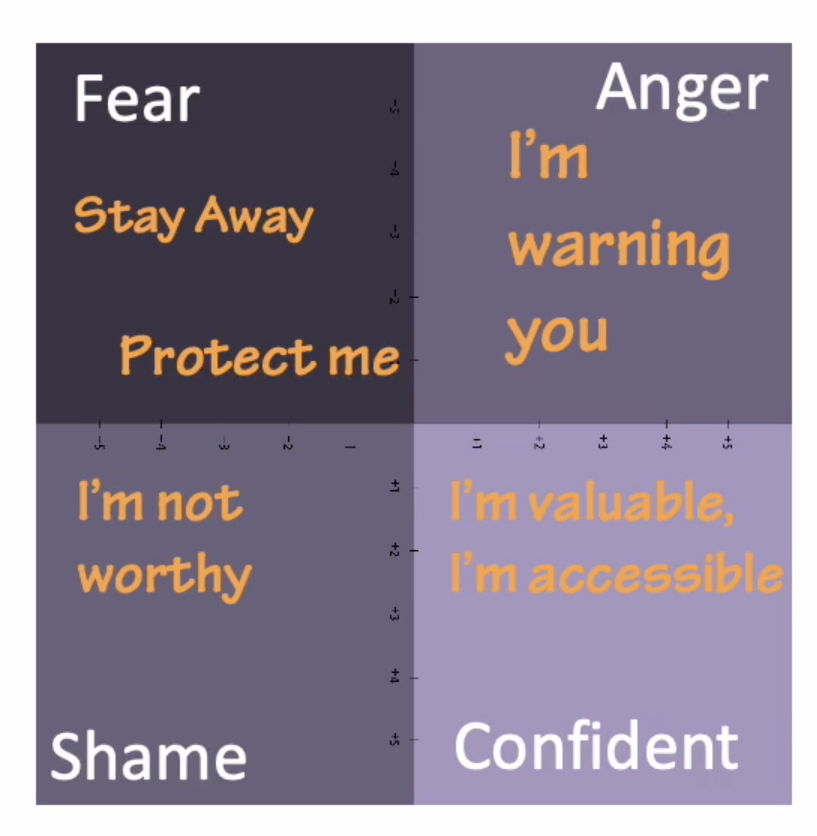
The EMOTIONAL MOTIVATION THEORY connects emotional processing with action readiness
supported by neuroimaging: emotional experiences are often accompanied by motor and sensory cortices activation
What is PRIMARY PROCESSING of emotions vs SECONDARY PROCESSING of emotions vs HIGH ORDER EMOTIONAL COGNITION?
Emotional processing is hierarchal
PRIMARY PROCESSING is the most basic, instinctive level of raw emotion: SUBCORTICAL (Periaqueductal Grey, Ventral Tegmental Area, Nucleus Accumbens)
generation of core feelings - fear, anger, joy, distress
homeostatic drives/motivational experiences - hunger + thirst
sensory affects (pain, taste temperature, and disgust)
SECONDARY PROCESSING is emotional learning and memory: LIMBIC
taking affect to environmental events to generate adaptive behaviours (associative learning, classical/operant conditioning, and emotional habits)
HIGH ORDER EMOTIONAL COGNITION: CORTICAL
cognitive functions - thinking, planning, emotional regulation - to mediate emotional feelings
cognitive control
Which brain regions are involved in making emotional content more memorable than neutral content?
AMYGDALA and HIPPOCAMPUS are synergistically activated during memory enconding and consolidation to form LTM
Amygdala activation is associated with enhanced attention, salience enhances information (related to release of stress-activated hormones)
Amygdala activation is also a memory amplifier - broad activation of memory, attentional, and learning circuits
Under chronic stress, how do the PREFRONTAL CORTEX and EXECUTIVE FUNCTIONS suffer?
DURING STRESS:
When we need them the most, our PREFRONTAL CORTEX + EXECUTIVE FUNCTIONS/BRAIN + HIPPOCAMPUS decrease in activity, as the Amygdala (limbic system) is enhanced.
What is the purpose of the STRESS RESPONSE?
THE STRESS RESPONSE occurs when mental, emotional, and/or physical demands exceed the regulatory capacity of an organism
Nervous System prepares body to react quickly: stress hormones to raise alertness + readiness
very individualized (Dandelions vs Orchids) and situational even between the same individual!!!!!!
What is the Fight or Flight response? What is the Freeze response?
AMYGDALA sends a distress signal to the HYPOTHALAMUS to activate “survival mode”
→ activates SYMPATHETIC NS (neural) and ADRENAL CORTICAL SYSTEM (hormonal) makes up the FIGHT OR FLIGHT RESPONSE
dilated pupils, increased heart rate, inhibited activity of digestion, inhibited salivation from sympathetic nervous system
secreting epinephrine and norepinephrine from the adrenal cortical system
Glucocorticoids (cortisol) and Catecholamines (adrenaline and noradrenaline) are produced from the Adrenal cortex
FREEZE RESPONSE is facilitated from the parasympathetic to heighten perception and action preparation → NOT RELAXING, but rather AWARENESS
What is the Spectrum of Stress Response (Progressive to toxic)?
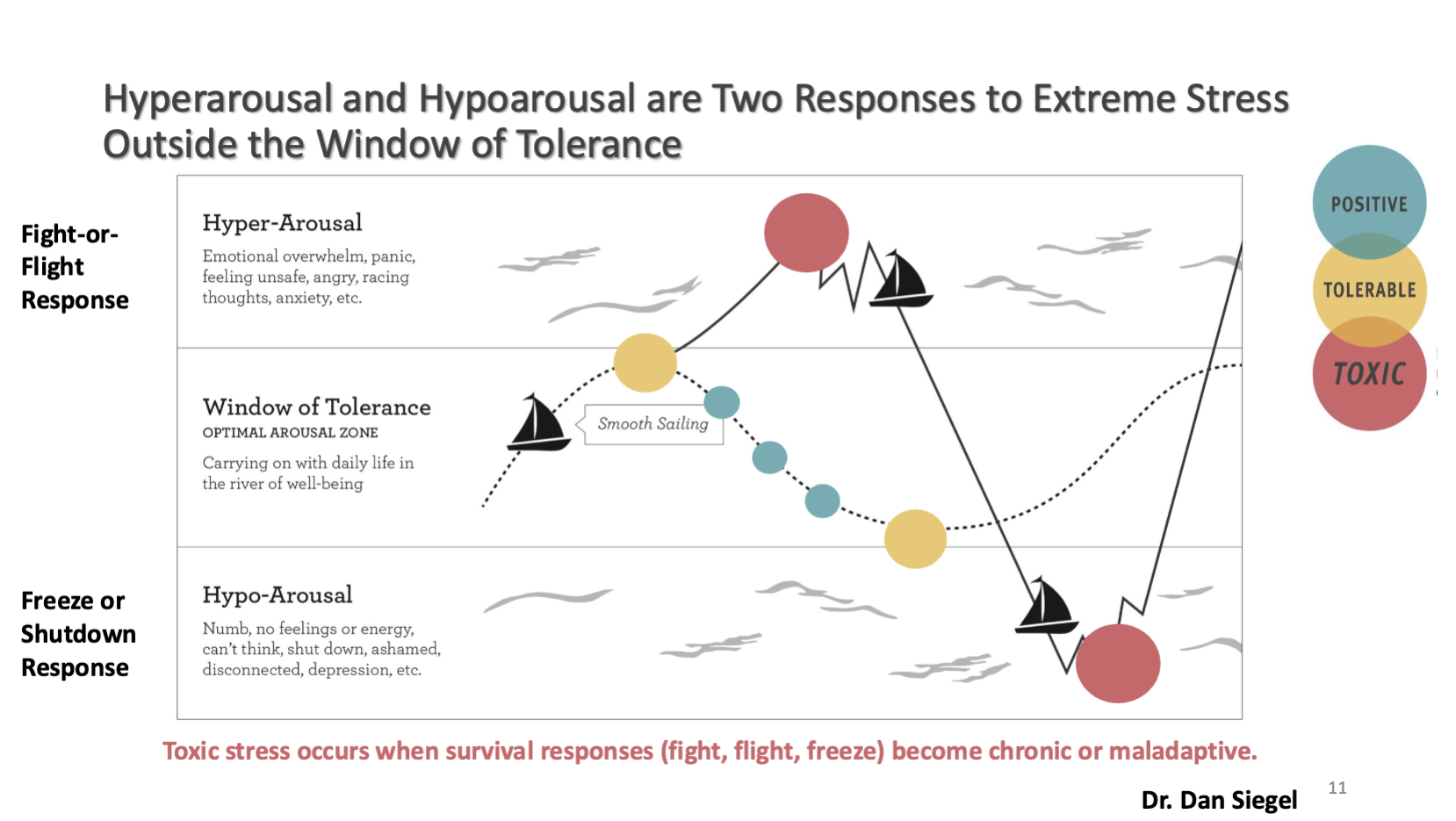
POSITIVE STRESS is brief, increasing heart rate with mild elevations in stress hormone levels (car speeding towards you briefly)
TOLERABLE STRESS is serious but temporary, buffered by supportive relationships (breakup or losing a loved one) → opportunity to build resilience
TOXIC STRESS is prolonged activation of stress, in absence of protective relationships (severe trauma) → can lead to long lasting negative impact
Where is the Window of Tolerance in the Spectrum of Stress Reponse?
The Window of Tolerance is the zone where intense emotional arousal can be processed and managed effectively - carrying on daily-life in the smooth sailing river of wellbeing
PFC remains engaged and regulates limbic activity
sympathetic and parasympathetic systems are in balance
It lays between HYPERAROUSAL (brought out by fight or flight response) and the HYPOAROUSAL (brought out by the freeze or shutdown response)
Exposure to controllable stressors is a major contributor to building resilience
What are 3 ways that chronic/toxic stress alters the brain?
CHRONIC/TOXIC STRESS leads to:
Decreased hippocampal volume (reversible) → learning and memory worsened
Larger and more reactive amygdala (not always reversible) → increased emotional activation
Decreased ability of prefrontal cortex to flexibly regulate attention, action, and affect → emotional regulation and contextual processing worsened
The core of anxiety and stress disorders are a failure to recognize that environmental cues and contexts are no longer threatening
How are glutocorticoids related to learning under stress?
GLUTOCORTICOIDS from FIGHT OR FLIGHT RESPONSE
enhance the consolidation of new memories, including those that extinguish older memories → PRIORITIZING SURVIVAL
BUT impair the retrieval of information stored in Long Term Memory
Stressful experiences induce physiological, morphological, and cellular changes in learning circuitry → deficits in working memory, behavioural flexibility + attention: EXECUTIVE FUNCTIONS
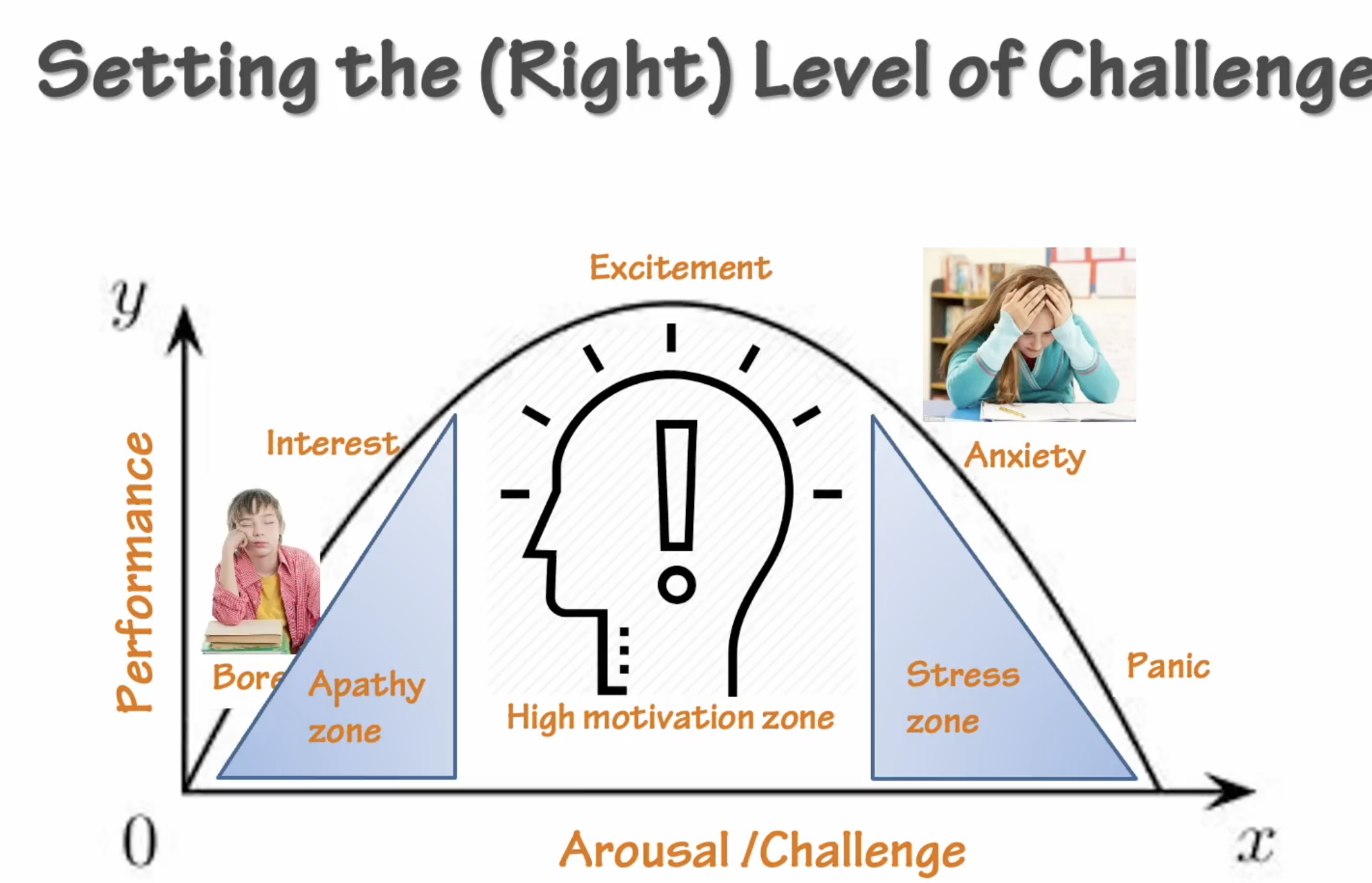
What is Dodson Law of the arousal/challenge sweet-spot? How does it meet with the Zone of Proximal Development?
Maximum development + plasticity is found in the Zone of Proximal Development - as a sweet spot for learning and growth
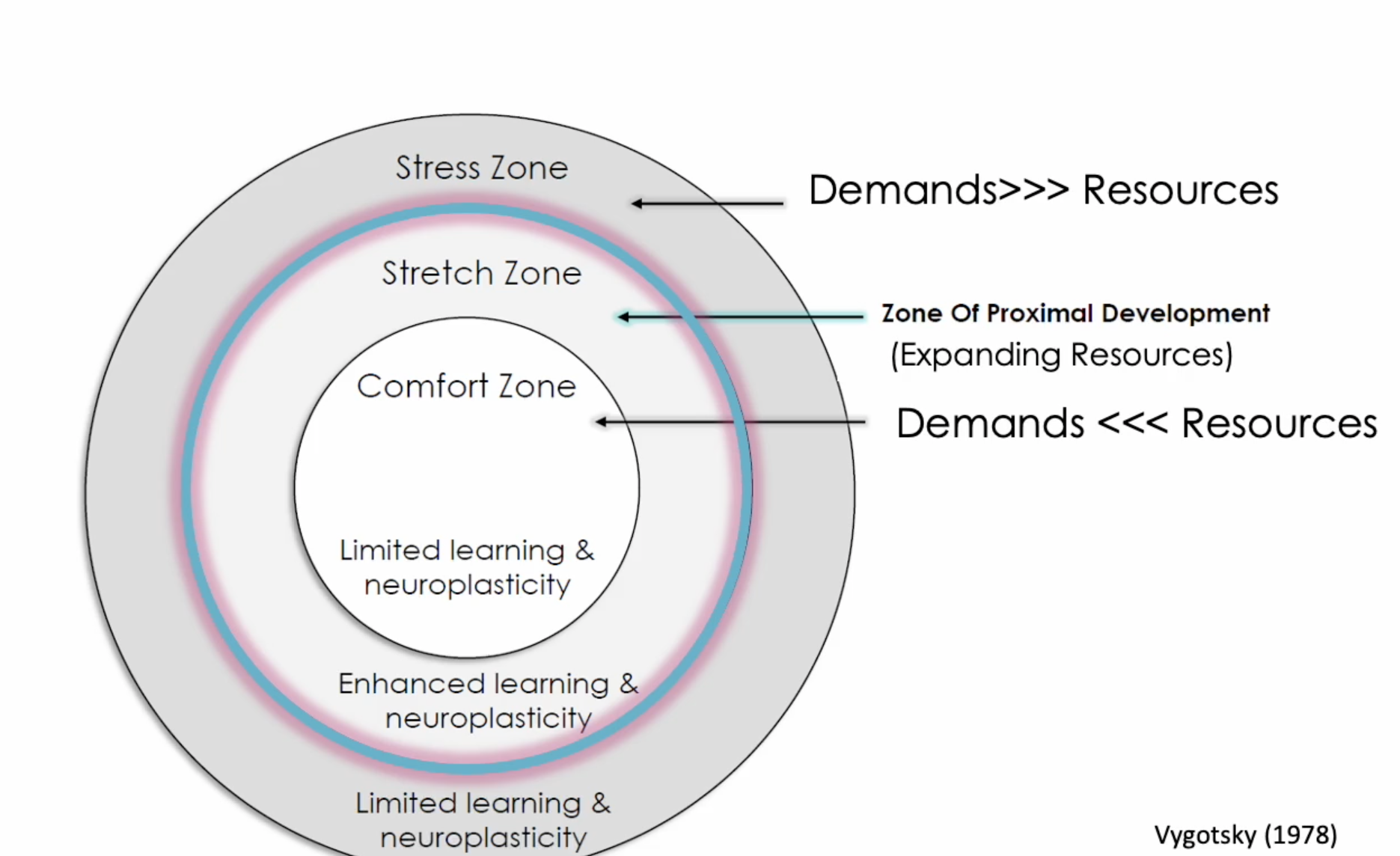
What is Vygotsky’s Zone of Proximal Development (ZPD)
COMFORT ZONE → limited learning + plasticity, demands < resources
STRESS ZONE → limited learning + plasticity, demands > resources
STRETCH ZONE/ZONE OF PROXIMAL DEVELOPMENT → enhanced learning + plasticity, EXPANDING RESOURCES
How do Bottom-up regulation and Top-down regulation strategies differ?
BOTTOM-UP REGULATION focuses on managing physiological and body processes directly: deep breathing, muscle relaxation, mindfulness, etc.
TOP-DOWN REGULATION focuses on using higher cognitive functions to reshape our emotional experience:
REAPPRAISAL is the process of reinterpreting an emotion-eliciting situation in a way that changes its emotional impact
changing the narratives to foster more manageable + positive emotions
(I can learn from this bad quiz experience and do better next time vs. I failed and I’m never going to get into grad school)
What is a study on bottom-up and top-down generation of emotions? What are the effects of reappraisal on bottom up and top down generation/
Participants were presented with either:
'“Her son is in the burning building” followed by a neutral face OR Emotional faces followed by neutral faces to elicit top-down vs. bottom-up emotions
Top down generation was more effective in eliciting negative affect, as well as amygdala activation
Top down regulation (REAPPRAISAL) also worked better in decreasing negative affect, using cognitive regulation for bottom up generation resulted in INCREASED amygdala activity
To effectively regulate stress, we must appropriately identify its source → speaking to someone’s neocortex from your limbic brain can WORSEN STRESS
Fear vs Worry vs Anxiety - how are they regulated physiologically or cognitively
FEAR is the emotional response to a clear and immediate danger - resolved by the physiological regulation
WORRY is the cognitive processing and thinking about negative things that might happen, much more cognitive than emotional - resolved by cognitive regulation
ANXIETY is the response to something that might happen, much more emotional than cognitive - resolved by physiological regulation
don’t explain to the amygdala, but either calm it down OR
trick the amygdala by participating in Fight or Flight (running or releasing energy)
Amygadala learns from experience, pairing trigger with a different positive or neutral outcome is very useful
What is Affect Labeling, what happens in the study mentioned in lecture?
Affect Label - putting feelings into words
Affect Matching - matching affect to labels
Observing Affect
Affect labelling, more than other forms of encoding, diminished the amygdala response to negative emotional images
RIGHT VENTROLATERAL PREFRONTAL CORTEX and AMYGDALA activation during affect labelling are inversely correlated
What are 4 factors that shape our stress response (SPD+RM)?
4 FACTORS THAT SHAPE STRESS ARE:
Nature of a stressor (duration, intensity, predictability)
Nature of a person (Dandelion vs Orchid)
Objective demands (task complexity and time pressure) vs Available resources (social support, coping skills, and physical conditions)
Mindset of an individual (one’s approach to stress).
How does our mindset about stress shape outcomes (threatening vs challenging) of feedback loops and response?
Perceiving situations as THREATENING/DEBILITATING, signal that demands are larger than resources/abilities to cope → survival mode + threat-perception response
narrows window of tolerance in a negative feedback loop
Perceiving situations as CHALLENGING/ENHANCING, signal that resources and demands are manageable → promoting learning and growth + challenge-perception response
expands the window of tolerance in breaking of the loop through cognitive control
What is the importance of human sensitivity to social information + what brain regions are involved?
As humans we are very sensitive to social information as seen in Face Pareidolia, we are wired to find faces even in places where it does not exist.
Facial Fusiform Area (FFA) is known as the face recognition area, working closely + nearby the Occipital Face Area (OFA) - critical for connecting knowledge to facial recognition (including bodies and body parts alongside faces)
We seek judgements of individuals through appearance - Oosterhof and Todorov developed a 2D model of face evaluation → trustworthiness(friendly or threatening) and dominance (social power)
snap judgements are adaptive overgeneralizations, inferring other’s intention and detecting potential danger
as quick as 100 miliseconds we make judgements of trustworthiness → amygdala response peaks when detecting someone as untrustworthy
How do we subconsciously respond to detecting faces (right, left, then left)?
The Presentation of subliminal faces activates the right amygdala, left hippocampus, and the left fusiform gyrus, even when we can’t recognize that we have seen a face.
How are the neuronal correlates of interpersonal ostracism and acceptance displayed? (ball-tossing game experiment)
Playing a ball-tossing game while in fMRI scanner
eventually all participants are left out of the game
Pain network’s Anterior cingulate cortex, accounting for the emotional experience of pain, and the Insula, accounting for the interoceptive somatic awareness were activated
in response to social rejection, the pain network’s response mirrored that of physical pain
self-report measure was also incorporated (highly correlated)
How are the neuronal correlates of pain-empathy displayed )(fMRI and needle experiment)?
Couples were separated as one went in an fMRI scanner, and the other was beside the scanner watching as their partner was pricked by a needle
Pain Network’s emotional Insula and ACC were activated when witnessing someone else’s pain
Physical Somatosensory cortex was only activated when pain was felt directly
We hold an innate capacity for empathy that enables us to form connection, but has the emotional cost of feeling the pain of those around us.
evolutionarily, we prioritize the collective over then individual
What are the shared networks for physical and social pain + reward and punishment?
Overlap suggests that social and physical needs are prioritized the same in the brain - our survival is tied to our capacities for social connection.
The brain treats social exclusion much like physical pain, both including the dorsal anterior cingulate cortex and the insula
Social rewards like instagram “likes” use the same networks as having rewarding physical sensations like satisfying meals.
What exactly is the social brain, and how is our social brain our super power (lieberman)?
The social brain is composed of the Reward and Motivation network, the Cognitive Control network (PFC + ACC) and the Social Perception + Attribution network (strongly tied to the Default Mode Network) (Fusiform Face Area, vPMC)
Humans have a basic need to belong and connect, these are strong factors in the evolution of the human brain and superior cognition.
The involvement of the Default Mode Network shows the salience of social networks in daily life.
What is the Social Brain Hypothesis?
The Social Brain Hypothesis uses the fact that primates survival was based in their ability to group and collaborate, to support the correlation of social group size and neocortex size in primates (but not other animals)
humans are smarter in neocrotex size because of our social capacities
What are mirror neurons?
While studying monkeys, researchers in Italy noticed that specific neurons were firing when monkeys watched other monkeys perform actions
Mirror neurons have selectivity for both action execution (motor areas) and action observation (social hubs)→ helping us understand others’ actions and intentions from observation
Role in social recognition is not as clear as the physical
What does Hagar mean when saying “Brains that fire together, wire together'?” What is the importance of understanding this?
BRAIN TO BRAIN ACTIVATION COUPLING occurs during both verbal and non-verbal communication
the stronger the neural coupling between interlocutors, the better their understanding of each other
We can now scan two brains simultaneously and see how they synchronize
during gestural communication, the observer’s brain mirrors the gesturer’s brain (regions of motor neurons are also engaged)
Important to studying our brains as a network of brains that interact beyond the individual
What are social feelings?
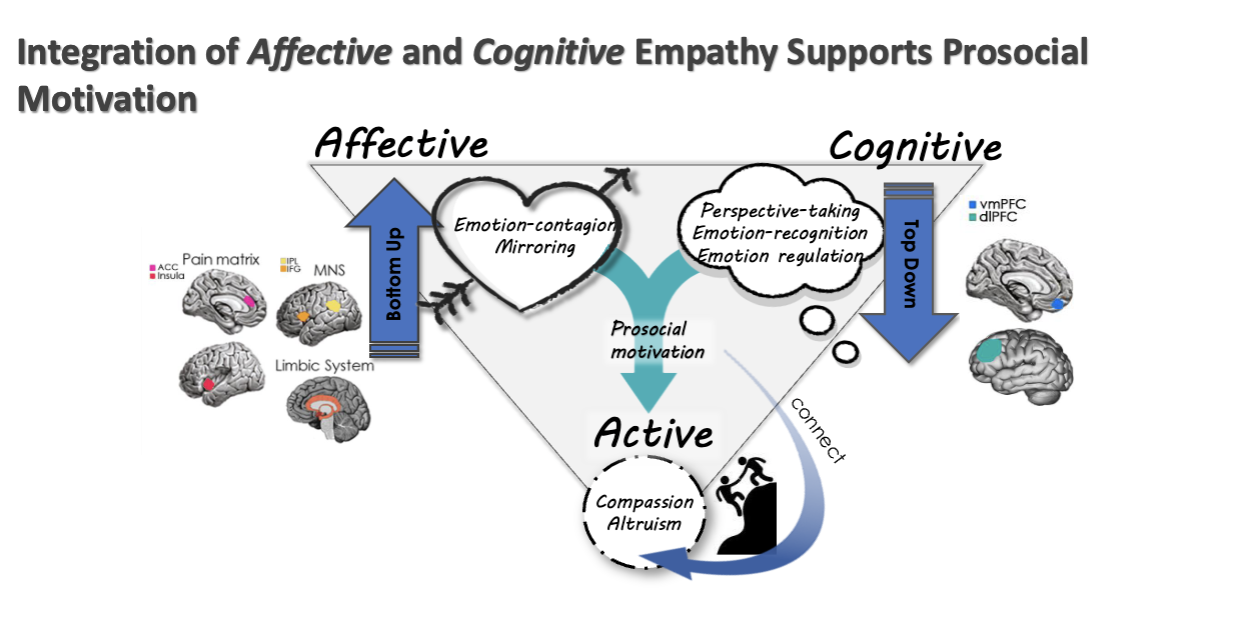
Social Feelings involve affective and cognitive components
empathy is a high-level social feelings involving both emotional and cognitive processing, as well as a concept of “self” - internal model of oneself as a distinct entity
AFFECTIVE processing is bottom up, depicted as “I feel your pain”
pain matrix, limbic system, and mns are involved
COGNITIVE processing is top down, depicted as “I understand your pain”
vmPFC and dlPFC are involved
How does empathy develop?
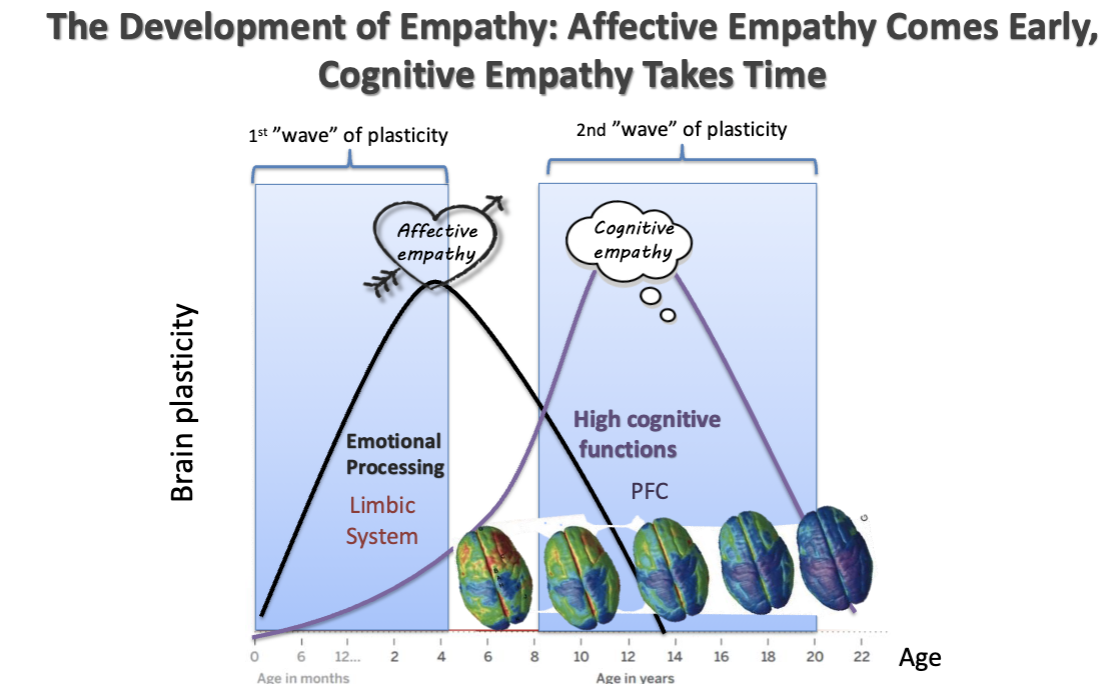
The development of empathy overlaps the developmental gap between the 1st wave of limbic system plasticity, and the 2nd wave of PFC plasticity
What is Interpesonal Synchrony? What are the benefits of Interpersonal Synchrony?
Bottom up, affective, emotional synchrony is displayed in:
Physiological synchrony shared patterns in heart rate, breathing, skin conductance → supporting co-regulation and shared emotional arousal
Behavioural mirroring facial mimicry, motor mirroring, micro-feedback that rapidly aligns expressions and gestures → enabling emotional contagion and trust
Neural coupling synchronized brain activity (gamma-band waves in ACC) during mutual gaze and coordinated behaviour → supports emotional attunement
How is cognitive empathy fuelled by interpersonal synchrony? How is this different in online interaction?
In real time dialogue, physiological micro-feedback loops allow continuous prediction + updating of a partner’s thoughts and emotions → strengthening perspective
Behavioural alignment in the form of tone of voice, prosody, and gestures aligning → strengthened attentional coordination
Neural coupling in the form of synchronized activity in the prefrontal cortex, temporalparietal junction, and anterior cingulate cortex → support Theory of Mind
Top down, cognitive evaluation is supported by Interpersonal Synchrony → NOT FOUND IN ONLINE INTERACTIONS
How do the integration fo Affective and Cognitive empathy support prosocial motivations?
Affective and Cognitive empathy work together to shift thoughts from feeling with to feeling for someone
When does empathy become disintegrated?
Empathy fails to connect when only one component is engaged
HIGH AFFECTIVE EMPATHY WITHOUT COGNITIVE EMPATHY: I feel your pain, but I don’t understand it or differentiate it from my own → personal distress, disconnect, then freeze, withdawal or burnout
HIGH COGNITIVE EMPATHY WITHOUT EMOTIONAL EMPATHY: I understand your pain, but I don’t feel it → personal detachment, disconnect, then detached but ethical behaviour OR detached and unethical/antisocial behaviour
What is the empathy gap? What are 4 ways we have a neural basis for the empathy gap?
The Empathy Gap refers to the inconsistencies in how we perceive, understand, and response to others’ emotions and experiences
We have a neural basis for INGROUP FAVORITISM
PFC is more activated during social cognition about ingroup members
The Anterior Insula exhibits higher activity when witnessing ingroup members experiencing pain
The Ventral Striatum has been linked to experience of active empathy in ingroups, but also during pleasure of misfortune for outgorups
Oxytocin promotes bonding and cooperation in ingroups, and enhance defensive aggression towards outgroups
What are 4 ways to enhance empathy and reduce in-group favouritism?
Reducing the Empathy gap and by extension In-group favouritism is best done by enhancing empathy:
In person communication activates the brain’s empathy circuits - direct intergorup contact is the most effective way to reduce prejudice
Meaningful connections across diverse groups activates empathy mechanisms
Understanding how empathy works and fails helps take intentional steps to reduce biases
Emphasizing shared emotions and recognizing layered identities fosters prosocial behaviour and avoiding dehumanization
What is neurodiversity?
JUDY SINGER suggested that The variation in the human brain and the human experience are natural diversity, NOT pathology
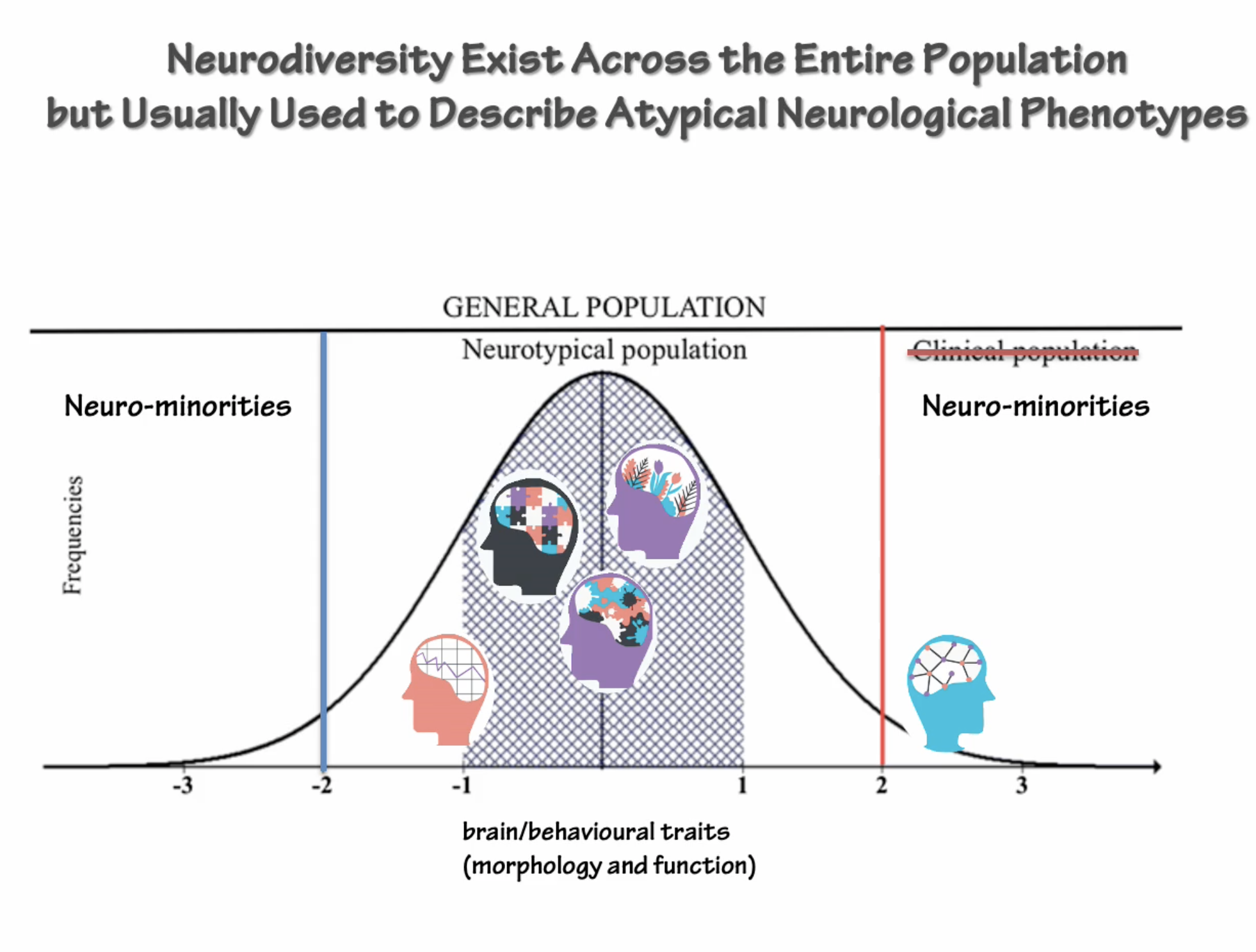
Neurodiversity exists across the entire population, but is used to describe ATYPICAL NEUROLOGICAL PHENOTYPES on tail-ends of the curve, some neurominorities are in the clinical population, others are not
neurodiversity is often related to neurodevelopmental phases and neurodiversity-related DIAGNOSIS is often related to cognitive and behavioural assessments
What is a NEUROTYPICAL and a NEURODIVERGENT/NEURO-MINORITY?
A NEUROTYPICAL is a person whose brain and cognitive development fall within the typical range
A NEURODIVERGENT/neuro-minority is a person whose brain and cognitive development falls outside (or diverges from) the typical range of phenotypes
15-20% of the population: ADHD, Autism, Tourettes, learning disabilities, mental/psychiatric disorders, neurological illness/brain injury
What are 4 neurodiversity classifications based on the process leading to, and health consequences of the condition? Are they comorbid?
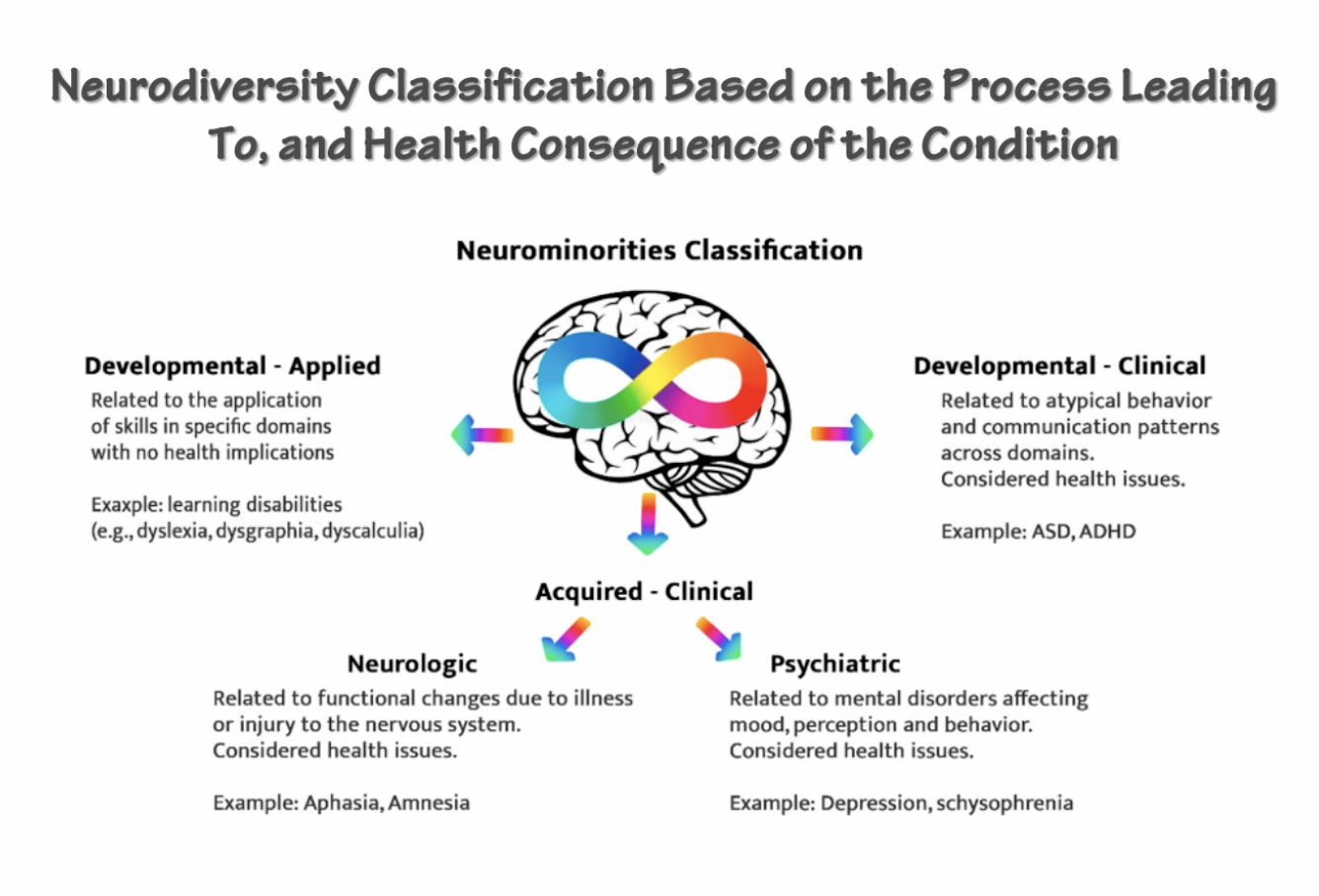
NEUROMINORITY CLASSFICATION is based on process leading to, and health consequences of a condition:
DEVELOPMENTAL/APPLIED relates to the application of a skill in specific domains with no health implications (learning disabilities)
DEVELOPMENTAL/CLINICAL relates to atypical behaviour in communication patterns across domains, considered health issues (ASD, ADHD)
ACQUIRED NEUROLOGIC relates to functional changes due to illness or injury to the nervous system, considered a health issue (Aphasia, Amnesia, TBI)
CLINICAL PSYCHIATRIC relates to mental disorders affecting mood, perception, and behaviour, considered health issues (Depression, Schizophrenia)
High comorbidity exists between all 4 categories
How does behaviour inter-variability express differently within neurominorities and neurotypicals?
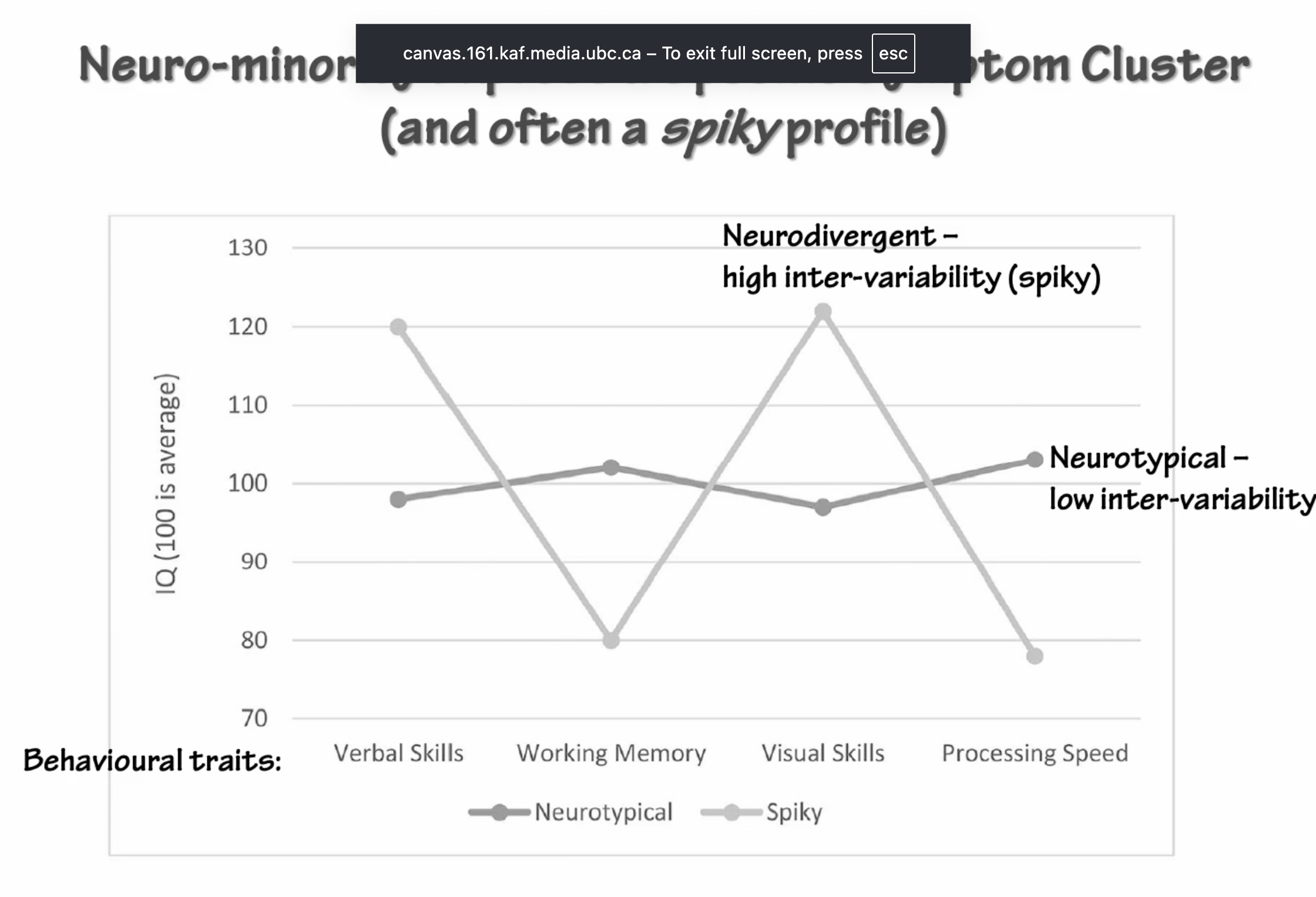
NEUROTYPICALS perform stably across Verbal, Working Memory, Visual, and Processing Speed skills
have low inter-variability
NEURODIVERGENTS perform “spiky” across Verbal, Working Memory, Visual, and Processing Speed skills
have high inter-variability
How has the diversity of NEUROTYPICALS evolved, which brain networks are more variable than others?
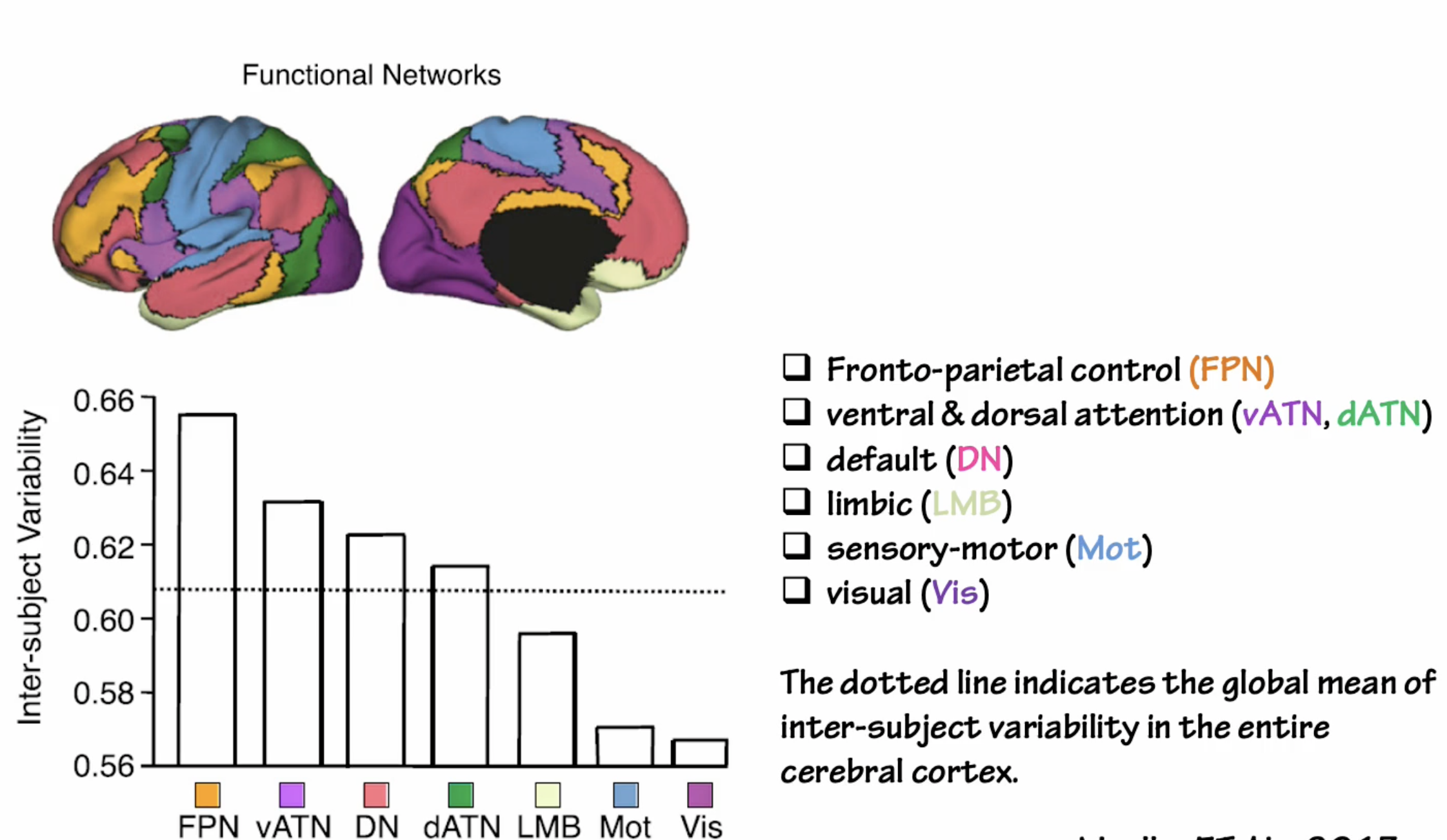
In NEUROTYPICALS, despite having the same brain systems, our inter-subject variability is high
higher level brain systems exhibit more variability in individuals, such as the Default Mode Network, the Ventral and Dorsal Attention network, the Frontal Parietal Control network vs. basic ones
These systems are highly context-dependent - based on experience (frontal, parietal, and temporal)
High correlation with how phylogenetically late-developing and essential a system is, to more variability between NEUROTYPICALS !!!!!!!!!!!!!!!!!!!!!!!!!!!!!!!!!!!!!!!!!!!!!!!!!!!!!!!!!!!!!!!!!!!!!!!!!!!!!!!!!!!!!!!!!!
How is big data used to approach heterogeneity in autism?
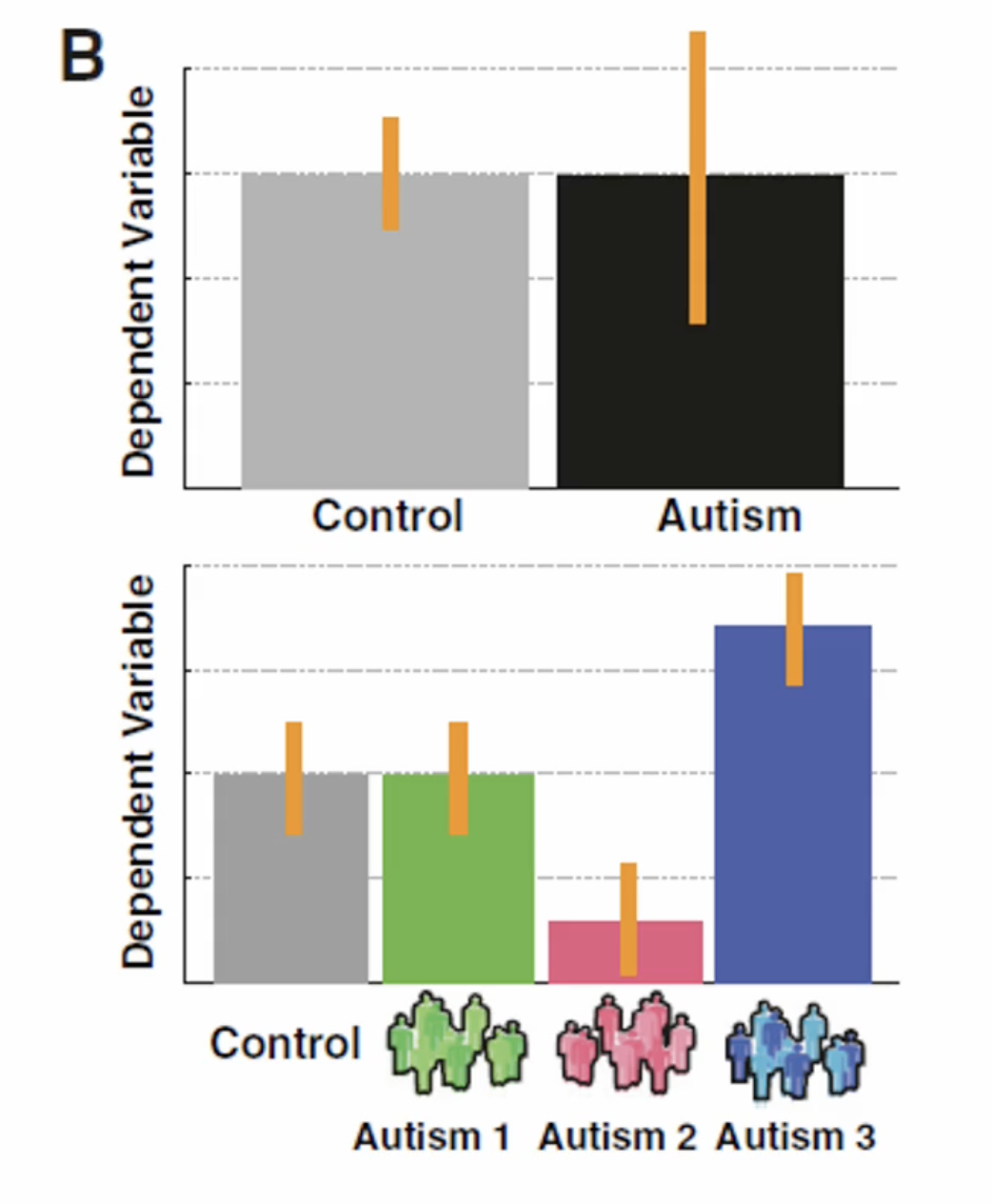
Comparing averaged “neurotypical” with average “autism” showed HIGHER variability in the autism group on DNA, Neural circuitry, cognition, and diagnosis behaviour
the averaging ignored meaningful difference in AUTISTIC SUBGROUP VARIATION
AWAY FROM THE BINARY → more to data-based subgroups → to GALAXIES!!!!!!
What is S.BCohen’s Differences of the 4 D’s?
DISEASE the biomedical mechanistic cause of a disorder becomes known - Huntington’s Disease: mutation leading to abnormal protein, and eventual cell death
DISORDER functional abnormality or disturbance on the organic level, which is not context-dependent
DISABILITY challenge and below-average performance in specific observable function - physical, psychological, or cognitive
DIFFERENCE simply atypical (relative to the norm) with NO negative impact on functioning or well-being
How do S.B. Cohen’s 4 D’s shape the societal/system recation?
DISEASE → cures through research
DISORDER → intervention therapy and behavioural intervention to improve functioning
DISABILITY → supporting and accommodating, changing the environment to suite different needs
DIFFERENCE → calls for acceptance, flexibility, and inclusion, welcoming neurodiversity as
What are the 3 various perspectives of the classification of Autism?
Autism is classified as a neurodevelopmental disorder deviating to a harmful level of dysfunction → disorder
below average performance on a specfic behavioural task→ disability?
Autism may be simply an atypical phenotype, with no harm → difference?
What is the evolutionary benefit of consistent NEURODIVERSITY?
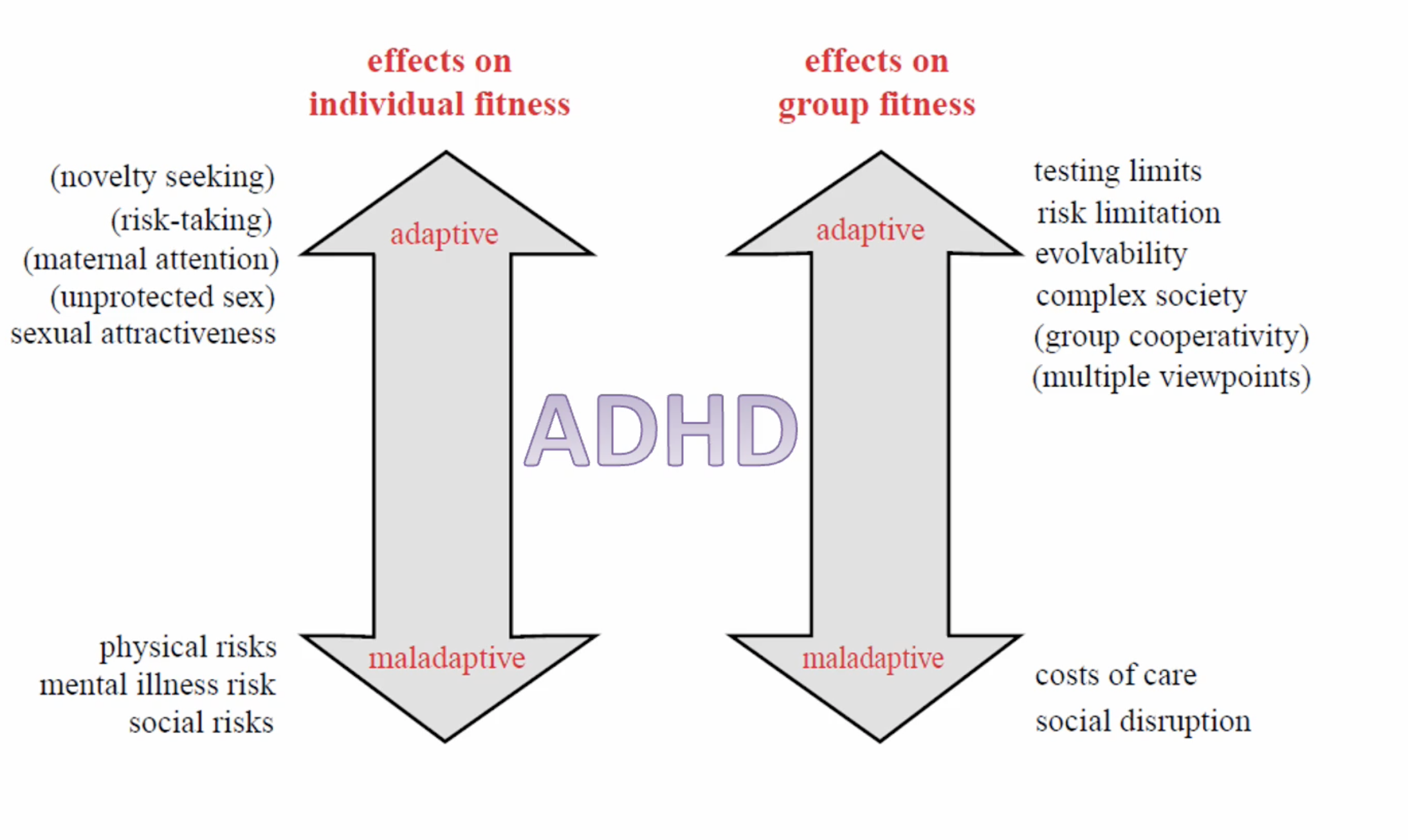
While some neurodiversities are harmful diseases, disorders, or disabilities, NEURODIVERSITY is a broader feature that had evolutionary value for survival
despite individual impairment of certain genes, they may be beneficial to a societal level (EVOLUTIONARY ALTRUISM)
NATURAL DIVERSITY, NOT PATHOLOGY!!!!!!!!!!!!!!!!!!!!!!!!!!!!!!!
What is the connection between language and human thinking and cognition?
Hierarchal Language layers exist that require diverse cognitive systems LOW FLOOR.HIGH CEILING POTENTIAL
Dyslexia challenges in mapping sounds (phenology) to visual letters/words, Some with Autism find it difficult to interpret non-literal meaning (pragmatics)
The conceptual (lexical) and computational (syntactic) aspects of language, is how humans expanded communication beyond the here and now → made us IMMORTAL!!!!! as the vehicle of thought
What are the 3 componnts of the circular connection between language and social class?
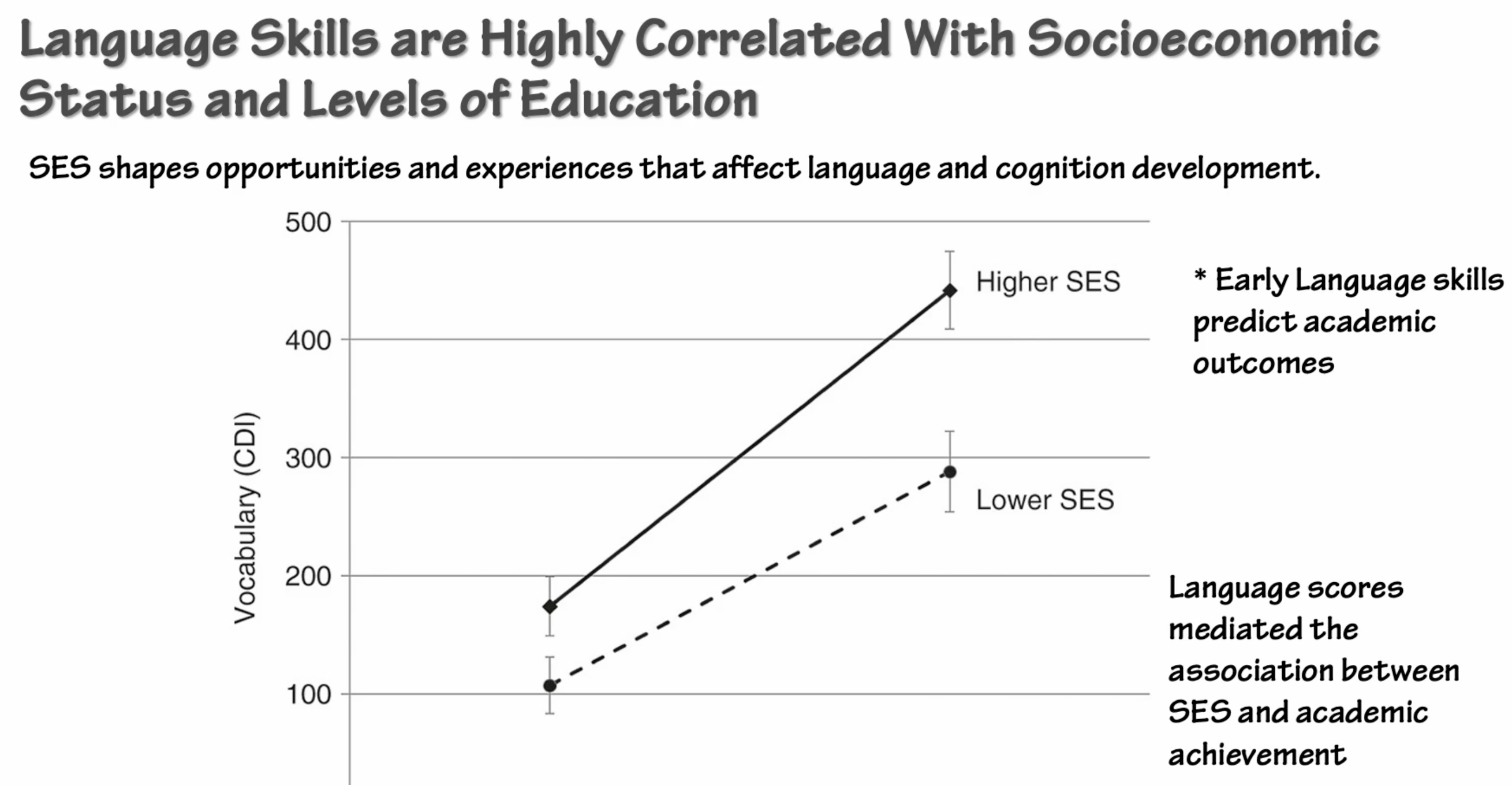
There is a circular connection between language and social class: SOCIAL CLASS familiies’ socioecnomic conditions affect the amount and richness of linguistic input →
LANGUAGE language skills underpin executiv functions, reasoning, and school learning →
COGNITION strong cognitive and academic performance increases educational and occupational opportunity
Language scores mediated the association between SES and academic achievement,
How does brain lateralization assist language?
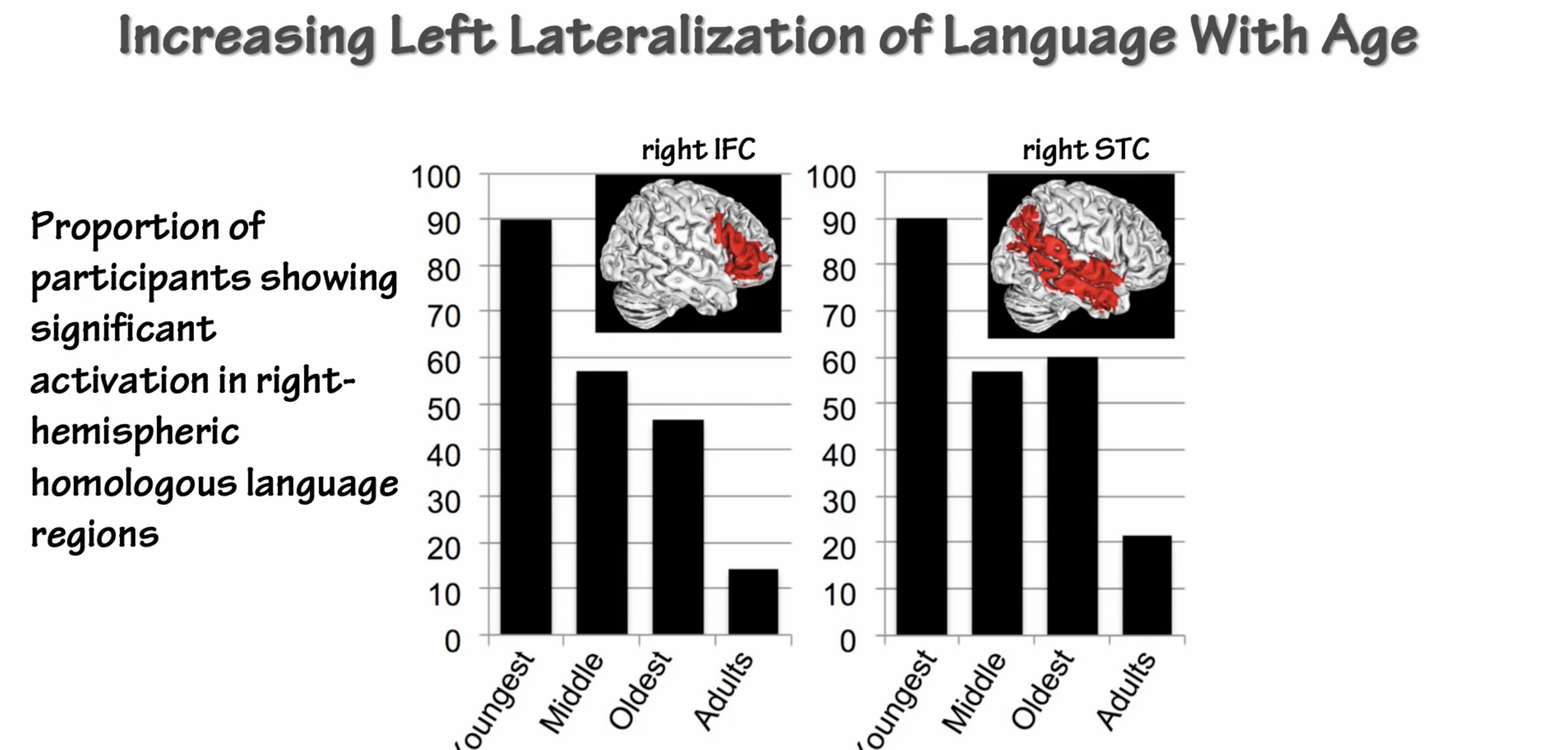
Language is heavily left hemisphere dominant - asymmetrical activity, not completely lateralized
How does language lateralization change during the life span?
Experience plays a relevant role in development!!!!
Newborns respond to auditory stimuli of language frequencies predominantly in the left hemisphere (inborn asymmetry for language) → selective for native phonemes
Age of 6 classic language regions are activated, but not active together
Age of 8 to 20 asymmetric organization of language increases
How are the Left and Right Hemisphere engaged during langauge processing?
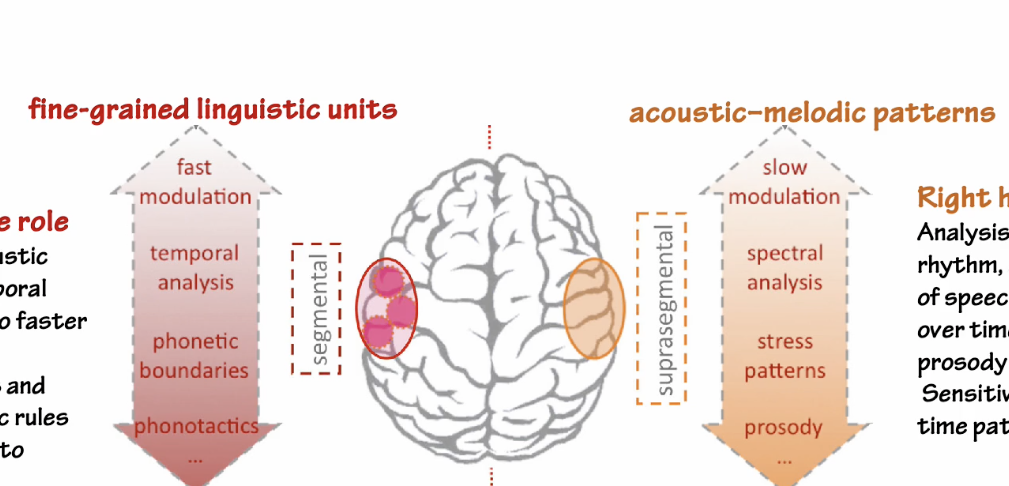
LEFT HEMISPHERE has high temporal resolution - detects phonemes and applies phonotactic rules (turning them into words)
RIGHT HEMISPHERE has slower modulation - analyze melodies, rhythm, and pitch of speech, detecting prosody and intonation
What is the Wernicke-Geschwind Model of Language? How has it been updates?
Wernicke-Geschwind Model is made up of
Broca’s area involved in production of speech
Wernicke’s area invovled in understanding of speech
Motor Cortex controls the movements of muscles
Arcuate Fascilicus connects Broca’s area to Wernicke’s
Despite their importance, Wernicke’s area and Broca’s area do not work in isolation, they are recruited as part of large interacting networks.
What is the Dual System Model for Spoken Language Organization?
Speech processing begins in the Posterior Superior Temporal Gyrus + Superior Temporal Sulcus (traditionally Wernicke’s area) where input undergoes analysis of frequencies, pitch, and change in audio, splitting into the
VENTRAL STREAM (Bilatearl Anterior Temporal lobes) bring sound to meaning
DORSAL STREAM (Premotor cortex, Pariotemporal junction, and Inferior Frontal Gyrus - traditionally Broca area) brings sensorimotor integration