BIOL 211 M2
 Call Kai
 Learn
Learn Practice Test
 Spaced Repetition
 Match
Match Flashcards
 Knowt Play
1/33

There's no tags or description
Looks like no tags are added yet.
Name | Mastery | Learn | Test | Matching | Spaced | Call with Kai |
|---|
No analytics yet
Send a link to your students to track their progress
34 Terms
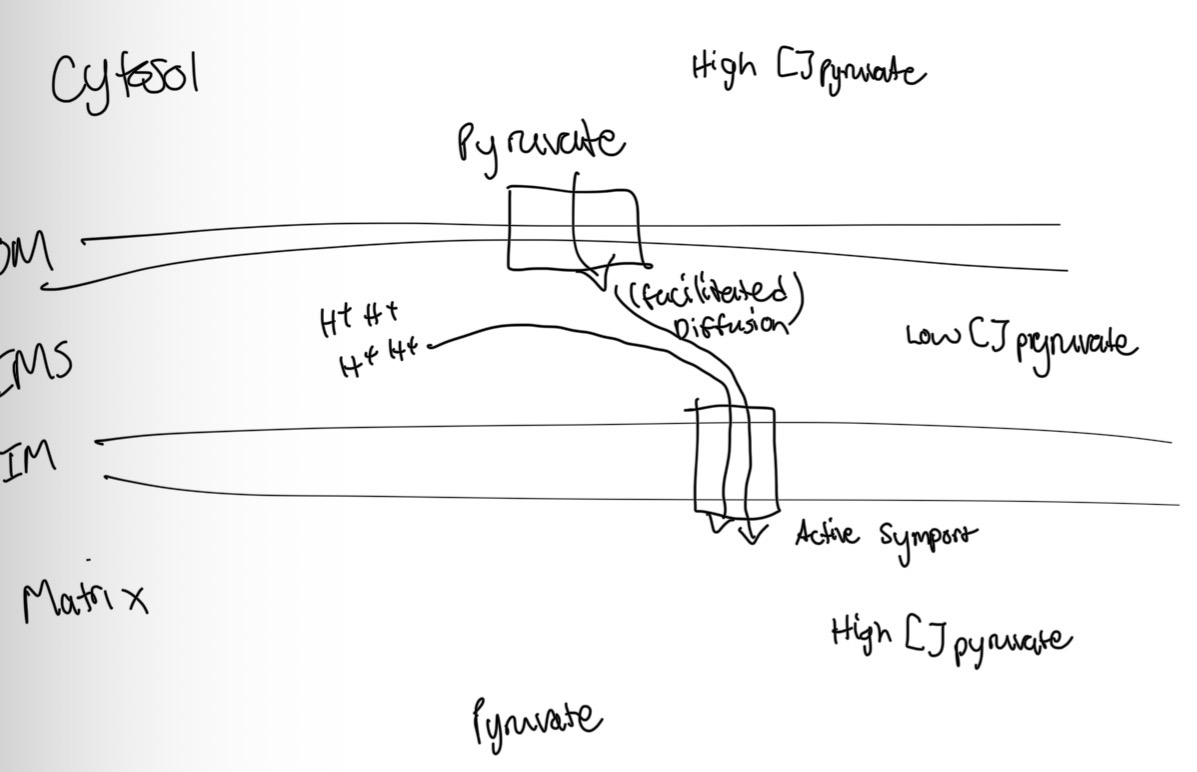
How does Pyruvate get into the Mitochondrial matrix?
Facilitated diffusion into intermembrane space (concentration gradient)
Active symport via Hydrogen facilitated diffusion free energy into the matrix
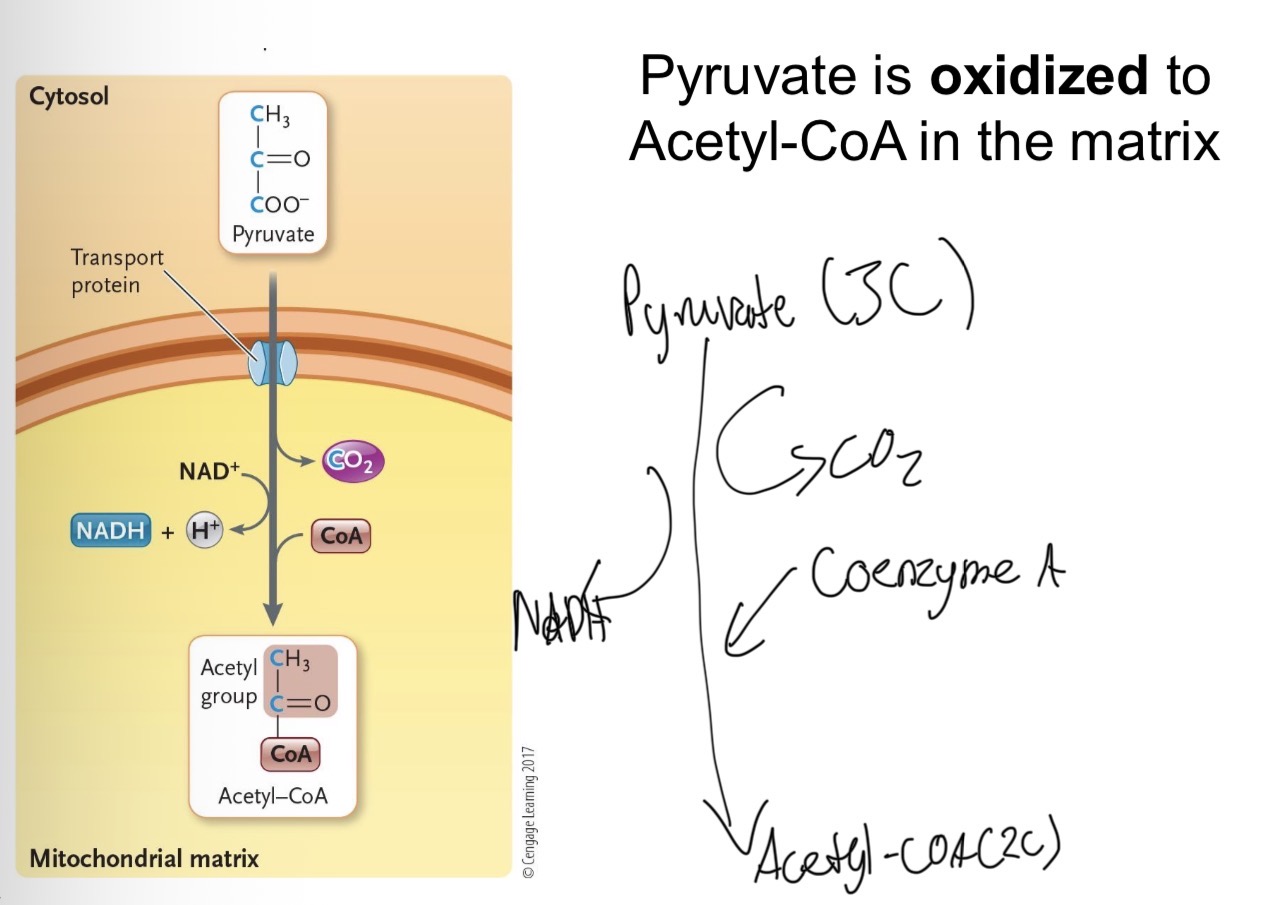
What happens to pyruvate when it gets into the matrix? What are the byproducts and reactants?
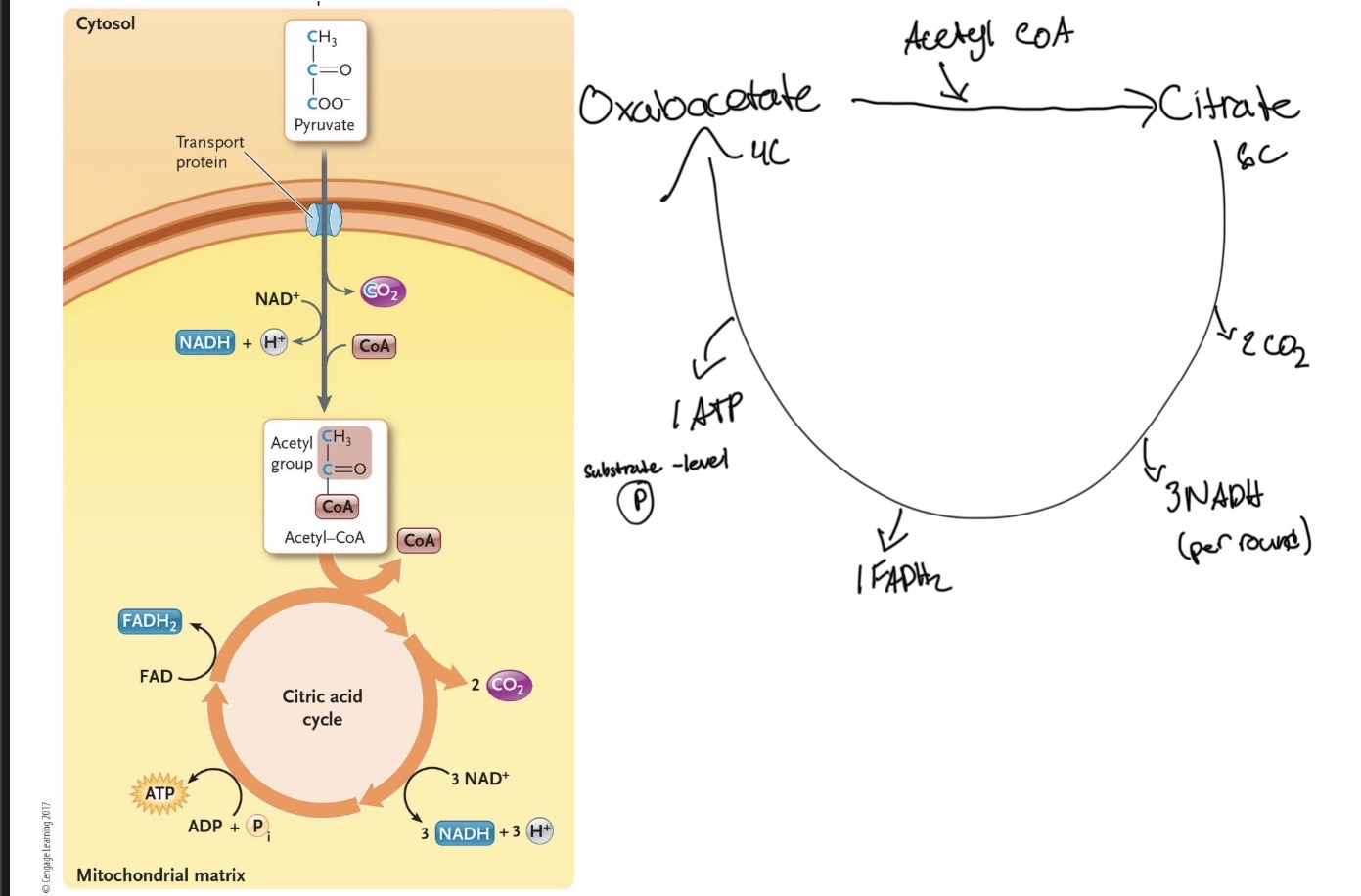
When the Acetyl Co-A enters the Krebs cycle, what are the products and reactants?
How does the electron transport chain produce ATP?
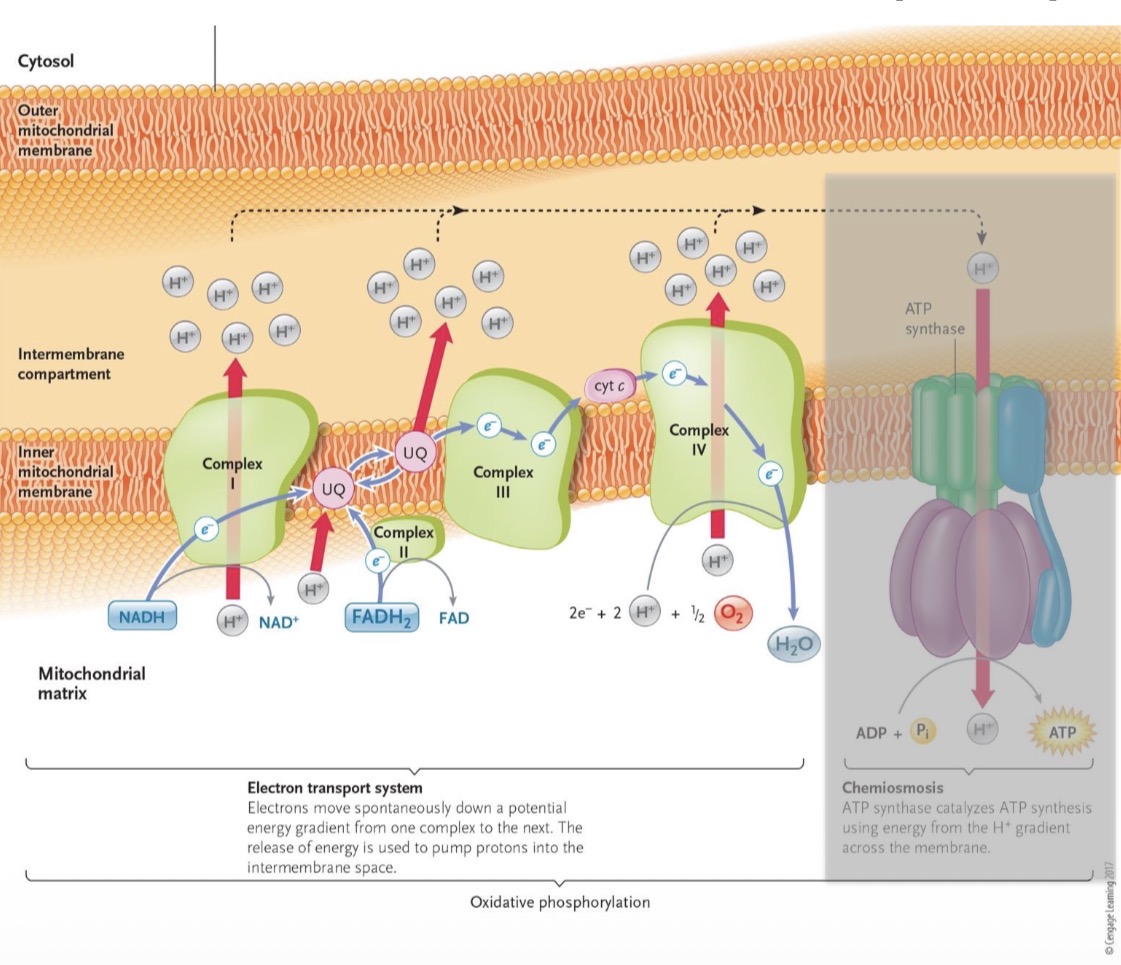
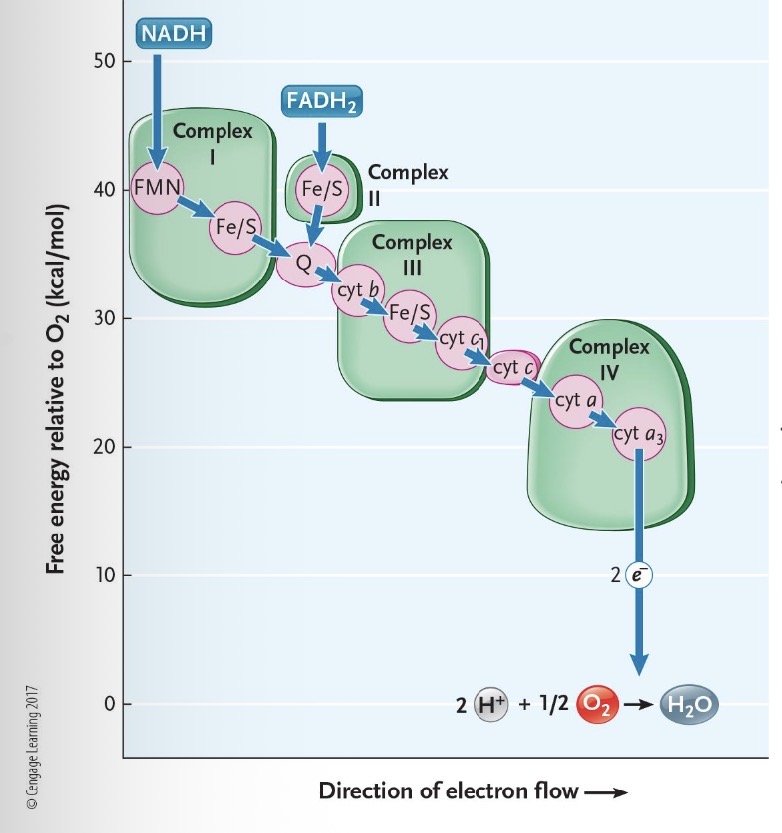
How are electrons driven through the electron transport chain?
NADH + FADH are oxidized (releases free energy)
Complex 1 is reduced
Complex 1 is oxidized, while complex 2 is reduced
And so on until complex 4
Oxygen and hydrogen are then reduced into water (final electron acceptor)
What happens to the Hydrogens from NADH and FADH after oxidation?
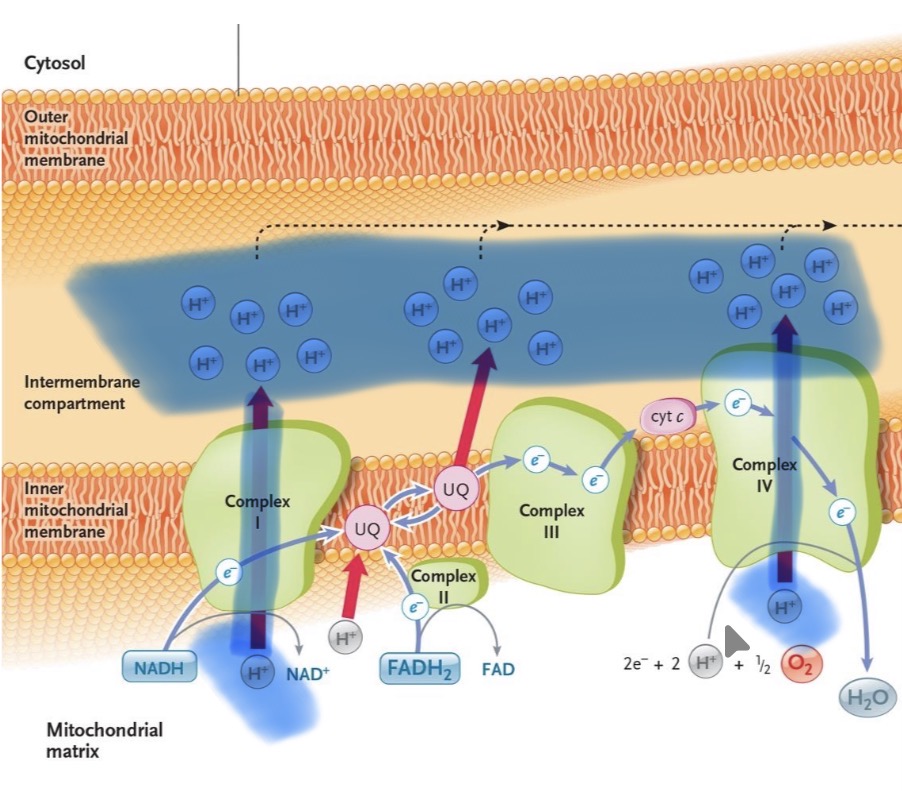
The hydrogen protons are moved from the matrix and into the intermembrane space via use of free energy released from electrons
Through the pumping from C1, C4, and UQ
NADH donate to C1 and FADH2 donate to C2
Creates electrochemical gradient
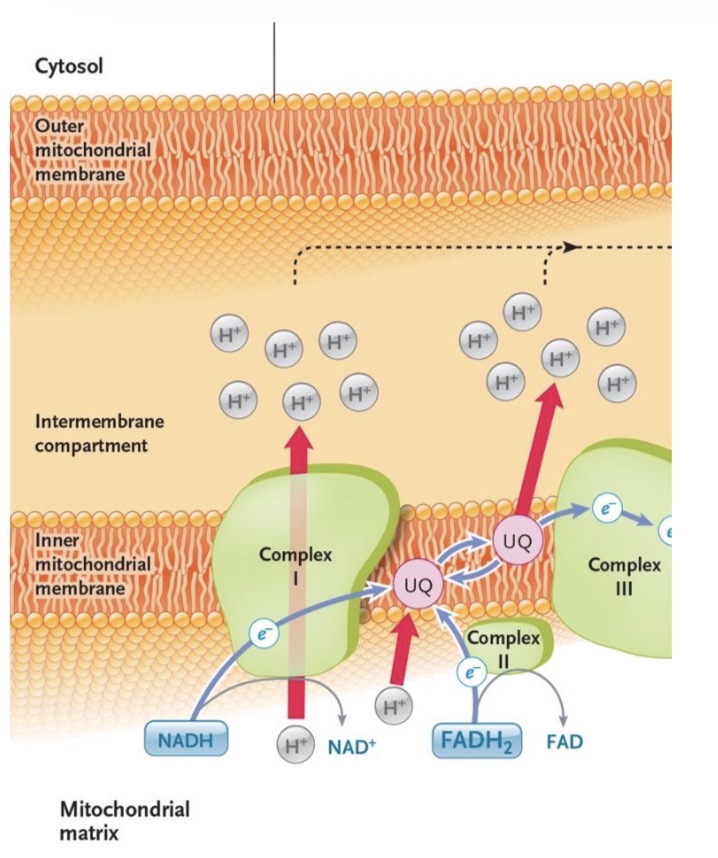
What is the role of Ubiquinone (UQ)
Electron taxis from C1 to C3 (NADH specific)
Electron taxis from C2 to C3 (FADH specific)
Takes protons when reduced and into IMS when oxidized
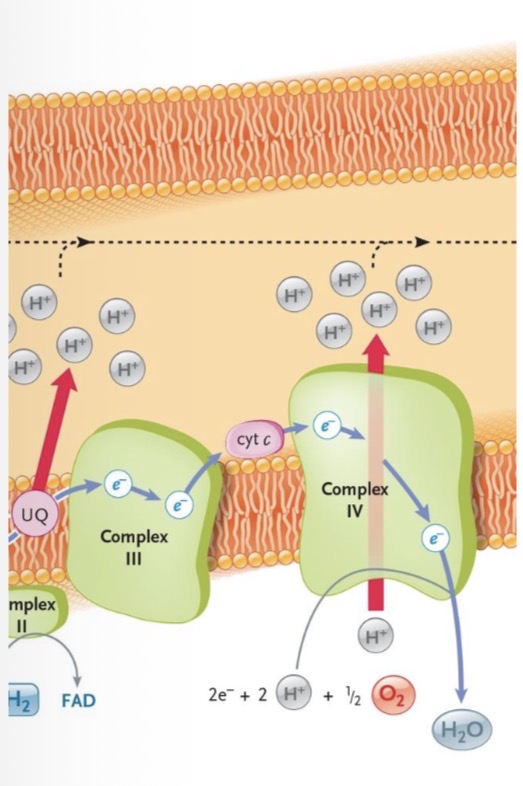
What does Cytochrome C do, and how does it work in tangent with Complex 4?
Electrons are transported from C3 to C4 via cyt C (hydrophilic so moves through phospholipid head)
Electrons that move through C4 release free energy, pumping protons into IMS, and electrons are finally accepted by O2 to form H2O
How does Hydrogen flow down their gradient and what happens when it does?
Hydrogen moves into the matrix via ATP synthase
When H+ moves through synthase, proton motive force is released, which powers the creation of ATP in the matrix
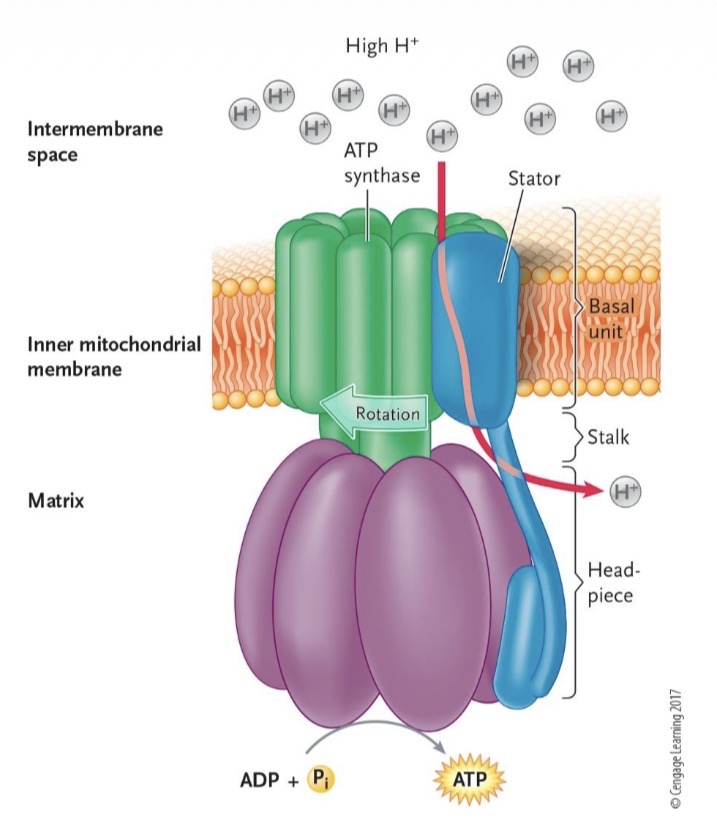
How does the ATP synthase work?
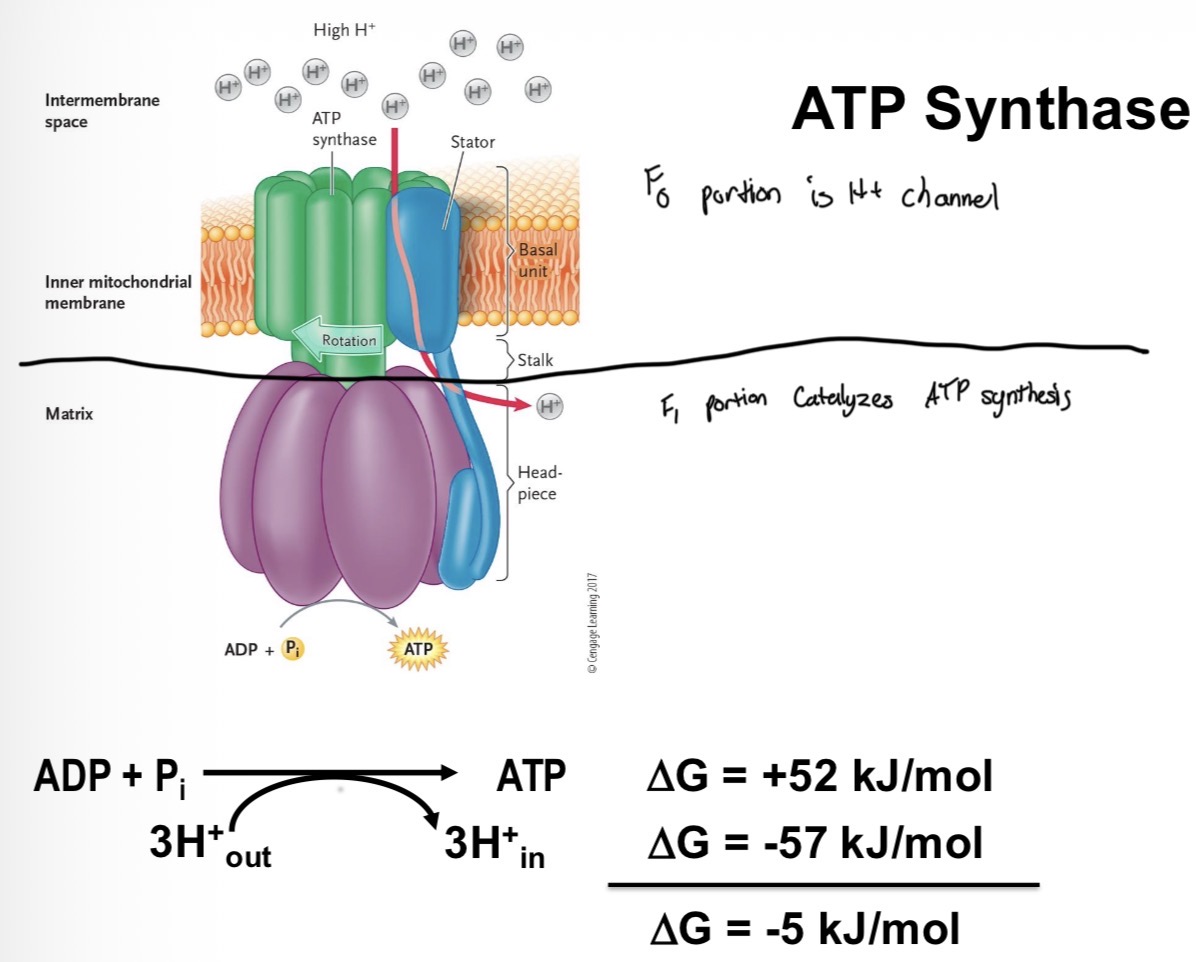
What happens when we don’t need ATP?
Glucose is stored as a polymer
Glycogen in animals, starch in plants
Triglyceride formation
Acetyl CoA formed to make fatty acids
What are the differences between Aerobic respiration for prokaryotes and eukaryotes
Prokaryotes have
Metabolism in cytosol and cell membrane
The same
Glycolysis
Pyruvate oxidation
Krebs cycle
Oxidative phosphorylation
Less efficient because it produces weak PMF
What are the structures of the chloroplast?
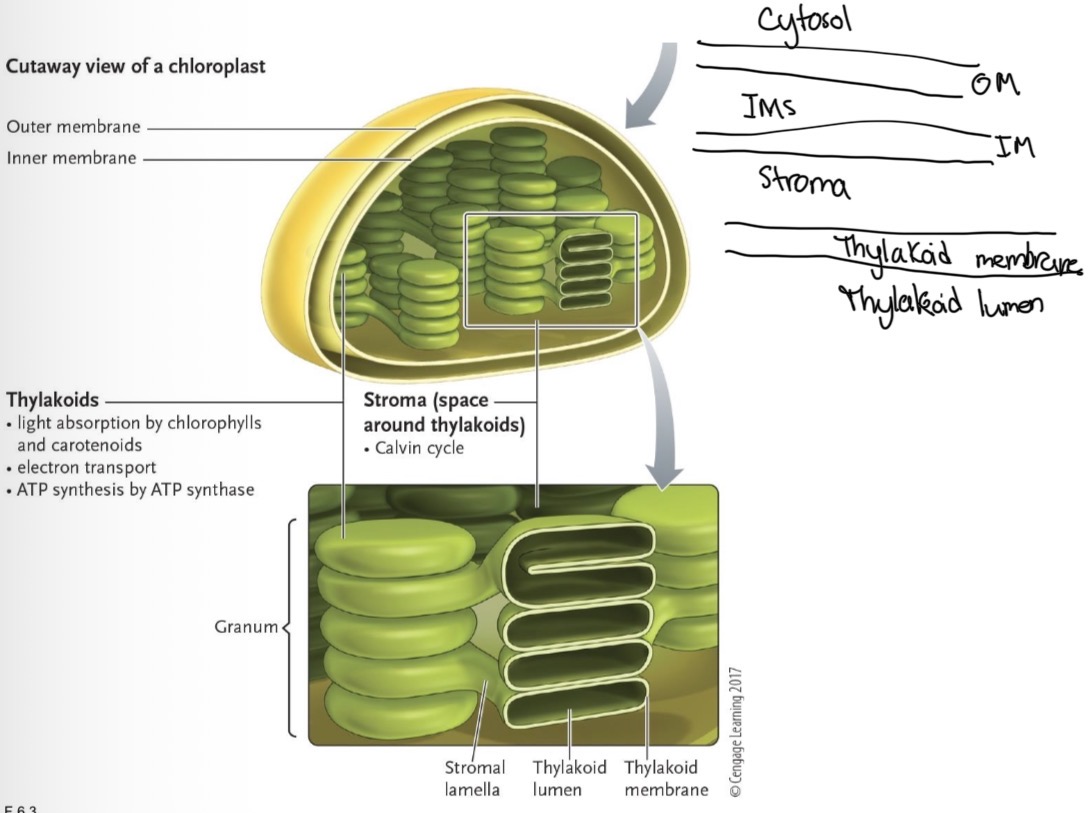
What does the photosynthetic process look like?
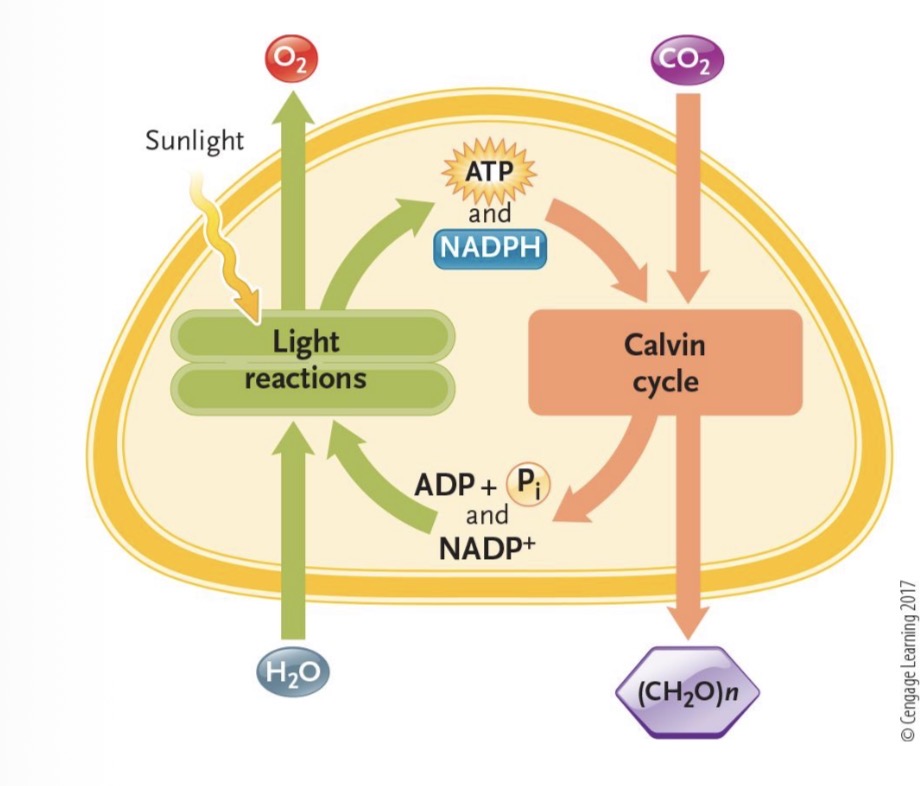
How do we categorize wavelengths according to energy?

What are the 3 things that occur when a photon hits an object
Reflected (bounces away)
Transmitted (move through)
Absorbed (by electrons, which gain more Energy and move further away from nucleus)
Why does plants appear green? Then what wavelengths do plants absorb?
They appear green because green wavelengths are not exact to raise energy levels, so they are reflected
Blue wavelengths have enough energy to raise to 2 energy levels (absorbed)
Red wavelengths have enough energy to raise to 1 energy level (absorbed)
Where are the photosynthetic pigments found in plants? What do they do>
Found in thylakoid membrane
Chlorophylls are main pigments, captures energy for photosynthesis
Carotenoids are accessory pigments, that absorb all the other lights (not blue or red)
What does th Light-dependent reactions look like?
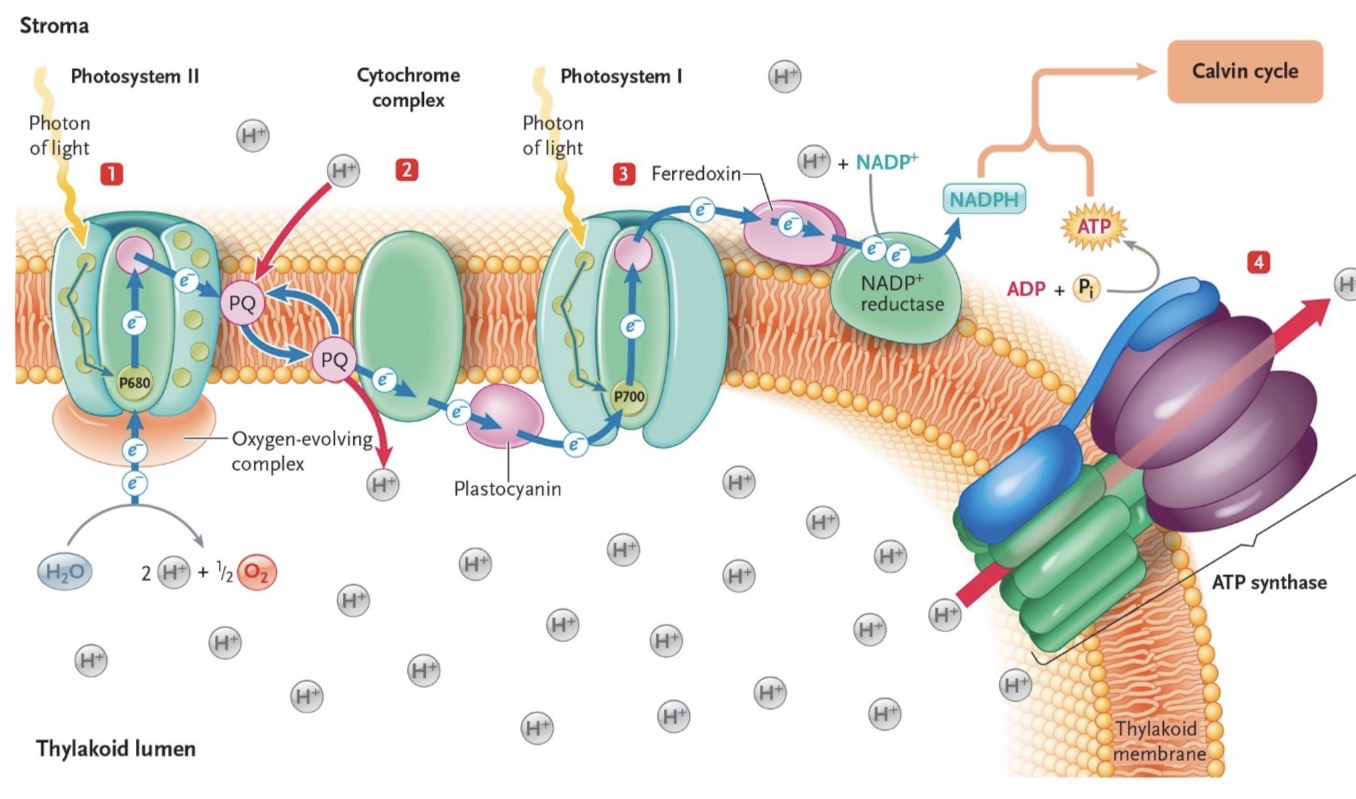
How are pigment molecules organized and its arrangements?
Organized into photo systems
Reaction Centre pigments are surrounded by a group of antenna pigments
How do antenna pigments move energy to reaction centre?
They channel energy to reaction via inductive resonance (transfer of energy from one electron to another)
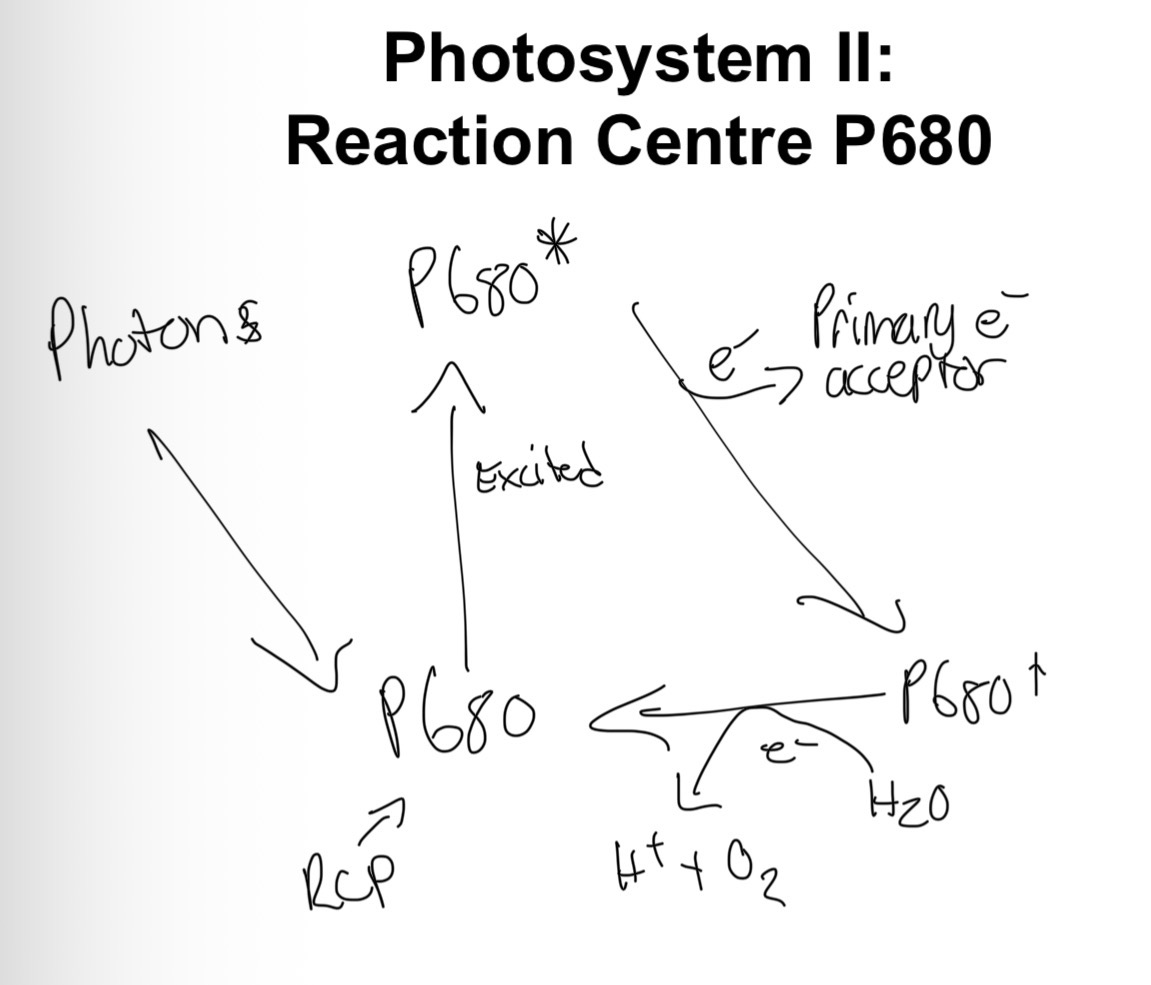
When the reaction centre receives the energy through inductive resonance, where does its electron go and how does it gain it back?
The excited electron in the RCP is transferred into its primary electron acceptor
First redox reaction
It gains its electrons back through the oxidation of H2O (Photosystem 2)
It gains electrons back through the oxidation of plastocyanin (Photosystem 1)
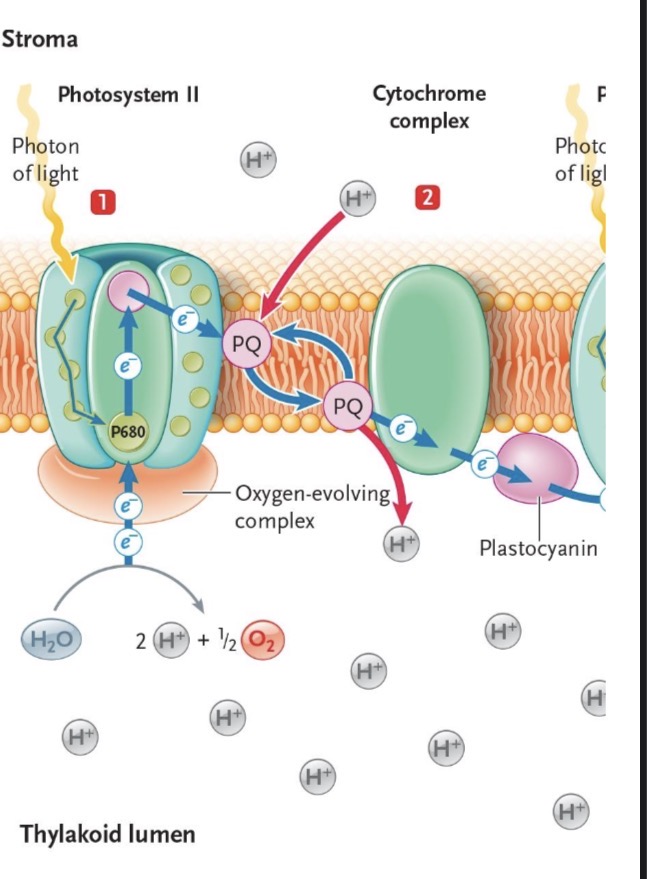
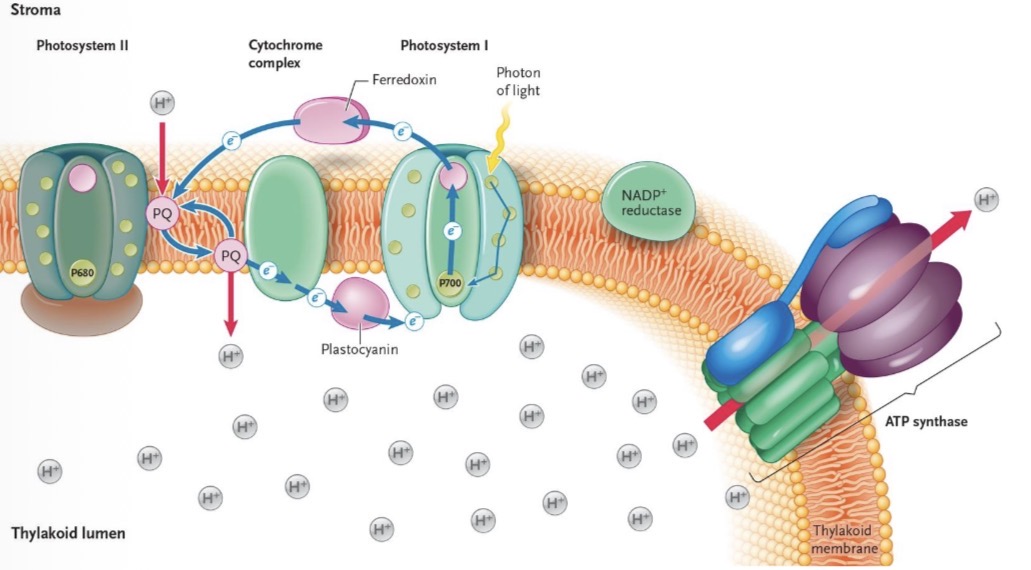
How does Photosystem 2 produce PMF?
Oxidation of H2O for P680 electron regeneration
Reduction of PQ from oxidation of primary electron acceptor, which takes hydrogen from the stroma
PQ reduces cyctochrome B6F, pulling the hydrogen off of the PQ and releases hydrogen into the thylakoid
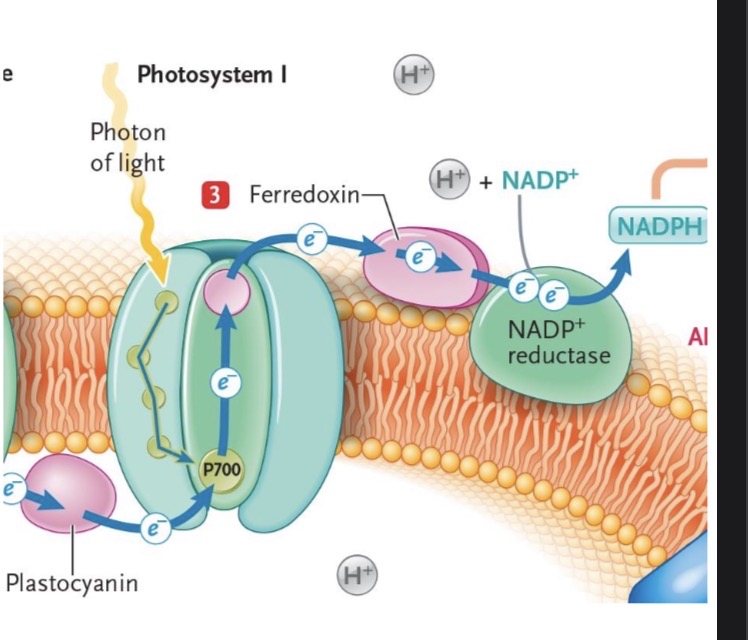
How does Photosystem 1 produce NADPH
Photons transfer energy to antenna to P700
P700 transfers electrons to primary electron acceptor and into ferredoxin
Ferredoxin transfers electrons into NADP+ reductase
NADP+ reductase reduces NADP+ into NADPH in the stroma
Protons are removed during this reaction
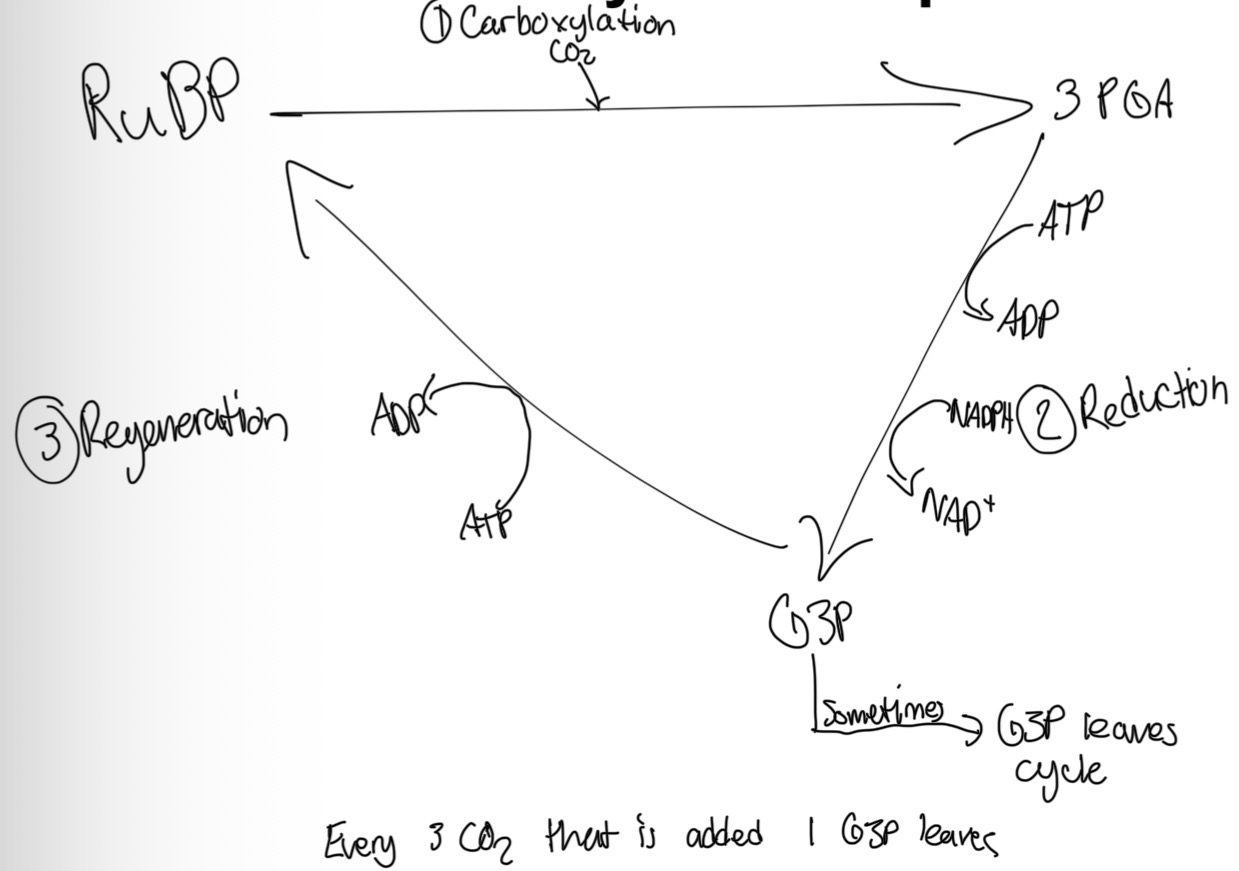
What is the order of reaction of the Calvin Cycle?
RuBP is carboxylated with CO2 into 3PGA
PGA is reduced with ATP and NADPH into G3P
G3P is regenerated with ATP into RuBP
Since the Calvin cycle uses more ATP than NADPH, how does the electron transport supplement for this (Cyclic electron transport)?
Ferredoxin will reduce PQ instead of NADP+
Makes PQ flow to P700+
Creates stronger PMF = More ATP
How do photosynthetic prokaryotes carry out photosynthesis?
Cyanobacteria carry out photosynthetic mechanisms through their singular cell membrane, and cytosol, by having Photosystem 2 - Photosystem 1 - Calvin cycle
Ancient Cyanobacteria endosymbiotic relationship with ancient archaea