DAT chem 5 - Liquids and solids
 Call Kai
 Learn
Learn Practice Test
 Spaced Repetition
 Match
Match Flashcards
 Knowt Play
1/25

There's no tags or description
Looks like no tags are added yet.
Name | Mastery | Learn | Test | Matching | Spaced | Call with Kai |
|---|
No analytics yet
Send a link to your students to track their progress
26 Terms
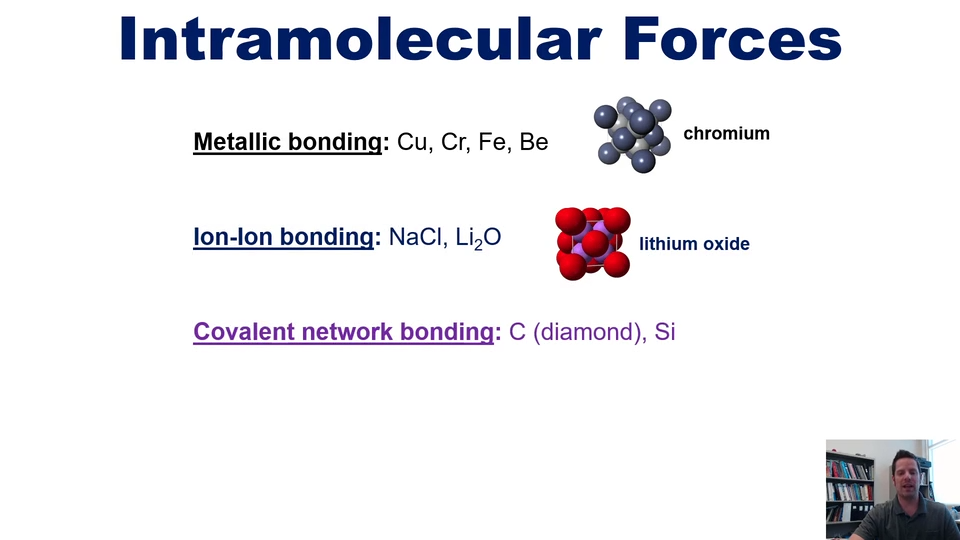
intramolecular forces examples
metallic
ionic
covalent
intermolecular forces
ion dipole
Hydrogen
dipole dipole
dispersion
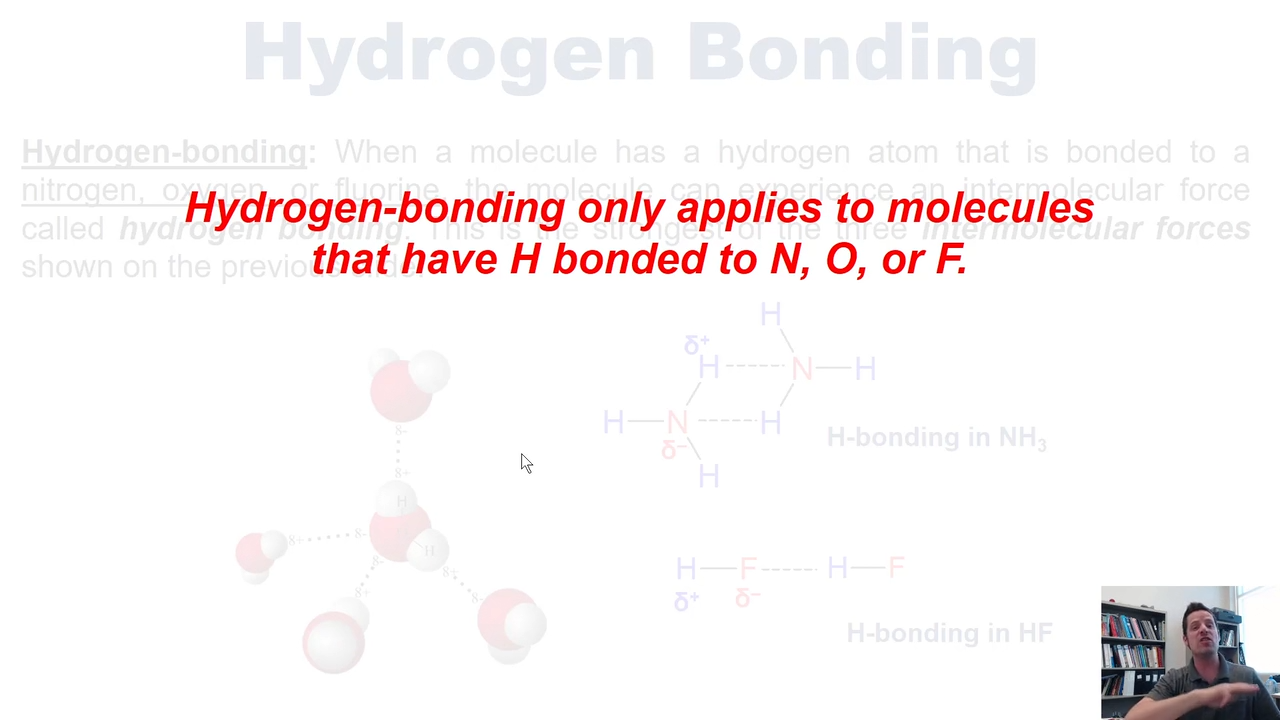
What does hydrogen bonding apply to
molecules that have H bonded to NOF
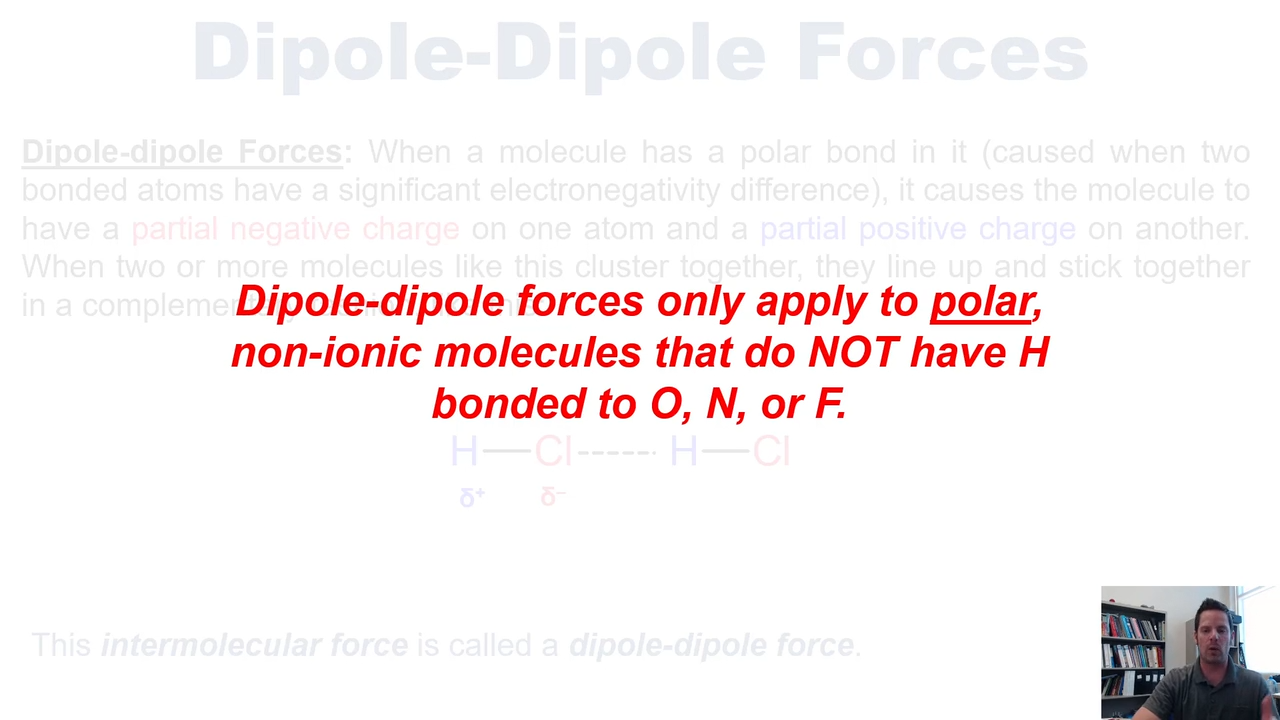
Dipole dipole forces
non covalent molecules that dont have H bonded to NOF
What leads to a molecule having more LDF
its size
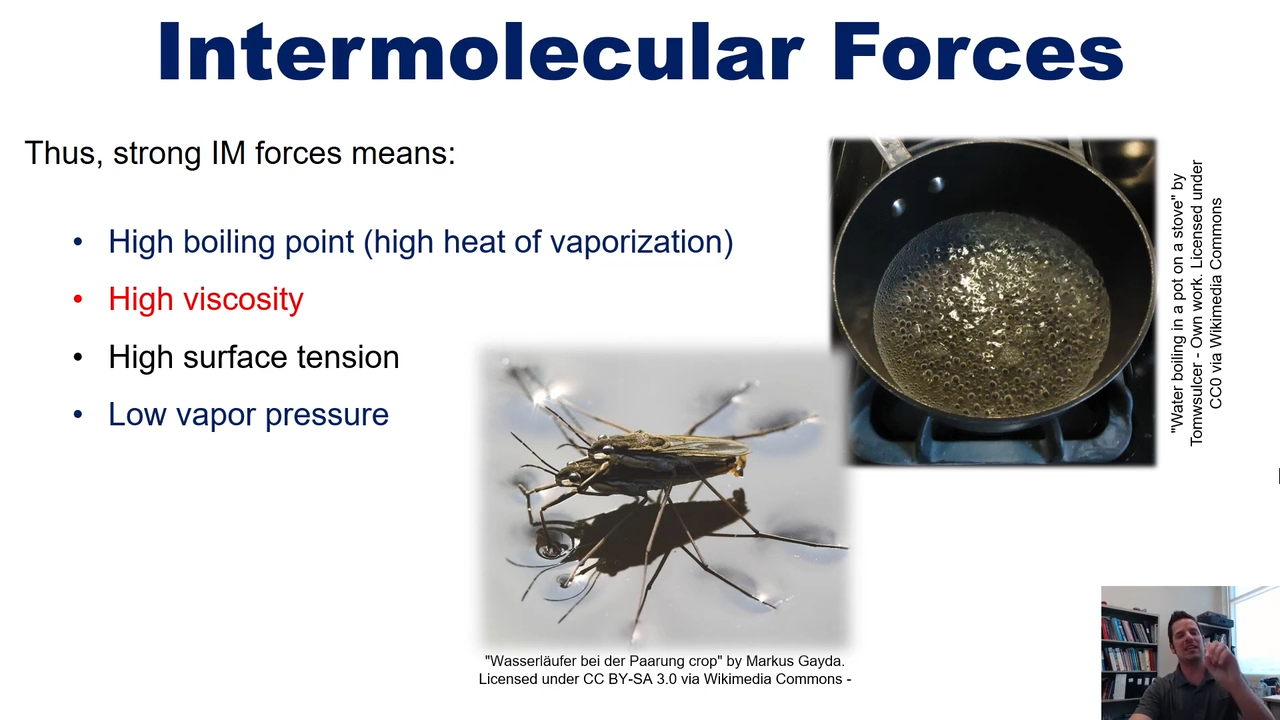
What do strong intermolecular forces lead to
High boiling point
high viscocity
high surface tension
high heat of vaporization
low vapor pressure
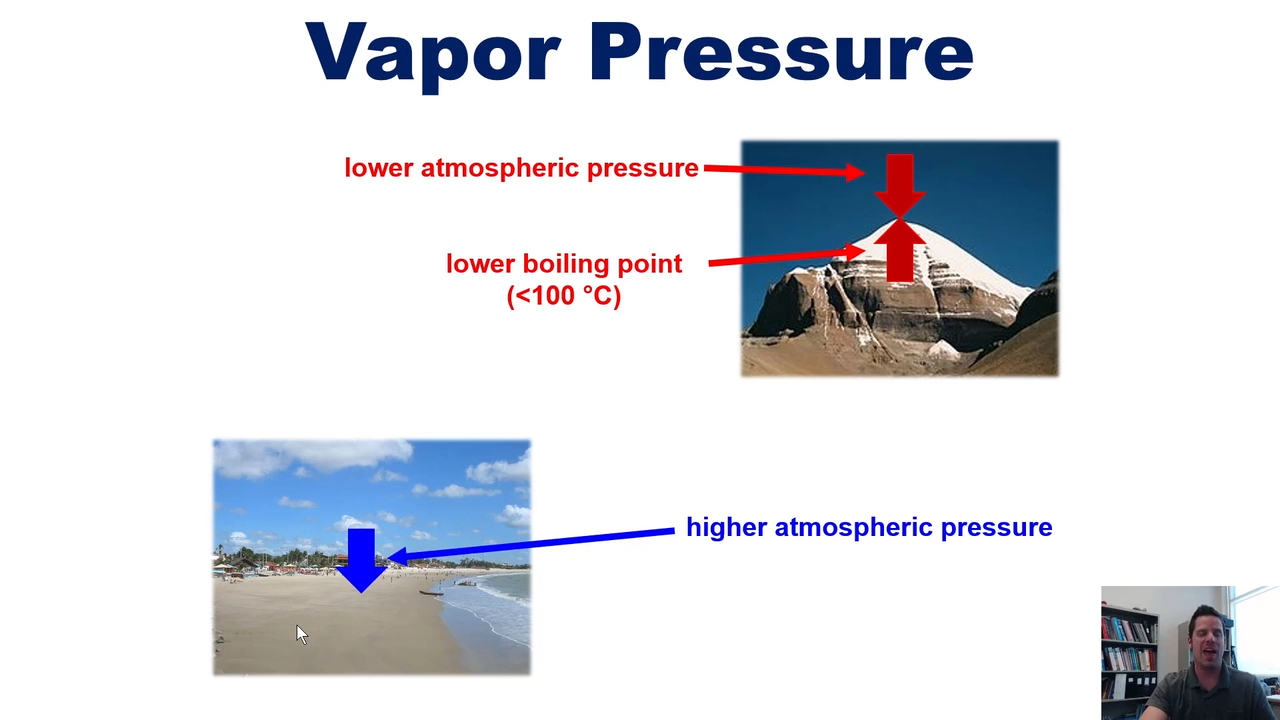
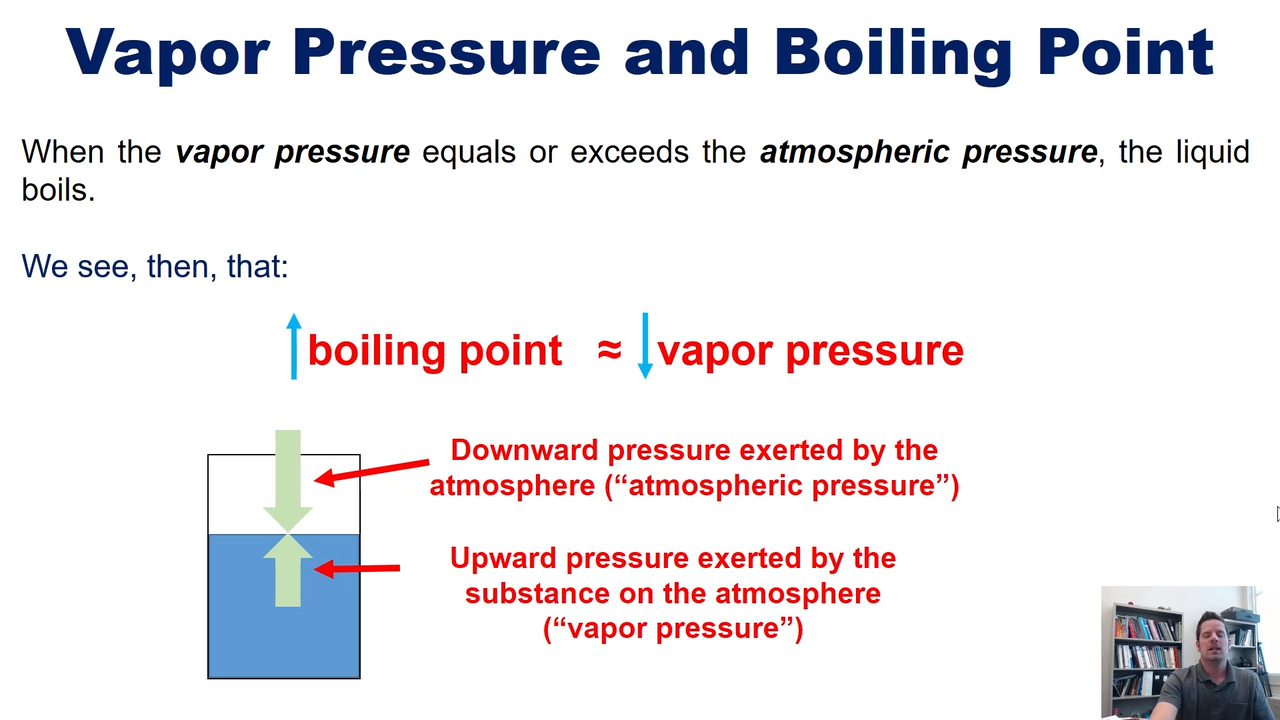
Vapor pressure
the molecules on top of a liquid push down on it. The liquid pushes back. Once the forces are the same, the liquid boils.
So, we can assume that water has a low vapor pressure, as its boiling point is high. It doesnt want to boil, therfore keeping its vapor pressure low
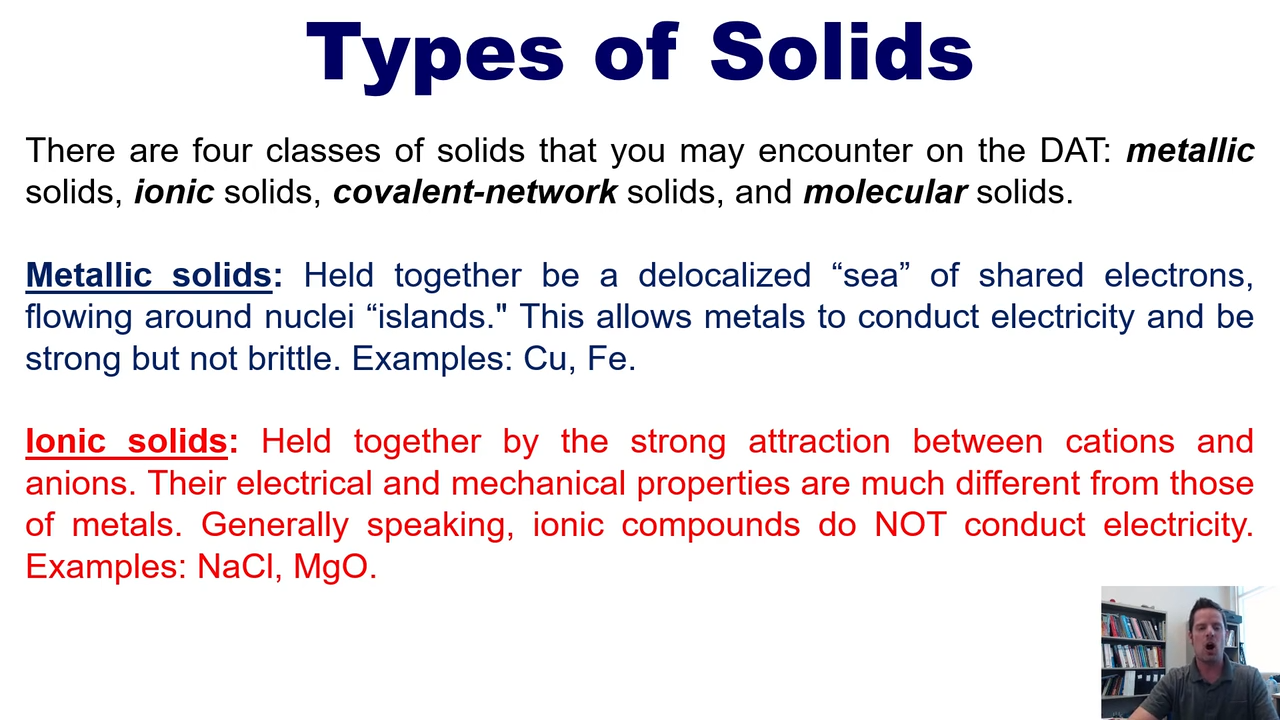
Metallic solids
held togehter by a sea of electrons, allwoing for electricity conductivity, stong but not brittle
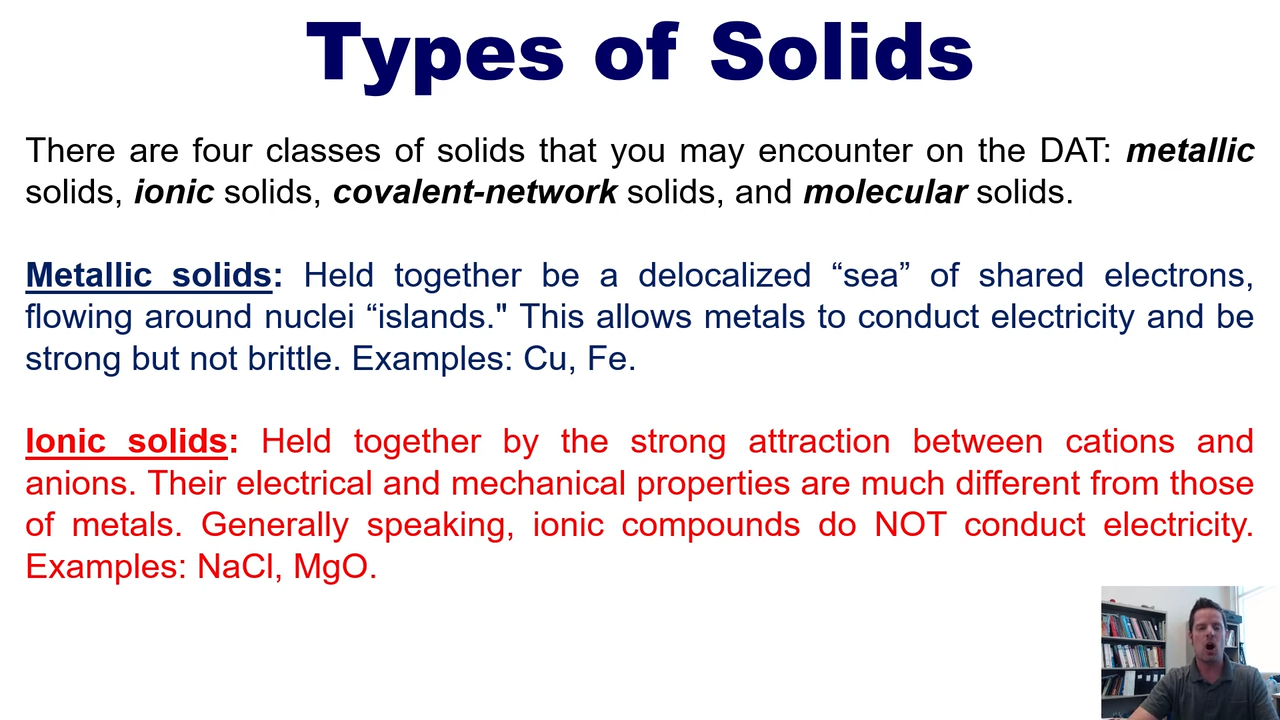
Ionic solids
held together by a strong attractions between cations and anions.
do not conduct electricity and are brittle
Covalent networ solids
held together by an extended network of covalent bonds, very hard
Give semiconductors their properties
Molecular solids
held together by IM forces
soft with low melting points
unit cell
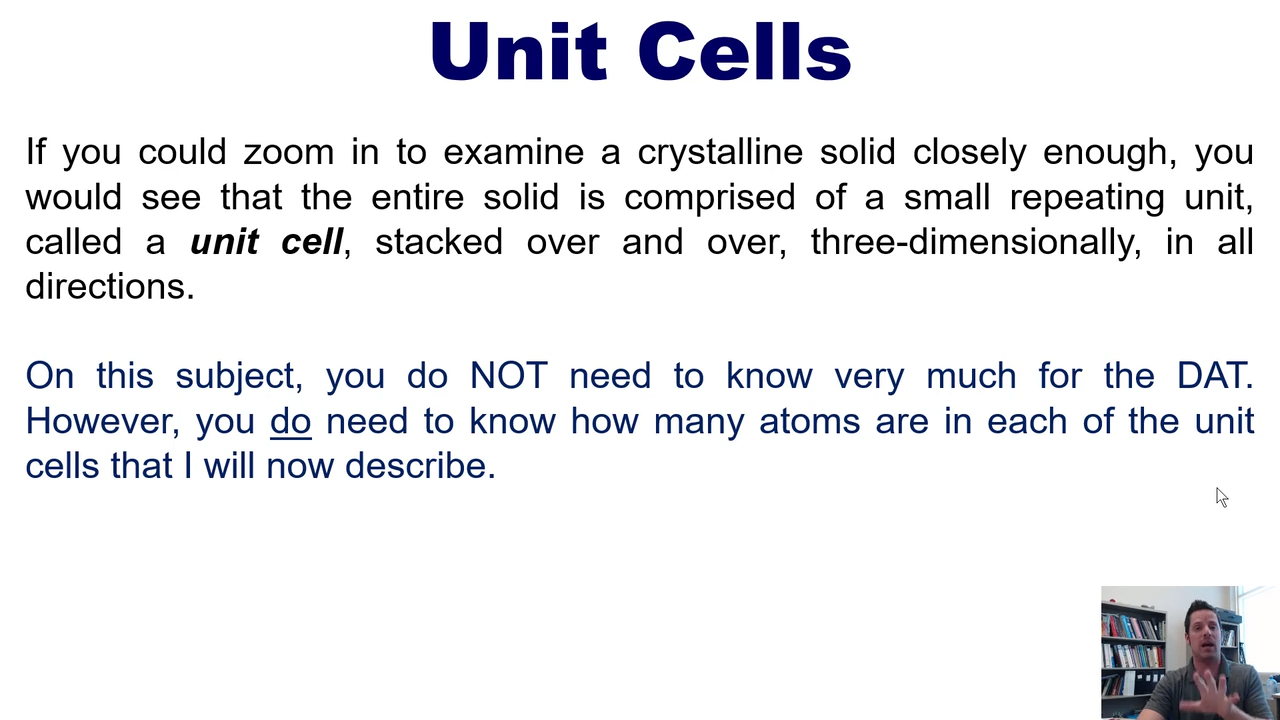
if you zoom in ona crystalline solid closely enough, you would see that the entire solid is comprised of a small repeating unit called a unit cell
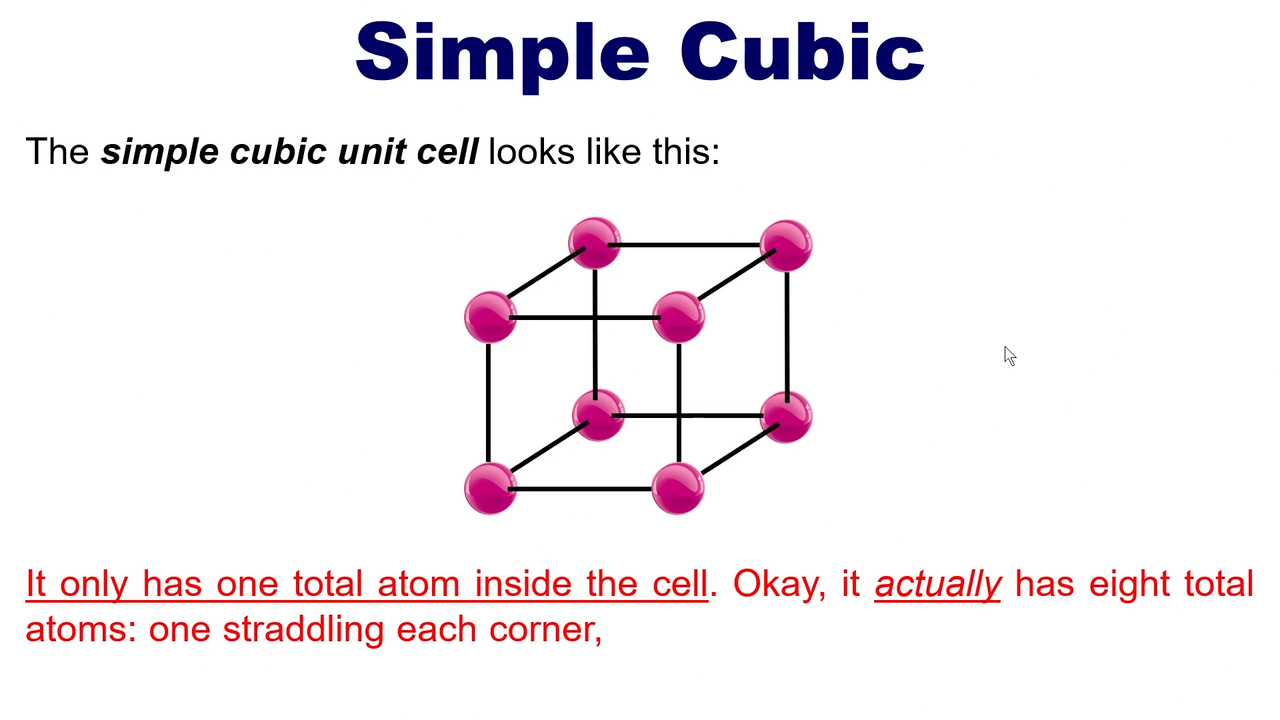
Simple cubic
only one atom in the cell 1/8
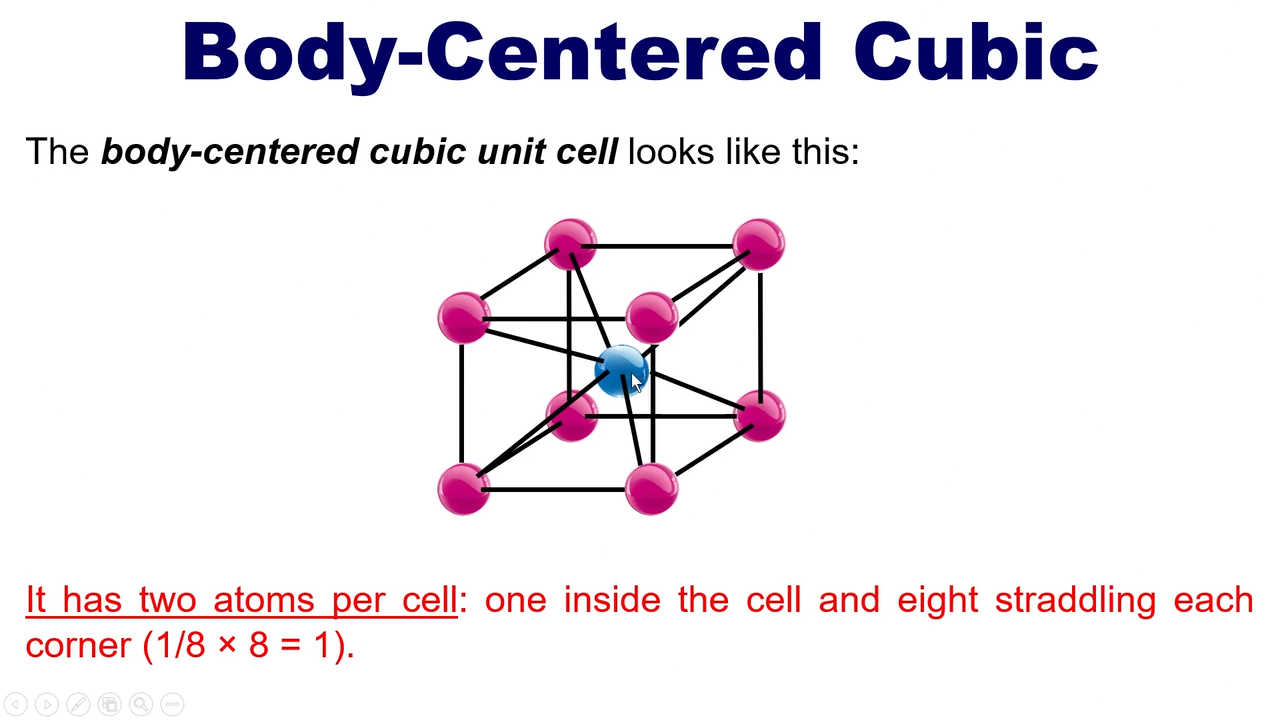
Body centered cubic
2 cells
1/8×8 +1
Face centered cubic
4 cells
(1/8*8) + (½ *6)
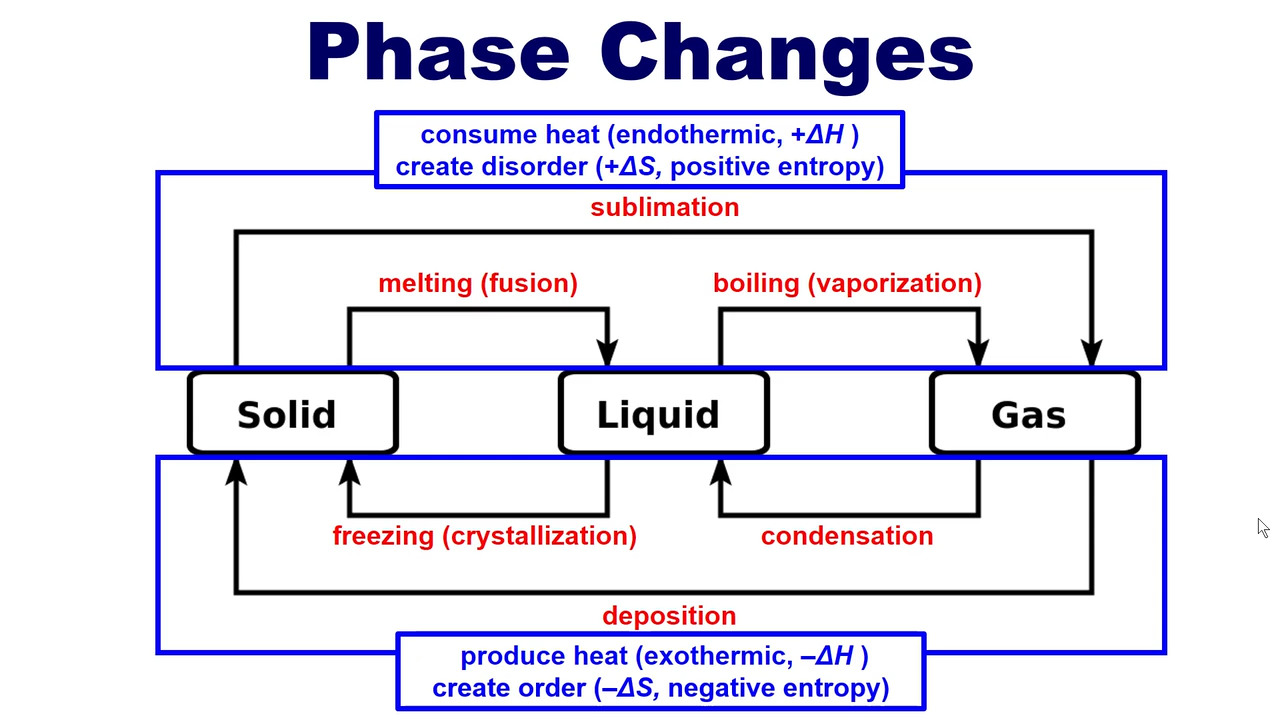
Deposition
Gas into solid
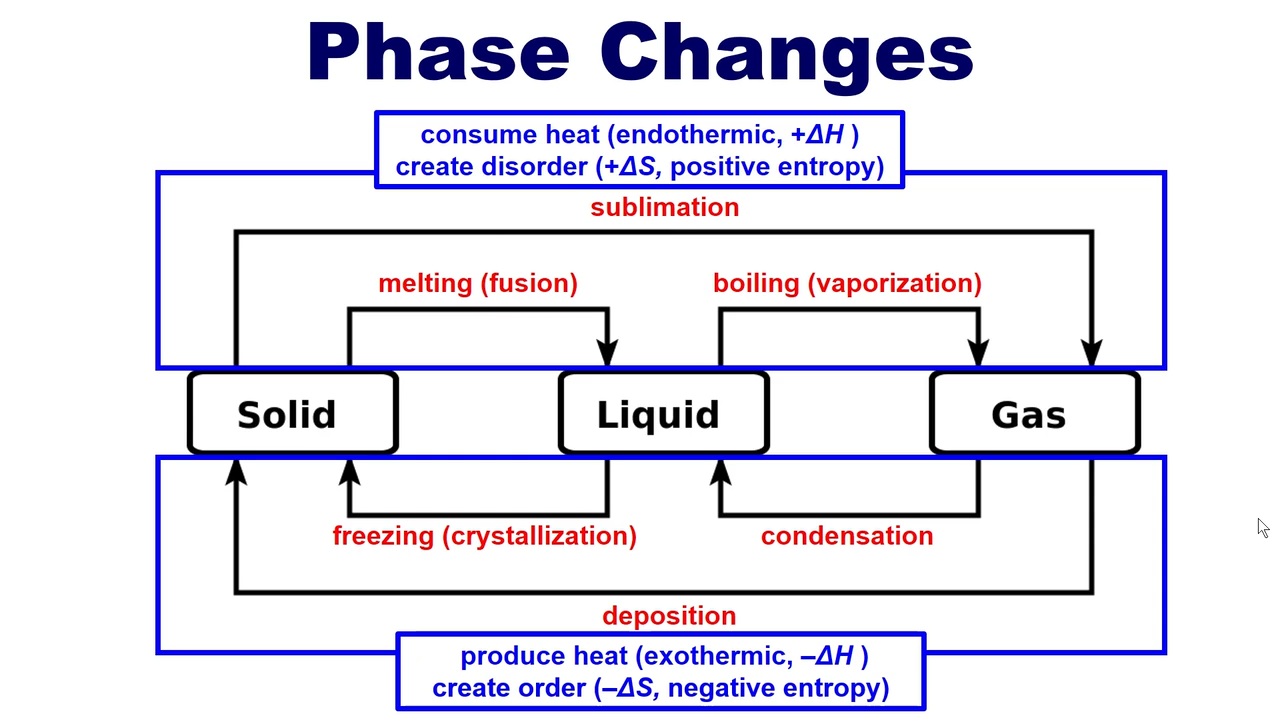
Fusion
melting
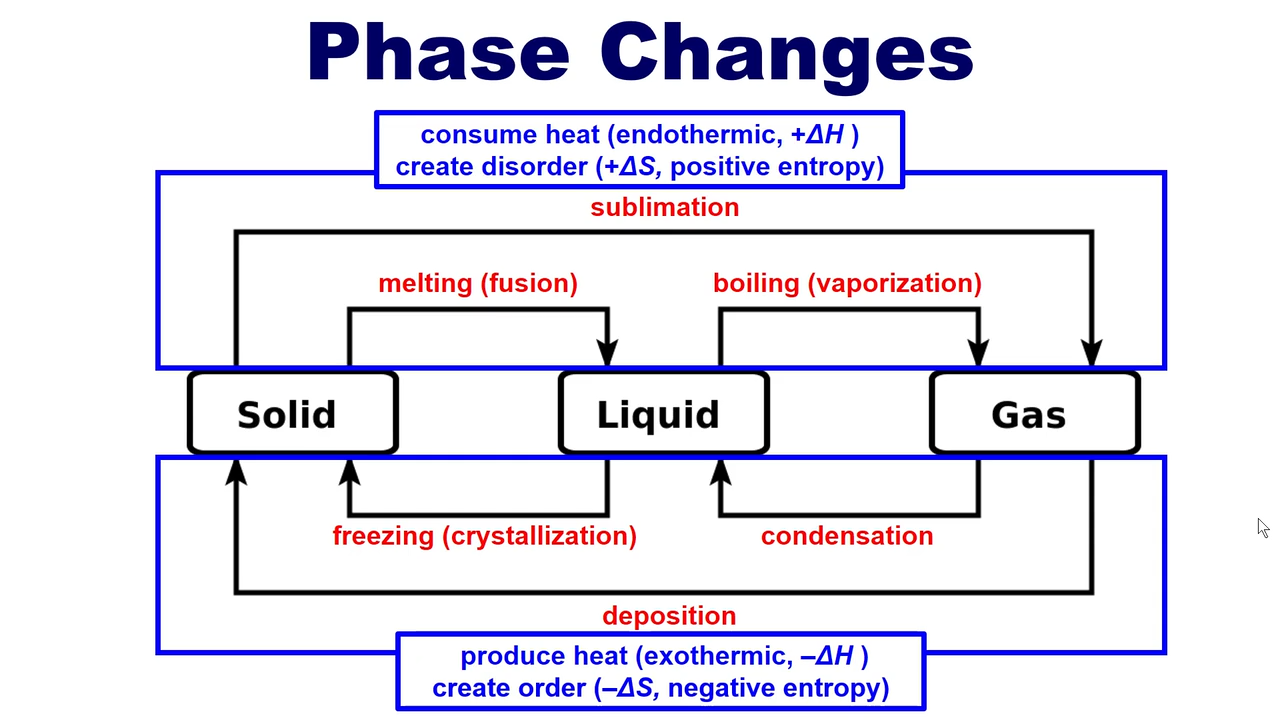
crystallization
Freezing
Sublimation
Solid into gas
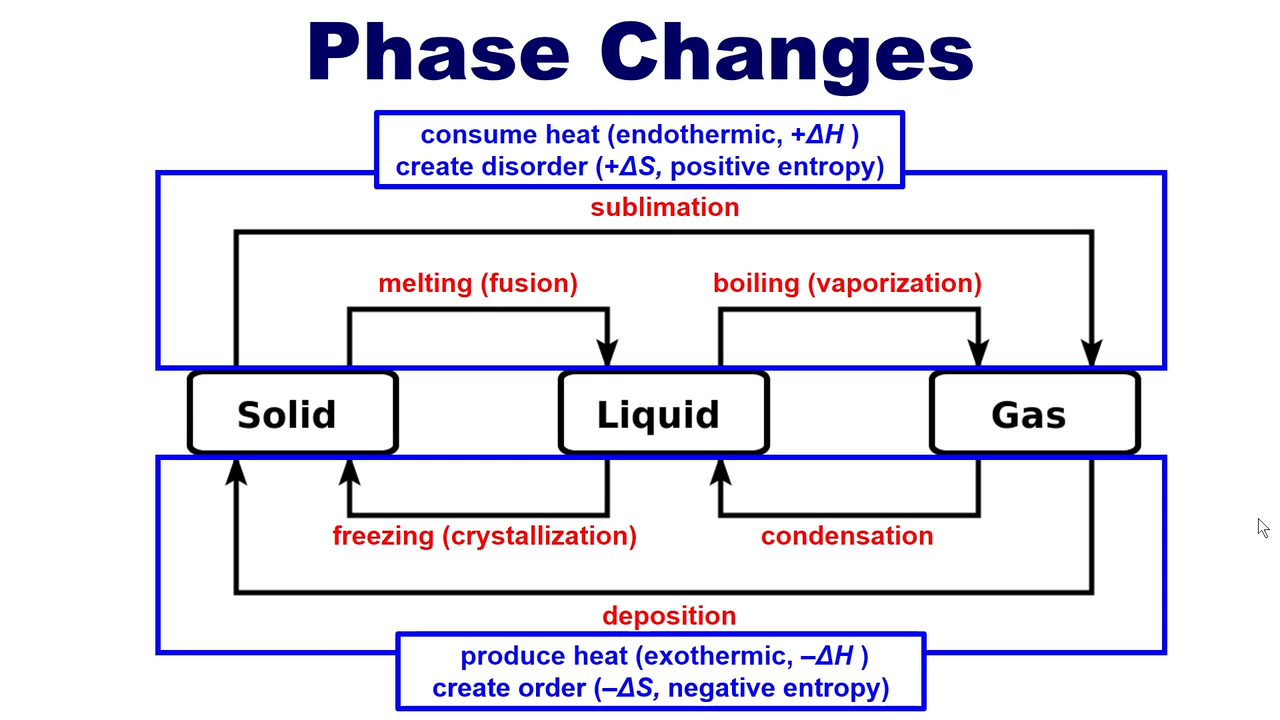
Phase changes entropy and energentics
Boilijng point and vapor pressure relationship
Higher boiling point, lower vapor pressure
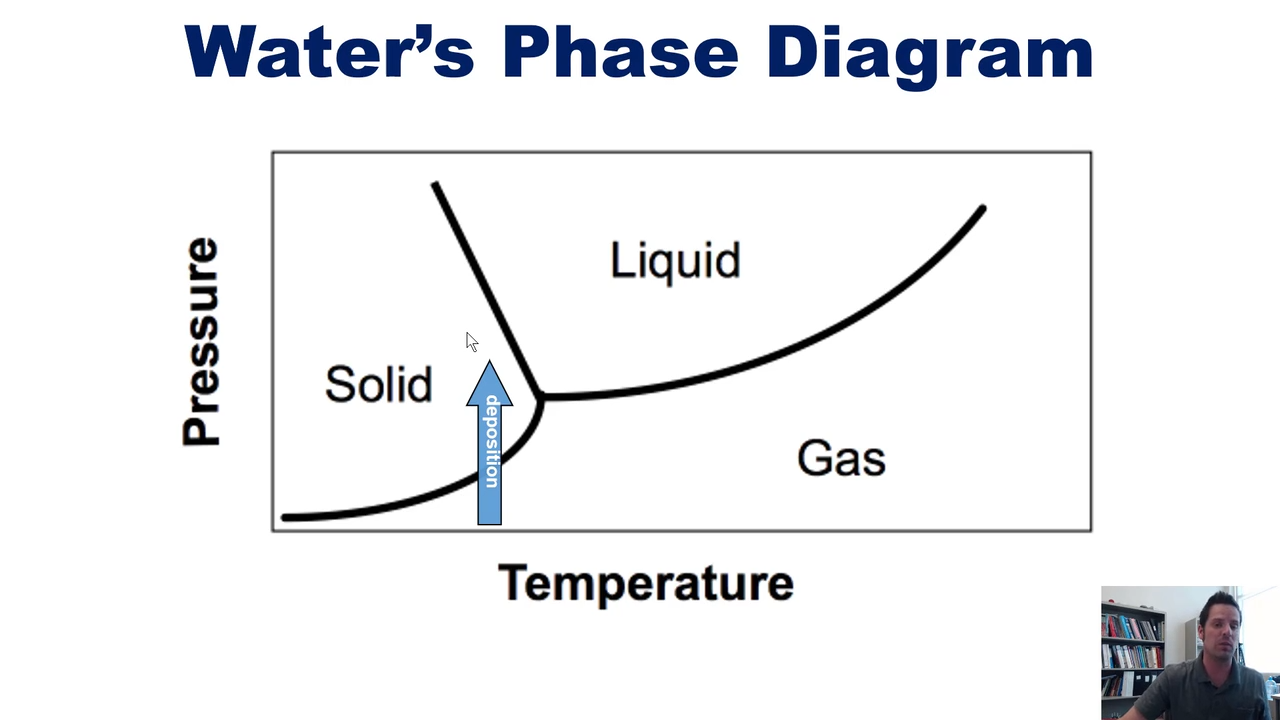
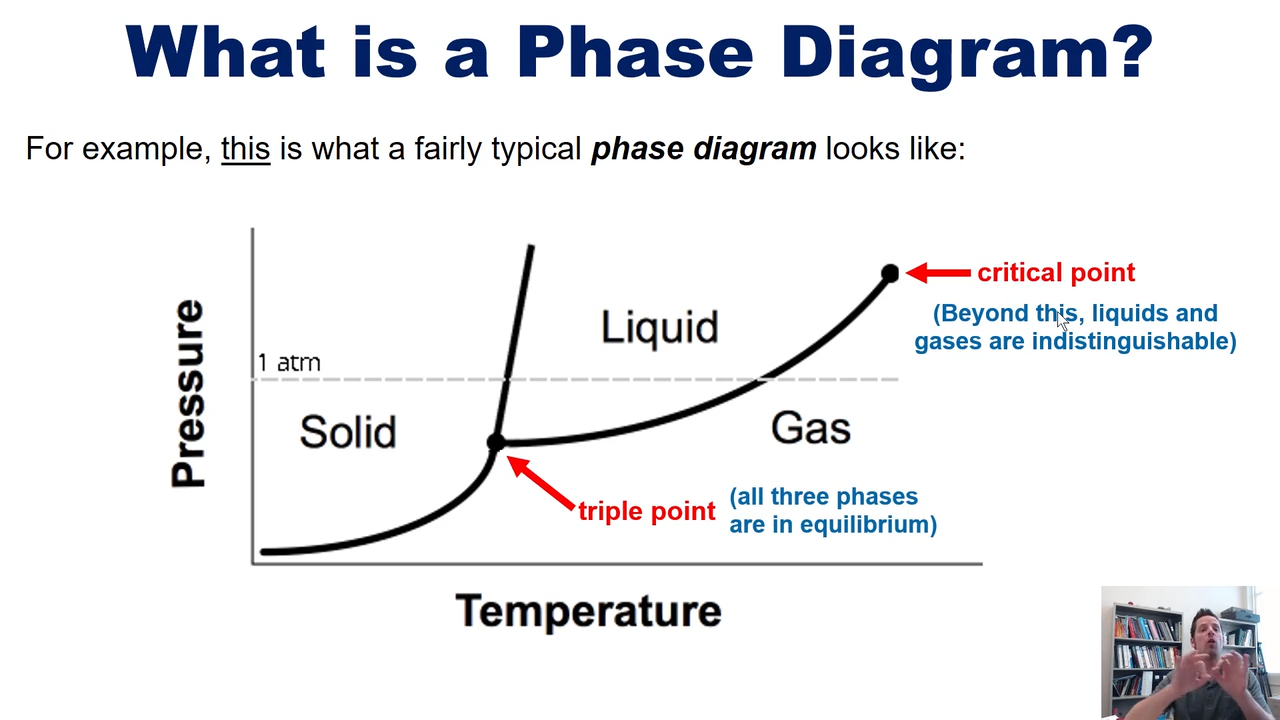
phase diagram
bottom is gas
left is solid
right is liquid
Y axis is pressure
x axis is temp
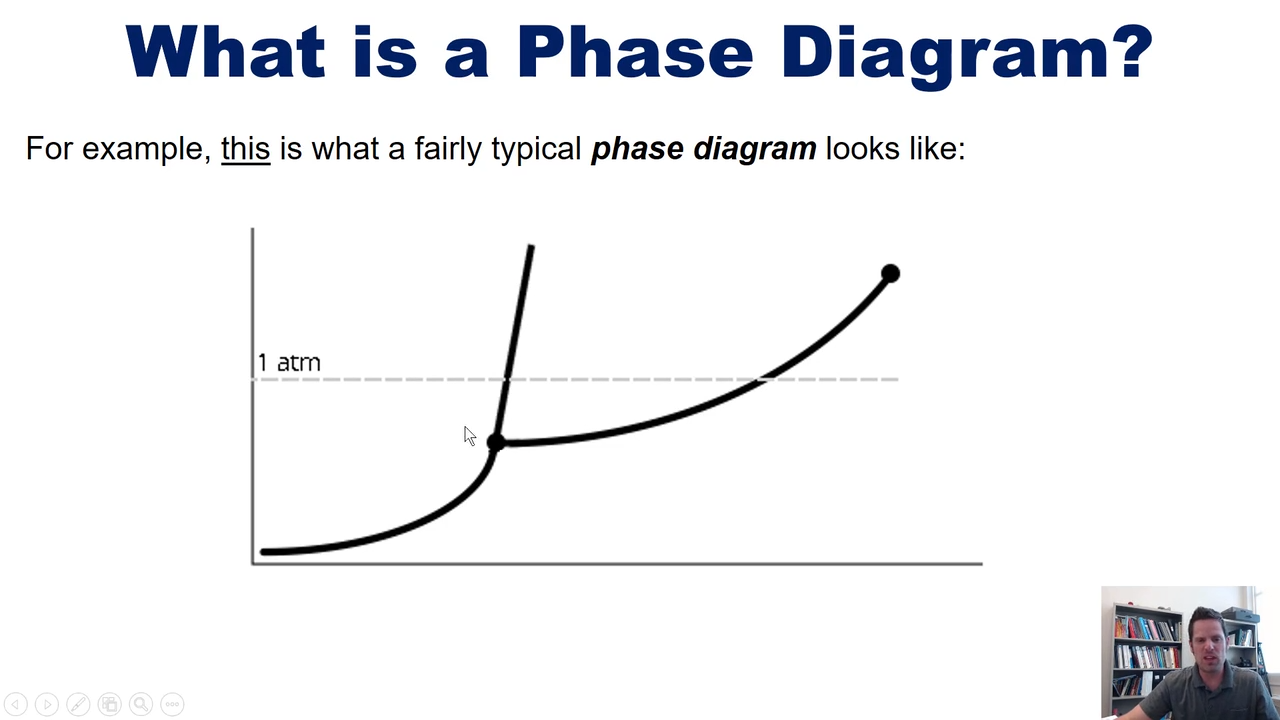
phase diagram Lines
where the two phases coexist
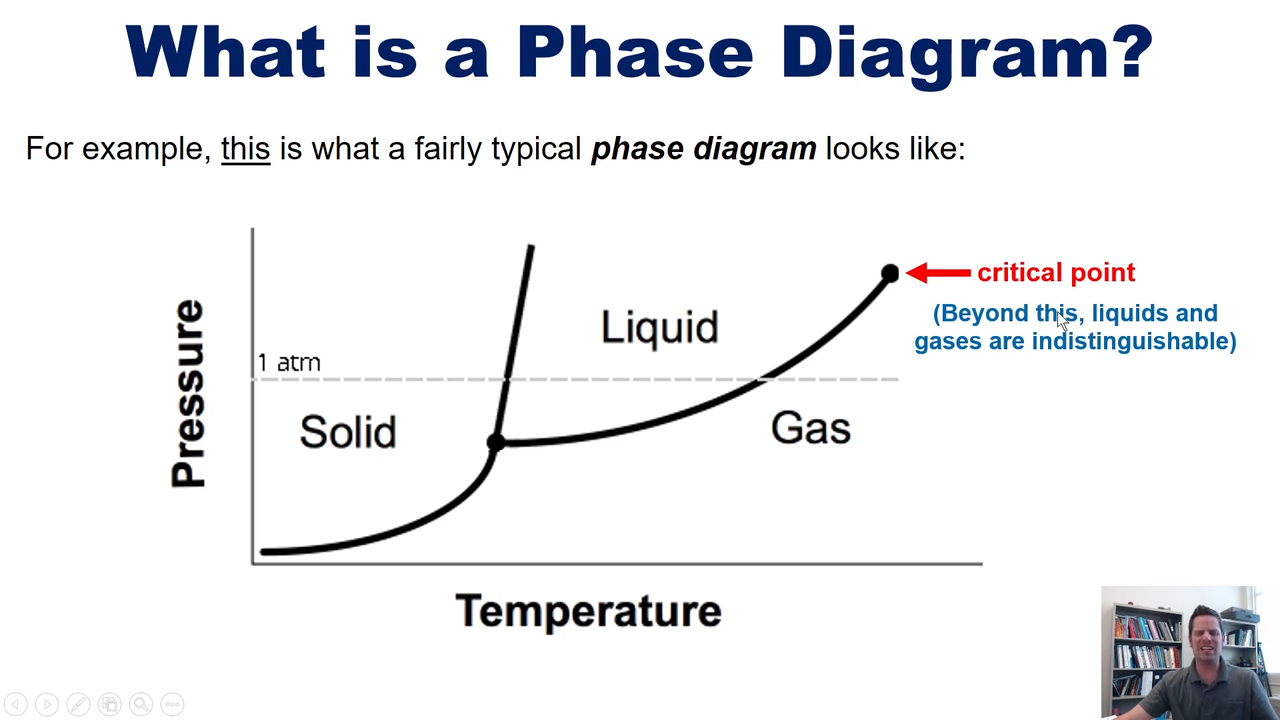
phase diagram critical point
where liquids and gasses are indestinguishable
triple point
all three phases exist in equilibrium
Whats unique about the phase diagram of water
For most molecules on earth, the solid is more dense than the liquid.
meaning, as pressure increases, The gas will turn into a solid, which will then turn into a liquid, which will turn into a solid
Water is different though, as its liquid form is more dense. This in turn means that upon adding more pressure, the solid fuses into liquid.
This turns its phase chart into a negative slope