Bio Chapter 7
 Call Kai
 Learn
Learn Practice Test
 Spaced Repetition
 Match
Match Flashcards
 Knowt Play
1/28

There's no tags or description
Looks like no tags are added yet.
Name | Mastery | Learn | Test | Matching | Spaced | Call with Kai |
|---|
No analytics yet
Send a link to your students to track their progress
29 Terms
what is DNA’s full name?
deoxyribonucleic acid
What is DNA made of?
Building blocks of Nucleotides
What biomolecule is DNA?
Nucleic Acid
DNA look and structure
Looks like a twisted ladder aka double helix, with two strands twisted
Each strand has a backbone of alternating deoxyribose sugar and phosphate groups.
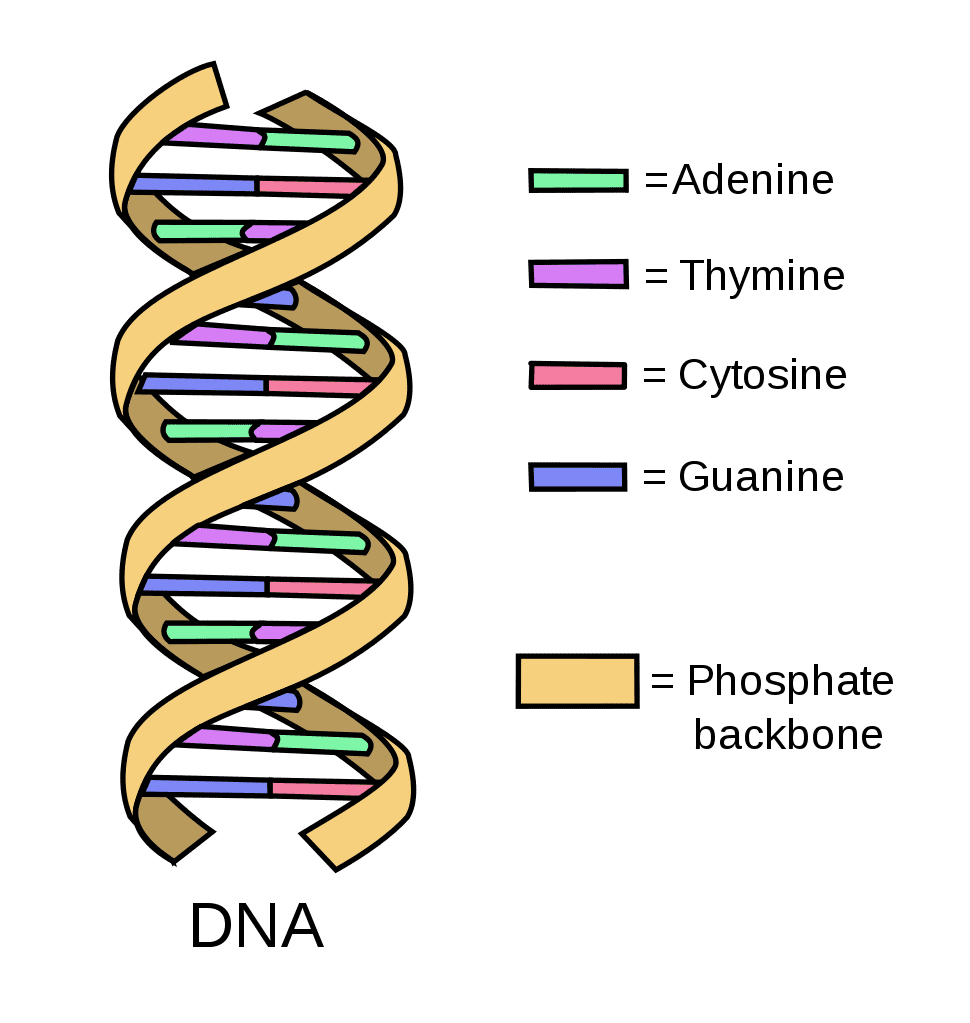
How many different nucleotides (building blocks) are there?
There are four: Adenine (A), Guanine (G), Cytosine (C), Thymine (T)
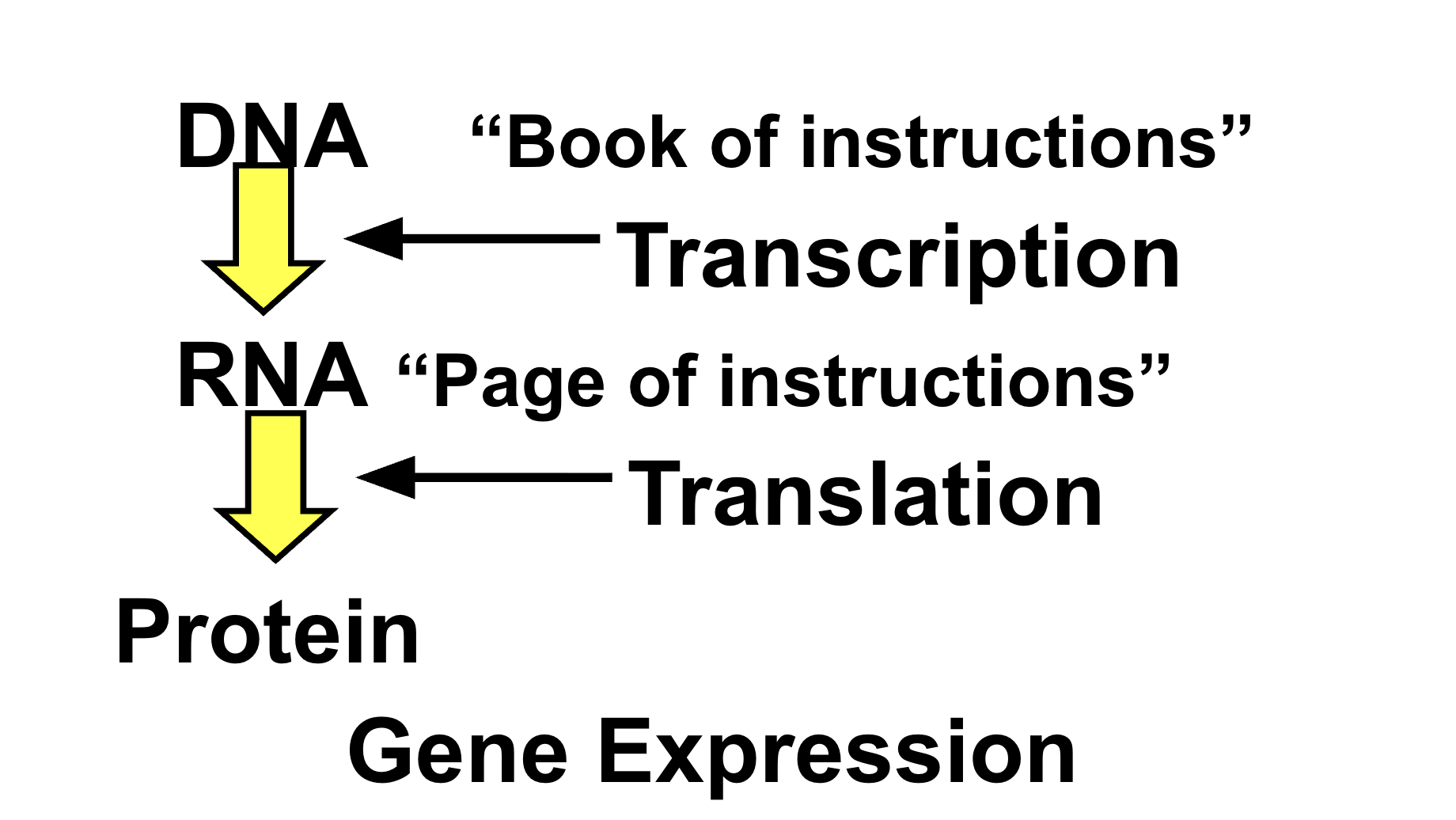
What is gene expression?
The process where cells use instructions from DNA to create functional products, primarily proteins, that enable cell function
Two main steps in gene expression
Transcription (DNA copied to mRNA)
Translation (mRNA used to build proteins), allowing cells to turn on specific instructions to function, adapt, and grow.
What can DNA do?
Stores RNA and protein-encoding information; transfers information to the next generation of cells
What are complementary nucleotides?
Adenine → Thymine
Cytosine → Guanine
pairs of nitrogenous bases that form hydrogen bonds to connect two strands of DNA
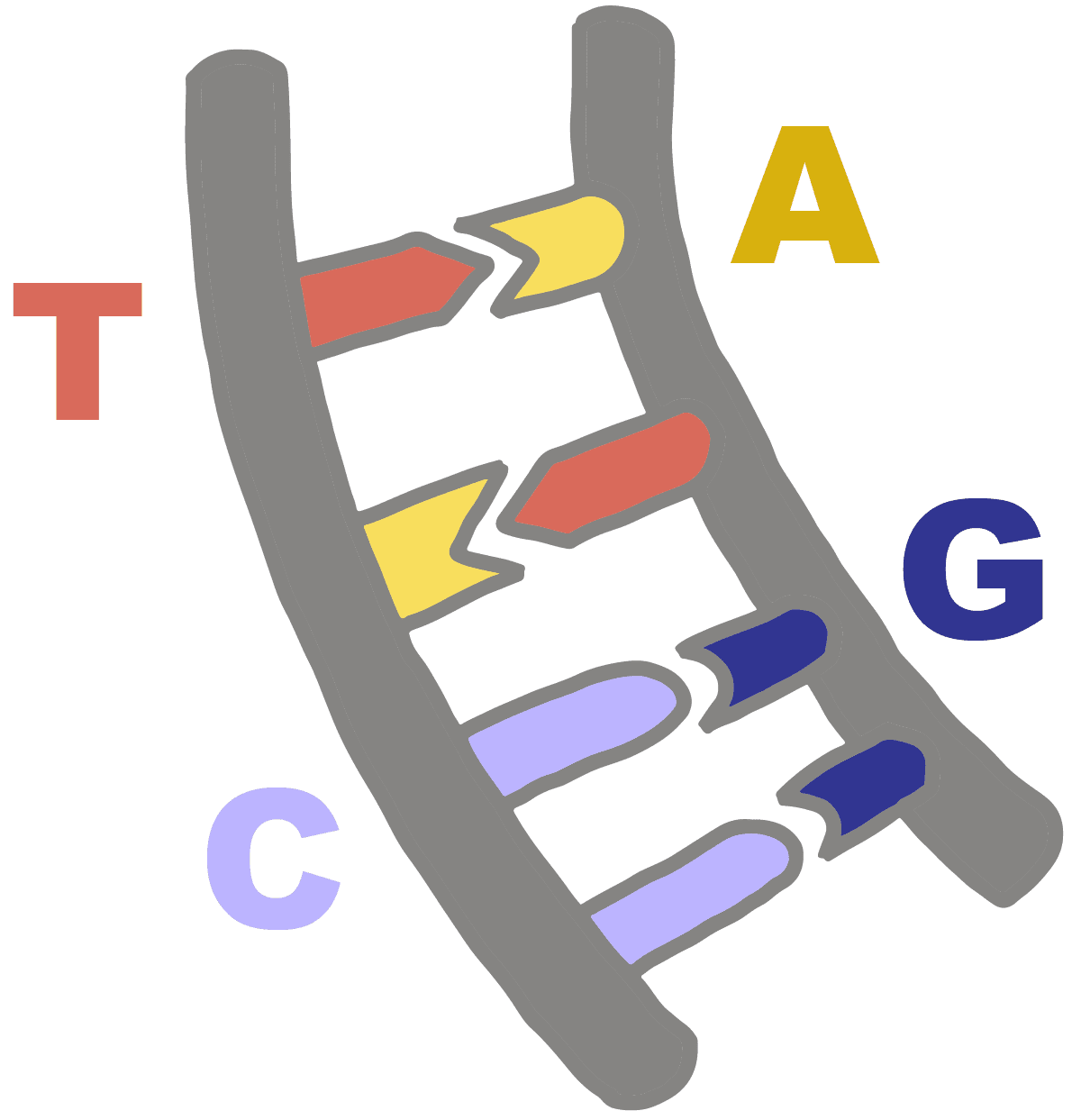
Why are complementary nucleotides complementary?
their unique shapes and chemical structures allow them to fit together like a lock and key, ensuring accurate genetic replication and stability
How are DNA and RNA similar?
They are vital nucleic acids composed of nucleotide chains
Both have protein-encoding information
They are made of 3 components:
are made of 5-carbon ribose sugar
a base (both contain the bases (Adenine (A), Cytosine (C), and Guanine (G)
a phosphate group
How are DNA and RNA different?
Structure: DNA is double-stranded and RNA is single-stranded
Sugar: DNA contains deoxyribose sugar and RNA contains ribose sugar
Base: DNA uses A,G,C,T and RNA uses A,G,C,U
Where is DNA found?
nucleus and mitochondria
Where is RNA found?
produced in the nucleus but operates in the cytoplasm and ribosomes.
What is a mutation?
A permanent change in a cell’s DNA sequence.
What types of effects can mutations have on proteins?
It can alter protein structure and function by changing amino acid sequences, ranging from having no effect to creating dysfunctional, unstable, or completely inactive proteins.
Key effects include "loss-of-function" (inactivation), "gain-of-function" (new, sometimes harmful, activity), altered binding affinities with other molecules, and reduced structural stability
When and where does DNA transcription happen?
When: G1and G2 phases of the cell cycle
Where: Nucleus of the eukaryotic cells
What is the purpose of DNA transcription?
to create a portable RNA copy (messenger RNA or mRNA) of a gene's DNA code. This mRNA carries the genetic instructions from the cell nucleus to the cytoplasm, acting as a blueprint for assembling proteins.
When and where does RNA translation happen?
When: after transcription, during G1 and G2 phases of the cell cycle
Where: in the cytoplasm on ribosomes.
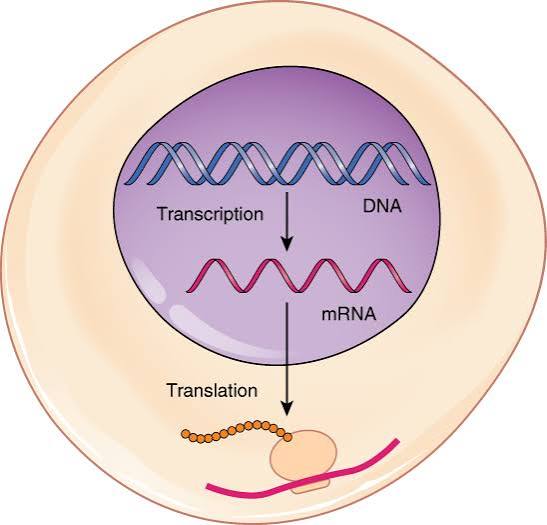
What is the purpose of RNA translation?
to convert the genetic instructions carried by messenger RNA (mRNA) into functional proteins. It translates the nucleotide language (A,U,G,C) into the amino acid language, acting as a protein factory to build cellular components and machinery essential for life.
What two major processes is DNA involved in?
(1) DNA replicates itself, making more double-stranded DNA
(2) One strand of DNA is:
A. transcribed to make RNA
B. that RNA copy leaves the nucleus, and is then translated at the ribosome to make proteins
What are chromosomes?
Located inside the nucleus, made of protein and a single molecule of DNA. Contain genes that determine individual traits, acting as packages for DNA to ensure it is accurately copied and distributed during cell division.
What is a gene?
the basic physical and functional unit of heredity
composed of specific sequences of DNA located within chromosomes that provide instructions for cells to make proteins or functional RNA molecules
Chromosomes and genes, how are they related to each other?
Chromosomes are threadlike structures made of coiled DNA located in the cell nucleus, acting as carriers.
Genes are specific, functional segments of DNA, acting as instructions that reside within chromosomes.
A chromosome is the book, and genes are the individual chapters
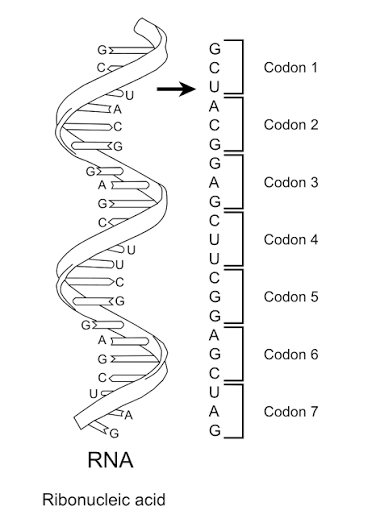
What is a codon?
a DNA or RNA sequence of three nucleotides (a trinucleotide)that acts as a genetic code word, instructing the cell to add a specific amino acid to a protein chain or to start/stop protein synthesis
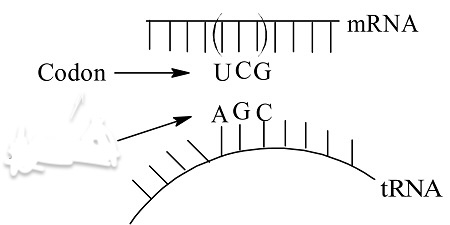
What is an anti-codon?
Complementary three-nucleotide sequences on tRNA that pair with codons during protein synthesis.
How is the DNA code “read”?
Cells read DNA in the 5’ - 3’ direction
start signal codon
AUG
stop signal codon
UAA, UAG, and UGA