14. Surgical diseases of the oesophagus. Hiatal hernia. Esophageal feeding tubes.

0.0(0)
Studied by 6 people
call kaiCall Kai
learnLearn
examPractice Test
spaced repetitionSpaced Repetition
heart puzzleMatch
flashcardsFlashcards
GameKnowt Play
Card Sorting

1/78

encourage image

There's no tags or description

Looks like no tags are added yet.

Last updated 4:42 PM on 5/3/25
Name
Mastery
Learn
Test
Matching
Spaced
Call with Kai

No analytics yet

Send a link to your students to track their progress

79 Terms

1
New cards

What are the three parts of the oesophagus?

  1. Cervical (lies to the left of the midline)

  2. Thoracic (in mediastinum, between v. cava cranialis and aorta)

  3. Abdominal (very short)

2
New cards

What are the four layers of the oesophagus?

Mucosa, submucosa, muscularis, and adventitia. NO SEROSA

3
New cards
Why may early fibrin sealing of oesophagostomy sites occur slower than in other areas of the GIT?
Because the oesophagus lacks a serosal layer.
4
New cards
What are the two oesophageal sphincters?
Upper and lower.
5
New cards
What is the function of the upper oesophageal sphincter?
To prevent air from entering the oesophagus during breathing and to prevent reflux of oesophageal contents into the pharynx, guarding against aspiration.
6
New cards
What is the function of the lower oesophageal sphincter?
To prevent reflux of gastric contents back into the oesophagus.
7
New cards
What are the main types of oesophageal surgical intervention?
Oesophagotomy, oesophagostomy, and oesophagectomy.
8
New cards
What is oesophagotomy?
Incision into the oesophageal lumen.
9
New cards
What is oesophagostomy?
Creation of a new opening into the oesophagus for feeding tube placement.
10
New cards
What is oesophagectomy?
Partial resection of the oesophagus.
11
New cards
What is the risk of resecting >3-5cm of oesophagus?
Anastomotic dehiscence (breakdown of the surgical join). If larger resection is necessary, replacement may be required.
12
New cards

Which muscle layers are not incised during oesophageal surgery and why?

The inner circular muscle layers, to prevent damaging the submucosal blood supply.
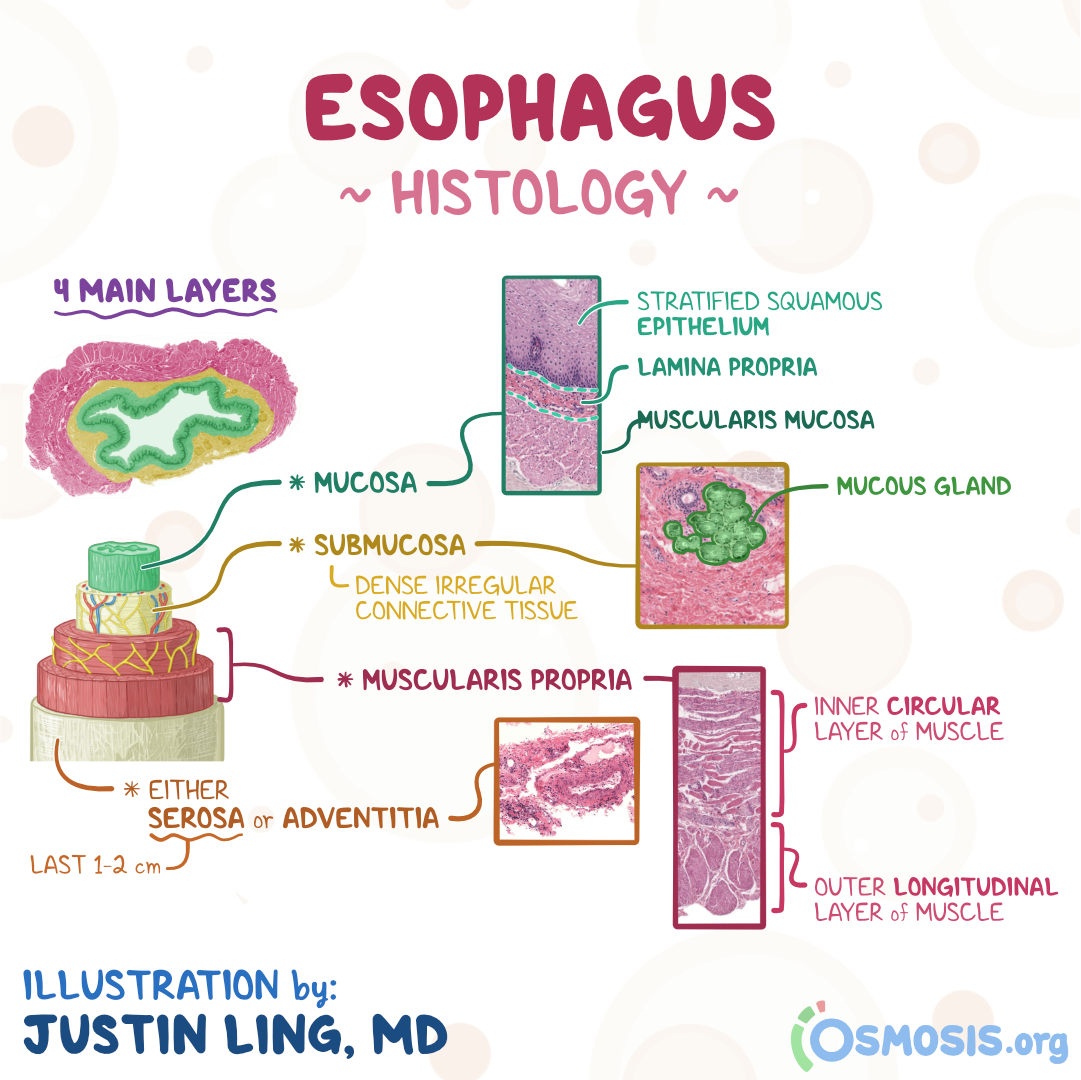
<p>The inner circular muscle layers, to prevent damaging the submucosal blood supply.</p>
13
New cards

What is bougienage?

Dilation of a stricture using a probe or dilator of gradually increasing diameter.
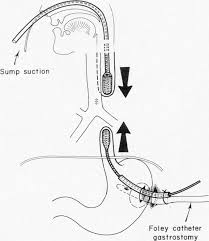
<p>Dilation of a stricture using a probe or dilator of gradually increasing diameter.</p>
14
New cards
What is balloon dilation?
Dilation of a stricture using a balloon catheter.
15
New cards
What are the indications for oesophagotomy?
Oesophageal foreign body and obstruction.
16
New cards
What are the surgical approaches for oesophagotomy?
Cervical, thoracic, and abdominal.
17
New cards

Which approaches require lateral thoracotomy?

Cranial thoracic and caudal oesophagus.

18
New cards

Where is the incision for lateral thoracotomy for access to the cranial thoracic oesophagus?

Choose an appropriate intercostal space according to radiographic location of the abnormality

19
New cards

How is a lateral thoracotomy closed?

  1. Place thoracostomy tube 1-2 ICS caudally to incision, or remove air with catheter after rib apposition and muscle closure

  2. Preplace 4-8 heavy monofilament absorbable sutures around ribs adjacent to incision

  3. Use rib approximator/assistant to appose ribs while tying sutures

  4. Suture serratus ventralis, scalaneus, and pectoralis muscles with simple continuous

  5. Appose edges of latissimus dorsi muscle with simple continuous

  6. Remove air

  7. Close subcutaneous tissue routinely

20
New cards

Where is the incision for access to the oesophagus at the heart base?

4th or 5th intercostal space (dissect and retract azygos vein for adequate exposure)

21
New cards

What is the approach for cervical oesophagotomy?

Dorsal recumbency, midline cervical incision beginning at larynx and extending to manubrium.
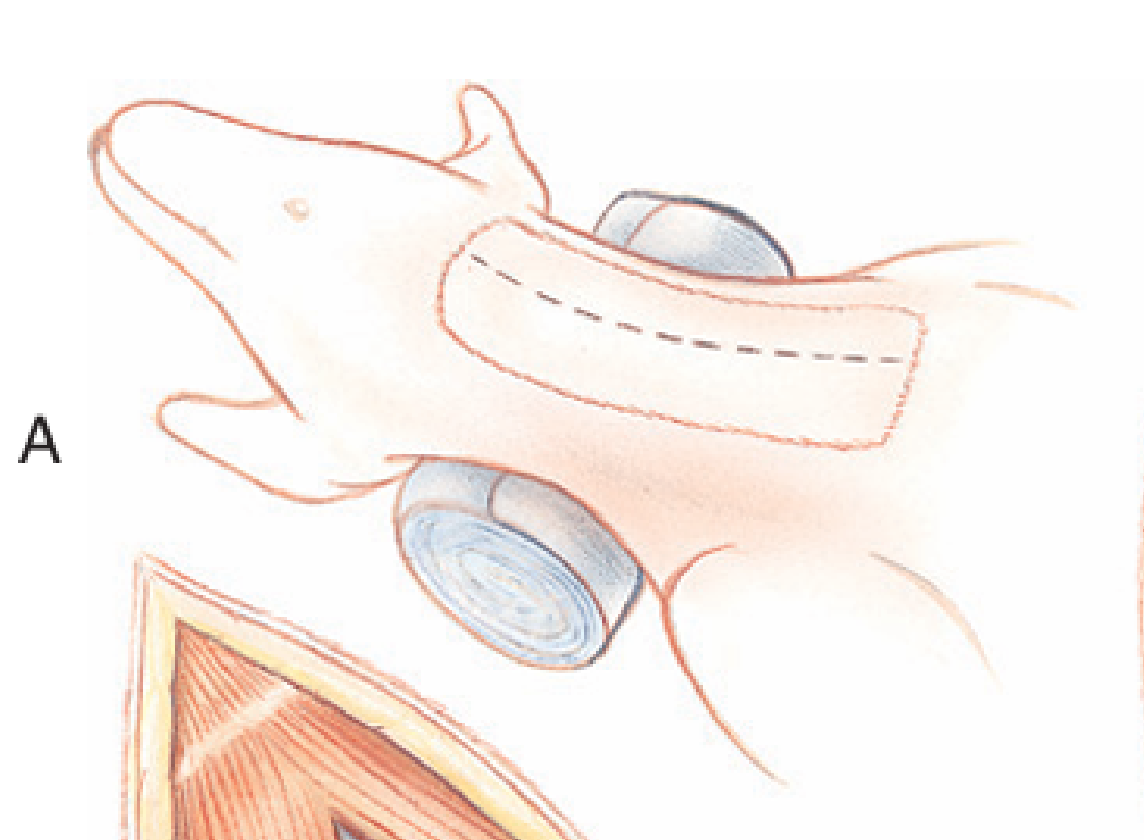
<p>Dorsal recumbency, midline cervical incision beginning at larynx and extending to manubrium.</p>
22
New cards

What structures must be carefully avoided during cervical oesophagotomy?

Thyroid gland and carotid sheath (carotid artery, vagus nerve, and jugular vein).
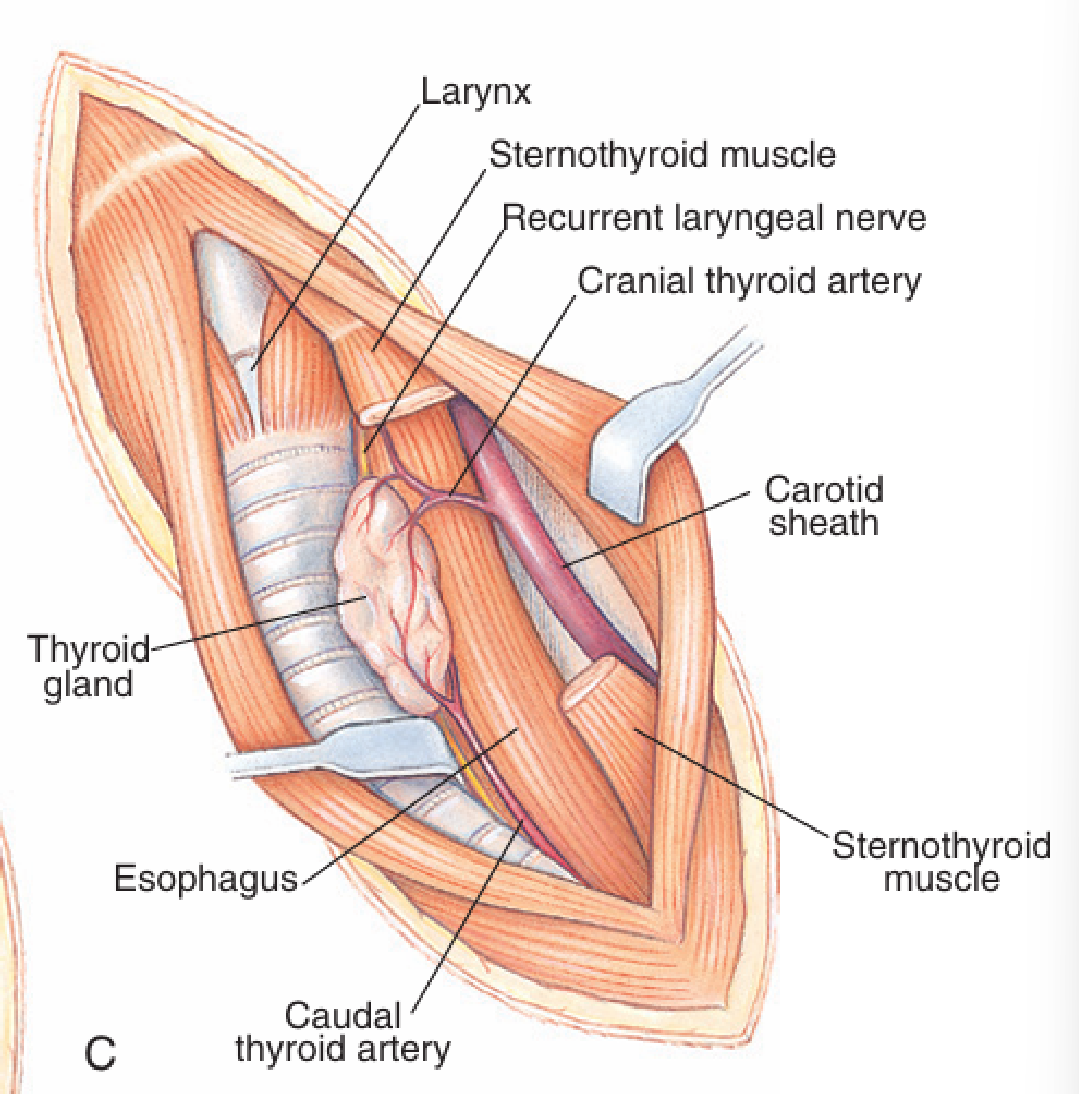
<p>Thyroid gland and carotid sheath (carotid artery, vagus nerve, and jugular vein).</p>
23
New cards

What is the procedure for cervical oesophagotomy?

  1. Move trachea to the right.

  2. Retract the paired sternohyoid and sternocephalicus muscles

  3. Pack off oesophagus from the rest of the surgical field via moistened laparotomy swab OR simply place two stay sutures above & below (optionally on left & right)

  4. Stab incision into oesophagus w/ scalpel blade & extend incision w/ scissors (on foreign body/caudally if trauma/necrosis)

  5. Remove foreign body w/ forceps & examine oesophageal lumen for necrotic areas or perforation ⤍ treat if required

  6. Suture oesophagus in 2 layers

    1. 1st layer: tunica mucosa & submucosa – simple interrupted (intra-luminal knot)

    2. 2nd layer: adventitia, muscularis & submucosa – simple interrupted (extra-luminal knot)

    3. Sutures 2mm apart, following completion, check for leakage (saline but not performed in practise routinely)

  7. Return trachea to normal position

  8. Appose muscles & close incision using a simple continuous pattern

  9. Appose subcutaneous tissue using a simple continuous pattern

  10. Close skin using appositional suture pattern: simple continuous, simple interrupted, intradermal

24
New cards
How is the oesophagus isolated during surgery?
By packing it off from the surgical field with moistened laparotomy swabs or stay sutures.
25
New cards
How is the oesophagus incised during oesophagotomy?
Stab incision with a scalpel blade, extended with scissors.
26
New cards
What is done after suturing the oesophagus?
Checking for leakage (using saline is described but not routinely performed).
27
New cards

What is the post-operative care after oesophagotomy?

IV fluids, nothing PO for 24-48 hours, water after 24 hours, soft food for 5-7 days, and antibiotics.

28
New cards

What are some complications of oesophagotomy?

  1. Oesophagitis (due to gastric reflux, post-GA, or aspiration pneumonia)

  2. Stricture formation (3-6 weeks post-op).

29
New cards
What are the main signs of oesophageal problems?
Difficulty swallowing (dysphagia) and regurgitation.
30
New cards
How does regurgitation differ from vomiting?
Regurgitation is effortless and has few warning signs, while vomiting is an active process preceded by nausea.
31
New cards
What are the two main reasons for oesophageal regurgitation?
Obstruction and muscular weakness.
32
New cards

How are oesophageal disorders diagnosed?

X-ray with contrast (not barium if risk of rupture), fluoroscopy, endoscopy, CT, clinical signs, and history.

33
New cards

What is a hiatal hernia?

Protrusion of the abdominal oesophagus, gastro-oesophageal junction, and sometimes part of the stomach into the caudal mediastinum.
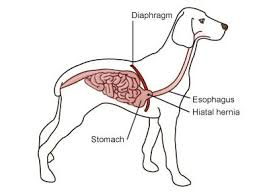
<p>Protrusion of the abdominal oesophagus, gastro-oesophageal junction, and sometimes part of the stomach into the caudal mediastinum.</p>
34
New cards
What are some causes of hiatal hernia?
Congenital abnormalities of the hiatus and trauma.
35
New cards
What are the clinical signs of hiatal hernia?
Regurgitation, vomiting, gastro-oesophageal reflux, hypersalivation, anorexia, respiratory distress, and oesophagitis.
36
New cards
How is hiatal hernia diagnosed?
X-ray with contrast, fluoroscopy, and endoscopy.
37
New cards

How is hiatal hernia treated?

  1. Diaphragmatic hiatal reduction

  2. Left side gastropexy (most important)

  3. Diaphragmatic plication (flattening of the diaphragm).
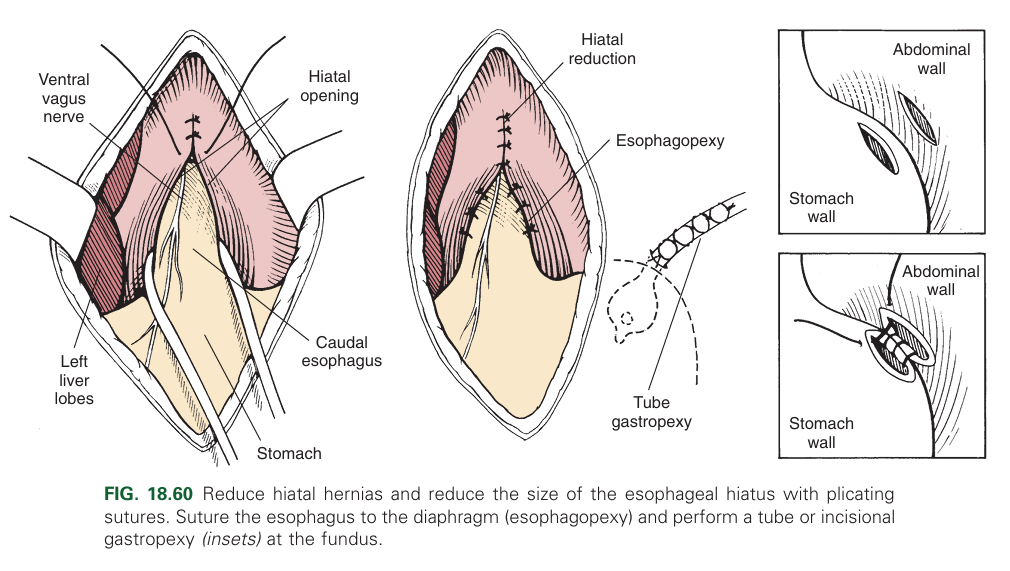
<ol><li><p>Diaphragmatic hiatal reduction</p></li><li><p>Left side gastropexy (most important)</p></li><li><p>Diaphragmatic plication (flattening of the diaphragm).</p></li></ol><p></p>
38
New cards

What are examples of other oesophageal disorders?

  1. Obstruction

  2. Oesophageal muscular weakness

  3. Megaoesophagus

  4. Oesophagitis

  5. Oesophageal foreign bodies

  6. Stenosis/stricture

  7. Neoplasia

  8. Tracheoesophageal fistula

39
New cards

What are some causes of oesophageal obstruction?

  1. Congenital (persistent right aortic arch)

  2. Acquired (foreign bodies, strictures/stenosis, neoplasia).

40
New cards
What are some types of oesophageal tumours?
Carcinoma, sarcoma, and leiomyoma.
41
New cards
What are some types of extra-oesophageal tumours that can cause obstruction?
Thyroid carcinoma, pulmonary carcinoma, and mediastinal lymphosarcoma.
42
New cards

What are some causes of oesophageal muscular weakness?

  1. Congenital (idiopathic, achalasia)

  2. Acquired (myasthenia, hyperadrenocorticism, severe oesophagitis, gastro-oesophageal reflux, myopathies, Spirocerca lupi, botulism/tetanus, lead poisoning, canine distemper, chemicals, and iatrogenic causes like doxycycline, clindamycin, and NSAIDs).

43
New cards

What is megaoesophagus?

Dilation of the oesophagus and loss of motility → food and liquid accumulation.

44
New cards
What are some causes of megaoesophagus?
Congenital or acquired (endocrine disease, myasthenia gravis).
45
New cards
Which breeds are predisposed to megaoesophagus?
Labrador Retrievers, Golden Retrievers, and Persian cats.
46
New cards
What are the clinical signs of megaoesophagus?
Regurgitation, aspiration pneumonia (coughing), and weight loss.
47
New cards
How is megaoesophagus diagnosed?
X-ray with contrast and endoscopy.
48
New cards

How is megaoesophagus treated?

Feeding in an upright position, and prokinetics.
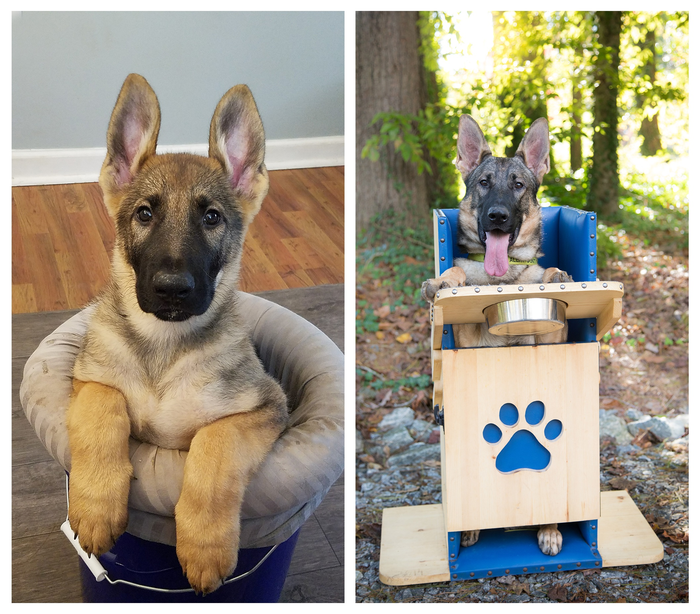
<p>Feeding in an upright position, and prokinetics.</p>
49
New cards
What is oesophagitis?
Inflammation of the oesophagus.
50
New cards

What are some causes of oesophagitis?

  1. Infectious agents (Spirocerca lupi)

  2. Non-infectious causes (foreign bodies, gastric reflux, certain drugs, cancer, and caustic substances).

51
New cards
What are the clinical signs of oesophagitis?
Asymptomatic presentation, regurgitation, drooling, repeated swallowing, pain, depression, inappetence, trouble eating, and head/neck extension.
52
New cards
How is oesophagitis diagnosed?
Endoscopy (inflamed, red, petechiae, erosions).
53
New cards
How is oesophagitis treated?
H2 blockers, prokinetics, mucoprotectants, analgesia, soft food, antibiotics, and oesophageal feeding tube.
54
New cards
In which animals are oesophageal foreign bodies especially common?
Puppies.
55
New cards
What are some common oesophageal foreign bodies?
Bones, stones, ropes, and threads.
56
New cards
Where are foreign bodies commonly found in the oesophagus?
Where the oesophagus is narrowest: thoracic inlet, base of the heart, and hiatus of the diaphragm.
57
New cards

What are the clinical signs of oesophageal foreign bodies?

Regurgitation immediately after eating, difficulty swallowing, dyspnoea and hypersalivation.

58
New cards

How are oesophageal foreign bodies diagnosed?

History, X-ray with contrast, endoscopy, and palpation.

59
New cards

How are oesophageal foreign bodies treated?

Endoscopic removal via the mouth if not sharp or pushing into the stomach for surgical removal.

60
New cards
What is oesophageal stenosis?
A decrease in the size of the oesophageal lumen.
61
New cards

What are some causes of stenosis?

  1. Functional (spastic, oesophagitis)

  2. Mechanical

  3. Compressive (enlarged lymph nodes, haematoma).

62
New cards
What is the main clinical sign of stenosis?
Regurgitation.
63
New cards
How is stenosis diagnosed?
X-ray with contrast and endoscopy.
64
New cards
How is stenosis treated?
Hydration, dilation with a balloon catheter, or partial oesophagectomy (severe cases).
65
New cards
Are oesophageal tumours common?
No, they are rare.
66
New cards
What are some types of oesophageal tumours?
Squamous cell carcinomas, fibrosarcomas, osteosarcomas, and leiomyomas.
67
New cards
What is a tracheo-oesophageal fistula?
An abnormal connection between the oesophagus and trachea.
68
New cards

What are some causes of tracheo-oesophageal fistula?

  1. Congenital (e.g., in Cairn Terriers)

  2. Acquired (penetration by a foreign body).

69
New cards
What are the clinical signs of tracheo-oesophageal fistula?
Coughing after eating or drinking, regurgitation, decreased appetite, fever, and lethargy.
70
New cards
How is tracheo-oesophageal fistula diagnosed?
X-ray with or without contrast (use aqueous iodine, not barium, if perforation is suspected).
71
New cards
How is tracheo-oesophageal fistula treated?
Surgery.
72
New cards
When are oesophageal feeding tubes indicated?
When oral food intake is impossible.
73
New cards

What are the types of feeding tubes?

  1. Orogastric

  2. Nasogastric

  3. Oesophageal

  4. Gastrostomy

74
New cards

What is the method for inserting an oesophageal feeding tube?

  1. Measure feeding tube from insertion point (mid cervical region) to level of 7th-8th ICS and mark it

  2. Enlarge/make lateral opening/cut end of tube at oblique angle to encourage smoother flow of blended diet

  3. Place curved tip of Rochester-Carmalt forceps through oral cavity into the oesophagus to the level of the left mid-cervical region (half way between mandible and shoulder)

  4. Palpate the tip through the cervical skin, make a small incision and push forceps through oesophageal wall, sub cut and skin

  5. Grab tube with forceps and pull out through the oral cavity

  6. Redirect tube into the oesophagus, confirming placement by location of premarked area

  7. Secure the tube to the cervical skin with a Chinese finger trap suture, loosely bandage the area and cap the end of the tube
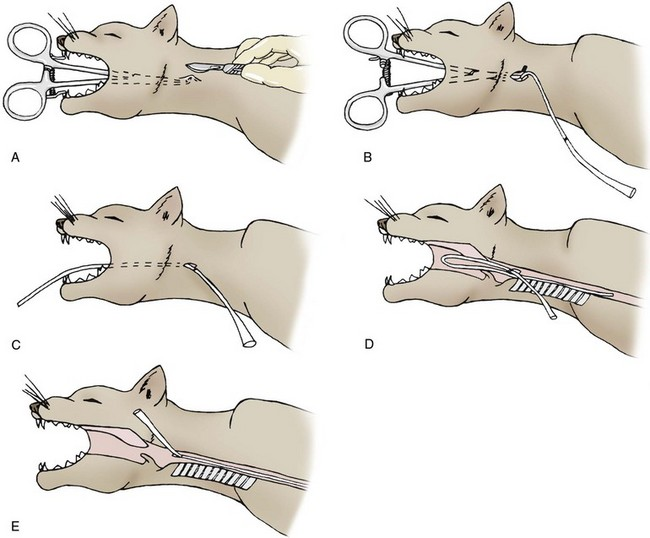
<ol><li><p>Measure feeding tube from insertion point (mid cervical region) to level of 7th-8th ICS and mark it</p></li><li><p>Enlarge/make lateral opening/cut end of tube at oblique angle to encourage smoother flow of blended diet</p></li><li><p>Place curved tip of Rochester-Carmalt forceps through oral cavity into the oesophagus to the level of the left mid-cervical region (half way between mandible and shoulder)</p></li><li><p>Palpate the tip through the cervical skin, make a small incision and push forceps through oesophageal wall, sub cut and skin</p></li><li><p>Grab tube with forceps and pull out through the oral cavity</p></li><li><p>Redirect tube into the oesophagus, confirming placement by location of premarked area</p></li><li><p>Secure the tube to the cervical skin with a Chinese finger trap suture, loosely bandage the area and cap the end of the tube</p></li></ol><p></p>
75
New cards
What are some contraindications for oesophageal feeding tube placement?
Oesophageal dysfunction (megaoesophagus, stricture, oesophagitis).
76
New cards
Where is an oesophageal feeding tube placed?
Left mid-cervical region.
77
New cards
How is an oesophageal feeding tube secured?
With a Chinese-finger-trap suture.
78
New cards
How is the length of an oesophageal feeding tube determined?
From the placement site to the 7th-8th intercostal space.
79
New cards

How are animals fed through an oesophageal tube?

Small amounts of liquid food, followed by water



