AICE Environmental Management Paper 1
 Call Kai
 Learn
Learn Practice Test
 Spaced Repetition
 Match
Match Flashcards
 Knowt Play
1/83

There's no tags or description
Looks like no tags are added yet.
Name | Mastery | Learn | Test | Matching | Spaced | Call with Kai |
|---|
No analytics yet
Send a link to your students to track their progress
84 Terms
Nonrenewable resources examples (fossil fuels)
Oil, coal, natural gas, nuclear energy
Only People Can Eat Big Burritos, Nerd
Organism, population, community, ecosystem, biome, biosphere, niche
Photosynthesis equation
6 H2O + 6 C02 + Sunlight = C6 H12 O6 (Glucose) + 602
What happens if temperature is increasing during photosynthesis?
The plant will photosynthesize faster until it reaches its optimum temperature. It will slow down from then on after.
Intraspecific competition
Competition within the same species (Heeseung V.S Jungwon)
Interspecific competition
Competition within the same species (Heeseung V.S Mark)
Example of ectoparasites
Live outside → ticks on a dog
Example of endoparasites
Live inside → tapeworm, parasite in fish’s mouth that eat its tongue
Carbon cycle
Abiotic stage: carbon is present in the atmosphere and ocean-floor sediments
Biotic stage: carbon is stored in living organisms
Abiotic → biotic through photosynthesis
Biotic → abiotic through organism death and respiration
Aerobic respiration
Breaks down glucose to release ATP, carbon, and water (reverse photosynthesis) (needed for daily functions)
Paleoclimate records
Ice cores, tree rings, sediment cores, and coral reefs → determine past climate conditions and long-term trends
Capture-recapture pros and cons?
Pros
Detailed data
Cost-efficient
Minimal equipment
Cons
Paint could increase predation risk
Paint could wear off
Doesn’t account for birth, death, and migrating organisms
Sweep nets pros and cons?
Pros
Rapid sampling
Cost-efficient
Simple-to-use equipment
Catches small organisms
Cons
Potential damage to delicate organisms
Selectivity bias (depends on person’s swings)
Only applicable in certain weather conditions
Radio-tracking pros and cons?
Pros
Tags are lightweight
Tags are inexpensive
Tags have long-lasting battery lives
Good way to track small animals who don’t move much
Cons
Requires close proximity
Labor-intensive to follow the animal around
What is “big data?”
Data that exceeds the analytical abilities of individuals
Pros: fast, trustworthy, and descriptive data
Cons: requires sophisticated data models, technological costs
Environmental factors influencing population density?
Topography
Favorable climate
Natural resource access
Vulnerability to natural disasters
Economic factors influencing population density?
Cost of living
Wages
Job oppurtunities
Social factors influencing population density?
Culture
Religion
Politics
Healthcare
Infastructure
Education
Quality of life
Governmental factors influencing population density?
Immigration laws
Political freedom
Armed conflicts
Dependency ratio formula
Young + Old ÷ People 15-64
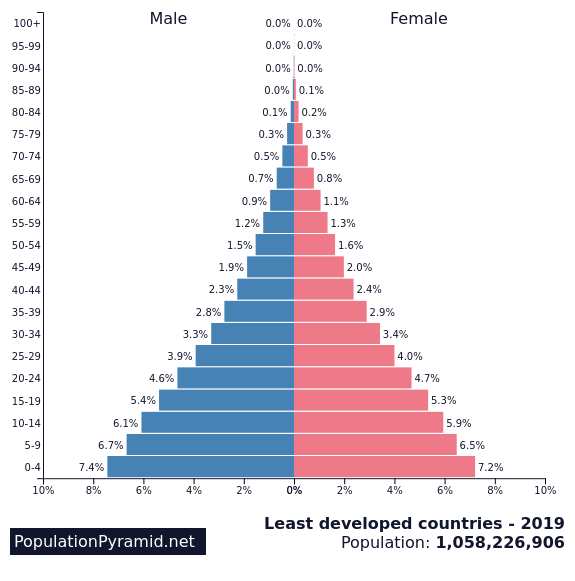
What does this chart represent?
LIC
High birth + death rate
High infant mortality rate
Limited healthcare/contraceptive access
Limited employment/education oppurtunities for women
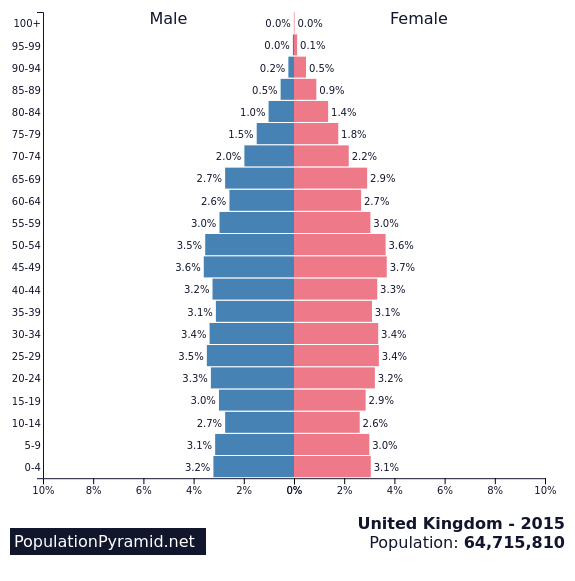
What does this chart represent?
HIC
Low birth + death rate
Aging population
Strong education oppurtunities
Many job oppurtunities
High urbanization
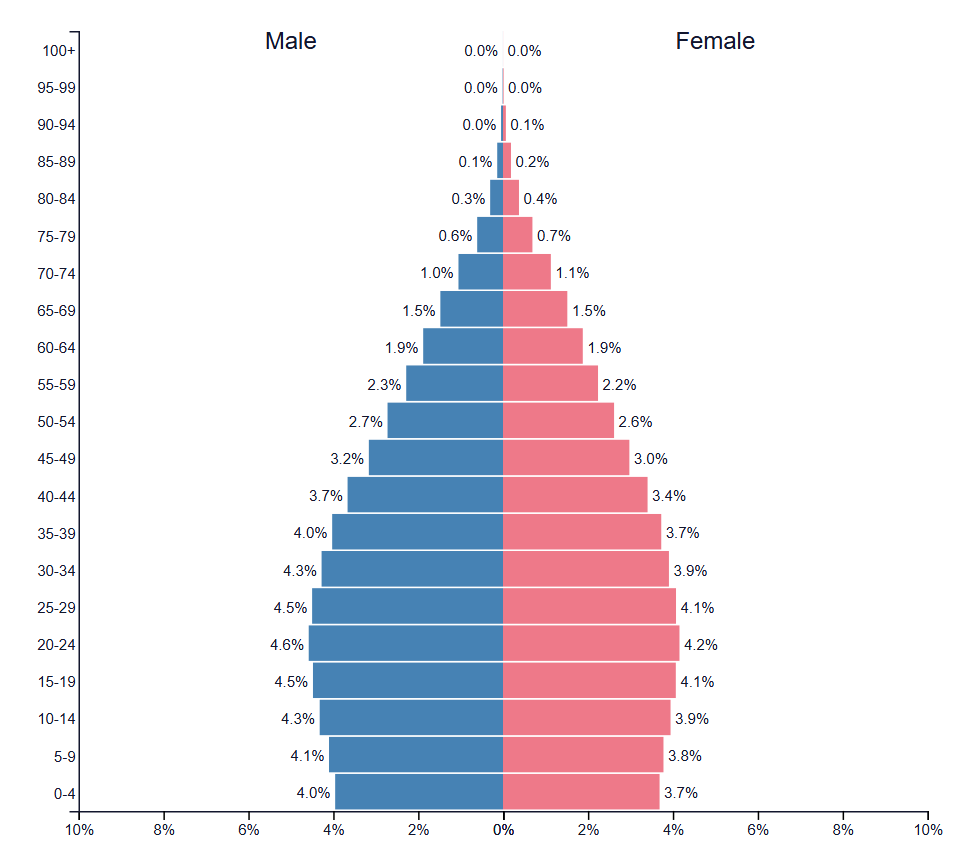
What does this chart represent?
MIC
Wide base → mostly young people
Gradual taper → decreasing number of elderly
Some in highest age categories
High dependency ratio impacts?
Pressure on health care
Lower tax revenues
Pressure to raise retirement ages
Increased demand for workers → economic recession
Pro-natalist policy?
Aims to raise birth rates
Ineffective: Italy’s 2020 policy that pushed to raise birth rates by offering financial compensation.
Effective: Poland’s provision of monthly payment for familys of 2 or more.
Anti-natalist policy?
Aims to lower birth rates
Effective: China’s one-child policy enforced from 1975-2015
Effective: South Korea’s two-child policy in the ‘50s lowered birth rates from 6 to less than 2.
Desert biome characteristics?
Arid climate
Low precipitation
Drought-resistant vegetation
Shallow, well-drained soil
Tropical forest characteristics?
Warm, equatorial climate
Heavy rainfall
Relatively thin + easily eroded soil
Lush vegetation
Extensive biodiversity
Tropical forest characteristics?
Moderate, seasonal climate
Deciduous (changing) and evergreen trees
Fertile, well-developed soil
Boreal forest/taiga characteristics?
Long winters and cool summers
Acidic, nutrient-poor soil
Coniferous (never-changing) trees (fir, pine, spruce)
Grasslands?
Semi-arid/humid
Grasses, shrubs, scattered trees
Deep, nutrient-rich soil
Tundra?
Cold and extremely long winters
Strained vegetation
Permafrost (massive carbon storehouse due to ancient organic matter)
Acidic and nutrient-deprived soil
GPP?
Gross Primary Production = all energy made by a plant during photosynthesis.
NPP
Net Primary Production = GPP - energy used in respiration
Biomass
The collective mass of living matter in a given place or time.
High biomass = high productivity.
Causes of the energy lost during transfer?
Waste
Indigestable material
Energy lost through respiration
Incomplete consumption
Benefits of conserving biodiversity?
Preserves resources for medicine
Food, wood, fibers, oil
Ecological services (oxygen production, water cycle, flood moderation, climate stabilization)
Cultural and recreational value
Protocols for conserving biodiversity?
CITES: Bans selling, capturing, and hunting endangered species—protects 30,000
IWC: Prevents whale bycatch and entanglement
EUCFP: Determines whether certain states can catch certain types of fish
IUCN: Provides critical info about species that makes conserving their population easier
ITTO: Conserves tropical rainforests
EDGE: Protects the world’s rarest species
Methods for conserving biodiversity?
Captive breeding
Biosphere/nature reserves
National parks
Eco-tourism
Protective legislation
Sustainable harvesting
Impacts of human actions on Antarctica?
Climate change
Habitat degradation
Ozone depletion (affects photosynthesis, reducing productivity)
Overfishing
Tourism (causes pollution)
Food security
Long-term access to affordable and healthy food.
How do climate change and shortages in water lead to food insecurity?
Water shortages limits the amount of water avaliable to crops. Climate change is responsible for droughts and natural disasters, leading to crop failure.
How does global homogeneity in diets cause food insecurity?
Lack of variety in food production and increased vulnerability to crop failure.
Biofuel?
Fuel extracted from land and crops → cause food shortages as crops sustain the food supply
Price-setting?
When the market determines the cost of food → leads to food insecurity when demand is higher and supply
How can GMOS improve food security?
GMO crops are…
Bacteria & pest-resistant
Less vulnerable to disease
Designed to grow in strenous weather conditions
More nutritionous
How can selective breeding improve food security?
Selective breeding specifically grows crops with specific characteristics, like drought-resistance, allowing them to survive longer and sustain one’s diet.
Intensification V.S. Extensification?
Intensification: higher yields through higher inputs
Extensification: clearing land for crop production
Hydroponics
Farming crops with additional water and nutrients.
Uses less space
Consumes less water
Faster crop growth
Reduces the need for pesticides
Long-term energy security V.S short-term?
Long-term energy security rooted in an area’s economic and environmental needs, whilst short-term energy security can easily be shaken by sudden changes.
Causes of energy insecurity?
Fossil fuel depletion
Inequality in global energy resources
Population growth
Climate change
Forms of renewable energy?
Biomass
Hydroelectric
Solar
Geothermal
Wind
Pros and cons of renewable resources?
Pros
Infinite supply
Mitigate global warming
Cons
Require extraction, degrading the land
Can be labor-intensive to extract
How does coal, oil, and gas form?
Decomposed material falls to the ground.
Covered by sediments.
High temperatures and pressure.
Why does nuclear power > fossil fuels?
Uranium doesn’t release greenhouse gases. But, it heightens the risk of explosion.
Impacts of energy insecurity?
Disrupted electricity supply to homes + infastructure
Increased demand and prices for energy
Increased poverty
Lower living standards
Reliance on other countries to recieve energy
Civil disruption
Acid deposition?
Air pollutants that fall from the sky as acidic wet (with a pH <5.6) or acidic dry deposition.
Wet deposition?
• Snow, rain, hail, fog
• Sulfuric acid and nitric acid (secondary
pollutants)
• Fall far from source
Dry deposition
• Dust and gases
• Sulfur dioxide and nitrogen oxide
(primary pollutants);
• Fall close to source.
Impacts of acid deposition
Killing of fish
Impacting the food cycle by killing these organisms, which sustain others’ diets
Impacts how remaining fish are able to breathe by damaging their gills
Reduced photosynthesis
Defoiliation
Changes to soil composition by changing pH
Erases detailing on stone structures (statues, tombstones)
Photochemical smog
A mix of pollutants and ozone on the Earth’s surface, which causes
respiratory damage
eye irritation
decreased crop yields
How to manage air pollution?
Reduce cars on the road
Promote buses/public transport instead
Limit fossil fuel use
Implement legislation like the 1990 Clean Air Act
Impacts of ozone depletion
Cataracts/skin cancer
Decreased crop yield
Chloroplast damage
Infrared radiation
What the Earth processes the sun’s rays as and releases back into the atmosphere. Greenhouse gases trap in this radiation, causing to the increased greenhouse effect.
Alternatives to CFCs?
HCFCs
They only have two chlorine atoms, decreasing the amount of damage dealt on the atmosphere.
F-gases
They have no chlorine at all, but are severe contributors to global warming.
Impact of climate change?
Rising sea levels
Habitat degradation
Melting of glaciers
Biodiversity threat
Food shortages
Water insecurity
Kyoto Protocol?
1992 policy working to limit greenhouse gas emissions.
Paris Agreement?
2016 international agreement that vowed for the prevention of global warming.
Ways to counteract climate change?
Switching to renewable energy
Boycotting fossil fuels
Implementing legislation
Promoting ecotourism
Recycling
Reforestation
Implementing geo-engineering strategies
Strategies for removing carbon from the atmosphere?
Establishing more carbon sinks
Planting more trees
Percent change formula?
Final - Initial / Initial * 100
Strategies for increasing recycling?
Provide incentives for those for recycle
Increase recycling campaigns for awareness
Incineration pros and cons?
Lessens land pollution
Generates energy (methane)
Releases high amounts of greenhouse gas
Produces ash
Expensive
Some waste cannot be burnt
How can tourism be controlled in protected environments?
Only allowing scientists to enter
Nature reserves
High travel costs
Implementing permits and fines
Crop control methods that control pests, other than insecticide?
Pest-resistant crops
Biological control (letting out bugs that eat pests, like ladybugs)
Releasing sterile insects so they don’t reproduce
Why don’t certain countries have reforestation programs?
Costly
Not deemed as important
Lack of volunteers to plant trees
How does hydroponics reduce competition?
Provides equal…
Space
Each plants has enough space to thrive
Water
Water is distributed evenly through pipes to each plant
Sunlight
The plants are situated on a slope, allowing them all to recieve the same amounts of sunlight
Pros and cons of hydroponics?
Pros
Increased yield
Higher quality crops (because of meticulous attention)
Reduced pesticide consumption
Upholds food security
Cons
Expensive
Need for skilled workers
Energy consumption
Only good for leafy greens
Strategies for managing food security?
Substinence agriculture (grows crops for consumption only, not trade)
Intensification/extensification
Fertiliziers
Pesticides
Genetically modifying crops
Rationing
Large-scale stockpiling
Vertical farming
Reducing food waste
Aquaculture
Dam?
Wall that controls the flow of water
Reservoir?
Artificial body of water used for storing
Aquifer?
An underground reservoir
How does air pressure and density changes with increase altitude?
As you move above sea level, the density of air molecules gets lower, causing cooler temperatures
How does piracy disturb energy insecurity?
Steals and lowers the oil supply, raising prices and demand.