1. nervous and endocrine system
 Call Kai
 Learn
Learn Practice Test
 Spaced Repetition
 Match
Match Flashcards
 Knowt Play
1/23

There's no tags or description
Looks like no tags are added yet.
Name | Mastery | Learn | Test | Matching | Spaced | Call with Kai |
|---|
No analytics yet
Send a link to your students to track their progress
24 Terms
nervous system definition
consists of the central nervous system and the peripheral nervous system
communicated using electrical and chemical signals
main functions of the nervous system
to collect, process and respond to information in the environment
to coordinate the working of different organs and cells in the body
CNS definition
consists of the brain and spinal cord, and is the origin of all complex commands and decisions
CNS and the brain
brain is the centre of all conscious awareness
outer layer (cerebral cortex) is 3mm thick and covers the brain - only found in mammals
brain is highly developed in humans - it is what distinguished our higher mental functions from those of other animals (only a few living creatures eg sponges, sea squirts and jellyfish don’t have a brain)
brain is divided into two hemispheres
functions of the brain
regulating body temp, heart rate and breating
language (production and comprehension)
coordinating movement
problem solving and planning
CNS and the spinal cord
the spinal cord is an extension of the brain
passes messages to and from the brain and connects nerves to the PNS
responsible for reflex actions eg pulling your hand away from a hot plate
PNS definition
sends information to the CNS from the outside world, and transmits messages from the CNS to muscles and glands in the body
transmits messages throughout the whole body from the brain and relays messages back to the brain
subdivisions of the PNS
autonomic nervous system (ANS)
somatic nervous system (SNS)
ANS
transmits information to and from internal bodily organs
autonomic as the system operates involuntarily
governs vital functions eg breathing and heart rate
ANS divisions
has 2 main divisions
sympathetic nervous system
parasympathetic nervous system
SNS
transmits and receives messages from the senses (apart from sight) ie taste info from the tongue
governs muscle movements - directs muscles to move appropriately
responsible for the relflex arc - although autonomic, it still involves the use of muscle movement
endocrine system definition
instructs glands to release hormones directly into the bloodstream
these hormones are carried towards target organs in the body
communicates via chemicals
slower than the nervous system
how do hormones work
glands produce hormones
they are secreted into the bloodstream
affect any cell in the body that has a receptor for that particular hormone
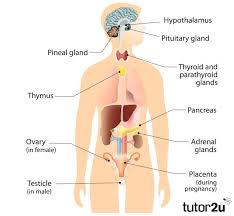
thyroid gland
produces thyroxine
affects cells in the heart by increasing heart rate
affects cells throughout the body increasing metabolic rates - in turn affects growth rates
diagram of glands
pituitary gland
located in the brain
often called the master gland
controls the release of hormones from all the other endocrine glands in the body
gland definition
an organ in the body that synthesises substances such as hormones
hormones definition
chemical substances that circulate in the bloodstream and only affect target organs
produced in very large quantities but disappear quickly
their effects are powerful
what systems can work in parallel together
endocrine and ANS - eg fight or flight
when a stressor is percieved the hypothalamus activates the pituitary gland
this triggers activity in the sympathetic branch of the ANS
the ANS changes from parasympathetic state to sympathetic state
adrenaline is released from the adrenal glands to fuel any physical activity required of the body along with other physiological changes
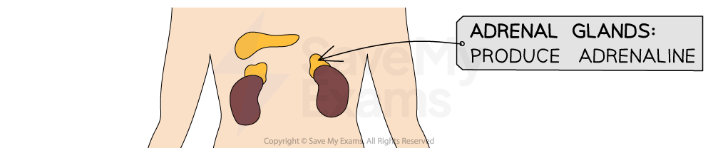
adrenal gland
adrenaline is released from the adrenal medulla (part of the adrenal gland near kidneys) into the bloodstream
triggers physiological changes in the body eg increased heart rate - creating the physiological arousal necessary for the fight or flight response
has a strong effect on the cells of the cardiovascular system - stimulating heart rate, contracting blood vessels and dilating air passages
adrenal gland image
type of response from adrenaline
it is immediate and automatic
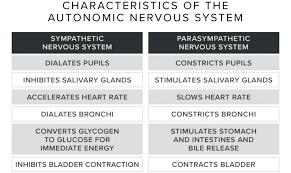
parasympathetic and sympathetic state examples
final stage of adrenaline
once the threat has passed, the PNS returns the body to its resting state
it works in opposition to the SNS as its actions are antagonistic
acts as a ‘brake’ and reduces the activities of the body that were increased by the actions of the sympathetic branch
sometimes referred to as the rest and digest response