psych readings + mindtap midterm 2 chapter 8, 9, 10
 Call Kai
 Learn
Learn Practice Test
 Spaced Repetition
 Match
Match Flashcards
 Knowt Play
1/144

There's no tags or description
Looks like no tags are added yet.
Name | Mastery | Learn | Test | Matching | Spaced | Call with Kai |
|---|
No analytics yet
Send a link to your students to track their progress
145 Terms
Learning
any relatively permanent change in behaviour that can be attributed to experience
Instincts
innate impulse that directs or motivates behaviour
classical conditioning
a form of learning in which reflex responses are associated with new stimuli
operant conditioning
learning based on the positive or negative consequences of responding
Habituation
a simple form of learning in which reactions to repeated stimuli that are unchanging and harmless decrease
Sensitization
an increased reaction to many stimuli following exposure to one strong stimulus
unconditioned stimulus
something that elicits a response without any prior experience
food for a dog
unconditioned response
response to a stimulus that requires no previous experience
dog salivating at food (US)
conditioned stimulus
neutral perception that, thru pairing with a natural reflex, comes to elicit a learned response
the metronome make noise b4 food (CS)
conditioned response
response to a stimulus that requires exposure
dog salivating when he hears the metronome bc he knows it means there is food
acquisition
development of a learned response
extinction
Weakening of a learned response when it is no longer reinforced
spontaneous recovery
reappearance of a learned response after its apparent extinction
generalization
tendency to respond to stimuli similar to a conditioned stimulus
reception bell vs. actual bell dog respond to both
discrimination
learned ability to respond differently to similar stimuli
dog only responds to one kind of bell
taste aversion
a learned, often one-time, avoidance of a specific food or drink that the brain pairs with nausea or sickness.
Taco bell example
biological preparedness
thru evolution animals became biologically prepared to make certain connections, more strongly than others (fear conditioning)
Rescorla-Wagner model
A cognitive model of classical conditioning which states that the
strength of the CS-US association is determined by the extent to which the US is UNEXPECTED or surprising
- dog more willing to learn when food is unexpected and wants to learn how to get it again
Higher-order (or second-order) conditioning
Learning in which stimuli associated with a conditioned stimulus (CS) also elicit conditioned responses (CRs).
Latent inhibition
The slower learning that occurs when a conditioned stimulus (CS) is already familiar compared to when the CS is unfamiliar.
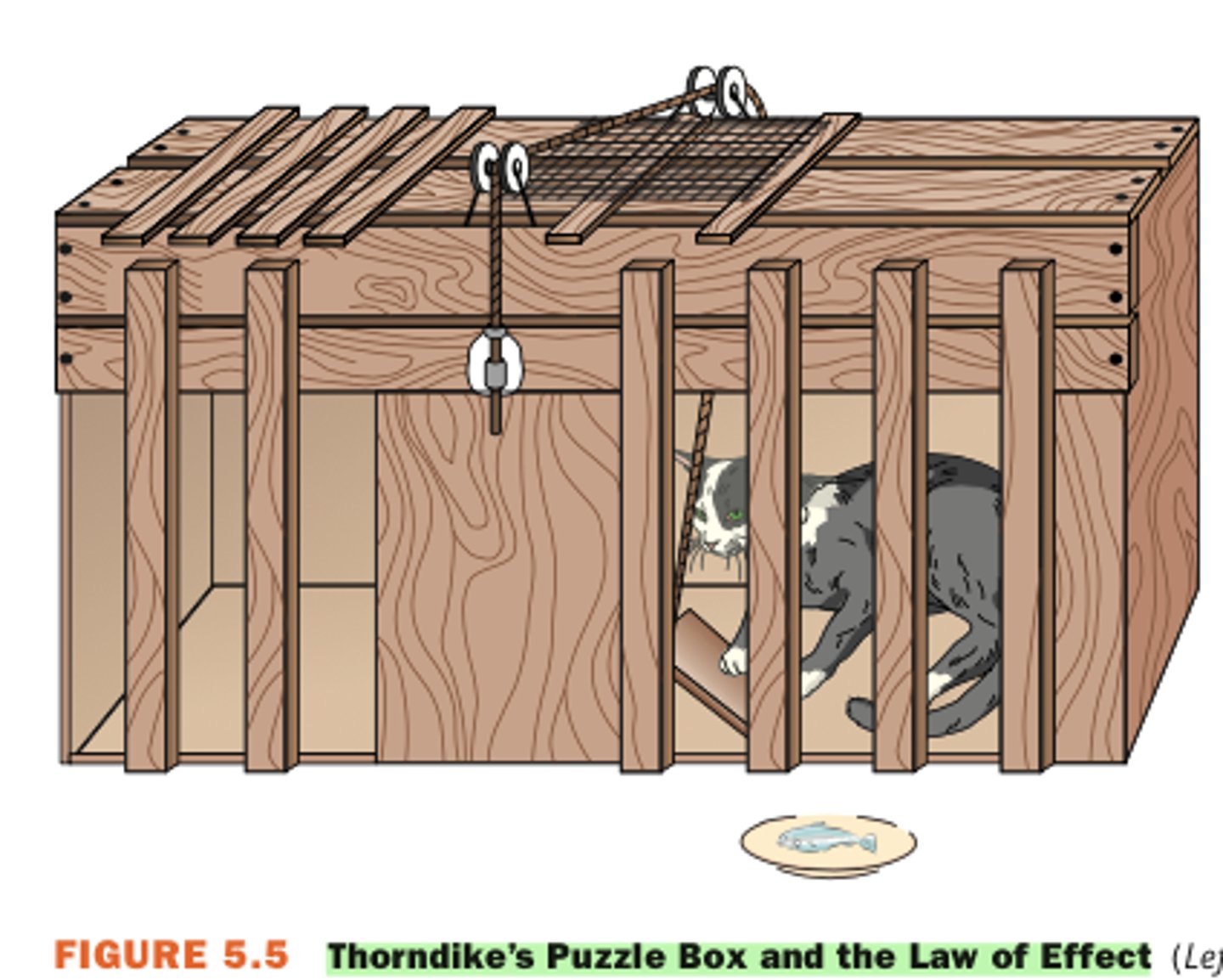
Law of effect
responses that lead to desirable results are repeated while those that produce undesirable ones are not
reinforcement
any event that increases the probability that a particular response will occur
positive reinforcement
when a response is followed by a reward or other positive event
negative reinforcement
strengthening a behaviour by removing smth unpleasant from the environment of the organism
partial reinforcement
pattern in which only a portion of all responses are rewarded
continuous reinforcement
when a reward follows every correct response
punishment
an event that decreases the probability that a response will be repeated
positive punishment
A consequence that eliminates or reduces the frequency of a behaviour by applying an aversive stimulus.
negative punishment
A method for reducing behaviour by removing something desirable whenever the target behaviour occurs.
primary reinforcer
smth that has inherent reward because it satisfies biological needs
secondary reinforcer
reward the organisms learn to like
premack principle
known as the relativity theory of reinforcement
• Or "Grandma's rule"
• Higher probability behaviours can be used to reinforce lower
probability behaviours
shaping
reinforcement of increasingly close approximations of a desired response
schedule of reinforcement
protocol for determining when and how often responses will be rewarded
fixed ratio schedule
predictable behaviour
A schedule of reinforcement in which reinforcement occurs following a set number of behaviours.
- mario gets tipped every 6 food deliveries he makes
fixed interval schedule
rule for how long after a subject's first responses that reinforcement is delivered
predictable passage of time
variable ratio schedule
rule for delivering reinforcement after varying numbers of correct responses
unpredictable behaviour
variable interval schedule
rule for delivering reinforcement after varying amounts of time
unpredictable passage of time
biological constraints
Animals have a difficult time learning behaviours that are incompatible
with innate, adaptive behaviours
instinctive drift
the tendency of animals to abandon trained operant behaviors and revert to innate, species-specific behaviors over time, even with reinforcement
latent learning
acquisition of knowledge or skills not immediately observable in an organism's behaviour
observational learning
acquiring info on how to perform new behaviours by watching others
aversion therapy
treatment to reduce unwanted behaviour by pairing it with an unpleasant stimulus
cognitive map
a mental representation of the environment
reflex
an innate automatic response to a stimulus
systematic desensitization
method of reducing fear by gradually exposing people to the object of fear
token economy
behaviour modification in which desired behaviour earn objects that can be exchanged for positive reinforcers
9 encoding
converting info into a form to be retained in memory
storage
holding info in memory for later use
retrieval
recovery of stored info
multi-store model of memory
The memory model that visualises memory as a system consisting of multiple memory stores through which a stream of data flows for processing.
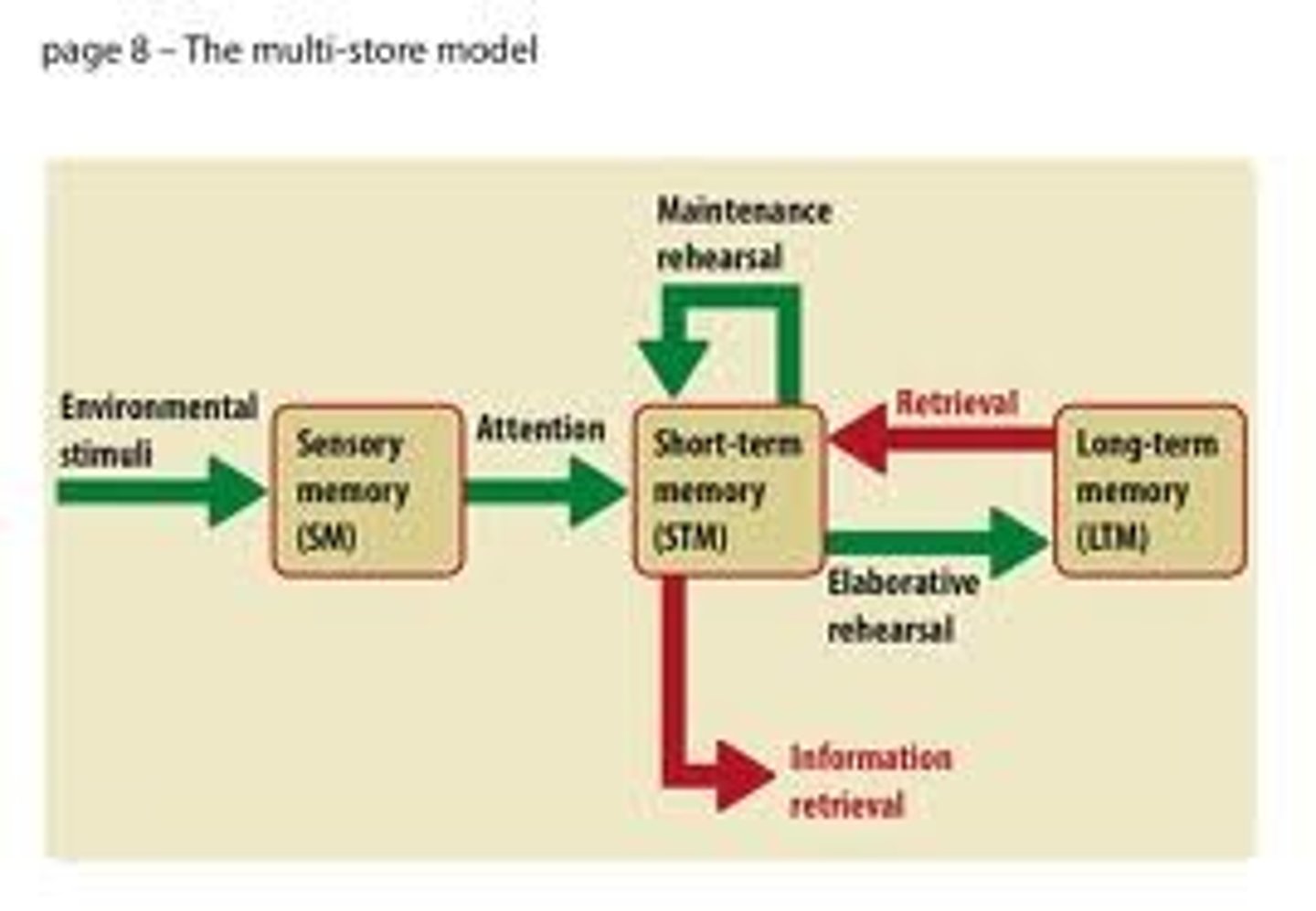
sensory memory
short-term storage system for sensory impressions
iconic memory
Sensory memory for visual information
echoic memory
Sensory memory for auditory information.
short-term memory
The second stage of the Atkinson-Shiffrin model that holds a small amount of information for a limited time.
chunking
process of grouping similar or meaningful info tgthr
working memory
ability to hold and manipulate info in conscious attention
central executive
Control centre, directs attention to relevant information
part of working memory system
visuospatial sketchpad
visual info
part of working memory system
phonological loop
Auditory and verbal info
part of working memory system
episodic buffer
integrates info, links to long-term memory
part of working memory system
maintenance rehearsal
repeating info over and over again to keep it active in short-term memory
elaborative rehearsal
Making connections between new information that you are trying to remember and already existing information.
levels of processing theory
The depth (shallow to deep) of processing applied to information that predicts its ease of retrieval.
long-term memory
unlimited capacity storage that can hold info over long periods of time
declarative/explicit memory
a recollection that a person is aware of having or is consciously retrieved
nondeclarative/implicit memory
a recollection that a person does not know exists and is retrieved unconsciously
episodic memory
recollection of personal experiences
semantic memory
general knowledge that is not tied to personal recollection
autobiographical memory
Semantic or episodic memories that reference the self.
highly superior autobiographical memory (HSAM)
jill price
able to rmbr everything they did everyday of their lives, comes around 10 yrs old
procedural memory
mental schema for how to do things that require motor or performance skills
priming
A change in a response to a stimulus as a result of exposure to a previous stimulus.
retrieval cue
anything that helps someone recall information from memory; Encoding specificity principle
encoding specificity principle
A process in which memories incorporate unique combinations of information when encoded.
context-dependent memory
The improvement in memory that occurs when the external context present at encoding and retrieval are the same.
state-dependent memory
The improvement in memory that occurs when the internal state of the individual is the same at encoding and retrieval.
spreading activation model
A connectionist theory proposing that people organize general knowledge based on their individual experiences.
schemas
A set of expectations about objects and situations.
serial position effect
when remembering an ordered list, the tendency to make the most errors with the middle terms
primacy effect
where items presented at the beginning of a sequence are better remembered than those in the middle
recency effect
best recall the most recently presented information or events at the end of a sequence
decay
proposition that the ability to retrieve rarely used info diminishes over time
proactive interference
tendency for OLD memories to interfere with retrieval of NEWER ones
retroactive interference
tendency for NEW memories to interfere with retrieval of OLD ones
mnemonics
strategy for enhancing memory
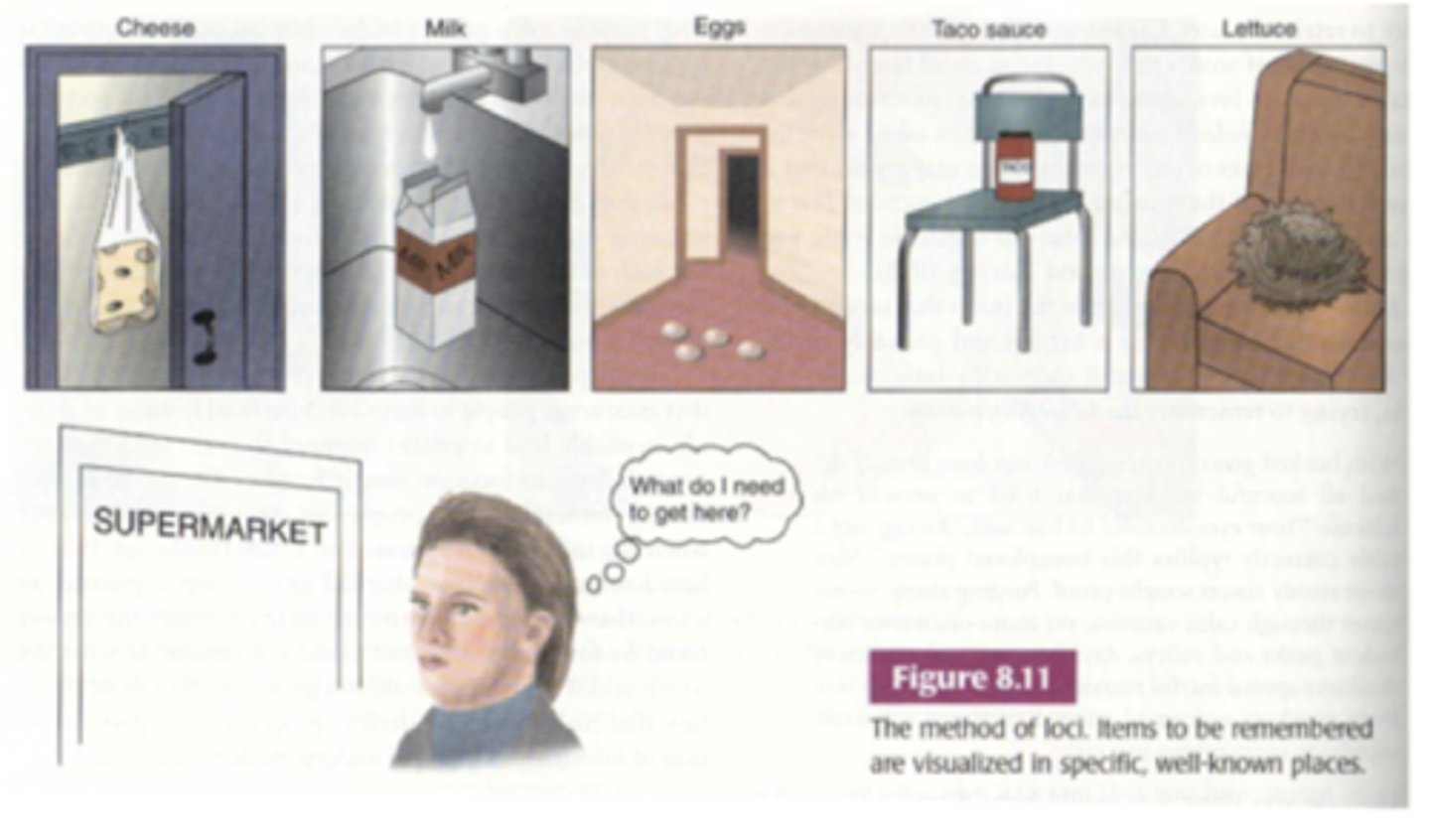
method of loci
A mnemonic technique that involves associating items on a list with a sequence of familiar physical locations
amnesia
loss of memory
anterograde amnesia
inability to form or retrieve memories of events that occur after an injury or trauma
flashbulb memories
especially vivid and detailed recollection of an emotional event
memory
mental system for receiving, encoding, storing, organizing, altering, and retrieving info
recall
retrieval of info with a minimum of external cues
recognition
ability to correctly identify previously learned info
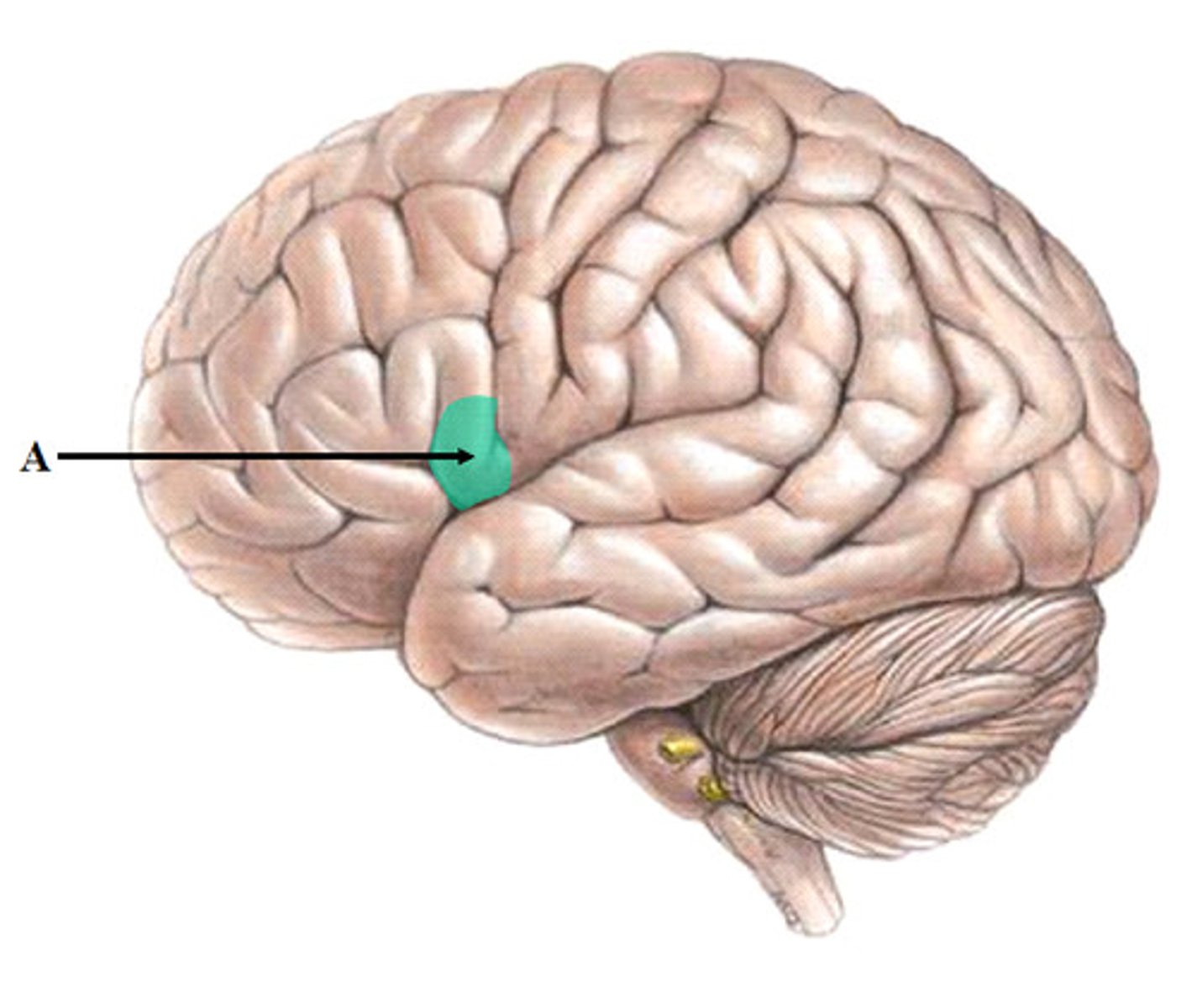
10 Language; Broca's area
vocalizing speech
speech production, language processing, and grammatical structure
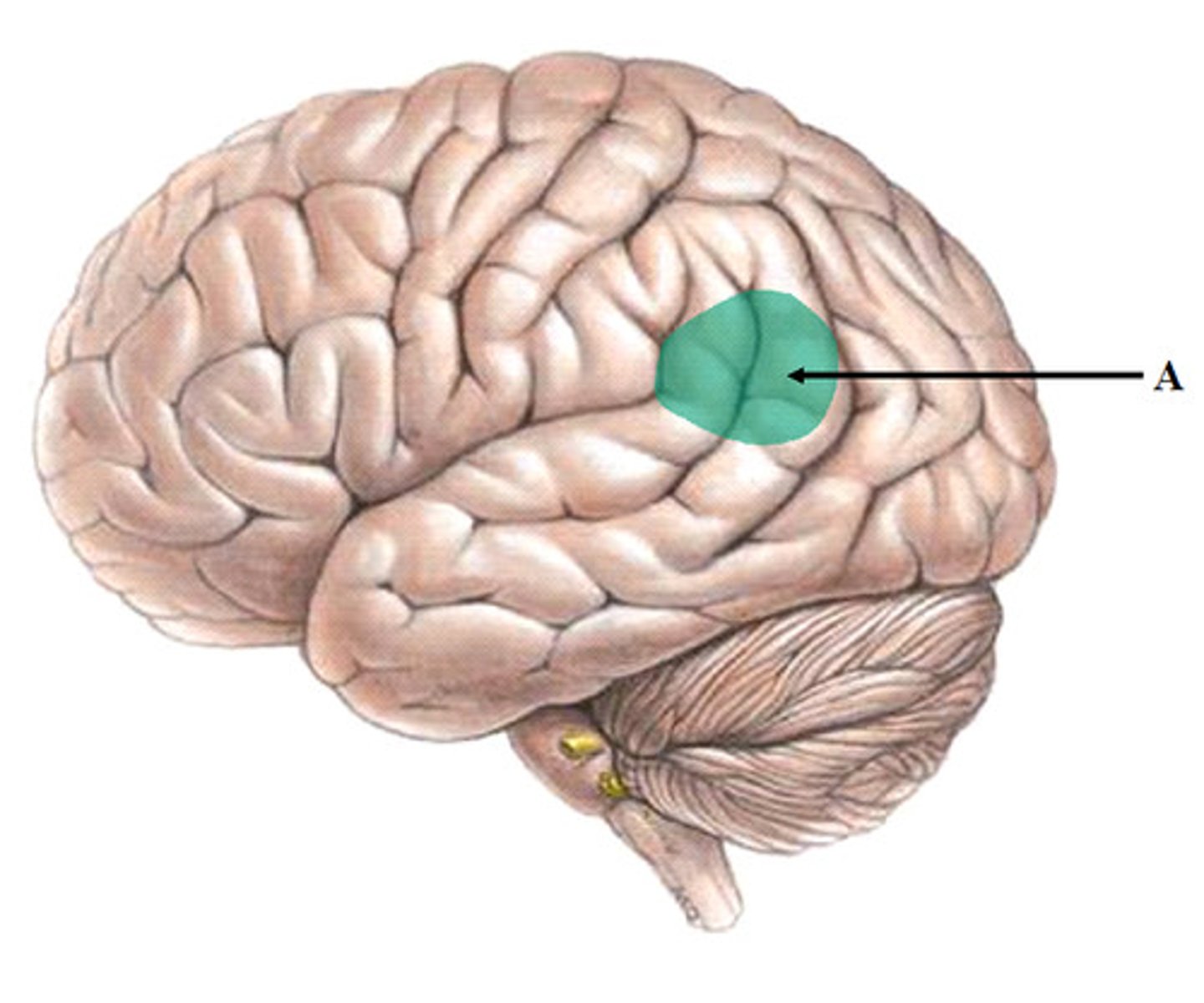
language; Wernicke's area
opposite of broca's area
language comprehension and processing
Non-fluent (or Broca's) aphasia
ppl with this have a hard time with speech and there is differences in this part of the brain
- BUT COMPREHENSION STILL INTACT
- it's hard for them to speak but u can understand what they are saying
Fluent (or Wernicke's) aphasia
(PROBLEM WITH COMPREHENSION)- cant understand what the person is saying
- fluent but meaningless speech
bilingualism/multilingualism
Proficient in two/more languages.
linguistic determinism
this one says that if u speak a diff language then u have different thoughts/ideas from other ppl with another language- this theory does not hold water
linguistic relativism
language can shape thought but NOT solely determine