GENETICS EXAM 3 (FINAL) REVIEW
 Call Kai
 Learn
Learn Practice Test
 Spaced Repetition
 Match
Match Flashcards
 Knowt Play
1/82

There's no tags or description
Looks like no tags are added yet.
Name | Mastery | Learn | Test | Matching | Spaced | Call with Kai |
|---|
No analytics yet
Send a link to your students to track their progress
83 Terms
Traits to be controlled by one gene (actually controlled by several)
Only two alleles of each gene in each population (many)
Mendel never anticipated lethality in organisms
Heterozygotes → one allele dominates over the other (incomplete & codominance)
Chromosomal DNA is the only DNA
What was Mendel’s idea of a model organism?
Genetic maternal effect
When the mom completely controls the phenotype of the child regardless of the child’s genotype
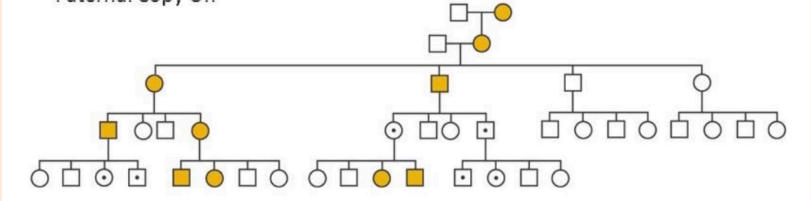
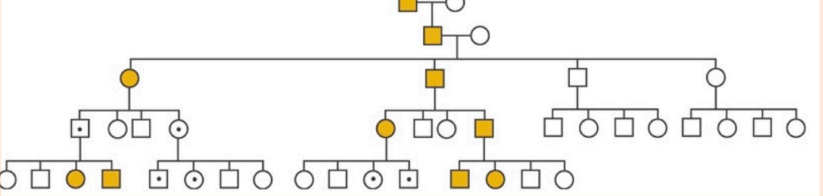
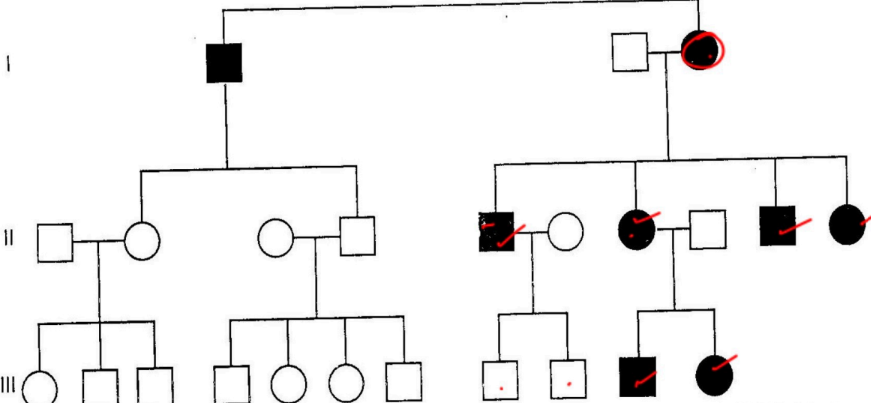
Imprinting
Based on methylation patterns and when genes are considered to be active when they are inherited from one parent over the other.
Paternal imprinting (maternal gene is active)
What is this an example of?
Maternal imprinting (paternal gene is active)
What is this an example of?
The typical level of a protein
What can typically affect the probabilities of getting a genetic disorder/getting a mutant allele?
Dominant Hierarchy
Multiple alleles can typically have this as a hierarchy of certain alleles
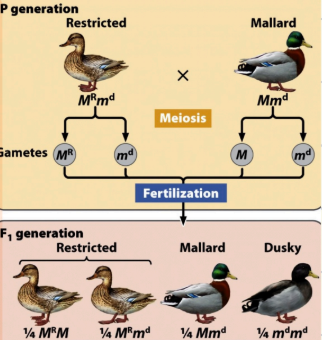
Incomplete dominance
When neither gene is fully expressed and its a mix of them when the genotype is heterozygous
Codominance
When both traits are fully expressed where there could be an AB, A, B, or O phenotype
“incomplete dominance” with recessive alleles (if a gene is recessive, there is some sort of incomplete dominance.
What are these examples of?
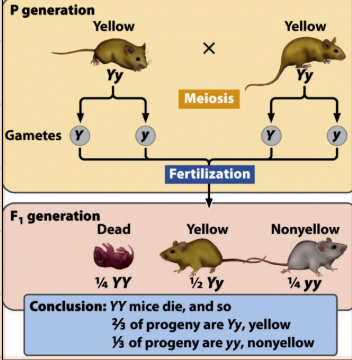
Lethality
When genotypes can have a homozygous dominant/recessive death which will reduce the offspring probability
2/3 Yy
1/3 yy
(1/4 YY dead)
When the two mice mate together, they have offspring with one YY (lethality), two Yy, and one yy. What are the percentages of getting those offspring?
Darker parts in fur
What do colder parts in fur lead to?
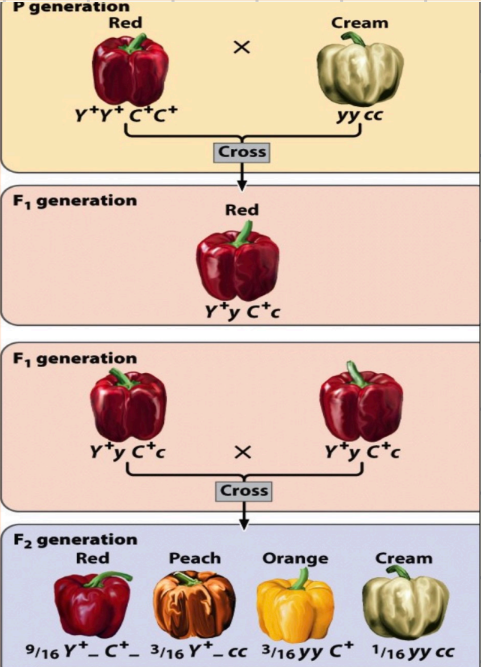
Epistasis
When multiple genes in the genome interact with one another where one gene could dominate over the other
Dominant Epistasis
When the epistasis gene exists on the dominant (whether there are more copies or not)
12 purple:3 yellow:1 white
What is the ratio of phenotypes for dominant epistasis
9 black:4 yellow:3 brown
What is the ratio of phenotypes for recessive epistasis
Duplicate Recessive
When both recessive genotypes will mask the other gene (albino)
Complementation test
A test done to test where a gene mutation could appear (mixes each gene with an unknown patient sample to see if it can compensate for the missing protein)
Sex-Influenced characteristics
When the individual’s sex can influence the phenotypic effects of gene alleles like when one trait is dominant for males but recessive in females, or the later
Sex limited genes
Have 0 penetrance in said sex where a male could have a phenotype that is dominant that females wouldn’t have.
Cytoplasm and Mitochondrial Inheritance
When mitochondrial DNA is inherited from mother so if the DNA is infected, so is the offspring (one genotype to another)
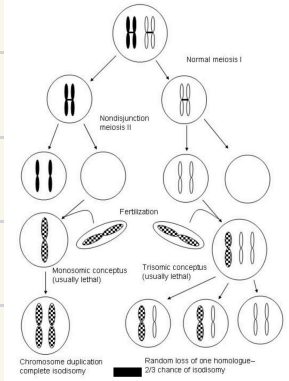
Heterodisomy
When the child posesses one copy of each of the two chromosomes the parent posesses (two seperate chromosomes and one of them is from mom and dad) (if mom has two ab chromosomes, child inherits that)
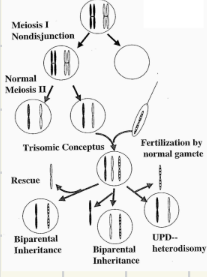
Isodisomy
When the child posesses two copies of one of the chromosomes the parent posesses (child will inherit aa if mom has one a chromosome
Multifactorial traits
When multiple alleles/genes can be controlled by interactions of several genes as well as nongenetic factors/epigenetic factors
Phenocopies
When phenotypes that resemble the effects of a gene mutation but arisen solely from nongenetic factors
UV rays, diet, etc.
What are some examples of nongenetic factors?
Risk & Disease altering
What is the better term to refer to alleles/genotypes as?
Penetrance
The % possibility of getting the mutation and expressing the disorder (How many people that have that particular allele which is a risk increasing allele actually developing the disease ?
Variable Expressivity
This is how many people who have the risk-increasing allele and have the disease are at risk olgaining a set ol symptoms
What the protein does, Whether alleles gives you the typical level of an activity (either high or low), What disease you are talking about
What are factors that can determine an allele to be risk increasing or decreasing?
continuous
More quantitative (example: height , weight. etc.)
categorical (discreet)
When a phenotype has one of several discrete values /example : numberolears per corn plant)
Threshold
If enough contributory factors combine , you will express the variant trait ( cancer, etc .) → connected to continuous; anything before the threshold is healthy but anything after is considered diseased
1
how many standard deviations are in 68%
2
how many standard deviations are in 95%
3
how many standard deviations are in 99.5%
0 to 1
Coefficient range for positive correlation
0
Coefficient range for no correlation
-1.0 to 0
Coefficient range for negative correlation
Regression
Can help predict the value of one variable to another
variability
This is the amount of variance of a trait in a population is influenced by genetic factors , nongenetic(environmental) factors , and the interactions between one another
Vp(variance in population) = ?
Vg + Ve + Vge
Ve
variance due to environmental factors
Vg
variance due to genetic factors
Vge
Variance due to the interaction between genetic environmental factors
Vg= ?
Va + Vi + Vd
Va (Additive genetic variance)
when different alleles contributes equally to the phenotype but sometimes rarely accounts for all variability in a population
Genic Interaction Variance = Vi
Epistasis can influence what one gene's alleles can make different contributions to the phenotype depending on the alleles the individual has for one or more/other genes and depending on alleles for gene A , you may not need to include the individual's status for gene B when you factor in all the relevant gene alleles (can be hard to measure but Va and Vi do not always account for everything)
produce different phenotypes
What can nongenetic factors cause the same genotypes to do what
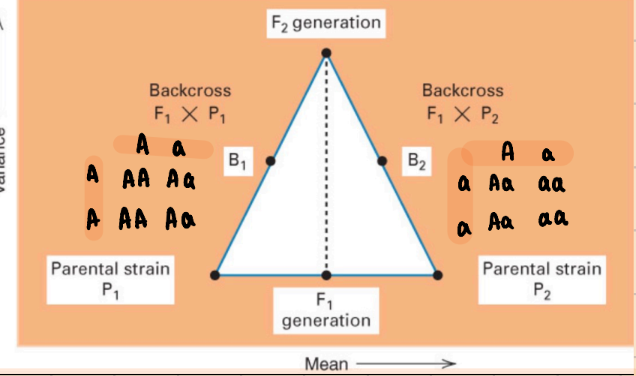
The variances and means for each of the generations/parental strain (MEMORIZE THIS)
What is this a depiction of?
n = D2/8sg2
Equation to help estimate the number of genes
If you are given the F2 generation stats and raising it to the 4n where the denominator is the offspring
What is another way to find the number of genes
Broad Sense Heritability
Trying to eliminate components of variation through this
Vg/Vp
Broad sense heritability formula
Vg
When the population is identical and the natural environment changes, what should you eliminate?
Ve
When the population is in the same environment yet the population changes based on genetic factors, what should you eliminate?
Narrow Sense Heritability
It tends to be easier to change the mean value of the phenotypic trait in the population by choosing individuals with an extreme version of the phenotypic trait to serve as the parents of the next generation (good for selective breeding)
Va/Vp
Narrow Sense Heritability formula
h2 x S
Formula for the response to selection
Add the original population with the number that you get for the response to selection
When you find the response to selection, how to you find the expected per individual?
Population
Group of individuals that reproduce sexually and interbreed
Population's gene pool
Different alleles that are present in the pool
Calculating Allelic Frequencies
Number of allelic copies present in a sample over the total number of alleles in a population: (Frequency of an allele) f(A) = # number of alleles present/# number of total alleles
Calculating Genotypic Frequencies
(Frequency of a genotype) f(AA) = # number of genotype present/# total number of genotypes present
Large population, no natural selection , random mating , no migration / mutations
Assumptions : Genotypes can stabilize and allelic frequencies of a population do not change
What are some requirements for hardy weinberg?
there are two heterozygotes when you do the heterozygote cross
Why is the heterozygote 2pq?
frequencies do not change, but even with sexual reproduction, the genetic frequencies will not evolve
What does population genetics prove?
Genetic Fitness
Natural selection highly depends on the genotype and how fit they are (in other words, whether they can survive or not) => ability to reproduce based on contemporaries
- Example, if you have 5 children but everyone else has I children your children will make up a larger portion of the population as they are more genetically fit to survive.
Selection coefficient
what genetic fitness is related to which talks about now severely selection works aganist a genotype
General Selection Formula
You can predict the effect of natural selection of the genotypes in the next generation by using this formula
Natural Selection
You can predict the allele & genotypic frequencies that will be present after equilibrium is established
-
The heterozygous genotype has the lower fitness , there will be directional selection =f Most favored allele will get fixed at freq. = 1.0 So there won't be any true equilibrium maintained
Recessive
In natural selection, what allele will be removed slowly from the population?
Negative Eugenics
Reducing the frequency of bad alleles => in the past, people sterilized mentally ill individuals to keep them from passing down bad jobs
Positive Eugenics
Encouraging the frequency of good alleles => example would be to selectively mate (select mates based on some characteristics/sperm & egg banks
Nonrandom Mating
When you choose someone to mate with you
Positive Assortive Mating
When you mate people who have characteristics similar to you
Negative assortive mating
When you mate people who have characteristics different to you
Assortive Mating
choosing people based on phenotypes which only affects allelic frequencies of the genes that influence those traits and genes that are linked
Inbreeding
A form of associative mating (positive mating) => affects all genes' alleles/ This tends to increase the proportion of homozygotes which in turn increases the genetic disorders
results in more frequent cases of inbreeding depression in individuals in the population.
increases the chance that deleterious and lethal recessive alleles will combine to produce homozygotes with harmful traits.
results more frequently in homozygotes with two alleles that are identical by descent.
causes a reduction in heterozygosity in the population.
What are some harmful effects of inbreeding?
identical by state
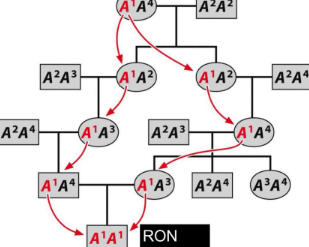
what is this an example of? when two identical alleles in the homozygous genotype came down from different ancestors