16- Renal and visceral occlusive and aneurysmal diseases - artificial arteriovenous fistulas, haemodialysis access.
 Call Kai
 Learn
Learn Practice Test
 Spaced Repetition
 Match
Match Flashcards
 Knowt Play
1/27

There's no tags or description
Looks like no tags are added yet.
Name | Mastery | Learn | Test | Matching | Spaced | Call with Kai | Chat |
|---|
No analytics yet
Send a link to your students to track their progress
28 Terms
what is renal artery stenosis
complete blockage of blood flow through one or both of the main renal a. or its branches
how does the stenosis affect the kidneys
affected kidney recceives less blood → atrophy
one kidney affected → other one will take over
both kidneys affected → acute renal failure
what is the cause of RAS
thromboemboli
atherosclerosis
fibromuscular dysplasia
what are the symptoms of RAS
HT, headache, blurry vision
aching flank pain, abdominal pain, fever, vomiting, haematuria
how do you diagnose RAS
abdominal bruit over the renal arteries
lab test- creatinine, urine analysis
imaging- CT, US< MRI
what is the treatment of RAS
manage HT
surgery
balloon angioplasty +/- stent
removal of atrophied kidney
what are the symptoms of renal aneurysms
very rare, mainly asymptomatic
flank pain, HT, reduced kidney function
what is the treatment of renal aneurysms
for small with no risk of rupture→ monitor
medication, surgery
what is visceral occlusive disease
narrowing of arteries that supply blood to intestines, spleen and liver
cause by atherosclerosis → reduced blood flow to these organs → intestinal ischemia
what are the causes of acute mesenteric ischemia
due to embolisation
acute abdominal syndrome
acute intestinal necrosis
what are the causes of chronic mesenteric ischemia
due to atherosclerosis
or FMD
postprandial pain
weight loss
describe acute mesenteric ischemia
critical blockage of intestinal blood flow → small intestine necrosis → abdominal pain
ischemia → gangrene of wall
what are the symptoms of visceral occlusive disease
abdominal pain
metabolic acidosis
nausea
what can visceral occlusive disease cause
acute/ chronic mesenteric ischemia
what is the treatment of acute mesenteric ischemia
stents
thrombolysis
open surgery to remove/ bypass
broad spectrum antibiotics to prevent sepsis
anticoagulants + painkillers
what is chronic mesenteric ischemia
intestinal angina
atherosclerosis of celiac, SIMA, IMA → intestinal hypoperfusion → postprandial epigastric pain → food aversion + weight loss
what is the treatment of chronic mesenteric ischemia
open surgery
endovascular treatment
broad spectrum antibiotics to prevent sepsis
anticoagulants + painkillers
what is visceral artery aneurysm
aneurysm in celiac and mesenteric arteries
splenic, renal, hepatic, mesenteric
describe splenic artery aneurysms
most common
diameter ~1cm
usually asymptomatic or LUQ pain that radiates to shoulder
rupture → haemodynamic instability
diagnosis → CTA
surgery if rupture occurs
how do you diagnose visceral artery aneurysms
US
CT angio
what is the treatment of visceral artery aneurysms
risk of rupture is high if >2cm or rapidly growing
small should be monitored + meds for BR
elective surgical repair is only definitive cure
graft
what is artificial arteriovenous fistulas
surgical connection made between artery and vein for haemodyalisis treatments
creates high flow rate, low incidence of thrombosis
what is haemodyalisis
uses diffusion to remove solutes and water from blood when kidneys dont work
where is artificial arteriovenous fistulas located
in arm
anastomosis creates access to arterial blood
pumped out of body and back into venous system
what is haemodialysis acess
access allows blood to travel through soft tubes to dialysis machine to dialyser
what are the types of haemodialysis access
AV fistula
AV graft
central venous catheter
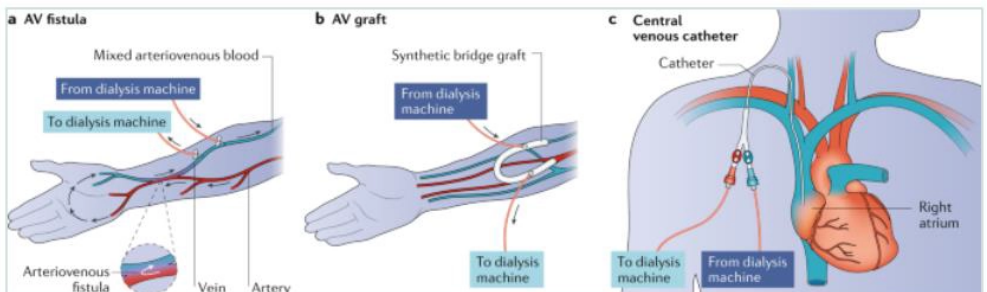
what is AV graft
access made using soft tube to join artery and vein in arm
mature faster than fistula
high risk of narrowing → thrombosis
what is central venous catheter
soft tube in large vein- usually in neck
blood flow is less than other