Standardized Recipes and Menus
 Call Kai
 Learn
Learn Practice Test
 Spaced Repetition
 Match
Match Flashcards
 Knowt Play
1/47

There's no tags or description
Looks like no tags are added yet.
Name | Mastery | Learn | Test | Matching | Spaced | Call with Kai |
|---|
No analytics yet
Send a link to your students to track their progress
48 Terms
A
C
What are standardized recipes?
meaning that a recipe is standardized for equipment to make food for multiple people
important for mass food production
What are some characteristics of recipes?
mutually developed with menus
important management tool
should be complete, consistent, and simple to follow
Are standardized recipes the same as home recipes?
no
What is the purpose of standardized recipes?
produced known quantity and quality of a food
specify the type and amount of each ingredient
specify prep and cooking procedures
specify yields and portion sizes
tested and adapted to a specific foodservice facility
What are six advantages of standardized recipes (6)?
reproducible flavors
known nutrient content
ingredient control
cost control
can be duplicated by others
can contribute to food safety
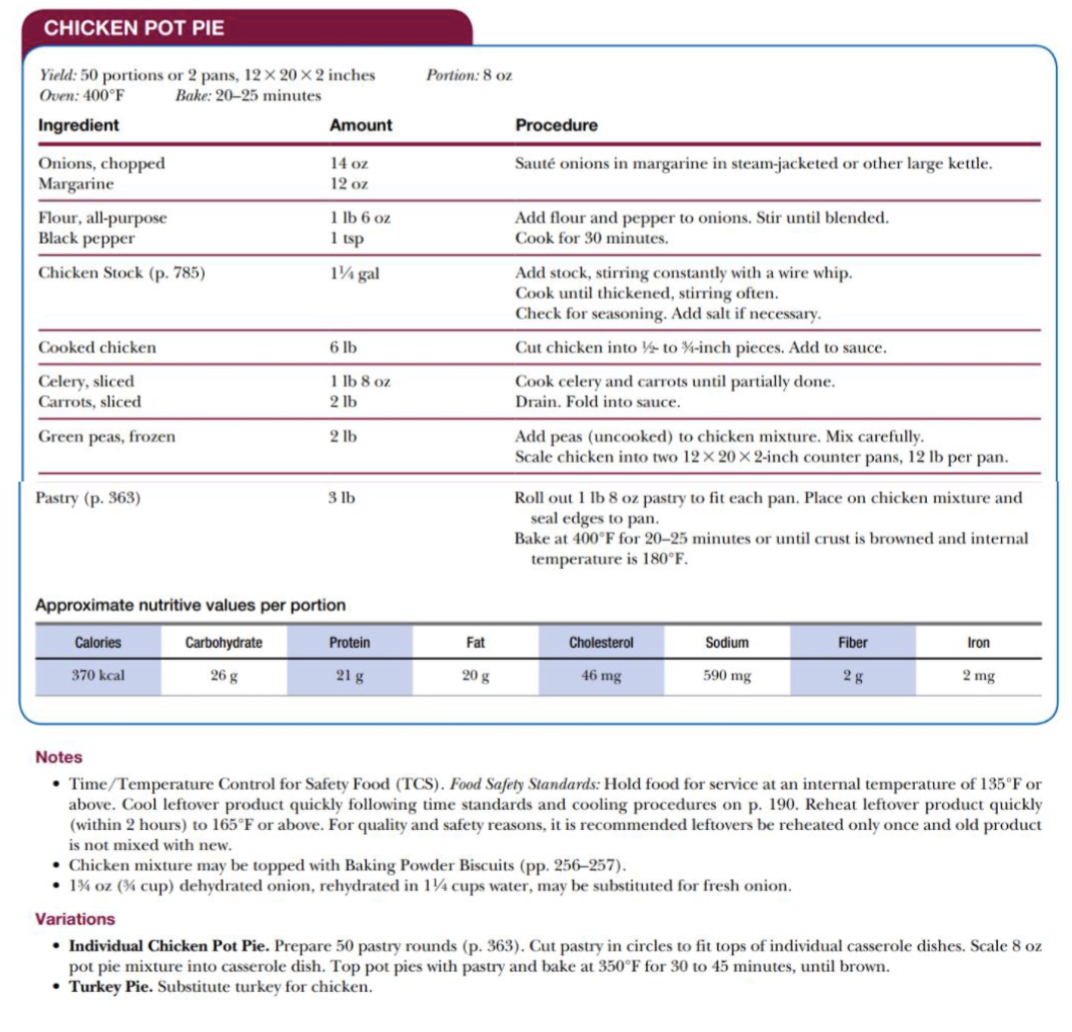
What are eight different things needed for a standardized recipe?
recipe title
total yield (measure, weight, # of pans, # of portions)
portion size
cooking time and temp
ingredients and quantities
procedures
garnish/presentation/portioning
equipment/utensils used
What are six different secondary info for standardized recipe?
holding procedures
storage before and after serving
modifications/substitutions (meat vs. veg)
nutrition information (needed in a hospital setting)
cost information
HACCP procedures
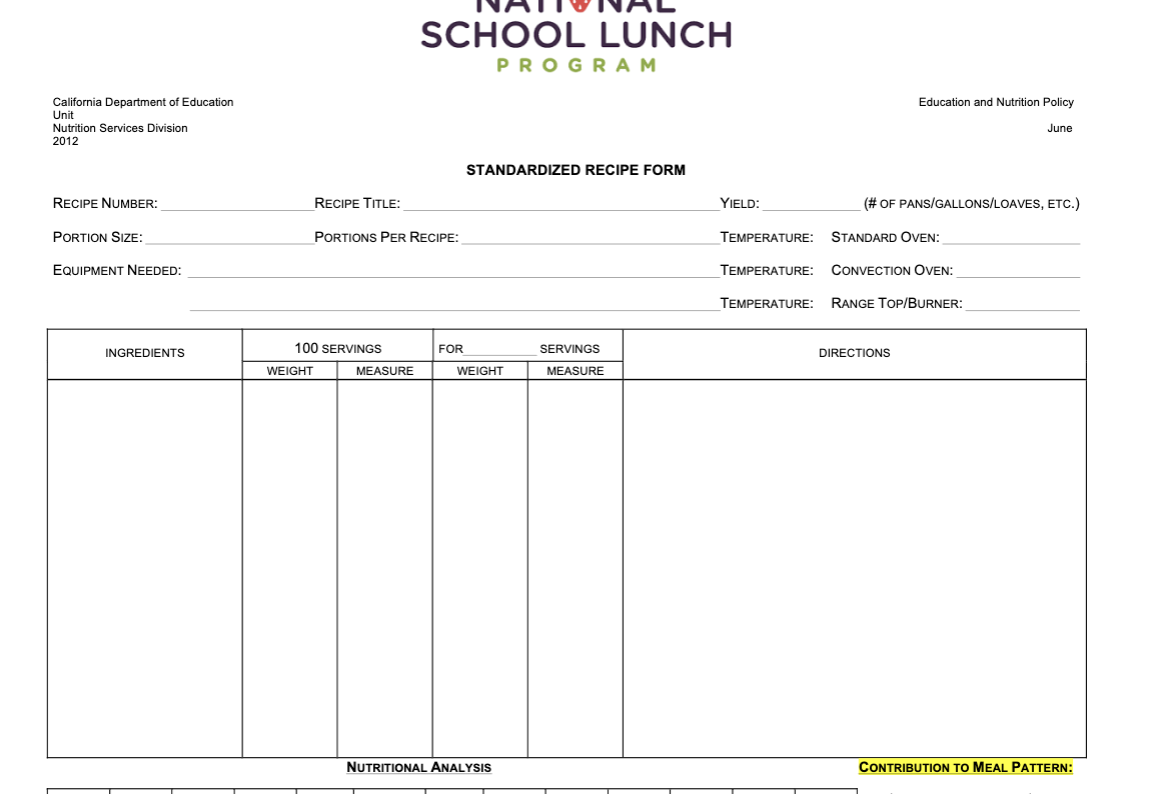
In the national school lunch program standardization recipe form, what is the contribution to meal pattern mean?
ensures that there is at least 2 ounces of cooked meat ›
What is the single most important tool in a foodservice operation?
the menu
A well-planned menu serves as a catalyst that drives what six operational functions?
purchasing
production
service
distribution
assembly
sanitation
Describe the relationship between gallon, quarts, pints, and cups.
1 gallon = 4 quarts
1 quart = 2 pints
1 pints = 2 cups
Describe the relationship between tablespoons and teaspoons.
1 tablespoon = 3 teaspoons
Describe the relationship between tablespoons and fluid ounces.
1 fluid ounce = 2 tablespoons
Describe the relationship between tablespoons and a cup.
1 cup = 16 tablespoons
½ cup = 8 tablespoons
1/3 cup = 5 tablespoons and 1 tsp
¼ cup = 4 tablespoons
1/8 cup = 2 tablespoons = 1 fluid ounce
1/16 cup = 1 tablespoon
What are the steps involved in production plan, starting with the development of a menu.
develop a menu → find recipes for each menu item (account for standardization, adjustment, and costing) → determine menu/meal pricing → purchasing
What are some external factors that influence menu planning (3)?
political/government (have nutrient, quality, and quantity guidelines that we need to follow)
social → trends and dining preferences
economic
How do economic factors influence menu planning?
employment rates
spending habits
What are some internal factors that influences menu planning (3)?
organizational mission
customers
operational/managerial
need to take into account resources, labor, equipment, availability of food, and style of service
What are the seven primary menu functions?
marketing/sales tool
communication tool (don’t want dirty menu)
maximize profit potential/control costs
reinforce image (use of logos)
govern equipment selection, layout, and facilities planning
hire and educate workers
create enthusiasm
What are the four different types of menu?
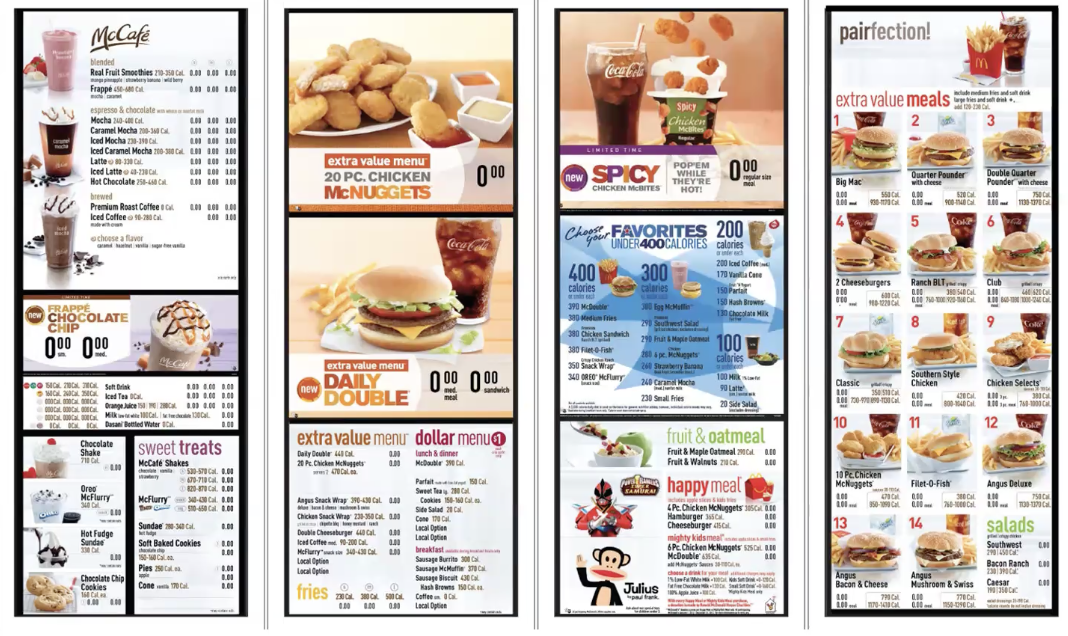
static menu
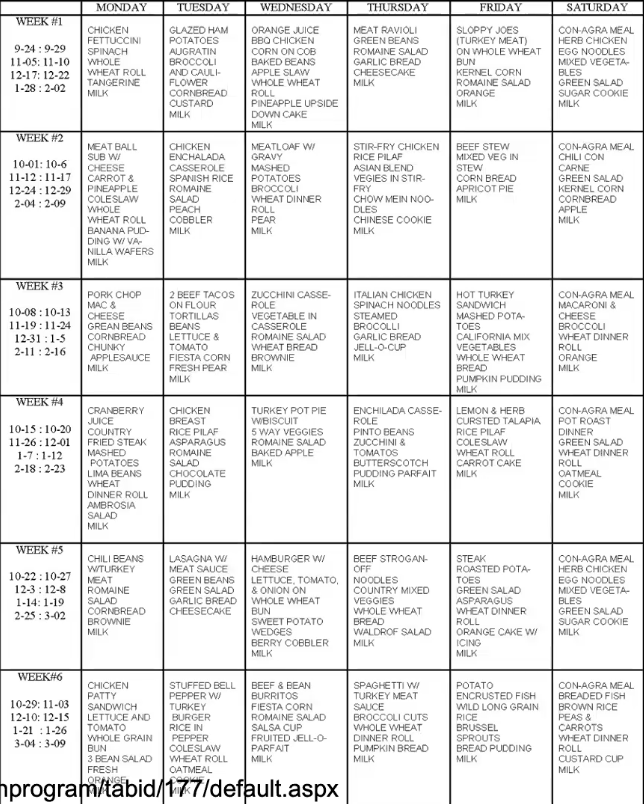
cycle menu
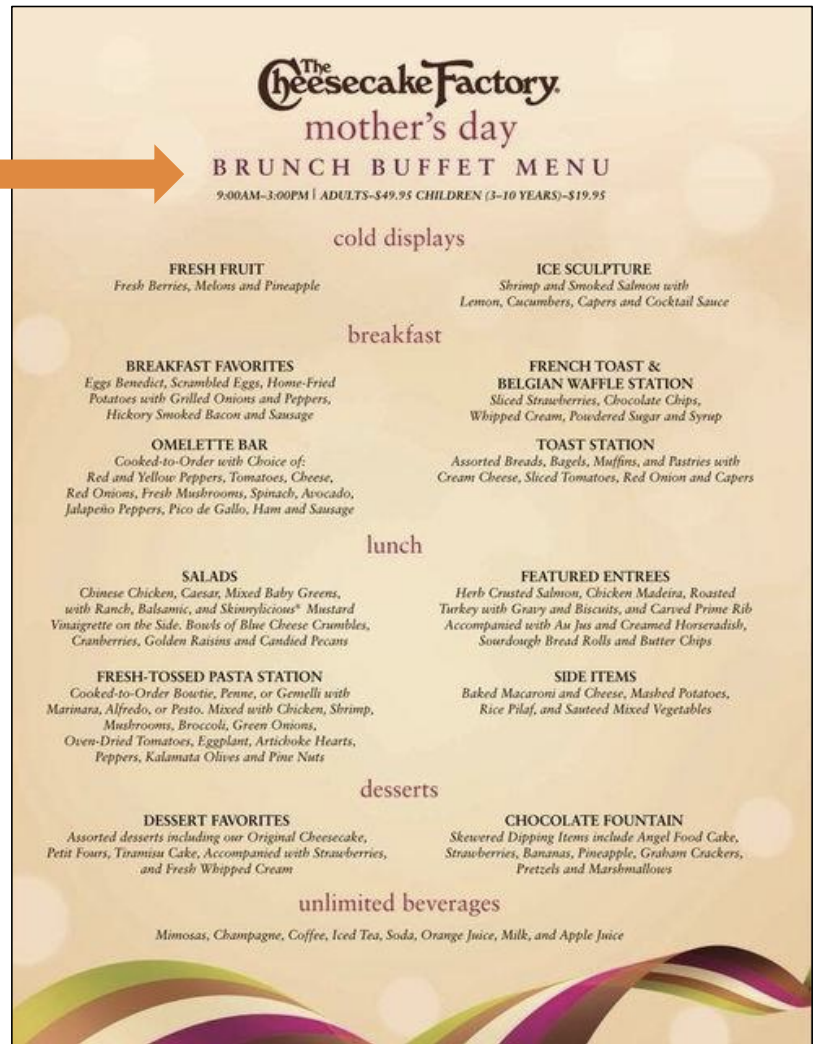
single-use menu (ex: mother’s day menu)
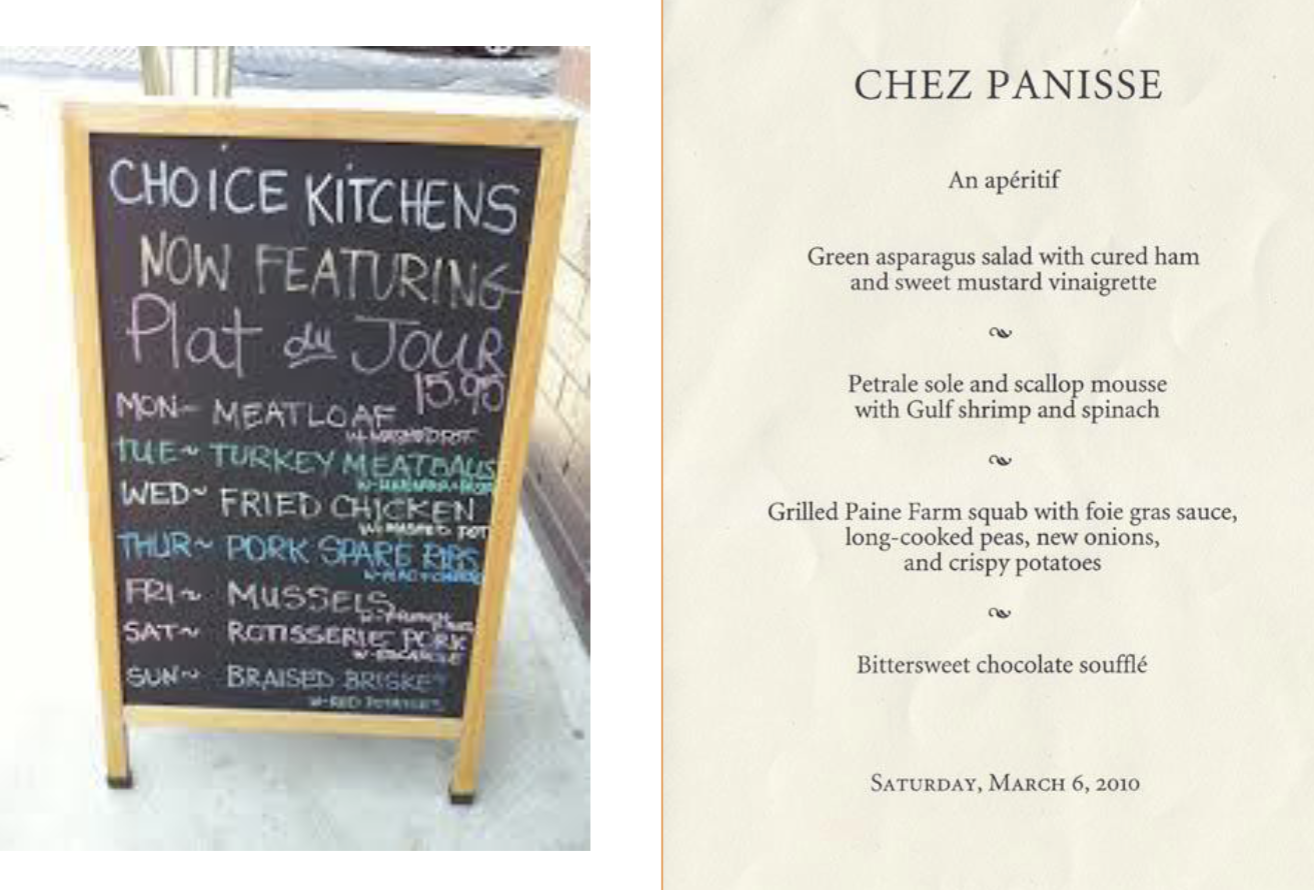
du jour
combination/hybrid menu
What is a static menu?
a set menu that doesn’t change
What is a cycle menu?
a menu that varies from day to day, but repeats itself when the cycle is complete (cycle is usually 6 weeks)
ex: dining hall menus
What is a single-use menu?
a menu that is designed to be used once
What is a du jour menu?
a dynamic, frequently changing selection of dishes, typically featuring daily specials, seasonal ingredients, and the chef’s creative choices
What are the four different menu pricing styles?
à la Carte
Semi à la Carte
Table d’ Hôte/Prix Fixe
Fixed Price/All-You-Care-To-Eat
What is an à la Carte menu pricing?
each item is priced separately
What is a semi à la Carte menu pricing?
some items prices separately
some items included with the entrée (combo prices)
What is a table d’ hôte/prix fixe menu pricing?
offers a complete meal at a set price (appetizer, entree, and dessert)
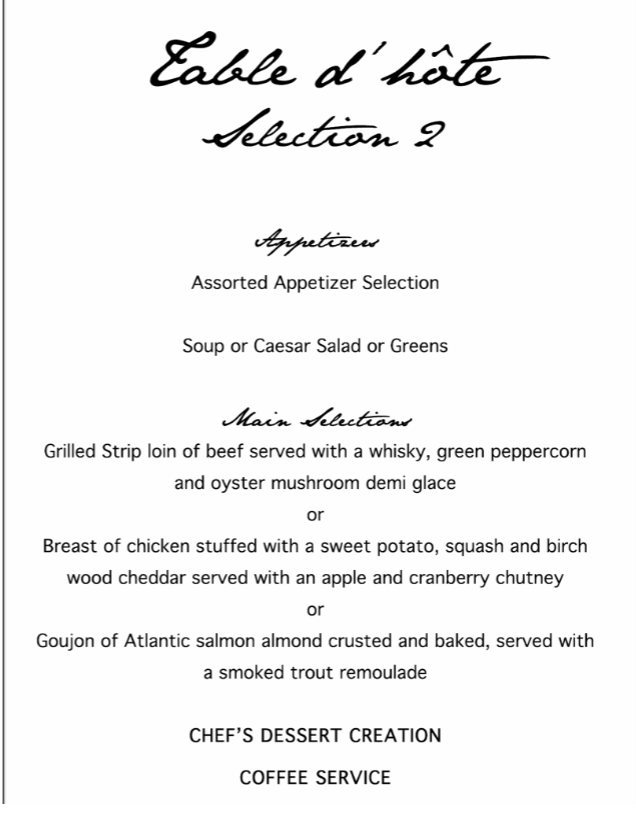
What is an example of fixed price menu pricing?
dining commons all you can eat
self-serve pay by the ounce
What are four different menu selections?
selective menu
semi-selective menu
non-selective menu
specialty
What is a selective menu?
two or more food choices in each menu category
What is a semi-selective menu?
one or more food choices in at least one menu category (but lowkey at least two)
commonly found in nursing homes
What is a non-selective menu?
a menu that offers no choice of food items, its just one item
“pre-select or house menu”
What is a speciality menu selection?
beverage/appetizer/dessert menus
What are the four steps in planning a menu?
determine the meal offerings
determine the meal pattern/components (what are the different item categories?)
determine the type of menu
identify system constraints (do you have the equipment? do you have enough staff?)
What are the different steps/categories that need to be touched upon during menu development? What order should they be in?
entrées
soups and sandwiches
vegetable and sides
salads
desserts
garnishes
breads
breakfast items
beverages
What are some characteristics you need to take into consideration when serving food?
presentation
color
texture
consistency
shape
flavor combinations
variety in preparation technique
What are some things we do in order to keep the texture of food the same for those who might have trouble eating foods with a variety of texutre?
puree the foods and put them in molds that resemble the food texture
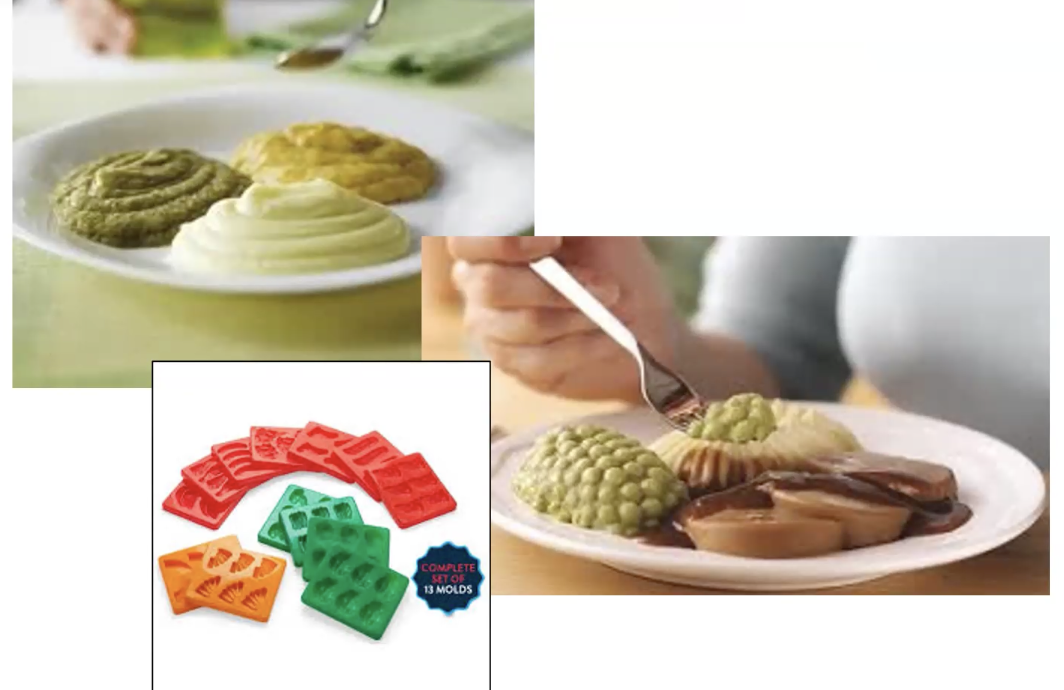
What is IDDSI? What do they do?
International Dysphagia (difficulty swallowing) Diet Standardisation Initiative
have different levels for foods (1-7) and these are found in hospitals and other long term care facilities
7 = typical food
1 = texture modification for those who have trouble swallowing
What are “front of the house” menus?
menus for the customers
must have an appealing design and format (to stimulate sales and influence the client)
must use descriptive wording or present an accurate word picture
ex: “marinated beef strips with crisp broccoli drizzled with savory garlic soy sauce” vs “beef with broccoli in garlic sauce”
What are “back of the house” menus?
menus for those making the food, including portion sizes, combinations, etc.
What are the characteristics that you need to evaluate once your menu is made?
feedback from clientele
nutritional needs/requirements
appealing menu items
equipment use balanced
workload/schedules balanced
cycle/day sequence
description accurate
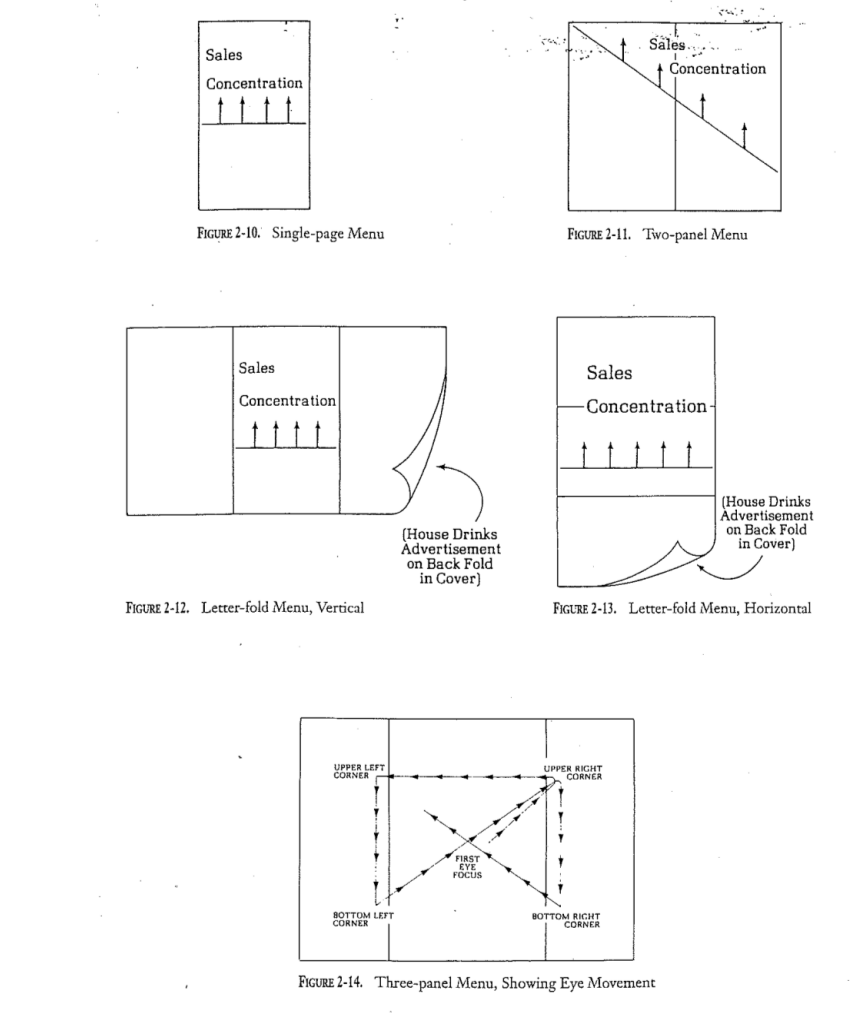
What influence does the positioning of foods on a menu have on the food sales?
has significant impact
once page → focus on upper half
two page → upper right quadrant
letter fold → upper center page
What is the Nutritional Labeling and Education Act (NLEA) of 1994?
truth-in-menu law that requires that the menu accurately describes the food to be served
in general, federal, state, and local laws require that certain menu language be accurate → regulation for foodservices are designed to prevent restaurants from making misleading nutritional claims
Who regulated nutrition statements?
FDA
they regulate language used on packaged foods
What is the Healthcare Reform Bill of 2010?
FDA rules for menu labeling
requires restaurants with >19 locations to list calories menu and menu boards