Class V Restorations
 Call Kai
 Learn
Learn Practice Test
 Spaced Repetition
 Match
Match Flashcards
 Knowt Play
1/35

There's no tags or description
Looks like no tags are added yet.
Name | Mastery | Learn | Test | Matching | Spaced | Call with Kai |
|---|
No analytics yet
Send a link to your students to track their progress
36 Terms
True / False: use of amagalm in the esthetic zone should be avoided
True
What teeth comprise the esthetic zone?
MB of max 1st molar to MB of max 1st molar
Smooth surfaces produce decay from --- to --- at the DEJ
apex to base
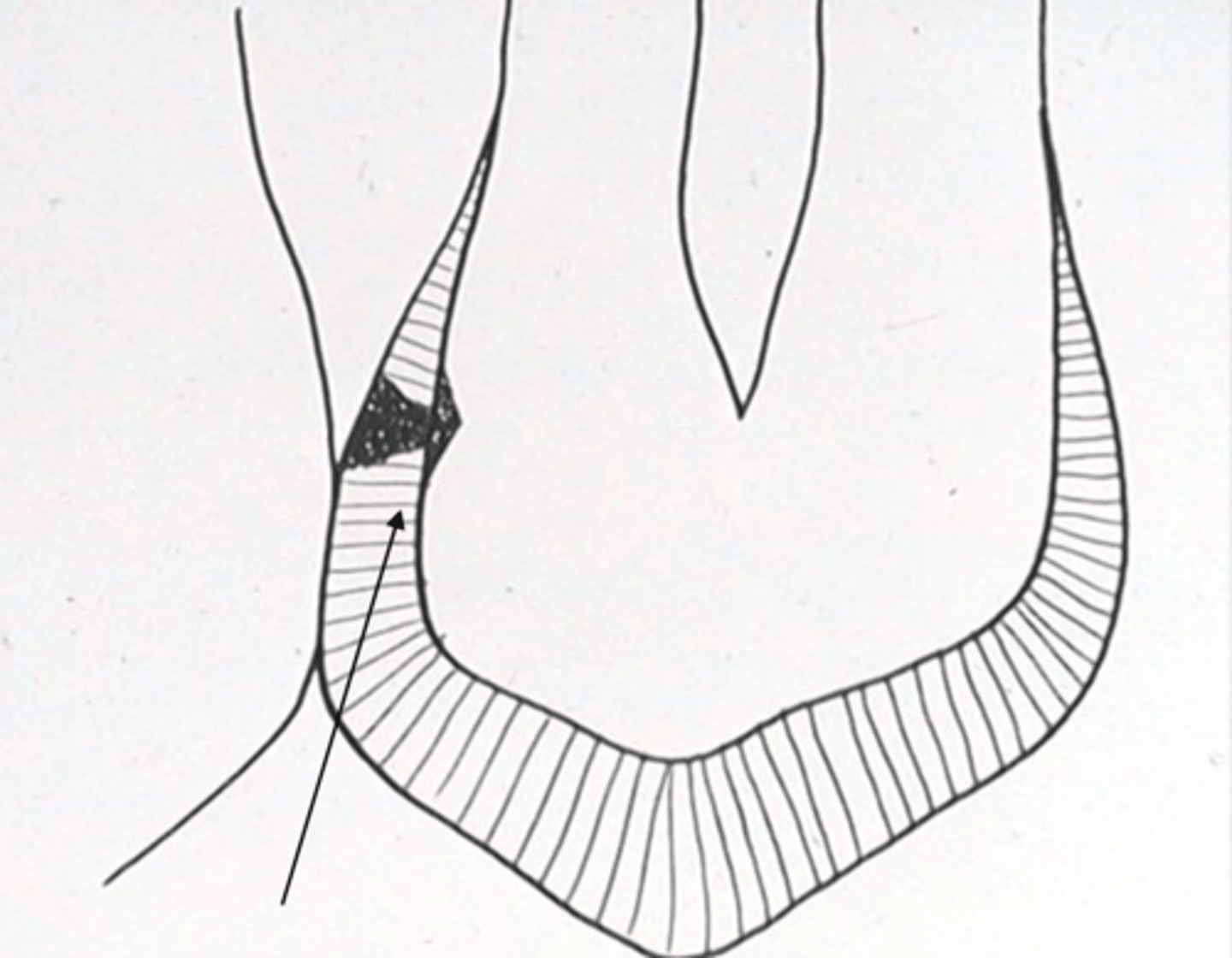
Pits and fissures produce decay from ---- to ---- at the DEJ
base to base
Where are class 5 caries detected?
gingival third of buccal or lingual surfaces
True / False: a halo indicates extensive decay
True
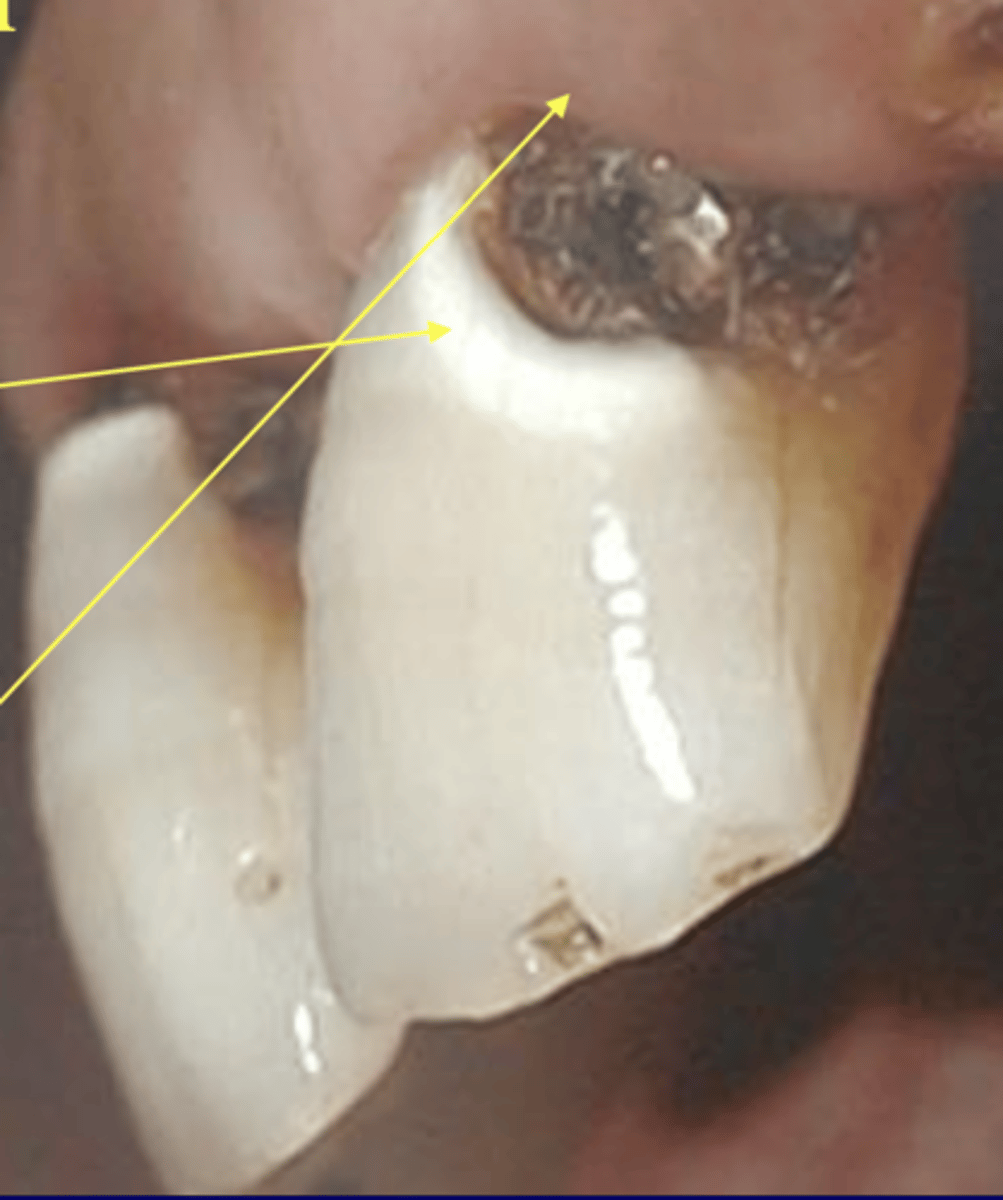
True / False: class 5 caries are typically detected through radiographic detection
false - cannot examine radiographically, need visualization
What are abrasion lesions?
non-carious cervical lesions caused by mechanical wear of the tooth structure due to external forces
True / False: abrasion lesions are caused by caries
False - caused by abrasion
Composite relies on ---- preparation design
Mechanical / retention
True / False: bonding to enamel is more predictable and lasts longer than bonding to dentin
True
----- preparations for small to moderate composite preparation
Adhesive
---- preparation for amalgam and large composite preparations
Conventional
When to use amalgam?
Non-esthetic zone
Root surface decay
Crown margin repair
What material to use in poor isolation or aesthetic areas?
RMGI = resin modified glass ionomer
Principles of Cavity Preparation of Class 5
1. Outline form
2. Resistance form
3. Retention form
4. Convenience form
True / False: composite needs very rounded internal line angles
True
Decay determines ---- form
Outline
What is removed in creating a resistance form?
Unsupported enamel
The top of the handpiece should always be
parallel to the long axis of the tooth
True / False: Tilting the handpiece too much can cause undercuts, overcuts, or irregular cavity walls
True
The outline form should always be extended to ---- tooth structure
sound tooth structure
In class 5 caries, decay frequently extends ---- creating an access problem
subgnigivally
What happens when you feel the burr bounce?
Entering sound tooth structure
Electrosurgery
high-frequency electrical currents to cut, coagulate, or reshape soft tissues in dental procedures
What is the purpose of isolation in tooth preparation
Crucial for maintaining a dry, clean, and contamination-free working environment
What is a 212 clamp used for?
Gingival retraction
In a 212 clamp for gingival retraction what is the order for lingual and buccal jaw placement?
Place lingual jaw first under HOC
Place buccal jaw below the decay
True / False: RMGI releases fluoride
true
What does RMGI have to bond to?
Sound tooth structure
True / False: Preparation for composite and RMGI can be created using a round burr
True
Cavosurface angle must be --- degrees
90 degrees
What needs retention features: composite, amalgam, or RMGI
amalgam
What can be used to place retention features?
1/4 Round burr
Inverted cone
Where should retention features be placed in a Class V preparation?
In the DEJ
When contouring a class 5 a discoid cleiod would create a ---- surface
concave