Cerebellum and Movement
 Call Kai
 Learn
Learn Practice Test
 Spaced Repetition
 Match
Match Flashcards
 Knowt Play
1/35

There's no tags or description
Looks like no tags are added yet.
Name | Mastery | Learn | Test | Matching | Spaced | Call with Kai |
|---|
No analytics yet
Send a link to your students to track their progress
36 Terms
Cerebellum
latin for “little brain”
interesting fact: 10% of brain’s volume
part of the hindbrain (metencephalon)
separated from cerebrum by tentorium cerebelli
all cerebellar functions are unconcious
does not initiate motor commands. instead, it: modifies movement (motor commands) output
does not synapse directly on LMNs. Instead, it: regulates activity of UMN
Cerebellum General functions — all unconscious
Involved in complex functions:
coordinating voluntary movements
motor learning
maintaining balance and adjusting posture
cognitive functioning (not as well understood)
Coordinating voluntary movements
coordinates timing and force from different muscle groups to generate smooth limb and body movements
motor learning
compares anticipated movement (intention) with actual movement output
responsible for fine-tuning motor commands (trial-and-error)
maintaining balance and adjusting posture
adjusts commands to motor neurons to compensate for shifts in body position, and/or in changes of muscle load
Cognitive functioning (not as well understood)
language: helps with verbal fluency: grammar processing, correcting language mistakes (spoken or written)
Overview of Cerebellar input
*note: brainstem nuclei include: vestibular, pontine, reticular formation, inf. olivary nucleus
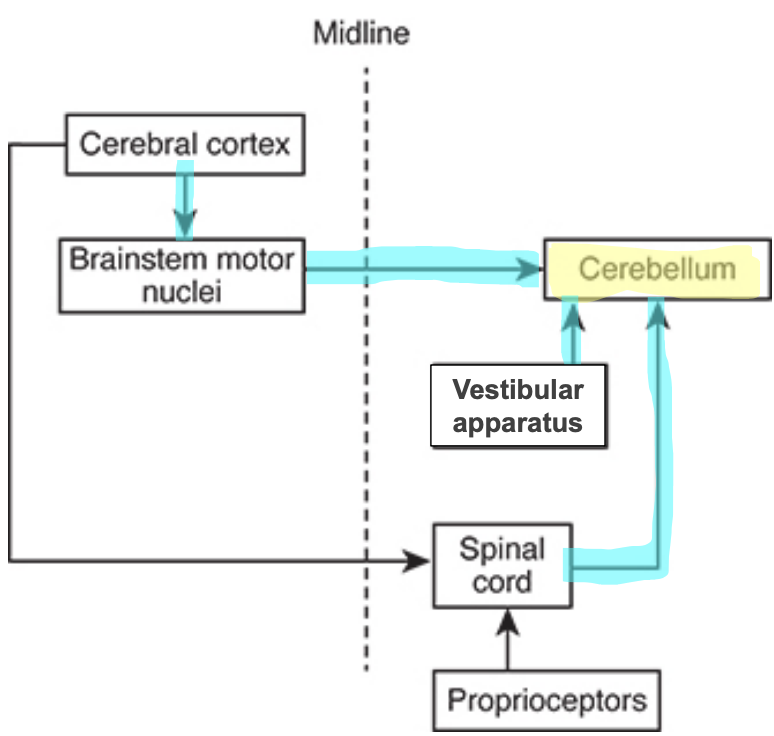
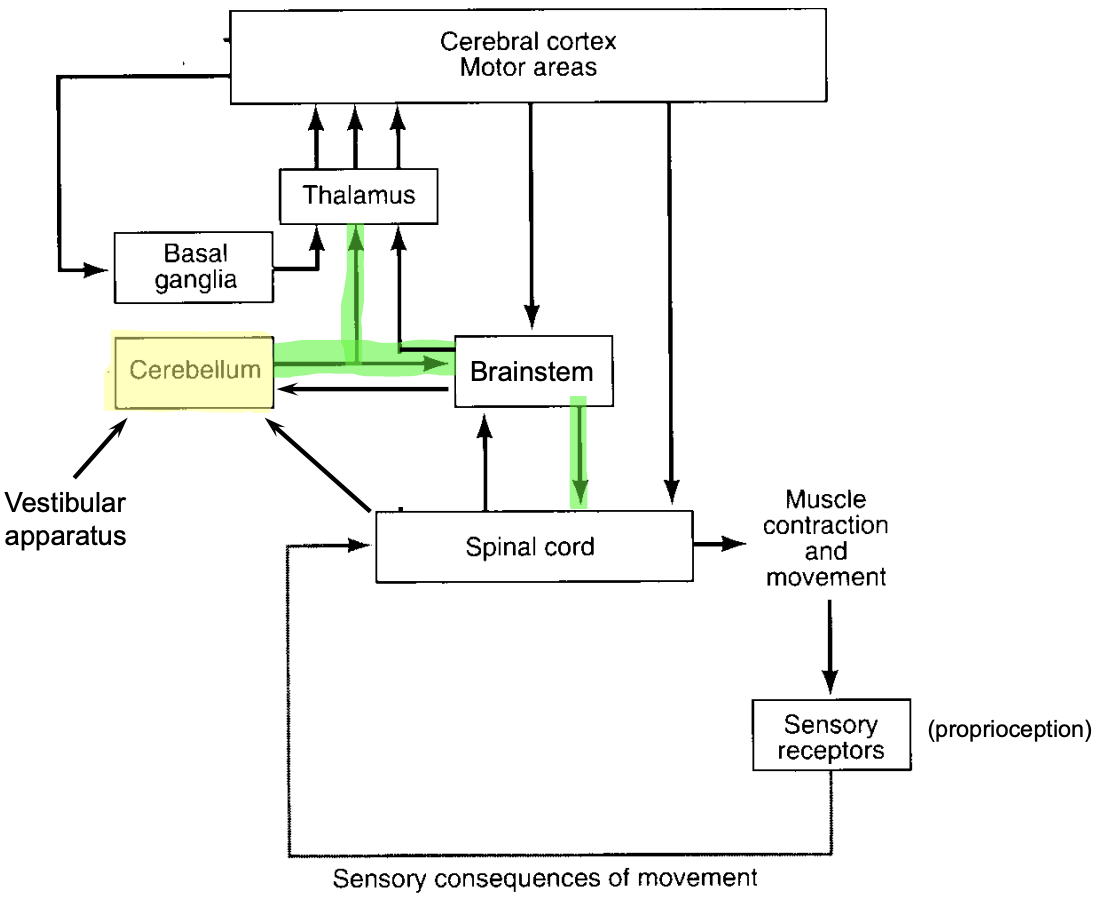
Overview of cerebellar input and Output
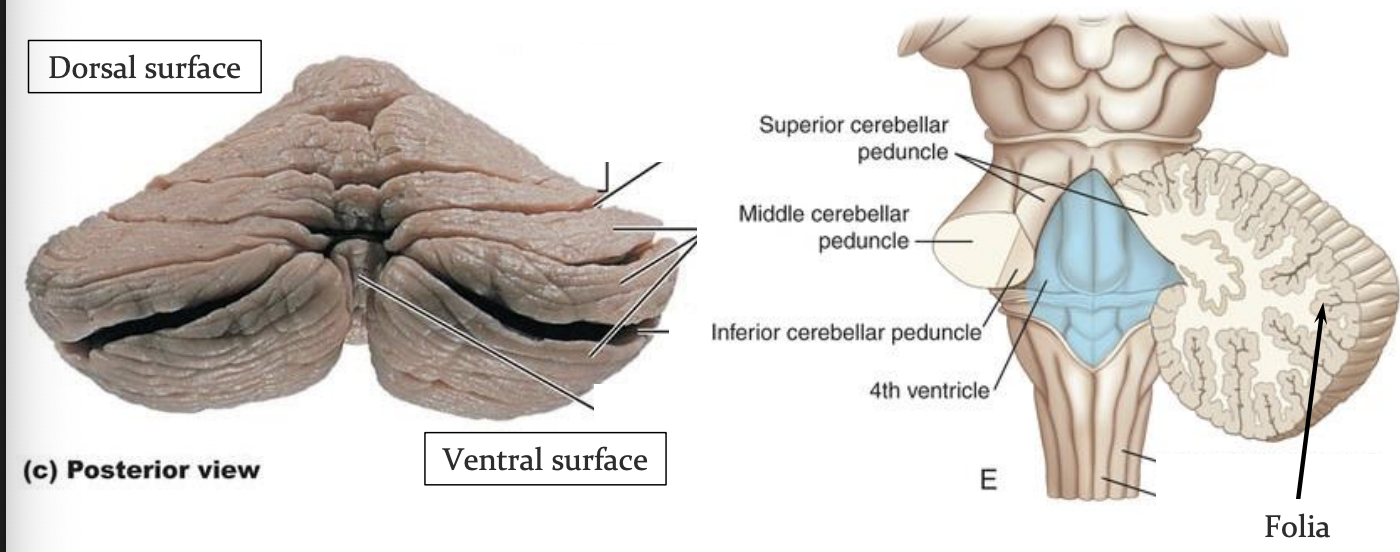
Surface Anatomy of the Cerebellum
Cortex: three layers; has many tightly spaced folded layers of gray matter separated by parallel grooves. each gyrus = folium (plural: folia)
Ventral surface of cerebellum = roof of 4th ventricle
dorsal surface: separated from occipital lobe by dura mater
Cerebellum has 3 anatomical lobes
anterior
posterior
flocculonodular
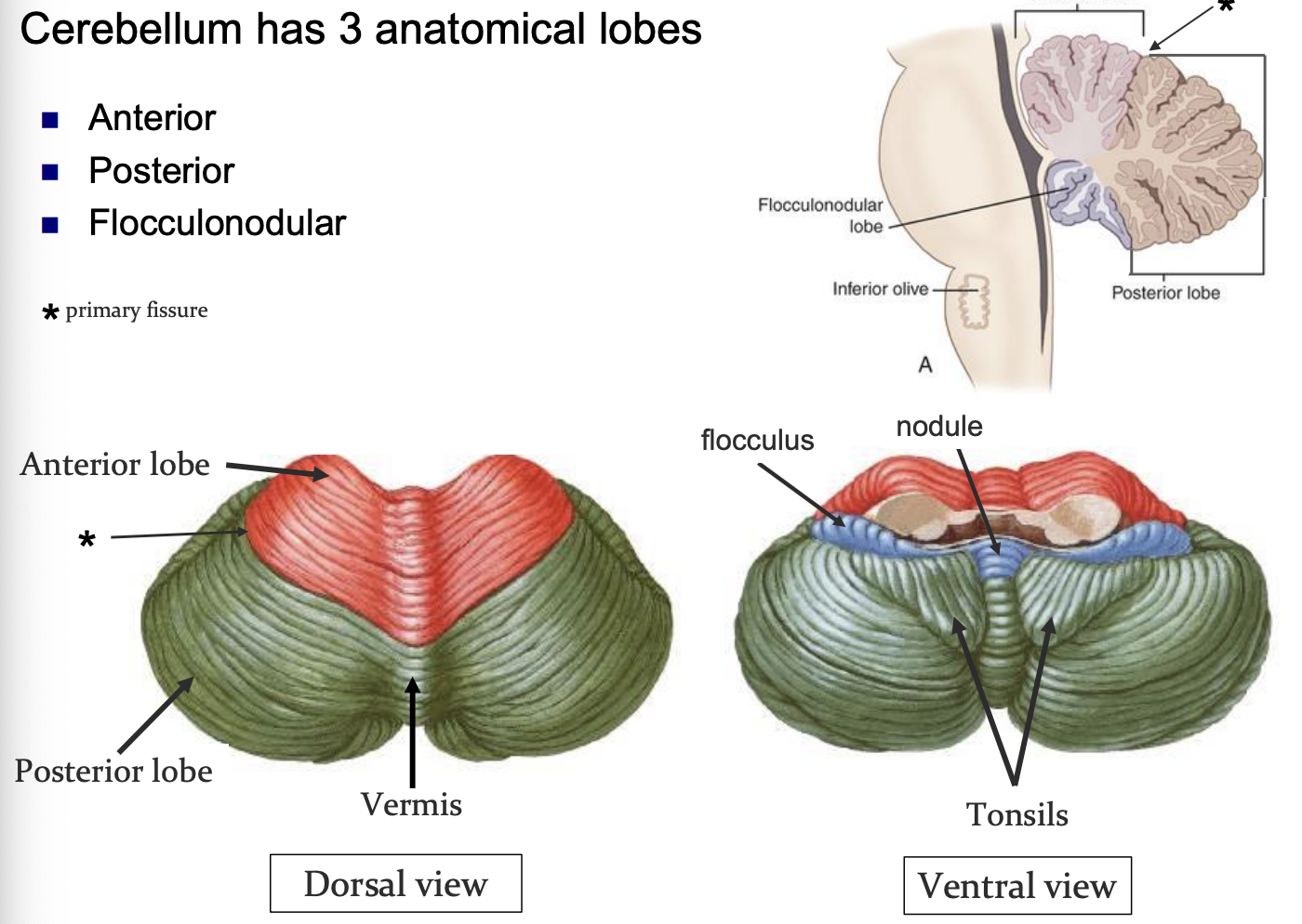
Cerebellum: Anterior Lobe
mediates unconscious proprioception
receives input from spinal cord via spinocerebellar tracts (unconscious proprioception)
important in coordination of LE
Also helps regulate muscle tone in LE
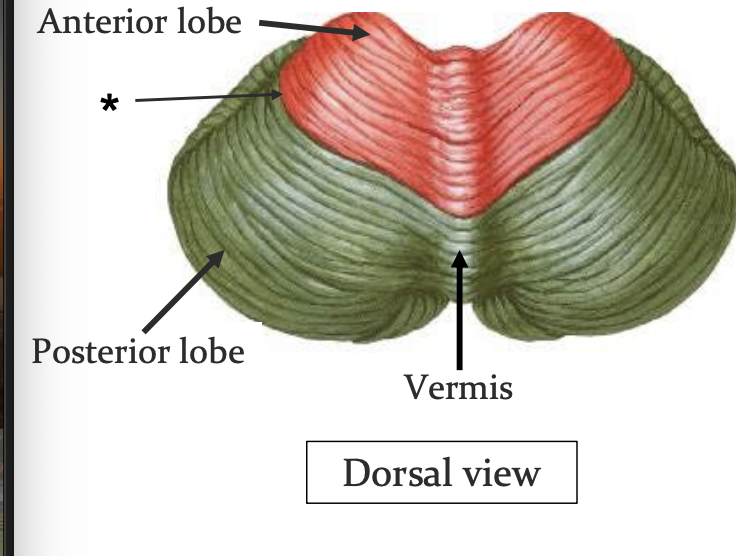
Cerebellum: Posterior Lobe
important in fine motor coordination
via inhibition of involuntary movements (with GABA)
receives input from brainstem and cerebral cortex (indirect)
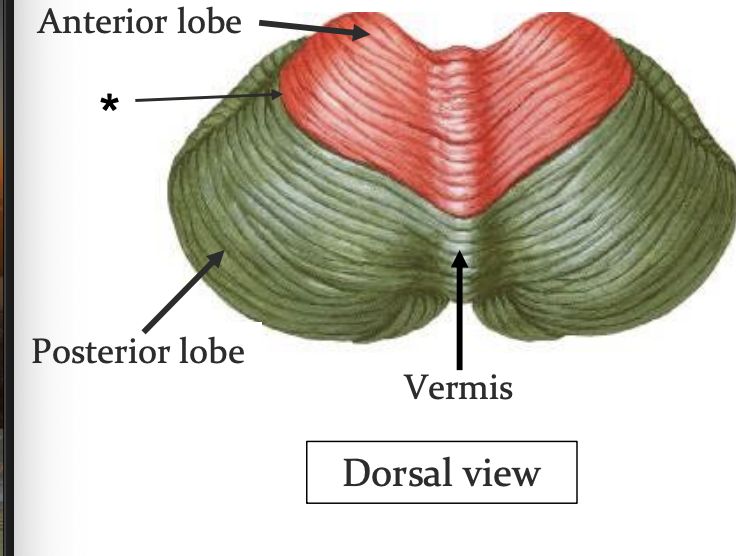
Cerebellum: Flocculonodular Lobe
maintains balance equilibrium and muscle tone
has connections with vestibular nuclei (can use info about head movement to influence eye movements)
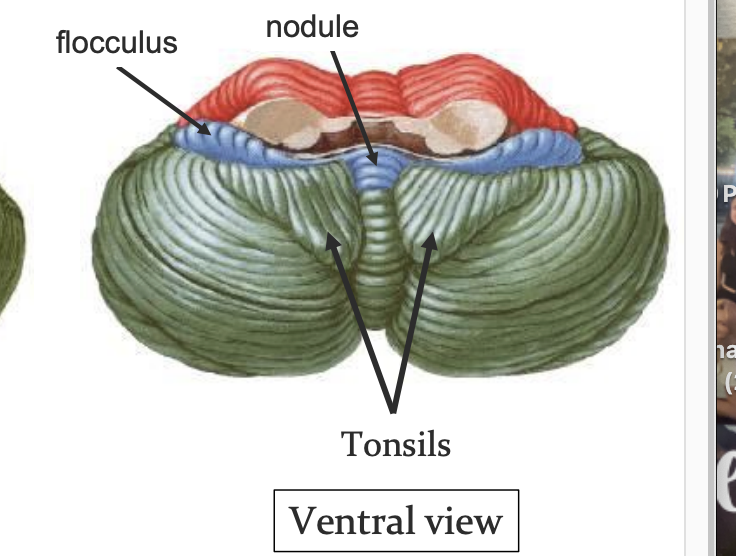
Cerebellum has 3 peduncles
superior, middle, and inferior
cerebellar peduncles convey input to cerebellum and/or output from cerebellum
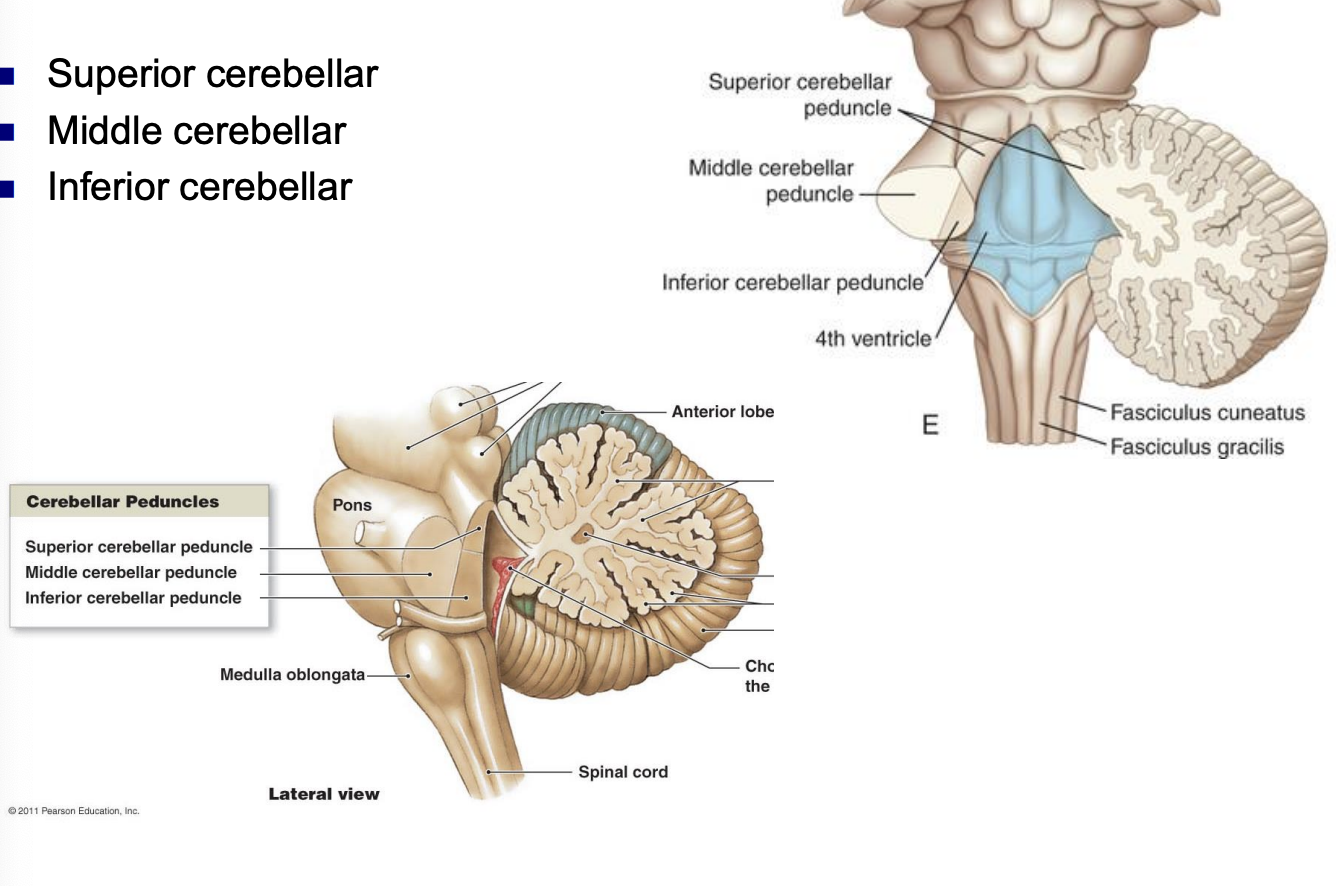
Inferior Cerebellar Peduncles
mostly afferents from spinal cord (post. spinocerebellar: proprioception of LE), medulla (inferior olivary nucleus), vestibular nuclei, vestibular apparatus
some efferents to vestibular nuclei (vestibulospinal) and reticular formation (reticulospinal)
Middle Cerebellar Peduncles
afferents from pontine nuclei (cortico-ponto-cerebellar)
superior cerebellar peduncles
mostly efferents from deep cerebellar nuclei to red nucleus and to the thalamus
some afferents from ant. spinocerebellar tracts (proprioception of LE to anterior lobe of cerebellum)
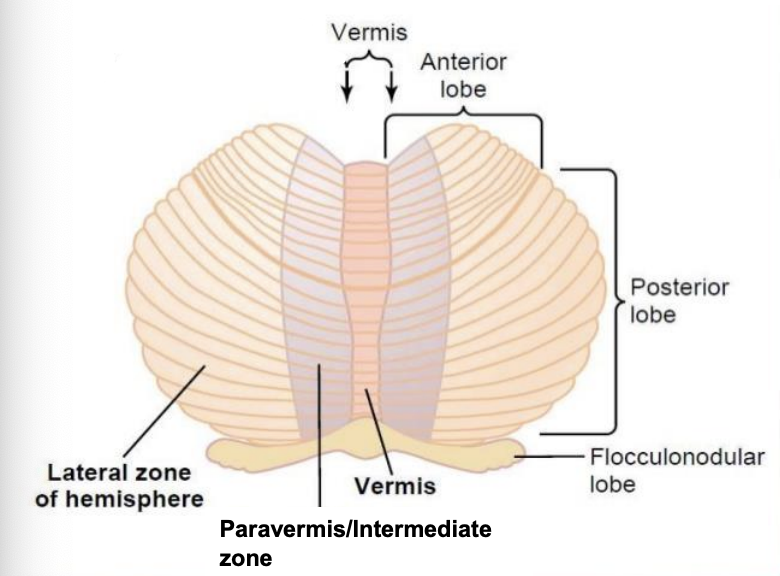
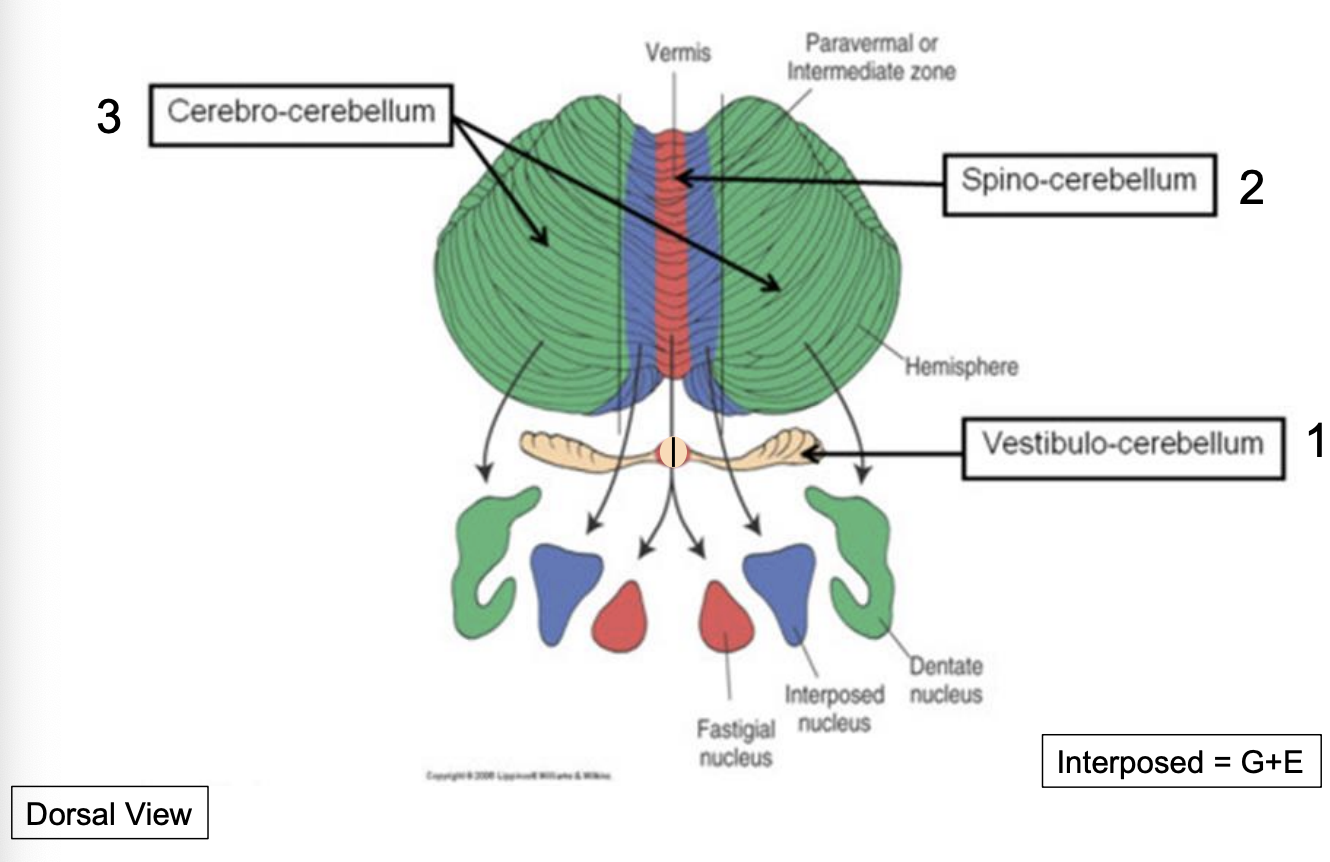
Cerebellum has 3 vertical zones
vermis (midline)
paravermis/intermediate
lateral hemisphere
Note: flocculonodular lobe is not part of the vertical zones
Vertical Zone
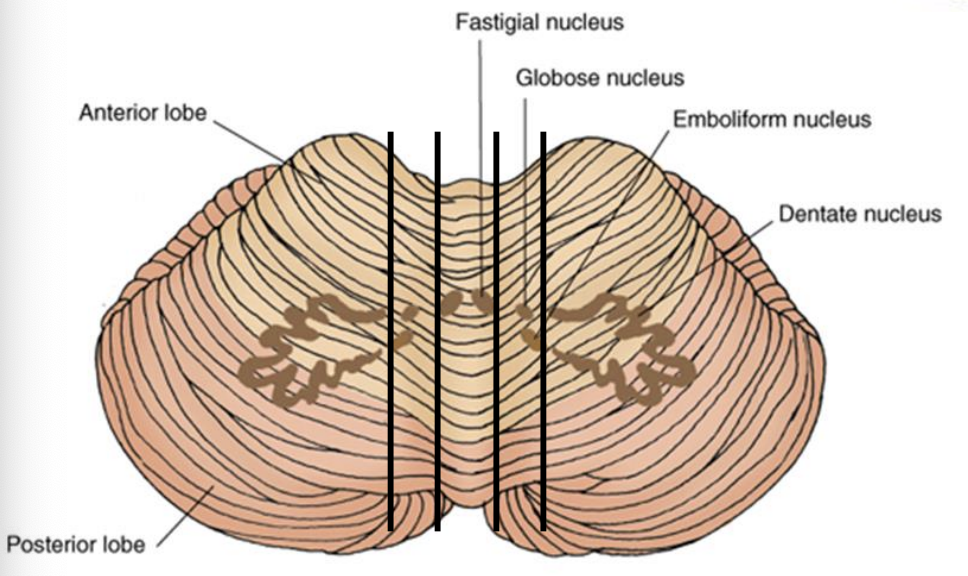
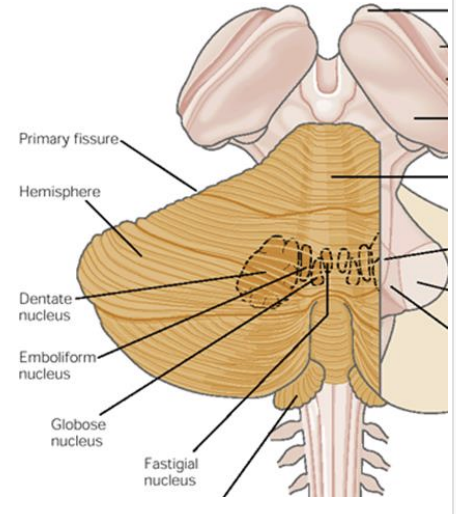
each zone is associated with deep cerebellar nuclei located in the white matter of cerebellum
vermis = fastigial nucleus
paravermis = interposted nucleus (globose + emboliform)
lateral hemisphere = dentate nucleus
Other Features
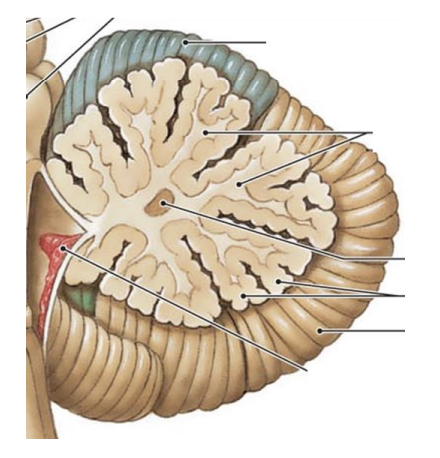
cerebellar cortex (3 layers)
cerebellar white matter
contains afferent and efferent fibers associated with cerebellar cortex
deep cerebellar nuceli (within white matter)
receive most output from cerebellar cortex (via Purkinje cells)
send efferent output from cerebellum to other supraspinal area mostly by way of superior cerebellar peduncle
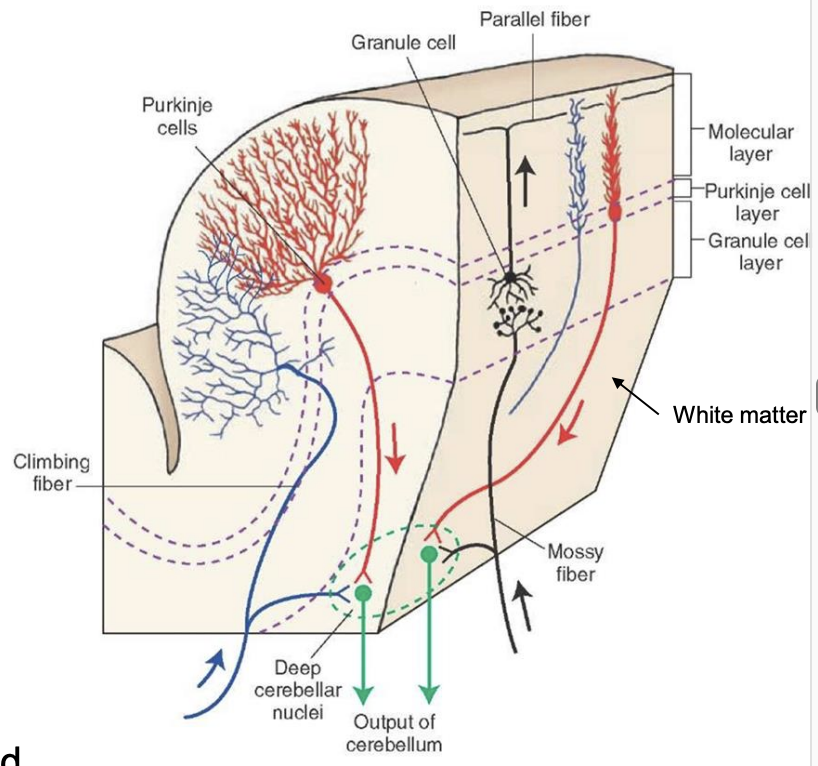
Cerebellar Cortex (grey matter): 3 layers
molecular layer (outer)
dendrites of purkinje cells (look like a flat tree)
parallel fibers of granule cells (run perpendicular to purkinje dendrites)
stellate and basket cells
purkinje layer (middle)
cell bodies of purkinje cells
granule cell layer (inner)
numerous small tightly packed granule cells (interneurons)
golgi cells (interneurons)
Input to cerebellum
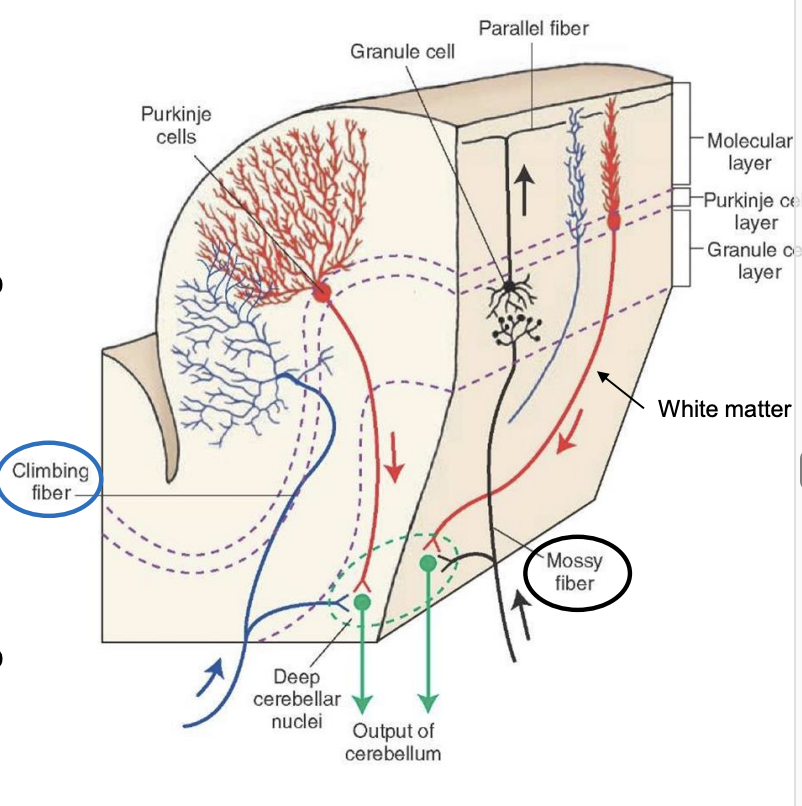
mossy fibers (main input):
from pontine nuclei: spinal cord, reitcular formation, and vestibular nuclei
send excitatory projections to
deep cerebellar nuclei
granule cells
Climbing fibers
from inferior olivary nucleus
send excitatory projections to
deep cerebellar nuclei
purkinje cells
output from cerebellum
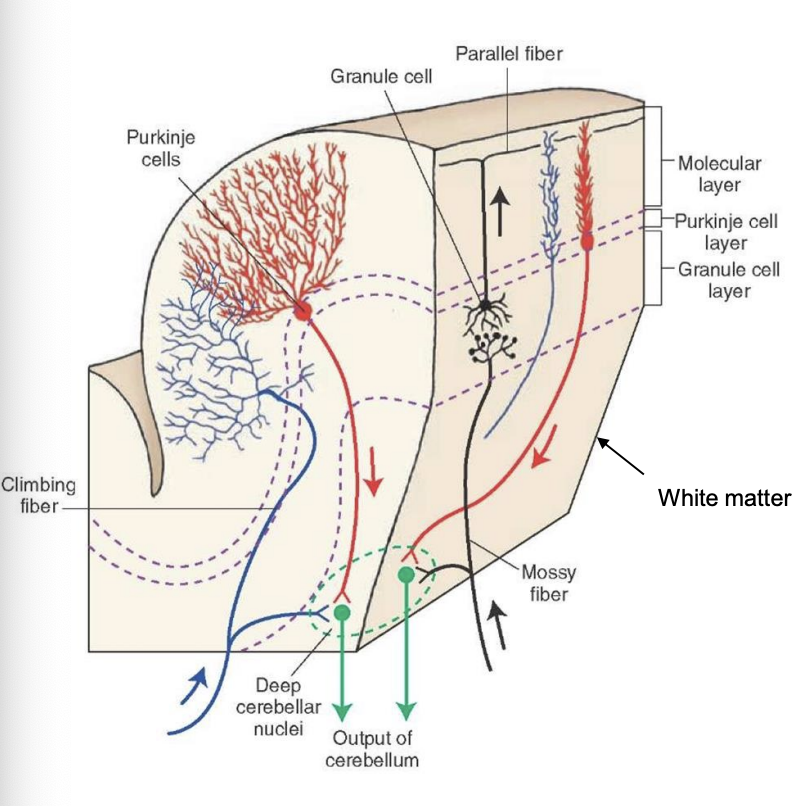
purkinje cells
only source of output form the cerebellar cortex
send inhibitory proejctions to deep cerebellar nuclei (in white matter)
use GABA
deep cerebellar nuclei
from white matter of cerebellum to other CNS regions
Note:
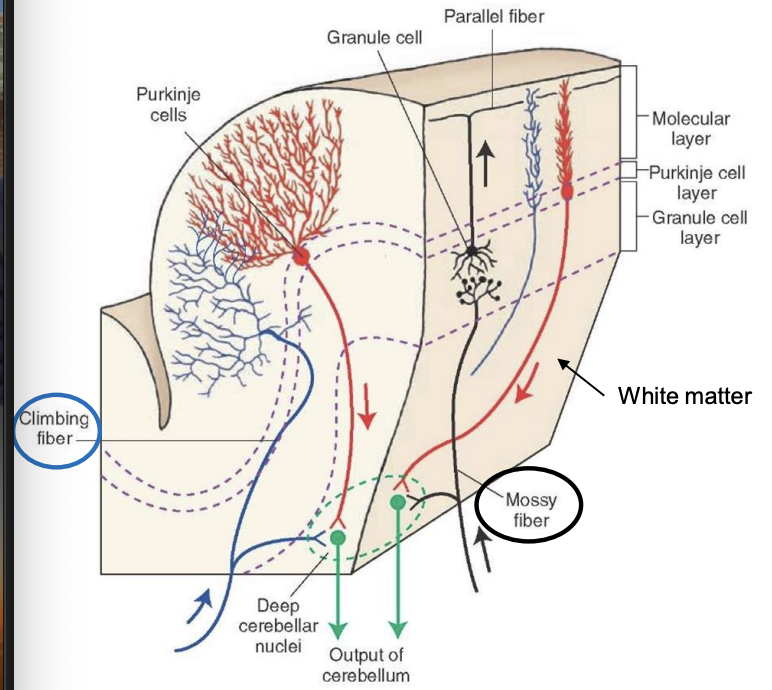
mossy and climbing fibers synapse directly on deep cerebellar nuclei to provide
coarse adjustment output from cerebellum to UMNs
purkinje cells synapse on deep cerebellar nuclei to provide:
fine adjustments output to from cerebellum to UMNs
Cerebellar White Matter
afferents and efferents
deep cerebellar nuclei
provides most output from cerebellum (exception: flocculonodular lobe)
fastigial nucleus: most medially located: associated with vermis
interposed nuclei (globose + emboliform): associated with the paravermis
dentate nucleus: largest cerebellar nucleus
associated with the lateral hemisphere
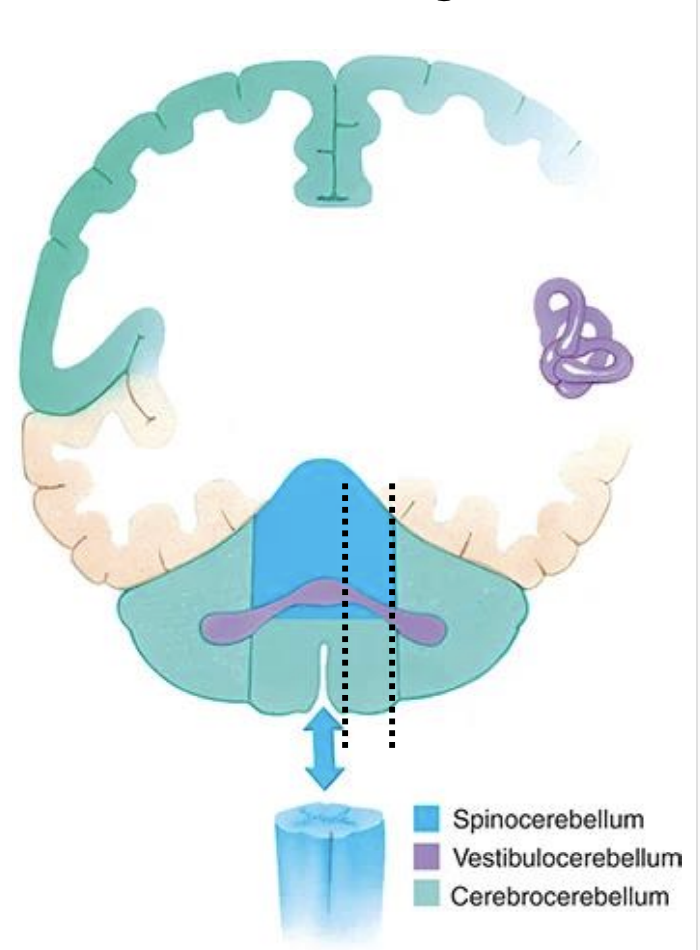
General Overview of Functional Regions
Vestibulocerebellum:
flocculonodular lobe
vestibular apparatus
Spinocerebellum:
vermis and paravermis zones
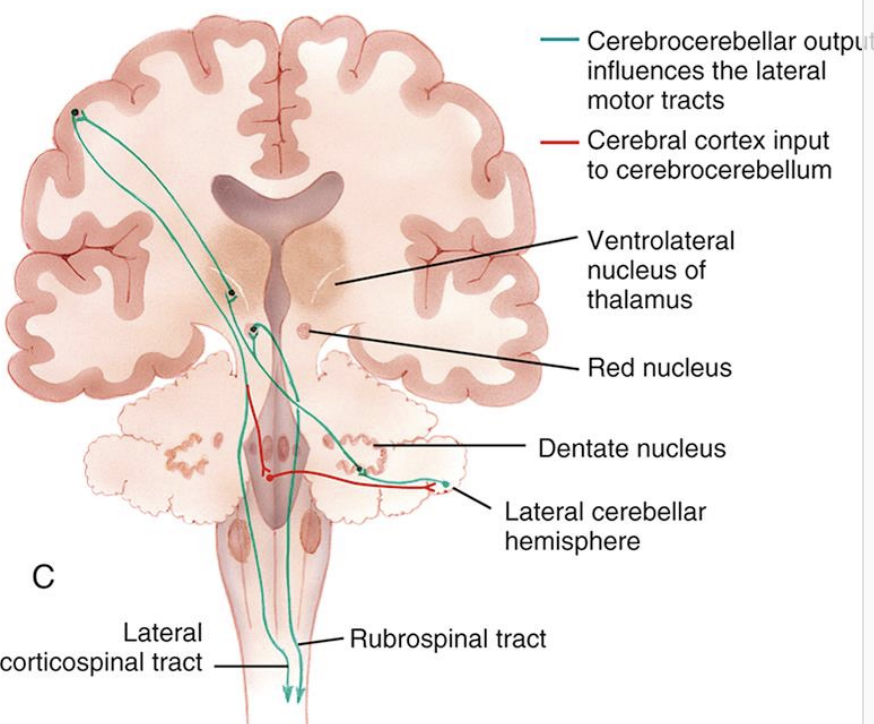
Cerebrocerebellum: lateral hemispheres
Vestibulocerebellum
functional part of the flocculonodular lobe
regulates balance via vestibular system (eyes/head/neck movements)
Spinocerebellum
functional part of vermis & paravermis
coordinates posture & gross limb movements
Cerebrocerebellum
functional part of lateral hemispheres
coordinates precise, distal voluntary movements
Example: Reaching for a book on the top shelf
vestibulocerebellum
keeps body/trunk steady (prior to reaching for book)
spinocerebellum
coordinates timing of proximal & gross limb movements (as we start reaching for book)
cerebrocerebellum
coordinates precise, voluntary movements of hands and fingers (to grab & pull book with fingers from top shelf)
Functional cerebellum and deep nuclei
Inputs and Outputs of the three functional divisions of the cerebellum
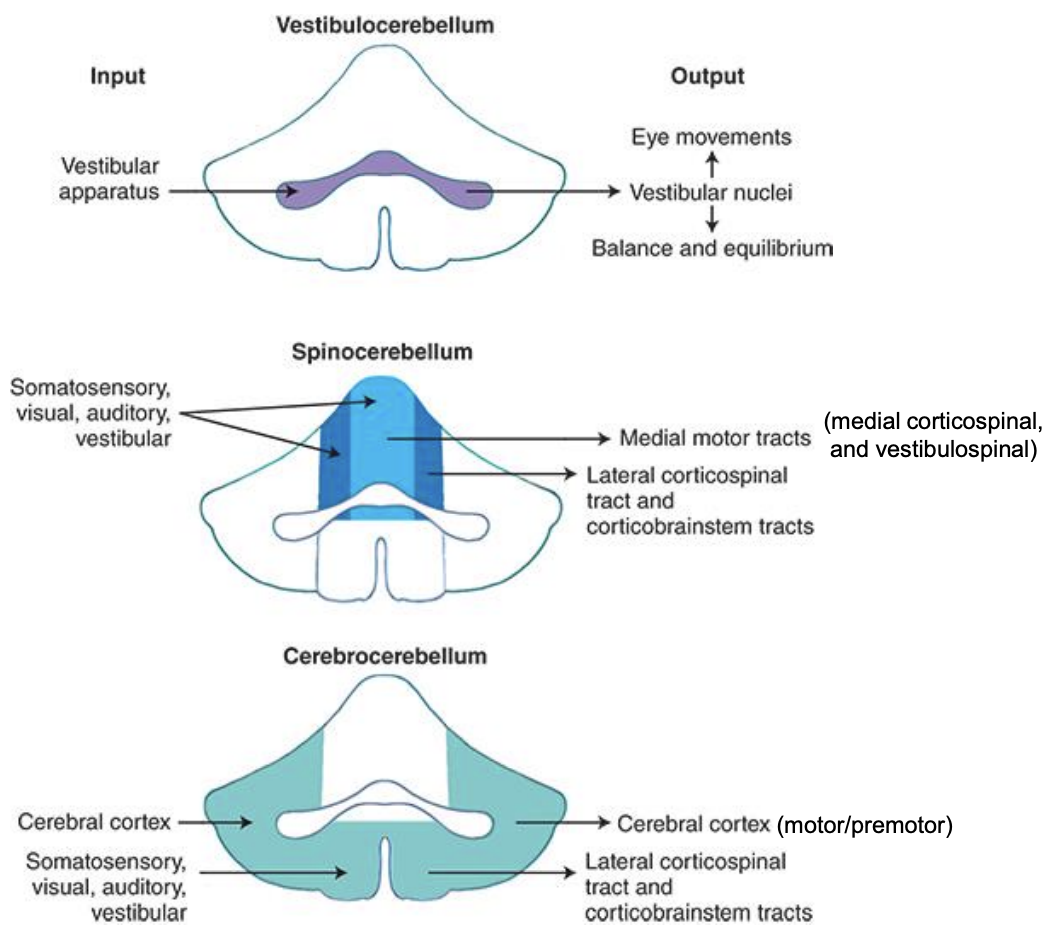
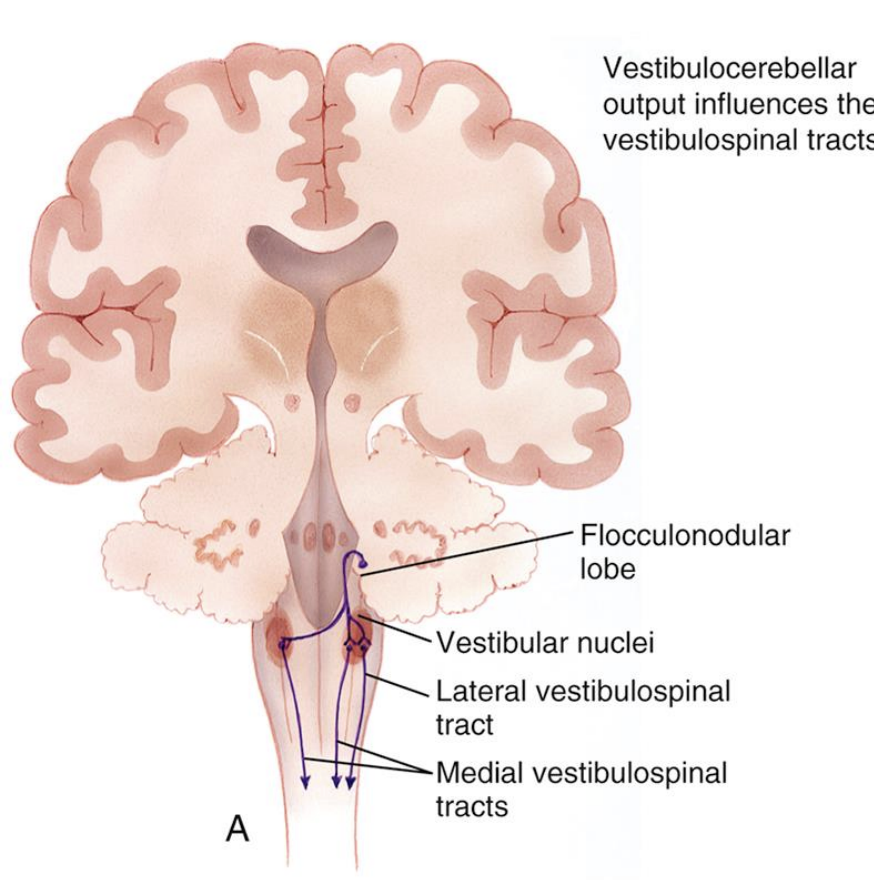
Vestibulocerebellum output
axial muscles control & vestibular reflexes
from flocculonodular lobe to vestibular nuclei then vestibulospinal
Not shown: tracts that transmit signals for eyes and head movements
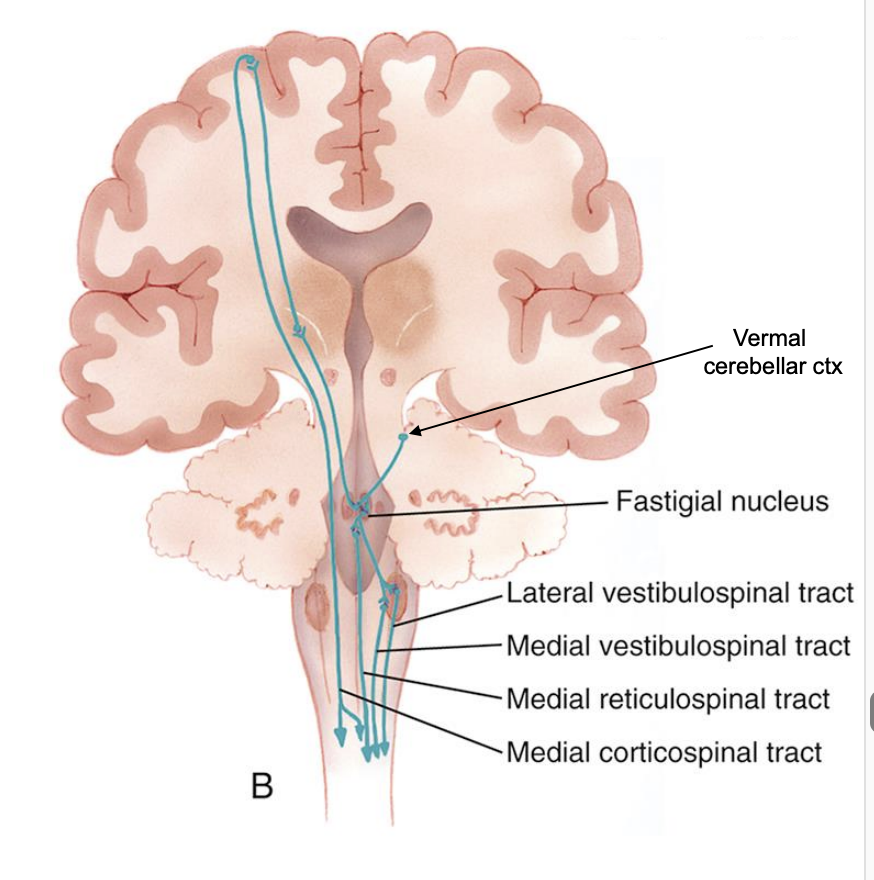
Spinocerebellum output: medial and lateral activating systems
Fastigial nucleus (M):
axial & proximal muscles control via:
vestibulospinal tracts
reticulospinal tract (pons)
thalamus (thalamocortical tract; medial corticospinal)
interposed nucleus (L):
control of gross limb movements via:
rubrospinal and lateral corticospinal
Cereberocerebellum output: Lateral activating system
planning of movements
initiation of coordination of movements
timing of movements
precise distal motor control (fractionation)
ongoing execution of movements