human anatomy exam 4
 Call Kai
 Learn
Learn Practice Test
 Spaced Repetition
 Match
Match Flashcards
 Knowt Play
1/256

There's no tags or description
Looks like no tags are added yet.
Name | Mastery | Learn | Test | Matching | Spaced | Call with Kai |
|---|
No analytics yet
Send a link to your students to track their progress
257 Terms
sensation
conscious awareness of the stimuli
transduction
converting stimuli to impulses
perception
brain assigning meaning
sensory receptors
sensory nerve endings that respond to stimuli
(general & special senses)
general senses
temperature, pain, touch, pressure, vibration, proprioception
special senses
gustation, olfaction, vision, equilibrium, and hearing
chemoreceptors
detect specific molecules dissolved in fluid
ex: taste & smell
thermoreceptors
detect changes in temperature
photoreceptors
detect changes in intensity, color, and position of light
mechanoreceptors
detect touch, pressure, vibration, and stretch
baroreceptors: detect pressure changes within body structures
nociceptors
detect painful stimuli
phantom pain
sensation associated with a part of the body that has been removed
ex: amputee
referred pain
pain that is felt in a location other than where the pain originates
gustation
sense of taste
gustatory cells
sensory receptors within a taste bud; detect tastants (molecules & ions) in food
**chemoreceptors
papillae
taste buds, bumps on tongue
5 taste sensations
sweet, sour, salty, bitter, umami
olfaction
sense of smell
odorants
dissolved in mucus of nasal cavity and detected
olfactory epithelium
lines superior nasal cavity
scent pathway?
olfactory receptors --> olfactory nerve --> olfactory bulb --> olfactory tract --> temporal lobe
taste pathway?
chemoreceptors (taste buds) --> facial nerve/glossopharyngeal nerve --> insula (gustatory cells
structure of taste buds
Gustatory cells are the receptors
- Have gustatory hairs (long microvilli)
- Hairs are stimulated by chemicals dissolved in saliva
extrinsic muscles of eye
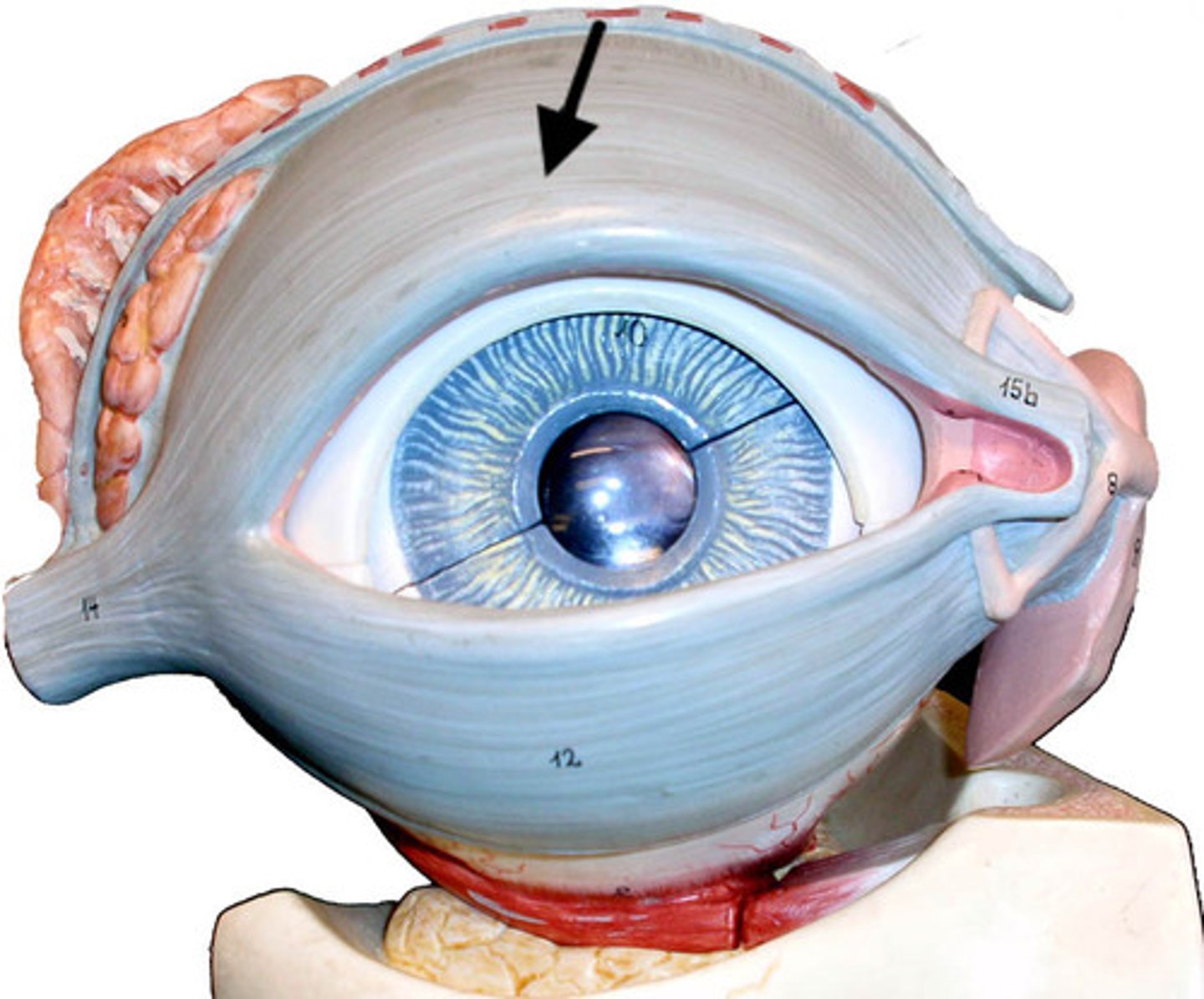
Movement of each eye is controlled by 6 extrinsic eye muscles, skeletal muscle, attach to sclera and controlled by cranial nerves III, IV and VI. (oculomotor, trochlear, abducens)
eyelids
protect eyes
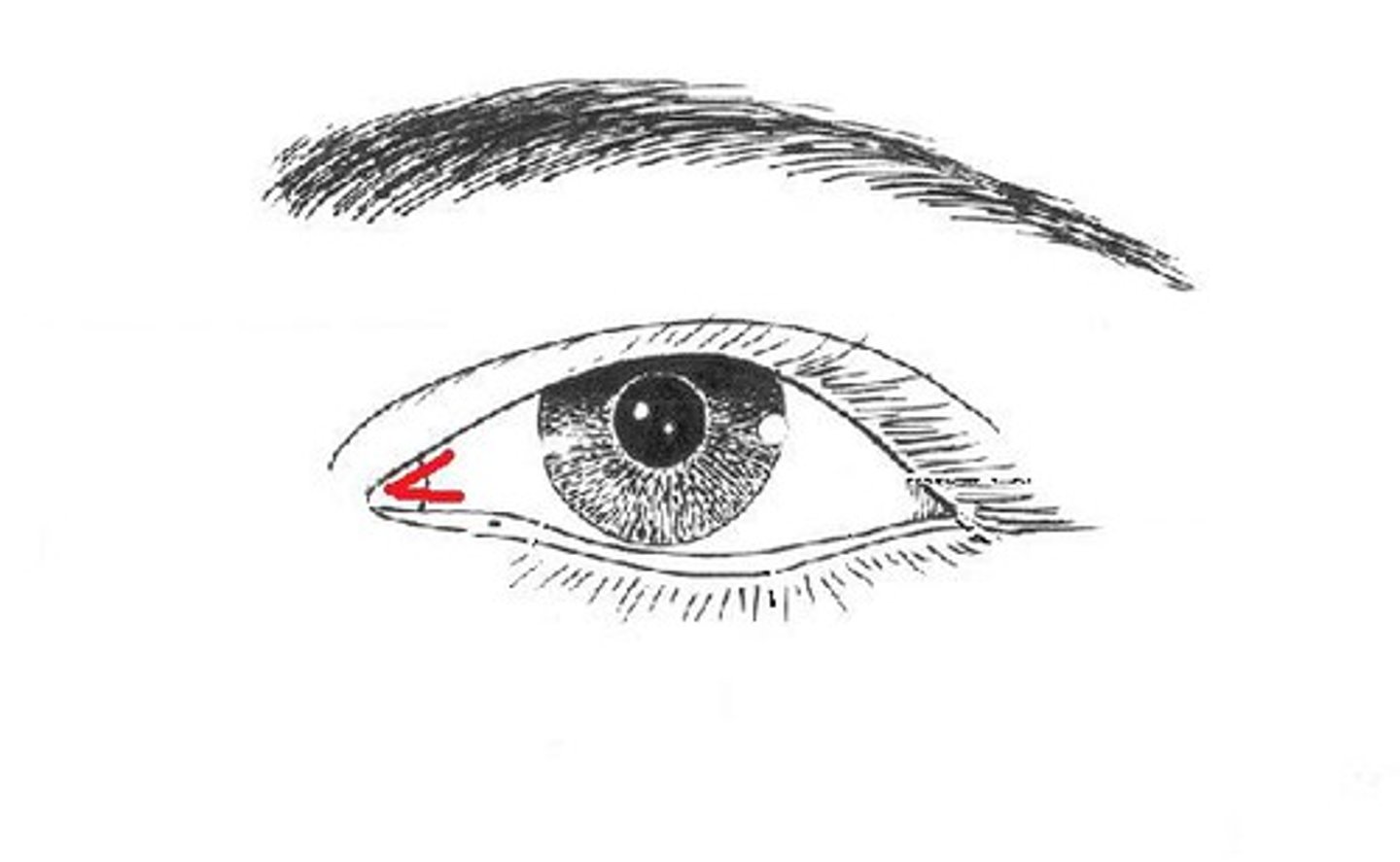
medial canthus
inner corner of eye
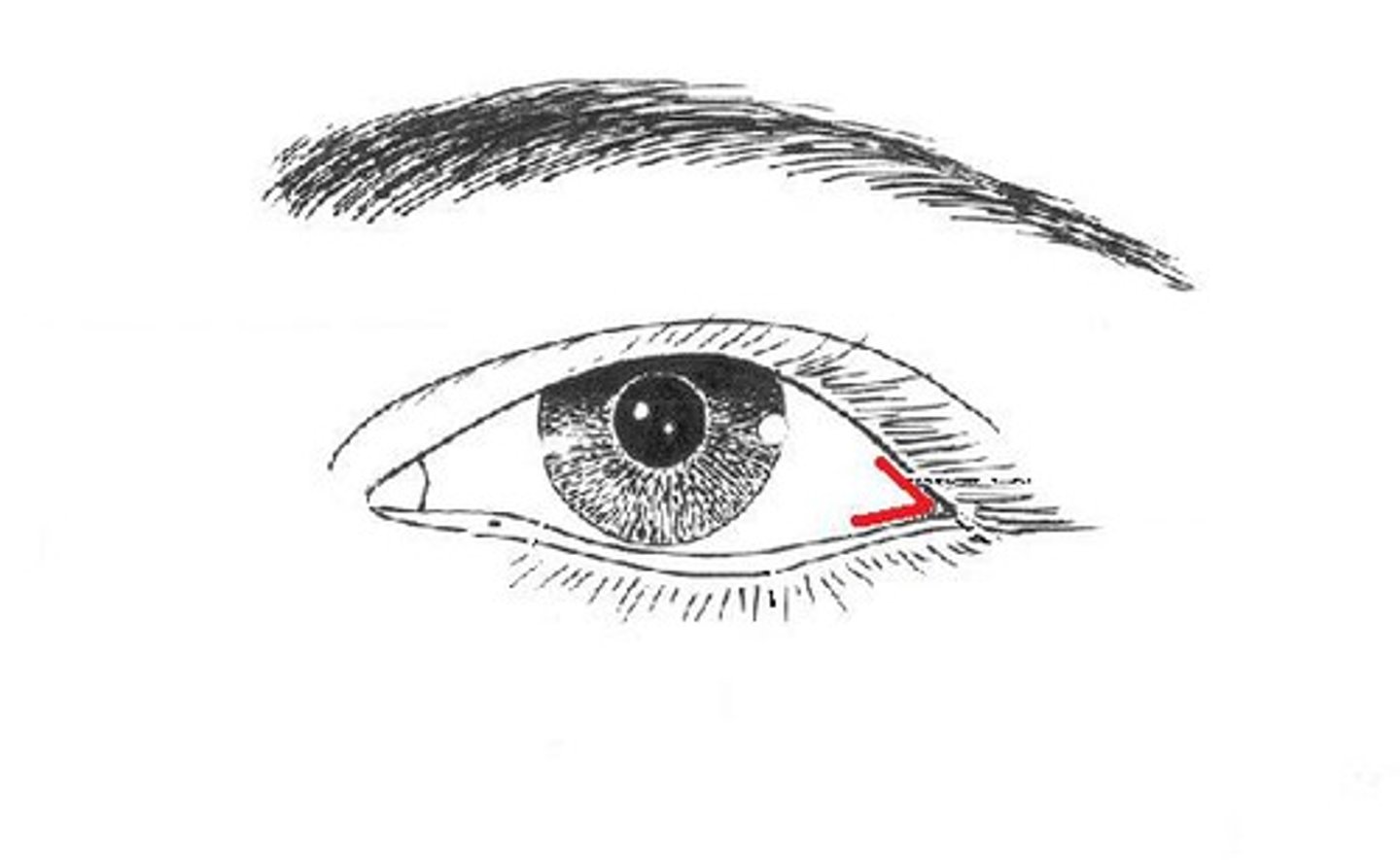
lateral canthus
outer corner of eye
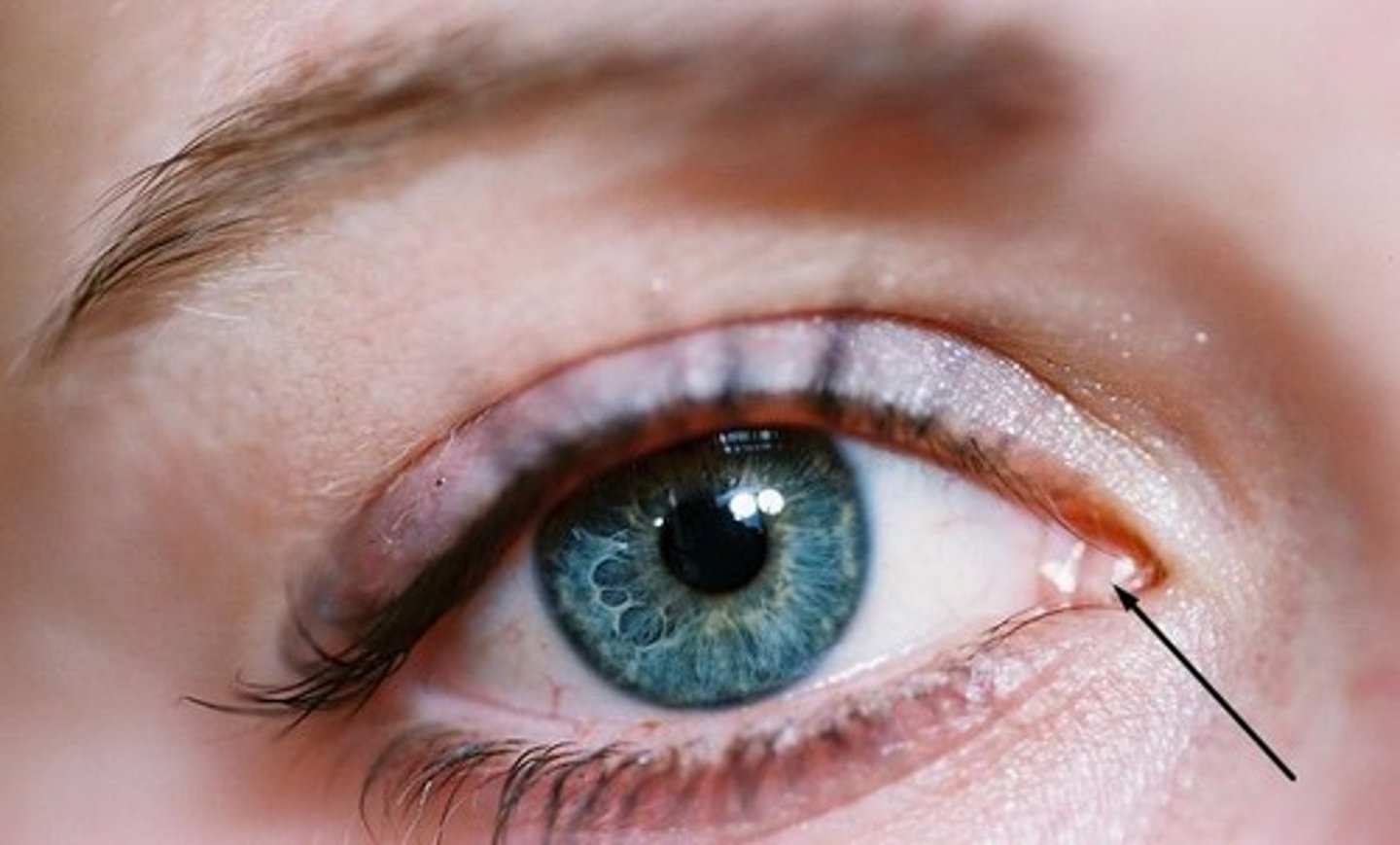
lacrimal caruncle
fleshy elevation at the medial commissure; produces a whitish oily secretion
conjunctiva
lining of the eyelids and over the anterior surface of eye
does not cover cornea
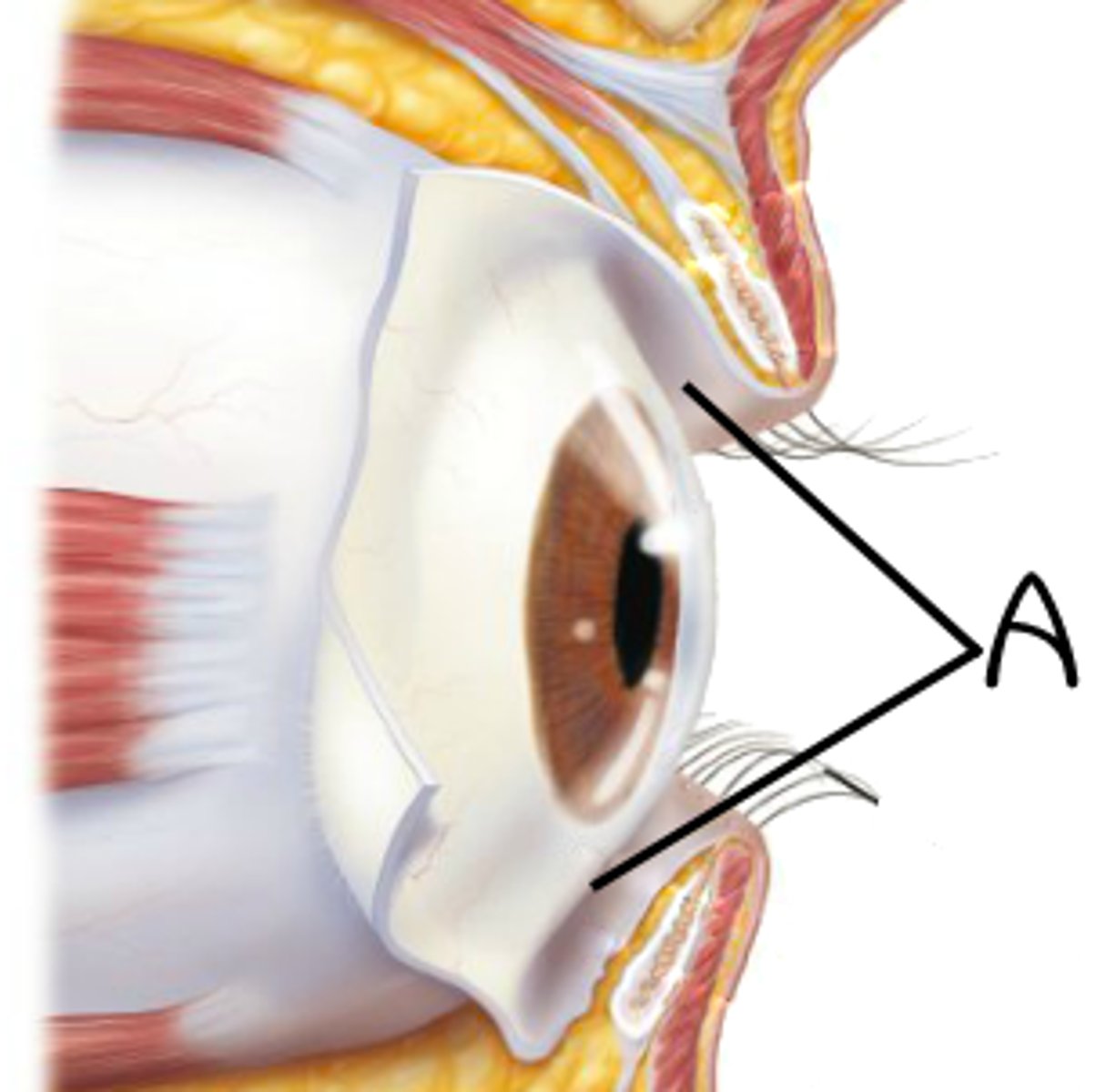
pink eye
inflammation of the conjunctiva
lacrimal apparatus
the structures that produce, store, and remove tears
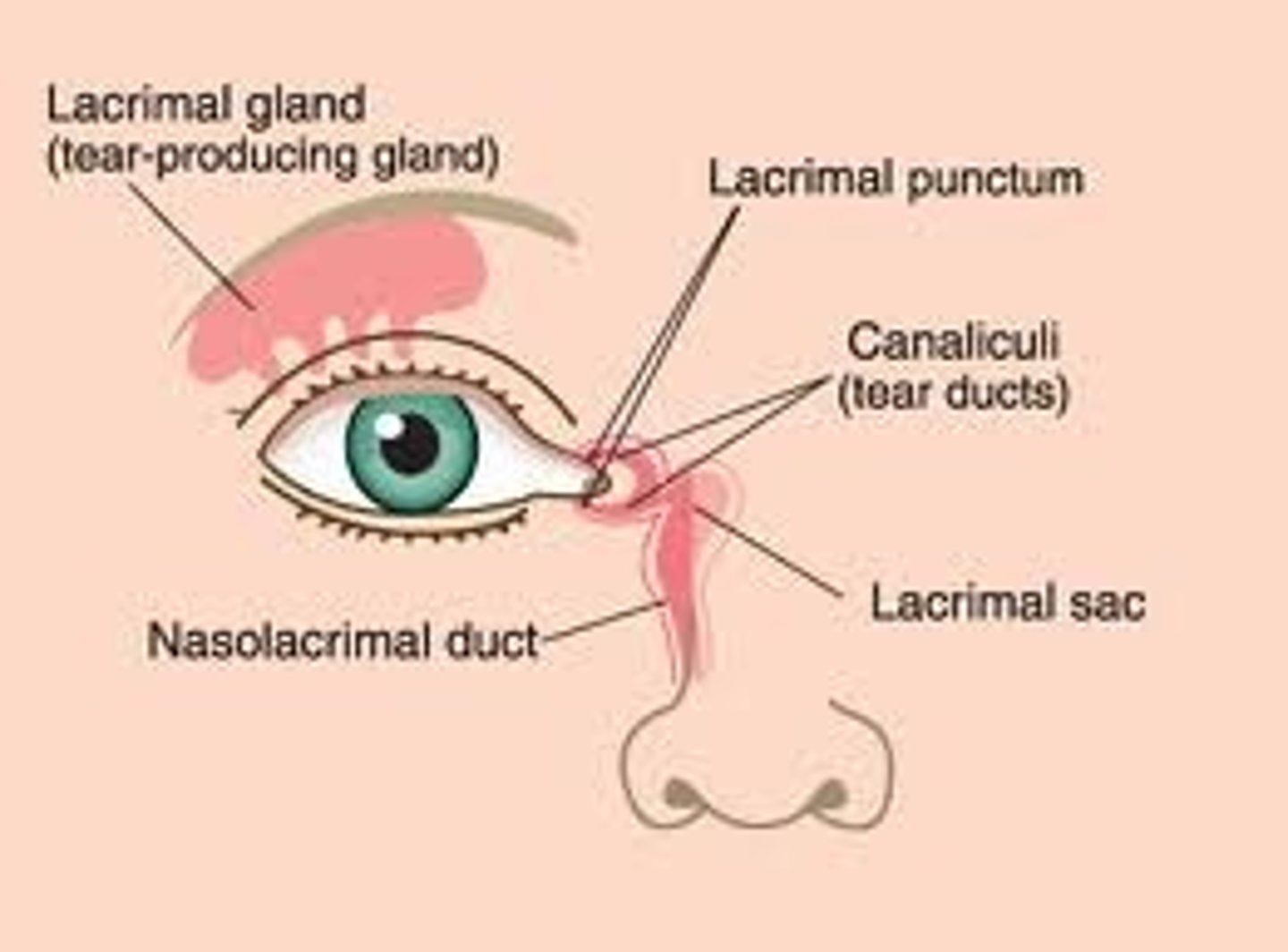
lacrimal fluid
tears
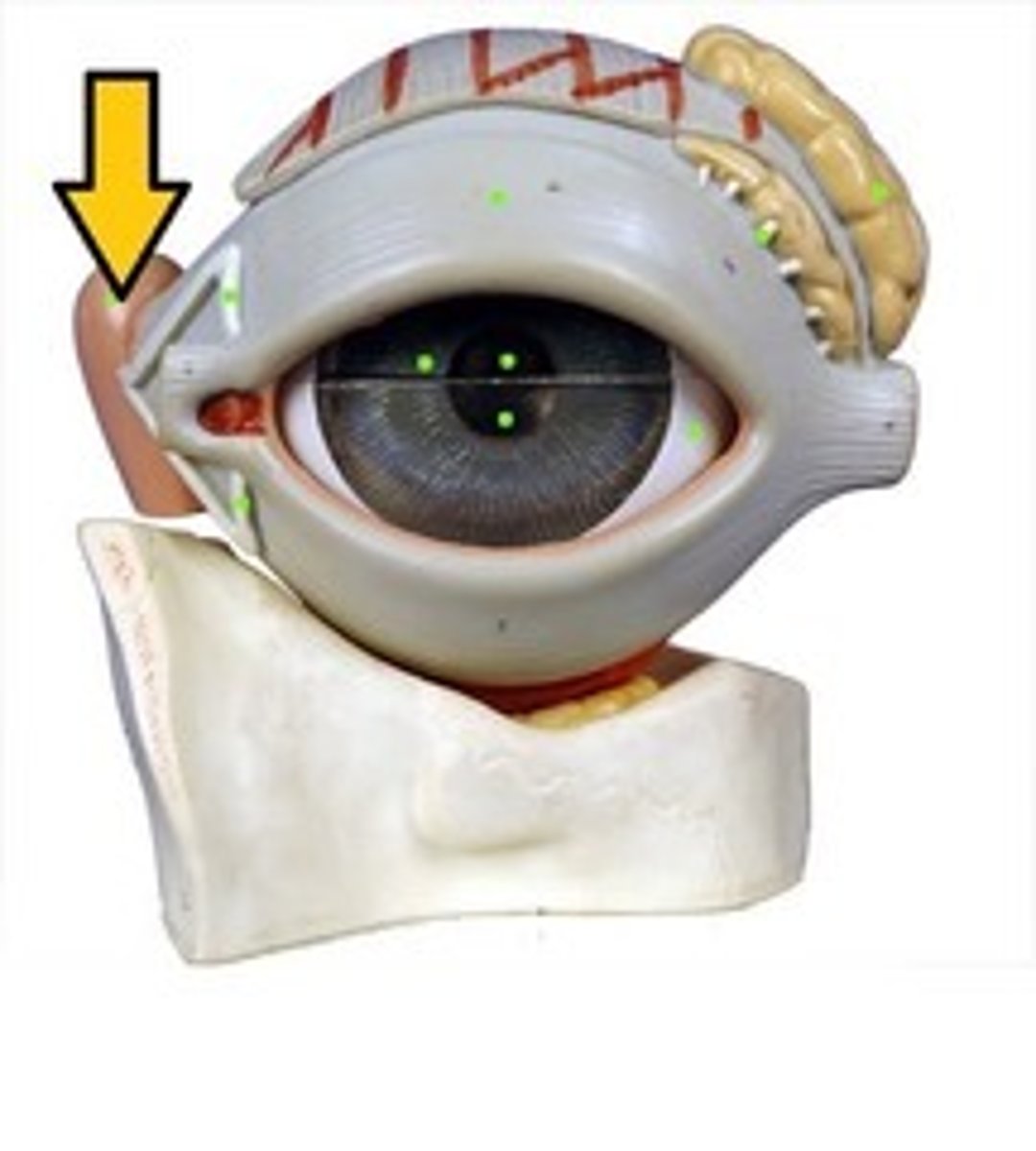
lacrimal gland
gland located in the upper outer region above the eyeball that secretes tears & spreads tears to eyes
lacrimal canaliculi
drain lacrimal fluid from eyes medially
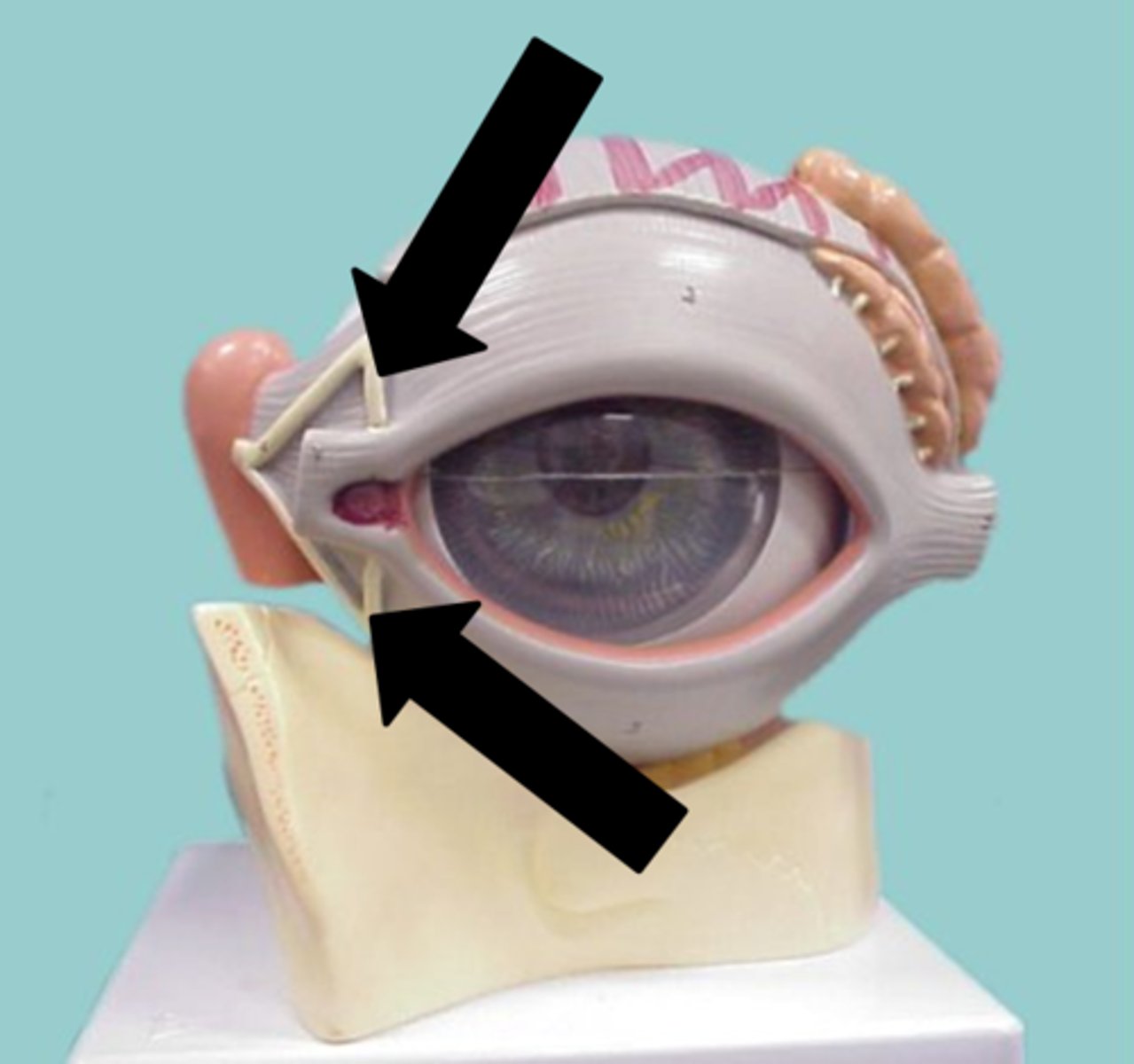
lacrimal sac
structure that collects tears before emptying into the nasolacrimal duct
nasolacrimal duct
passageway for tears from the lacrimal sac into the nose
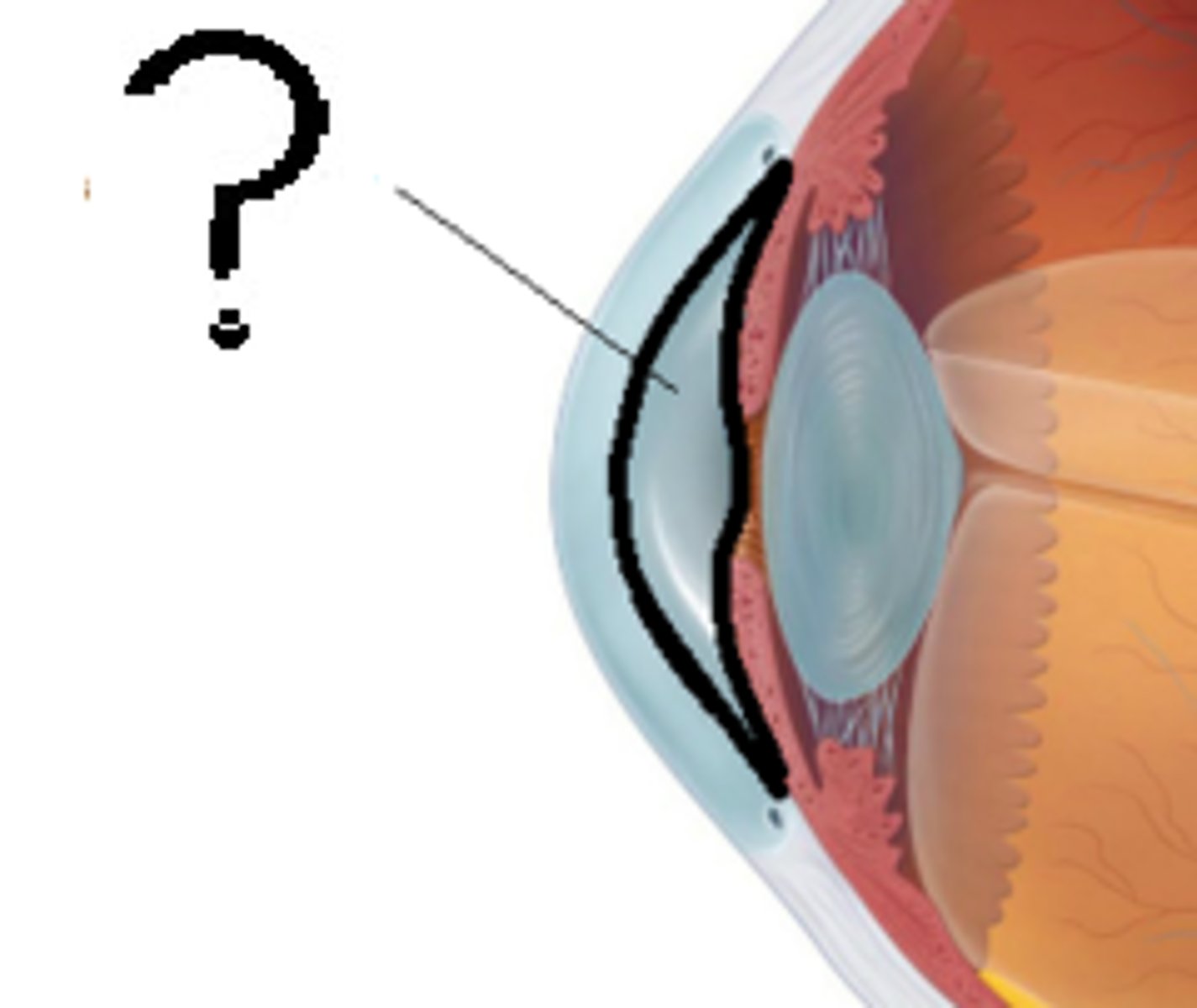
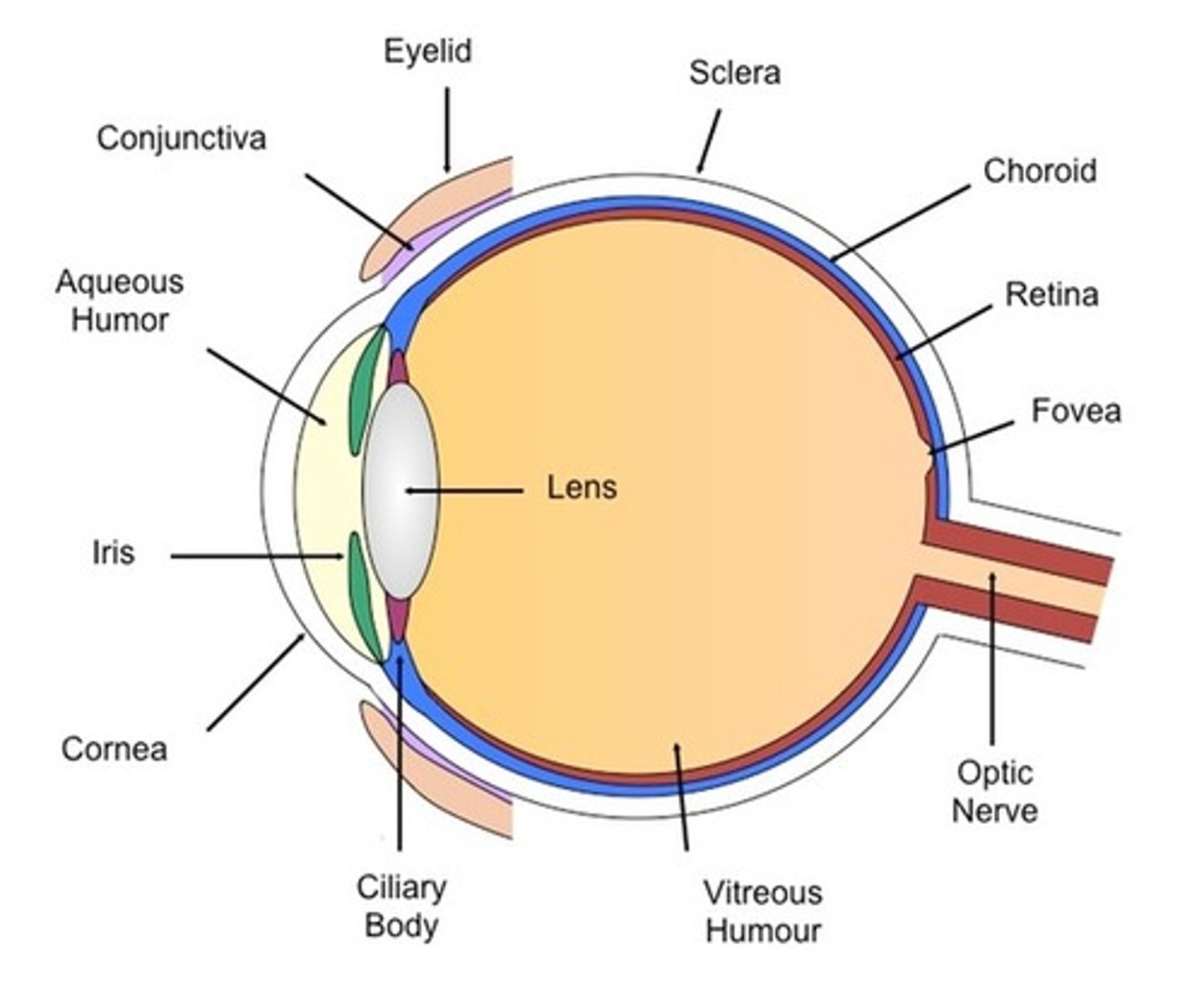
aqueous humor
fluid in the eye, found between the cornea and the lens
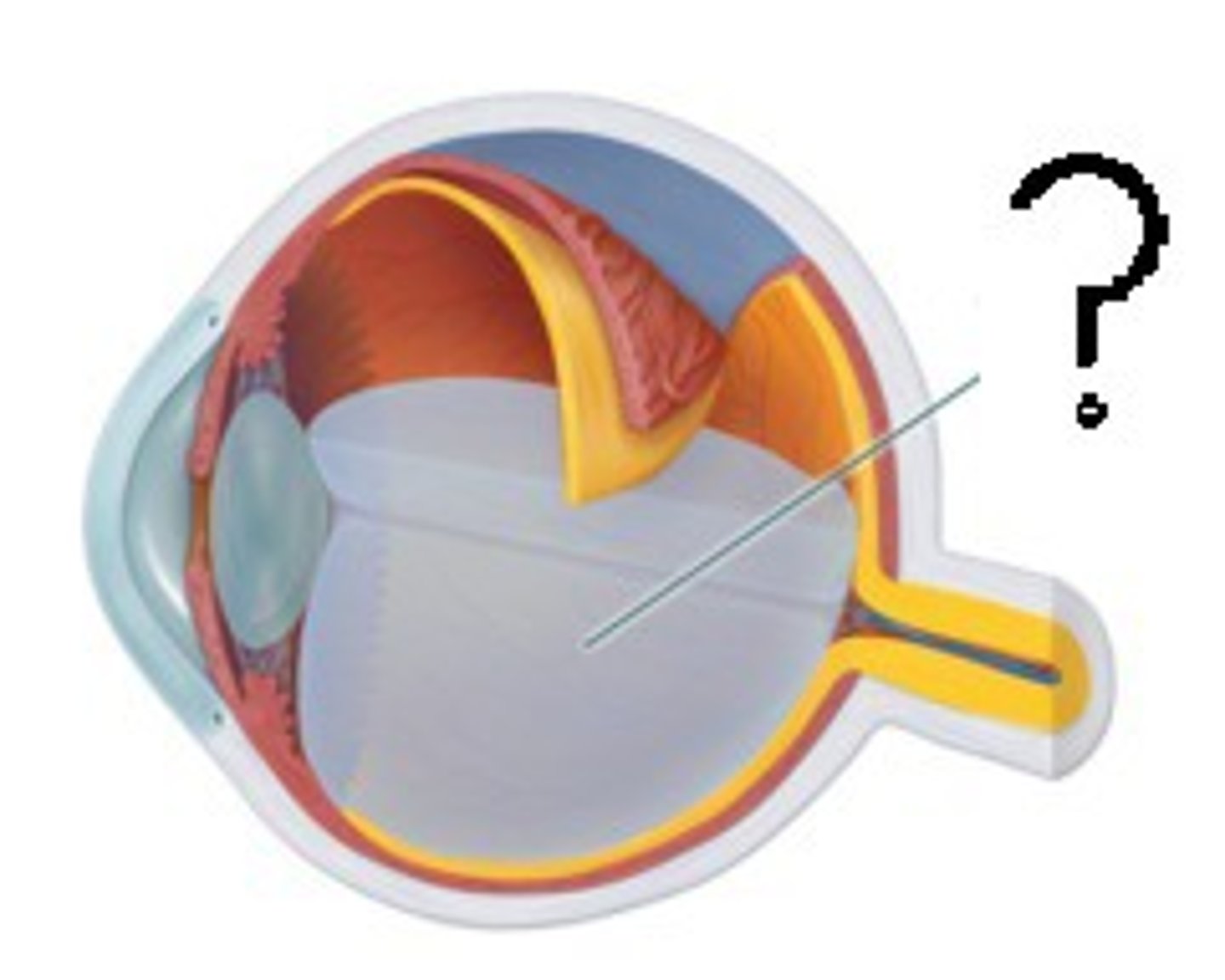
vitreous humor
jellylike substance found behind the lens in the posterior cavity of the eye that maintains its shape
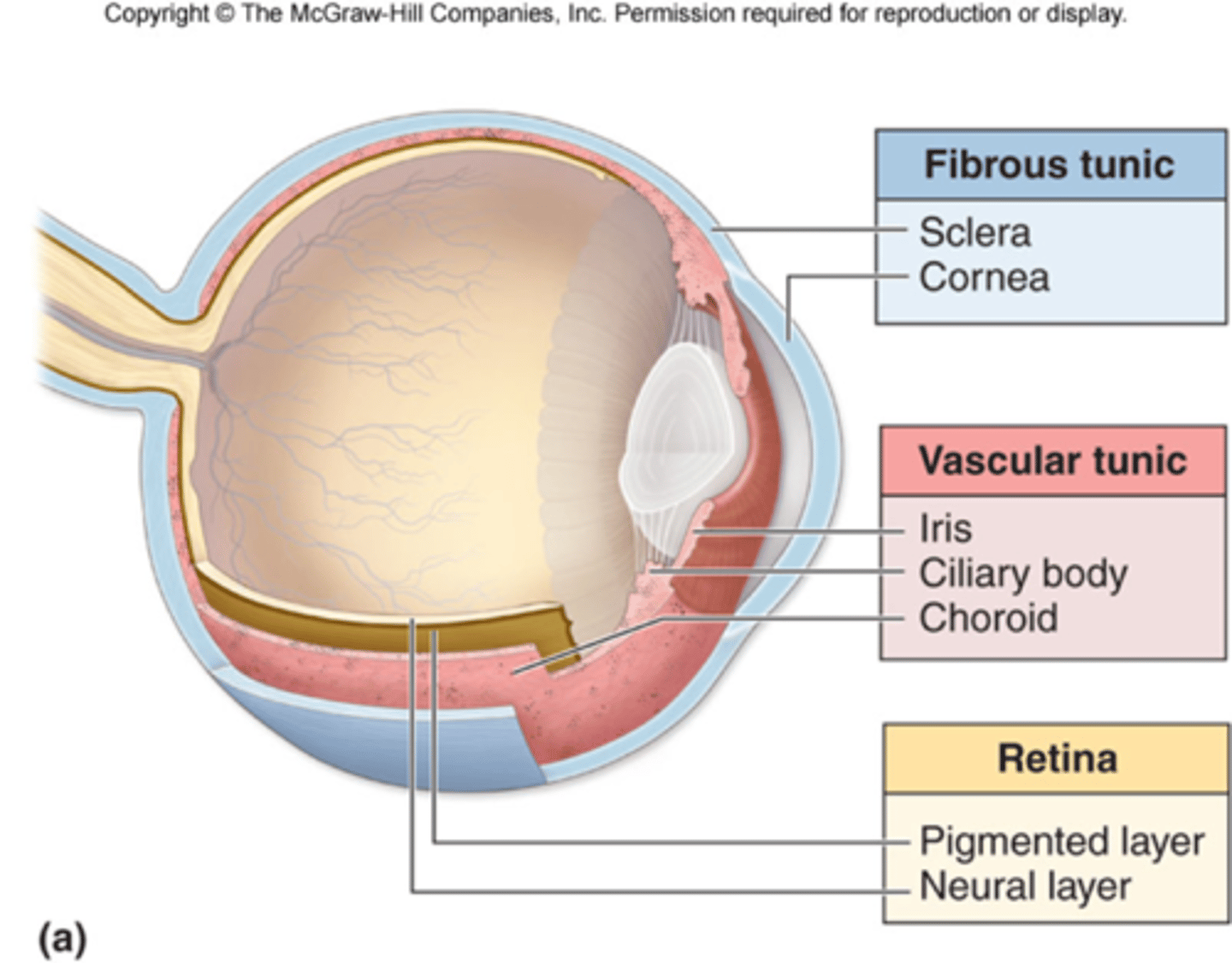
3 eye wall layers
fibrous tunic, vascular tunic, retina
glaucoma
increased pressure in eye; too much aqueous humor
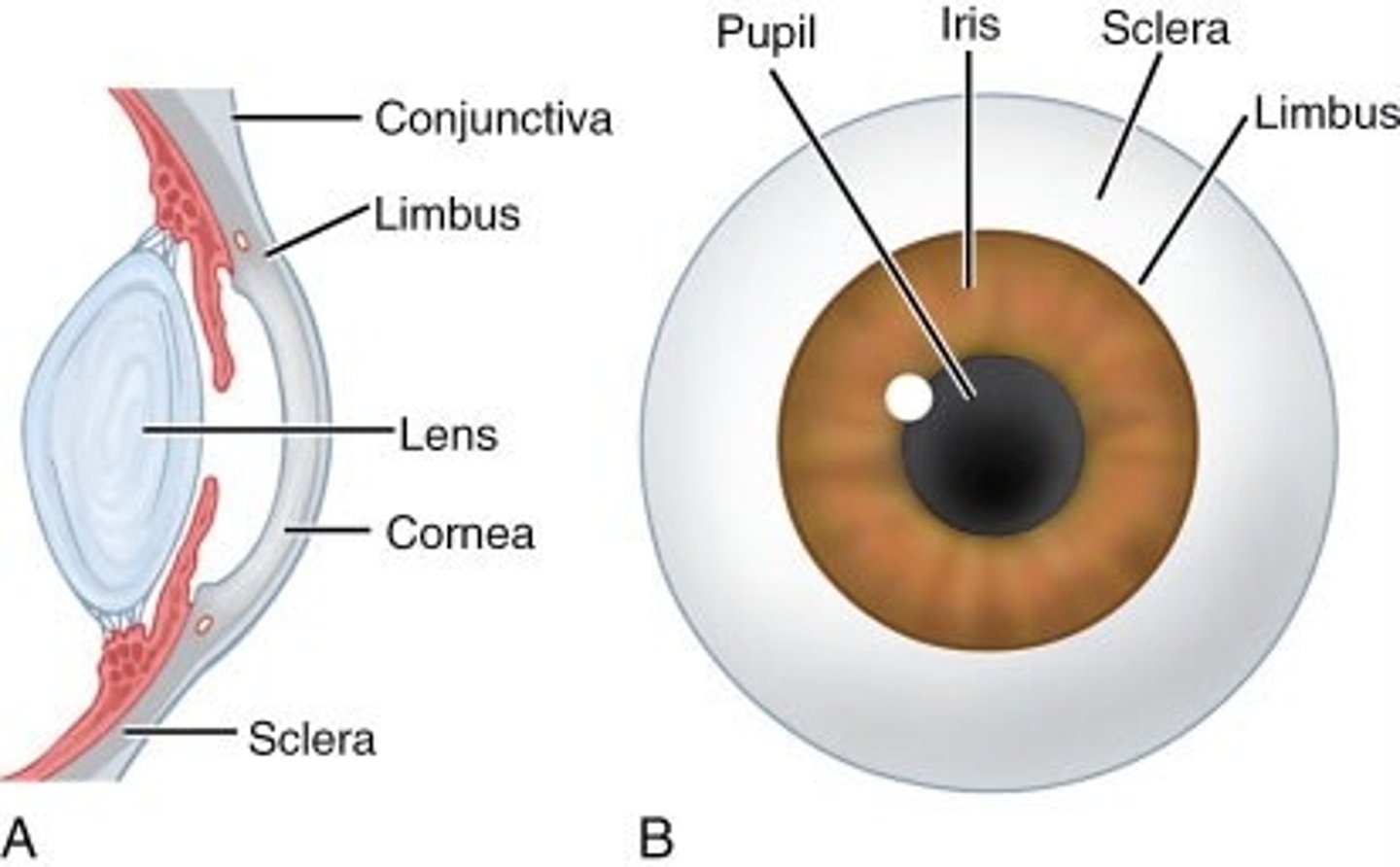
fibrous tunic in the eye is composed of:
sclera- white of the eye
cornea- clear, anterior portion most superficial
vascular tunic is composed of:
choroid- contains network of capillaries to retina
ciliary body- changes lens shape
iris- controls amount of light entering eye
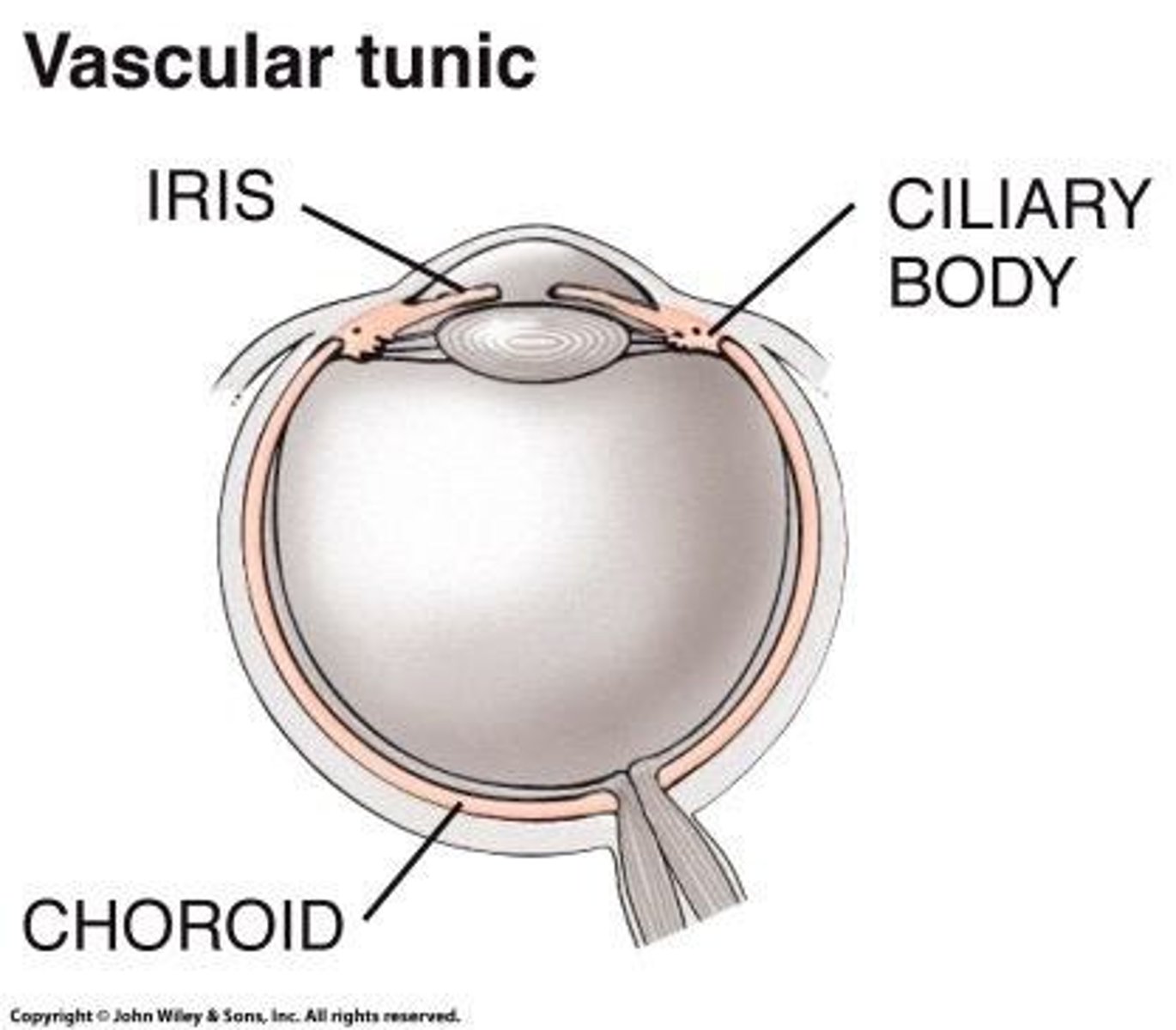
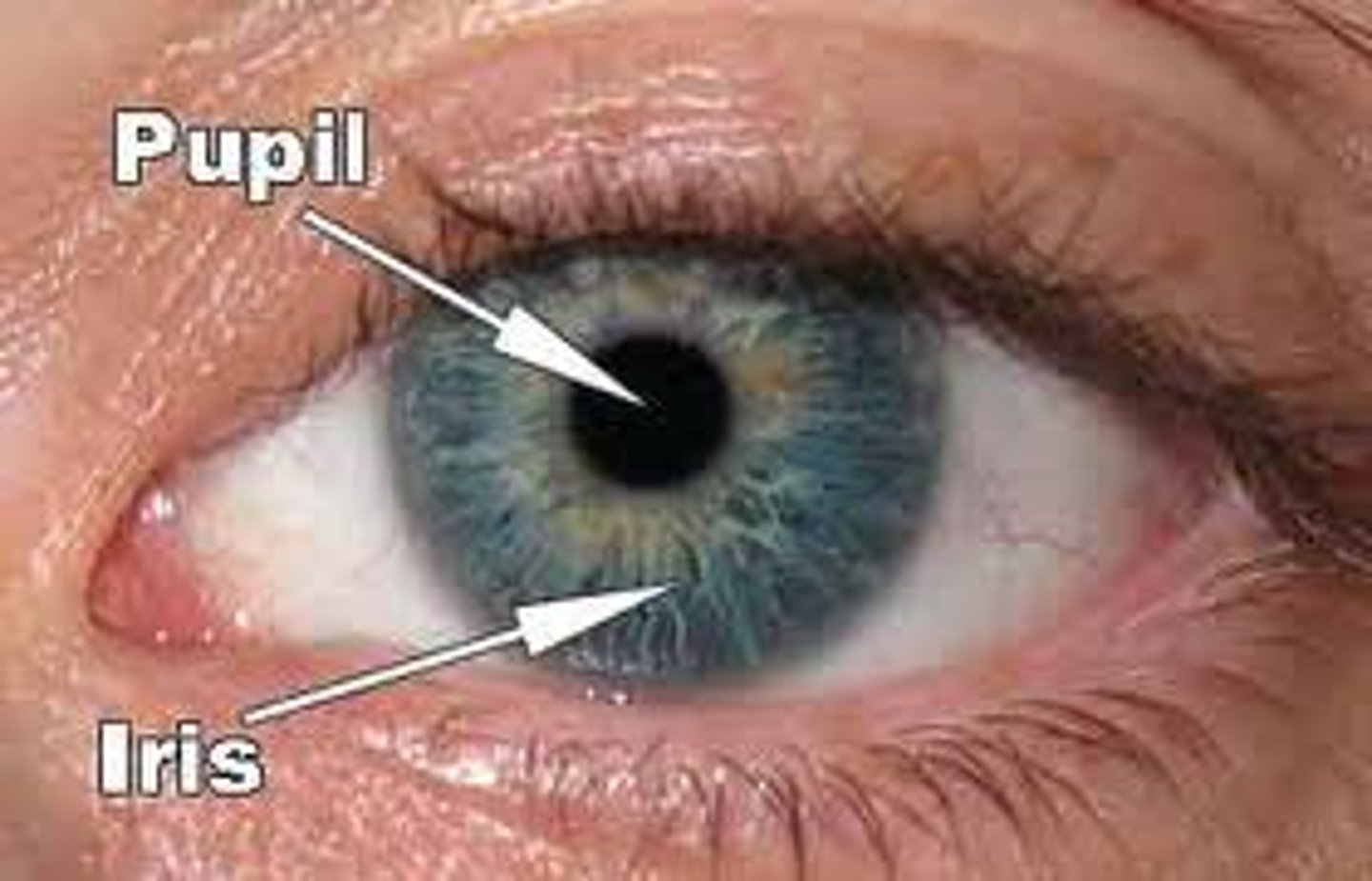
the iris
Colored part of the eye; contains schincter pupillae (makes pupil smaller) & dilator pupillae (makes pupil bigger)
retina
Light sensitive layer of the eye; contains rods and cones
converts energy into nerve impulses
3 layers of the neural layer
photoreceptor cell layer, bipolar cell layer, ganglion cell layer
_____
photoreceptor cell layer= outermost; rods & cones
bipolar cell layer= synapse w/ photoreceptors & ganglion cells
ganglion cells= innermost layer of retina; leave retina & form the optic nerve (CN II)
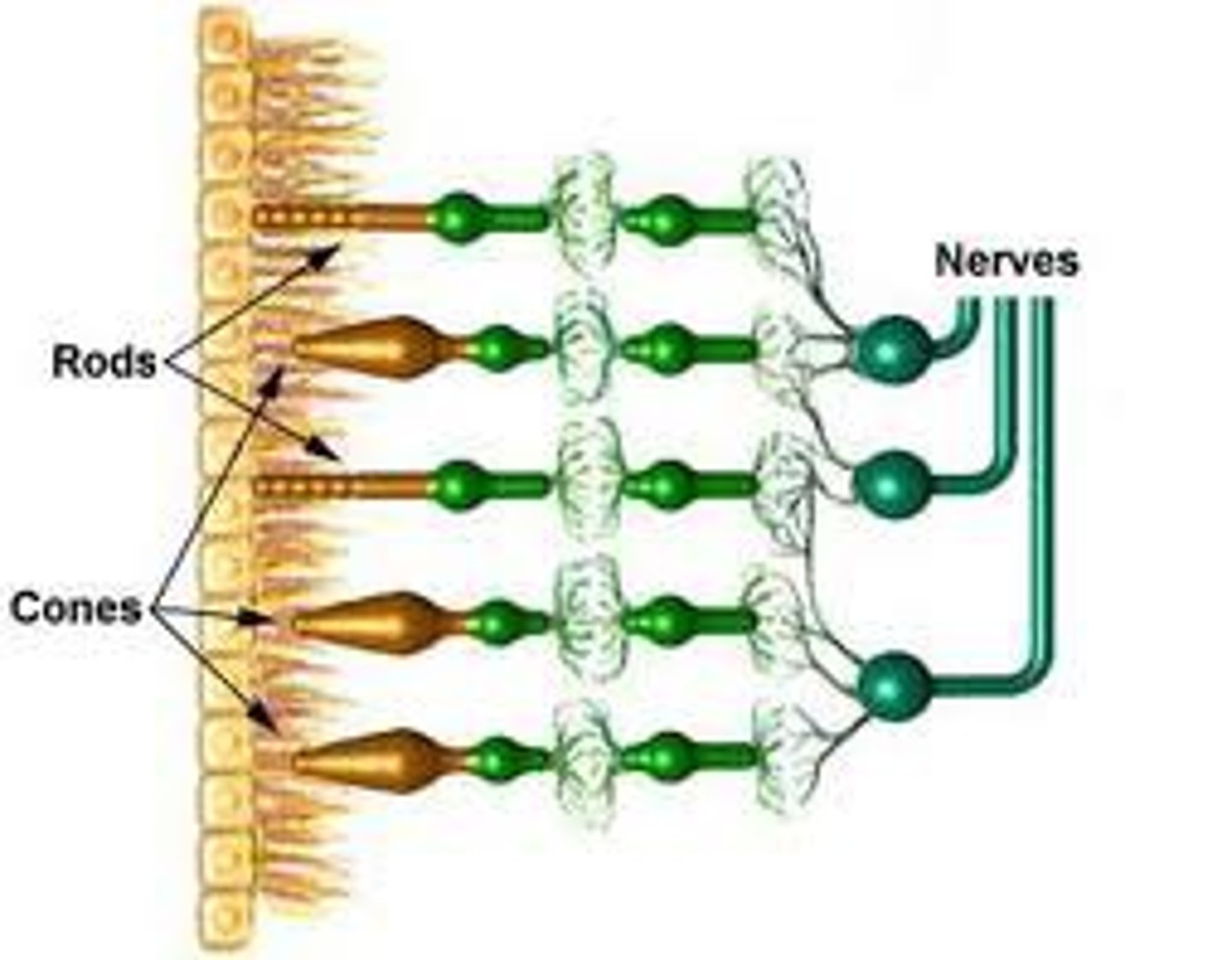
rods vs cones
rods - 120 million, on the periphery, sense dark and light only, have rhodopsin and a high recovery time
cones - 6 million, in the fovea, sense color, 3 kinds (RGB), trichromatic theory, less numerous, lower recovery time
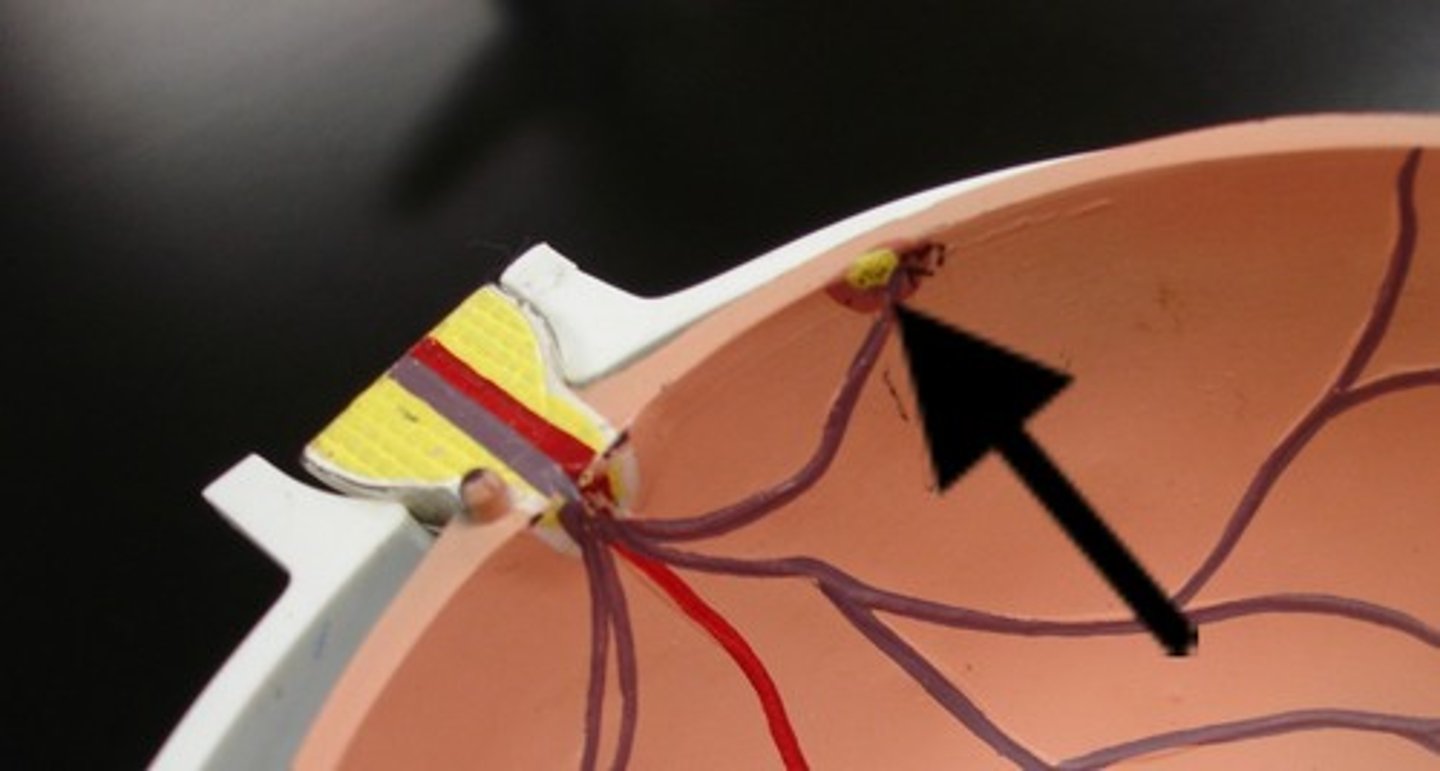
optic disc
blind spot on the retina lacking photoreceptors
fovea centralis
tiny pit or depression in the retina that is the region of clearest vision; highest proportion of cones, almost no rods
macula lutea
a yellowish central area of the retina that is rich in cones and that mediates clear detailed vision
optic nerve leaves back of eye; no photoreceptors here
lens
Focuses light onto retina
accommodation- ability of lens to change shape
accommodation
ability of lens to change shape to focus an image
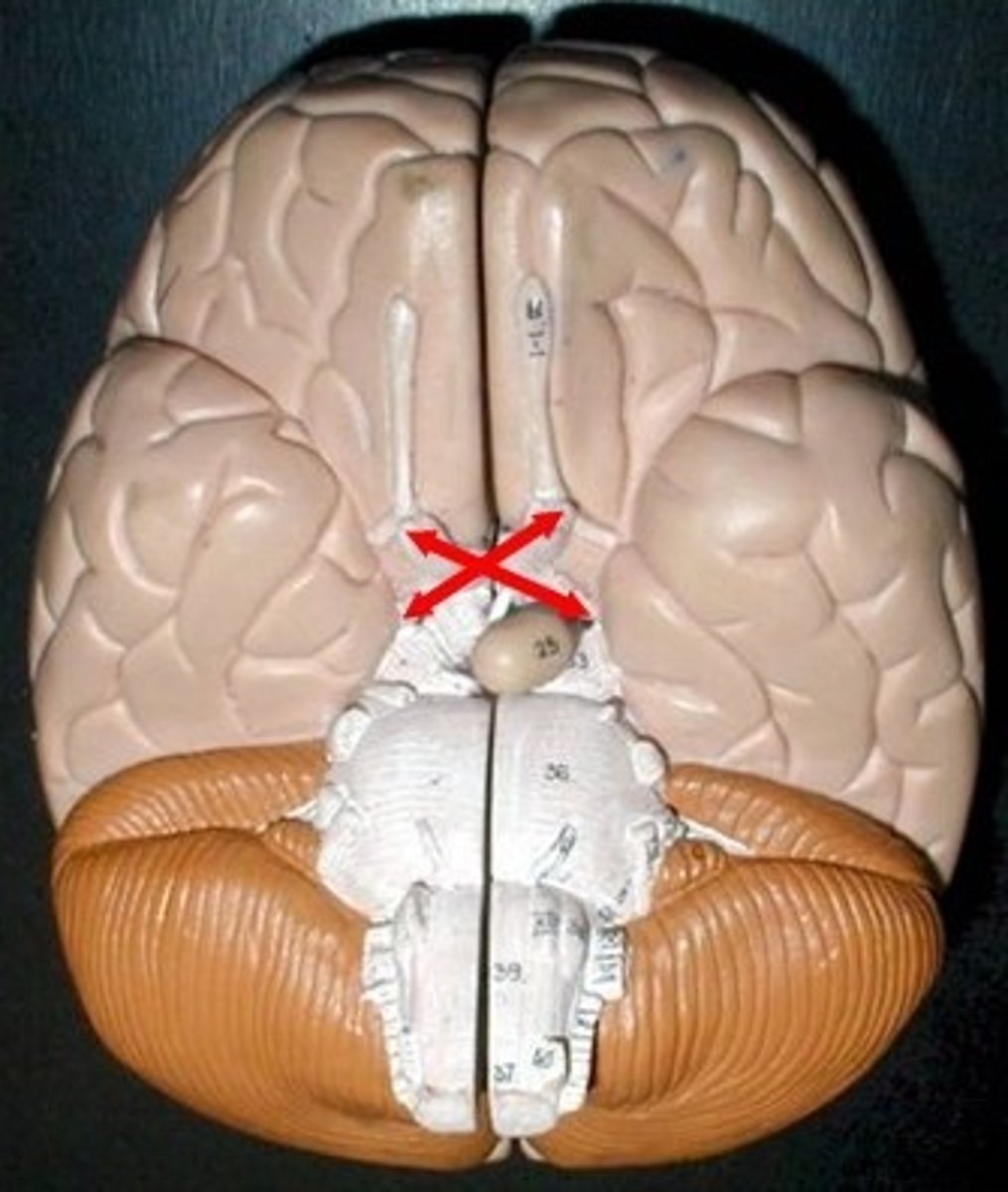
optic chiasm
point at which optic nerve fibers cross in the brain
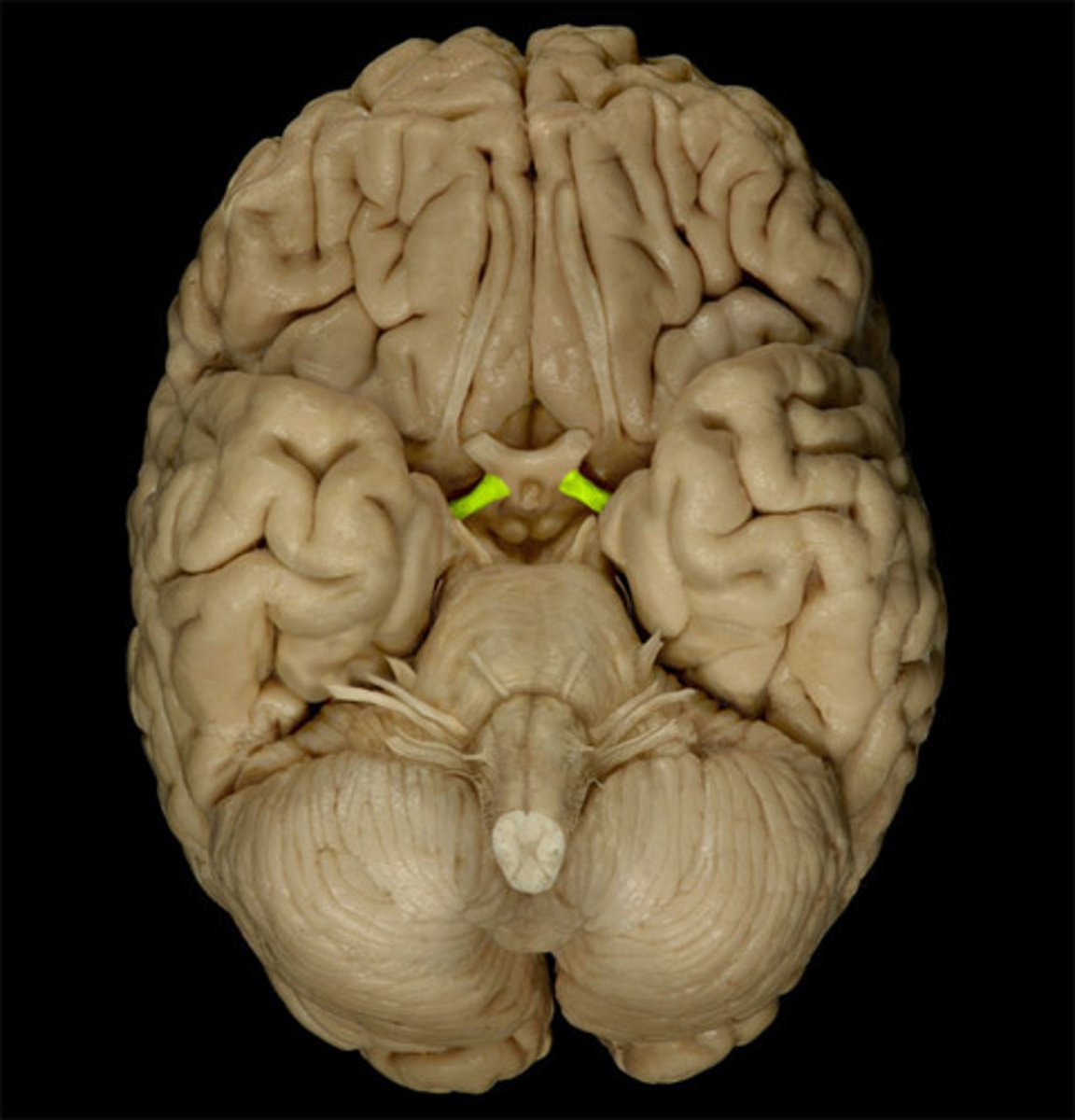
optic tracts
extend laterally, posteriorly from chiasm
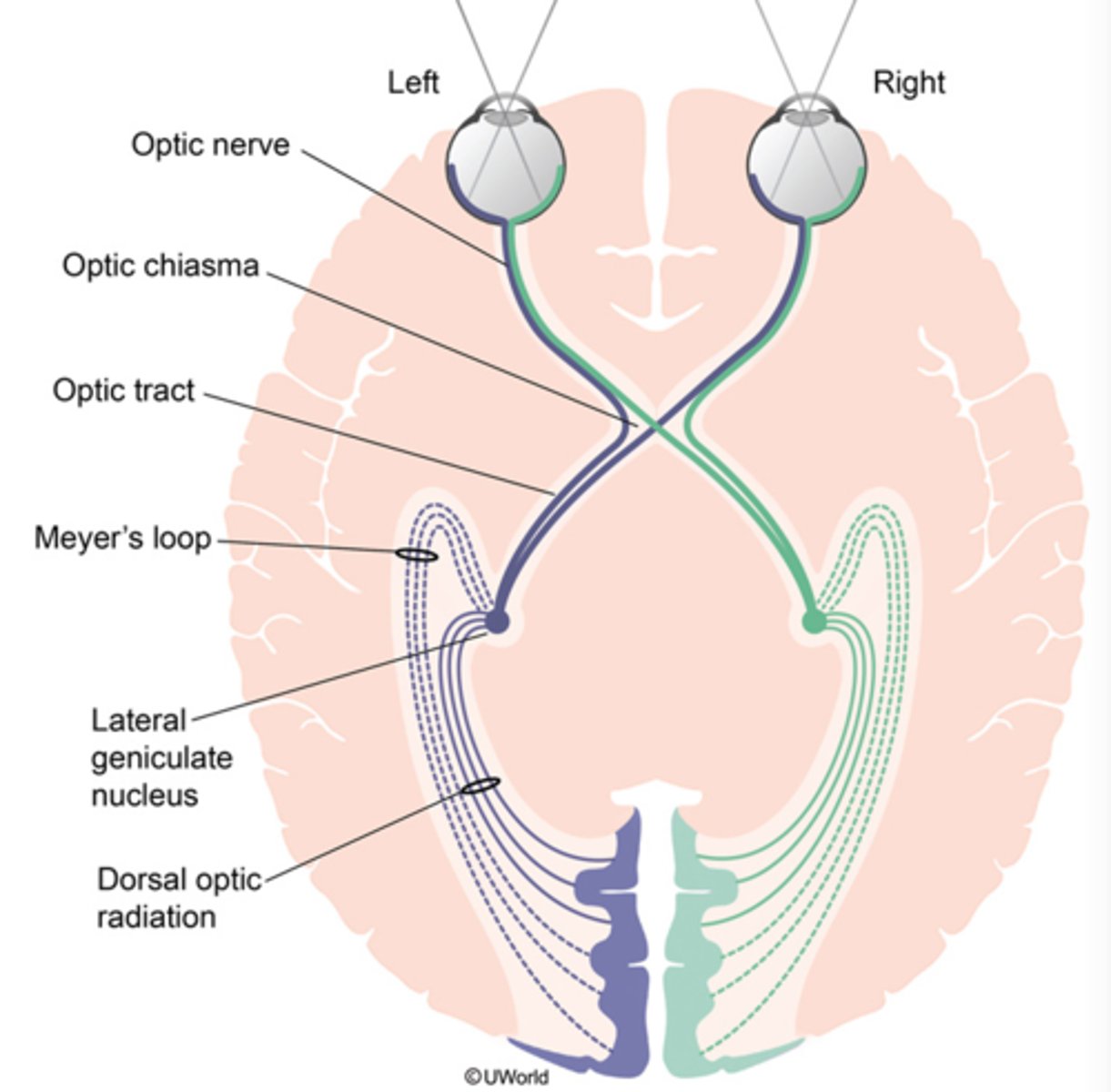
optic radiation
extends from thalamus to occipital lob
visual acuity
the ability to see fine detail
20/20 vision normal
20/<20 vision better than normal
20/>20 vision worse than normal
myopia
nearsightedness; eye too long, cant see objects far away
treatment= shaving eye
hyperopia
farsightedness; eye too short, cant see objects close
treatment= thicker lens
astigmatism
defective curvature of the cornea or lens of the eye; light scatters
treatment= lens
emmetropia
normal vision
presbyopia
age related farsightedness; loses ability to accommodate
cataracts
clouding of the lens
diabetic retinopathy
small unstable blood vessels develop inside the eye that ruptures and creates blind spots
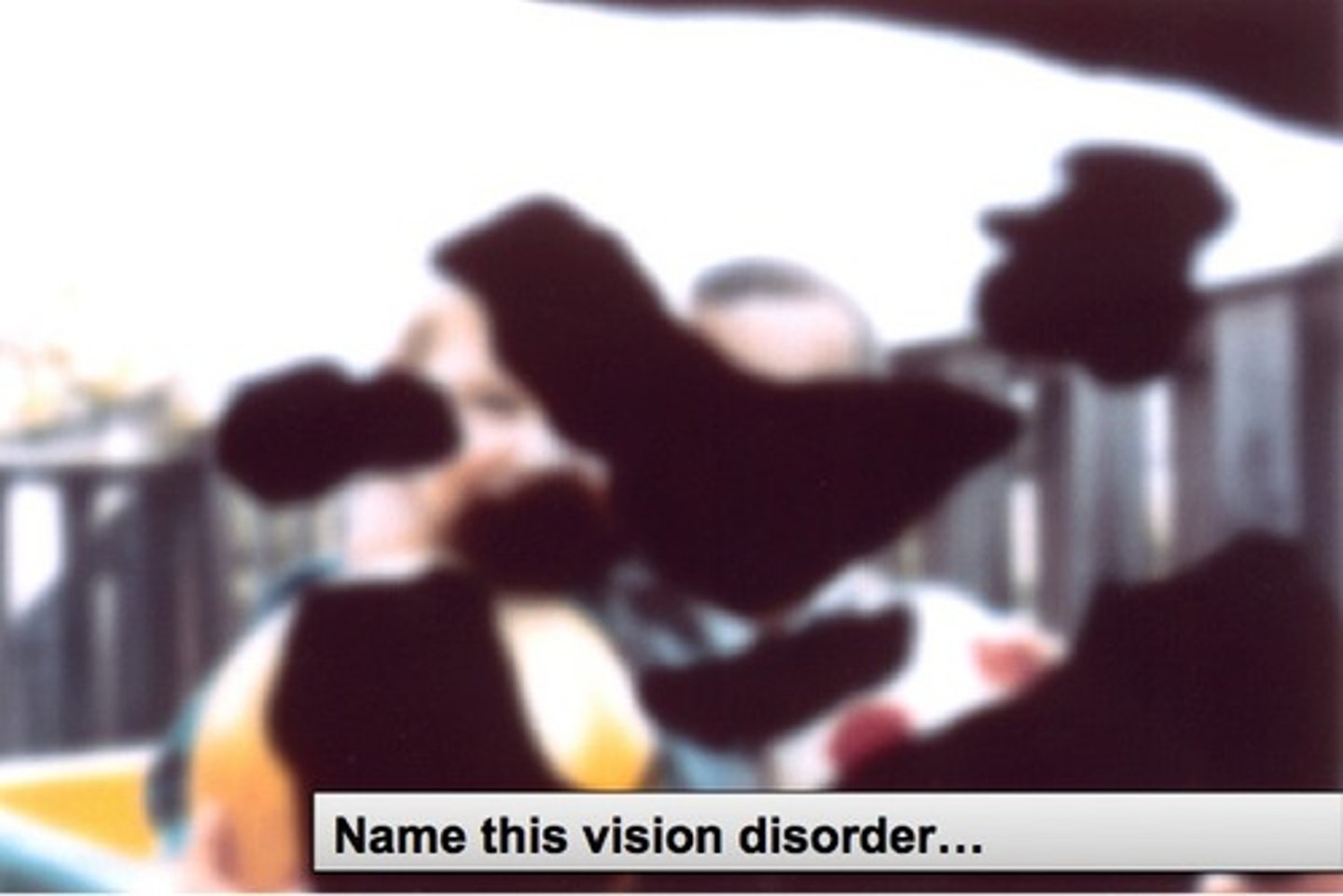
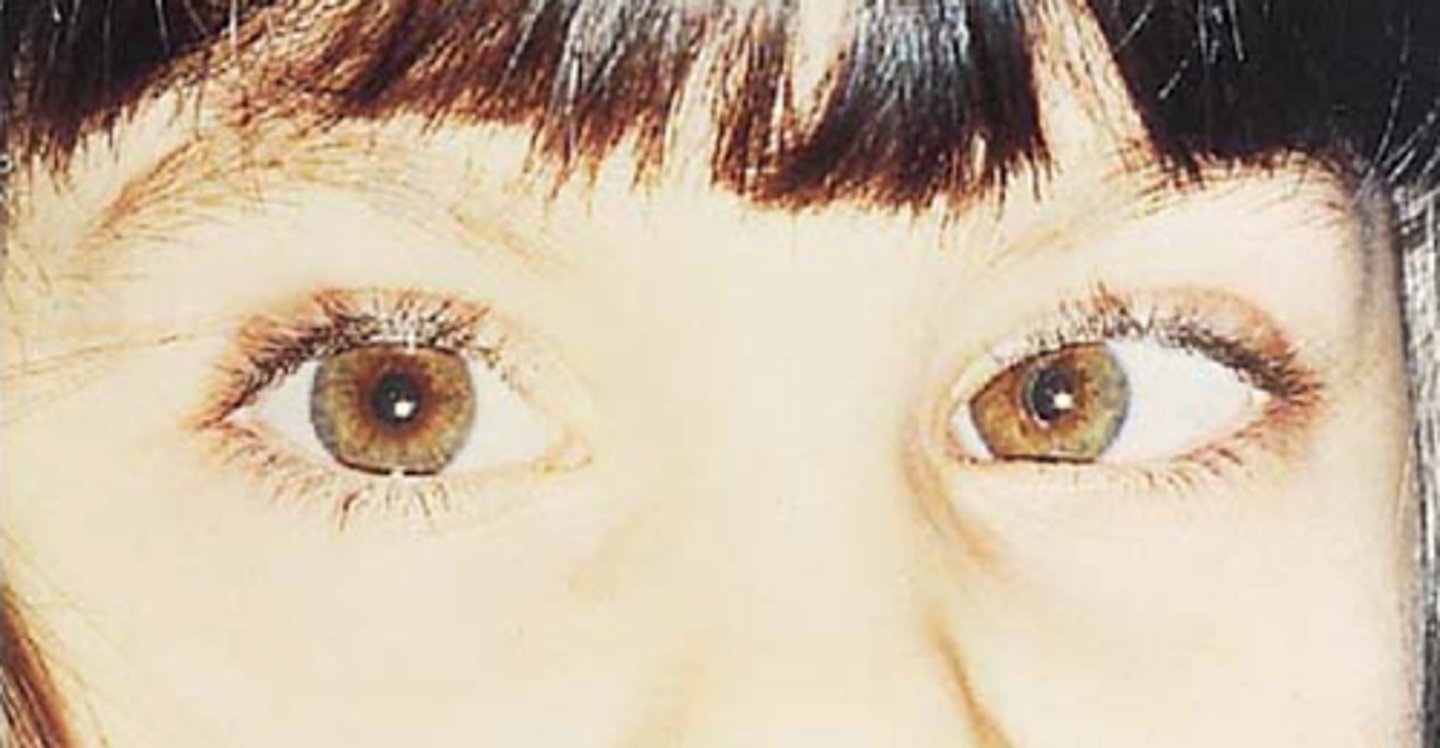
strabismus
misalignment of the eyes due to one set of extrinsic muscles being stronger than the other
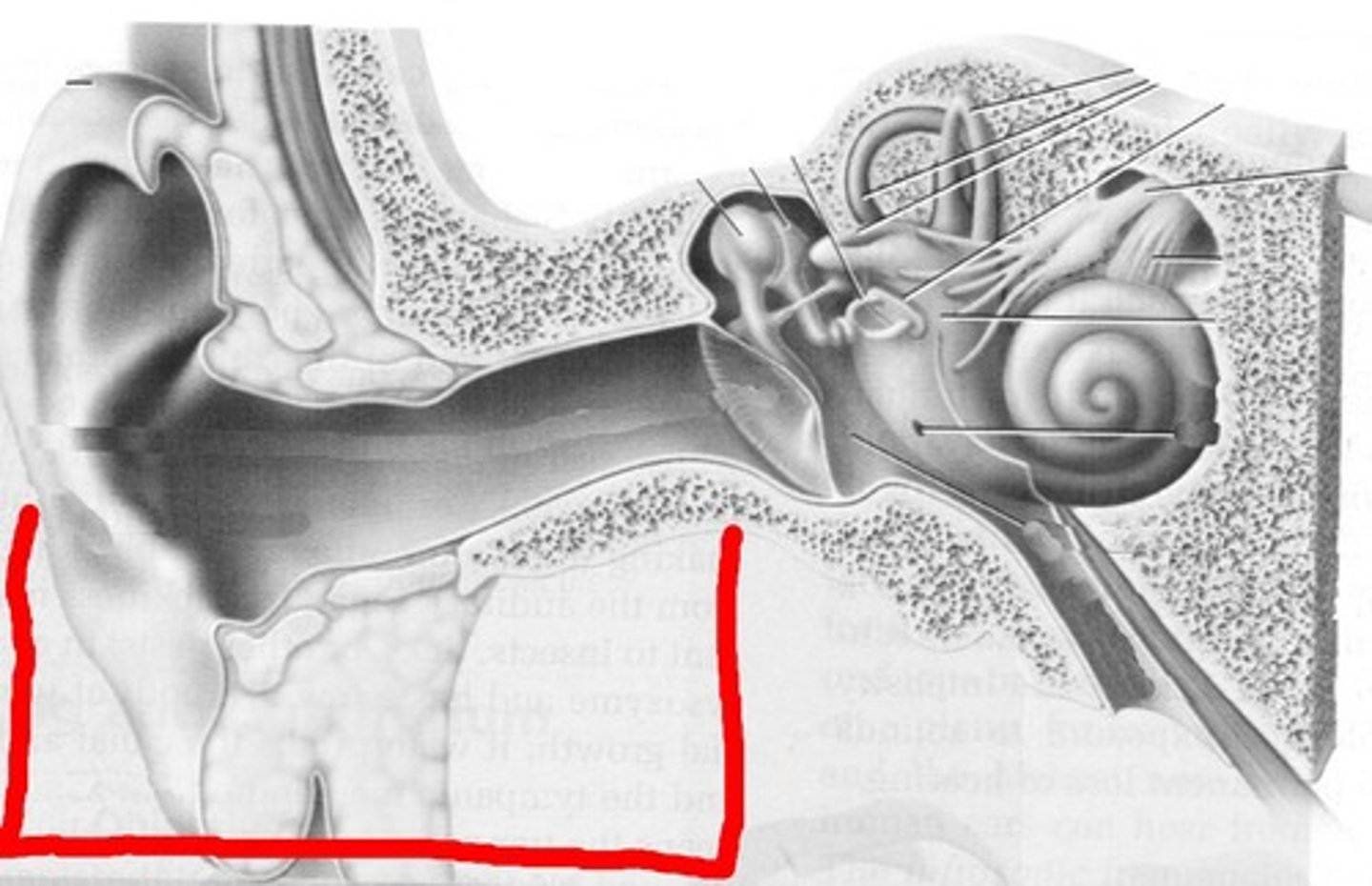
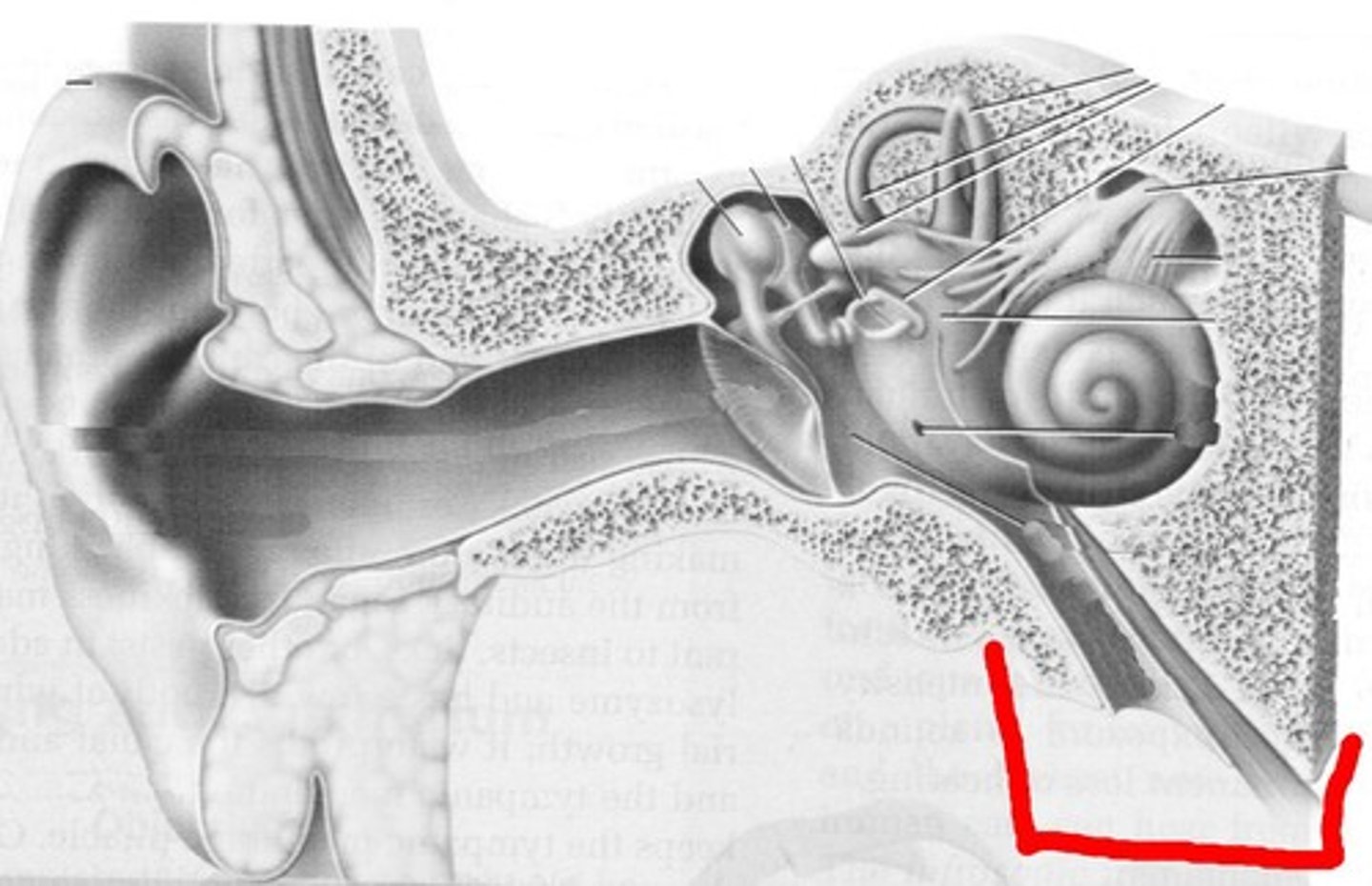
external ear
outer structures of the ear that collect sound
auricle, external acoustic meatus, tympanic membrane
cerumen
ear wax
middle ear
auditory tube & auditory ossicles (malleus, incus, stapes)
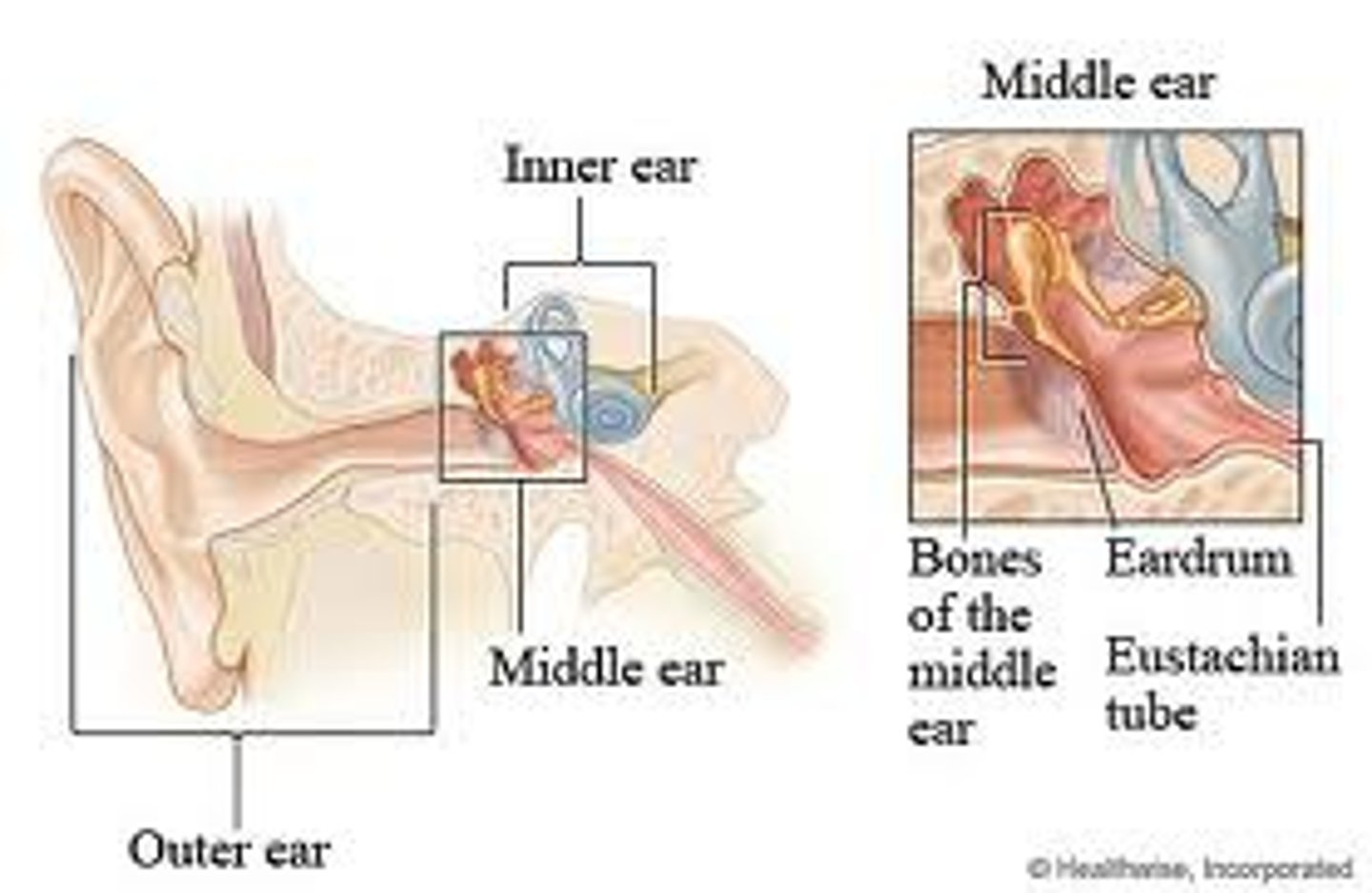
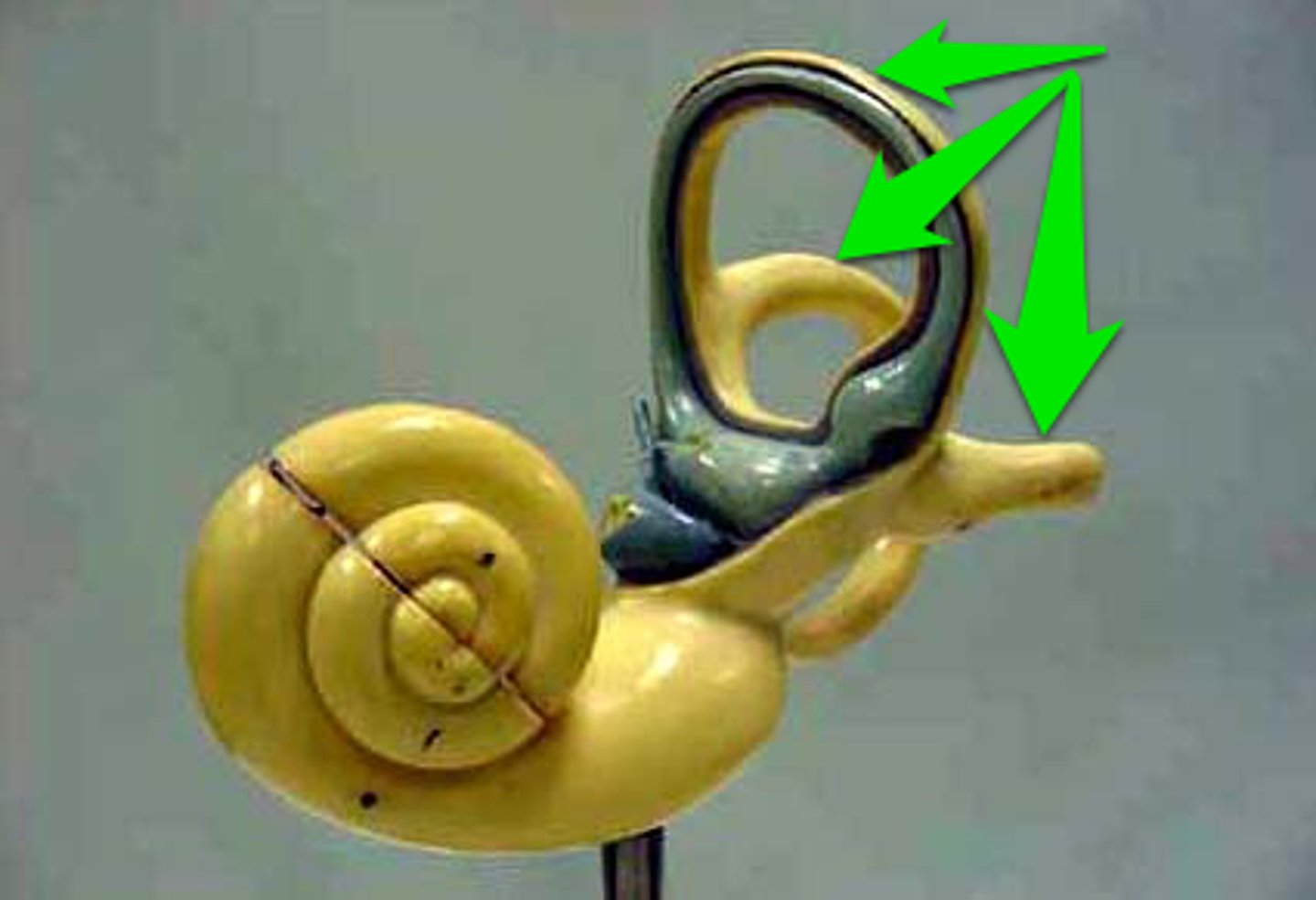
inner ear
contains cochlea, semicircular canals, and vestibular sacs
equilibrium
awareness of head position
linear acceleration
change in velocity in a straight line
utricle & saccule
detect linear acceleration and the effects of gravity
semicircular ducts
Detect rotational movements of the head.
static equilibrium
the perception of the orientation of the head when the body is stationary
maculae
sensory receptors for static equilibrium (within utricle & saccule)
contain hair cells
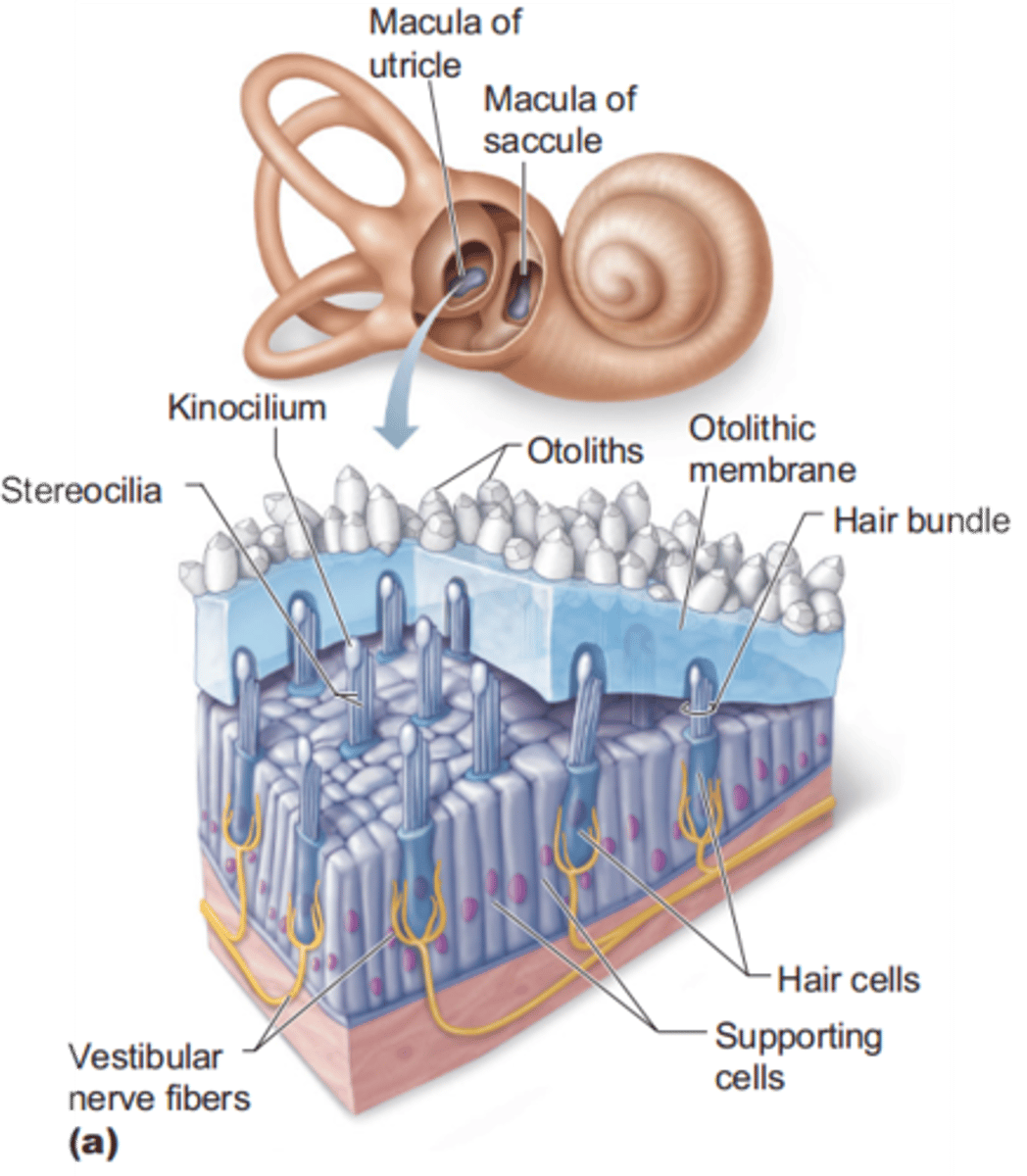
otoliths
small crystals in the fluid-filled vestibular sacs of the inner ear that, when shifted by gravity, stimulate nerve cells that inform the brain of the position of the head
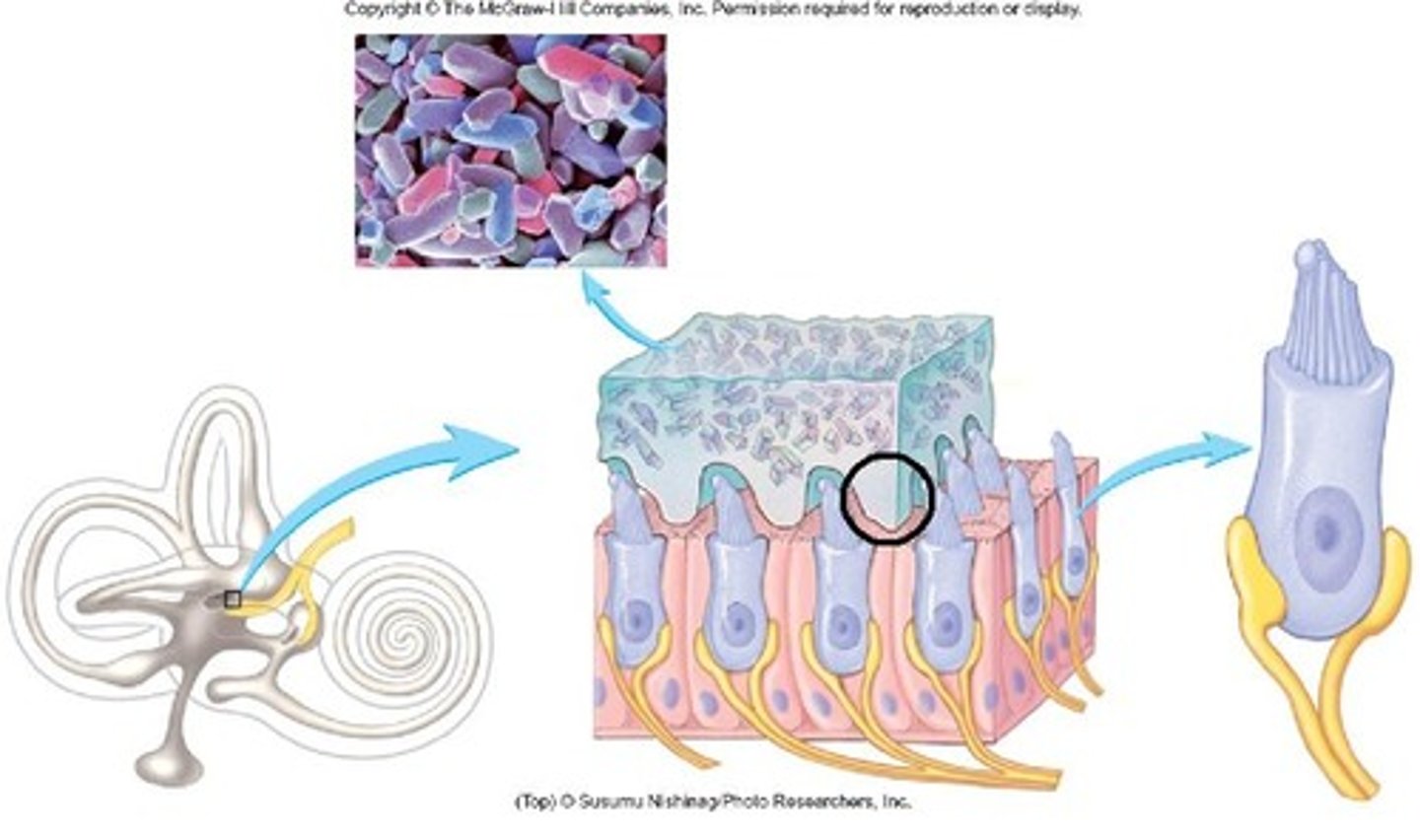
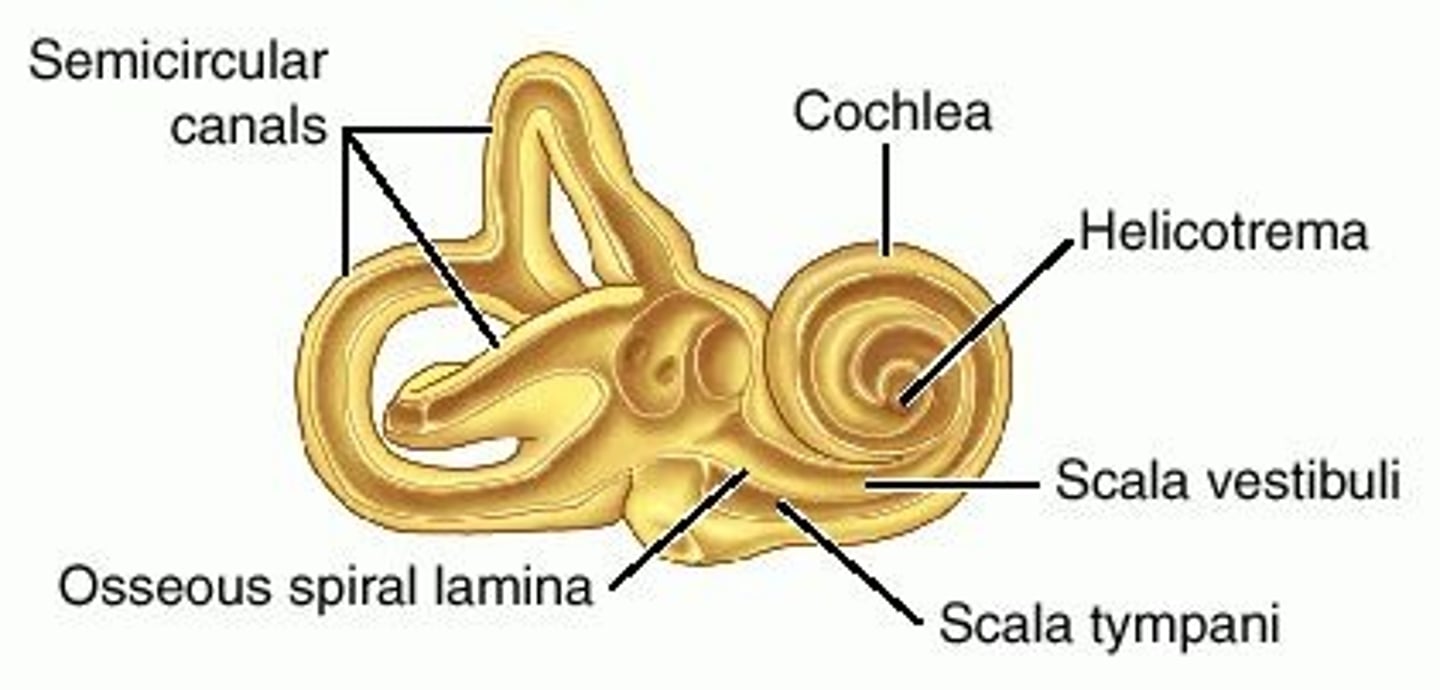
cochlea
converts vibrations into nerve signals (hearing)
cochlear duct
filled with endolymph
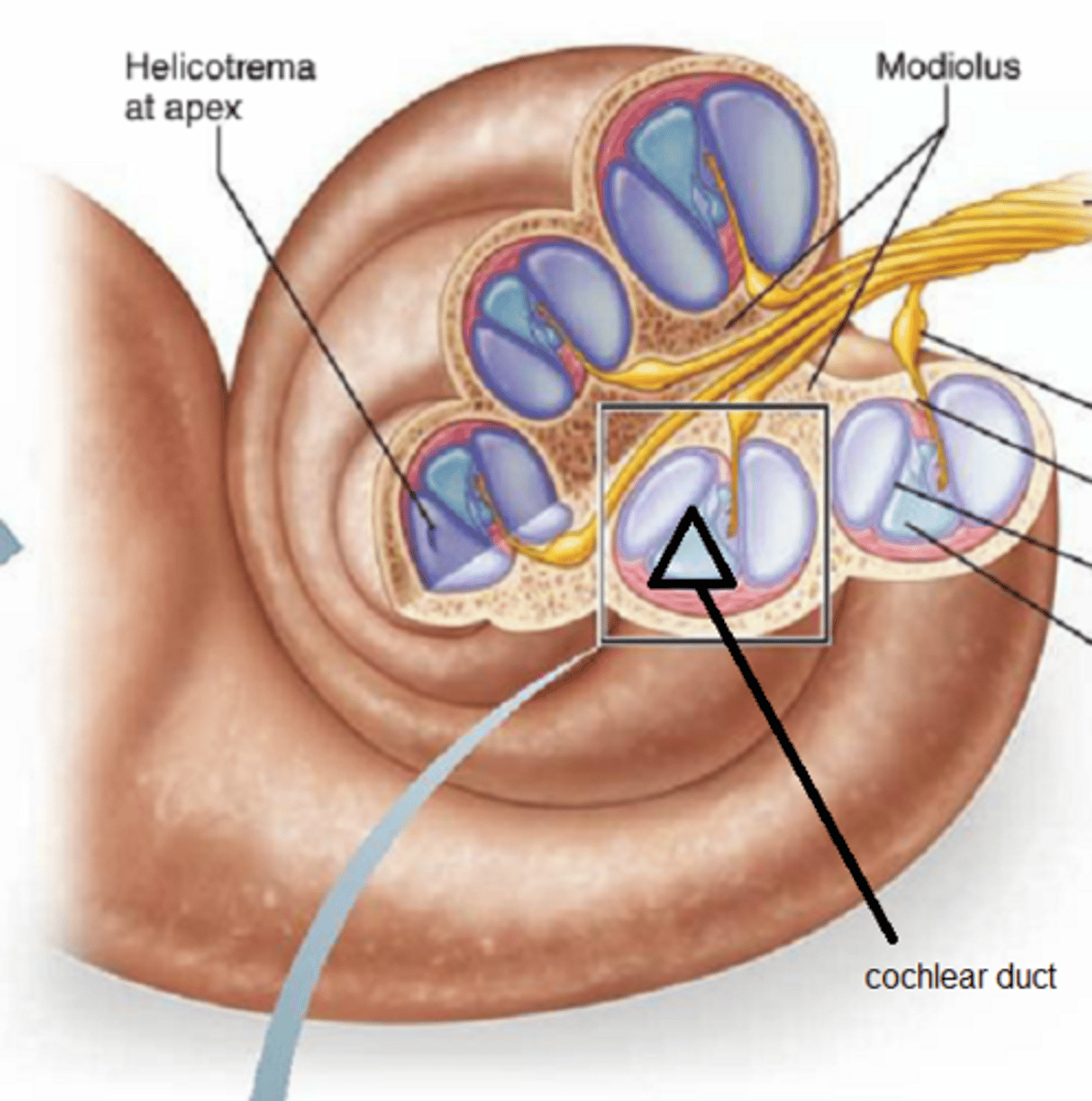
scala vestiboli & scala tympani
filled with perilymph; two chambers on either side of the cochlea duct
spiral organ/ organ of corti
receptor for hearing located within the cochlea; the organ of hearing
Path of light through the eye to the retina
Cornea → Aqueous humor → Lens → Vitreous humor → Retina
Path of visual impulses to the brain
Cornea → Aqueous humor → Lens → Vitreous humor → Retina → Transduction → Optic Nerve → Optic Chiasm → Optic Tracts → Optic radiation → Occipital lobe
auricle
external ear; collects sound waves
external auditory canal
channels sound to eardrum
tympanic membrane (eardrum)
vibrates in response to sound waves
Ossicles (malleus, incus, stapes)
three small bones that amplify sound waves (vibrations)
Eustachian tube
A narrow tube between the middle ear and the throat that serves to equalize pressure on both sides of the eardrum
Path of nerve impulses in hearing
Spiral organ (Organ of Corti in cochlea) → Cochlear nerve (branch of CN VIII) → Brainstem (cochlear nuclei) → Thalamus → Auditory cortex (temporal lobe)
pathway a tear follows
lacrimal glands → lacrimal canaliculi → Lacrimal sac → nasolacrimal duct
Loudness depends on _______ of vibration
amplitude
Louder sound sources cause tympanic membrane to vibrate ____
more
tinnitis
ringing in the ears
conductive hearing loss
hearing impairment caused by interference with sound or vibratory energy in the external canal, middle ear, or ossicles
otitis
inflammation of the ear
hormone
Chemical messengers, mostly those manufactured by the endocrine glands, that are produced in one tissue and affect another
endocrine gland
a ductless gland that secretes hormones directly into the bloodstream
target cell
cell that has a receptor for a particular hormone
Negative feedback loop in hormone secretion
levels too high= turn down secretion
return to set point
positive feedback loop in hormonal secretion
pushes the process further & stronger
compare & contrast how the nervous system and endocrine system control body function
Both: regulate body functions + maintain homeostasis
Nervous system: electrical impulses + neurotransmitters, very fast (milliseconds), short-term, precise/localized effects (nerves → muscles/glands)
Endocrine system: hormones released into bloodstream, slower (seconds-hours), long-lasting, widespread effects (target cells with receptors)
major control center of endocrine system?
hypothalamus
pituitary gland
divides into anterior & posterior lobes; also known as hypophysis