Bacterial Shapes and Arrangements, Practicum 1 Diagram | Quizlet
 Call Kai
 Learn
Learn Practice Test
 Spaced Repetition
 Match
Match Flashcards
 Knowt Play
1/86

There's no tags or description
Looks like no tags are added yet.
Name | Mastery | Learn | Test | Matching | Spaced | Call with Kai |
|---|
No analytics yet
Send a link to your students to track their progress
87 Terms
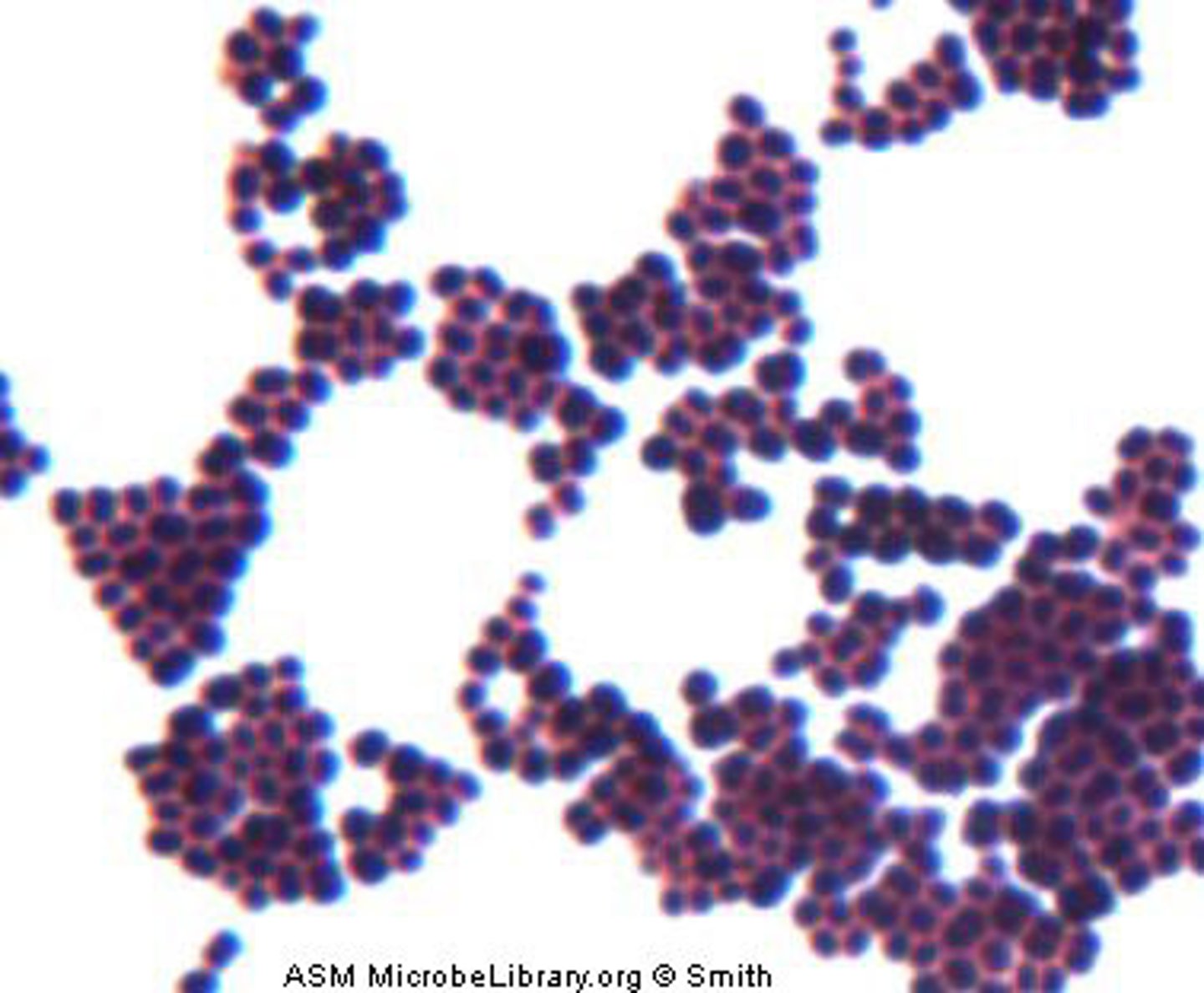
Gram-positive cocci; name 4 bacteria and their disease?
gram-positive cocci; Staphylococcus aureus (Toxic shock syndrome) Streptococcus pyogenes (Strep throat) Streptococcus pneumoniae (Pneumonia) Streptococcus agalactiae (Meningitis)
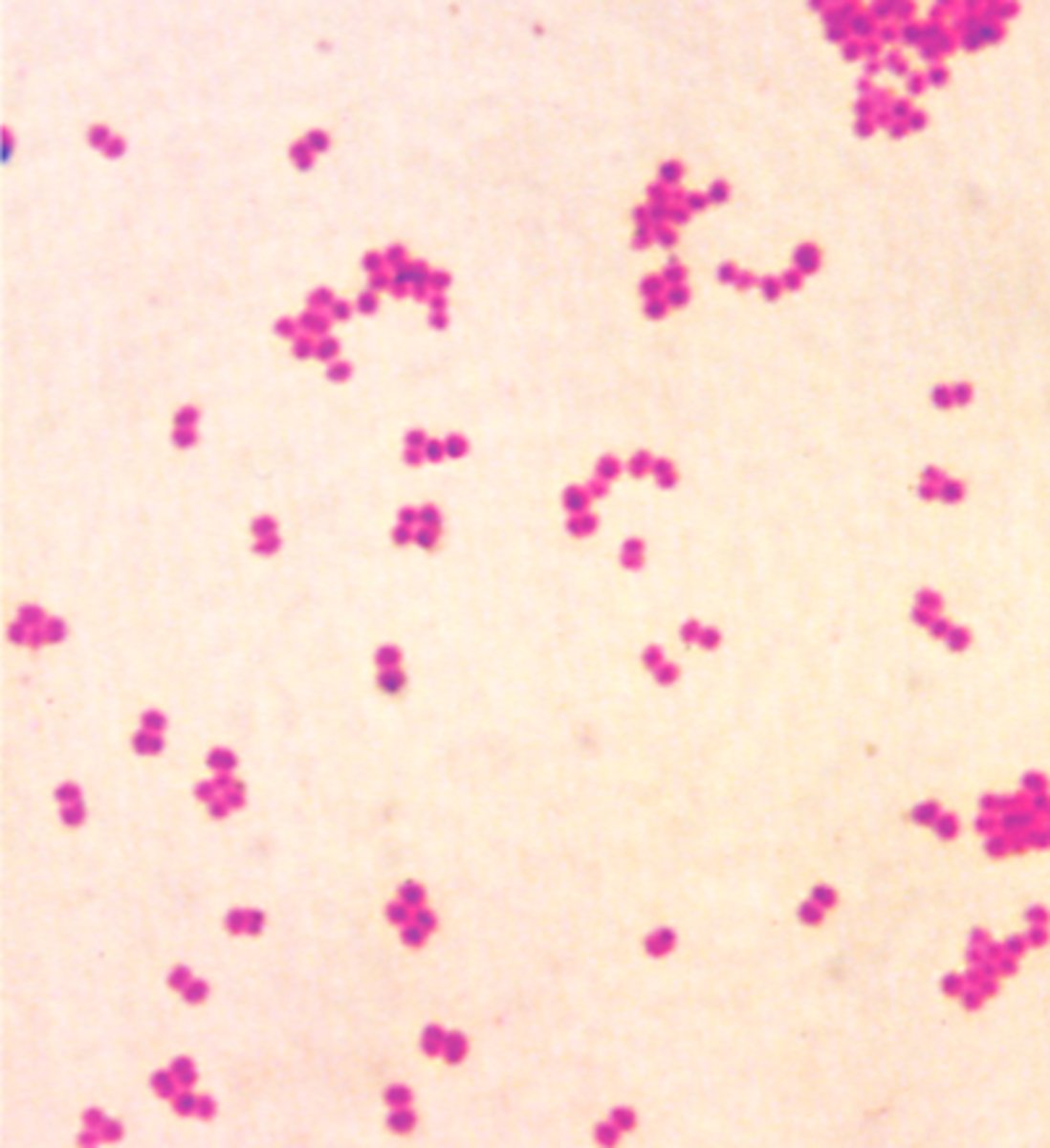
These are Gram-negative cocci Name 4 bacteria and their disease?
Neisseria gonorrhoeae (Gonorrhea) and Neisseria meningitidis (Meningitis)
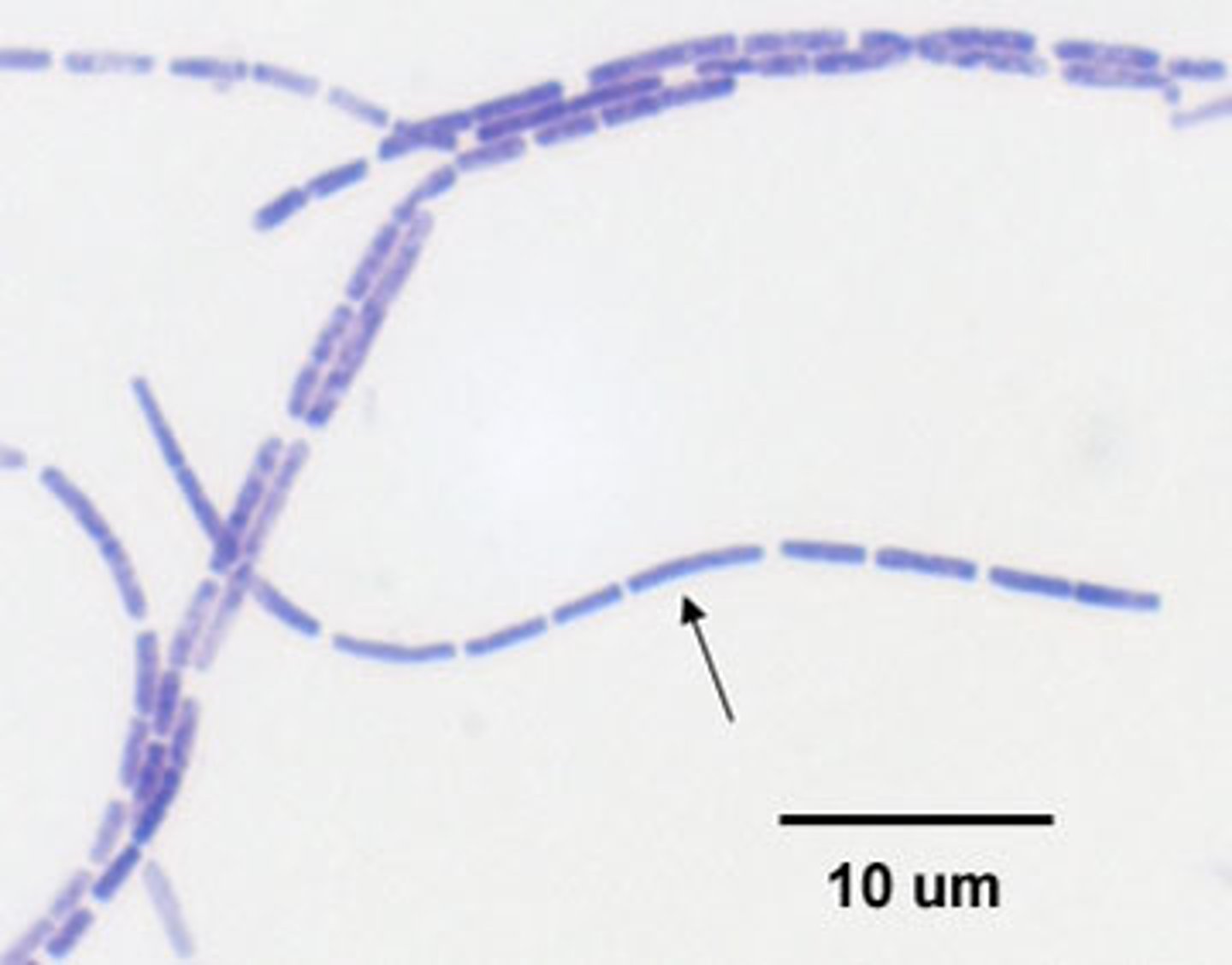
These are Gram-positive bacilli name 4 bacteria and their disease?
Bacillus anthracis (Anthrax) Bacillus cereus (Food poisoning) Bacillus subtilis (Non-pathogenic) Clostridium tetani (Tetanus)
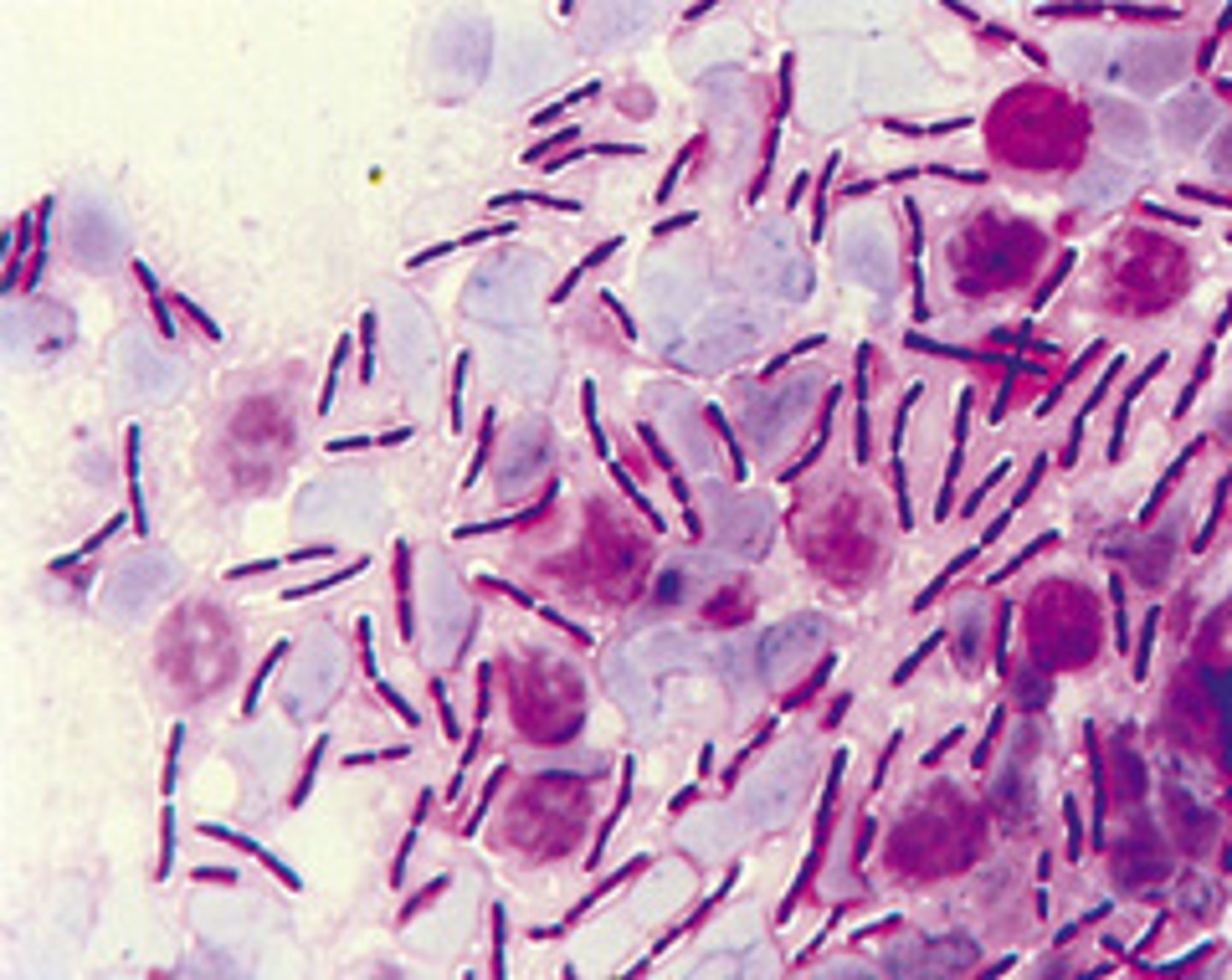
These are Gram-negative bacilli Name 4 bacteria and their disease?
Escherichia coli, Klebsiella pneumoniae, Salmonella enterica, Shigella species
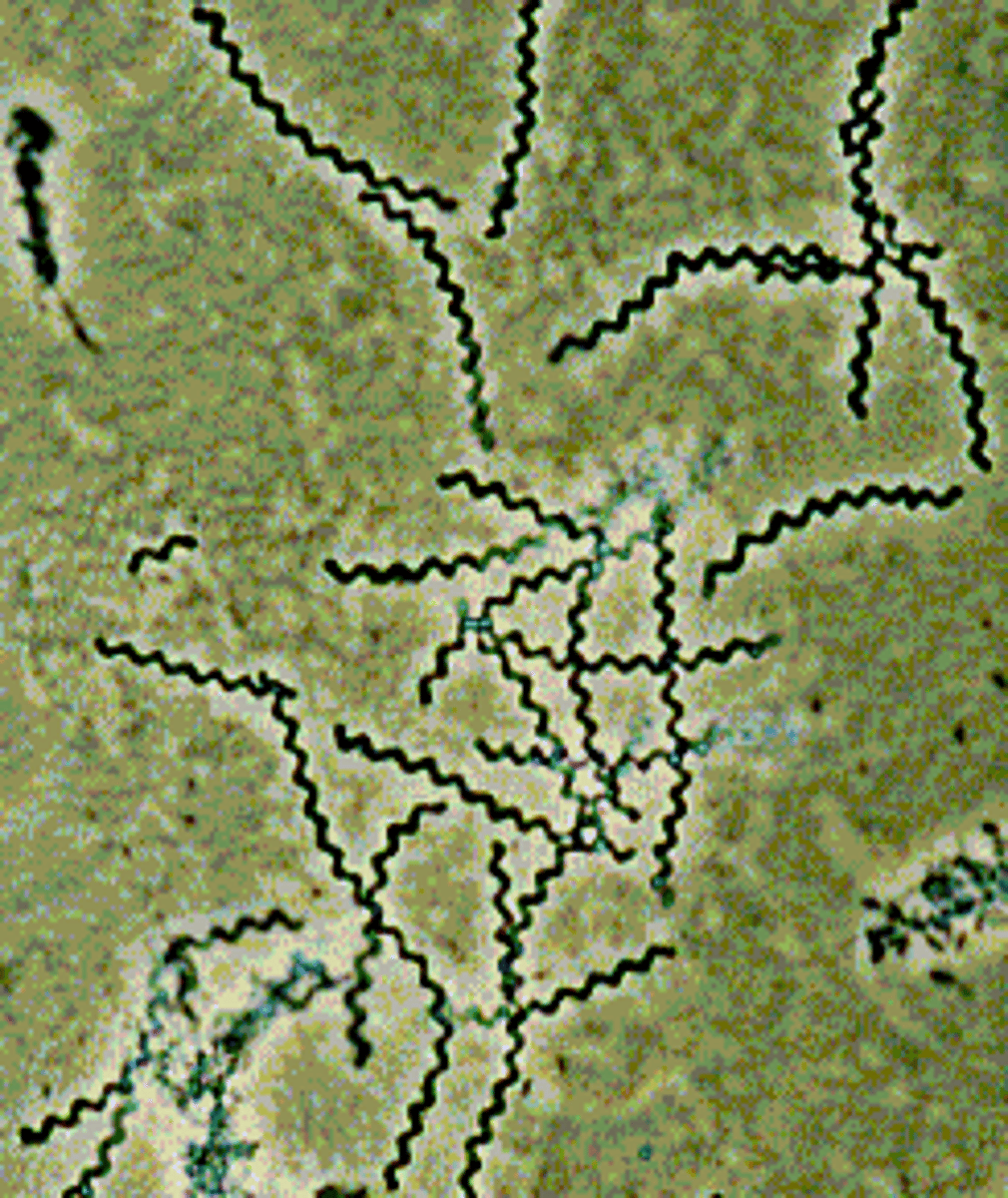
These are Spirochetes name 4 bacteria and their disease?
Treponema pallidum (Syphilis) Borrelia burgdorferi (Lyme disease) Leptospira interrogans (Leptospirosis) & Helicobacter pylori (peptic ulcers)
Name 3 aerobic Gram Positive Rods
Bacillus anthracis (anthrax), Bacillus cerus (food poisoning) and Bacillus subtilis (non pathogenic)
Name 3 anaerobic Gram Positive Rods
Clostridium tetani (tetanus), Clostridium botulism (botulism) and Clostridium perfringens (gangrene)
1?
Eyepiece
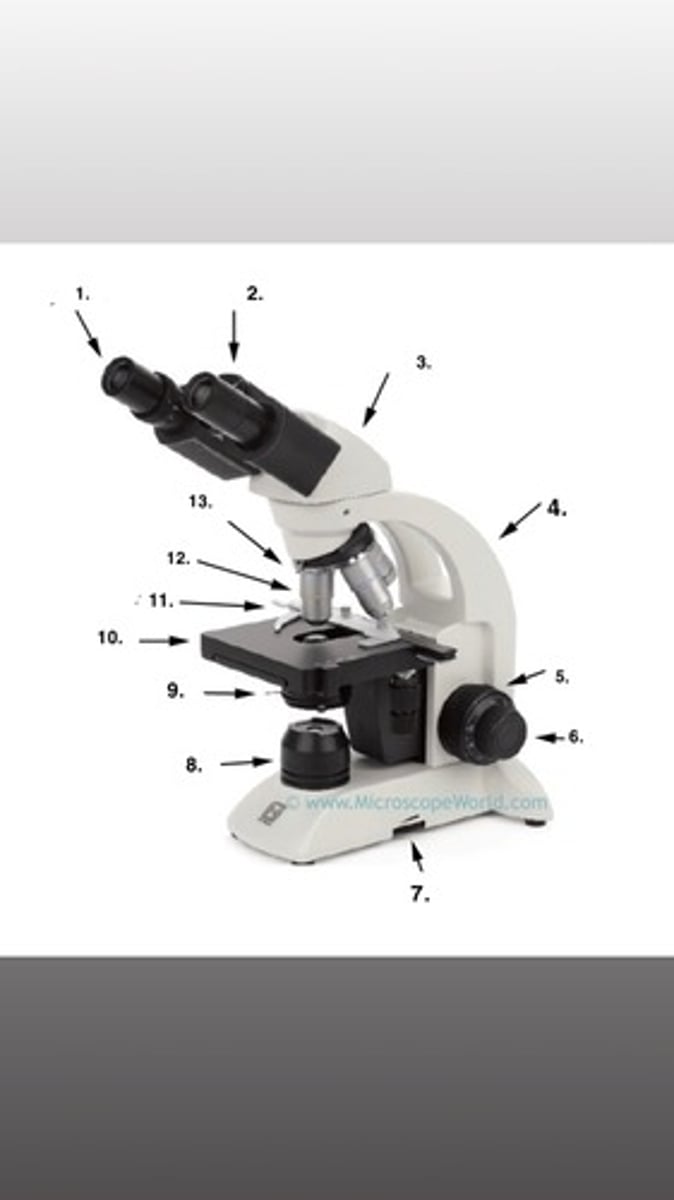
2?
Siedentopf Head
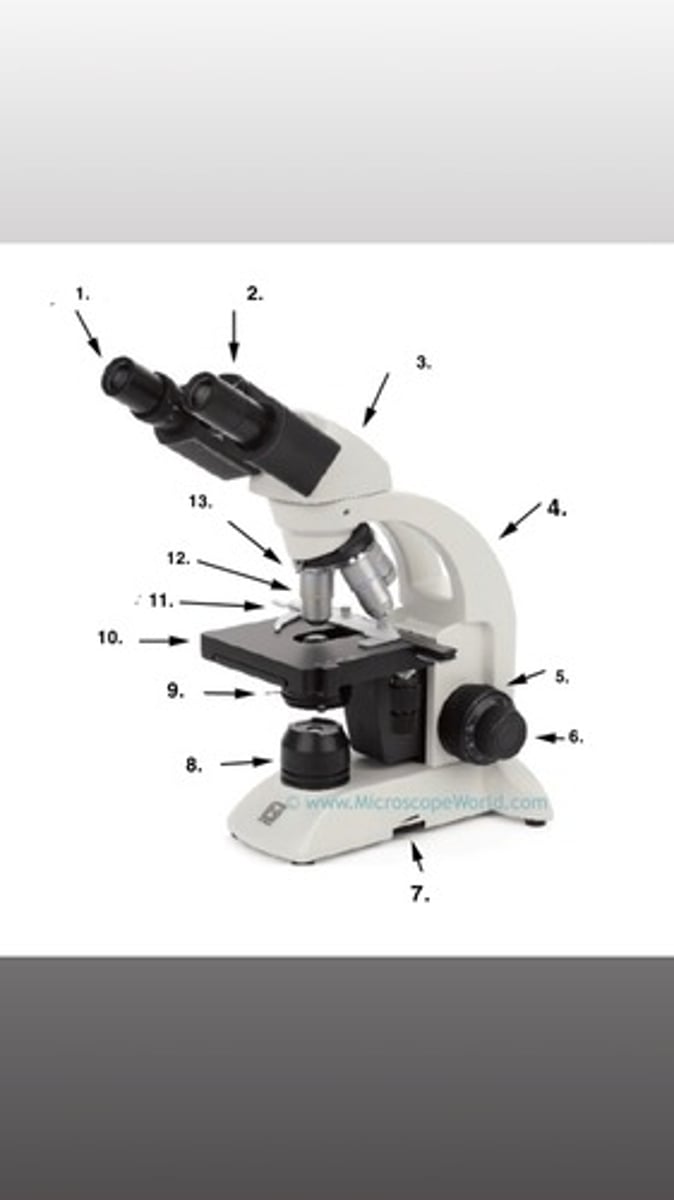
3?
Microscope Head
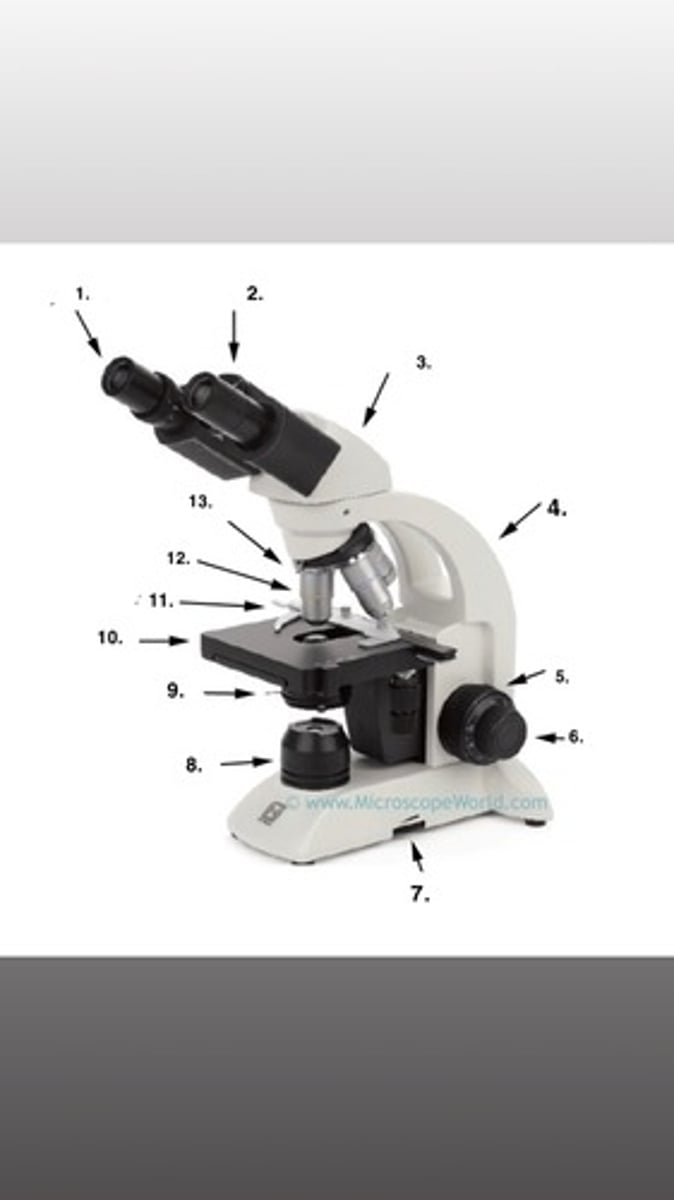
4?
Carrying Handle
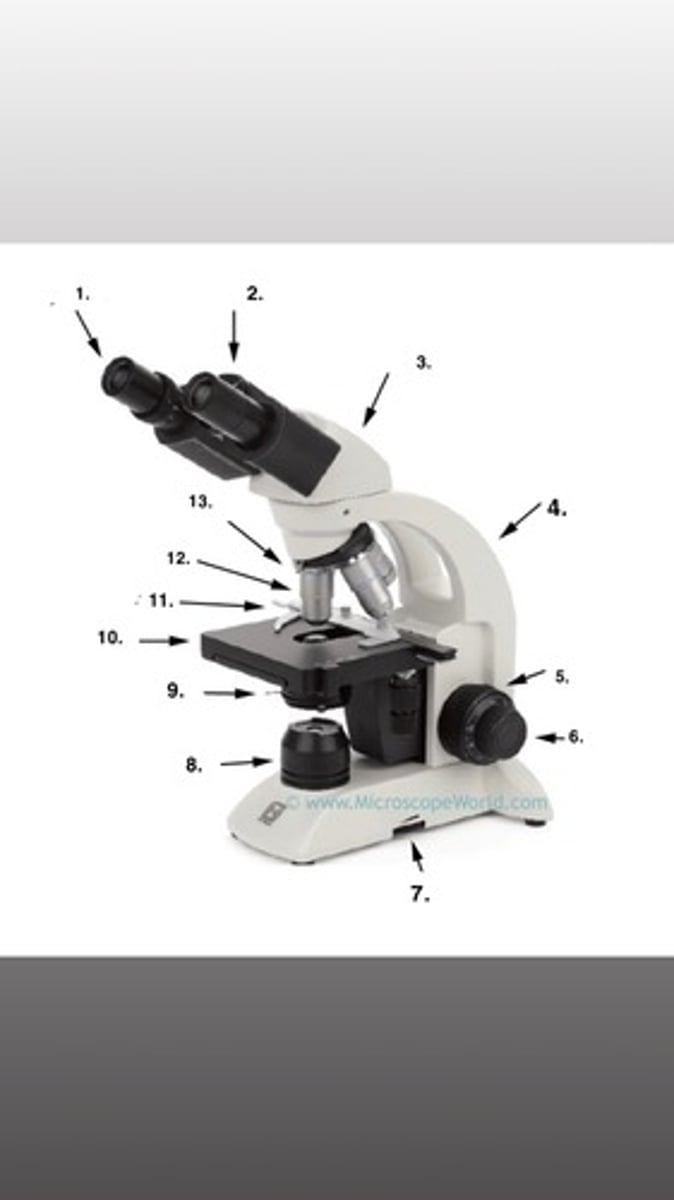
5?
Coarse Focus
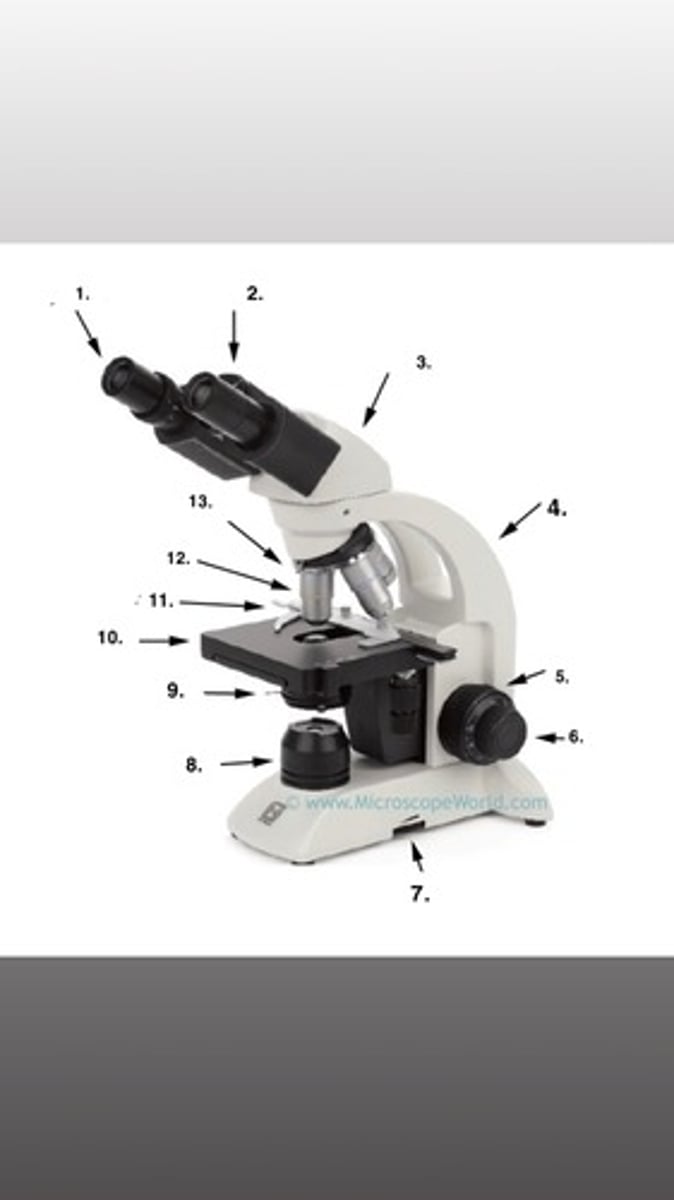
6?
Fine Focus
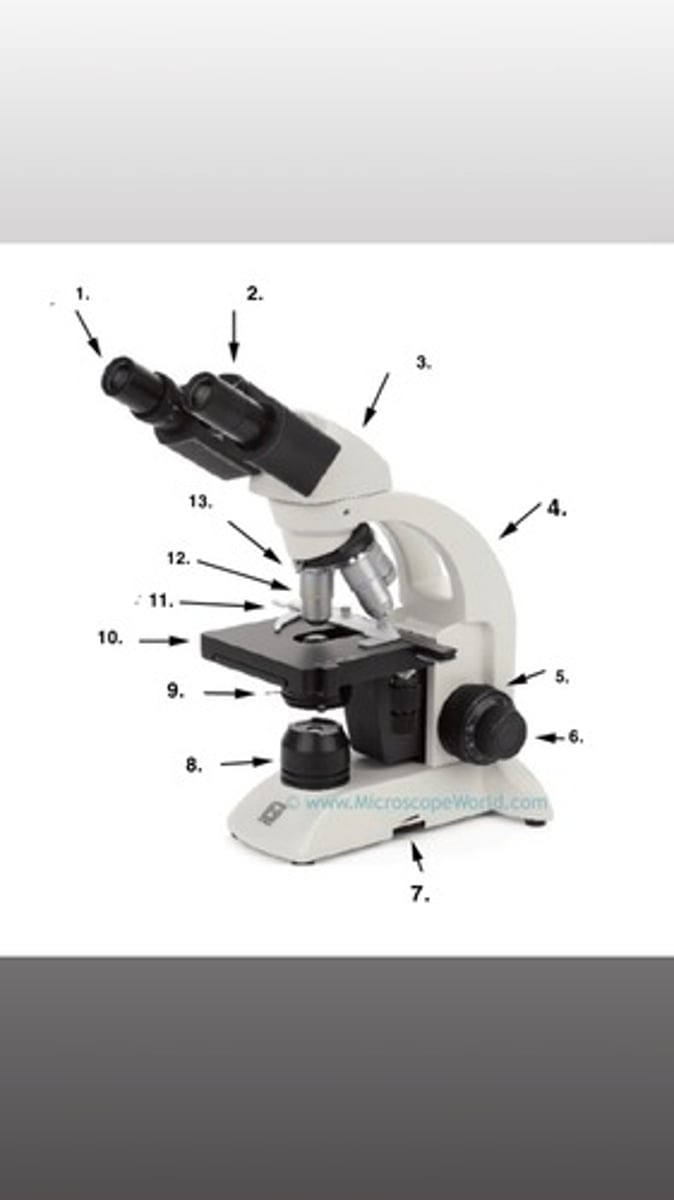
7?
Rheostat Light Intensity Control
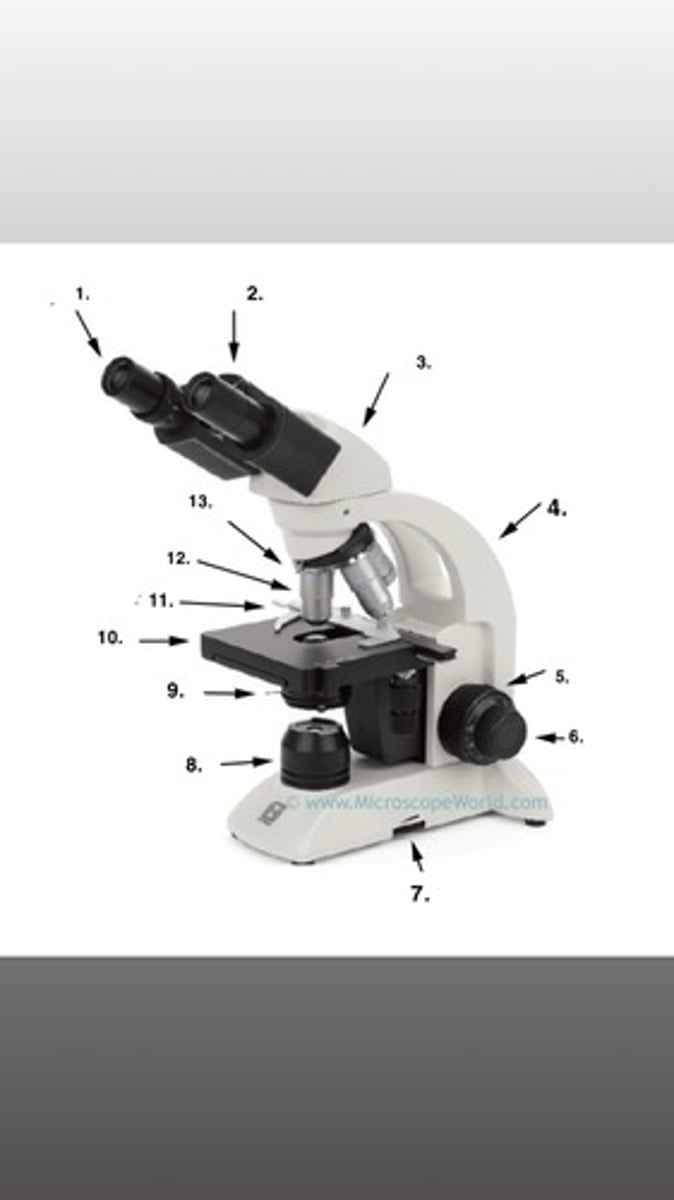
8?
Illuminator
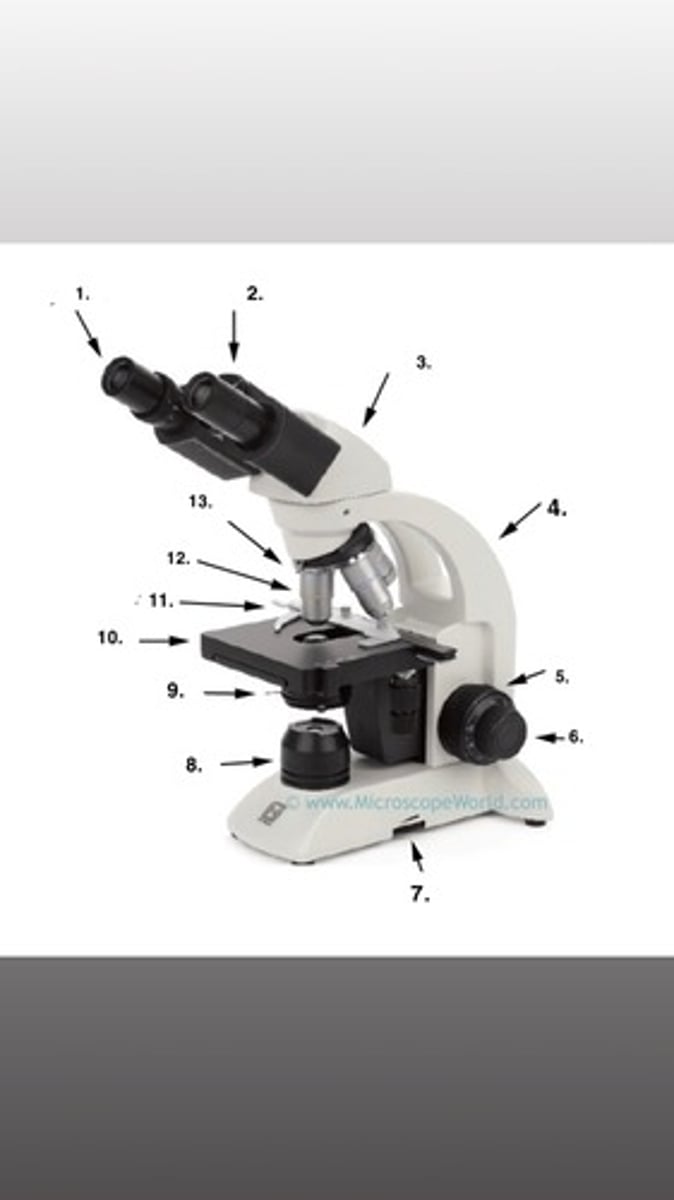
9?
Condenser
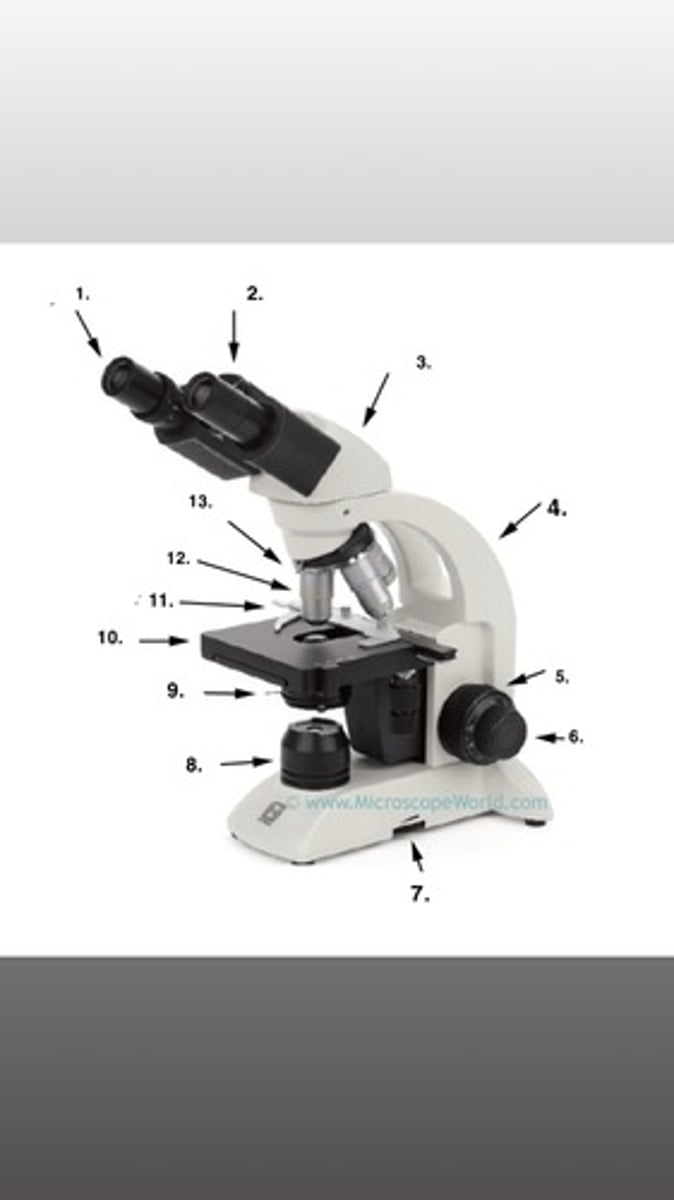
10?
Mechanical Stage
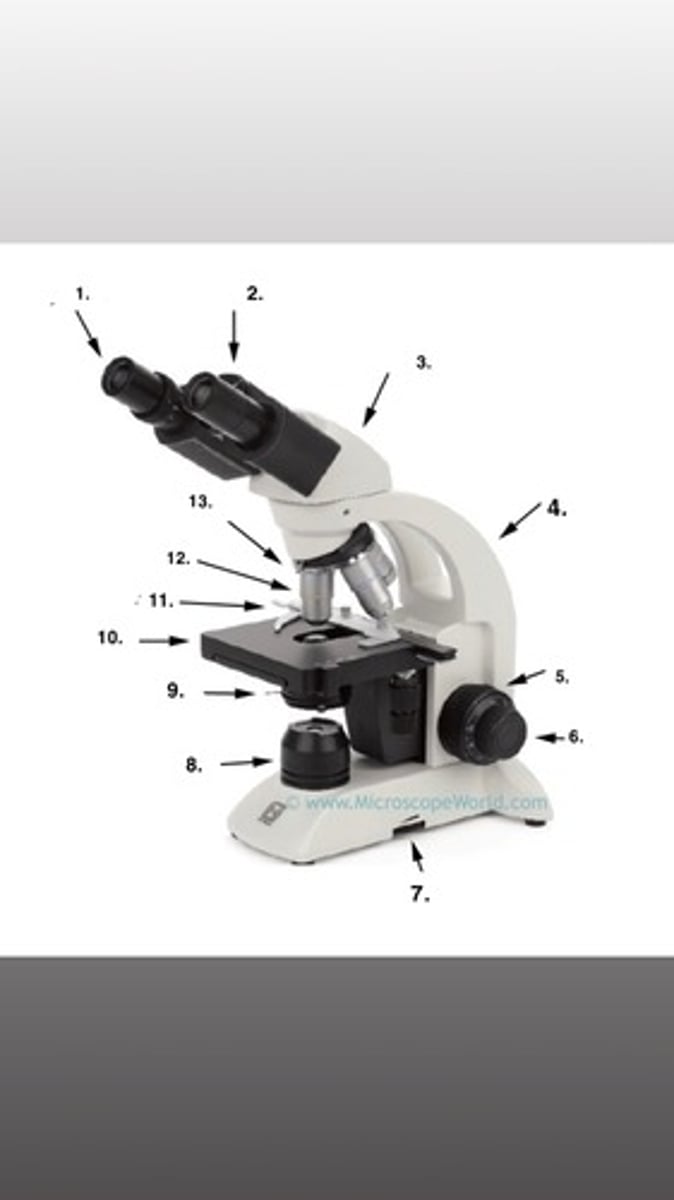
11?
Slide Holder
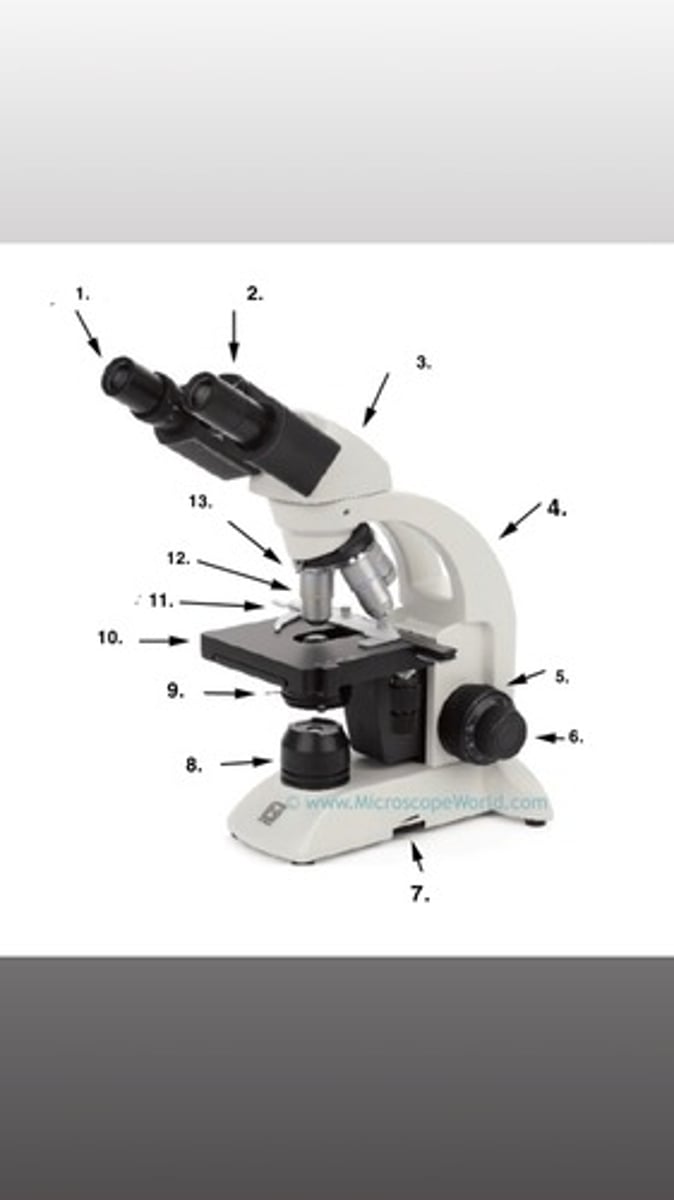
12?
Objective Lens
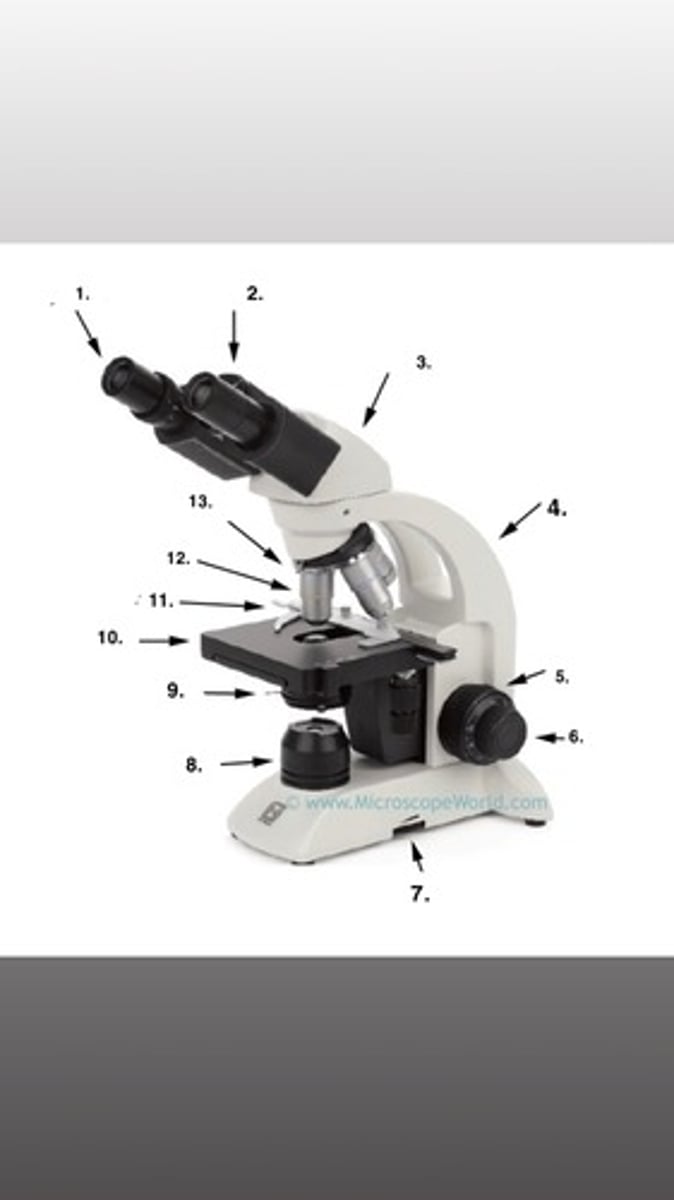
13?
Revolving Nosepiece
What is the most important property of a microscope?
The most important property of a microscope is resolution.
What is resolution?
Resolution is the ability to distinguish two objects that are very close together as separate objects.
What does magnification do?
Magnification makes objects appear larger than they actually are.
What is a background stain (negative stain)?
A background stain is a staining technique where the background appears dark and the bacteria appear clear or unstained.
What are examples of negative stains?
Examples of negative stains include Nigrosin and Congo Red.
What is the most important component of bacterial cell walls?
The most important component of bacterial cell walls is peptidoglycan.
Which bacteria have thick peptidoglycan?
Gram-positive bacteria have thick peptidoglycan layers in their cell walls.
Which bacteria have thin peptidoglycan?
Gram-negative bacteria have thin peptidoglycan layers in their cell walls.
What is the charge of bacterial cell walls?
The overall charge of bacterial cell walls is negative.
What binds the cell in staining?
Positively charged basic dyes bind to the negatively charged bacterial cell wall.
What is LPS?
LPS stands for lipopolysaccharide, which is found in the outer membrane of Gram-negative bacteria.
Which part of LPS is the endotoxin?
The Lipid A portion of lipopolysaccharide is the endotoxin.
What charge do basic dyes have?
Basic dyes have a positive charge.
Name examples of basic dyes.
Examples of basic dyes include crystal violet, safranin, methylene blue, and carbol fuchsin.
What charge do acidic dyes have?
Acidic dyes have a negative charge.
Name examples of acidic dyes.
Examples of acidic dyes include nigrosin, India ink, and Congo red.
What are acidic dyes also called?
Acidic dyes are also called negative stains or background stains.
What gets stained in a negative stain?
In a negative stain, the background gets stained while the bacteria remain clear.
What are the steps of a negative stain?
1. Place a drop of nigrosin on a clean slide. 2. Mix the bacterial sample into the stain. 3. Use another slide to spread the mixture into a thin smear. 4. Allow the slide to air dry completely. 5. Do NOT heat-fix the slide.
What is the most important stain in microbiology?
The Gram stain is the most important stain in microbiology.
What are the four steps of the Gram stain?
1. Crystal violet (primary stain) 2. Iodine (mordant) 3. Ethanol (decolorizer and critical step) 4. Safranin (counterstain)
What is the mordant in Gram staining?
Iodine is the mordant.
What is the decolorizer in Gram staining?
Ethanol is the decolorizer.
What is the counterstain in Gram staining?
Safranin is the counterstain.
What is the most important step in Gram staining?
The most important step is the ethanol decolorization step.
What color are Gram-positive bacteria?
Gram-positive bacteria appear purple or blue.
What color are Gram-negative bacteria?
Gram-negative bacteria appear pink or red.
What does a Gram-positive coccus look like under the microscope?
A Gram-positive coccus appears as a purple or blue sphere.
What does a Gram-negative coccus look like under the microscope?
A Gram-negative coccus appears as a pink or red sphere.
What does a Gram-positive rod look like under the microscope?
A Gram-positive rod appears as a purple or blue rod-shaped bacterium.
What does a Gram-negative rod look like under the microscope?
A Gram-negative rod appears as a pink or red rod-shaped bacterium.
Name four Gram-positive cocci and their diseases.
• Staphylococcus aureus causes toxic shock syndrome. • Streptococcus pyogenes causes strep throat. • Streptococcus agalactiae causes meningitis in newborns. • Streptococcus pneumoniae causes pneumonia.
What is the shape of Gram-positive cocci?
They are spherical-shaped bacteria.
What is the Gram stain color of Gram-positive cocci?
They appear purple or blue.
What is the oxygen requirement of Gram-positive cocci?
They are facultative anaerobes, meaning they can survive with or without oxygen.
Name two Gram-negative cocci and their diseases.
• Neisseria gonorrhoeae causes gonorrhea. • Neisseria meningitidis causes meningococcal meningitis.
What is the shape of Gram-negative cocci?
They are spherical-shaped bacteria.
What is their Gram stain color?
They appear pink or red.
What is their oxygen requirement?
They are aerobic bacteria, meaning they require oxygen.
Name three aerobic spore-forming bacteria.
• Bacillus subtilis • Bacillus anthracis • Bacillus cereus
What diseases are associated with these organisms?
• Bacillus anthracis causes anthrax. • Bacillus cereus causes food poisoning. • Bacillus subtilis is generally non-pathogenic.
What is the shape of Gram-positive rods?
Rod-shaped bacteria.
Name four anaerobic Gram-positive rods and their diseases.
• Clostridium tetani causes tetanus. • Clostridium botulinum causes botulism. • Clostridium perfringens causes gas gangrene. • Clostridium difficile causes pseudomembranous colitis.
Name four Gram-negative rods.
• Escherichia coli • Klebsiella pneumoniae • Salmonella enterica • Shigella species
Name three anaerobic Gram-negative rods.
• Prevotella species • Bacteroides species • Fusobacterium species
Name three spirochetes and their diseases.
• Treponema pallidum causes syphilis. • Borrelia burgdorferi causes Lyme disease. • Leptospira interrogans causes leptospirosis.
What is the shape of spirochetes?
They are spiral-shaped bacteria.
Can spirochetes be seen well with Gram stain?
No, they are not easily visualized using Gram stain.
What organism are we looking for in acid-fast staining?
Mycobacterium species.
What is special about Mycobacterium cell walls?
They contain mycolic acid, which makes them waxy and resistant to staining.
Name three Mycobacterium species associated with tuberculosis.
• Mycobacterium tuberculosis • Mycobacterium bovis • Mycobacterium africanum
What disease does Mycobacterium tuberculosis cause?
Tuberculosis.
What are the steps of acid-fast staining?
1. Carbol fuchsin 2. Water rinse 3. Acid alcohol 4. Methylene blue
What color are acid-fast bacteria?
They appear red or pink.
What color are non-acid-fast bacteria?
They appear blue.
What is the primary stain in spore staining?
Malachite green.
What is the counterstain in spore staining?
Safranin.
What is the most critical step in spore staining?
Heat is required to drive the stain into the spore.
What color are endospores?
Endospores appear green.
What color are vegetative cells?
Vegetative cells appear red or pink.
What is the correct order of spore formation?
Vegetative cell → Forespore → Endospore → Free spore.
Which genera form endospores?
Bacillus and Clostridium species.
TERM
What is this?
DEFINITION
1. Gram-negative spirilli
TERM
What is this?
DEFINITION
2. Gram-positive streptobacilli
TERM
What is this?
DEFINITION
3. Gram-positive cocci
TERM
What is this?
DEFINITION
4. Gram-negative bacilli
TERM
What is this?
DEFINITION
5. Gram-positive streptococci