Comprehensive Back and Vertebral Column Anatomy for Medical Students
 Call Kai
 Learn
Learn Practice Test
 Spaced Repetition
 Match
Match Flashcards
 Knowt Play
1/165

There's no tags or description
Looks like no tags are added yet.
Name | Mastery | Learn | Test | Matching | Spaced | Call with Kai |
|---|
No analytics yet
Send a link to your students to track their progress
166 Terms
What structures are included in the back?
Skin and subcutaneous tissue, muscles, vertebral column, ribs, spinal cord and meninges, segmental nerves and vessels.
What is the primary function of the vertebral column?
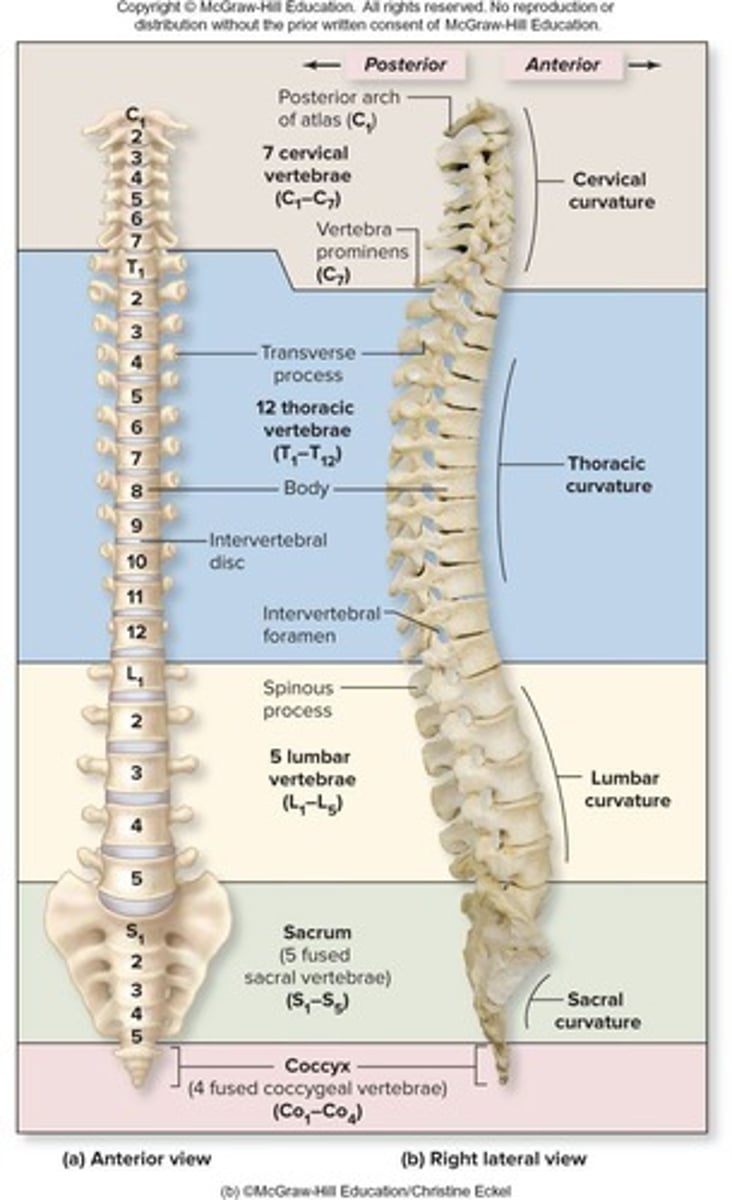
To protect the spinal cord and spinal nerves, support the weight of the body, and provide a flexible axis for the body.
How many vertebrae are in the vertebral column?
33 vertebrae.
What are the five regions of the vertebral column?
Cervical, thoracic, lumbar, sacral, and coccygeal.
What is the significance of the cervical vertebrae?
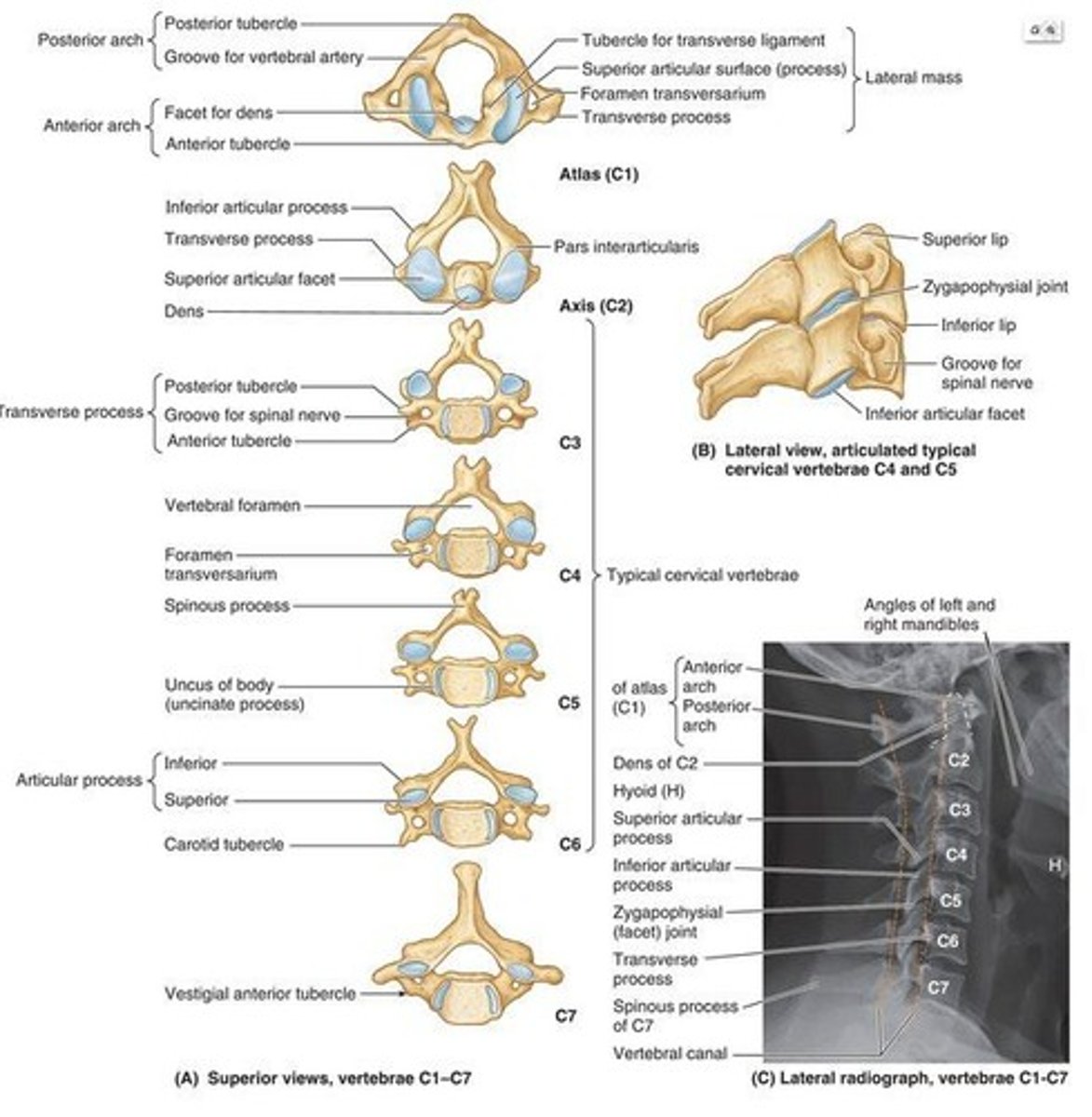
They form the bones of the neck and consist of 7 vertebrae (C1-C7).
What is unique about the atlas (C1) vertebra?
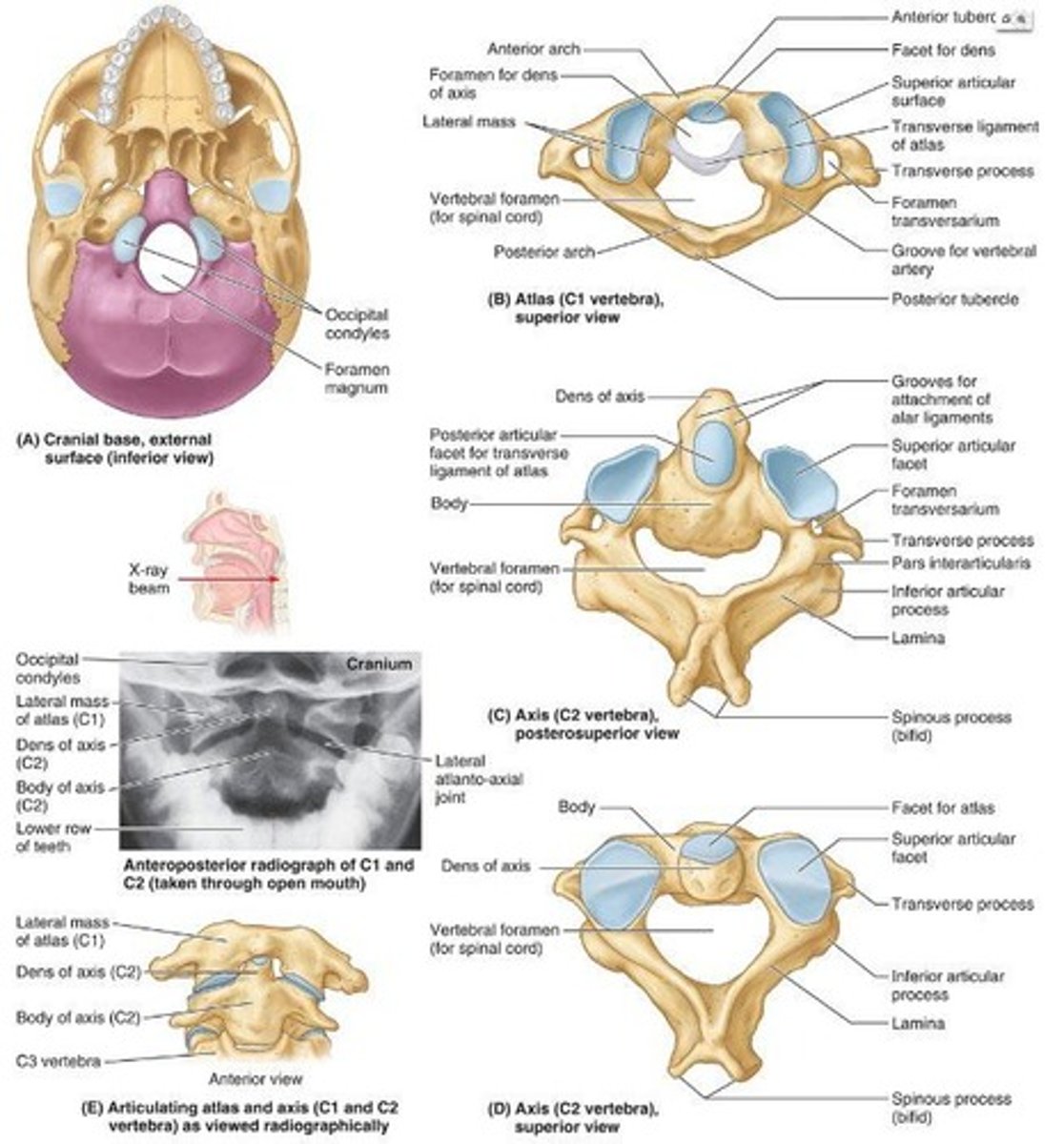
It supports the head and allows nodding 'yes' at the atlanto-occipital joint.
What is the function of the axis (C2) vertebra?
It acts as a pivot for lateral rotation of the head and neck.
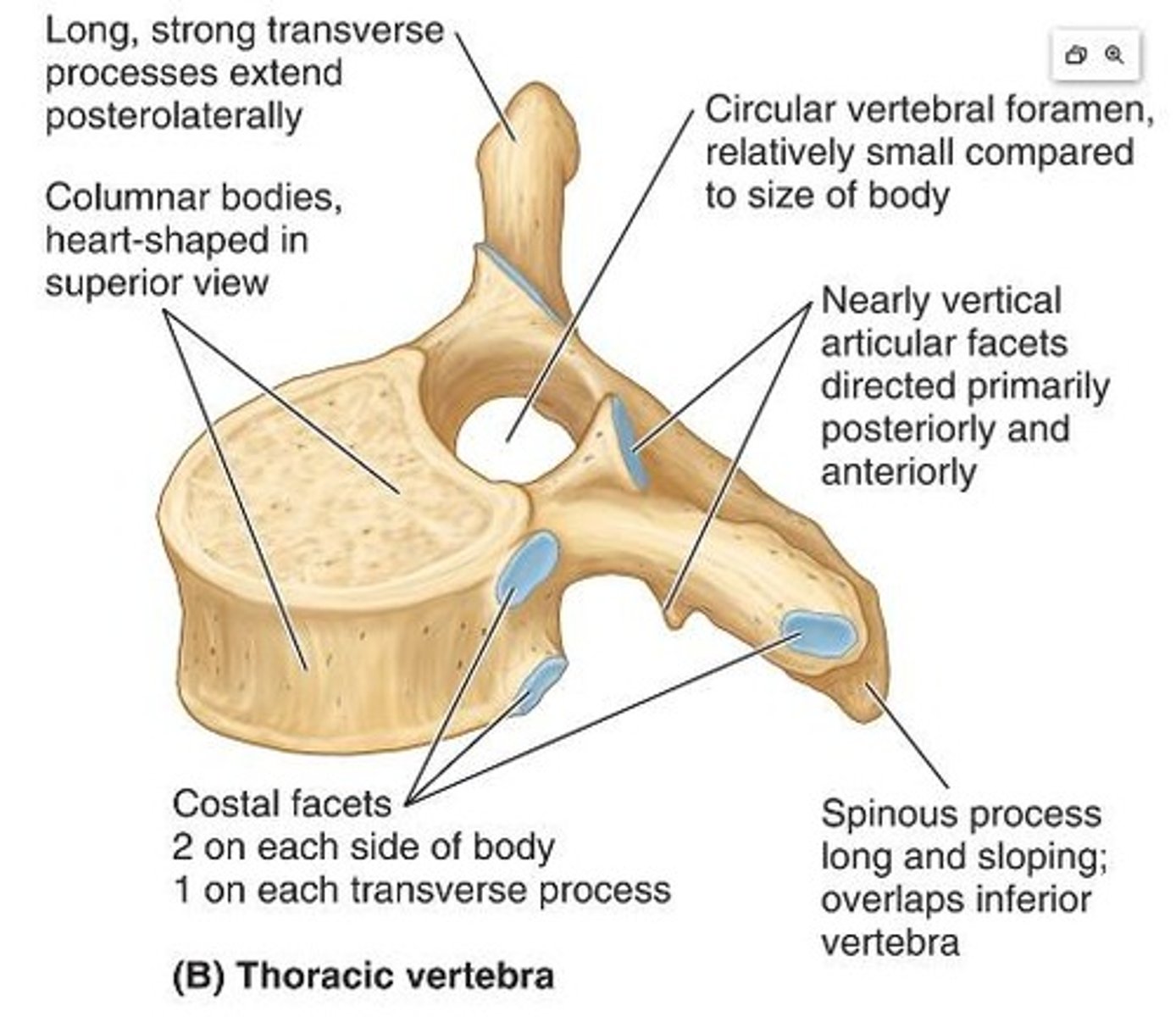
What characterizes thoracic vertebrae?
They articulate with the ribs and have heart-shaped bodies.
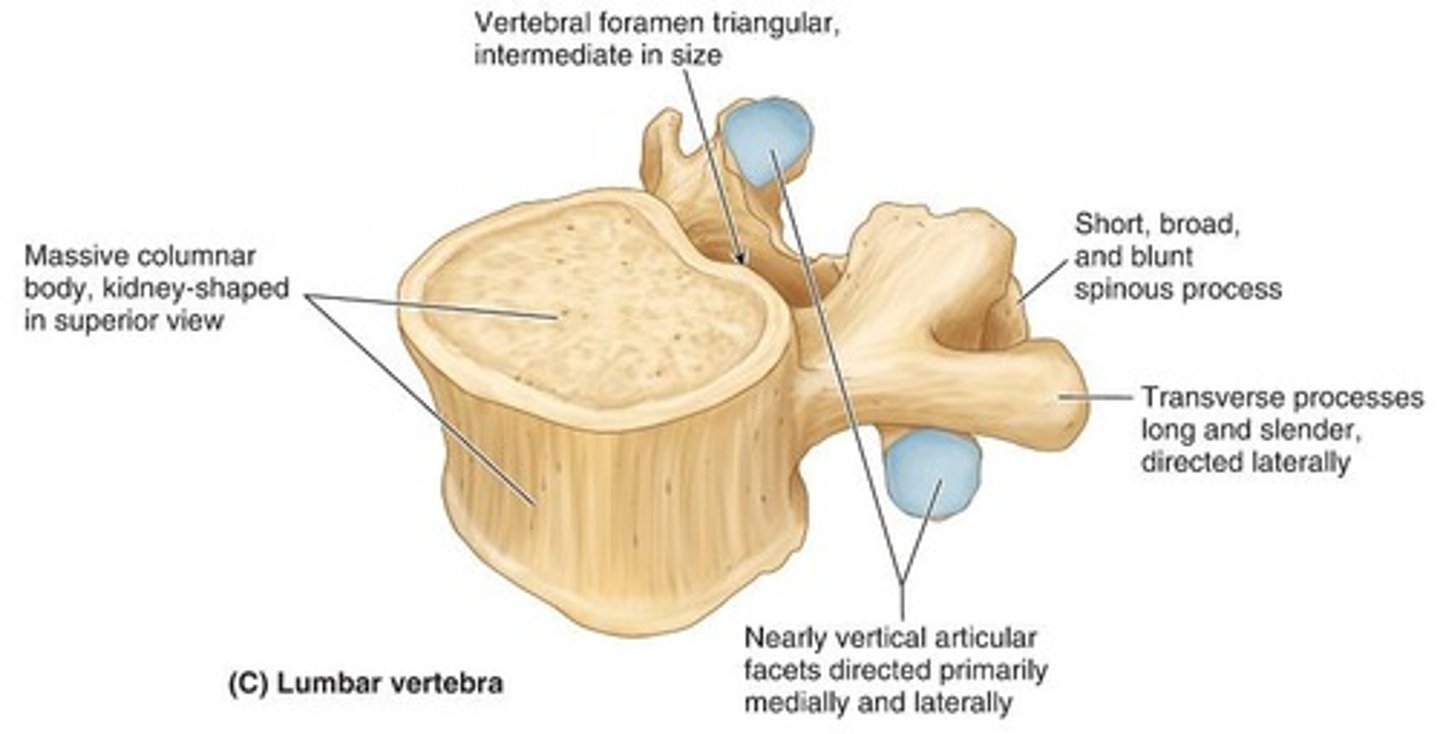
What distinguishes lumbar vertebrae from other vertebrae?
They are the largest vertebrae and bear most of the body's weight.
What is the sacrum and its composition?
A triangular bone formed by the fusion of 5 vertebrae, providing the posterior wall of the pelvic cavity.
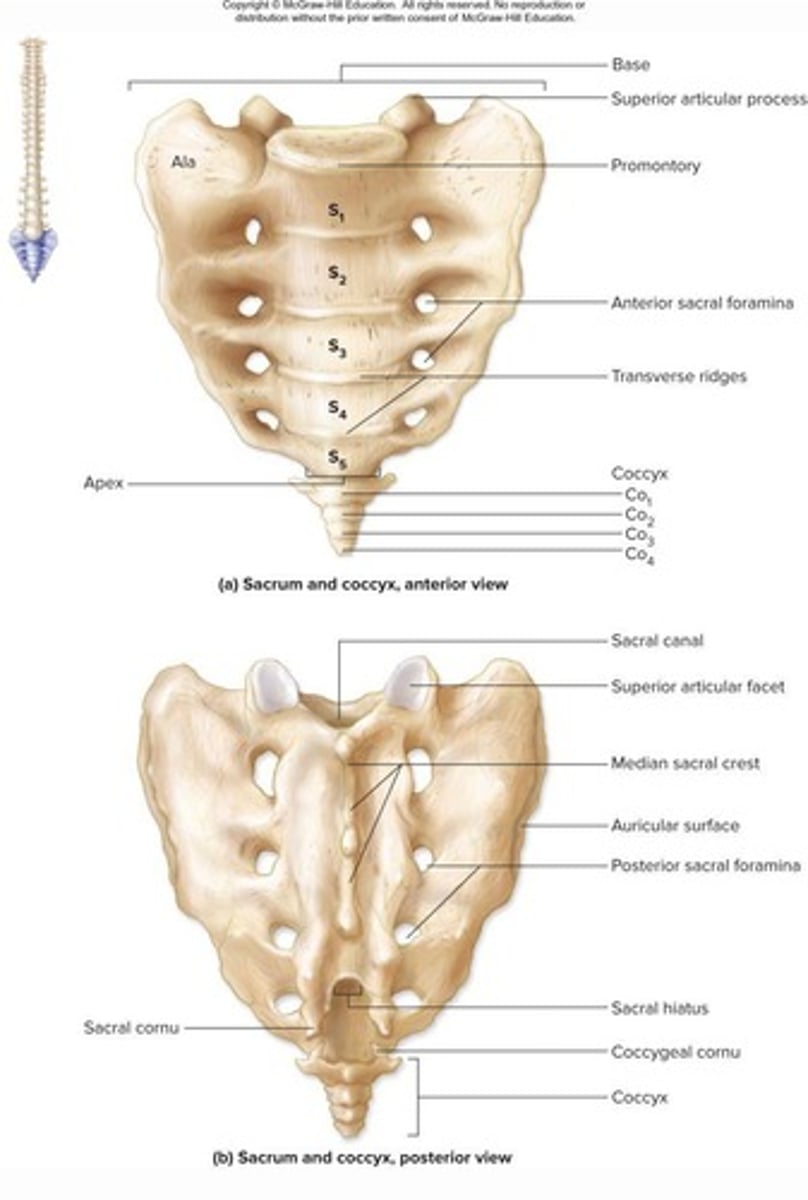
What is the coccyx?
The fusion of 4 coccygeal vertebrae, serving as an attachment site for ligaments and muscles.
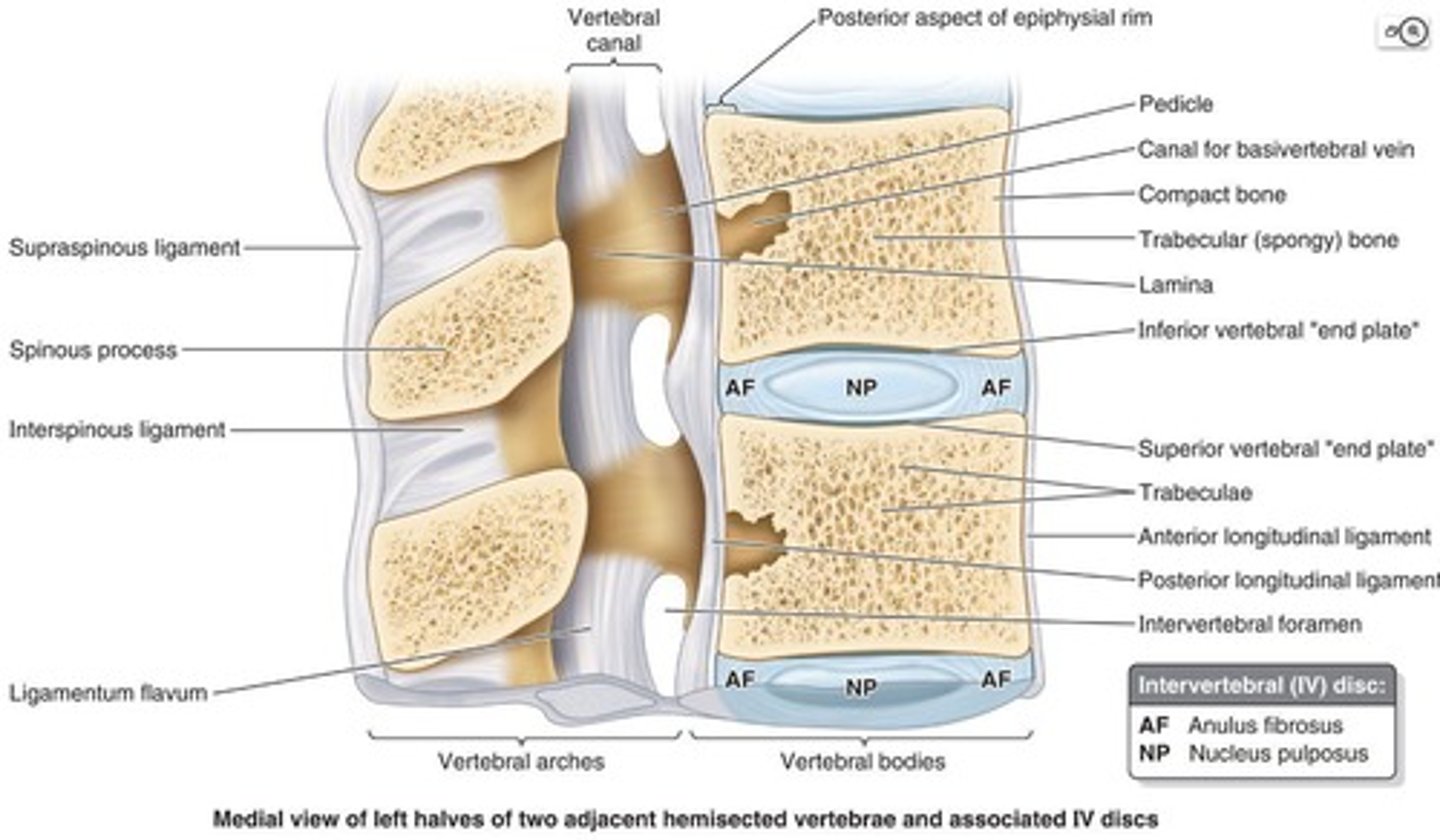
What are intervertebral discs?
Pads of fibrocartilage that separate vertebral bodies and act as shock absorbers.
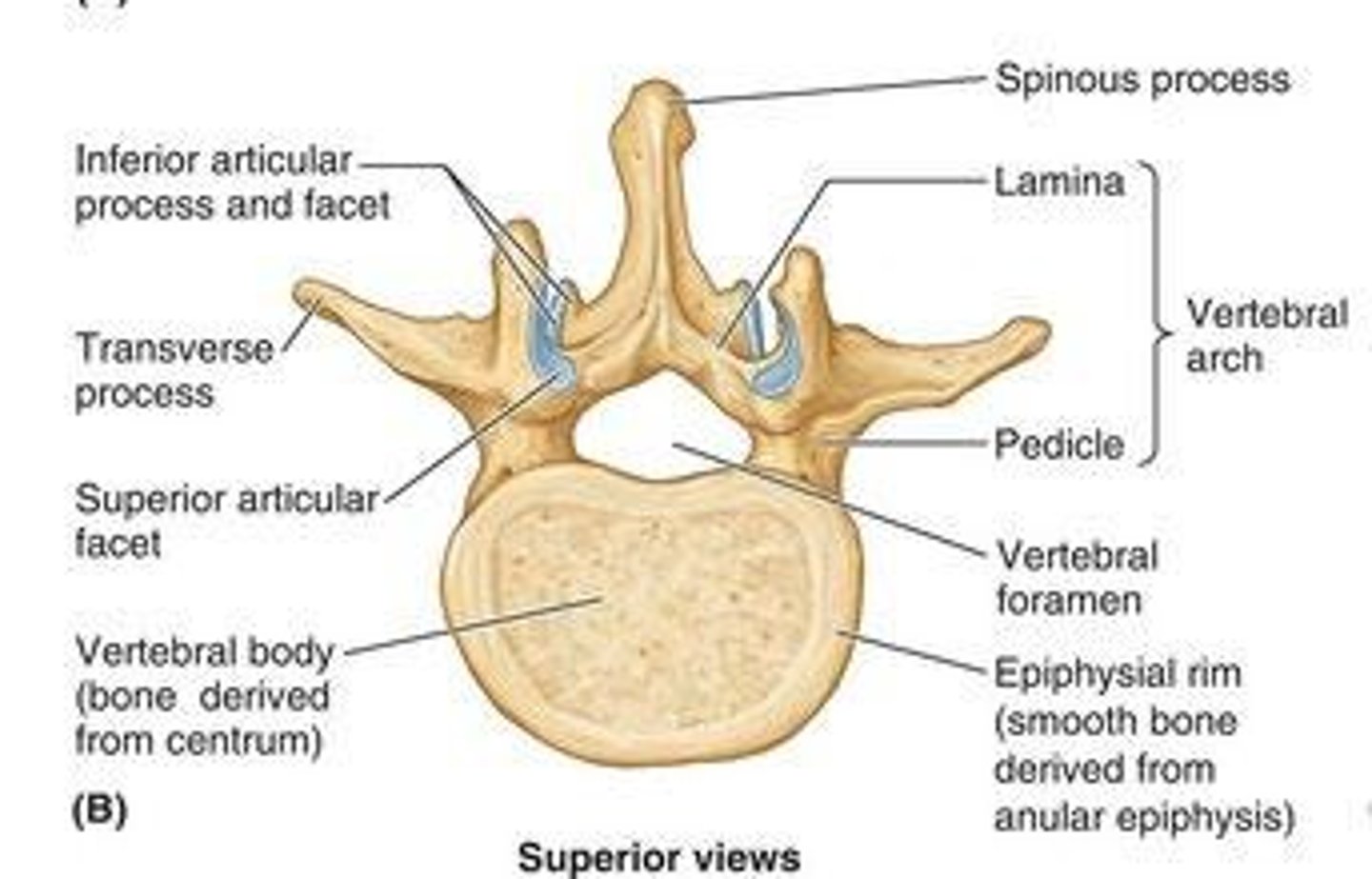
What is the vertebral arch?
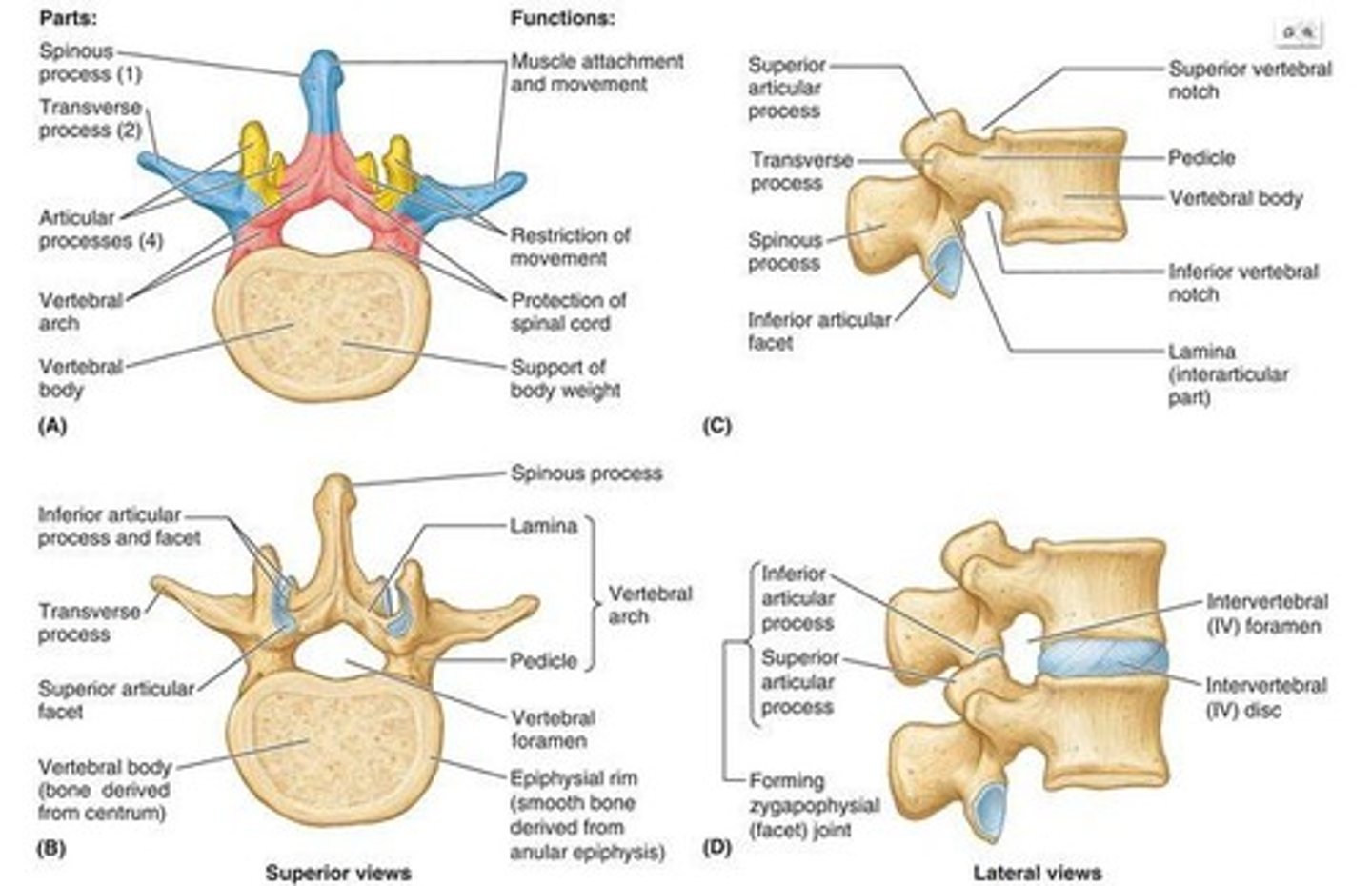
The structure posterior to the vertebral body, consisting of pedicles and laminae.
What are vertebral notches?
Indentations in the vertebrae that form intervertebral foramina for spinal nerve emergence.
What is the role of the spinous process?
It projects posteriorly from the vertebral arch and serves as a muscle attachment site.
What are the common features of lumbar vertebrae?
They have a thicker, kidney-shaped body and lack transverse foramina or costal facets.
What is the lumbosacral angle?
The angle formed between the lumbar spine and the sacrum, varying from 130-160 degrees.
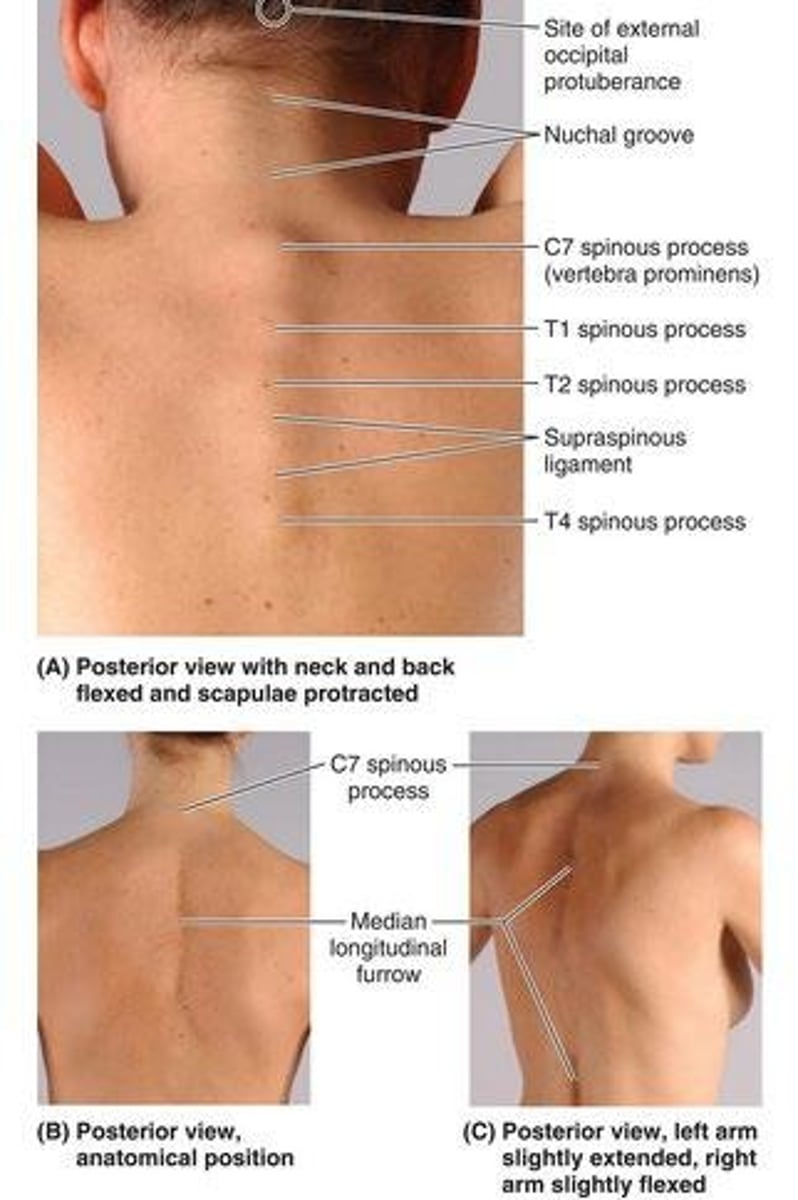
What is the significance of the vertebral prominens?
It is the spinous process of C7, serving as a landmark for various anatomical structures.
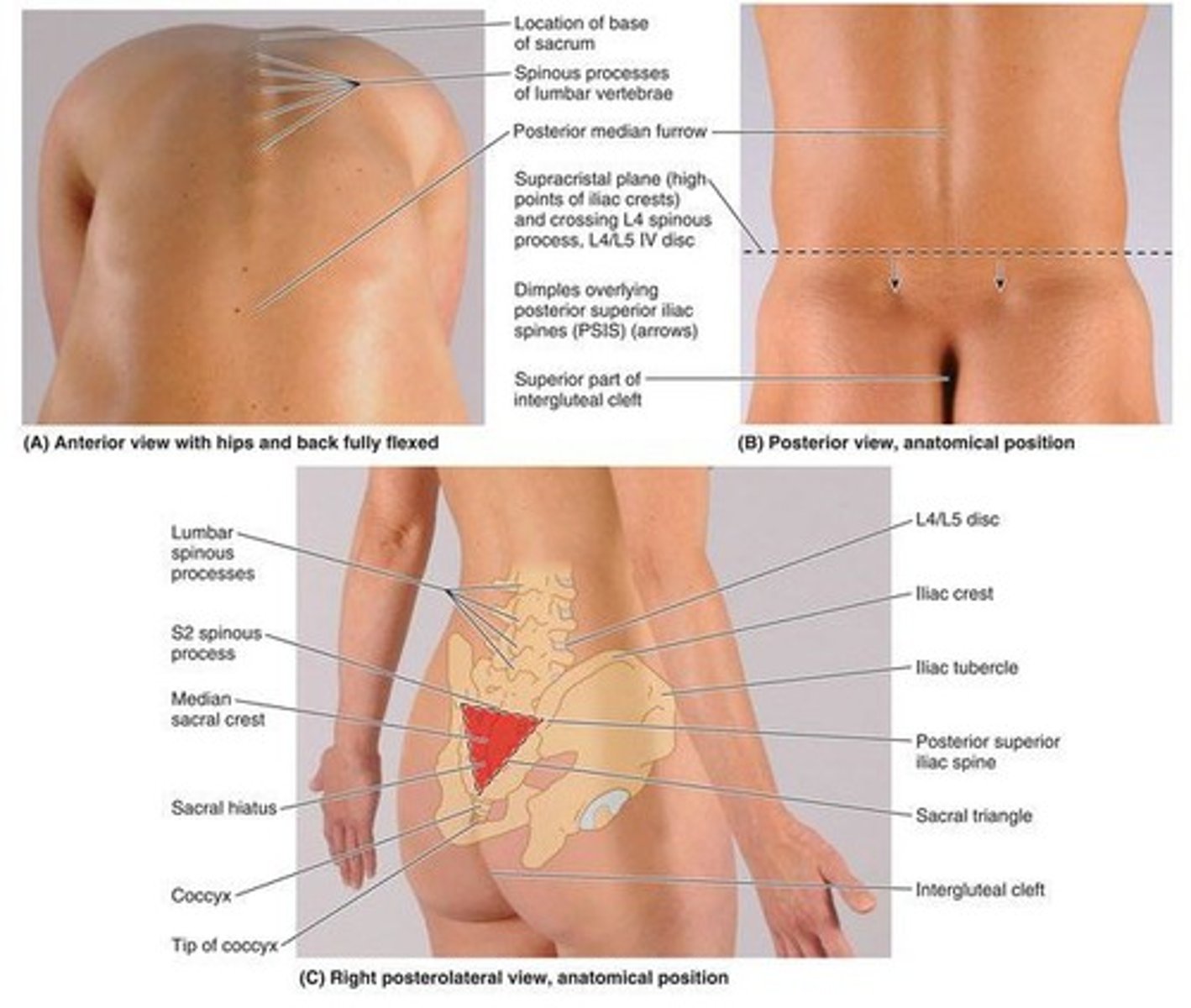
What is the relationship between the iliac crest and lumbar puncture?
The iliac crest (L4) is commonly used as a landmark for lumbar puncture procedures.
What variations can occur in the number of vertebrae?
Some individuals may have 32 or 34 vertebrae due to developmental errors.
What is the role of the anterior and posterior longitudinal ligaments?
They are found on the anterior and posterior aspects of the vertebral body, providing stability.
What is the function of the articular processes?
They form facet joints that determine the movement allowed between vertebrae.
What happens to the coccygeal vertebrae after age 25?
They begin to fuse together.
What is the function of the annulus fibrosus in intervertebral discs?
It is the outer ring of fibrocartilage that provides structure and support to the disc.
What is the nucleus pulposus?
The inner gelatinous region of the intervertebral disc that acts as a shock absorber.
What is the significance of costal facets on thoracic vertebrae?
They allow articulation with the ribs.
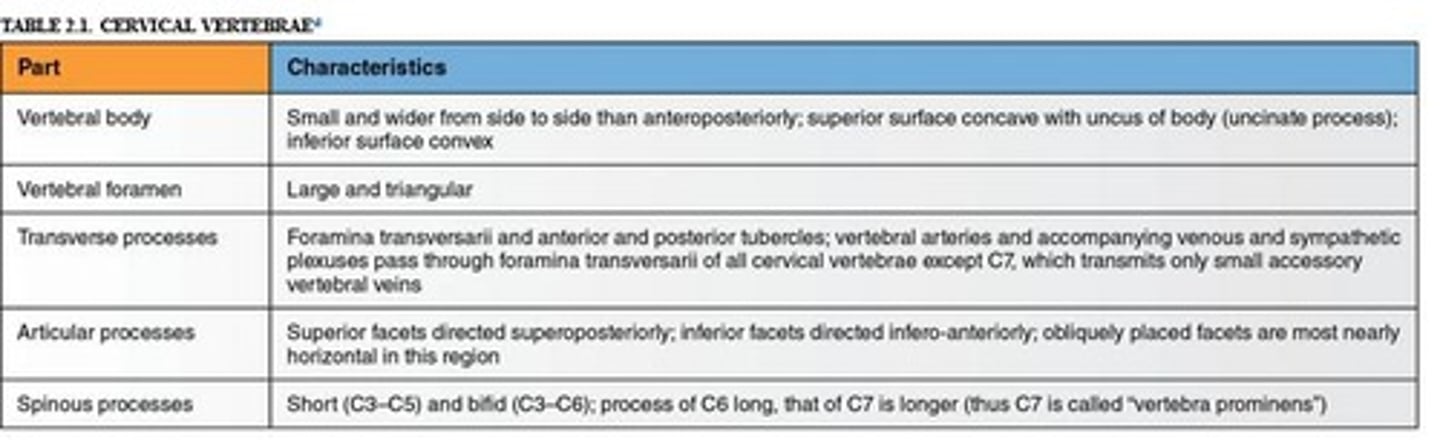
What is the typical structure of cervical vertebrae?
They have rectangular shaped bodies and are relatively small and light.
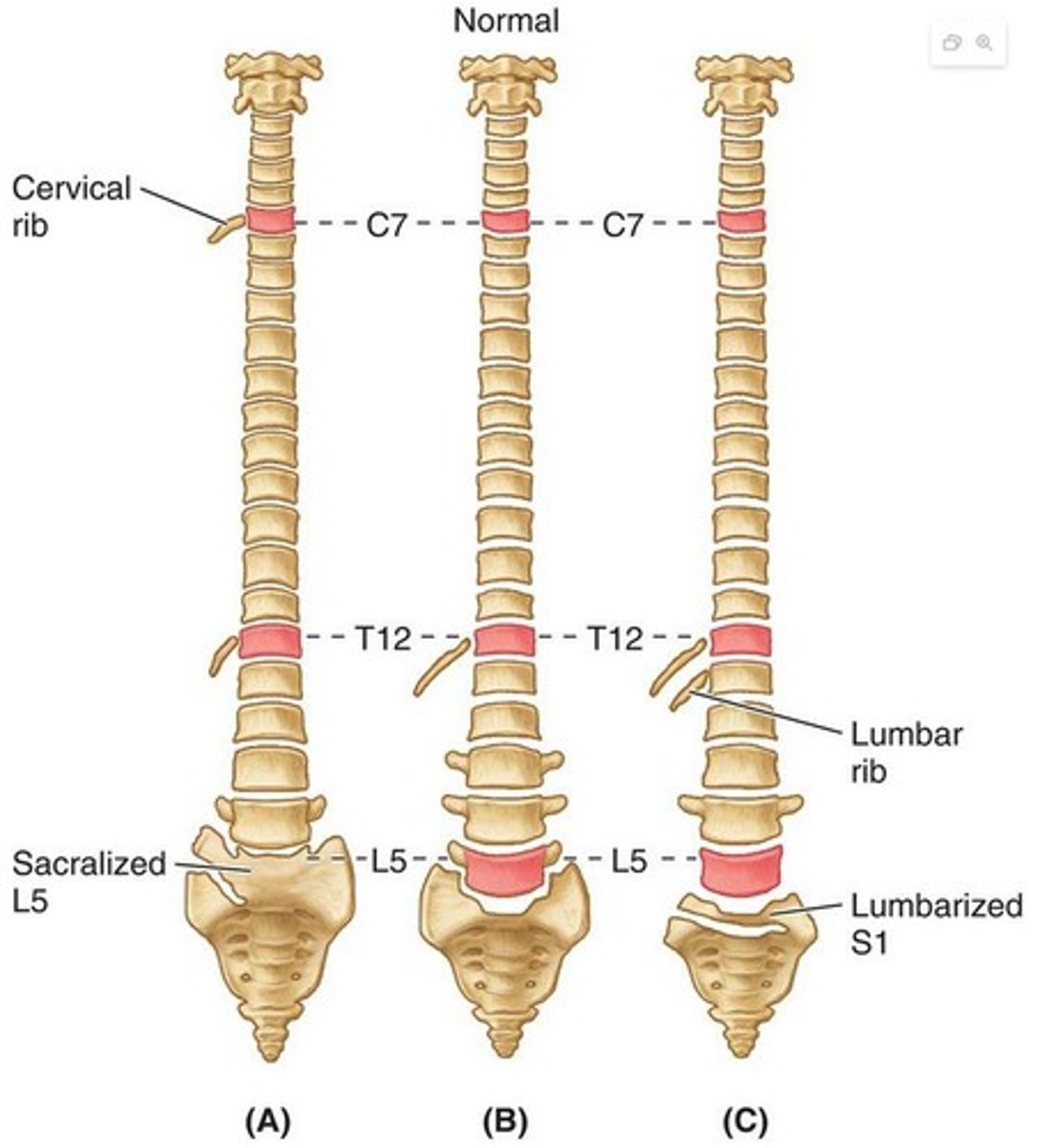
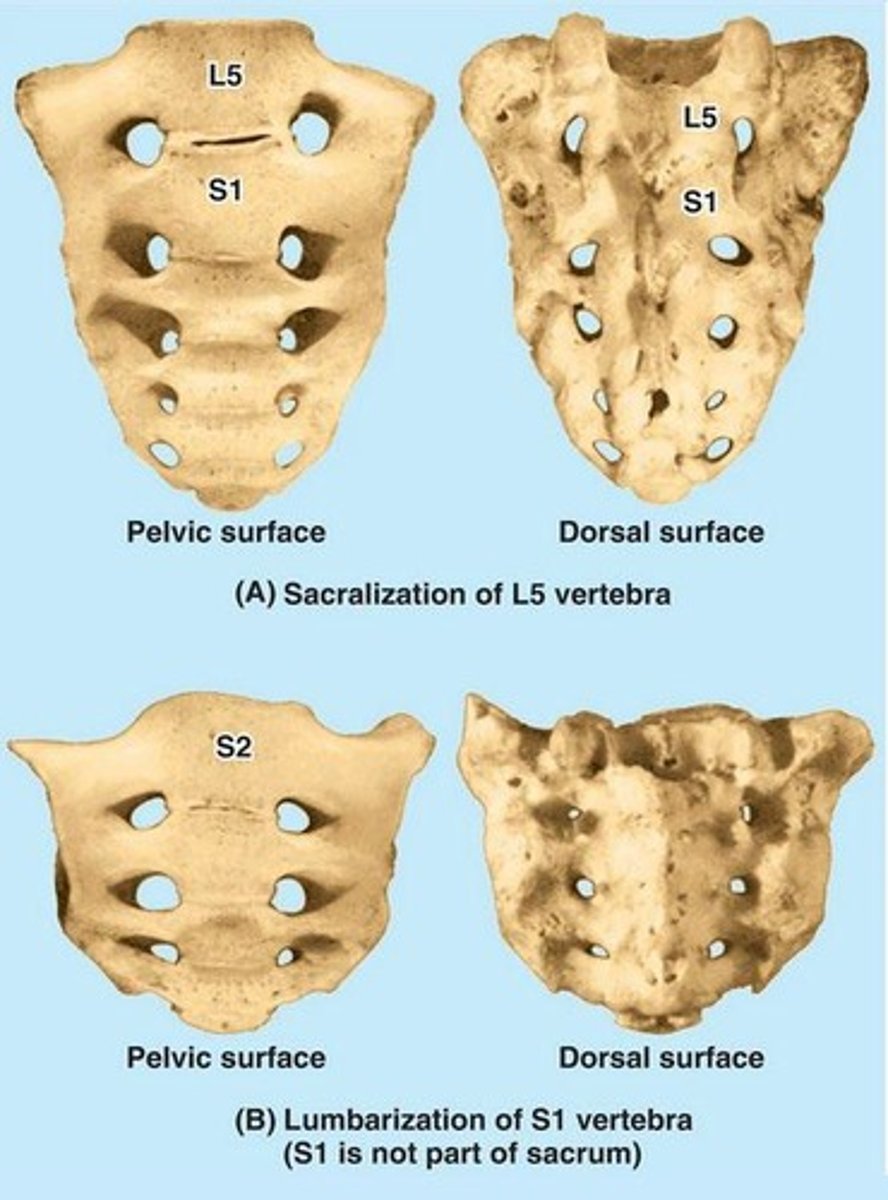
What is sacralization in vertebrae?
A condition where the lumbar vertebrae fuse with the sacrum.
What is lumbarization?
A condition where the sacral vertebrae are separated into additional lumbar vertebrae.
What is the appearance of early to moderate osteoporosis in vertebral bodies?
Vertical striation in the vertebral bodies.
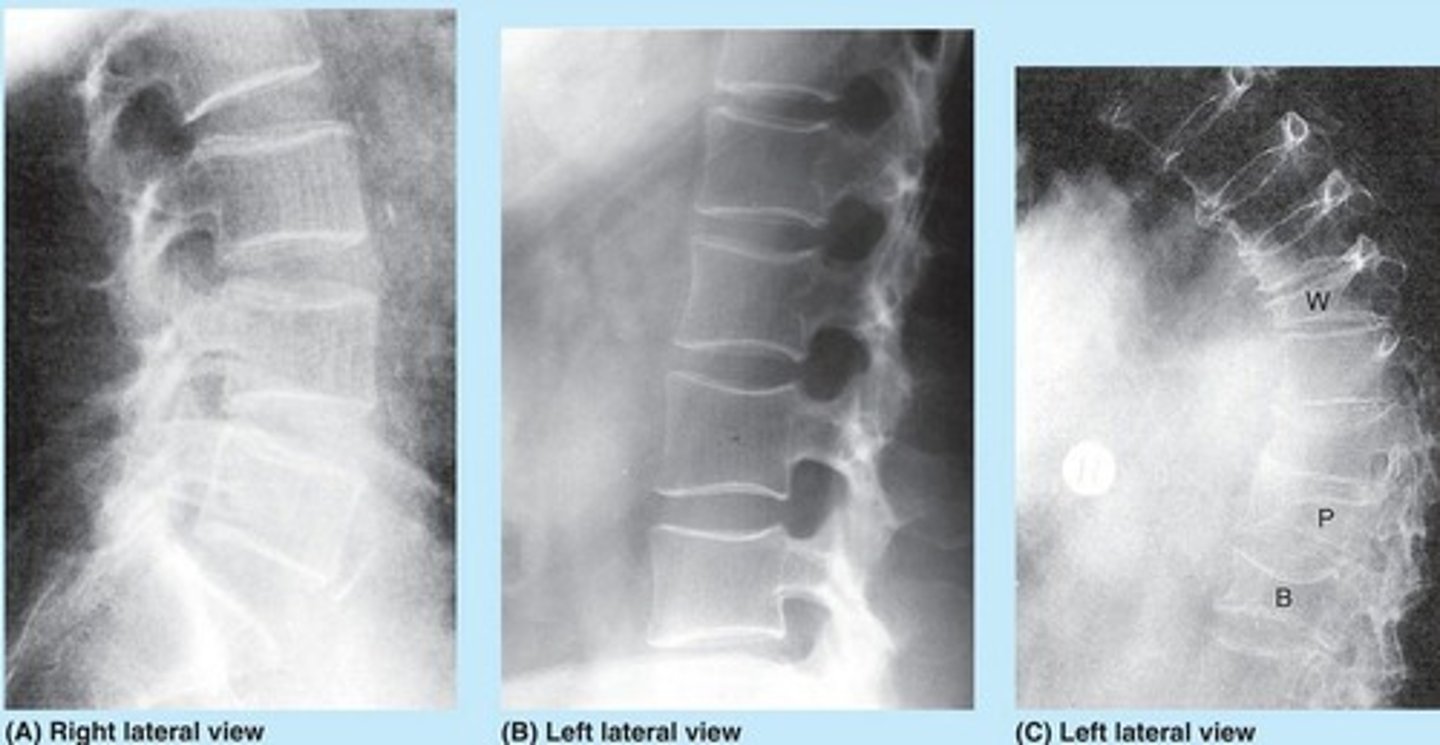
What happens to the vertebral bodies in later stages of osteoporosis?
The striated pattern is lost, trabecular bone becomes more transparent, and cortical bone becomes prominent.
What is a laminectomy?
The surgical excision of one or more spinous processes and adjacent supporting vertebral laminae.
What are common reasons for performing a laminectomy?
To relieve pressure on the spinal cord caused by a tumor, herniated disc, or bony hypertrophy.
Why are cervical vertebrae more prone to dislocation?
They are less tightly interlocked and can be dislocated with less force than required to fracture them.
What is a common outcome of severe cervical vertebrae dislocations?
Injury to the spinal cord, especially in cases of fracture-dislocations.
What is lumbar spinal stenosis?
A condition where the lumbar vertebral foramen decreases in size, potentially compressing spinal nerve roots.
What is a cervical rib?
An anomaly where the developmental costal element of C7 becomes enlarged, potentially causing thoracic outlet syndrome.
What is spina bifida occulta?
A birth defect where the neural arches of L5 and/or S1 fail to develop normally, often presenting as a small dimple.
What is spina bifida cystica?
A severe form of spina bifida where one or more vertebral arches fail to develop completely, potentially leading to neurological symptoms.
What are the joints of the vertebral column?
They include joints of the vertebral bodies, vertebral arches, craniovertebral joints, costovertebral joints, and sacroiliac joints.
What is the function of intervertebral discs?
They permit movement between adjacent vertebrae and serve as shock absorbers.
What are the components of an intervertebral disc?
An outer anulus fibrosus and a central nucleus pulposus.
What is the role of the anterior longitudinal ligament?
It connects the anterolateral aspects of the vertebral bodies and IV discs and limits extension of the vertebral column.
What does the posterior longitudinal ligament do?
It runs along the posterior aspect of the vertebral bodies, weakly resisting hyperflexion and helping prevent posterior herniation of the nucleus pulposus.
What are facet joints?
Plane synovial joints between the superior and inferior articular processes of adjacent vertebrae.
How do facet joints contribute to vertebral movement?
They permit gliding between the articular processes and bear weight during lateral flexion.
What is the significance of the nucleus pulposus in intervertebral discs?
It is the core of the disc, providing flexibility and resilience, and is avascular, receiving nourishment by diffusion.
What happens to intervertebral discs as the vertebral column descends?
The thickness of the discs increases, with the greatest thickness in the cervical and lumbar regions.
What is the most inferior functional disc in the vertebral column?
The disc between L5 and S1 vertebrae.
What is the role of accessory ligaments in the vertebral column?
They help stabilize the facet joints by uniting the laminae, transverse processes, and spinous processes.
What is the vascularization of the anulus fibrosus?
It becomes decreasingly vascularized centrally, with only the outer third receiving sensory innervation.
What are the ligamenta flava?
Broad, pale yellow bands of elastic tissue that join the laminae of adjacent vertebral arches.
What is the function of the ligamenta flava?
They limit abrupt flexion of the vertebral column, prevent injury to the IV discs, and assist with straightening the column after flexing.
What do interspinous ligaments connect?
They connect adjoining spinous processes, attaching from the root to the apex of each process.
What is the supraspinous ligament?
A cord-like band that connects the tips of the spinous processes from C7 to the sacrum.
Where does the nuchal ligament extend?
From the external occipital protuberance and posterior border of the foramen magnum to the spinous processes of the cervical vertebrae.
What are the atlanto-axial joints?
Three articulations: two lateral atlanto-axial joints (gliding synovial) and one median atlanto-axial joint (pivot joint).
What is the role of the dens in the atlanto-axial joint?
It acts as the axis or pivot during head rotation, held in a socket formed by the atlas.
What do the alar ligaments prevent?
Excessive rotation at the atlanto-axial joints.
What limits the range of motion (ROM) in the vertebral column?
Thickness, elasticity, and compressibility of IV discs, shape of facet joints, tension of joint capsules, and resistance from muscles and ligaments.
In which regions is movement of the vertebral column freer?
In the cervical and lumbar regions.
What are the primary curves of the vertebral column?
Thoracic and sacral curvatures present at birth.
What are secondary curves of the vertebral column?
Curves that appear after birth, helping to support body weight better than a straight spine.
When does the cervical curve appear?
When a child is able to hold up their head (around 3-4 months).
When does the lumbar curve develop?
When a child is learning to stand and walk (by the first year of life).
What arteries supply the vertebral column in the neck?
Vertebral and ascending cervical arteries.
What are the major segmental arteries of the trunk?
Posterior intercostal, subcostal, and lumbar arteries.
What are the internal and external vertebral venous plexuses?
Venous networks along the vertebral column that communicate through intervertebral foramina.
What is the role of the basivertebral veins?
They drain into the anterior external and anterior internal vertebral venous plexuses.
What is herniation of the nucleus pulposus?
A condition where the inner gel-like core of an intervertebral disc protrudes through a tear in the outer layer.
What is spondylolysis?
A defect in the pars interarticularis of the vertebra, often referred to as a 'Scotty Dog' fracture.
What muscles are involved in the movements of the vertebral column?
Back muscles, assisted by gravity and abdominal muscles.
What is the function of the suboccipital muscles?
They act on the head by extending and rotating it on the first and second cervical vertebrae.
What is the significance of the interspinales muscles?
They connect the spinous processes of adjacent vertebrae.
What is the role of the transversospinalis muscle group?
They provide stability and movement to the vertebral column.
What can chronic back strain result from?
Imbalance in support from anterior (abdominal) and posterior (back) muscles.
What is the function of the levatores costarum muscles?
They connect transverse processes and help elevate the ribs.
What are spinal reflexes?
Responses that do not involve the brain.
What is the primary function of spinal reflexes?
To provide a fast reaction to a stimulus.
From what does the spinal cord develop?
The caudal neural tube.
What does the neural canal of the tube become?
The central canal of the spinal cord.
What forms the sulcus limitans?
A horizontal groove in the lateral walls of the canal by the sixth week of embryonic development.
What do the basal plates develop into?
Anterior and lateral horns, and anterior gray commissure.
What do the alar plates develop into?
Posterior horns and posterior gray commissure.
What happens to the growth of the vertebral column compared to the spinal cord during fetal development?
The growth of the vertebral column outpaces the growth of the spinal cord.
What is gray matter composed of?
Neuron cell bodies, dendrites, unmyelinated axons, and glial cells.
Where are the axons of sensory neurons located in the spinal cord?
In the posterior horns.
Where are the cell bodies of somatic motor neurons located?
In the anterior horns.
What is the function of lateral horns?
To house cell bodies of autonomic motor neurons, present only in parts T1-L2.
What are the four parts of the spinal cord?
Cervical, thoracic, lumbar, and sacral.
What is the conus medullaris?
The tapered end of the spinal cord located at the L1 vertebra.
What is the cauda equina?
Spinal nerve roots extending inferiorly from the conus medullaris.
What are the connective tissue wrappings of a nerve?
Epineurium (around the nerve), perineurium (around fascicles), and endoneurium (around axons).
How many pairs of spinal nerves are there?
31 pairs.
What does the posterior root of a spinal nerve contain?
Sensory neurons.
What does the anterior root of a spinal nerve contain?
Motor neurons.
What protects the spinal cord?
Bone, meninges, and cerebrospinal fluid.
What is the pia mater?
The delicate layer adhering to the spinal cord.
What is the function of denticulate ligaments?
To help suspend the spinal cord.
What is the role of the arachnoid mater?
To provide a web-like layer external to the pia mater.