Mod 1-3 Health Assessment
 Call Kai
 Learn
Learn Practice Test
 Spaced Repetition
 Match
Match Flashcards
 Knowt Play
1/26

There's no tags or description
Looks like no tags are added yet.
Name | Mastery | Learn | Test | Matching | Spaced | Call with Kai |
|---|
No analytics yet
Send a link to your students to track their progress
27 Terms
What are the 2 key goals of health assessment?
Normal vs Abnormal
Patient Centered Care
What is nursing ADPIE?
Assessment
Diagnosis
Planning
Implementation
Evaluation
What are the components of the subjective data?
(think, what would you ask during the HPI documentation?)
— Onset
– Location
– Duration
– Intensity
– Quality/Description
– Alleviating/Aggravating factors
– Pain management goal
– Functional goal
What are the components of objective data?
Physiological effects of pain — Stress response & muscle tension
Inadequately treated pain — Nausea, diaphoresis
Observable behavioral responses — vocalizations
Subjective vs Objective data
Subjective is what the patient/family member reports
Objective is what the nurse sees and assesses
In a SOAP note, what is included in the Subjective?
CC, HPI, PMH & PSH, ROS, current meds, allergies
In a SOAP note, what is included in the Objective?
VS, PE findings, Labs, Imaging, diagnostic, documentation of other clinicians
Open vs Closed Q’s
Open — any response
Closed — yes or no
OLDCARTS
O: Onset
L: Location
D: Duration
C: Character
A: Alleviating/Aggravating
R: Radiation
T: Timing
S: Severity
OPQRST
O: Onset
P: Provocative or palliative
Q: Quality
R: Region, radiation
S: Severity
T: Timing
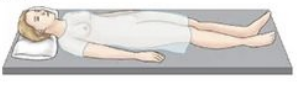
Supine
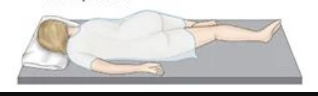
Sims
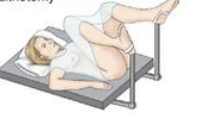
Lithotomy
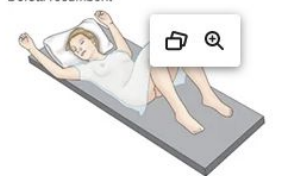
Dorsal Recumbent
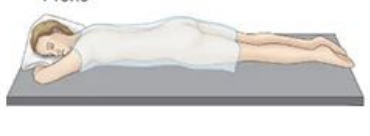
Prone
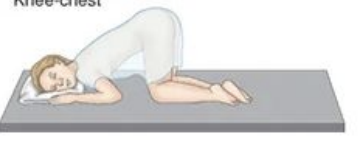
Knee-chest
Psychomotor skills (NEED TO KNOW)
Inspection
Percussion
Palpation
Auscultation
Why is there a specific order to the psychomotor skill?
Because palpation can change the way you hear things in the body
3 types of percussion techniques
Direct
Indirect
Indirect fist (blunt)
JCAHO standards
Assess/reassess pain regularly
Name the 5 levels of consciousness
Alert
Confusion
Drowsiness
Stupor
Comatose
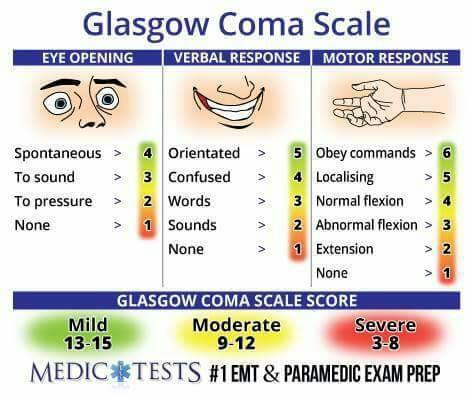
The ____ the score, the more alert a person is on the Glasgow Coma scale
HIGHER
Mini-mental exam Q’s
Object recognition
Serial 7’s or simple math
Spelling — forward or backwards
Following written directions
Copying a sentence or a picture of a clock or house
Telling meaning of a phrase
Non-modifiable factors
Age
Gender/s3x
Family history
Environmental (changeable) factors
Support systems, housing, healthcare accessibility, literacy
Metabolic issues/associated physiological processes
Parkinson’s, cancer, HIV/AIDs, chronic conditions
ABCT (objective data)
Appearance
Behavior
Cognitive function
Thought processes and perceptions