12: Pharmacology Diabetes Drugs (Dr. Fiaturi)
 Call Kai
 Learn
Learn Practice Test
 Spaced Repetition
 Match
Match Flashcards
 Knowt Play
1/58

There's no tags or description
Looks like no tags are added yet.
Name | Mastery | Learn | Test | Matching | Spaced | Call with Kai |
|---|
No analytics yet
Send a link to your students to track their progress
59 Terms
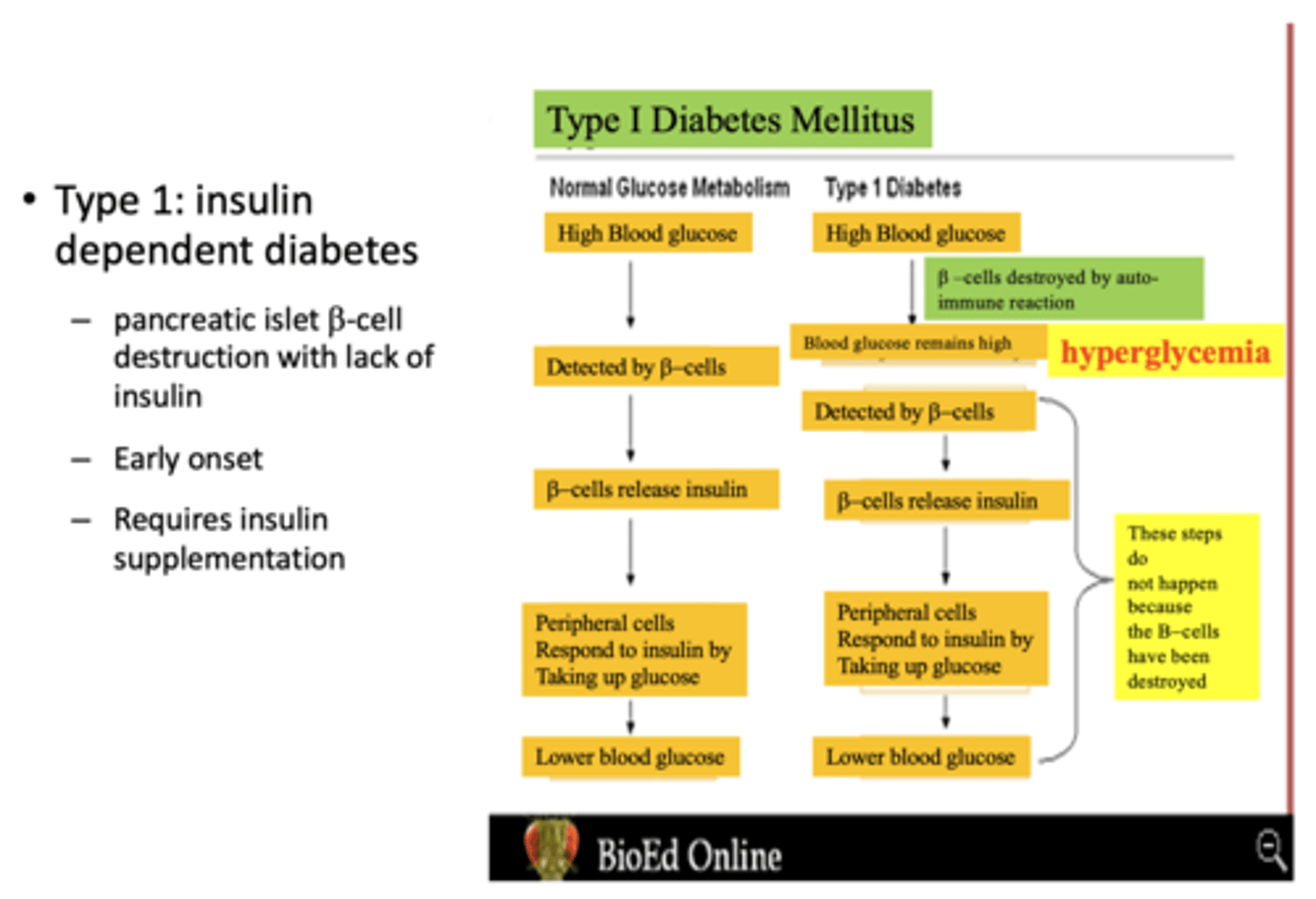
What condition is the following:
- Pancreatic islet b-cell destruction with lack of insulin
- Early onset
- Requires insulin supplementation
Type 1 diabetes
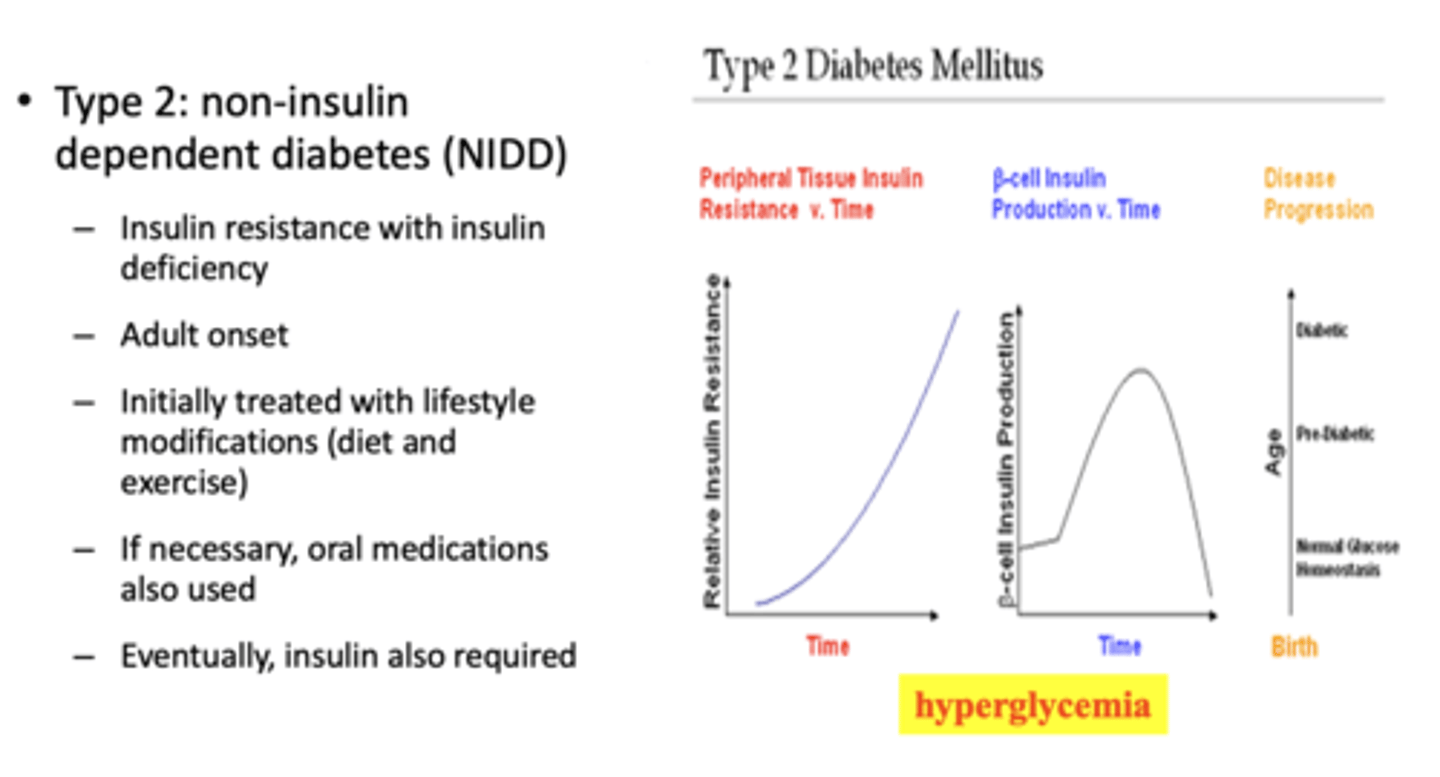
What condition is the following:
- Insulin resistance with insulin deficiency
- Adult onset
- Initially treated with lifestyle modifications (diet and exercise)
- If necessary, oral medications also used
- Eventually, insulin also required
Type 2 diabetes
Increased circulating insulin levels then feedback to suppress hepatic glucose prodcution with what drug?
Sulfonylureas
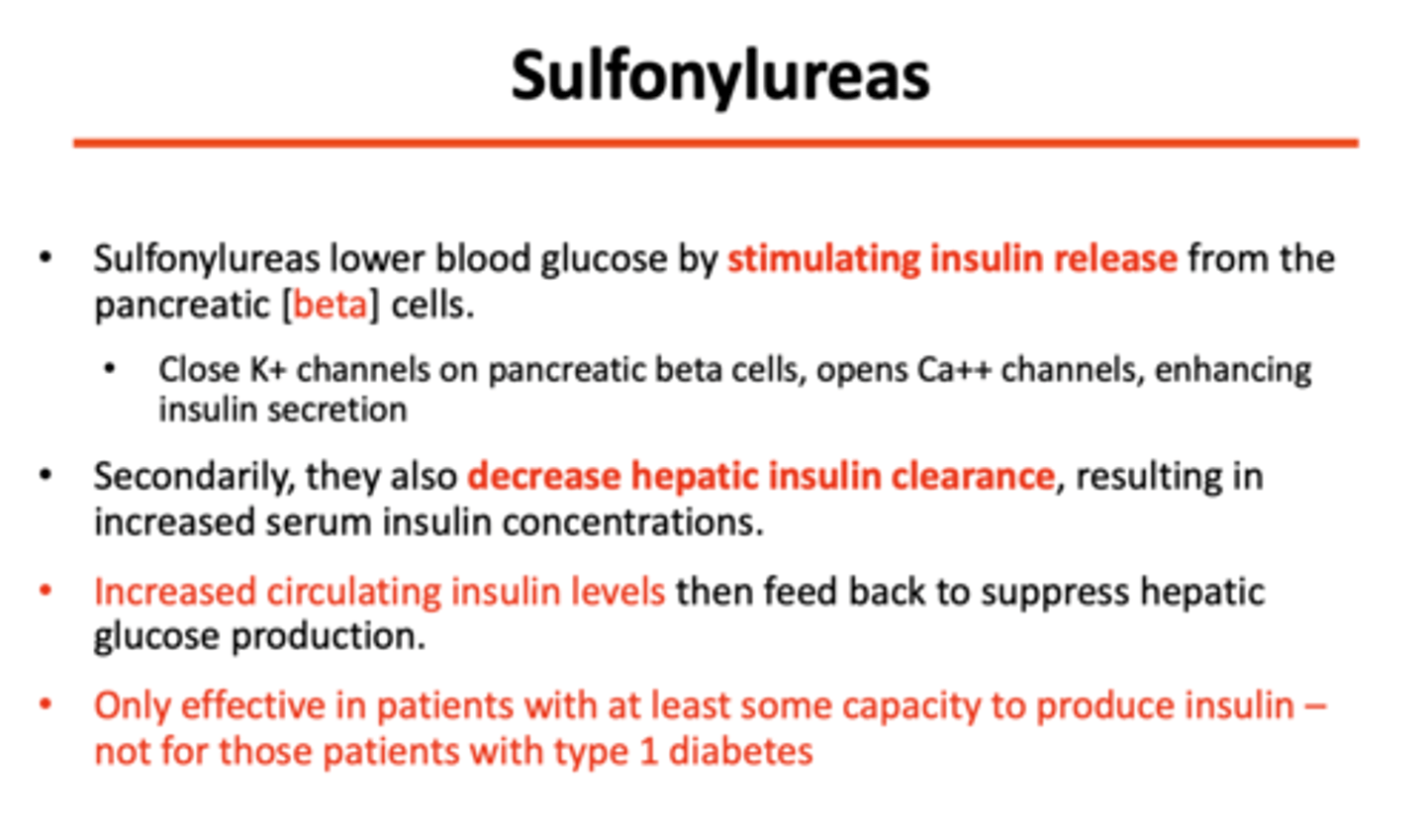
MOA of this drug is:
- Stimulate insulin release from the pancreatic [beta] cells
- Decrease hepatic insulin clearance
Sulfonylureas
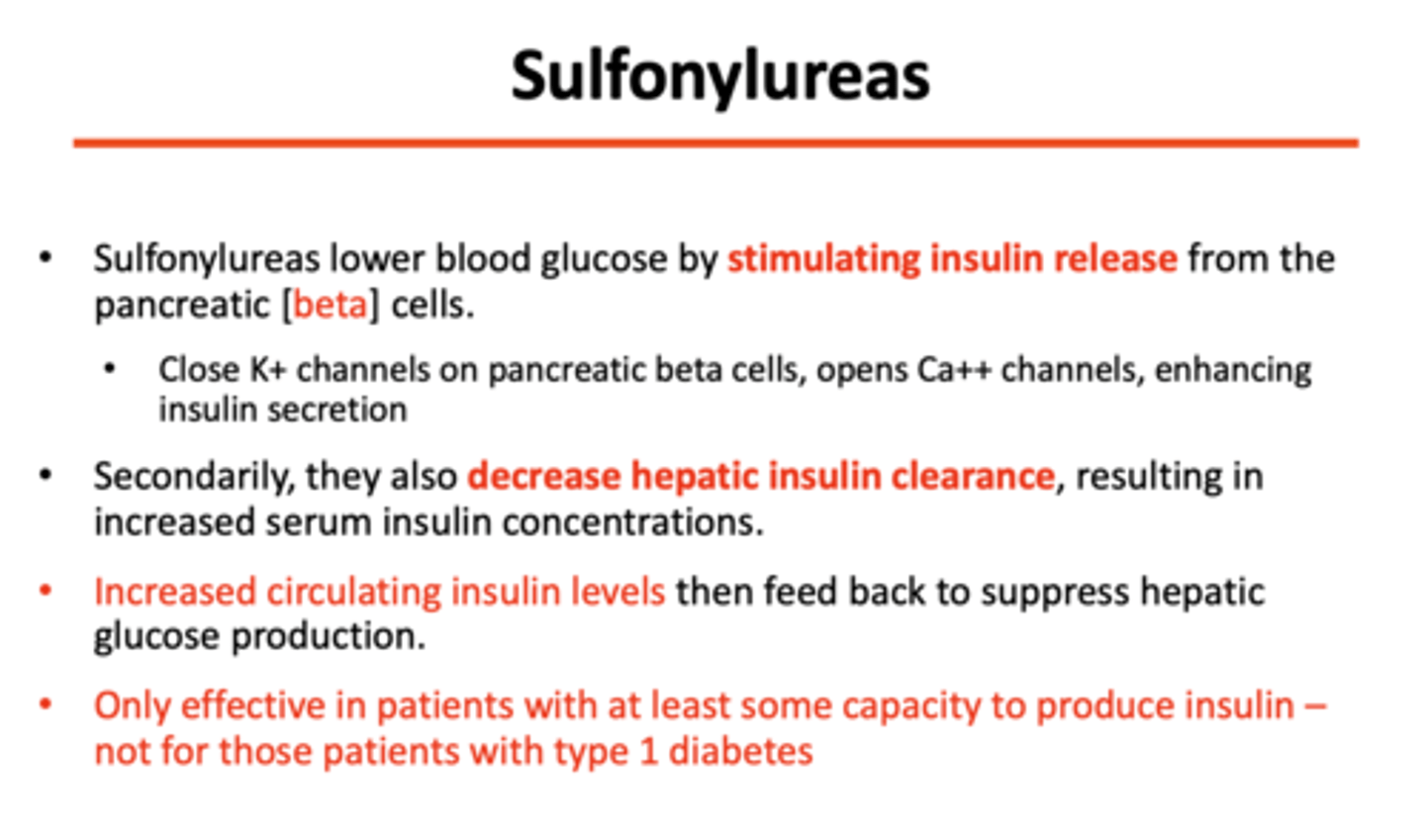
Sulfonylureas are not effective with what patients?
Type 1 diabietes (Sulfonylureas only effective in patients with at least some capacity to produce insulin)
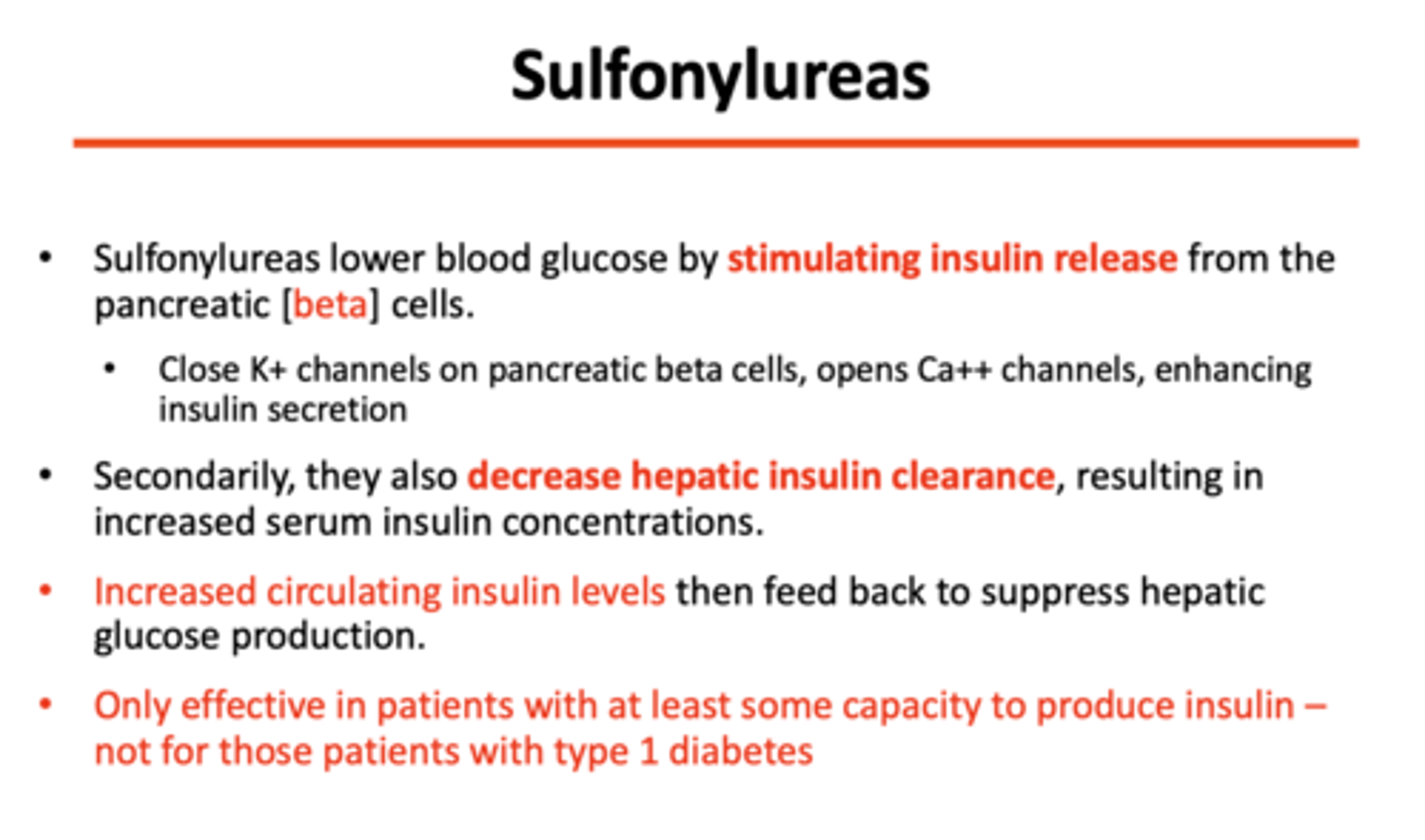
A patient with type 1 diabetes would not be able to use what drugs due to impaired beta cells?
- Sulfonylureas
- Meglitinides
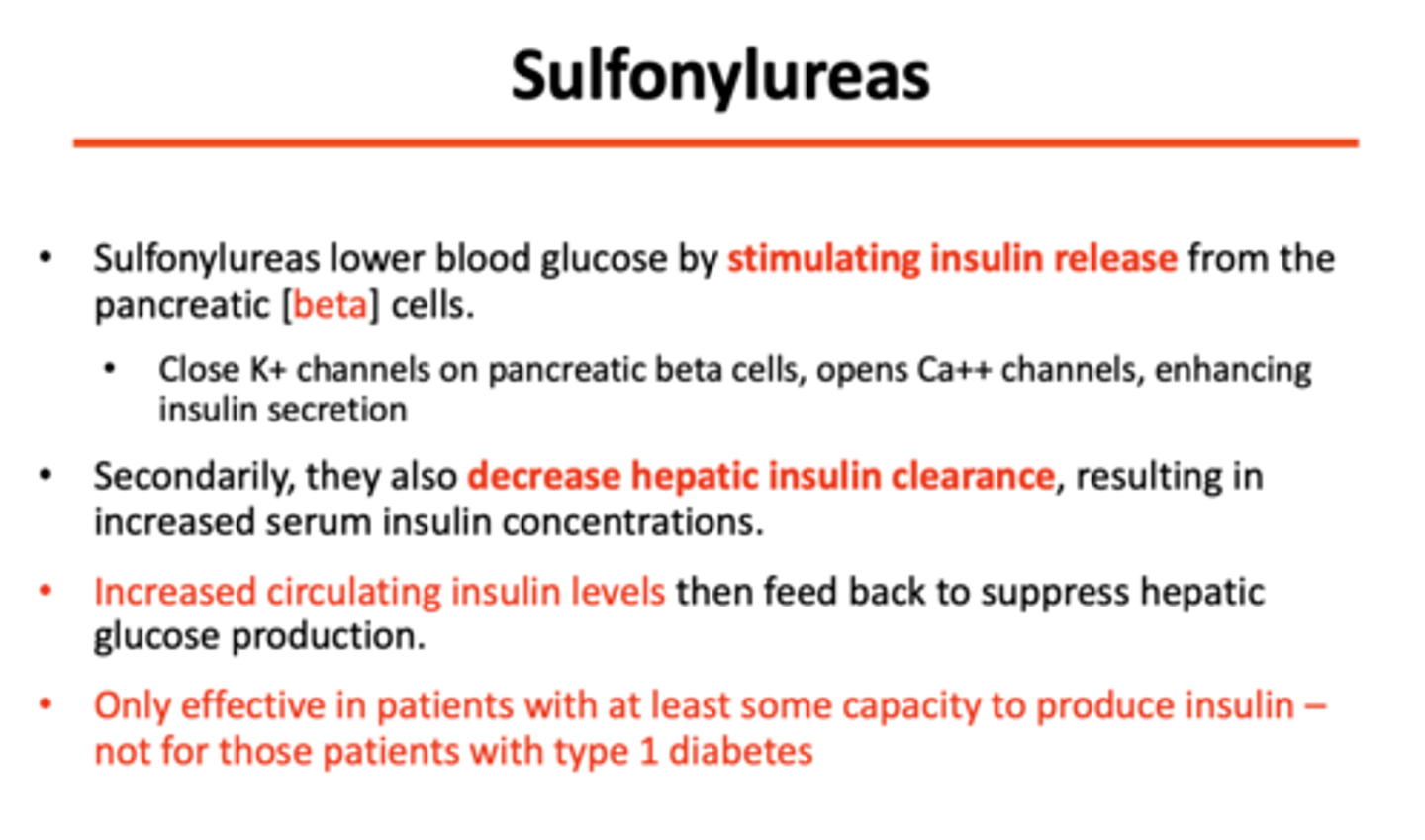
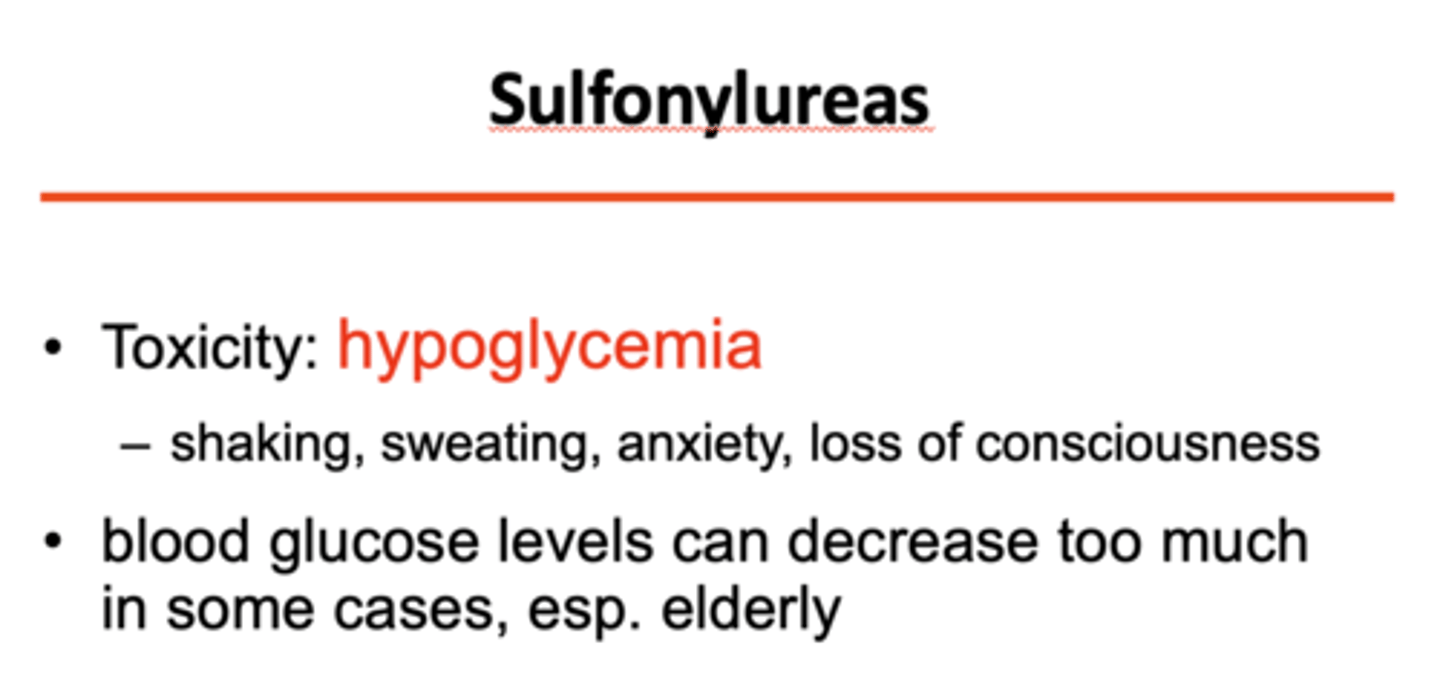
Severe hypoglycemia is a complication of what two medications?
- Sulfonylureas
- Meglitinides
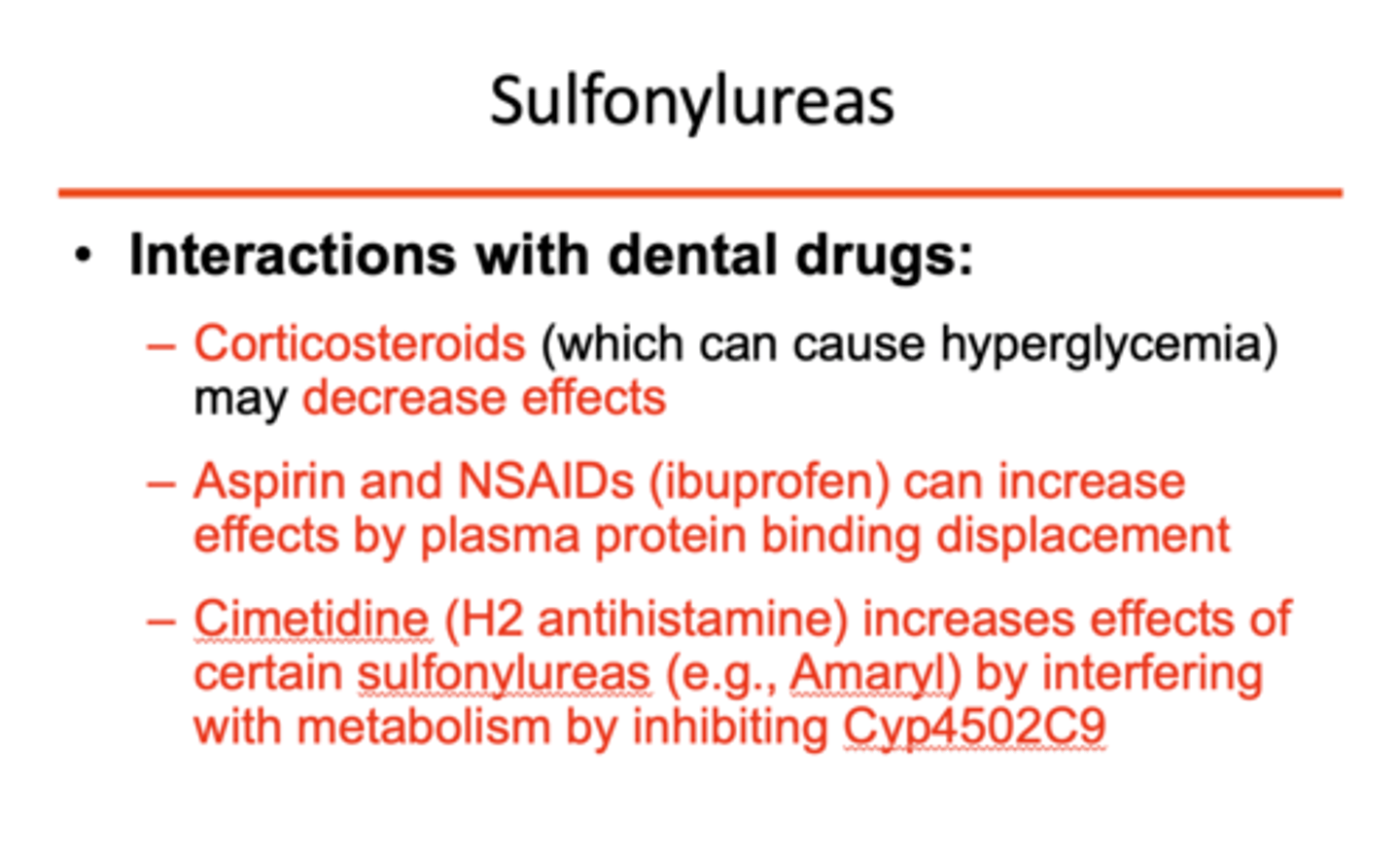
Sulfonylureas are contraindicated with this medication because it can cause hyperglycemia and may decrease effects
Corticosteroids
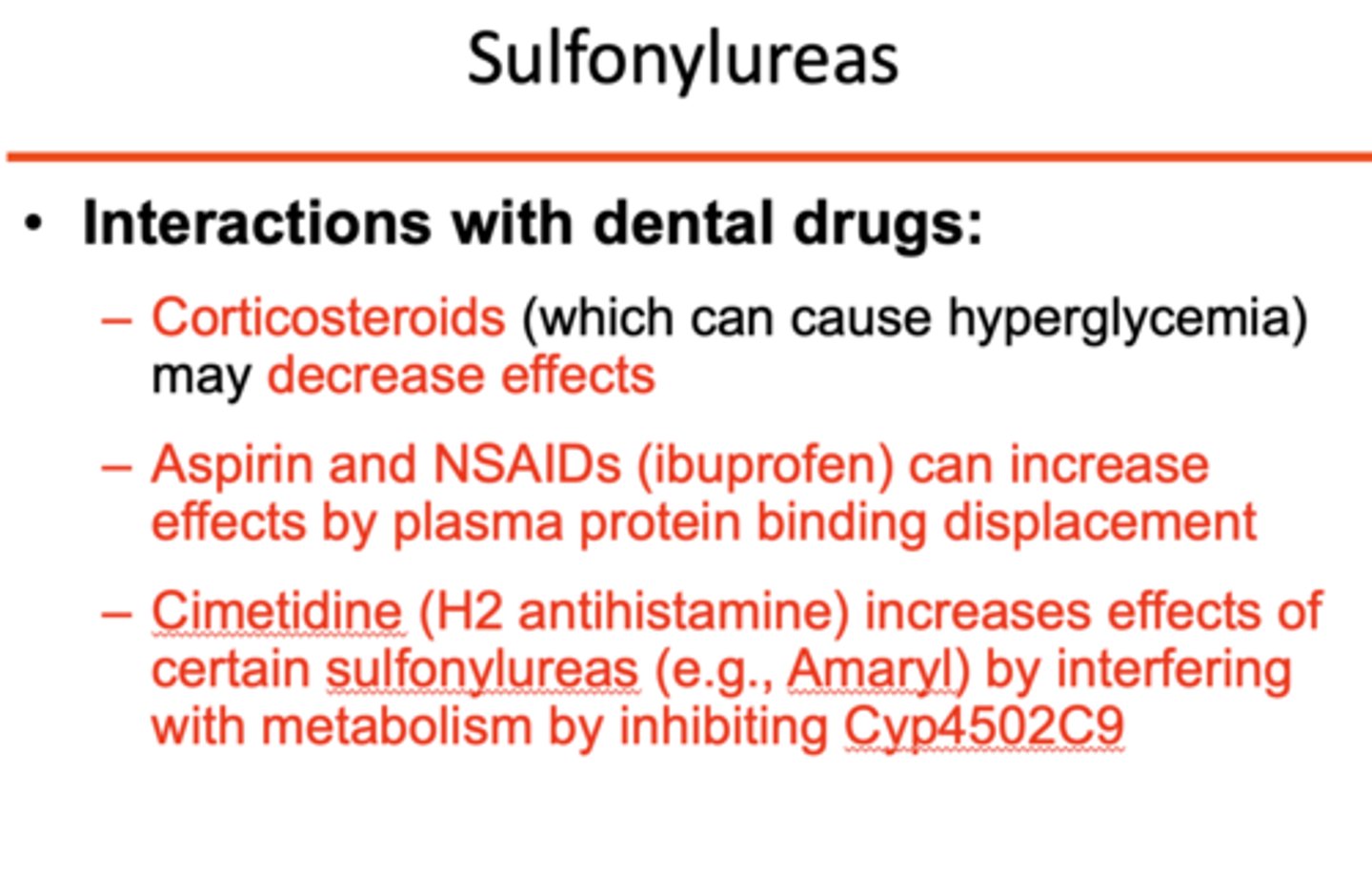
Sulfonylureas are contraindicated with this medication because they compete for the plasma binding site and the sulfonylureas would be displaced freely in the plasma (could lead to toxicity) aka plasma protein binding displacement:
Aspirin and NSAIDs
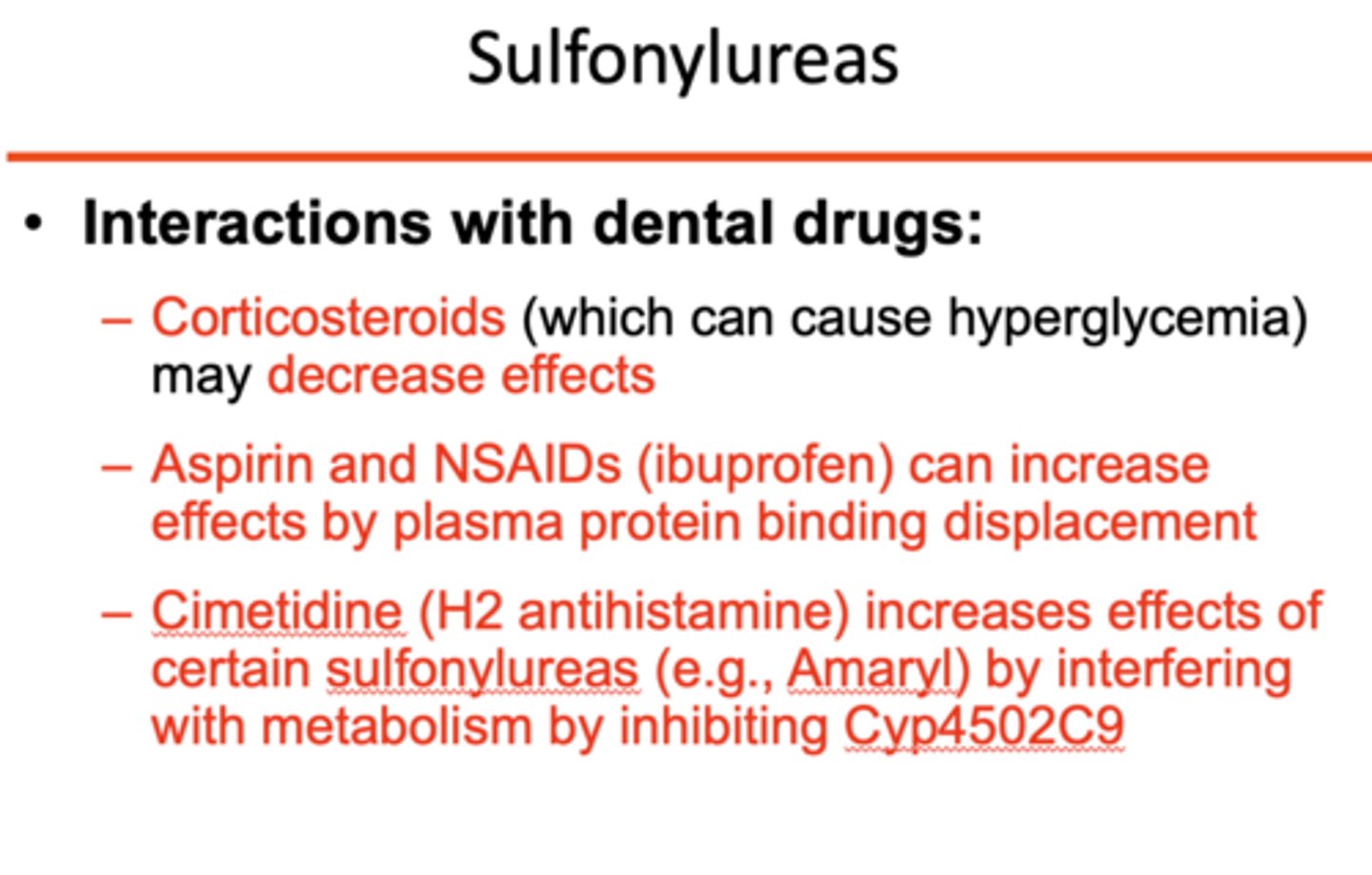
Sulfonylureas are contraindicated with this medication because they increase effects of certain sulfonylureas (e.g., Amaryl) by interfering with metabolism by inhibiting Cyp4502C9:
Cimetidine (H2 antihistamine)
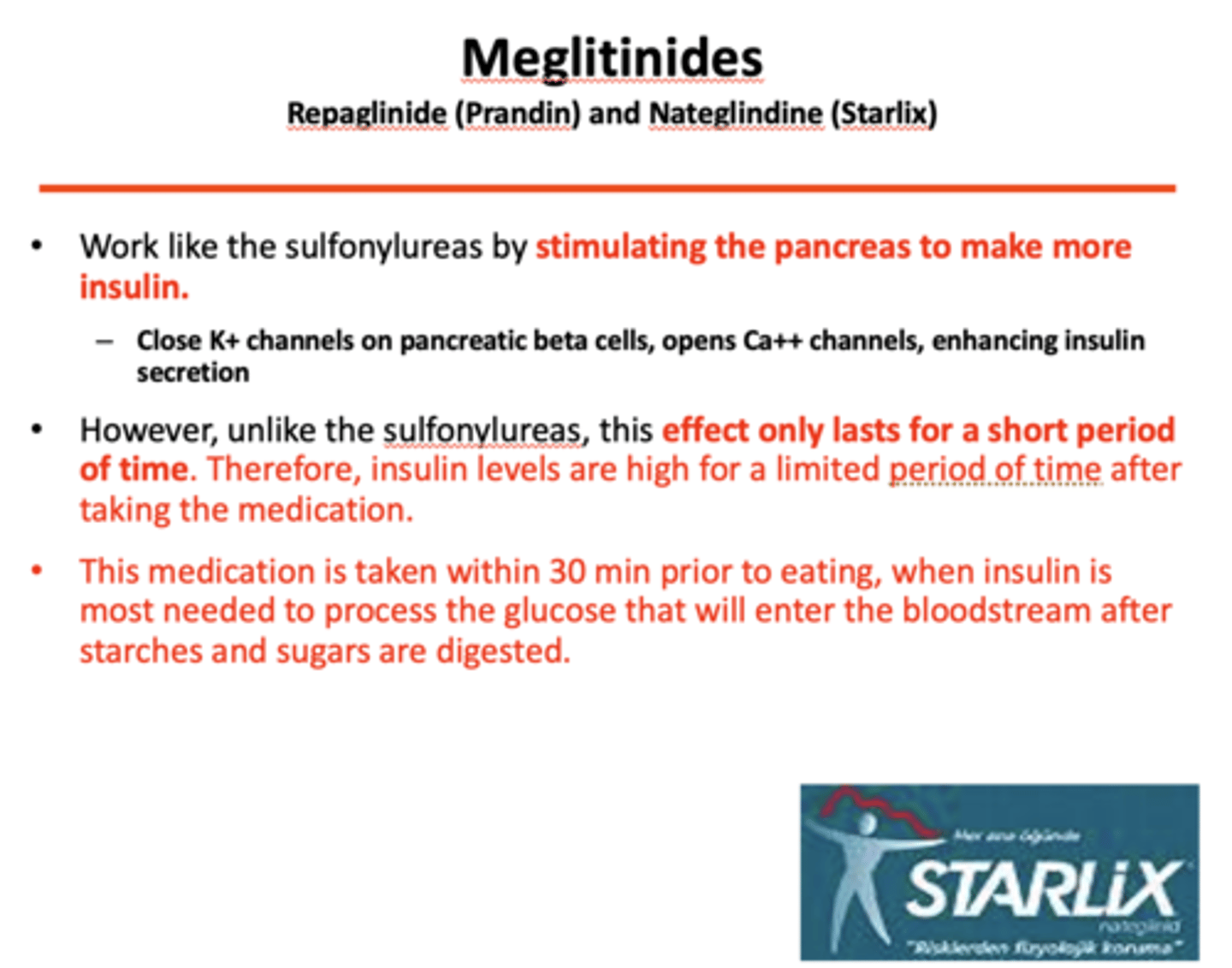
MOA of this medication:
- Stimulate insulin release from the pancreatic [beta] cells
- Effect only lasts for a short period of time
- Taken within 30 min prior to eating, when insulin is most needed
Meglitinides
Meglitinides are contraindicated with this medication because they compete for the plasma binding site and would be displaced freely in the plasma (could lead to toxicity):
NSAIDs
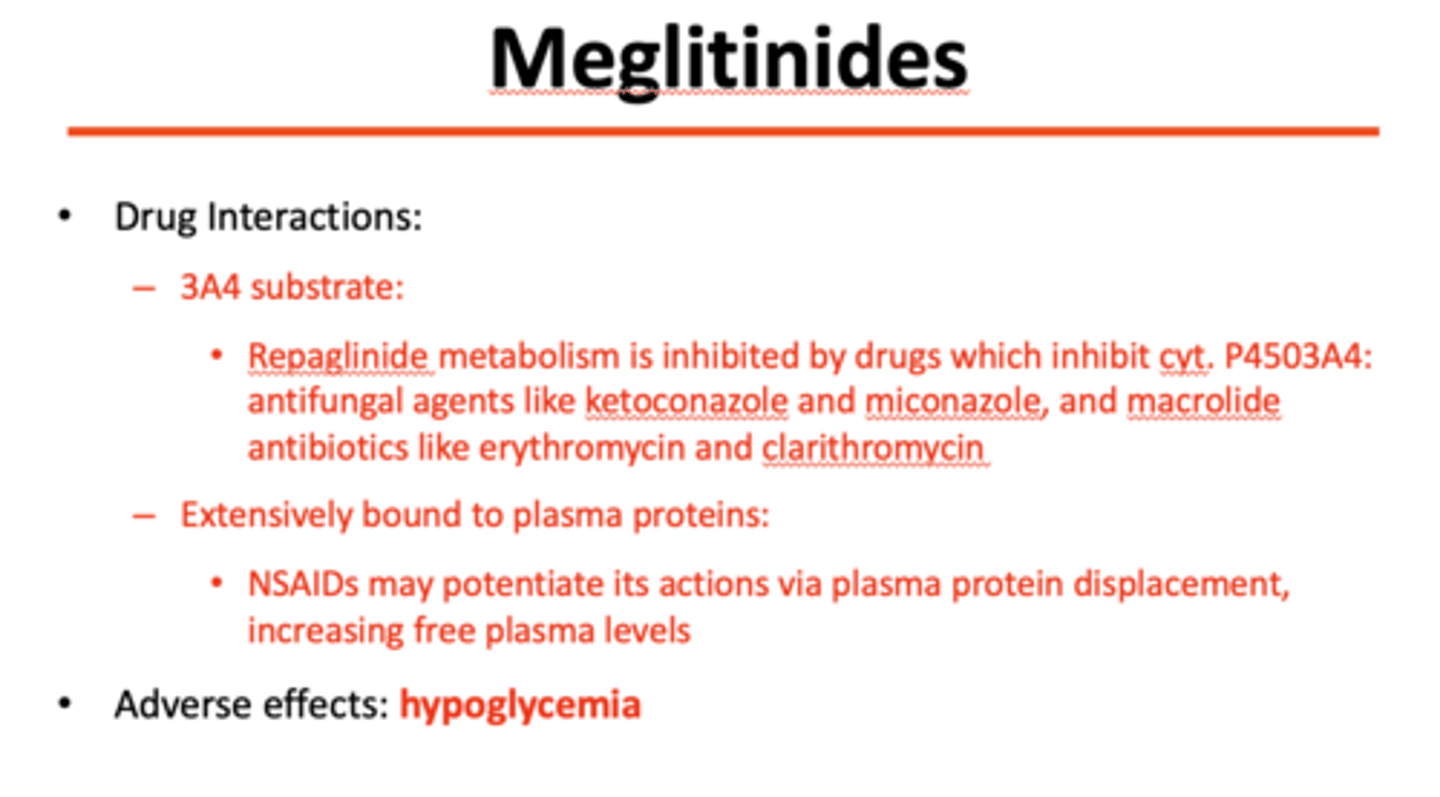
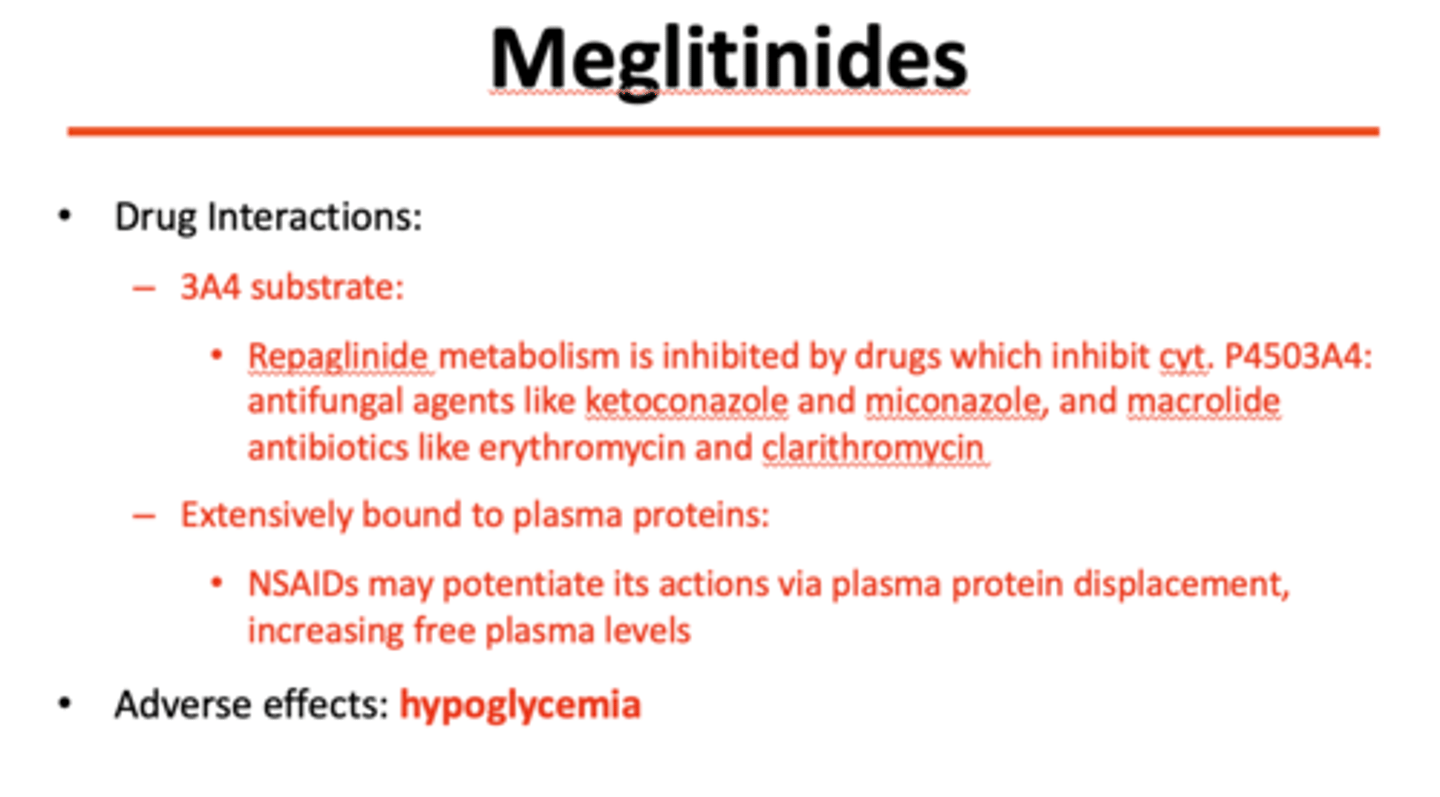
Meglitinides are contraindicated with this medication because metabolism is inhibited by drugs which inhibit P4503A4:
- Antifungal agents like ketoconazole and miconazole
- Macrolide antibiotics like erythromycin and clarithromycin
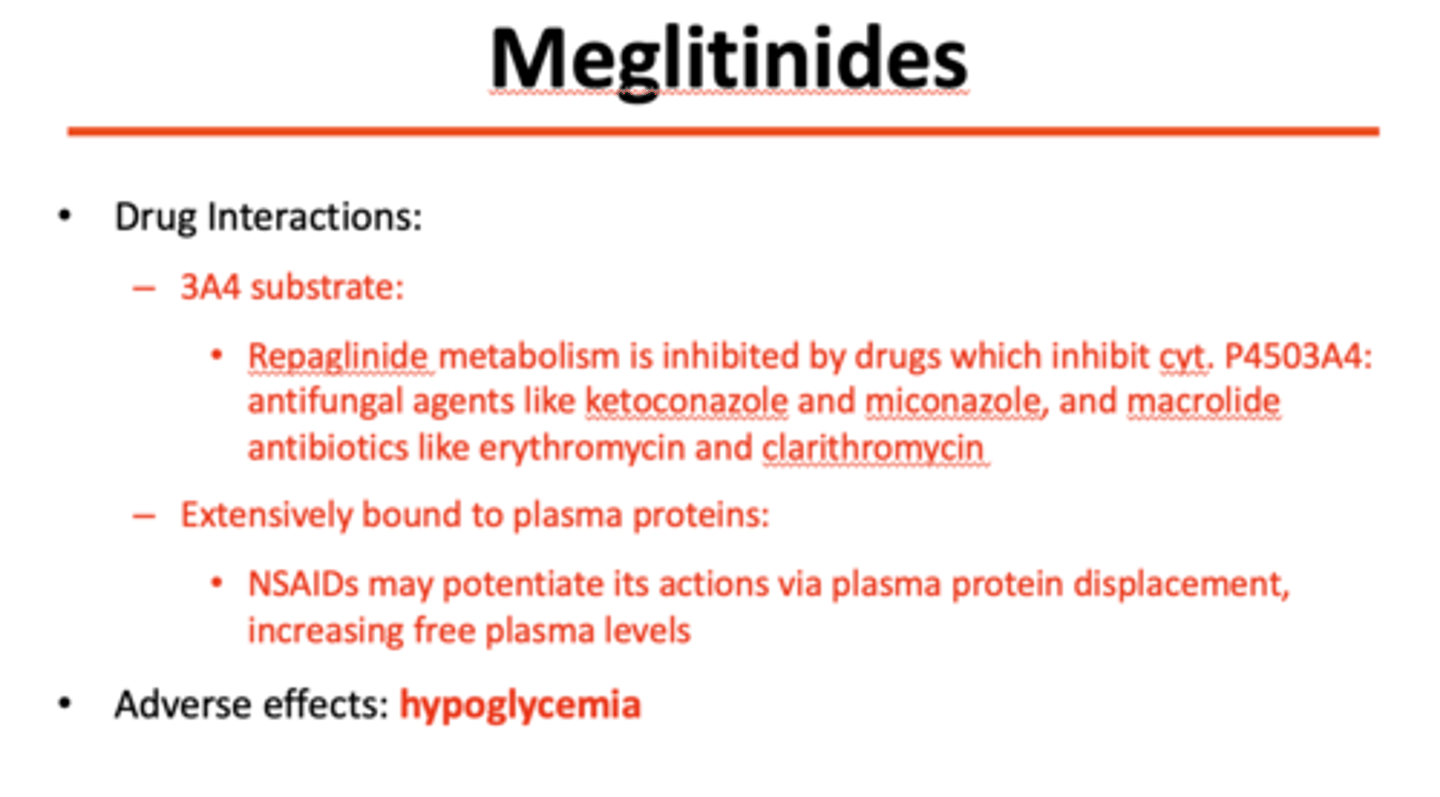
An adverse effect of Meglitinides is
Hypoglycemia
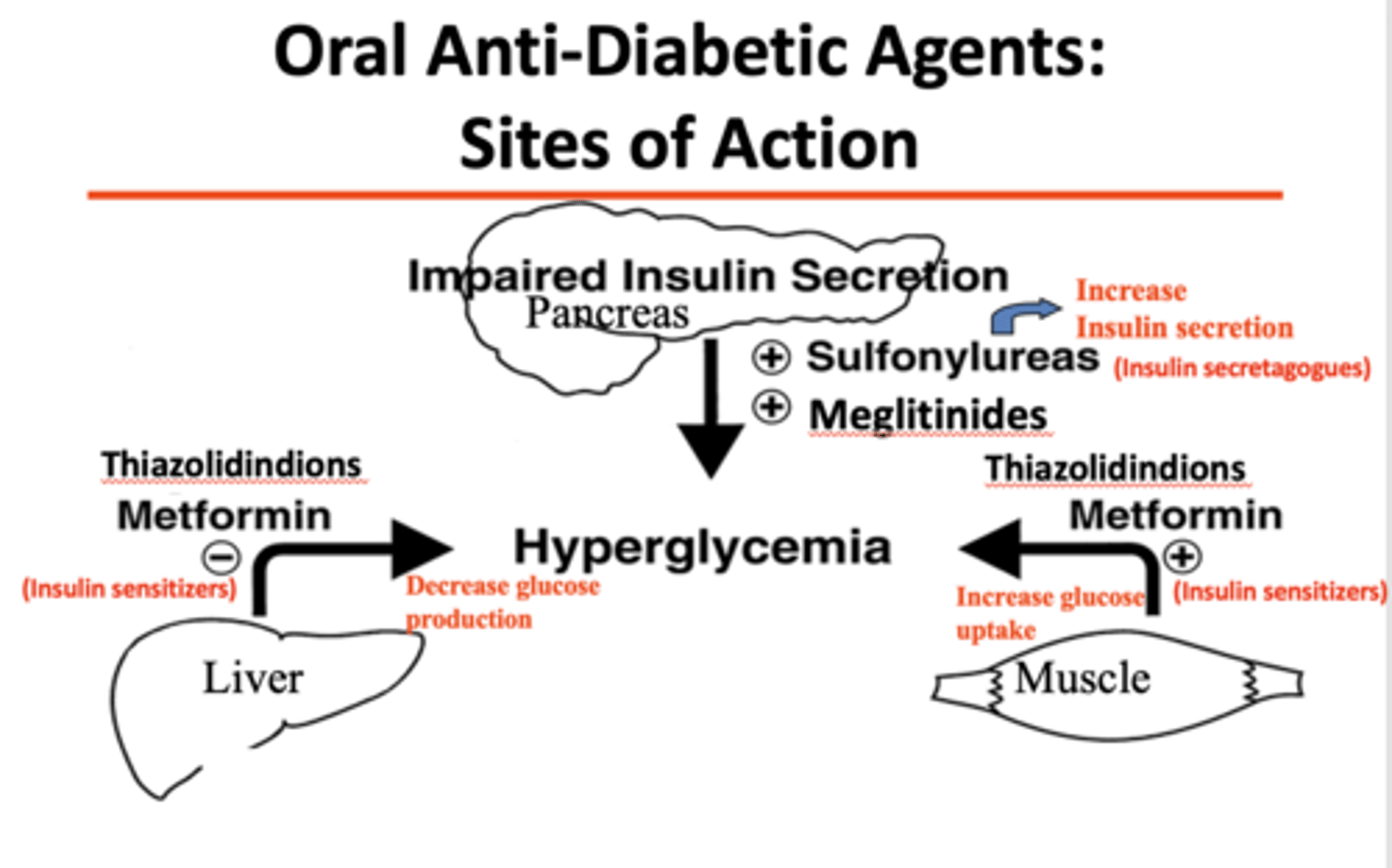
these medications are categorized as Insulin Secretagogues and increase insulin secretion:
- Sulfonylureas
- Meglitinides
Which medication is an important biguanide?
Metformin (Glucophage)
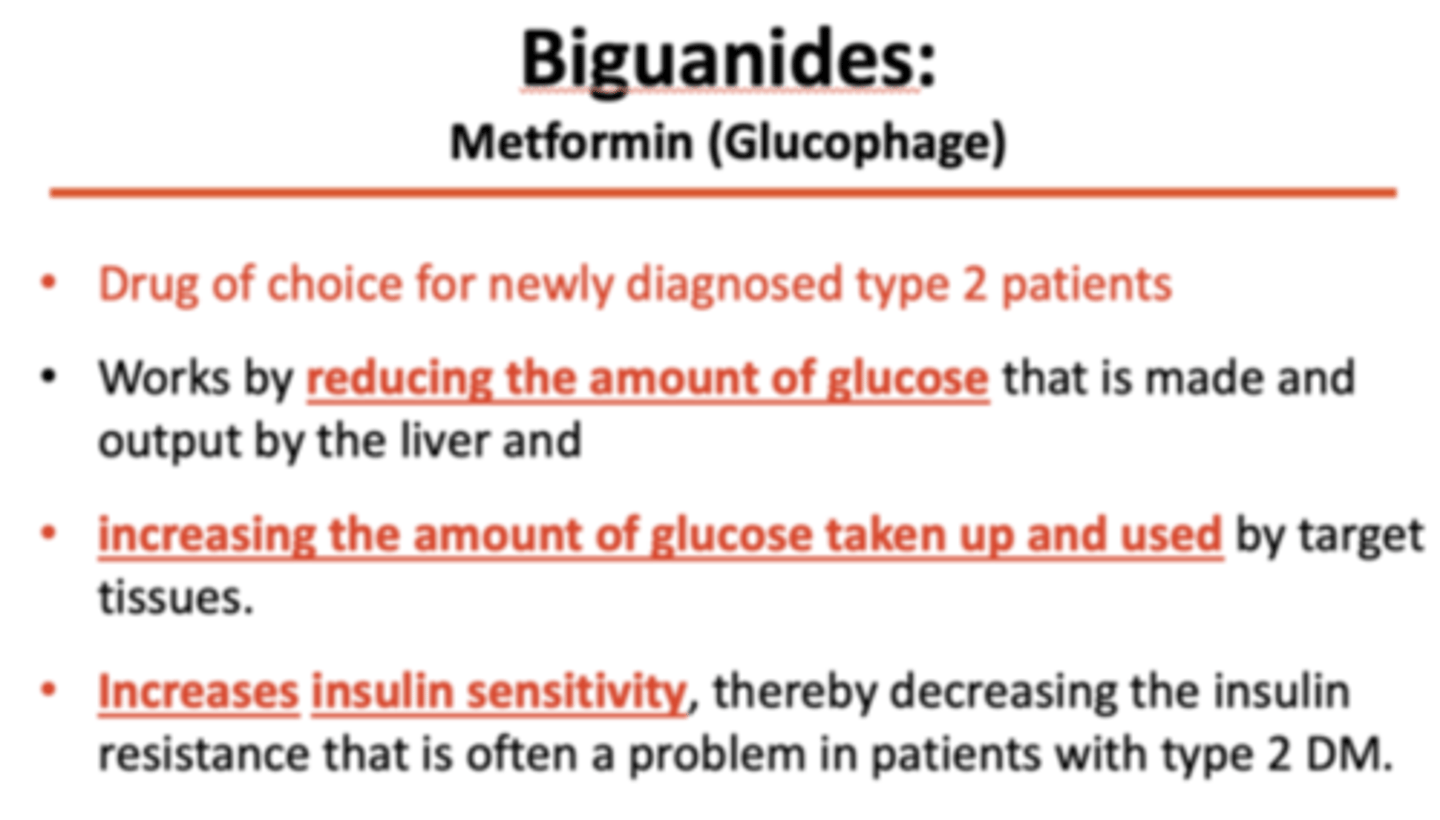
Drug of choice for newly diagnosed type 2 patients:
Metformin (Glucophage aka Biguanides)
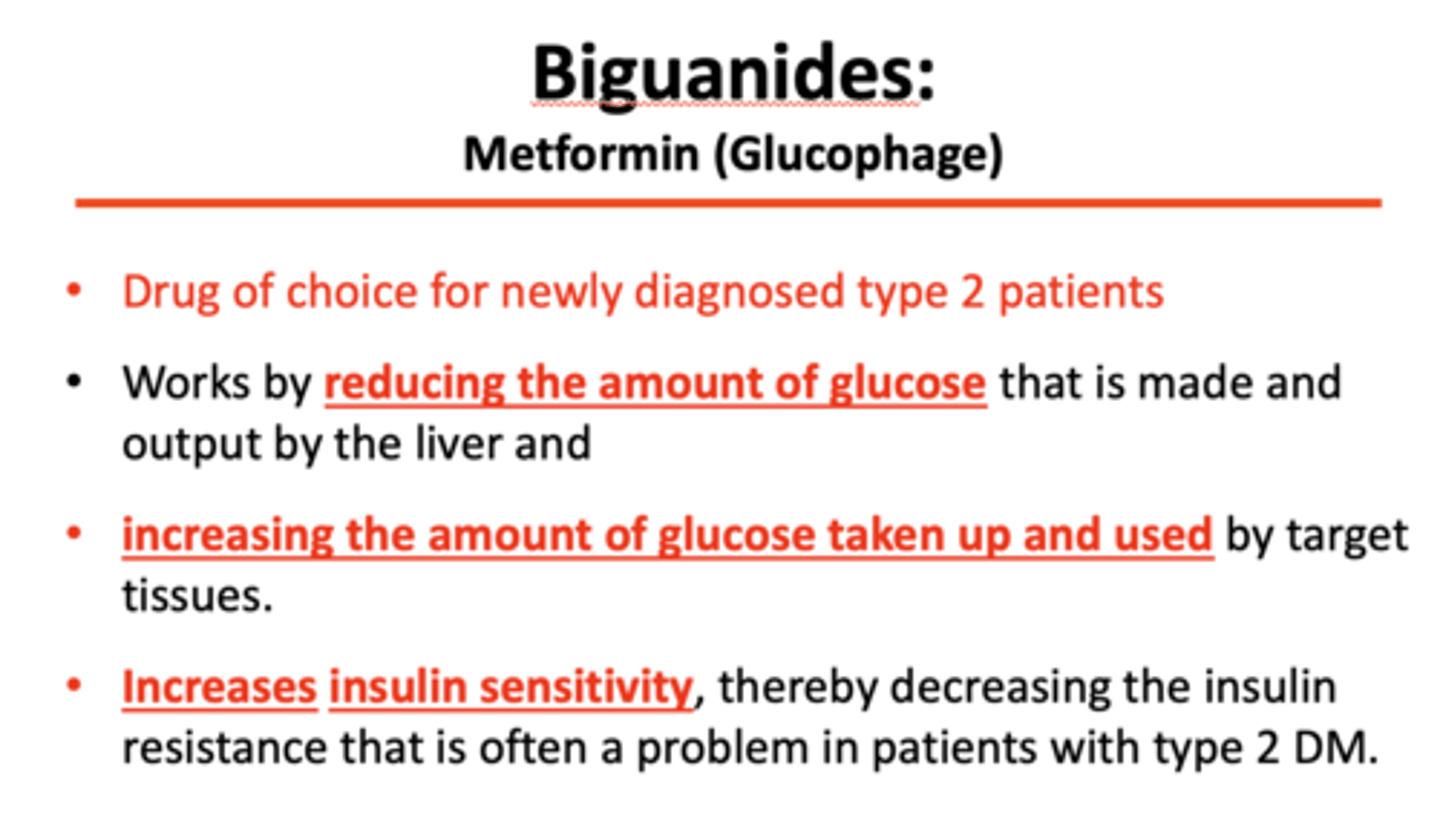
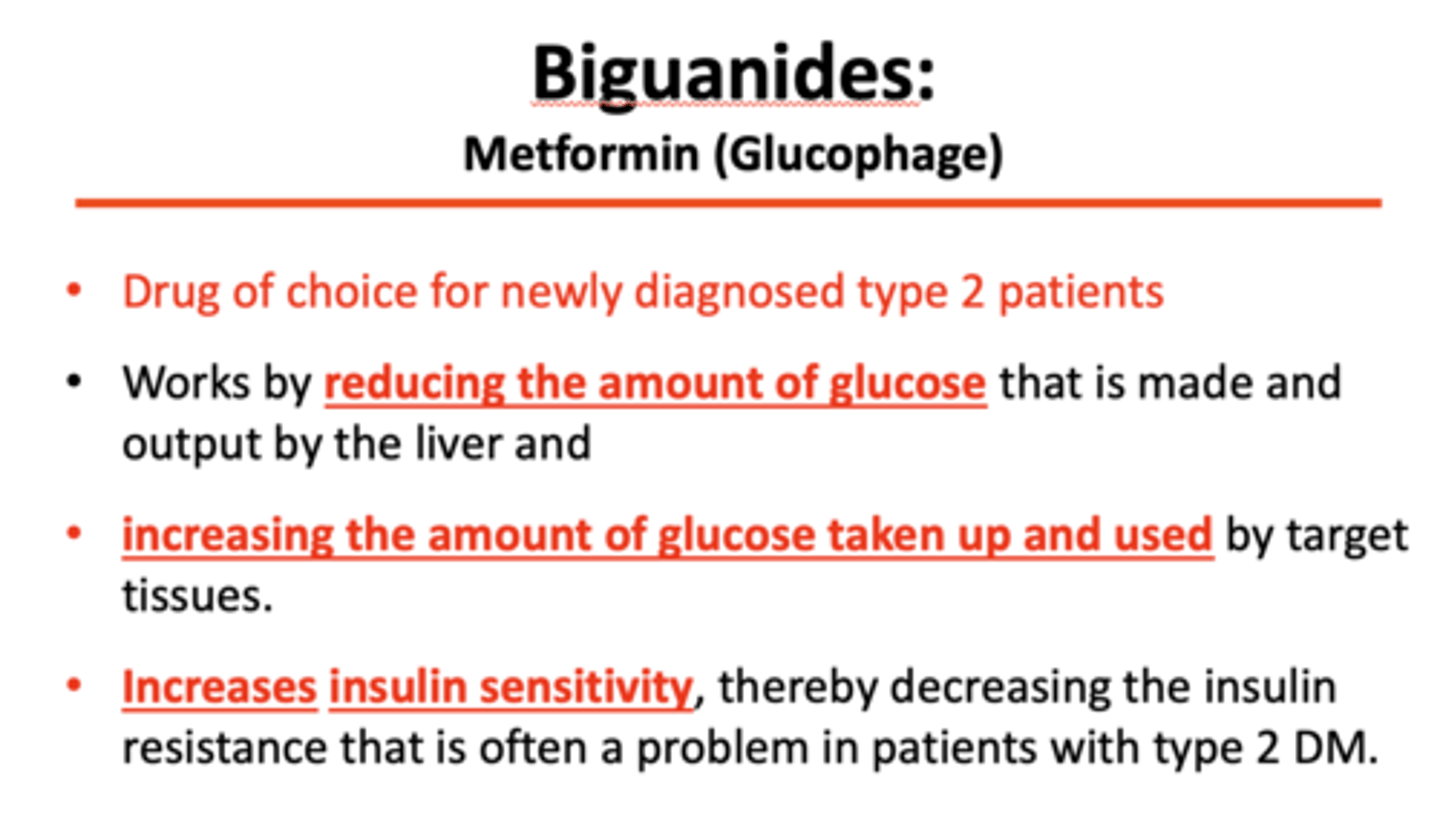
MOA of this medication:
- Reducing the amount of glucose that is made and output by the liver
- Increasing the amount of glucose taken up and used by target tissues
- Increases insulin sensitivity (problem with type 2 DM)
Metformin (Glucophage)
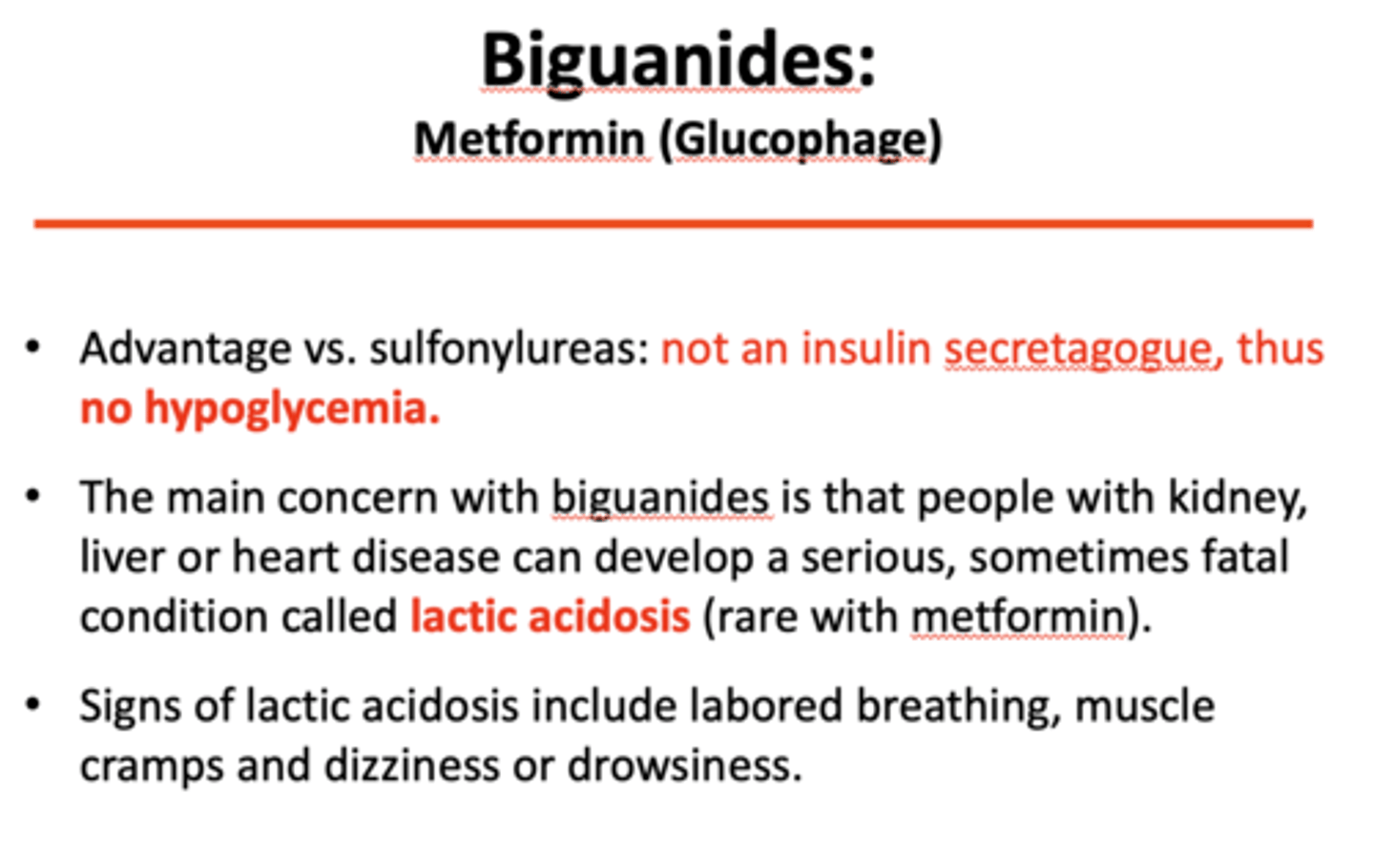
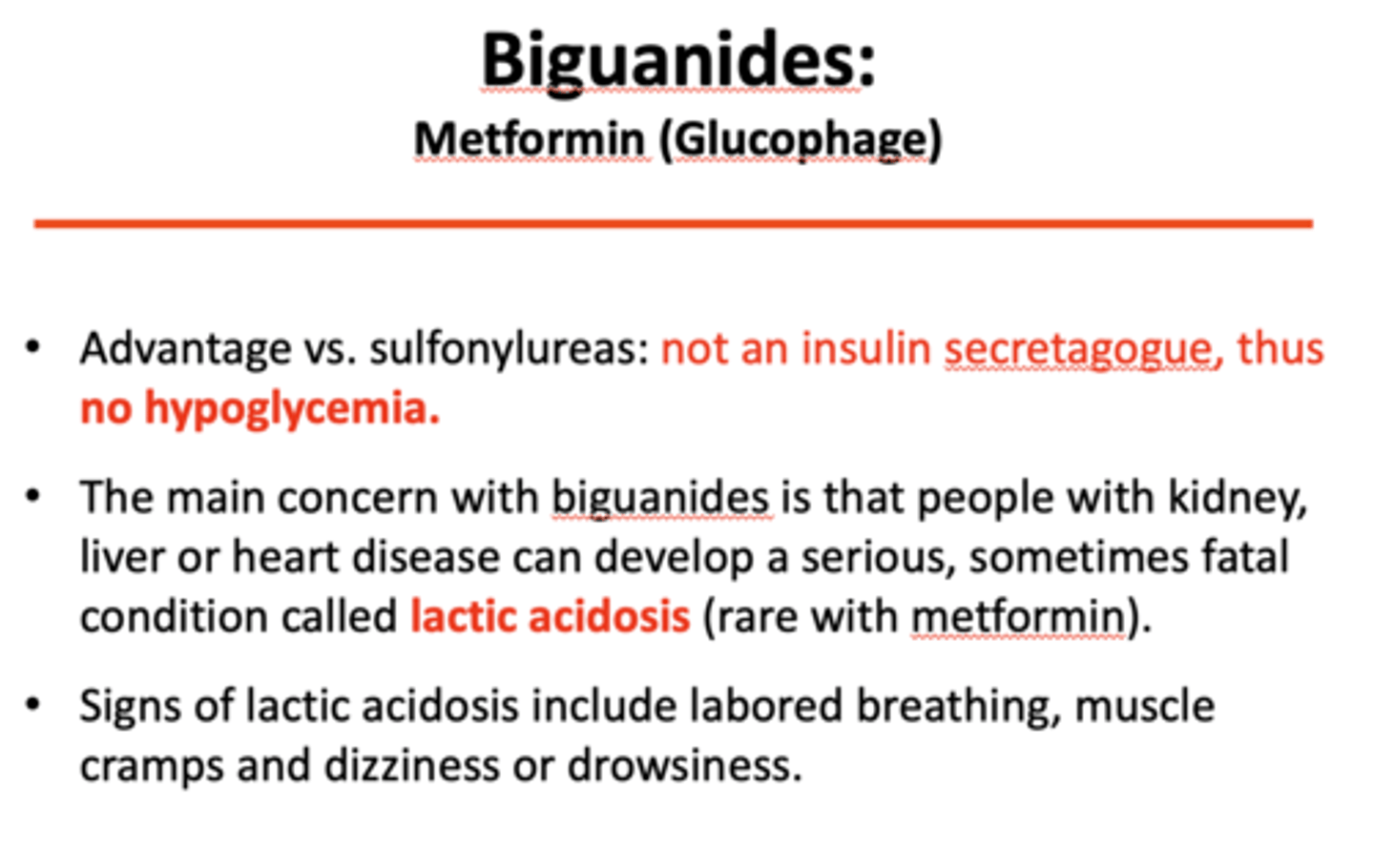
The main concern with biguanides is that people with kidney, liver or heart disease can develop a serious, sometimes fatal condition called _______________, who’s signs include labored breathing, muscle cramps, dizziness, drowsiness
lactic acidosis
Does metformin have an adverse effect of hypoglycemia?
No - not an insulin secretagogue, thus no hypoglycemia
associated with lactic acidosis:
Metformin (Glucophage)
Insulin sensitizer that you CAN take with NSAIDs:
Metformin (Glucophage)
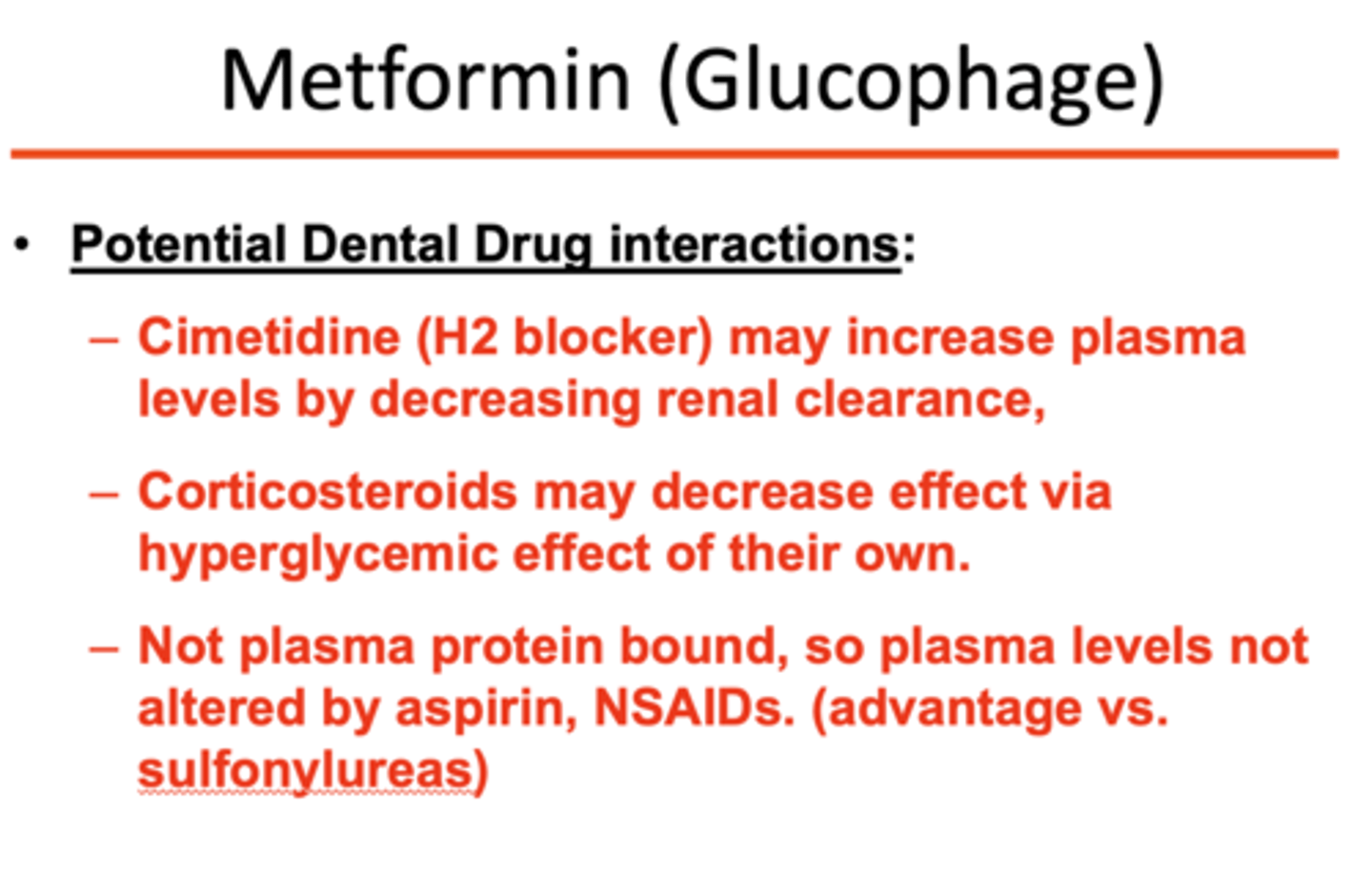
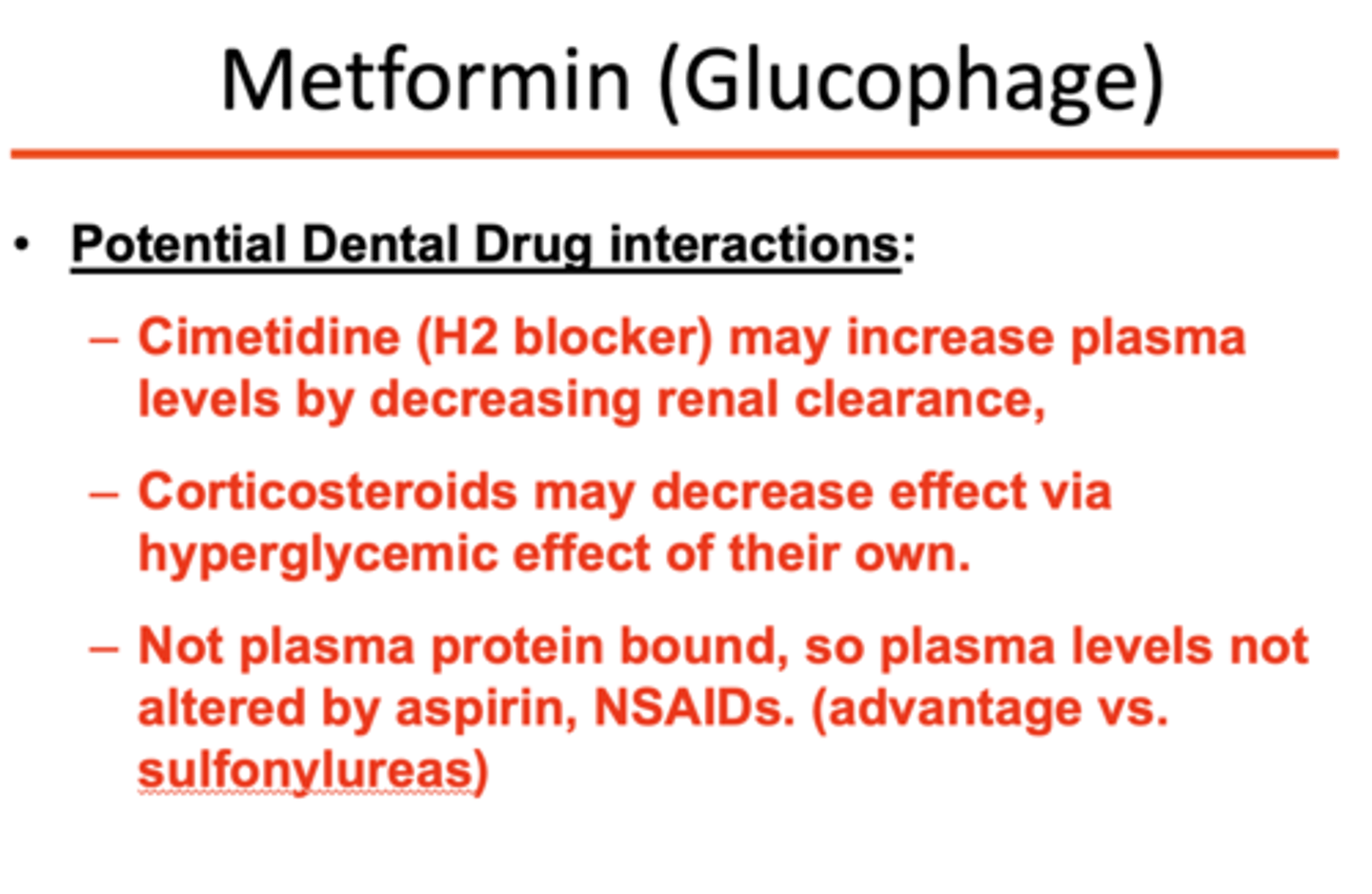
Metformin is contraindicated with this medication because it may increase plasma levels by decreasing renal clearance:
Cimetidine (H2 antihistamine)
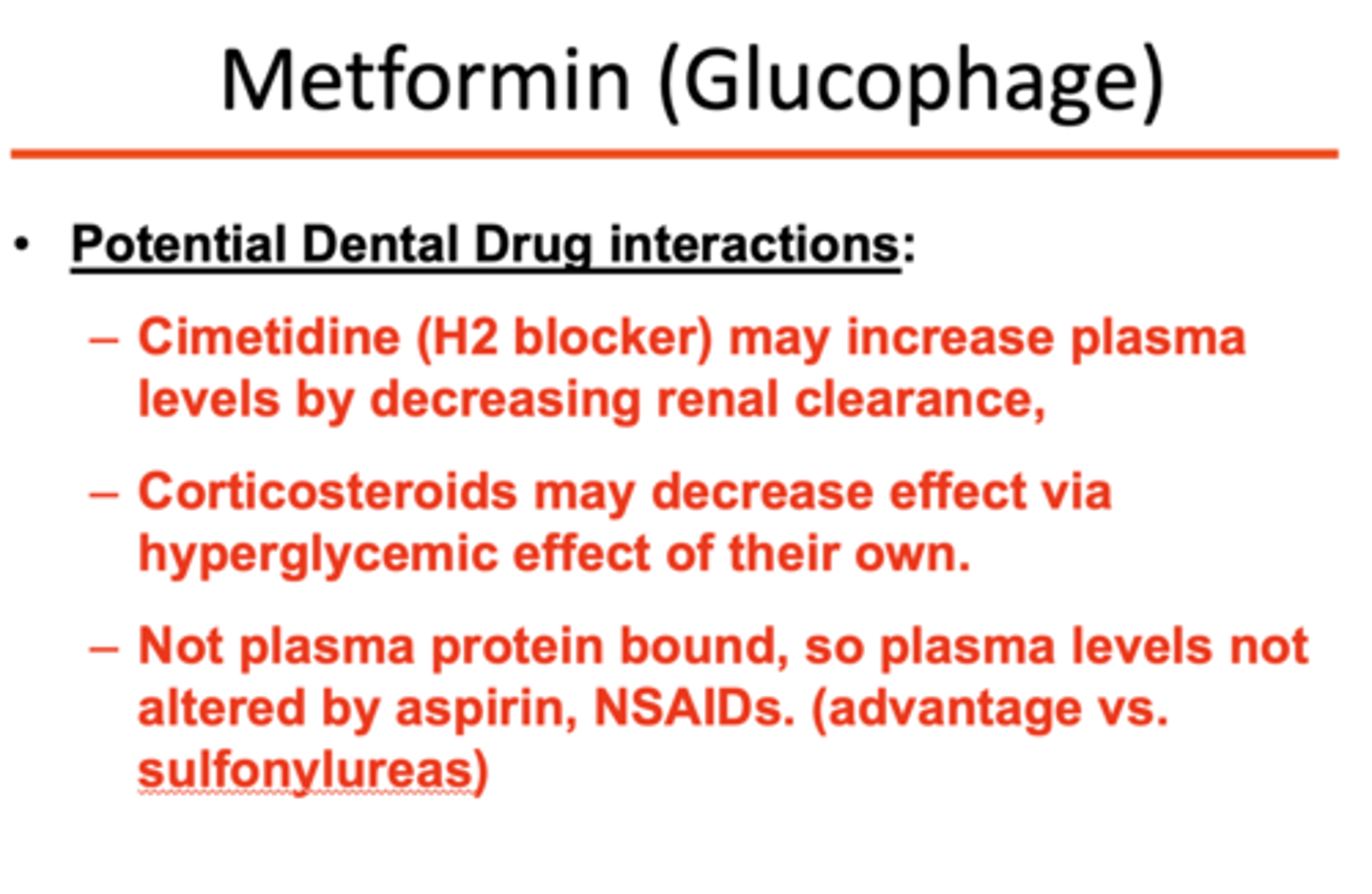
Metformin is contraindicated with this medication because it may decrease effect via hyperglycemic effect of their own:
Corticosteroids
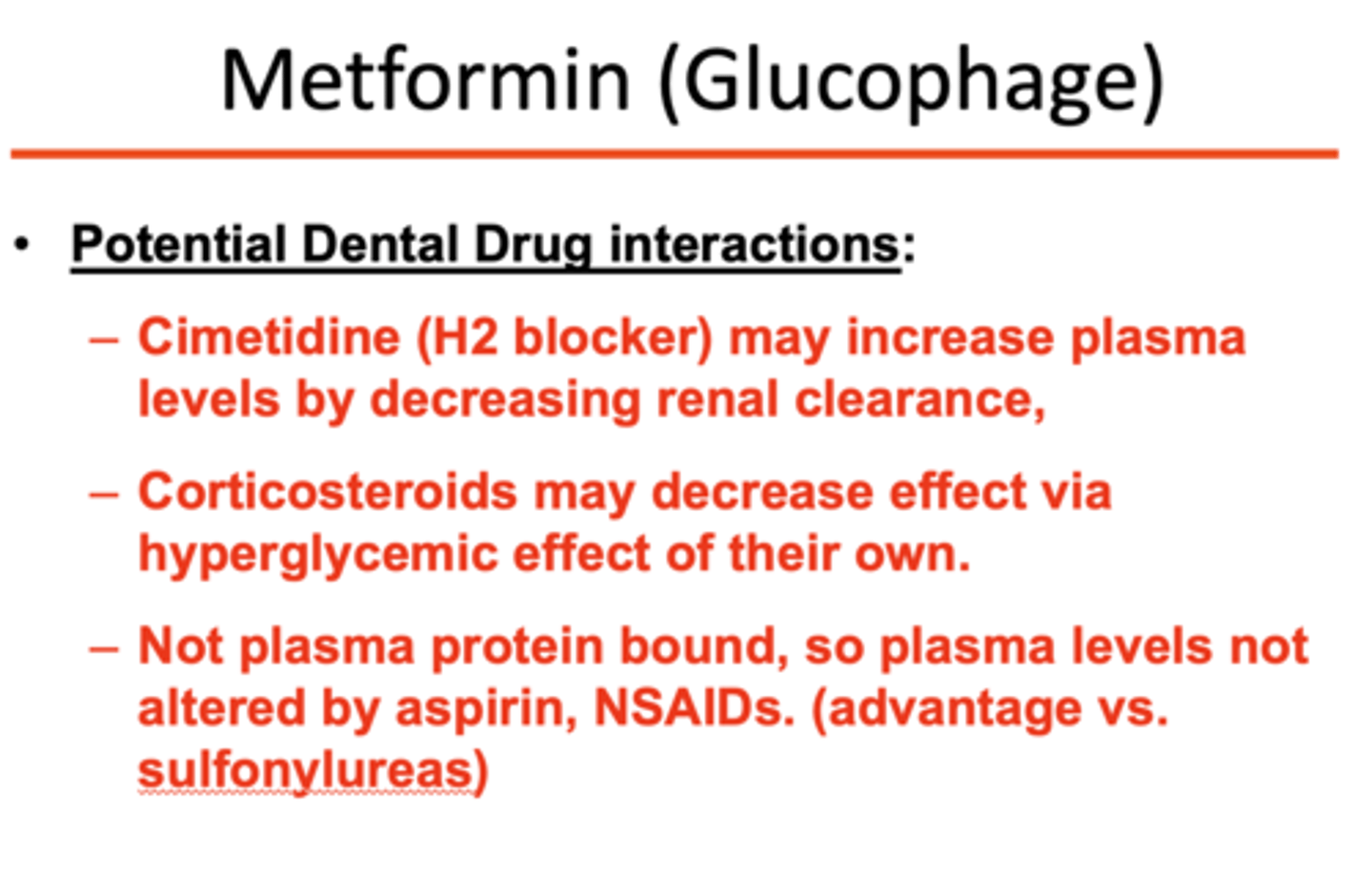
Why are NSAIDs/aspirin safe to use with metformin?
Metformin is not plasma bound, so plasma levels will not be altered
MOA of this drug:
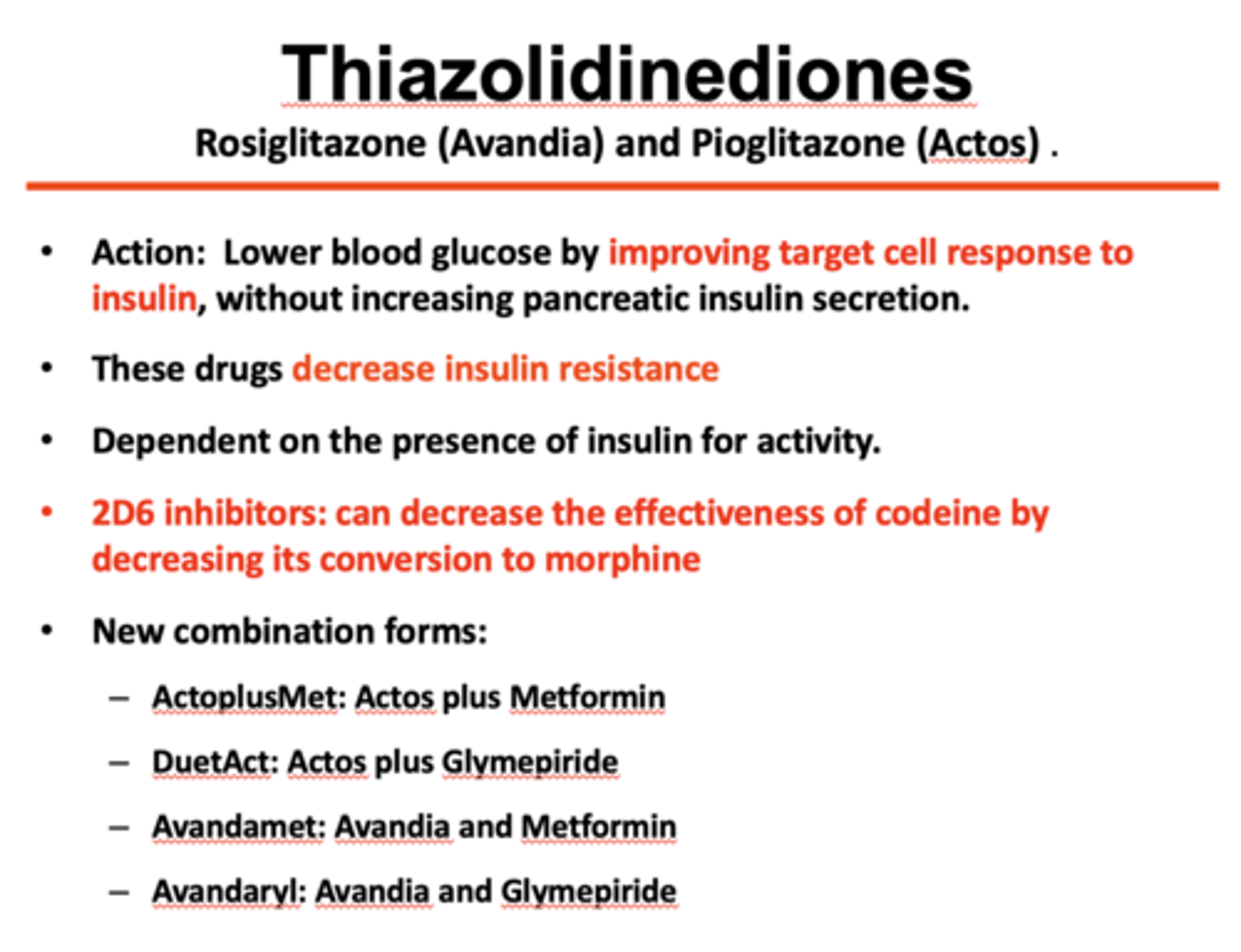
- Improving target cell response to insulin, without increasing pancreatic insulin secretion.
- These drugs decrease insulin resistance
Thiazolidinediones
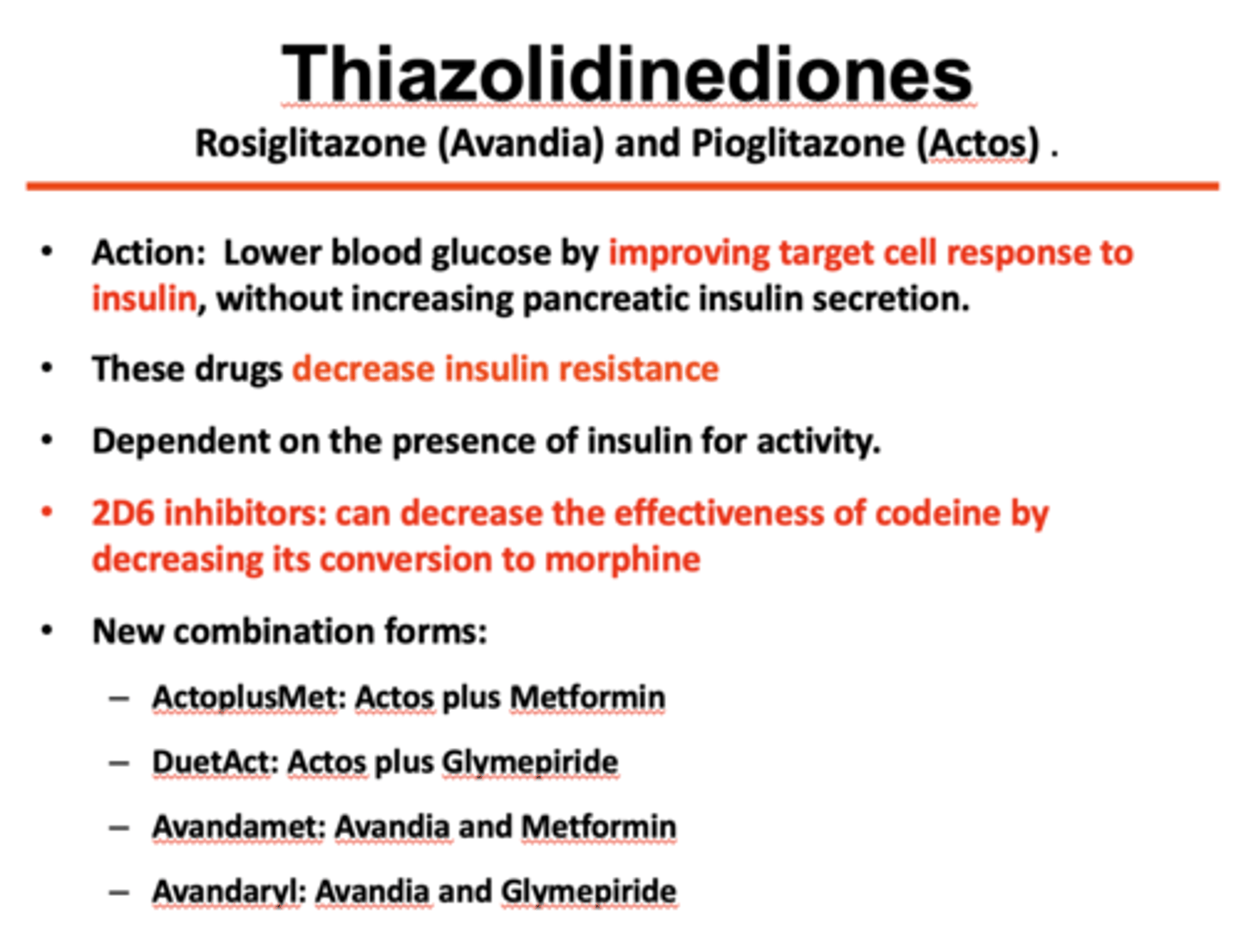
This drug is dependent on the presence of insulin for activity:
Thiazolidinediones
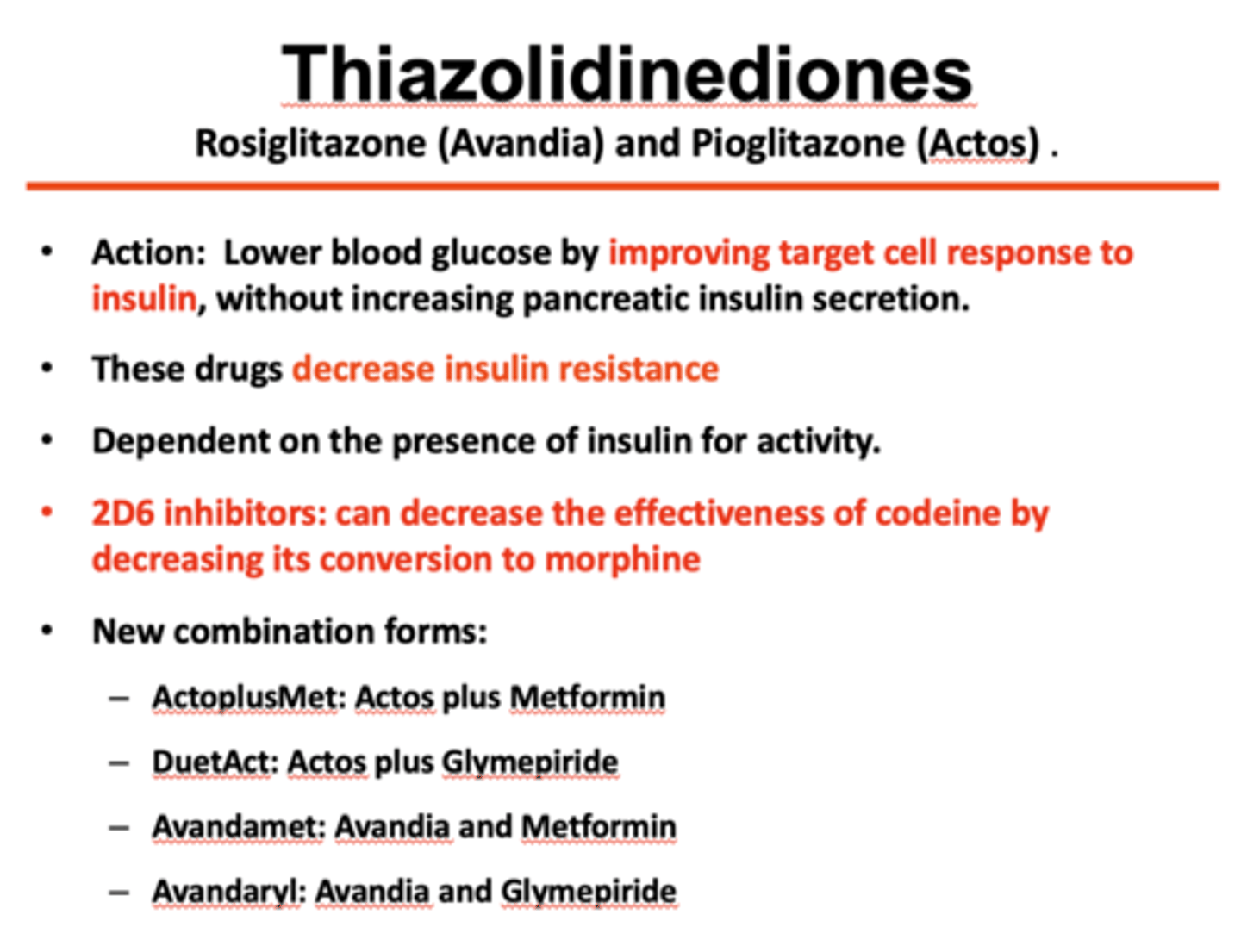
Thiazolidinediones is contraindicated with this medication because Thiazolidinedione is a 2D6 inhibitor, and will decrease its effectiveness by decreasing its conversion to its active form:
Codine
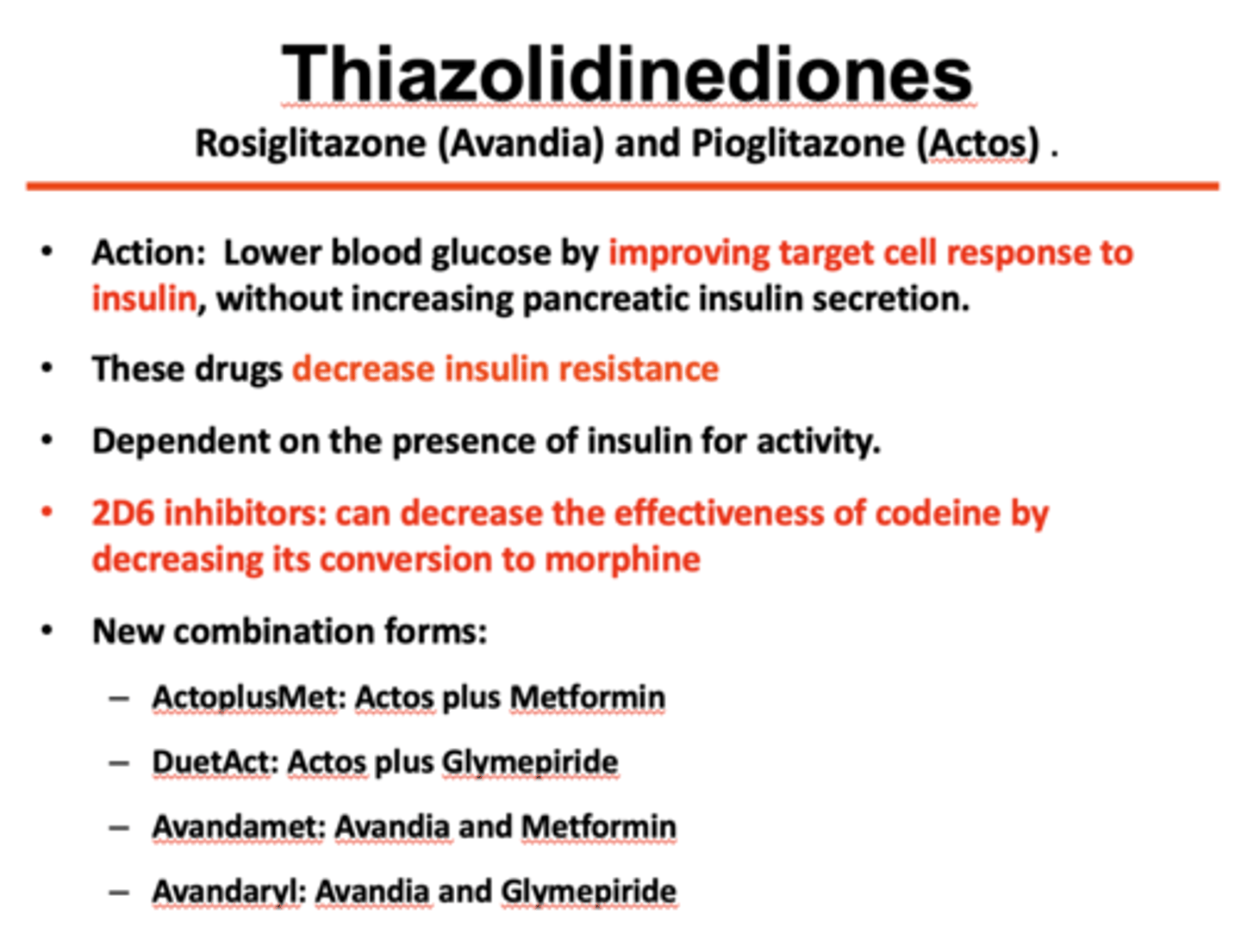
Rosiglitazone (Avandia), Pioglitazone (Actos) is what class of drugs?
Thiazolidinediones
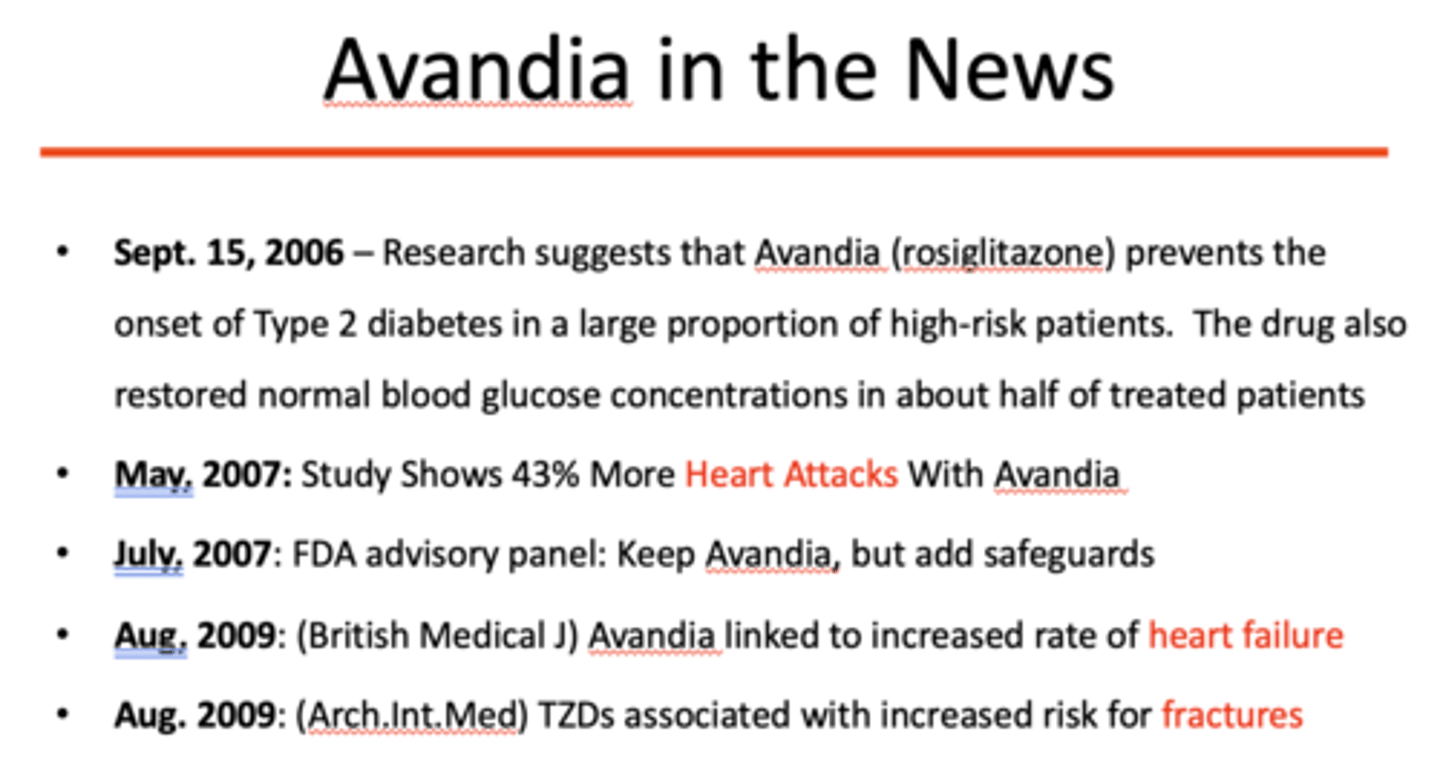
What thiazolidinediones medication has a history of causing heart attacks, heart failures and fractures?
Avandia
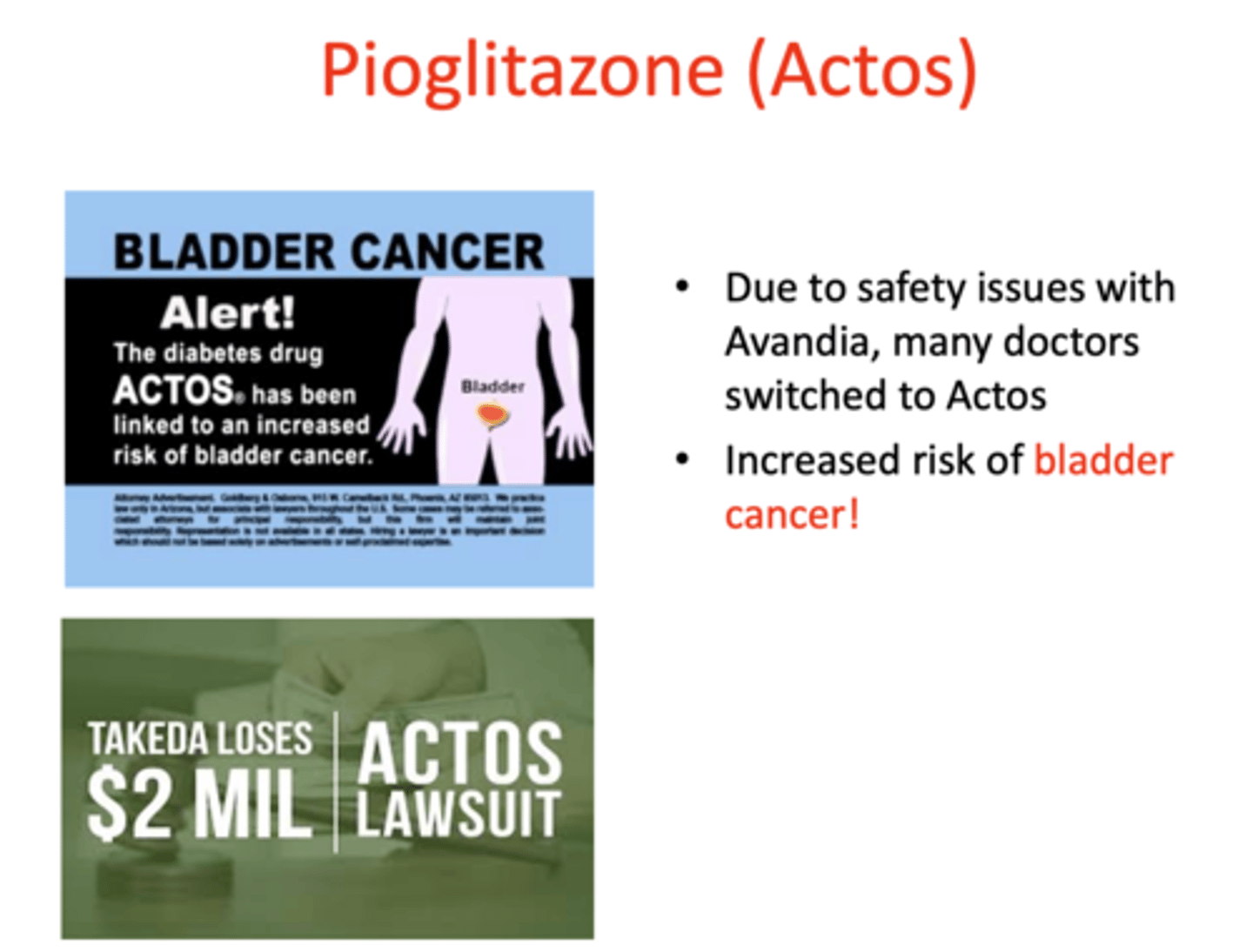
What thiazolidinediones medication has a history of causing bladder cancer?
Pioglitazone (Actos)
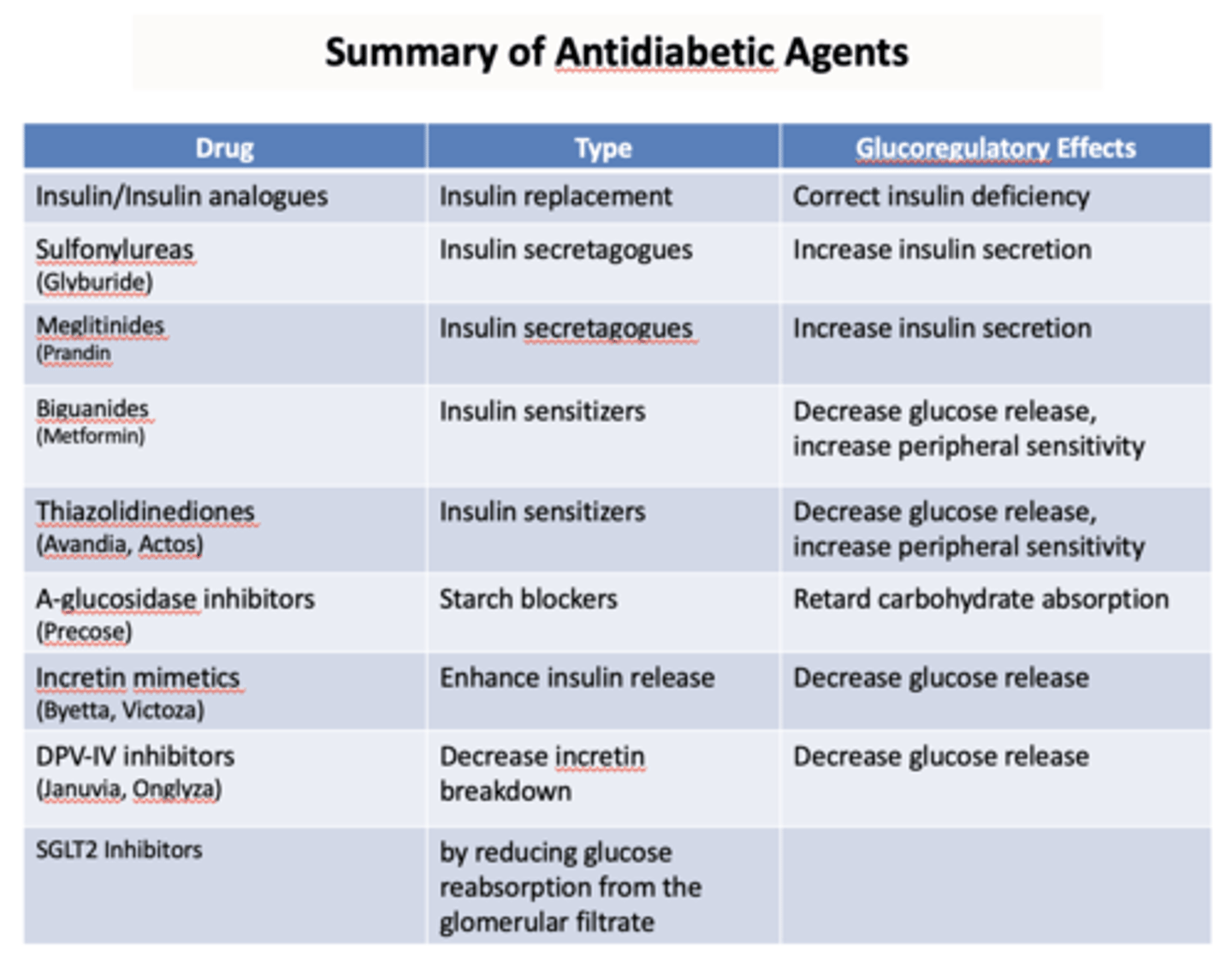
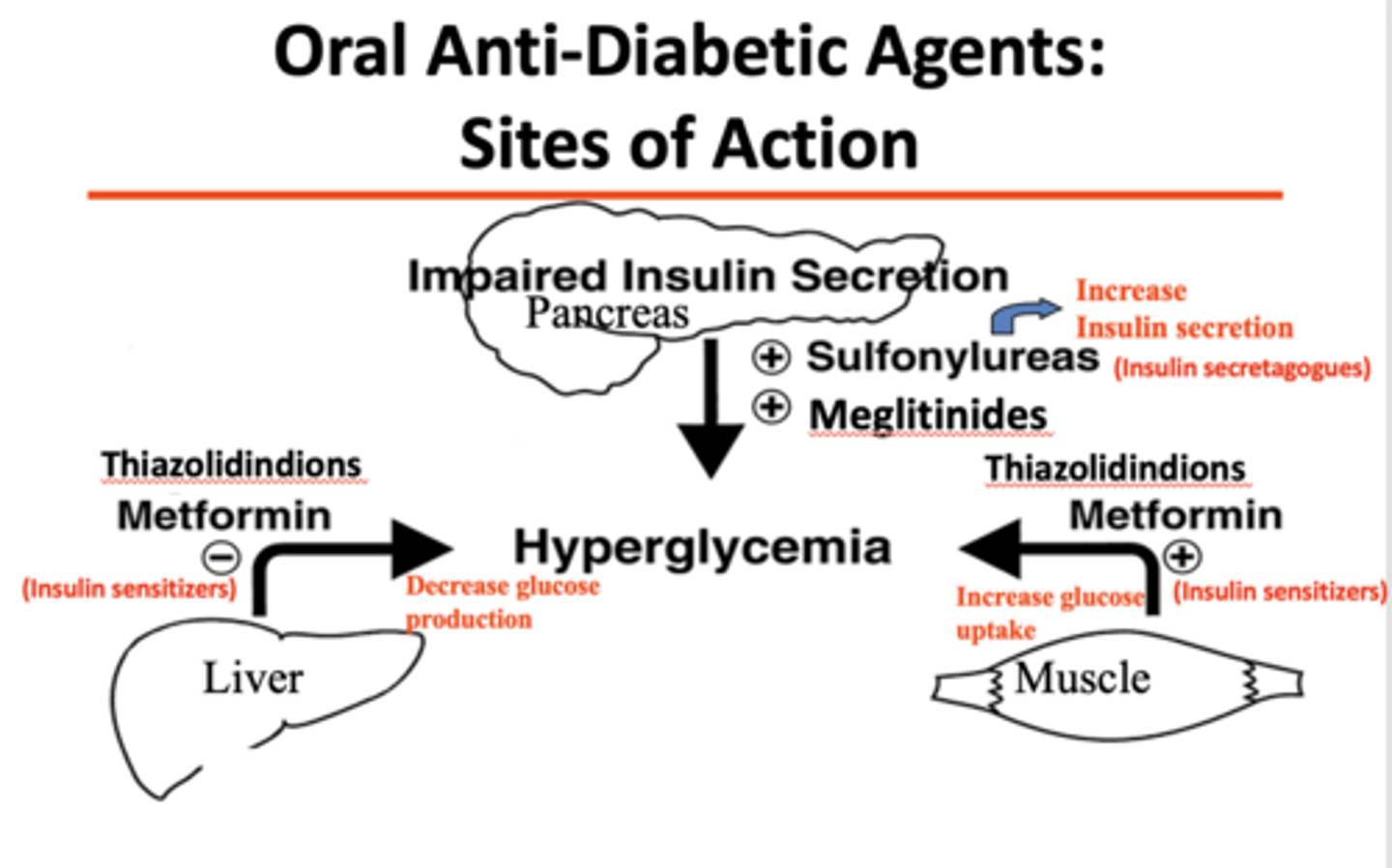
What medications are the following:
- Insulin Sensitizers
- Decrease glucose release
- Increase peripheral sensitivity
- Metformin (Glucophage)
- Thiazolidinediones (Avandia, Actos)
MOA of this medication:
- Medications taken with food at beginning of meal
- Slows down the digestion and absorption of sugars and starches in the small intestine
- Leads to blood glucose levels rising slower after a meal, thus allowing impaired insulin response or sensitivity to keep up
Alpha-glucosidase Inhibitors (Acarbose/Precose, Miglitol/Glyset, Vogilbose/Voglib)
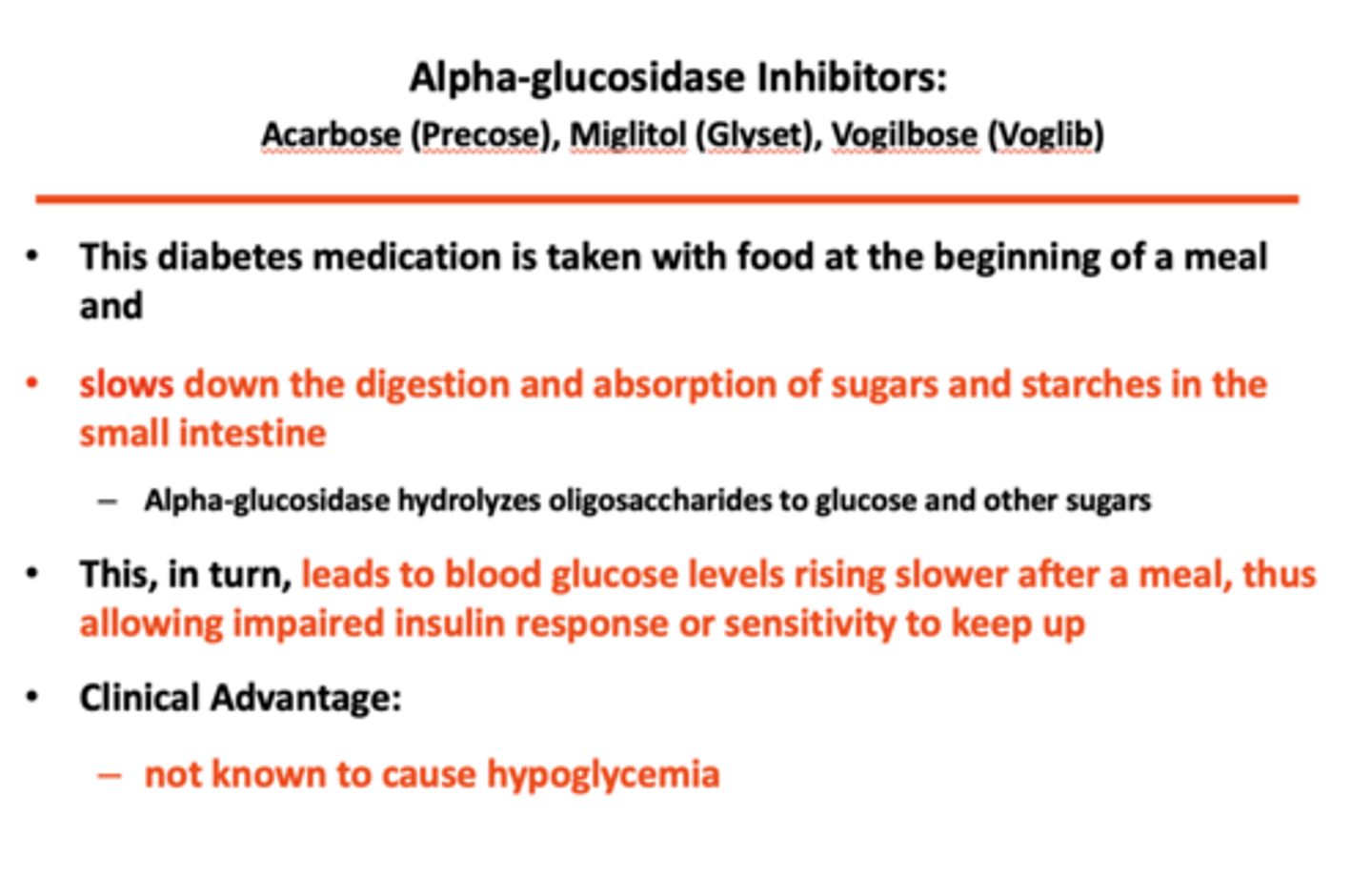
What is the clinical advantage of alpha-glucosidase Inhibitors (Acarbose Precose, Miglitol Glyset, Vogilbose Voglib)?
Not known to cause hypoglycemia
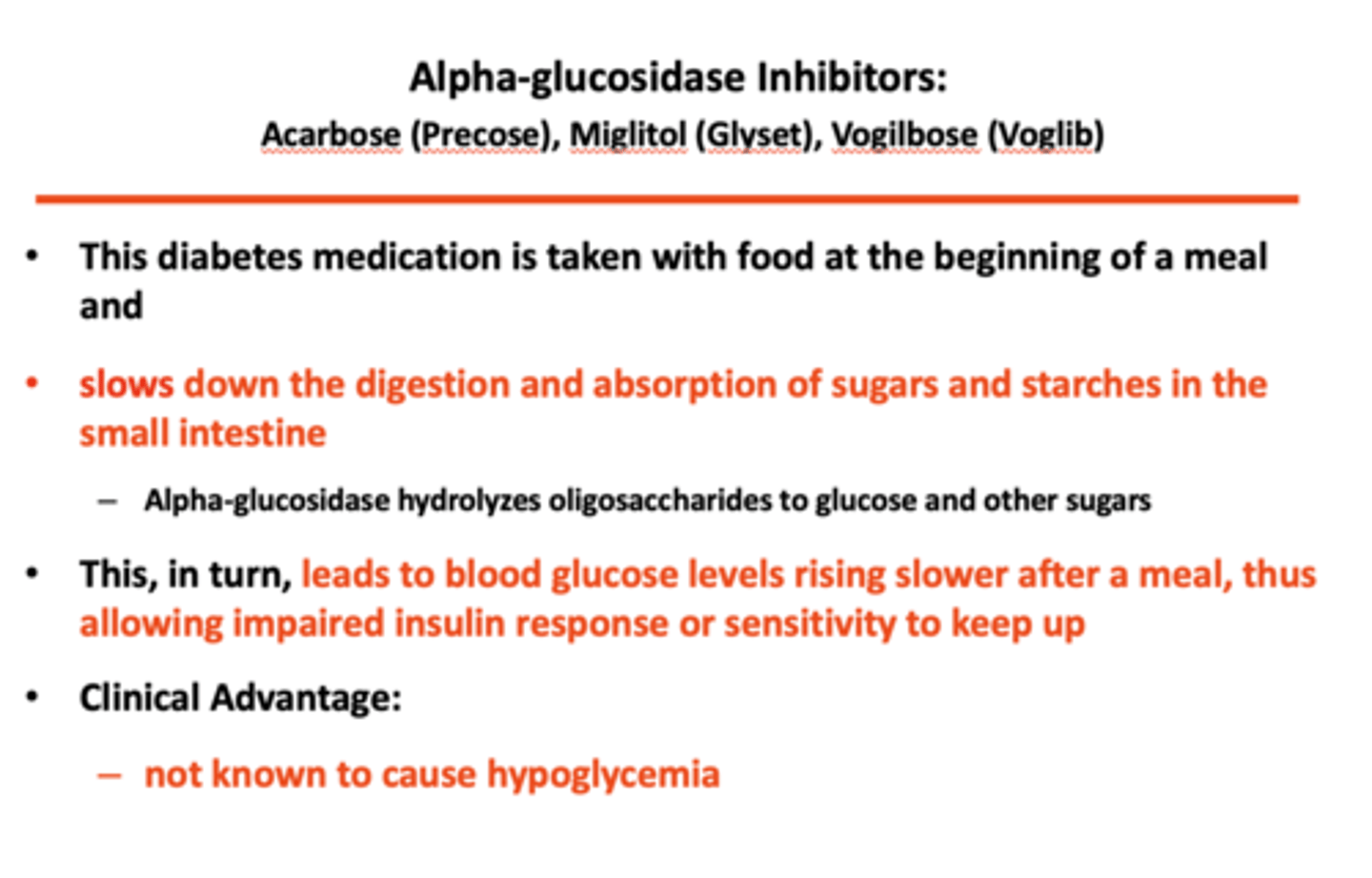
What play an active role in mediating pancreatic beta-cell and alpha-cell responses in healthy individuals and help maintain glucose homeostasis?
Incretins
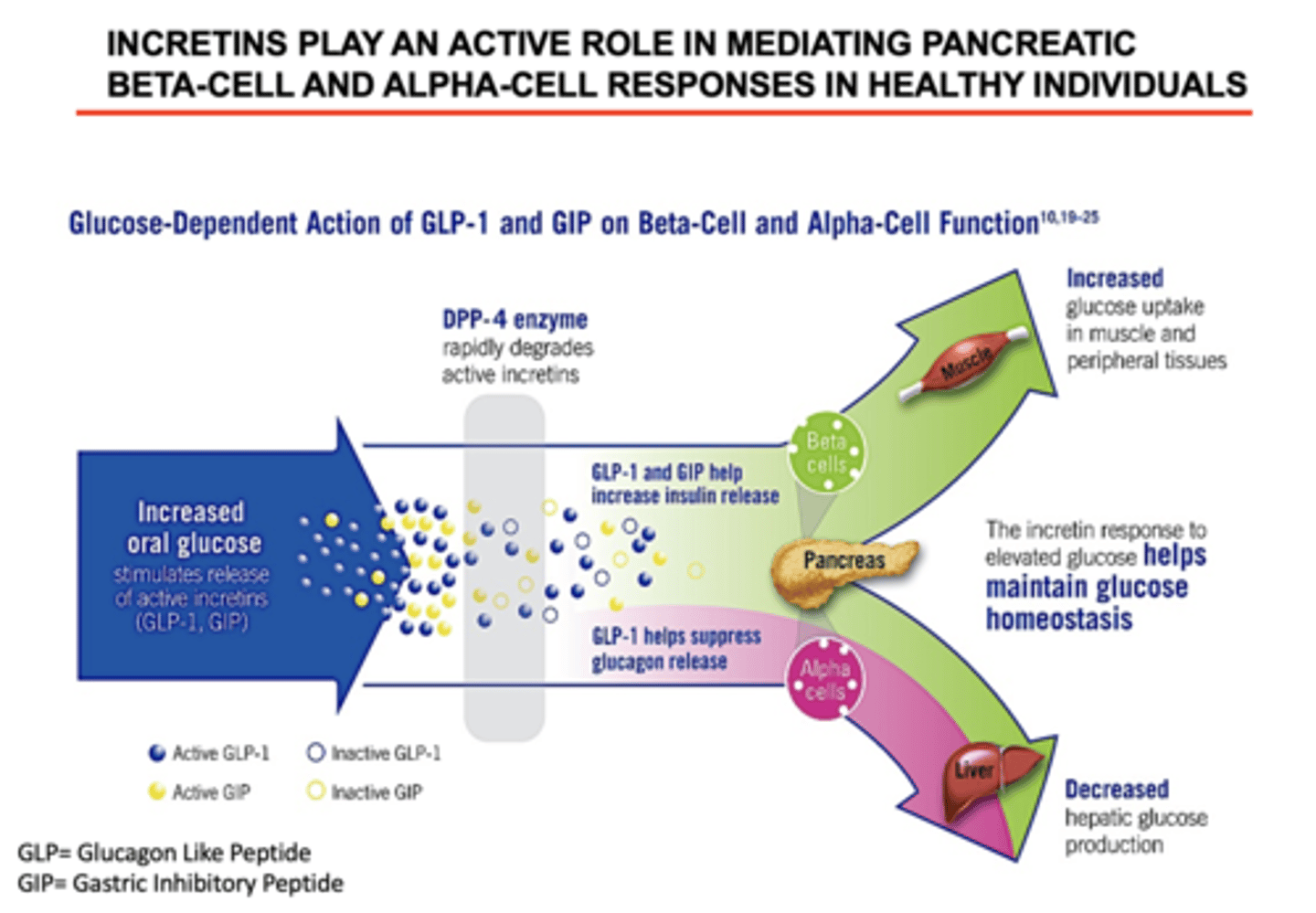
What incretin(s) help insulin release?
GLP1 and GIP
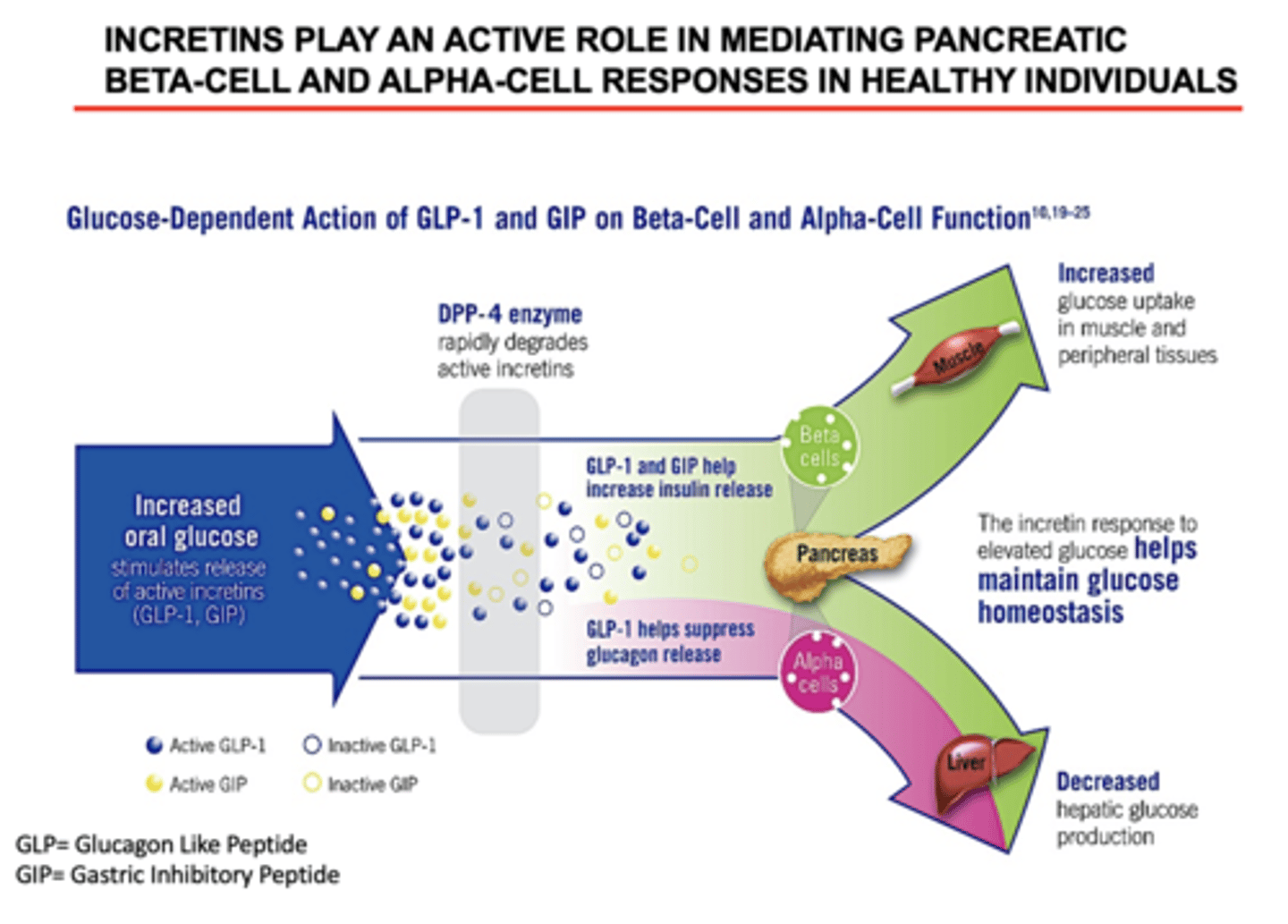
What incretin(s) help supress glucagon release?
GLP1
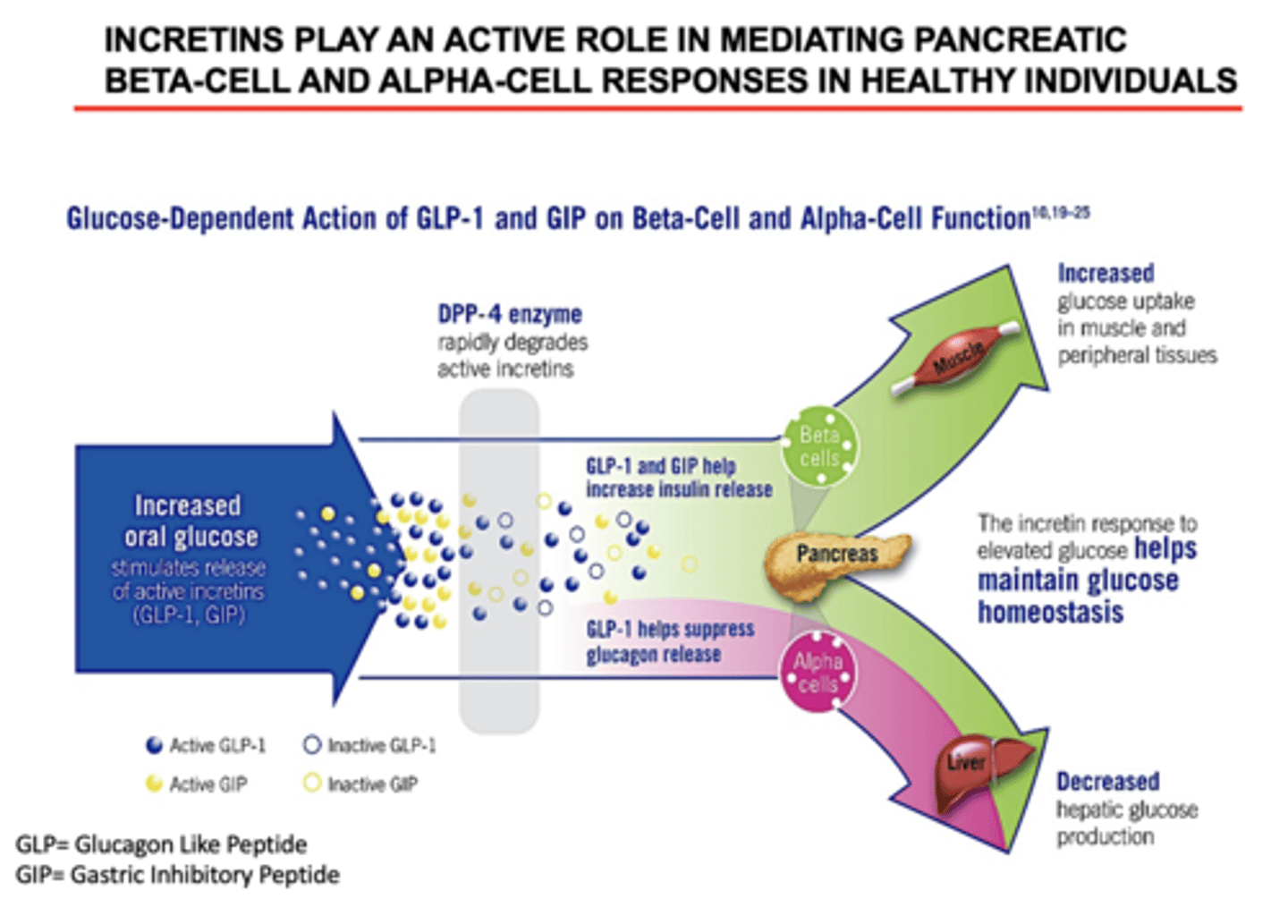
MOA of natural incretins:
- Increase insulin release
- Suppress glucagon release
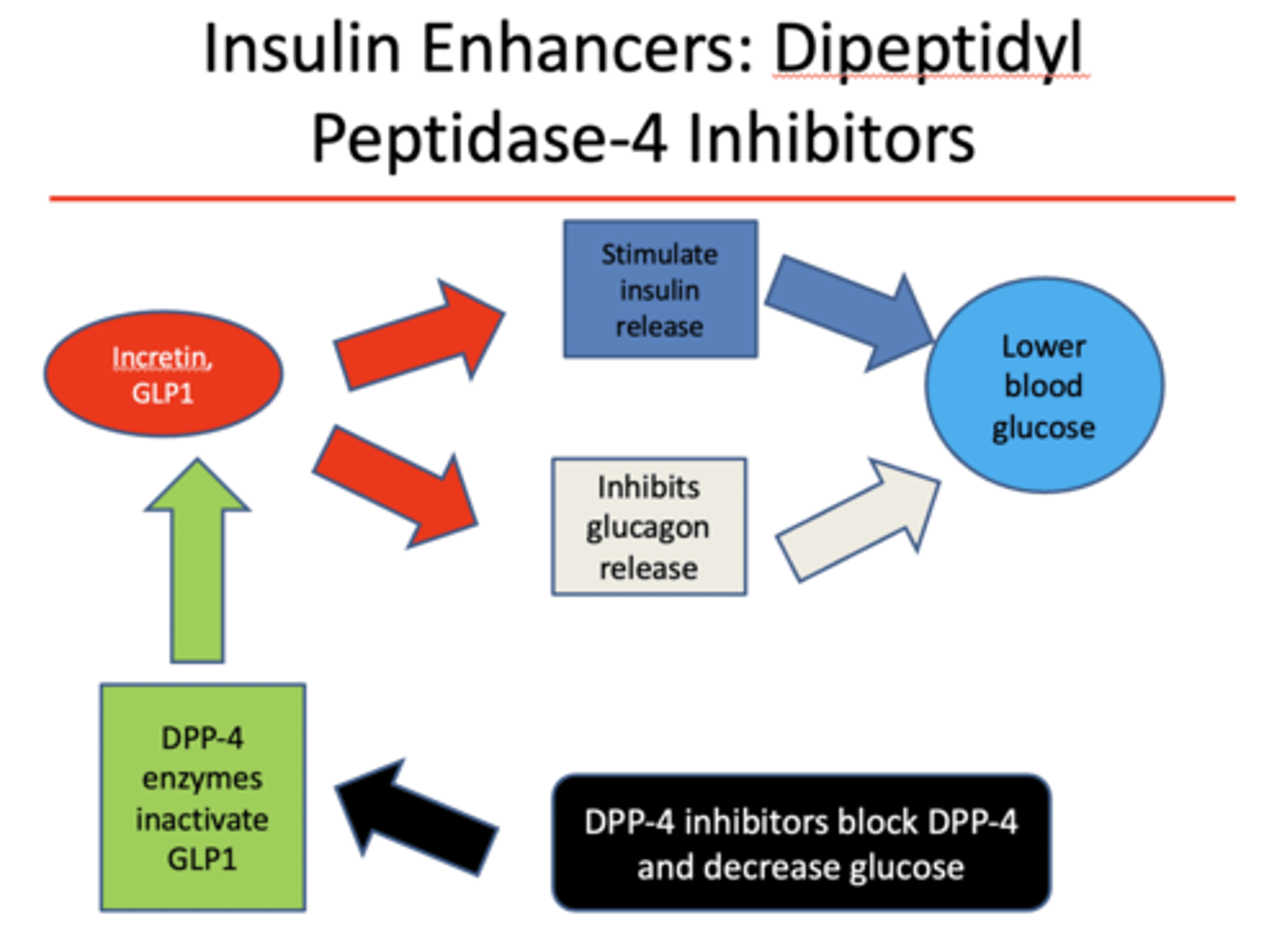
what enzyme rapidly degrades incretins?
DPP-4
these medications are categorized as Incretin Mimetics:
- Exenatide (Byetta)
- Liraglutide (Victoza)
- Dulagutide (Trulicity)
What drug was the first of a new class of medications approved for the treatment of Type 2 diabetes. Can be used alone or in combination?
Exenatide (Byetta)
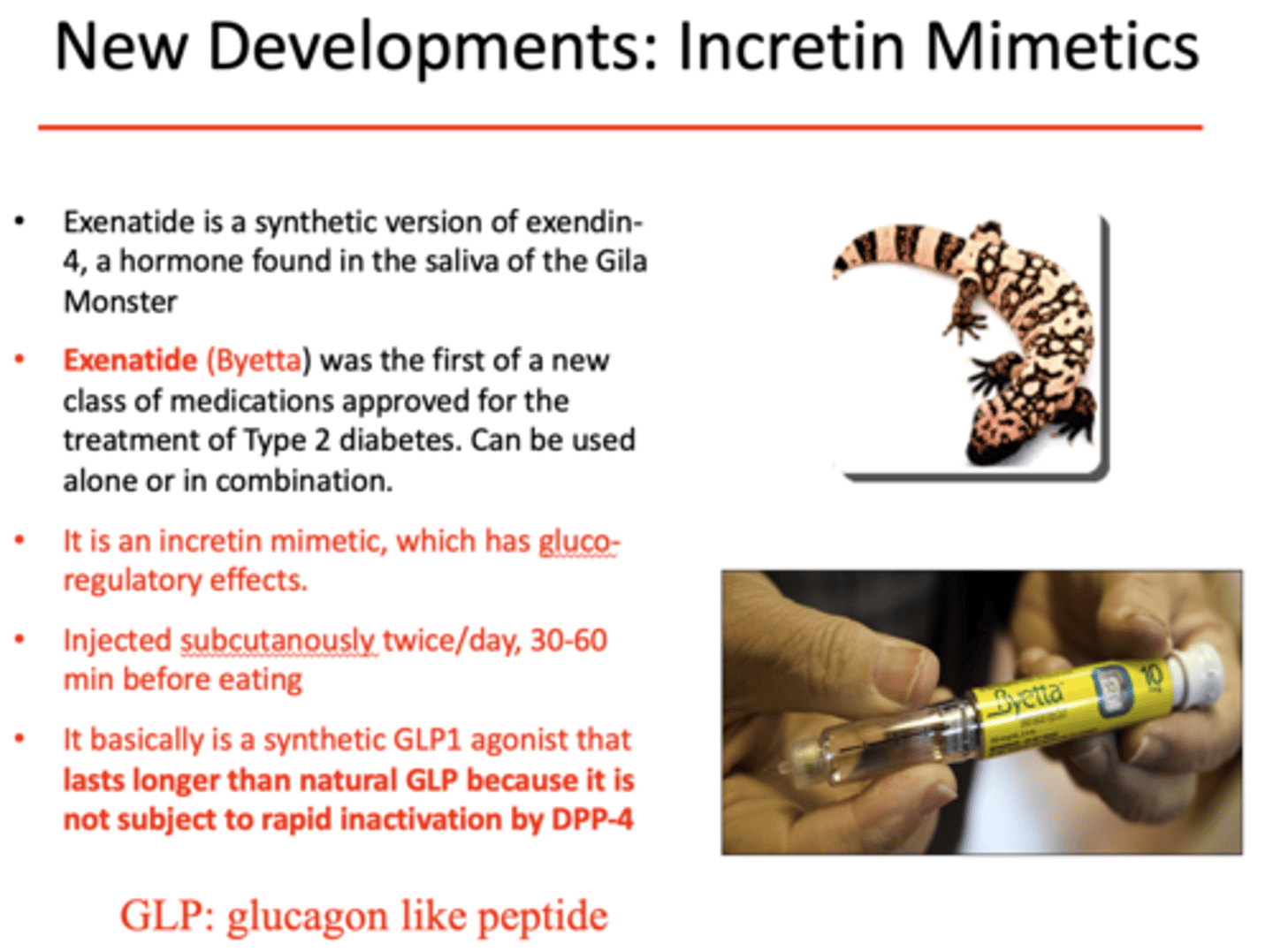
MOA of this medication:
- It is an incretin mimetic, which has gluco- regulatory effects.
- Injected subcutanously twice/day, 30-60 min before eating
- It basically is a synthetic GLP1 agonist that lasts longer than natural GLP (glucagon like peptide) because it is not subject to rapid inactivation by DPP-4
Exenatide (Byetta)
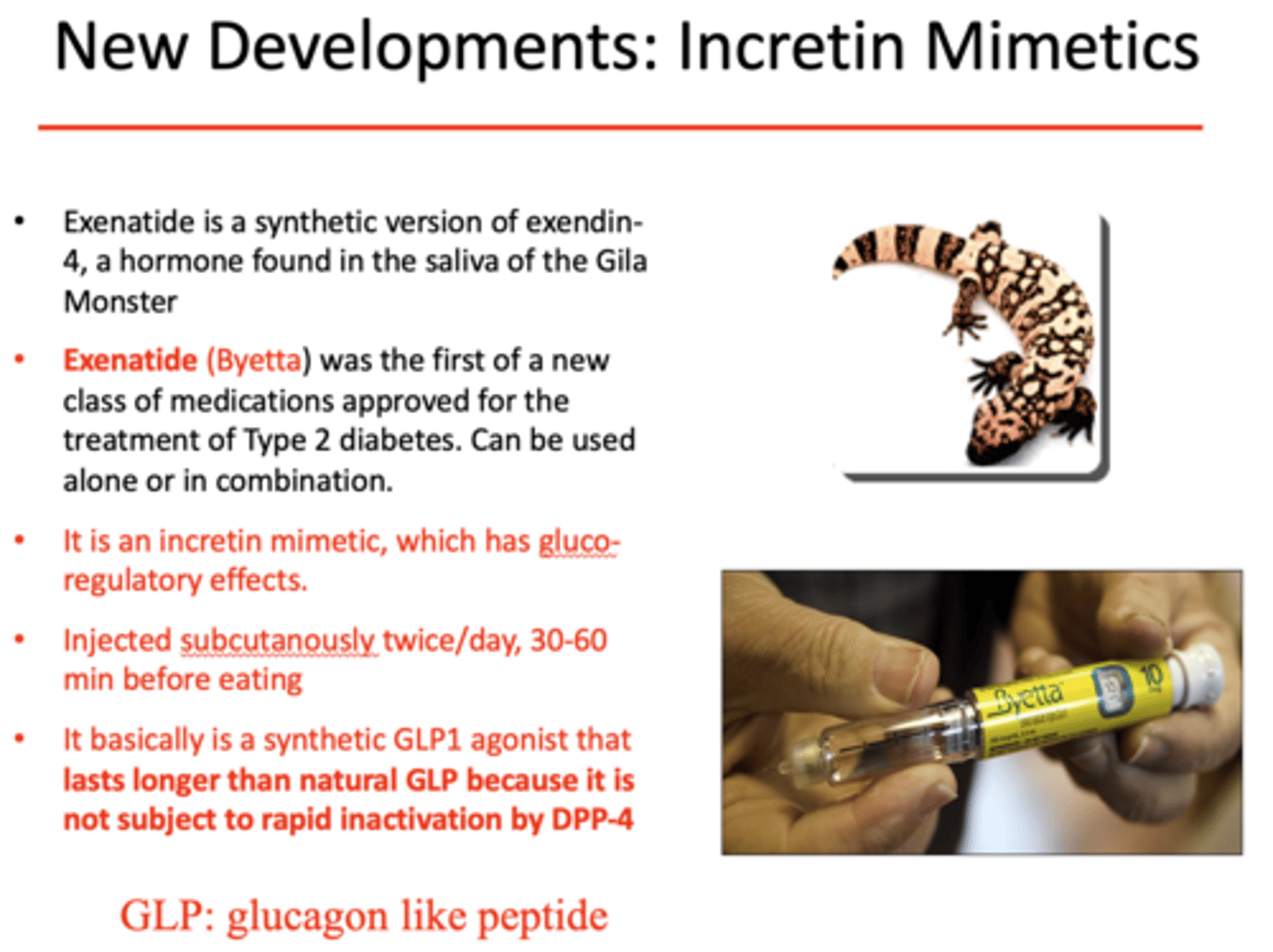
these medications are associated with nausea, pancreatitis, thyroid cancer:
Incretin mimetics (Exenatide Byetta)
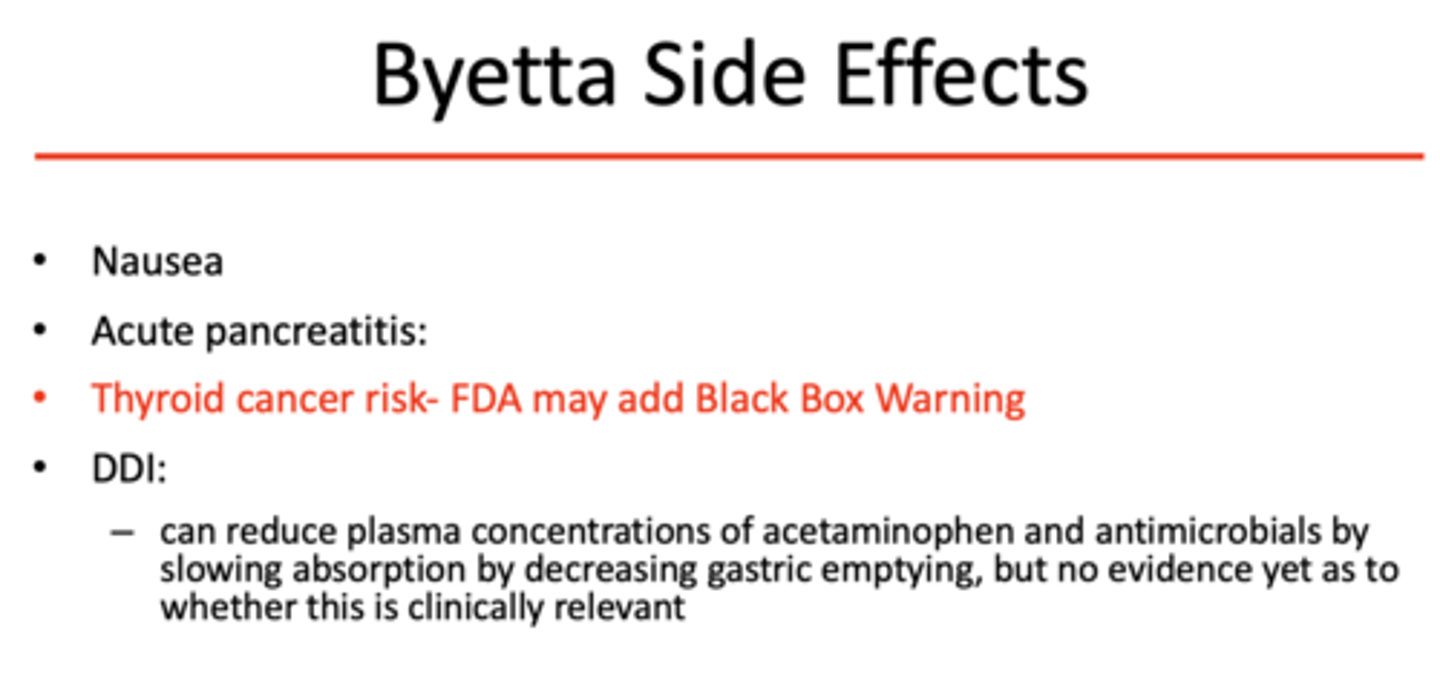
MOA of this medication:
- It is an incretin mimetic
- Once-daily injection
- Can be injected anytime during the day
- Pancreatitis risk may be lower, but FDA advises caution in patients with a history of pancreatitis
- Carries FDA Black Box warning regarding potential risk of thyroid cancer
Liraglutide (Victoza)
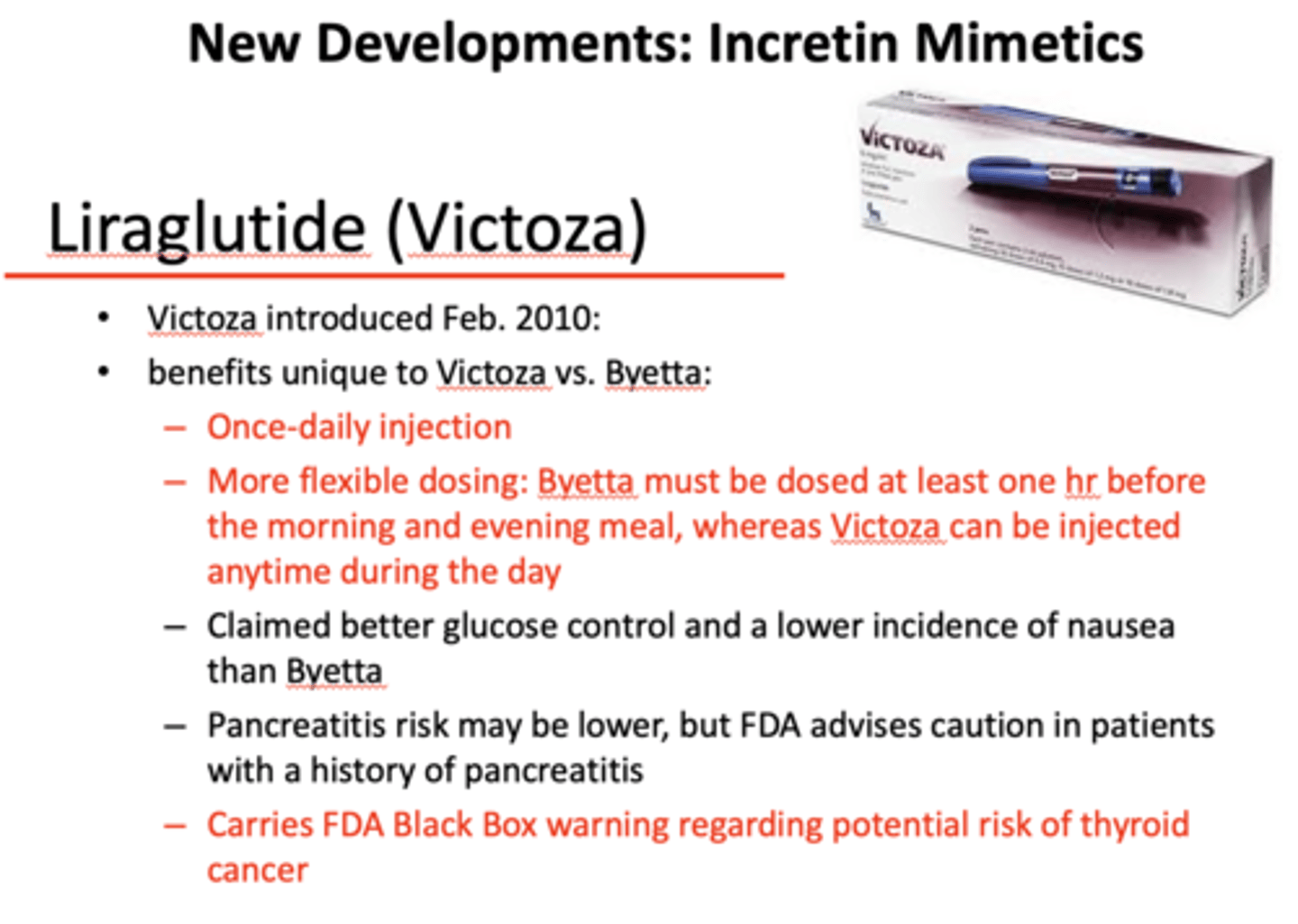
MOA of this medication:
- It is an incretin mimetic
- Injected once a week!
- FDA warning of thyroid cancer
Dulaglutide (Trulicity)
MOA of this medication:
- Prevent incretins from being degraded
- Results in: longer insulin release, further inhibition of glucagon release
- Lower glucose in blood
DDP-4 inhibitors
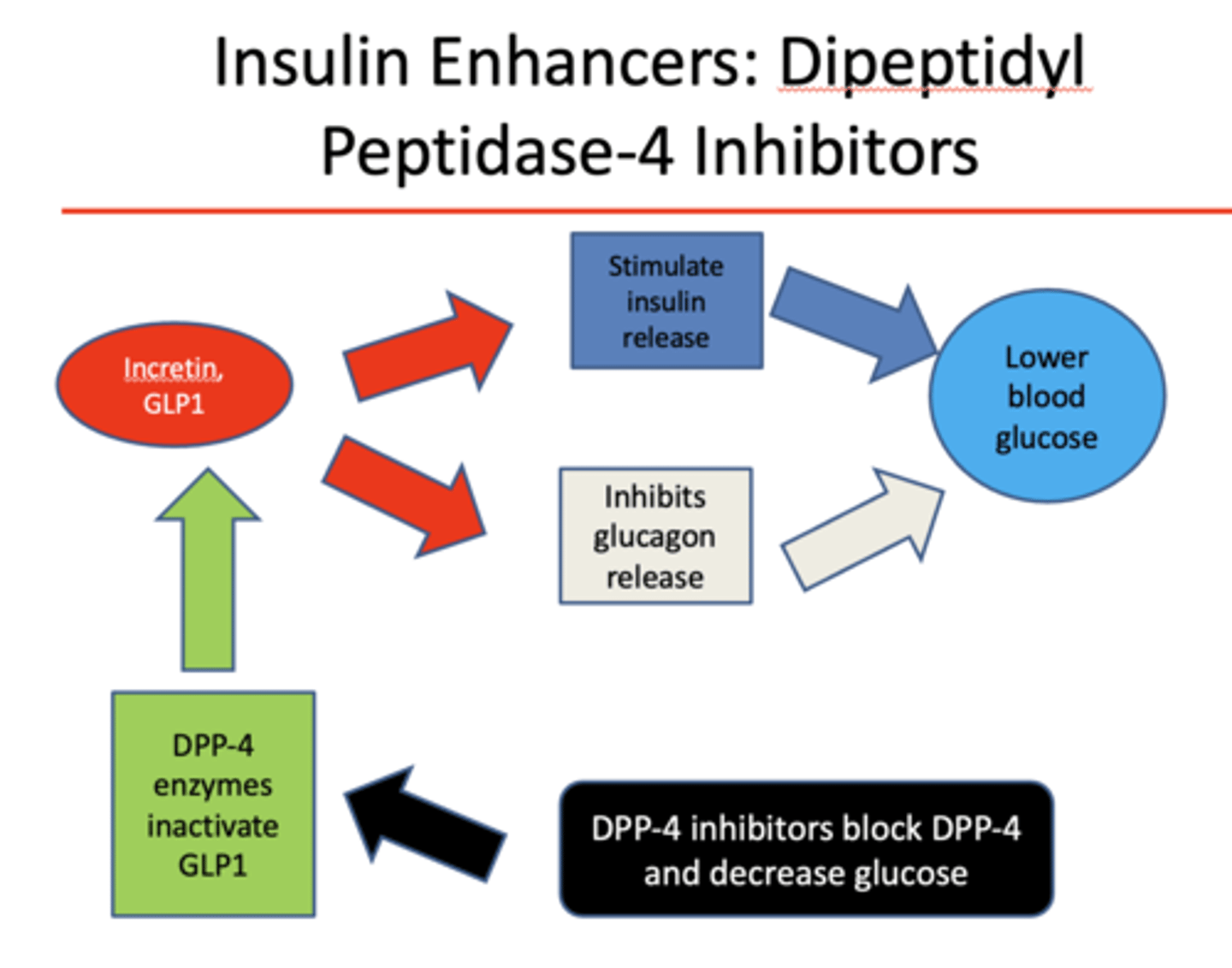
What medication is this?
- Taken orally
- Competitive inhibition of DPP-4 potentiates the secretion of insulin and suppresses the release of glucagon by the pancreas
- May be used as mono therapy or in combination with metformin
- Do not cause weight loss like the incretin mimetics (less likely to be misused)
DDP-4 inhibitors
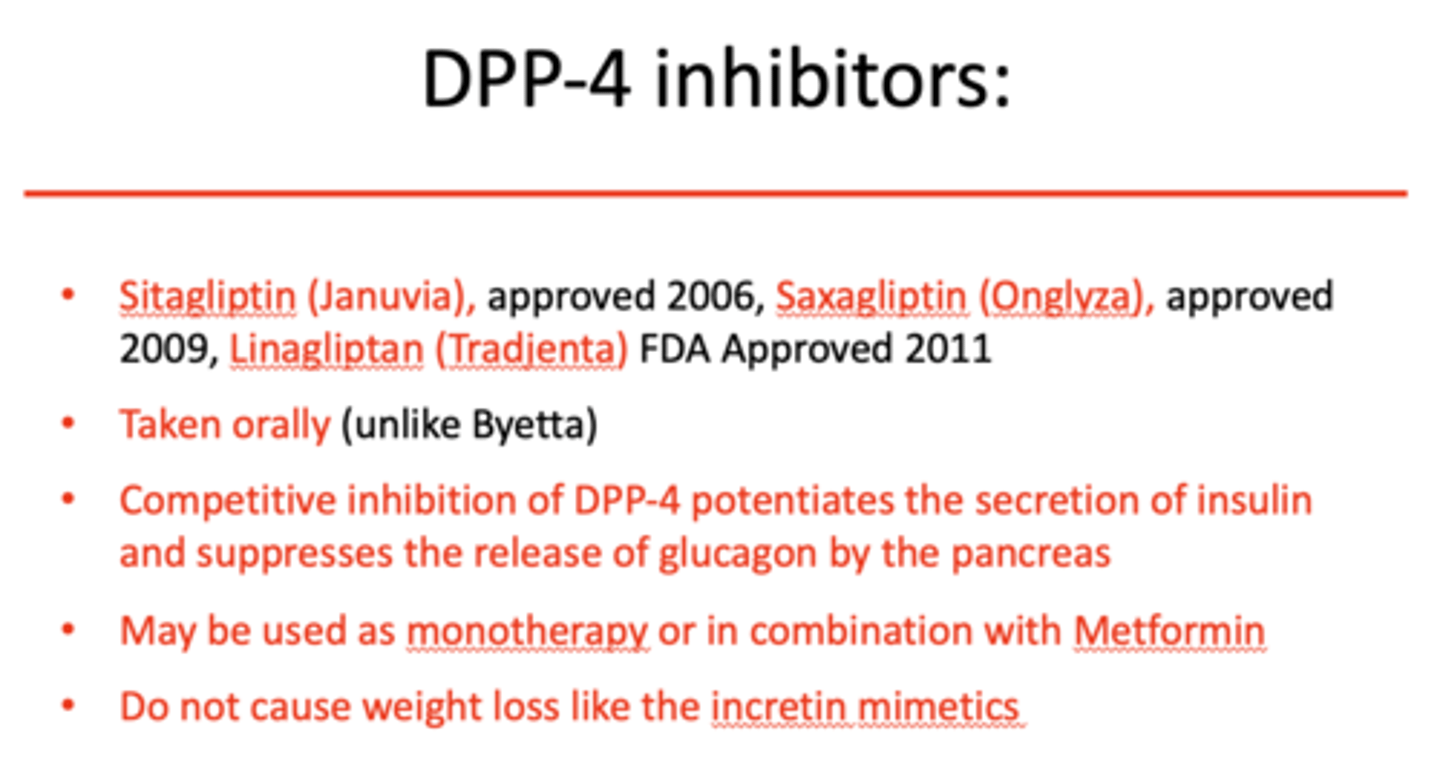
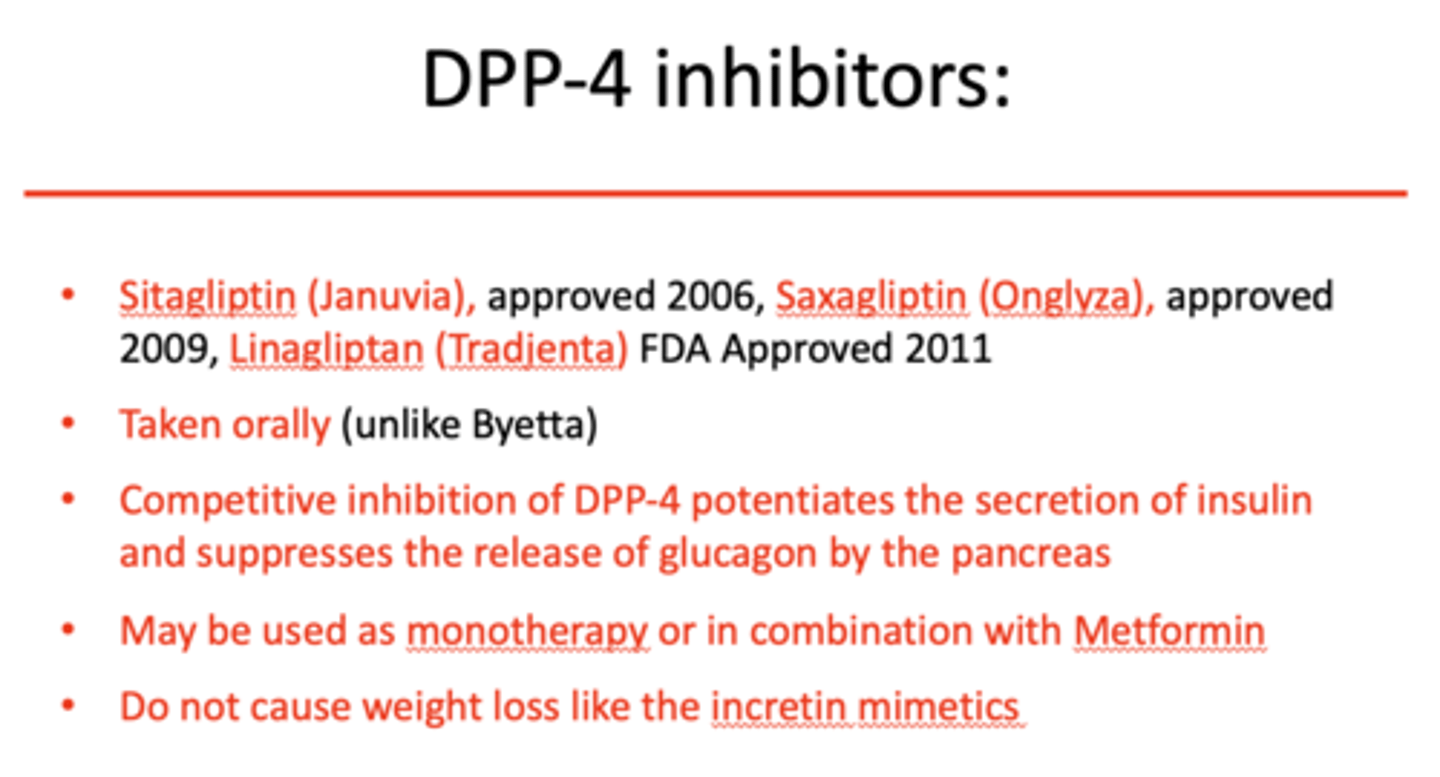
Sitagliptin (Januvia), Saxagliptin (Onglyza), Linagliptan (Tradjenta) are what class of drugs?
DPP-4 inhibitors
What medication is this?
- Blocks reabsorption of glucose in the kidneys
- Results in decrease blood sugar levels
- This mechanism is independent of insulin secretion and target tissue insulin sensitivity and is thus useful in patients with diminished beta-cell function
SGLT2 Inhibitors
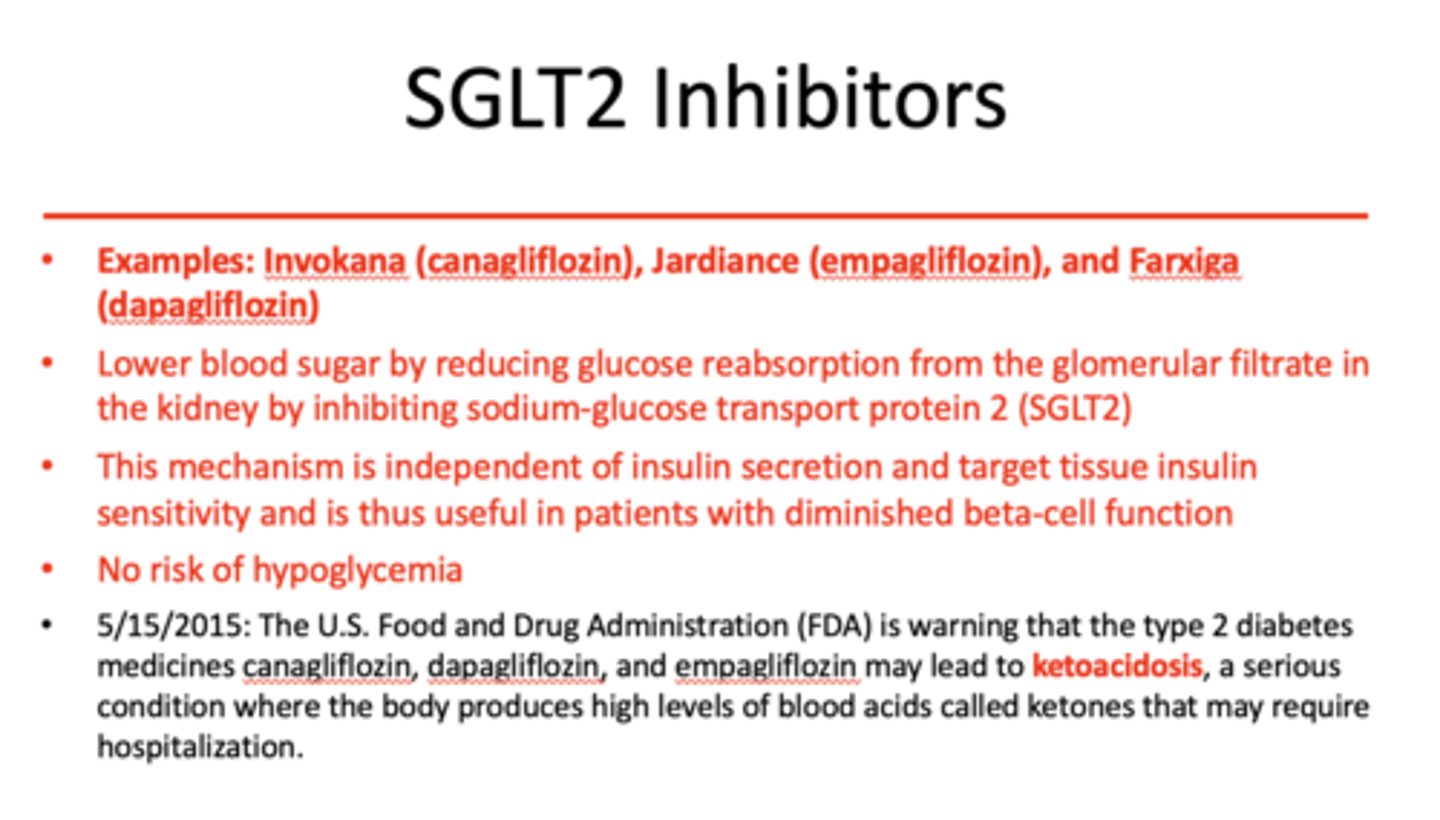
Do SGLT2 inhibitors have a risk of hypoglycemia?
No risk
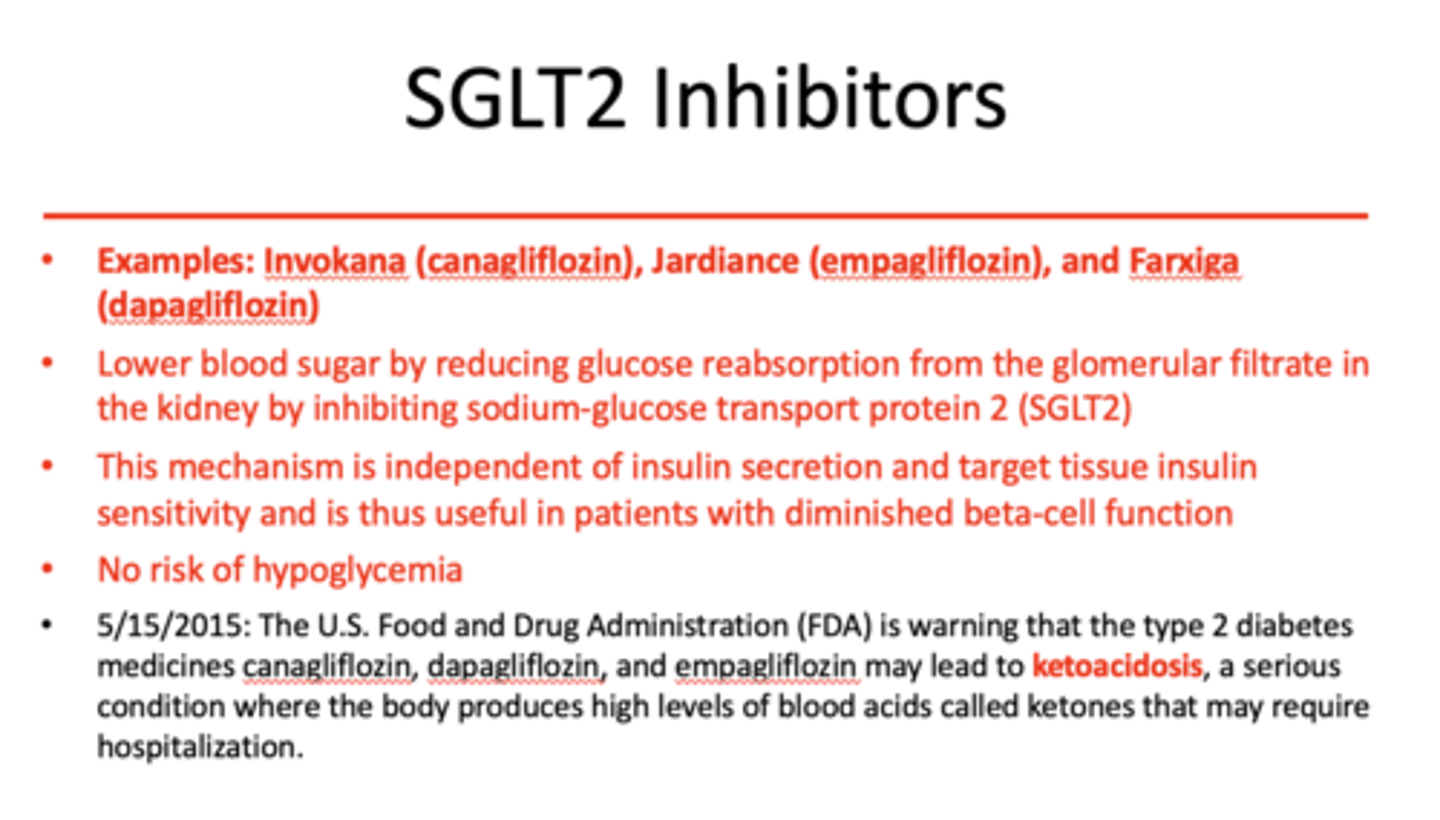
What drug lowers blood sugar by reducing glucose reabsorption from the glomerular filtrate in the kidney by inhibiting sodium-glucose transport protein 2?
SGLT2 inhibitors
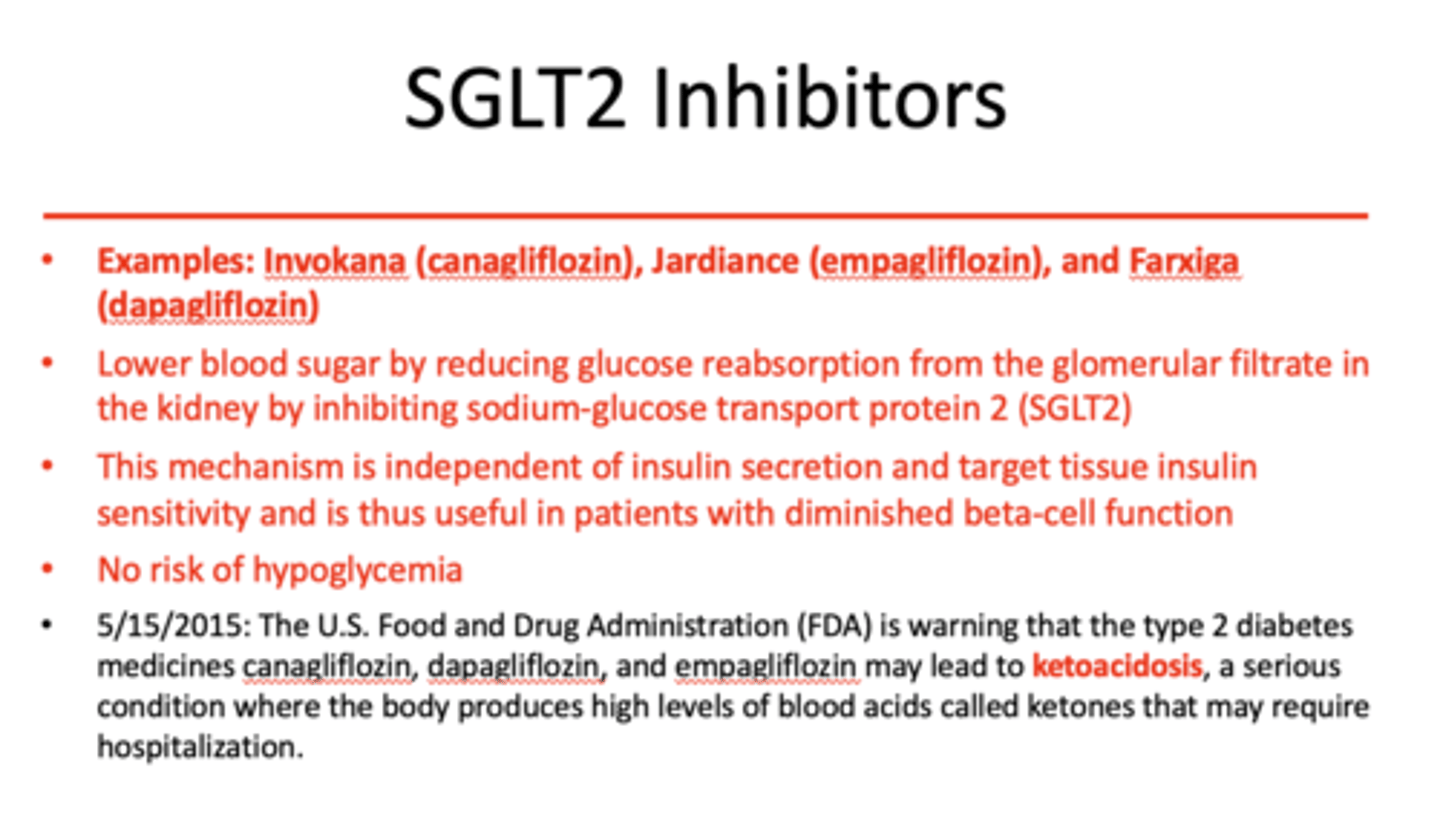
Invokana (canagliflozin), Jardiance (empagliflozin), Farxiga (dapagliflozin) are all examples of what types of drugs?
SGLT2 inhibitors
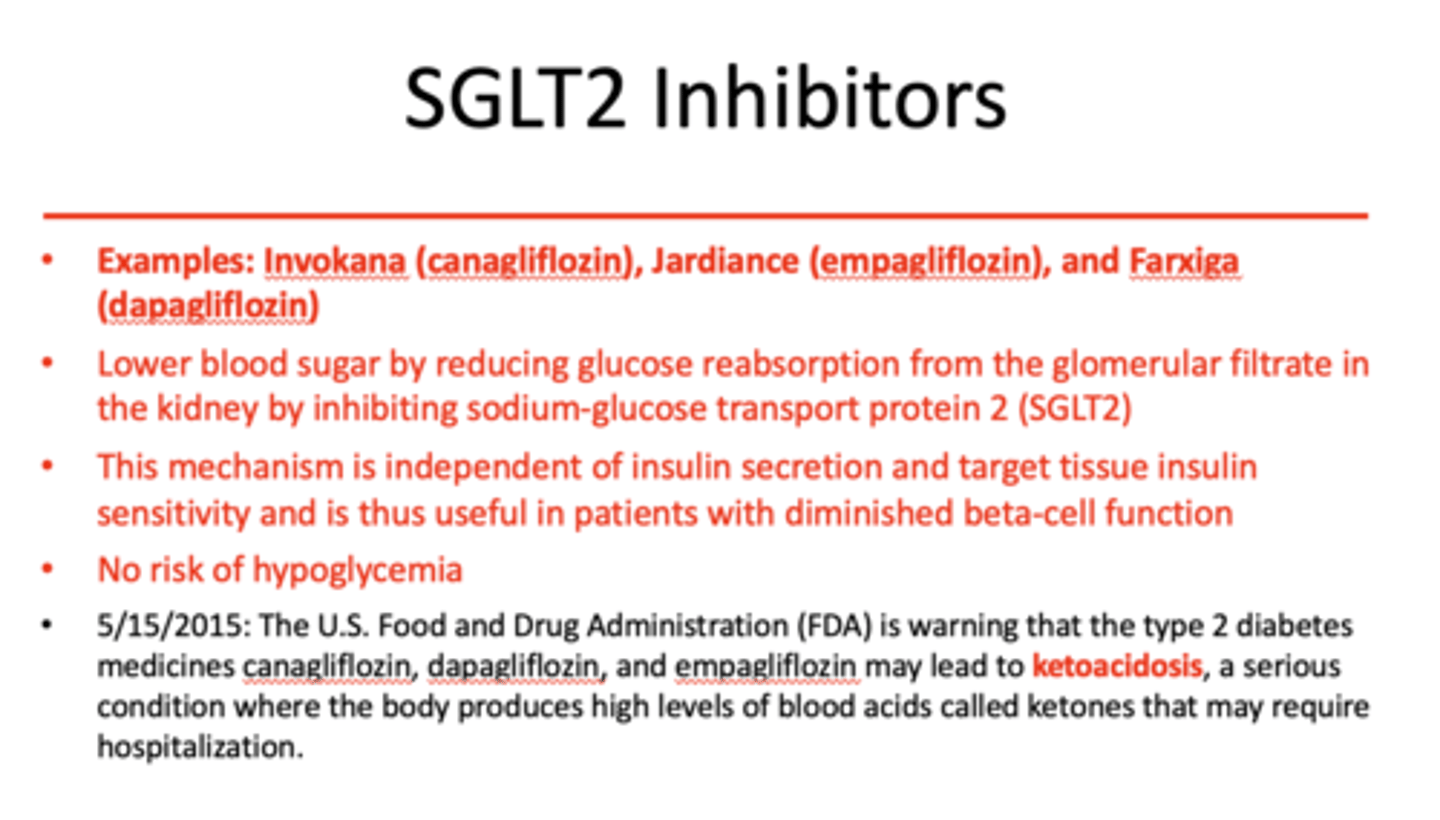
this medication is associated with ketoacidosis:
SGLT2 Inhibitors
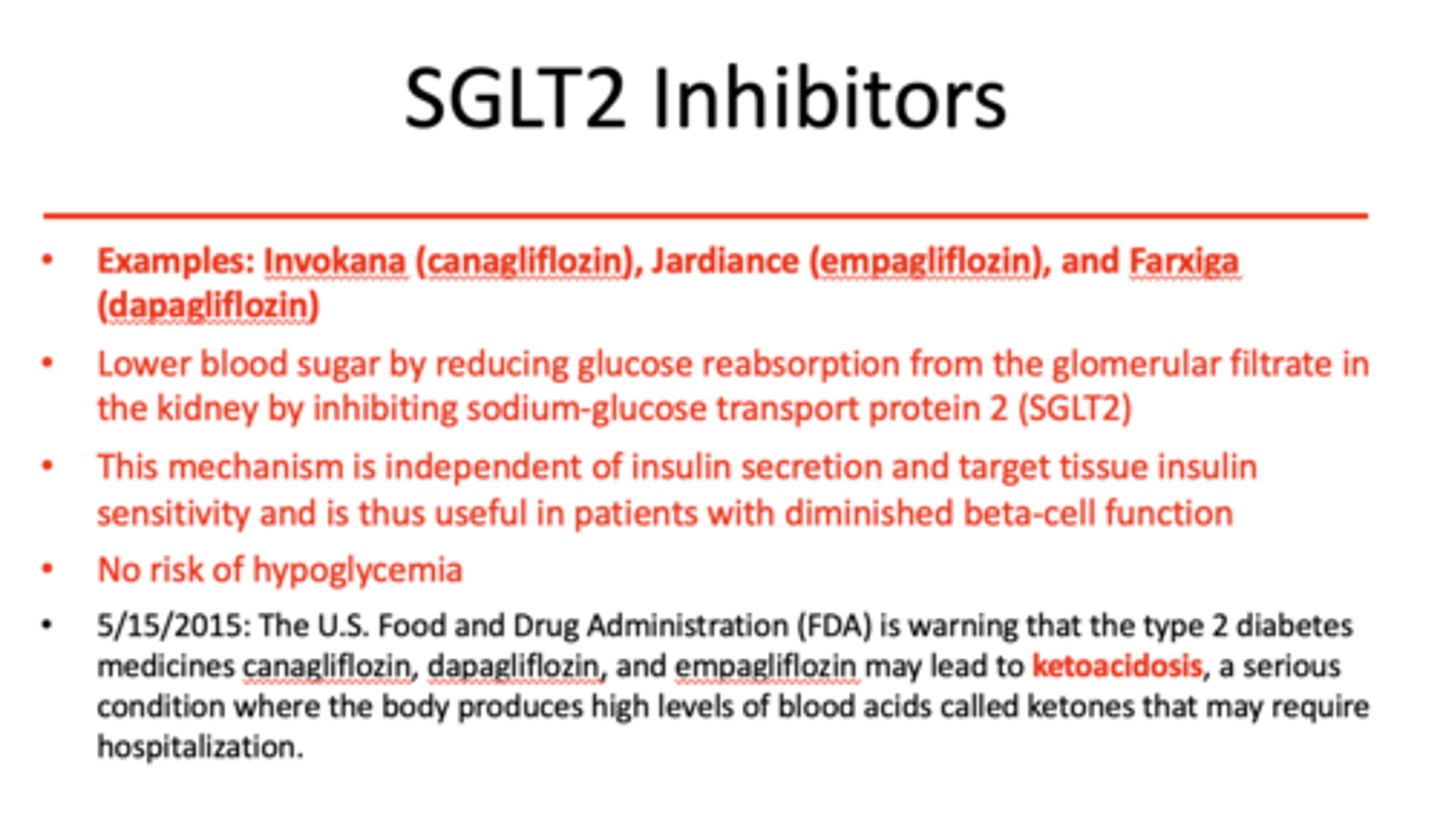
this medication is prescribed for Type 1 Diabetes patients:
Insulin
What drug is the following:
- Insulin replacement
- Correct insulin deficiency
Insulin/Insulin analogues
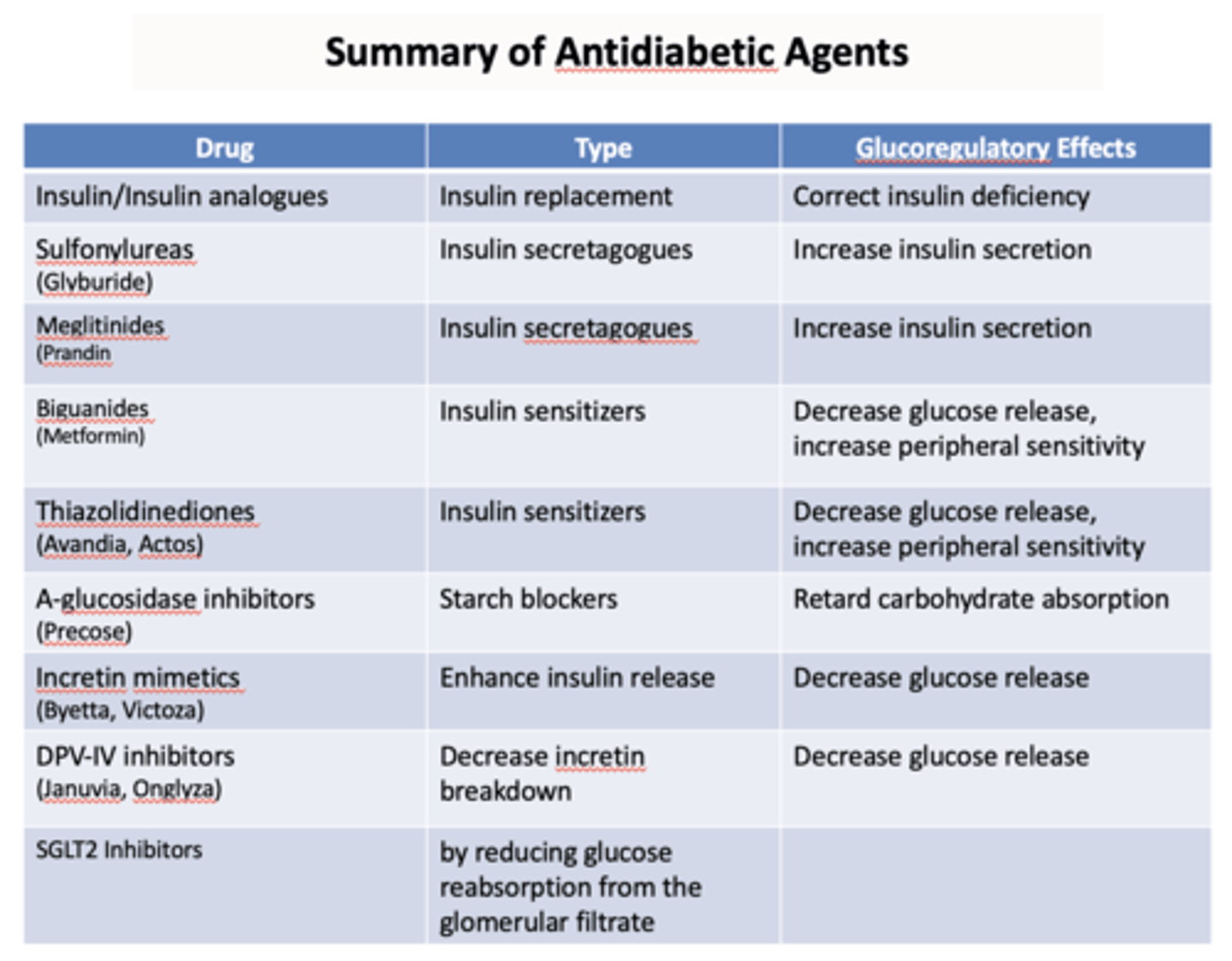
What drug is the following:
- Starch blockers
- Retard carbohydrate absorption
A-glucosidase inhibitors (Precose)
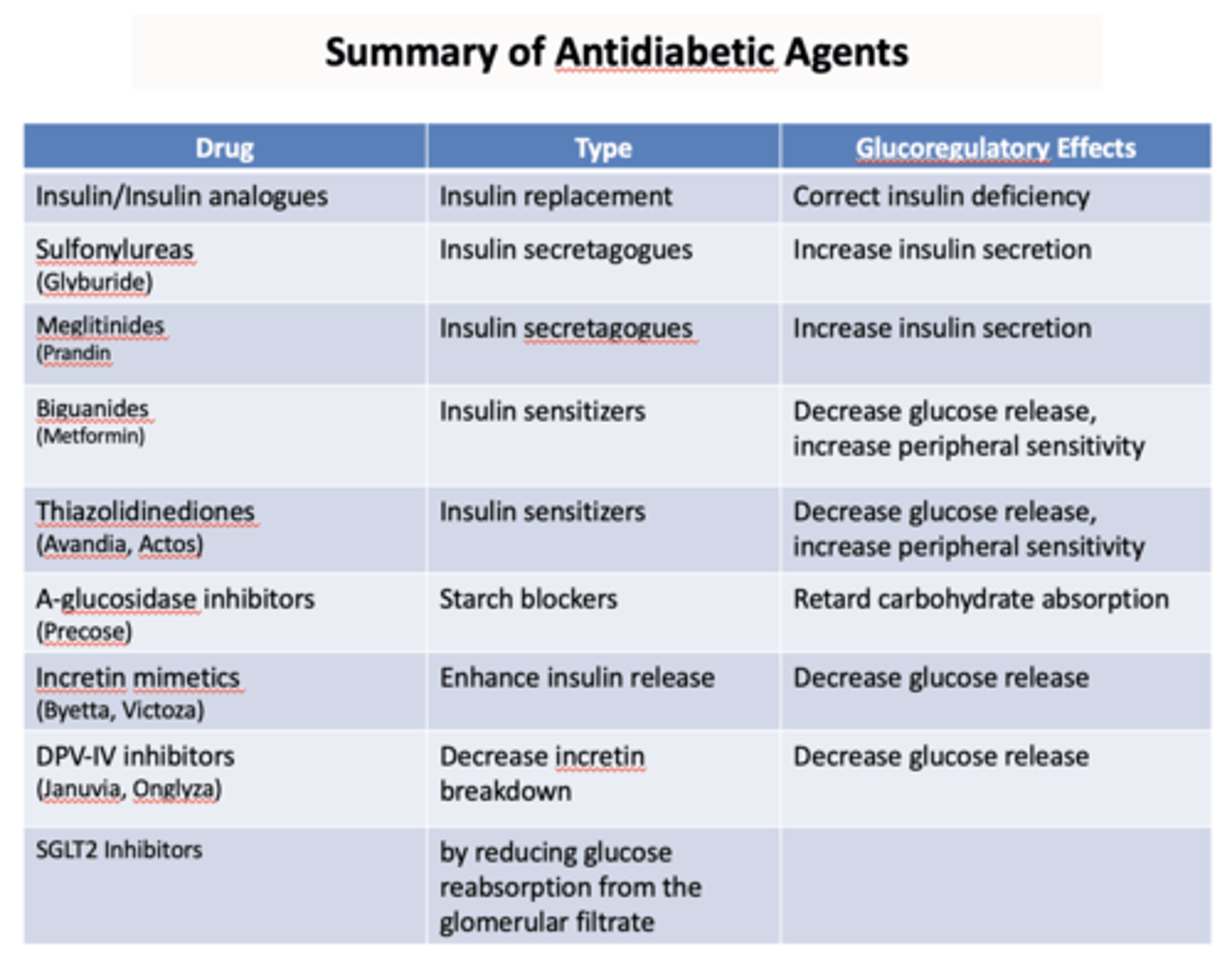
What drug is the following:
- Enhance insulin release
- Decrease glucose release
Incretin mimetics (Byetta, Victoza)
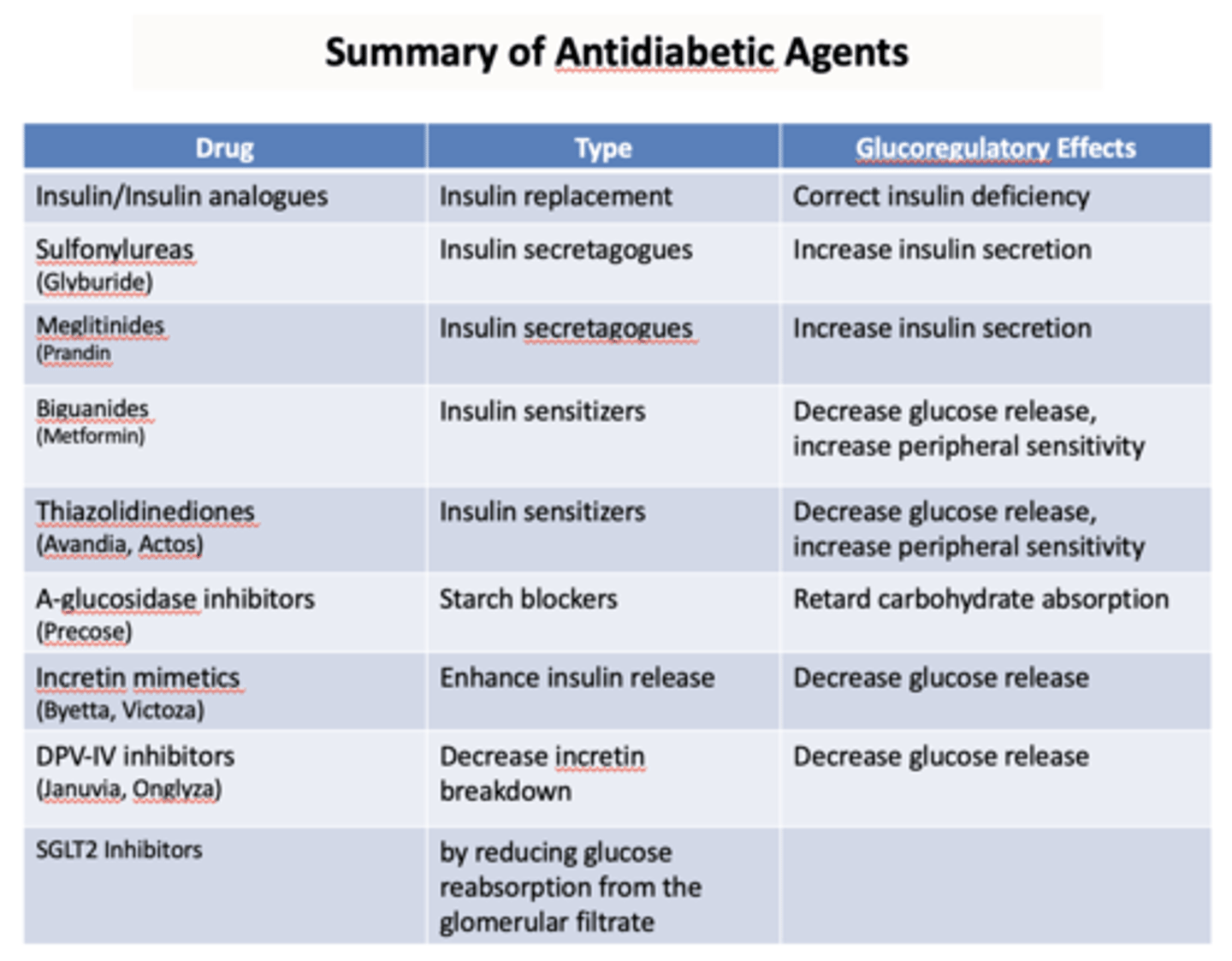
What drug is the following:
- Decrease incretin breakdown
- Decrease glucose release
DPV-IV inhibitors (Januvia, Onglyza)
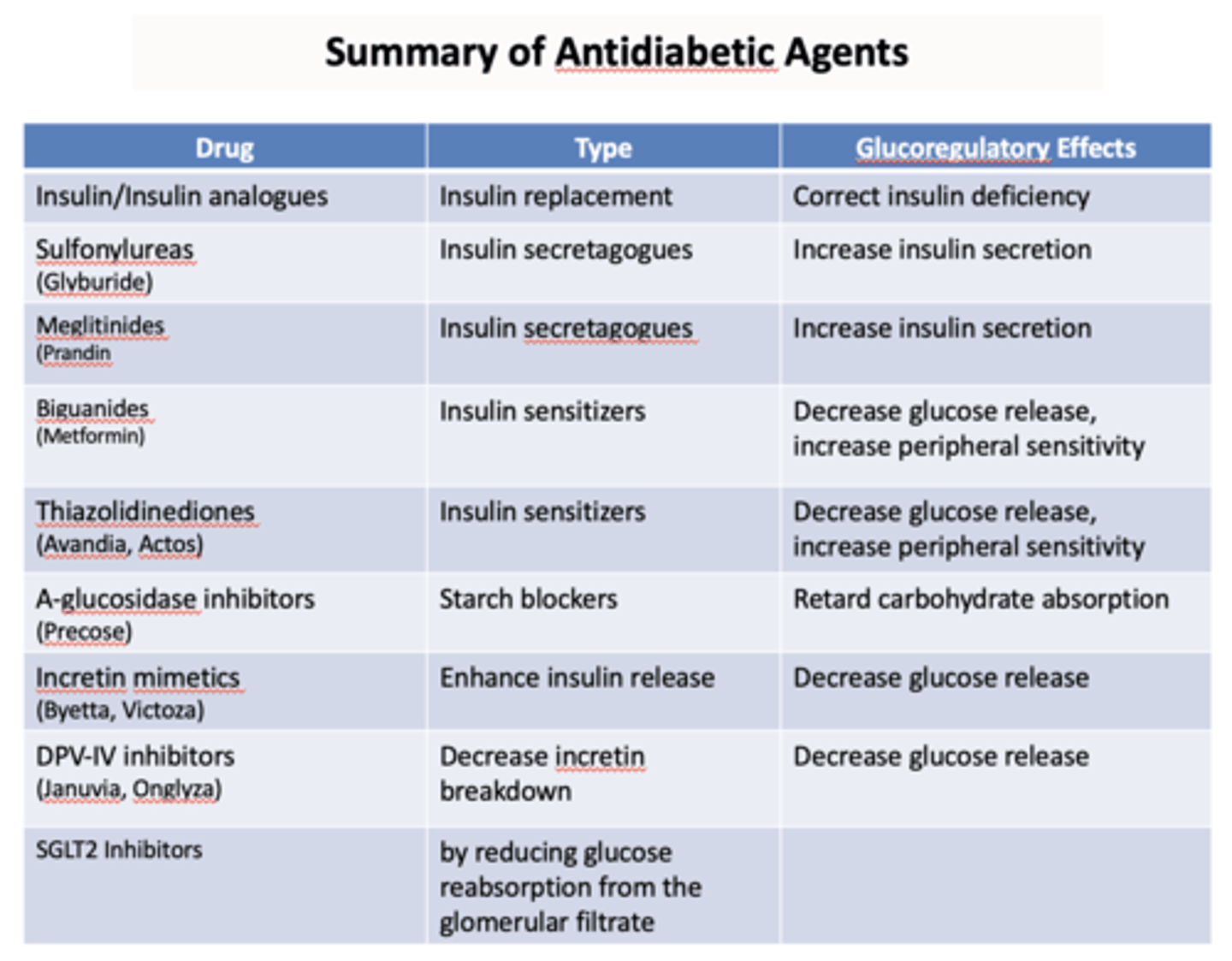
What drug is the following:
- Reducing glucose reabsorption from the glomerular filtrate
SGLT2 Inhibitors