8 Gallucci - Cell-Mediated Allergy (Type IV)
 Call Kai
 Learn
Learn Practice Test
 Spaced Repetition
 Match
Match Flashcards
 Knowt Play
1/7

There's no tags or description
Looks like no tags are added yet.
Name | Mastery | Learn | Test | Matching | Spaced | Call with Kai |
|---|
No analytics yet
Send a link to your students to track their progress
8 Terms
Obj. 1
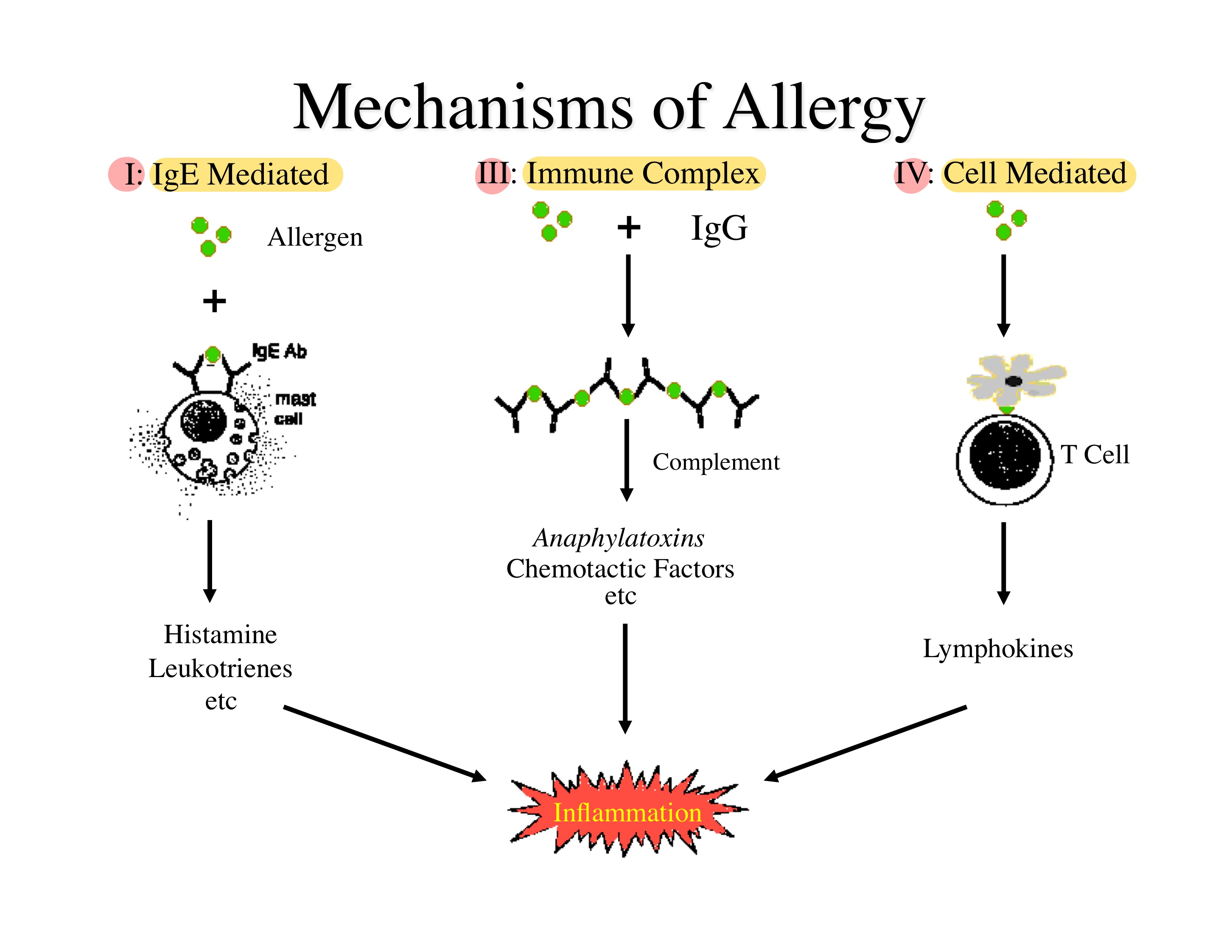
Summarize general mechanism of Type IV hypersensitivity.
📌 T cell–mediated (NOT antibody-mediated)
🪜Step-by-step:
Antigen is presented to T cells (CD4⁺ or CD8⁺)
T cells become activated
Release cytokines
Recruit macrophages + inflammatory cells
→ Tissue damage
🔑 Key point:
NO antibodies involved
This is cell-mediated immunity
Obj. 2
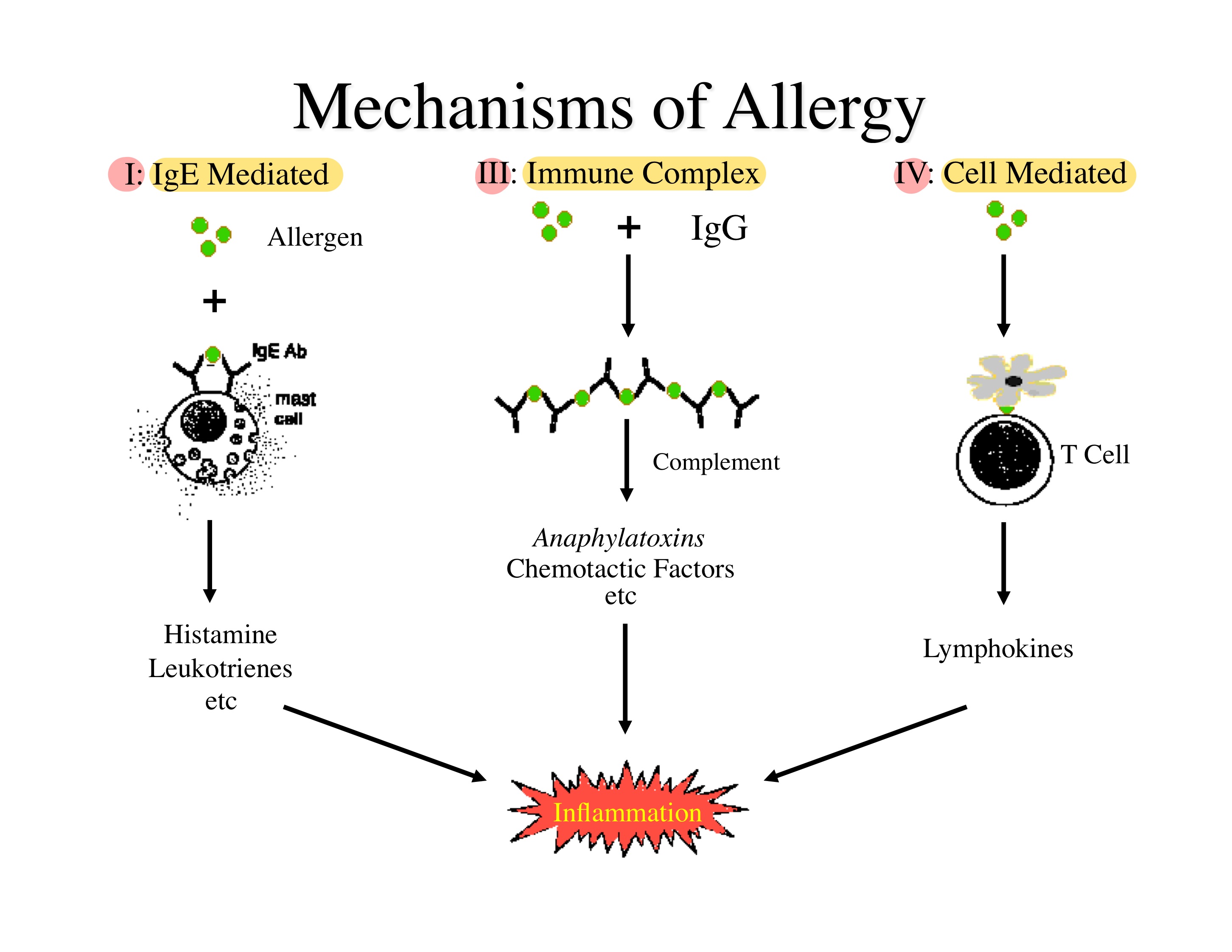
Relate how inflammation is involved in the Type IV response
📌 Inflammation is the main cause of damage
T cells → cytokines
Cytokines → recruit macrophages
Macrophages → cause tissue destruction
💡 Important:
👉 Damage is from the immune response, not the antigen itself
Obj. 3
Describe at least 1 common disease that is a Type IV reaction.
🏥 Common Type IV Disease
✅ Most common:
👉 Allergic Contact Dermatitis
📌 Examples:
Poison ivy
Poison oak
Occupational skin reactions
Obj. 4
Describe the most common Type IV allergens.
📌
Small, lipid-soluble molecules (haptens)
Must penetrate skin
👉 Examples:
Plant allergens (poison ivy)
Chemicals
Metals (e.g., nickel)
Obj. 5
Recognize and describe symptoms of a skin Type IV reaction and suggest basic therapy
🤒 Skin Type IV Reaction (Symptoms + Therapy)
➡ Symptoms
Redness
Itching
Rash
Swelling
Delayed onset (24–72 hours)
➡ Basic Therapy
Avoid allergen
Anti-inflammatory treatment (e.g., steroids)
⏱Key Feature
❗ Delayed response
Starts 8–12 hours
Peaks 48–72 hours
Obj. 6
Describe what Extrinsic Allergic Alveolitis is and its relationship to Type III Type IV reactions.
🌾 Extrinsic Allergic Alveolitis
👉 AKA:
Hypersensitivity pneumonitis
📌 What it is:
Lung reaction to organic dusts (occupational exposure)
🔗 Relationship to Type III & Type IV:
Early phase → Type III (immune complex)
Later phase → Type IV (cell-mediated)
🔥Summary
Type IV = T cells (NO antibodies)
Delayed (48–72 hrs)
Inflammation = damage
Most common = contact dermatitis
Alveolitis = Type III + Type IV combo
⭐ 1–2 Sentence Exam Answer
👉 Type IV hypersensitivity is a T cell–mediated immune response in which cytokine release recruits macrophages and causes inflammation and tissue damage, with common manifestations such as contact dermatitis and delayed reactions, and conditions like extrinsic allergic alveolitis involving both Type III and Type IV mechanisms.