Earth and Space - Final (new material)
 Call Kai
 Learn
Learn Practice Test
 Spaced Repetition
 Match
Match Flashcards
 Knowt Play
1/64

Earn XP
Description and Tags
4 May 2026
Name | Mastery | Learn | Test | Matching | Spaced | Call with Kai |
|---|
No analytics yet
Send a link to your students to track their progress
65 Terms
Closest planet to the sun
Mercury
Days in mercury
88 day a year
Surface of mercury
Gray in color because ferromagnesian and graphite
Mercury surface
Volcanic surface pocketed by craters
Temperature in Mercury
Day: 400ºC / 800º F
when facing the sunNight: -150ºC / 300ºF
colder than Antartica at night
Brightest planet in the sky
Venus
krn closest to the sun, lbih close than earth to mars
Venus is also called
The “Morning star” and the “evening star”
Planet that spins backwards
Venus
Nebular hypothesis
Secular model that the solar system rotates in the same direction, Venus defies this
Planet that is similar size to earth
Venus
Weather in Venus
Dense atmosphere of carbon dioxide
Venus color
Yellow because of sulfuric acid
Venus surface
Covered by volcanos, lava flows, and faults
Hottest planet
Venus: 460ºC / 900ºF
even though mercury is closer to the sun
Mars color
Red because of ironoxide
“Red Planet” refers to
Mars
Two moons of Mars
Phobos and Deimos
Mount in Mars
Olympus Mons - 25km/ 16 miles
twice than Everest
dormant volcano
Trace of waters detected in planet …
Mars
Asteroids
Smaller rocky objects that orbit the sun
Which is bigger: Asteroids or meteoroids
Asteroids
Ceres
A dwarf planet, used to be the largest asteroid
Asteroids are mostly found in
The asteroid belt
Largest planet
Jupiter
1300 times the volume of earth
how many earths can fit in jupiter
1300
“The Great Red Spot” refers to
Jupiter
Jupiter moons (largest)
Four Galilean moons
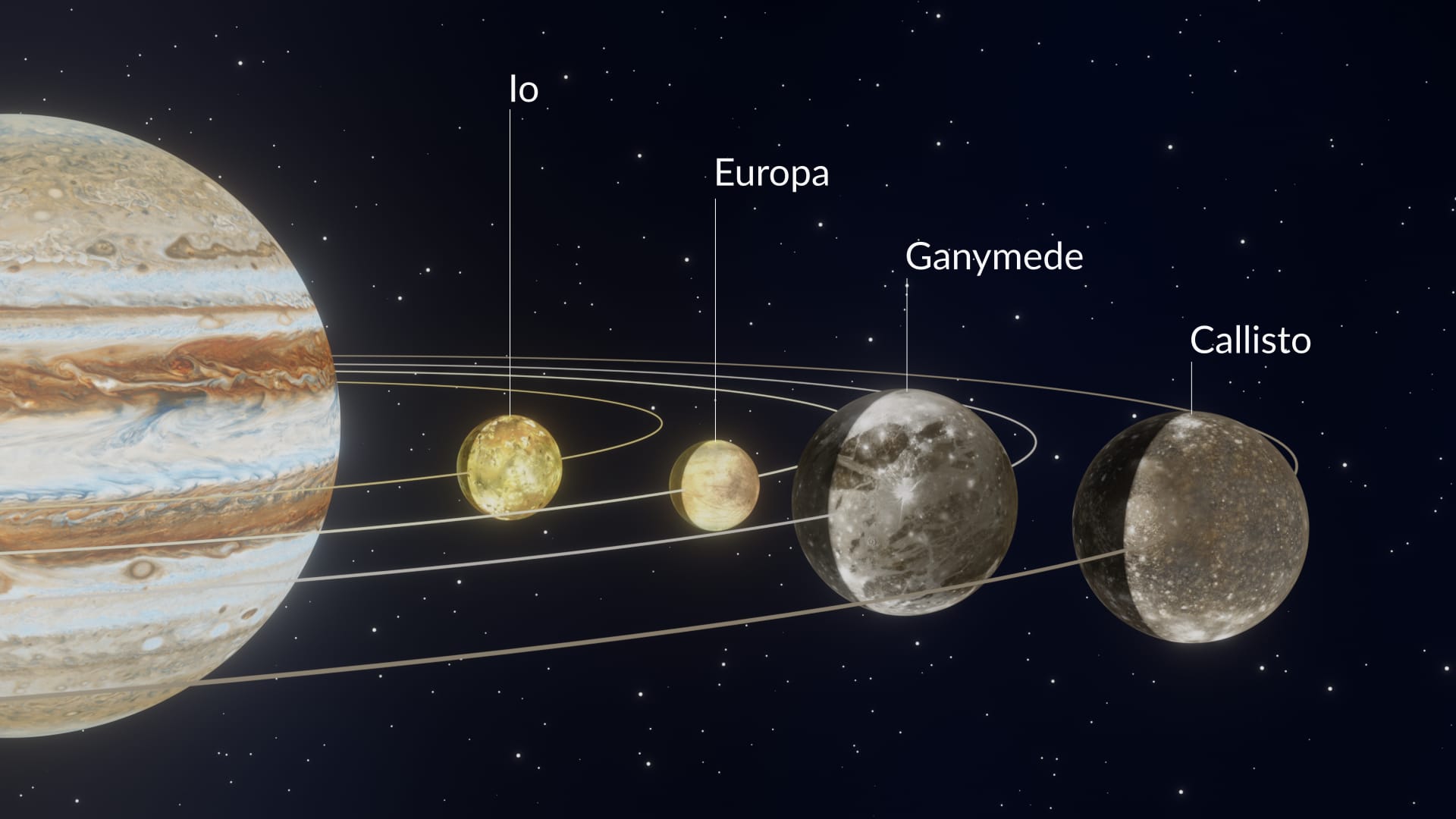
largest moons
Moons of Jupiter
IO
Europa
Ganymede (largest moon in the solar system, larger than mercury)
Callisto
Jupiter officially recognized satellites
95 satellites / moons
Jupiter is made of
Light gases
helium, hydrogen
Fastest spinning planet
Jupiter
Plane with the largest ring system in the solar system
Saturn
Largest moon of Saturn
Titan
Titan: largest moon of Saturn
Has an atmosphere with organic compounds
Speculated by secular astronomers that it may contain life
light gases: helium & hydrogen
Least dense planet
Saturn
Planet discovered in modern times
Uranus
Discovered Uranus
William Herschel
Planet that rotates nearly perpendicularly
Uranus
Planet that was discovered mathematically
Neptune
Planet with deep blue with raging storms
Neptune
Neptune and Uranus colo
Blueish from methane
Reclassified as a dwarf planet
Pluto
Several other dwarf planets were discovered
Planet classification
Has to orbit the sun
Cannot be moon (orbiting a planet)
Round
Clear orbital path (no debris in the path)
“Dirty snowballs”
Comets
Comets
Highly elliptical orbits

Parts of a comet
Nucleus
Coma
Tails
Nucleus
body of the comet
Coma
sublimating gases surrounding the nucleus
Tails
Dust tail: follows the comet’s previous orbit
Ion tail: streams out into space directly away from the sun
Meteoroids
small bits of rock that the earth encounters in space
Meteors
1. The burning remnants of a meteoroid in the earth’s atmosphere
2. “Shooting stars”
Meteorites
meteoroids that have reached the earth’s surface
Relative to the starts, the moon has an orbital period of …
27.3 days
Relative to the sun, the moon has an orbital period of …
29.5 days
Moon phases
New moon at the beginning of the lunar period
Waxing phases for 14 days (wx. crescent, first quarter, wx. gibbons)
Full moon phase
Waning phases for 14 days (wn. gib, last quarter, wn. or)
New moon indicates a new lunar period
Blocking the sun’s light
Eclipse
Lunar Eclipse
Earth blocks the sunlight reaching the moon
Occurs at the full moon
Solar eclipse
Moon blocks the sunlight reaching the earth
Occurs at the new moon
Eclipses do not occur twice a month because …
The moon is tilted 5.2º to the earth’s orbital plane
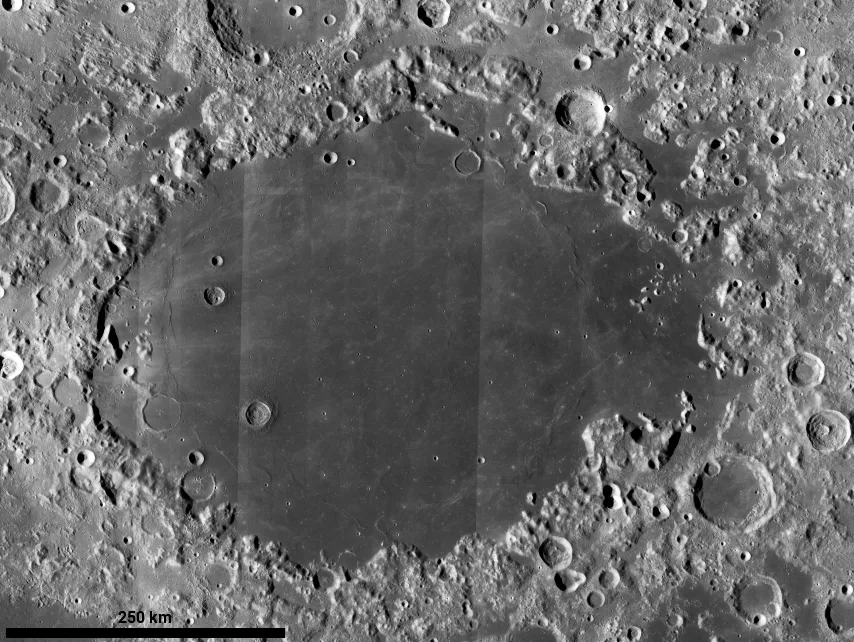
Lunar surface
Volcanic feature, crates, and mountains
Lunar Mare
Solidified lava flows
Lunar rilles
Trenches carried out by lava

Lunar highlands
Light colored higher regions on the moon
Made of anorthosite (plagioclase feldspar bearing route)
History of the moon
The moon had former igneous activity
It now appears to be quiet
The far side of the moon has less mare
Pocketed
Origin of the moon
Collision between earth and other planet
Accepted by secular astronomers today