Biology II Ch. 25 Classification Test Study Guide
 Call Kai
 Learn
Learn Practice Test
 Spaced Repetition
 Match
Match Flashcards
 Knowt Play
1/41

Earn XP
Description and Tags
These flashcards cover key vocabulary terms and concepts related to the classification of living organisms as discussed in Chapter 25.
Name | Mastery | Learn | Test | Matching | Spaced | Call with Kai |
|---|
No analytics yet
Send a link to your students to track their progress
42 Terms
Taxonomy
The science of classifying living things.
As we move through the biological hierarchy from the kingdom to species level, organisms become moreGenus
Similar
Which scientist developed the system of classifying organisms by assigning them a genus and species name?
Carolus Linnaeus
The organism Canis familaris is a member of what genus?
Canidae
What is the species identifier for Quercus phellos?
Phellos
The red maple is also known as Acer rubrum. Its scientific name is
Acer Rubrum
Why is the scientific name of an organism the same for scientists all over the world. Explain.
They use Latin to keep it simple
An organism can have how many genus and species names?
One
In which language are scientific names written?
Latin
What is the correct order of the biological hierarchy from domain to species?
1. Domain 2. Kingdom 3. phylum 4. Class 5. order 6. family 7. genus 8. species
What information is used in systematic taxonomy to classify organisms?
the characteristics they share, genetics, physical parts (skeleton) and body structures
A branching diagram like the one shown is called a
Cladogram
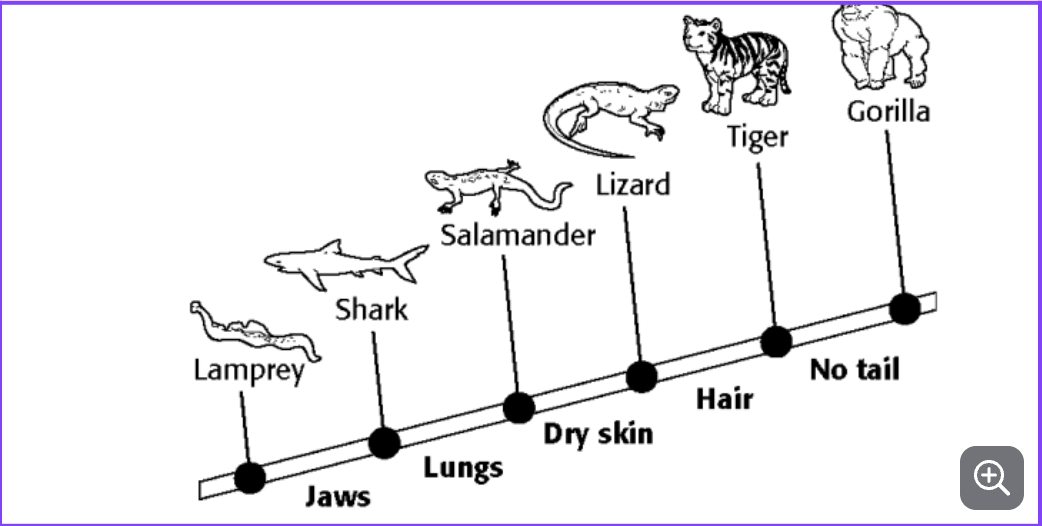
Refer to the illustration above. Each particular feature, such as dry skin, that is used to assign an organism to a group is called a
ancestral
Nearly all single-celled eukaryotes that are either heterotrophic or photosynthetic belong to the kingdom
Protista
Most multicellular autotrophs that have a nucleus and carry on photosynthesis belong to the kingdom
Plantae
An organism that breaks down organic matter, which it then absorbs, is in the kingdom
Fungi
The kingdom defined as including any eukaryotes that are not plants, animals, or fungi is the kingdom
Protista
What are 2 groups of organisms that are placed together by cladistics but are placed in separate groups by classical taxonomy?
birds and crocodile
Linnaeus’s two-word system for naming organisms is called
Binomial Nonmenclature
The largest division that a group of organisms can belong to is a
Domaine
Similar features that evolve through convergent evolution are called
Analogous structures
During Aristotle’s time, scientists divided all living organisms into___kingdoms
six
Four of the kingdoms include eukaryotes and the other two include
Prokayotes
What are the characteristics used to differentiate kingdoms?
body organization
Fungi is an example of which taxa?
Kingdom
Which one kingdoms contain both unicellular and hetertrophic organisms?
protista and fungi
List the domain that are prokaryotes.
Bacteria and Archaea
List the kingdoms that are eukaryotes.
Animalia, fungi, Plantae, Protista
Each kind of organism on Earth is assigned a unique two-word
Binomial nomenclature & scientific name
The first word of a scientific name indicates the ____to which the organism belongs
Genus
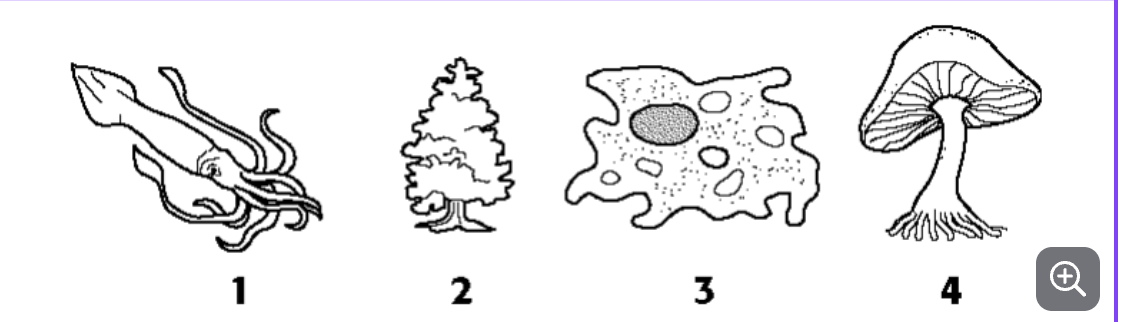
Refer to the illustration above. Label the each organism with its kingdom name.
Animalia (squid) 2. Plantae (tree) 3. Protista (Amoeba) 4. fungi (mushroom)
Any characteristic that a descendent has but their ancestor didn’t have is described as a____characteristic.
Derived
All living things are grouped into one of three
Domains
Traditionally, scientists have used differences in appearance and body___classify organisms.
structures
The evolutionary history of a species is called its
Phylogeny
Why might the use of common names to describe organisms sometimes cause confusion?
different languages change the name
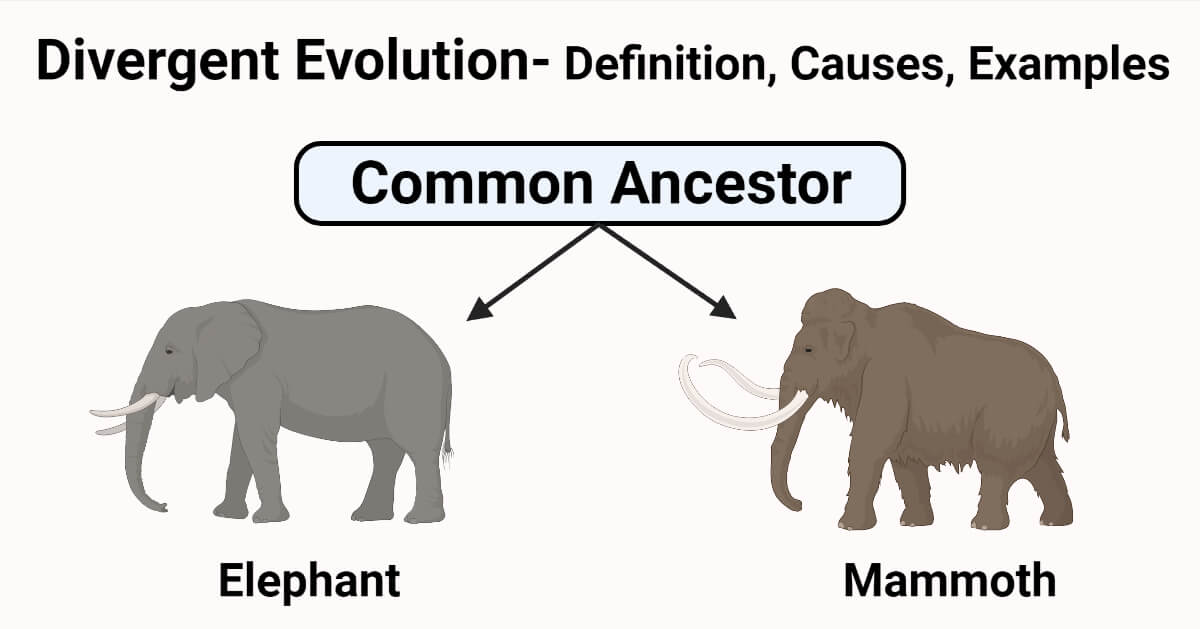
ONE species evolves into two different species
Divergent
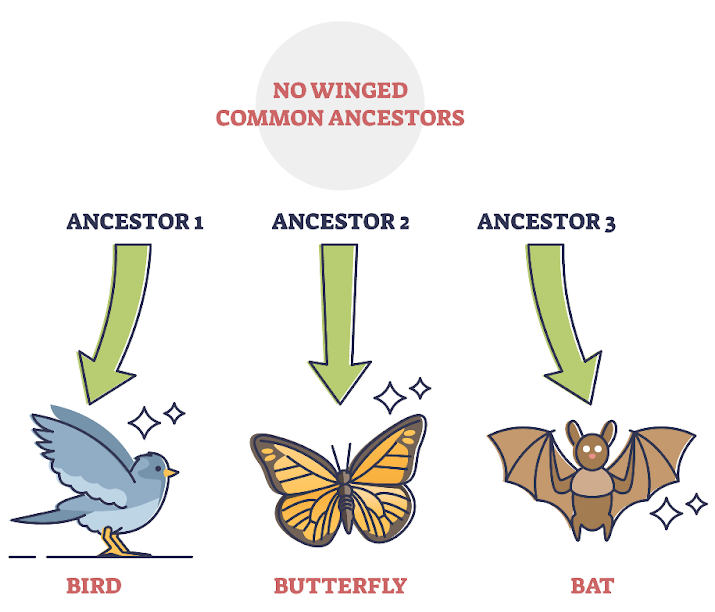
Two separate species in different areas evolve to look or behave in a similar manner
Convergent
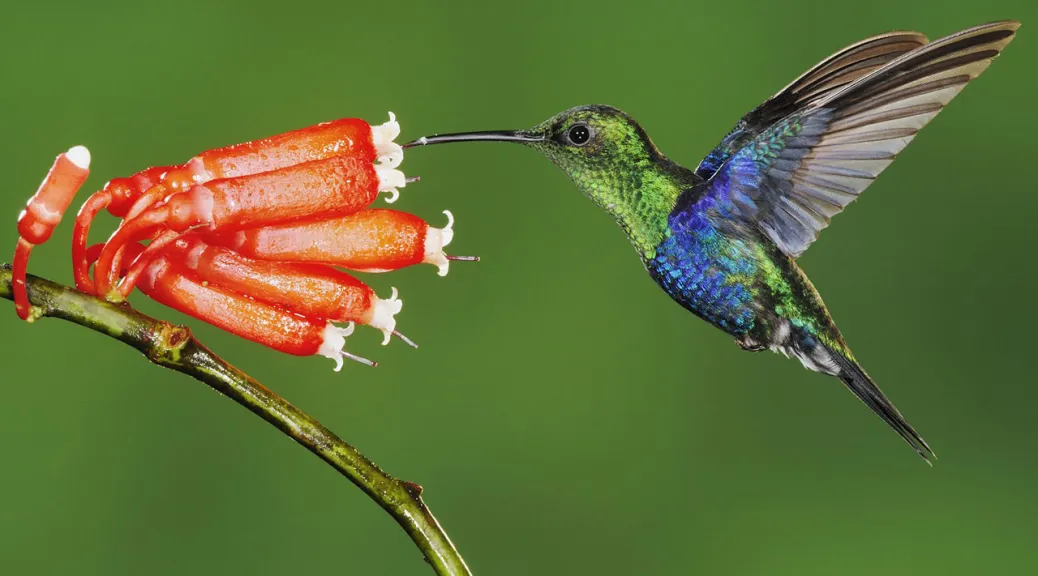
TWO speices that have a partnership or symbiotic relationships evolves together to continue relationship
Coevolution
Share common ancestors but have different functions
Homologous structure
similar function but evolved not from a common ancestor
Analogous structure
features, behaviors, or genetic traits that have lost most or all of their original ancestral function
Vestigial Structure