Synthesis and Reactive Intermediates
 Call Kai
 Learn
Learn Practice Test
 Spaced Repetition
 Match
Match Flashcards
 Knowt Play
1/36

There's no tags or description
Looks like no tags are added yet.
Name | Mastery | Learn | Test | Matching | Spaced | Call with Kai |
|---|
No analytics yet
Send a link to your students to track their progress
37 Terms
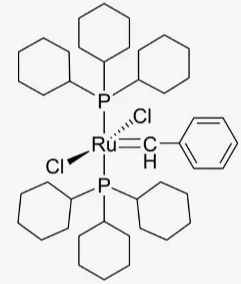
Grubbs (I) Structure
abbreviate cyclohexanes as -Cy
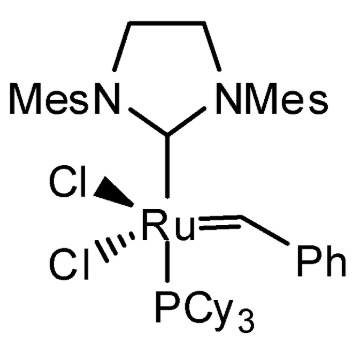
Grubbs (II) Structure
same as Grubbs I but one PCy3 is an N-heterocyclic carbene which is a better sigma donor, so catalyst is more stable and more reactive
Why are the Grubbs reagents precatalysts?
PCy3 has to be lost to generate the active 14e catalyst
Why is RCM efficient even though it is an equilibrium?
Ring Closing Metathesis
two terminal CH2 groups leave together as ethene → Le Chatelier - gas is leaving so equilibrium shifts forward
This is why terminal alkenes are necessary
Rules for RCM
Grubbs II catalyst (2 mol%)
DCM, r.t.
functional group tolerant → alkene specific
Only for rings >=5
How to achieve cross metathesis
With two electronically identical terminal alkenes, RCM leads to R1=R2, R1=R1, and R2=R2.
Make one alkene electron rich - plain alkyl, and one with an EWG (ester, ketone, sulfone, halide)
Electron rich alkene dimerises fast but also reverses quickly, R1=R2 reacts but will not reverse as its kinetically irreversible
EWG alkene dimer barely forms, too slow
System accumulates R1=R2
Why does Cross Metathesis lead to trans stereochemistry?
In the cyclobutane intermediate, R and the EWG substituents sit on opposite corners of the ring, and point opposite directions to avoid steric hindrance.
When the alkene is formed these substituents sit trans
How does ROCM work?
strained (>6 or =4) ring and excess electron poor alkene
produced bis-functionalised linear product driven by strain
What are the three main uses of silicon?
Silyl enol ethers (enolates in a bottle) alkene + OH where the H is protected by SiR3
Nucleophilic enhancement of alkenes/arenes
Protecting groups for alcohols or alkynes
What determines the position of the double bond in the synthesis of SEE from ketones?
kinetic (1) vs thermodynamic (2) product
Low temperature prevents equilibrium, strong bulky base (LDA) which targets most accessible H = outer H producing terminal DB
R.t., weak base (Et3N) so ketone is not deprotonated directly, ketone is silylated on oxygen, then base picks up the H which will lead to the most subtituted (stable) alkene.
What is TMSCl?
tetramethylsilyl chloride
Me3SiCl
Si-Cl bond can attacked by a nucleophile, e.g. oxygen which displaces Cl
How to make a SEE from enone
R2CuLi (Gilman Reagent) does 1,4-conjugate addition with R group added to alkene and lithium enolate at O (O-, Li+)
Oxygen attacks Si to form strong Si-O bond → SEE
What is a Gilman Reagent?
R2CuLi
Cu coordinates with alkenes to do 1,4 CA on enones
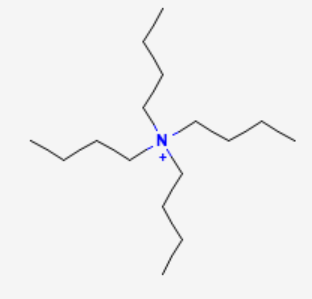
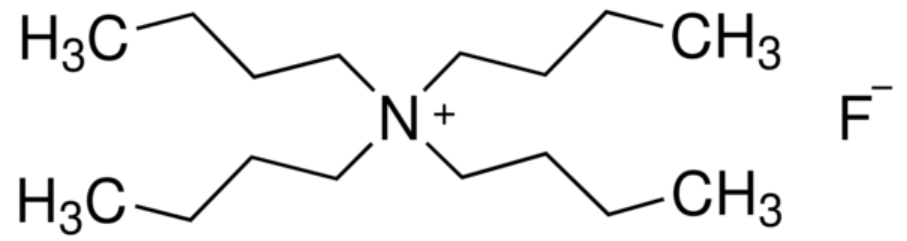
What is TBAF?
Bu4N+ F-
F ions can attack Si to form Si-F (strongest bond ever)
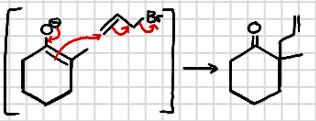
How do SEEs react?
Reform enolate (O-) with TBAF or MeLi + THF then react with R-X at the alpha carbon to create alkylated ketone
Alkylation, R-Cl, TiCL4, forms a carbocation, the electron rich alkene of the SEE attacks and TMS is lost due to the Lewis acid. Forms
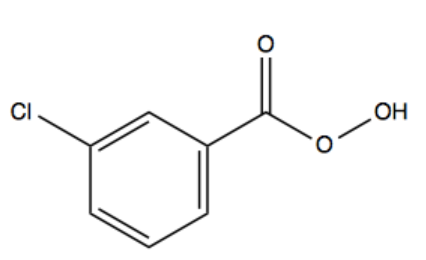
Structure of mCPBA
Good for oxidations, can lose terminal O (weak O-O bond), and regenerate to form carboxylic acid tail
What is Rubottom oxidation?
alpha hydorxylation of SEEs
SEE reacts with mCPBA to form 3-chlorobenzoic acid (protected by TMS) and an alpha-hydroxyketone
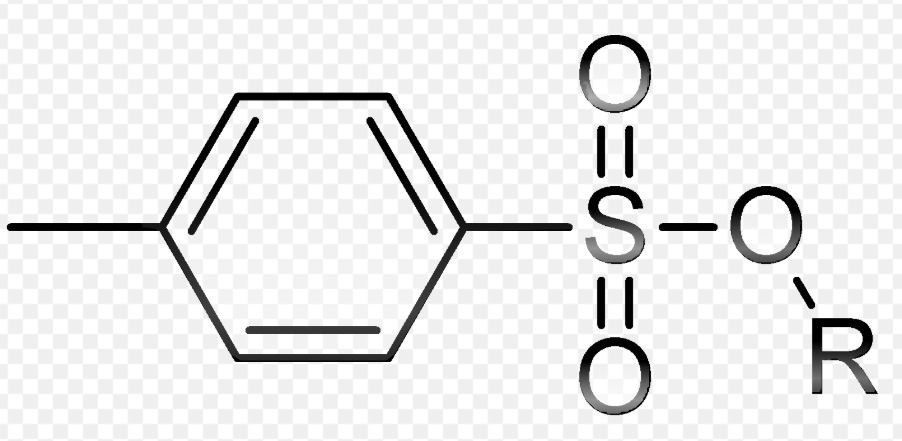
What is a tosyl (Ts) group
tosylhydrazine used in the shapiro reaction to convert a ketone to a vinyl silane
What is a vinyl silane?
TMS attached to a C=C, have e/z geometry and are stereospecific
What is the Shapiro reaction?
a ketone is transformed into a vinyl silane
tosylhydrazine + H+ with ketone forms tosylhydrazone
loss of N2 drives the reaction thermodynamically
How can you substitute an alkenyl silane with another R group?
dilithiated intermediate is stable at r.t.p.
if you add an R-X the R group will be added
you then need a 3rd eq. of BuLi to deprotonate and form the alkene
What is unique about vinyl silane reactivity?
TMS group stabilises positive charge on the beta carbon
Results in the replacement of TMS with E+ due to a stable intermediate and retained geometry
Why is stereochemistry retained with reactions of alkenyl silanes?
Double bond attacks the electrophile from above or below the plane
Electrophile bonds to the TMS carbon to form an sp3 centre (positive charge on beta carbon stabilised)
TMS substituent rotates the shortest distance in order to align with the empty p orbital on the + carbon
TMS only leaves when this alignment is achieved
a new pi bond forms, and E+ is where TMS was
What is THF?
tetrahydrofuran
solvent

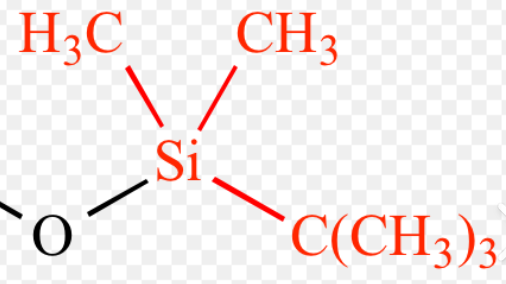
What is TBDMS-OR?
tert-butyldimethylsilyl
protecting group
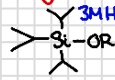
What is TIPS-OR
protection group
What is TBAF?
Source of Fluoride ions
deprotection of silyl ethers
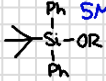
What is TBDPS-OR?
protecting group
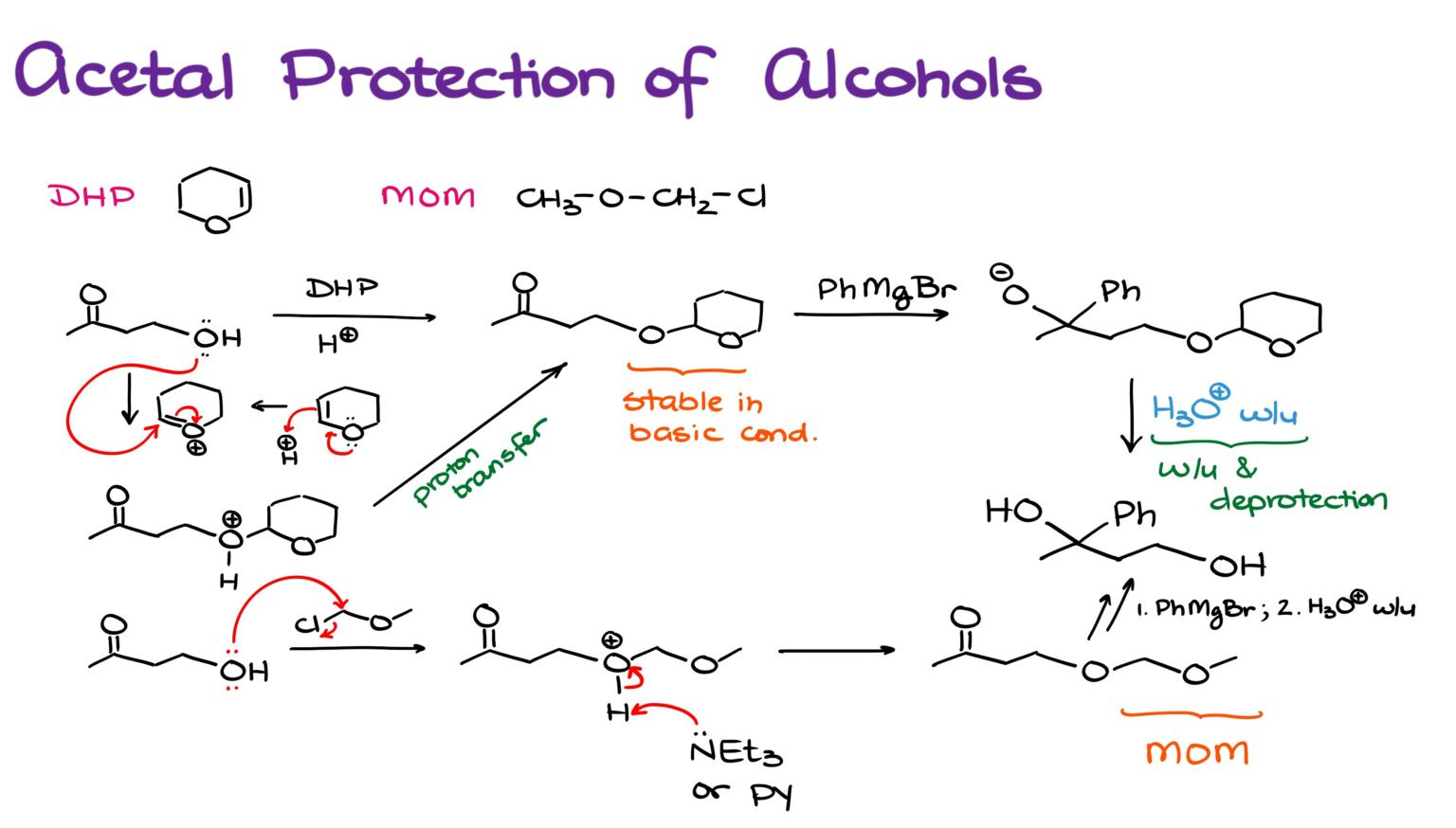
What is DHP?
used to install THP (protecting agent) for alcohols and amines
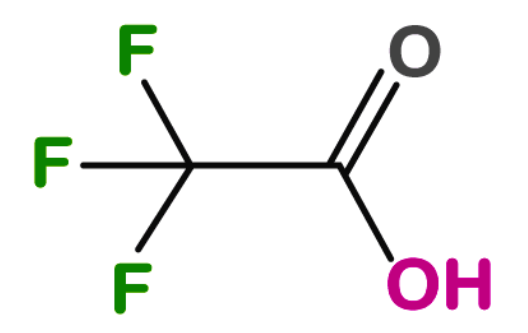
What is TFA?
Trifluoroacetic acid
deprotects t-BOC groups
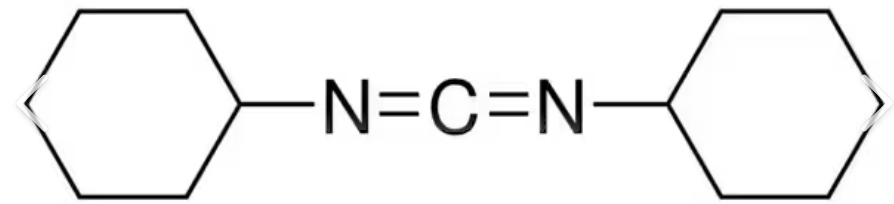
What is DCC?
Dicyclohexylcarbodiimide
Enables formation of esters under mild conditions
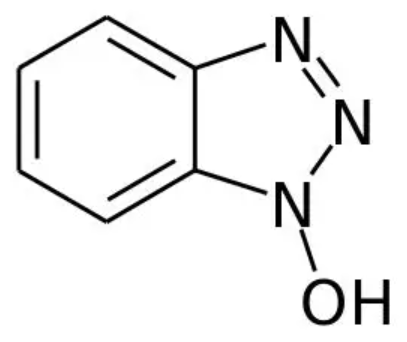
What is HOBt?
Helps with peptide synthesis
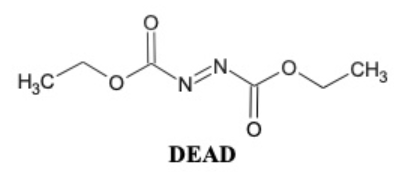
What is DEAD?
Reagent in the Mitsunobu reaction
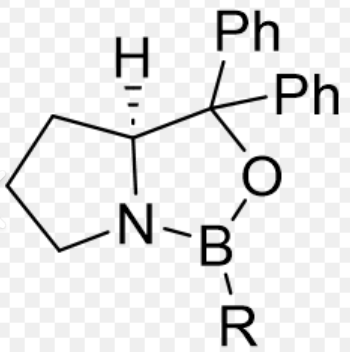
What is CBS?
Reagent allows prochiral products
What is Moschers acid chloride?