ABDOMEN MODULE FINAL EXAM - MY ULTRASOUND TUTOR
 Call Kai
 Learn
Learn Practice Test
 Spaced Repetition
 Match
Match Flashcards
 Knowt Play
1/49

There's no tags or description
Looks like no tags are added yet.
Name | Mastery | Learn | Test | Matching | Spaced | Call with Kai |
|---|
No analytics yet
Send a link to your students to track their progress
50 Terms
An afebrile female in her mid-4's presents for liver ultrasound. Findings include a focal, complex mass with posterior enhancement. What is the probable diagnosis?
a. Hydatid cyst
b. Focal nodular hyperplasia
c. Hematoma
d. Pyogenic abscess
c. Hematoma
Which structure compose the double duct sign?
a. Dilated CBD and Duct of Wirsung
b. Dilated cystic duct and CHD
c. Dilated CBD and CHD
d. Dilated cystic duct and CBD
a. Dilated CBD and Duct of Wirsung
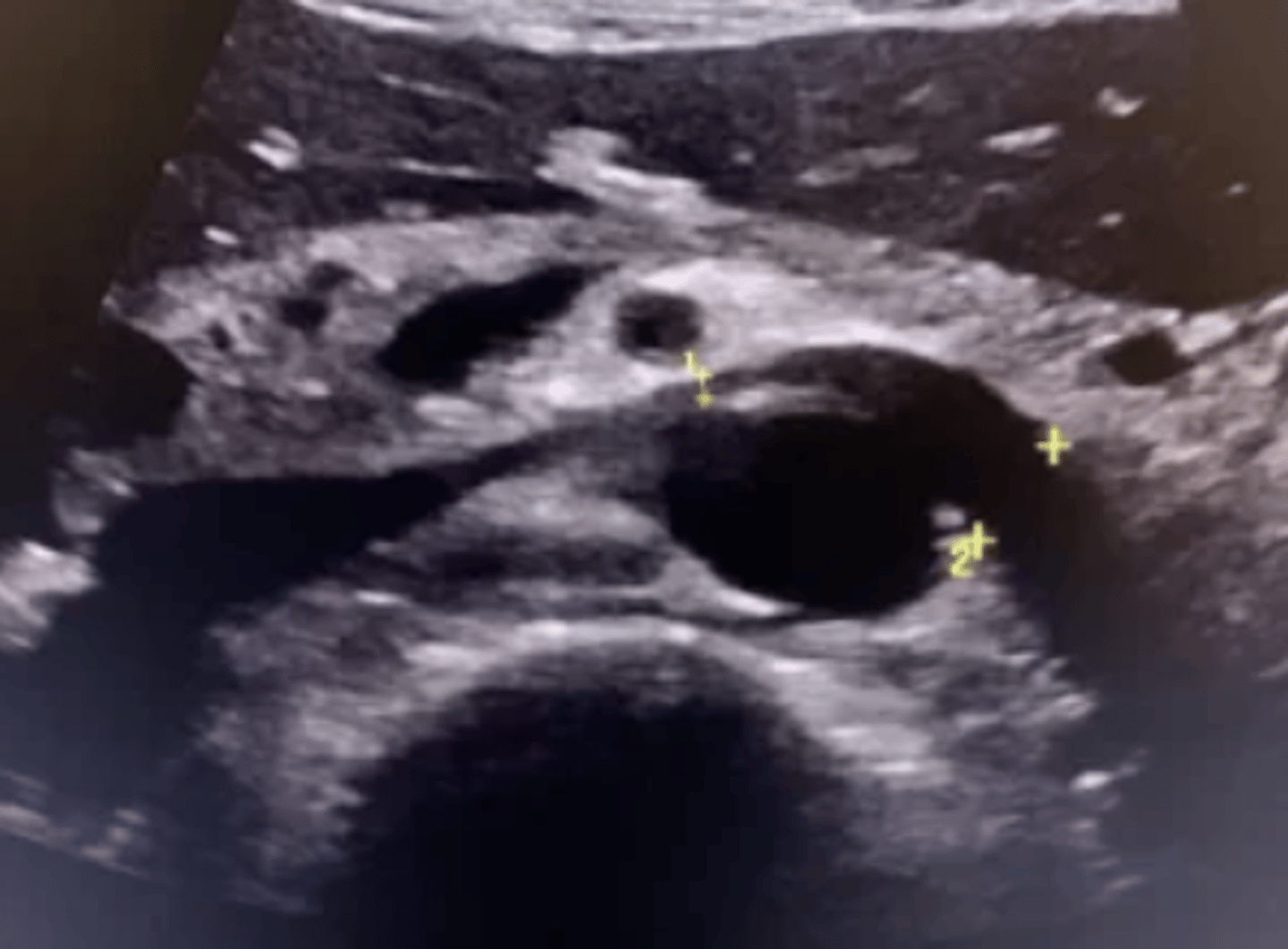
Identify the left renal vein
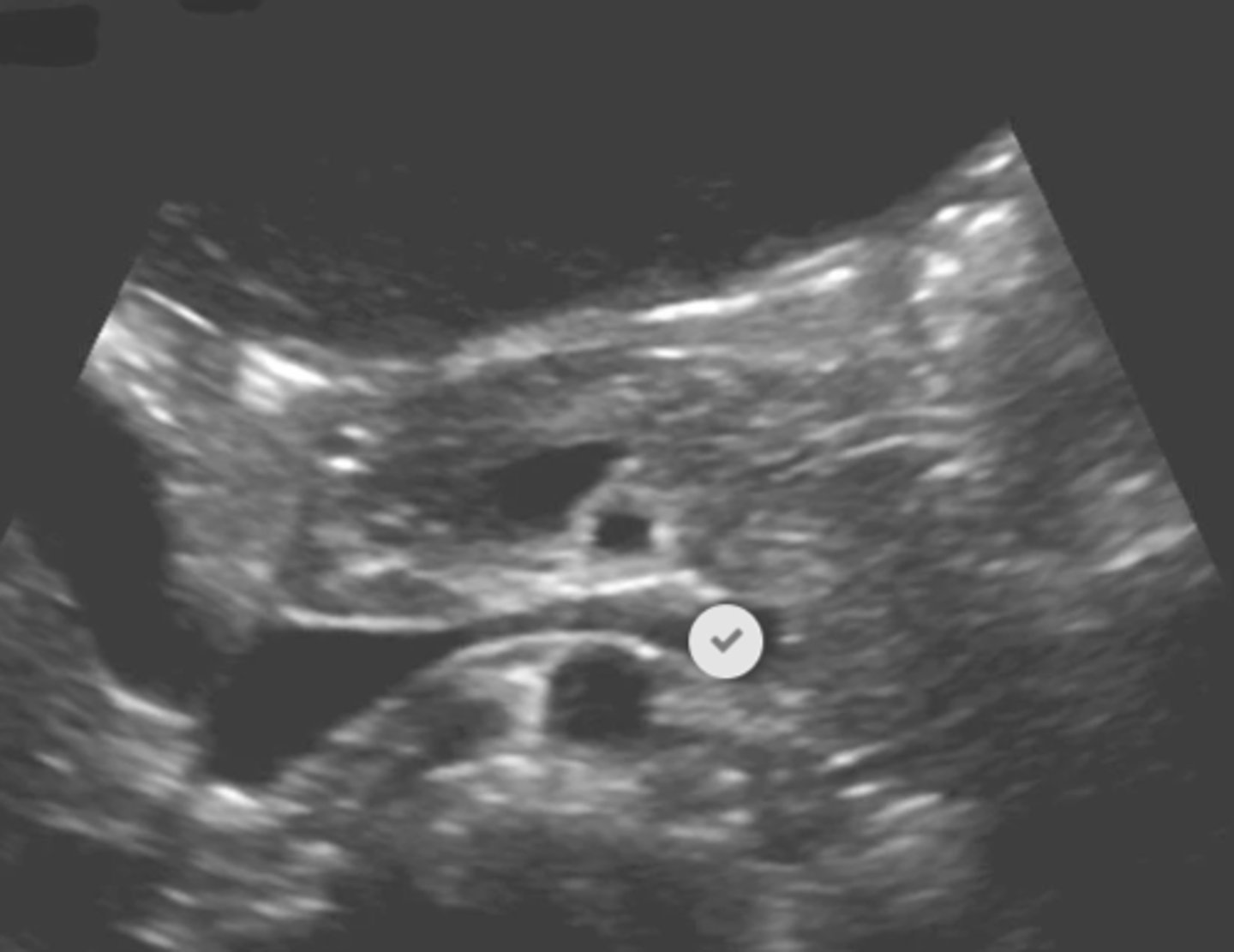
Upon assistance during renal biopsy, what incident angle is optimal for visualization of the biopsy needle?
a. 0 degrees
b. Perpendicular
c. Oblique
d. 60 degrees
b. Perpendicular
For what condition is the TIPS shunt a recommended course of treatment?
a. Portal hypertension
b. Pancreatic exocrine enteric transplant
c. Vesicoureteral reflux
d. Xanthogranulomatous pyelonephritis
a. Portal hypertension
What vascular structure is posterior the pancreatic neck?
a. IVC
b. SMA
c. Portal vein
d. Splenic artery
c. Portal vein
Identify the liver segment #2
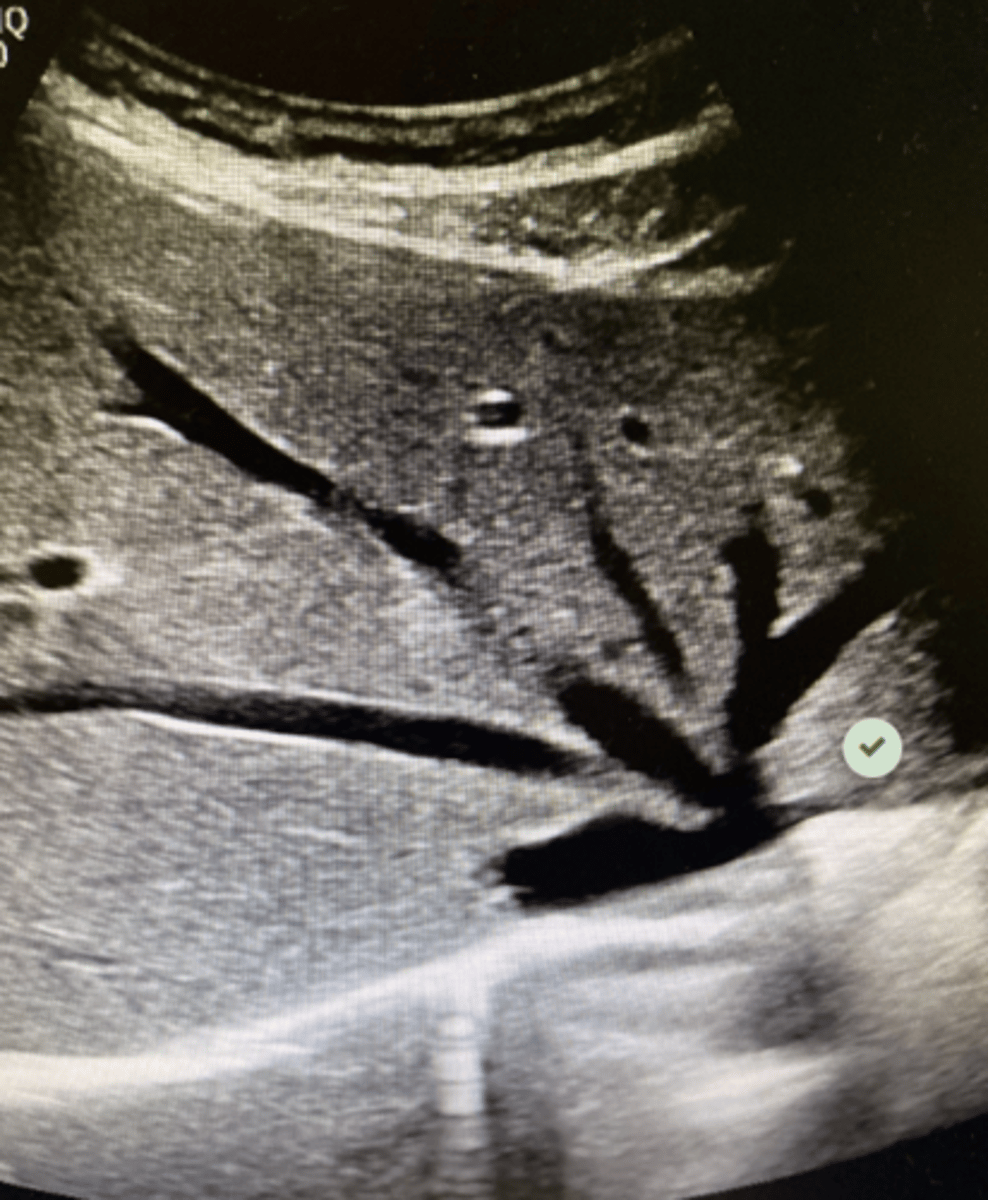
What function of the spleen allows for the removal of unwanted material from a red blood cell?
a. Hemolysis
b. Conjugation
c. Pitting
d. Culling
c. Pitting
Assessment for which of the following abnormalities should be considered in the patient with Conn's syndrome?
a. Pediatric malignancy
b. Left renal vein congestion
c. Dilated biliary ducts
d. Adrenal adenoma
d. Adrenal adenoma
What other lab value is most likely elevated in a patient with elevated alkaline phosphatase?
a. Amylase
b. Indirect bilirubin
c. BUN and creatinine
d. Direct bilirubin
d. Direct bilirubin
What is Caroli disease?
a. Secondary affects of hypercortisolism
b. Segmental dilatation of the intrahepatic ducts
c. Cystic duct obstruction
d. Primary adrenal insufficiency
b. Segmental dilatation of the intrahepatic ducts
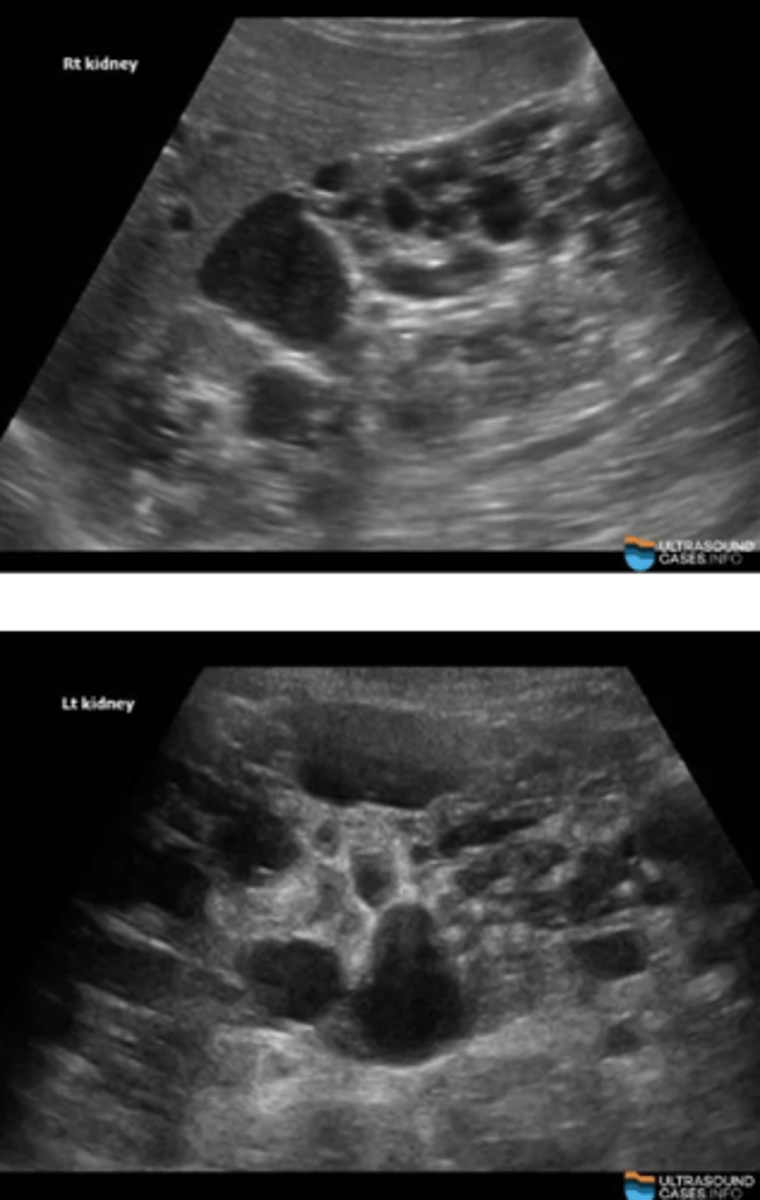
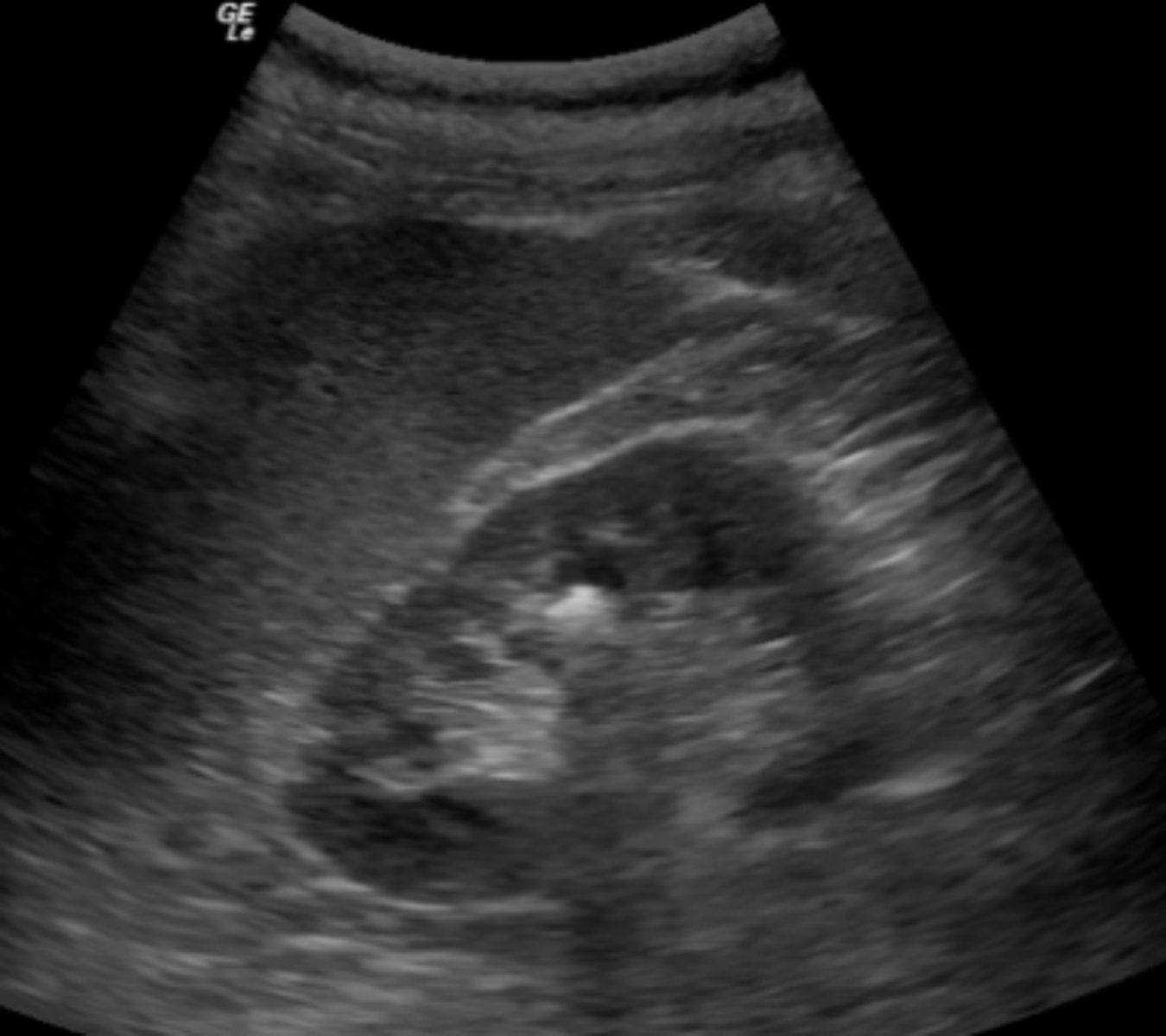
Based on the following images, what condition does the patient have?
a. Cystic compensatory hypertrophy
b. Autosomal recessive polycystic kidneys
c. Bilateral multicystic dysplastic kidneys
d. Autosomal dominant polycystic kidneys
d. Autosomal dominant polycystic kidneys
What provides the blood supply to the pancreatic head?
a. Gastroduodenal artery
b. Pancreatic artery
c. Common bile duct
d. Celiac artery
a. Gastroduodenal artery
In which condition is it common to see dilated ureters in a pediatric patient?
a. Ureteropelvic junction obstruction
b. Transitional cell carcinoma
c. Vesicoureteral reflux
d. Prune belly syndrome
c. Vesicoureteral reflux
What is the most common type and location of an abdominal aortic aneurysm?
a. Dissecting and suprarenal
b. Saccular and infrarenal
c. Fusiform and suprarenal
d. Fusiform and infrarenal
d. Fusiform and infrarenal
What is the most common contributing factor in patients with chronic renal failure?
a. Diabetes mellitus
b. Smoking
c. Acute tubular necrosis
d. Chronic hemodialysis
a. Diabetes mellitus
Identify the gastroesophageal junction
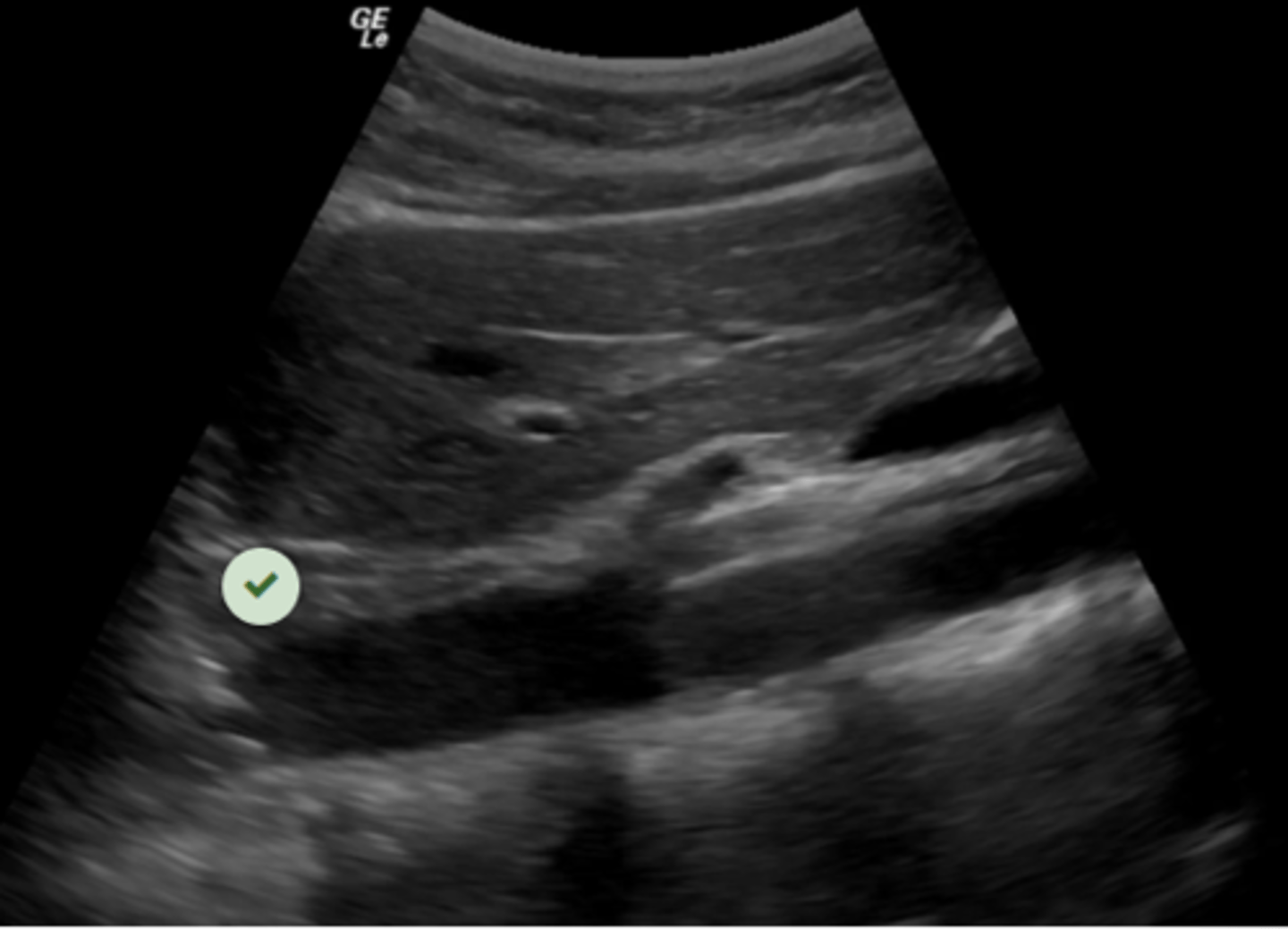
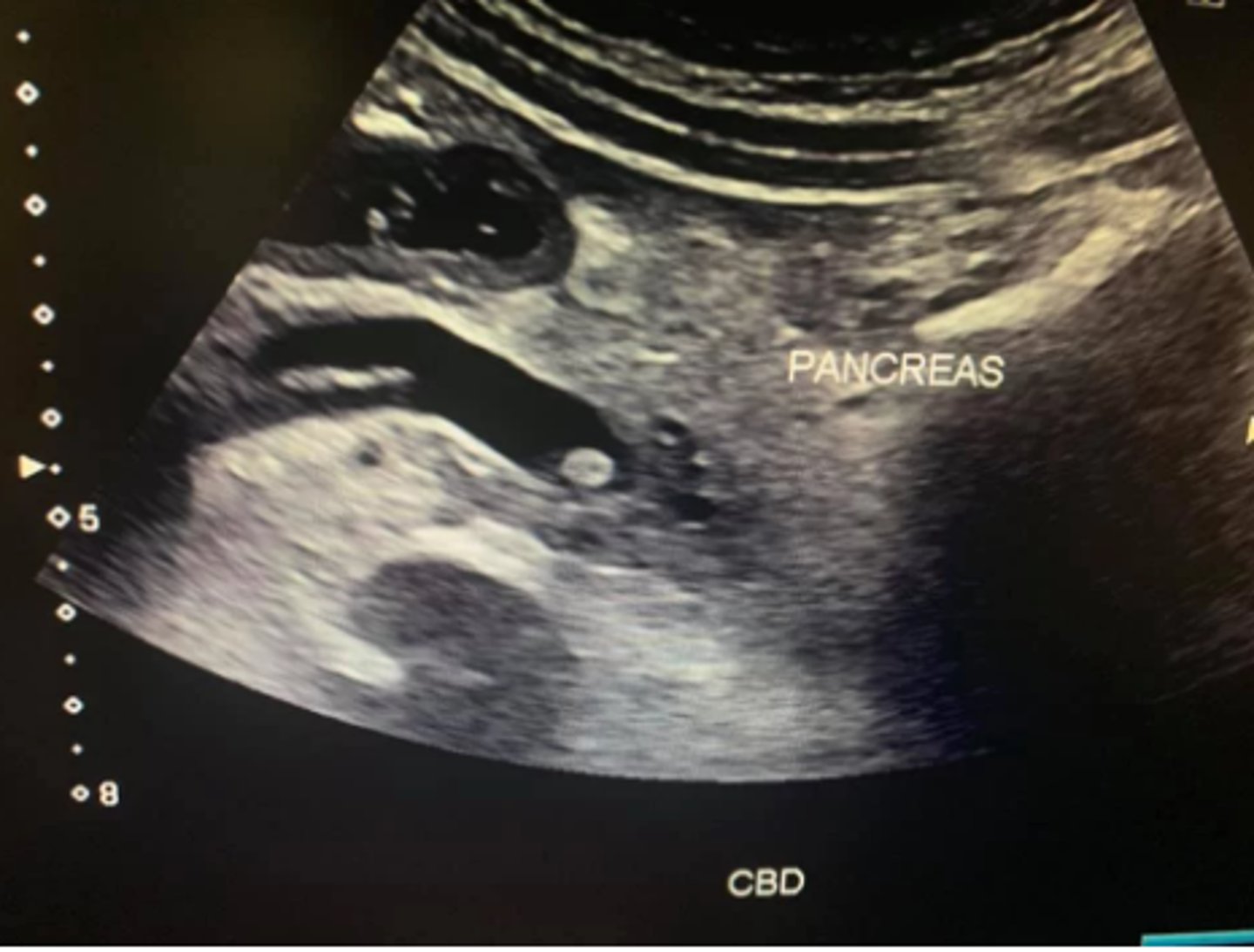
What diagnosis is consistent with the findings in this image?
a. Choledocholithiasis
b. Mirizzi syndrome
c. Cholangitis
d. Acute pancreatitis
a. Choledocholithiasis
A patient with epigastric pain presents for abdominal ultrasound. What best describes the flow direction in this splenic vein?
a. Bidirectional
b. Helical
c. Retrograde
d. Normal
d. Normal
What is the normal doppler waveform of the hepatic artery in a liver transplant?
a. Bidirectional and high velocity
b. Monophasic and pulsatile
c. Pulsatile and triphasic
d. Monophasic and low resistance
d. Monophasic and low resistance
A Hartmann pouch is a variant of what?
a. Gallbladder neck
b. Cystic duct
c. Gallbladder fundus
d. Caudate lobe
a. Gallbladder neck
Anatomically, where are the renal veins in relation to the renal arteries?
a. Superior
b. Posterior
c. Anterior
d. Inferior
c. Anterior
If a patient undergoes unilateral nephrectomy, what will most likely occur to the existing kidney?
a. Extrarenal pelvis formation
b. Compensatory hypertrophy
c. Atrophy
d. Acquired cystic dysplasia
b. Compensatory hypertrophy
Congenital absence of the spleen may occur with which condition?
a. Splenic atresia
b. Beckwidth-Wiedemann syndrome
c. Left sided heterotaxia
d. Double-rightsidedness
d. Double-rightsidedness
What is the normal echogenicity of the pancreas?
a. Hypoechoic to the liver
b. Isoechoic to the kidney
c. Hyperechoic to the spleen
d. Echogenic to the liver
d. Echogenic to the liver
What space is superior to the right lobe of the liver?
a. Subhepatic
b. Morison's pouch
c. Supraphrenic
d. Subphrenic
d. Subphrenic
This finding is documented in an asymptomatic patient. What step is most appropriate?
a. Check for retroperitoneal lymphadenopathy
b. Assess with color doppler
c. Report critical finding
d. Change patient position
d. Change patient position
While documenting an arterial waveform, what parameter is most helpful when evaluating for proximal arterial stenosis?
a. Acceleration time
b. Peak systolic velocity
c. End diastolic velocity
d. Resistive index
a. Acceleration time
What is the most likely clinical finding in a patient with this pathologic process?
a. Hematuria
b. Azotemia
c. Pyouria
d. Hypertension
a. Hematuria
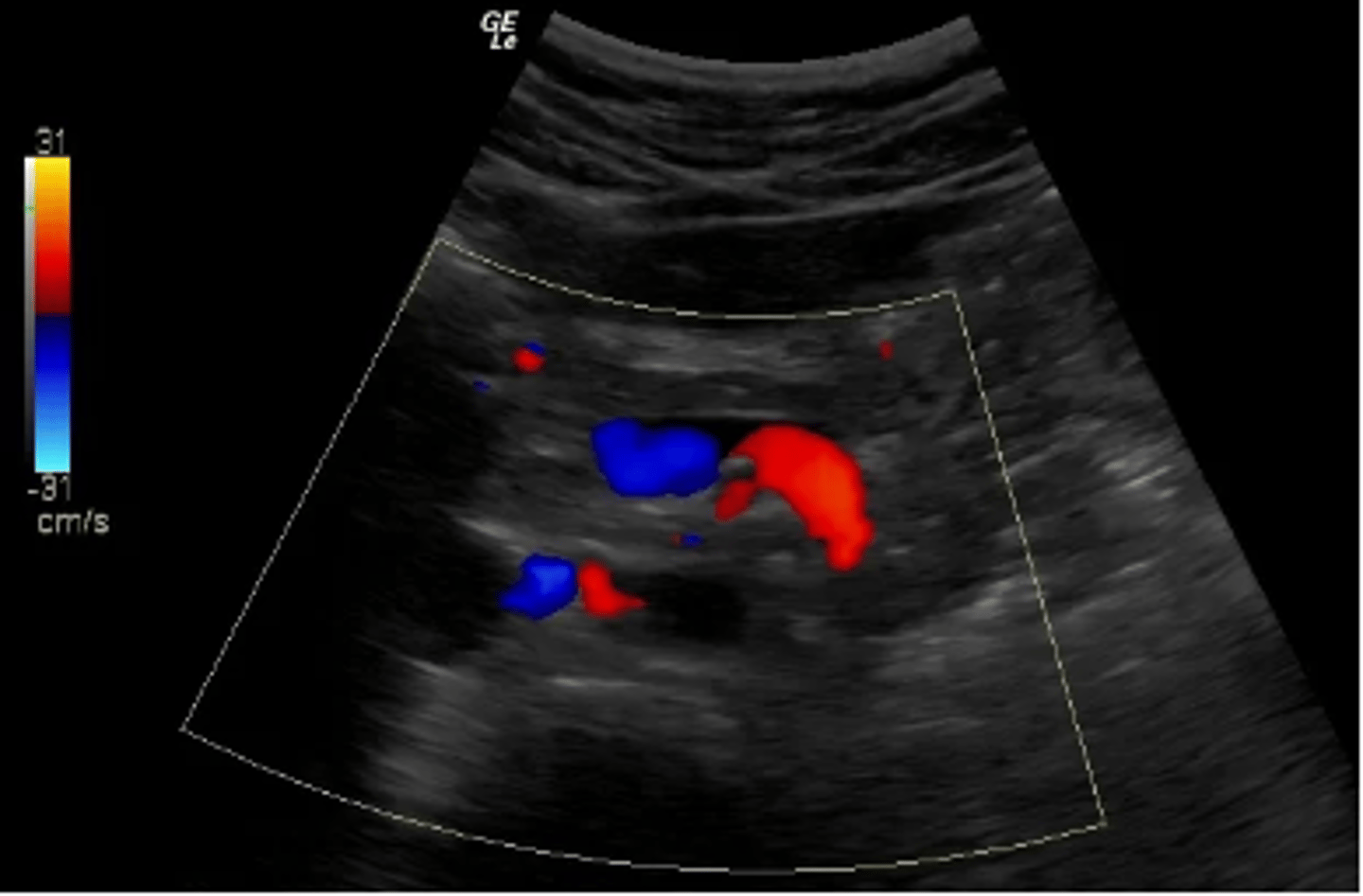
The following image is most likely documenting the findings of what abnormality?
a. Nutcracker syndrome
b. Renal vein thrombosis
c. Biliary obstruction
d. SMA stenosis
a. Nutcracker syndrome
What is the first branch of the abdominal aorta?
a. Coronary artery
b. Superior mesenteric artery
c. Left gastric artery
d. Celiac trunk
d. Celiac trunk
Which organ variant is acquired due to a pathologic process?
a. Splenosis
b. Dromedary hump
c. Pancreatic divisum
d. Pelvic kidney
a. Splenosis
What disease process may be present without specific sonographic findings?
a. Acute cholangitis
b. Splenic hemorrhage
c. Acute glomerulonephritis
d. Acute hepatitis
d. Acute hepatitis
Presence of what artifact is essential when evaluating for emphysematous infections?
a. Posterior shadowing
b. Side lobes
c. Reverberation
d. Posterior enhancement
c. Reverberation
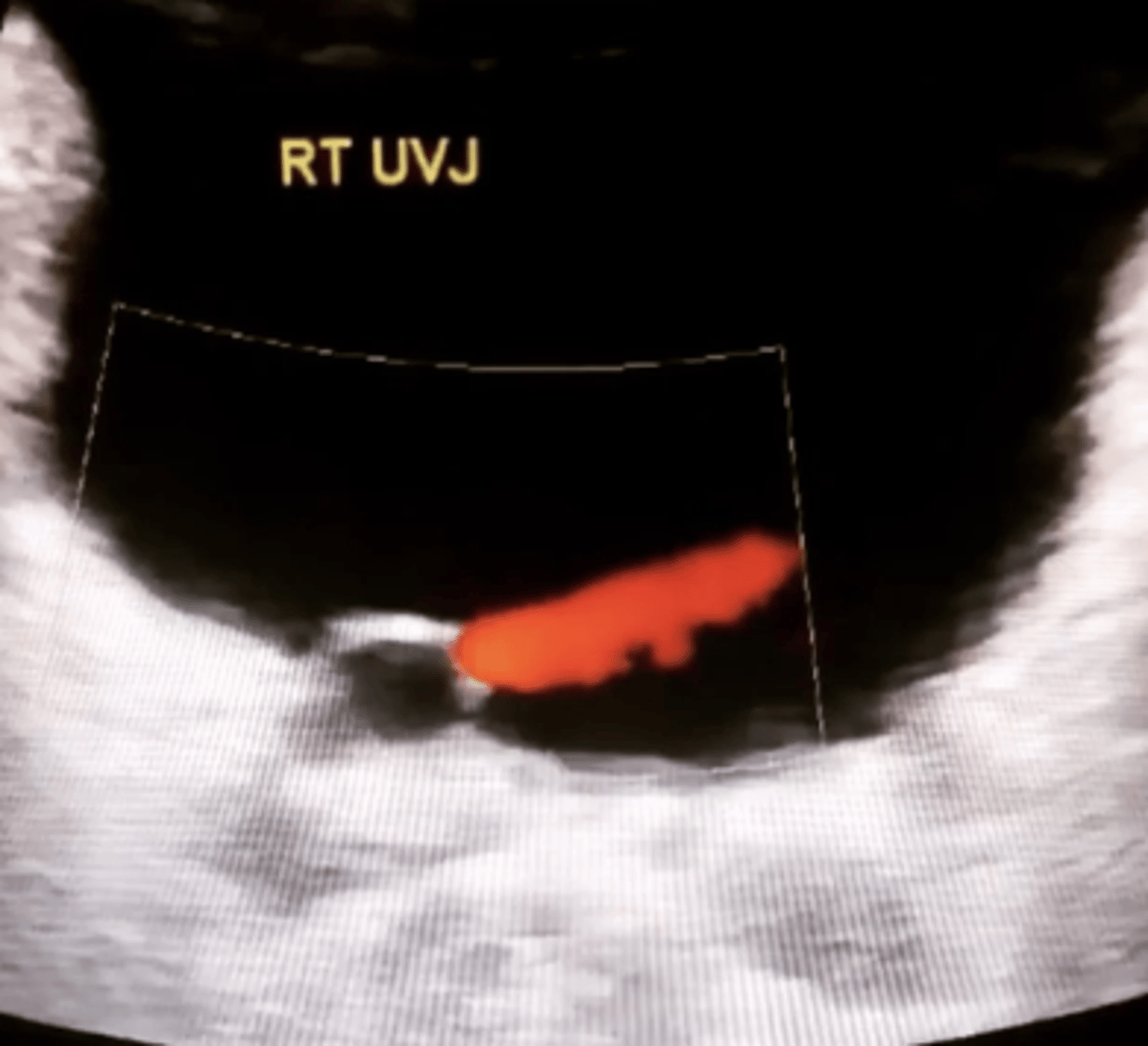
What finding is documented in this image?
a. Bladder septum
b. Ureterocele
c. Diverticulum
d. Foley catheter
b. Ureterocele
What would assist in distinguishing an intraluminal blood clot from transitional cell carcinoma?
a. Turn the patient on their side
b. Fremitus technique
c. Biopsy
d. Having the patient void
a. Turn the patient on their side
Elevated lipase and abdominal pain in a patient with a history of exocrine enteric drainage pancreatic transplant should be evaluated for what?
a. Acute pancreatitis
b. Transplant rejection
c. Solid mass
d. Chronic pancreatitis
a. Acute pancreatitis
What sonographic appearance is consistent with splenic infarction?
a. Multiple hyperechoic scattered foci
b. Hypoechoic wedge shape
c. Echogenic focal region
d. Diffusely complex echotexture
b. Hypoechoic wedge shape
What sonographic sign is commonly present in patients with right sided heart failure?
a. Parallel channel sign
b. Play-boy bunny sign
c. Champagne sign
d. Courvoisier sign
b. Play-boy bunny sign
Which finding is most consistent with renal transplant failure?
a. Absent diastolic component
b. Increased diastolic velocity
c. To and fro flow
d. Retrograde venous flow
a. Absent diastolic component
What should the ultrasound be targeted for in a patient history of Beckwidth-Wiedemann?
a. Abdominal tumors
b. Intrahepatic ducts
c. Adrenal hemorrhage
d. Splenomegaly
a. Abdominal tumors
What is the potential complication of performing liver biopsy on a patient with a prolonged prothrombin time?
a. Abscess
b. Infarction
c. Thrombosis
d. Hematoma
d. Hematoma
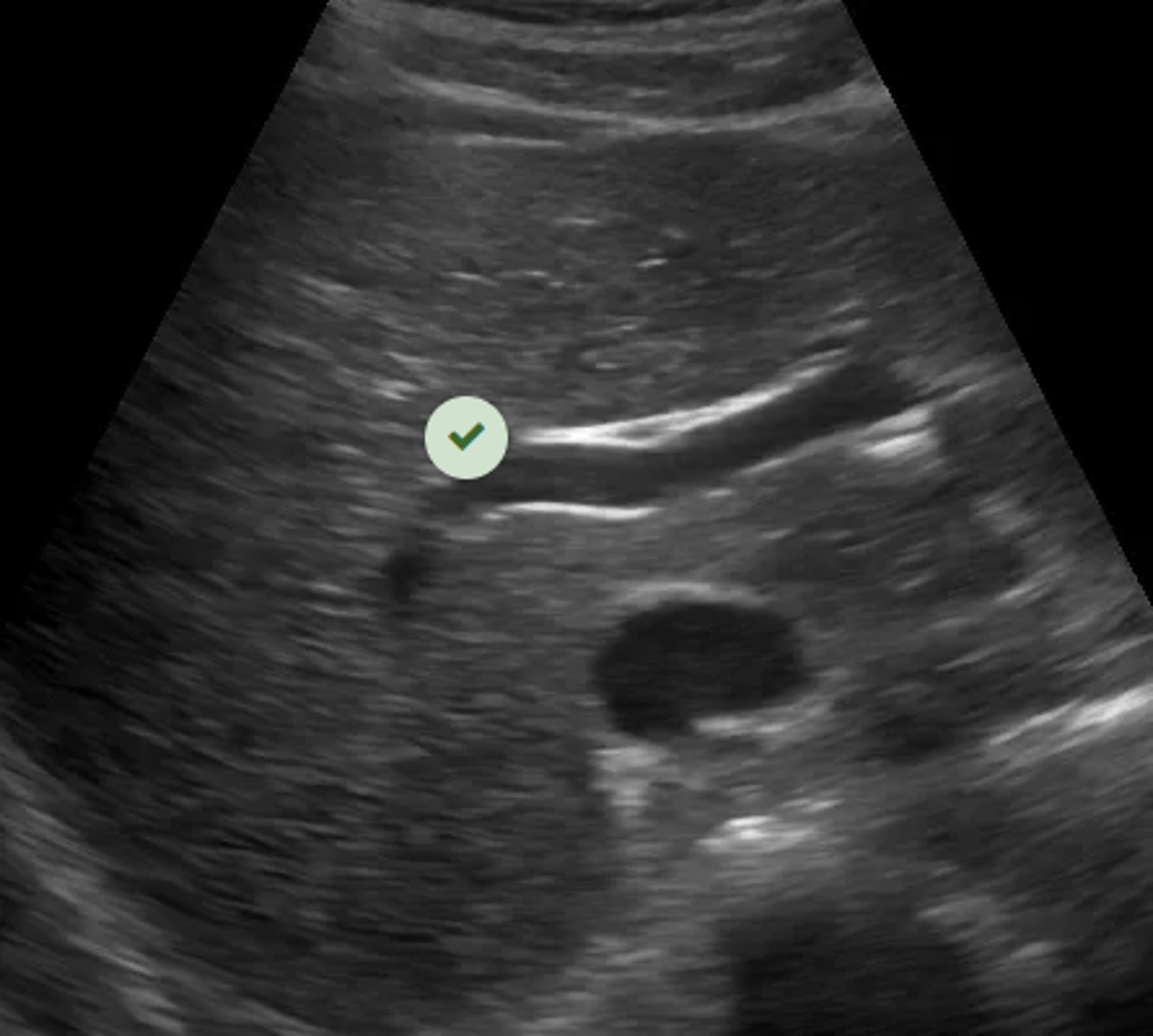
Identify the right anterior portal vein
What is the normal flow pattern of the celiac trunk?
a. Low resistance
b. Increased acceleration time
c. Decreased diastolic flow
d. High pulsatility
a. Low resistance
The renal sinus is composed of what structures?
a. Calices and pelvis
b. Nephrons and pyramids
c. Medulla and cortex
d. Pyramids and calices
a. Calices and pelvis
What would cause dilated intrahepatic ducts with a abrupt termination at the level of hepatic duct junction?
a. Pancreatic cancer
b. Caroli disease
c. Klatskin tumor
d. Mirizzi syndrome
c. Klatskin tumor
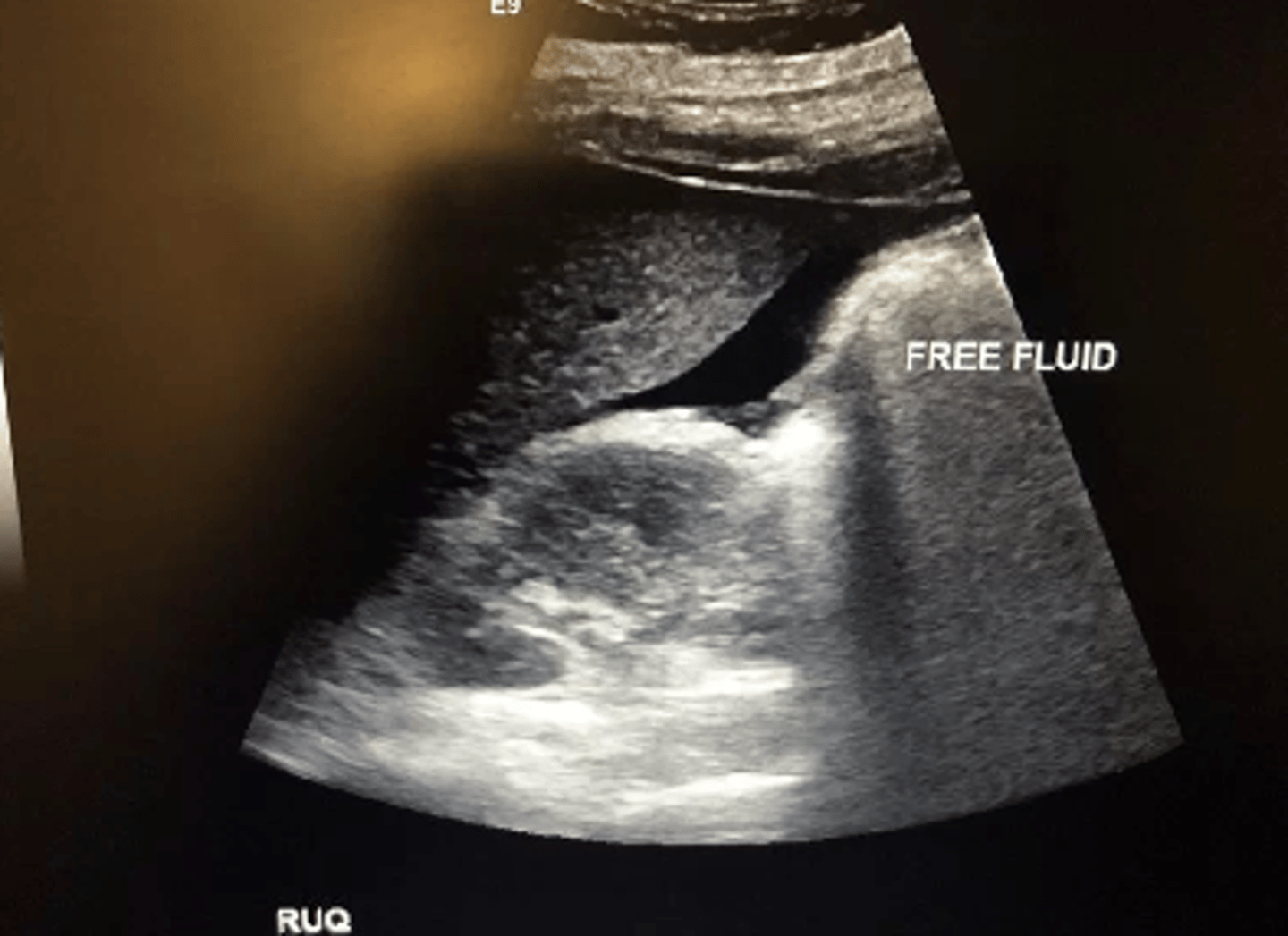
What is the location of the free fluid in this image?
a. Morison's pouch
b. Subphrenic
c. Anterior cul-de-sac
d. Anterior pararenal space
a. Morison's pouch
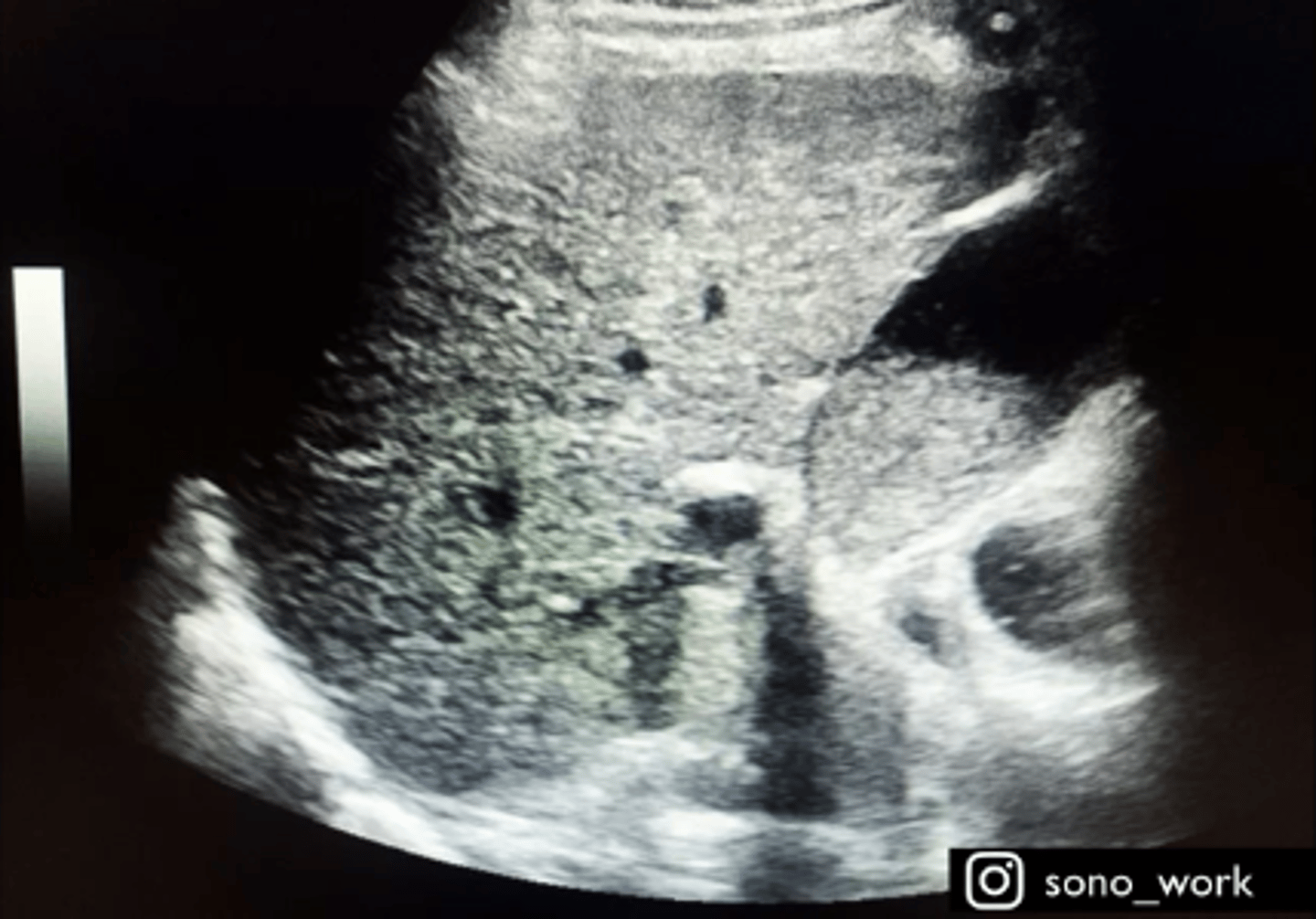
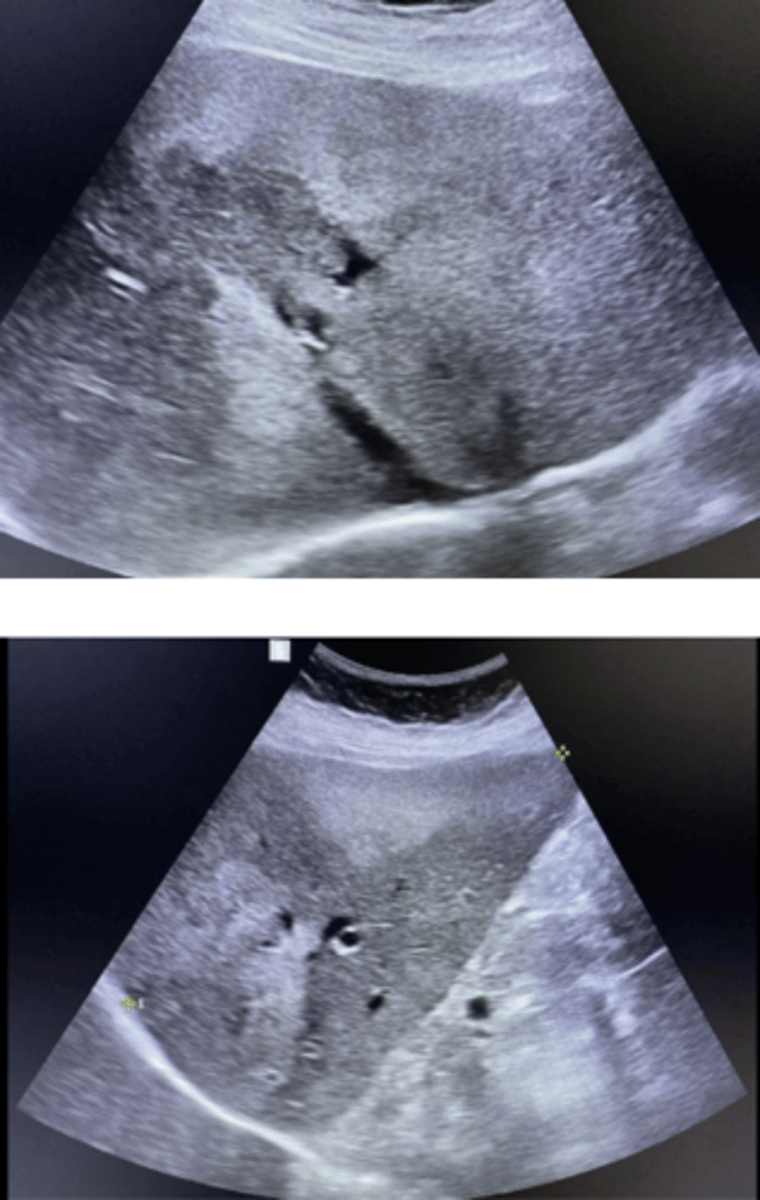
What best explains the uneven echotexture of the liver parenchyma?
a. Focal nodular hyperplasia
b. Hepatocellular carcinoma
c. Metastasis
d. Focal fatty infiltration
d. Focal fatty infiltration
Where would a filter be placed to prevent pulmonary embolism?
a. IVC
b. Portal vein
c. Hepatic veins
d. Aorta
a. IVC
Purpura streaks are most commonly associated with pathology of what organ?
a. Spleen
b. Pancreas
c. Renal
d. Adrenal
d. Adrenal