UGA BCMB 3100 Exam 1
 Call Kai
 Learn
Learn Practice Test
 Spaced Repetition
 Match
Match Flashcards
 Knowt Play
1/63

There's no tags or description
Looks like no tags are added yet.
Name | Mastery | Learn | Test | Matching | Spaced | Call with Kai |
|---|
No analytics yet
Send a link to your students to track their progress
64 Terms
Water
-major component of cells
-ability to dissolve a wide variety of molecules
-many biochemical reactions take place in watery environments
Shape of water
-angled shape
-polar bonds
-polar due to uneven distribution of electrons
-hydrogen has a partial positive charge and oxygen has a partial negative charge
Hydrogen bond in water
formed when a partially positive hydrogen atom attracts the partially negative oxygen atom of a second water molecule
Hemoglobin
-red blood cells carry oxygen from the lungs to tissues where oxygen is required
-four subunit protein with an oxygen binding pigment
Interactions in water
-solvation and desolvation
-micelle formation
-protein folding
Protein
-composed of 20 common amino acids
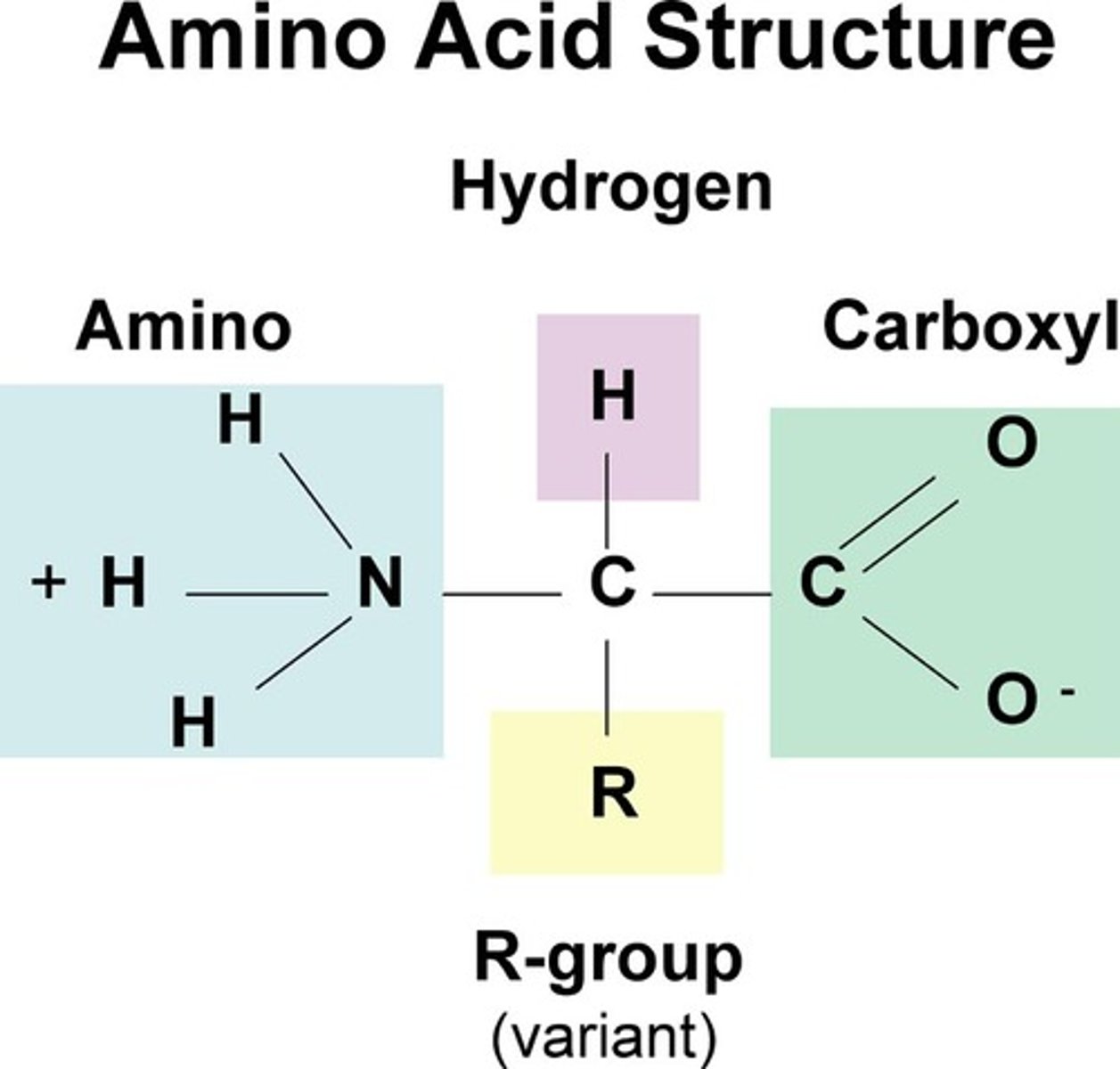
amino acid structure
-carboxylate group (-COO-)
-amino group (-NH2)
-side chain (R)
second law of thermodynamics
-total entropy of a system and its surroundings always increases in a spontaneous process
Entropy (S)
-degree of disorder in the system
-a measure of randomness
if 2 or more benzene molecules are added to water
-bond together to displace water molecules
-increases entropy of the system
-results from the hydrophobic effect
Hydrophobic effect
-nonpolar solute molecules are driven together in water not primarily because they have a high affinity for each other
-entropy driven association
-form spontaneously because the entropy increases
non covalent interactions
-essential for proper functioning of biomolecules
-much weaker than covalent bonds
-allow for constant forming and breaking of bonds
Types of non-covalent interactions
-electrostatic interactions
-hydrogen bonds
-van der Waals interactions
Electrostatic interactions
-between electrical charges
-ion-ion interaction
-between a full positive and a full negative charge
hydrogen bonds
-between an electronegative atom and hydrogen
-forms between H and O/N
Van der Waals interactions
-depend on transient asymmetry in electrical charge
-weak forces that occur between any 2 atoms that approach each other
primary structure
amino acid linear sequence
secondary structure
regions of regular repeating conformation of the peptide chain
tertiary structure
-describes the shape of the fully folded polypeptide chain
-held together by non covalent interactions
-hydrogen bonds and ion-ion interactions
quaternary structure
arrangement of 2 or more polypeptide chain into multi-subunit molecule
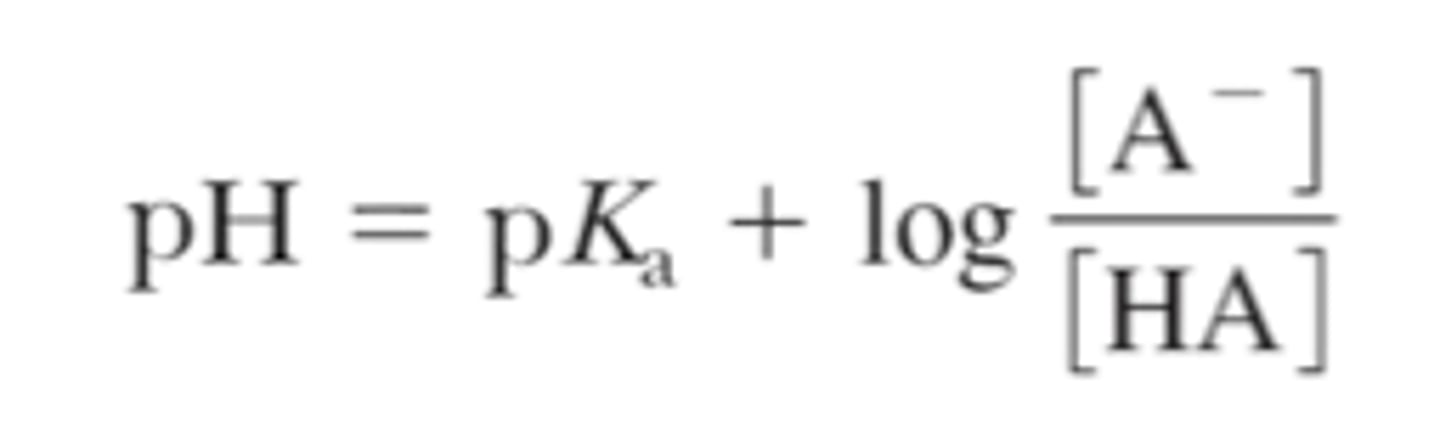
Henderson-Hasselbalch equation
-used to calculate pH of solutions created by mixing known amounts of acids and conjugate bases
-used to calculate relative amounts of protonated and deprotonated forms at a specific pH
enthalpy
the energy required to break bonds and gained by forming new bonds
exothermic
-energy released
-negative term
Lipid bilayers
structural basis for all biological membranes
hydrophilic
-water loving
-head
-interacts with H2O
-polar
hydrophobic
-water fearing
-tail
-nonpolar
cotransporter
secondary transporters
peptide bonds
-bonds between amino acids
-primary structure
-trans form is favored
-planer
-double bond character due to bond between C-N
polypeptide chain
series of amino acids joined by peptide bonds
alpha helix
-bond forms between i+4 residue
types of secondary structure
-alpha helix
-beta pleated sheets
-turns
beta sheet
-composed of 2 or more polypeptide chains called beta strands
turns and loops
-lie on the surface of protein and often participate in interactions between other proteins and the environment
soluble protein
hemoglobin
membrane protein
potassium ion channel
enzyme
carbonic anhydrase
delta g
-can be changed by changing the concentration of substrates or products
-enzymes can not change the delta g but they can change the rate of the reaction
Hyperventilation
-over-breathing
-underlying cause of respiratory alkalosis
respiratory alkalosis
-occurs when levels of CO2 and O2 in the blood are not balanced
Le Chatelier's Principle
if any change in imposed on a system that is in equilibrium then the system tends to adjust to a new equilibrium counteracting the change
Buffer
a solution that resists changes in pH when acid or alkali is added to it
properties of enzymes
-overall free energy of a reaction is unaffected by an enzyme
-enzymes decrease the amount of free energy that must be invested to reach the transition state
Keq = 1
delta g' = 0
Keq > 1
delta g' < 0 products are favored
Keq < 1
delta g' > 0 reactants are favored
osteoclast
-type of bone cell that breaks down bone tissue
-function is to maintain, repair, and remodel bone of the vertebral skeleton
kinetics
study of the rates of chemical reactions
enzyme kinetics
study of the rate of enzyme-catalyzed reactions
V
the velocity (rate) of the reaction
Vo
the initial rate of enzyme reaction when the reaction is just beginning
Vmax
-represents the fastest that the enzyme can turnover
-proportional to [E]
Km
-value describes the properties of an enzyme against a substrate
-lower the Km the tighter the substrate binding
-a measure of the affinity of E for S
-stability of ES
high Km
enzyme has low affinity for substrate
low Km
enzyme has high affinity for substrate
Kcat
-the rate constant of the rate-limiting step
-catalytic constant - first order rate constant for conversion of ES complex to E + P
-number of reactions per second
Michaelis-Menten plot
-initial velocity versus [S]
Lineweaver-Burk Plot
the double reciprocal graph of the Michaelis-Menten equation
1/Vo versus 1/[S]
Types of enzyme inhibition
reversible and irreversible
irreversible inhibitors
-covalently modify an enzyme and inhibition can therefore not be reversed
-decrease Vmax and no effect on Km
types of reversible inhibition
Competitive
Uncompetitive
Non-competitive
reversible inhibition
substrate binds to an enzyme's active site to form an enzyme-substate complex
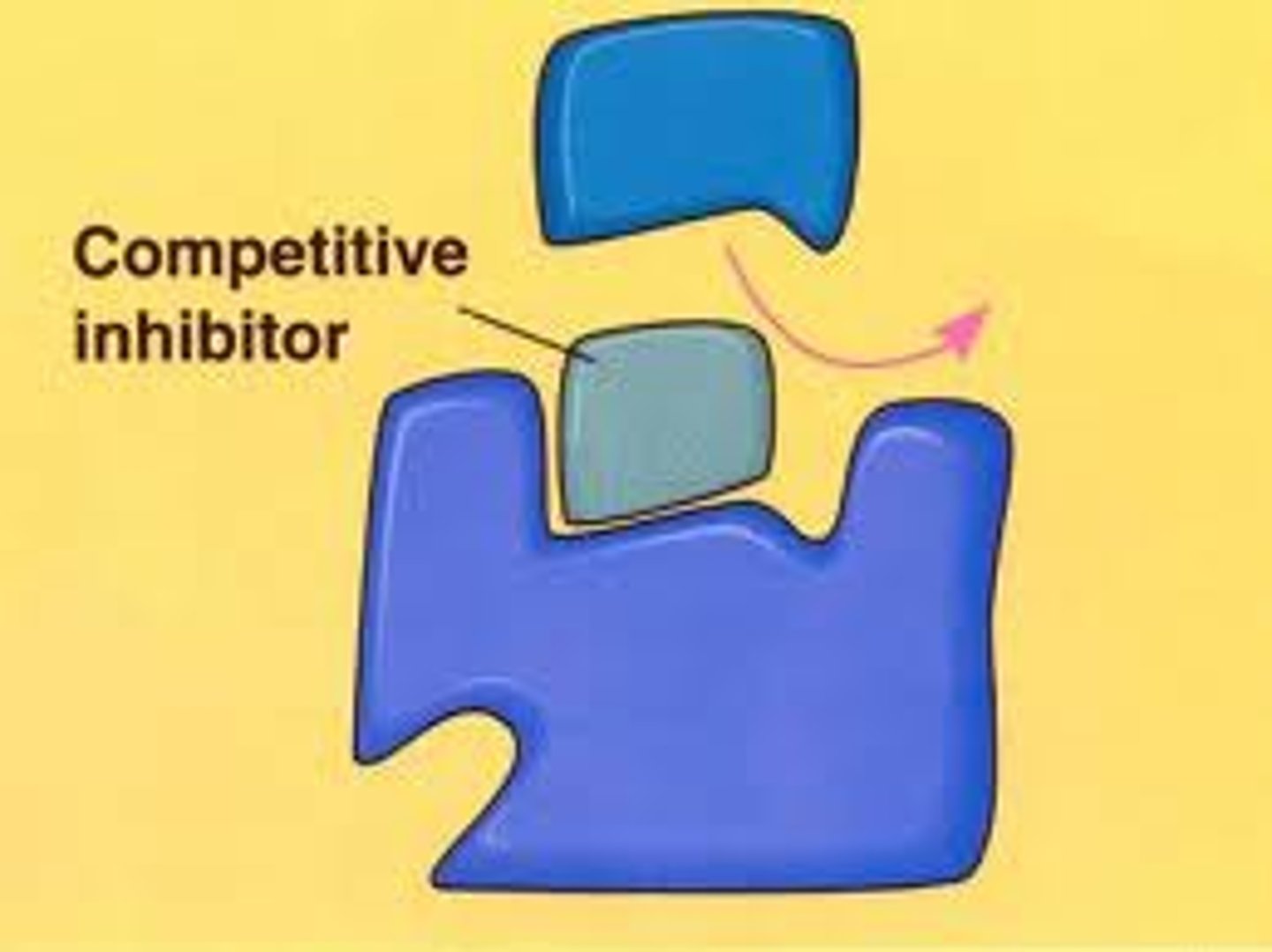
competitive inhibition
-binds at the active site and thus prevents the substrate from binding
-competes with substrate for available active sites
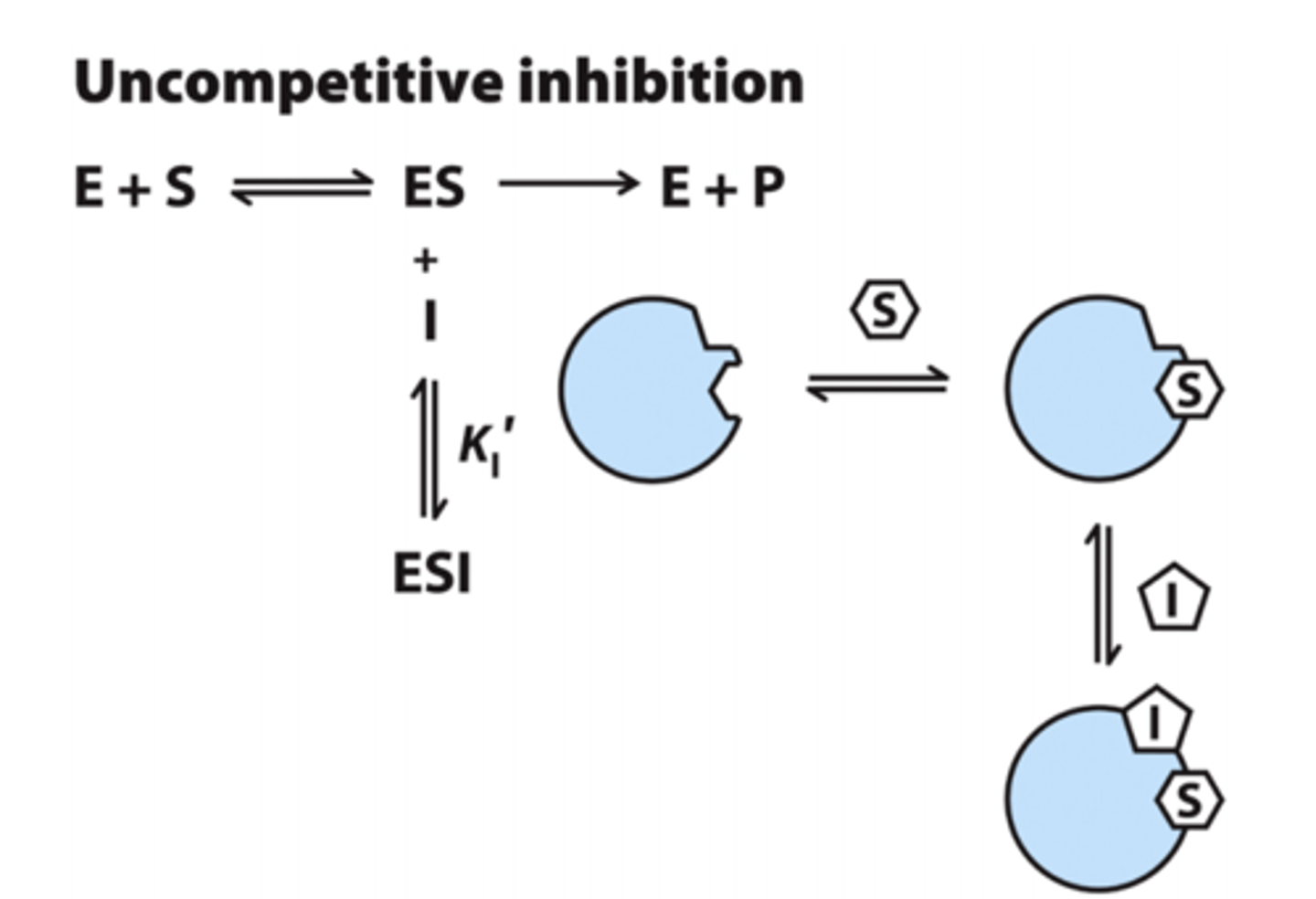
uncompetitive inhibition
-binds only to the enzyme-substrate complex
-lowers catalytic rate
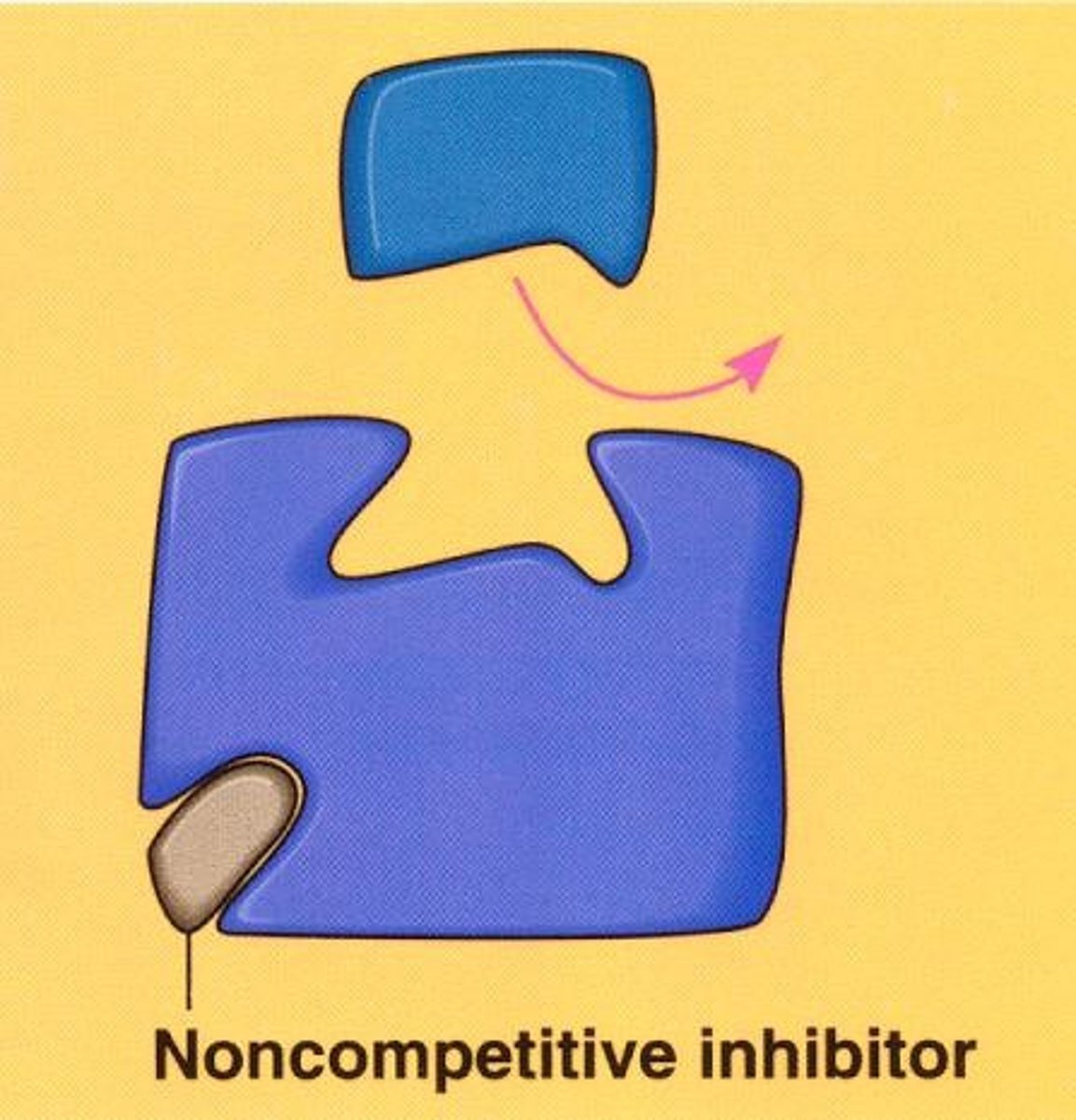
noncompetitive inhibitor
-does not prevent the substrate from binding
-lowers the catalytic rate