Lecture 8: The urban transition
 Call Kai
 Learn
Learn Practice Test
 Spaced Repetition
 Match
Match Flashcards
 Knowt Play
1/19

There's no tags or description
Looks like no tags are added yet.
Name | Mastery | Learn | Test | Matching | Spaced | Call with Kai |
|---|
No analytics yet
Send a link to your students to track their progress
20 Terms
Urban growth
Refers to absolute increase in the urban population.
Urbanisation
The process whereby a rising proportion of the population comes to live in urban areas. It is a measure of the proportion of the population living in urban areas (“level of urbanisation”) and the change from rural to urban lifestyle and associated attitudes and values.
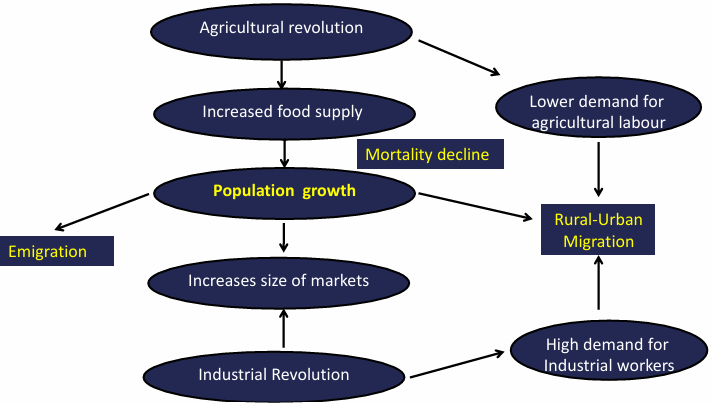
Processes of urbanisation in Britain (eighteenth century)
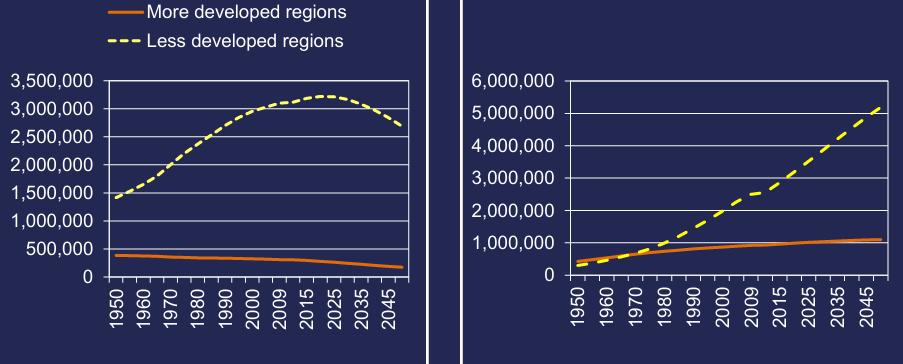
Urban growth in MDR vs LDR
Of the 2.87 billion population growth 2009-2050, virtually all will occur in the urban areas of LDRs
The rest will be made up of a small rise in MDR cities and LDR rural areas
There will be a small decline in MDR rural areas
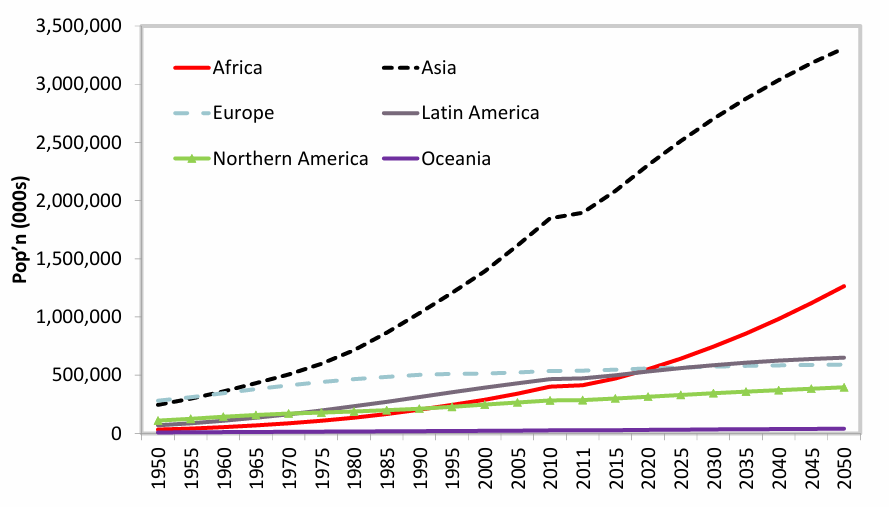
Urban growth by continent
The significance of cities
Basis of civilisation
Engines of economic growth
Nodes of connections
Major consumers
Major producers of waste
Living environment for half the world’s population
Main focus of future growth
City
A large, nucleated settlement that is multifunctional in character and includes a CBD, residential and non-residential land use (~2.7 million people).
Urbanised area
Continuous built-up landscape i.e. the physical city (~6.2 million people).
Metropolitan area
Large scale functional entity may contain a number of urbanised areas operating as an integrated economic whole (~6.4 million people).
Defining what is considered urban
The UN Population Division threshold is 2 000 residents
There are varied approaches based on:
administrative boundaries (108 of 228)
settlement size and/or density (51/228)
functional characteristics (39/228)
no definition (30/228)
Cities (densely populated areas)
These are areas with a high density (at least 1,500 inhabitants per km²) and a large population (at least 50,000 inhabitants).
Towns and semi-dense areas (intermediate density areas)
These are urban clusters outside of cities with a moderate density (at least 300 inhabitants per km²) and a population of at least 5,000 inhabitants. This category includes dense towns, semi-dense towns and suburban or peri-urban areas.
Rural areas (thinly populated areas)
This category includes villages, dispersed rural areas and very dispersed rural areas based on grid cells with a density below 300 inhabitants/km², or denser cells not part of a city, town or semi-dense area.
Sources of urbanisation
Internal migration (rural-urban)
International migration
Natural increase (births-deaths)
Reclassification of boundaries (annexation) or in-situ urbanisation
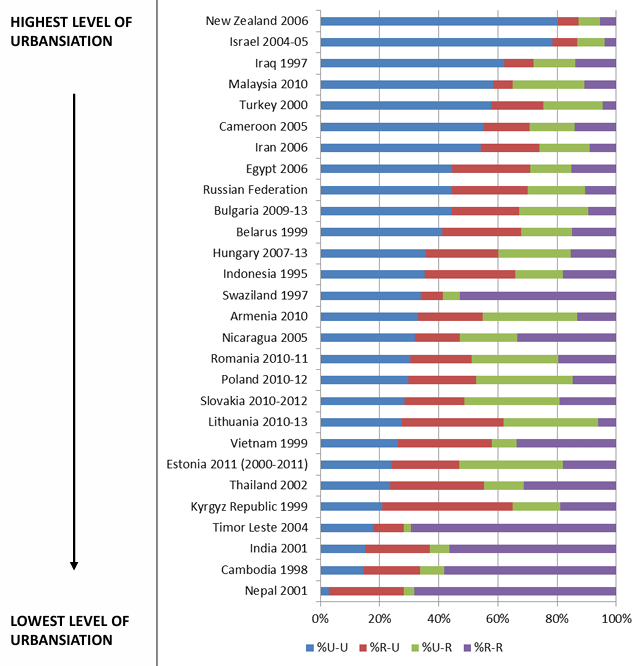
Direction of internal migration change with urbanisation
Patterns of internal migration in Australia
Four major patterns of redistribution
from the South and East to the north and west
from the inland to major cities
from major cities to high amenity coastal regions NSW Melbourne
within the cities to the urban fringes, and towards the urban core
Emigration from Europe as a major source of urban growth in the ‘New World’
Coastal settlements established around trading ports to export goods produce
International migration
Immigration (illegal and legal) accounts for one third of urban growth in the MDRs
Without international migration, the urban population in MDRs is projected to decline
Natural increase
A key factor in urban growth
Can also contribute to urbanisation
initially death rates are higher in urban areas
but fertility is lower than in rural areas
generates a population decline in urban areas
mortality falls to substantially lower levels – generating return to natural increase in urban areas
Migration alters population momentum in urban areas as migrants have “superior reproductive value” owing to the selectivity of migration (young adults)
Reclassification of boundaries
Urbanisation in place (in situ) as rural populations grow through natural increase many areas change from rural to urban
Contemporary urbanisation
More developed countries
cities growing by international migration
limited rural to urban migration – largely replaced by counter-urbanisation – tree change/sea change
kow natural increase
some cities shrinking
attempts to divert immigration to regional areas
depopulation of some rural areas (ageing and out migration)
Less developed countries
high rural to urban flows (“Bright lights”)
large rural population feeding urban growth
high levels of natural increase
attempts to limit population growth in cities by restricting rural-urban migration
some population growth syphoned off through emigration
urbanisation in situ