Animal Coloration
 Call Kai
 Learn
Learn Practice Test
 Spaced Repetition
 Match
Match Flashcards
 Knowt Play
1/23

There's no tags or description
Looks like no tags are added yet.
Name | Mastery | Learn | Test | Matching | Spaced | Call with Kai |
|---|
No analytics yet
Send a link to your students to track their progress
24 Terms
Uses of Bioluminescence
Intraspecific Identification, Luring Prey, Mating, Crypsis
Biofluorescense
When an organism absorbs incoming wavelengths of light and re emits them as different wave lengths
Troglobytic
Cave-dwelling-Probably no eyes or fun colors:(
Bioluminescence
The production and emmision of light by a living organism through an internal chemical reaction.(Pigment=luciferan, oxidized by enzyme luciferase)
Why is water so awesome?
Hydrogen bonds make cohesion(tree roots)/surface tension
Hydrogen bonds also make good heat storage/evaporative cooling
Ice floats, warm ocean for fishies
Universal solvent(don’t tell claire I wrote that)
What are the four biologically significant molecules/what are they for?
Nucleic Acids: Make DNA
Lipids: Make hormones, fats, cell membranes
Proteins: Do everything
Carbs: Energy
reaction norms
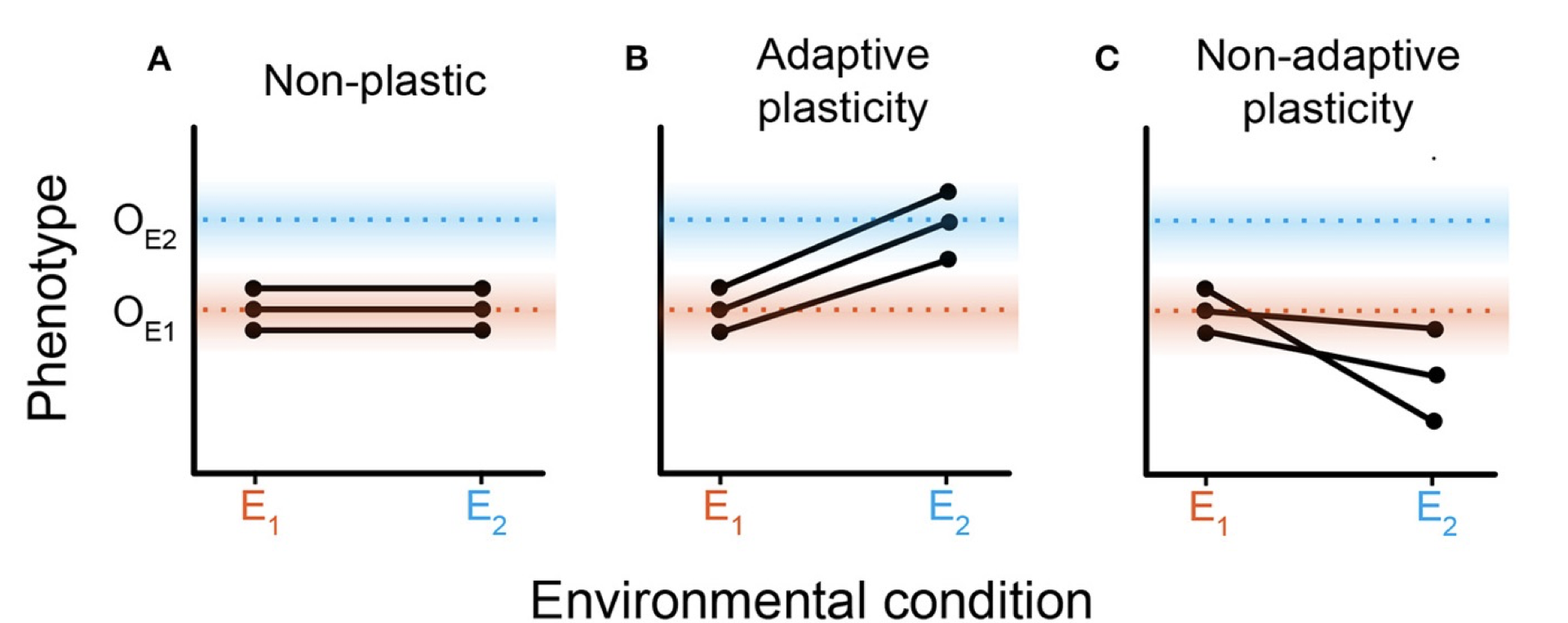
lines on a graph, showing the range of all possible phenotypes produced by a single genotype across an environmental gradient
Mechanism for dynamic color change
aggregating (b) and dispersing (c) pigment granules in chromatophores to generate light and dark cell appearances, respectively
Exraoccular Photoreception
ability to detect light using body parts other than eyes
What are the four types of ecology we care about?
Population ecology(Intraspecific interactions)
Community Ecology(Interspecific interactions)
Organismal Ecology(abiotic +organisms)
Ecosystem Ecology (abiotic+community)
Activity Patterns in the Diehl Cycle
Diurnal
Nocturnal
Crepuskular
Cathemeral
The Pelagic Realm
All the open water in the oceans
Sensory Drive Hypothesis
Color signals are most effective in the environmental contexts
that best facilitate their perception by the signal-receiver
Sensitivity vs. Specificity
Sensitivity= stimuli of different intensities
Specificity= stimuli of different types
Cornea
Transparent Window at the front of the eye that light hits first
Iris
The pigmented part of the eye that gets light from the cornea
Pupil
Gets light from the iris which has muscles which regulate its size
Lens
disclike thing which gets light from the pupil and focuses it on the retina, flattens for stuff being far away.
Retina
in back of the eye, has rods and cones
Optic Nerve
Gets info from retina gives to brain
tapetum lucidum
reflects light back through the eye to increase the chance of exciting a photoreceptor, causing eye shine in nocturnal animals.
Poison vs. Toxin Vs. Venom
Poison: Something that hurts you, toxin: hurts you is produced by living organism, venom: toxin injected into a living organism
Batesian Mimicry
A harmless species immitates a harmful one
Mullerian Mimicry
Several toxic species converge on the same phenotype