Immunity Types and Innate vs. Adaptive Immune Responses
 Call Kai
 Learn
Learn Practice Test
 Spaced Repetition
 Match
Match Flashcards
 Knowt Play
1/41

There's no tags or description
Looks like no tags are added yet.
Name | Mastery | Learn | Test | Matching | Spaced | Call with Kai |
|---|
No analytics yet
Send a link to your students to track their progress
42 Terms
Mucous Membranes
Tissues that line various cavities and structures of the body, providing a barrier and secreting mucus to trap pathogens.
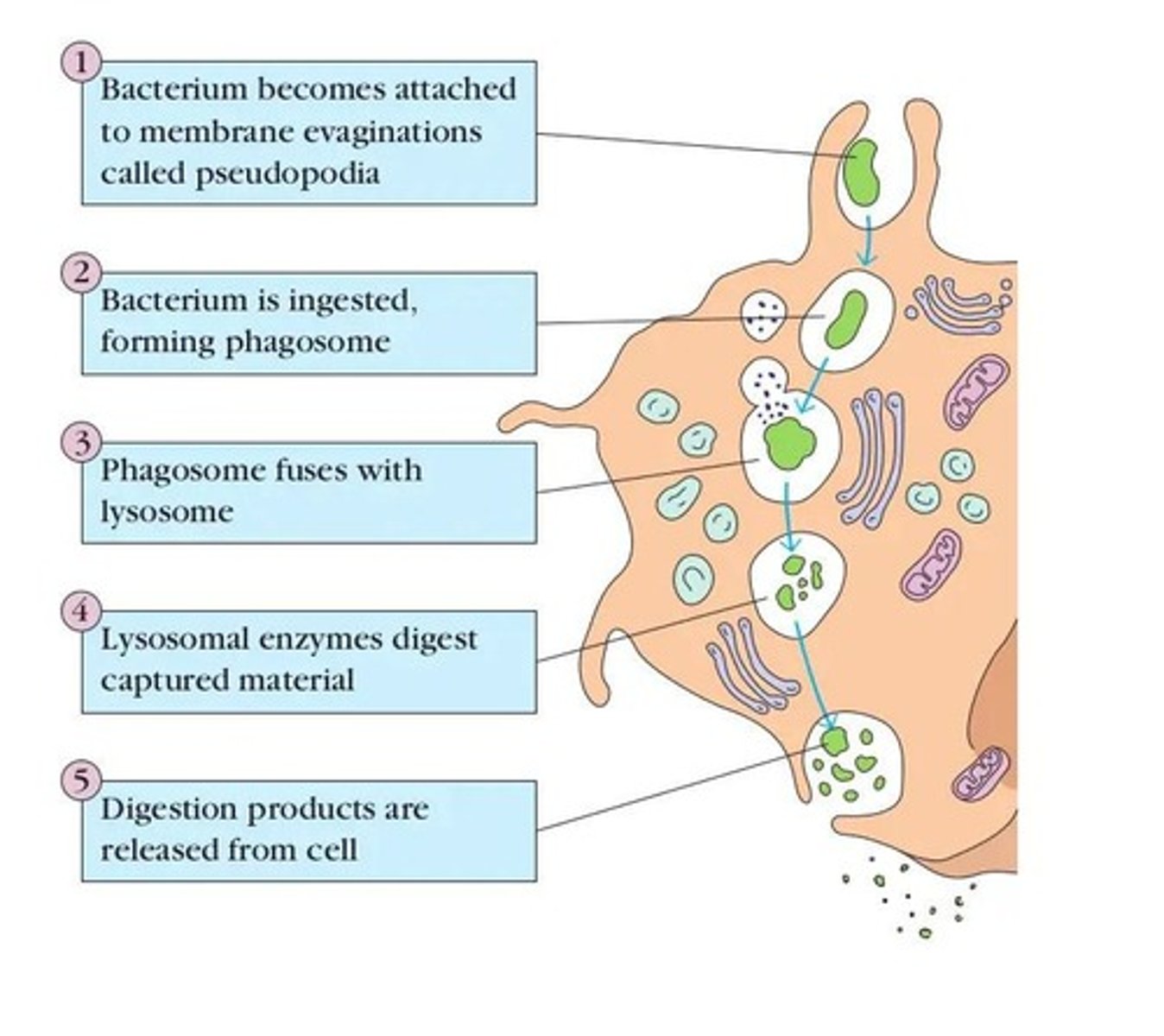
Phagocytosis
The process by which certain cells engulf and digest foreign particles or pathogens.
Inflammation
A biological response to harmful stimuli, characterized by redness, heat, swelling, and pain, aimed at eliminating the cause of injury.
What is innate immunity?
Non-specific, immediate defense against pathogens that does not require prior exposure
What is adaptive immunity?
Specific immune response that targets particular antigens and develops memory
What structures provide mechanical protection in innate immunity?
Skin, mucous membranes, mucus, tears, saliva, nose, ciliary escalator, urethra
What is the role of the epidermis in immunity?
Acts as a physical barrier to prevent pathogen entry
What does mucus do in immune defense?
Traps microbes and particles
What is the function of the ciliary escalator?
Moves mucus and trapped microbes out of the respiratory tract
What provides chemical protection in innate immunity?
Sebum, perspiration, lysozyme, gastric juice
What is lysozyme?
An enzyme that breaks down bacterial cell walls
How does gastric juice protect the body?
Low pH destroys many pathogens
What are the steps of phagocytosis?
Chemotaxis, adherence, ingestion, digestion
What is chemotaxis?
Movement of phagocytes toward infection site
What is adherence in phagocytosis?
Attachment of phagocyte to pathogen
What is ingestion?
Engulfing of pathogen by phagocyte
What is digestion in phagocytosis?
Breakdown of pathogen inside phagocyte
What are the main steps of inflammation?
Vasodilation, increased permeability, phagocyte migration, tissue repair
What is vasodilation?
Widening of blood vessels to increase blood flow
Why is vessel permeability increased during inflammation?
Allows immune cells and fluids to enter tissues
What causes fever?
Pyrogens such as bacterial toxins and immune signals
What are pyrogens?
Substances that trigger fever
What happens during the chill phase of fever?
Vasoconstriction and shivering increase body temperature
What happens when fever breaks (crisis)?
Perspiration, vasodilation, and decreased metabolic rate
Why is fever beneficial?
Inhibits microbial growth and enhances immune response
What is immunity?
The ability of the body to resist pathogens using specific defenses like antibodies
What is an antigen?
A foreign substance that triggers an immune response
What is an antibody?
A protein produced by B cells that binds specific antigens
What are the four types of immunity?
Naturally acquired active, naturally acquired passive, artificially acquired active, artificially acquired passive
What is naturally acquired active immunity?
Immunity from infection and recovery (body produces its own antibodies)
What is naturally acquired passive immunity?
Immunity from antibodies passed from mother to child
What is artificially acquired active immunity?
Immunity from vaccination
What is artificially acquired passive immunity?
Immunity from injected antibodies (immediate but temporary)
What is herd immunity?
Protection of a population when many individuals are immune, reducing disease spread
What is the first step of the immune response?
Recognition of antigen as foreign
Which cells recognize antigens?
Lymphocytes
What happens during immune activation?
B cells undergo clonal selection and multiply
What is clonal selection?
Process where specific B cells are activated and replicate
What do plasma cells do?
Produce antibodies
What are memory cells?
Long-lived cells that provide faster response upon re-exposure
What is the primary immune response?
First exposure to antigen; slower and weaker response
What is the secondary immune response?
Faster, stronger response due to memory cells