cognitive executive brain
 Call Kai
 Learn
Learn Practice Test
 Spaced Repetition
 Match
Match Flashcards
 Knowt Play
1/23

There's no tags or description
Looks like no tags are added yet.
Name | Mastery | Learn | Test | Matching | Spaced | Call with Kai |
|---|
No analytics yet
Send a link to your students to track their progress
24 Terms
What are executive functions?
An umbrella term that refers to different abilities used for planning and executing voluntary goal-directed behaviours
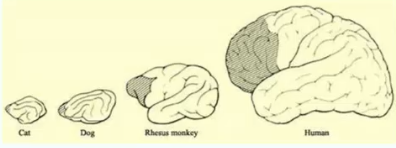
Which part of our brains are the most ‘genetically new’?
The frontal lobe
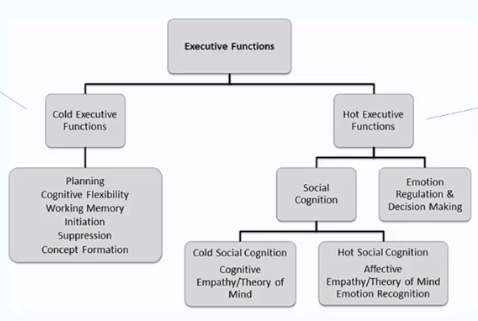
What are the two classic types of executive functions?
‘Hot’ and ‘Cold’ - emotion/social and cognitive/planning
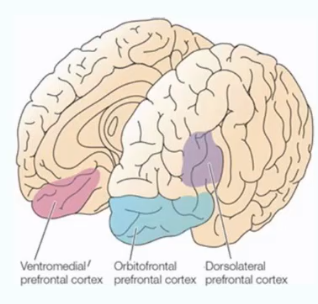
What is the role of the dorsolateral prefrontal cortex?
It is involved in ‘cold’ function: executive function, working memory, decision making etc
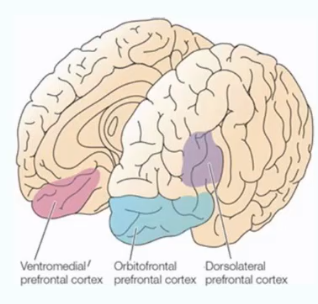
What is the role of the ventromedial prefrontal cortex?
it is involved in the ‘hot’ functions: rewards for stimuli, self evaluation etc
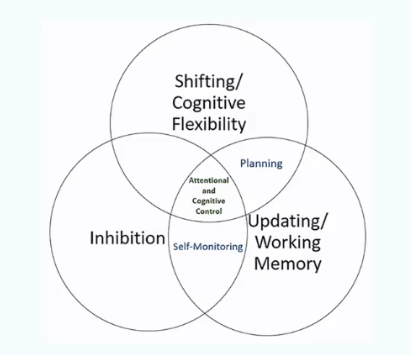
What are Miyake’s three main executive functions?
Inhibition, cognitive flexibility, and working memory
What are the two types of shifting?
Sequential shifting and Parallel shifting
What is sequential shifting?
A rapid change from A-B, and back from B-A
What is parallel shifting?
When tasks A and B are performed simultaneously
What is the winconsin card sorting test?
A task used to test sequential shifting abilities - going from task A-B and back again rapidly
What type of task is used to test parallel shifting?
Dual tasks
What is the key neural correlate node for distinguishing between shifting types?
the pre-supplementary motor area
What is the key neural correlate gyrus for shifting?
The precuneus and left middle frontal gyrus
What is updating?
The actively changing, executively focused part of working memory
What type of tests are used to test updating?
Manipulation of digits or words within the working memory - e.g recalling a list of numbers in a different order
What are the key neural correlates for updating?
(TBC) The thalamus, basal ganglia and cerebellum
What is inhibition?
The ability to supress unwanted actions
What are the three actions that can be inhibited?
Response inhibition (automatic responses), cognitive inhibition (irrelevant responses) and motor inhibition (planned actions)
What are some ways to test inhibition?
The go-no-go test, the stroop test, etc
What are the key neural correlates of inhibition?
The pre-supplementary motor area (for every kind), and the left occipital, right temporal, and left interior frontal gyrus
What are the key common networks for executive functions?
Fronto-parietal regions, insula, basal ganglia and occipital regions