19. liver toxicants
 Call Kai
 Learn
Learn Practice Test
 Spaced Repetition
 Match
Match Flashcards
 Knowt Play
1/18

There's no tags or description
Looks like no tags are added yet.
Name | Mastery | Learn | Test | Matching | Spaced | Call with Kai |
|---|
No analytics yet
Send a link to your students to track their progress
19 Terms
what are 5 factors that predispose the liver to toxicity?
first pass effect
enterohepatic circulation
unique functions like bile formation/excretion
major site of metabolism (bioactivation)
zones of liver affected differently due to blood & oxygen supply
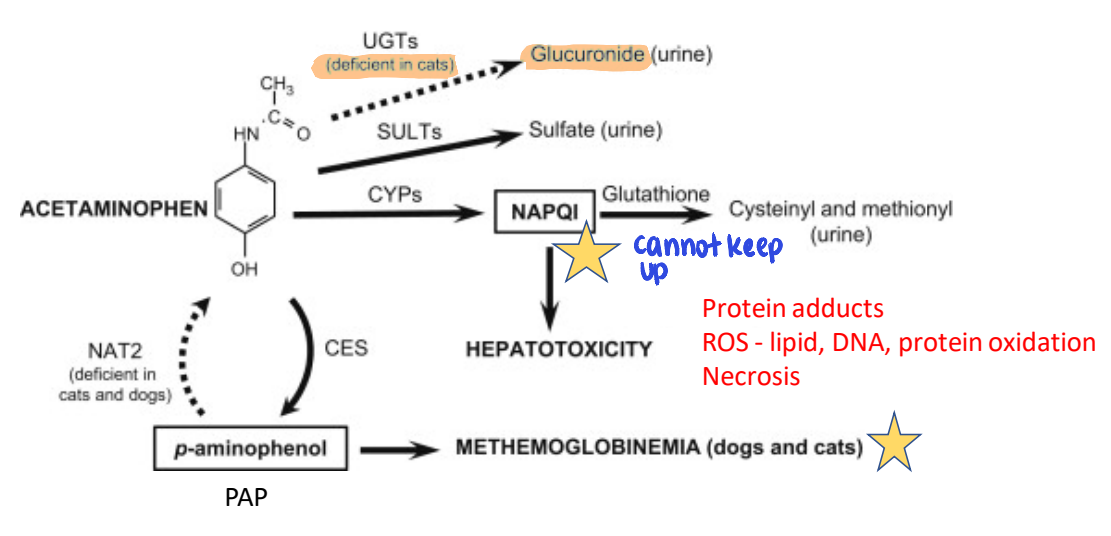
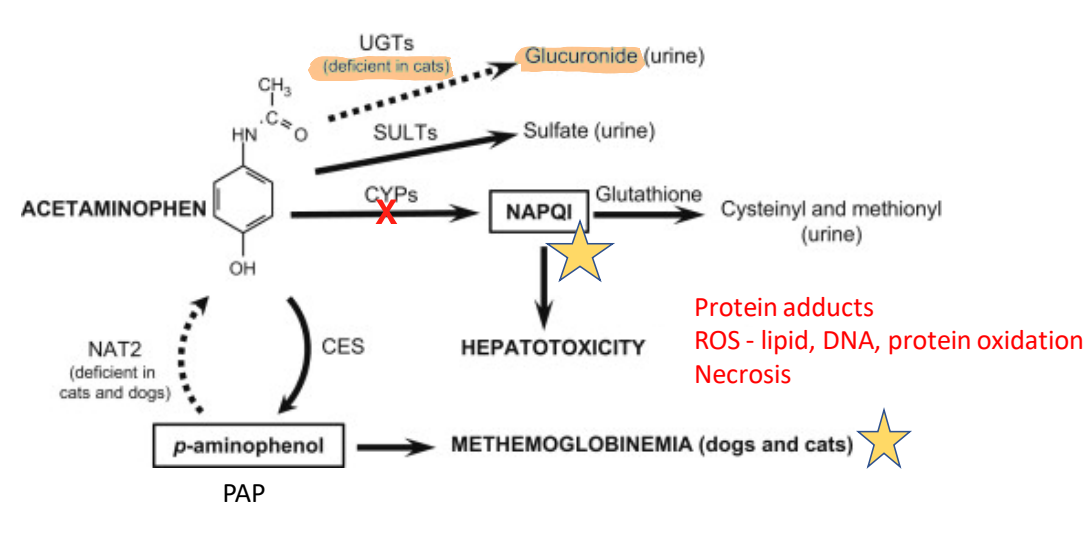
mechanism of acetaminophen toxicity
metabolized to NAPQI → hepatotoxicity
forms protein adducts
ROS — lipid, DNA, protein oxidation
necrosis
oxidizes hemoglobin in dogs & cats
p-aminophenol (PAP) metabolite → methemoglobinemia
chocolate-colored blood, heinz body anemia
major organs/systems affected by acetaminophen toxicity
blood (methemoglobin), liver
acetaminophen treatments
liver protectants, antioxidants, SAM, N-acetylcysteine (bind metabolites + GSH precursor)
cimetidine in dogs only — inhibit CYPs to block formation of NAPQI
cats are poor glucuronidators; ↓↓ alternate metabolism
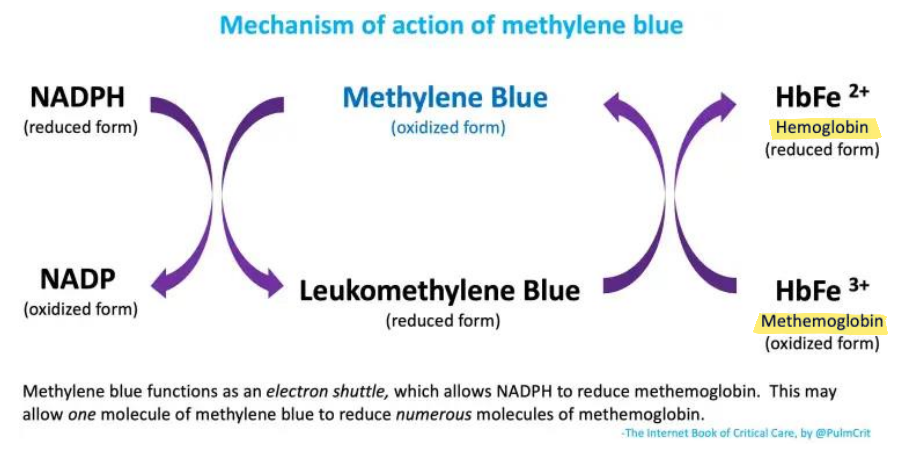
methylene blue — carefully consider adverse effects
mechanism of methylene blue treatment
reduces methemoglobin to hemoglobin
source of blue-green algae toxicity
cyanobacteria that can produce toxins — neurotoxins & hepatotoxins
microcystin = hepatotoxin
occurs in warm weather
nutrient enriched waters
stagnant waters
mechanism of blue-green algae toxicity
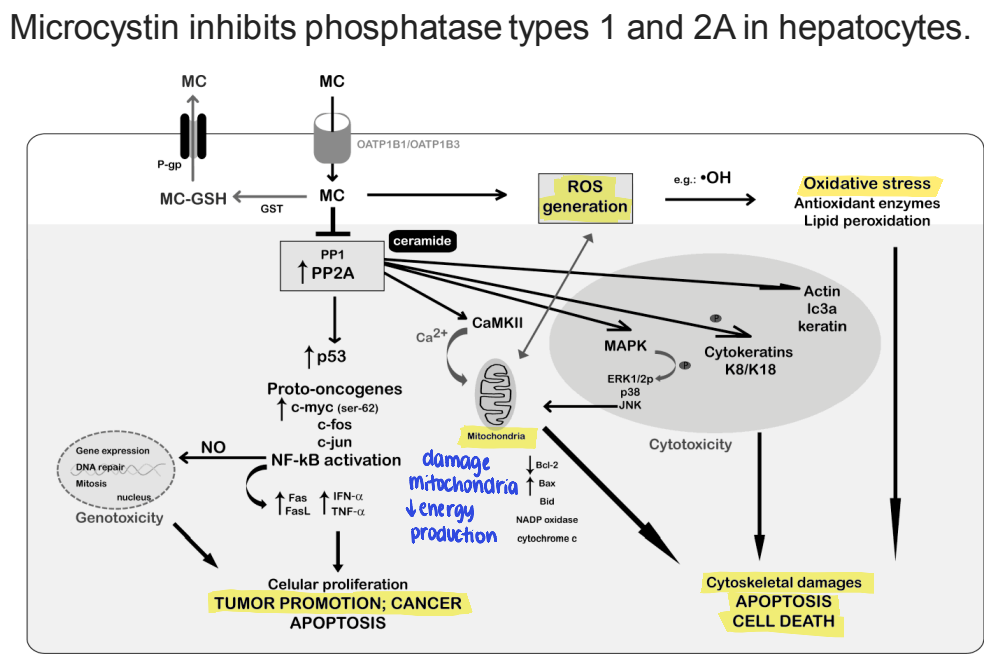
microcystin inhibits phosphatase types 1 and 2A in hepatocytes, leading to:
cytoskeletal damage
apoptosis, cell death
mitochondrial damage → ↓ energy production
generation of ROS → oxidative stress
tumor promotion; cancer
major organs/systems affected by blue-green algae toxicity
GI, liver, or CNS based on type of toxin
what major mushroom species can cause hepatotoxicity?
amanita phalloides “deathcap”
amanita virosa “destroying angel”
mechanism of mushroom toxicity (a. phalloides)
amatoxins (α & β amanitin derivatives)
most potent; absorbed best
bind RNA polymerase II → block protein synthesis
high-protein synthesis cells are most sensitive
phallotoxins & virotoxins irreversibly polymerize hepatic actin filaments, triggering hepatic cholestasis
major organs/systems affected by mushroom toxicity
GI, liver
mechanism of iron toxicity
direct caustic or irritant effects on GI mucosa
once iron-carrying capacity of serum has been exceeded, free iron is deposited in the liver & other tissues
direct mitochondrial poison
ROS
lipid peroxidation
also causes hemolysis via ROS and reduces heme synthesis
major organ/systems affected by iron toxicity
GI, liver
iron toxicity treatments
decontamination
GI protectants
activated charcoal does NOT bind iron well
supportive treatment
milk of magnesia — complex with iron
chelation therapy if iron levels are >300 mcg/dL
deferoxamine — iron chelator
may take days to recover & should be monitored for 4-6 weeks
what genetic defect leads to copper storage disease in dogs?
deletion mutation that eliminates a major section of COMMD1 (copper metabolism gene)
heterozygous dogs do not accumulate Cu or develop clinical signs
dogs with 2 abnormal genes can accumulate Cu, leading to clinical signs
mechanism of copper toxicity
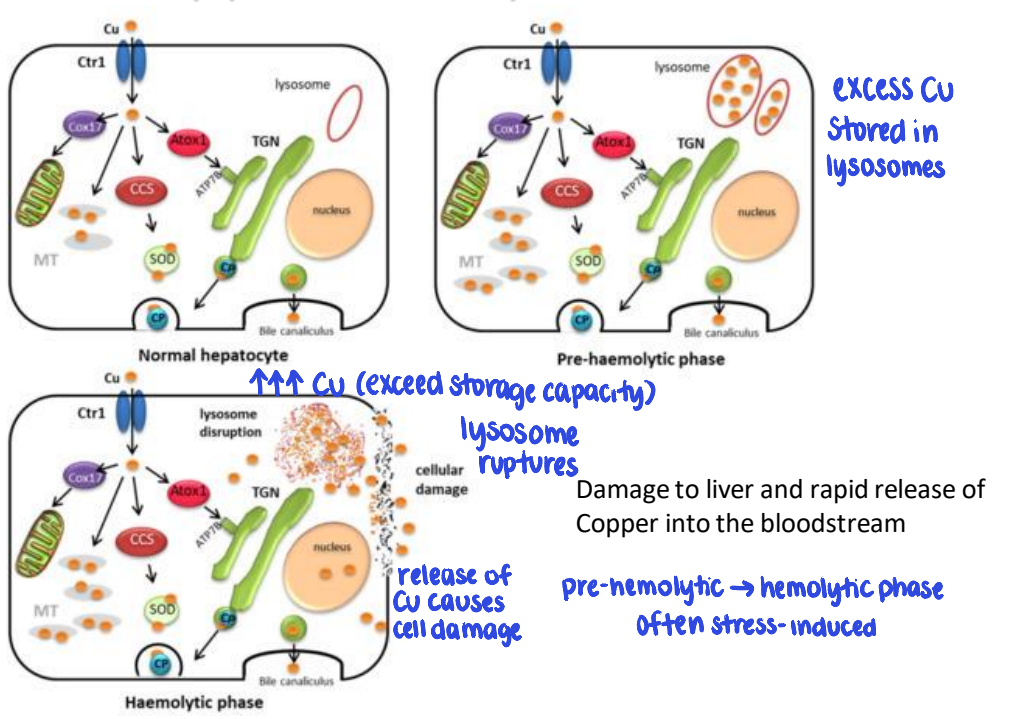
pre-hemolytic phase: excess copper stored in lysosomes
hemolytic phase: ↑↑ copper → lysosome ruptures
release of copper causes cell damage & rapid release into bloodstream
redox cycling, oxidative stress, & lipid peroxidation → mitochondrial + cellular damage
release of hepatic copper to RBCs & kidneys leads to severe hemolysis + renal necrosis, also via generation of ROS
pre-hemolytic → hemolytic phase often stress-induced
major organs/systems affected by copper toxicity
GI, blood, liver
in which species does copper toxicity not cause a hemolytic crisis?
camelid species, such as llamas/alpacas, although extensive liver necrosis remains a consistent manifestation
copper toxicokinetics + large animal species/breed sensitivities
more likely to be toxic if low dietary intake of molybdenum & sulfur — complex with copper in tissues to help excrete in urine + feces
sheep are more sensitive than cattle & goats
breed differences in susceptibility in sheep
jersey cattle are more susceptible than other breeds