msa and asa (infraorbital) nerve blocks
 Call Kai
 Learn
Learn Practice Test
 Spaced Repetition
 Match
Match Flashcards
 Knowt Play
1/20

Earn XP
Description and Tags
still needs ASA
Name | Mastery | Learn | Test | Matching | Spaced | Call with Kai |
|---|
No analytics yet
Send a link to your students to track their progress
21 Terms
what is unique about the middle superior alveolar nerve?
it is absent in about 72% of people and is present in only about 28%
when absent, its areas are usually supplied by the ASA nerve
when is an MSA nerve block indicated?
when the ASA block fails to anesthetize teeth distal to the canine
treating both mx premolars
the mb root of the mx first molar still has sensation after a PSA block
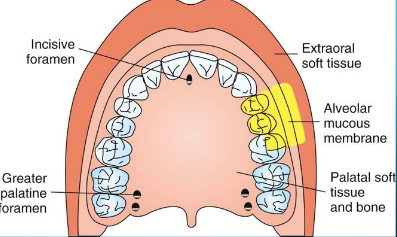
what are areas anesthetized by the MSA block?
pulps of: first premolar, second premolar, MB root of the mx first molar
+buccal bone and buccal periodontium over these teeth
what are the contraindications for an MSA block?
infection or inflammation is present at the injection site
remember that if the MSA nerve is absent, the ASA block will be needed
advantages and disadvantages of the MSA block
advantages: fewer injections, less anesthetic required
disadvantages: none listed
alternatives to the MSA block
supraperiosteal infiltration
PDL injection
IO injection
ASA block when appropriate
MSA technique
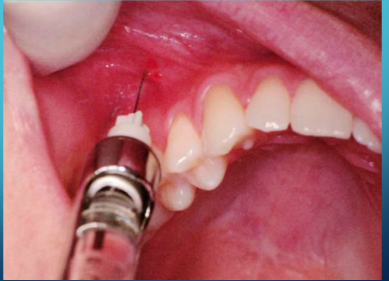
27-gauge short or long
insertion: height of the mucobuccal fold above the second premolar
target: mx bone above the apex of the second premolar
landmark: mucobuccal fold over the second premolar
what complication may occur with a MSA block?
rarely, a hematoma may form
management: apply pressure with sterile gauze for at least 60 seconds
what is the ASA nerve block?
anesthetizes the anterior maxillary teeth
often called infraorbital, but this is INCORRECT. The infraorbital nerve itself supplies soft tissues, while the ASA branch supplies the teeth.
which nerves are anesthetized by the ASA block?
the anterior superior alveolar nerve
middle superior alveolar nerve (when present)
infraorbital nerve branches: inferior palpebral, lateral nasal, superior labial
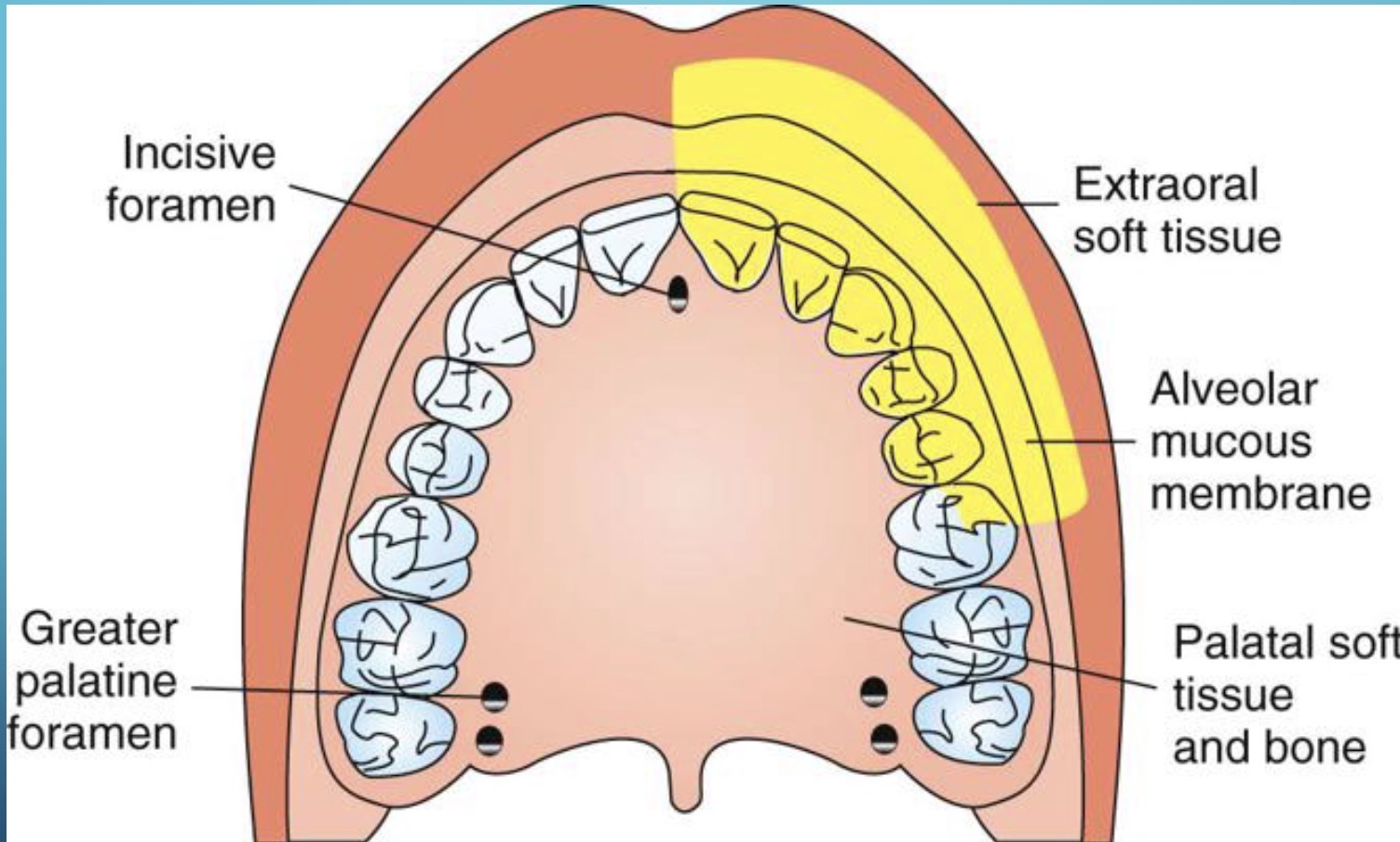
what areas are anesthetized by the ASA block?
pulps of: central incisor, lateral incisor, canine
in about 72% of patients, also: premolars, MB root of first molar
also anesthetizes: buccal bone and periodontium, lower eyelid, lateral nose, upper lip
hen is an ASA block indicated?
when multiple anterior maxillary teeth require treatment
ex: scaling and root planing from canine to canine on one side
when is an ASA block contraindicated?
when only one or two teeth require treatment
localized hemostasis is needed
in these cases, use a supraperiosteal injection
advantages of the ASA block
easy technique, safe, requires fewer injections, uses less anesthetic
disadvantages of the ASA block
psychological: fear of damaging patient’s eye
infraorbital landmarks can occassionally be difficult to locate
ASA technique
needle: 25-27 gauge long, (27 gauge short may be used for children)
insertion: height of the mucobuccal fold over the first premolar
target: infraorbital foramen
landmarks: mucobuccal fold, infraorbital notch, infraorbital foramen
patient and operator positioning for ASA block
operator: 10 o’clock position
patient: preferably supine, neck extended slightly
(improves access to the infraorbital foramen)
what complication can occur with an ASA block?
rarely, a hematoma beneath the lower eyelid
management: apply pressure over the infraorbital foramen for 2-3 minutes
a patient requires treatment on teeth #6-8. which injection would you choose?
ASA block
a patient requires treatment on teeth #4 and #5 only. which injection is preferred?
usually: supraperiosteal infiltrations (high success and technically simple)
if multiple premolars require anesthesia or an ASA block has failed to anesthetize the premolars: an ASA block may be used
you cannot determine beforehand whether the MSA nerve is present. If the ASA block fails to anesthetize the premolars, that suggests the patient likely has a separate MSA nerve
a patient needs SRP on teeth #7-9. is one right ASA block enough?
no. a right ASA block anesthetizes only the right anterior teeth (#7 and #8)
bc the ASA block is unilateral, tooth #9 requires additional anesthesia, such as a left supraperiosteal injection (or a left ASA block if more anterior teeth are involved)