microbio exam 3!
 Call Kai
 Learn
Learn Practice Test
 Spaced Repetition
 Match
Match Flashcards
 Knowt Play
1/54

There's no tags or description
Looks like no tags are added yet.
Name | Mastery | Learn | Test | Matching | Spaced | Call with Kai |
|---|
No analytics yet
Send a link to your students to track their progress
55 Terms
Summarize Griffith’s experiments on transformation…. also how are capsules involved?
Griffith worked with Streptococcus pneumoniae. He found that heat-killed virulent bacteria (S strain) could "transform" live non-virulent bacteria (R strain) into virulent ones, proving a "transforming principle" existed.
capsules protect from phagocytosis by WBC!!!!
How did Avery, MacLeod, McCarty, and Hershey-Chase confirm DNA is the genetic material?
Avery/MacLeod/McCarty: Used enzymes to degrade RNA, protein, and DNA; only DNA degradation stopped transformation.
basically… concluded that transformation is only stopped when DNA is NOT present, aka DNA necessary for transformation!
Hershey/Chase: Used radioactive phosphorus (P32 for DNA) and sulfur (S35 for protein) in bacteriophages; only P32 (bacteria) entered the host cell.
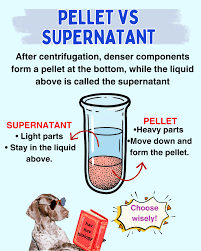
____ will pellet, ____ is the supernatant
bacteria = pellet!
virus = supernatant!
DNA vs. RNA (Compare/Contrast)
DNA: Deoxyribose sugar, Thymine (T), usually double-stranded (B-form helix), more stable.
RNA: Ribose sugar, Uracil (U), usually single-stranded (but folds into 3D shapes), less stable.
What covalent bonds link nucleotides and amino acids?
Nucleotides: Phosphodiester bonds (between 3' OH and 5' phosphate).
Amino Acids: Peptide bonds (between carboxyl group and amino group).
What are the 3 phases of transcription?
Initiation: Proteins bind to the origin (oriC) and unwind the DNA… allowing RNA polymerase to bind!
Elongation: RNA polymerase synthesizes new strands at the replication fork… reads template strand and adds complementary bases to the growing mRNA strand!
Termination: Transcription continues until the RNA polymerase reaches a termination sequence (or stop sequence) on the DNA template… The mRNA transcript is released, and the RNA polymerase detaches from the DNA
Elements needed by DNA polymerase for synthesis?
A template strand.
A primer (with a free 3' -OH).
dNTPs (Deoxynucleoside triphosphates… building blocks)
Events at the Replication Fork?
Helicase unwinds DNA, SSBs keep it open, Primase adds RNA primers. The leading strand is synthesized continuously toward the fork; the lagging strand is synthesized discontinuously (Okazaki fragments) away from the fork.
Bacterial Gene Structure and Numbering?
Contains a promoter (not transcribed), leader (just transcribed), coding region, trailer (just transcribed), and terminator
Numbering: The first nucleotide transcribed is +1. Bases before it are negative (e.g., -10, -35 consensus sequences).
Leader = includes Shine-dalgarno sequence (for ribosome binding)… transcribed but not translated!!
Illustrate the organization of bacterial genes in a typical operon
polycistronic mRNA?
operon = unit of genomic DNA containing a cluster of genes under the control of a single promoter → ensuring coordinated expression of proteins needed for the same process, such as metabolic pathways!
Promoter: The DNA sequence where RNA polymerase binds to initiate transcription.
Operator: A segment of DNA located between the promoter and structural genes, acting as an on/off switch where regulatory proteins (repressors or activators) bind.!!!
Structural Genes: Multiple genes coding for enzymes or proteins that are transcribed together.
Terminator: A sequence that signals the end of transcription
Polycistronic mRNA: Unlike eukaryotes, one mRNA molecule in bacteria often codes for multiple, separate proteins.
Allows bacteria to efficiently respond to environmental changes by producing all necessary metabolic enzymes simultaneously.
example: Lac operon → Contains regulatory genes (promoter/operator) and three structural genes (lacZ, lacY, lacA) that allow E. coli to metabolize lactose!
Bacterial RNA Polymerase Holoenzyme Structure?
Consists of:
core enzyme ($\alpha_2, \beta, \beta', \omega$) which does the catalysis (makes RNA… elongation!)
sigma factor which recognizes the promoter (-10/ -35 region)
together = holoenzyme responsible for initiating transcription!!
Role of Sigma Factors? Promoters?
Sigma factors direct the RNA polymerase to specific promoters (-10 -35 site… aka Pribnow box or TATA box in eukaryotes… AT rich region!). Without a sigma factor, the core enzyme cannot initiate transcription at the right spot.
Sigma factors act as initiation factors that bind to core enzyme —> holoenzyme capable of recognizing promoter sequences, initiating DNA melting, and launching transcription.
Factor-independent vs. Rho-dependent termination?
Factor-independent/ Intrinsic: An inverted repeat forms a hairpin loop in the RNA, followed by a U-rich (or A-rich) sequence, causing the polymerase to fall off… no ATP!
Rho-dependent: The Rho protein binds to the RNA (at the rut site) and "catches up" to the stalled RNA polymerase to pull it off the DNA… helicase requires ATP!
Explain the importance of the reading frame of a protein-coding gene
The reading frame is essential because it determines how nucleotide triplets (codons) are grouped into amino acids, dictating the entire protein sequence. Proper framing ensures a functional protein, while incorrect frames (caused by frameshift mutations) usually lead to nonfunctional, truncated proteins by creating premature stop codons
Describe the universal genetic code (3 characteristics + start/stop codons)
the shared set of rules by which living cells translate nucleotide triplets (codons) in DNA/RNA into amino acids to build proteins.
degenerate= Multiple codons can encode the same amino acid, which provides robustness against mutations.
synonyms= R groups w/ similar characteristics are spelled similarly
universal= all organisms use same language
start= AUG
stop= UGA
Relate the general structure of a tRNA molecule to its role in amino activation and translation
tRNA- brings charged tRNA to the ribosome!!!
acceptor stem= 3′-CCA end… charging!
Before translation begins, the tRNA must be "charged" through a process called amino acid activation!
anticodon loop= pairs with mRNA codon in the ribosome … translation!
wobble position!
The Wobble Hypothesis explains how a single tRNA can recognize multiple mRNA codons by allowing non-standard/ “loose” base pairing at the third position of the codon
Summarize the formation of a translation initiation complex
The small ribosomal subunit (30S/40S) binds with initiation factors (IF1, IF2, IF3) → binds with mRNA → small subunit scans the mRNA in the 5-to-3’ direction until it finds the AUG start codon → small subunit joins with the large ribosomal subunit (50S/60S) (driven by the hydrolysis of GTP) → ready for elongation!
Bacterial Ribosome Structure?
The 70S ribosome, composed of the 30S (small) subunit and the 50S (large) subunit.
Outline the events that occur at the A, P, and E sites of the bacterial ribosome during the elongation phase of translation
1. Aminoacyl (A) Site (Acceptor)= incoming charged tRNAs enter
2. Peptidyl (P) Site= peptide bond is formed
3. Exit (E) Site= uncharged tRNA exit
*remember- the ribosome loads at 5’ end of mRNA and translocates towards the 3’ end!
Sites of the Ribosome (A, P, E)?
A (Aminoacyl) site: Receives the incoming charged tRNA.
P (Peptidyl) site: Holds the tRNA attached to the growing polypeptide chain.
E (Exit) site: Where the empty tRNA leaves the ribosome.
Explain how termination of translation occurs. (3 parts)
Stop Codon Recognition: When a stop codon enters the ribosomal A-site, NO tRNA recognizes it. Instead, protein release factors bind to the stop codon.
stop codons= UAA, UGA, UAG
Polypeptide Release:
The release factor (RF1, RF2, RF3) bind to stop codon and stimulates release of the newly formed polypeptide chain.
Ribosome Recycling: Following protein release, the ribosome, release factors, and tRNA dissociate from the mRNA, allowing the ribosomal subunits to dissociate and be reused for a new round of translation
List when, during the flow of genetic information, bacterial cells can regulate gene
expression
Transcription Control (Primary**): RNA polymerase binding is modulated by activators (increasing) or repressors (decreasing) at the promoter, determining if mRNA is produced.
Translation Control: The accessibility of mRNA to ribosomes, or the use of specific mRNA structures (like riboswitches), can control whether the transcript is translated into protein.
Post-translational Control: The activity of existing enzymes is adjusted through mechanisms such as allosteric regulation or covalent modification (e.g., phosphorylation), allowing rapid responses to environmental changes.
Compare and contrast housekeeping, constitutive, inducible, and repressible genes
Housekeeping/ Constitutive genes:
always "on" to maintain basic cellular functions.
unregulated by environmental conditions.
Inducible genes:
Genes that are normally "off" but can be activated when a specific substrate (inducer) is present.
catabolic pathways (breaking down materials) genes!!
example= The lac operon, which is turned on only when lactose is available.
Repressible genes:
Genes that are normally "on" but can be turned off when their product is abundant… feedback inhibition!
biosynthetic/ anabolic (building materials) pathways
example= The trp operon, which is turned off when tryptophan levels are high.
*remember, these are all regulators of transcription!!!
Housekeeping/Constitutive vs. Inducible/Repressible genes?
Constitutive: Always "on" (e.g., metabolic enzymes).
Inducible: Usually "off," turned "on" by a substance (e.g., lactose).
Repressible: Usually "on," turned "off" by a substance (e.g., tryptophan).
Negative vs. Positive Transcriptional Control? Where do repressors vs activators bind and how do they impact RNAP?
Negative: A repressor protein binds to DNA to stop transcription.
Positive: An activator protein binds to DNA to start transcription.
Repressor:
binds operator region
blocks RNAP
Activator:
binds activator binding site
enhances RNAP binding
How is the lac operon regulated? lowk draw in out!
Lactose present: Allolactose binds the repressor, removing it from the operator.
Glucose absent: cAMP levels are high, cAMP binds CAP, which then binds DNA to recruit RNA polymerase.
Full expression requires lactose present AND glucose absent!!!!
Explain why the coupling of transcription and translation in bacterial cells is important
to the regulatory mechanisms they use
allows for rapid, real-time control of gene expression, where ribosomes translate mRNA while it is still being transcribed by RNA polymerase. This spatial proximity allows for immediate regulation of transcription termination (e.g., attenuation) and protects mRNA from degradation by RNases
coupling ensures that bacteria do not waste resources synthesizing mRNA that cannot be translated and enables nearly instant adjustments in gene expression in response to environmental changes
Summarize how CAP, cAMP, and the lac repressor work together to cause diauxic growth as well as other outcomes related to regulation of the lactose operon
2 mechanisms of control?
3 phases of diauxic growth?
High cAMP (no glucose) and lactose allow high transcription; glucose presence blocks this, favoring diauxic growth
Lac Repressor (Negative Control): In the absence of lactose, the repressor binds to the operator, preventing RNA polymerase from transcribing the operon. If lactose is present, it binds the repressor, causing it to detach, allowing transcription.
CAP-cAMP (Positive Control): When glucose levels are low, cAMP levels rise and bind to the Catabolite Activator Protein (CAP). This complex binds near the promoter, assisting RNA polymerase to start transcription. When glucose is high, cAMP levels are low, and CAP cannot bind
Diauxic Growth:
Phase 1 (Glucose Present, Lactose Present/Absent): CAP is inactive due to high glucose, preventing high-level expression of the lac operon. The cell preferentially uses glucose, causing fast growth.
Lag Phase: When glucose is exhausted, the cell pauses growth to activate the machinery required for lactose metabolism.
Phase 2 (Glucose Absent, Lactose Present): High cAMP allows CAP to bind and activate transcription, while lactose keeps the repressor off. The cell metabolizes lactose, resulting in a second, slower growth phase.
What is Quorum Sensing?
Cell-to-cell communication based on population density. Bacteria release an autoinducer (like AHL); when density is high, the autoinducer concentration triggers gene expression (e.g., bioluminescence in V. fischeri).
Describe how V. fischeri can sense cell density.
As cell population density increases (e.g., within the light organ of the Hawaiian bobtail squid), these autoinducers accumulate, reach a threshold concentration, and bind to the regulator protein LuxR, which triggers the transcription of bioluminescence genes
Define autoinducer.
When bacterial concentration is high, these molecules accumulate and re-enter cells, triggering synchronized gene expression for collective behaviors like biofilm formation, virulence, or bioluminescence
They act as signaling messengers in a positive feedback loop; once a threshold concentration is reached, they activate genes that often lead to more autoinducer production. Ex: AHL
Distinguish between the different types of mutations.
spontaneous:
induced:
point:
silent=
missense=
nonsense=
frameshift=
spontaneous: mistake in replication
induced: environmental factor causes error
point: single base change
silent= no change in protein
missense= change in AA encoded for
nonsense= changes AA into a stop codon… smaller protein does NOT change function
frameshift= every AA downstream is changed… changes function!
Vertical vs. Horizontal Gene Transfer (HGT)?
Vertical: Parent to offspring (inheritance).
Horizontal: Between mature organisms (Transformation, Transduction, Conjugation).
Define Transformation, Transduction, and Conjugation.
Transformation: Uptake of "naked" DNA from the environment.
Transduction: DNA transfer via a bacteriophage (virus)
Conjugation: Direct DNA transfer via cell-to-cell contact… depends on conjugative plasmid (sex pilus)
Differentiate insertion sequences from transposons.
Insertion sequences are the simplest form of mobile DNA, containing only the transposase gene. Transposons can be complex, carrying functional genes… “extra” genes
Distinguish simple transposition from replicative transposition.
simple transposition= cut and paste… moves sequence
replicative transposition= copy and paste… in BOTH places
Outline the events that occur when an F+ cell encounters an F− cell.
When an (donor) cell encounters an (recipient) cell, the cell uses a sex pilus to attach to the cell, forming a cytoplasmic bridge. The cell transfers a single-stranded copy of the plasmid via rolling-circle replication. Both cells synthesize complementary strands, resulting in two cells.
F+ = has the F plasmid
F- = lacks the plasmid
F+ and F- mating = plasmid transferred via rolling circle replication = all F+ cells!!!
F+, Hfr, and F’ cells?
F+: Has the F plasmid (donor).
Hfr: F plasmid is integrated into the bacterial chromosome.
F’: F plasmid was incorrectly excised from the Hfr chromosome and carries some chromosomal DNA.
mating pairs for F
F’ + F-
F+ + F-
Hfr + F-
F’ + F- = F’
F+ + F- = F+
Hfr + F- = Hfr
Explain how Hfr cells arise.
Hfr (High-Frequency Recombination) cells are created when the fertility factor (F plasmid) integrates into the bacterial chromosome of an cell through homologous recombination. This rare recombination event, mediated by insertion sequences, converts a standard donor cell into an Hfr cell capable of transferring chromosomal DNA during conjugation.
Outline the events that occur when an Hfr cell encounters an F− cell
When an Hfr cell encounters an F− cell, they form a pilus, and the Hfr cell transfers a portion of its chromosome—starting from the integrated F factor—into the F− cell via rolling circle replication
how much chromosomal content is transferred depends on how long conjugation is allowed to occur
Generalized vs. Specialized Transduction?
Generalized:
Any part of the bacterial genome is accidentally packaged into a phage during the lytic cycle.
Specialized: Occurs in temperate phages; only specific genes near the prophage insertion site are transferred during lysogenic induction.
temperate phage integrate into host genome @ predictable site… remain there as a prophage …. only DNA near insertion site is integrated
Feature | Generalized Transduction | Specialized Transduction |
|---|---|---|
Phage Life Cycle | Lytic | Lysogenic |
DNA Transferred | Random Bacterial DNA | Specific Genes (Adjacent) |
Phage Type | Virulent (usually) | Temperate |
Mechanism | Random packing of host DNA | Improper excision of prophage |
Occurrence | Any bacterial gene | Only specific neighboring genes |
Identify the parts of a virion and describe their function.
nucleocapsid:
nucleic acid:
envelope:
spikes/ glycoproteins:
enzymes:
nucleocapsid: capsid= protein layer that protects viral genome
nucleic acid: dsDNA, ssDNA, dsRNA, ssRNA,
envelope: lipids + carbs … aids in entry, immune evasion, protection
spikes/ glycoproteins: aids in attaching to receptors on hos for internalizationt; embedded into envelope
enzymes: aids in replication
Enveloped vs. Non-enveloped viruses?
Enveloped: Have a lipid bilayer membrane (stolen from host) surrounding the nucleocapsid.
Non-enveloped: Consist only of a "naked" capsid and nucleic acid.
5 Steps of the Viral Life Cycle?
1. Adsorption (Attachment)= viral particle attaches to target cell, determines the host specificity (tropism) of the virus.
2. Penetration (Entry)= only enveloped virus can enter via fusion! Once inside, the viral capsid is removed (uncoating) to release the genome.
3. Synthesis= dsDNA… The virus takes control of the host cell’s machinery to replicate its genome and transcribe/translate viral genetic material into proteins
4. Assembly = Newly synthesized viral genomic material and proteins are assembled into new, structured virus particles (virions
5. Release= Completed viruses are released from the host cell to infect other cells, often causing the host cell to burst (lysis… nonenveloped) or by budding (enveloped) off from the cell surface.
Discuss the roles of receptors, capsid proteins, and envelope proteins in the life cycles of
viruses
Receptors (host) and envelope proteins (viral) manage binding and fusion, while capsid proteins protect the genome and facilitate trafficking
Describe the common methods for virion release from a host cell (3)
The primary mechanisms are cell lysis (bursting the cell), budding (pinching off the membrane), and exocytosis (vesicular transport). Budding typically releases enveloped viruses without immediate cell death, while lysis releases non-enveloped viruses, killing the cell
Virulent vs. Temperate Phages?
Virulent: Only use the Lytic cycle (multiply immediately and lyse the host).
Temperate: Can use the Lysogenic cycle (integrate DNA into host as a prophage) or the Lytic cycle.
What is Lysogenic Conversion?
When a prophage changes the phenotype of its host, often making it pathogenic (e.g., C. diphtheriae only produces toxin when infected by a specific phage).
NO lactose, glucose high
lac operon inhibited
lacl = attached
CAP = inactive
transcription = none
BOTH lactose and glucose high
CAP = inactive
transcription = low
lacl = detached
NO glucose, high lactose
optimal!
CAP = active
Transcription = high
lacl (repressor) = detached
NEITHER glucose or lactose
lacl = bound
CAP = active
transcription = none