OAT Biol 10: Plants
 Call Kai
 Learn
Learn Practice Test
 Spaced Repetition
 Match
Match Flashcards
 Knowt Play
1/84

There's no tags or description
Looks like no tags are added yet.
Name | Mastery | Learn | Test | Matching | Spaced | Call with Kai |
|---|
No analytics yet
Send a link to your students to track their progress
85 Terms
What is a seed?
A plant reproductive unit that contains all the materials required to produce a new independent plant.
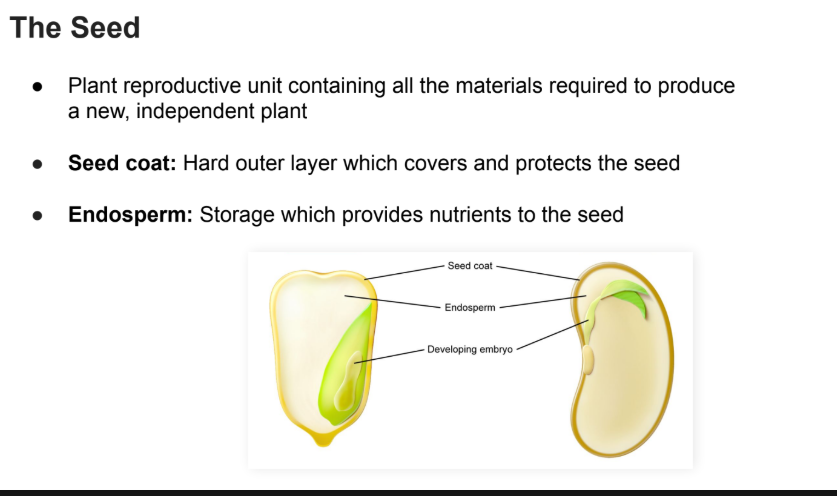
Seed coat
Hard outer layer which covers and protects the seed
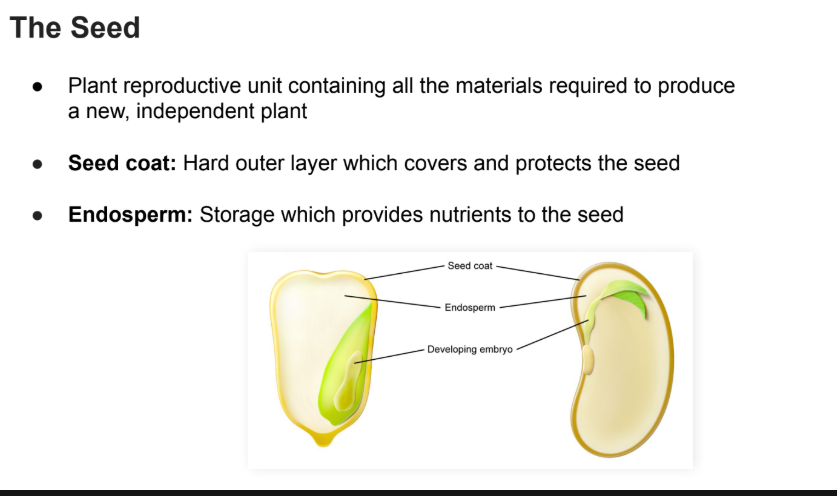
Endosperm
Storage which provides nutrients to the seed
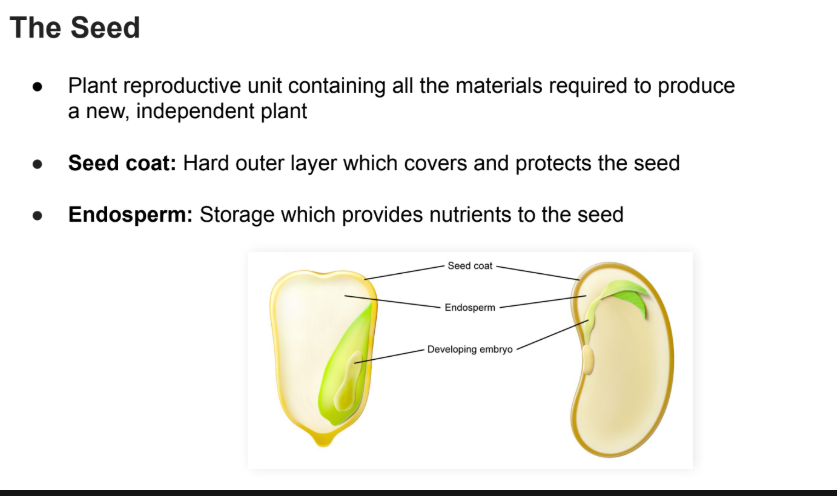
Embryo (plants)
An early plant which develops within the seed
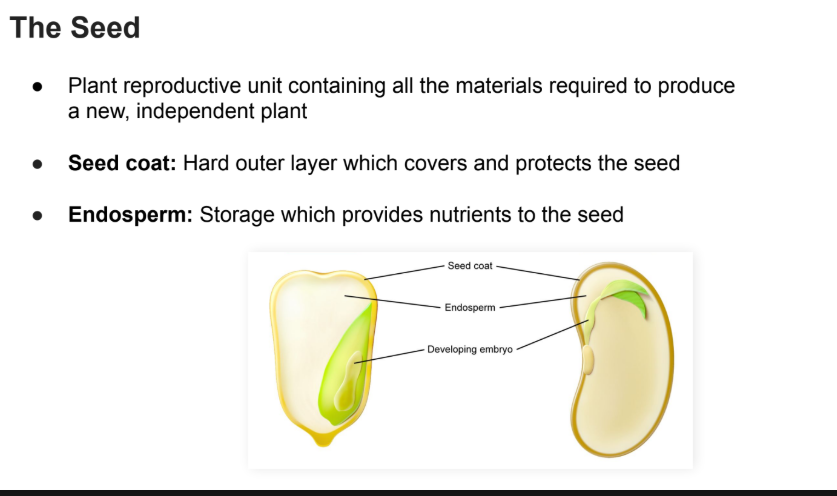
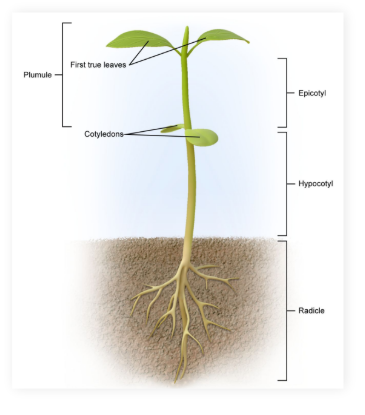
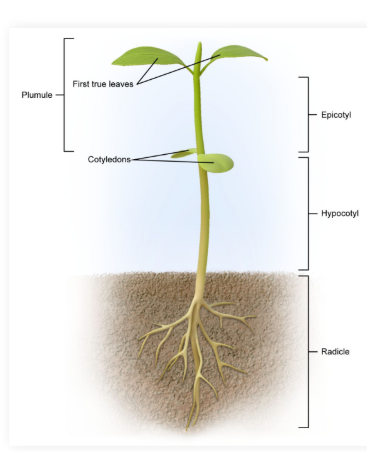
Radicle
First portion to emerge, develops into the root and anchors the plant to the soil
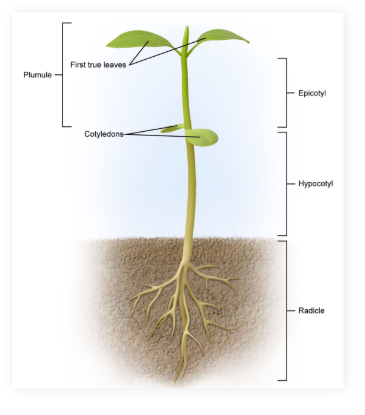
Hypocotyl
Hypocotyl: Bottom region of the young shoot
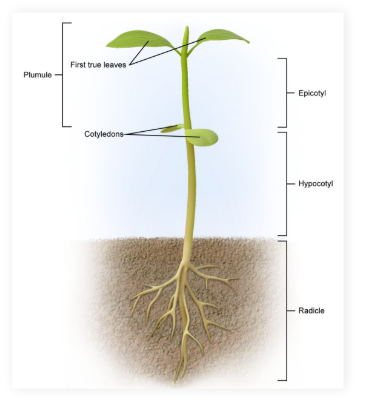
Plumule
Plumule: Develops into the leaves
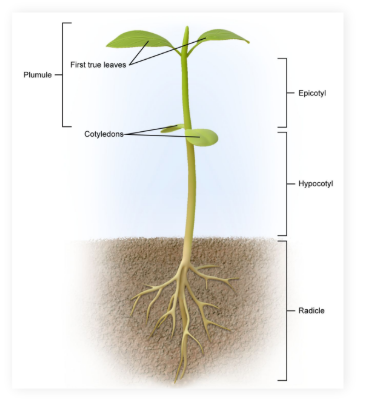
Epicotyl
Top region (shoot tip)
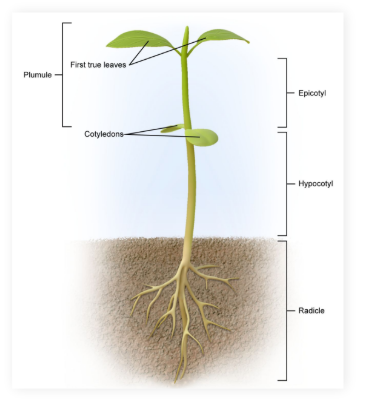
Germination
Process of a seed sprouting into a seedling when conditions are optimal
Water is the most important condition to initiate
Meristems
Place where plant cell growth takes place. It is made of plant stem cells.
Primary Growth
Where does it occur
When does it occur comparatively.
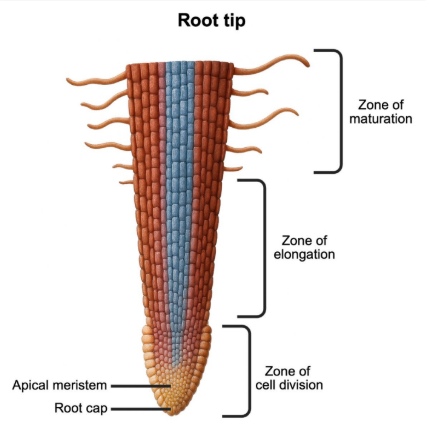
Vertical growth
Occurring at apical meristems
Occurs before secondary growth
Secondary Growth
Where does it occur
When does it occur comparatively.
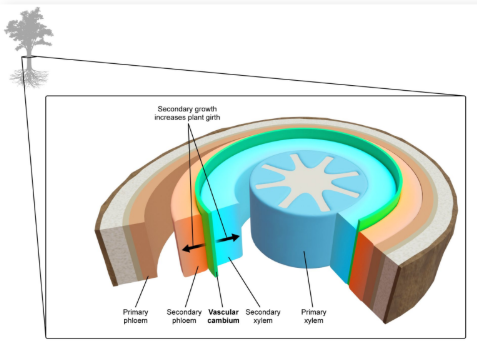
Secondary growth: Horizontal growth occurring at lateral meristems
Lateral meristems include the vascular cambium and cork cambium
Mainly occurs in woody plants
Vascular Cambium
Lateral Meristems.
Vascular cambium
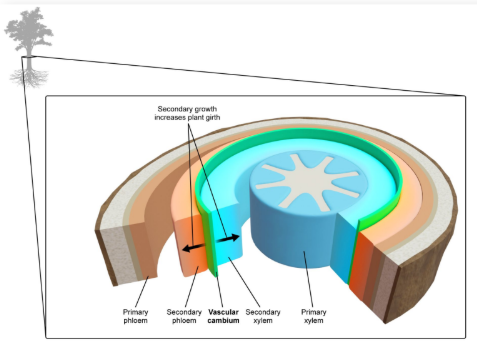
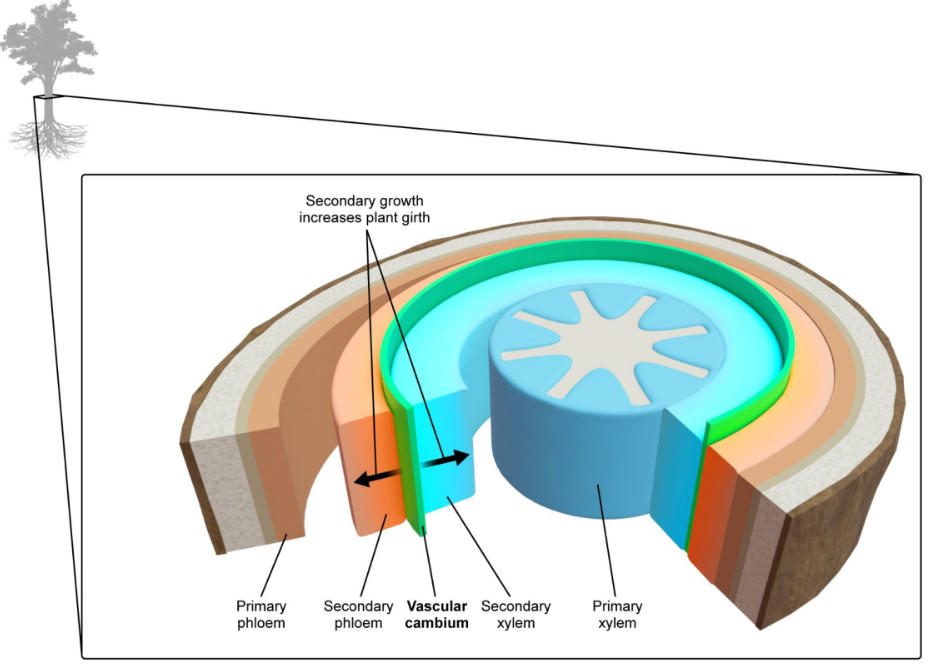
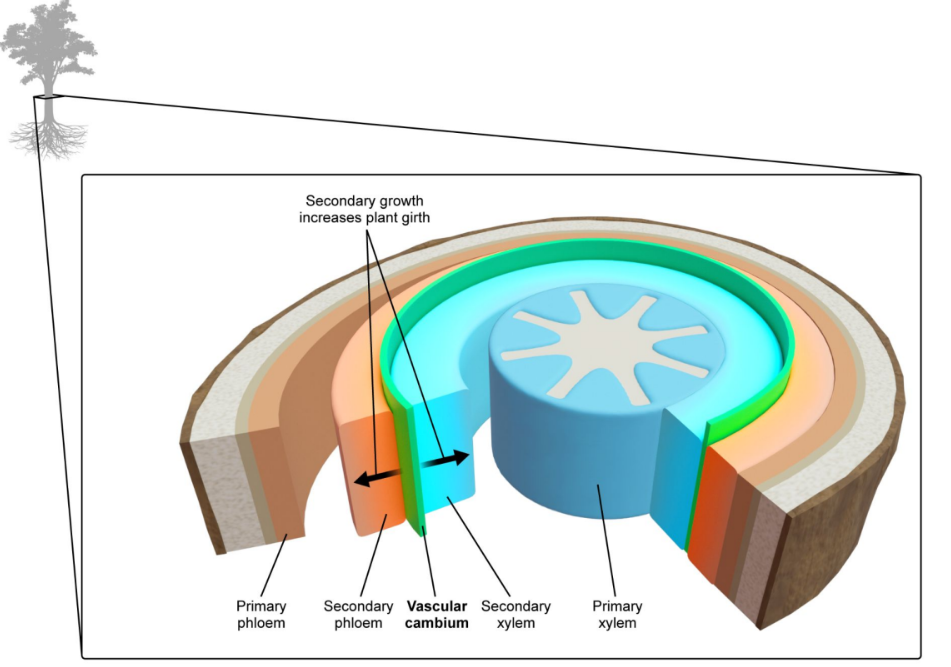
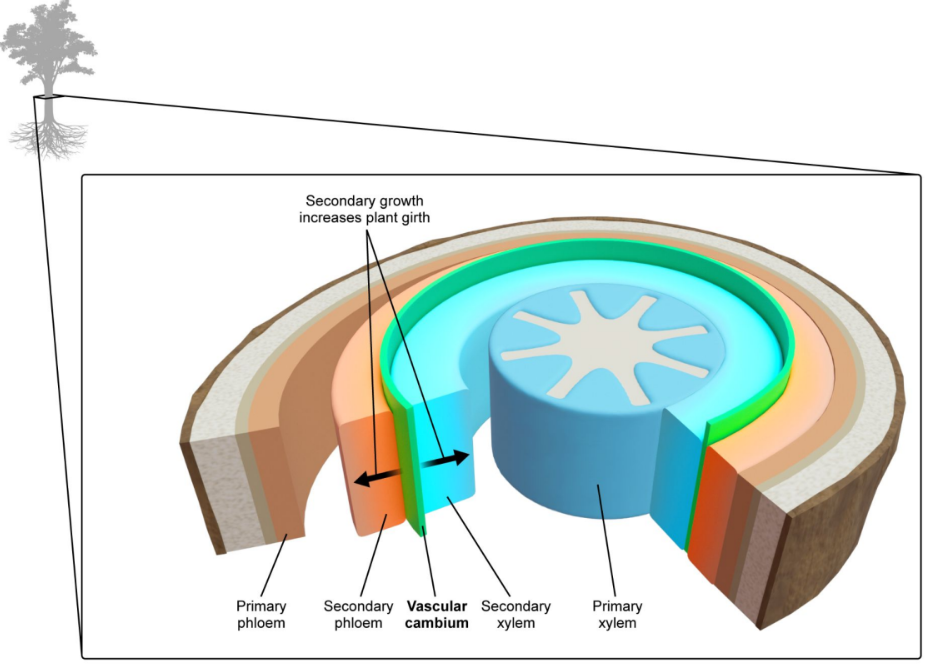
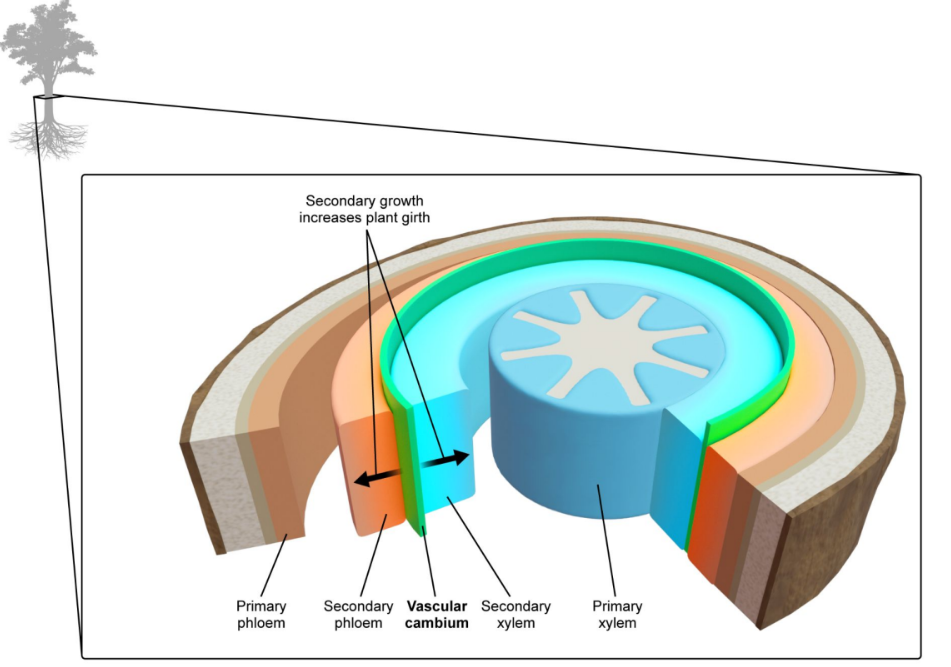
A ring of meristematic tissue located between the primary xylem and primary phloem
Primary Xylem
Transports water and dissolved minerals from the roots to the shoot and leaves in young plants.
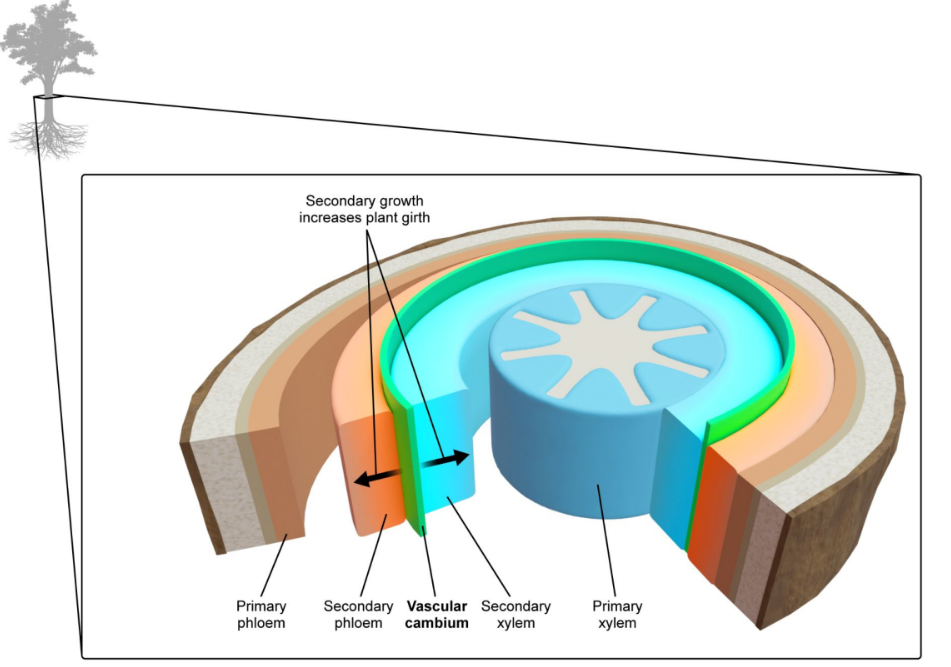
Primary Phloem
Transports nutrients from the leaves to the shoot and roots in young plants
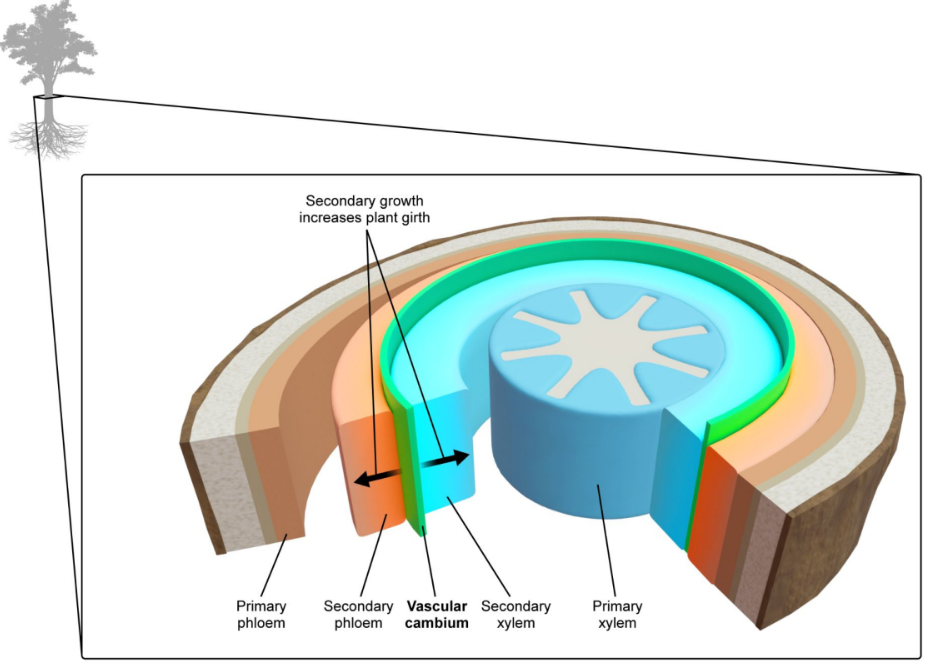
What happens to cells produced in the vascular cambium?
They can become a secondary xylem or the secondary phloem.
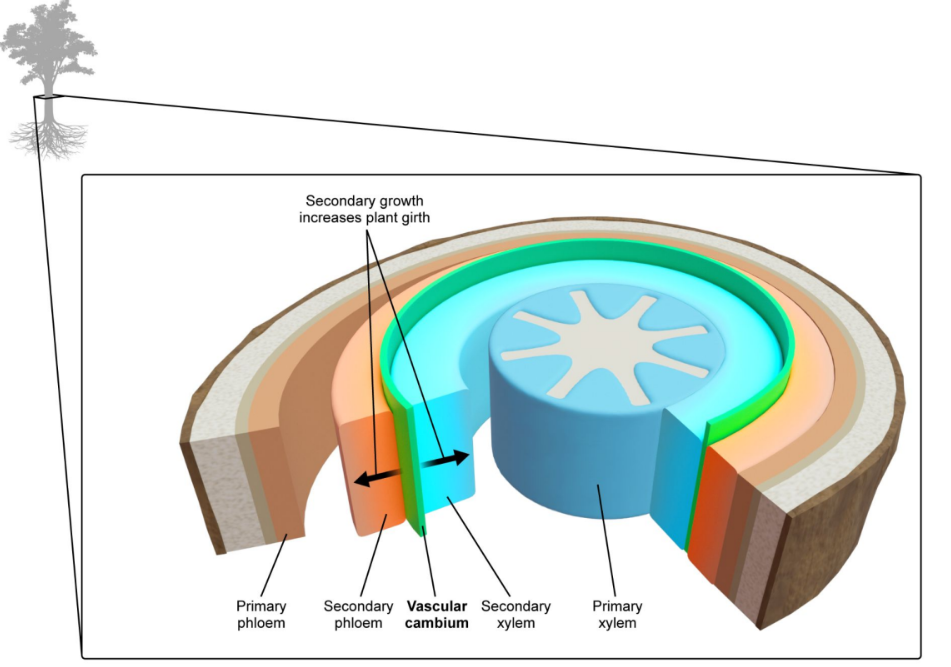
Secondary Xylem
Secondary xylem: Cells on the inside of the ring form the wood
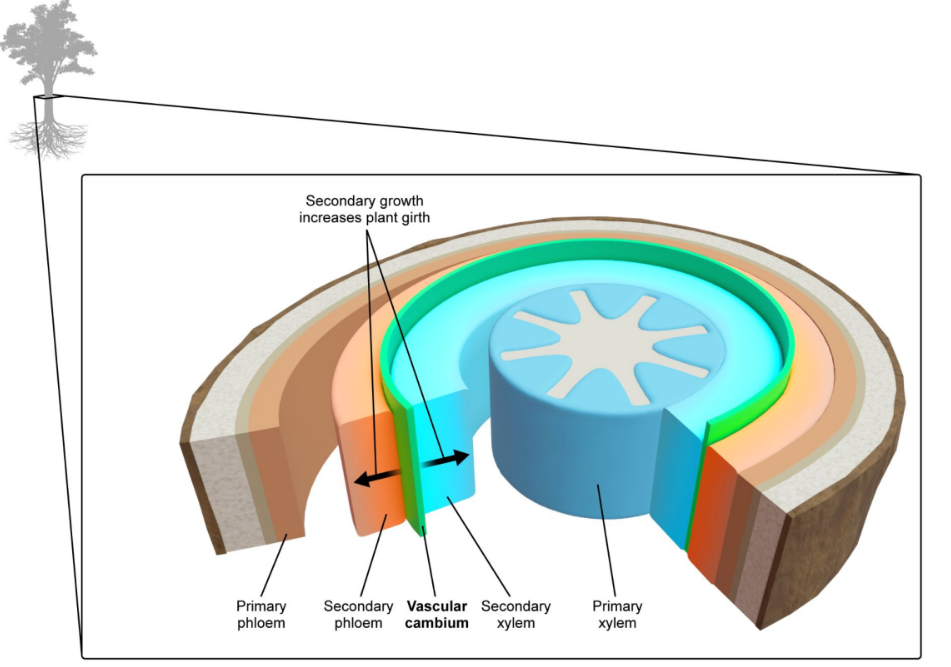
Secondary Phloem
Secondary phloem: Cells on the outside of the ring form the inner bark
What happens over time with wood plants?
New xylem is produced yearly, giving them growth rings. New phloem replaces old phloem.
Cork Cambium
Cork cambium: A ring of meristematic tissue located outside the phloem.
Produces cork,which is the outermost protective layer
Cork
Cork: Dead bark cells, which waterproof the outside of the woody plant
Ground Tissue:
Provides structural support and accounts for most of the plant’s mass
All non-vascular and non-dermal tissue
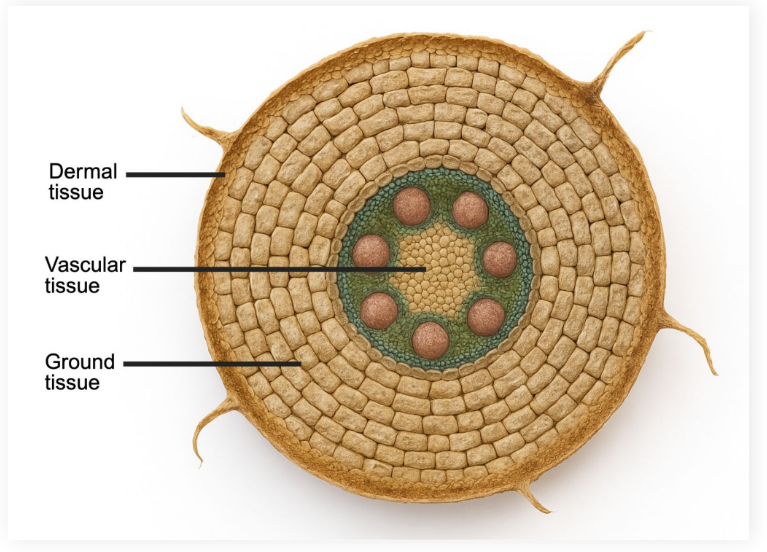
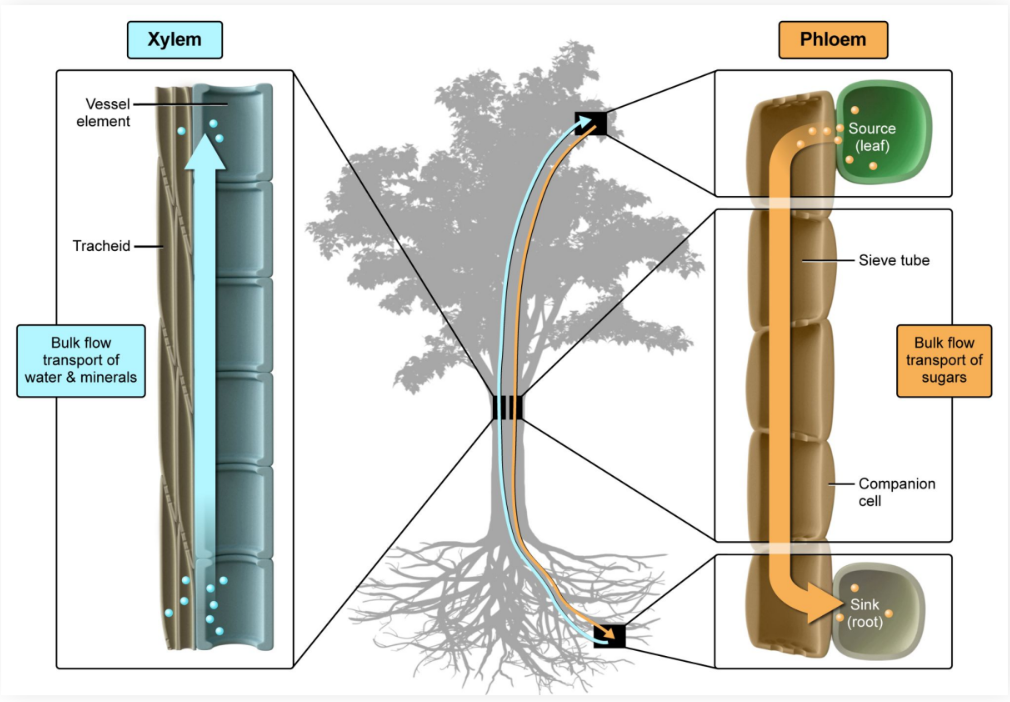
Vascular Tissue:
Transports water and nutrients from source to sink
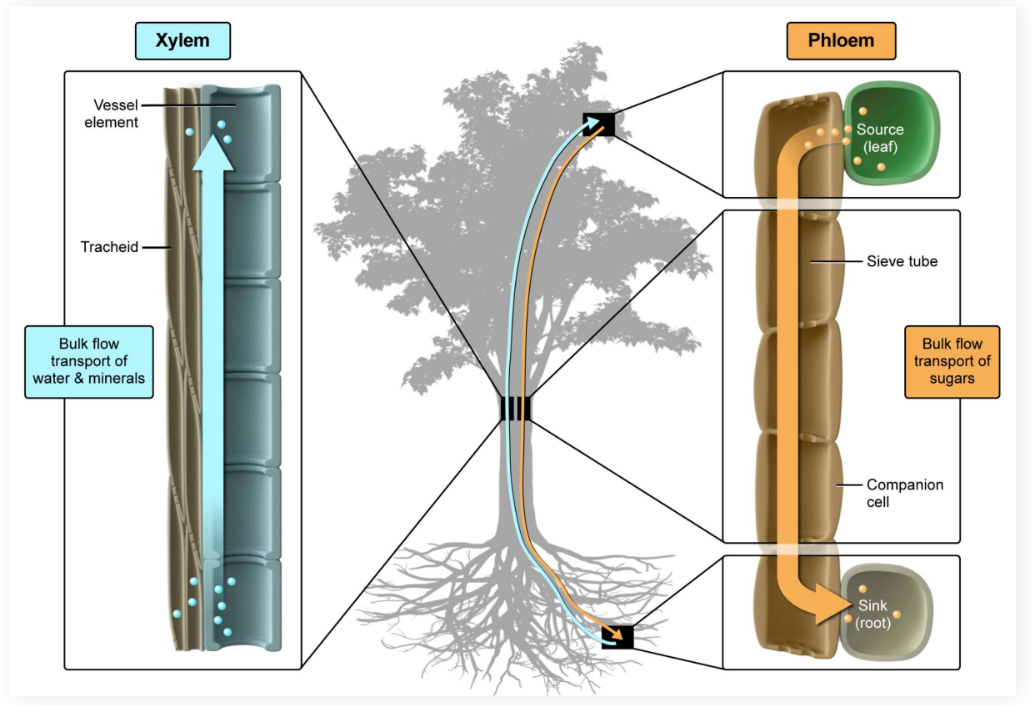
Phloem
Transports sugars from the leaves to the roots and other areas
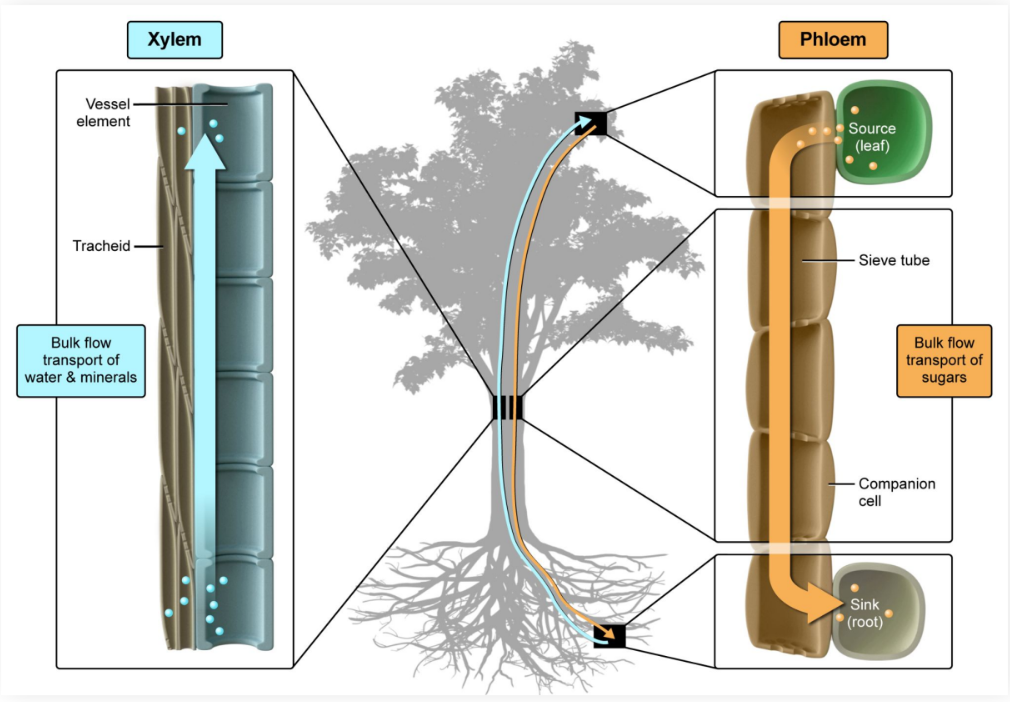
Sieve cells:
Elongated, organelle-lacking cells that connect to form continuous channels for nutrient transport
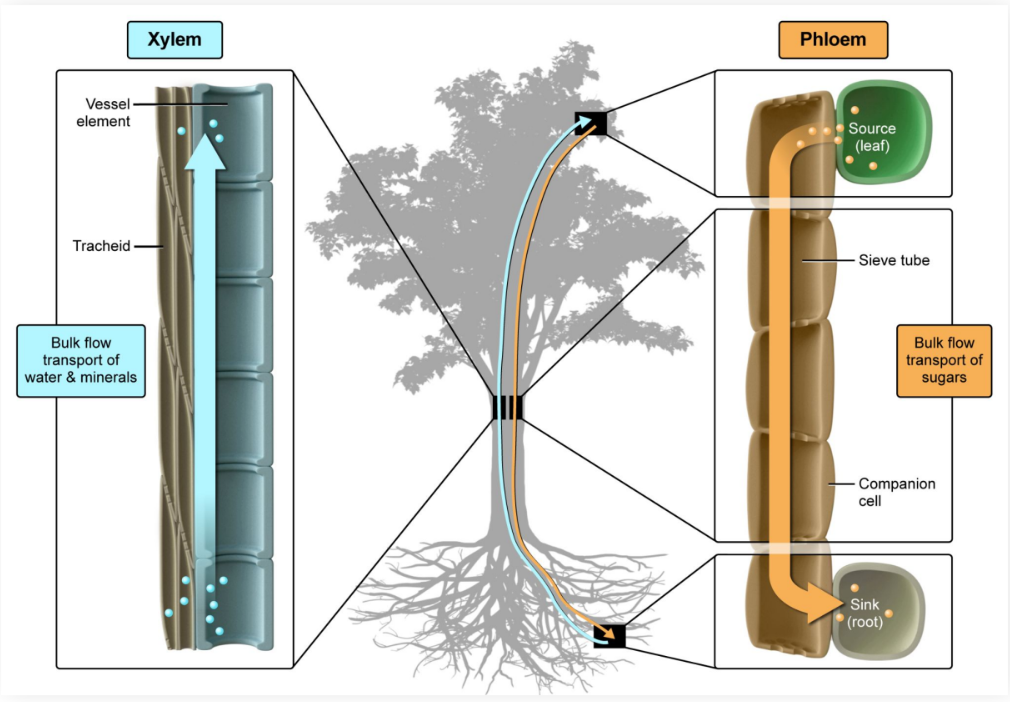
Companion Cells:
Organelle-containing cells that connect to sieve cells and support their metabolic functions
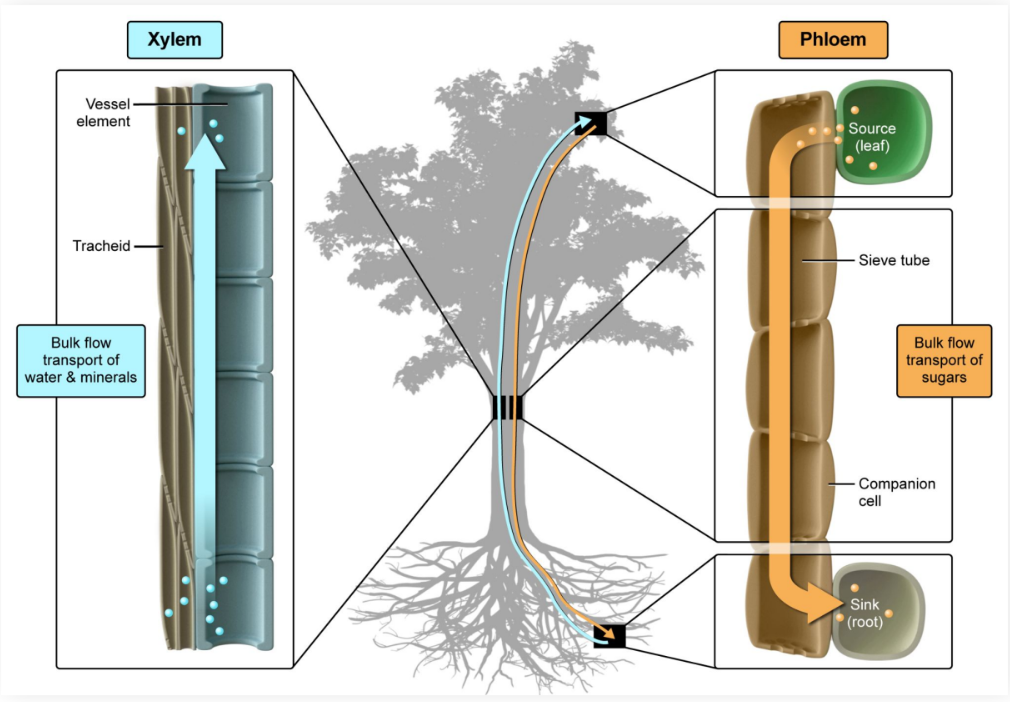
Xylem
Transports water and dissolved minerals from the roots to the leaves while providing structural support.
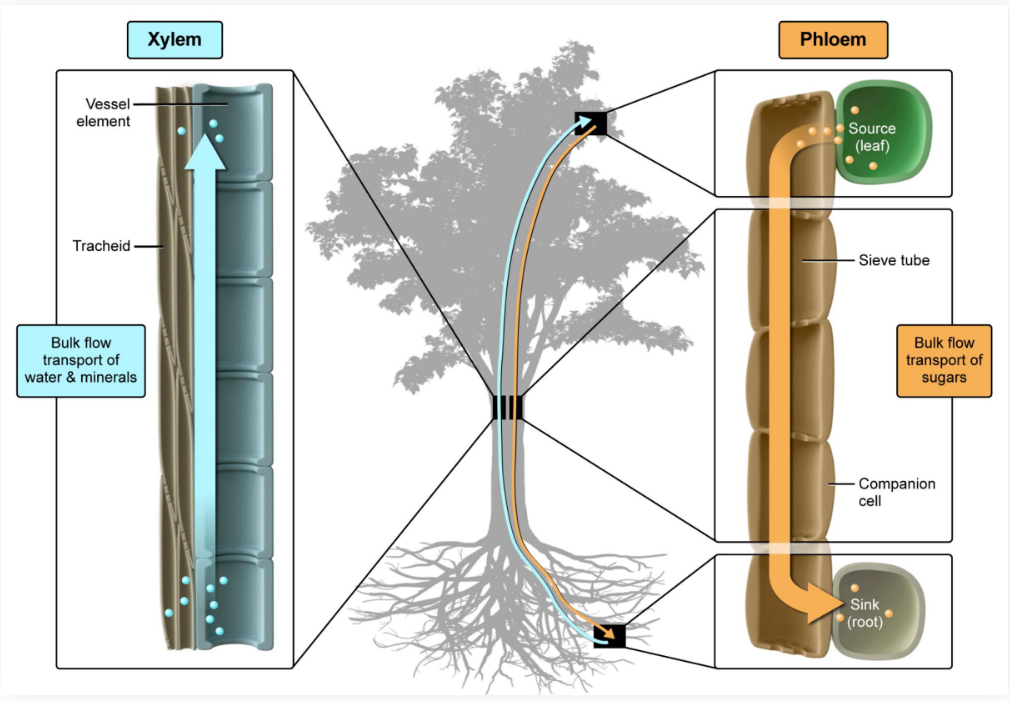
Tracheids
Long, thin cells that transport water through pits in their tapered ends
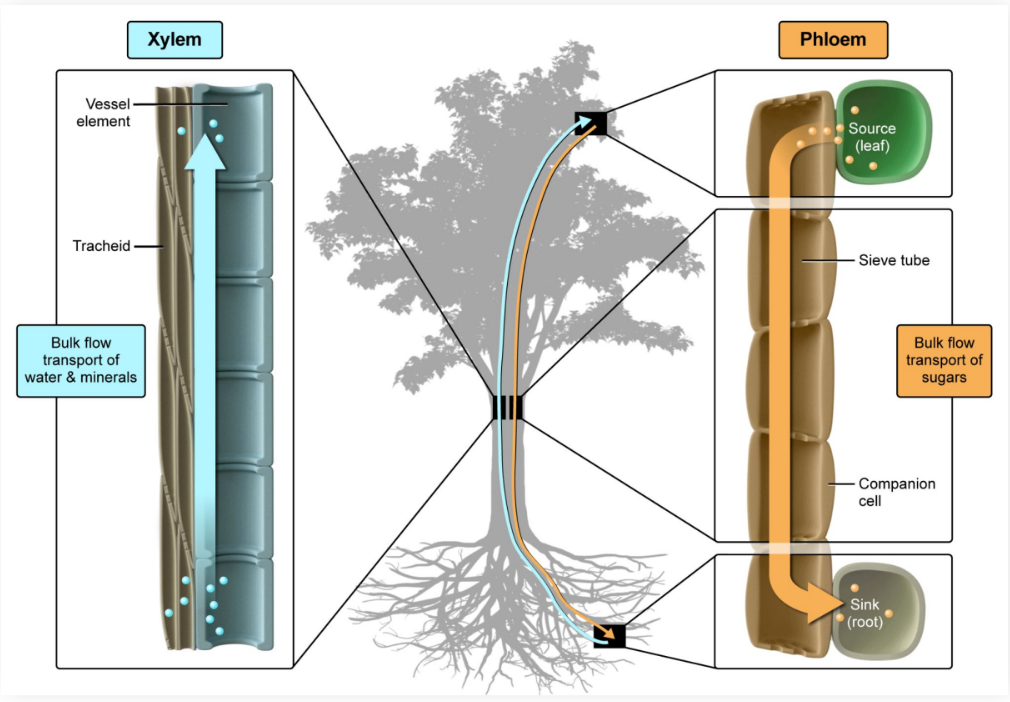
Vessel Elements
Short, stout cells that transport water through cell wall perforations
Dermal Tissue
Dermal tissue: The outer layer of the plant which provides protection and regulation
Waxy cuticle: Outer layer which limits water evaporation
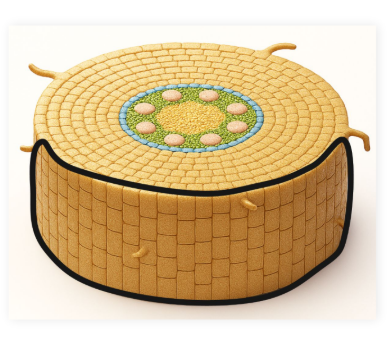
Casparian Strip
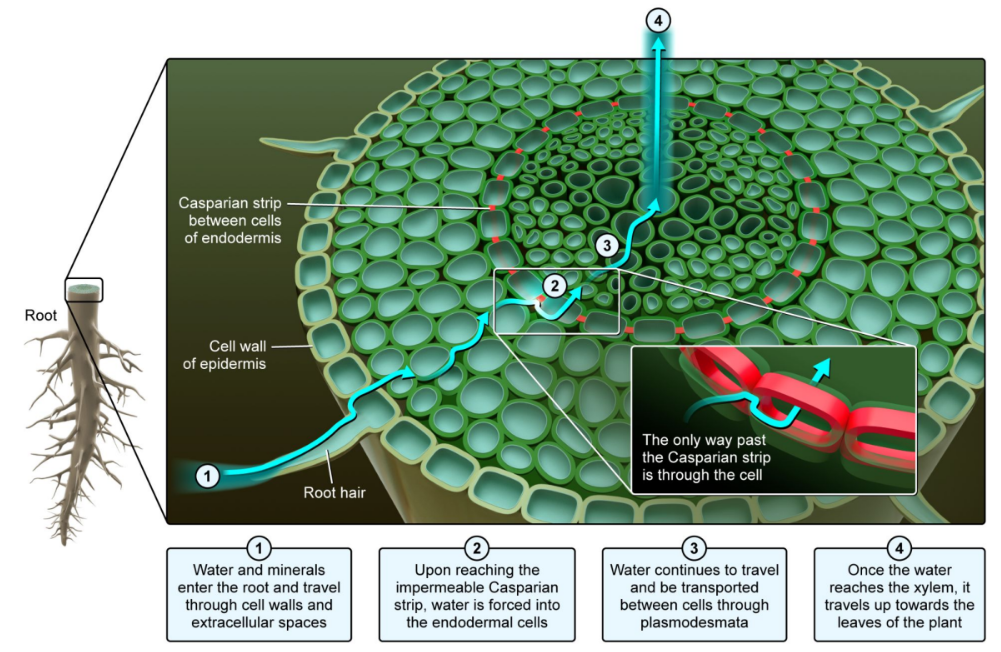
Casparian strip:
An impenetrable substance in the cell walls of root endodermis
Made of fat and wax
Water passage from roots to vascular tissue:
Water cannot penetrate the Casparian strip
Water is forced out of the cell walls and into the endodermal cell cytoplasm where it is filtered
What are leaves covered by?
Epidermal Layer and a waxy cuticle.
Stomata
Role in gas exchange
Pores in the lower epidermis that open and close for gas exchange
Low CO2 concentration causes stomata to open, allowing for new CO2 influx for photosynthesis
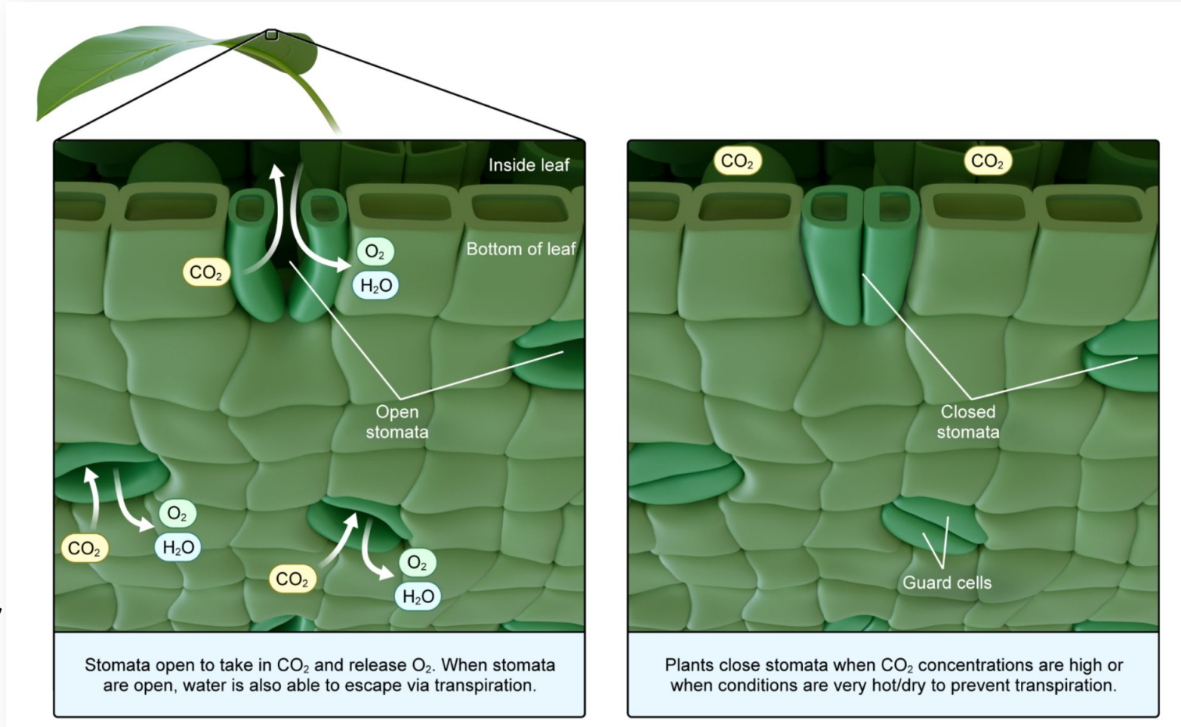
Guard cells
Role in gas exchange
Become turgid (swollen) due to water influx, causing the stomata to open
Low CO2 concentration causes stomata to open, allowing for new CO2 influx for photosynthesis
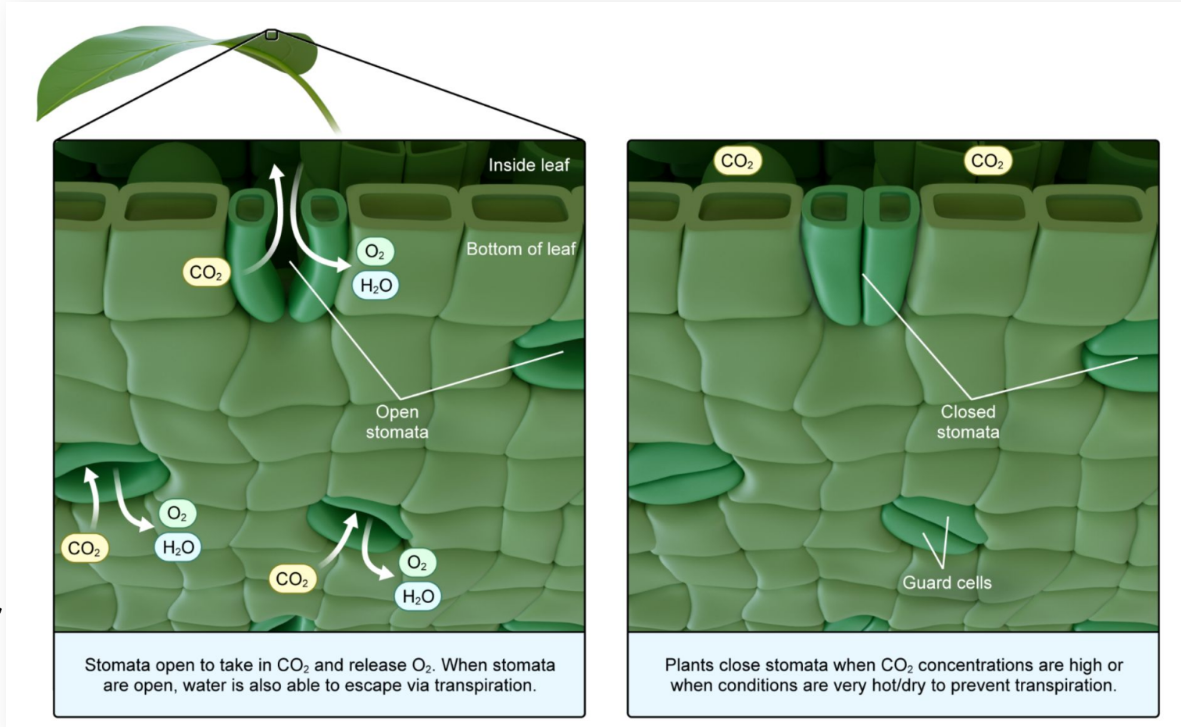
When do stomata close?
Stomata close when:
CO2 concentrations are high
Temperatures are high (prevent transpiration)
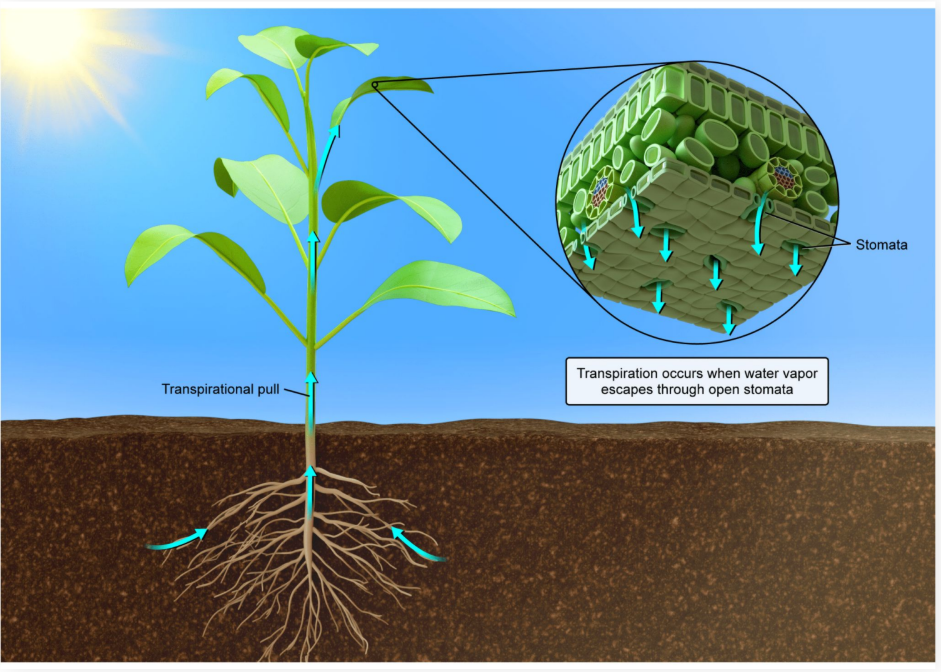
What is transpiration?
Why is it an important factor in energy production?
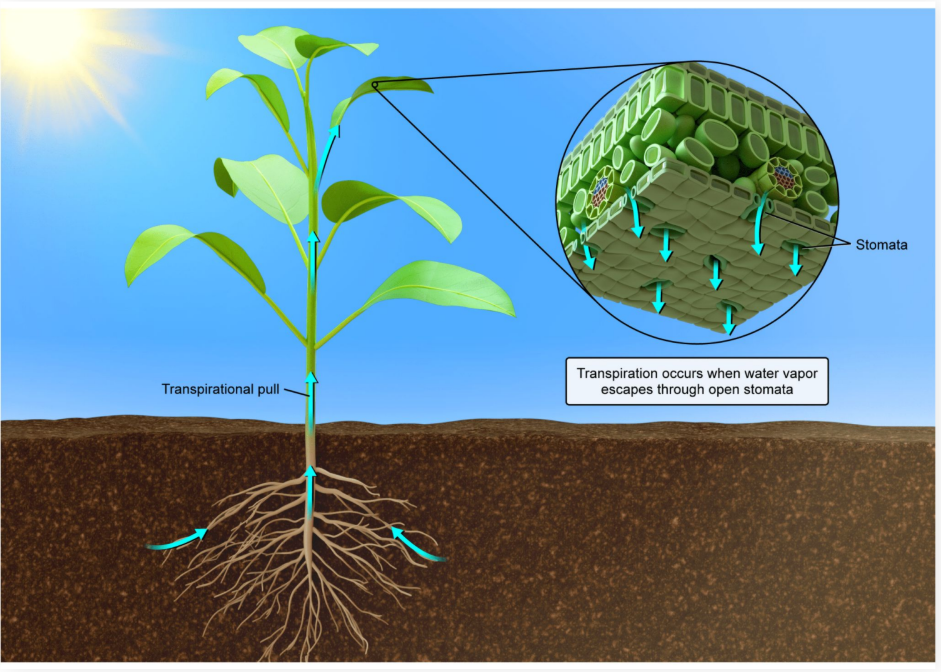
Transpiration: Loss of water vapor through the stomata
A balance is needed between stomata opening for food production and closing to prevent water loss
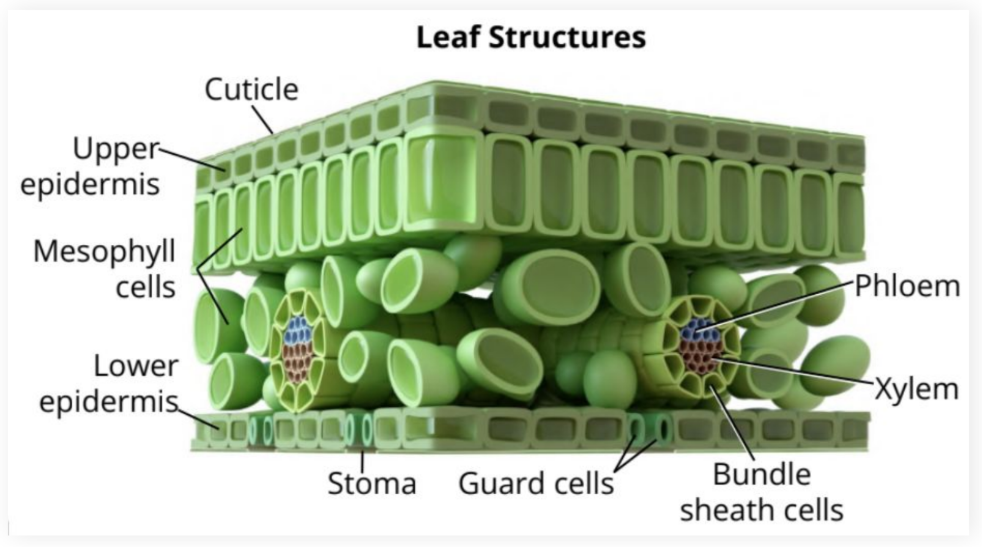
Mesophyll Cells
Involved in photosynthesis and gas exchange
Situated between the upper and lower epidermis
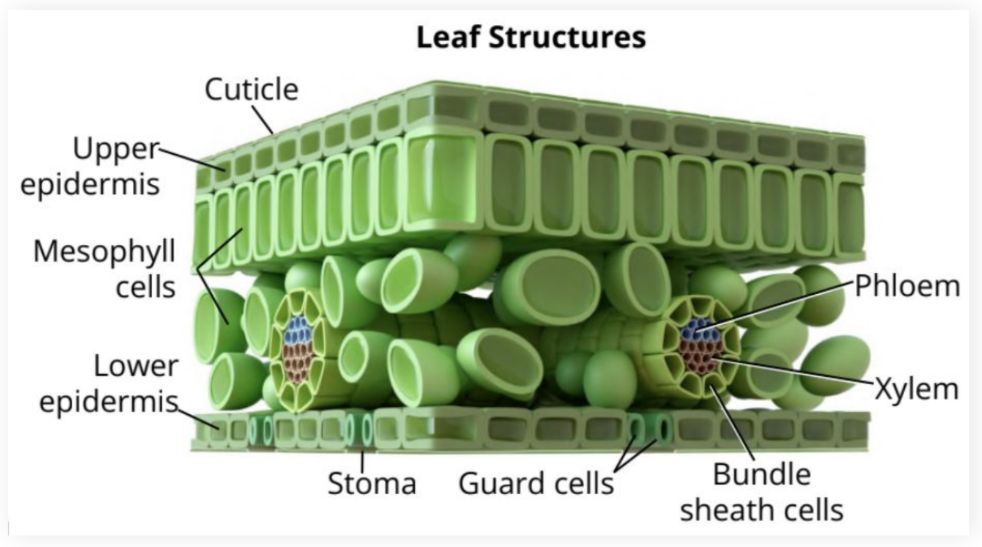
Bundle Sheath Cells
Surround and protect the vascular bundles.
What allows the movement of water in plants?
Cohesion-tension theory
Capillary Action
Root Pressure
Cohesion Tension Theory
Cohesion-tension theory: Transpiration (loss of water vapor through open stomata) leads to transpiration pull
Transpiration pull: Cohesive force (attraction between like molecules) pulls the water column upward
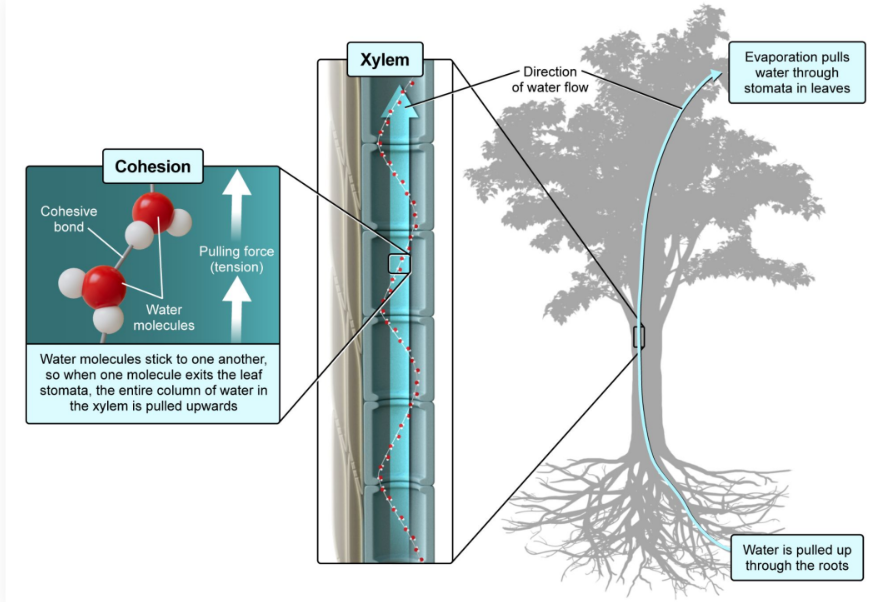
Transpiration pull:
Cohesive force (attraction between like molecules) pulls the water column upward
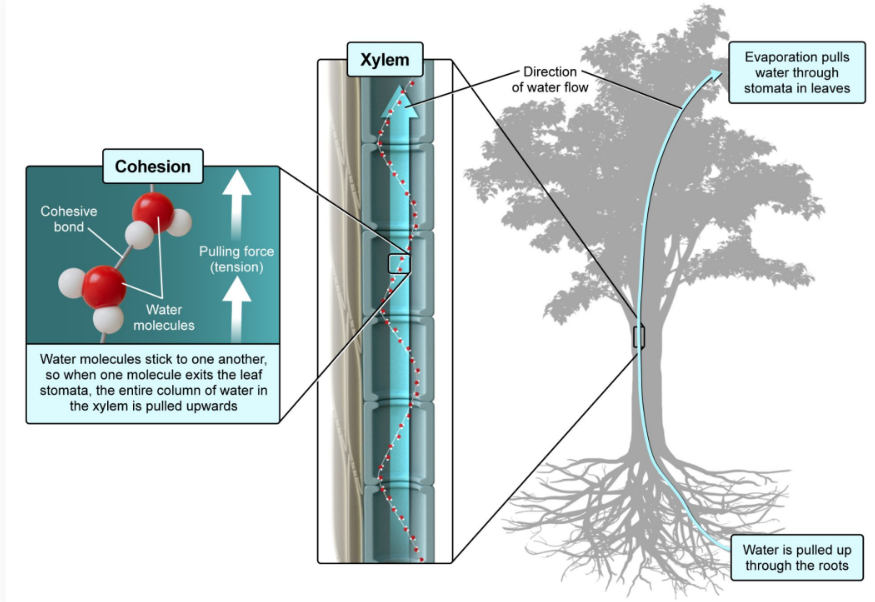
Capillary Action
Capillary action: Adhesive force (between dissimilar molecules) allows the water to interact with the xylem walls and climb upward
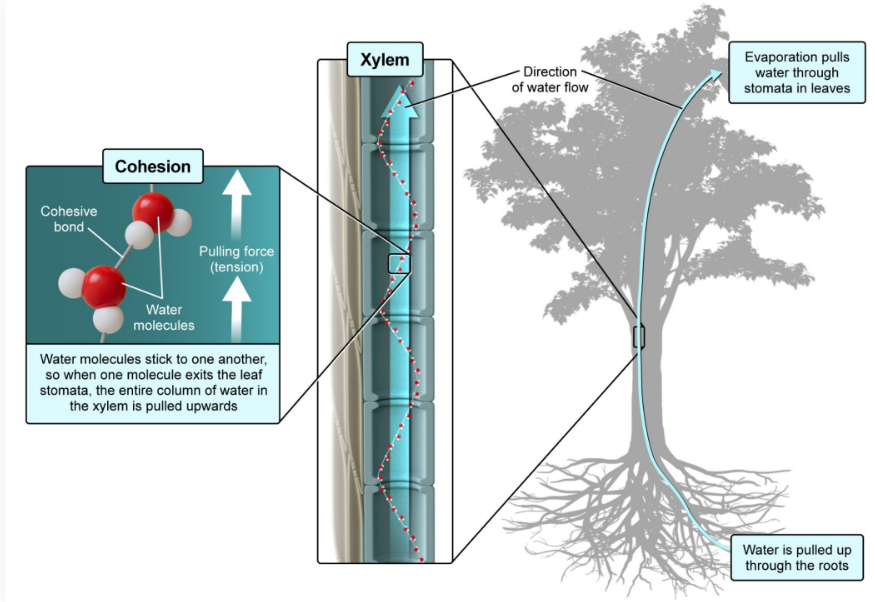
Root pressure
Water enters the roots osmotically from the soil
An osmotic gradient in the roots then drives water into the xylem
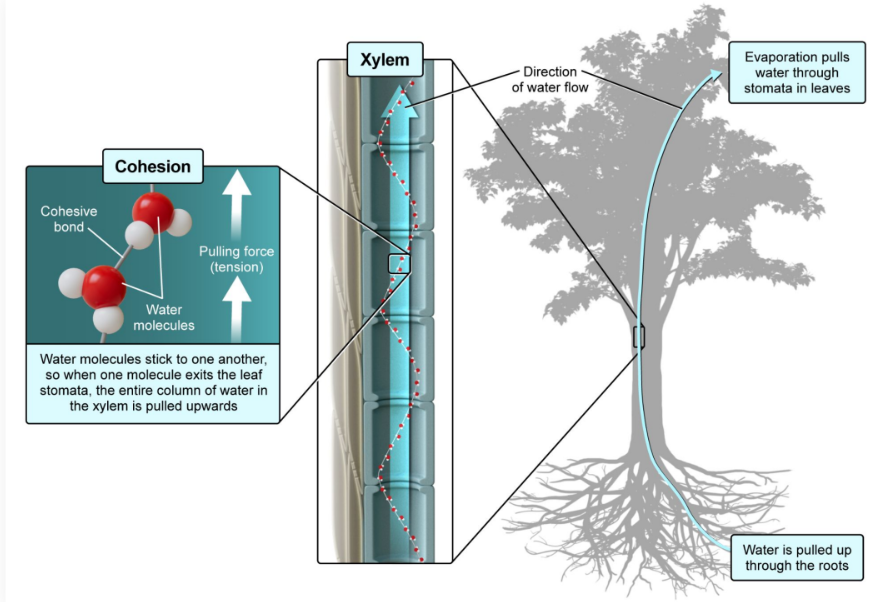
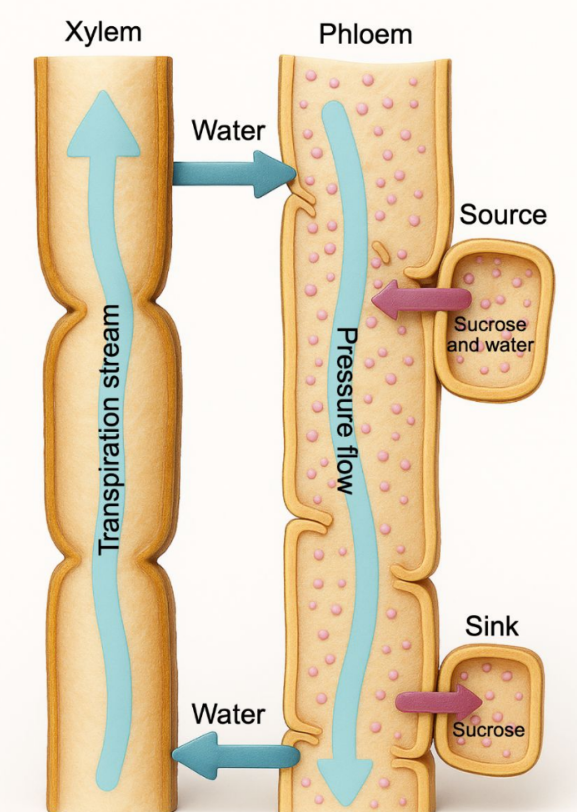
Pressure Flow Hypothesis:
Source cells produce sugar and load it into the phloem
Increased sugar concentration creates a gradient that pulls water into the phloem
Turgor pressure in the phloem increases
Bulk flow movement of sugar from leaves down to roots
Ethylene
Plant Hormone
Gaseous hormone that promotes fruit ripening
Auxins
4 examples of these
Def
Plant Hormones that stimulate cell growth
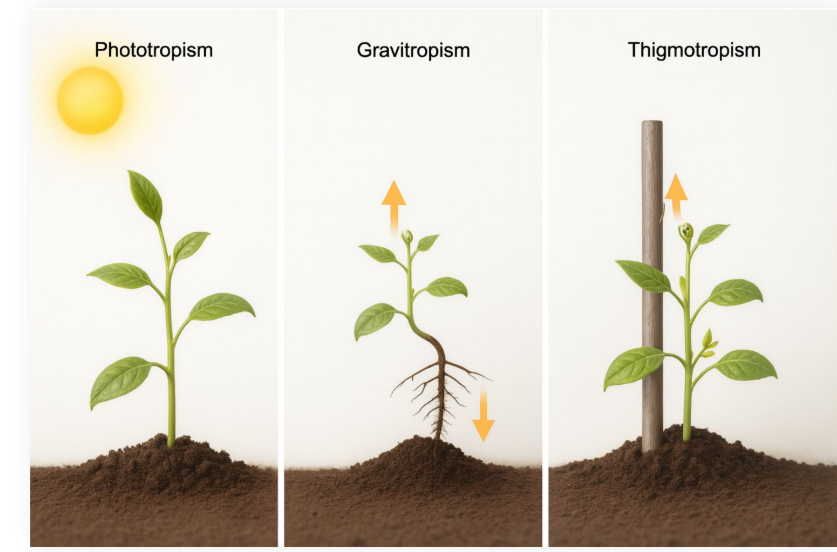
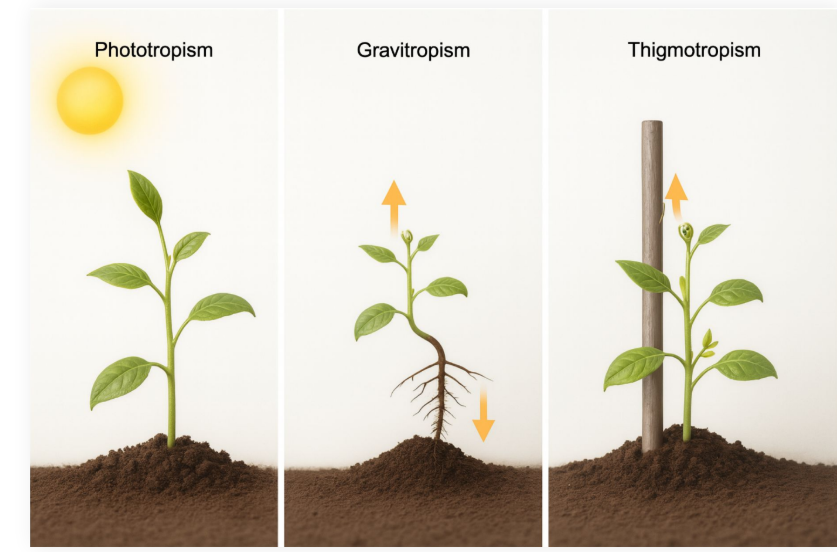
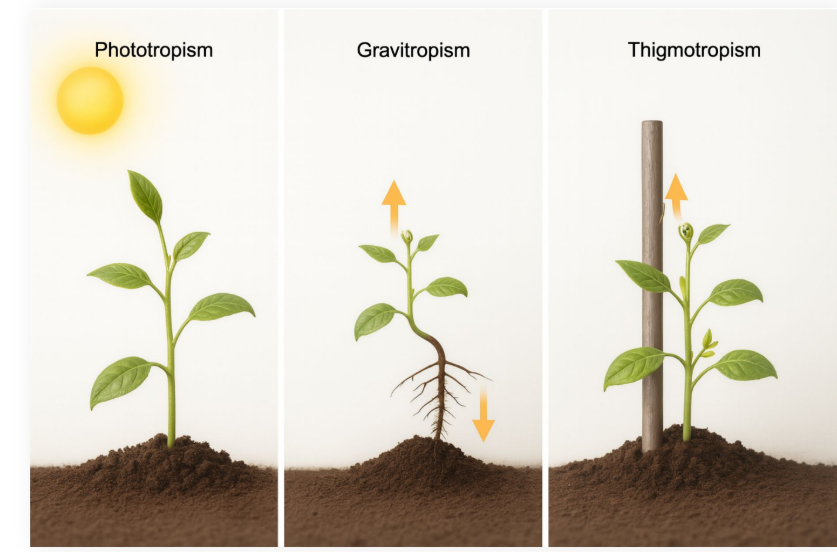
Plant tropisms
Phototropism
Gravitotropism
Thigmotropism
Plant tropism
Growth in a particular direction. Auxins concentrated on one side of a plant cause asymmetric growth
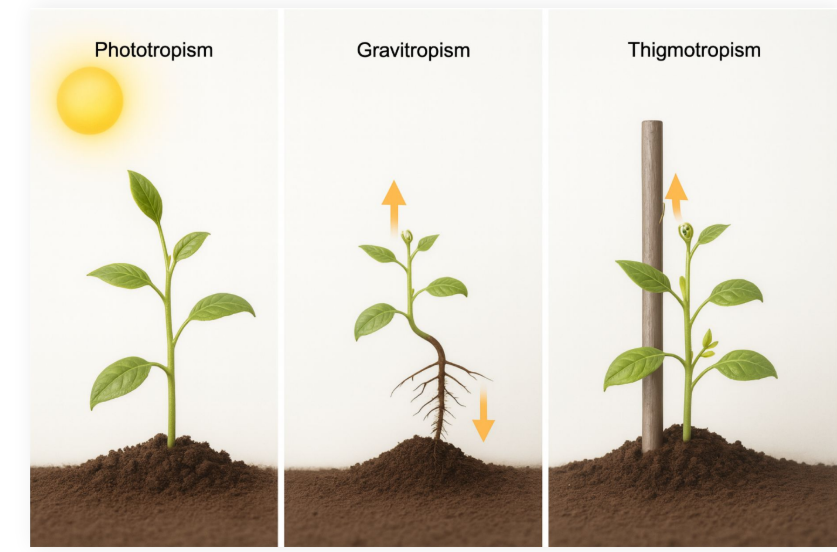
Phototropism:
Growth Toward Light
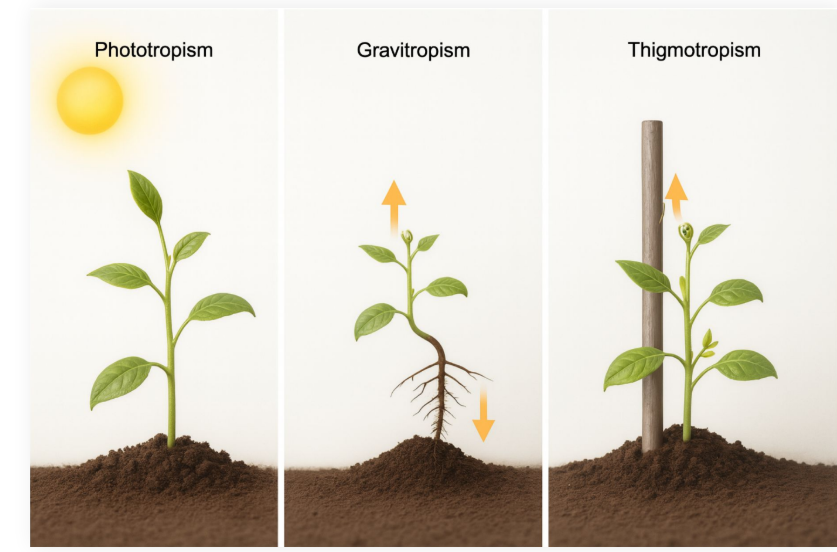
Gravitotropism:
Growth in response to gravity
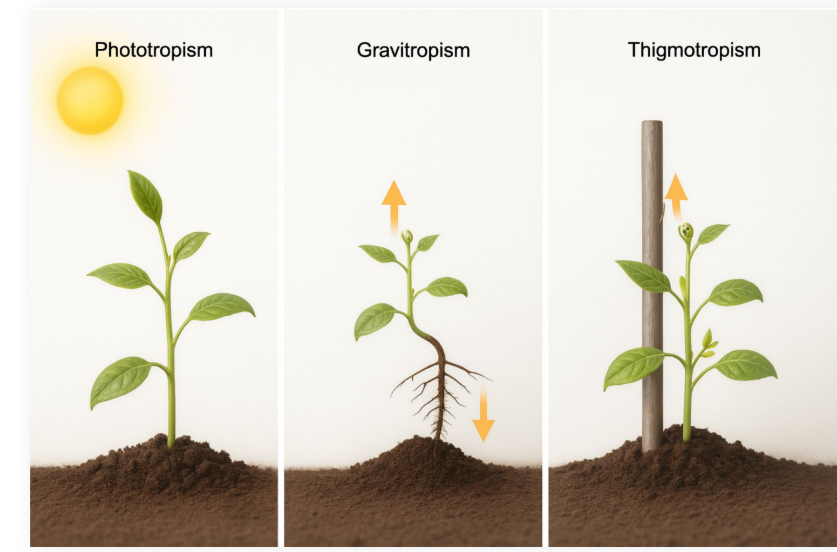
Thigmotropism
Growth in response to contact
Cytokinins
Plant Hormone
Regulates cell differentiation and division in coordination with auxins
Gibberellins
Plant hormone
Promotes
stem and shoot elongation
elimination of seed dormancy
plant flowering
fruit production
leaf and fruit death
Abscisic Acid
Plant Hormone
Promotes
seed dormancy
closes stomata
inhibits growth
Functions during stress.
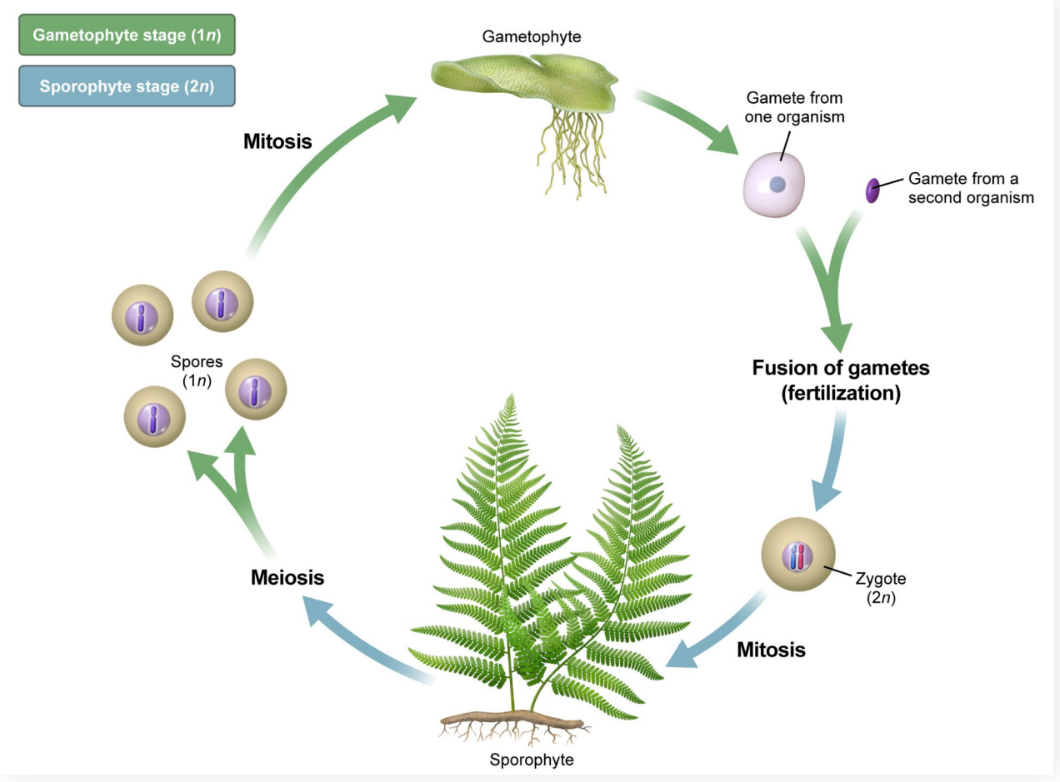
What is alternation of generations in plants?
Plants alternate between reproductive states during their life cycle
Gametophyte Stage
Sporophyte Stage
Gametophyte Stage
Gaemtophyte Stage:
Haploid phase
Cells have one set of chromosomes
Haploid gametophytes produce haploid gametes
Haploid Gametes form two separate organisms fuse, forming a diploid zygote.
Diploid zygotes undergo mitosis, eventually forming a diploid sporophyte.
Sporophyte Stage
Sporophyte Stage
Diploid phase
Cells have two sets of chromosomes
Diploid sporophytes can produce haploid spores via meiosis
Haploid spores eventually produce a haploid gametophyte via mitosis
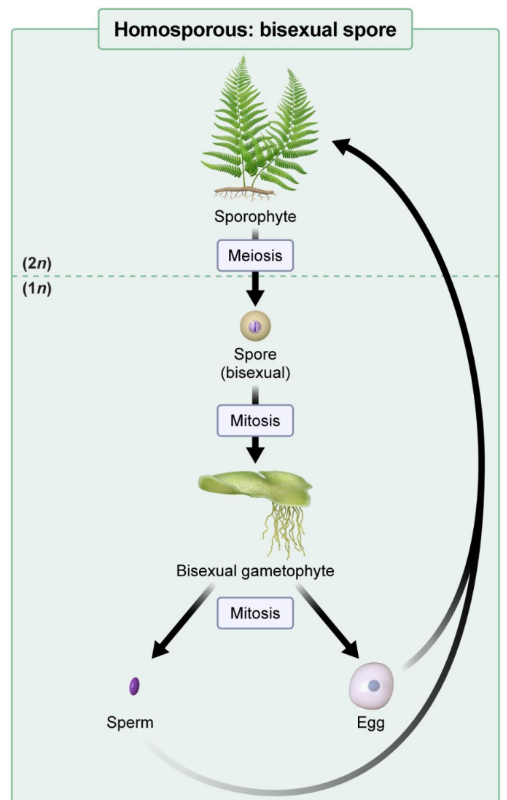
Homosporous plants
Homosporous plants:
Produce only one type of spore
Spores will eventually develop into a bisexual gametophyte
Bisexual gametophytes are capable of producing both sperm and egg
Heterosporous
What does this mean
What are the types
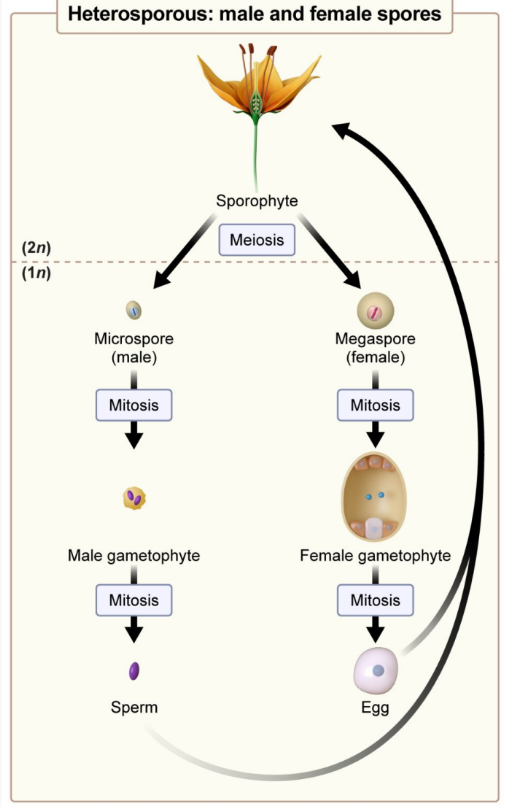
Heterosporous plants: Produce two types of spores
Megaspores
Microspores:
Megaspores
Develop into the embryo sac (female gametophyte). Embryo sacs will produce an egg
Microspores
Develop into pollen grains (male gametophyte). Pollen grains will produce sperm
Bryophytes
Def
Examples
Locations where they are found
Special part that they contain.
What part of the life cycle are they mainly in
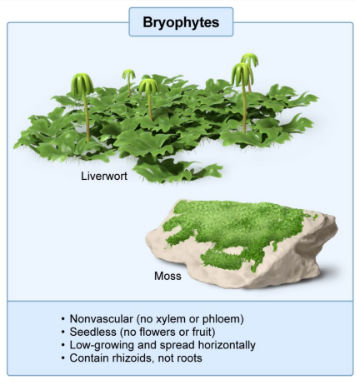
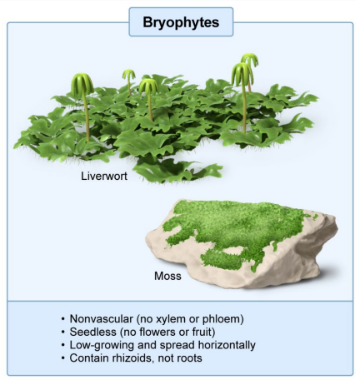
Nonvascular plants that are short in stature
Examples include liverworts, hornworts, and mosses
Found in moist environments and grow horizontally to remain in close contact with water sources
Contain: Rhizoids (no roots)
Most of their life cycle is spent in the gametophyte stage
Sporophytes are dependent on and attached to the gametophytes
Rhizoids
Hair-like projections that aid in water absorption and provide minor anchorage
Tracheophytes
Def
What makes them unique
What part of the life cycle are they mainly in
Vascular plants capable of growing vertically due to the presence of a root system that provides anchorage
Contain xylem and phloem
Most of the life cycle is spent in the sporophyte stage
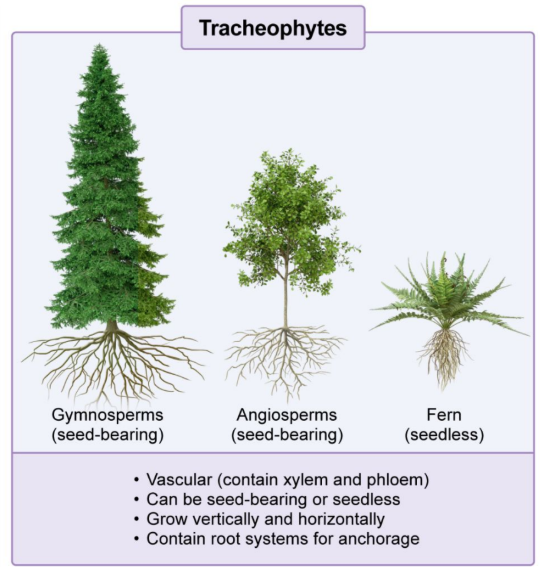
Seedless tracheophyes
Ex
Def
Sperm types
Seedless: Mostly homosporous plants with independent gametophyte and sporophyte life cycles
Produce motile, flagellated sperm
EX: Lycophytes and pteridophytes; club moss, quillworts, fern, horsetail
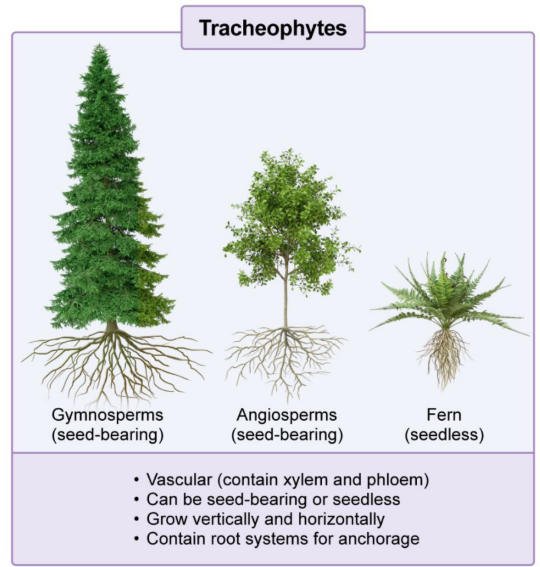
Seed-bearing plant types
Heterosporous plants that are classified into gymnosperms and angiosperms
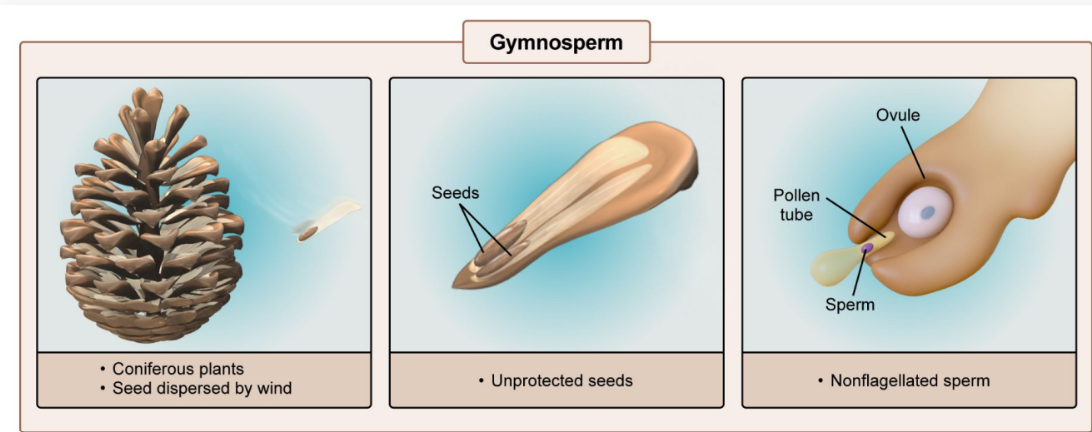
Gymnosperms:
Def
Ex’s
Sperm Type
Produce unprotected seeds and non-flagellated sperm, which are dispersed by the wind
The first seeded plants, including conifers such as firs, spruce, pines, redwood
Angiosperm
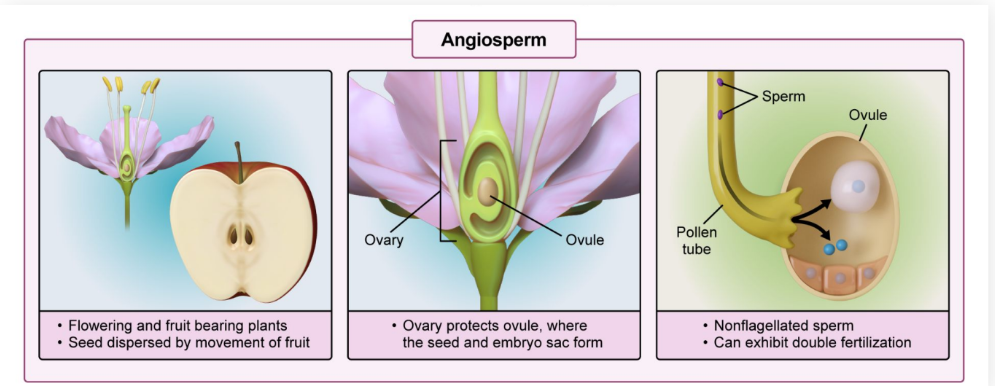
Angiosperm: Flowering plants that produce fruits with seeds enclosed in an ovary
Non-flagellated sperm is carried in pollen and dispersed by wind or animals
The most abundant plant type.
Double fertilization: A single female gamete is fertilized by two male sperm
Double ferilization
A female gamete is fertilized twice (two male sperm).
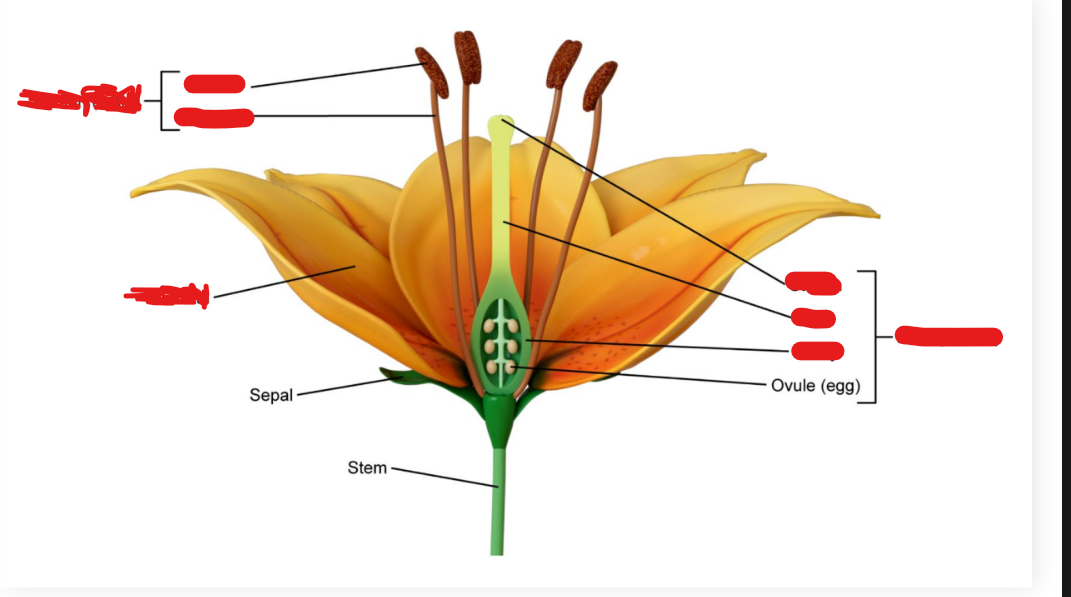
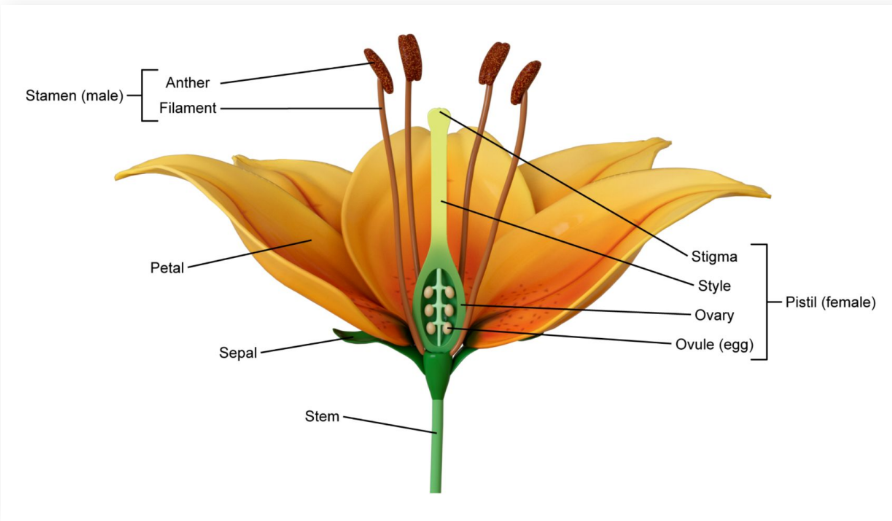
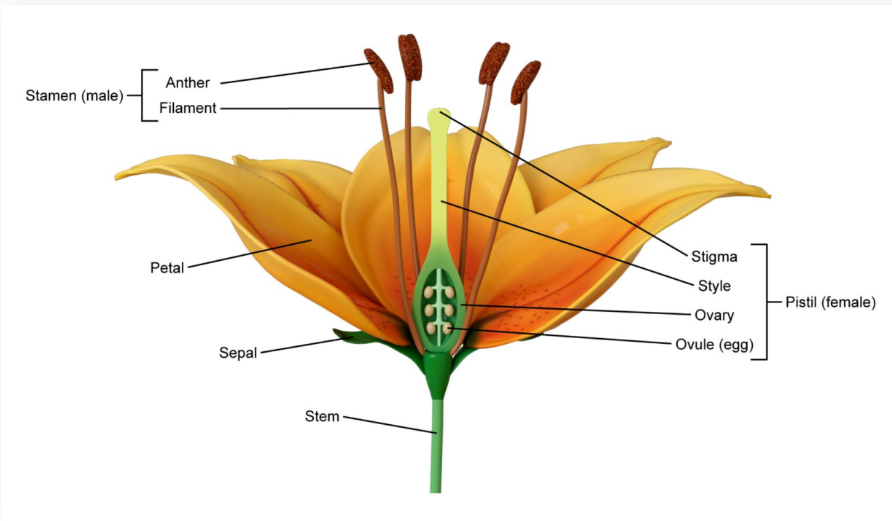
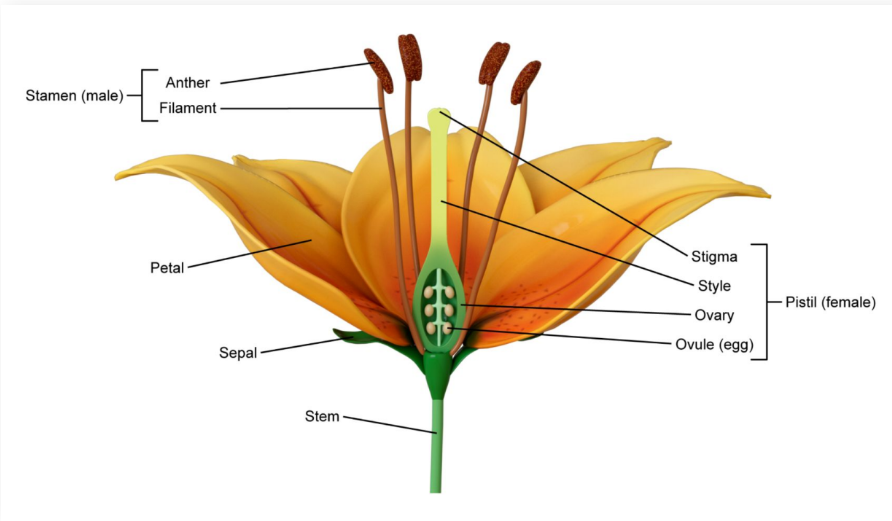
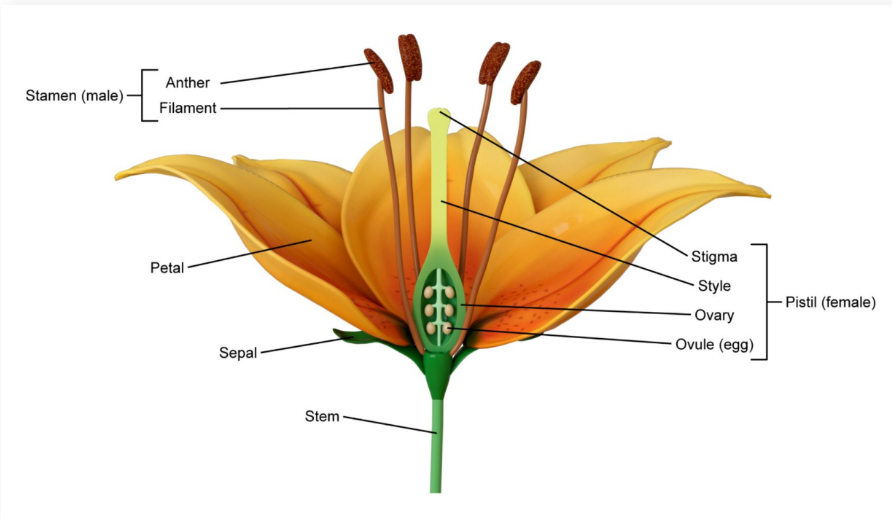
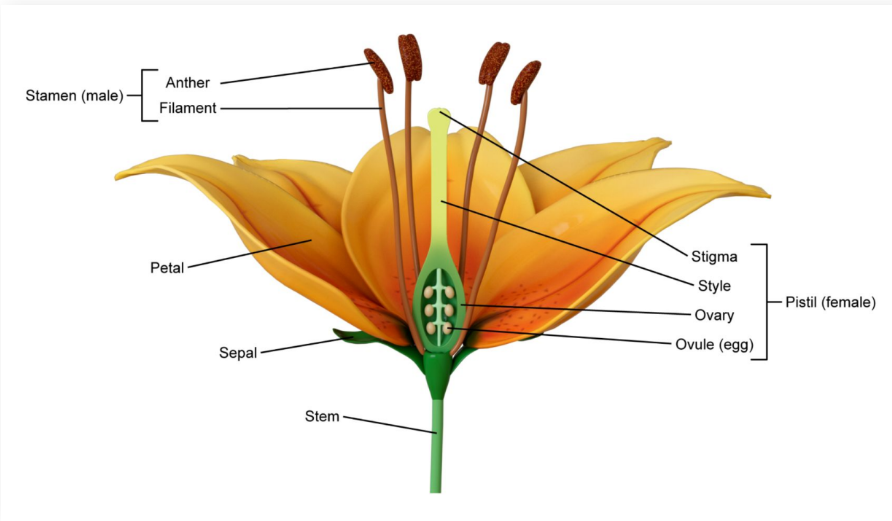
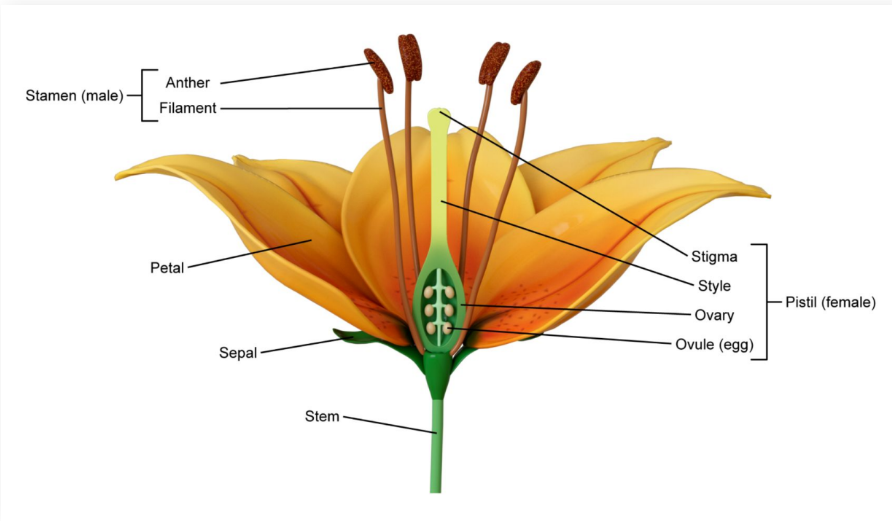
Flower Structures (8)
Petals
Stamen
Anther
Filament
Pistil
Stigma
Style
Ovary
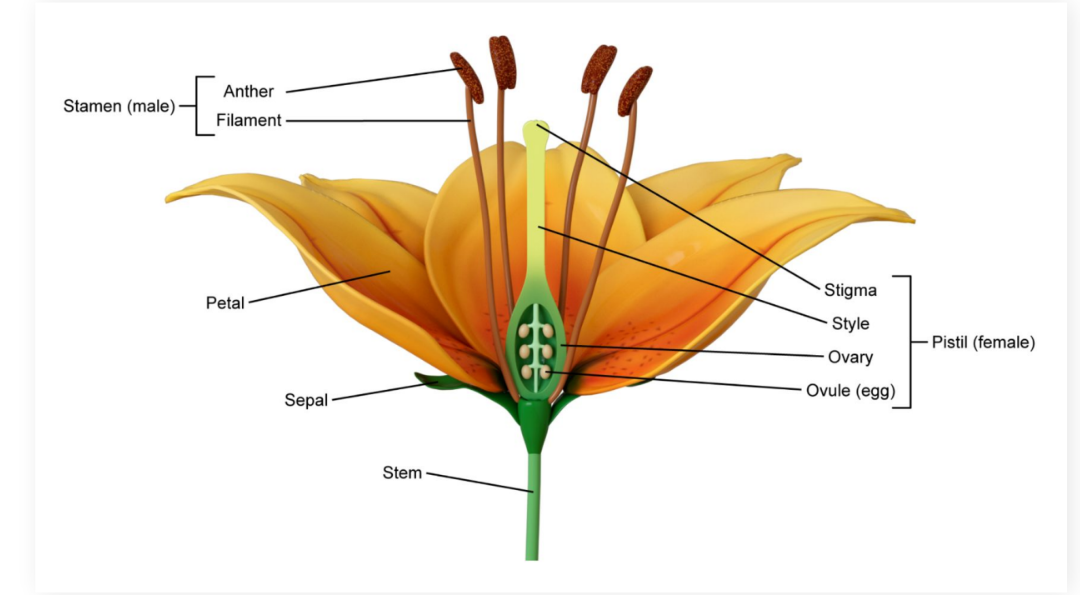
Petals
Petals: Attract animals to achieve pollination
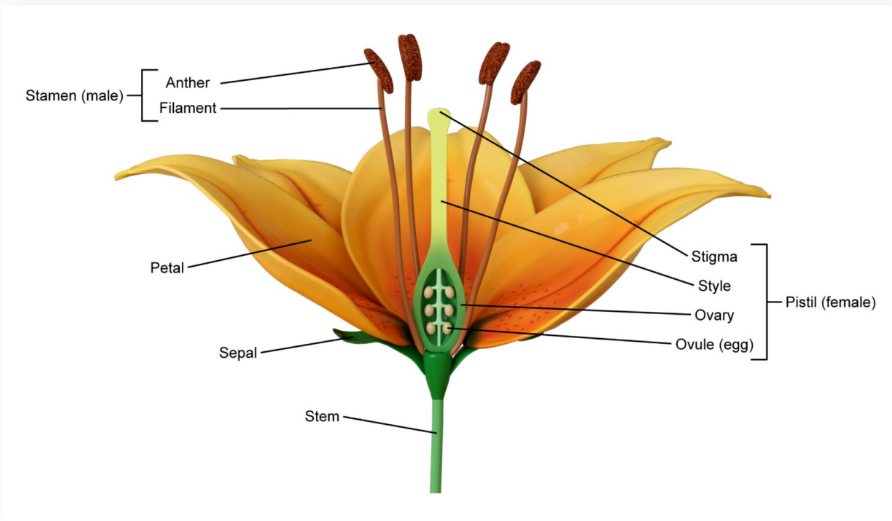
Stamen
Stamen: Male plant sex organ
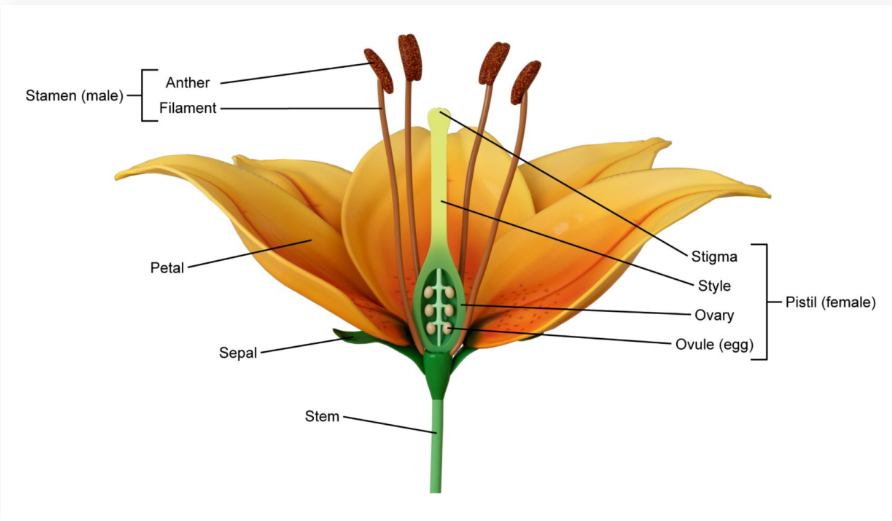
Anther
Anther: Site of microspore production
Filament
Filament: Supports the anther
Pistil
Pistil: Female Plant sex organs
Stigma
Stigma: The top of the pistil where pollen lands for germination
Style
Style: Tube connecting the stigma to the ovary
Ovary and Ovary
Ovary: Stores the ovule, which houses the embryo sac (female gametophyte containing eggs)
Double fertilzation: in depth
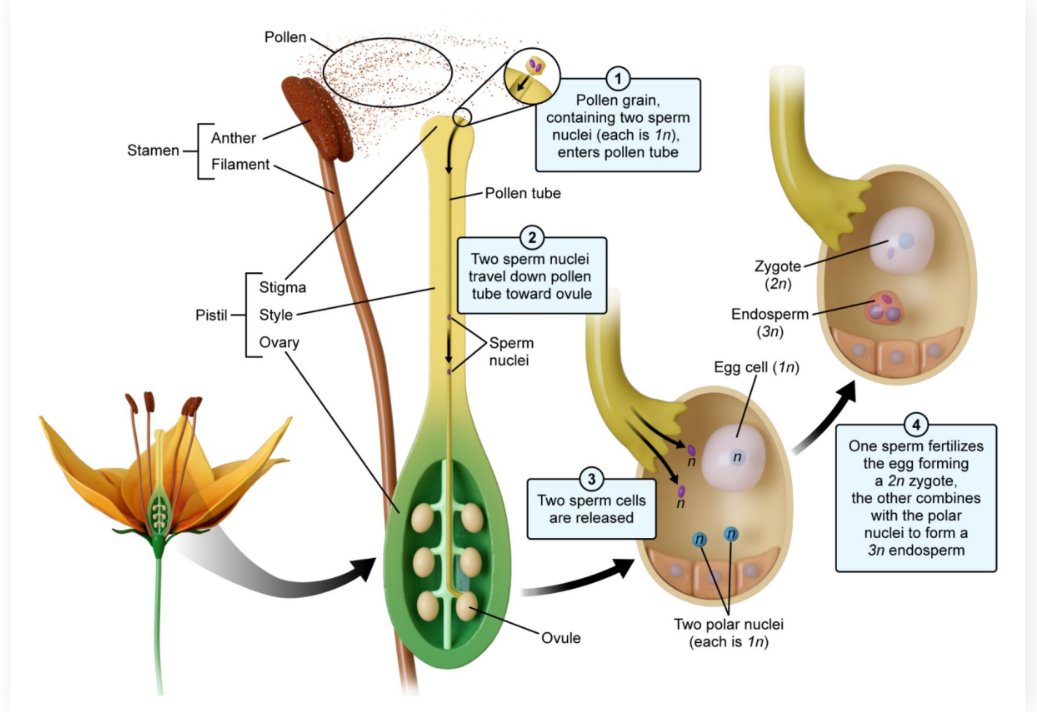
Pollen Lands on the stigma and forms a pollen tube down the style.
Two sperm cells are released
One sperm nucleus fuses with an egg in the ovule to form the embryo. The surrounding ovary later develops into the fruit
The other sperm nucleus combines with the ovule’s polar nuclei to form the endosperm
Cotyledons
The first leaves to appear on a seedling
Contain nutrients from the seed to feed the growing seedling.
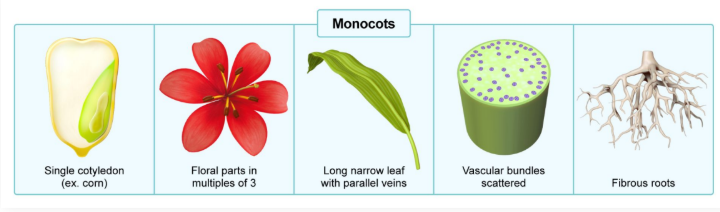
Monocotyledons (monocots)
Singly cotyledon
Floral parts in multiples of 3
Long, narrow leaf and parallel veins
Vascular bundles scattered
Fibrous, fine root system near the surface
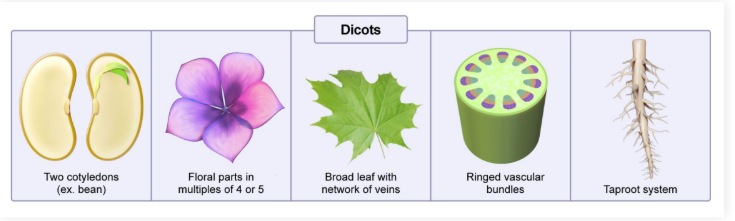
Dicotyledon (dicots)
Two cotyledons
Floral parts in multiples of 4 or 5
Broad leaf with network of veins
Vascular bundles in a ring
Single taproot with branching
Nitrogen Fixation
Atmospheric nitrogen (N2) is converted into ammonia (NH3) and ammonium (NH4+), which organisms can use
Plants form a symbiotic relationship with nitrogen-fixing bacteria
The bacteria fix atmospheric nitrogen into forms usable by plants
Plants produce food for the bacteria via photosynthesis
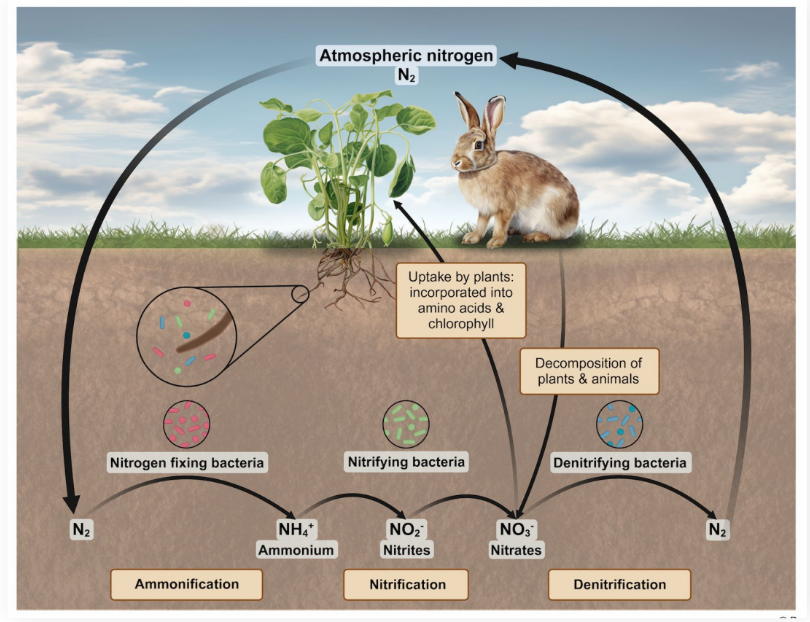
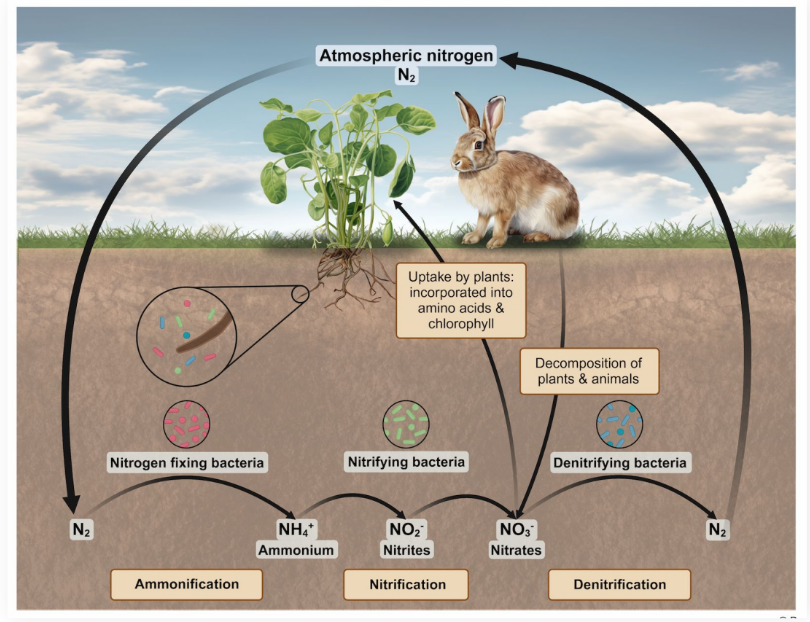
Nitrogen Fixing Steps
1. Nitrogen-fixing bacteria in root nodules convert atmospheric nitrogen (N2) into ammonia (NH3) and ammonium (NH4+)
2. Nitrifying bacteria convert ammonia and ammonium into nitrites (NO2-), and then into nitrates (NO3-)
Nitrates are taken up by plants (nitrogen assimilation) and incorporated into amino acids and chlorophyll
Animals acquire nitrogen by eating plants (producers)
Detritus of dead, decaying plants and animals provides soil with nitrogen
Denitrifying bacteria convert nitrates back into atmospheric nitrogen
What is the specific plant structure where spores are formed?
Sporangia
What is reduced in a bryophyte?
Sporophyte