Bio 222 Week 10: Flowering - Animal Fertilization- Nervous System
 Call Kai
 Learn
Learn Practice Test
 Spaced Repetition
 Match
Match Flashcards
 Knowt Play
1/14

There's no tags or description
Looks like no tags are added yet.
Name | Mastery | Learn | Test | Matching | Spaced | Call with Kai |
|---|
No analytics yet
Send a link to your students to track their progress
15 Terms
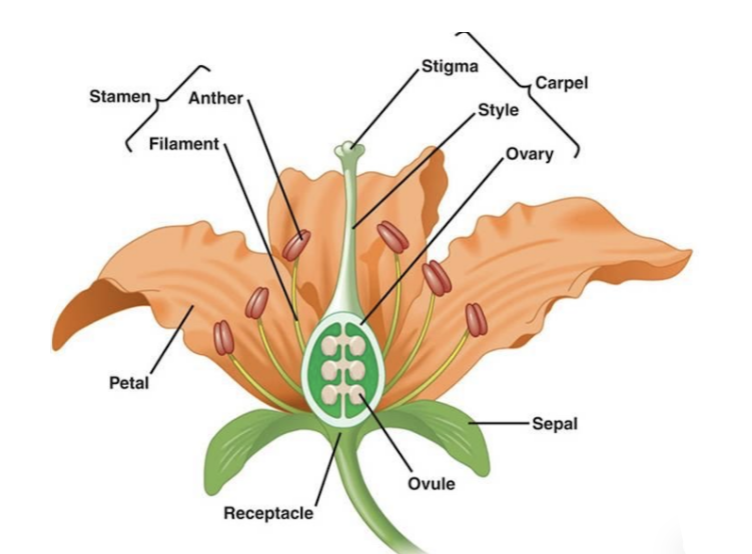
Flower Parts
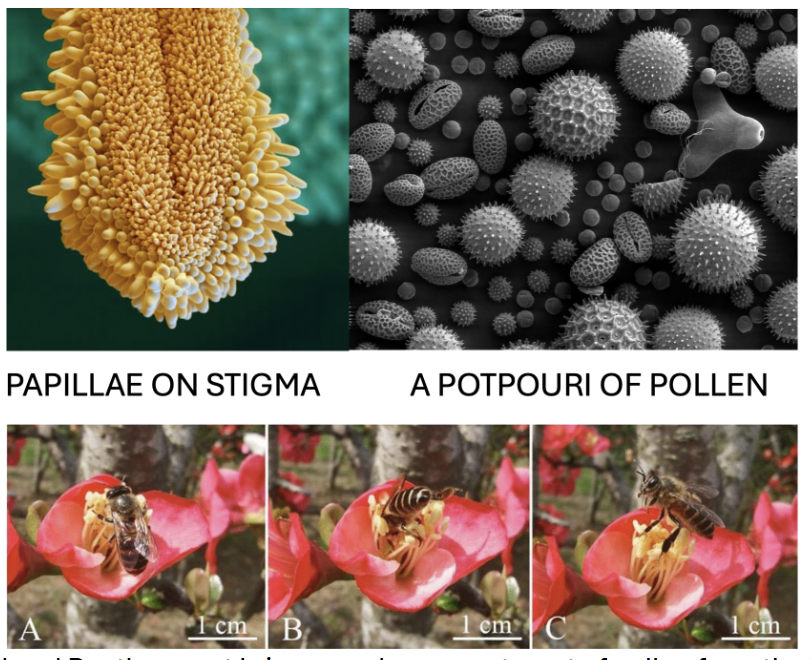
Stigma = the part of the female plant that receives pollen
Papillae = the microscopic cells covering the stigma
Pollen = fertilizer from male plant
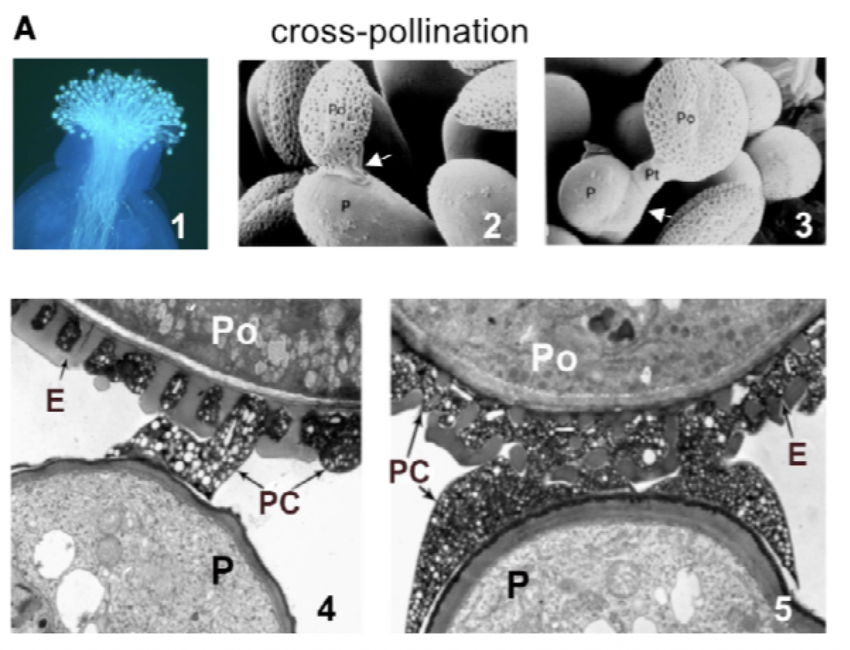
(1) bunch of pollen grains that have germinated and are growing through the stigma and down the style of the female part of the flower, which is what carpels become.
(2) Pollen has formed attachment “foot” on papilla of stigma. Papilla is a cell on the surface of the stigma. The stigma is the tip of the carpels where pollen lands.
(3) The pollen has “germinated”, which means it has formed a pollen tube. The pollen tube has penetrated the papilla cell wall and has begun to grow through it.
(4) The initial connection between pollen and papilla is a bit of pollen coat
(5) The pollen coat expands to form the foot.
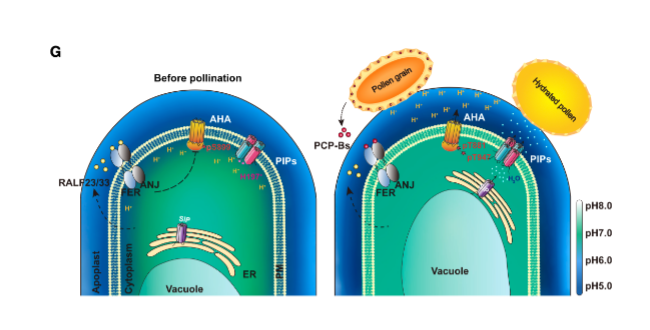
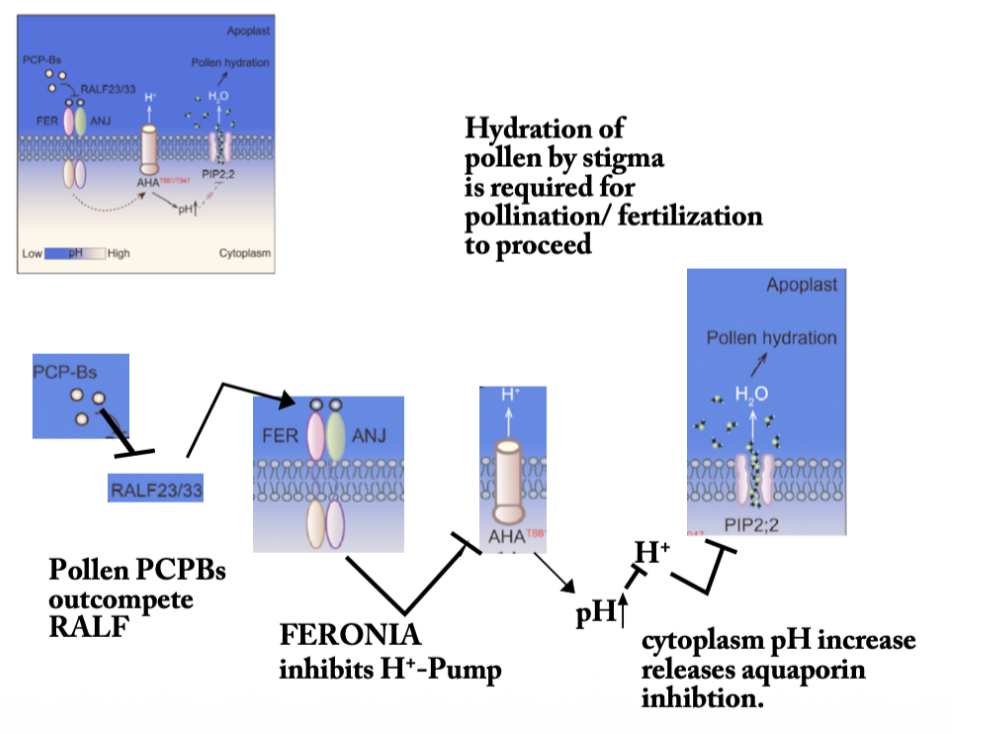
Hydration of the pollen by the stigma is required for pollination/fertilization to proceed
Pollen PCPBs —| RALF —> FERONIA —| H+ Pump, leading to ↑ pH which releases aquaporin inhibition causing pollen hydration.
Only pollen of the same species can evoke this response.
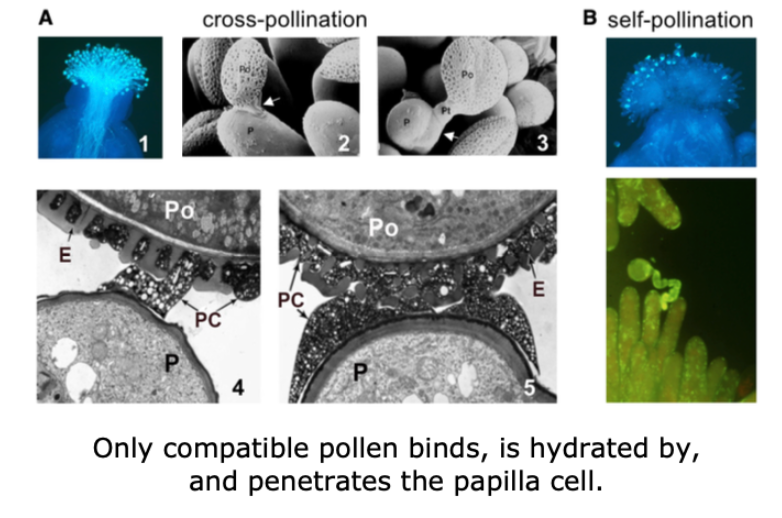
In B we can see that the pollen fails to germinate, so no pollen tube progression through the style.
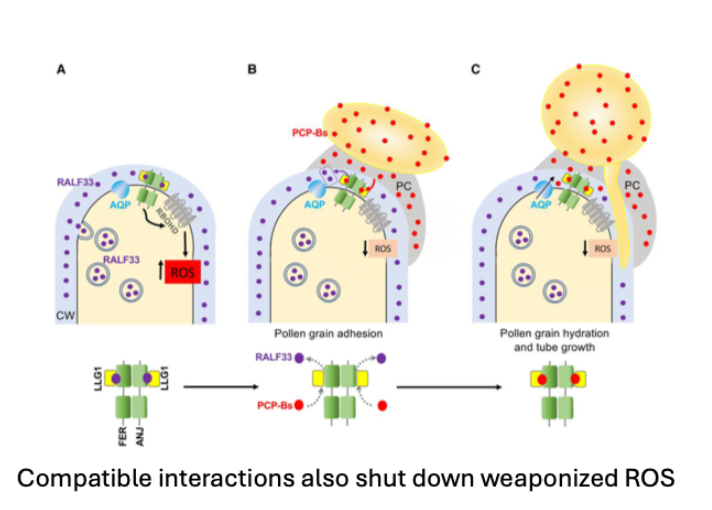
The Feronia receptor that is activated by the papilla cell exocytosed RALF and then inhibited by the pollen-provided PCPBs promotes RBOHD ROS generation. That’s an NADPH oxidase that delivers an electron to oxygen outside the cell membrane, creating nasty ROS to keep unwanted forms of pollen away.
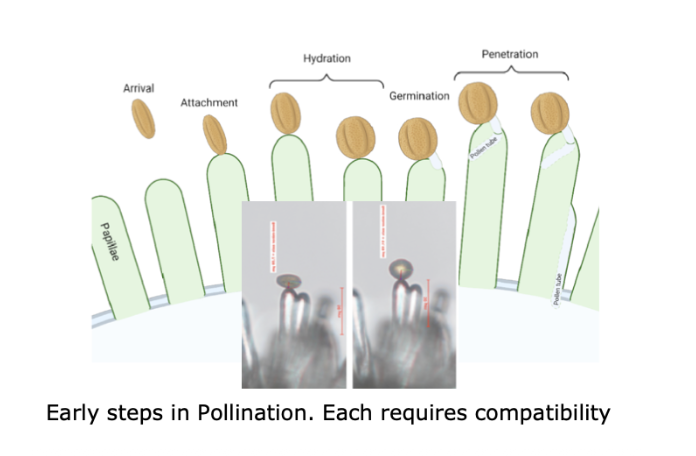
Early steps in pollination (each requires compatibility).
Fertilization in flowers requires getting the pollen tube to the ovules. There are several steps involved, each of which requires cooperation between male and female structures. You will see in lab that in animals the block to cross species fertilization occurs at the egg- in flowers it is more a matter of several steps of required cooperation. But this is not the same as a dedicated system of preventing an event – so cross pollination between species does happen and has been crucial for the generation of many agriculturally important plants.
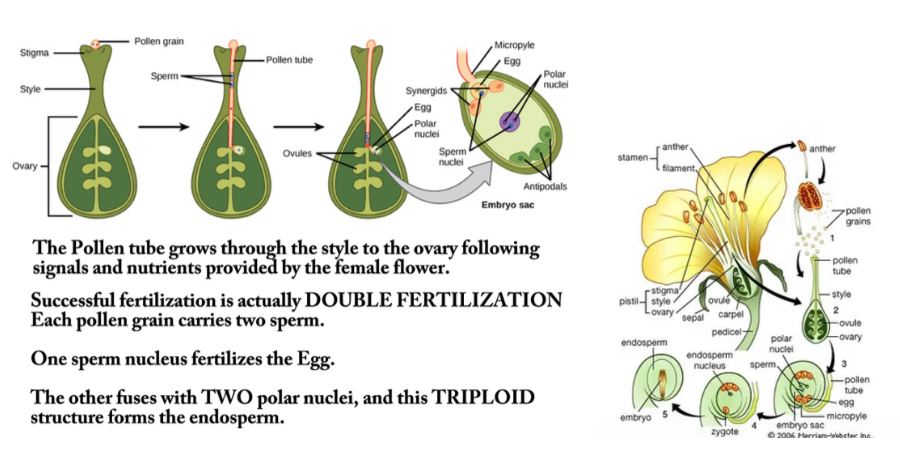
The pollen tube grows through the style to the ovary following signals and nutrients provided by the female flower.
Successful fertilization is actually DOUBLE FERTILIZATION!
Each pollen grain carries two sperm.
One sperm nucleus fertilizes the egg. The other fertilizes with TWO polar nuclei, and this TRIPLOID structure forms the endosperm.
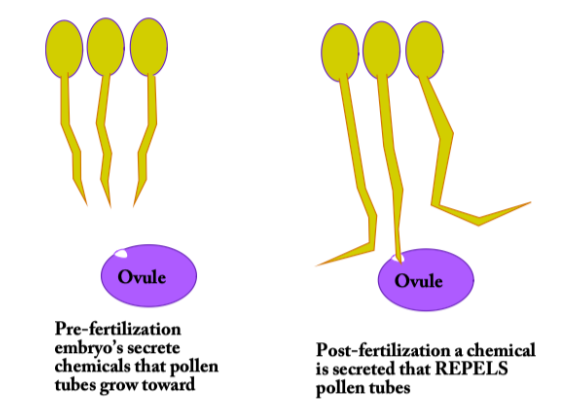
Pre-fertilization ovules secrete a LURE protein that pollen tubes grow towards.
Post-fertilization a chemical is secreted that REPELS pollen tubes.
This prevents polyspermy (too many sperm nuclei getting to an egg)
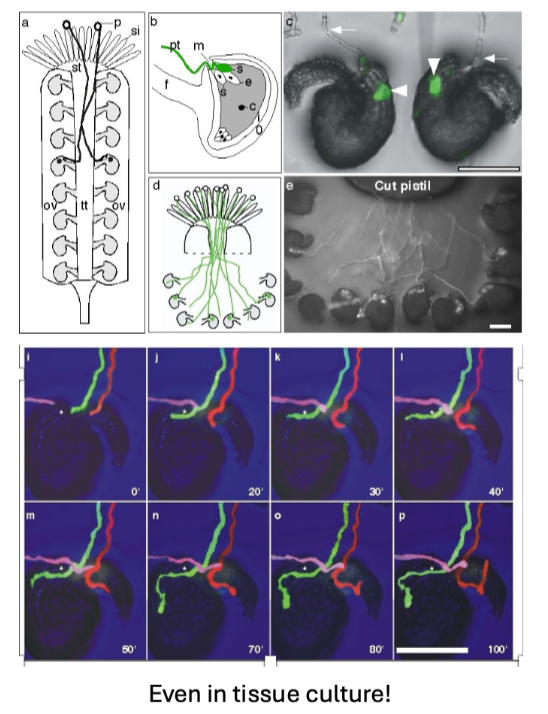
The chemical basis for the ovule control of pollen tube growth direction is confirmed by the fact that it can be shown in tissue culture. The tubes grow toward ovules even through media, so they don’t require female structures or cells to guide them toward individual ovules. LURE proteins attract pollen tubes. The identity of the chemicals that repel pollen tubes from already visited ovules is not yet known.
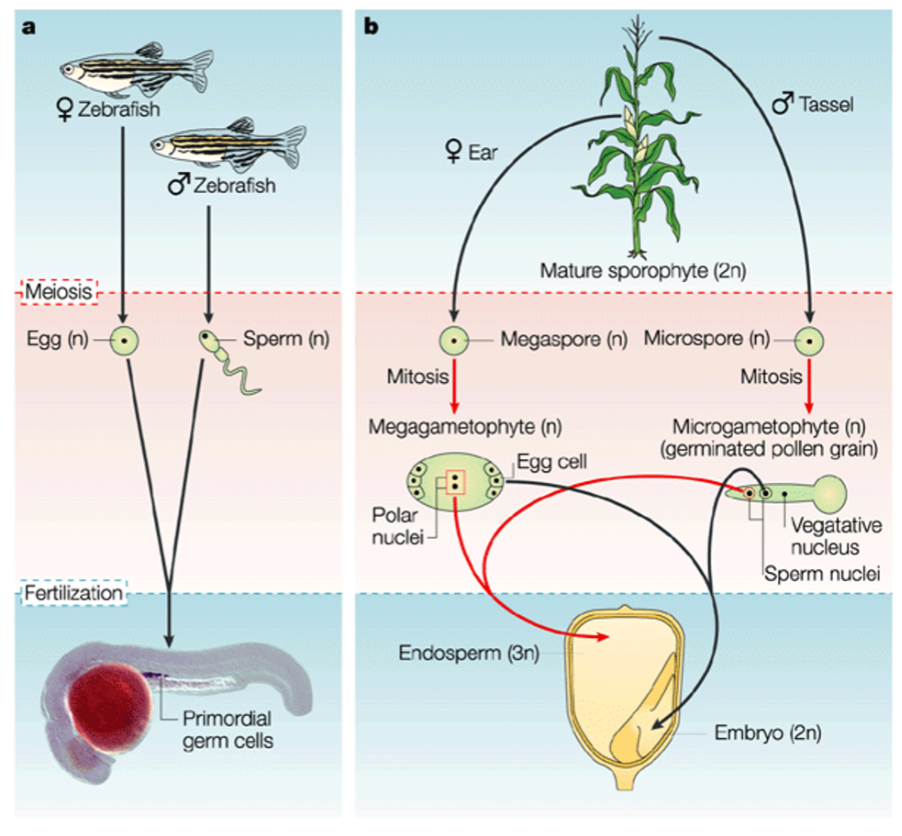
Plants differ from animals in the existence of “double fertilization” in plants. Endosperm, maternal tissue and embryo are from three different mating events, so three different genomes. Endosperm is the product of a 3-way fertilization between two haploid female cells (polar nuclei) and a sperm.
This figure points out that plants are not born with germ cells, the cells set aside to make gametes in animals. Plants make germ cells repeatedly and late in life. No need for cells lacking complex I in plant biology.
Pollen lands on a flower and the ovules within the ovary (which is one of the structures the carpels generate) direct the growth of a single pollen tube to grow to an individual ovule. Ovules contain an egg and a couple of “polar nuclei” within the large central cell
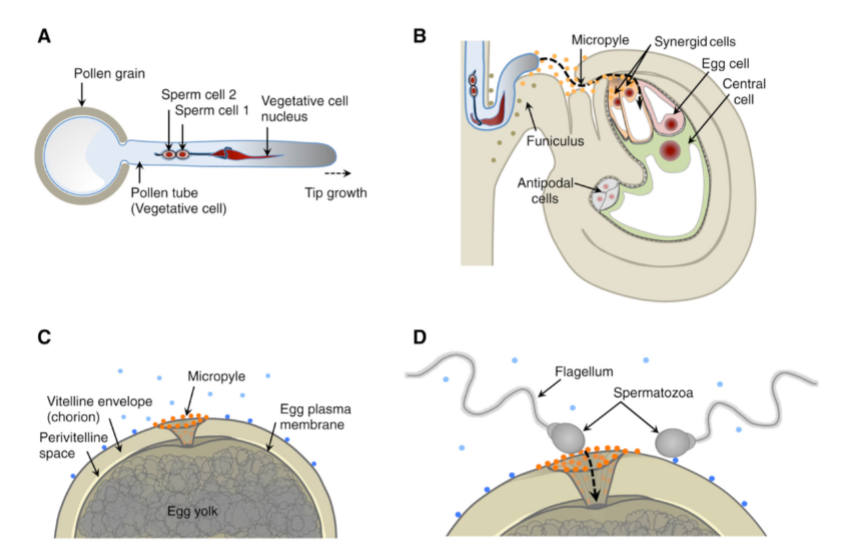
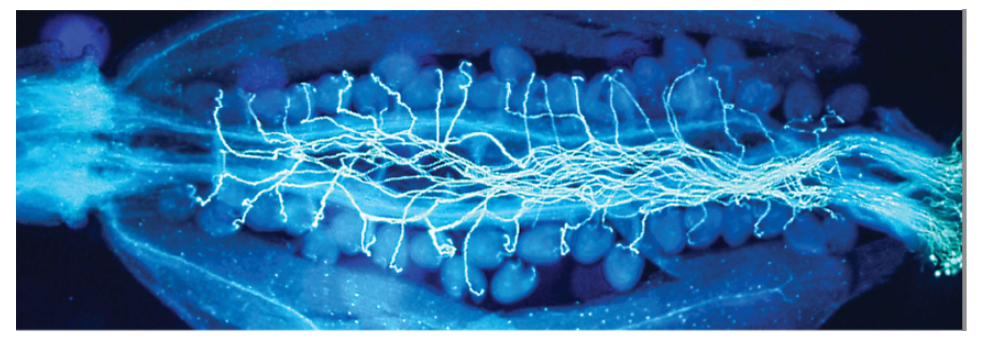
The white structures are pollen tubes in the photograph. The whole structure (stigma, style, and ovary) arises from the pair of carpels that form at the top whorl of the flower. The spheres are ovules, soon to become seeds. The structure is a bean-like fruit after this.
Structure of Arabidopsis thaliana
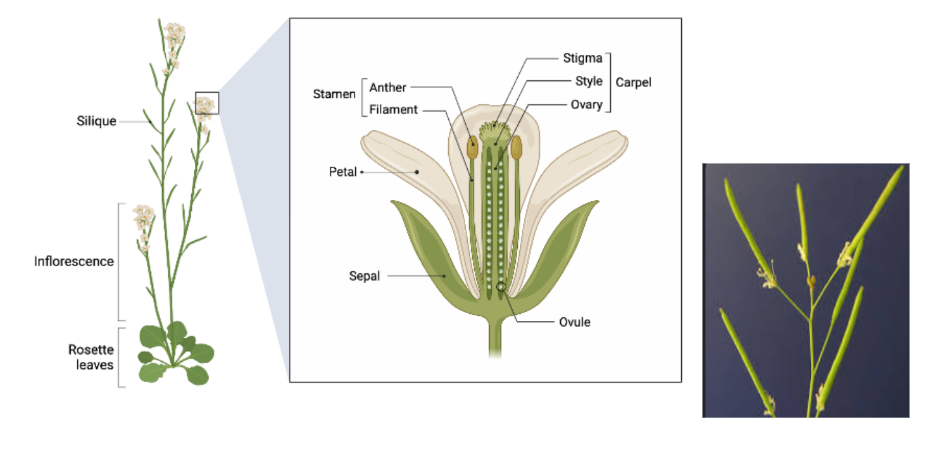
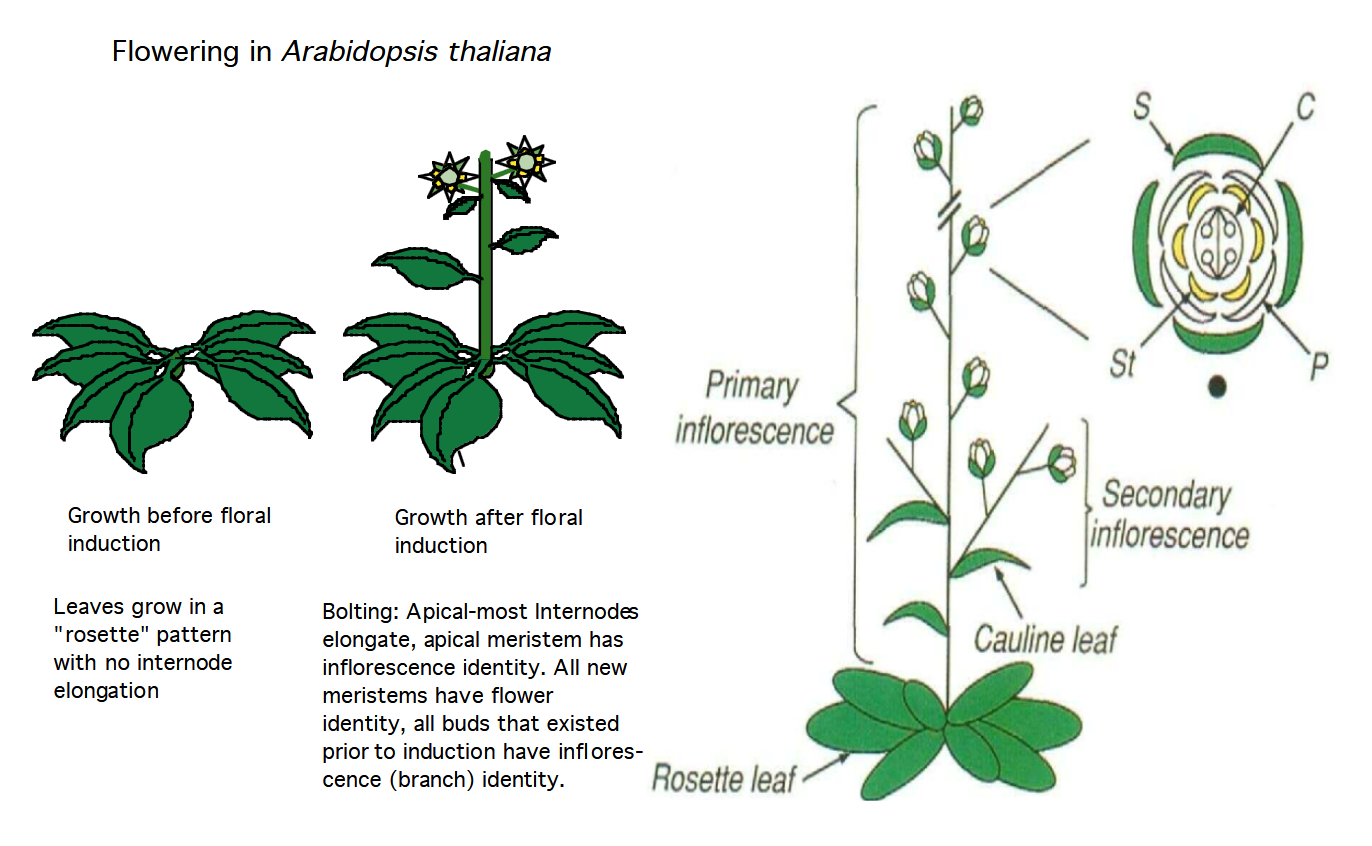
Flowering in Arabidopsis thaliana:
Growth before floral induction:
Leaves grow in a "rosette" pattern with no internode elongation (no space between leaves)
Growth after floral induction:
Bolting: Apical-most internodes elongate, apical meristem has inflorescence identity. All new meristems have flower identity, all buds that existed prior to induction have inflorescence (branch) identity.
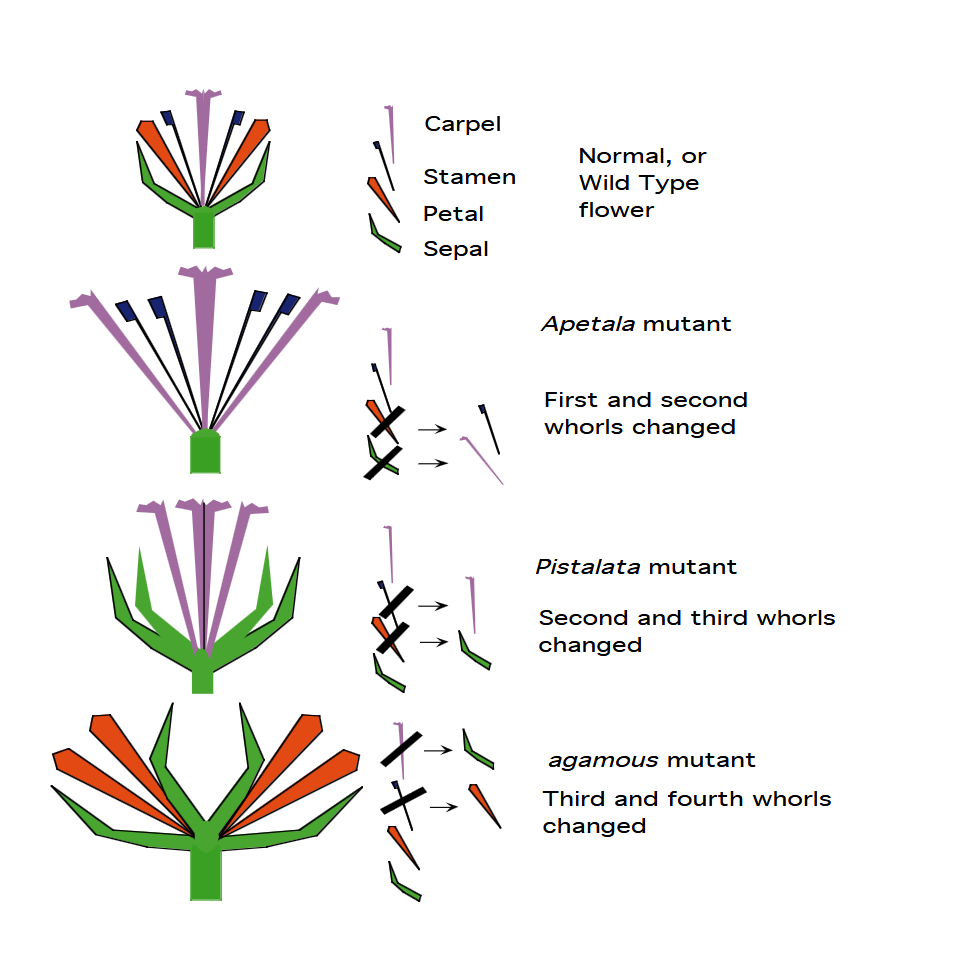
WT
1st Whorl = 4 Sepals
2nd Whorl = 4 Petals
3rd Whorl = 6 Stamen
4th Whorl = 2 Carpels
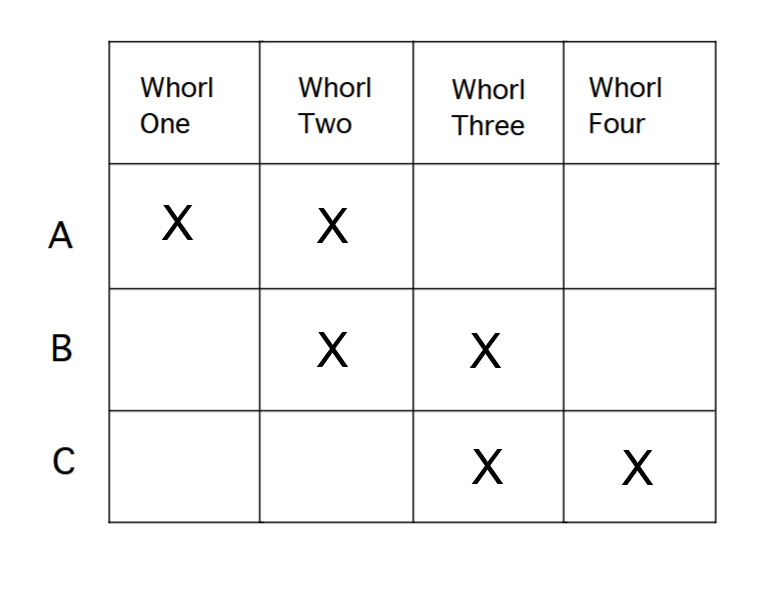
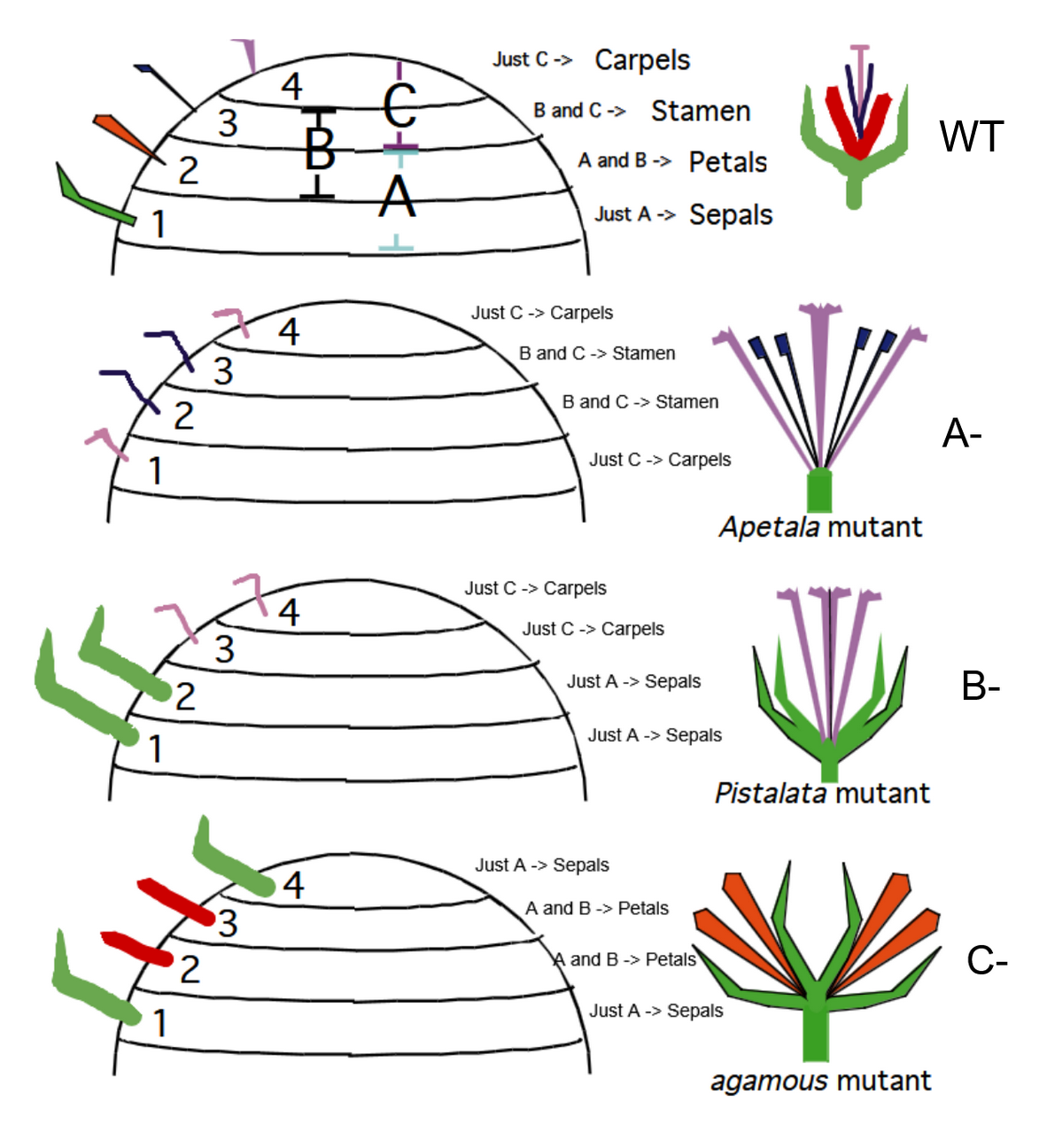
Gene that must be active in order for sepals to be made: A
Genes that must be active in order for petals to be made: A and B
Genes that must be active in order for stamen to be made: B and C
Gene that must be active in order for carpels to be made: C
The ABC model
3 genes sufficient to confer organ identity in the flower.
Genes act in combination to create organ identity
Pairs of genes identify individual organs
A and C genes regulate each other’s gene expression
WT
1st Whorl = 4 Sepals
2nd Whorl = 4 Petals
3rd Whorl = 6 Stamen
4th Whorl = 2 Carpels
Mutants:
A gene loss of function: Just carpels and stamen (no sepals or petals)
B gene loss of function: Just sepals and carpels (no stamen or petals)
C gene loss of function: Just sepals and petals (no stamen or carpels)
Sea urchin makes a good model organism for fertilization biologists because the eggs and zygote and embryo are translucent/transparent, large and abundant.
The first step of preventing cross species fertilization is the interactions that require specificity between ERP (egg response proteins) and FSPs (species specific sugars). When this interaction occurs the sperm plasma membrane is depolarized by the opening of Na+ channels. This voltage change opens Ca++ channels. Voltage activates(?) the enzyme adenylate cyclase in this process, and indirectly leads to an increase in cytoplasmic pH through the activity of an Na+/H+ antiporter. Ultimately this leads to the exocytosis of the acrosome and subsequent movement of the sperm toward the egg proper.
In an urchin sperm lacking voltage gated Ca++ channels, cellular pH would ["", "", "", ""] upon interaction with jelly coat. Injection of Ca++ into the sperm would ["", "", ""] . Adding forskolin to the sperm would ["", "", ""] .
The next step in preventing cross species fertilization is the interaction between bindins and bindin proteins.
The first step of the slow block to polyspermy begins ["", "", "", "", ""] the fast block begins.
["", "", "", "", "", ""] spread membrane depolarization throughout the newly fertilized egg.
During the cleavage phase embryos do not get bigger and form a ["", "", "", ""] . The blastula arises with all cells ["", "", ""] . The blastocoel is ["", "", "", ""] . GAstrulation is organized by cells ["", "", "", "", "", ""] . The only cells that a have their layer identity determined at the start of gastrulation are cells ["", "", "", ""] .
Cells moved from the presumptive ectoderm of an early blastula to the presumptive endoderm of an embryo of the same age will ["", "", "", ""] .
Auxin Summary