Microbiology Chapter 1: History and Biological Molecules
 Call Kai
 Learn
Learn Practice Test
 Spaced Repetition
 Match
Match Flashcards
 Knowt Play
1/152

There's no tags or description
Looks like no tags are added yet.
Name | Mastery | Learn | Test | Matching | Spaced | Call with Kai |
|---|
No analytics yet
Send a link to your students to track their progress
153 Terms
Microbiology
The study of organisms too small to be seen by the naked eye.
Microorganism
An organism too small to be seen by the naked eye, such as bacteria.
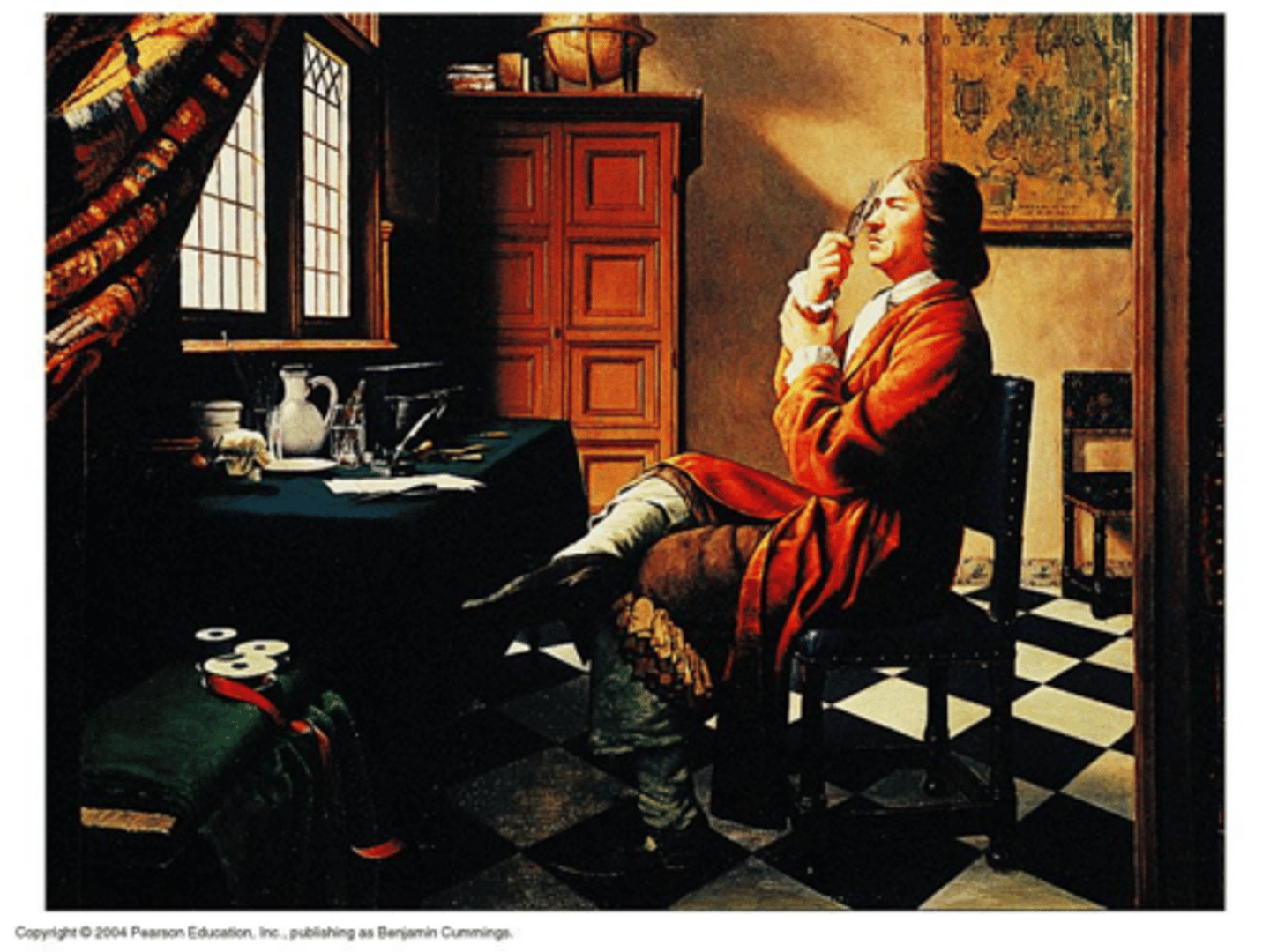
Antoni van Leeuwenhoek
First person to observe living microorganisms using a microscope he crafted.
Carolus Linnaeus
Developed taxonomy, a systematic method of naming organisms with genus and species.
Taxonomy
The science and systematic method of naming and classifying organisms.
Genus
The capitalized, first part of an organism's scientific name.
Specific epithet
The lowercase, second part of an organism's scientific name.
Scientific racism
A pseudoscientific attempt to use taxonomy to justify racial hierarchies.
Spontaneous generation
The belief that invisible vital forces in matter led to the creation of life.
Abiogenesis
The idea that life arose from non-life.
Biogenesis
The idea that life only rises from existing life.
John Tuberville Needham
Boiled broth briefly and covered it lightly, claiming to prove abiogenesis.
Lorenzo Spallanzani
Boiled broth longer and sealed it, showing no growth to disprove abiogenesis.
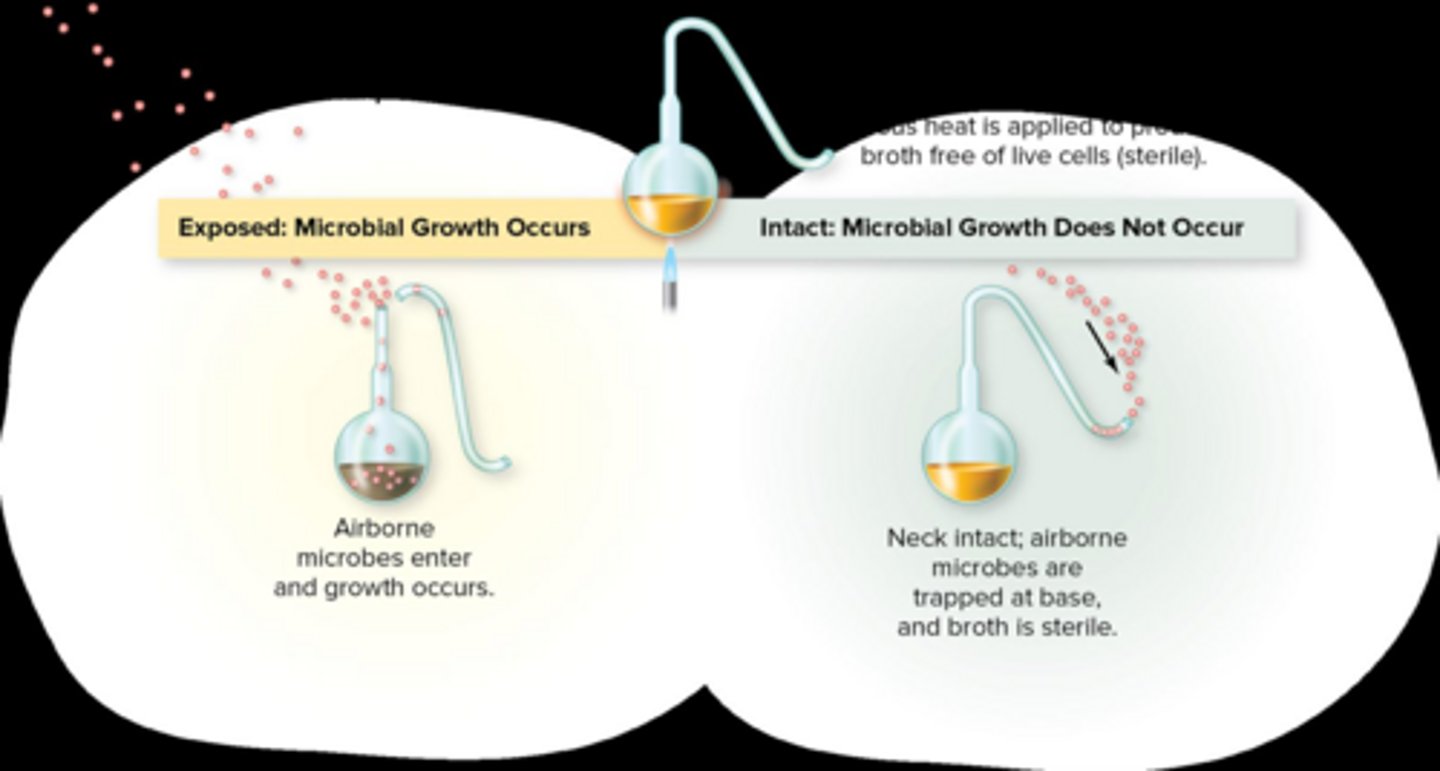
Louis Pasteur
Disproved spontaneous generation using swan-necked flasks and studied fermentation.
Fermentation
The biological conversion of sugar to waste products as part of anaerobic metabolism.
Pasteurization
A process of heating liquids to destroy pathogens and prevent spoilage.
Etiology
The study of the causes of disease.
Germ theory
The idea that microorganisms are responsible for specific diseases.
Pathogen
A specific microorganism that causes a particular disease.
Robert Koch
German biologist who discovered pathogens for Anthrax and Tuberculosis.
Koch's Postulates
A series of steps used to identify the specific pathogen causing a disease.
Ignaz Semmelweis
Suggested that doctors wash their hands between patients to prevent disease spread.
Joseph Lister
Used phenol as an antiseptic chemical method to clean surgical wounds.
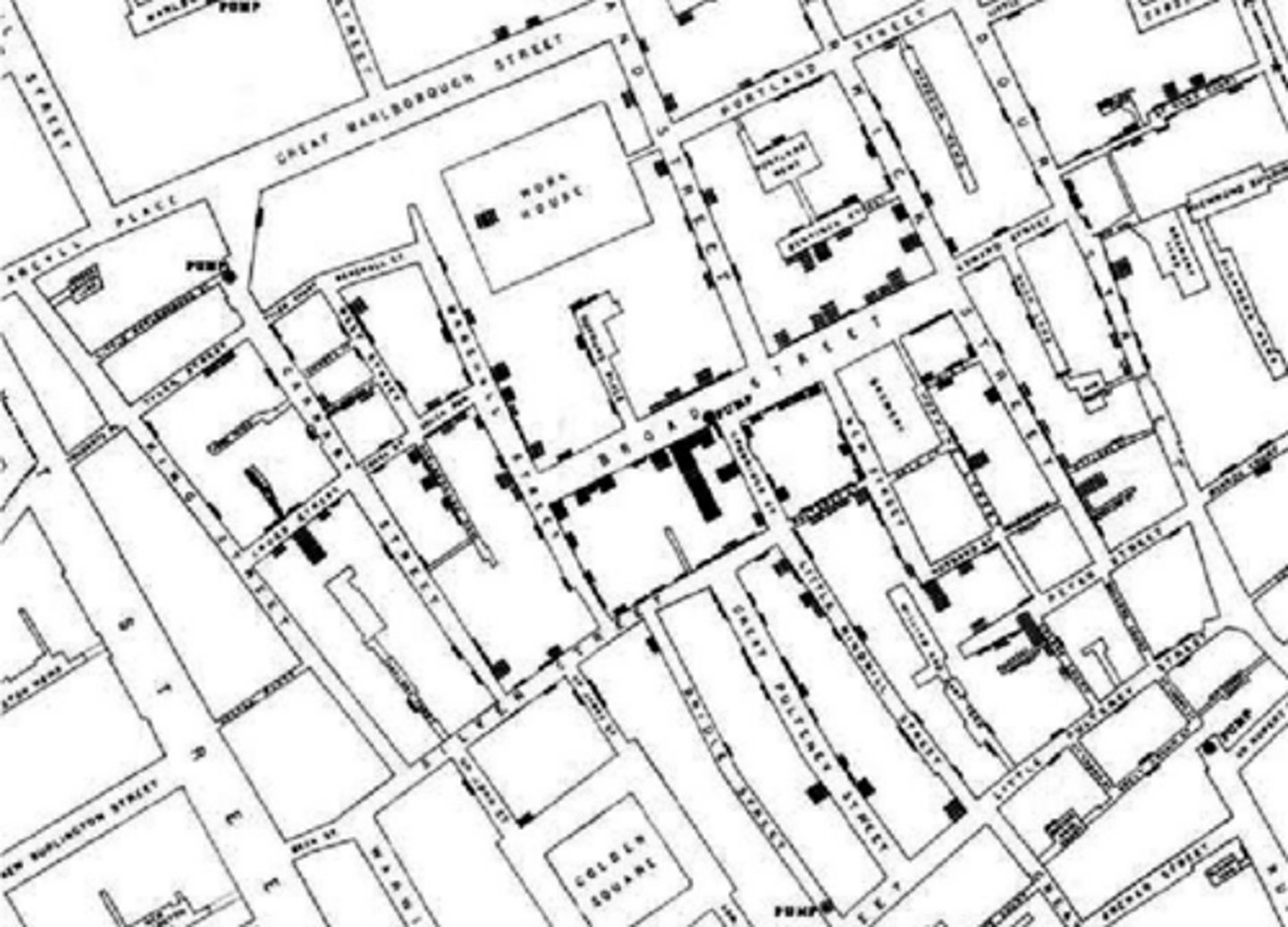
John Snow
First epidemiologist; mapped and stopped a cholera outbreak linked to a London pump.
Edward Jenner
Developed the first vaccine by using cowpox to immunize against smallpox.
Onesimus
Enslaved African who introduced variolation to slow a 1721 smallpox outbreak.
Variolation
An early immunization practice using dried scabs from mild smallpox cases.
Bioremediation
The use of microbes to clean up or fix the environment.
Macromolecules
Large molecules made up of smaller building blocks called monomers.
Monomers
Small individual chemical units that link together to form polymers.
Polymers
Large molecules composed of many repeating monomer units.
Dehydration Synthesis
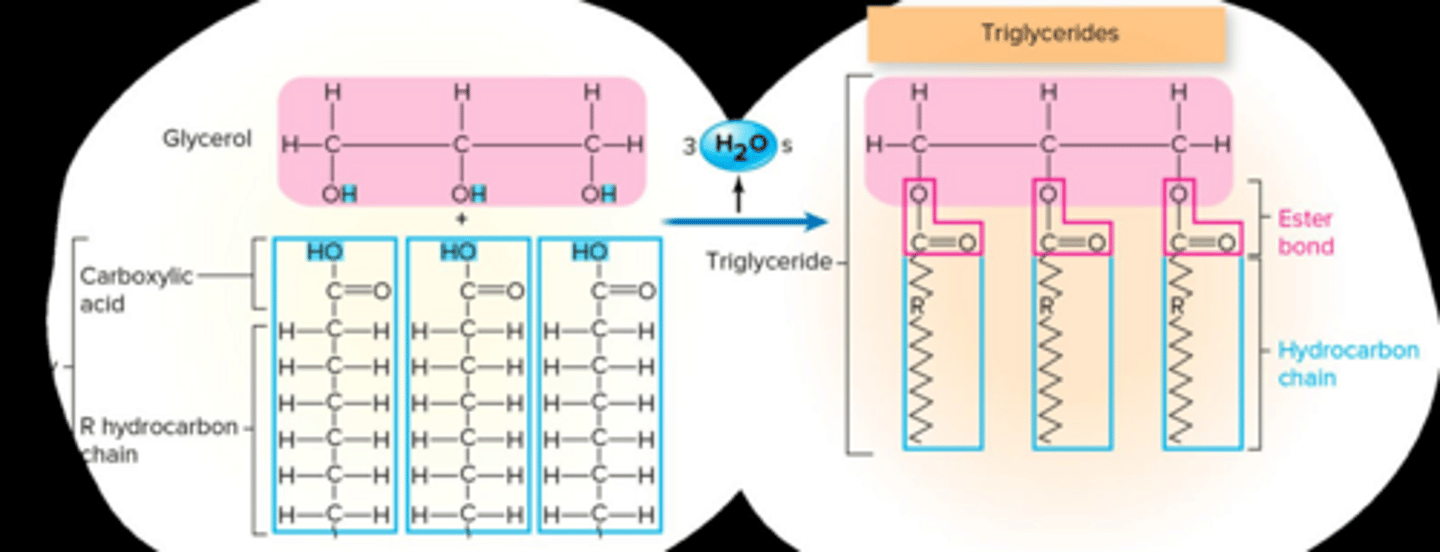
A chemical reaction that links monomers into polymers by releasing water.
Hydrolysis
A chemical reaction that breaks polymers into monomers by incorporating water.
Covalent Bond
A chemical bond formed when two atoms share a pair of electrons.
Non-Polar Covalent Bond
A covalent bond where electrons are shared evenly between atoms.
Polar Covalent Bond
A covalent bond where electrons are shared unevenly, creating partial charges.
Electronegativity
A measure of how strongly an atom attracts electrons.
Hydrogen Bond
A weak attraction between a partially positive hydrogen and another partially negative atom.
Hydrophilic
Water-loving; polar structures that can form hydrogen bonds with water.
Hydrophobic
Water-fearing; non-polar structures that cannot interact with water.
Carbohydrates
Molecules composed of Carbon, Hydrogen, and Oxygen used for structure and energy.
Monosaccharide
A simple sugar that serves as the building block for carbohydrates.
Glycosidic Bond
The covalent bond that links sugars together into carbohydrates.
Lipids
Hydrophobic, non-polar molecules composed almost entirely of carbon and hydrogen.
Steroids
Complex, non-polymer ringed lipids found in cell membranes and hormones.
Fatty Acids
Lipids containing a hydrocarbon chain capped with a polar carboxylic acid.
Triglyceride
A lipid composed of three fatty acids connected to a glycerol molecule.
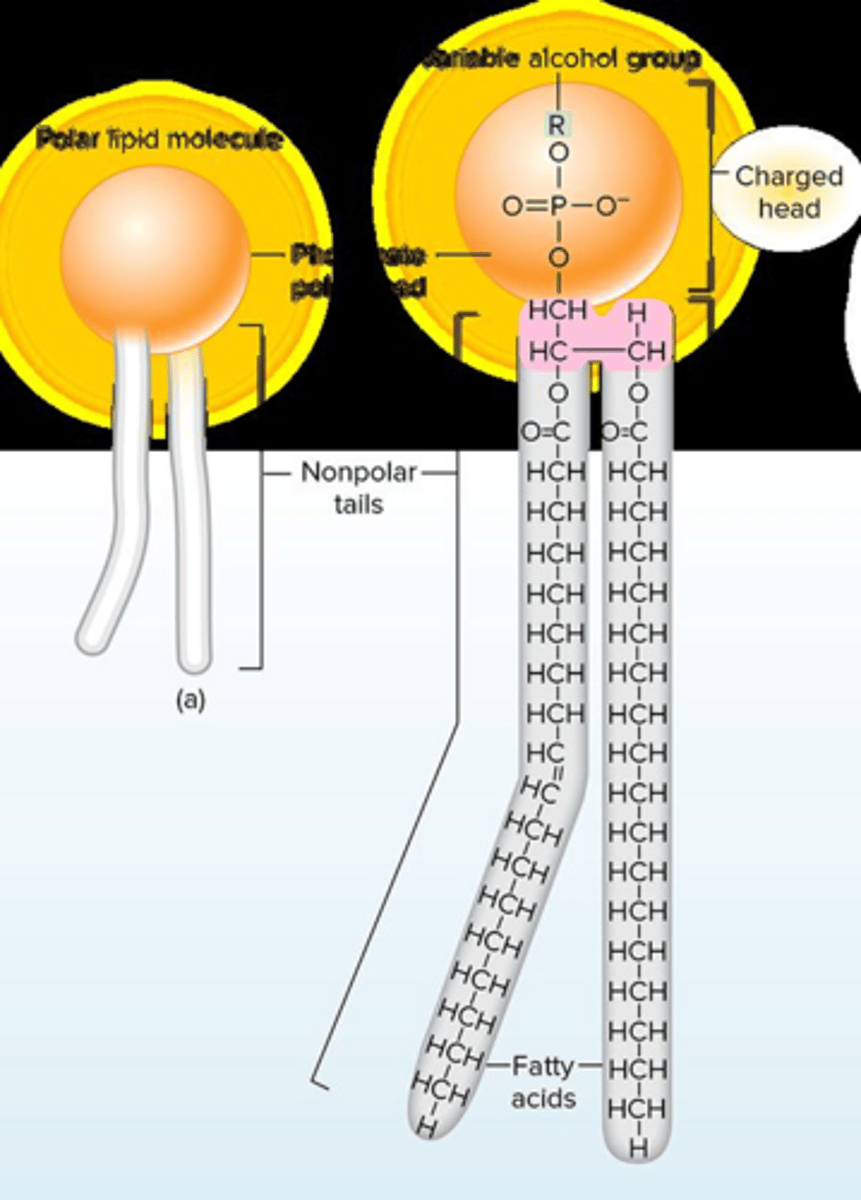
Phospholipid
An amphipathic lipid with a hydrophilic phosphate head and hydrophobic tail.
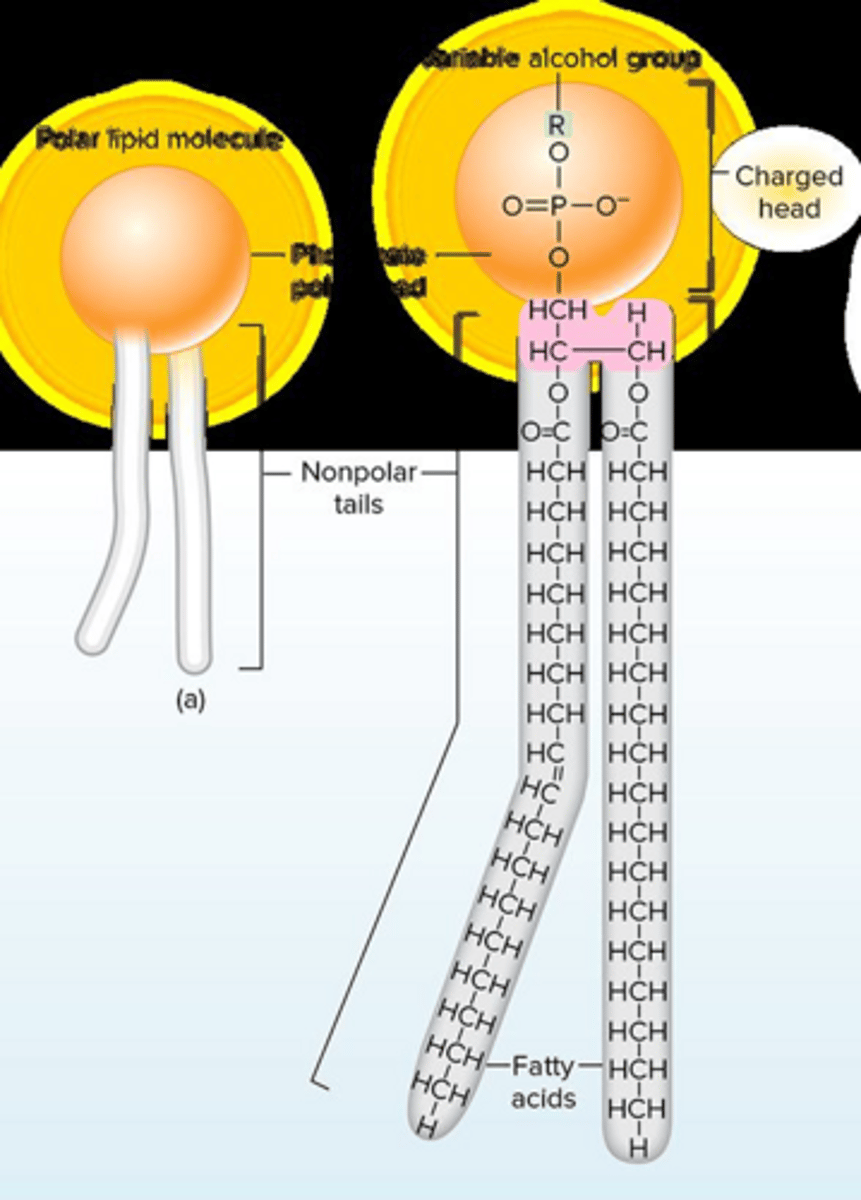
Amphipathic
A molecule possessing both hydrophilic and hydrophobic properties.
Proteins
Linear polymers of amino acids containing carbon, hydrogen, oxygen, nitrogen, and sulfur.
Amino Acids
The 20 distinct building blocks that make up all proteins.
Peptide Bond
The covalent bond linking amino acids together in a polypeptide chain.
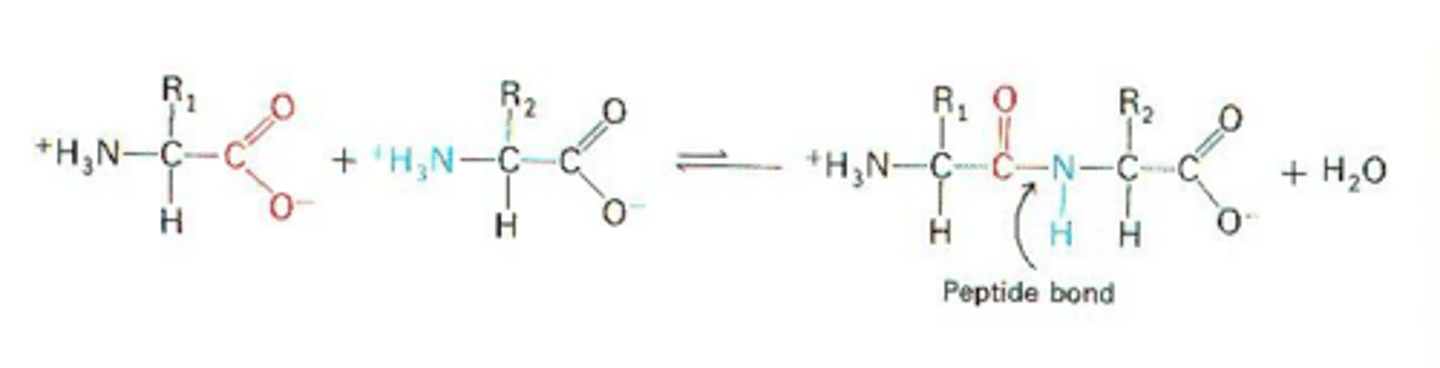
Primary Structure
The specific sequence of amino acids covalently linked in a polypeptide.
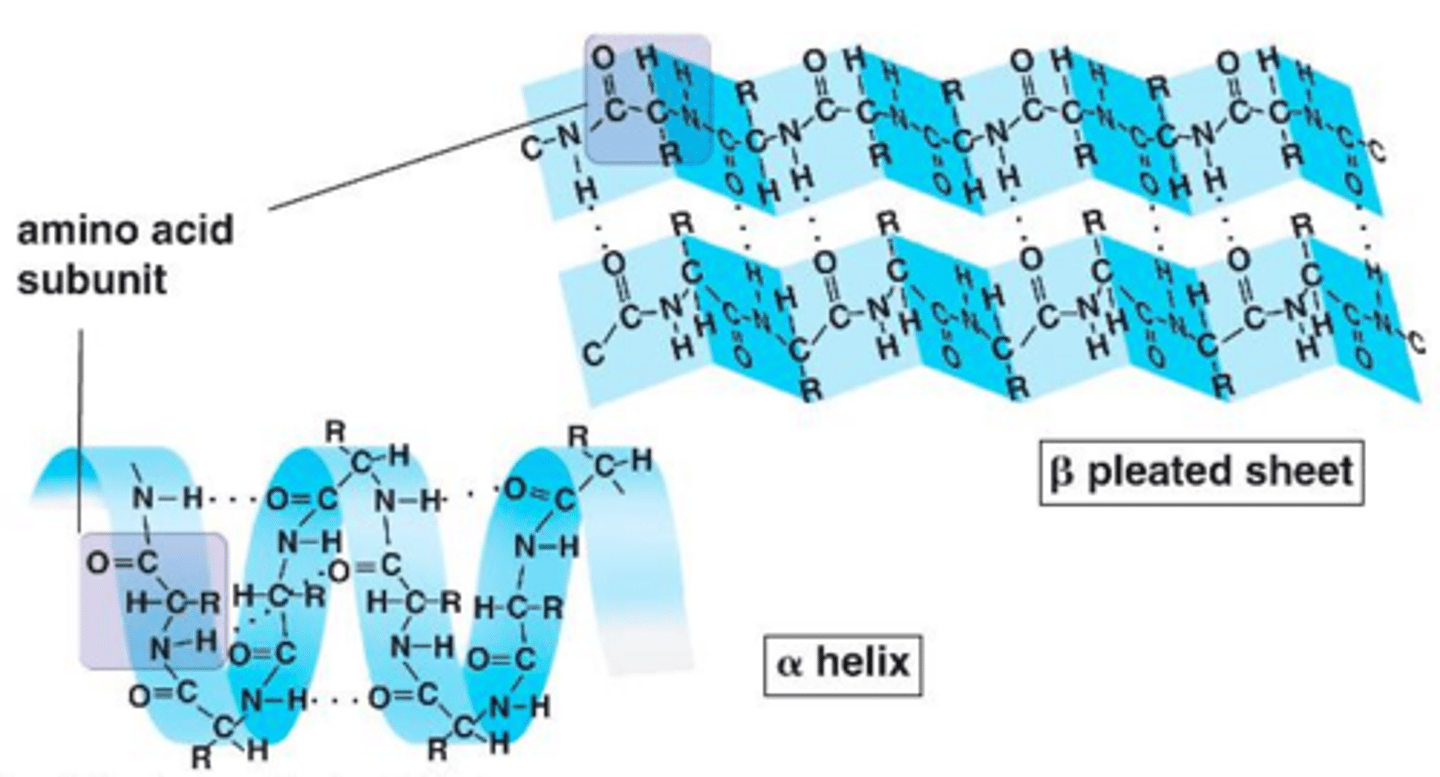
Secondary Structure
Polypeptide folding (alpha helices or beta sheets) caused by backbone hydrogen bonds.
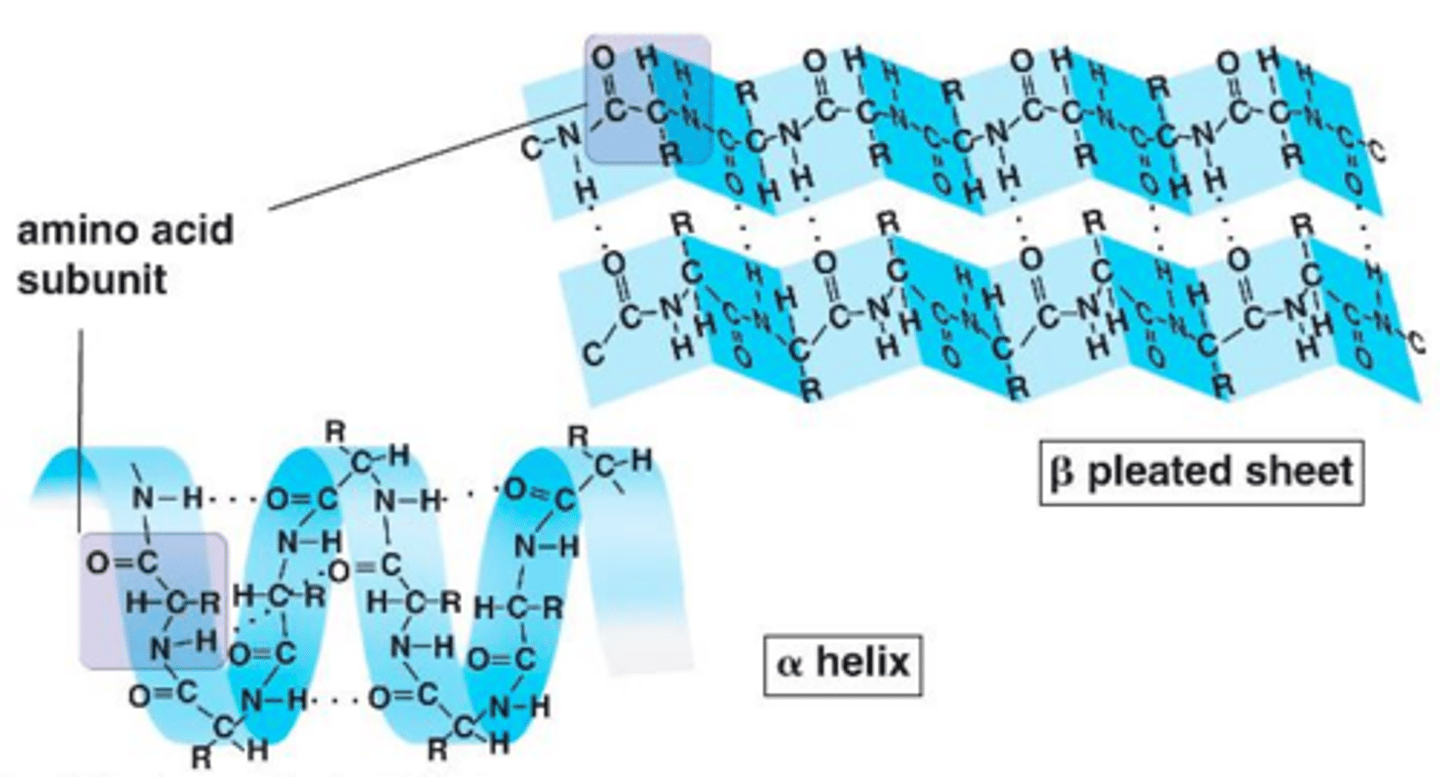
Tertiary Structure
The three-dimensional shape of a protein caused by R-group interactions.
Quaternary Structure
The interaction and arrangement of multiple polypeptide subunits to form a protein.
Nucleotides
Building blocks of nucleic acids composed of phosphate, pentose sugar, and nitrogenous base.
Phosphodiester Bond
The covalent bond linking nucleotides together in a nucleic acid strand.
RNA (Ribonucleic Acid)
A single-stranded nucleic acid containing ribose sugar and the base Uracil.
DNA (Deoxyribonucleic Acid)
A double-stranded, stable helix containing deoxyribose sugar and Thymine.
ATP (Adenosine Triphosphate)
A specialized RNA nucleotide used as the primary energy currency of the cell.
Linnaeus's Two Kingdoms
Plants and Animals.
Systema Naturae
Carolus Linnaeus's work that categorized humanity into four variants, laying groundwork for scientific racism.
Four Questions of the Golden Age
Is spontaneous generation possible? What causes fermentation? What causes disease? How do we prevent infection?
Needham's Experiment
Boiled broth briefly and lightly covered it, resulting in microbial growth (supported abiogenesis).
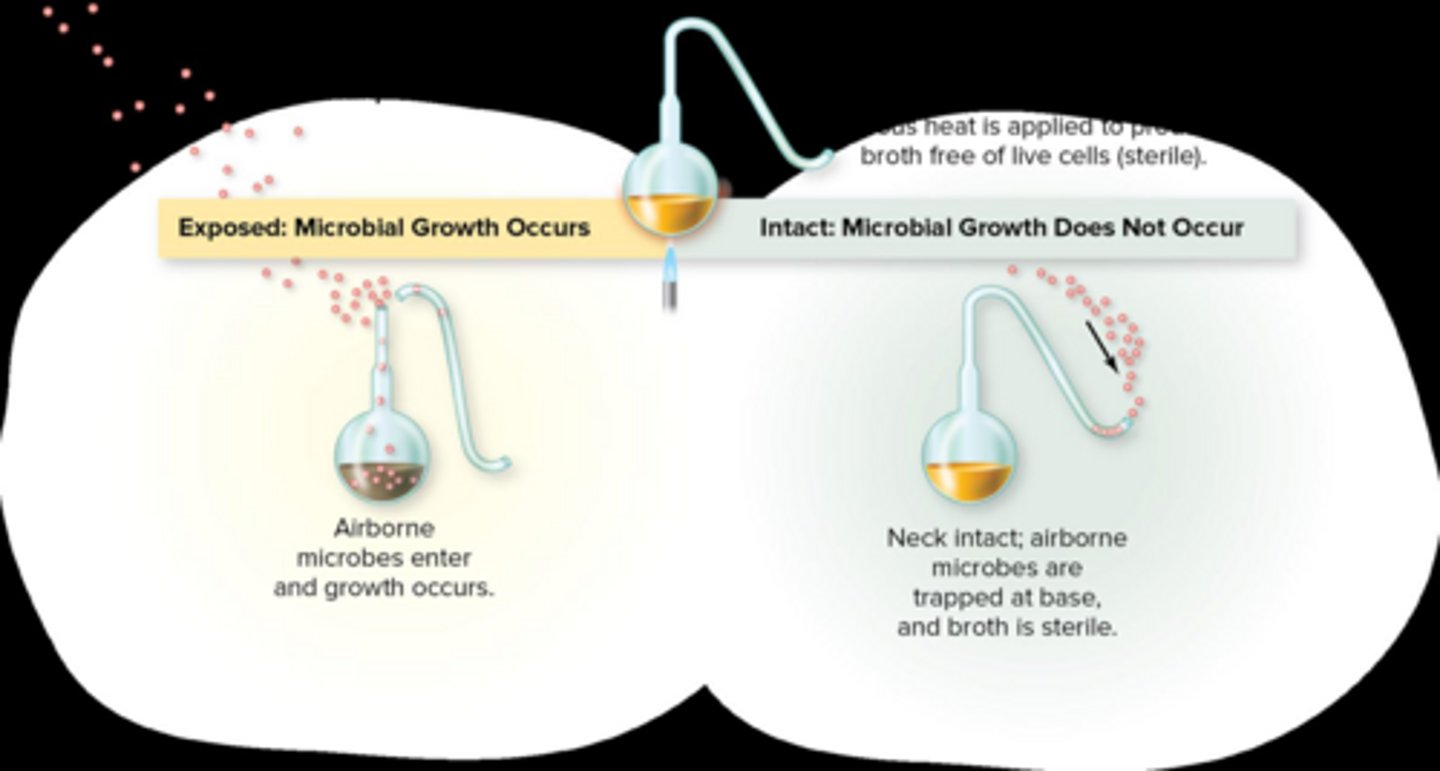
Spallanzani's Experiment
Boiled broth longer and sealed the flask, resulting in no microbial growth (disproved abiogenesis).
Pasteur's Fermentation Experiment (Bacteria)
Adding bacteria to boiled grape juice produced acid instead of alcohol.
Pasteur's Fermentation Experiment (Yeast)
Adding yeast to boiled grape juice produced alcohol.
Bacillus anthracis
The bacterium identified by Robert Koch as the cause of Anthrax.
Mycobacterium tuberculosis
The bacterium identified by Robert Koch as the cause of Tuberculosis.
Koch's Postulate 1
The suspected pathogen must be present in every diseased case and absent from healthy individuals.
Koch's Postulate 2
The suspected pathogen must be isolated from a diseased host and grown in pure culture.
Koch's Postulate 3
The isolated pathogen must cause the same disease when inoculated into a healthy host.
Koch's Postulate 4
The same pathogen must be re-isolated and identified from the newly diseased host.
Koch's Other Contributions
Simple staining, first bacterial photomicrographs, CFU/ml estimation, steam sterilization, Petri dishes, aseptic loop techniques.
Vibrio cholerae
The bacterium that causes Cholera, linked by John Snow to a contaminated London water pump.
Jenner's Smallpox Experiment
Inoculated a boy with mild cowpox, which successfully prevented infection when exposed to deadly smallpox.
Origin of the word 'Vaccine'
Coined by Louis Pasteur, named after Vaccinia (the cowpox virus).
Carbohydrate Monomer Examples
Glucose, Fructose, and Ribose.
Carbohydrate Disaccharide Examples
Lactose and Sucrose.
Carbohydrate Polysaccharide Examples
Starch and Cellulose.
Saturated Fatty Acid
A hydrocarbon chain containing no double bonds.
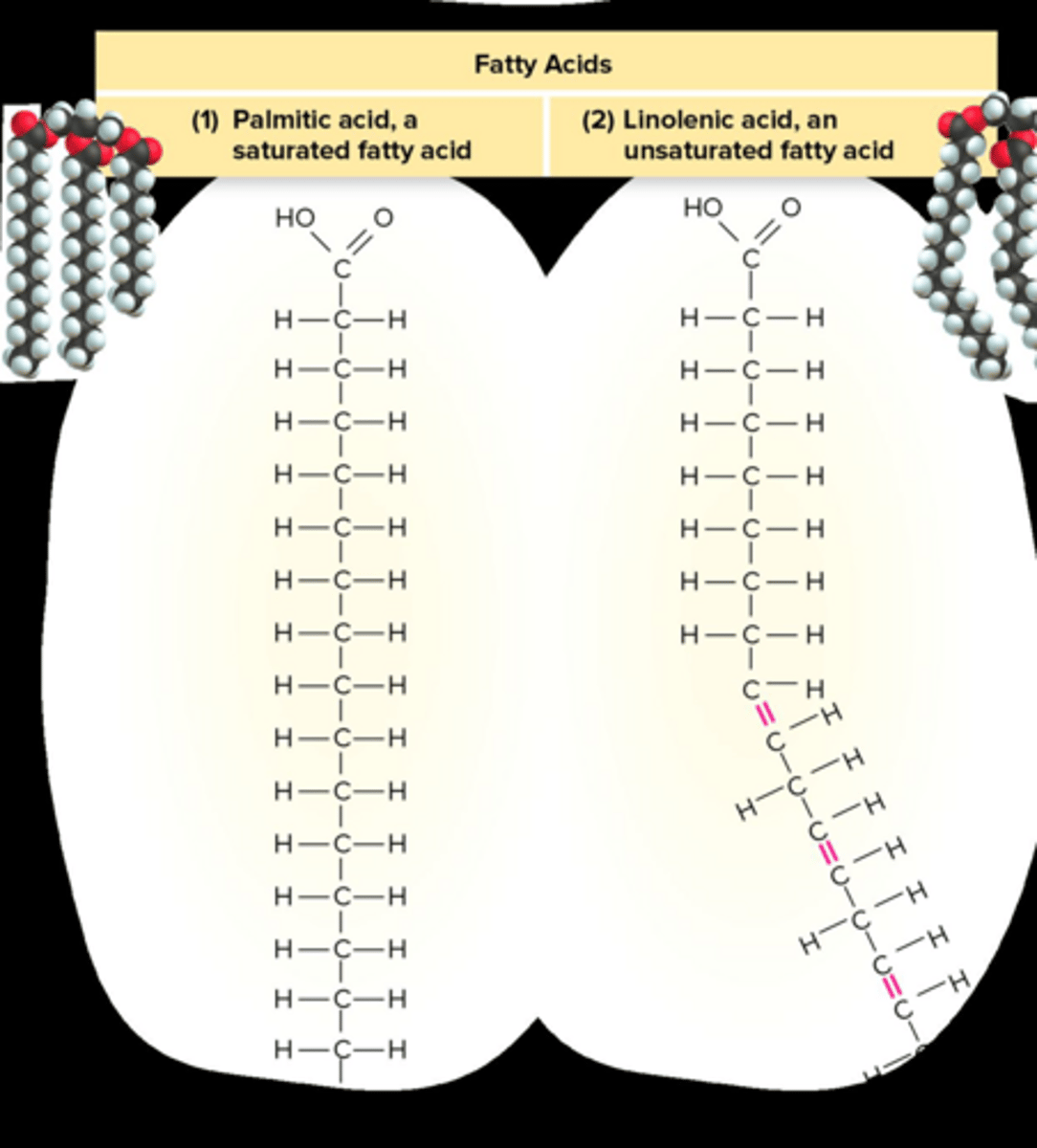
Unsaturated Fatty Acid
A hydrocarbon chain containing one or more double bonds.
Phospholipid Structure
A hydrophilic, polar phosphate head and two hydrophobic, nonpolar fatty acid tails.
Amino Acid Basic Structure
A central carbon bonded to a Hydrogen, an Amino group, a Carboxyl group, and a variable R group.
Secondary Structure Types
Alpha helices and beta pleated sheets, stabilized by backbone hydrogen bonds (excluding R groups).
Tertiary Structure Interactions
Hydrogen bonds, ionic bonds, hydrophobic interactions, and covalent disulfide bonds between R groups.
Ribose vs. Deoxyribose
Ribose has a hydroxyl group (-OH) on the 2' carbon; deoxyribose lacks it.
RNA Nitrogenous Bases
Adenine (A), Guanine (G), Cytosine (C), and Uracil (U).
DNA Nitrogenous Bases
Adenine (A), Guanine (G), Cytosine (C), and Thymine (T).
ATP Composition
A ribose sugar, an adenine base, and three negatively charged phosphate groups.
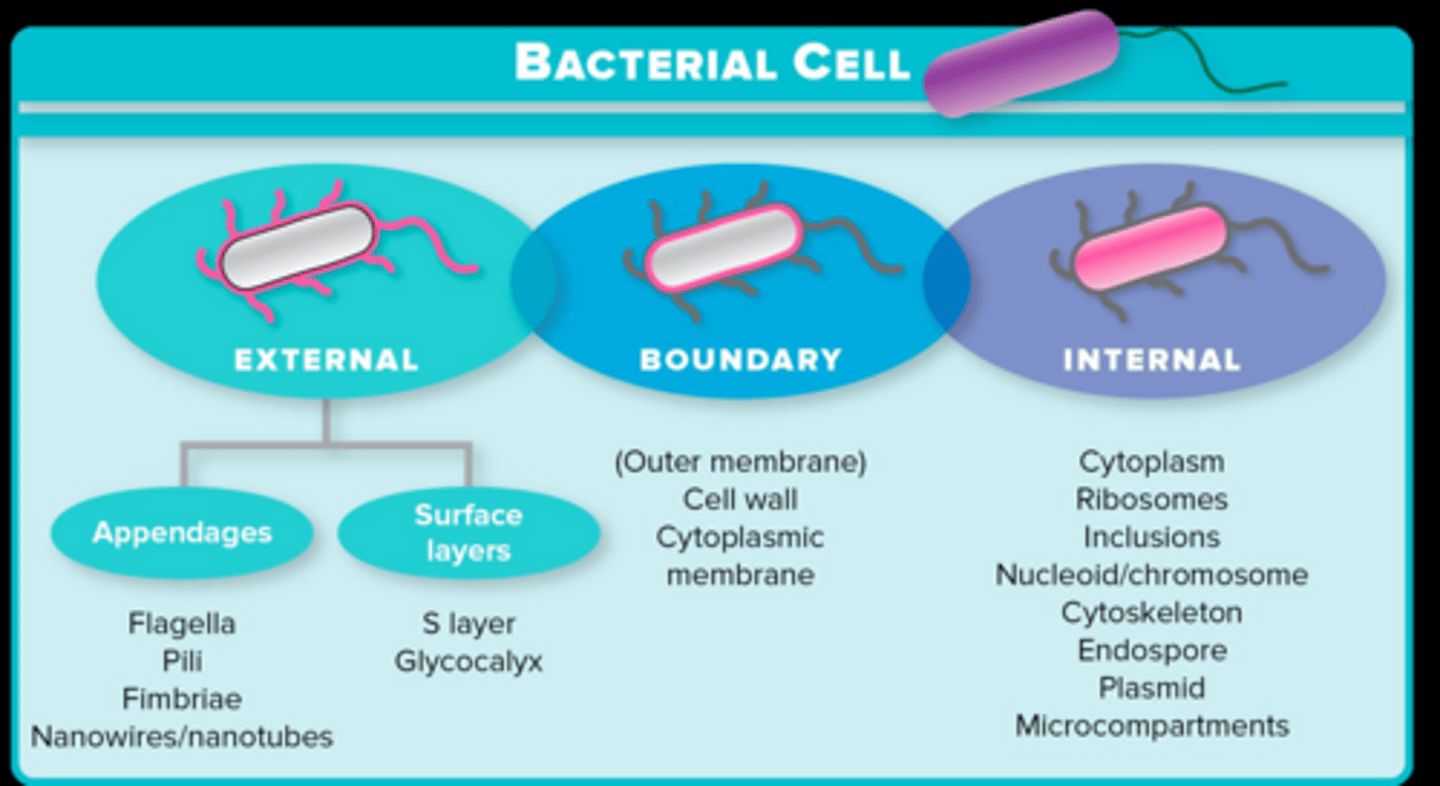
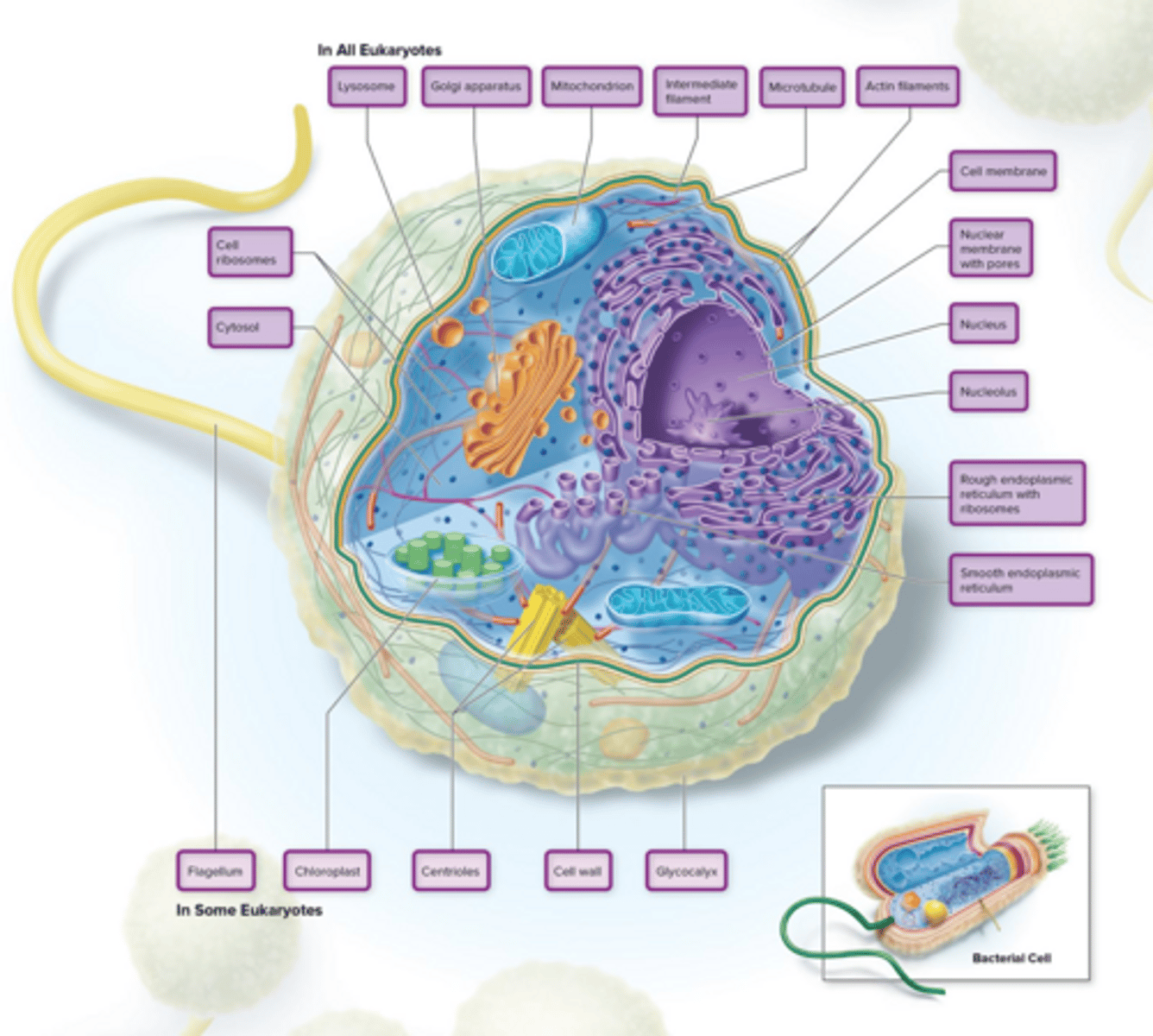
Prokaryotes
Organisms that do not contain a nucleus, including the domains Bacteria and Archaea.
Eukaryotes
Organisms that contain a membrane-enclosed nucleus, comprising domain Eukarya.
Monomorphic
Bacteria that exist exclusively as a single, defined shape.
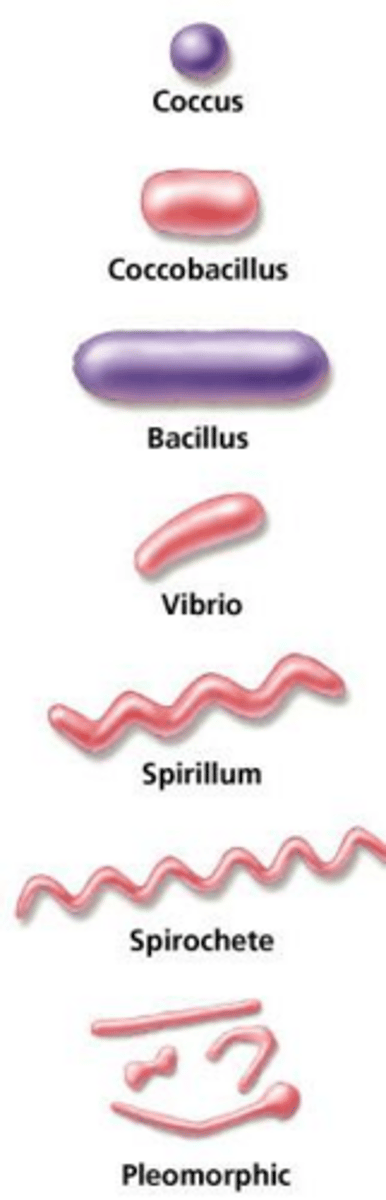
Pleomorphic
Bacteria that naturally vary in their shape and size.
Coccus
A spherical or round-shaped bacterium.
Bacillus
A rod-shaped or oblong bacterium.
Vibrio
A curved, comma-shaped bacterium.
Spirillum
A spiral-shaped bacterium.
Bacterial Arrangements
Diplo- (pairs), Strepto- (chains), Tetrad (fours), Sarcinae (cubes of eight), Staphylo- (clusters).