ess w10 l2 - observed changes cryosphere 2
 Call Kai
 Learn
Learn Practice Test
 Spaced Repetition
 Match
Match Flashcards
 Knowt Play
1/33

There's no tags or description
Looks like no tags are added yet.
Name | Mastery | Learn | Test | Matching | Spaced | Call with Kai |
|---|
No analytics yet
Send a link to your students to track their progress
34 Terms
Scientific assessments of potential future climate change – uncertainty and risk:
We’re sure that ongoing emissions of greenhouse gases will continue to warm the planet, melt ice and cause sea levels to rise
However, the exact levels of future change are highly uncertain
We cannot predict scientifically how greenhouse gas emissions will change in the future – depends on choices made by society
there are also uncertainties in how the climate system will respond to a given level of greenhouse gas changes – but projections of “central estimates” can be made, with uncertainty ranges
Consider the “most likely” changes and also “worst-case scenarios” for risk
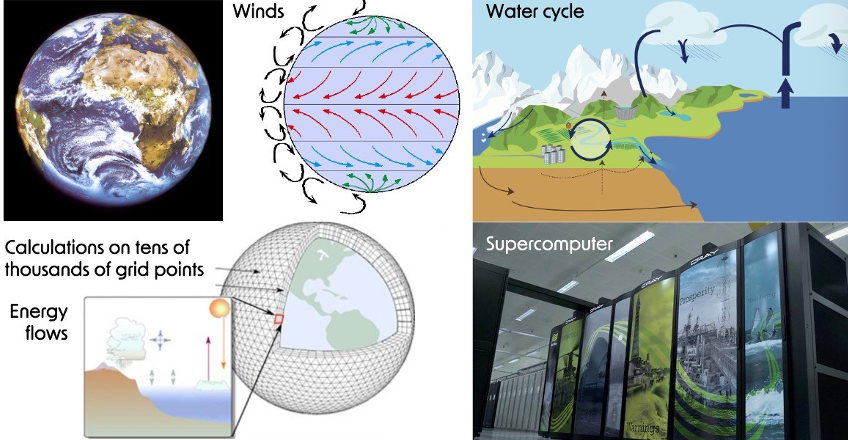
Calculating future climate change:
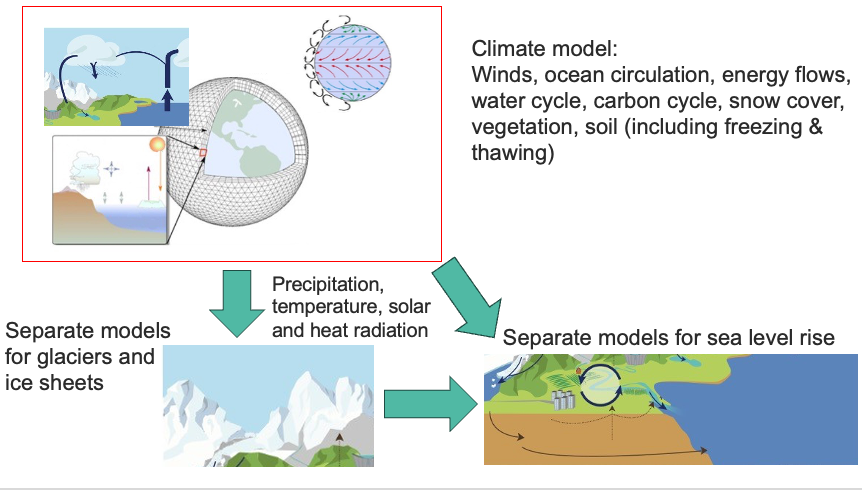
Climate model:
Winds, ocean circulation, energy flows, water cycle, carbon cycle, snow cover, vegetation, soil (including freezing & thawing)
Future climate projections use a range of emissions scenarios:
SSP: Shared Socioeconomic Pathway
1.9, 2.6, 4.5, 7.0, 8.5:
“radiative forcing”: change in Earth’s energy balance in 2100, in Watts per square metre
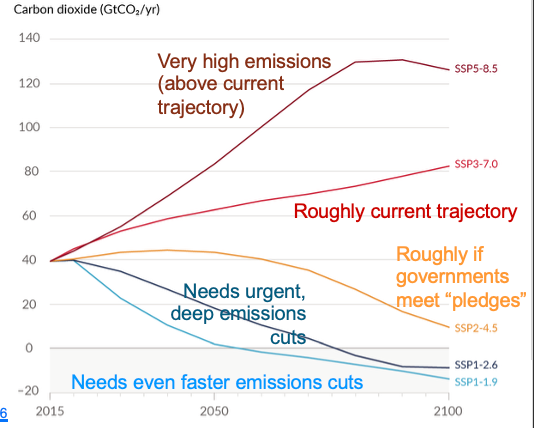
Emissions still rising this year:
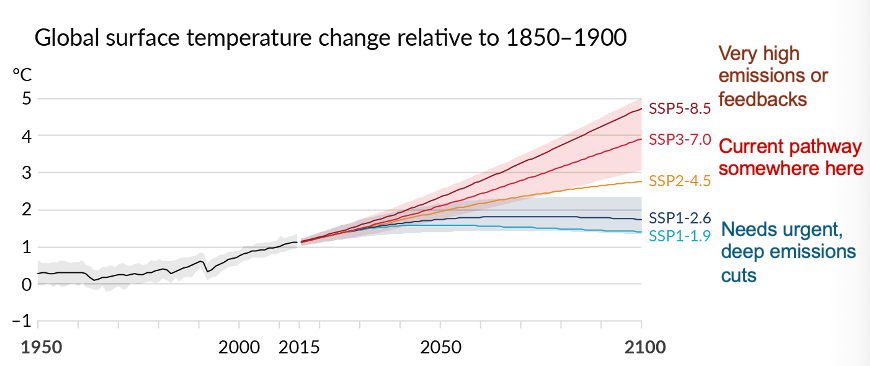
Projections of future global warming with different emissions scenarios:
Multiple models with assessment against observations
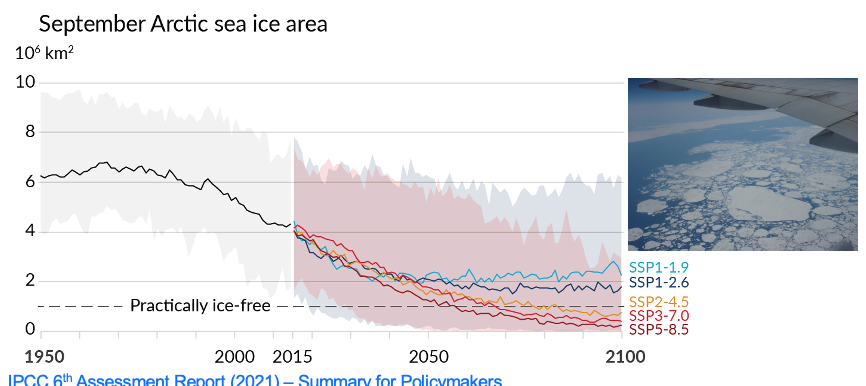
Projections of future Arctic sea ice loss with different emissions scenarios –
- multiple models:
The Arctic Ocean will likely become practically sea ice free during the seasonal sea ice minimum for the first time before 2050 in all considered SSP scenarios”
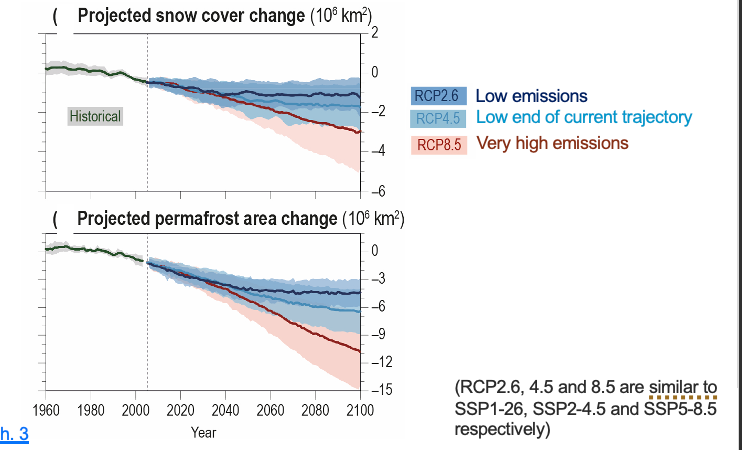
Projected changes in global snow cover and permafrost extent:
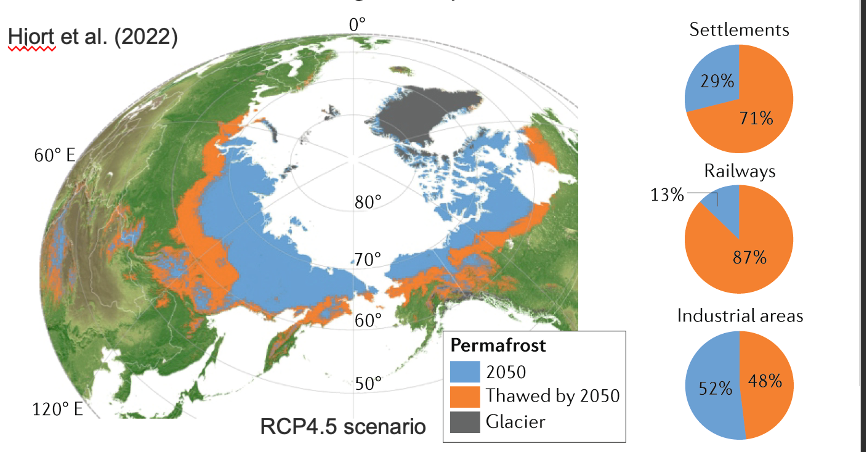
Permafrost thaw: regional impacts on infrastructure:
70 per cent of current infrastructure in permafrost regions in areas with high potential for thaw by 2050
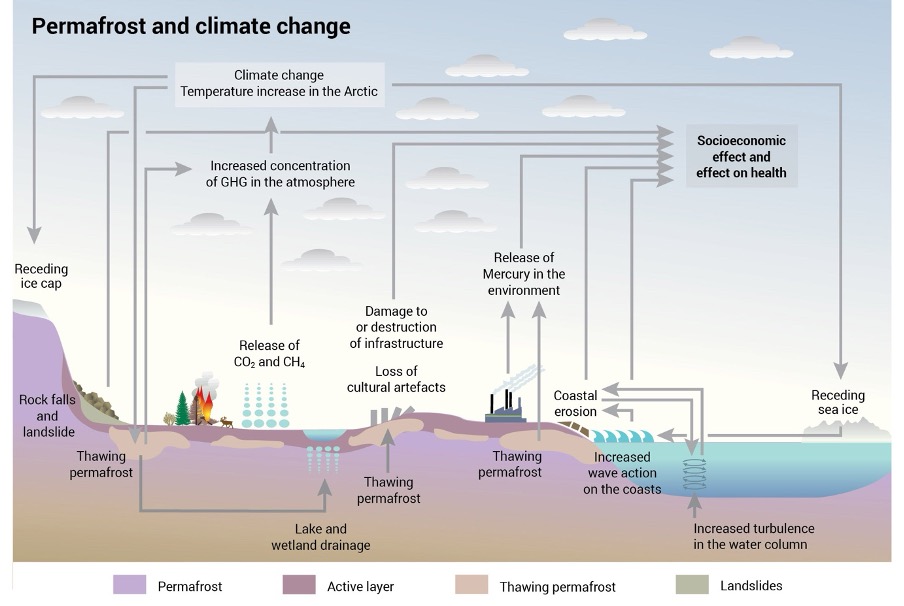
Impacts of thawing permafrost and feedbacks on climate change:
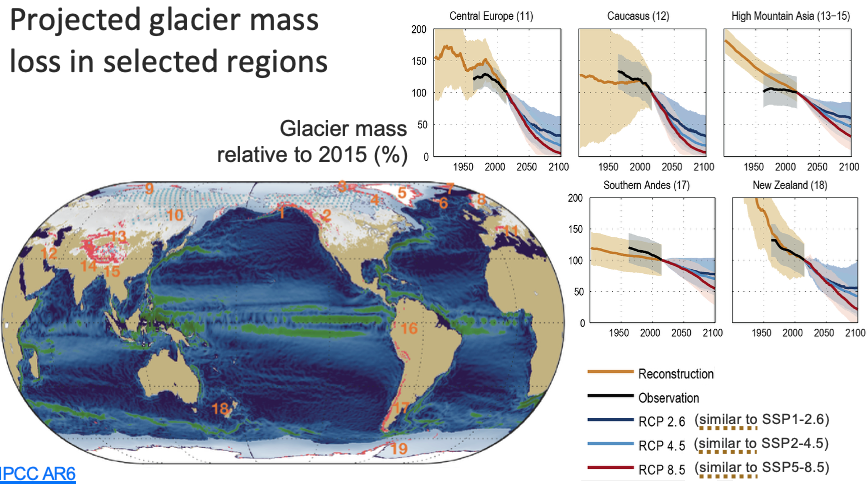
Projected glacier mass loss in selected regions:
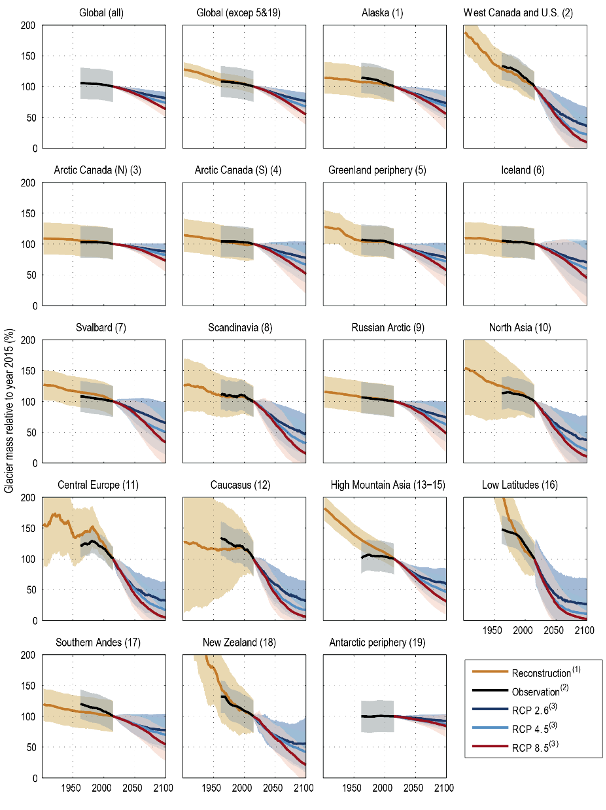
Projected glacier mass loss in all regions and globally:
By the mid-21st century, impacts may be felt by roughly 1.5 billion people who critically depend on runoff from the mountains
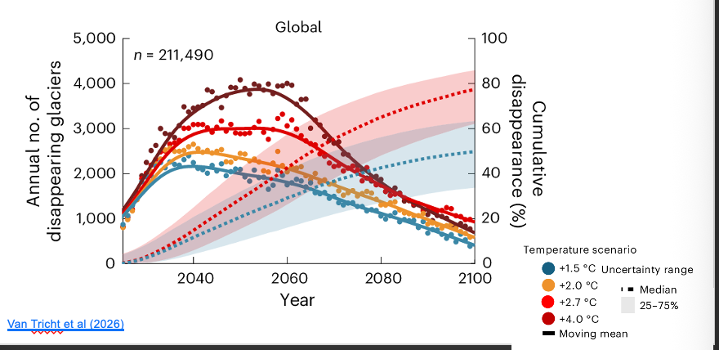
Projections of numbers of disappearing glaciers:
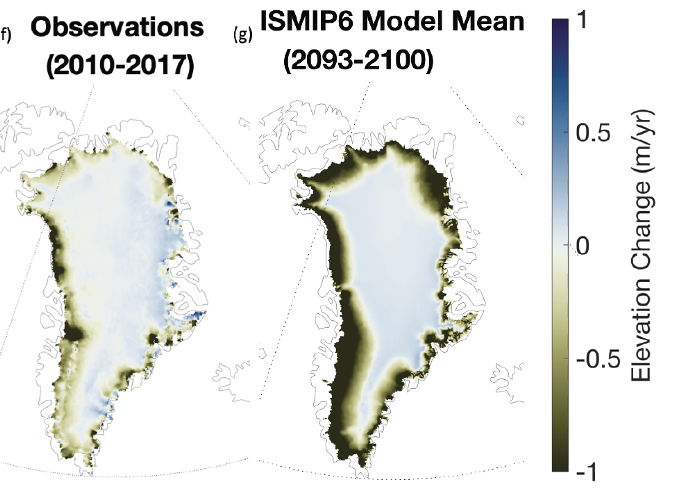
Observed and projected rate of changes in elevation of Greenland ice sheet:
Projected changes in 2093-2100 use several ice sheet models and a single climate model, with the RCP8.5 scenario (very high emissions)
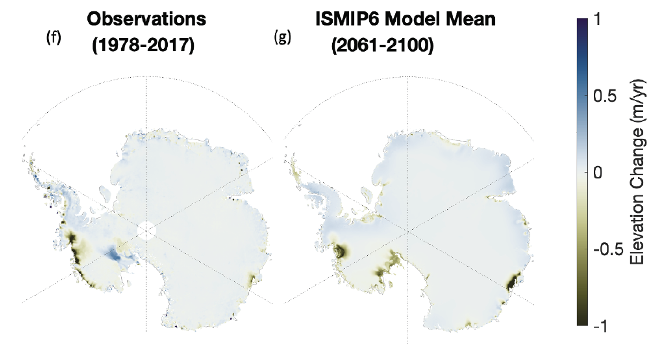
Observed and projected rate of changes in elevation of Antarctic ice sheet:
Projected changes in 2061-2100 use several ice sheet models and an ensemble of climate models, with the RCP8.5 scenario (very high emissions)
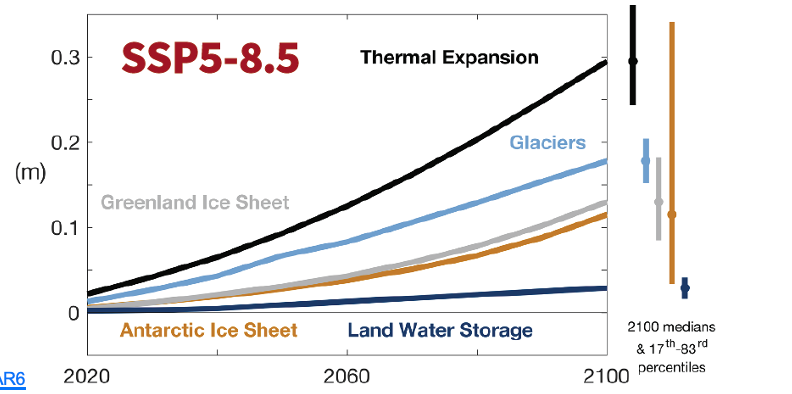
Contributions to projected sea level rise:
very high emissions scenario
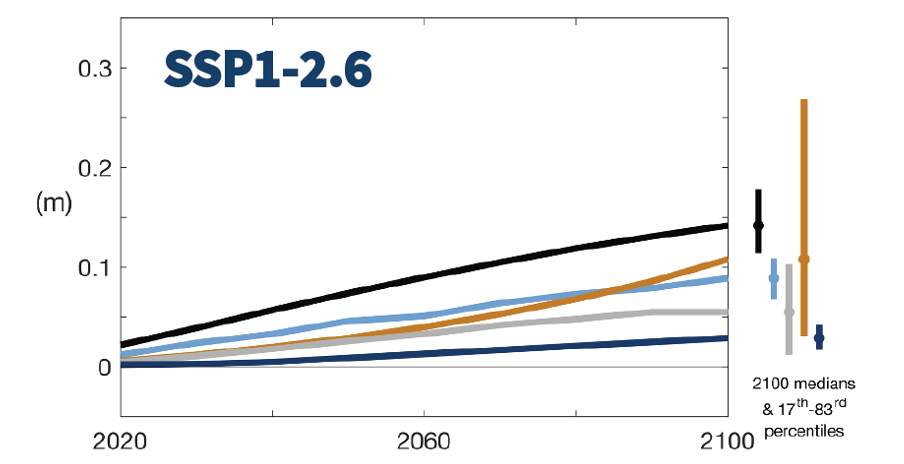
Contributions to projected sea level rise:
Low emissions scenario:
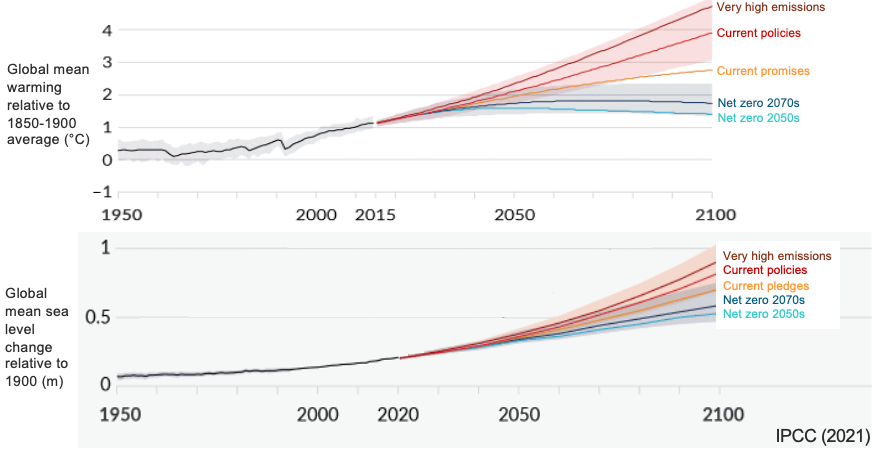
Sea level rise in all scenarios – but faster with higher emissions:
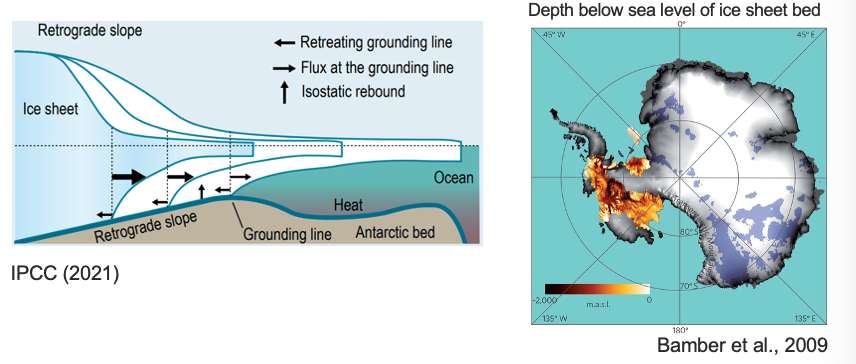
Antarctic marine ice sheet instability (MISI):
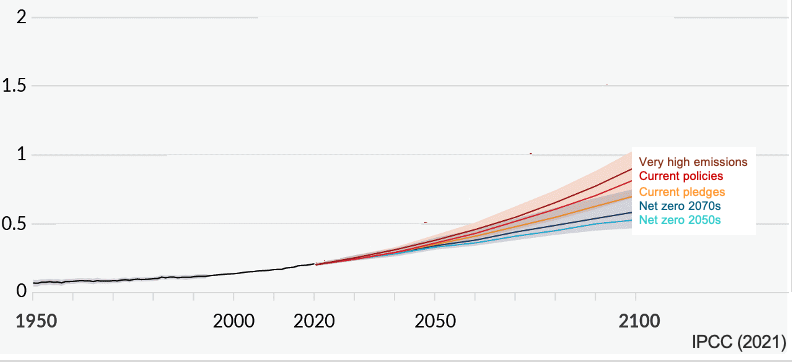
Global mean sea level change relative to 1900 (m)
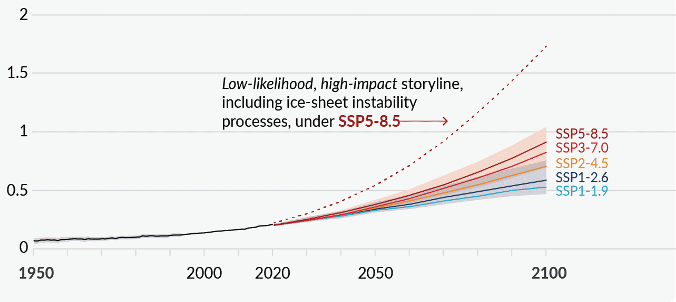
Global mean sea level change relative to 1900
Potential additional sea level rise with ice sheet instability
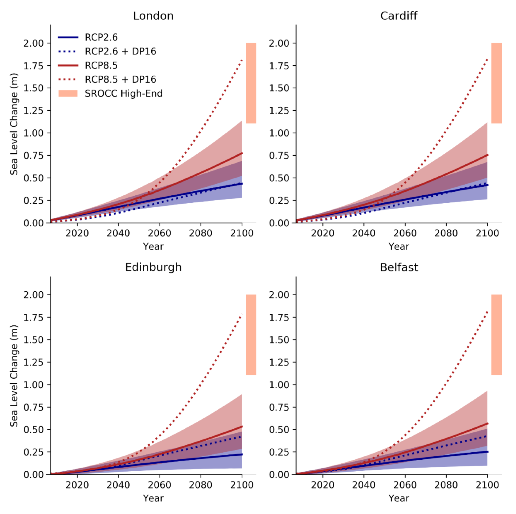
Implications of potential Antarctic marine ice sheet instability for UK sea level rise:
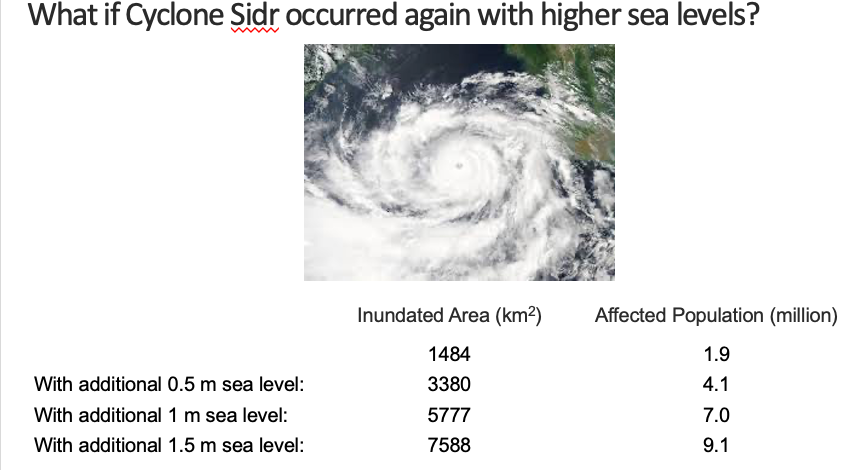
Sea level rise case study: magnifying the impacts of a tropical cyclone:
- Cyclone Sidr, Bangladesh, 2007
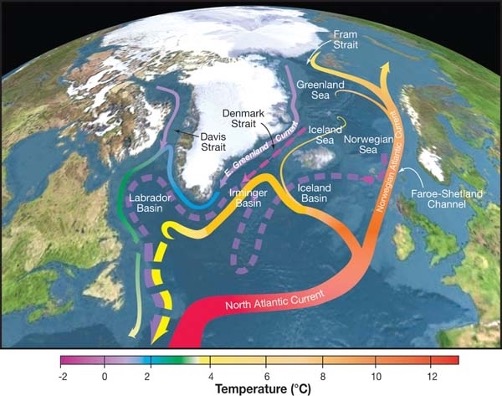
Potential impact of Greenland ice loss on AMOC:
Influx of fresh, cold water from increased glacier runoff reduces density of surface ocean
prevents NADW (North Atlantic Deep Water) from forming
weakens the driving force behind AMOC (Atlantic Meridional Overturning Circulation) and global thermohaline ocean circulation
Changes the amount of heat taken up by global ocean
Changes global surface temperatures
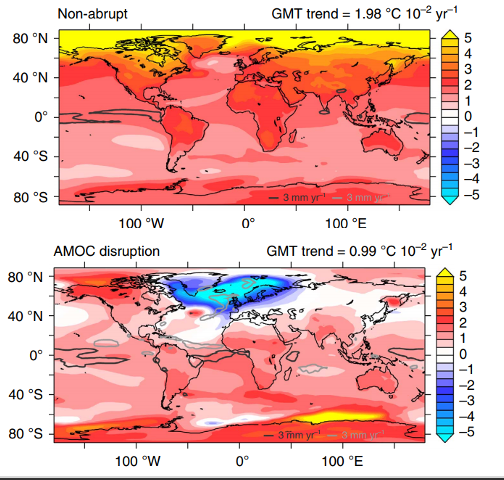
Potential impact on AMOC is highly uncertain:
IPCC AR6 assessed with “medium confidence” that AMOC would not undergo abrupt change this century
Projected temperature changes with RCP4.5 emissions scenario in two cases:
Top: No abrupt changes in AMOC
Bottom: With abrupt change in AMOC
GMT: Global Mean Temperature
Summary:
Ongoing sea and land ice loss, permafrost thaw and sea level rise are projected in all scenarios
Major risks to human societies and biodiversity
Limiting global warming to lower levels through urgent cuts in greenhouse gas emissions would avoid the most severe impacts
However. some further changes are inevitable even if warming is halted, due to the long timescale of ice sheet and glacier responding fully to an increase in temperature