Module 1 - Ergonomics & Periodontal Instruments

0.0(0)
Studied by 0 people
call kaiCall Kai
learnLearn
examPractice Test
spaced repetitionSpaced Repetition
heart puzzleMatch
flashcardsFlashcards
GameKnowt Play
Card Sorting

1/47

encourage image

There's no tags or description

Looks like no tags are added yet.

Last updated 5:36 AM on 6/14/26
Name
Mastery
Learn
Test
Matching
Spaced
Call with Kai

No analytics yet

Send a link to your students to track their progress

48 Terms

1
New cards

Correct position allows for

  1. Prevents injury

  2. Clear visibility of tooth

  3. Allow easy access

  4. Efficient treatment to patient

2
New cards

Ergonomics

Fit between people with technological tool and environment

  • Equipment — Fit the user

  • Efficient — Task easier to do

Poor egonomics decrease comfort, productivity, and safety

  • Office layout, dental equipment, instrument

3
New cards

Musculoskeletal disorder (MSD)

Condition where musculoskeletal system (muscles, tendons, nerves) are injured over time

  • Body part overused = stressed = damaged

  • Affects mostly hands, wrists, elbows, neck, and shoulders

  • 64% — 93% in dental people

    • Why? Excessive use of small hand muscles, repetitive motion, tight grips, fixed work position for extended period

  • Causes: Injury to nerves, muscles, tendons, loss of strength, impairment of motor control, tingling, numbness, pain in back, shoulders, arms, elbows, wrists, hands

4
New cards

Ergonomic hazards

Highest risk of musculoskeletal injuries

  1. Awkward posture

  2. Static (fixed) working position

  3. Force placed on body part

  4. Repetitive movements

5
New cards

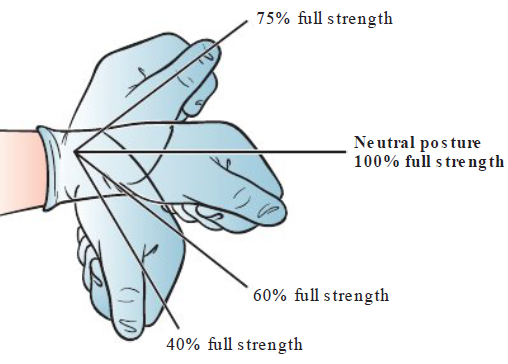
Neutral posture (ideal)

Joint used near middle of full range of motion

  • Further away from neutral = more strain
6
New cards
<p><strong>Awkward postures</strong></p>

Awkward postures

  • Adopted — improper adjustment of chair, patient position, work technique

More muscle used to accomplish task than neutral positon

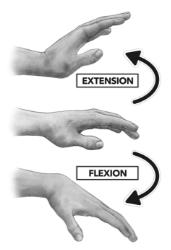
  • Common awk posture = wrist flexion (Stress neurovascular structures and ligaments)

  • Loss in grip strength

<ul><li><p>Adopted — improper adjustment of chair, patient position, work technique</p></li></ul><p></p><p>More muscle used to accomplish task than neutral positon</p><ul><li><p>Common awk posture = wrist flexion (Stress neurovascular structures and ligaments)</p></li><li><p>Loss in grip strength</p></li></ul><p></p>
7
New cards

Static posture

Body in 1 position for extended period of time

  • compresses blood vessels & reduce blood flow = decrease oxygen and energy to muscles

  • Waste product builds up = muscle fatigue = pain

  • Static gripping exceeds 20 mins = common

8
New cards

Force

Amount of effort by muscle and pressure placed on body part
(Aka how hard your muscles have to work)

  • Holding small instrument for long time = high force

  • Pinch grip is greatest contributing risk factor to MSD
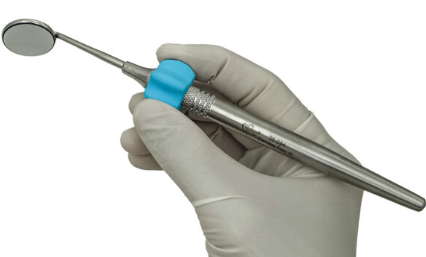
<p>Amount of effort by muscle and pressure placed on body part<br>(Aka how hard your muscles have to work)<br></p><ul><li><p>Holding small instrument for long time = high force</p></li></ul><ul><li><p>Pinch grip is greatest contributing risk factor to MSD</p></li></ul><p></p>
9
New cards

Repetitive movements

Repetitive task: Same movement >50% of work

  • MSD increases when same parts used continuously

3 composent to consider with repetitive motions:

  1. Frequency

  • How many times the action is repeated

  • How often that 1 hand is using instruments

  1. Duration

  • How long the action is performed

  1. Recovery time

  • Periods of rest that break repetitive cycle (stretches between patients)

10
New cards

Musculoskeletal problems

  1. Thoracic outlet syndrome

  2. Rotator cuff tendinitis

  3. Pronator syndrome

  4. Extensor wad strain

  5. Carpal tunnel syndrome (CTS)

  6. Ulnar nerve entrapment

  7. Tenosynovitis

  8. Tendinitis

11
New cards

Thoracic outlet syndrome

Definition

  • Disorder of fingers, hand, wrist due to compression of brachial nerve plexus and vesels between neck and shoulder

Causes

  • Tilting head forward, hunching, reaching overhead

Symptoms

  • Numb, tingle, pain in fingers, hands, wrists
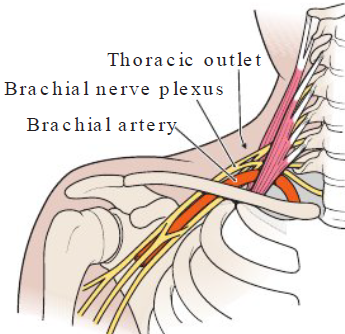
<p><strong>Definition</strong></p><ul><li><p>Disorder of fingers, hand, wrist due to compression of brachial nerve plexus and vesels between neck and shoulder</p></li></ul><p></p><p><strong>Causes</strong></p><ul><li><p>Tilting head forward, hunching, reaching overhead </p></li></ul><p></p><p><strong>Symptoms</strong></p><ul><li><p>Numb, tingle, pain in fingers, hands, wrists</p></li></ul><p></p>
12
New cards

Rotator cuff tendonitis

Definition

  • Inflammation of tendons in shoulder

Causes

  • Holding elbow above waist level and upper arms away from body

Symptoms

  • Pain and impaired function of shoulder joint
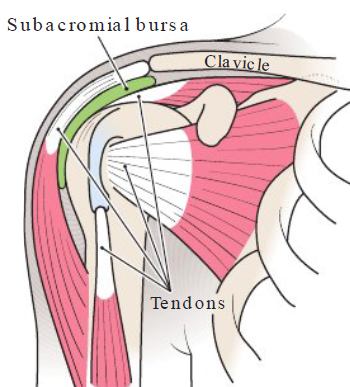
<p><strong>Definition</strong></p><ul><li><p>Inflammation of tendons in shoulder</p></li></ul><p></p><p><strong>Causes</strong></p><ul><li><p>Holding elbow above waist level and upper arms away from body</p></li></ul><p></p><p><strong>Symptoms</strong></p><ul><li><p>Pain and impaired function of shoulder joint</p></li></ul><p></p>
13
New cards

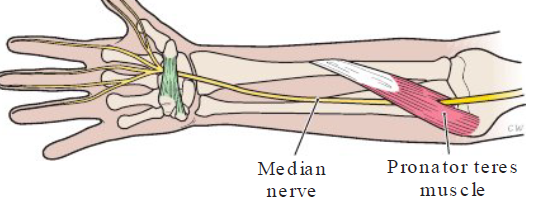
Pronator syndrome

Definition

  • Painful disorder of wrist and hand — compression of median nerve between 2 heads of pronator teres muscle

Causes

  • Holding lower arm away from body

Symptoms

  • Similar to carpal tunnel syndrome

<p><strong>Definition</strong></p><ul><li><p>Painful disorder of wrist and hand — compression of median nerve between 2 heads of pronator teres muscle </p></li></ul><p></p><p><strong>Causes</strong></p><ul><li><p>Holding lower arm away from body</p></li></ul><p></p><p><strong>Symptoms</strong></p><ul><li><p>Similar to carpal tunnel syndrome </p></li></ul><p></p>
14
New cards

Extensor wad strain

Definition

  • Painful disorder of fingers — injury of extensor muscles of thumb and fingers

Causes

  • Extending fingers independently of each other

Symptoms

  • Numbness, pain, loss of strength in fingers
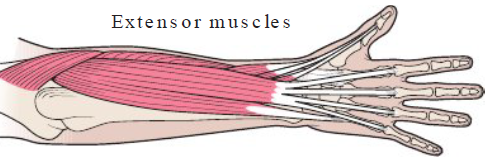
<p><strong>Definition</strong></p><ul><li><p>Painful disorder of fingers — injury of extensor muscles of thumb and fingers </p></li></ul><p></p><p><strong>Causes</strong></p><ul><li><p>Extending fingers independently of each other </p></li></ul><p></p><p><strong>Symptoms</strong></p><ul><li><p>Numbness, pain, loss of strength in fingers </p></li></ul><p></p>
15
New cards

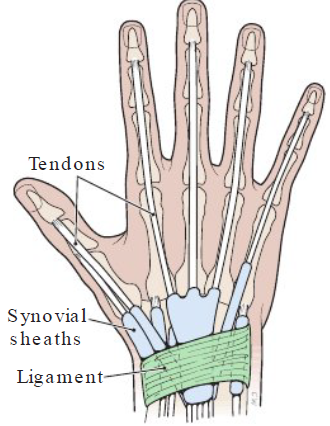
Carpal tunnel syndrome (CTS)

Definition

  • Compression of median nerve in carpal tunnel of wrist

Causes

  • Poor posture, repeatedly bending hands (up, down, side to side), pinch gripping w/o rest

Symptoms

  • Numbness, pain, tingling in thumb, index, middle fingers
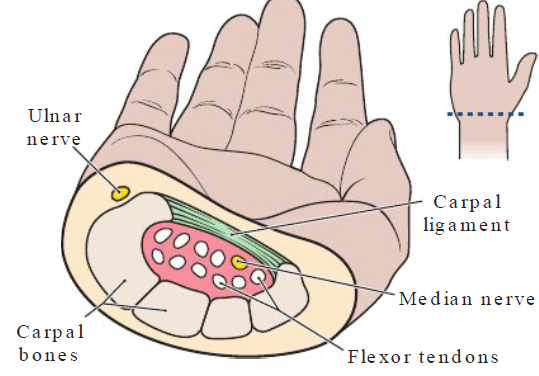
<p><strong>Definition</strong></p><ul><li><p>Compression of median nerve in carpal tunnel of wrist</p></li></ul><p></p><p><strong>Causes</strong></p><ul><li><p>Poor posture, repeatedly bending hands (up, down, side to side), pinch gripping w/o rest</p></li></ul><p></p><p><strong>Symptoms</strong></p><ul><li><p>Numbness, pain, tingling in thumb, index, middle fingers</p></li></ul><p></p>
16
New cards

Ulnar nerve entrapment

Definition

  • Lower arm and wrist compression of ulnar nerve

Causes

  • Bending hand (up, down, side to side) at wrist, holding pinkie finger away from hand

Symptoms

  • Numbness, tingle, loss strength in lower arm/ wrist
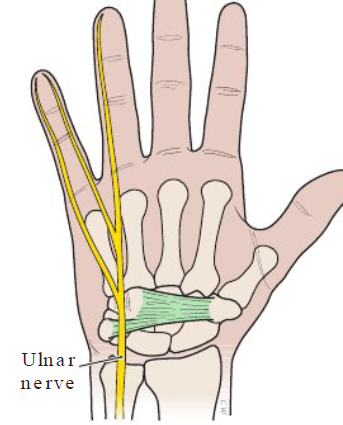
<p><strong>Definition</strong></p><ul><li><p>Lower arm and wrist compression of ulnar nerve</p></li></ul><p></p><p><strong>Causes</strong></p><ul><li><p>Bending hand (up, down, side to side) at wrist, holding pinkie finger away from hand</p></li></ul><p></p><p><strong>Symptoms</strong></p><ul><li><p>Numbness, tingle, loss strength in lower arm/ wrist</p></li></ul><p></p>
17
New cards

Tenosynovitis

Definition

  • Inflammation of tendons (side of wrist & base of thumb)

Causes

  • Hand twisting, forceful gripping, bending hand back or to side

Symptoms

  • Pain on side of wrist, base of thumb, cracking noise
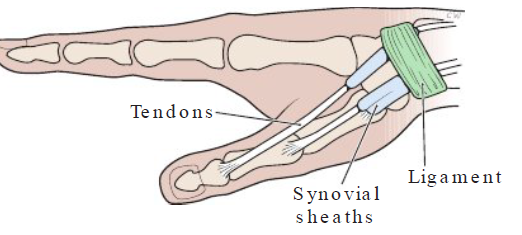
<p><strong>Definition</strong></p><ul><li><p>Inflammation of tendons (side of wrist &amp; base of thumb) </p></li></ul><p></p><p><strong>Causes</strong></p><ul><li><p>Hand twisting, forceful gripping, bending hand back or to side</p></li></ul><p></p><p><strong>Symptoms</strong></p><ul><li><p>Pain on side of wrist, base of thumb, cracking noise</p></li></ul><p></p>
18
New cards

Tendinitis

Definition

  • Inflammation fo tendons of wrist from strain

Causes

  • Extending hand up and down at wrist

Symptoms

  • Pain in wrist, outer edges of hand

<p><strong>Definition</strong></p><ul><li><p>Inflammation fo tendons of wrist from strain</p></li></ul><p></p><p><strong>Causes</strong></p><ul><li><p>Extending hand up and down at wrist</p></li></ul><p></p><p><strong>Symptoms</strong></p><ul><li><p>Pain in wrist, outer edges of hand</p></li></ul><p></p>
19
New cards

Foundation building blocks of periodontal instruments

  1. Position

  1. Instrument grasp

  1. Mirror use

  1. Finger rest

  1. Stroke production

  • Instrument moves against tooth surface

  • Activation, adaptation, angulation

20
New cards

Significance of building blocks for periodontal instruments

  • Precise performance

    • Skill should be mastered and performed w/o hesitation

  • Faulty performance

    • Ineffective calculus removal, discomfort patient, musculoskeletal stress

21
New cards

Ergonomic don’ts

  • Don’t sacrifice posture to “just get the job done”

  • Accepting uncomfortable position even for short periods is harmful

  • Maintain natural spine curves

22
New cards

Ergonomic do’s

  • First maintain neutral, balanced body position, THEN fix patient chair, dental equipment and complete work

  • Keep neutral spine position for good posture

23
New cards

Curves of a healthy spine

3 segments (natural S shape)

  • Cervical

  • Thoracic

  • Lumbar

Cervical and lumbar slight inward curve (Lordosis)

Thoracic has slight outward curve (Kyphosis)
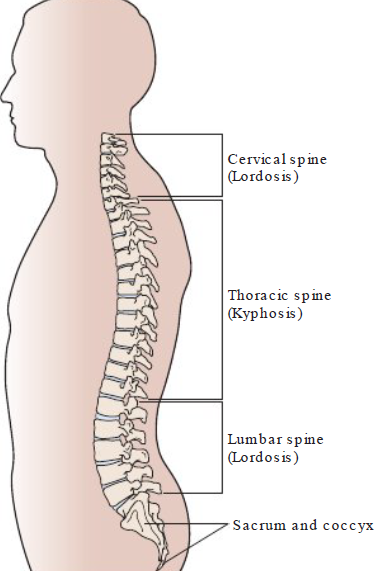
<p><strong>3 segments (natural S shape) </strong></p><ul><li><p>Cervical</p></li><li><p>Thoracic</p></li><li><p>Lumbar </p></li></ul><p></p><p>Cervical and lumbar slight inward curve (<strong>Lordosis</strong>) </p><p>Thoracic has slight outward curve (<strong>Kyphosis</strong>) </p><p></p>
24
New cards

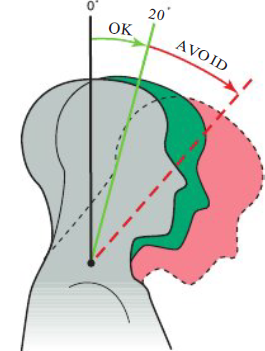
Neutral neck posture

  • 0 to 20 degrees

  • Avoid: tilting forward/ to one side

<ul><li><p>0 to 20 degrees</p></li><li><p><span style="color: rgb(255, 0, 0);"><strong>Avoid</strong></span>: tilting forward/ to one side</p></li></ul><p></p>
25
New cards
<p><strong>Neutral back position</strong></p>

Neutral back position

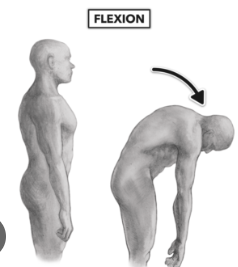
  • Lean forward slightly from hips

  • Trunk flexion 0 to 20 degrees

Avoid: Over flexion of spine (curved back)
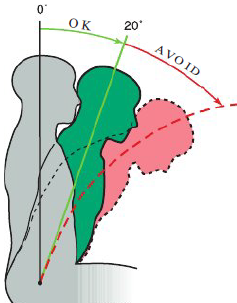
<ul><li><p>Lean forward slightly from hips </p></li><li><p>Trunk flexion 0 to 20 degrees</p></li></ul><p><span style="color: rgb(255, 0, 0);"><strong>Avoid</strong></span>: Over flexion of spine (curved back) </p><p></p>
26
New cards

Neutral torso position

  • Torso in line with long axis of body

Avoid: Leaning torso to one side or twisting torso
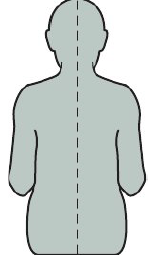
<ul><li><p>Torso in line with long axis of body</p></li></ul><p><span style="color: rgb(255, 0, 0);"><strong>Avoid</strong></span>: Leaning torso to one side or twisting torso</p><p></p>
27
New cards

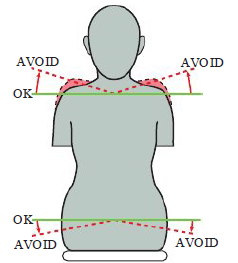
Neutral shoulder position

  • Shoulder in horizontal line

  • Weight evenly balanced when seated

Avoid

  • Lifting shoulders up towards ears

  • Shoulders hunched forward

  • Sitting with weight on one hip

<ul><li><p>Shoulder in horizontal line</p></li><li><p>Weight evenly balanced when seated</p></li></ul><p><span style="color: rgb(255, 0, 0);"><strong>Avoid</strong></span></p><ul><li><p>Lifting shoulders up towards ears</p></li><li><p>Shoulders hunched forward</p></li><li><p>Sitting with weight on one hip</p></li></ul><p></p>
28
New cards

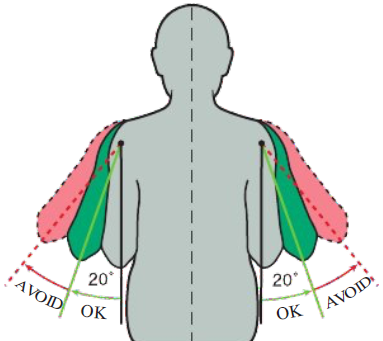
Neutral upper arm position

  • Upper arm parallel to axis of torso

  • Elbows at wasit level slightly away from body

Avoid

  • Greater than 20 degrees of elbow abduction

  • Elbow above waist level

<ul><li><p>Upper arm parallel to axis of torso</p></li><li><p>Elbows at wasit level slightly away from body</p></li></ul><p><span style="color: rgb(255, 0, 0);"><strong>Avoid</strong></span></p><ul><li><p>Greater than 20 degrees of elbow abduction</p></li><li><p>Elbow above waist level</p></li></ul><p></p>
29
New cards

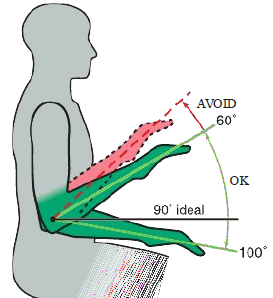
Neutral forearm position

  • Parallel to floor

  • Raised or lower by pivoting at elbow joint

  • 90 degrees IDEAL

Avoid

  • Forearm and upper arm <60 degrees

<ul><li><p>Parallel to floor</p></li><li><p>Raised or lower by pivoting at elbow joint</p></li><li><p>90 degrees IDEAL</p></li></ul><p><span style="color: rgb(249, 0, 0);"><strong>Avoid</strong></span></p><ul><li><p>Forearm and upper arm &lt;60 degrees</p></li></ul><p></p>
30
New cards

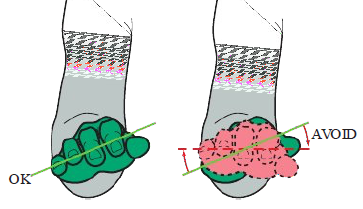
Neutral hand position

  • Pinky side palm slightly lower than thumb side

  • Wrist aligns with forearm

Avoid

  • Parallel hands

  • Wrist bent up or down

<ul><li><p>Pinky side palm slightly lower than thumb side</p></li><li><p>Wrist aligns with forearm</p></li></ul><p>Avoid</p><ul><li><p>Parallel hands</p></li><li><p>Wrist bent up or down</p></li></ul><p></p>
31
New cards
<p><strong>How to sit properly</strong></p>

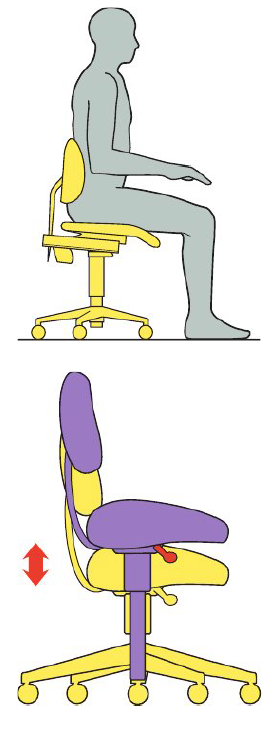
How to sit properly

  • Step 1

    • Sit with buttocks fully back in chair

    • Distribute weight on hips evenly

  • Step 2

    • Feet flat on floor

    • Feet shoulder width apart, slightly in front of hips

    • Maintain wide base of support

Avoid: Dangling feet/ crossing knees/ ankles

  • Step 3

    • Seat tilt — back of seat slightly higher than front

    • Hips slightly higher than knees (helps maintain lumbar curve)

Avoid: Excessive tilt

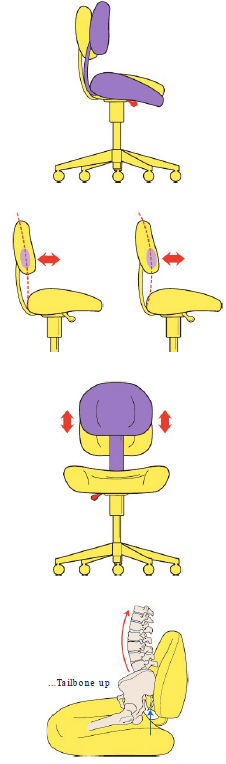
  • Step 4

    • Adjust backrest to support lumbar

  • Step 5

    • Adjust backrest up or down to support lumbar

  • Step 6

    • Raise tailbone slightly

    • Maintain natural spine curves

    • Pelvis position affects spine alignment

  • Step 7

    • Pull stomach muscles toward spine

  • Step 8

    • Relax shoulders

    • Adjust armrest to help shoulders

  • Step 9

    • Position arms parallel to torso axis

<ul><li><p><strong>Step 1</strong></p><ul><li><p>Sit with buttocks fully back in chair</p></li><li><p>Distribute weight on hips evenly</p></li></ul></li><li><p><strong>Step 2</strong></p><ul><li><p>Feet flat on floor</p></li><li><p>Feet shoulder width apart, slightly in front of hips</p></li><li><p>Maintain wide base of support</p></li></ul></li></ul><p><strong>Avoid: </strong>Dangling feet/ crossing knees/ ankles</p><ul><li><p><strong>Step 3</strong></p><ul><li><p>Seat tilt — back of seat slightly higher than front</p></li><li><p>Hips slightly higher than knees (helps maintain lumbar curve)</p></li></ul></li></ul><p><strong>Avoid</strong>: Excessive tilt</p><ul><li><p><strong>Step 4</strong></p><ul><li><p>Adjust backrest to support lumbar</p></li></ul></li><li><p><strong>Step 5</strong></p><ul><li><p>Adjust backrest up or down to support lumbar</p></li></ul></li><li><p><strong>Step 6</strong></p><ul><li><p>Raise tailbone slightly</p></li><li><p>Maintain natural spine curves</p></li><li><p>Pelvis position affects spine alignment</p></li></ul></li><li><p><strong>Step 7</strong></p><ul><li><p>Pull stomach muscles toward spine</p></li></ul></li><li><p><strong>Step 8</strong></p><ul><li><p>Relax shoulders</p></li><li><p>Adjust armrest to help shoulders</p></li></ul></li><li><p><strong>Step 9</strong></p><ul><li><p>Position arms parallel to torso axis</p></li></ul></li></ul><p></p>
32
New cards

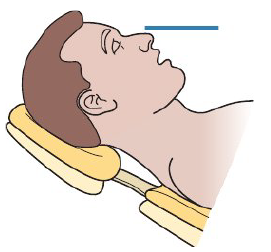
Patient position for maxillary arch

  • Body: Feet slightly higher than nose

  • Chair/ back: Chair parallel to floor

  • Head & Headrest: Head align with headrest in chin up position
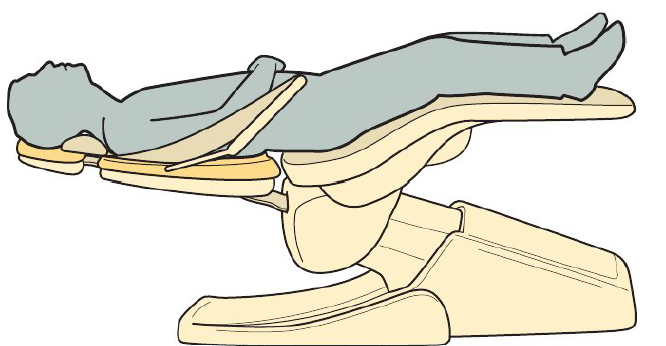
<ul><li><p><strong>Body: </strong>Feet slightly higher than nose</p></li><li><p><strong>Chair/ back</strong>: Chair parallel to floor</p></li><li><p><strong>Head &amp; Headrest: </strong>Head align with headrest in chin up position</p></li></ul><p></p>
33
New cards

Patient position mandibular arch

  • Body: Feet slightly higher than nose

  • Chair/ Back: Chair raised slightly above parallel position (15—20 degrees from horizontal)

  • Head: Patient’s top of head aligned with upper ede of head rest

  • Headrest: Patient’s head is chin down position, chin lower than nose
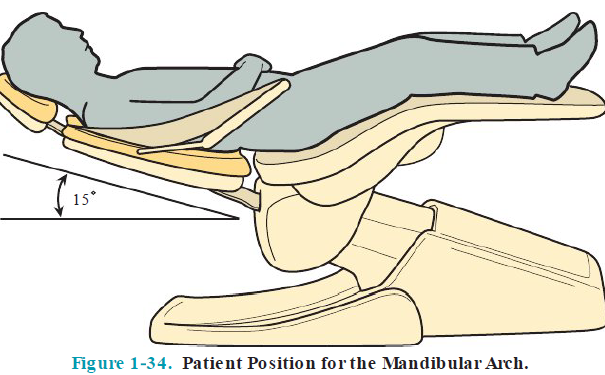
<ul><li><p><strong>Body</strong>: Feet slightly higher than nose</p></li><li><p><strong>Chair/ Back: </strong>Chair raised slightly above parallel position (15—20 degrees from horizontal) </p></li><li><p><strong>Head</strong>: Patient’s top of head aligned with upper ede of head rest</p></li><li><p><strong>Headrest</strong>: Patient’s head is chin down position, chin lower than nose</p></li></ul><p></p>
34
New cards

Patient head position

  • Head positioned at upper edge of headrest

  • Allows for better visibility and access

  • Asking child to bend knees to prevent sliding down in chair
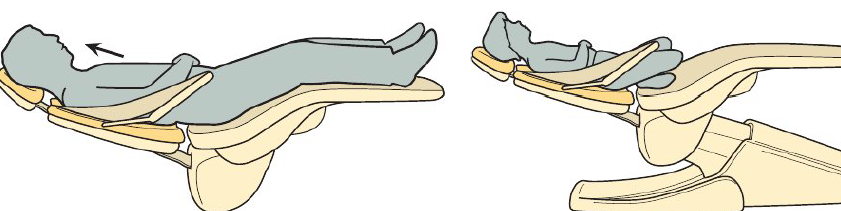
<ul><li><p>Head positioned at upper edge of headrest</p></li><li><p>Allows for better visibility and access</p></li><li><p>Asking child to bend knees to prevent sliding down in chair</p></li></ul><p></p>
35
New cards

Patient head adjustment

You can ask the patient to

  1. Tilt head up or down

  2. Rotate head towards or away

  3. Bend head to side

36
New cards

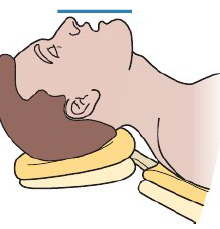
Patient head tilt for maxillary arch

  • Angle headrest into patient’s occipital area

  • This is chin up position

<ul><li><p>Angle headrest into patient’s occipital area</p></li><li><p>This is <strong>chin up position</strong></p></li></ul><p></p>
37
New cards

Patient head tilt for mandibular arch

  • Angle headrest forward and down — chin lower than nose level

  • Occlusal and incisal surfaces should be parallel to floor

  • This is chin down position

<ul><li><p>Angle headrest forward and down — chin lower than nose level</p></li><li><p>Occlusal and incisal surfaces should be parallel to floor </p></li><li><p>This is<strong> chin down position</strong></p></li></ul><p></p>
38
New cards

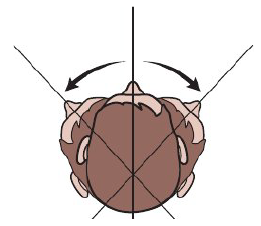
Patient head rotation for both arches

  • Patient can rotate head for easier access

  • Away, towards, or straight ahead

<ul><li><p>Patient can rotate head for easier access</p></li><li><p>Away, towards, or straight ahead</p></li></ul><p></p>
39
New cards

Bending head to the side

  • If non adjustable headrest, ask patient to bend head (towards, then turn
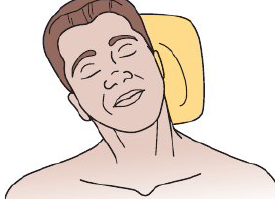
<ul><li><p>If non adjustable headrest, ask patient to bend head (towards, then turn</p></li></ul><p></p>
40
New cards

Overhead dental light positioning

Madibular arch light position

  • Light perpendiular to floor — directly over oral cavity

  • Patient in chin down position

  • Light is arm’s length

  • Avoid too close to patient’s head

Maxillary arch light position

  • Light directly over or around patient’s neck

  • Patient is in chin up position

  • Light is arm’s length

  • Light beam angled perpendicular to floor or 60—90 degrees to floor
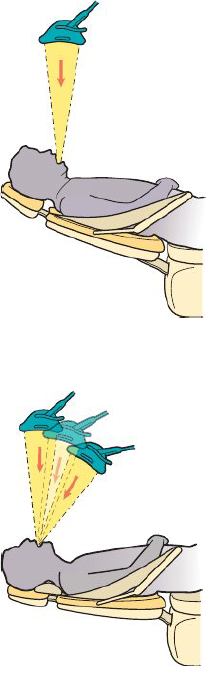
<p><strong>Madibular arch light position</strong></p><ul><li><p>Light perpendiular to floor — directly over oral cavity</p></li><li><p>Patient in chin down position</p></li><li><p>Light is arm’s length</p></li><li><p>Avoid too close to patient’s head </p></li></ul><p></p><p><strong>Maxillary arch light position</strong></p><ul><li><p>Light directly over or around patient’s neck</p></li><li><p>Patient is in chin up position</p></li><li><p>Light is arm’s length</p></li><li><p>Light beam angled perpendicular to floor or 60—90 degrees to floor</p></li></ul><p></p><p></p><p></p>
41
New cards

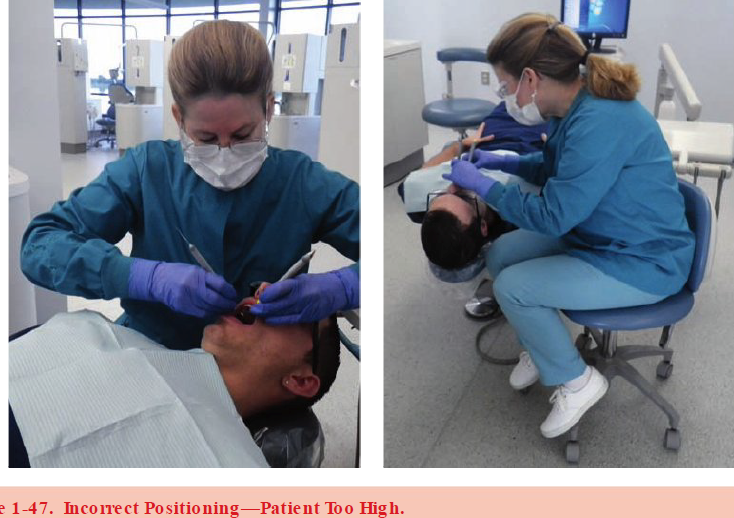
Positioning instrument tray

  • Tray in reach of dominant hand

  • Front/side delivery or rear delivery

Avoid

  • Tray too far away, patient oral cavity too high
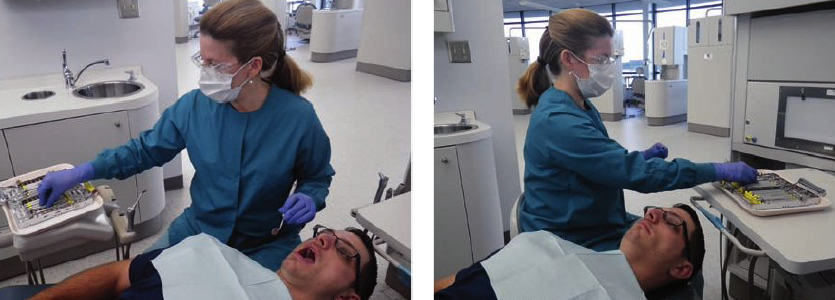
<ul><li><p>Tray in reach of dominant hand </p></li><li><p>Front/side delivery or rear delivery</p></li></ul><p><span style="color: rgb(249, 0, 0);"><strong>Avoid</strong></span></p><ul><li><p>Tray too far away, patient oral cavity too high</p></li></ul><p></p>
42
New cards
<p><strong>Patient’s chair position relative to seated clinician</strong></p>

Patient’s chair position relative to seated clinician

  • Neutral position

  • Wide base of support (feet on floor, shoulders width, feet infront of hips)

  • Stool close to patient

  • Stradle headrest

How to determine correct position

  1. Neutral position

  2. Position patient’s chair according to treatment (maxillary: supine / mandibular: semi supine)

  3. Position head for treatment (chin up or chin down)

  4. Mouth below clinician’s elbows, reach treatment without raising elbows)
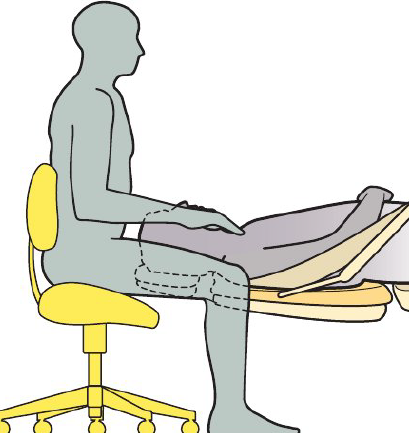
<ul><li><p>Neutral position</p></li><li><p>Wide base of support (feet on floor, shoulders width, feet infront of hips)</p></li><li><p>Stool close to patient</p></li><li><p>Stradle headrest</p></li></ul><p></p><p><strong>How to determine correct position</strong></p><ol><li><p>Neutral position</p></li><li><p>Position patient’s chair according to treatment (maxillary: supine / mandibular: semi supine)</p></li><li><p>Position head for treatment (chin up or chin down) </p></li><li><p>Mouth below clinician’s elbows, reach treatment without raising elbows) </p></li></ol><p></p>
43
New cards
<p><strong>Ancillary equipment</strong></p>

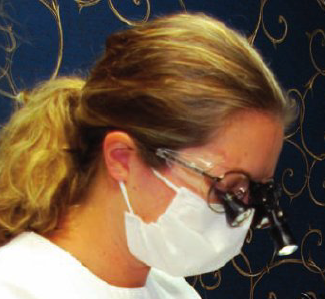
Ancillary equipment

  1. Coaxial ilumination

  • Light mounted to headband (dental headlights)

  • Stays parallel to clinician’s line of sight

  • Provides shadow free illumination

Advantages

  • Reduces shadows

  • Improves posture

  • Reduce need to adjust overhead light

  • Increase efficient and time

Potential concerns

  • Some emit blue light

  • Possible eye strain due to glare

  1. Magnification loupes

  • Limited evidence proving ergonomic benefits, doesn’t improve vision skills

  • Magnification may help reduce leaning forward (reduce strain on neck, back, shoulders)

  • Poorly fitted loupes worsen musculoskeletal strain (chronic neck and back pain, eye strain, double vision and headaches)

  • LOUPES ARE CUSTOM FIT

44
New cards

Magnification loupes

  1. Working distance

  • Distance from eye to teeth

  • Too short = hunch posture to see

  1. Angle of declination

  • Angle between loupe and clinician’s line of sight
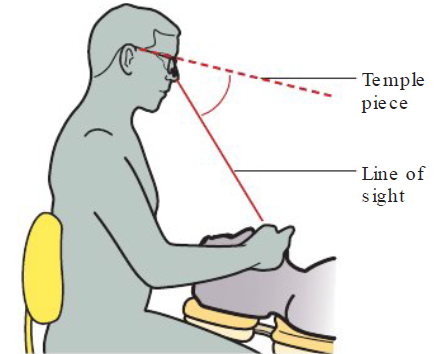
    • Angle too small —> head tilts forward to see

    • Angle to large —> head tilts backwards to see

  1. Depth of field

  • Range where image stays in focus

    • Adequate depth — Head movement while maintaining visibility

    • Poor depth — Awkward head position to maintain visibility

  1. Sizes and weight of spectacle frame

  • Size

    • Large/ lower glasses frame improves telescope placement

    • Better telescope placement improves declination angle

  • Weight

    • Frame needs to be lightweight and comfortable

45
New cards

Declination angle

  • Angle between loupe and clinician’s line of sight

<ul><li><p>Angle between loupe and clinician’s line of sight</p></li></ul><p></p>
46
New cards

Limitations with magnification

Field of vision

  • Total visible area through loupes

  • Ex: 2.0x / 2.5x / 2.6x

47
New cards

Blind zone with magnification

Blind zone

  • Area between magnified center vision and unmagnified peripheral vision

  • Most difficult when instrument is in or out of magnified view

  • Possilbe injury to patient or clinician

Prevention

  • Use lowest magnification

  • Move loupes aside until stable fulcrum established

48
New cards

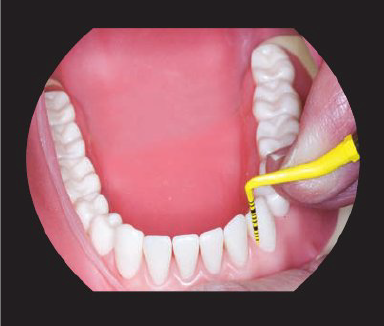
Loupes in preclinical setting

Student must see

  • Patient’s head

  • Clinician’s arms/ hands/ fingers

  • Oral cavity

  • Patient positioning

  • Mirror use

  • Finger rests

Limited field of vision

Loupes are given if the student has mastered the fundamental skills of patient positioning, clock positions, mirror use, finger rests
<p>Student must see</p><ul><li><p>Patient’s head</p></li><li><p>Clinician’s arms/ hands/ fingers</p></li><li><p>Oral cavity</p></li><li><p>Patient positioning</p></li><li><p>Mirror use</p></li><li><p>Finger rests</p></li></ul><p></p><p><strong>Limited field of vision</strong></p><p>Loupes are given if the student has mastered the fundamental skills of patient positioning, clock positions, mirror use, finger rests</p><p></p>