nitrous oxide pt. 2
 Call Kai
 Learn
Learn Practice Test
 Spaced Repetition
 Match
Match Flashcards
 Knowt Play
1/80

There's no tags or description
Looks like no tags are added yet.
Name | Mastery | Learn | Test | Matching | Spaced | Call with Kai |
|---|
No analytics yet
Send a link to your students to track their progress
81 Terms
what is the percentage of adults that have dental anxiety?
~ 50% to 80%
T/F: pain receptors (nociceptors) are first to receive a stimuli
TRUE
what is psychogenic pain?
pain that does not happen directly because of an injury or illness
what signs of fear would you expect to see?
white-knuckle syndrome
increased heart rate
increased BP
increased respiration
what is safe to use to manage fear?
diazepam (valium)
peak effect in ~ one hour
T/F: pain is always physiological and not psychological
FALSE
manufacturing and delivery of nitrous is regulated by…
the FDA
what size tanks are most common?
E size tanks
in the united states, what colors are N2O and O2 tanks?
N2O = blue
O2 = green
under NO circumstances, what substances should NEVER come in contact with gas or gas delivery equipment?
grease, oil, or any other organic substance
how should cylinders be stored?
vertically and chained to a wall or secured in carts as a means of storage
should nitrous be readily accessible?
no
a full N2O cylinder contains approximately __% liquid and __% vapor
95 ; 5
a full cylinder of N2O will read ____ psi at 70 degrees
750
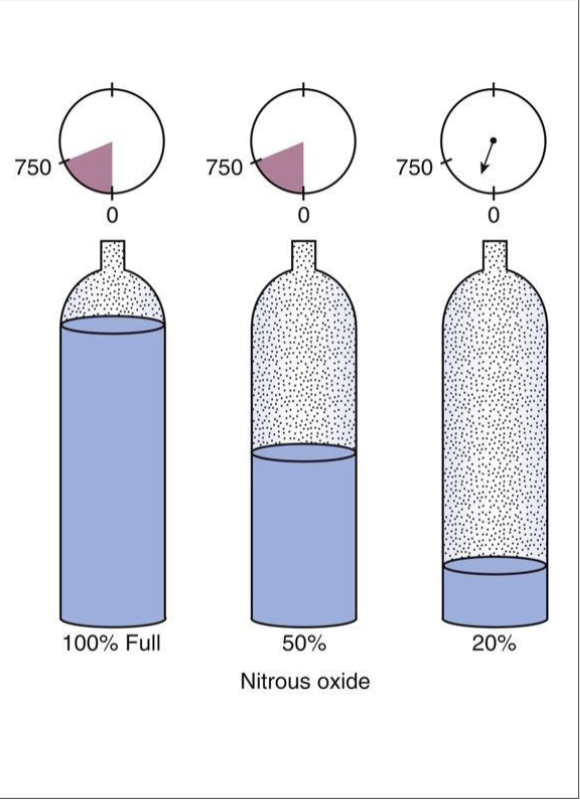
why is the reading on the gauge not proportional to the actual amount of gas in a N2O cylinder?
it is due to the vaporization of the liquid
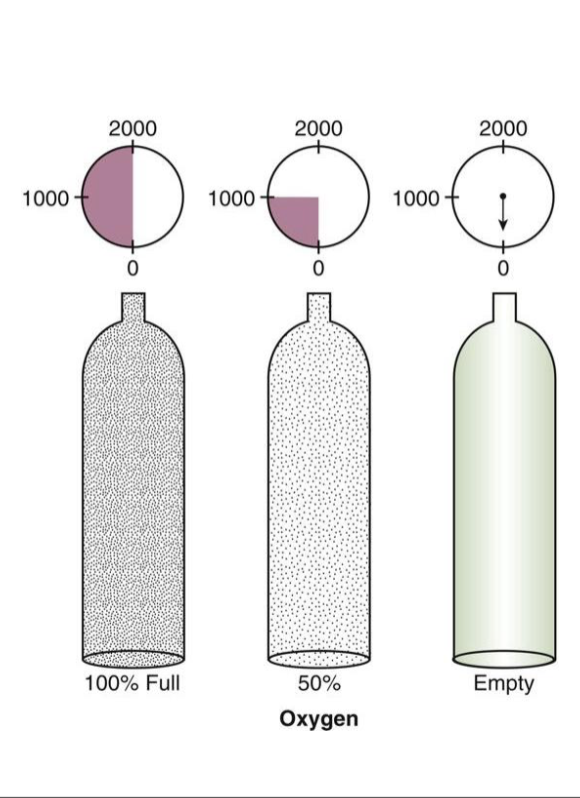
when the O2 cylinder is full, what is the psi?
2000
what sedation-specific information should be included in the medical history?
medical problems including OSA
airway concerns
respiratory conditions
previous sedation experience
current medications
psychotropic drug use
ASA I
A normal healthy patient (non-smoker, no or minimal alcohol use)
ASA II
A patient with mild systemic disease (current smoker, pregnancy, well-controlled DM/HTN, mild lung disease)
ASA III
A patient with severe systemic disease (poorly controlled DM or HTN, COPD, ESRD, alcohol dependence/abuse, implanted pacemaker, history > 3 months of an MI, TIA, CVA, CAD/stents)
ASA IV
A patient with severe systemic disease that is a constant threat to life (< 3 months MI, CVA, TIA, CAD/stents, ESRD w/o regular dialysis)
T/F: vital signs should be taken only before nitrous administration
FALSE. vitals should be taken before and after to provide a baseline
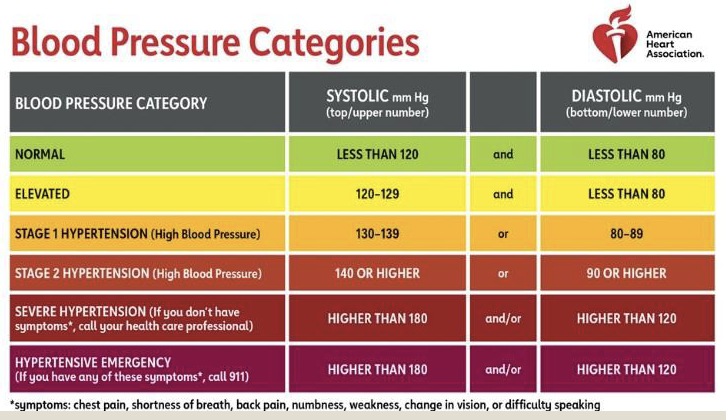
must know BP!
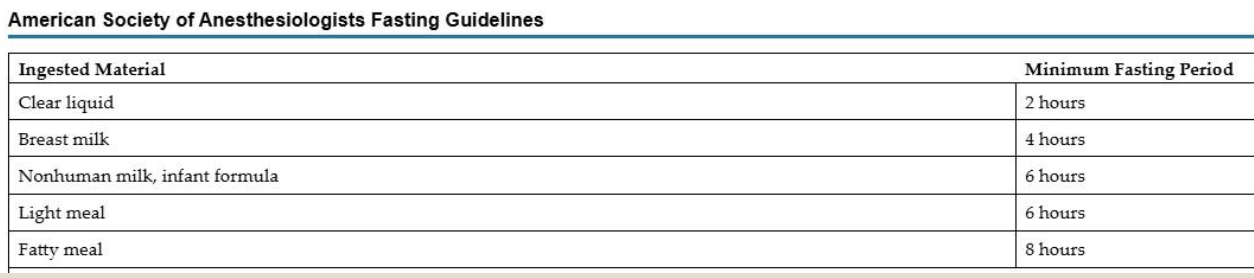
dairy should be avoided for a minimum of how many hours before nitrous? (to prevent vomiting)
6 hours
informed consent includes what?
purpose of the procedure
how it will be accomplished
what to expect
risks and benefits
alternative options must be offered
have the opportunity to ask questions
recommended to have a designated form for nitrous administration
T/F: the patient should never be left alone during nitrous administration
TRUE
level of consciousness should be monitored through what?
questioning
ventilation should be monitored through what?
observation or auscultation
reservoir bag
frequency and depth of respiration
can pulse oximetry uncover early hypoxemia?
yes
T/F: cyanosis is an early sign of respiratory distress
FALSE. it is a late sign
what should the sedation record include?
the reason why N2O was administered
the peak percentage of N2O
the minute volume
the duration of the procedure
the amount of post-op oxygen time
T/F: personnel who use nitrous and/or LA must be certified in BLS that includes CPR, AED use and management of airway obstruction
TRUE
According to the ASA Physical Status Classification System, a 52-year-old patient with hypertension being controlled by daily medication would be classified as a
A. ASA I (1)
B. ASA II (2)
C. ASA III (3)
D. ASA IV (4)
B. ASA II (2)
what is titration?
a method of administering a drug in incremental amounts until a desired endpoint is reached
The concept of individual biovariability when administering drugs is based on the premise that
A. all people will react to a drug regardless of the dose.
B. individuals are likely to require the same amount of a drug when prescribed at different times.
C. individuals may not react similarly to the same drug on different days.
D. the majority of people react the same way to the same drug.
C. individuals may not react similarly to the same drug on different days.
what should be inspected before using a nitrous unit?
check all equipment for leaks, tears, or damage in the tubing and reservoir bag
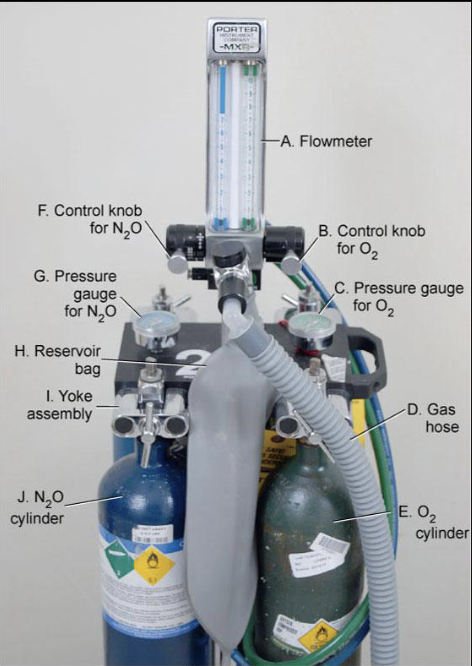
what should be done if the tubing and reservoir bag are not attached?
connect the tubing and reservoir bag before use
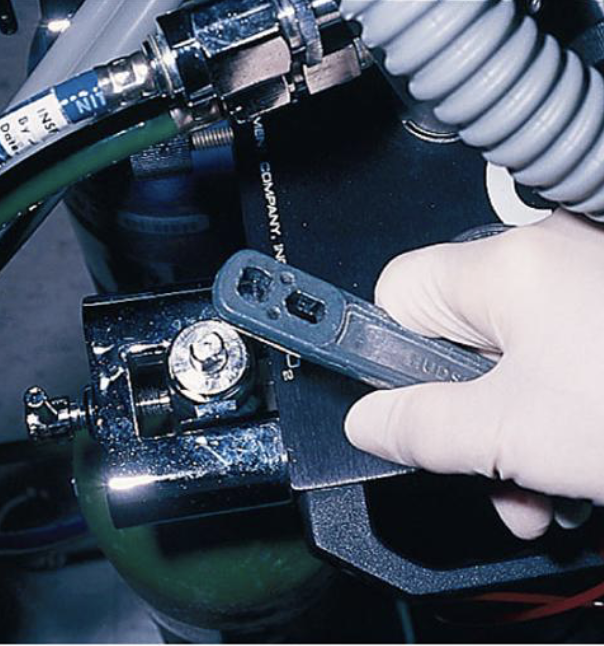
how are the nitrous oxide and oxygen cylinders activated?
open both cylinders by turning the knob counterclockwise with a wrench
what must be checked on the flowmeter before administration?
ensure the master switch is in the ON position
how is the scavenging system activated?
turn on suction to the appropriate level (at least 45 L/min)
how should the scavenging system sound?
suction should be barely audible
what can happen if scavenging suction is too strong?
it may compromise the flow of gases
why is it better to start with slightly more oxygen flow initially?
to avoid a suffocating feeling
how full should the reservoir bag be before placing the nasal hood?
about 2/3 full
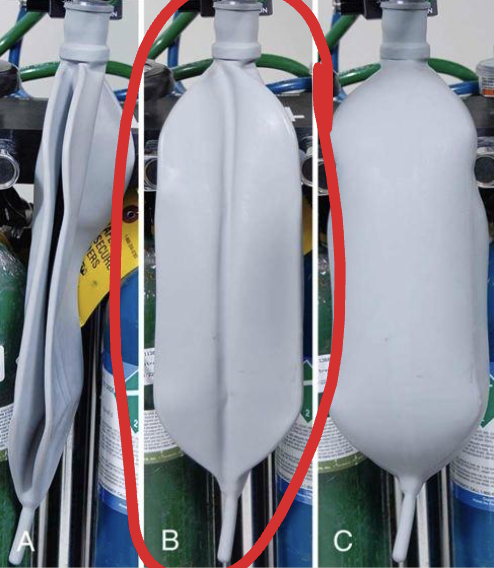
how is the reservoir bag inflated initially?
press the O2 flush button until the bag is 2/3 full
what should the patient be told regarding the nasal hood?
adjust it at any time to maintain a snug but comfortable fit
how can gas leakage around the nasal hood be minimized?
place gauze around the periphery of the hood
what may hissing from the nasal hood indicate?
gas flow is too high
what does a bulging reservoir bag indicate, and what should you do?
too much gas is being delivered
decrease oxygen flow until the bag is about 2/3 full
what does a collapsing reservoir bag indicate, and what should you do?
the patient is breathing in all the gas being delivered
increase flow and reinflate the bag using the O2 flush button
once the appropriate liters per minute are established, what happens to the flow rate?
it remains constant for the duration of the procedure
what amount of nitrous oxide should be administered initially?
1-1.5 L/min
how should nitrous oxide be increased during titration?
in increments of 0.5-1 L/min
how long should you wait between nitrous increments?
at least 60 seconds
why should you wait between nitrous increments?
to allow the peak effect of the previous dose to occur before adding more
when should post-operative oxygenation begin?
near the end of the procedure
how long should 100% oxygen be administered after nitrous?
minimum of 5 minutes
what should be done if the patient does not feel well after 5 minutes of oxygen?
continue 100% oxygen until recovery is complete
what position should the patient be in during recovery?
slightly upright with the nasal hood in place
what blood pressure difference is considered acceptable after recovery?
within 10 mm Hg of pre-op values
what pulse difference is considered acceptable after recovery?
within 10 beats/min of pre-op
what respiration difference is considered acceptable after recovery?
within 5 breaths/min of pre-op
what should be turned off immediately after use on a portable unit?
gas cylinders
when are central gas systems usually turned off?
at the end of the day
when should the lines be bled on a portable unit?
at the end of the day
what is the purpose of the fail-safe system?
prevent administration of 100% nitrous oxide
why can't the oxygen flowmeter usually go below 2–3 L/min?
to ensure oxygen is always being delivered and prevent 100% nitrous administration
An acceptable amount of nitrous oxide to begin the titration technique for an adult requiring 7L/min would be _____ on a machine with floating balls in glass tubes.
A. 1 to 1.5 L
B. 2 to 2.5 L
C. 3 to 3.5 L
A. 1 to 1.5 L
The purpose of the O2 flush button is to
A. Fill the reservoir bag, when necessary
B. Flush the patient with O2 at the end of the procedure
C. Monitor the patient’s respiration
D. Substitute for CPR in an emergency situation
A. Fill the reservoir bag, when necessary
why is nitrous exposure a concern during pregnancy?
it may impair fetal development
A major source of trace N2O that contaminates the ambient air in a dental office is from
A. Cracked reservoir bags.
B. Improperly soldered central piping.
C. Leaking valve stems on the cylinder.
D. The patient talking.
D. The patient talking
What is the occupational exposure limit in the United States per NIOSH?
A. 25 ppm
B. 45 ppm
C. 50 ppm
D. 100 ppm
A. 25 ppm
who are the biggest abusers of N2O?
dental professionals
what can happen as a result of chronic exposure to nitrous?
peripheral neuropathy
tingling, numbness in the extremities
weakness and incoordination
lack of strength and dexterity in the hands
slowed gait
electric shock feeling on flexion of the neck
what precautions should be taken during nitrous sedation?
have a third party nearby
titrate to the appropriate level of sedation
avoid oversedation
Symptoms of neuropathy commonly seen in persons who chronically abuse N2O include the following except one. Which one is this exception?
A. Impaired psychomotor function and dexterity
B. Insomnia, acute sensitivity, hyperactivity
C. Tingling and/or paresthesia in extremities
D. Unsteady gait, clumsiness
B. Insomnia, acute sensitivity, hyperactivity
what information must be included in informed consent?
patient identification
proposed treatment and alternatives
cost
risks/adverse outcomes
opportunity to ask questions
nonmaleficence?
do no harm
beneficence?
provide care that benefits the patient
autonomy?
the patient’s right to make informed healthcare decisions
veracity?
truthfulness