APHG Units 5-7 Terms
 Call Kai
 Learn
Learn Practice Test
 Spaced Repetition
 Match
Match Flashcards
 Knowt Play
1/98

Earn XP
Description and Tags
AP Human Geography Units 5, 6, and 7 key terms + definitions
Name | Mastery | Learn | Test | Matching | Spaced | Call with Kai |
|---|
No analytics yet
Send a link to your students to track their progress
99 Terms
Subsistence Agriculture
Farming system where food is produced mainly for the farmer and their family with little surplus for sale.
Commercial Agriculture
Farming system where crops and livestock are produced primarily for sale in the market.
Intensive Agriculture
Farming that uses a lot of labor and inputs per unit of land to maximize yields.
Extensive Agriculture
Farming that uses large areas of land with minimal labor and inputs per acre.
Shifting Cultivation
Subsistence farming where land is cleared (slash-and-burn) and used temporarily before moving to a new plot.
Pastoral Nomadism
Form of subsistence agriculture based on herding domesticated animals and moving seasonally.
Transhumance
Seasonal movement of livestock between mountains and lowland pastures.
Plantation Agriculture
Large-scale commercial farming specializing in one crop, often in tropical climates.
Mixed Crop and Livestock Farming
Farming that combines growing crops and raising animals in the same operation.
Mediterranean Agriculture
Farming system specialized in grapes, olives, and citrus fruits in dry-summer climates.
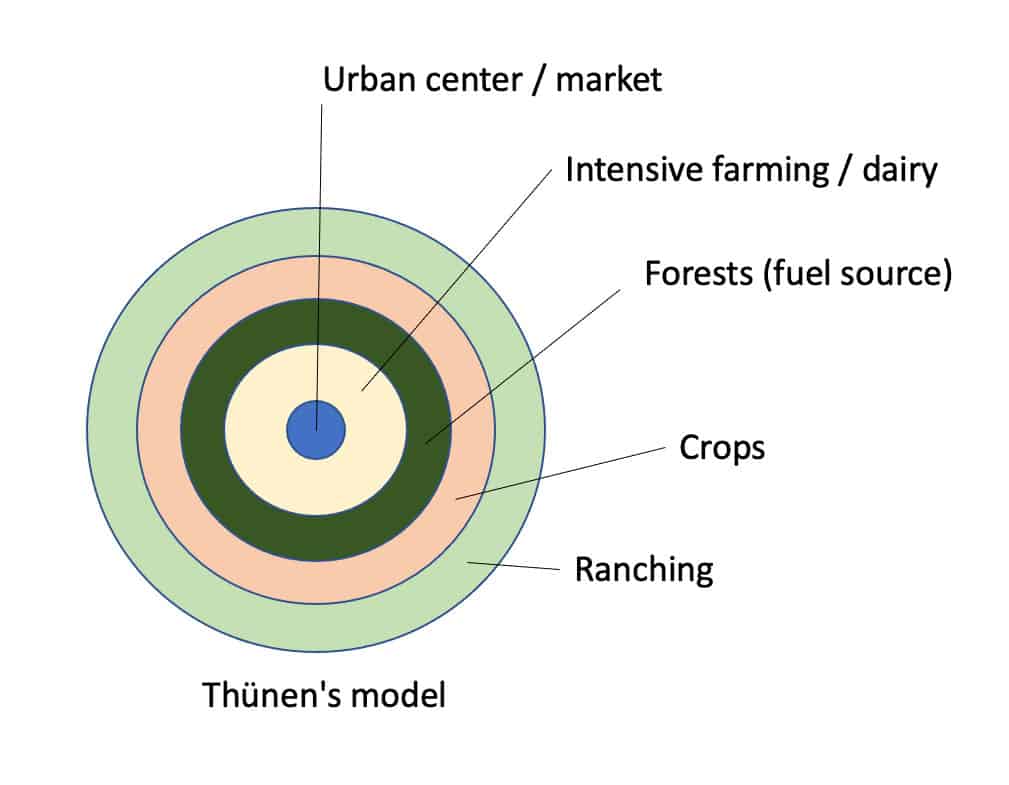
Von Thünen Model
Model that explains agricultural land use based on distance from a central market.
Agribusiness
Large-scale system that includes production, processing, and distribution of agricultural products.
Green Revolution
Period of increased agricultural production due to new technologies, fertilizers, and high-yield crops.
Genetically Modified Organisms (GMOs)
Crops altered through biotechnology to improve yield or resistance.
Monocropping
Growing a single crop repeatedly on the same land.
Crop Rotation
Practice of alternating crops to maintain soil fertility.
Soil Erosion
Loss of topsoil due to wind, water, or human activity.
Desertification
Process where fertile land becomes desert due to drought or poor farming practices.
Food Desert
Area with limited access to affordable and nutritious food.
Organic Farming
Farming without synthetic chemicals or genetically modified organisms.
Industrial Revolution
Period of rapid industrial growth beginning in the late 18th century.
Market Gardening
Small-scale commercial farming that produces fruits, vegetables, and flowers for sale in nearby urban markets.
Gross Domestic Product (GDP)
Total value of goods and services produced within a country.
Gross National Income (GNI)
Total income earned by a country’s residents and businesses.
Standard of Living
Level of wealth, comfort, and access to goods and services.
Human Development Index (HDI)
Measure of development based on life expectancy, education, and income.
Primary Sector
Economic activities that extract natural resources (agriculture, mining).
Secondary Sector
Economic activities that process raw materials into goods.
Tertiary Sector
Service-based economic activities (retail, healthcare, education).
Quaternary Sector
Knowledge-based activities (research, information technology).
Outsourcing
Moving production or services to another country to reduce costs.
Offshoring
Relocating a company’s operations to another country.
Deindustrialization
Decline in industrial activity in a region or country.
Special Economic Zone (SEZ)
Area where economic laws are more relaxed to attract business.
Export Processing Zone (EPZ)
Zone designed to manufacture goods for export.
Maquiladora
Factory in Mexico near the U.S. border that imports materials duty-free for assembly and export.
Comparative Advantage
Ability of a country to produce a good at a lower opportunity cost than others.
Neoliberal Policies
Economic policies favoring free markets, privatization, and reduced government intervention.
Microfinance loans
Small loans given to individuals in developing countries to start businesses.
Infrastructure
Basic physical systems like transportation, communication, and utilities.(roads, water, power).
Globalization
Increasing interconnectedness of economies and cultures worldwide.
Urbanization
Increase in the percentage of people living in cities.
Megacity
City with a population of over 10 million people.
Metacity
City with a population of over 20 million people.
Metropolitan Area
City and its surrounding suburbs and communities.
Site
Physical characteristics of a location (climate, landforms).
Situation
Location of a place relative to other places.
Central Business District (CBD)
Commercial and business center of a city.
Urban Sprawl
Expansion of cities into surrounding rural areas.
Gentrification
Process of wealthier people moving into and improving urban neighborhoods, often displacing residents.
Redlining
Discriminatory practice of denying services based on neighborhood demographics.
Blockbusting
Practice of encouraging racial turnover for profit in housing markets.
Suburbanization
Movement of people from cities to suburbs.
Counterurbanization
Movement of people from urban areas to rural areas.
Edge City
Large suburban area with business, shopping, and entertainment centers.
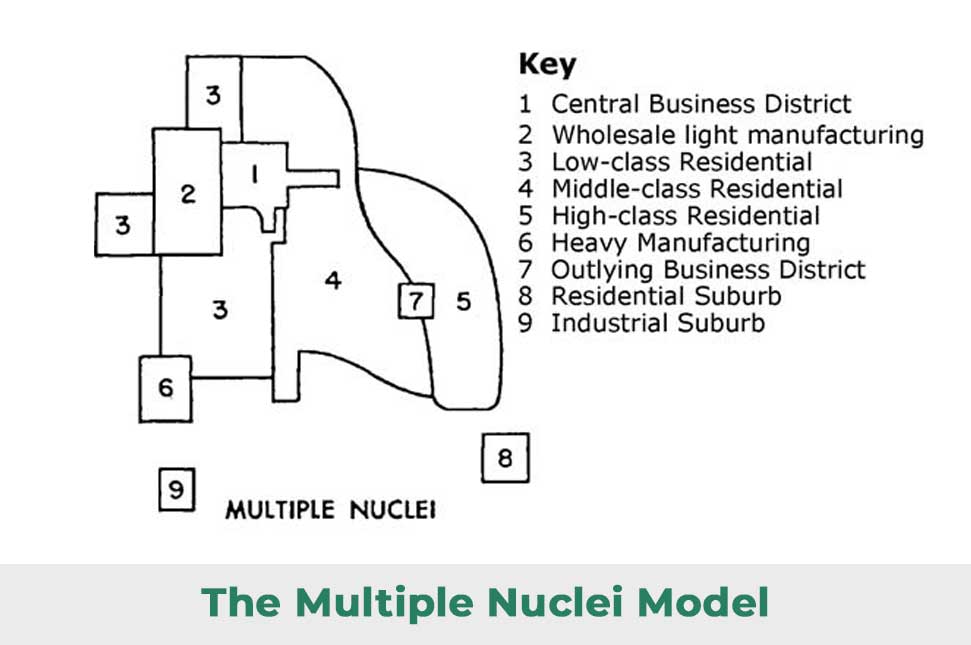
Multiple Nuclei Model
Model suggesting cities develop around multiple centers/CBDs.
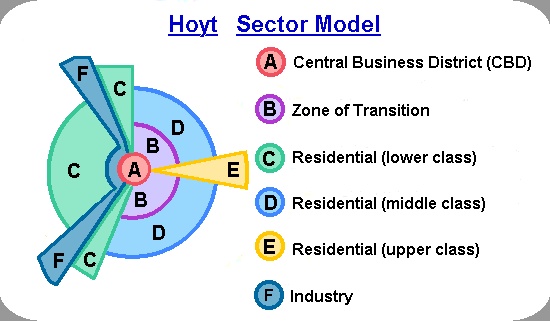
Sector Model
Model showing city development in sectors or wedges from the center.
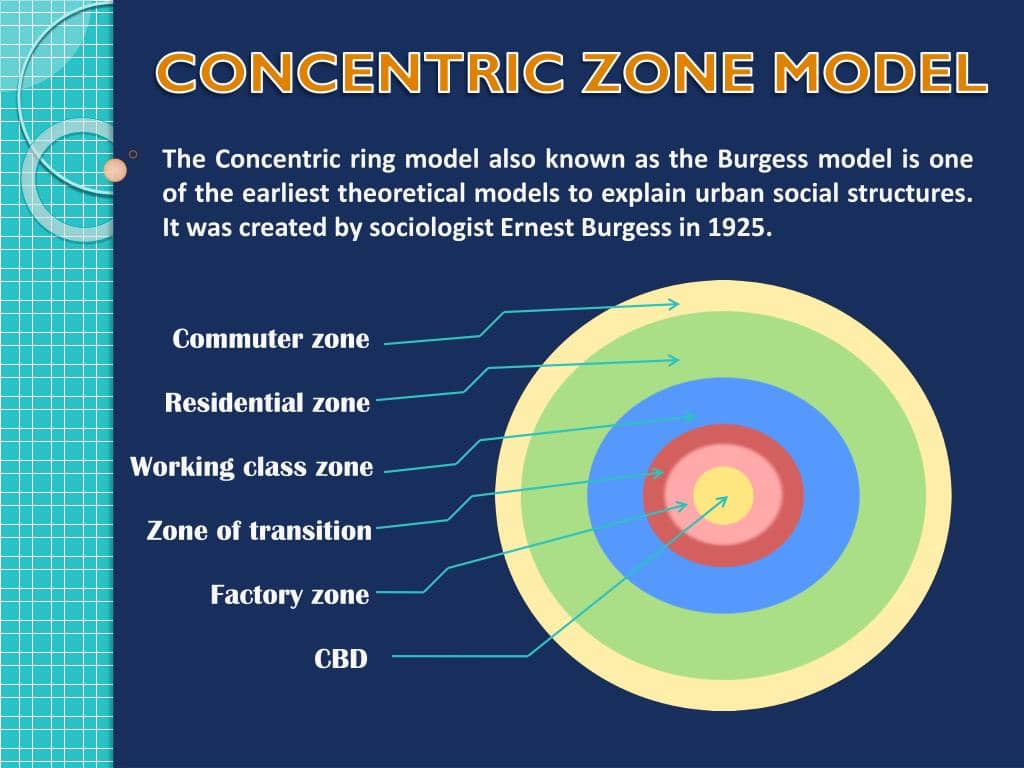
Concentric Zone Model
Model showing cities developing in rings outward from the CBD.
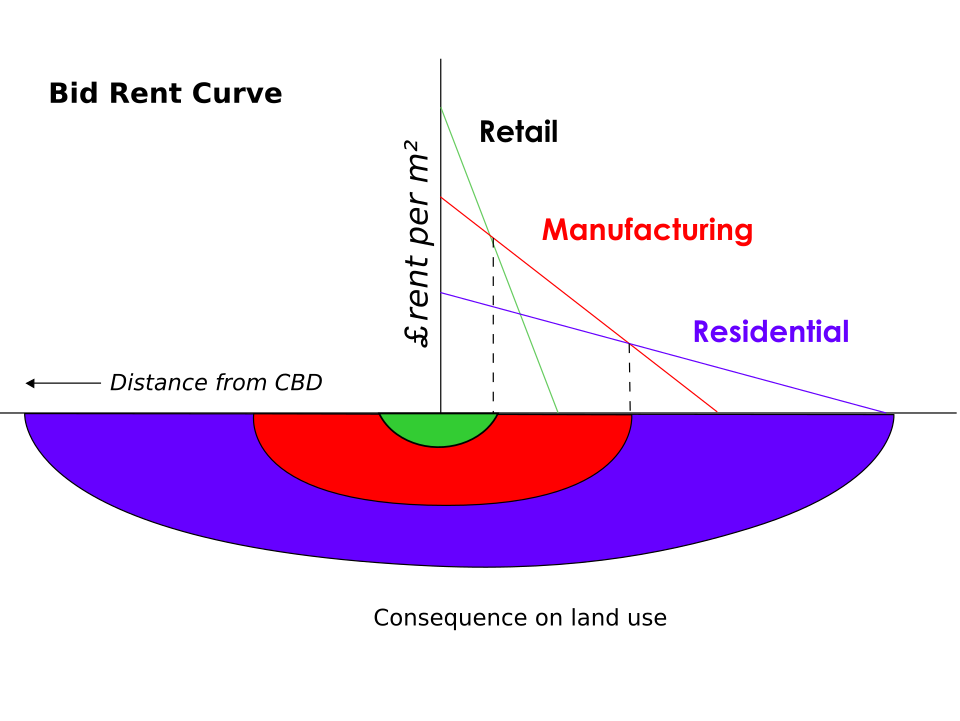
Bid-Rent Theory
Explains how land prices decrease as distance from the CBD increases.
Urban Renewal
Redevelopment of urban areas to improve conditions.
Smart Growth
Urban planning that focuses on sustainability and reducing sprawl.
Sustainable City
City designed to minimize environmental impact.
Ranching
Commercial grazing of livestock over large areas of land
Second Agricultural Revolution
Period of improved farming methods (crop rotation, mechanization) that increased food production and supported population growth.
Commodity Chain
Network that links the production, processing, distribution, and consumption of goods.
Carrying Capacity (Agriculture)
Maximum number of people that can be supported by the available food supply.
Soil Salinization
Accumulation of salt in soil due to irrigation, reducing fertility.
Aquaculture
Farming of fish and other aquatic organisms.
Value-Added Crops
Agricultural products that have increased economic value through processing or branding.
Fair Trade
Movement that ensures producers in developing countries receive fair prices and ethical working conditions.
Local Food Movement
Effort to consume food produced locally to reduce environmental impact and support local economies.
Exurb
Residential area beyond the suburbs, often with a more rural character.
Boomburb
Rapidly growing suburb that becomes large but lacks a traditional downtown.
World City
City that has significant influence on global economic, political, and cultural affairs.
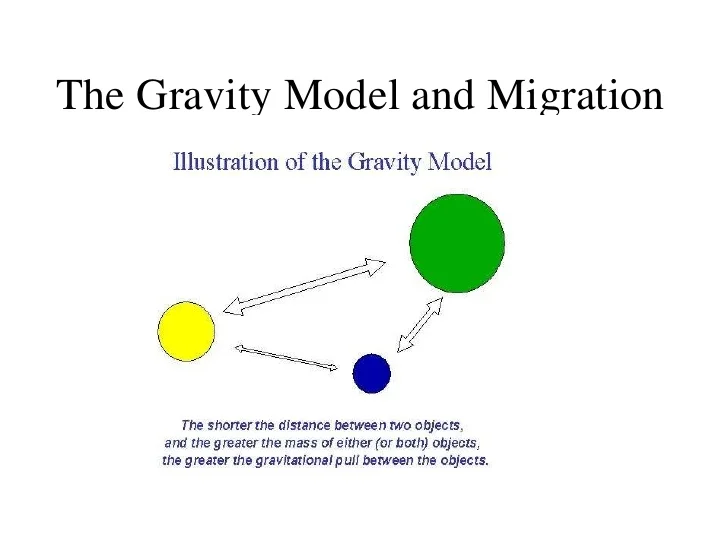
Gravity Model
Predicts interaction between places based on population size and distance.
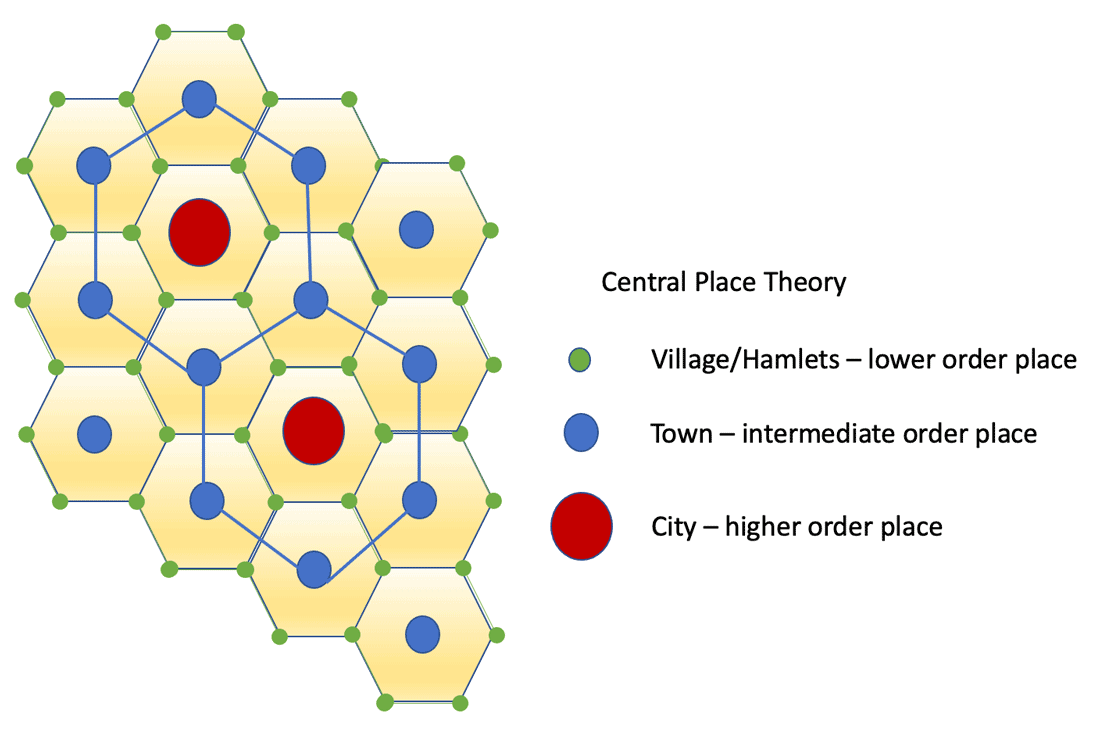
Central Place Theory
Explains spatial distribution of cities based on goods/services and market areas.
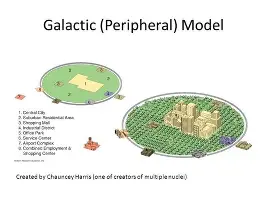
Galactic City Model
Model showing a city with multiple centers connected by highways (modern U.S. cities).
Transportation-Oriented Development (TOD)
Urban planning that focuses on dense development near public transit.
New Urbanism
Urban design promoting walkable neighborhoods and mixed-use development.
Greenbelt
Protected open land around cities to limit urban sprawl.
Brownfield
Abandoned or contaminated industrial site targeted for redevelopment.
Inclusionary Zoning
Policy requiring affordable housing in new developments.
Environmental Injustice
Unequal exposure of marginalized groups to environmental hazards.
Break-of-Bulk Point
Location where goods are transferred between transportation modes.
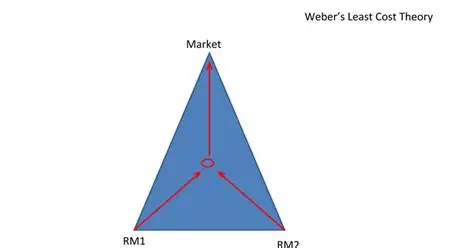
Least Cost Theory
Model explaining industrial location based on minimizing transportation, labor, and agglomeration costs.
Agglomeration
Clustering of businesses to reduce costs and increase efficiency.
Economies of Scale
Cost advantages gained when production increases.
Just-in-Time Delivery
System where goods arrive exactly when needed in production to reduce storage costs.
Post-Fordism
Flexible production system with smaller batches and customized goods.
Fordism
System of mass production using assembly lines and standardized products.
Economic Restructuring
Shift from manufacturing to service-based economies.
Export Processing Zone (EPZ)
Area where goods are manufactured for export with favorable conditions.
Free-Trade Zone
Region where goods can be imported, handled, and exported without tariffs.
International Monetary Fund (IMF)
Organization that provides financial assistance to countries in crisis.
Tariff
Tax on imported goods.
Complementarity
When two places have different resources, allowing for trade.
Intervening Opportunity
Alternative place that reduces trade interaction between two locations.
Sustainable Development
Sustainable Development
Commodity Dependence
A situation in which a country relies heavily on the export of a single or a few raw materials or agricultural products, making its economy vulnerable to price fluctuations in global markets.