SOCIAL PSYCHOLOGY
 Call Kai
 Learn
Learn Practice Test
 Spaced Repetition
 Match
Match Flashcards
 Knowt Play
1/132

There's no tags or description
Looks like no tags are added yet.
Name | Mastery | Learn | Test | Matching | Spaced | Call with Kai |
|---|
No analytics yet
Send a link to your students to track their progress
133 Terms
Kohlberg's Moral Reasoning Stages
- Proposed that morality develops through 6 stages grouped into 3 levels
- The limitations of this theory are that it focuses heavily on justice and doesn't consider caring for others. Moral reasoning often does align with actual behavior, as many decisions are driven by emotions.
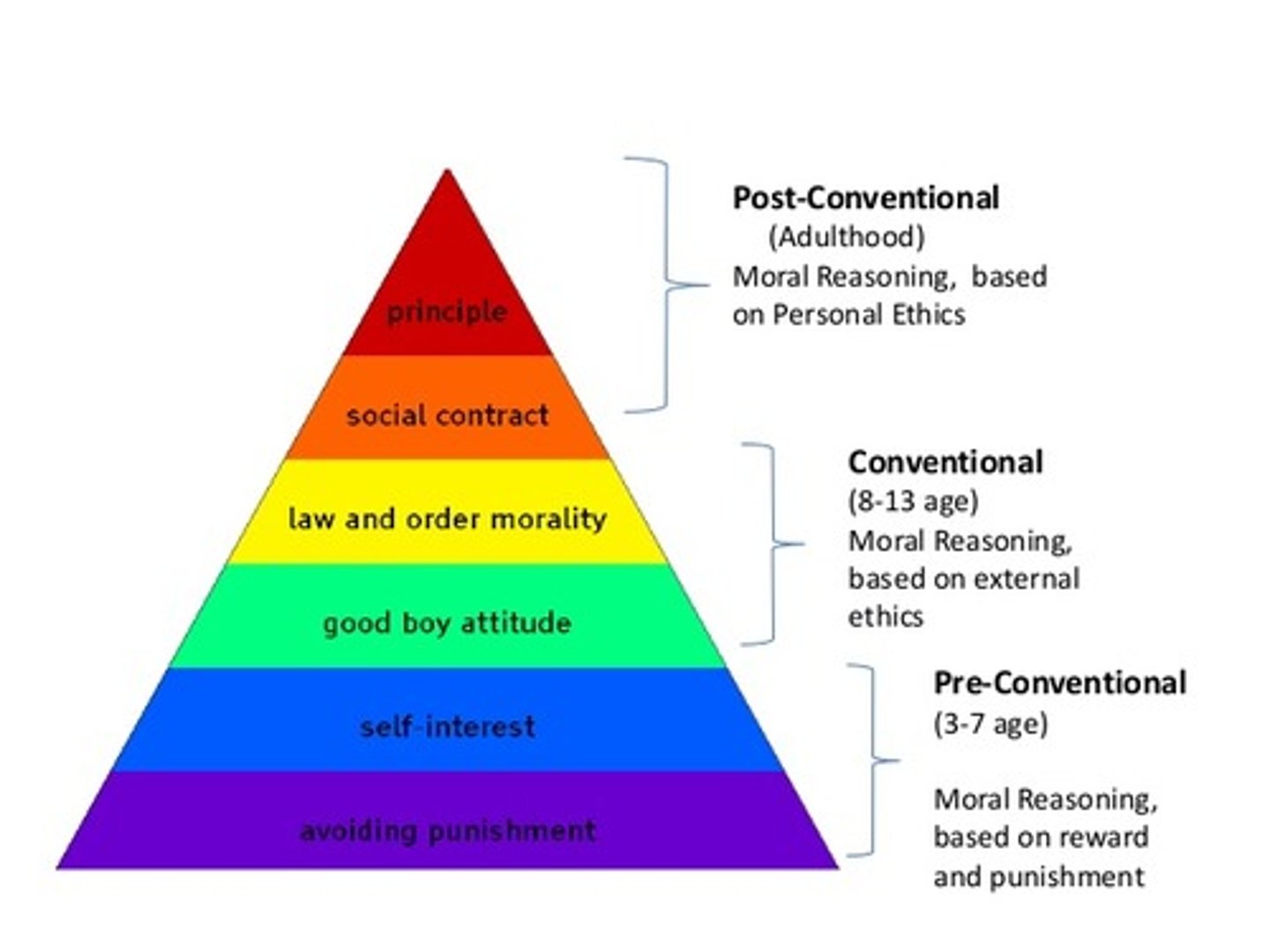
Preconventional
- Concerned with punishment or getting something in return and decision based on consequences.
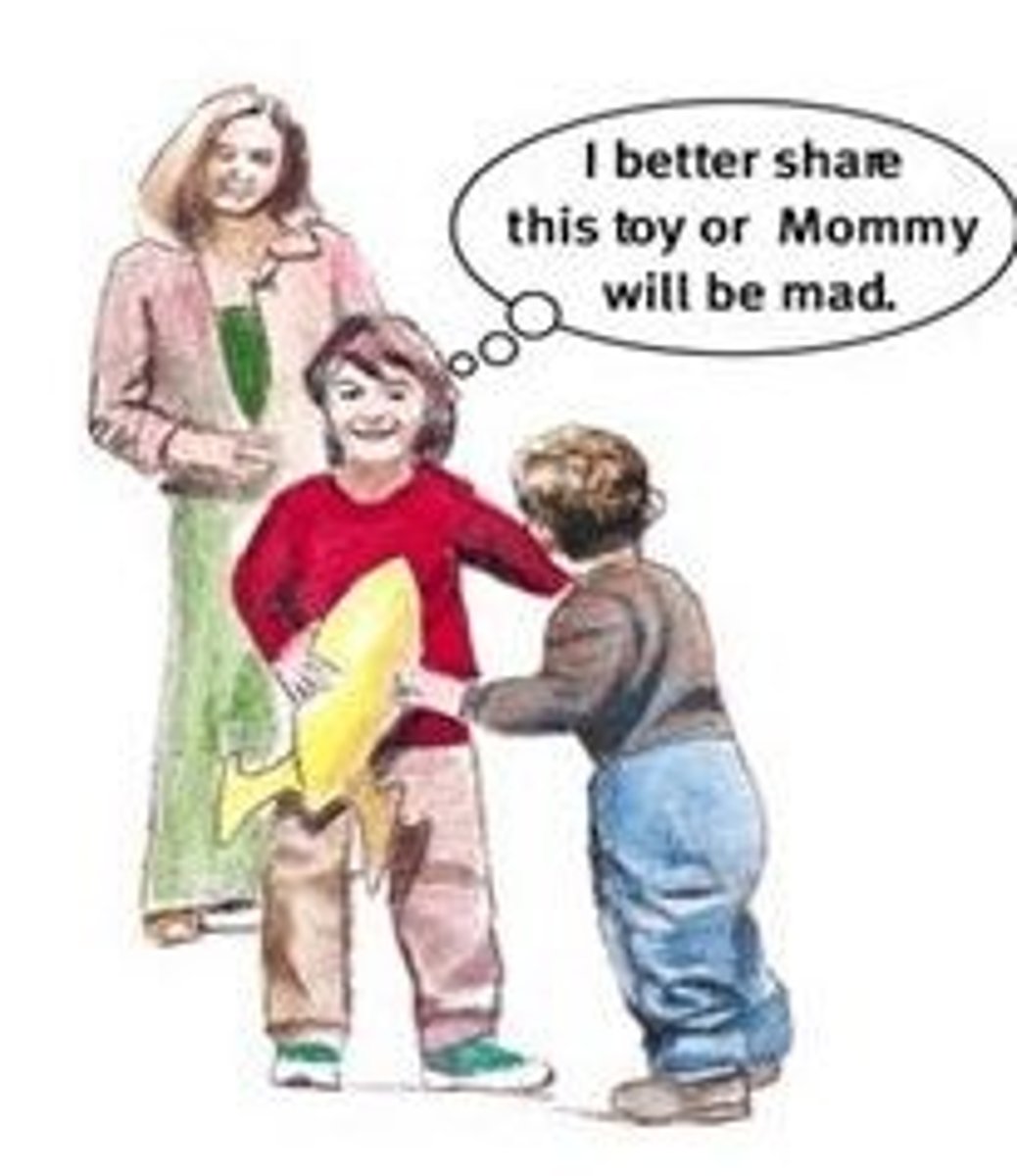
Conventional
- Focus on pleasing others, follow rules or wants approval from others.
Postconventional
- Universal ethical principles, based on personal values or social agreement
(ex. valuing life over property).
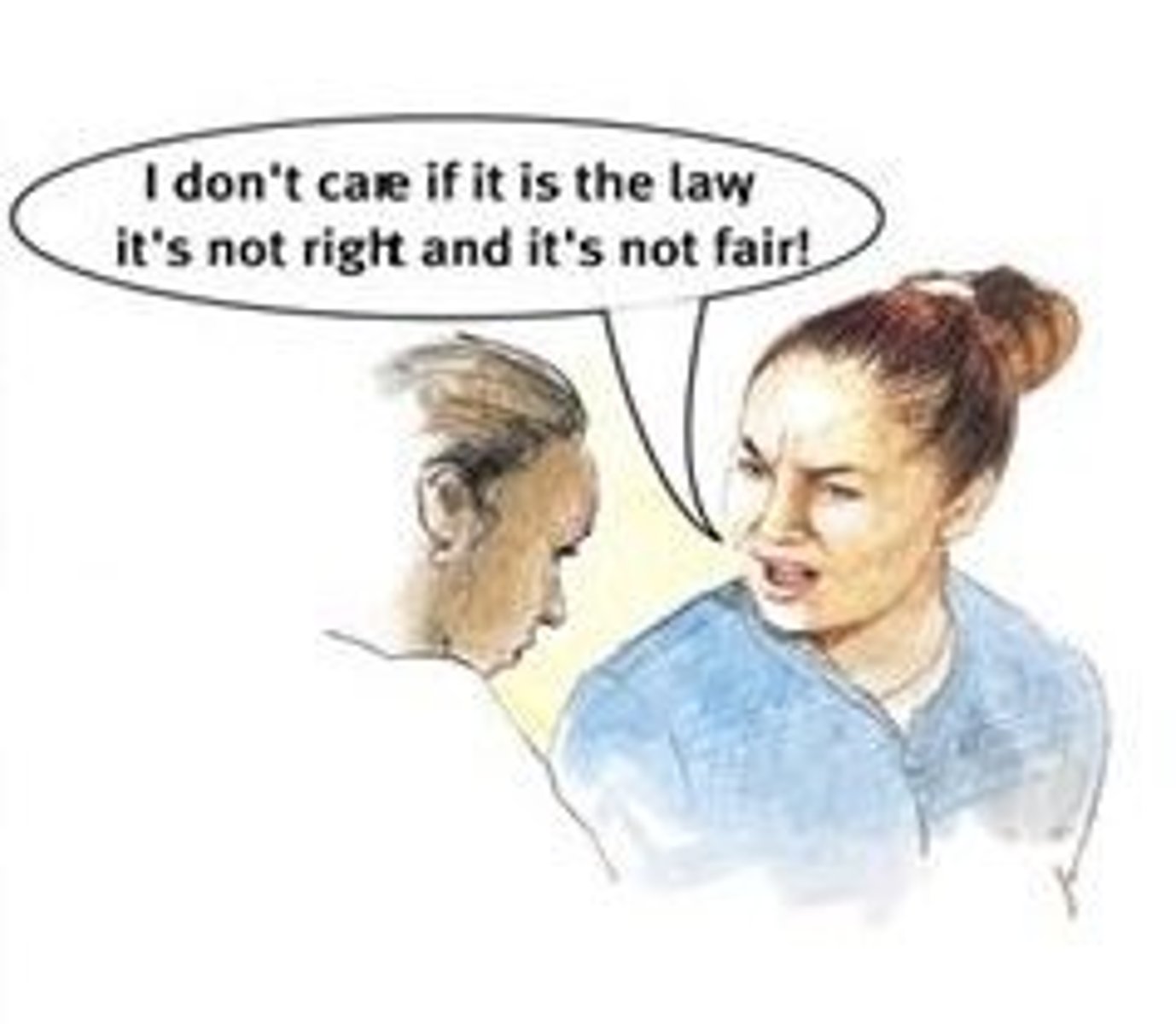
Altruism
- Is when someone helps another person even if there's a cost, reward, or risk themselves.
- Helping each others at cost to oneself, it is rare in non-animal species but more
common in humans.
- One reason is to built a good reputation so others will help us later/too.

Reputation building
- When we help others, we built a good name for ourselves.
- This means people are more likely to help us when we need help later.
Cultural Transmission
- We learn to be helpful from the people around us, like our family,
friends and the community.
- If helping others is valued where we grow up, we're more likely to do
it.
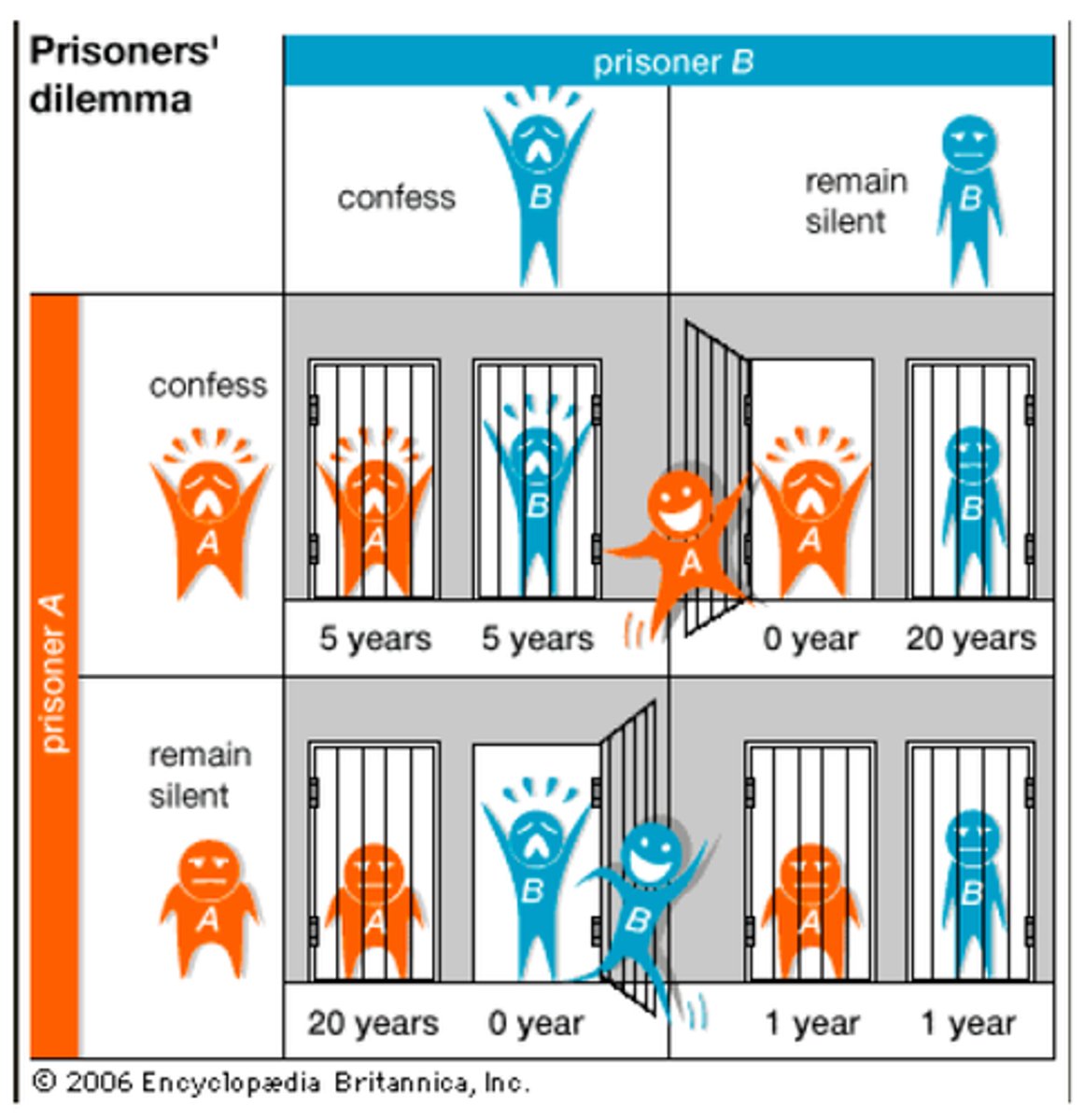
Prisoner's Dilemma
- is a scenario where two people choose between cooperation or competing.
- If both cooperate, they both get a better result. But if one competes while the other cooperates, the competitors gets an even better deal and the cooperator loses out.
Example: If all members share work (cooperate), the project is good and everyone gets a good grade. If some slack off (compete) while others work hard, the slackers still get a good grade but the project might suffer.
Best strategy is the "tit-for-tat" start cooperative, then match the other's behavior or do whatever
the other person does next. This encourage the other to work with you.
BYSTANDER HELPFULNESS AND APATHY
- This topic is about how other people influence whether we take action to help or stay out of situations that affect others.
- We often look to what those around us are doing to decide what we should do.

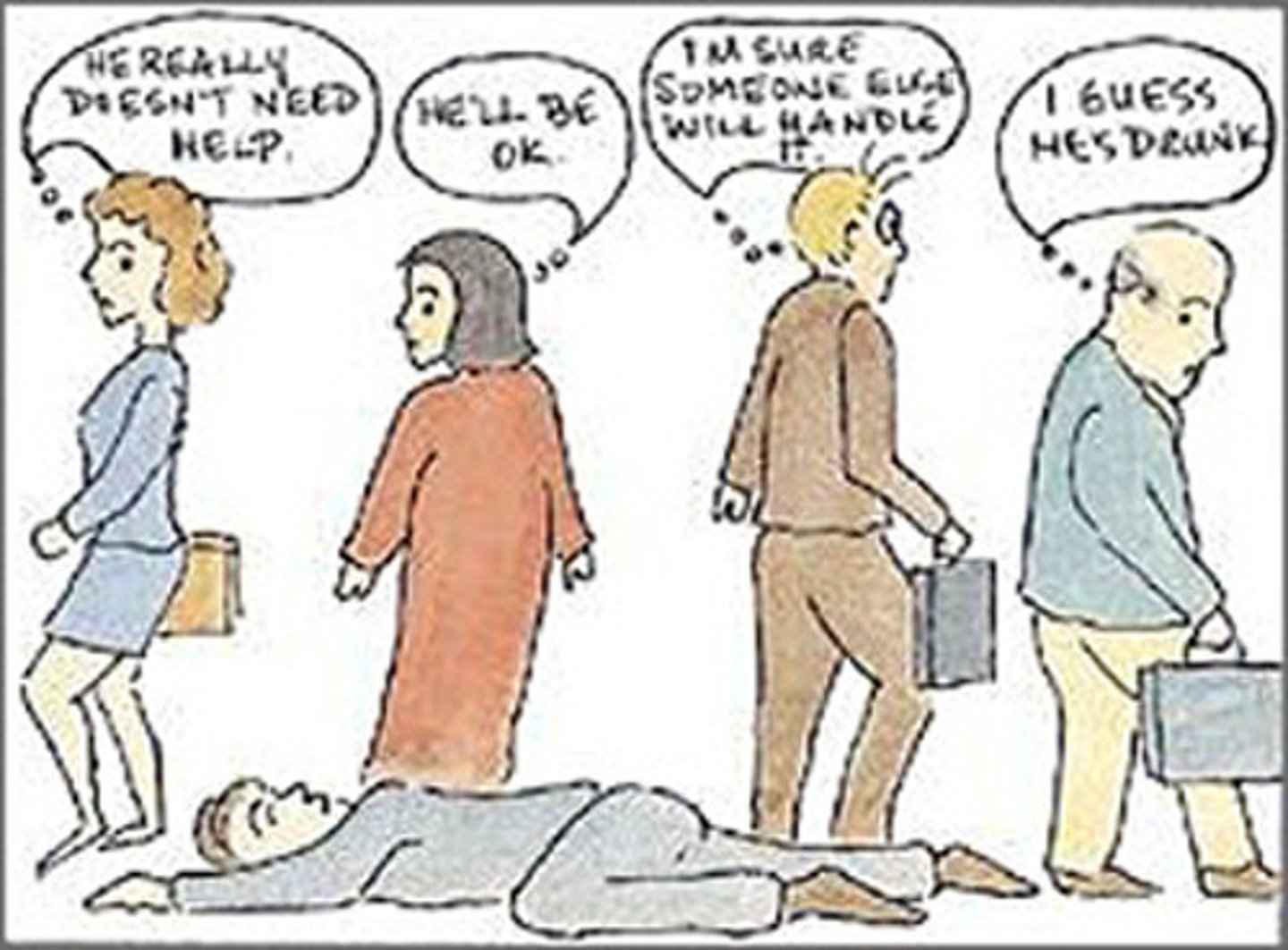
Diffusion of responsibility
- Feeling less accountable when others can act.
Example: Someone drops their groceries on a busy street - you think "someone else will help" so you don't stop.
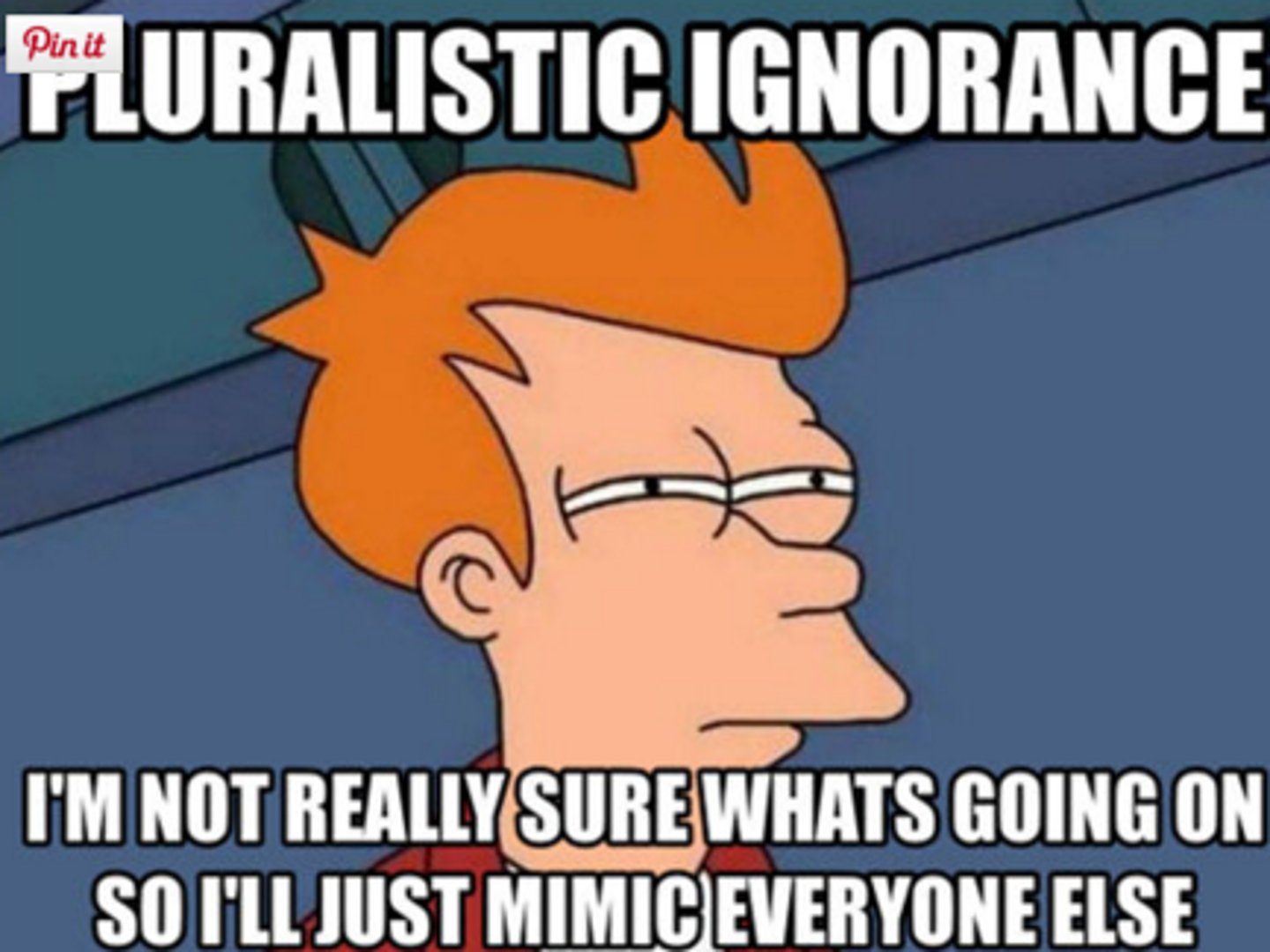
Pluralistic ignorance
- Assuming others have better information and choosing not to act if no
one else.
Example: You smell smoke in a full classroom but no one moves - you assume it's just steam and don't alert anyone.
Social Loafing
- Means working less hard when you're in group than when you're alone.
- You figure others will pick up the slack, so you don't put in your full effort.
Exceptions: People will work harder if their job is unique, if others are watching them, or if they think their contribution matters a lot.

Social perception and cognition
- are the mental tools we use to understand others and make
guesses (inferences) about them.
- We don't just observe people; we use that information to decide who to trust and how to act (Suls, Martin, & Wheeler, 2002).
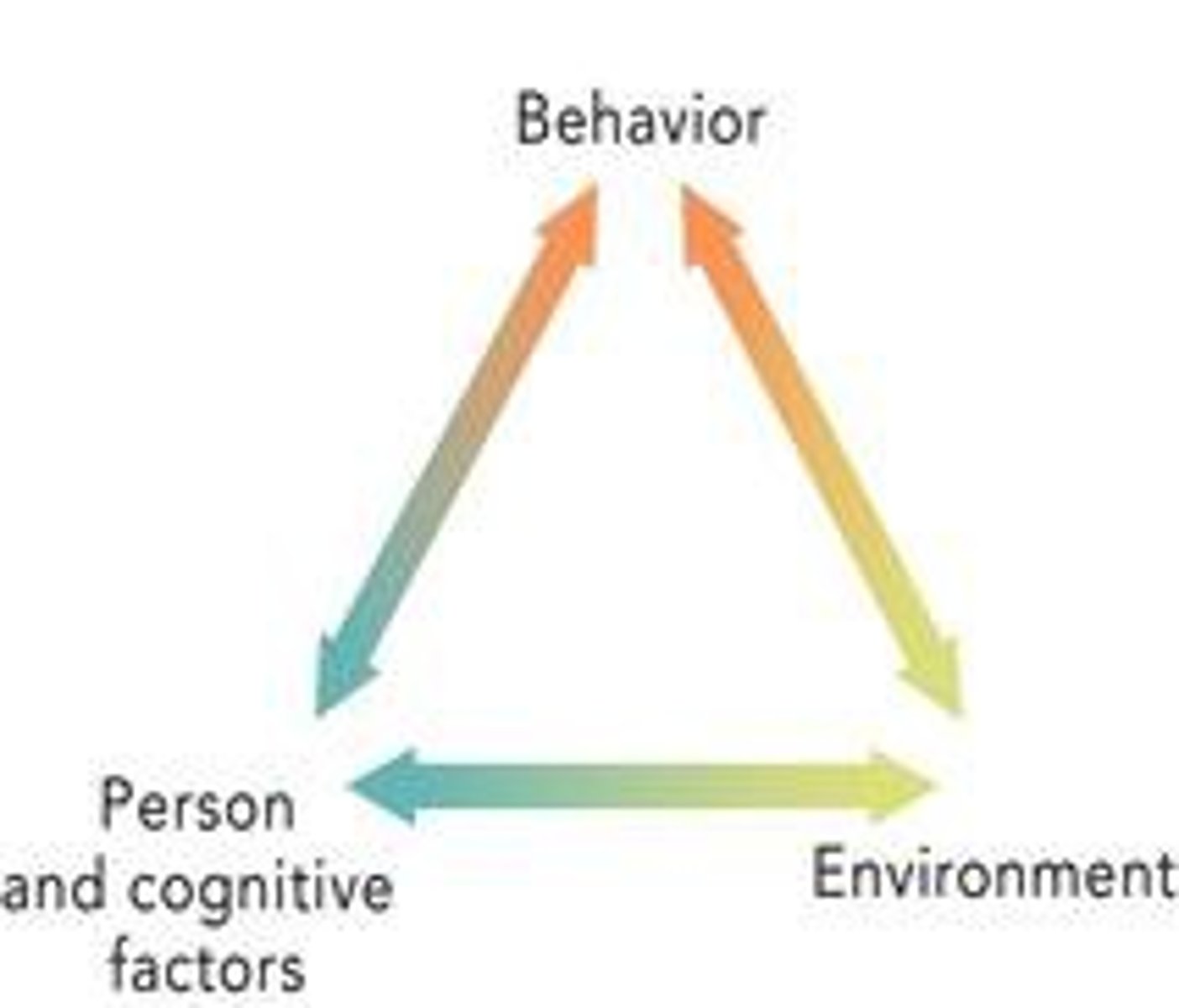
Social Perception
- is the mental process of collecting and interpreting sensory data—like body
language and appearance—to form an initial understanding of another person.
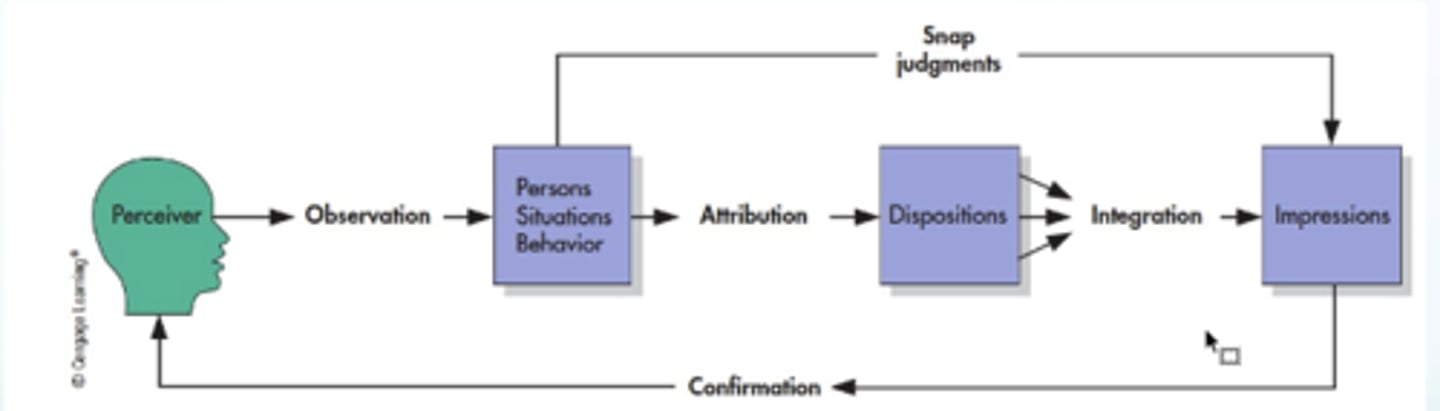
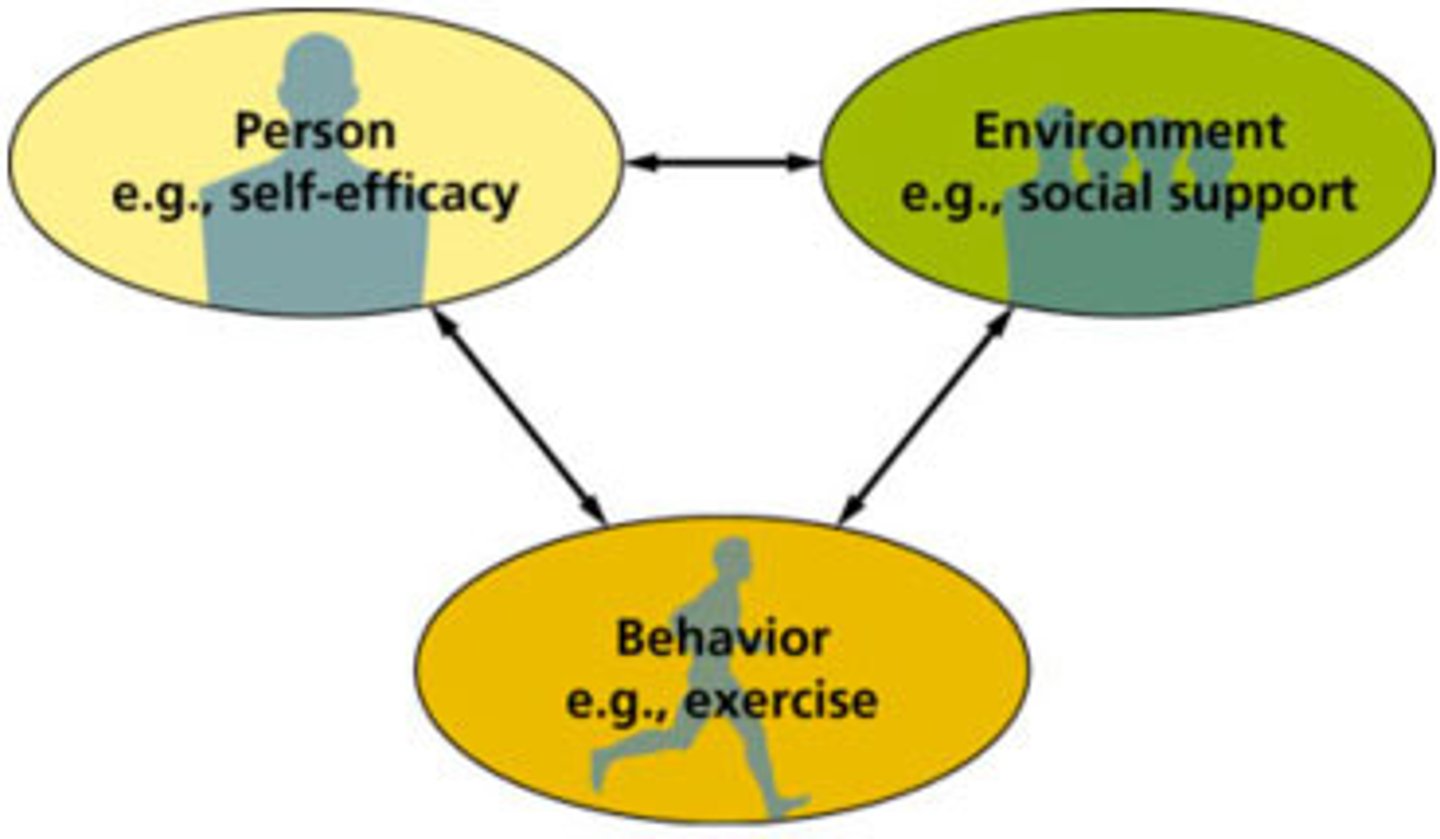
Social Cognition
- is the mental process of storing, retrieving, and using information about
others to make inferences, form expectations, and guide our own social behavior.
primacy effect
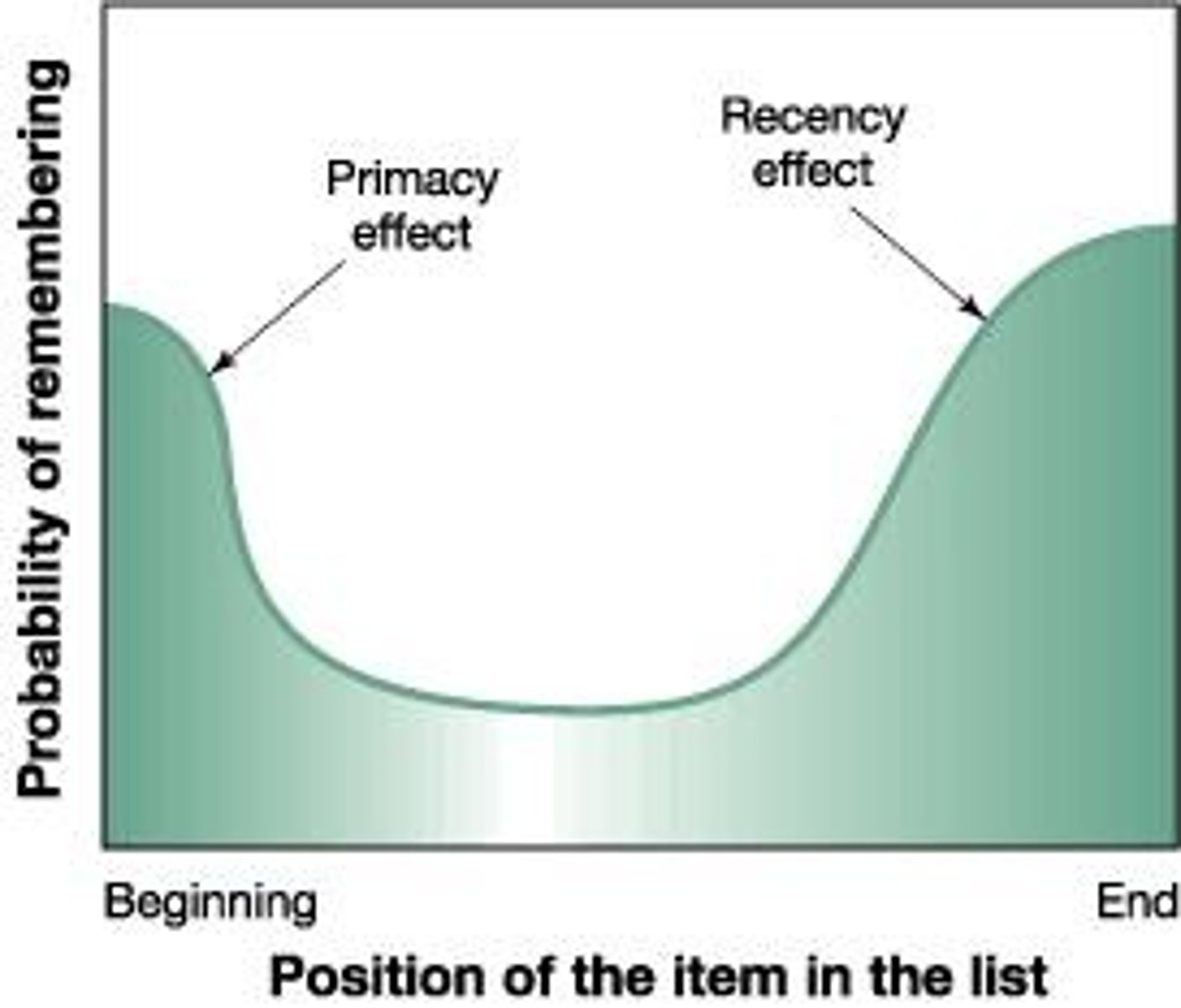
- Other things being equal, the first information we learn about someone influences us more than later information does (E. E. Jones & Goethals, 1972).
- is the psychological rule that the very first piece of information we learn about
someone carries more weight than anything we learn later.
First impressions
can become self-fulfilling prophecies, expectations that change behavior in a
way that increases the probability of the predicted event. (M. Snyder, Tanke, & Berscheid. 1977).
Your Expectation
- first step loop
- You see a photo and decide, "This person looks friendly/attractive."
Your Behavior
- second step loop
- You speak to them with more enthusiasm and kindness.
Their Reaction
- third step loop
- They mirror your energy, acting more talkative and pleasant, which proves
your first impression "right."
Stereotype
- A belief or expectation regarding a specific group of people.
- often influence behavior unconsciously.
- cites a landmark experiment by
Bargh, Chen, & Burrows (1996), where participants unscrambled sentences containing words associated with the elderly (e.g., "old," "gray," "bingo").
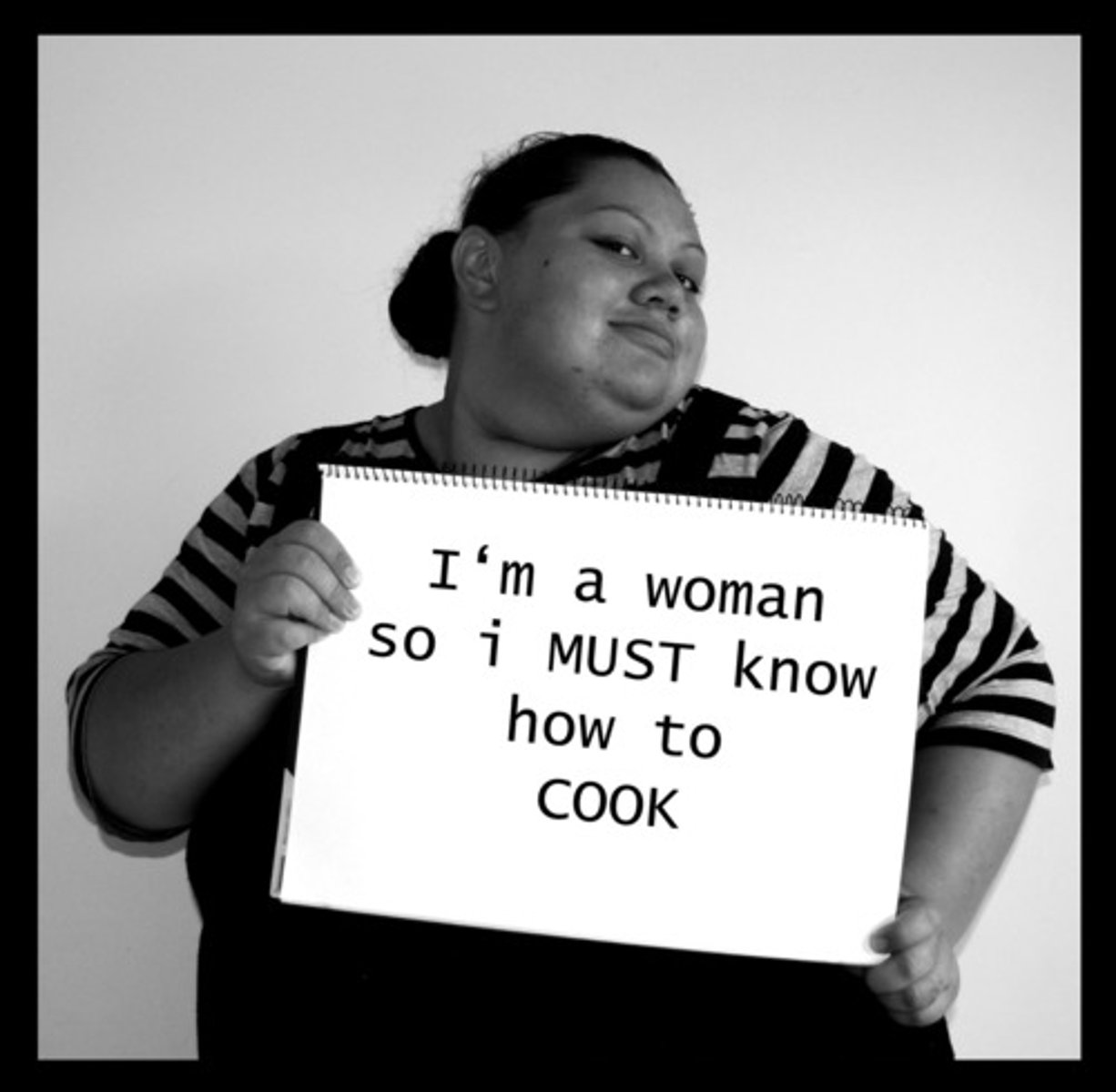
Prejudice
An unfavorable attitude held toward a group of people.
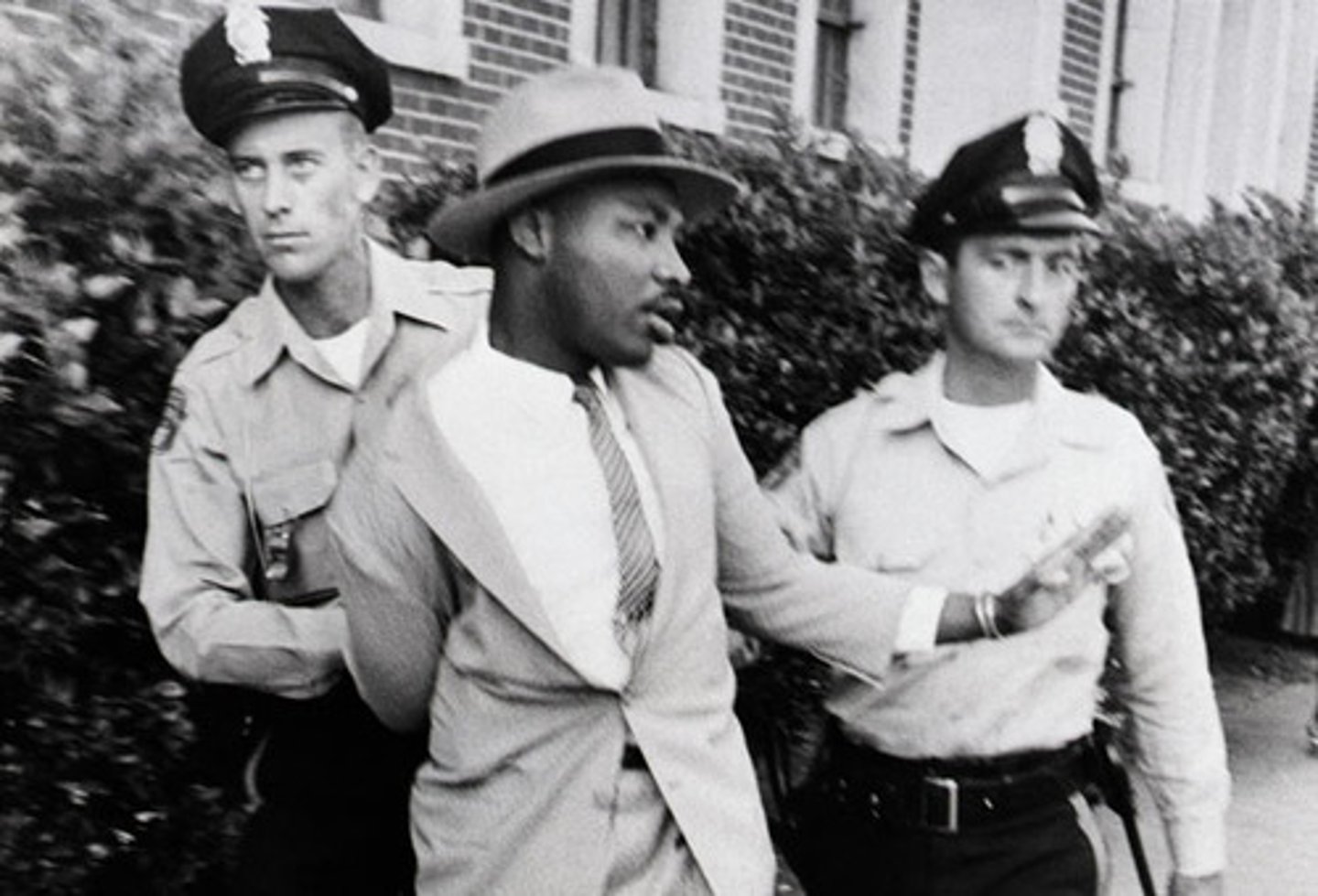
Discrimination
The resulting behavior of unequal treatment toward different groups (e.g.,
based on physical ability, weight, or sexual orientation).
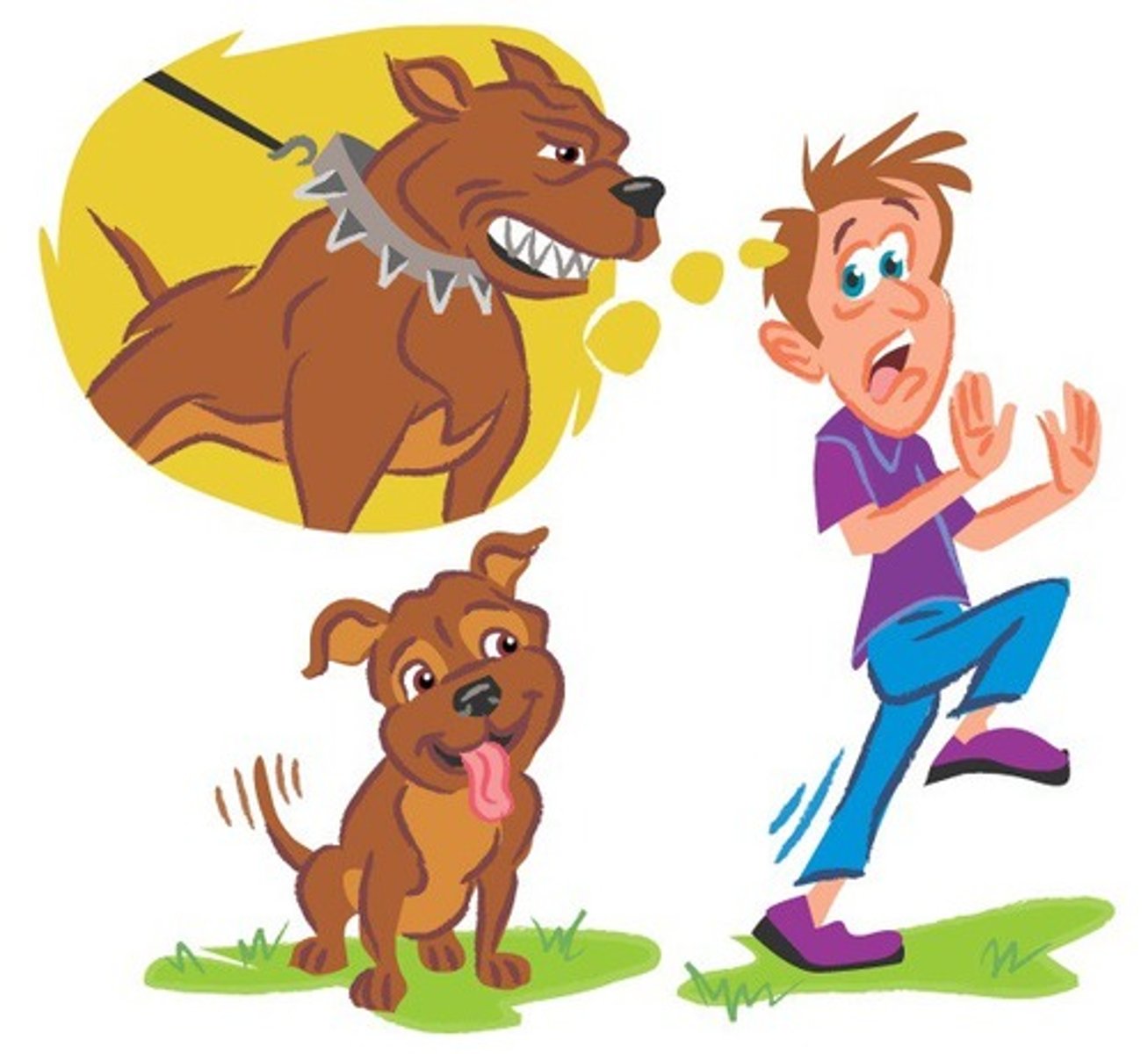
Illusory Correlations
We often form false stereotypes by remembering "unusual" events, such
as a specific person from a minority group doing something out of the ordinary.
Partial Accuracy
- Some stereotypes may reflect statistical averages.
- for example, men are statistically more likely to be involved in fistfights, and liberal arts majors are often more sensitive to social connotations than engineering majors (Ottati & Lee, 1995).
Cultural Perspectives
- Different cultures may view the same behavior through different stereotypical lenses.
- For example, while Americans might see the Chinese as "inhibited," the
Chinese may view themselves as "self-controlled" (T. Lee & Duenas, 1995).
Implicit Association Test (IAT)
- Because modern society views prejudice negatively, many people claim to be unbiased. To measure "subtle prejudices" that people may not even admit to themselves, researchers use the?
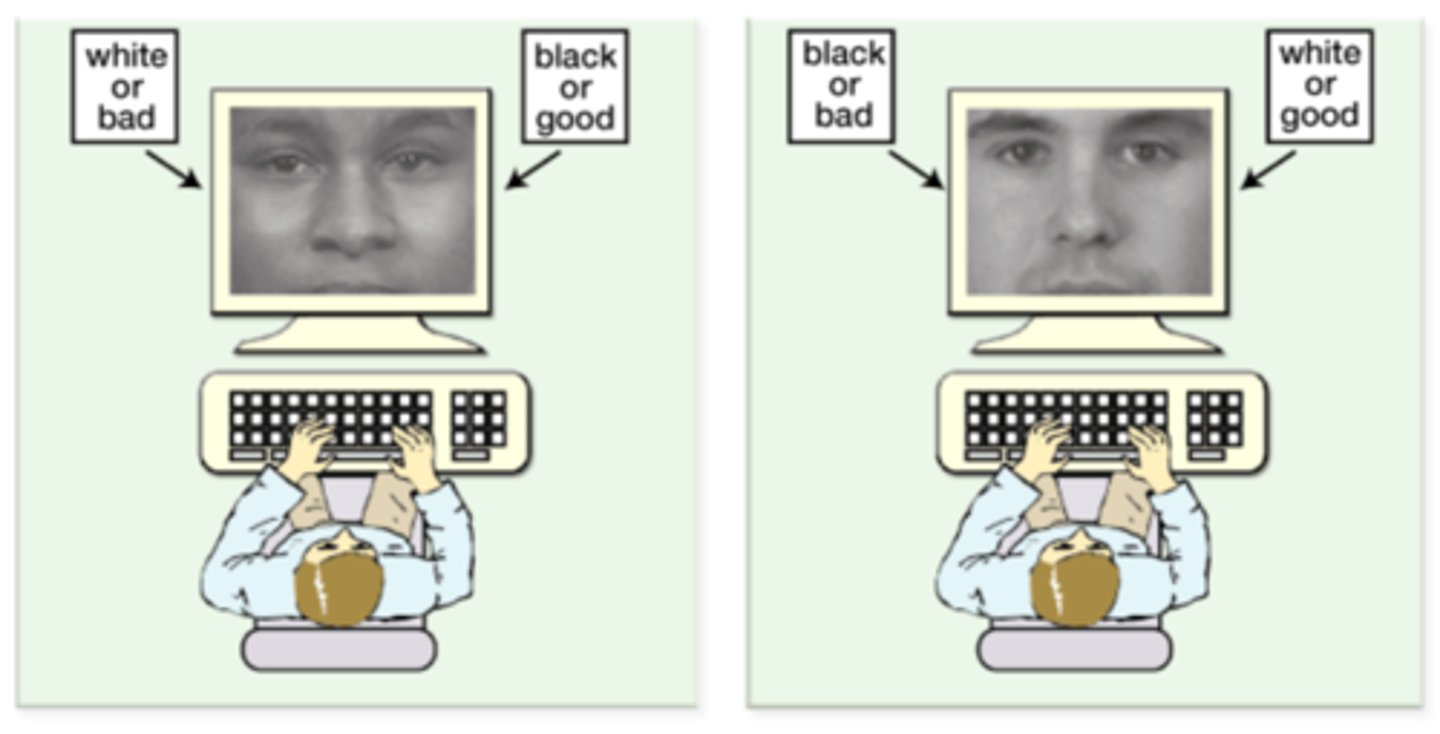
- The test measures the speed of a participant's reactions to pairings of two different categories (e.g., flowers vs. insects) and evaluative words (e.g., pleasant vs. unpleasant).
The Logic: If a person has a strong internal association between two concepts (like "flowers" and "pleasant"), they will respond much faster when those two items share the same response key.
The Process: As shown in Figure 13.2, participants are asked to press a specific key for a category (e.g., a Black face or a pleasant word) and another key for the opposite pairing (e.g., a White face or an unpleasant word). The rules are then swapped to see if reaction times change.
Racial Bias
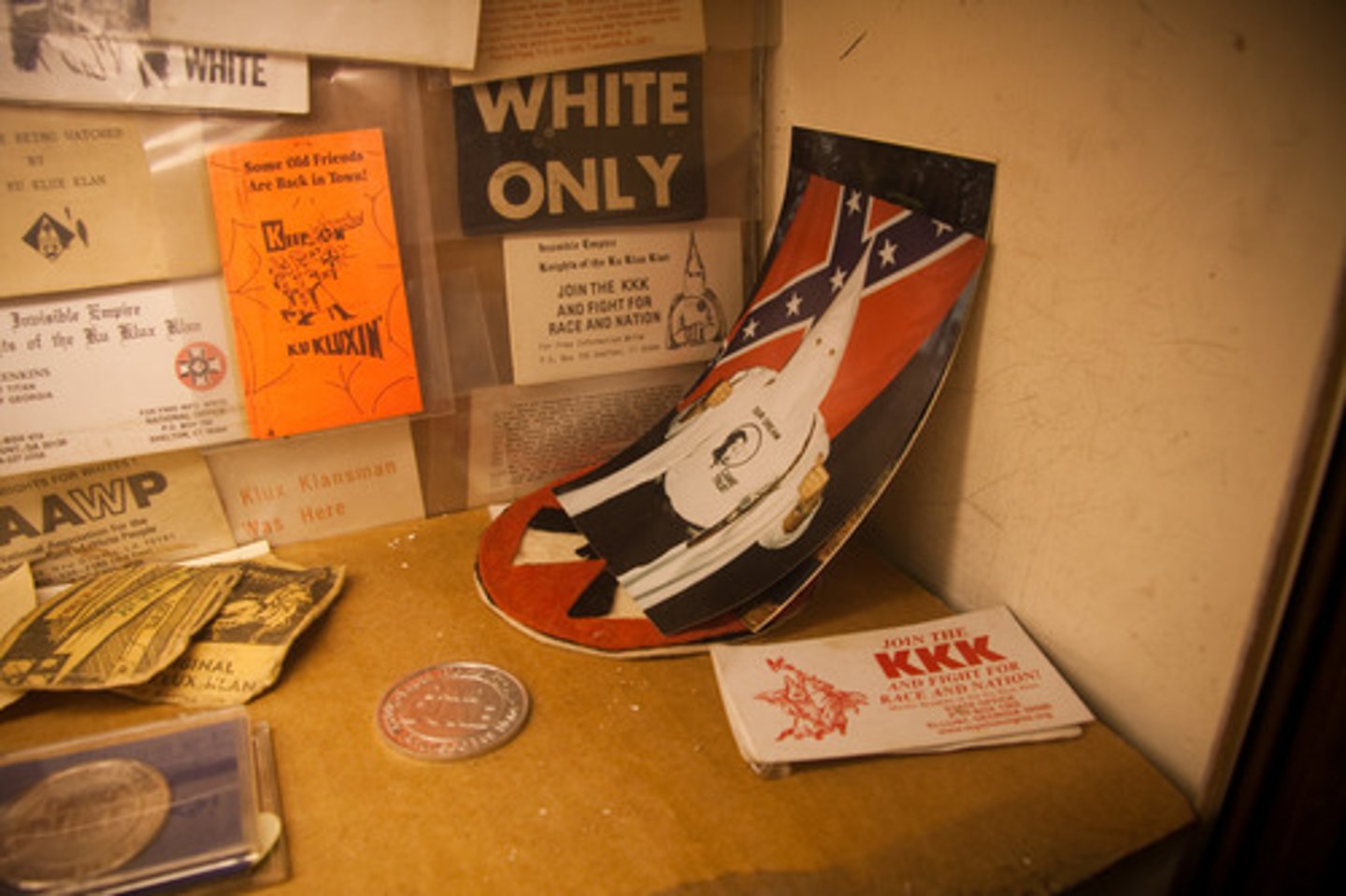
Implicit Preference: Many White college students who claim to have no racial prejudice still respond faster to the "White/pleasant" and "Black/unpleasant" pairings than the reverse (Phelps et al., 2000).
Demographic Differences: Research suggests that this implicit preference for one's own group
is relatively stable over time (Baron & Banaji, 2006) and tends to be stronger in older White
individuals compared to younger ones (Stewart, von Hippel, & Radvansky, 2009).
Black Participants: Interestingly, while most Black individuals express a favorable explicit attitude toward their own group, their IAT results often show nearly equal responses to Black and White categories, indicating little to no implicit prejudice on average (Stewart et al., 2009).
Gender and Other Implicit Attitudes
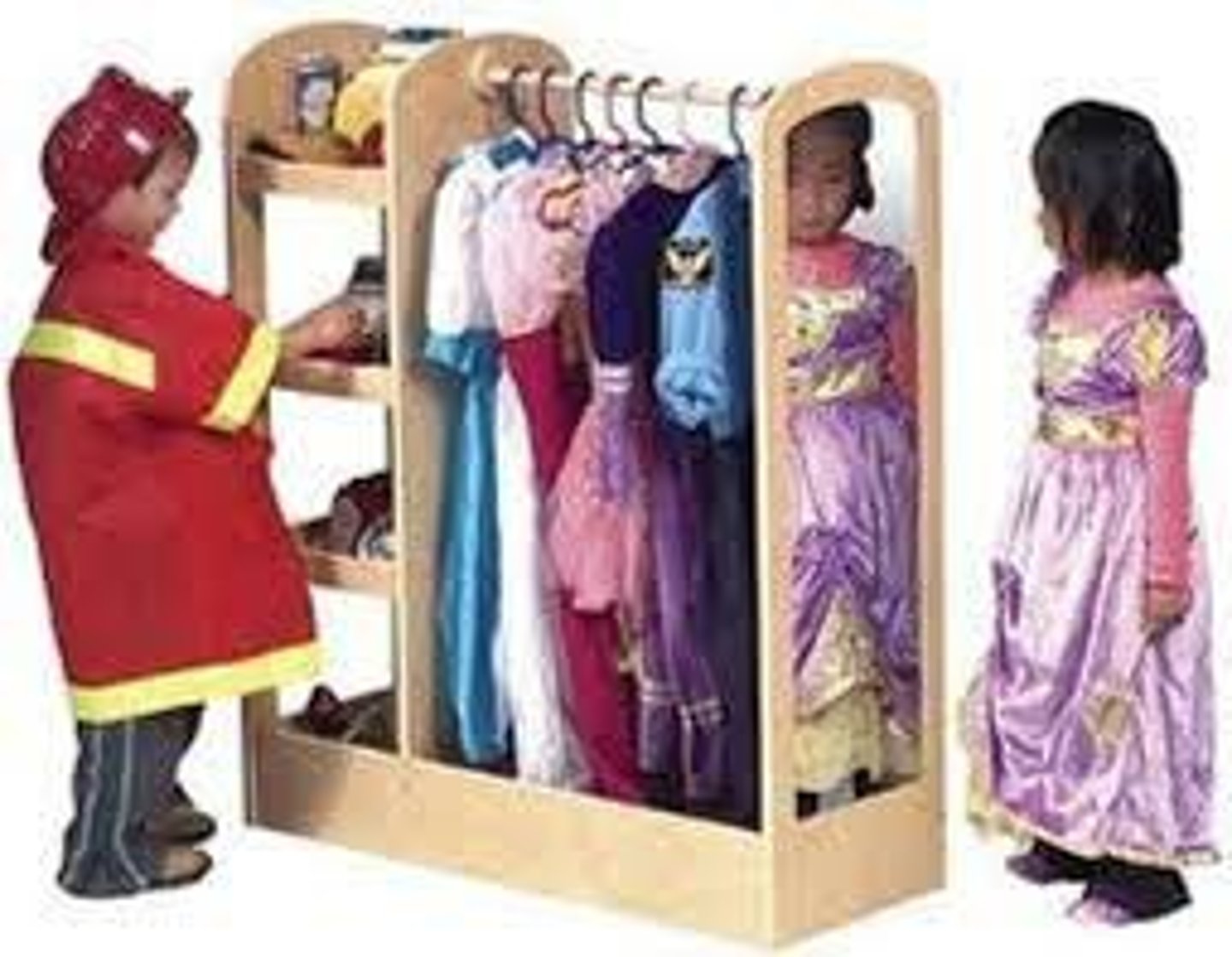
The IAT is also used to measure attitudes toward gender:
Women: Most women show a strong implicit preference for women over men.
Men: Men generally show an almost equal preference for both genders (Nosek & Banaji, 2001;
Rudman & Goodwin, 2004).
Validity and Criticism
While the IAT is widely used, it is not without debate:
Correlation with Behavior: Scores on the IAT correlate positively, though not always strongly,
with how people act in real-world social situations (Cunningham et al., 2001; Greenwald et al.,
2006).
Alternative Explanations: Some researchers argue the test may overstate prejudice because it
requires participants to pay close attention to race, which might influence reaction times
regardless of actual bias (M. A. Olson & Fazio, 2003).
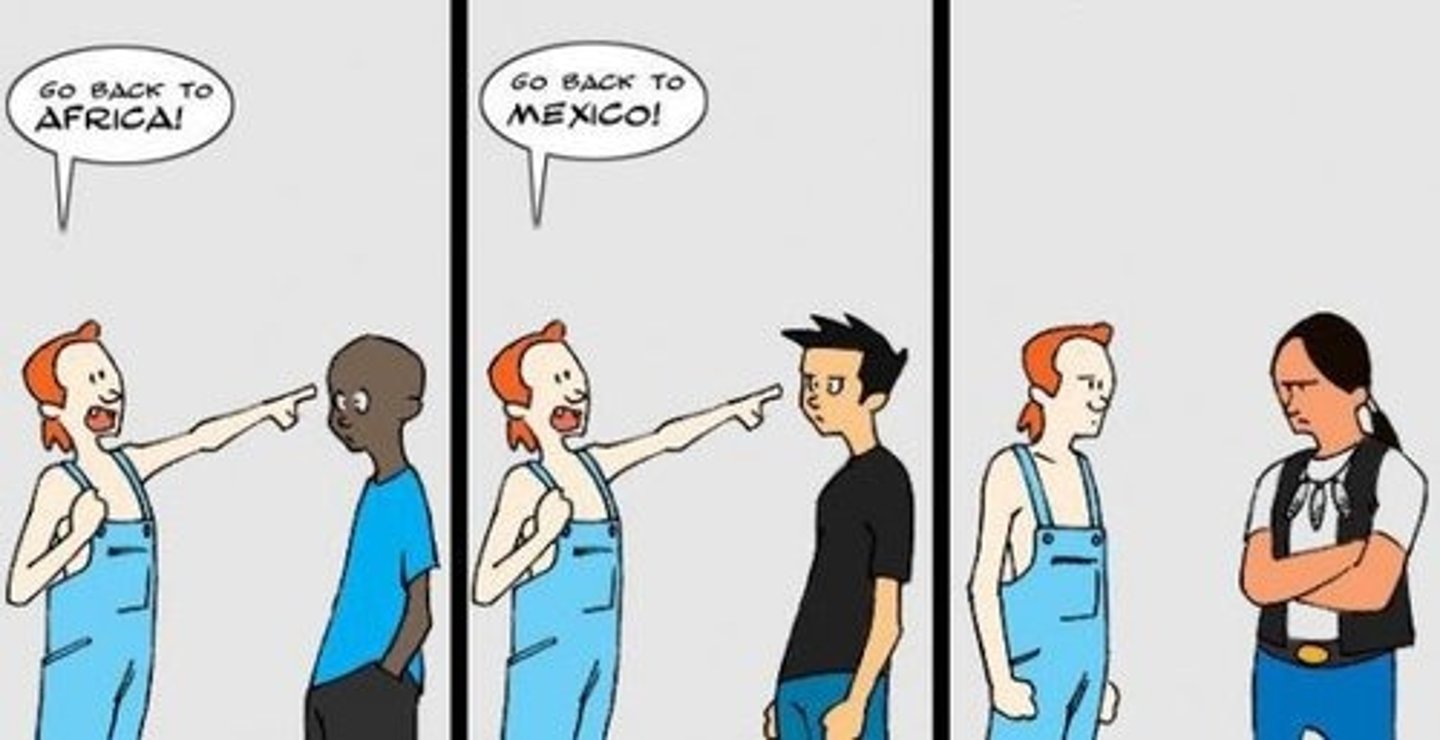
Aversive Racism
- This term describes people who consciously endorse egalitarian values but still harbor "subtle prejudice" or "modern racism" (Sears & Henry, 2003). It is "aversive" because the person finds their own potential for bias unpleasant.
Ambivalent Sexism
This occurs when a person believes in equal treatment but maintains a
"lingering idea" that women should be treated differently or traditionally (Glick & Fiske, 2001).
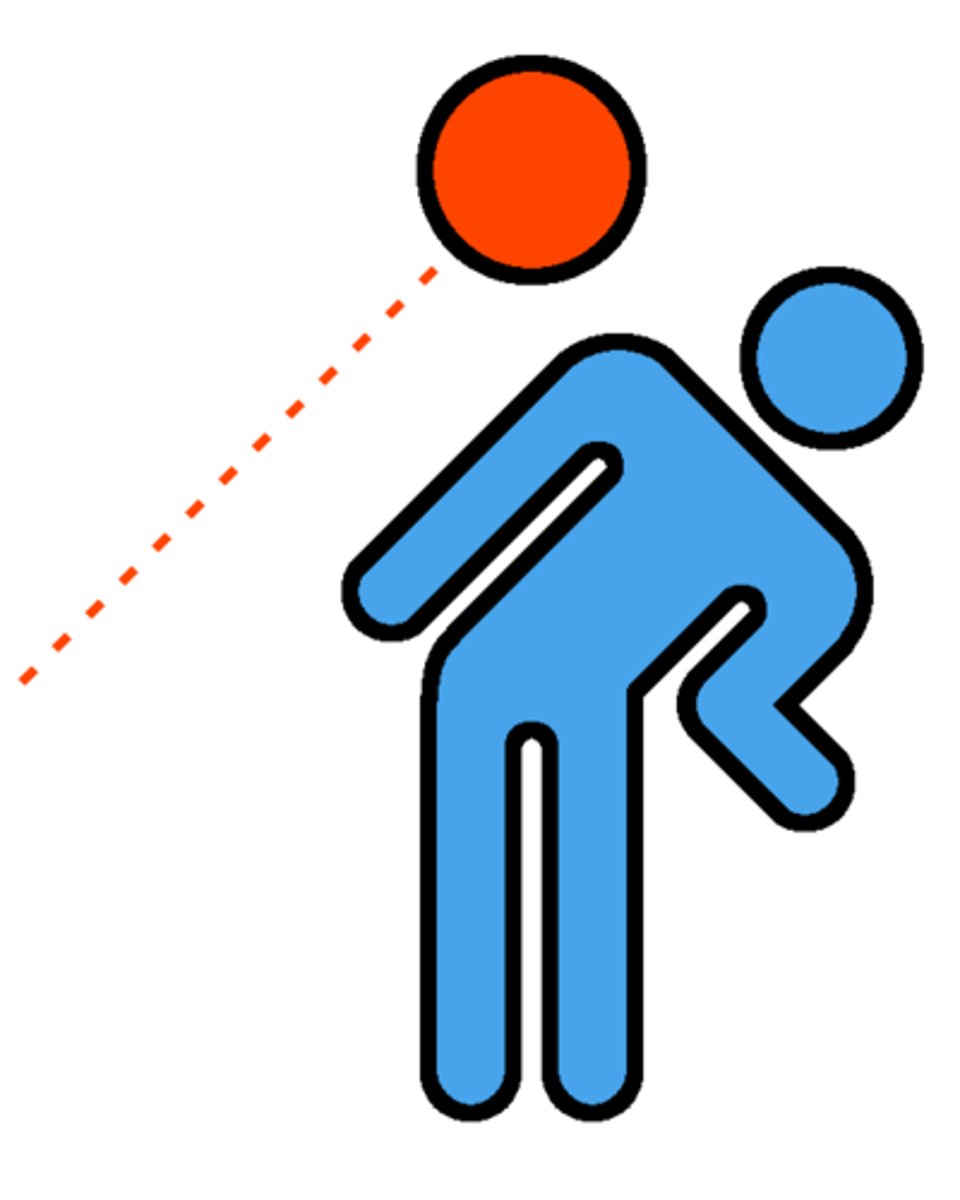
Physiological Arousal
Whites with little previous contact with Black people often experience
increased heart rates when interacting, driven by the fear of appearing prejudiced (Blascovich et
al., 2001).
Avoidance
Those who feel the highest anxiety about failing to appear unprejudiced are the most likely to avoid future interracial interactions (Plant & Devine, 2003).
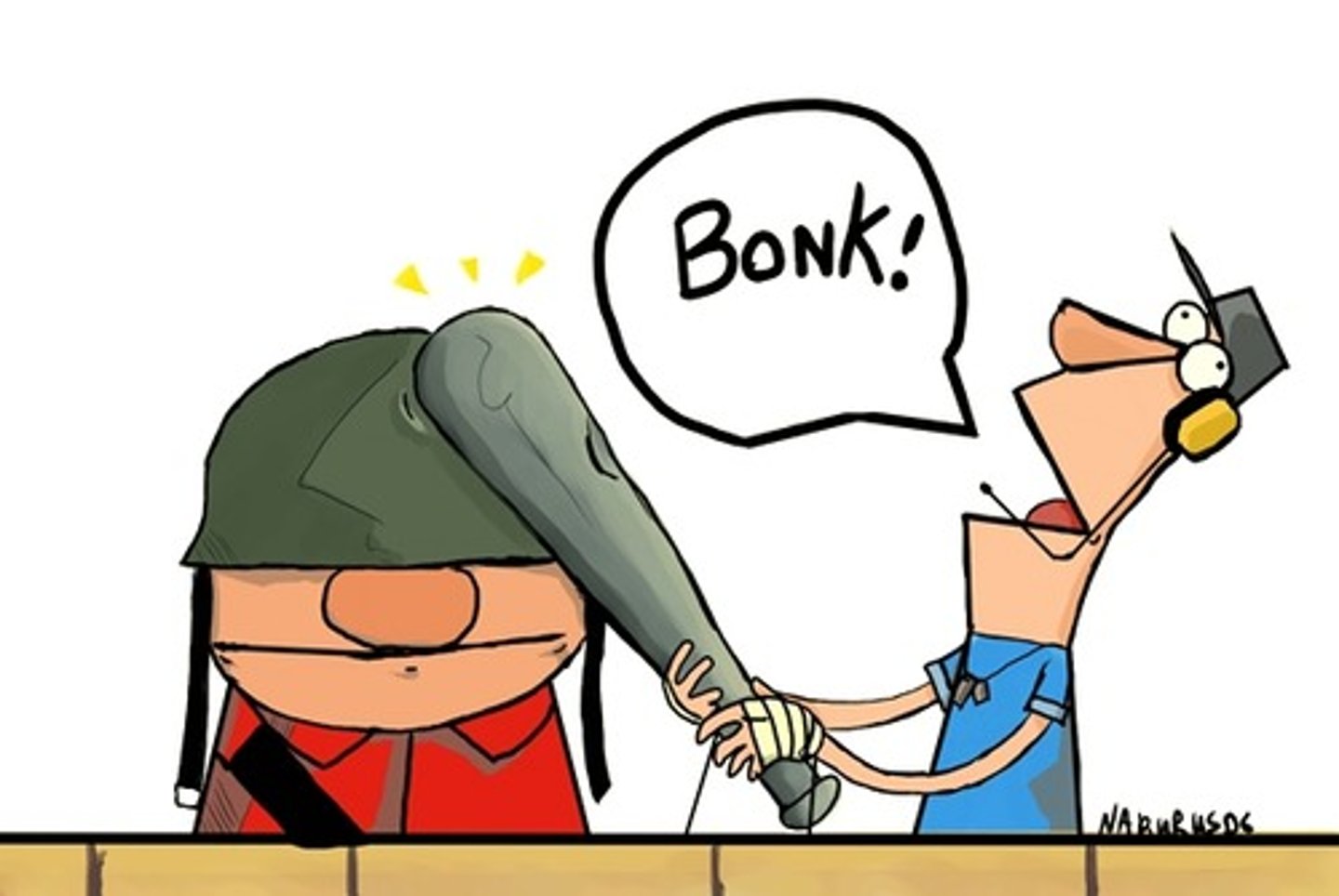
Cognitive Depletion
- Simply trying to "avoid prejudice" is an exhausting task.
- Research indicates that people instructed to avoid appearing prejudiced performed worse on subsequent cognitive tasks because the effort depleted their mental resources (Trawalter & Richeson,
2006).
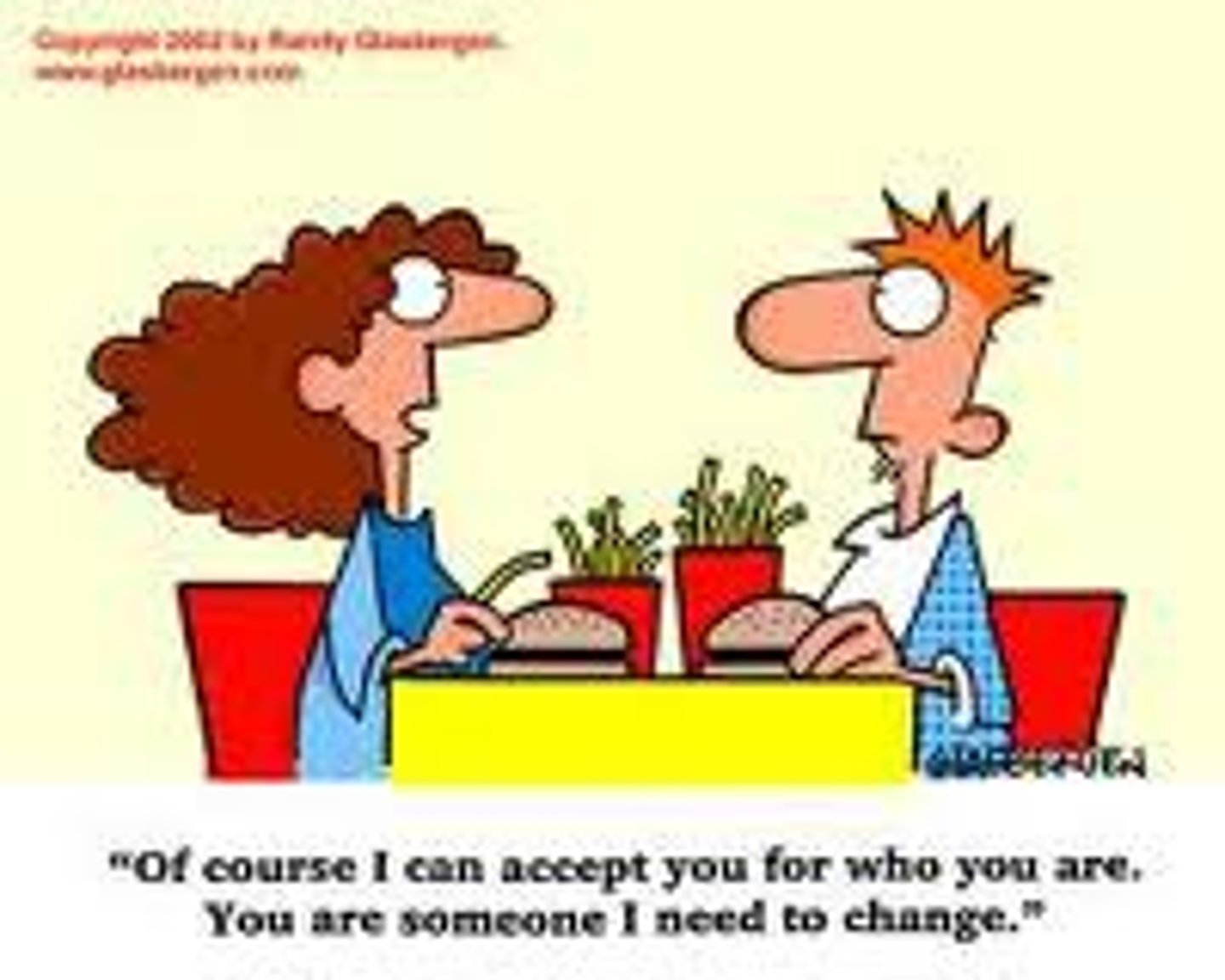
Color Blindness
- Ignoring group differences.
- This is often "effortful" because it requires people to pretend not to notice differences that are clearly there.

Multiculturalism
- Accepting and enjoying differences.
- Research suggests this is a more
effective strategy (Richeson & Nussbaum, 2004).

Interracial Roommates
- A study by Shook & Fazio (2008) found that White and Black college
students who were assigned as roommates initially spent little time together.
- However, over a semester, they developed more favorable attitudes and reduced anxiety regarding interracial interactions.
The Robbers' Cave Experiment
- Sherif (1966) demonstrated that competition breeds hostility,
but cooperation toward a superordinate goal (a common goal) leads to friendship.
- He divided boys into two groups that became mutually hostile through competition.
- Hostility was only reversed when the groups had to work together on essential tasks, such as repairing a water leak or pulling a truck out of a rut.
Media
- can either strengthen or weaken prejudice.
- In Rwanda, radio was used to incite the 1994 genocide.
- Conversely, a radio soap opera introduced in 2004 that depicted fictional groups overcoming conflict helped increase sympathy and cooperation among Hutus and Tutsis (Paluck, 2009).
Attribution theory
is the set of thought processes used to assign causes to behavior—both our own and that of others.
Fritz Heider
- (1958)
- the founder of attribution theory, distinguished between two types of causes:
Internal (Dispositional) Attributions
- Explanations based on an individual's internal characteristics, such as personality traits, attitudes, or abilities.
Example: Someone walks to work because they "like the exercise."
External (Situational) Attributions
Explanations based on the situation or environment—events that would likely influence anyone in that position.
Example: Someone walks to work because their "car wouldn't start."
Concept Check
- which notes that rather than simply "trying to avoid seeming prejudiced," it is more effective to try to have a positive experience and enjoy cultural differences.
- This is especially true when people work together toward a common goal, as cooperative contact helps
overcome intergroup tensions.
Kelley's Covariation Model
Harold Kelley (1967) proposed that we use three specific types of information to determine if an
attribution should be internal or external
Consensus Information
Comparing the person's behavior with how other people behave in
the same situation.
High Consensus
Everyone is doing it → External attribution.
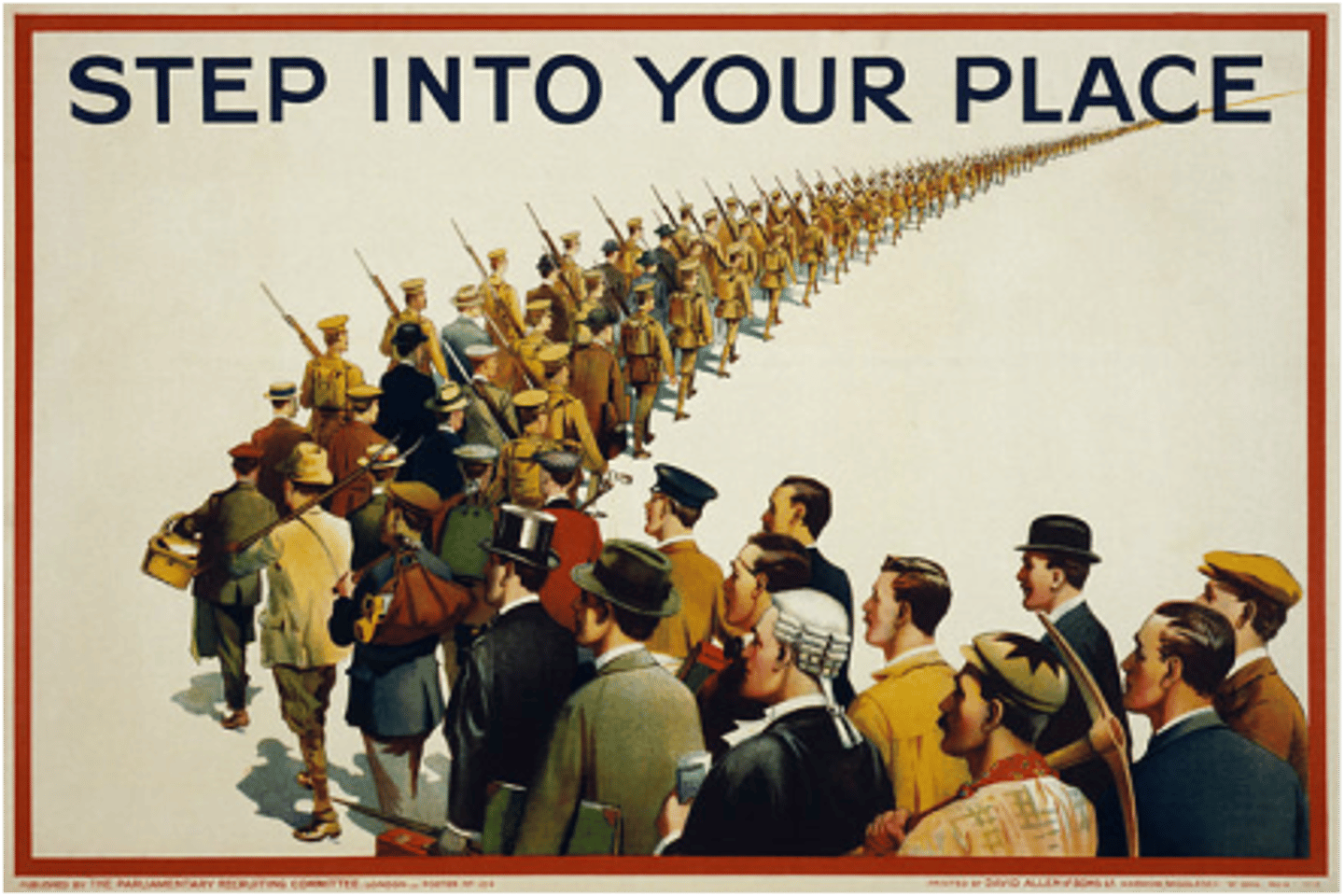
Low Consensus
Only this person is doing it → Internal attribution.
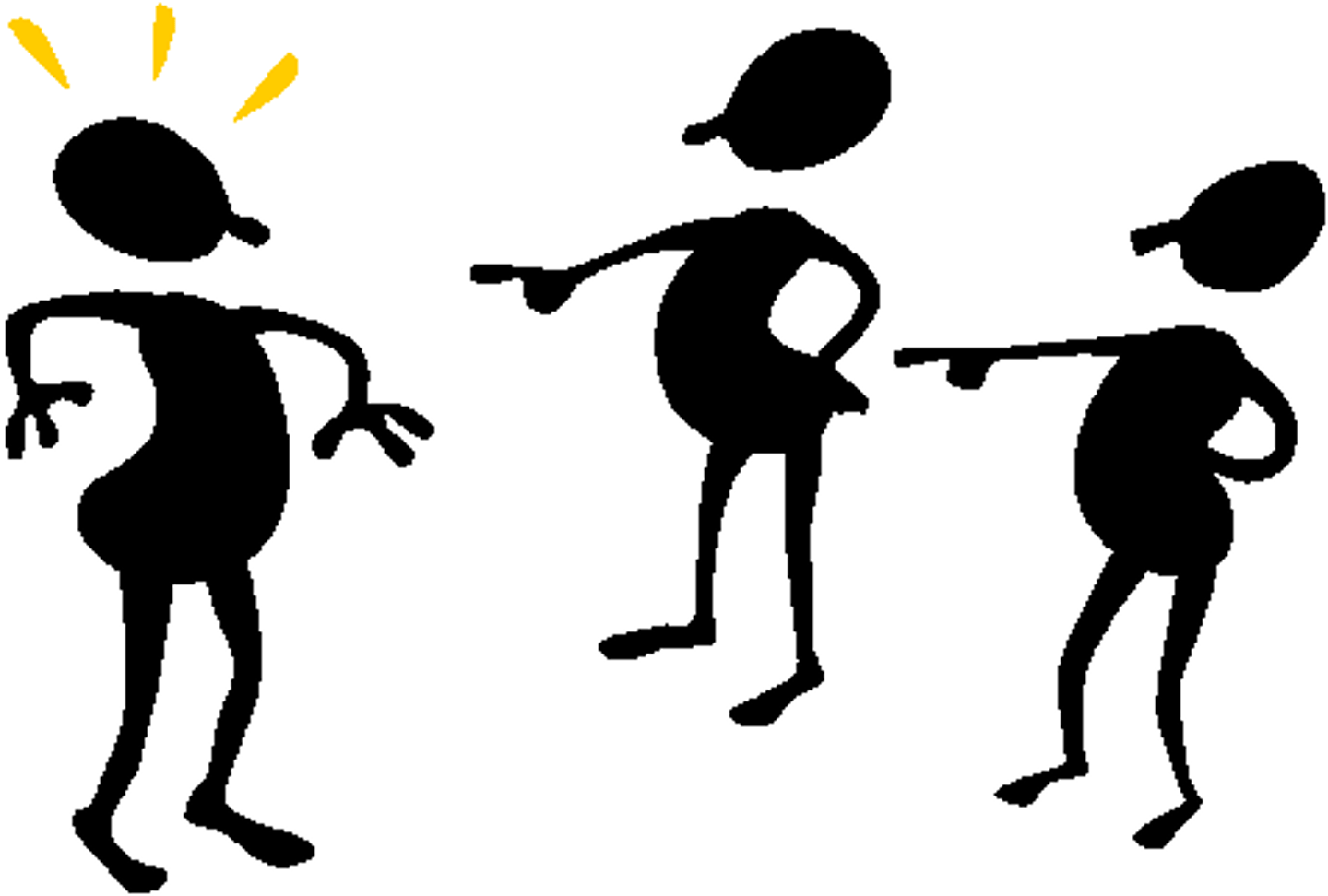
Consistency Information
Observing how the person's behavior varies from one time to the
next in the same situation.
High Consistency
They always act this way in this situation → Likely internal.
Low Consistency
This behavior is unusual for them → External (an event triggered it).
Distinctiveness Information
Observing how the person's behavior varies from one situation to another.
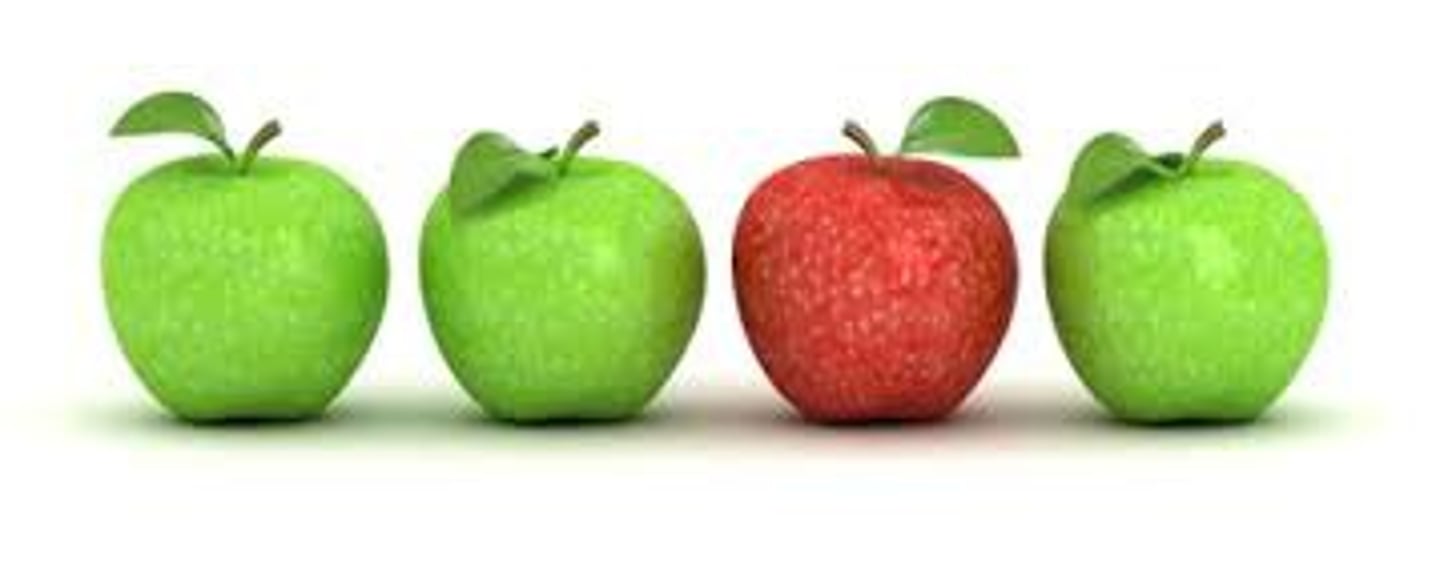
High Distinctiveness
They only act this way in this specific situation → External attribution.
Low Distinctiveness
They act this way in almost every situation → Internal attribution.
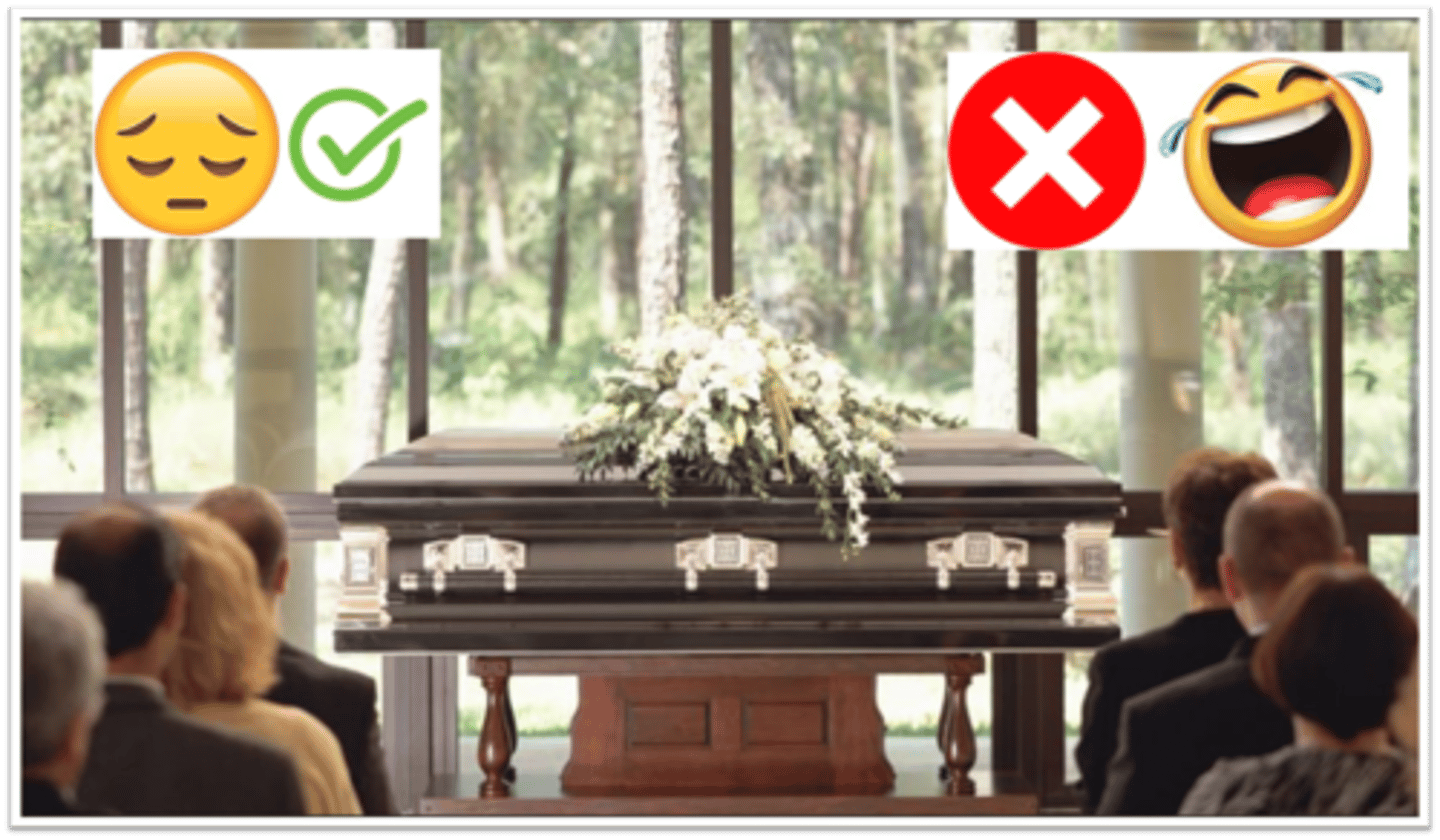
cultural norms
- dictate what is "normal" behavior, which affects our attributions.
- For example, some cultures expect reserved behavior at funerals, while others expect loud wailing. If you are unfamiliar with a culture's dictates, you might mistakenly attribute a person's behavior to their personality rather than their cultural context (Brescoll & Uhlmann,
2008).
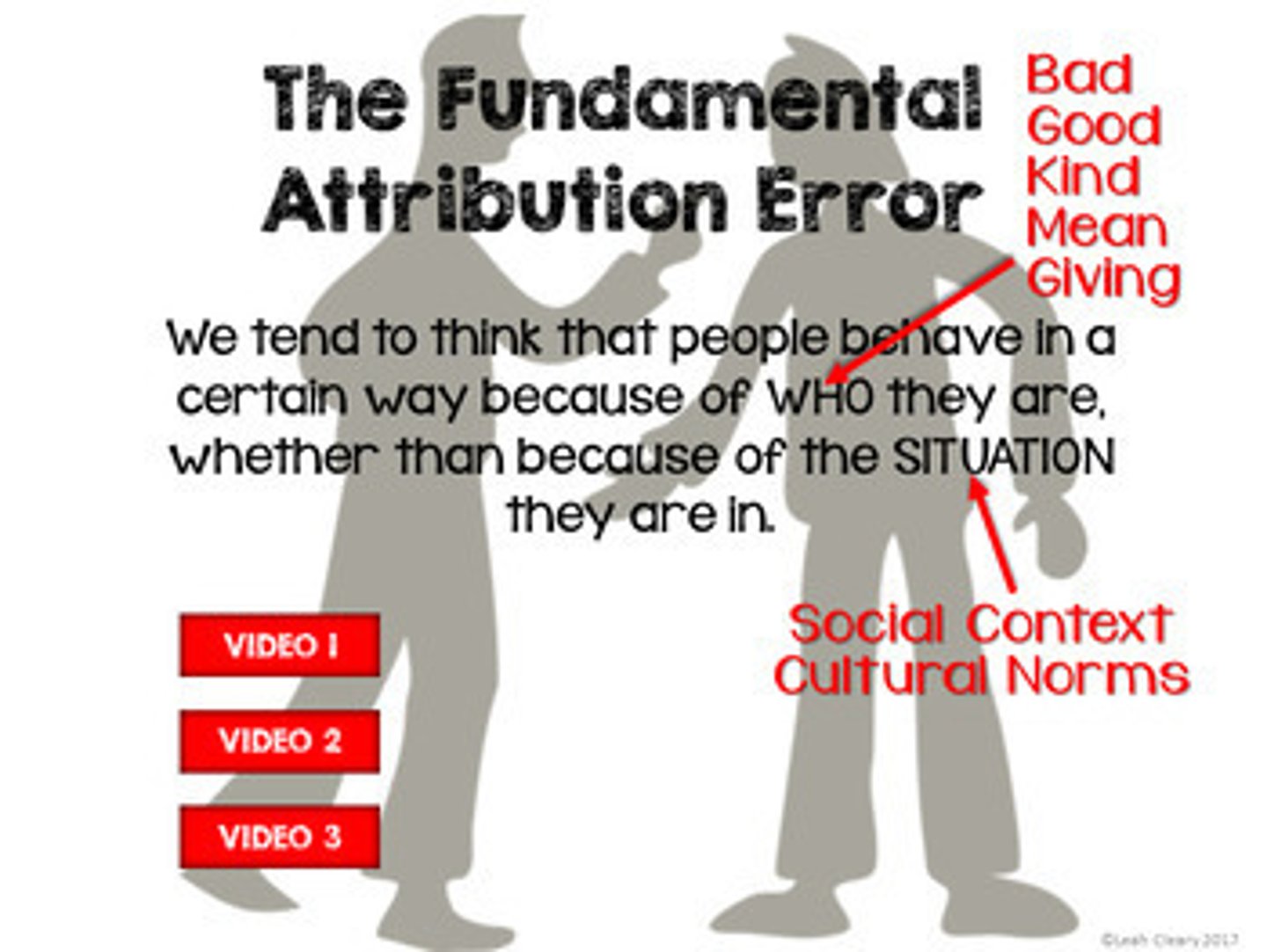
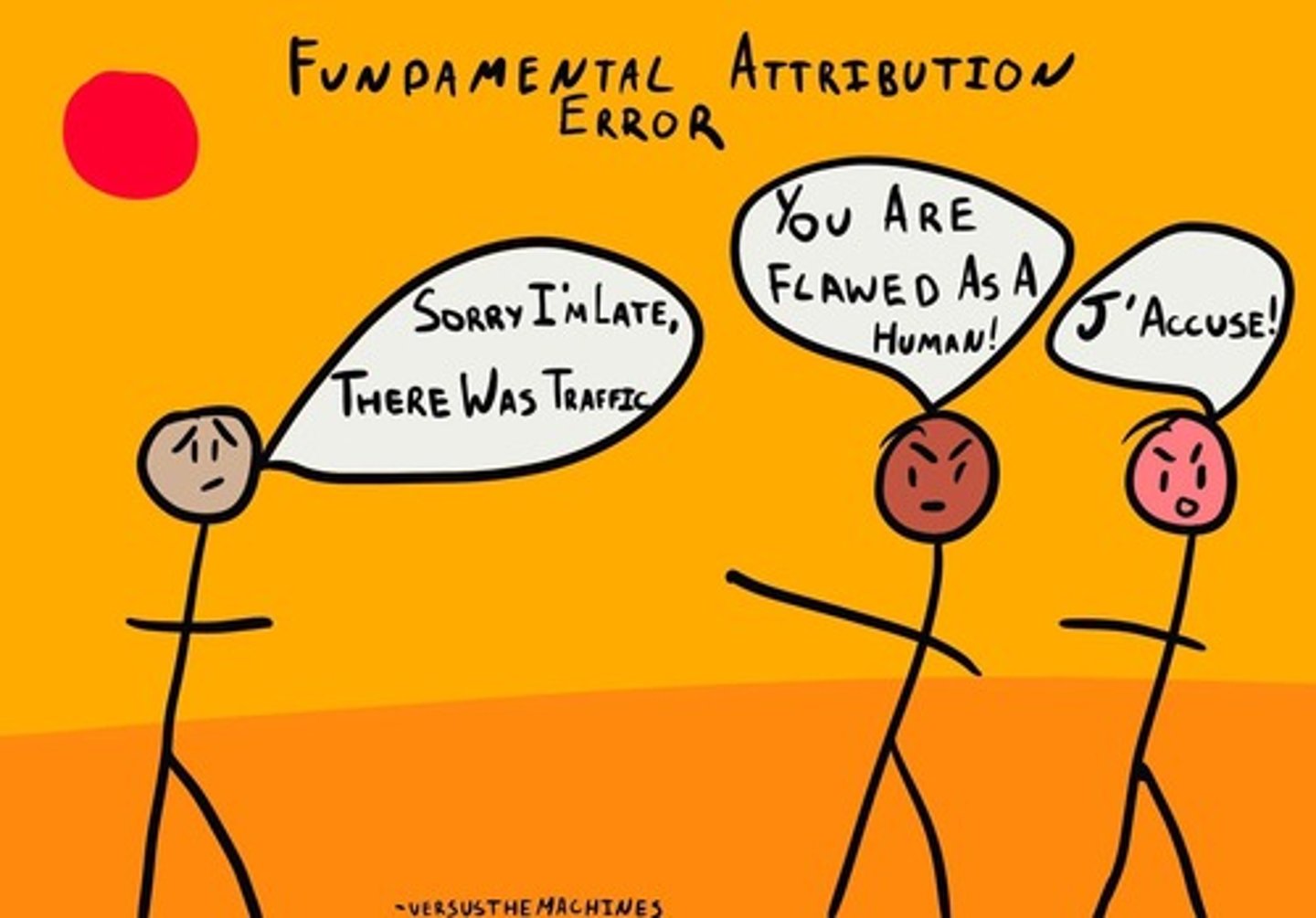
Fundamental Attribution Error
- (Ross, 1977), also known as correspondence bias.
- The tendency to make internal (dispositional) attributions for
people's behavior when there is clear evidence of an external (situational) influence.
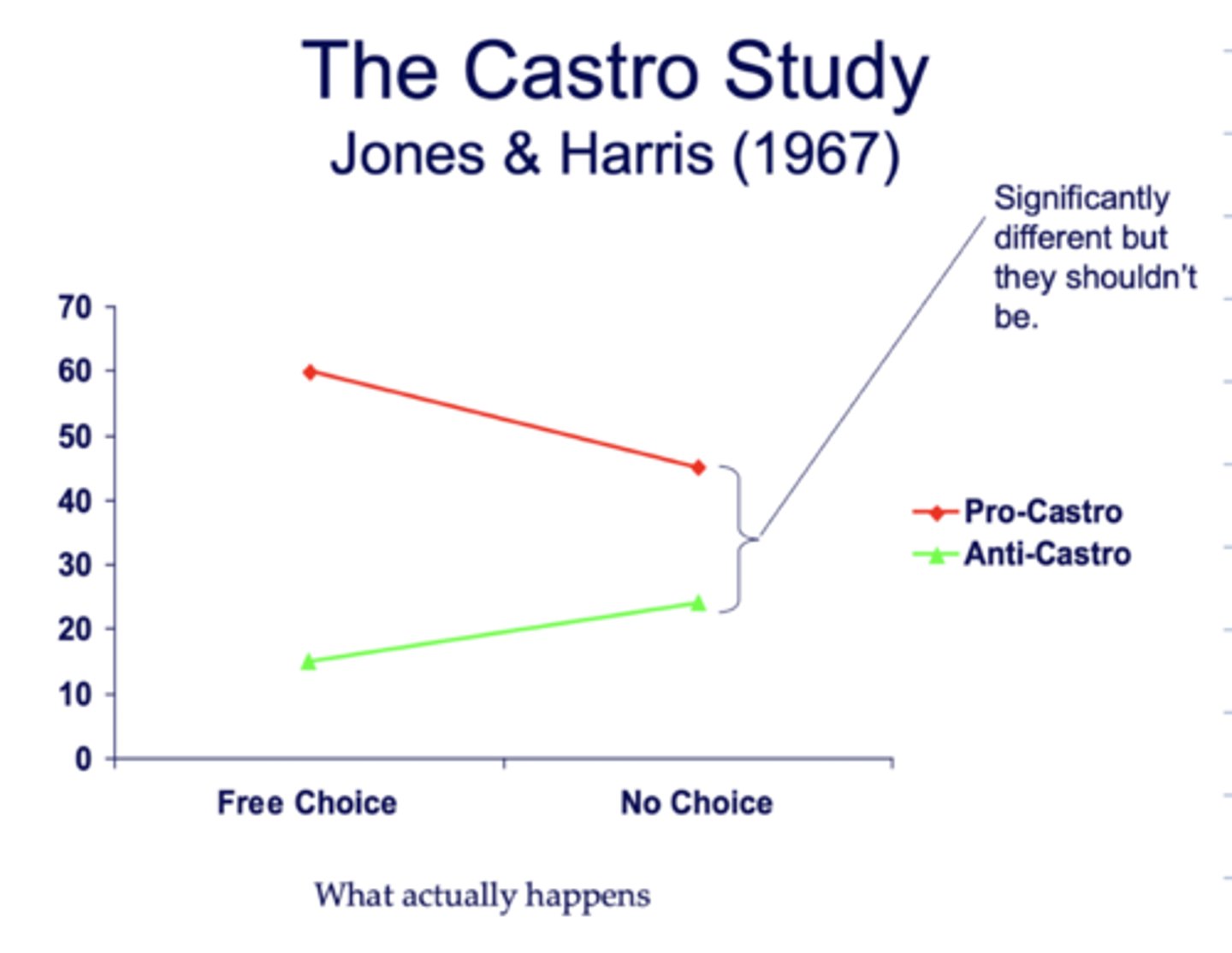
The Castro Study
- In a classic experiment, participants read essays defending or criticizing Fidel Castro.
- Even when told the writers were randomly assigned their positions and had no choice, readers still assumed the essay reflected the writer's true personal attitude.
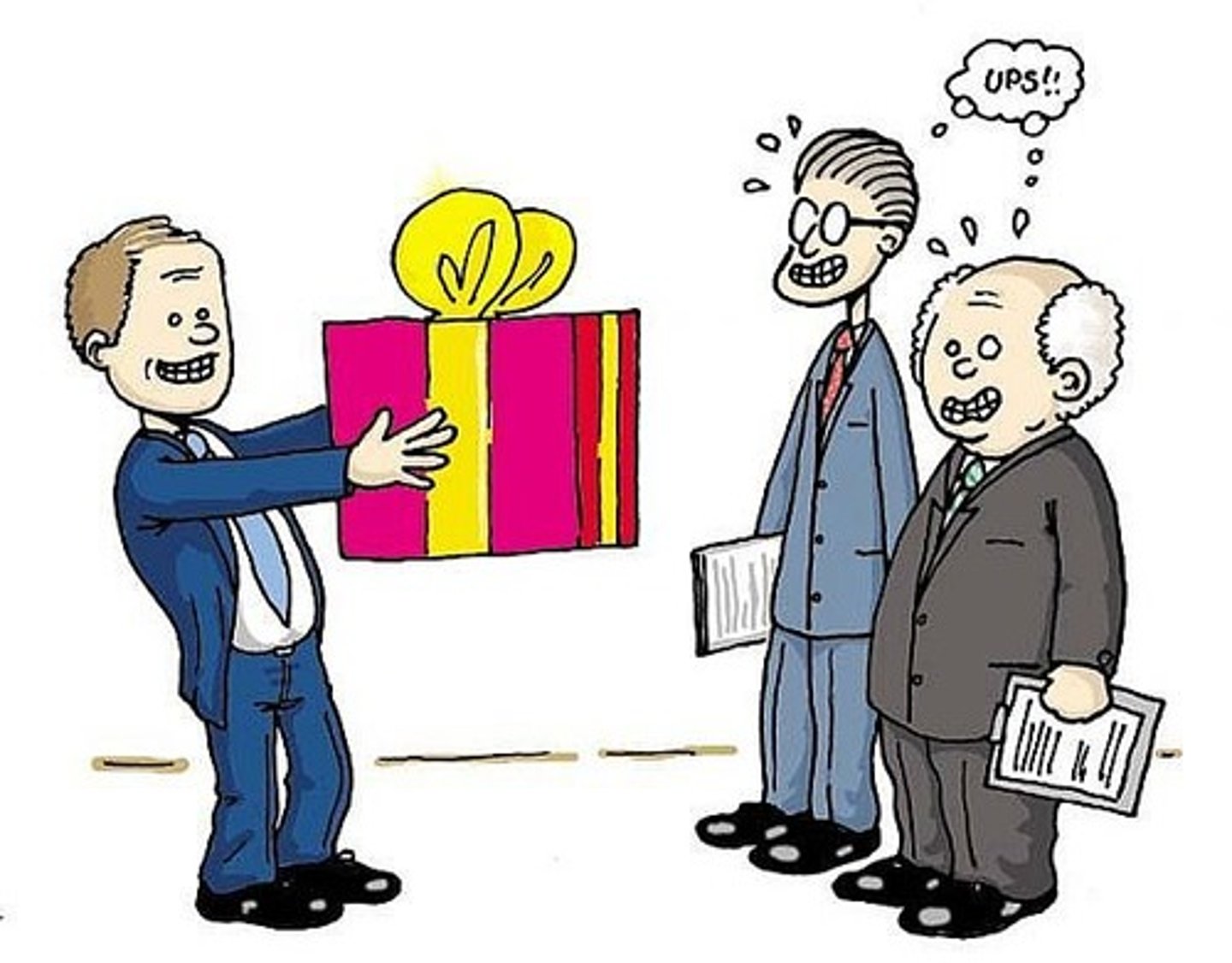
Internal Attribution
Example: Contributing to charity because one is "generous."

External Attribution
Example: Contributing because of "owing a favor" or "trying to impress a boss."
The Movie Scenario
If Juanita likes a movie that everyone else hates, you would make an internal attribution (she has unique taste) because the consensus is low.
Fundamental Attribution Error (FAE)
- is the tendency for observers to underestimate situational influences and overestimate dispositional (internal) influences on others' behavior.
Key Finding: Even when people are explicitly told that a behavior was coerced or assigned, they still tend to believe the behavior reflects the person's true beliefs.
Classic Study: In a 1967 study, students guessed that the author of a pro-Castro essay actually
supported Castro, even though they were told the author was required to write it (Jones & Harris, 1967).
Modern Examples: This error explains why we often assume a celebrity truly likes a product they are paid to endorse (Cronley et al., 1999) or why we assume an actor's real personality matches the "likable" or "contemptible" characters they play.
Western Cultures
Rely more on internal personality attributions.
Asian Cultures
- Rely more on external situational attributions.
- are more likely to accept contradictions and seek compromises rather than viewing one side as "correct" and the other "incorrect."
"Fish" Experiment
When shown a picture of one fish swimming ahead of a group, Americans typically say the fish is "leading" the others (internal control), while Chinese
participants often say the fish is being "chased" (situational influence) (Hong et al., 2000).
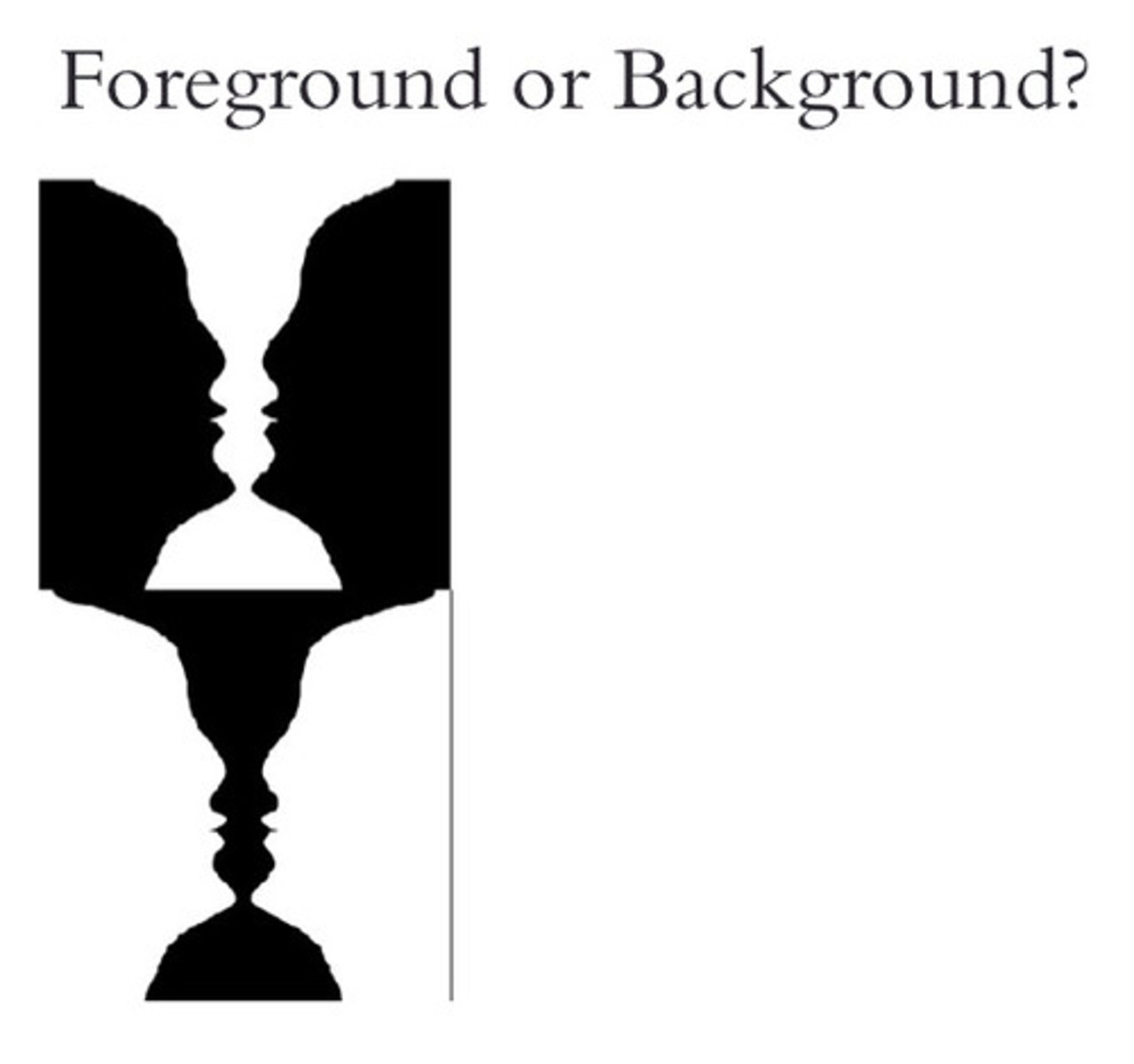
Background vs. Foreground
- Research by Masuda and Nisbett (2001) found that Japanese
students noticed the background of photos more than Americans, who focused heavily on the foreground objects.
Environmental Impact: Because Asian cities are often more "cluttered" than Western cities,
residents may be conditioned to pay more attention to context. Supporting this, Americans
began paying more attention to backgrounds after being shown pictures of Japanese cities
(Miyamoto et al., 2006).
The Actor-Observer Effect
- this is a related bias where people are more likely to make internal
attributions for others' behavior but situational attributions for their own.
- which explains why we view our own actions differently than the actions of others.
- is the tendency to make external (situational) attributions for our own
behavior while making internal (personality) attributions for the behavior of others (E. E. Jones &
Nisbett, 1972).
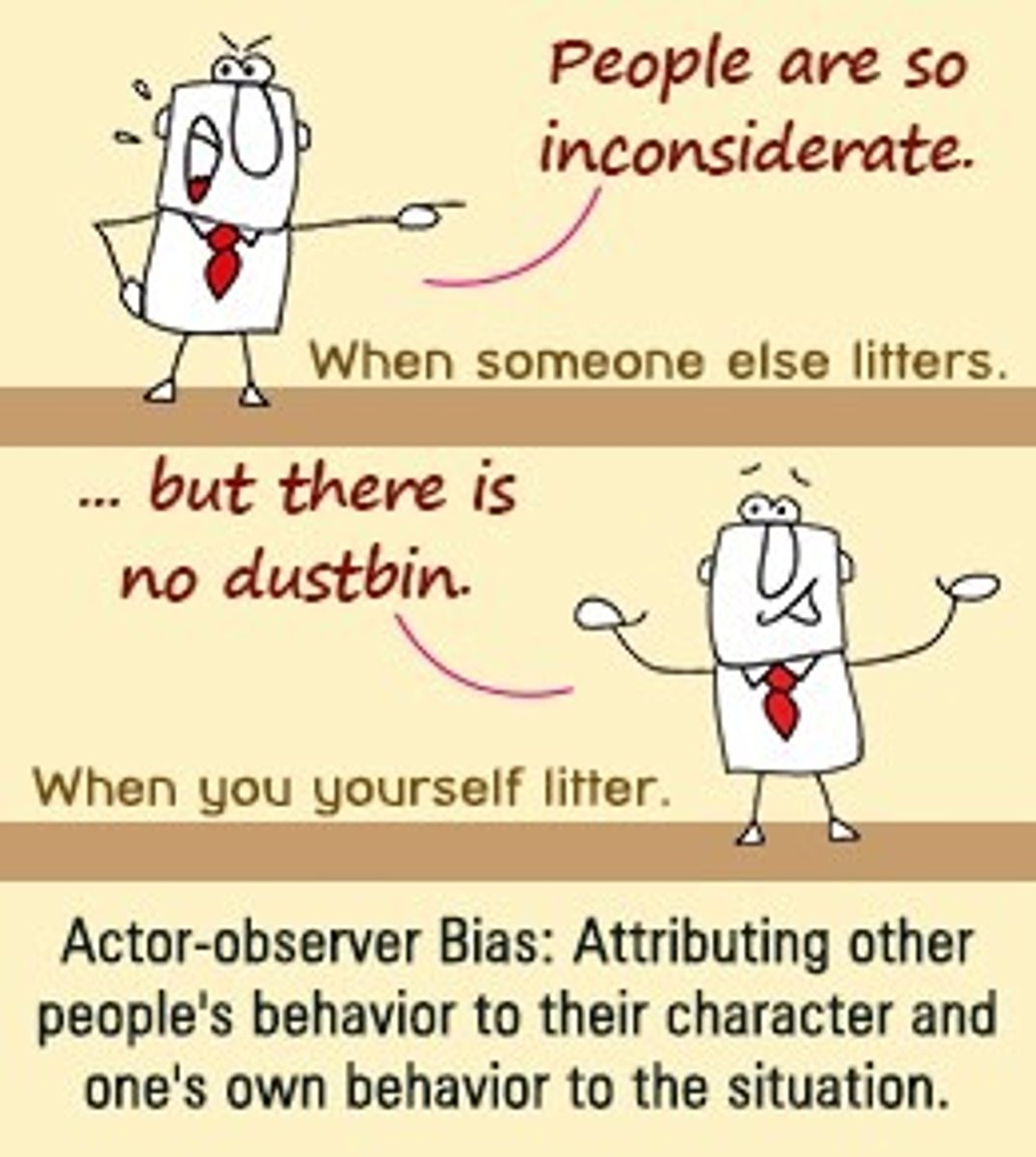
The "Actor"
When you are the one performing the action, you are aware of the situational pressures affecting you (e.g., "I'm honking because I'm in a rush for an emergency").
The "Observer"
- When you watch someone else, you don't see their situation; you only see the person.
- Therefore, you assume their behavior reflects their personality (e.g., "That person is honking because they are habitually aggressive").
The "It Depends" Study
A landmark study by Nisbett, Caputo, Legant, & Marecek (1973) asked college students to rate
themselves, their fathers, their best friends, and a famous news anchor (Walter Cronkite) on various personality traits.
Options: Participants could say a person had a trait, the opposite trait, or that their behavior
"depends on the situation."
Findings: Participants used the "depends on the situation" (external) explanation most often for
themselves. They used it less frequently for their fathers and friends. They used it least often for Walter Cronkite, whom they knew the least.
Conclusion: The less we know about someone's life and circumstances, the more likely we are
to attribute their behavior to their personality rather than the situation.
Visual Field
When we watch others, they are the primary "object" in our visual field, making them seem like the sole cause of their actions.
The Camera Angle Study
Researchers found that if you watch a videotape of your own behavior, you actually shift toward explaining your actions in terms of personality (internal) rather than situation, because you are now seeing yourself as an object in the environment (Storms, 1973).
Environmental Context (Figure 13.4)
- that Asian cities tend to be more crowded and "cluttered" than U.S. or European cities.
- This physical environment may play a role in why people from these cultures are more naturally inclined to notice the "background" or situational context of an event rather than just the individual actor.
Perceptual Salience
- What you focus on affects your judgment.
- Key idea: You blame the person you notice the most.
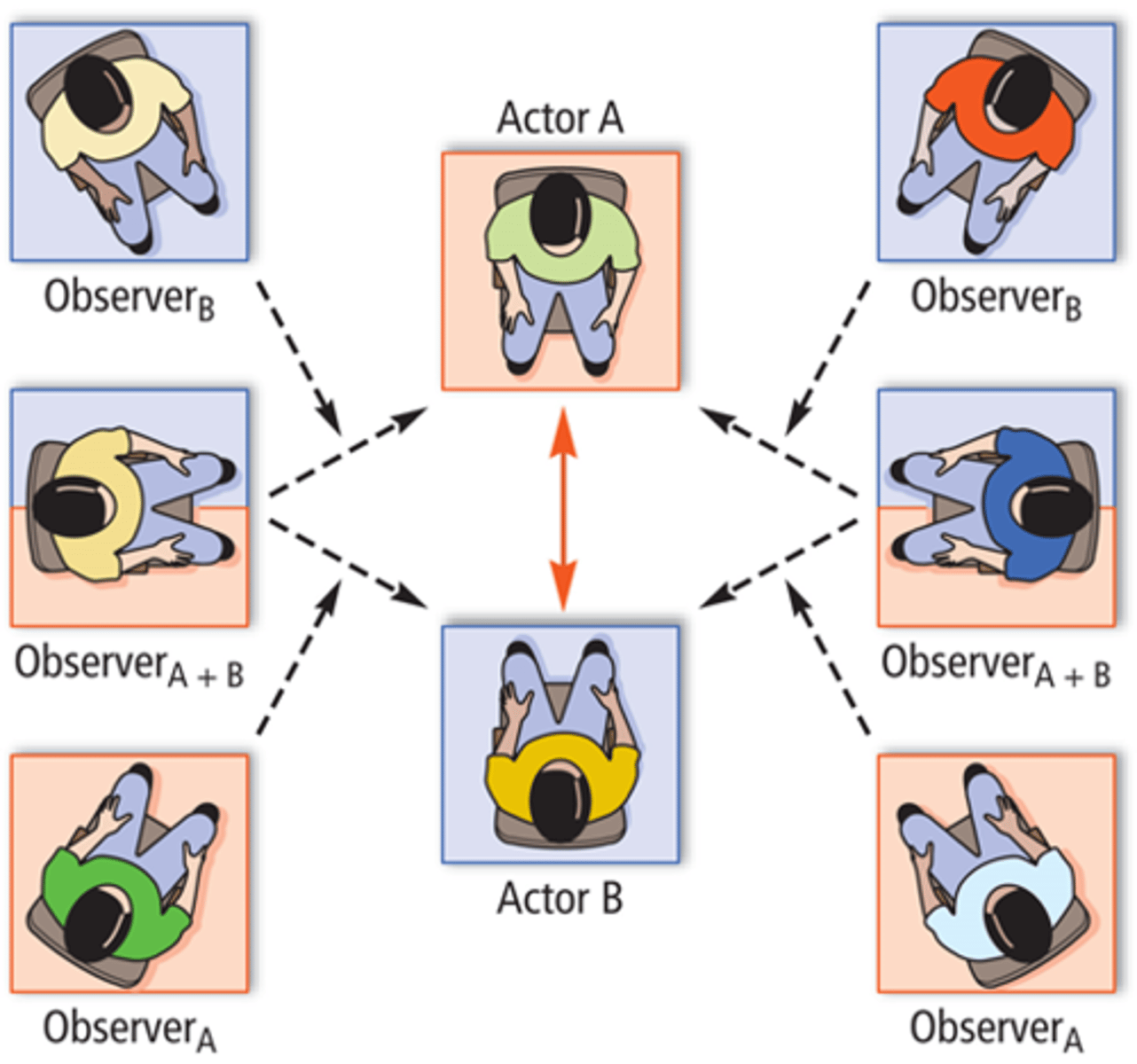
Conversation focus
- If the camera focuses on one person, viewers think that person leads the conversation.
- In a balanced conversation between two people, viewers believe the person the camera is focused on is the one dominating the interaction.
Interrogations
Research shows that confessions are judged as more voluntary if the camera is on the suspect, but more coerced if the camera focuses on the detective (Lassiter et al., 2002).
Managing Self-Perception
Individuals often manipulate attributions to maintain a positive self-image, a phenomenon known
as self-serving biases (Miller & Ross, 1975).
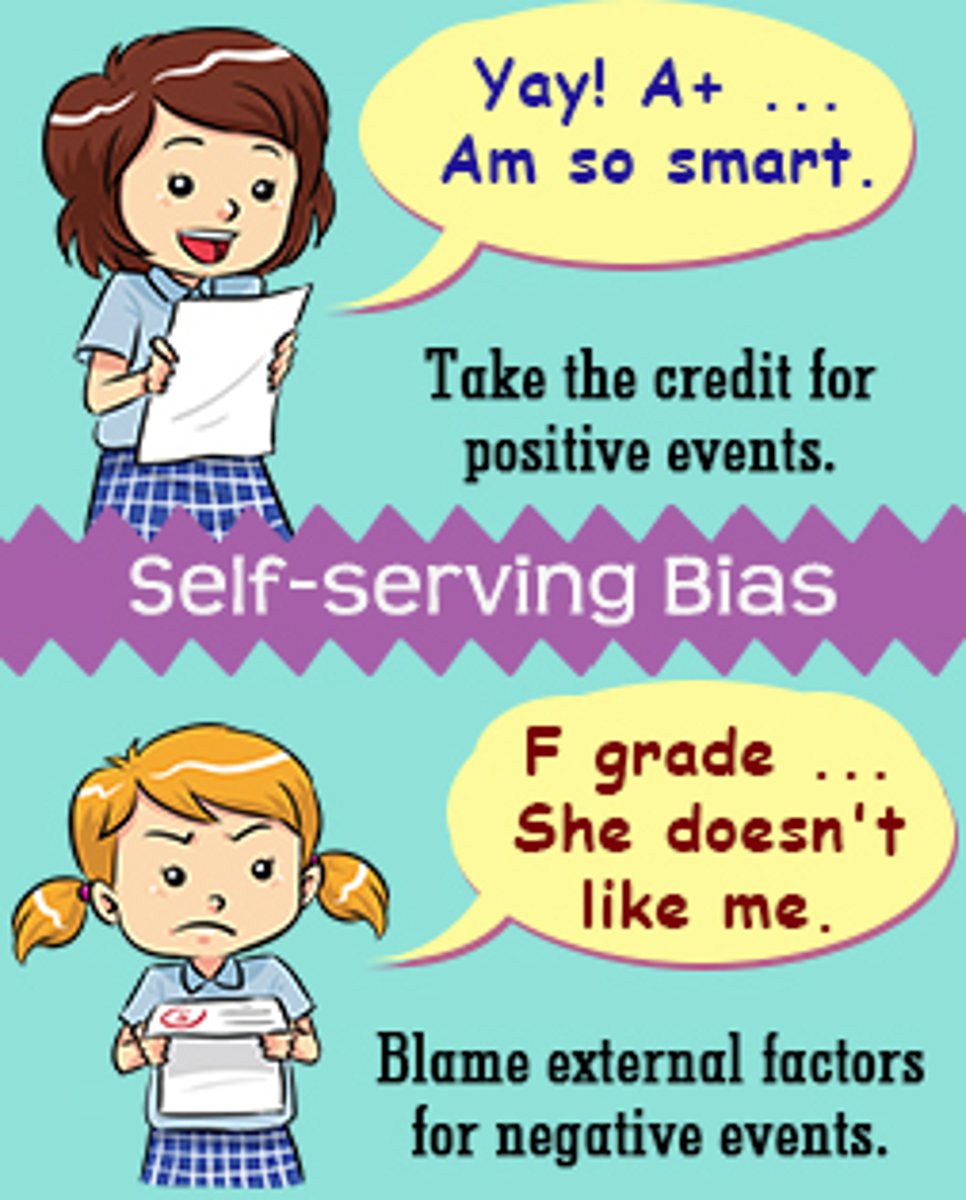
Credit vs. Blame
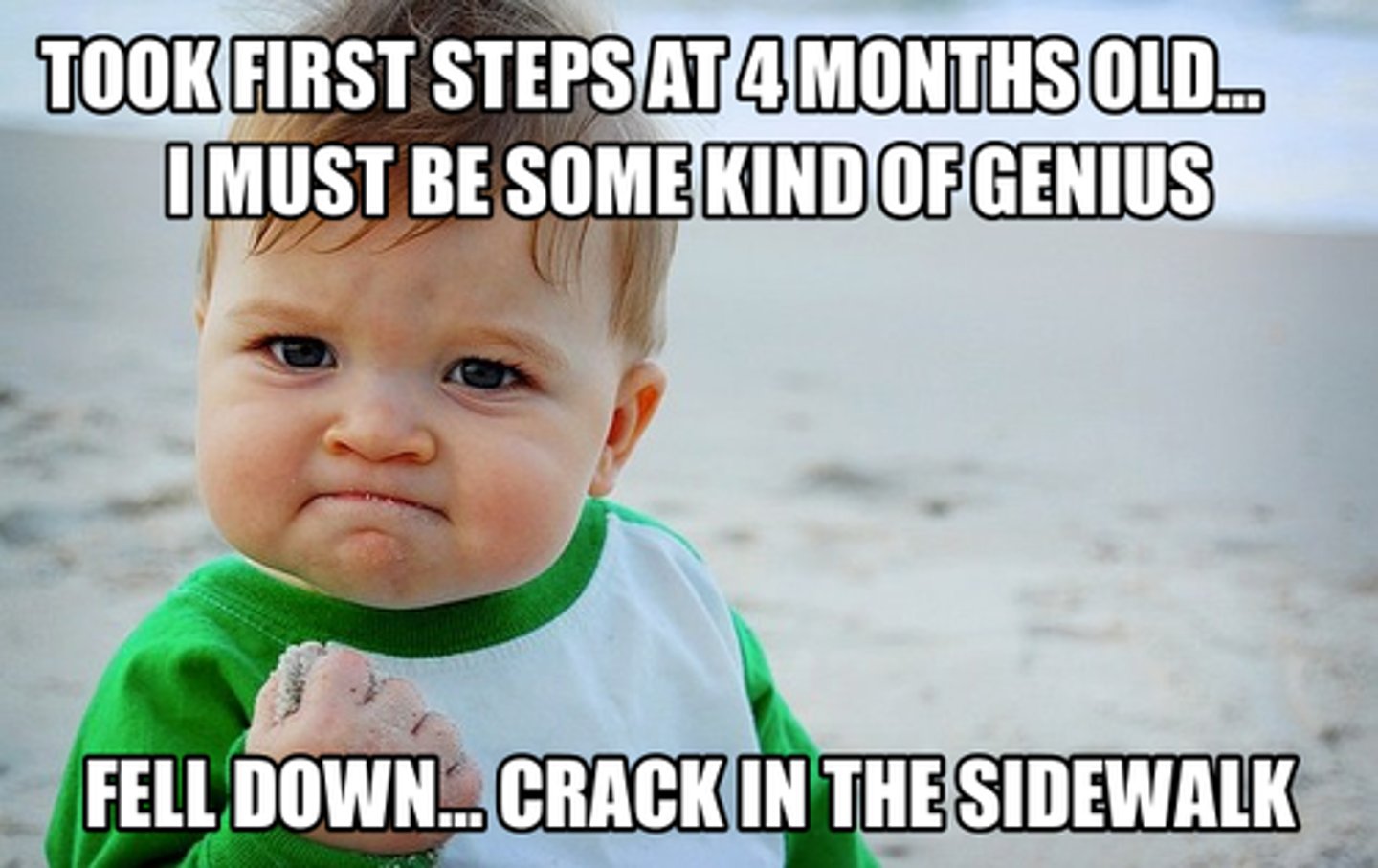
People typically attribute successes to internal factors (e.g., "I'm smart") and failures to external factors (e.g., "The test was unfair").
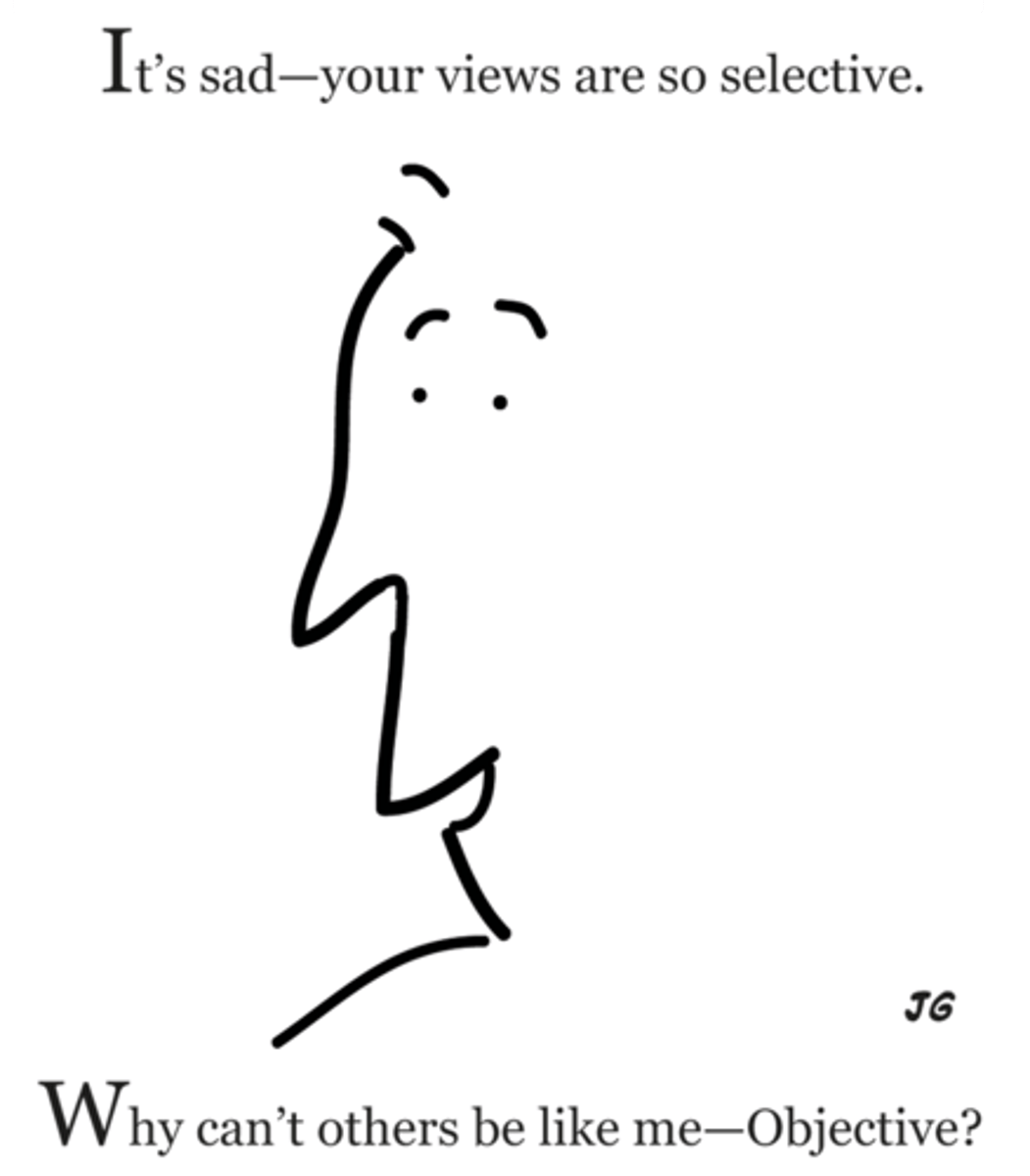
The "Blind Spot"
Even after learning about these biases, people tend to believe they apply more to others than to themselves (Pronin, Gilovich, & Ross, 2004).
Self-serving biases
are less prominent in East Asian cultures (Chinese, Japanese),
self-worth
is often tied to group harmony rather than individual competition
(Balcetis, Dunning, & Miller, 2008).
Self-Handicapping Strategies
- Creating obstacles to protect self-esteem.
- To protect their ego from potential failure, people may engage in
self-handicapping—intentionally creating obstacles for themselves to provide a ready-made excuse for poor performance.
Logic Fail → blame obstacle Succeed → look more capable
Study: Berglas and Jones (1978) Students chose a performance-impairing drug to create an excuse for failure.
Perspective Shift
- Closing your eyes and imagining yourself in someone else's shoes makes you more likely to give an external (situational) attribution, as you are adopting the "actor"
perspective.
- Imagining yourself in someone's situation → more external attribution
Self-Harm Logic
- People harm their own performance to create an external excuse for potential failure, protecting their self-esteem.
- People damage performance to protect self-esteem
Attitude
- is a like or dislike that influences our behavior.
- include an evaluative or emotional component, cognitive component, and a behavioral component.
Persuasion
is an attempt to alter your attitudes or behavior.
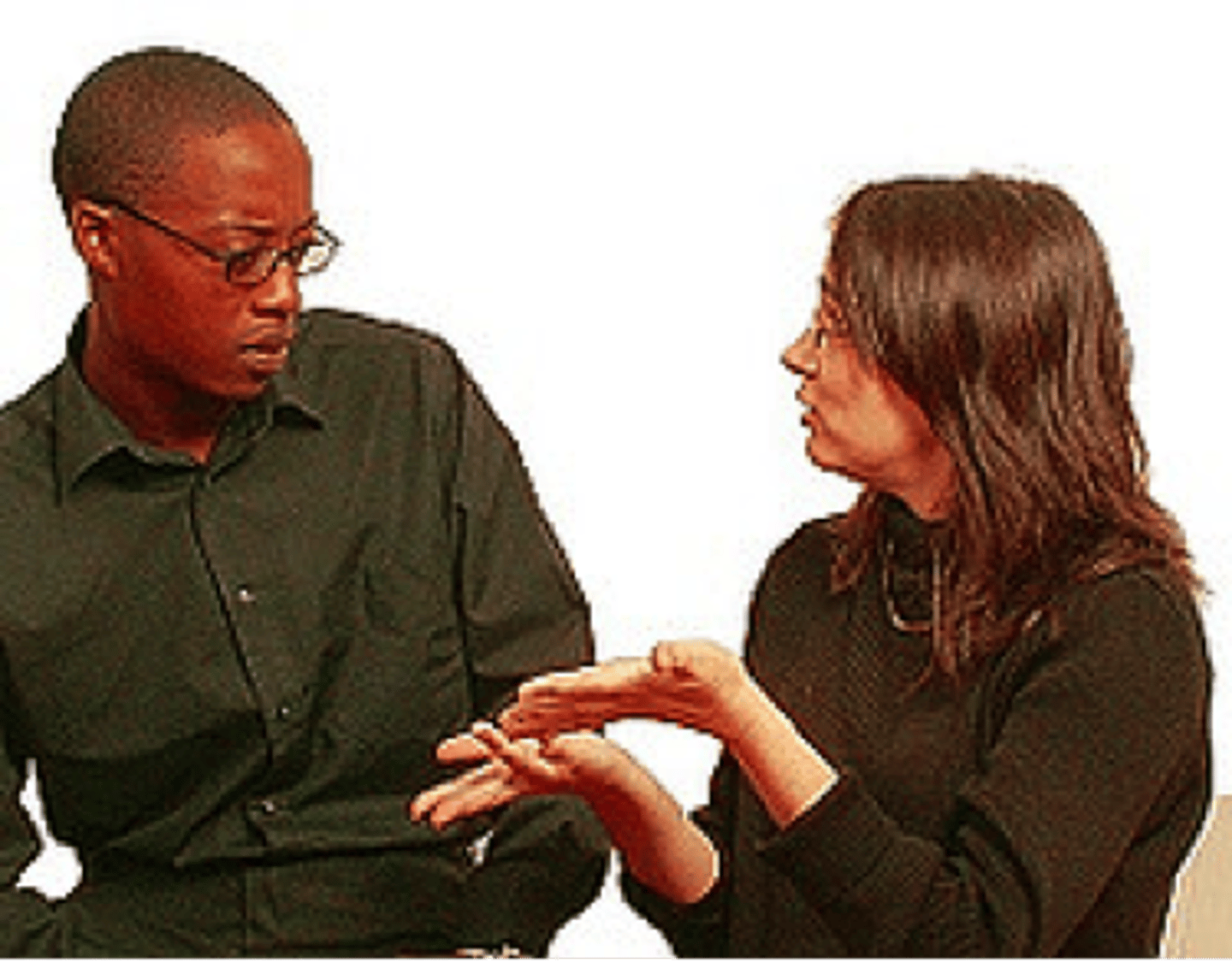
Attitude Measurement (Psychologist: Rensis Likert)
- Psychologists commonly measure attitudes through attitude scales. On a Likert scale, you would check a point along a line from 1, meaning"strongly disagree," to 7, meaning "strongly agree," for each statement.
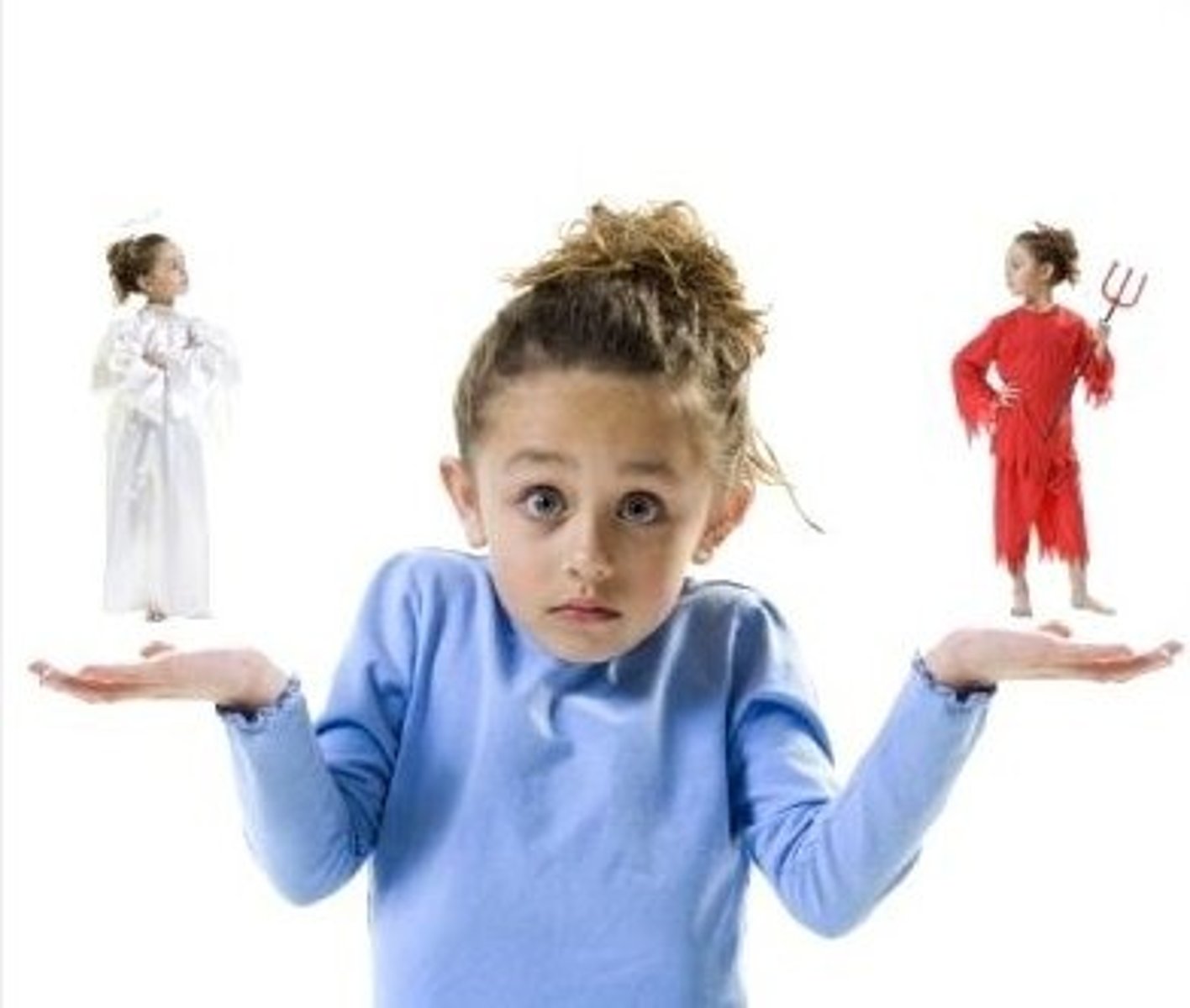
The theory of cognitive dissonance
- reverses the direction: It holds that a change in people's behavior alters their attitudes.
- is a state of unpleasant tension that people experience when they hold contradictory attitudes or when their behavior contradicts their stated attitudes, especially if the inconsistency distresses them.
Central route to persuasion
- When people take a decision seriously, they invest the necessary time and effort to evaluate the evidence and logic behind each message.
Peripheral route to persuasion
- when people listen to a message on a topic they consider unimportant, they attend to
more superficial factors such as the speaker's appearance and reputation or the sheer
length of someone's speech.
- It also influences people when they are too tired or distracted to pay careful attention to the argument.
Liking and Similarity
- People are more successful persuading you, if you like them or
see them as similar to yourself.

Social Norms
- People tend to do what others are doing. A powerful influence technique is to show that many other people are doing what you want them to do.
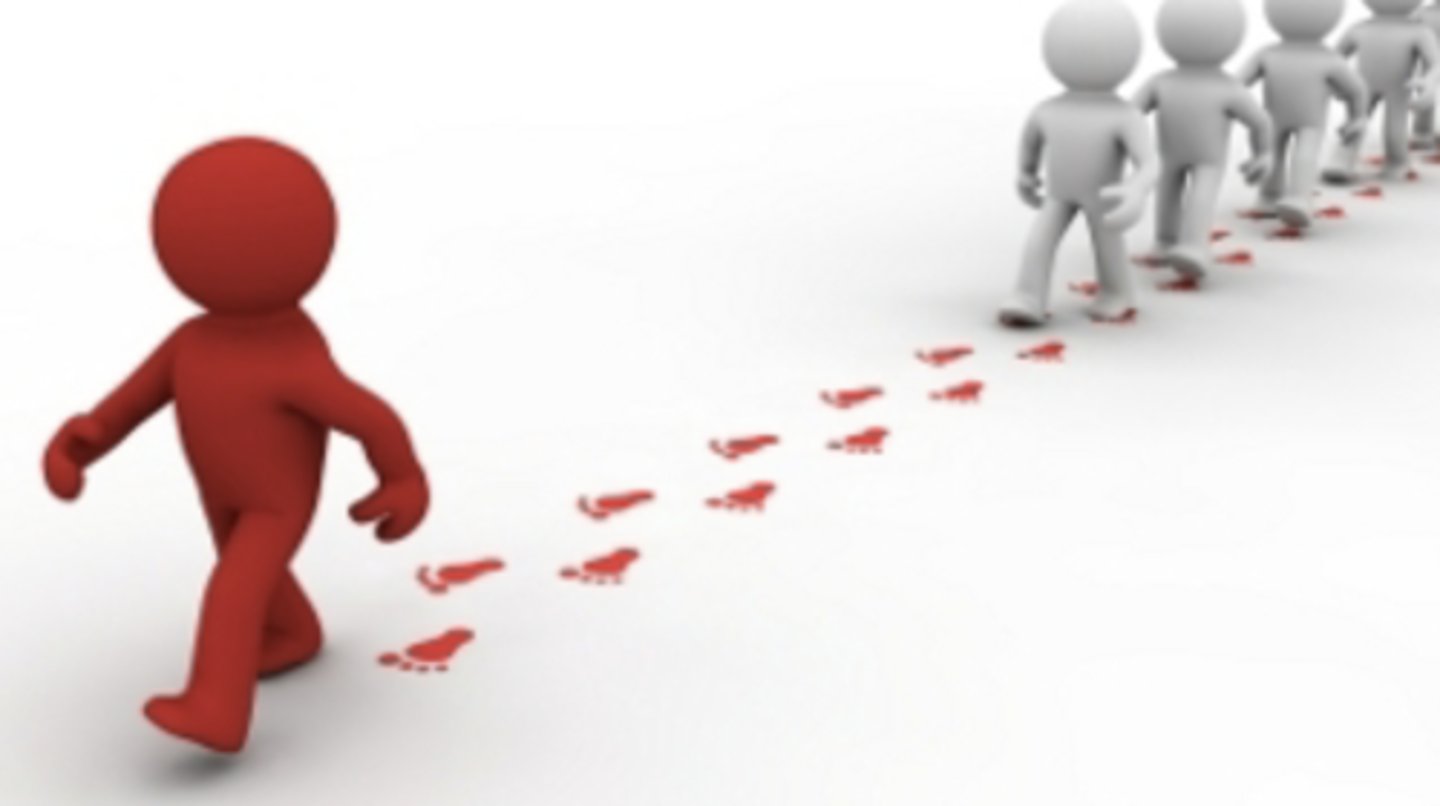
Reciprocation
- If you do me a favor, then I owe you one. However, it is possible to
misuse this principle.

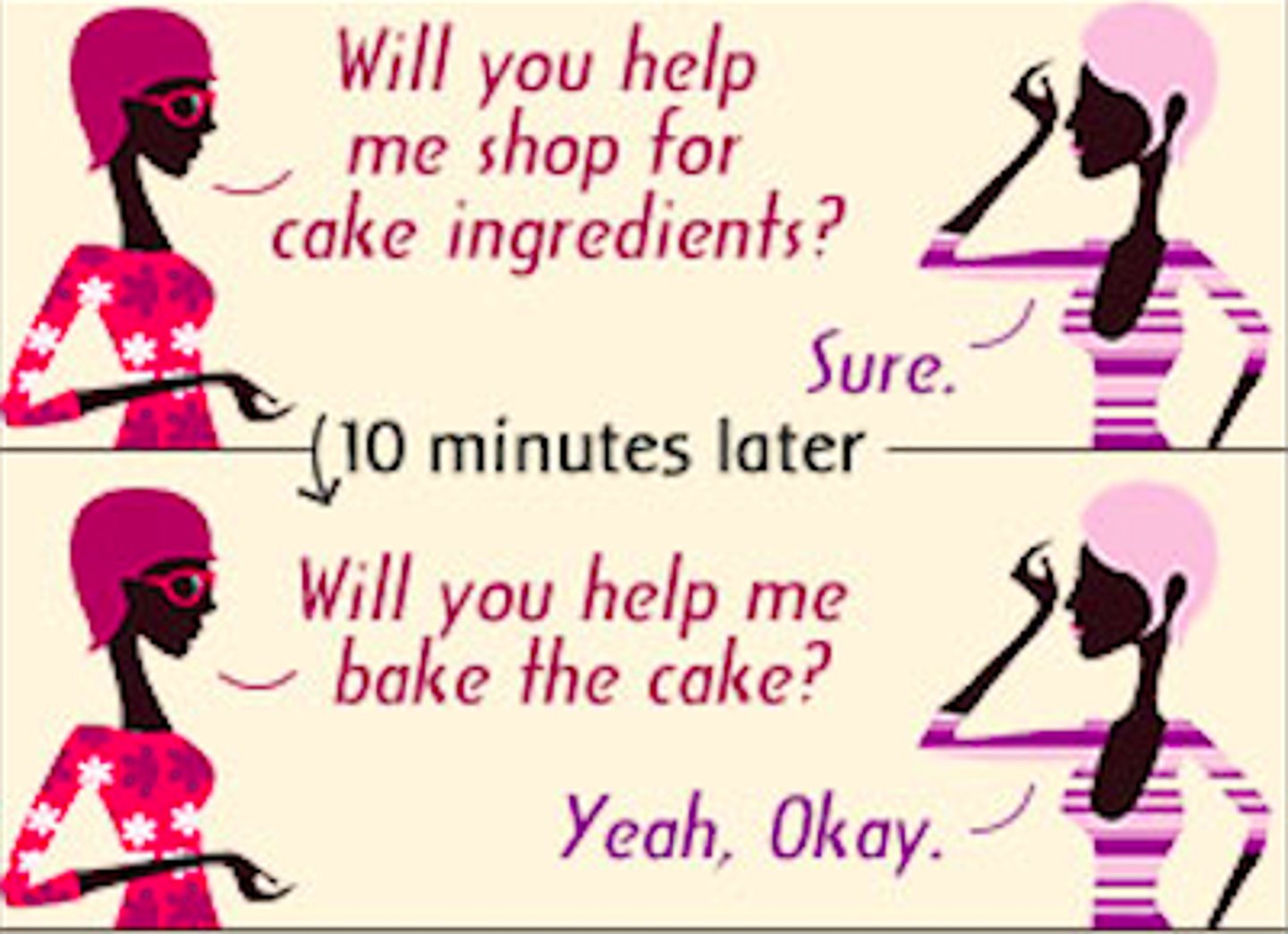
Foot in the Door
- someone starts with a modest request, which you accept, and follows it with a larger request.
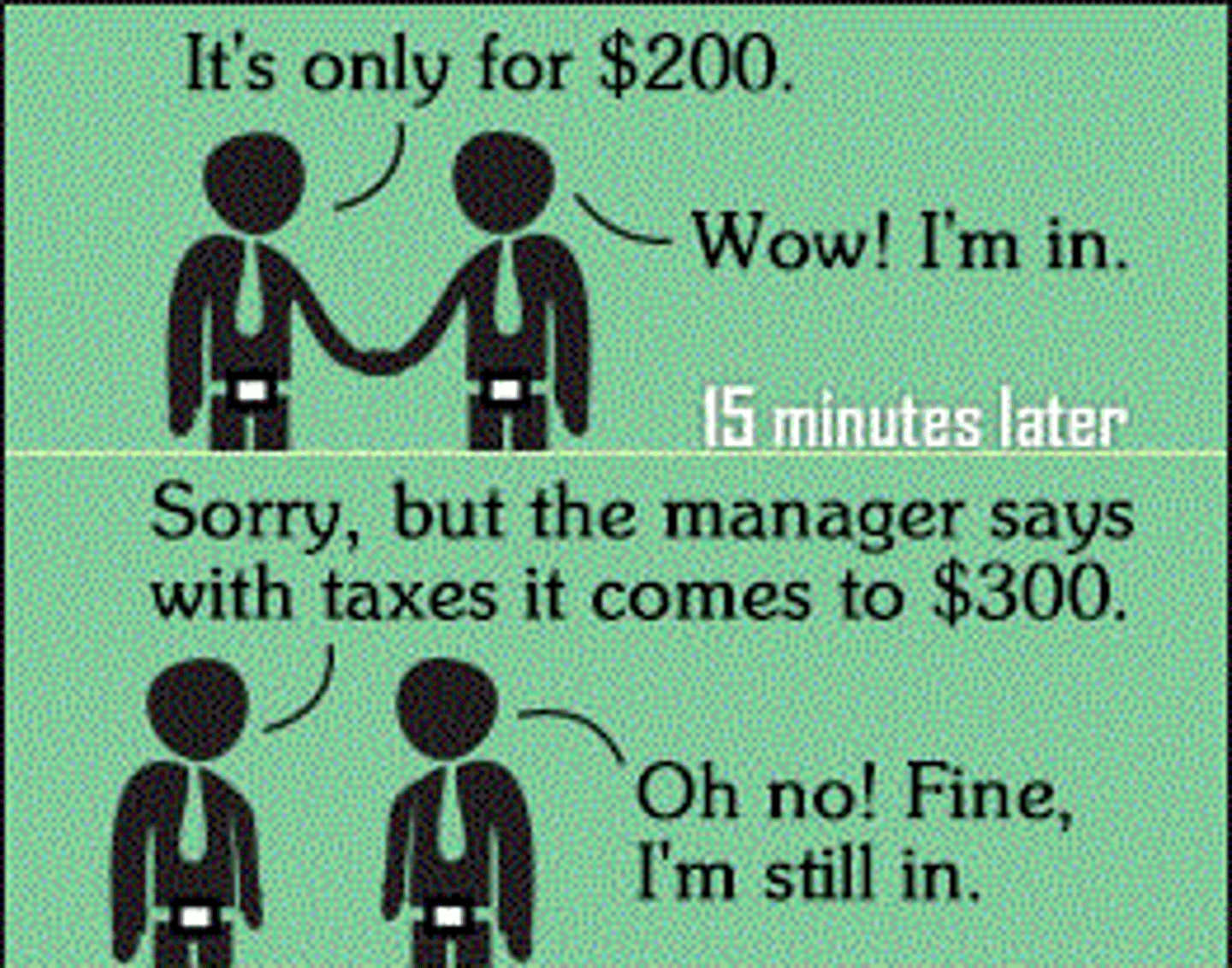
Bait and Switch
- first offers an extremely favorable deal, gets the other person to
commit to the deal, and then makes additional demands.
That's Not All!
- someone makes an offer and then improves the offer before you have a chance to reply.

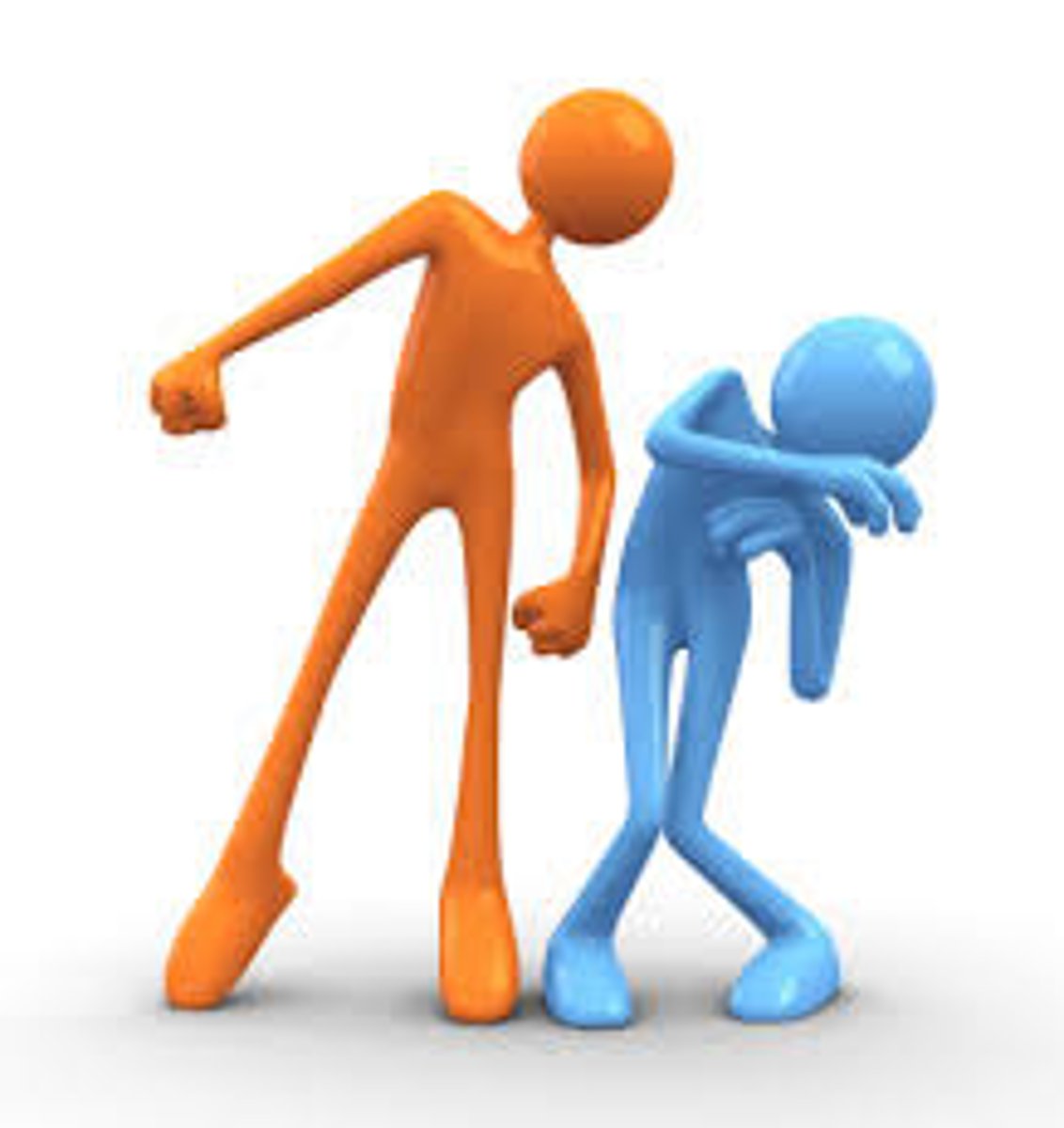
The Role of Fear
- Some attempts at persuasion use threats, such as "If you don't wear
a helmet while riding your bike, you could get seriously hurt."
Delayed Influence
- Some messages have little influence at first but more later.
The Sleeper Effect
- When people reject a message because of their low regard for the
person who proposed it, they sometimes forget where they heard the idea and later come to accept it.
Minority Influence
- when a minority group proposes a worthwhile idea. It could be an
ethnic, religious, political, or any other kind of minority. The majority rejects the idea at first but reconsiders it later.