Bio 3 exam 3
 Call Kai
 Learn
Learn Practice Test
 Spaced Repetition
 Match
Match Flashcards
 Knowt Play
1/25

Earn XP
Description and Tags
HELP ME
Name | Mastery | Learn | Test | Matching | Spaced | Call with Kai |
|---|
No analytics yet
Send a link to your students to track their progress
26 Terms
Urodela
Salamanders
Amphibians with tails
Anura
Frogs and toads
Amphibians without tails
Apoda
Caecilians
Amphibians without legs
Amphibians
Aquatic larva/terrestrial adult
Metamorphosis
Paedomorphosis
external
Amphibian fertilization is typically _____, with eggs deposited in water or other moist environments
Amniotes
Tetrapods with a terrestrially adapted egg
Includes reptiles and mammals
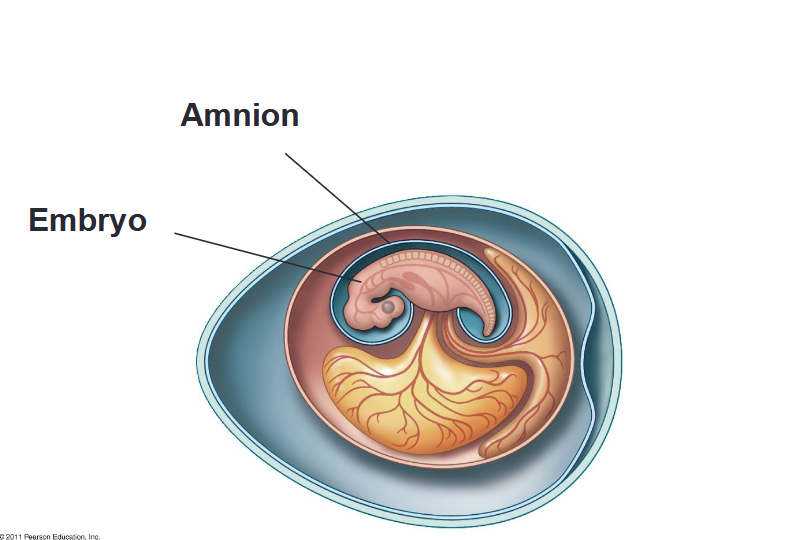
Amnion
encloses a compartment of fluid that bathes the embryo and acts like a hydraulic shock absorber
Chorion
exchanges gases between embryo and air. O2 and CO2 diffuse freely though the egg shell
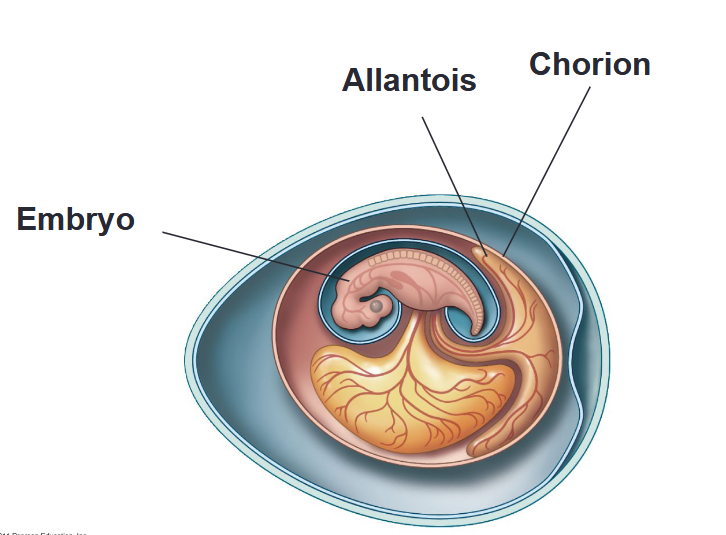
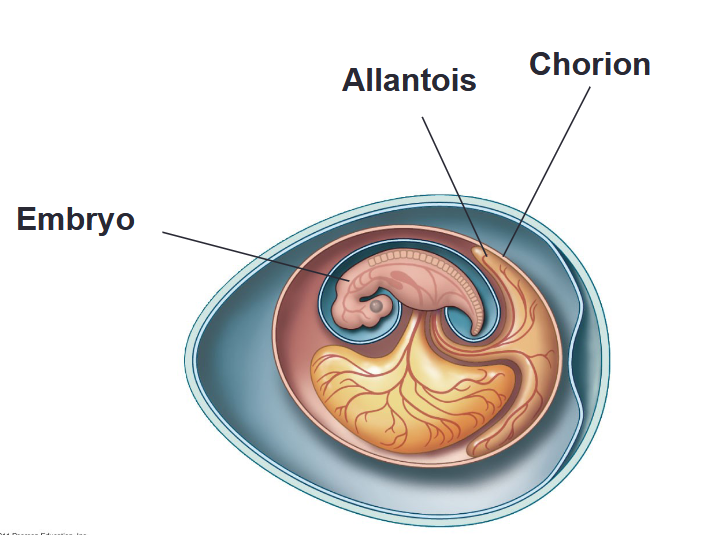
Allantois
In the chorion, acts as a disposal sac for certain metabolic wastes
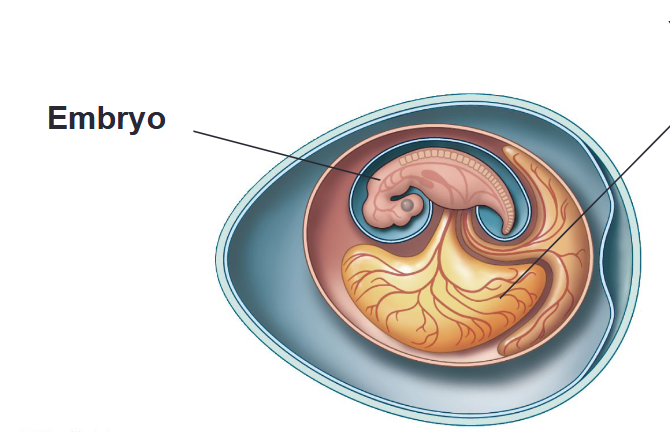
Yolk sac
Contains a nutrient rich liquid that is used by the embryo for energetic needs. Has blood vessels that deliver nutrients to the embryo
resistant to desiccation
Amniotic egg was a major advancement in the evolution of vertebrates because it is _______ _ ________.
Sarcopterygii (lobed-finned fishes)
Includes coelacanth, lungfish, tetrapod lineages
Thick muscles of pectoral and pelvic fins surround rod-shaped bones
Lungfishes (Dipnoi)
Sarcopterygii with a true lung
Can estivate for several months during the dry season
Tetrapods
Gnathostomes that have limbs
Tetrapod adaptations
Four limbs and feet with digits
A neck
Ribs
Absence of gills
Ears/sensory organs for air
Tiktaalik
‘Fishapod’ that had:
Fins, gills, lungs, scales
A neck and rubs
Fins with the bone pattern of a tetrapod limb
Osteichthyes (bony fishes)
Fishes with a mostly bony skeleton
Gills covered by operculum
Technically includes tetrapods
Actinopterygii (ray-finned fishes)
Fishes with flexible rays to support their fins
Operculum flap over gills
Swim bladder
Lateral line pits
Gnathostomes
Jawed vertebrates
Mineralized hinged jaws and teeth
Evolved from pharyngeal slit skeletal supports
Condricthyes (sharks)
Bony skeleton replaced with flexible cartilage
no swim bladder (fatty livers aid with buoyancy)
exposed gill slits
well developed sensory organs
Oviparous
eggs hatch outside mother
Ovoviviparous
Embryo fed by yolk in uterus
Viviparous
Embryo fed by placenta in uterus
Osmoconformers
Animals that maintain a similar osmolarity to their environment
Cnidaria
Hagfish
Osmoregulators
Animals that maintain a blood salinity different from their environment
Terrestrial/freshwater animals
Bony fish
Lamprey
Ionoregulators
Animals that regulate the types of ions they put in their blood different from seawater
Elasmobranch (sharks)
Bivalves