PSY:2811 (Research Methods and Data Analysis in Psych I) Exam #1 questions and answers 2026-2027(A+ GRADED)
 Call Kai
 Learn
Learn Practice Test
 Spaced Repetition
 Match
Match Flashcards
1/298

There's no tags or description
Looks like no tags are added yet.
Name | Mastery | Learn | Test | Matching | Spaced | Call with Kai |
|---|
No analytics yet
Send a link to your students to track their progress
299 Terms
What is the role of a producer of psychological science?
1. Know how to organize and analyze data
2. Know how to measure behavior accurately
3. Understand why scientists randomly assign people to groups
What is the role of a consumer of psychological science?
1. Read printed or online news stories based on research
2. Listen to talk shows or podcasts about research
3. Apply findings to own life
4. Interpret research data with a critical eye
Interrogating Information
A skill that involves asking the right questions and evaluating studies on the basis of their answers
Evidence-Based Treatments
A psychotherapy technique whose effectiveness has been supported by empirical research
Which of the following is not an example of being a producer of research?
A. Administering a questionnaire of PTSD symptoms
B. Conducting a study that involves observing the behavior of adolescents who have been bullied on social media
C. Interpreting research about education for your local school board
D. Measuring where the neurotransmitter dopamine is low in brains of patients with schizophrenia
Interpreting research about education for your local school board
Theorists
People who develop theories to explain how humans think, feel, and behave
Empiricists
People who rely on empiricism to test the theories
Empiricism
The use of verifiable evidence as the basis for conclusions; collecting data systematically and using it to develop, support, or challenge a theory; deriving knowledge from observation and experimentation; may also be called empirical method or empirical research
What are the fundamental ways psychologists approach their work?
1. They act as empiricists in their investigations
2. They test theories through research and revise their theories based on the resulting data
3. They follow norms in the scientific community that prioritize objectivity and fairness
4. They take an empirical approach to both applied research and basic research
5. They make their work public by submitting their results to journalists for review, responding to the work of other scientists, and sharing findings of psychological research with the popular media
What is considered the most reliable basis for conclusions?
Empiricism
Can psychological science only depend on theories and use logic or reasoning to develop new theories?
No, logic and reasoning are not enough because they rely on assumptions, which needs data to support; observations and data are crucial to psychological science
Theory-Data Cycle
The cycle in which scientists collect data to test, change, or update their theories
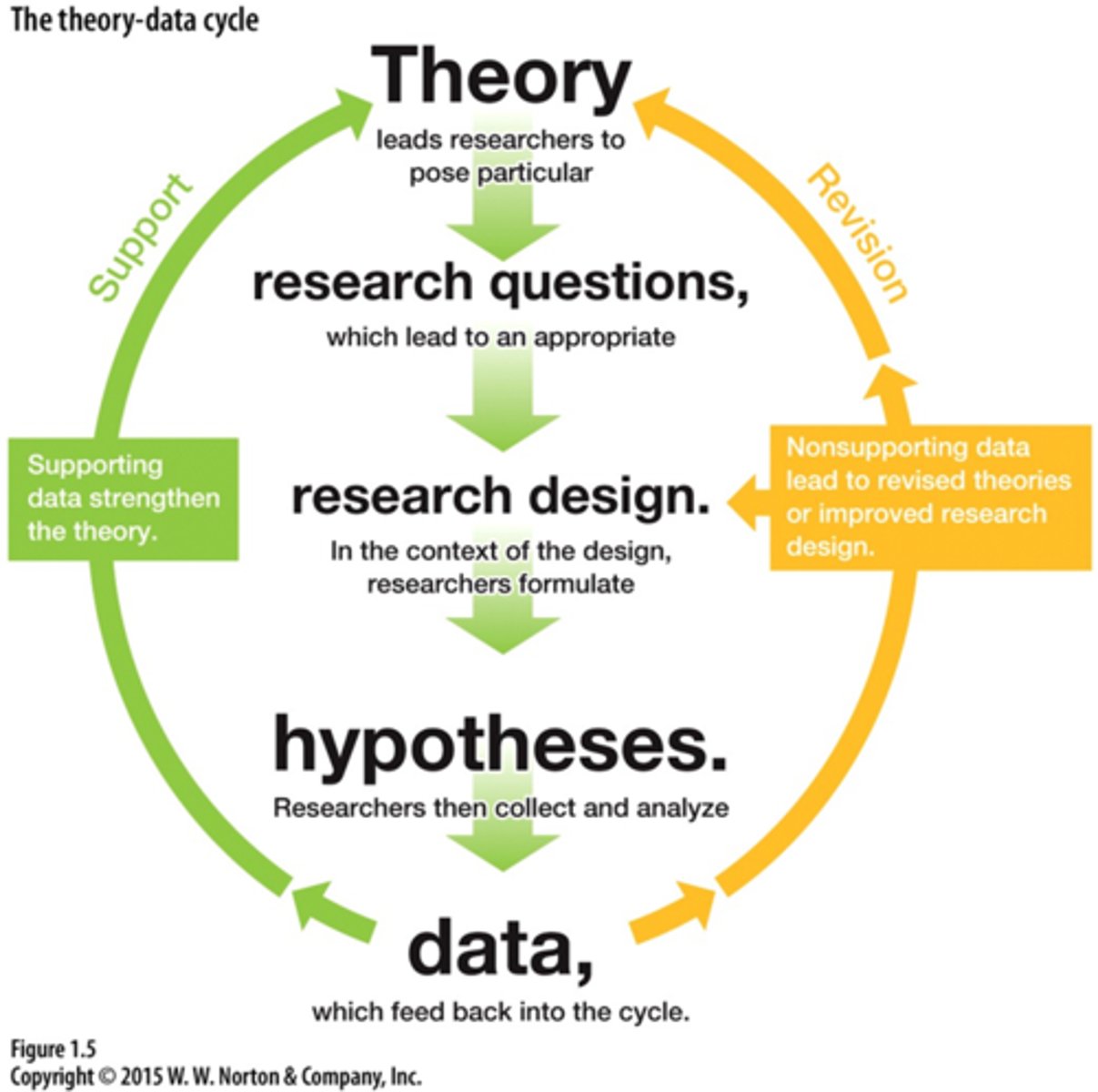
What are the steps of the theory-data cycle?
Step 1: Theory leads the researcher to pose particular research questions
Step 2: Research questions lead to an appropriate research design
Step 3: Research design is used to test a specific hypothesis
Step 4: Hypothesis is ideally preregistered before the researcher collects and analyzes data
Step 5: Data is used to feed back into the cycle
Step 6: Supporting data strengthens the theory (support of theory)
Step 6: Nonsupporting data leads to revised theories or improved research design (revision of theory)
Theory
A statement or a set of statements that describes general principles about how variables relate to one another; build upon measured observations and accumulated knowledge from testing predictions
Hypothesis
A statement of the specific result or outcome the researcher expects to observe from a particular study, if the theory is accurate; also called a prediction
Data
A set of observations representing the values of some variable, collected from one or more research studies
Preregistered
A term referring to a study in which, before collecting any data, the researcher has stated publicly what the study's outcome is expected to be
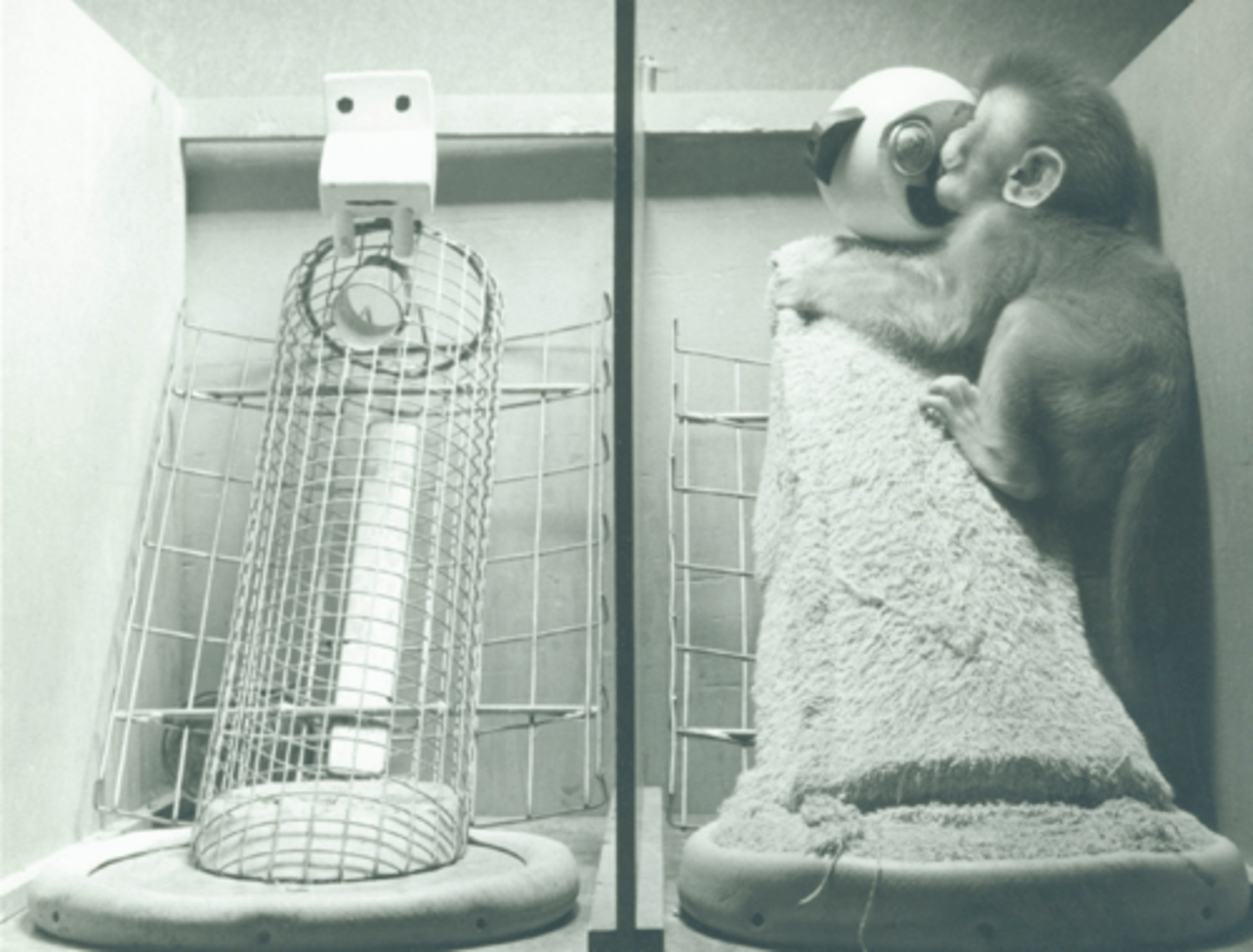
What is the Cupboard Theory Vs. Contact Comfort Theory Experiment?
1. The Cupboard Theory of Mother-Infant Attachment explained that a mother is valuable to a baby mammal because she is a source of food
2. The Contact Comfort Theory of Mother-Infant Attachment explained that baby mammals are attached to their mothers because of the comfort of their warm, soft fur
3. Harry Harlow tested the theory by separating the two influences (food and contact comfort)
4. He built two monkey foster "mothers" for the baby monkeys, which were the only mothers they were exposed to
5. One of the mothers only offered food and not comfort
6. The other mother only offered comfort and not food
7. The babies would cling to the cloth mother 12-18 hours a day and only go to the wire mother to obtain food
8. The results supported the Contact Comfort Theory
Why can't studies prove theories?
1. Empiricists avoid inferences they can't support with direct observation
Ex: Every raven a person has ever seen is black; however, that does not prove that all ravens are black because that person has not observed all possible ravens, so there is a possibility that a nonblack raven exists
2. If a single study's data supports a theory, we do not say that that the data proves the theory; we say that the data supports or are consistent with a theory
3. If a single study's data does not support a theory, we say that the data are inconsistent with a theory, and the study would be revised instead of rejected
4. A single confirming finding cannot prove a theory, just as a single disconfirming finding cannot allow researchers to scrap a theory
6. Scientists require a diverse and convincing set of observations before they completely abandon a viable theory
Replication
The process of conducting a study repeatedly to test whether the result is consistent
Weight of the Evidence
A conclusion drawn from reviewing scientific literature and considering the proportion of studies that are consistent with a theory
Which of the following is true of the relationship between hypotheses and theories?
A. Hypotheses are steps taken to determine if the theory is accurate
B. Theories are used to determine if hypotheses are accurate
C. Multiple theories are needed to test if a hypothesis is accurate
D. Hypotheses and theories are synonymous terms
E. None of the above
Hypotheses are steps taken to determine if the theory is accurate
What are the qualities of a good theory?
1. Supported by data
2. Falsifiable
3. Parsimonious
How is a good theory supported by data?
1. Without support from data, there is no evidence for an explanation
2. A single piece of evidence is poor support
3. Supporting data from multiple studies, multiple labs, and replication are crucial
Falsifiability
A feature of a scientific theory in which it is possible to collect data that will indicate that the theory is wrong
How is a good theory falsifiable?
1. Good theories should lead to hypotheses that could fail to support the theory when tested
2. Not every theory that explains a possible outcome is a good theory
Freud's Unconscious Motivation Theory
A theory that states that behavior is shaped by unconscious psychological forces
Parsimony
When two theories both explain data equally well, the simpler theory is preferred (Ockham's Razor)
How is a good theory parsimonious?
The theory should be made simple without compromising the ability to explain data
Which theory is more parsimonious?
Theory 1: The lights went out because you pressed the switch
Theory 2: The lights went out because the exact second you pressed the light switch, there was a power outage
Theory 3: The lights have not actually gone out since the light switch does not work, but at the exact second you pressed the switch, you developed a special type of vision impairment, which caused you to think that they did
Theory 4: The lights have not actually gone out since the light switch does not work, but at the exact second you pressed the switch, you developed a special type of vision impairment, which was caused by aliens that visited your hours, which in turn caused you to think that they did
The lights went out because you pressed the switch (theory 1)
What are the four norms introduced by Robert Merton that explain how scientists should act?
1. Universalism
2. Communality
3. Disinterestedness
4. Organized skepticism
Universalism
Scientific claims are evaluated according to their merit, independent of the researcher's credentials or reputation; the same preestablished criteria apply to all scientists and all research
Communality
Scientific knowledge is created by a community and its findings belong to the community
Disinterestedness
Scientists strive to discover the truth; they are not swayed by conviction, idealism, politics, or profit
Organized Skepticism
Scientists question everything, including their own theories, widely accepted ideas, and ancient wisdom
Self-Correcting
A process in which scientists make their research available for peer review, replication, and critique, with the goal of identifying and correcting errors in the research
Psychologists are empirical scientists; therefore, ___
A. They use logic to prove that their theories are right
B. Data is used to prove a theory is right
C. Data is used to test whether a theory makes the correct predictions
D. Intuition can be used to derive knowledge for how the mind works
Data is used to test whether a theory makes the correct predictions
Applied Research
Research whose goal is to find a solution to a particular real-world problem
Ex: Efficacy of a treatment for depression can be tested in a sample of trauma survivors
Basic Research
Research whose goal is to enhance the general body of knowledge, without regard for direct application to practical problems
Ex: Researching the capacity of human memory
Translational Research
Research that uses knowledge derived from basic research to develop and test solutions to real-world problems
Ex: Biochemistry of cell membranes can be translated into a new drug for schizophrenia
Data-Driven Research
Reasoning from the data to the general theory
Theory-Driven Research
Reasoning from a general theory to the data
Scientific Journal
A monthly or quarterly periodical containing peer-reviewed articles on a specific academic discipline or subdiscipline, written for a scholarly audience
The process of ___ makes research self-correcting
Publication
Journalism
Secondhand news or commentary published or broadcast in the popular media and produced for a general audience
How can being misled by the media be prevented?
1. Find the original source and read it thoroughly
2. Maintain a skeptical mindset regarding popular sources and ask the right questions before accepting a writer's claim
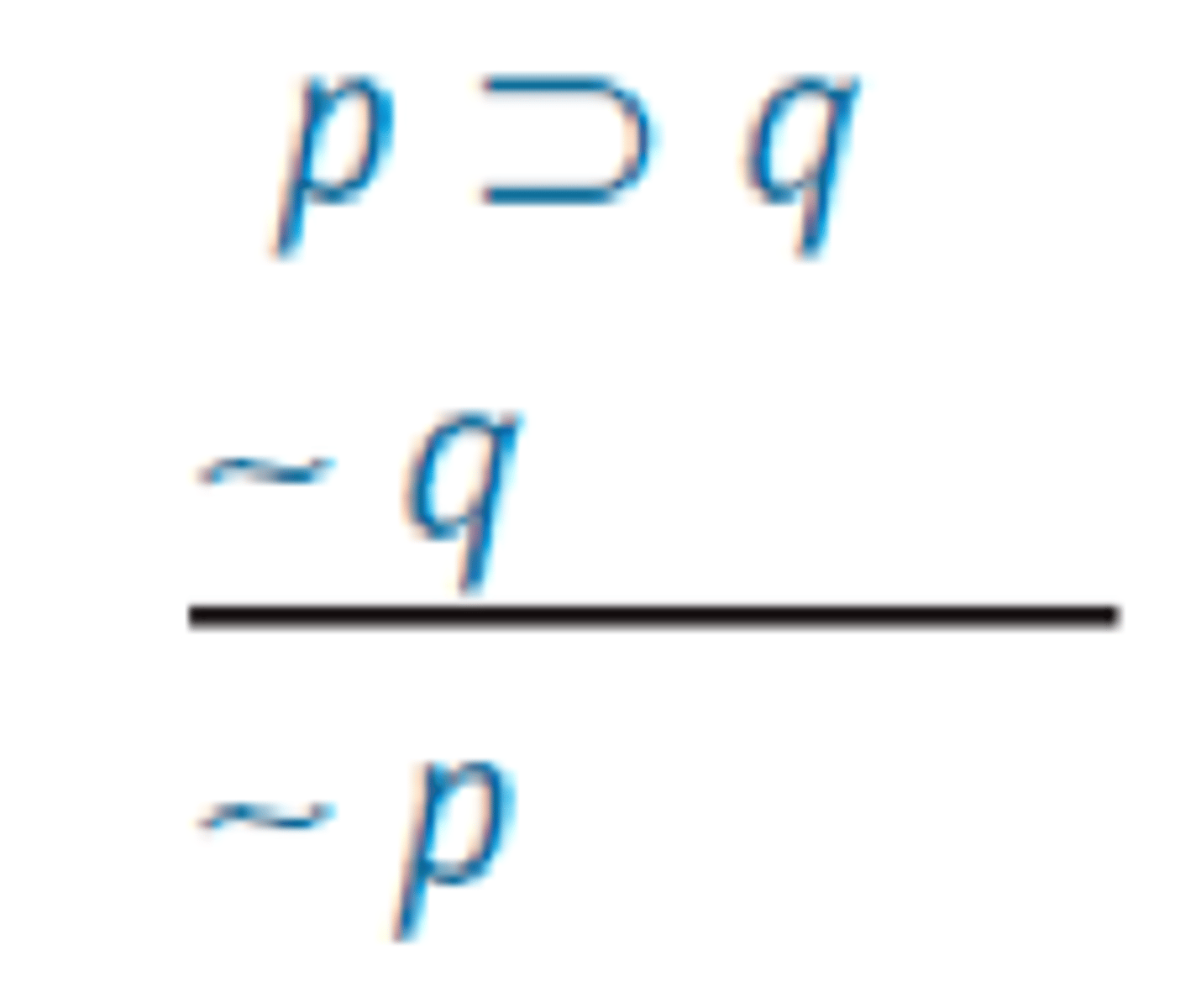
Modus Tollens
1. If P, then Q; not Q, therefore, not P
2. If theory is correct (P), then predicted data (Q); did not get the predicted data (Q), therefore, theory is not correct (not P)
3. Valid to disprove a theory/hypothesis using a counter-example (denying the consequent)
Ex: If it rains, then it is wet; it is not wet, therefore, it did not rain
What are invalid ways to affirm the consequent?
1. If theory correct (P), then predicted data (Q); predicted data (Q), therefore, theory is correct (P)
- Invalid because there may be other reasons to cause Q
Ex: If it rains, then it is wet; it is wet, therefore, it rained
2. If theory correct (P), then predicted data (Q); get the predicted data (Q), therefore, theory is correct (P)
- Invalid because all data needs to be tested; this is why data cannot prove theory
3. If theory correct (P), then predicted data (Q); did not get the predicted data (Q), therefore, theory is not correct (not P)
- Invalid because all possible Qs need to be invalidated
Ex: If it snows, then it is wet or snowy; it is not wet, therefore, it does not snow
The theory-data cycle ___
A. Is a measure of how valid a theory is
B. Allows researchers to refine their theories in response to new data
C. Only concerns theories that make causal claims
D. Is only used for applied research
Allows researchers to refine their theories in response to new data
The cornerstone of psychology as an empirical science is ___
A. Developing theories that support any possible outcome
B. Collecting data without any guiding theory
C. Developing theories that depend on good logic
D. Collecting data to test a prediction based on theory
Collecting data to test a prediction based on theory
Why is basing conclusions on your experiences problematic?
1. Experience is a small set of possibilities with no comparison group
2. Daily life does not usually include comparison experiences
3. Experiences is confounded, which means that even if a change has occurred, the cause is not always known or identified because there can be several explanations for an outcome
4. In personal experiences, it is hard to isolate variables
5. One's own experience is only one point in that overall pattern and may not always align with the scientific conclusion
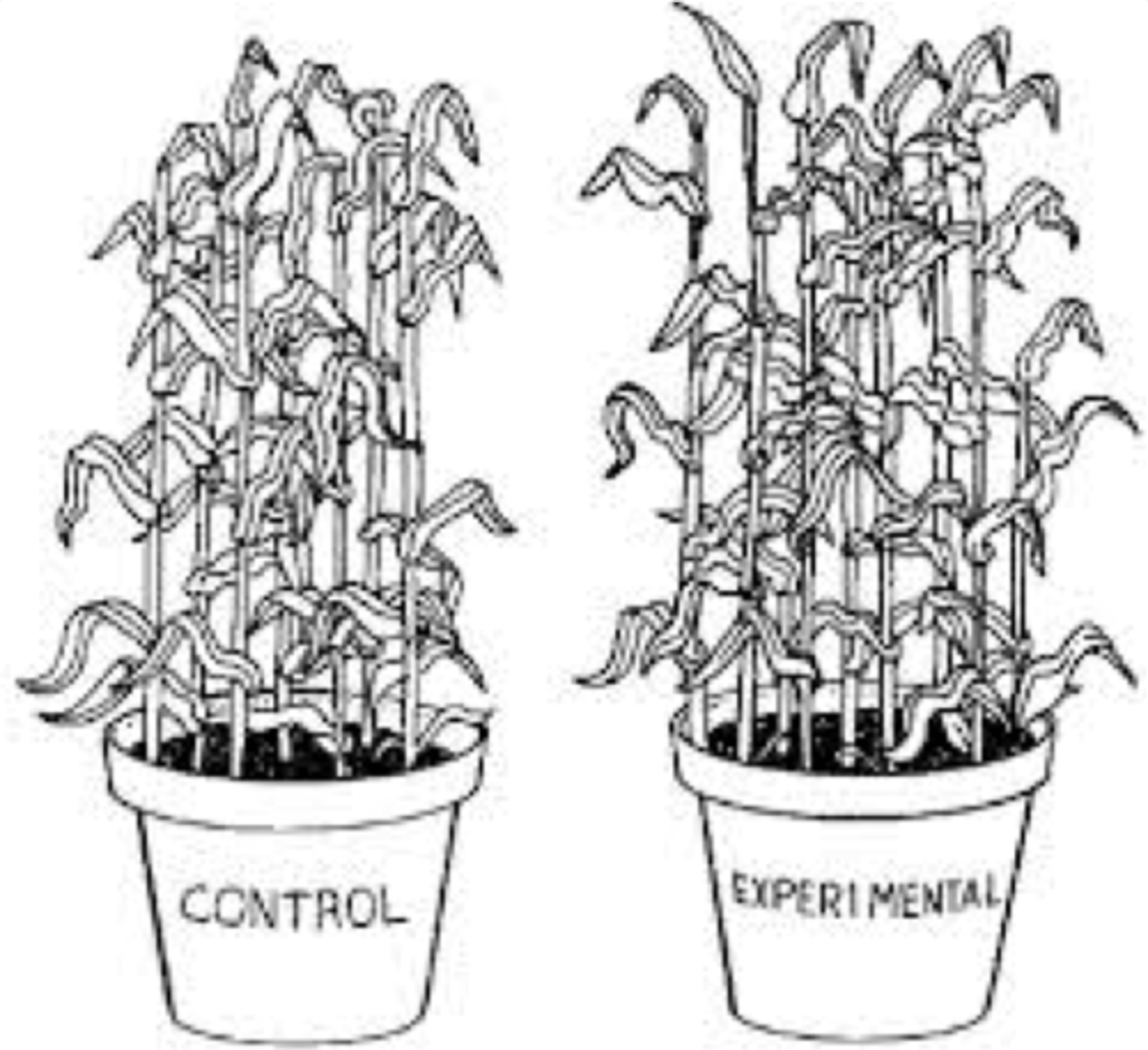
Comparison Group
A group in an experiment whose levels on the independent variable differ from those of the treatment group in some intended and meaningful way; also called comparison condition
Confounds
A general term for a potential alternative explanation for a research finding; a threat to internal validity; when more than one thing changes at a time that may have caused an outcome, and because they happened together and could have both caused the outcome, the cause is not known
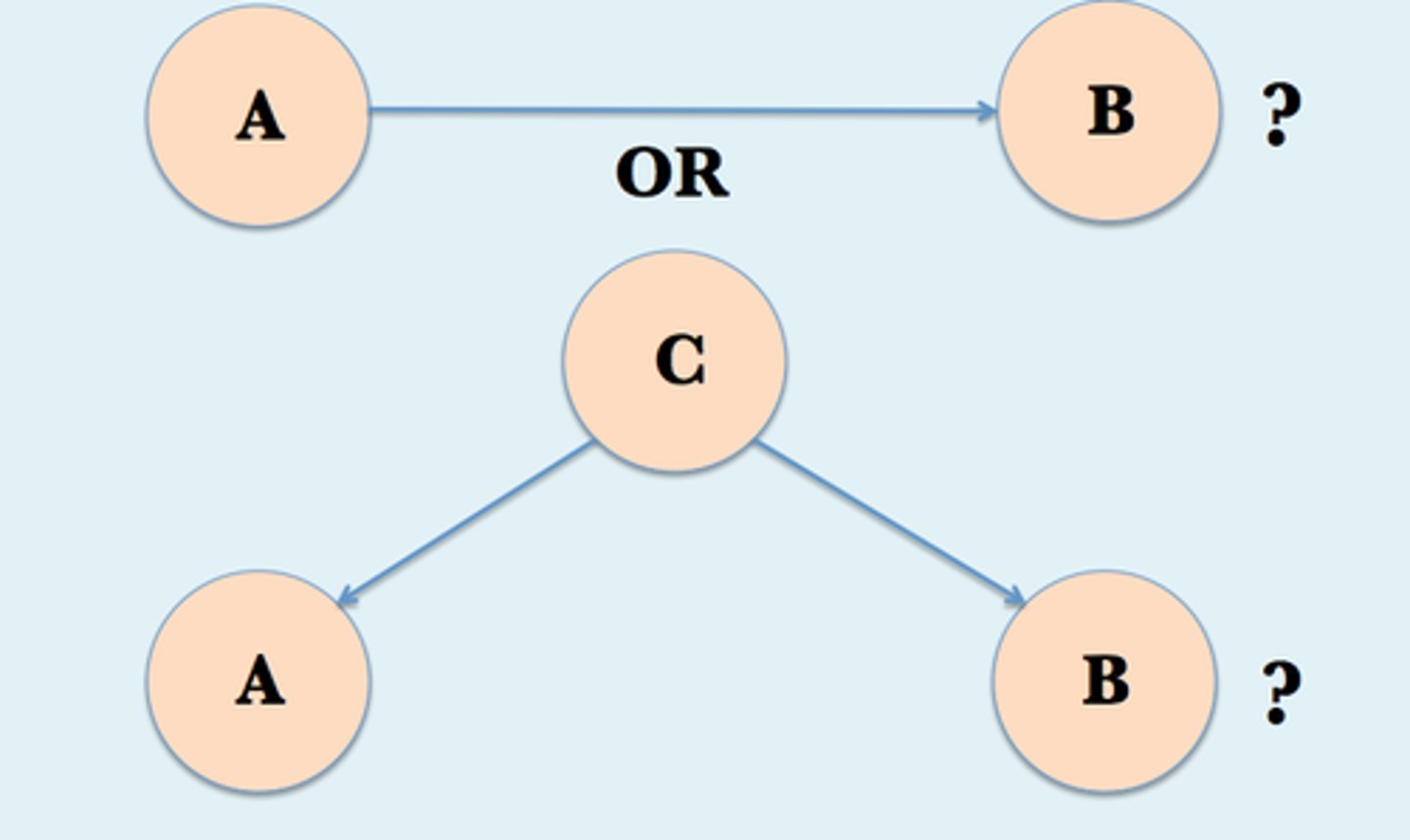
What is an example of how confounds can occur when basing conclusions on experiences?
1. "At the reading program, my son really liked his new teacher, so he is reading more to impress her"
2. "At the reading program, my son met other kids; they became very good friends and read together"
3. Impressing the teacher and meeting other kids could both be possible explanations for why the child was reading more
How is research better than experience?
1. In a research setting, scientists can use careful controls to make sure they are changing only one factor at a time
2. The results of a single study is better evidence than experience
3. The results of behavioral research are probabilistic
4. Scientific conclusions are based on patterns that emerge only when researchers set up comparison groups and test many people
Probabilistic
Describing the empirical method, stating that science is intended to explain a certain proportion (but not necessarily all) of the possible cases
Intuition
A sense of knowing without direct evidence or experience, such that the information feels like it is known instinctively (often implicit, cannot explain how you know or why you feel the way you do)
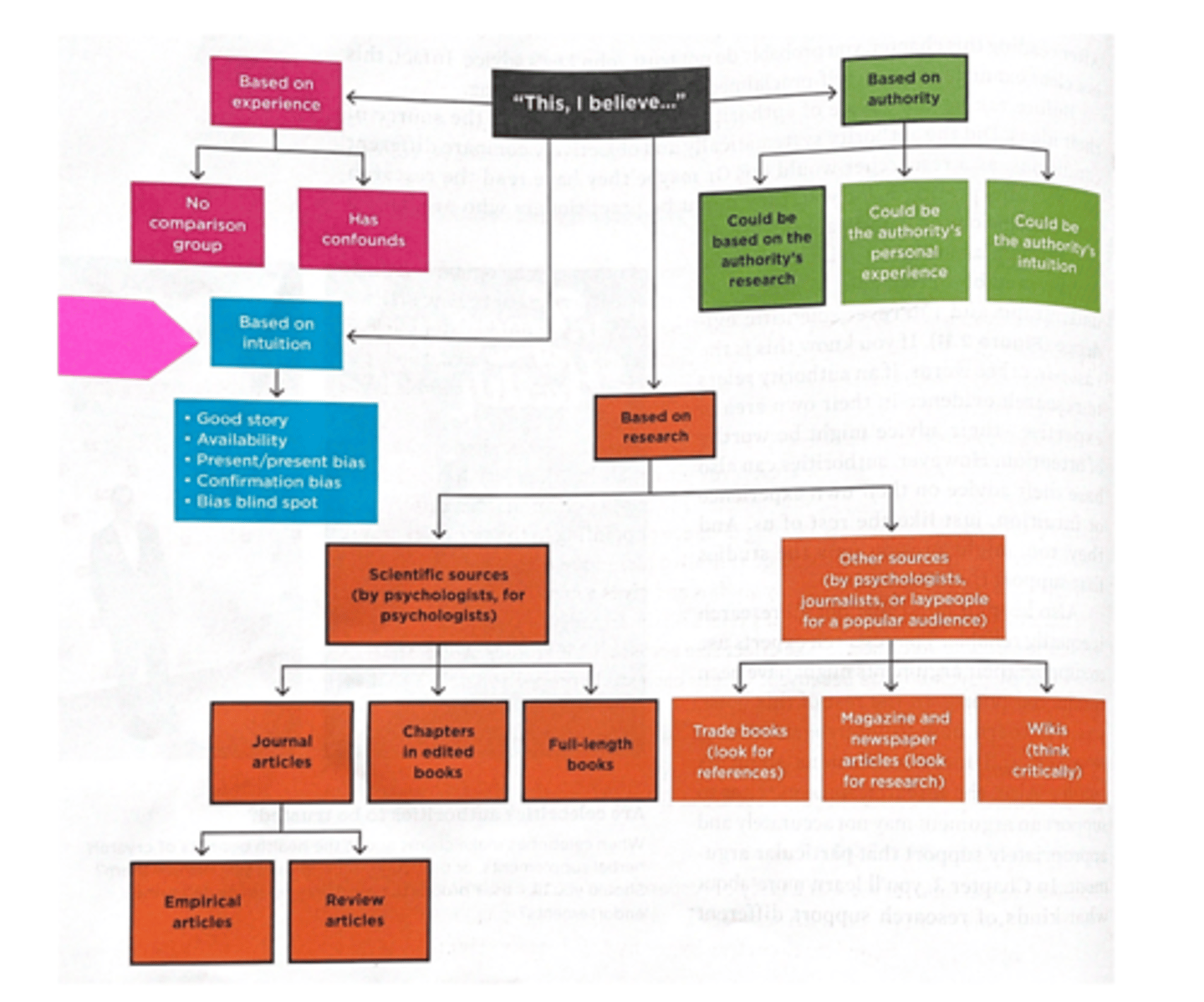
How can intuition be biased?
1. Being swayed by a good story or accepting a conclusion just because it makes sense
2. Being persuaded by what easily comes to mind (availability heuristic)
3. Failing to think about what we cannot see (present/present bias)
4. Focusing on the evidence we like best (confirmation bias, cherry-picking, and confirmatory hypothesis testing)
5. Believing our own biases about being biased (bias blind spot)
How can being swayed by a good story or accepting a conclusion just because it makes sense be problematic?
1. Empirical evidence may contradict what your common sense tells you
2. While a good story may be convincing, it is not always an accurate source of information
How can being persuaded by what easily comes to mind be problematic?
1. The availability heuristic might lead us to wrongly estimate the number of something or how often something happens
2. Our attention can be inordinately drawn to certain instances, leading to overestimation

Availability Heuristic
A bias in intuition, in which people incorrectly estimate the frequency of something, relying predominantly on instances that easily come to mind rather than using all possible evidence in evaluating a conclusion
How can failing to think about what we cannot see be problematic?
1. When examining relationships between two events, we often fail to look for absences because it is easy to notice what is present
2. The availability heuristic plays a role in the present/present bias because instances in the "present/present" cell of a comparison stand out, which adds the tendency to ignore "absent" cells, which are essential for testing relationships
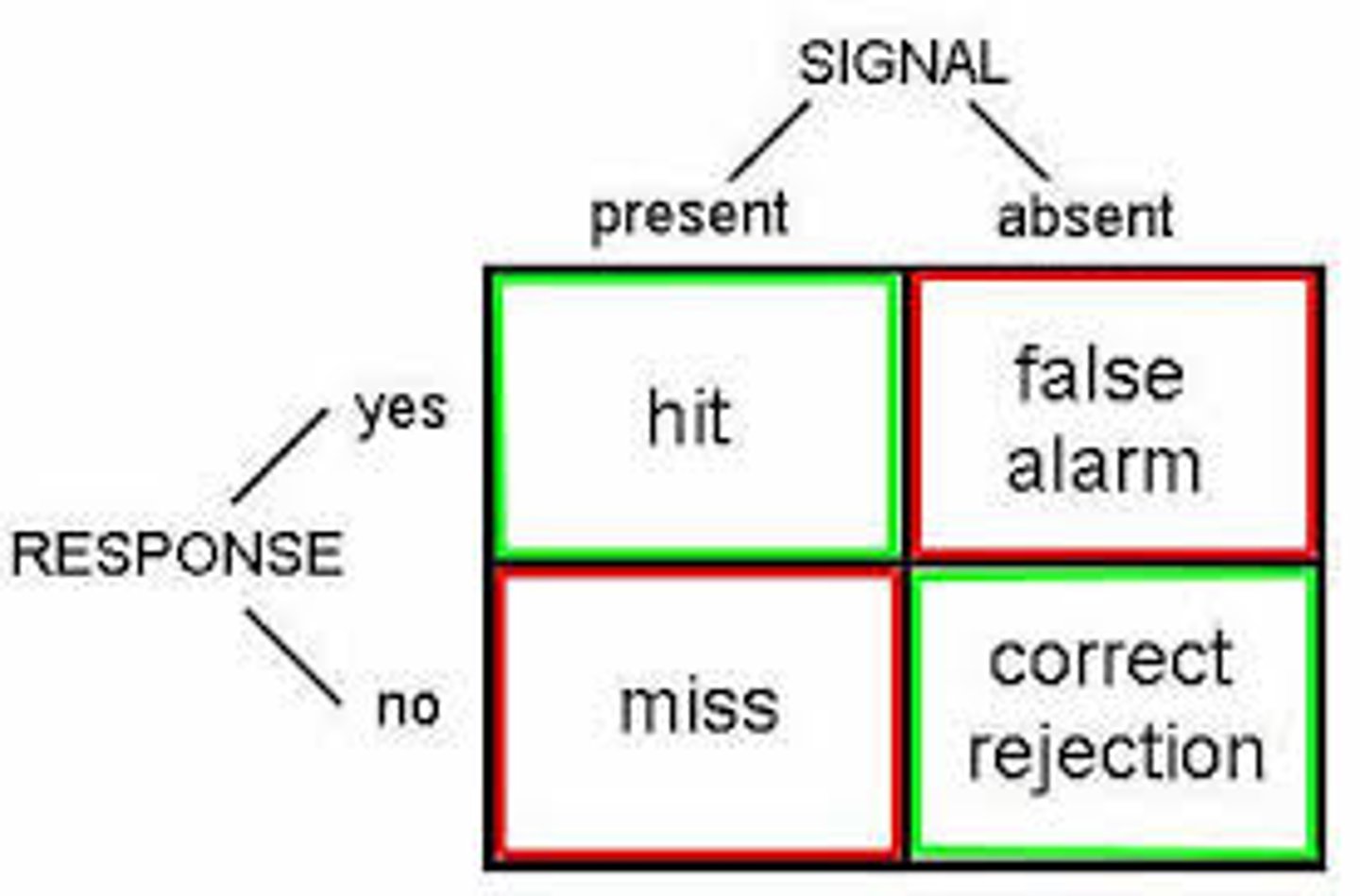
Present/Present Bias
A bias in intuition, in which people incorrectly estimate the relationship between an event and its outcome, focusing on times the event and outcome are present while failing to consider evidence that is absent and harder to notice
How can focusing on the evidence we like best be problematic?
1. We may be biased by the motivation to only look at information that agrees with what we want to believe
2. Confirmation bias, cherry-picking, and confirmatory hypothesis testing are based on selecting information that supports the conclusion we want to believe
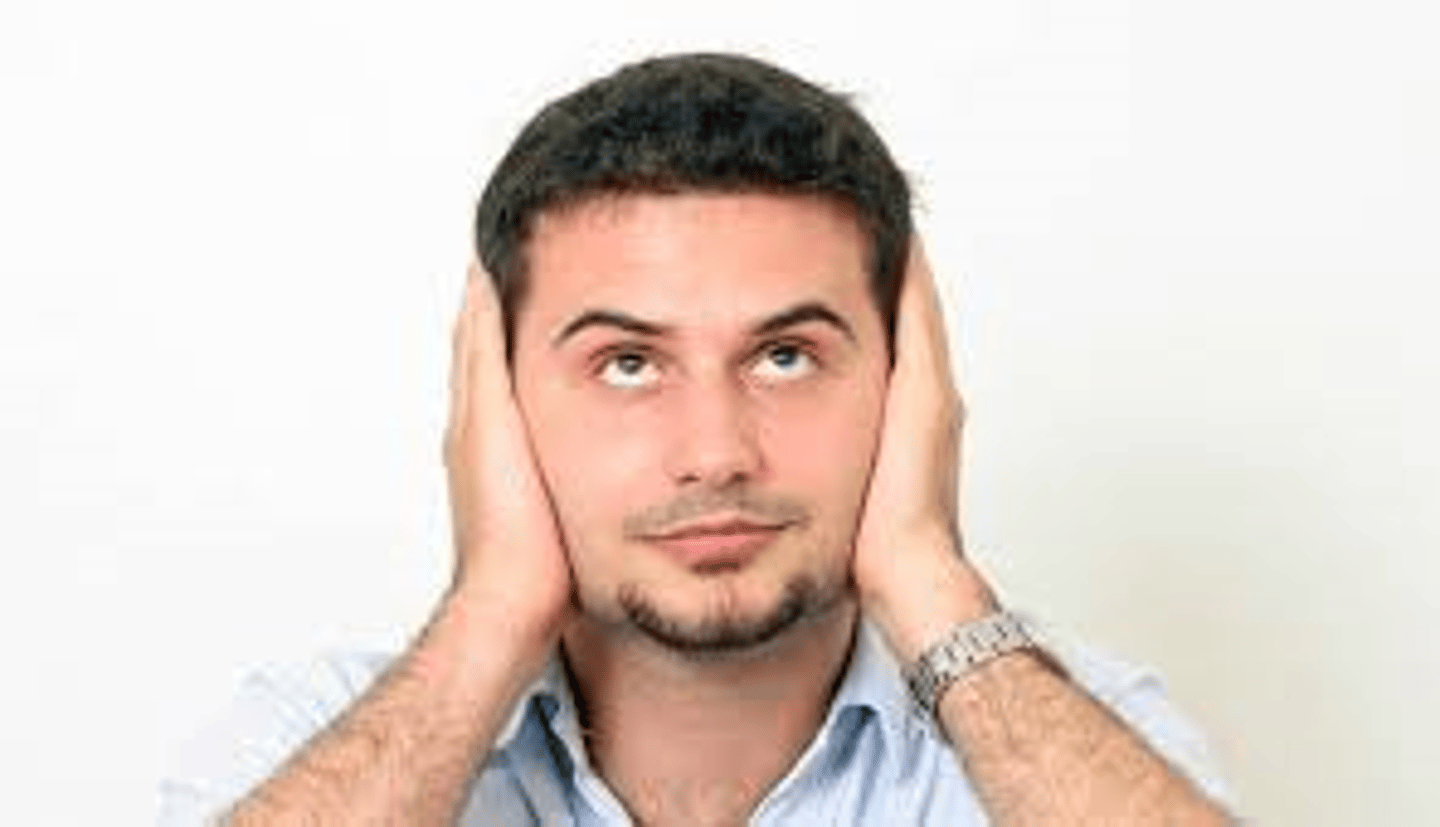
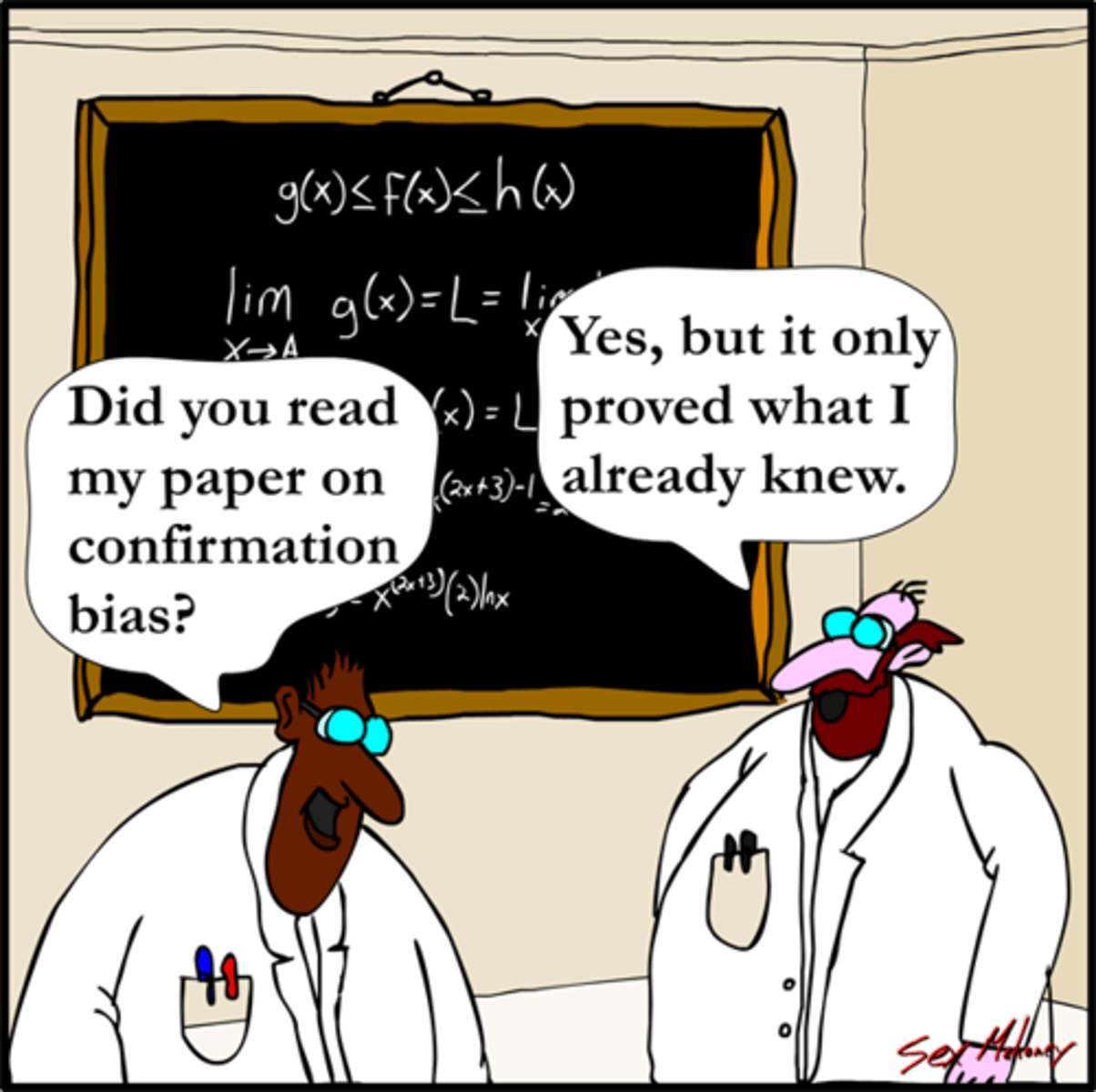
Confirmation Bias
The tendency to consider only the evidence that supports a hypothesis, including asking only the questions that will lead to the expected answer
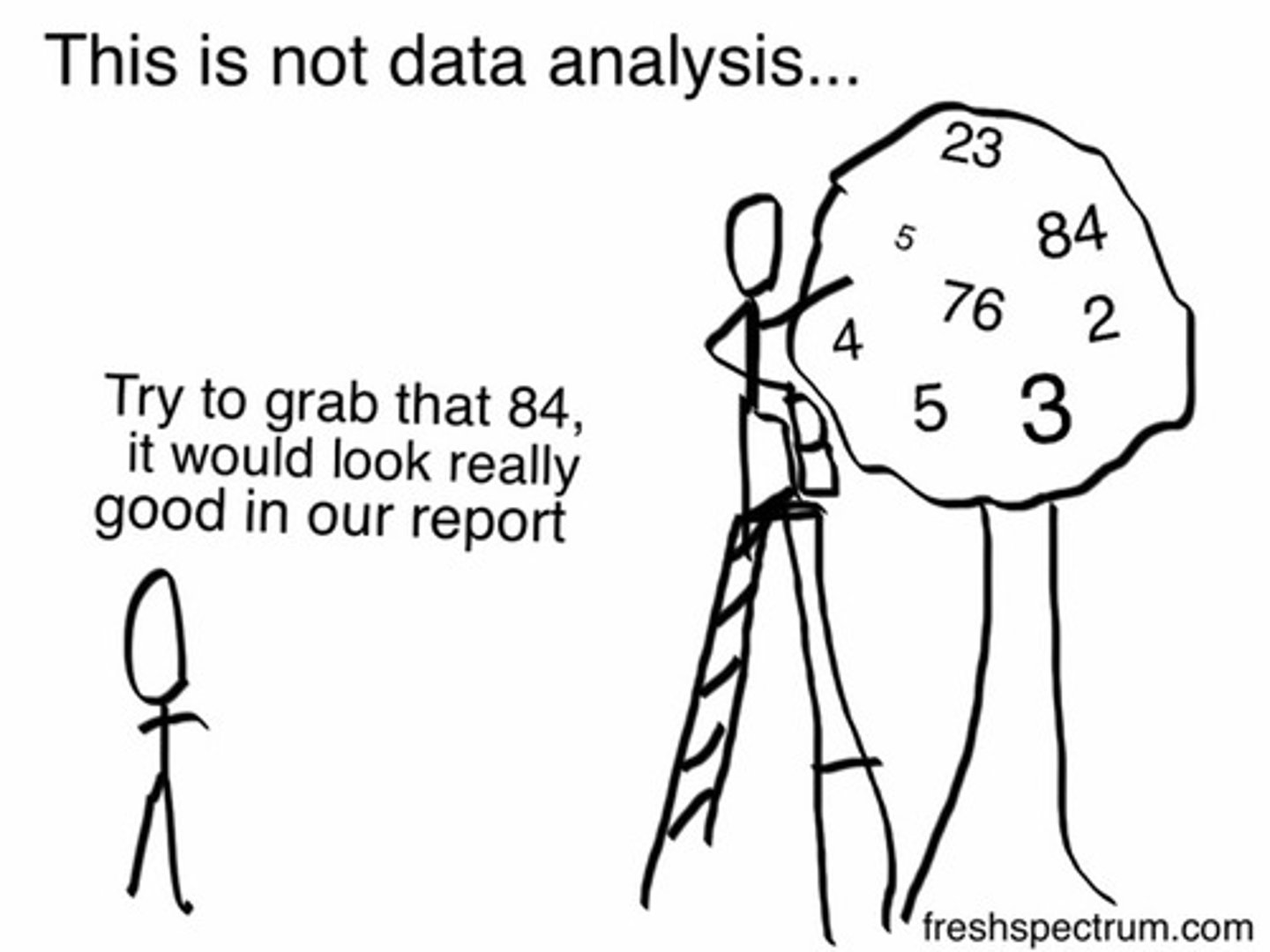
Cherry-Picking
Selecting information that supports a particular position, usually a controversial one
Confirmatory Hypothesis Testing
Only forming hypotheses that will predict what we want to see
How can believing our own biases about being biased be problematic?
1. The bias blind spot makes us trust our faulty reasoning more, which can make it hard to initiate the scientific theory-data cycle
2. We tend to believe that we are less biased than we actually are
Bias Blind Spot
The tendency for people to think that compared to others, they themselves are less likely to engage in biased reasoning

Why is it important to be cautious about basing beliefs on what authorities say?
1. Authorities can also be biased and base their advice on their own experience or intuition, presenting only studies that support their own side
2. It is difficult to determine what is considered "expert" enough for the truth
3. Authority in one domain does not often transfer to others, which can trick us
4. Not all research is equally reliable because the study may have been conducted poorly
The local news ran a story about a baby who suffered a deadly spider attack while playing outside. The neighborhood becomes quiet as families keep their kids inside so they won't be bitten by deadly spiders. This is an example of ___
A. No comparison group
B. The good story
C. Availability heuristic
D. Cherry-picking
Availability heuristic
Barry is studying the effects of a major natural disaster on people living nearby. He finds that many of the victims are depressed and show stress-related symptoms. Why can't Barry conclude that the natural disaster caused the depression and stress-related symptoms?
A. No comparison group
B. Depression and stress are confounds
C. His explanation is a story with no data
D. All of the above
No comparison group
Vanessa claims that she sleeps better when she falls asleep to music. She has a comparison condition because she noticed that she does not listen to music every night, only when she remembers to plug in her ipod. She typically remembers to plug in her ipod on nights when she is able to finish studying earlier. What problem do you see in Vanessa's reasoning about sleeping better to music?
A. Vanessa's belief that she sleeps better with music is not falsifiable
B. Vanessa may be sleeping better because she is less distracted by studying/going to bed sooner
C. Vanessa is biased because she sleeps in the same bed every night
D. There is no problem with her reasoning
Vanessa may be sleeping better because she is less distracted by studying/going to bed sooner
Dimitri is interested in understanding the effects of sleep deprivation on memory. Which of the following is an empirical approach Dimitri could take to answer this question?
A. Ask his psychology teacher for his opinion on the effects of sleep deprivation on memory
B. Design and execute a study that measures memory following different amounts of sleep
C. Watch several fictional movies about sleep deprivation and use the characters' experiences to develop a story that makes sense
D. Consider his own experiences with sleep and memory
Design and execute a study that measures memory following different amounts of sleep
Which of the following r values indicate the strongest correlation?
A. 0.89
B. 0.45
C. -0.93
D. -0.32
-0.93
Which of the following is a frequency claim?
A. Making children gesture bring out implicit knowledge and leads to learning
B. Between 5% and 10% of the population have dyslexia
C. Physically fit children do better at math
D. Couples who experience parental interference in their love relationship report intensified feelings of romantic love
Between 5% and 10% of the population have dyslexia
Andrew and Olivia just finished their research project for class. They found that people with morning classes have a lower quality of sleep than those who have night classes; they conclude that morning classes are linked to poor sleep quality. Little did they know, everyone who takes morning classes in their sample drinks massive amounts of caffeine all day long and everyone with night classes never drink caffeine. What is wrong with their conclusion?
A. They operationalized sleep quality poorly
B. Caffeine intake is a confound
C. They cherry-picked their data
D. They do not have a comparison group
Caffeine intake is a confound
Empirical Journal Articles
A scholarly article that reports the results of a research study for the first time; contains details about the study's method, the statistical tests used, and the results of the study
Review Journal Articles
An article that summarizes all of the studies that have been published in one research area
Meta-Analysis
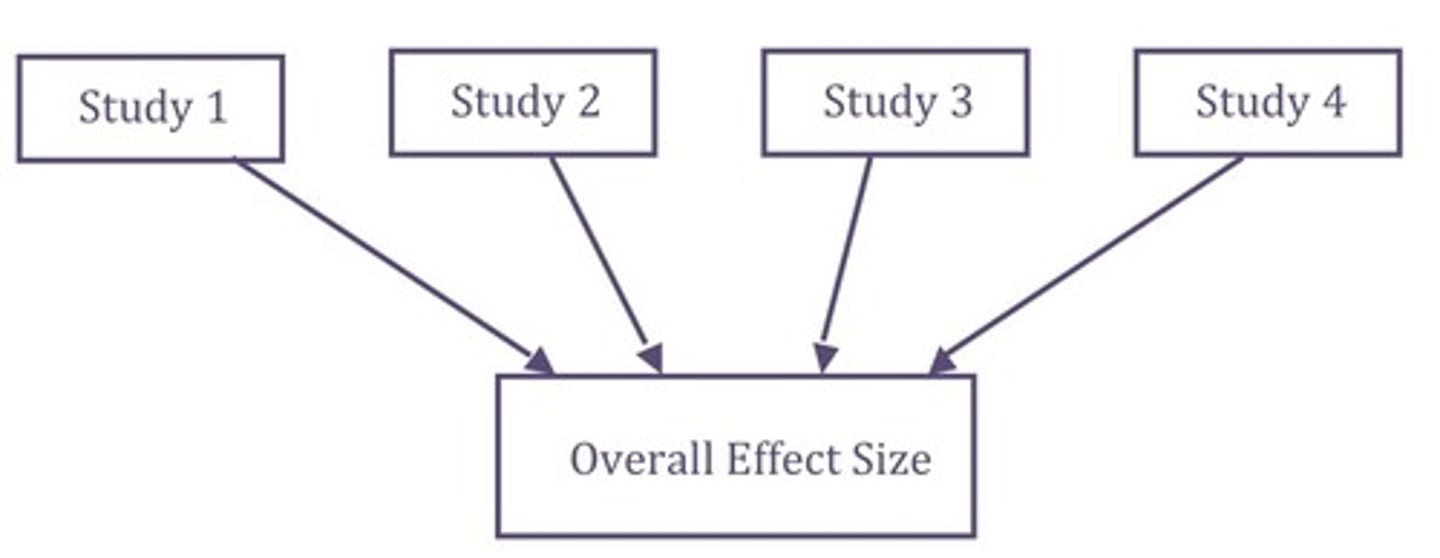
A way of mathematically averaging the effect sizes of all the studies that have tested the same variables to see what conclusion that whole body of evidence supports
Effect Size
The magnitude, or strength, of a relationship between two or more variables
Edited Book
A collection of chapters on a common topic, each chapter of which is written by a different contributor
What are the components of an empirical journal article?
1. Abstract
2. Introduction
3. Method
4. Results
5. Discussion
6. References
What is the abstract section of an empirical journal article?
A brief summary of the article that briefly describes the study's hypotheses, method, and major results
What is the introduction section of an empirical journal article?
The first section of regular text in which the first paragraphs typically explain the topic of the study, and the middle paragraphs lay out the background for the research
What is the method section of an empirical journal article?
The section that explains in detail how the researchers conducted the study; contains subsections (participants, materials, procedure, and apparatus)
What is the results section of an empirical journal article?
The section that describes the quantitative and qualitative results of the study, including the statistical tests that were used to analyze the data; includes tables and figures that summarize key results
What is the discussion section of an empirical journal article?
The section that summarizes the study's research question and methods, indicates how well the results of the study supported the hypotheses, emphasizes the study's importance, discusses alternative explanations for the data, and poses interesting questions raised by the research
What is the references section of an empirical journal article?
The section that contains a full bibliographic listing of all of the sources the authors cited in writing their article
Disinformation
A news story, photo, or video deliberately created to be false or misleading
What are some ways to avoid falling for disinformation?
1. Slow down
2. Cross-check
3. Read critically
4. Research the source
Variable
An attribute that varies, having at least two levels or values; anything that can change or be changed (any factor that can be manipulated, controlled for, or measured in a study)
Levels
One of the possible variations, or values, of a variable; also called conditions
What is the variable and levels for the following example: "Most students don't know when news is fake"?
1. Variable: Knowing when news is fake
2. Levels: Knowing when news is fake and not knowing when news is fake
Constant
An attribute that could potentially vary, but that has only one level in the study in question
Measured Variable
A variable in a study whose levels (values) are observed and recorded
Manipulated Variable
A variable in an experiment that a researcher controls, such as by assigning participants to its different levels (values)
Conceptual Definition
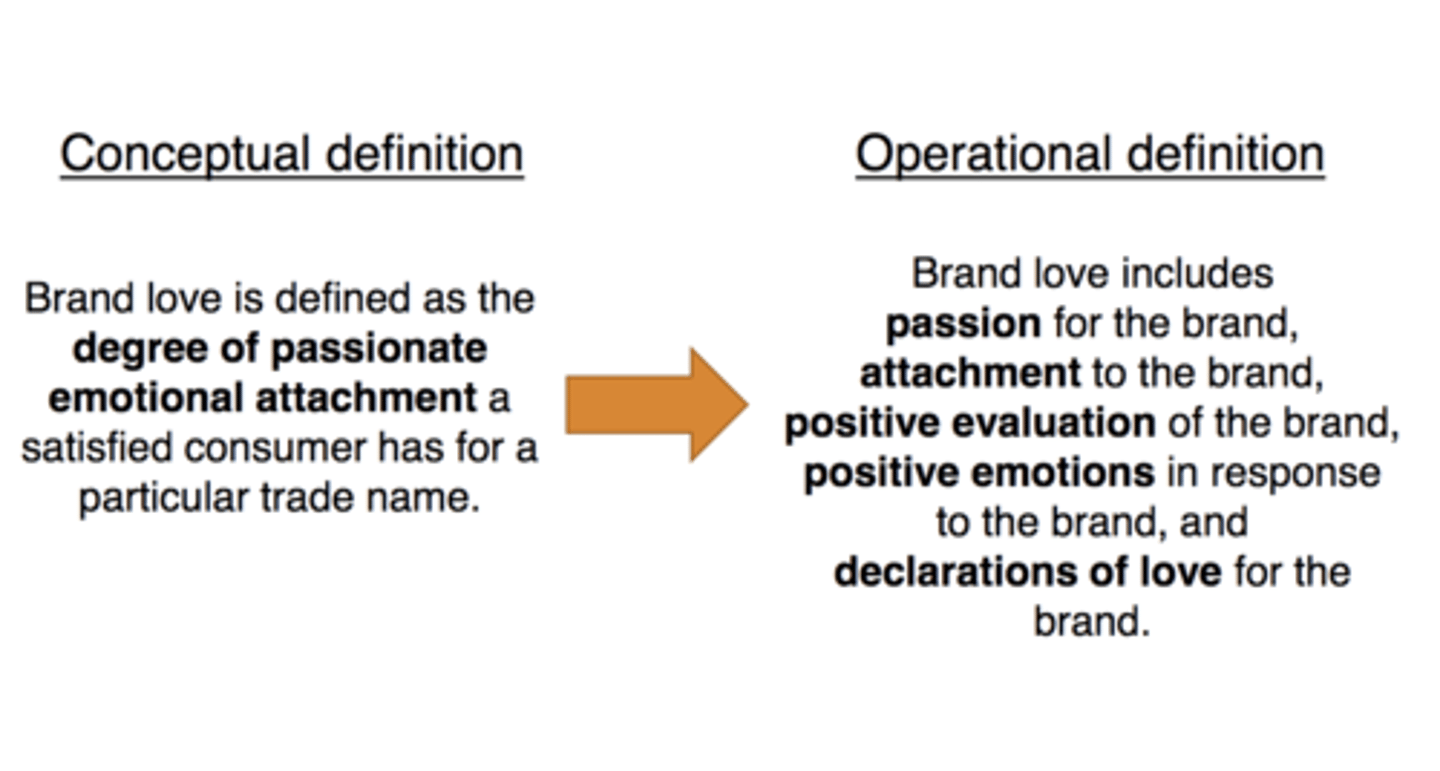
A careful, theoretical definition of the construct
Constructs/Conceptual Variables
A variable of interest, stated at an abstract level, usually defined as part of a formal statement of a psychological theory (the name of the concept being studied)
Operational Definitions
The specific way in which a concept of interest is measured or manipulated as a variable in a study; also called an operational variable