W4 - Quantitative
 Call Kai
 Learn
Learn Practice Test
 Spaced Repetition
 Match
Match Flashcards
 Knowt Play
1/44

There's no tags or description
Looks like no tags are added yet.
Name | Mastery | Learn | Test | Matching | Spaced | Call with Kai |
|---|
No analytics yet
Send a link to your students to track their progress
45 Terms
What are the 7 steps of the scientific method?
Observation, Question, Hypothesis, Experiment, Analyze results, Conclusion, Report results.
Define 'Target Population' in research.
The large group to which research results will be applicable.
What is an 'Accessible Population'?
The subset of the target population that the researcher has actual access to.
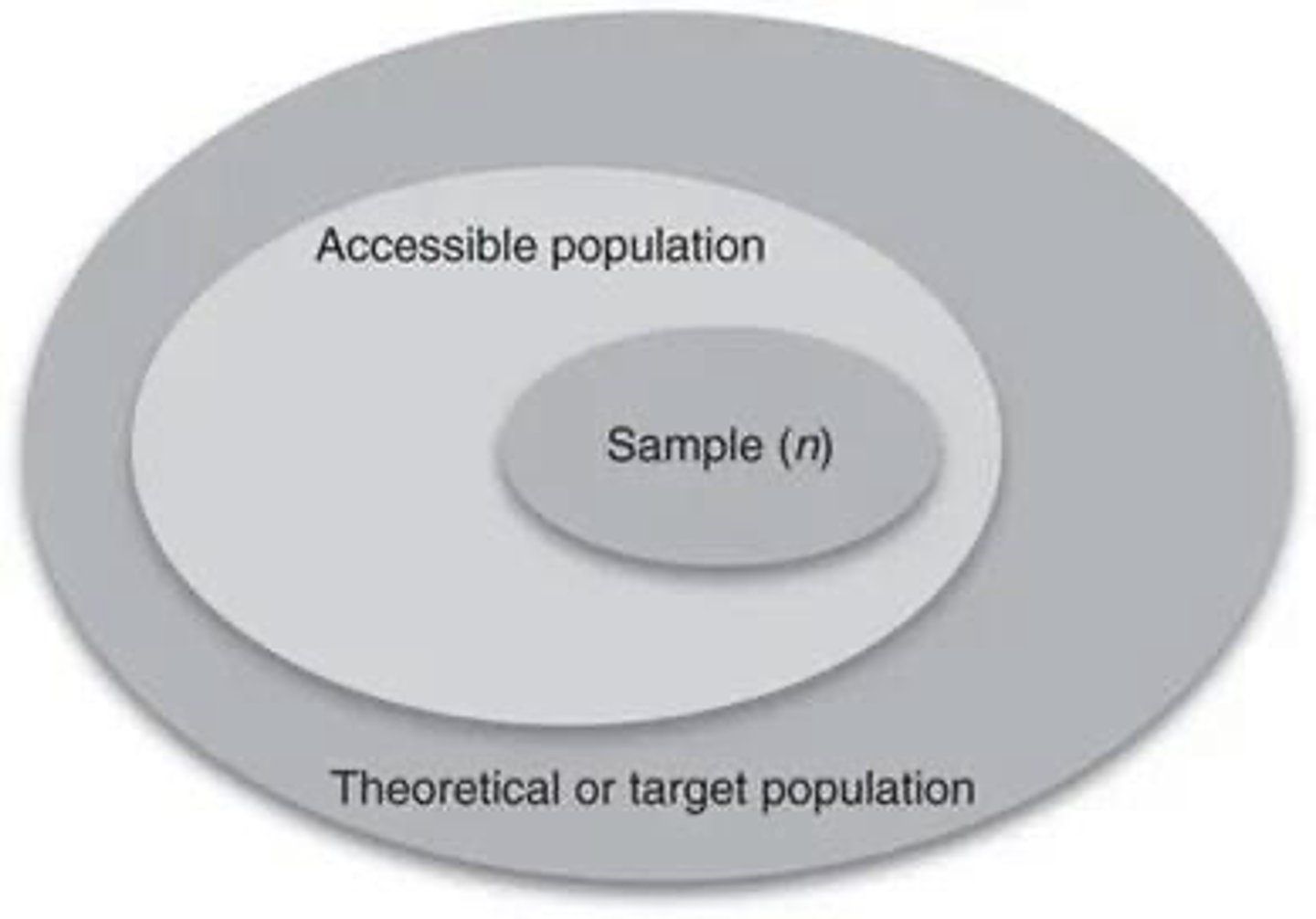
Define 'Sample' in the context of research.
A subgroup of the population that will be studied and from which conclusions are drawn.
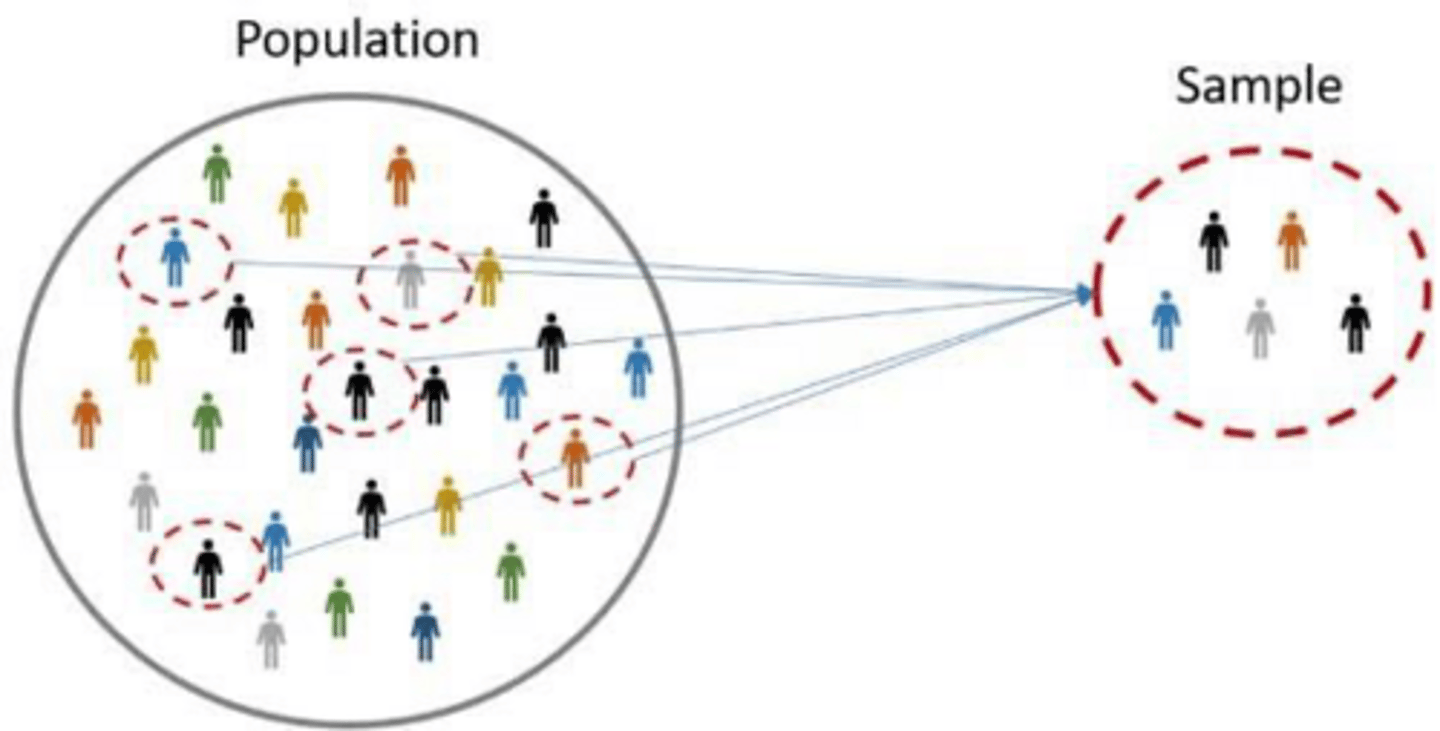
where do you get your sample from?
the accessible population
What is the difference between inclusion and exclusion criteria?
Inclusion criteria are the primary traits that make someone eligible to participate; exclusion criteria are factors that exclude someone from being a participant.
How does narrowing eligibility criteria affect research results?
It limits the generalizability of the results since the sample becomes more homogenous
How does broadening eligibility criteria affect research results?
may allow confounding variables to limit your ability to make definitive conclusions
What is the primary guiding principle when developing eligibility criteria?
your research question!
when is it ok to exclude individuals based on certain demographics or clinical presentation?
it is acceptable only when it is dictated by your research question and you have justification for it
define probability sampling
Every member of a population has an equal opportunity of being selection
what type of sampling is considered random?
probability sampling
define non probability sampling
Selection is based on factors other than random selection.
What are three common types of probability sampling?
Simple random sampling, systematic sampling, and stratified random sampling.
what are 3 common types of non probability sampling?
convenience sampling, quota sampling, purposive sampling
what is simple random sampling?
participants sampled randomly from an accessible population
ex/ database, directory, census list, classroom rosters, etc.
What is 'Systematic Sampling'?
A sampling method where participants are selected at fixed intervals (e.g., every 10th person) from a list arranged in no inherent order.
What is the purpose of 'Stratified Random Sampling'?
accessible population is divided into strata to ensure proportional representation of important characteristics.
example of strata in stratified random sampling?
race/ethnicity, age, geographical location, disease severity, etc.
define convenience sampling?
participants chosen based on availability and accessibility
What is 'Consecutive Sampling'?
A form of convenience sampling where all patients receiving clinical care who meet eligibility criteria are invited to enroll.
what is volunteer sampling?
participants are recruited via fliers, social media, word of mouth, etc.
What is 'Snowball Sampling'?
A type of volunteer convenience sampling where participants are recruited through word of mouth.
What is 'Quota Sampling'?
A non-probability method where participants are chosen based on availability but must meet target quotas for specific characteristics.
define purposive sampling
researcher hand picks participants based on specific criteria
-cherry picking
what are barriers to enrollment?
-location
-financial
-transportation
-caregiving
-obtaining consent
-historical mistrust of institution/research
-health concerns
Define 'Sampling Bias'.
When individuals selected for a study over- or under-represent certain characteristics, may limit generalizability
define conscious bias
known bias during recruitment leads to over or underrepresentation of a certain group or characteristic
what is unconscious bias
unknown bias during recruitment leads to over or underrepresentation of a certain group or characteristic
What are the three requirements for a Randomized Controlled Trial (RCT)?
Manipulation of an independent variable, random assignment to groups, and the use of a control group.
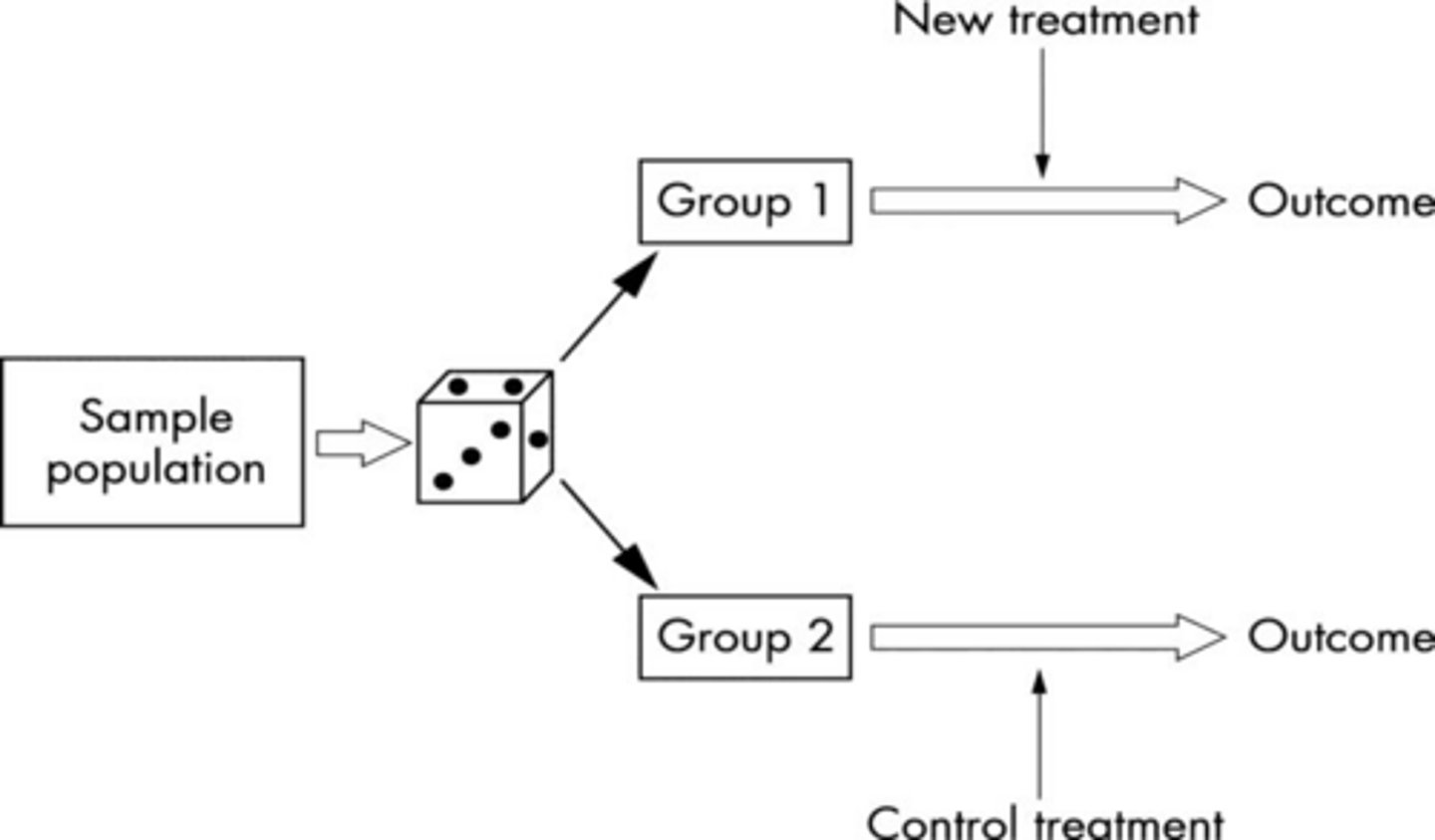
what are 3 types of random assignment?
simple, blocked and stratified
what is simple random assignment?
participants assigned at random, equal chance of any group
What is 'Block Random Assignment'?
similar to simple random assignment but ensures an even number of participants in each group.
What is 'Allocation Concealment'?
A process where the person determining eligibility is unaware of the group the subject is placed in
What are the three common types of control groups?
No treatment, placebo/sham treatment, and standard of care.
What is the difference between participant, therapist, and assessor blinding?
Participant blinding means the subject is unaware of their group; therapist blinding means the clinician is unaware; assessor blinding means the person measuring outcomes is unaware.
How do Pragmatic Clinical Trials (PCTs) differ from standard RCTs?
PCTs have relaxed exclusion criteria, looser recruitment, less rigidly controlled treatment, and the control group receives the standard of care.
why would someone want to do a PCT?
To be more accurate to what happens in reality
What defines a 'Quasi-Experimental' design?
It requires an independent variable manipulation but fails to meet either the random assignment or the control group requirement.
why would a quasi-experimental design be done?
for ethical or practical reasons
what are 2 observational study designs?
case control or cohort study
what are 3 descriptive study designs?
cross sectional, case series and case study
What is the difference between a Case-Control study and a Cohort study?
Case-control groups are distinguished by a condition (retrospective); cohort groups are distinguished by a shared characteristic that is not the condition (retro or prospective)
What is a 'Cross-Sectional Study'?
A descriptive study design where participants are studied at only one point in time.
What is the difference between a Case Series and a Case Study?
A case series is a detailed characterization of a few participants, while a case study is a detailed characterization of only one participant.