bio mod 2 yr 11
 Call Kai
 Learn
Learn Practice Test
 Spaced Repetition
 Match
Match Flashcards
 Knowt Play
1/135

There's no tags or description
Looks like no tags are added yet.
Name | Mastery | Learn | Test | Matching | Spaced | Call with Kai | Chat |
|---|
No analytics yet
Send a link to your students to track their progress
136 Terms
unicellular organism
organism composed of a single cell
colonial organism
collection of cells sharing resources and physically connected but with each cell performing all basic functions of life
multicellular organism
organism made of more than one cell in which different cells are specialised to perform different functions for the benefit of the whole
unicellular organism (structure)
pro/eukaryotic
single cell is responsible for all life processes
always exposed to external environment
microscopic size → high SA:V ratio
enables all required substances to move across cell membrane into all areas of cell + outside of the cell efficiently
colonial organisms (structure)
colony: group of identical single-celled organisms
some colonial organisms contain cells that have special functions
contributes to more efficient functioning of whole colony
volvox (colonial example)
eukaryotic
500-60 000 algae cells
each cell has 2 flagella and are connected by cytoplasm strands
each cell contains chloroplasts → make own energy
choanoflagellates (colonial/unicellular example)
eukaryotic
each cell possesses an ovoid/round cell body with a single collared flagellum
can exist both as unicellular or colonial
may be evolutionary link between uni/multicellular organisms
multicellular organism (structure)
made of specialised cells for different functions for the benefit of the whole organism
specialised cells are incapable of living independently
multicellular organisms are larger in overall size so total SA:V is smaller
passive transport of nutrients + wastes is inefficient
how multicellular organisms have efficient functioning
cells maintain small size (high SA:V)
increases efficiency of diffusion of substances in/out of cell
specialised cells
spreads workload across many different cells
old/damaged cells are replaces (via mitosis)
organism continues to function (unicellulars can’t do this)
why cell specialisation is important for multicellular organisms
if cells were not specialised each cell would have to perform every function (mrs gren) on its own
inefficient
waste of nutrients + energy, much slower
cell specialisation
the particular function a cell has
cell differentiation
the process that a stem cell goes through to become specialised
stem cell
undifferentiated cell
where are stem cells located? (animals and plants)
animals: embryo, human brain, bone marrow
plants: meristematic tissue (e.g root and shoot tips)
cell hierarchy in multicellular organisms
organelle → cell → tissue → organ → organ system → organism
advantages of cell specialisation
workload is spread amongst many cells
each cell has less/uses less energy
disadvantages of cell specialisation
each cell can’t survive on its own
whereas in uni/colonial organisms they can
red blood cells (relate structure to function)
function: transport oxygen around the body in the blood
small size + bioconcave shape increase SA:V
allows rapid diffusion of oxygen
size allows it to fit easily into small capillaries
absence of nucleus allows more haemoglobin to be carried in cell
palisade cells (relate structure to function)
function: chloroplasts within the palisade perform photosynthesis
found in upper layer of leaves → to efficiently capture sunlight falling on its surface
epithelial cells lining trachea / bronchi (relate structure to function)
function: produce mucus, tiny hairs attached to cells brush foreign particles away
composed on many tiny cilia → all beat synchronously
more efficient sweeping action
(animal) epithelial tissue
covers body surfaces, protects organs, forms glands
densely packed cells in sheets/layers
no blood vessels, relies on underlying tissue for nutrients
2 types of surfaces: one exposed to outside and one exposed to adjacent tissue
e.g alveoli in lungs
(animal) connective tissue
has an extracellular matrix - composed of collagen and elastin
cells scattered throughout
provides support and ensures different body parts are bound together + protected against damage
e.g blood, tendons, ligaments
(animal) nervous tissue
specialised for communication between parts of the body
passes messages between themselves + other cells in body
nerve cells have multi-branched dendrites to increase SA to receive messages + long axon extending from cell body to transmit messages
(animal) muscle tissue
specialised for contraction
all cells are elongated, contain actin + myosin (proteins), interacting to help them lengthen and shorten
e.g skeletal muscle cells
justify hierarchical structure of organisation of cells
without hierarchy, multicellular organisms would be very limited in size
as a cell’s size increases, SA:V ratio decreases, meaning diffusion and osmosis would be insufficient in meeting the organism’s needs
thus multi. organisms have evolved to have many specialised cells to spread the workload and to keep the organism functioning
(plant) meristematic tissue
found at tips of roots + shoots, buds + rings around the stem
cells are cube shapes + very small
function: to produce new growth
(plant) dermal tissue
function: protect it from damage + control interactions w/ surroundings
makes up outer surface of plant
most cells lack chloroplasts
cells may secrete waxy layer (cuticle)
vital to minimise plant’s water loss
some cells have root hairs, increase SA for diffusion of water into roots
(plant) vascular tissue
function: transport of substances around the plant
found in roots, stems and leaves
e.g xylem
xylem function
transports water and mineral ions
phloem
conductive tissue composed of thin-walled cells;
transports dissolved sucrose and other photosynthesis products around the plant
(plant) ground tissue
all of the internal cells of a plant other than vascular tissue
responsible for food storage, support, etc.
root system (relate structure and function)
function: anchoring plant, absorbing water + inorganic nutrients from soil, cellular respiration
no chloroplasts → not exposed to sunlight
large SA allows water + minerals to be absorbed efficiently
extensive branching of root systems
root hairs increase SA up to 12x
how do substances move into the roots?
water → via osmosis
mineral ions → by faciliated/diffusion or active transport
oxygen diffuses into root cells, CO2 diffuses out
shoot system: stem (structure + function)
stem provides structural support + transport path between roots + leaves
3 main tissues in stem
dermal (outer layer)
vascular (xylem + phloem)
ground (everything else)
shoot system: leaves - relate structure to function (absorbing sunlight)
thin flat, structure - increases SA
maximum absorption of light by chlorophyll
epidermis is transparent → allows sun to penetrate to photosynthetic cells below
palisade cells - contain many cells lined up near upper surface to absorb sunlight
shoot system: leaves - relate structure to function (gaseous exchange)
in epidermis, guard cells control gas exchange and loss of water through leaf
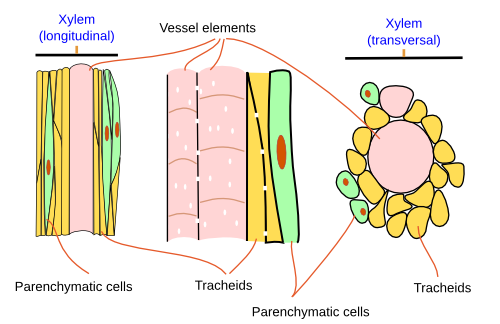
xylem consists of:
vessels: long thin, continuous tubes made of dead tissue with lignin-strengthened walls
tracheids: long structures w/ end walls that overlap
transpiration-cohesion-tension theory (TCT)
concentration of water vapour outside the leaf is lower than inside leaf (OR humidity OR light OR darkness) → diffusion of water out of the leaf (FROM STOMATA) (transpiration)
water molecules evaporating from leaf surface pull adjacent water molecules w/ them (due to cohesive properties of water)
water in xylem vessels below is then drawn up to the leaves to replace water lost through evaporation (due to adhesive properties of water)
in this process, leaf cells all drawing water from the xylem create tension that pulls water up xylem vessels from the roots to the leaves
factors aiding water movement up roots (in TCT theory)
cohesion: force of attraction between like molecules
adhesion: force of attraction between unlike molecules
cohesion between water molecules and adhesion between water molecules and xylem walls maintain water column
small amount of root pressure forces water already present in xylem push water upwards
tension
continuous negative pressure caused by the drawing up of water through stem towards leaves
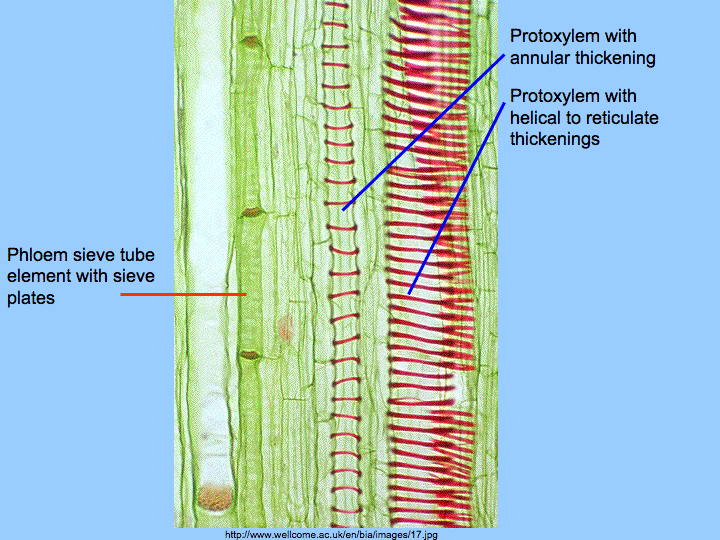
phloem consists of:
sieve tube cells - long, thin phloem cells that have sieve plates through cell walls
companion cells
provide ATP + nutrients
assist loading and unloading of sugars into sieve tube cells
translocation:
mechanism of flow is provided by…
an osmotic pressure gradient, generated by differences in sugar and H2O concentrations
translocation: step 1
plants obtain sugars through photosynthesis
translocation: step 2
active transport is used to move sugars from sugar sources into phloem, against concentration gradient
translocation: step 3
increased concentration of sugars in phloem causes water to move passively into phloem from xylem by osmosis
translocation: step 4
the increased fluid volume in phloem creates a temporary pressure increase, causing movement of materials in the phloem towards sinks
translocation: step 5
sugars move into sinks, via active or passive transport
translocation: step 6
the decreased concentration of sugars in the phloem causes water to move passively back into xylem, reducing pressure in the phloem
magnetic resonance imaging (MRI)
uses radio waves + magnetic field to take series of images
combined on a computer to form 3D image
application: grow plants in clear containers - structure of roots can be analysed in detail on a computer
x-ray computed microtomography (micro-CT)
non destructive process
sample positioned in an x-ray beam is rotated + hundreds of images from different angles are taken
constructed into a 3D image on computer
application:
gain deeper knowledge of plant’s internal structure
any angle can be observed - spatial arrangement of tissues can be studied
van helmont (1580-1644) (what did he theorise, experiment?, what did he conclude)
thought soil formed all plant matter
after 5 years of growing his plant (no added soil), plant has a large increase in mass
concluded all plant matter came from the water he added
his conclusion was incorrect
didn’t consider gases in air
no repetition - unreliable
didn’t measure how much water he added - inaccurate
joseph priestly (1733-1804) (what did he theorise, experiment?, what did he conclude)
noticed in an enclosed space if a candle goes out and a mouse dies
he put a mint plant in the jar, and the candle stayed lit + mouse stayed alive
concluded plant “restores” air to whatever the candle + mouse removed
greatly contributed to understanding of photosynthesis
radioisotopes
forms of an element that emit radiation
how is the pathway of glucose produced in ph/syn traced using radioisotopes?
carbon-14 is added to carbon dioxide supply of plant
carbon-14 then takes part in photosynthesis reactions and is incorporated into glucose molecules produced
glucose molecule’s pathway can be traced using the radiation emitted by carbon-14 and recorded in an autoradiograph
how is oxygen traced in plants using radioisotopes?
Radioisotopes used to find out whether oxygen released during PS came from the oxygen atom in water or from the oxygen atoms in CO2
Plants were given water containing radioactive oxygen
showed all radioactive oxygen released as oxygen gas
showed water (NOT CO2) was oxygen gas released in ph/syn
characteristics of gas exchange structures in animals (to ensure efficient functioning + max. gas exchange)
large SA - allows more efficient rate of diffusion to supply oxygen and remove CO2
close proximity to efficient transport system to transport gases to and from cells in organism - e.g alveoli located next to capillaries
greater concentration of required gas on one side of membrane so concentration gradient is maintained
moist, thin surface
ensures gases dissolve for easier diffusion
thinness decreases distance gases need to travel
characteristics of alveoli as gas exchange surfaces
increased SA - 300 million microscopic alveoli supplied by 280 million capillaries
alveolus wall - flattened cells, 1 cell thick
oxygen diffuses from alveoli (more concentrated) into capillaries (less concentrated)
its moist - enhances efficiency of diffusion
respiratory systems in fish
concentration of gases is much lower than in water - they have low solubility in water
water flows in one direction - entering the fish’s open mouth as it swims
water flows over front of the gills + leaves fish through gills slits
gaseous exchange takes place at the gill-water interface
countercurrent flow of blood and water keeps concentration gradient of oxygen outside fish (in the water) higher than in the blood for max. diffusion of oxygen to the blood
respiratory systems in insects
have tracheae - network of tubing
take in + expel air through spiracles
tubes connect to all insect’s tissues - supplies oxygen directly to cells for respiration
have valves to regulate opening/closing of spiracles - so they don’t dry out
not very efficient - limits size of insects
when insect is active - more spiracles open to increase respiration
digestion
breaking down of large and complex food particles into much smaller and simpler particles
what is the aim of digestion?
to break down particles into substances that are small enough to be absorbed through intestinal walls into the bloodstream
mechanical digestion
physical breakdown of food particles
where does mechanical digestion take place?
mouth (chewing)
churning motion of stomach continues this process
aim of mechanical digestion
to begin process of breaking food into smaller pieces so more SA is exposed for enzymes to act on it in chemical digestion
chemical digestion
process of using digestive enzymes to chemically break down large, complex molecules in food that has been ingested into smaller, simpler forms
substances produced by chemical digestion
glucose (from complex carbs)
amino acids (from protein)
glycerol and fatty acids (from lipids/fats)
nucleotides (from nucleic acid)
where does chemical digestion take place?
begins in mouth (salivary enzyme - amylase)
continued in stomach (digestive enzyme pepsin begins chemical digestion of protein)
continued in small intestine
most digestion is completed in duodenum
digestive tract: what order does the food pass through?
mouth
esophagus
stomach
small intestine
large intestine
rectum
an*s
what do accessory organs do
make/add chemicals to help digestion
what does pancreas do to help digestion (as an accessory organ)?
secrete pancreatic juices containing digestive enzymes
amylase, trypsin, lipase etc.
bicarbonate ions (to neutralise acidic chyme leaving stomach)
what does salivary glands do to help digestion (as an accessory organ)?
secrete saliva into mouth, moistening food
saliva contains amylase - begins chemical breakdown of complex carbs
what does liver do to help digestion (as an accessory organ)?
produces bile (which is stored in gallbladder)
bile emulsifies fats
increases SA for lipase to chemically break down lipids into fatty acids + glycerol molecules
where does absorption of substances (from digestion) mainly occur?
jejunum (middle section of small intestine)
how do the products of digestion (e.g amino acids, glycerol) move into the body’s transport system?
from small intestine:
via active/passive transport through villi
villi have rich blood supply in capillaries wrapped around a lacteal (connected to lymph system)
glucose + amino acids absorbed into capillaries
fatty acids + glycerol move into lacteal
where does digested food travel to, once absorbed into the bloodstream?
liver (centre of food metabolism)
where does remaining undigested material travel to?
large intestine
colon - water + some salts absorbed into bloodstream, vitamins A + K also absorbed into bloodstream
remaining waste material (faeces) - moves into rectum via peristalsis + egested through an*s
similarities between open and closed systems in animals
have heart as driving mechanism
both involve flow of transport fluids to carry required nutrients to tissues
both involve transport of wastes away from animal’s tissues
features of open circulatory systems
transport fluid: haemolymph
transport fluid flows through cavities and bathes tissues directly
vessels open at both ends so fluid can empty into cavity + drain out of cavity
tubular heart pumps fluid; fluid pumped under low pressure
distributes gases, food and waste (except in insects)
exchange of nutrients and wastes relies on diffusion between haemolymph and cells
advantage of open system
requires less energy to push haemolymph around body - haemolymph is pumped at low pressure
disadvantage of open system
cannot carry as much O2 as blood can in closed system
relies on diffusion of gases to tissues
limits size of organism → inefficient
features of closed system
transport fluid is blood
blood remains contained in vessels + never flows into body cavity
vessels divide into capillaries - all cells are close to a capillary
muscular heart pumps blood under high pressure
distributes and collects gases as well as food and wastes
exchange of nutrients + wastes takes place between blood + capillaries
advantage of closed system
separation of circulating fluid + interstitial fluid means that blood can have specialised properties to be more efficient
e.g red blood cells are specialised to have an increased ability to carry O2 (absence of nucleus)
disadvantage of closed system
requires a stronger heart to pump blood through thin tubes to maintain higher pressure to overcome resistance to flow - requires more energy
what do lymph vessels do
lymph vessels in tissues absorb fluid surrounding cells diffusing out of capillaries, to prevent fluid build-up in tissues
what is lymph made of
lymph is composed of fluid (mentioned above) + white blood cells + end products of lipid digestion
which way does lymph flow and what stops it from flowing the wrong way
flows in one direction (from tissues to heart)
valves are present to prevent lymph going backwards
how many channels do lymphatic vessels form
2
% blood cells and % plasma in blood
45%
55%
temperature of blood
~38 degrees C (about 1 degree higher than overall body temp)
adult human has _L blood
5
function of blood
distributes heat, nutrients, gases, wastes, hormones, antibodies, etc. around the body
how many red blood cells per L of blood? (erythrocytes)
4-6 million/L
what % of blood volume does red blood cells make up?
~41%
what is the function of red blood cells?
to transport oxygen from lungs of the rest of the body’s tissues, and to remove CO2 by bringing it back to the lungs to be exhaled
what % of blood volume do white blood cells account for?
~1%
function of white blood cells (leucocytes)
part of defence system of body against foreign bodies
how many platelets (thrombocytes per mL of blood)?
~400 000 / mL blood
less than 1% blood volume
function of platelets
clotting blood - they stick to each other and fibres at the wound site when blood is exposed to air
what % of blood volume does plasma make up?
55% of total blood volume
what is the composition of plasma (%)?
~90% water, ~10% mainly proteins