Long-term memory - Chapter 7
 Call Kai
 Learn
Learn Practice Test
 Spaced Repetition
 Match
Match Flashcards
 Knowt Play
1/16

There's no tags or description
Looks like no tags are added yet.
Name | Mastery | Learn | Test | Matching | Spaced | Call with Kai |
|---|
No analytics yet
Send a link to your students to track their progress
17 Terms
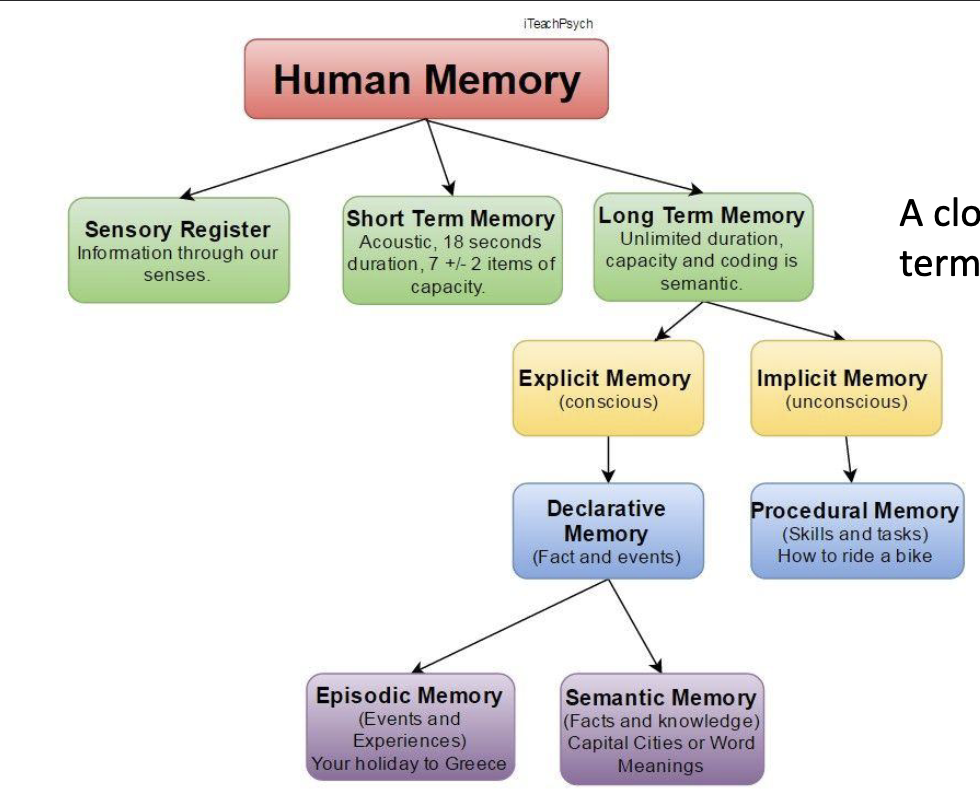
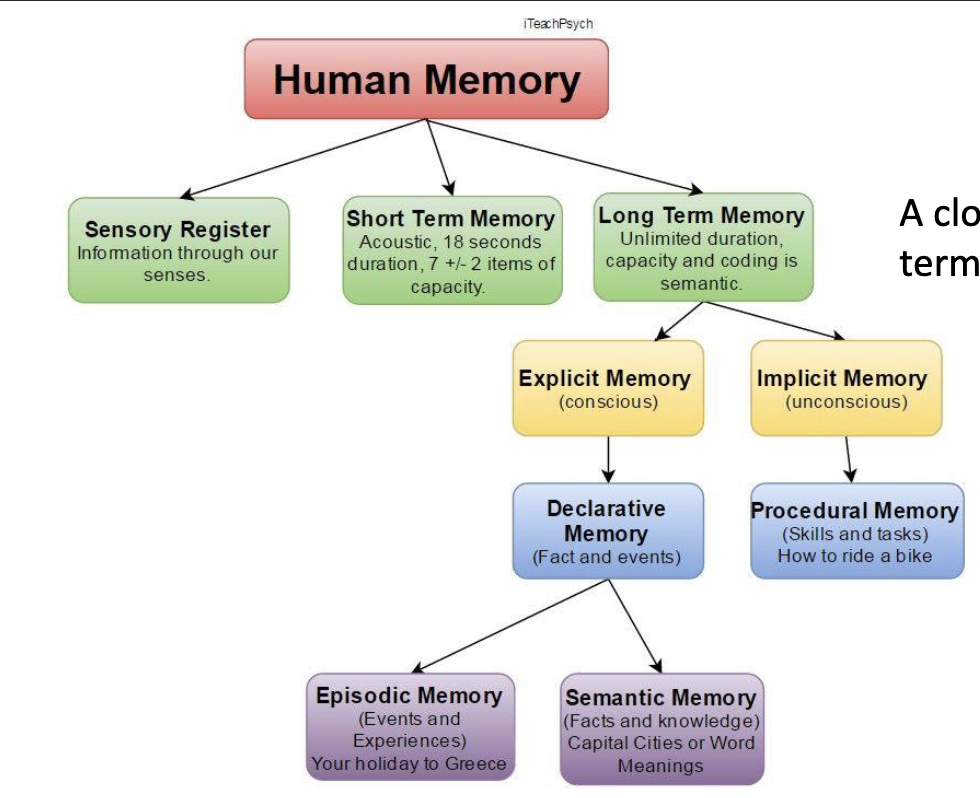
Human memory splits into
WHAT
WHAT
WHAT
Human memory splits into
Sensory memory
Short-term memory
Long-term memory
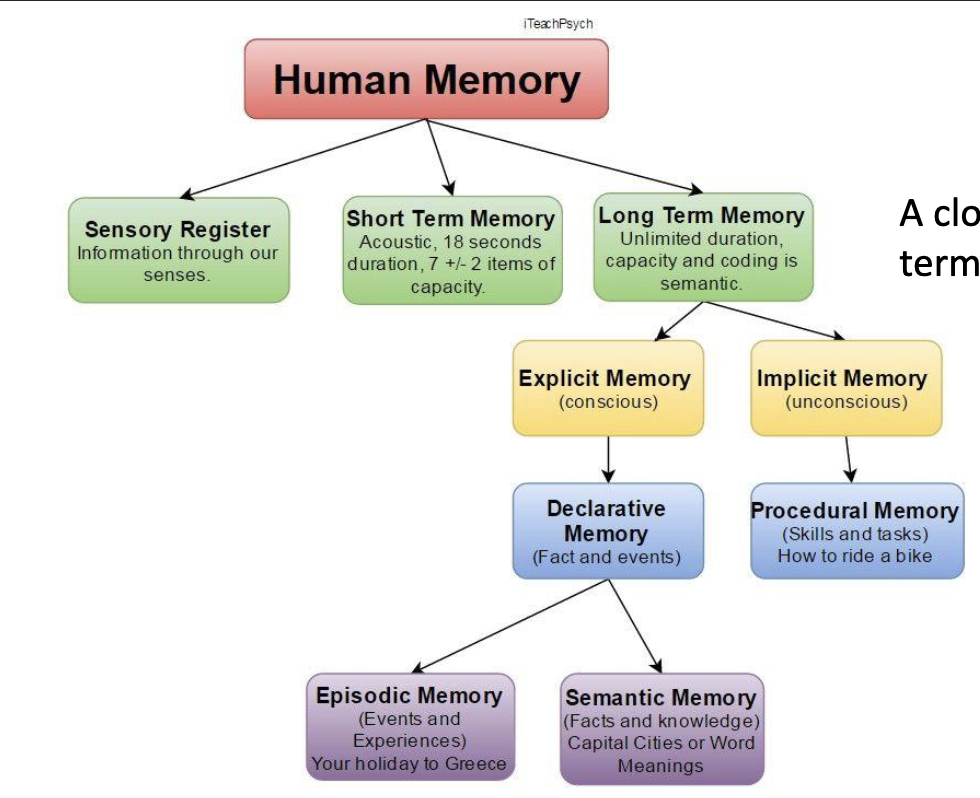
Long-term memory splits into
WHAT
WHAT
Long-term memory splits into
Explicit memory
Implicit memory
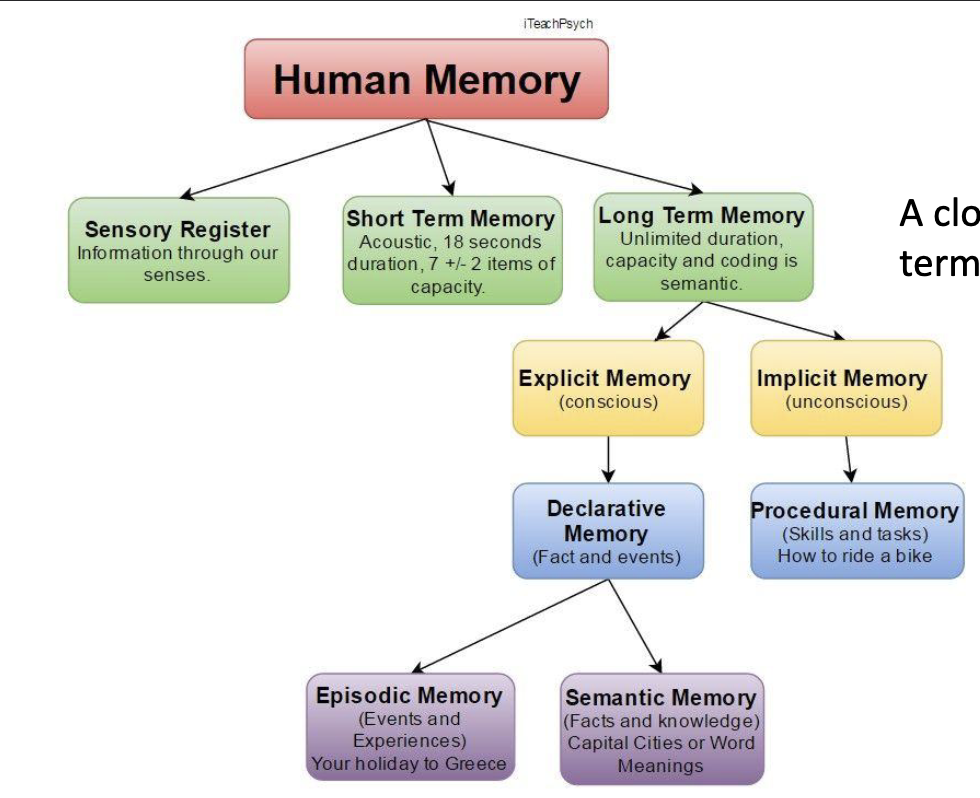
Explicit memory
Conscious
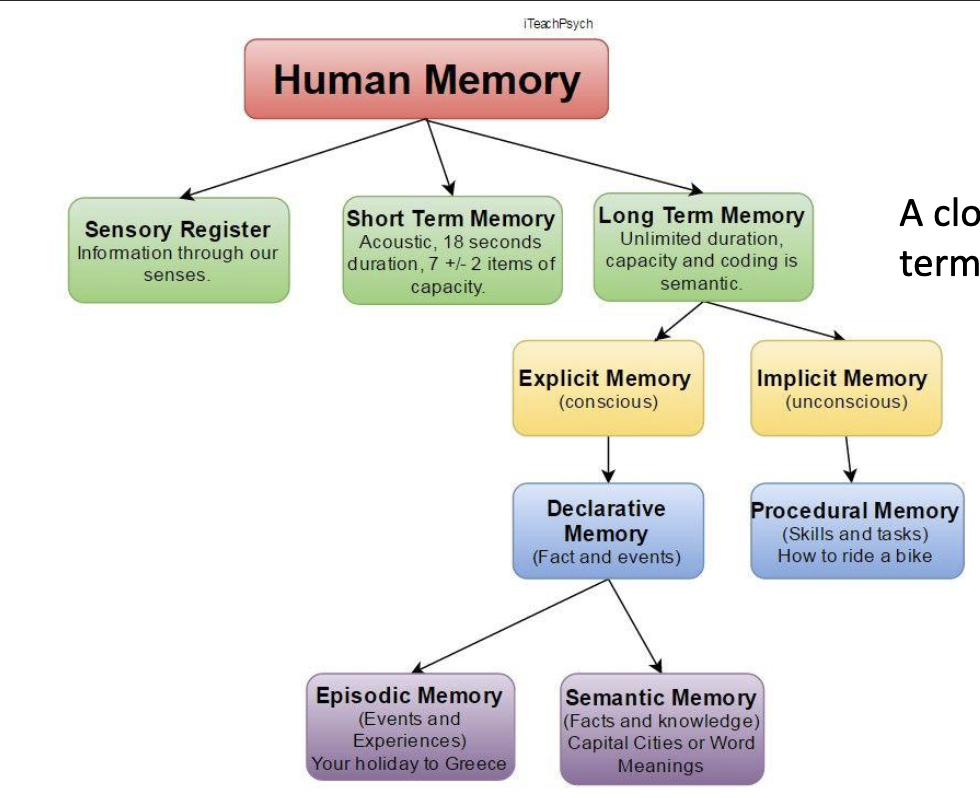
Implicit memory
Unconscious
Explicit memory goes into
WHAT
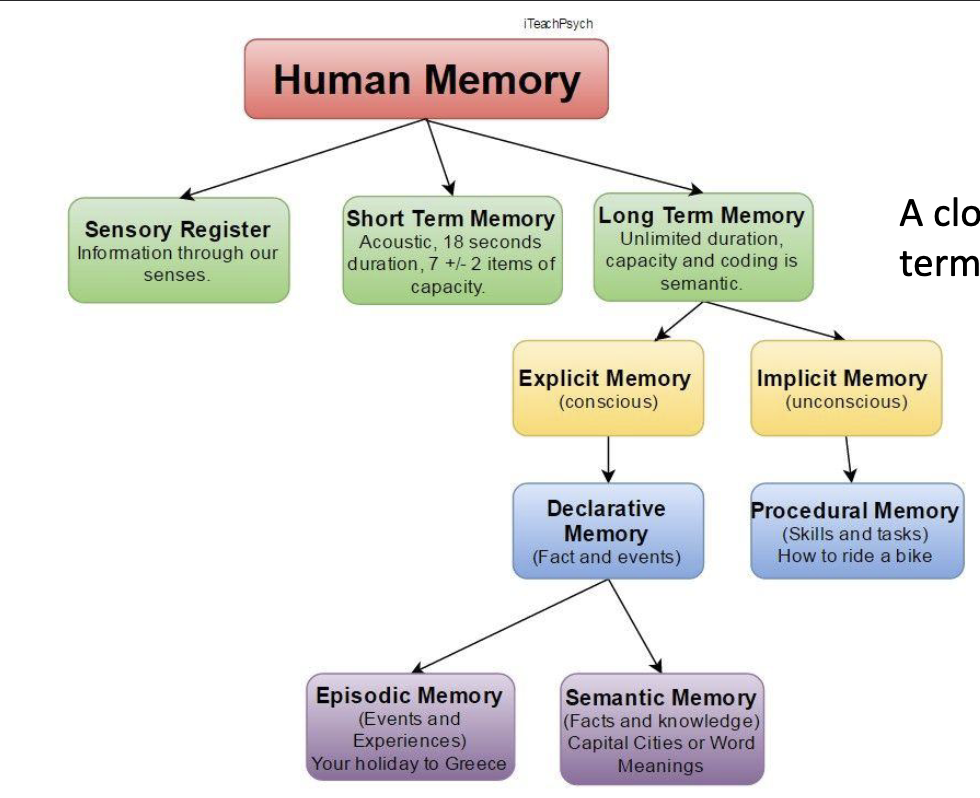
Explicit memory goes into
Declarative memory
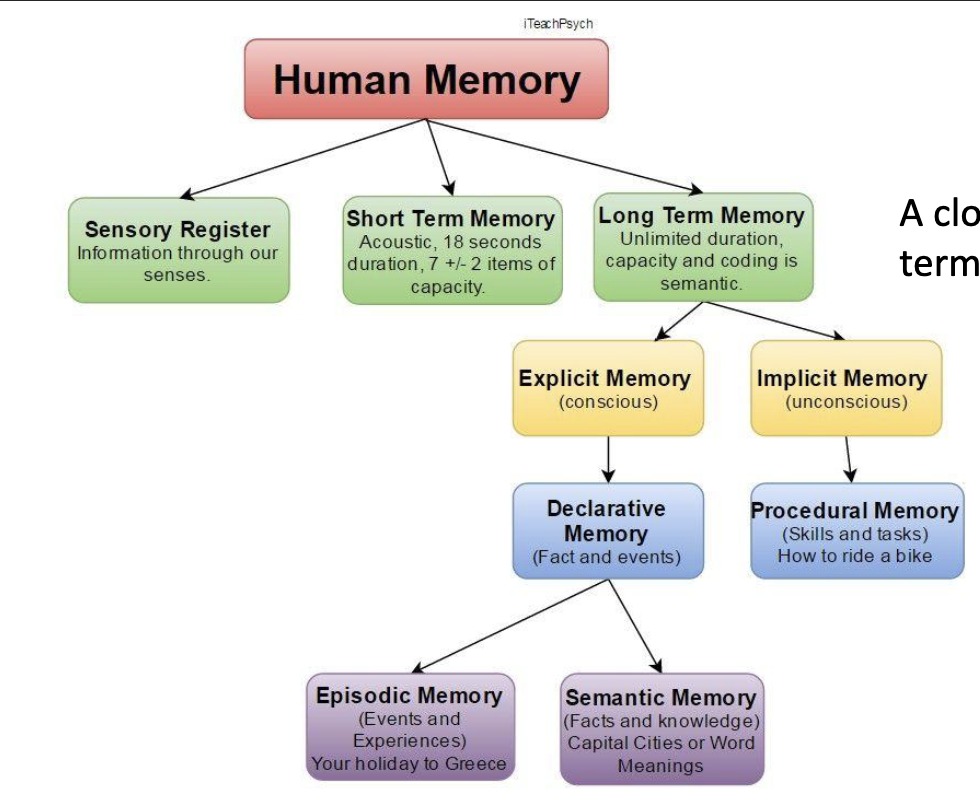
Declarative memory
Facts and events
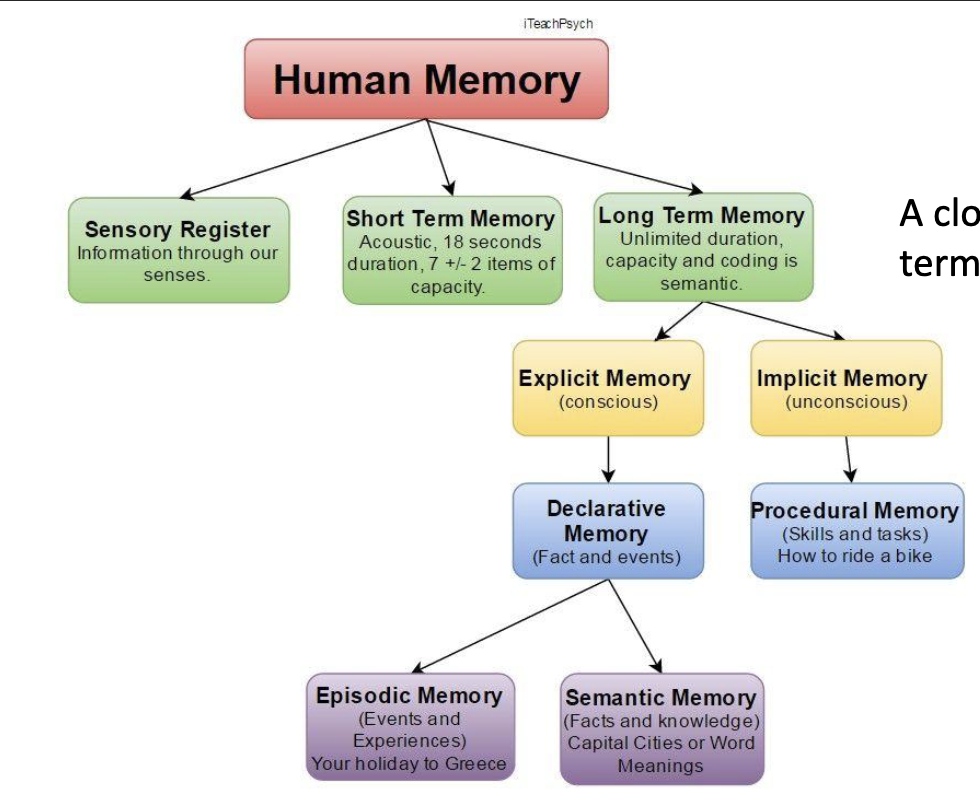
Declarative memory splits into
WHAT
WHAT
Declarative memory splits into
Episodic memory
Semantic memory
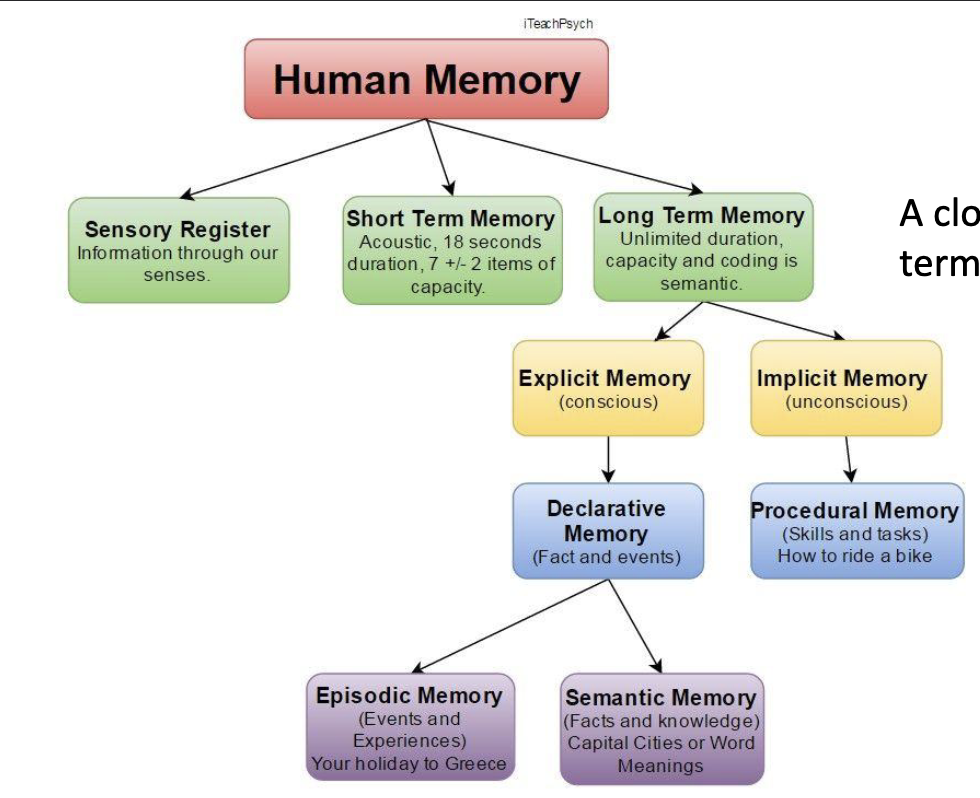
Episodic memory
events and experience (holiday to Greece)
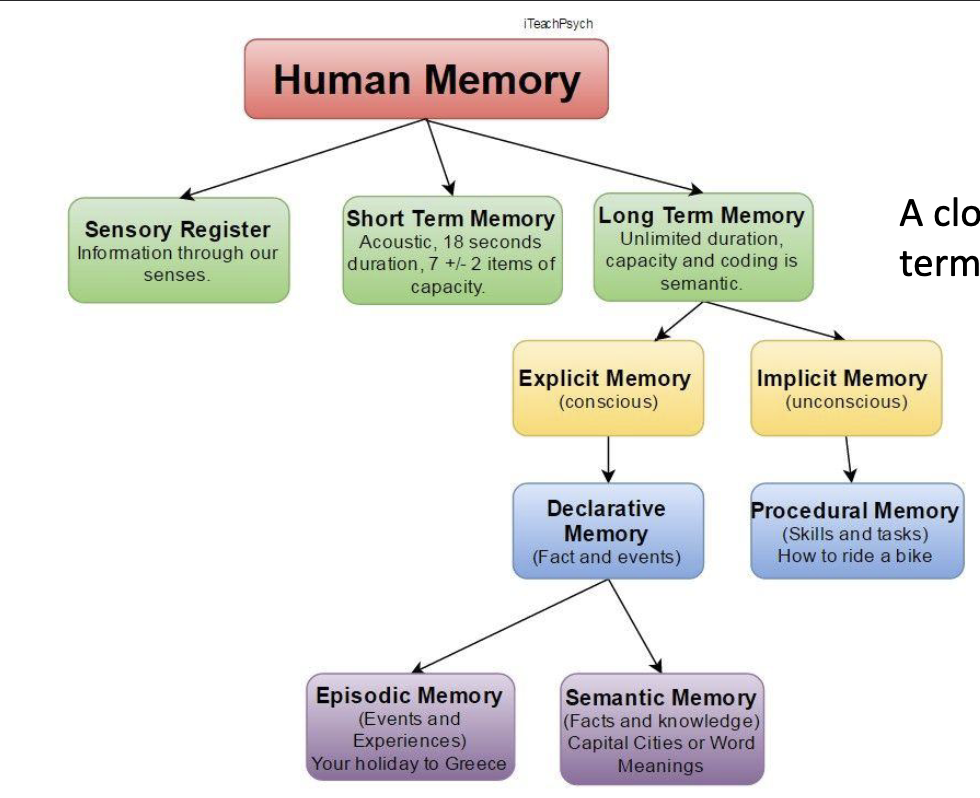
Semantic memory
Facts and knowledge (capital cities or word meanings)
Implicit memory goes into
WHAT
Implicit memory goes into
Procedural memory
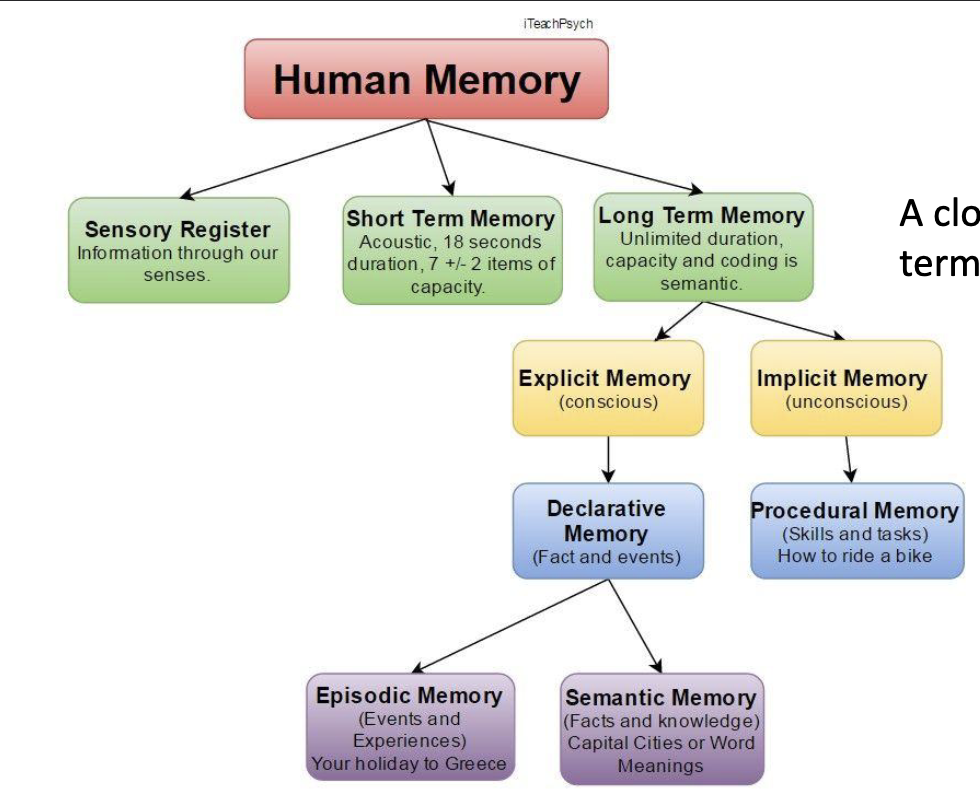
Procedural memory
Skills and tasks (how to ride a bike)
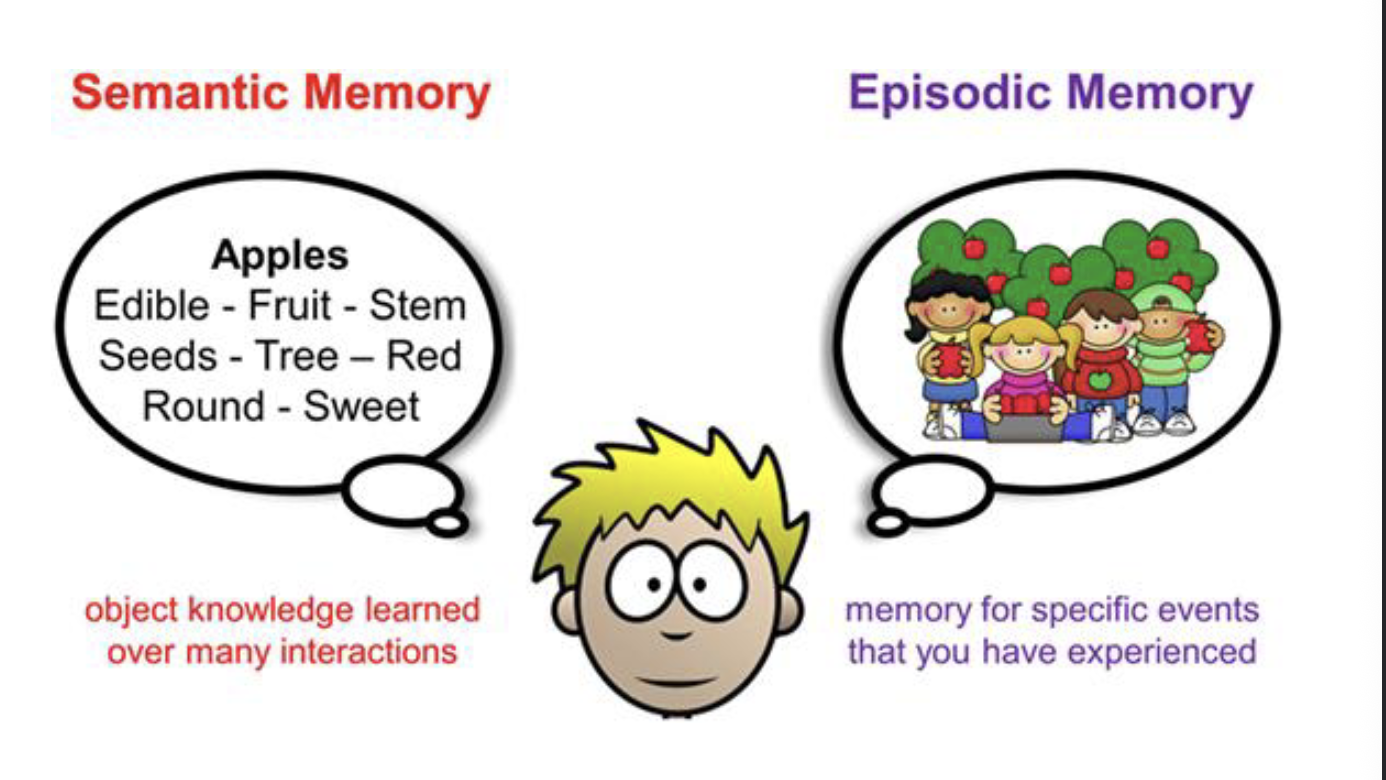
Semantic memory - Object knowledge WHAT over many interactions
Semantic memory - Object knowledge LEARNED over many interactions
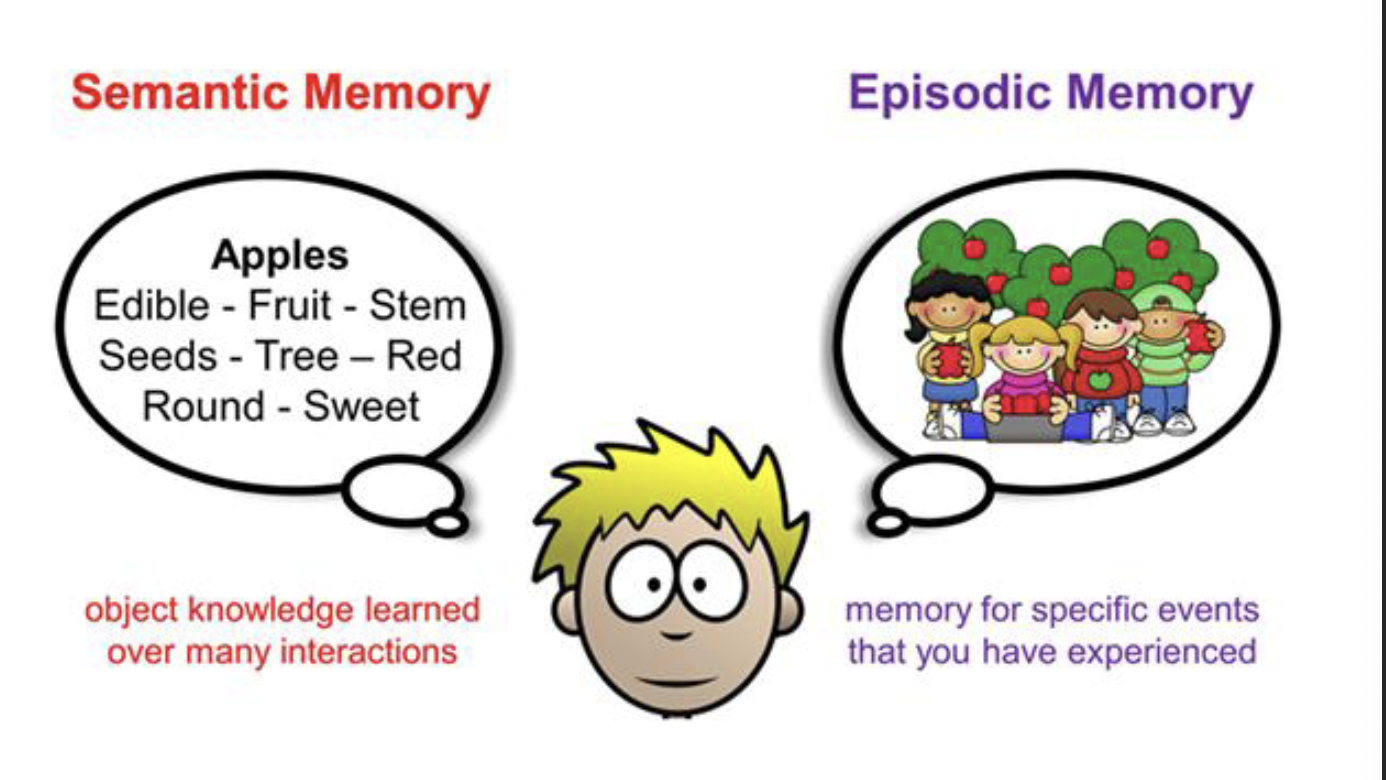
Episodic memory - Memory for WHAT events that you have WHAT
Episodic memory - Memory for SPECIFIC events that you have EXPERIENCED
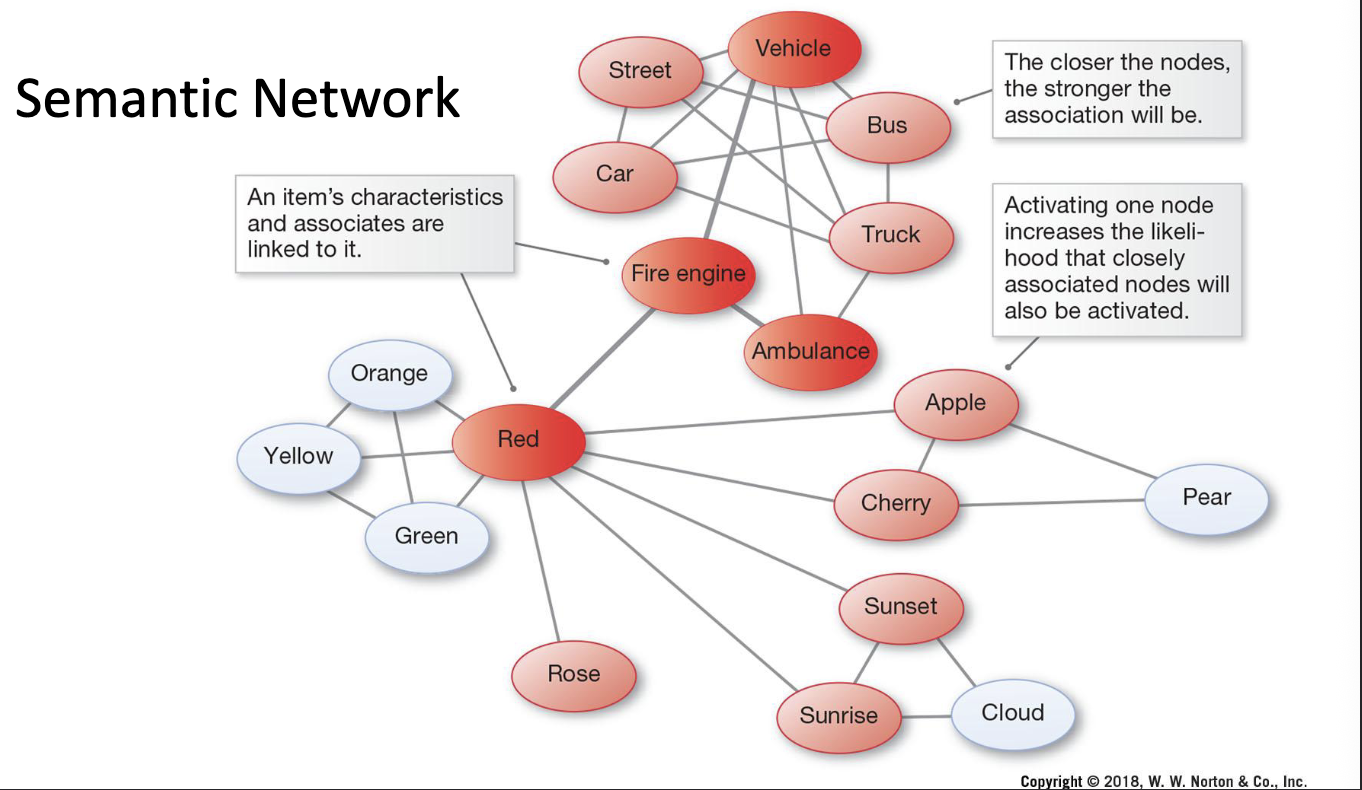
Semantic network
An item’s WHAT and WHAT are linked to it
The closer the nodes, the WHAT the WHAT will be
Activating one node increases the likelihood that closely associated nodes will be WHAT
Semantic network
An item’s CHARACTERISTICS and ASSOCIATIONS are linked to it
The closer the nodes, the STRONGER the ASSOCIATION will be
Activating one node increases the likelihood that closely associated nodes will be ACTIVATED
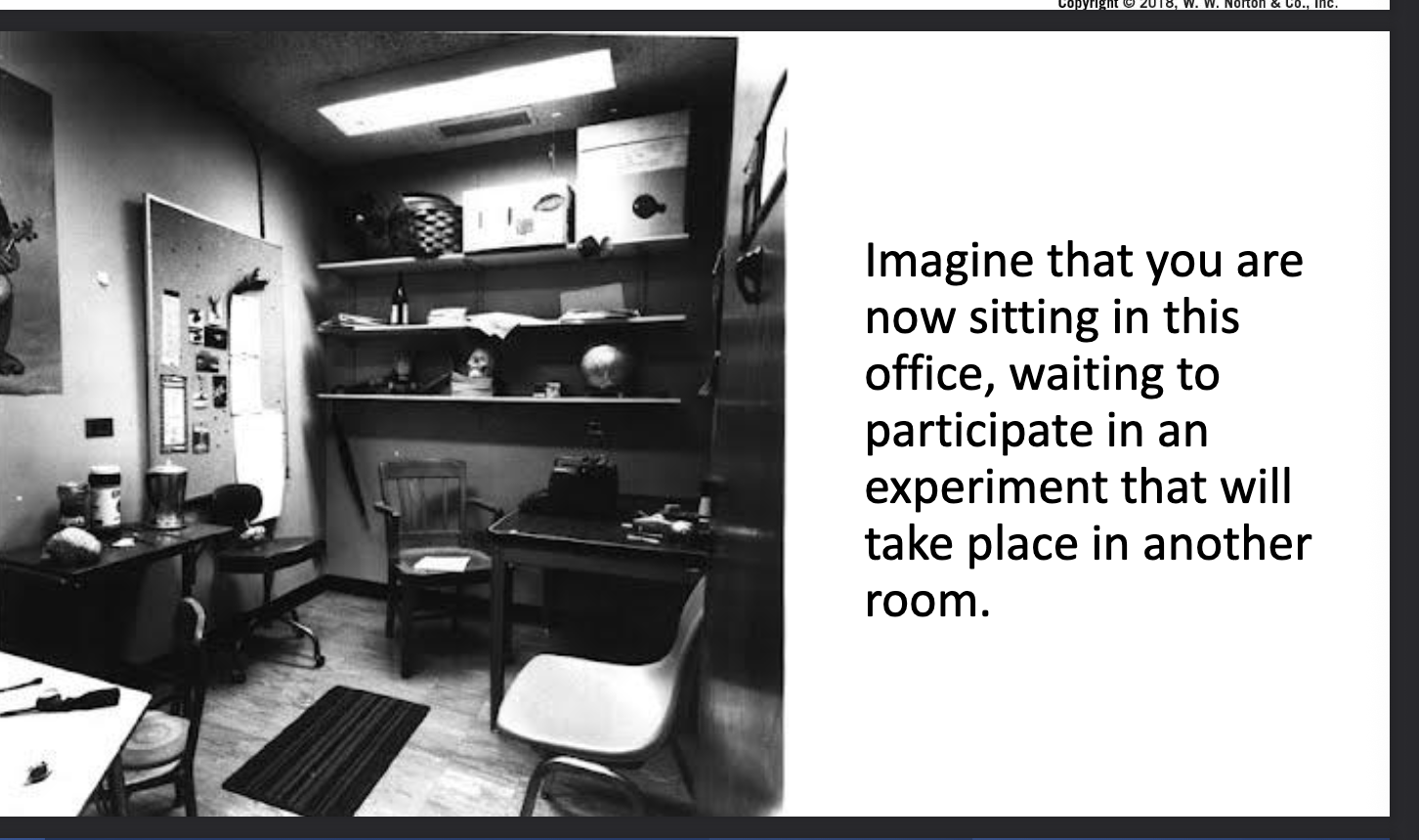
The office experiment by Brewer and Treyens (1981)
30 subjects were tested
Most subjects recalled desks and chairs (WHAT)
Few subjects recalled bottle or a picnic table (WHAT)
Nine subjects recalled that the office had books (WHAT)
The office experiment by Brewer and Treyens (1981)
30 subjects were tested
Most subjects recalled desks and chairs (HITS)
Few subjects recalled bottle or a picnic table (HITS)
Nine subjects recalled that the office had books (FALSE ALARMS)
What is a Schema
A schema is an organized cluster of knowledge about a particular object or event, abstracted from previous experience with the object or event
People are more likely to remember things that are consistent with their WHAT than things that are not
People are more likely to remember things that are consistent with their SCHEMAS than things that are not - This explains why most people remembered the desks and chairs, some falsely remembered seeing books, and few remembered the wine bottle and the picnic basket (because these items are not consistent with the office schema).